Metrolink Arrow
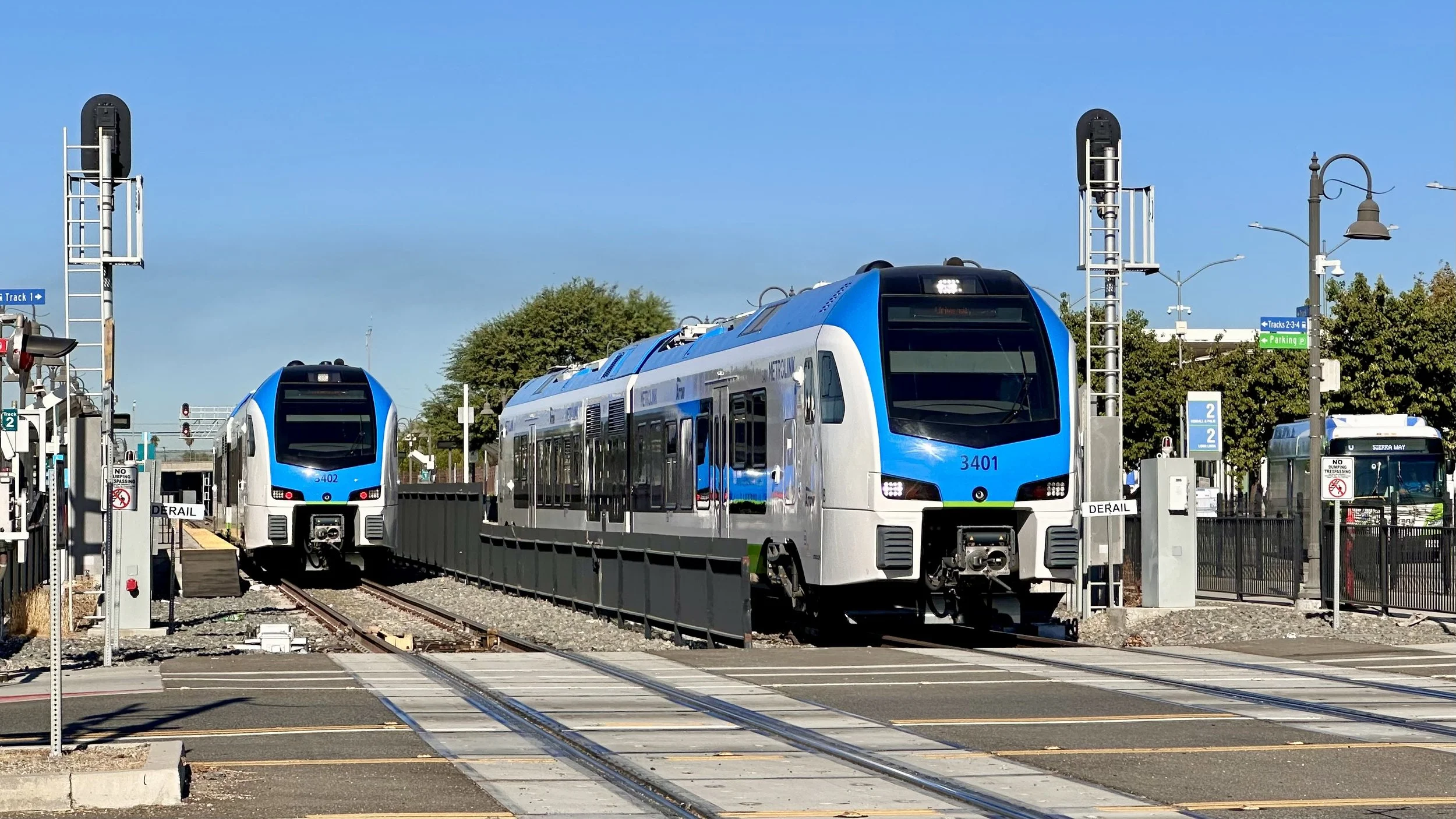
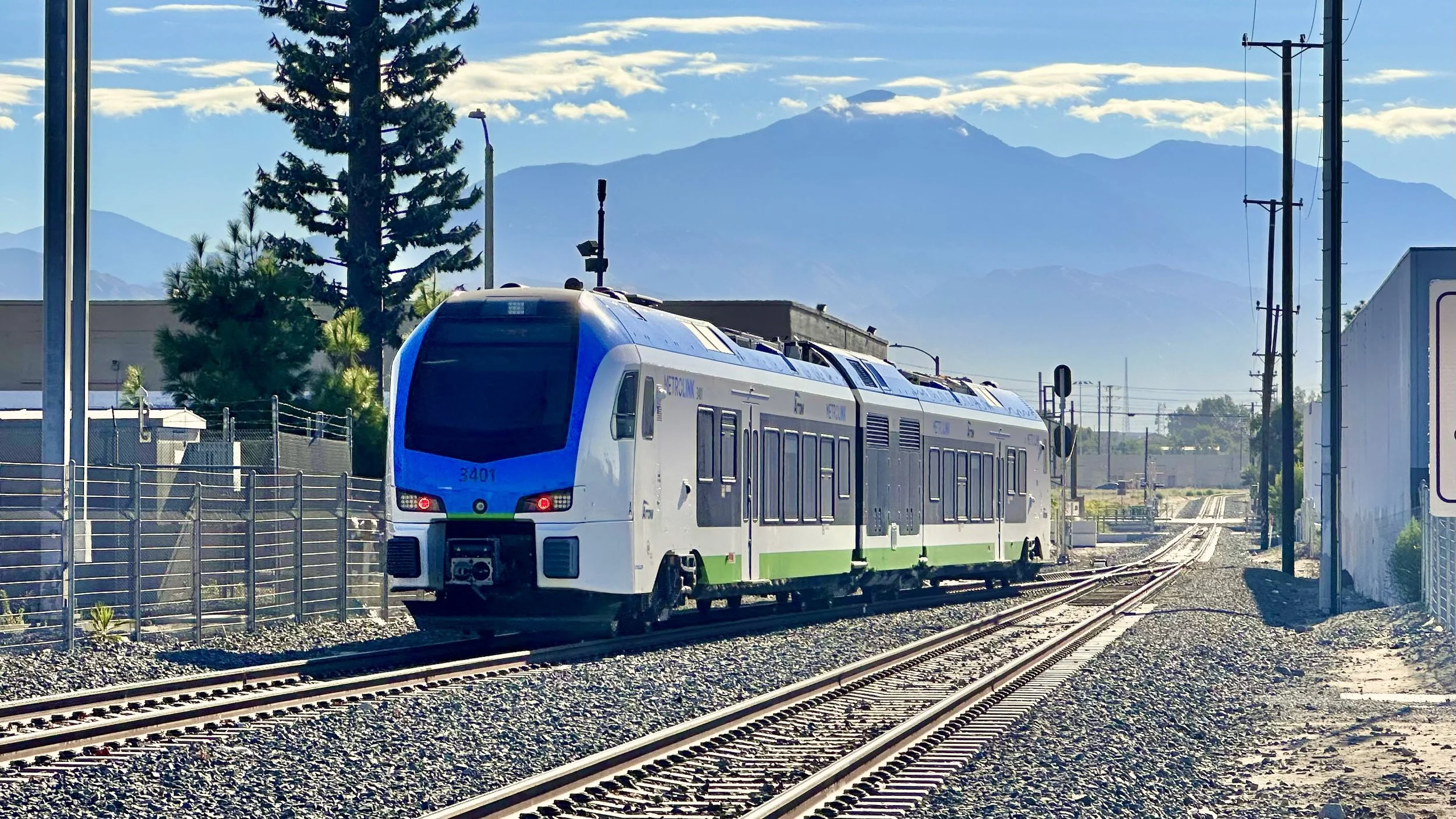
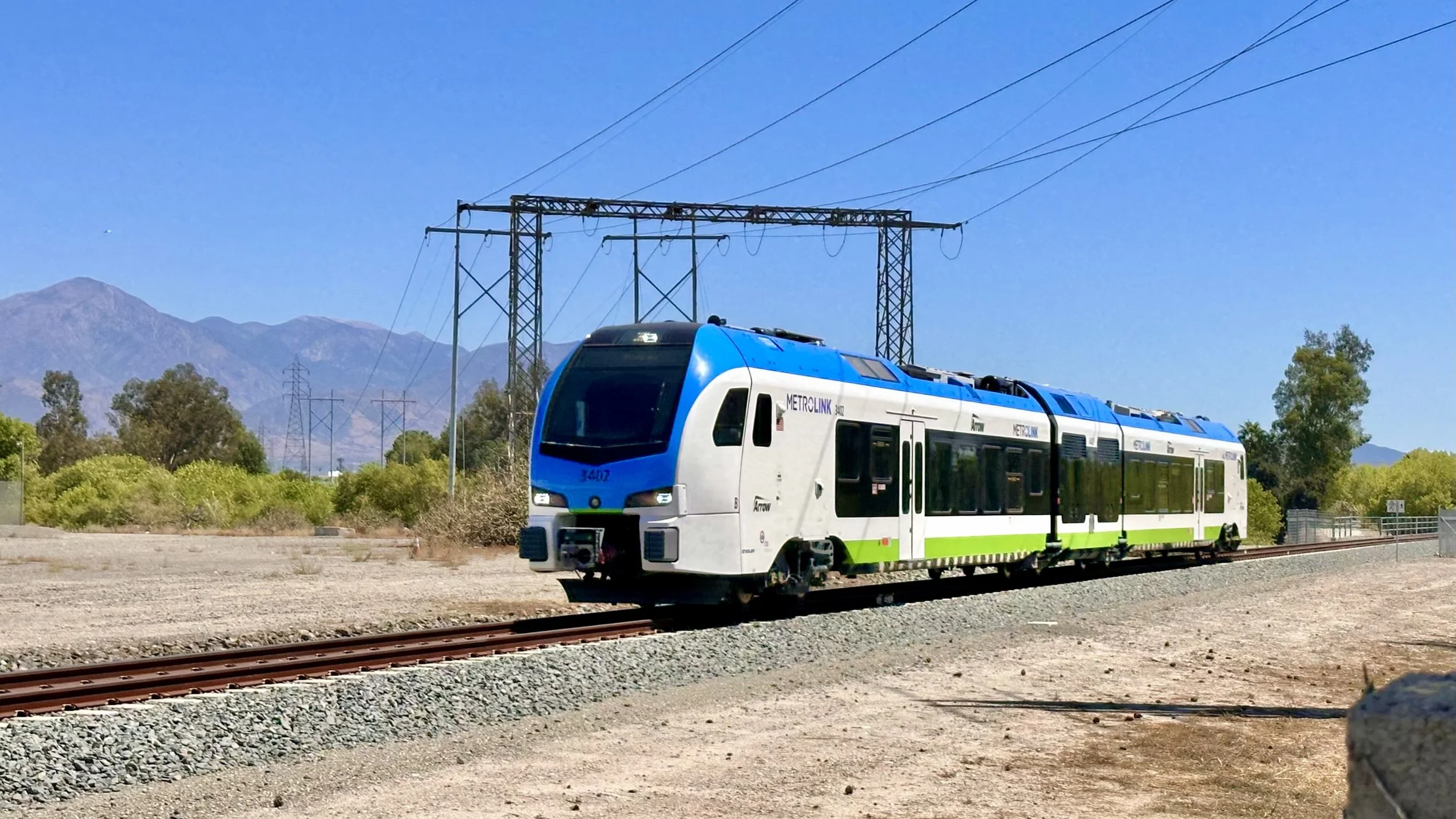
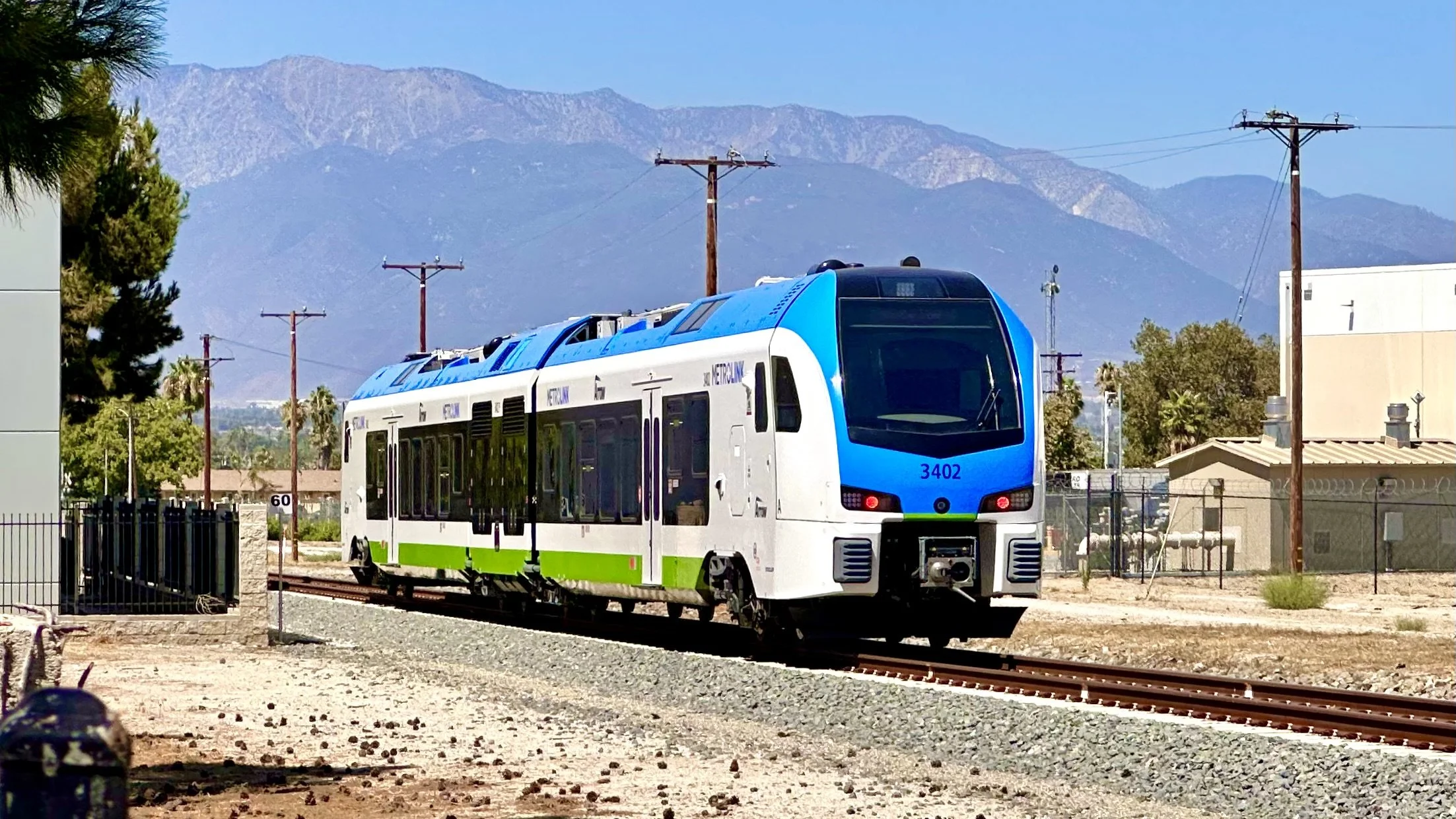
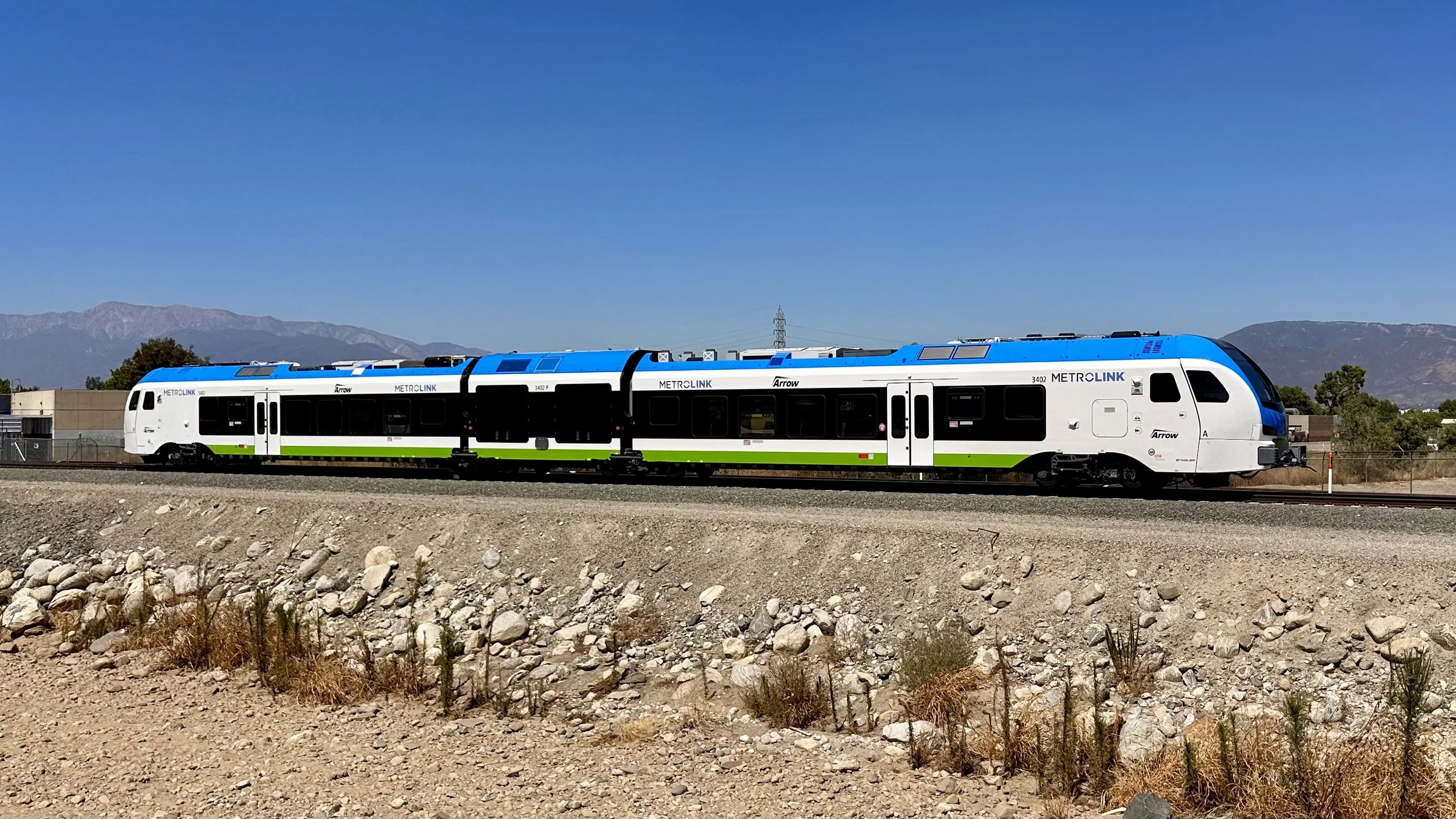
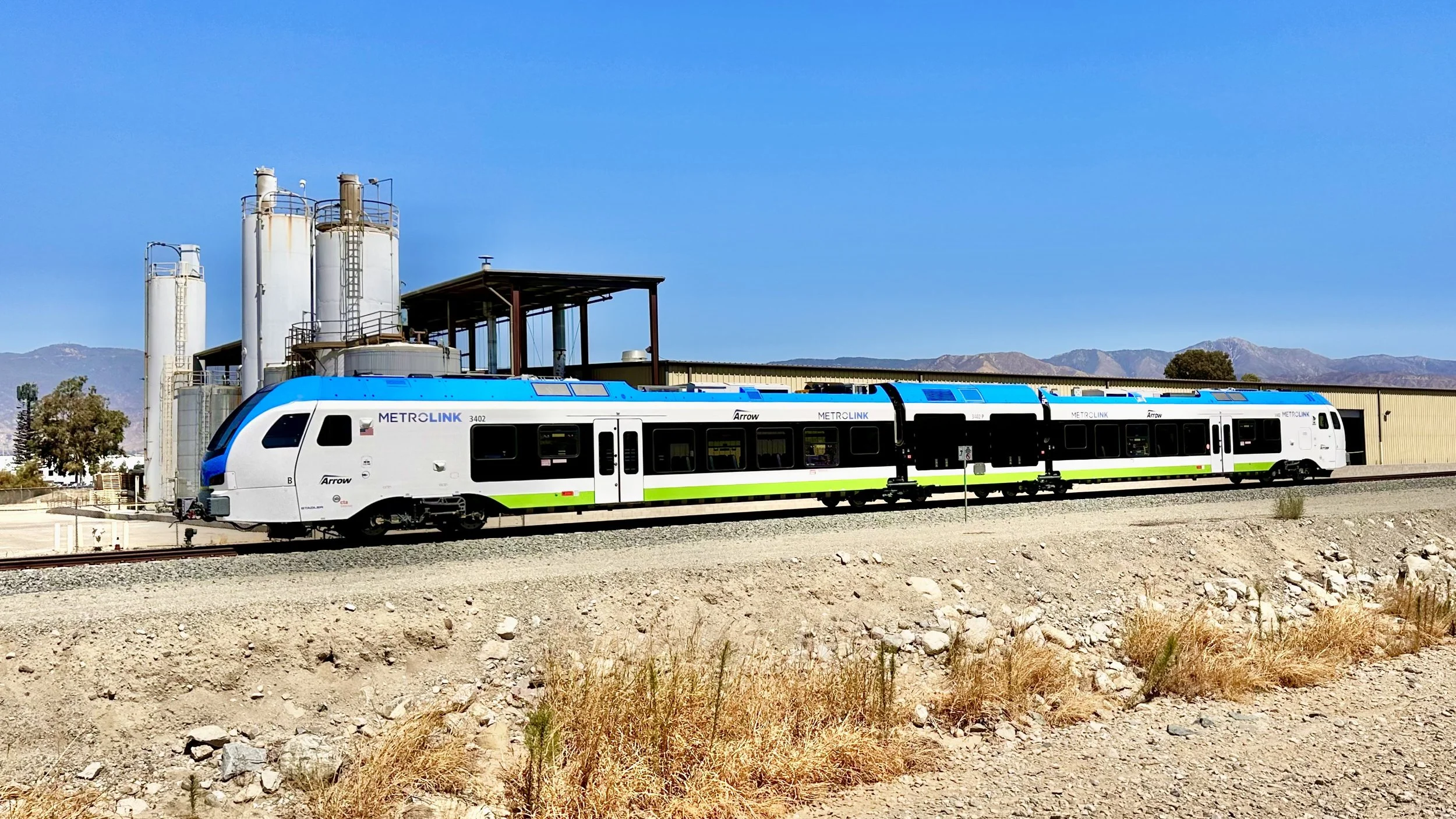
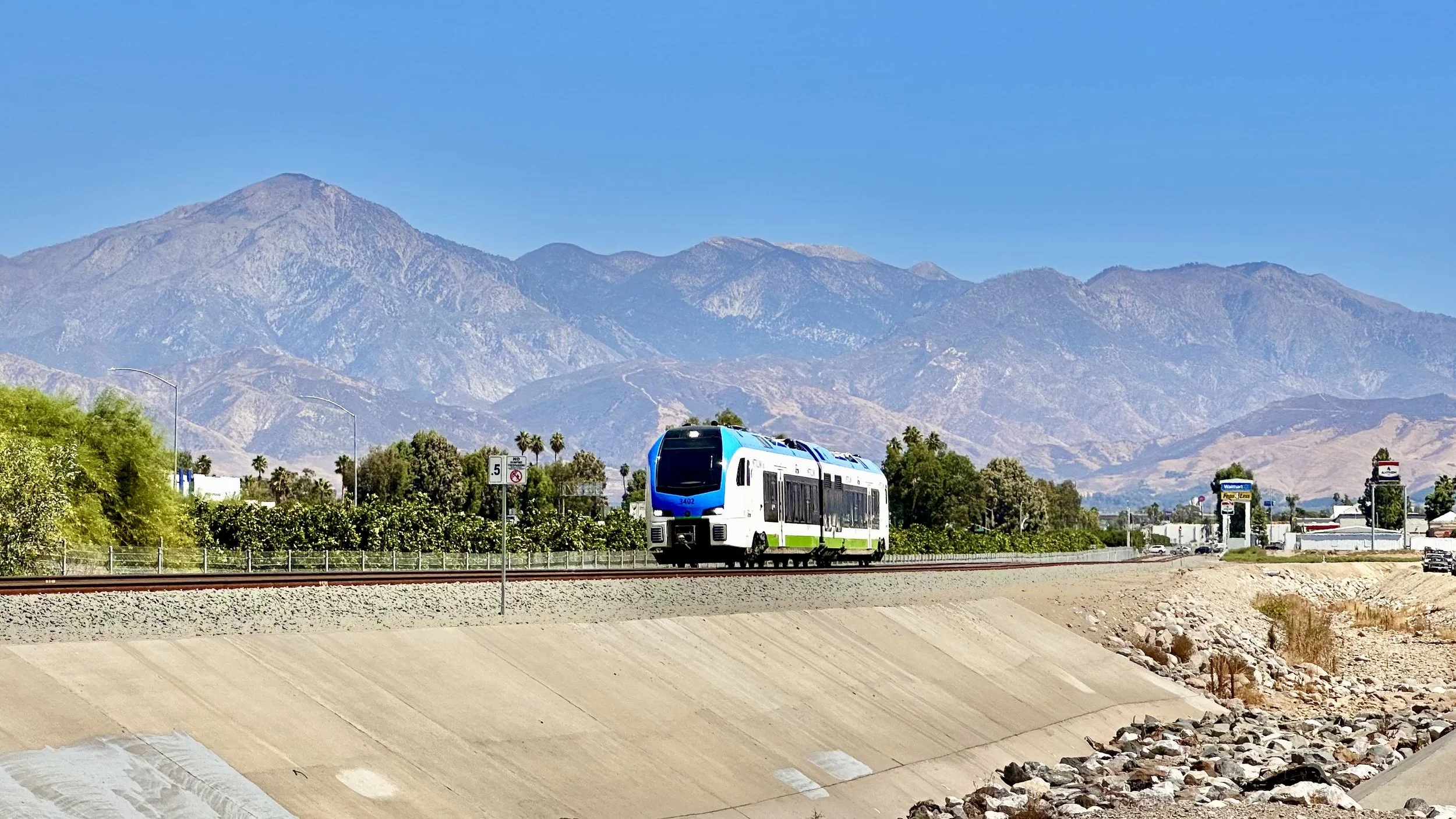
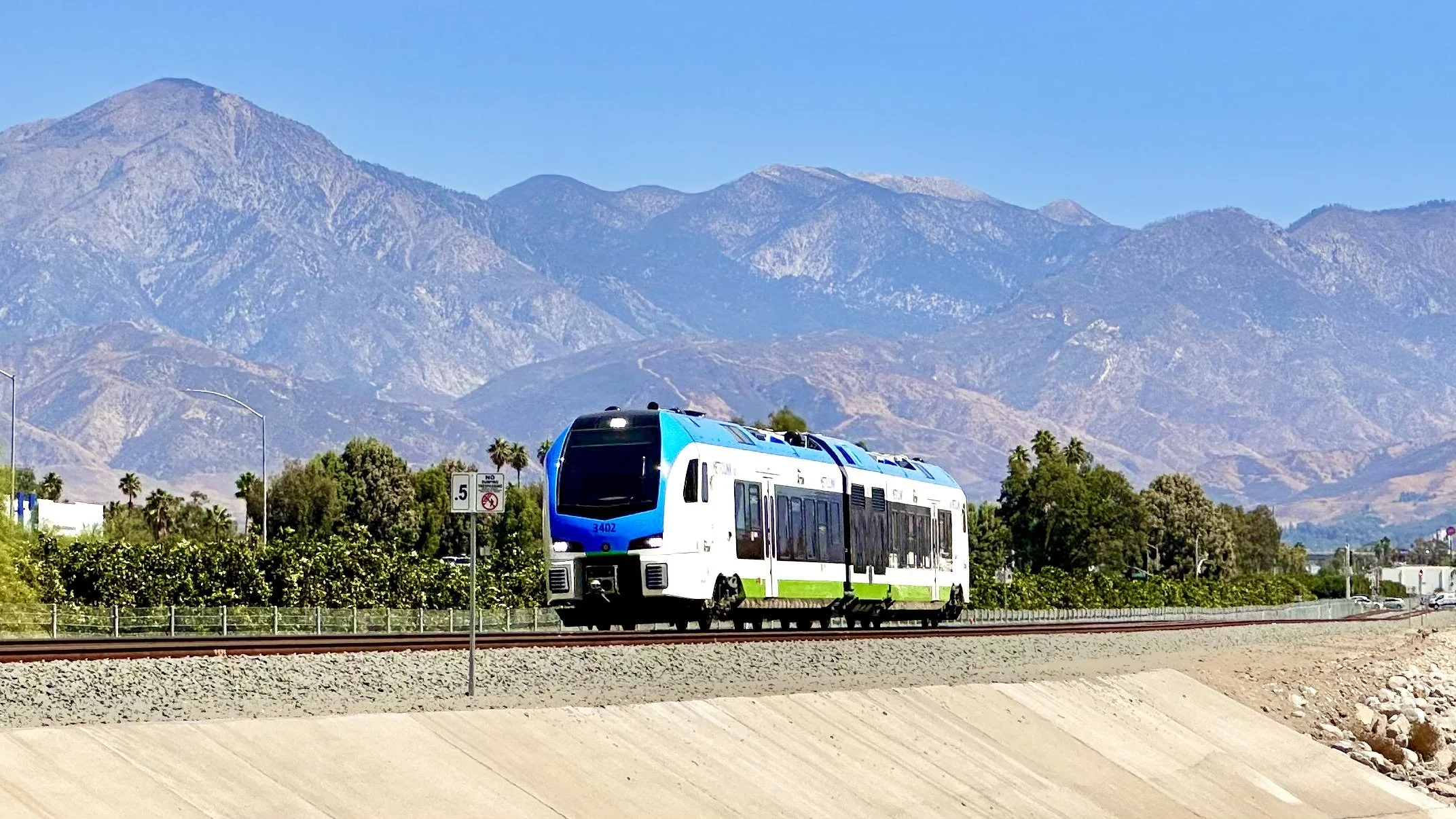
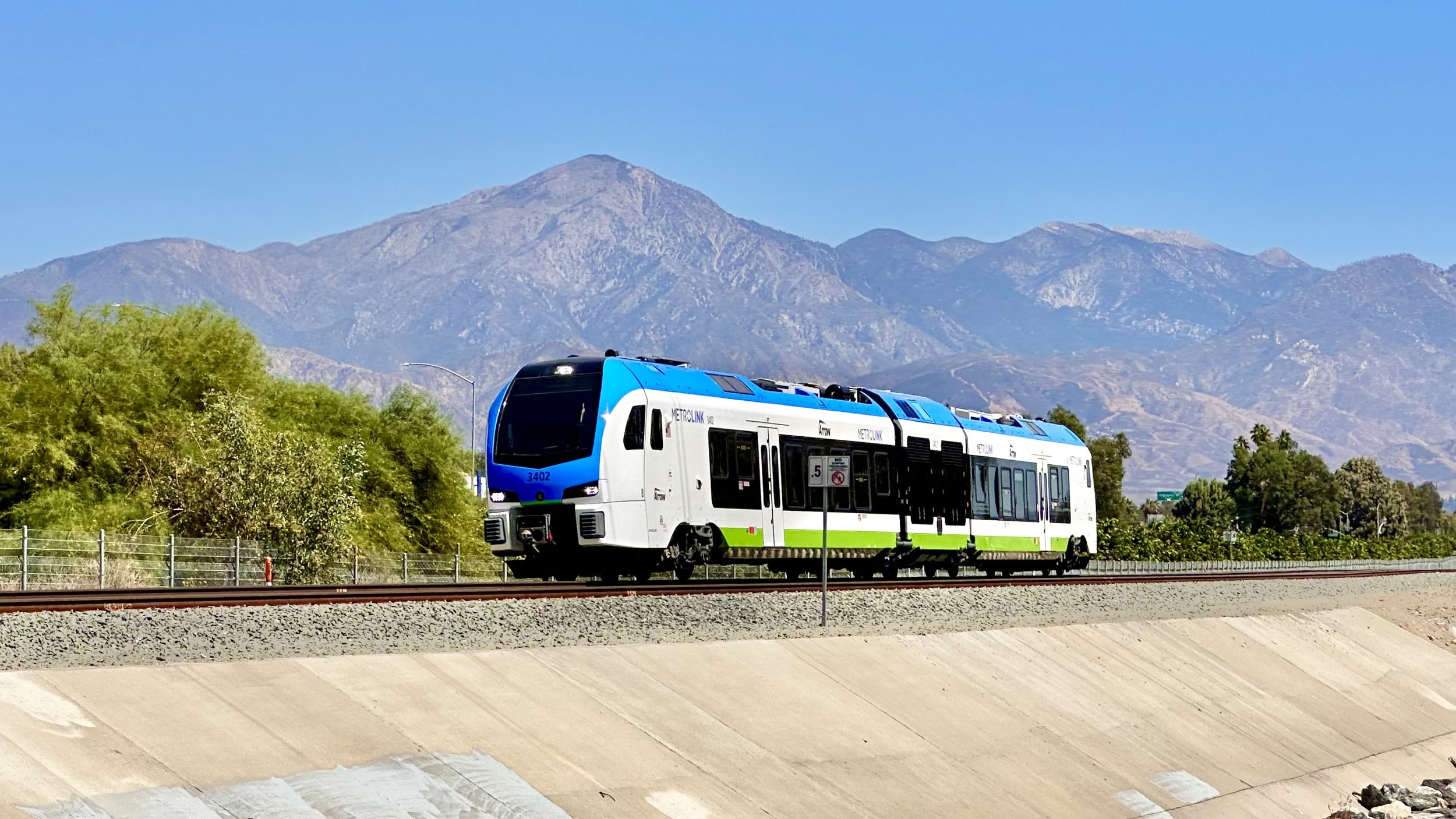
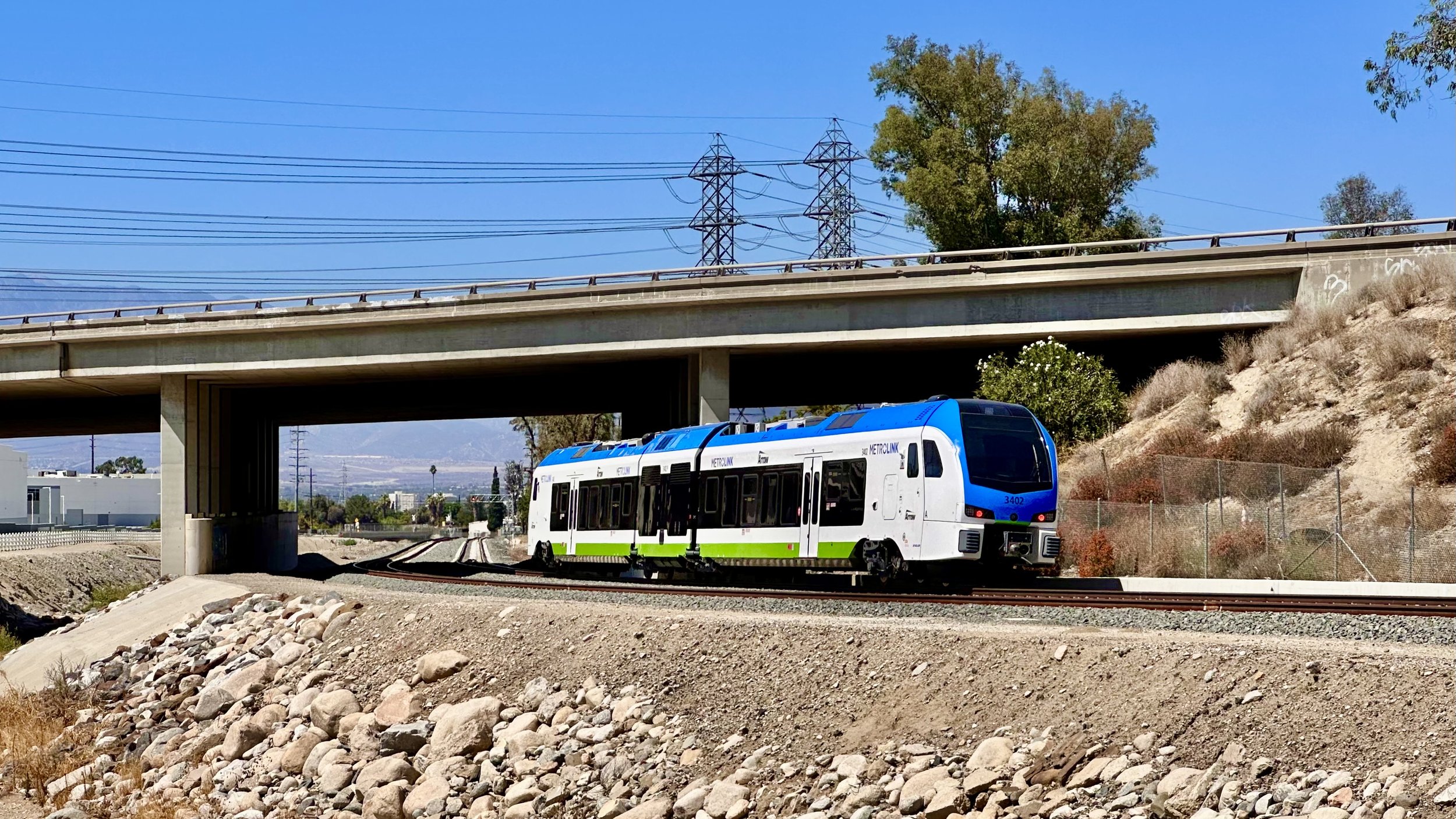
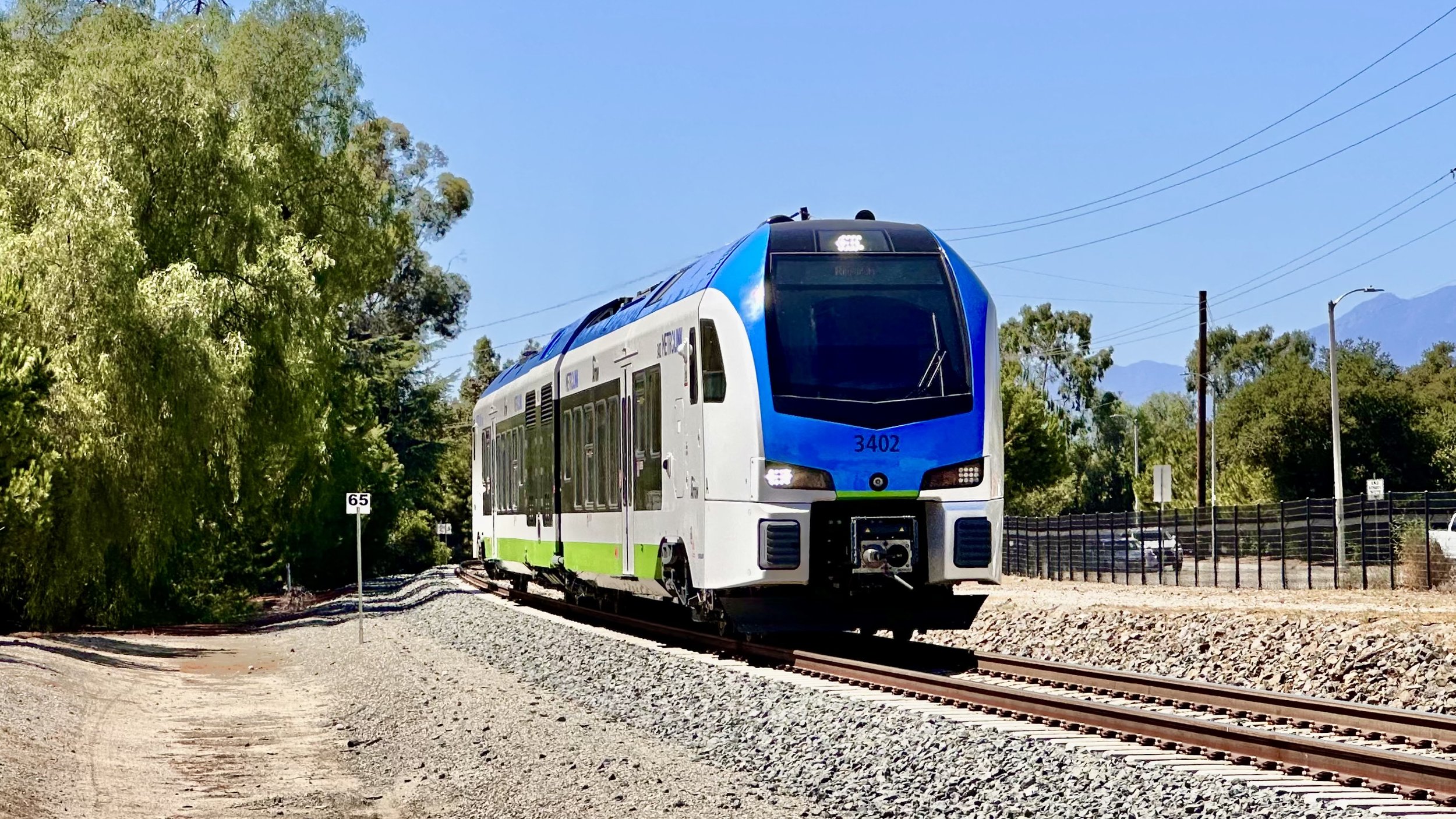
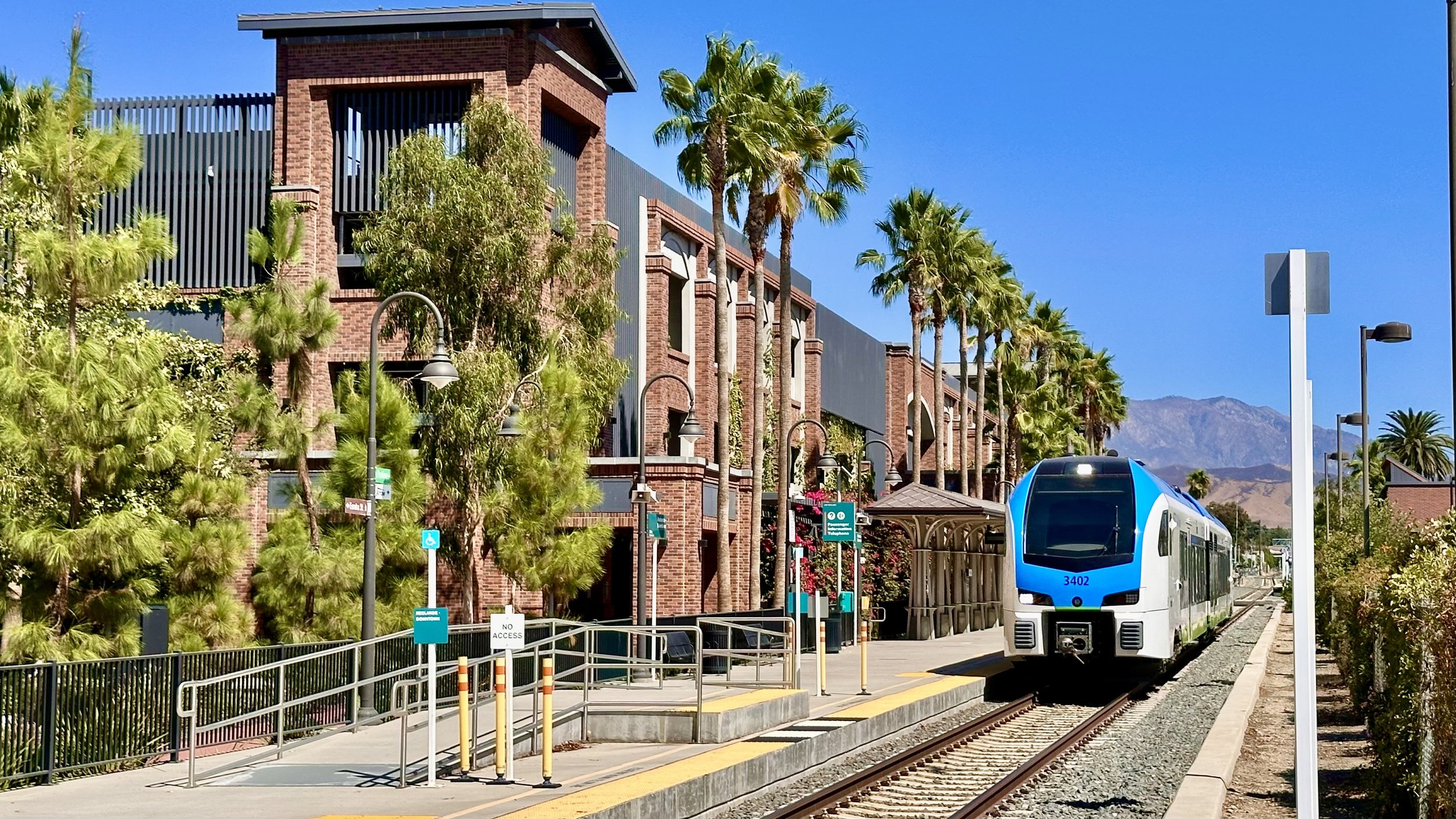
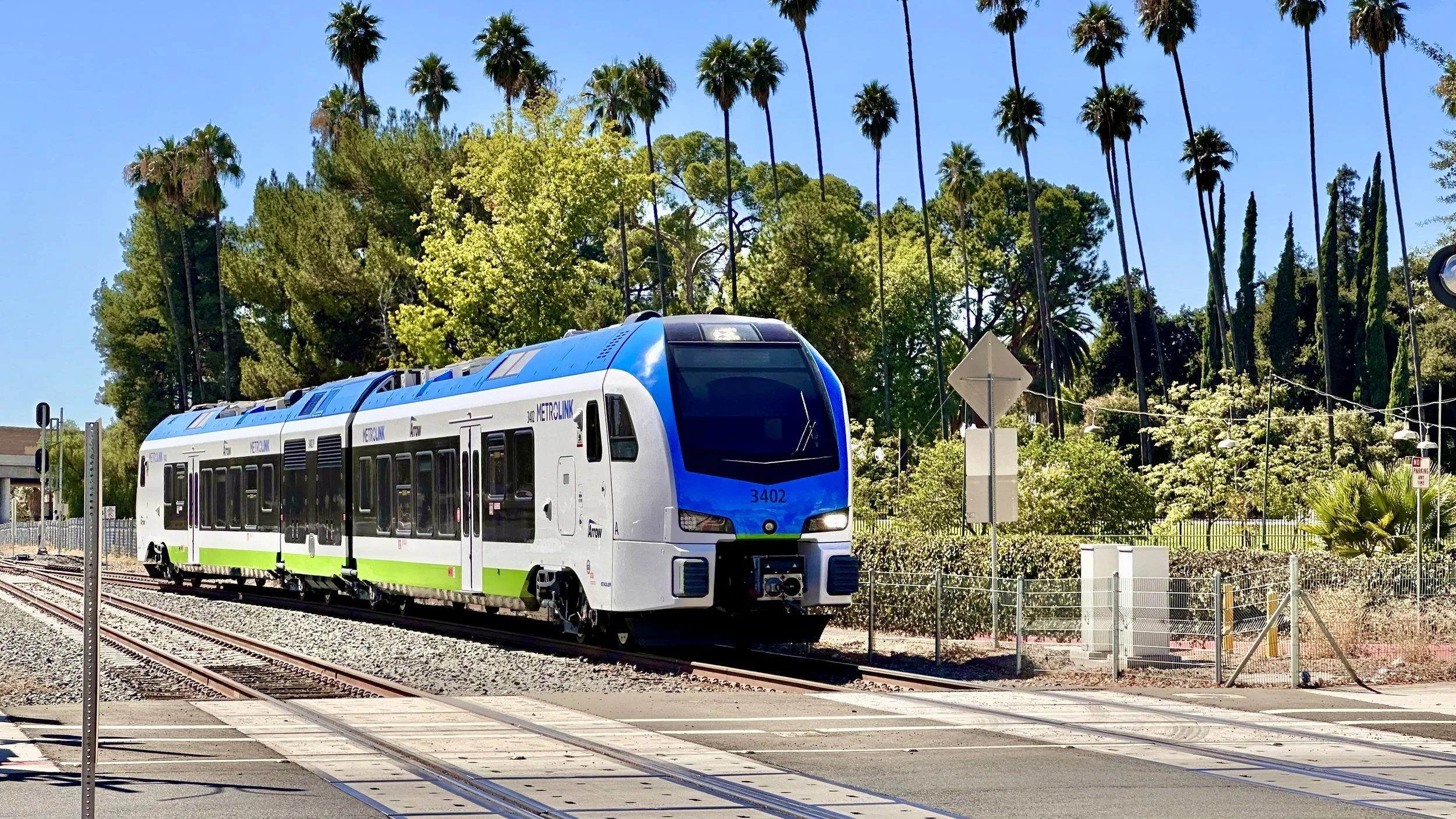
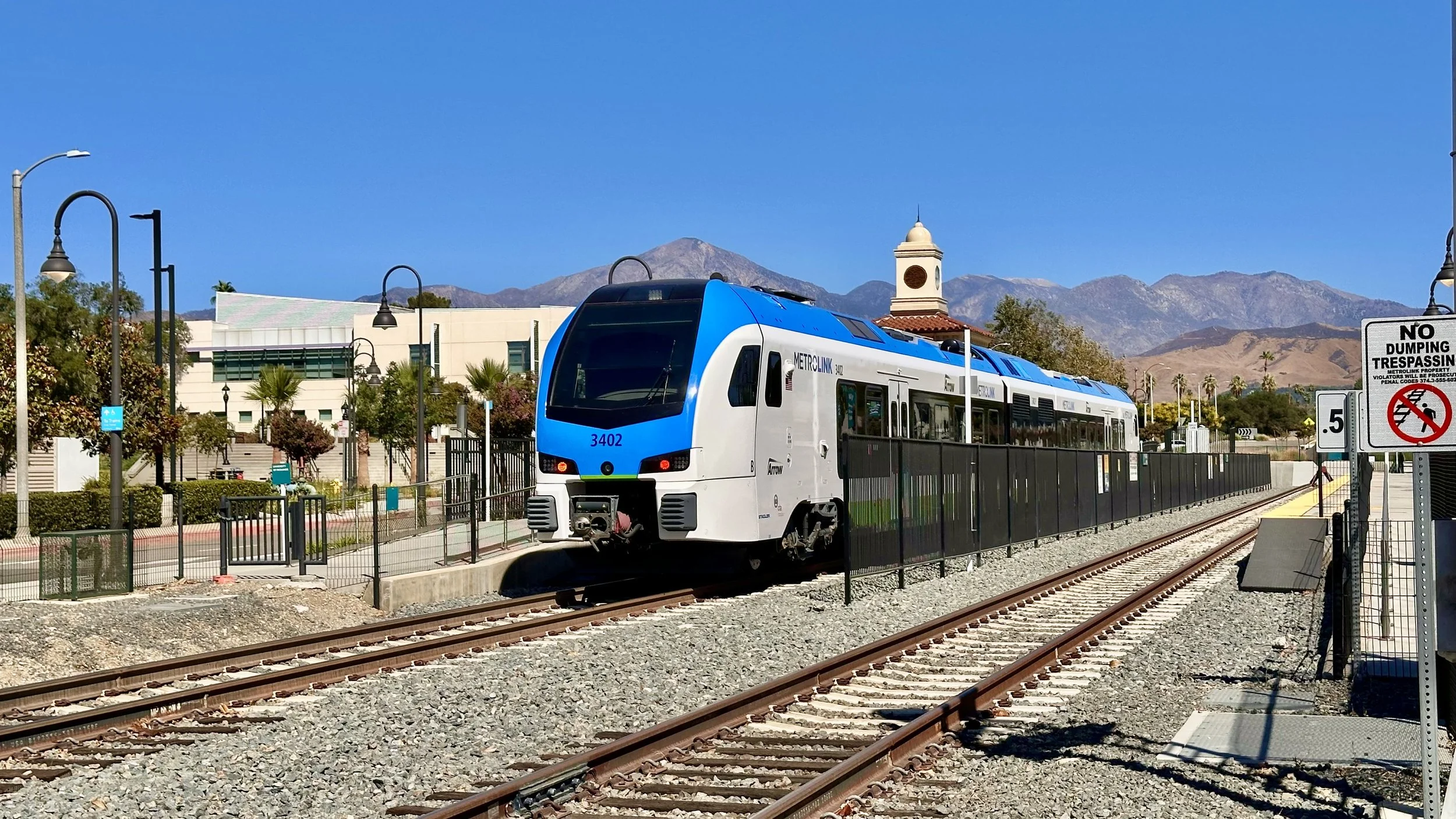
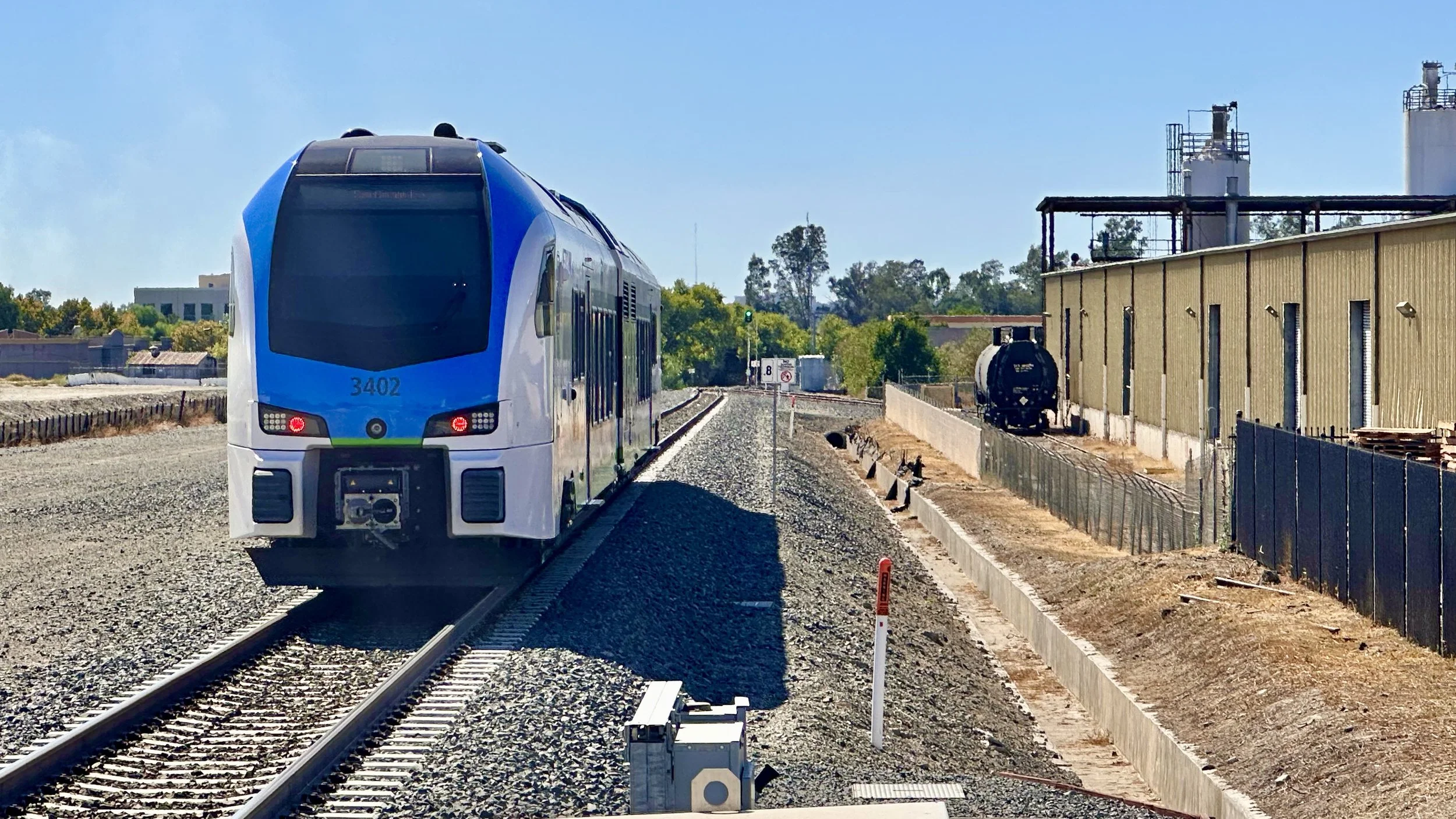
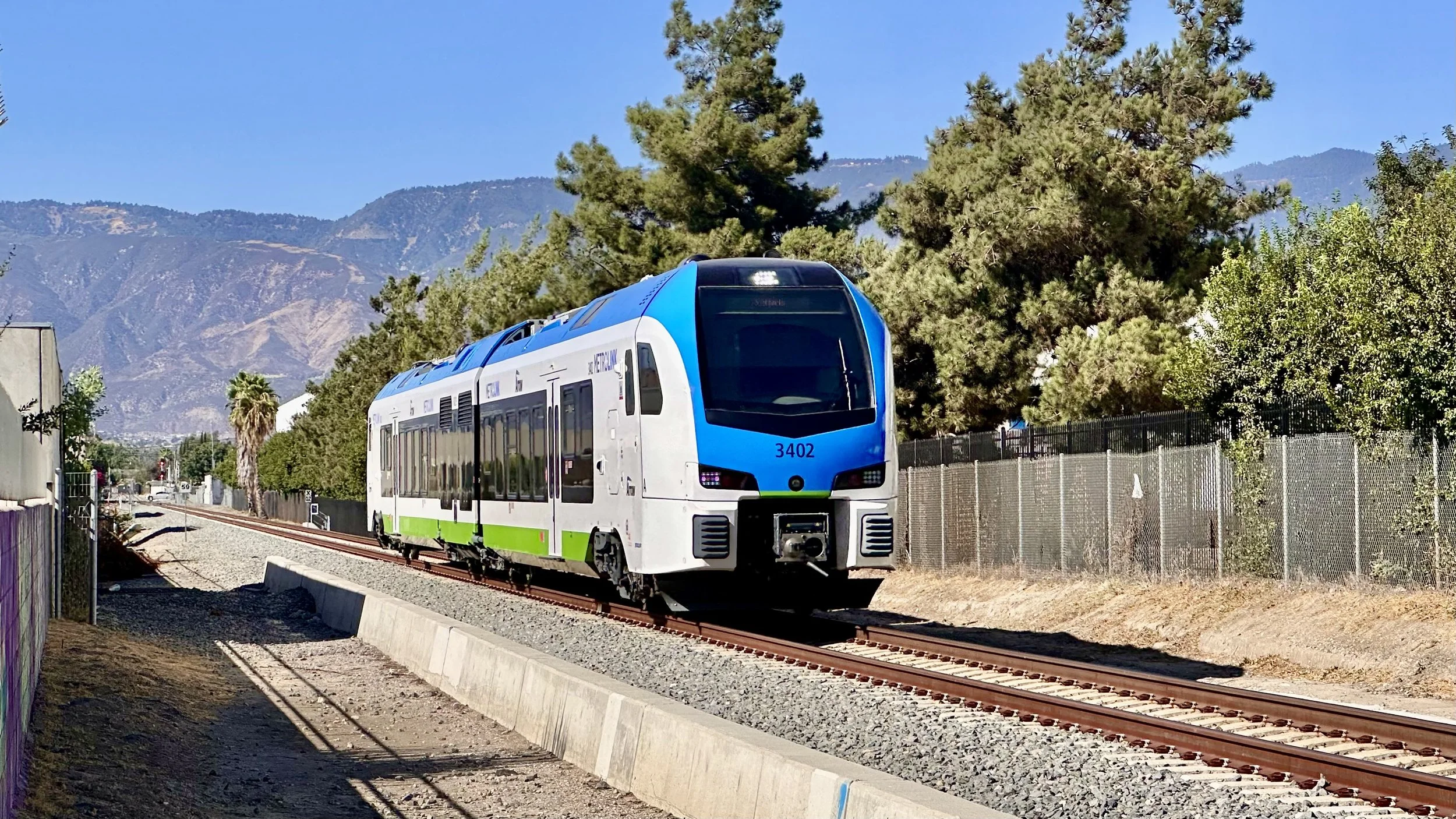
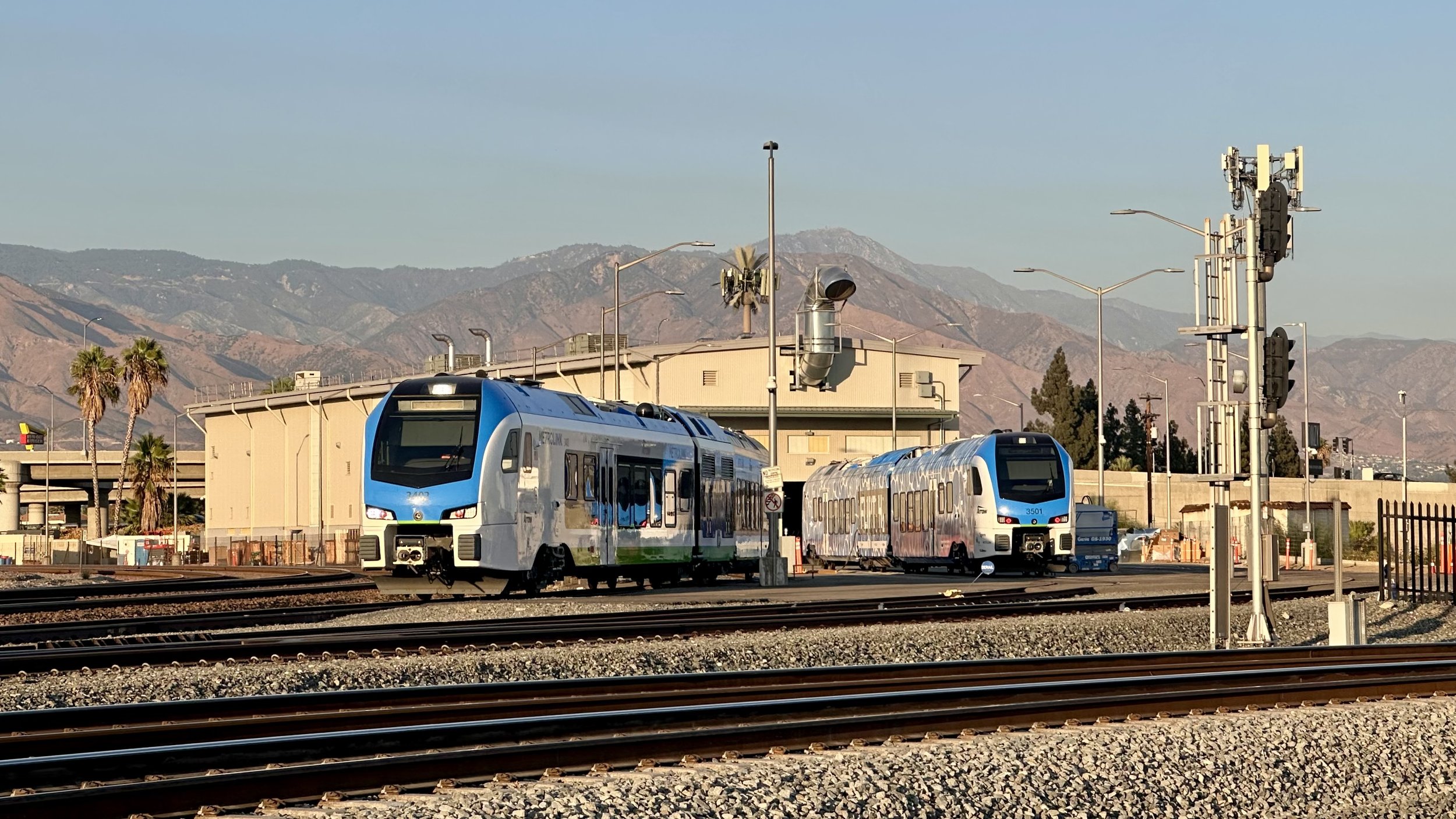
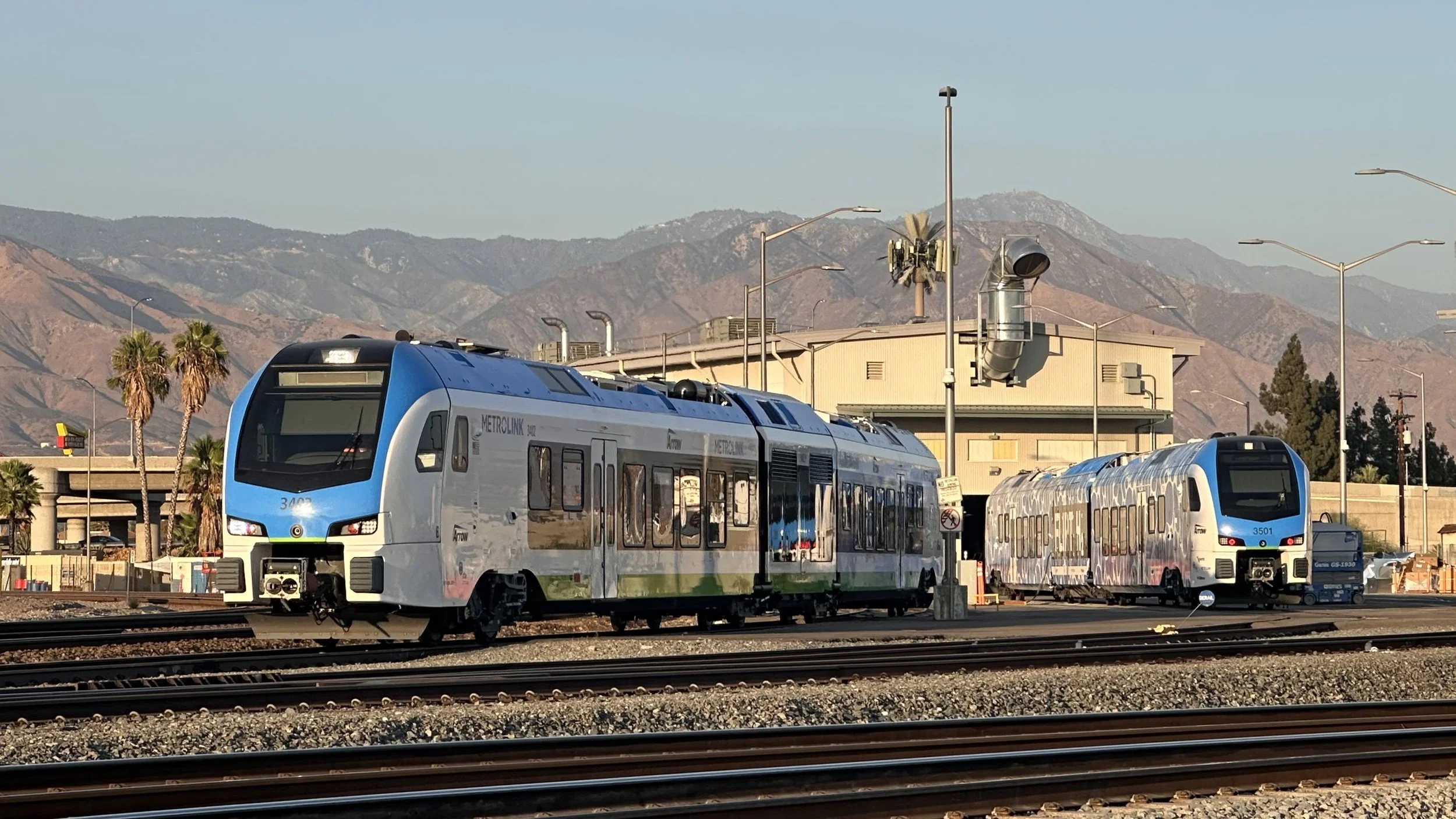
The penultimate DMU to open in the US was Metrolink’s Arrow in 2022 between San Bernardino Downtown Station (not to be confused with San Bernardino Depot Station) and the University of Redlands. The second-shortest DMU besides eBART, Metrolink’s culture hamstrings the poor Arrow to the point of unusability. At a gallingly awful hourly headway for a mere five close-by stations, operations are typically conducted with a single vehicle, despite there being four on the roster.
The core of the issue is Metrolink’s agéd concept of commuter rail (some of whose lines see a nation-lagging two departures a day), which is very peaky and focussed almost entirely on trips to Downtown LA in the morning and back in the evening. In this light, the Arrow is a cheap extension of the commuter rail, running but hourly to connect with slow mainline Metrolink trains to or from San Bernardino Downtown Station. As advocates note, Commuter Rail is not transit infrastructure, it’s car infrastructure, meant purely to relieve roads at peak times rather than provide a realistic alternative lifestyle.
But all is not lost yet. Arrow is more of a testbed for Metrolink and other California rail authorities, not just for DMUs, but also Hydrogen Fuel Cell trains as they try to curb emissions but are too lazy to do it correctly by stringing catenary wire. Arrow’s modest success is more likely to see backwards extension along existing Metrolink track to the Ontario International Airport, boosting frequencies and reverse commute options within the Inland Empire instead of being a dud like CapMetro Rail made purely to serve commutes to LA.
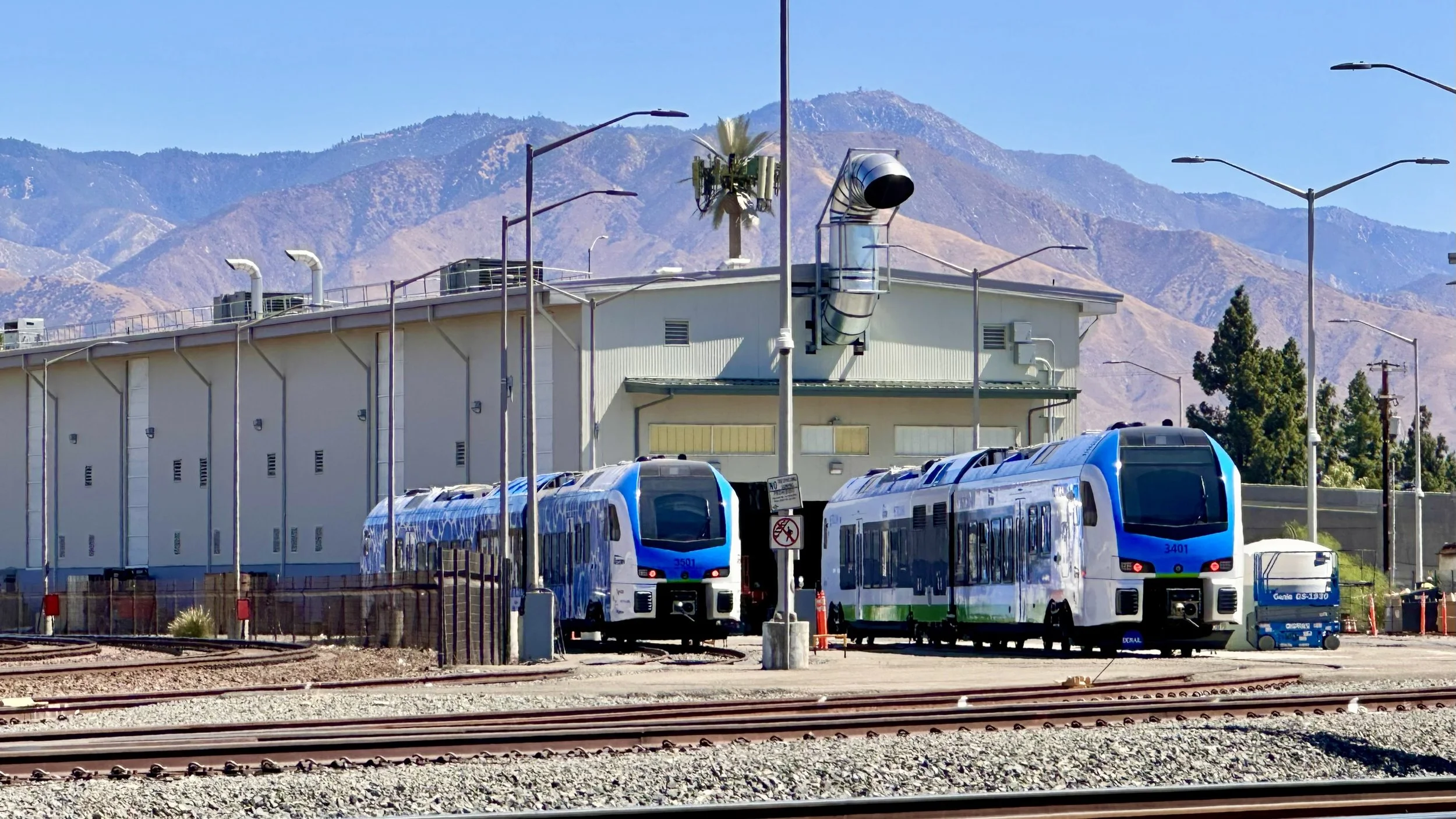
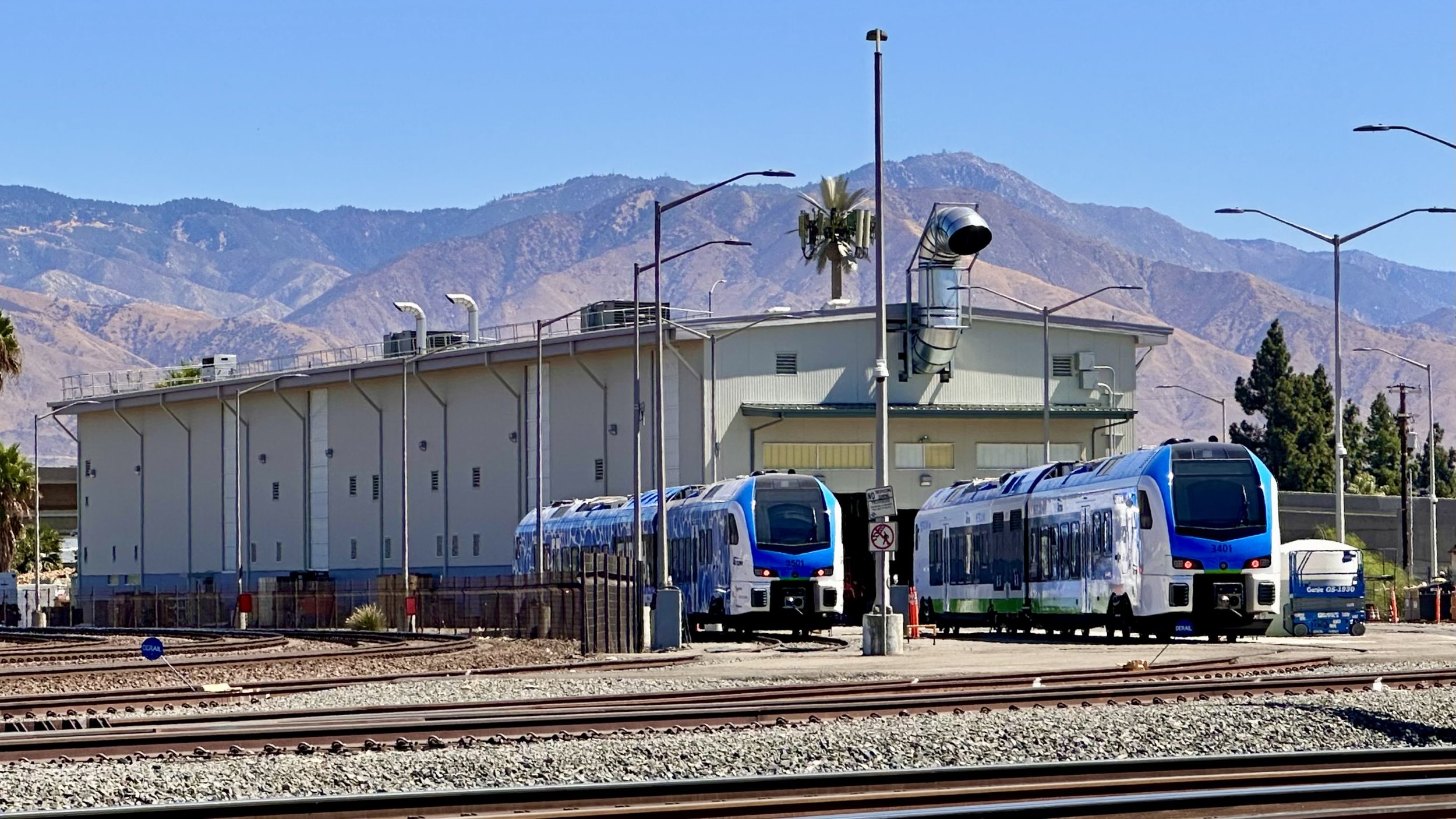
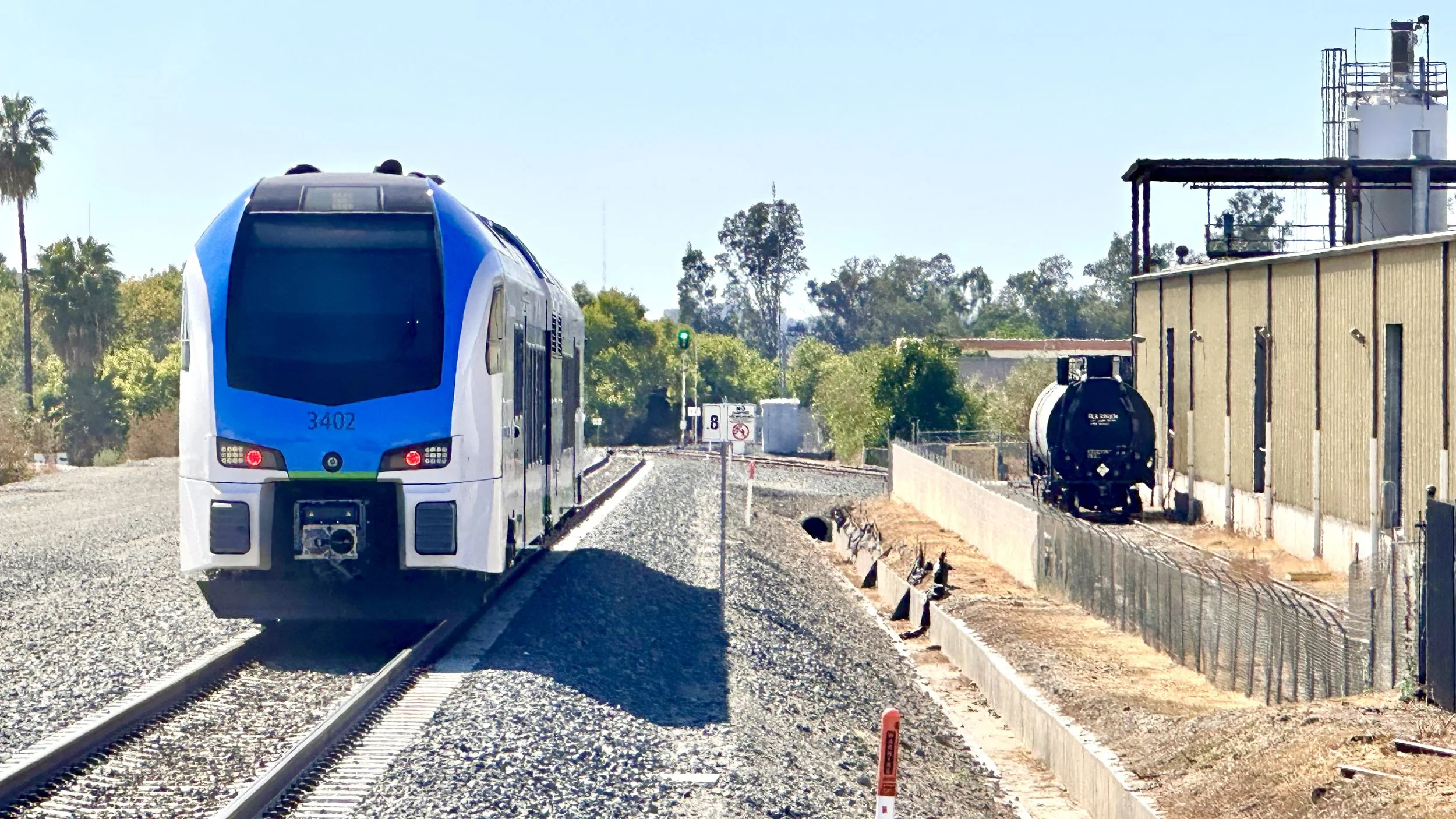
There is one on-line freight industry, a chemical plant. with a single spur. Arrow’s saving grace, however, is its OMF, which resides next to the San Bernardino Depot Amtrak Station and a very large intermodal and freight yard right on BNSF’s southern transcon. This puts DMUs line-of-sight from some of the heaviest mainline freight railroading on the continent, and posits the possibility of modeling just a freelanced OMF as if it were a switching job, revenue movements be damned. At appointed times during an op session, a switch crew could cycle a few DMUs through the OMF based on a maintenance schedule, then send one or a few off-layout into a staging pocket depicting crew changes or adding extra peak commute frequencies. This could be a very unique and colorful way to shake up typical switching puzzles found on many large layouts.
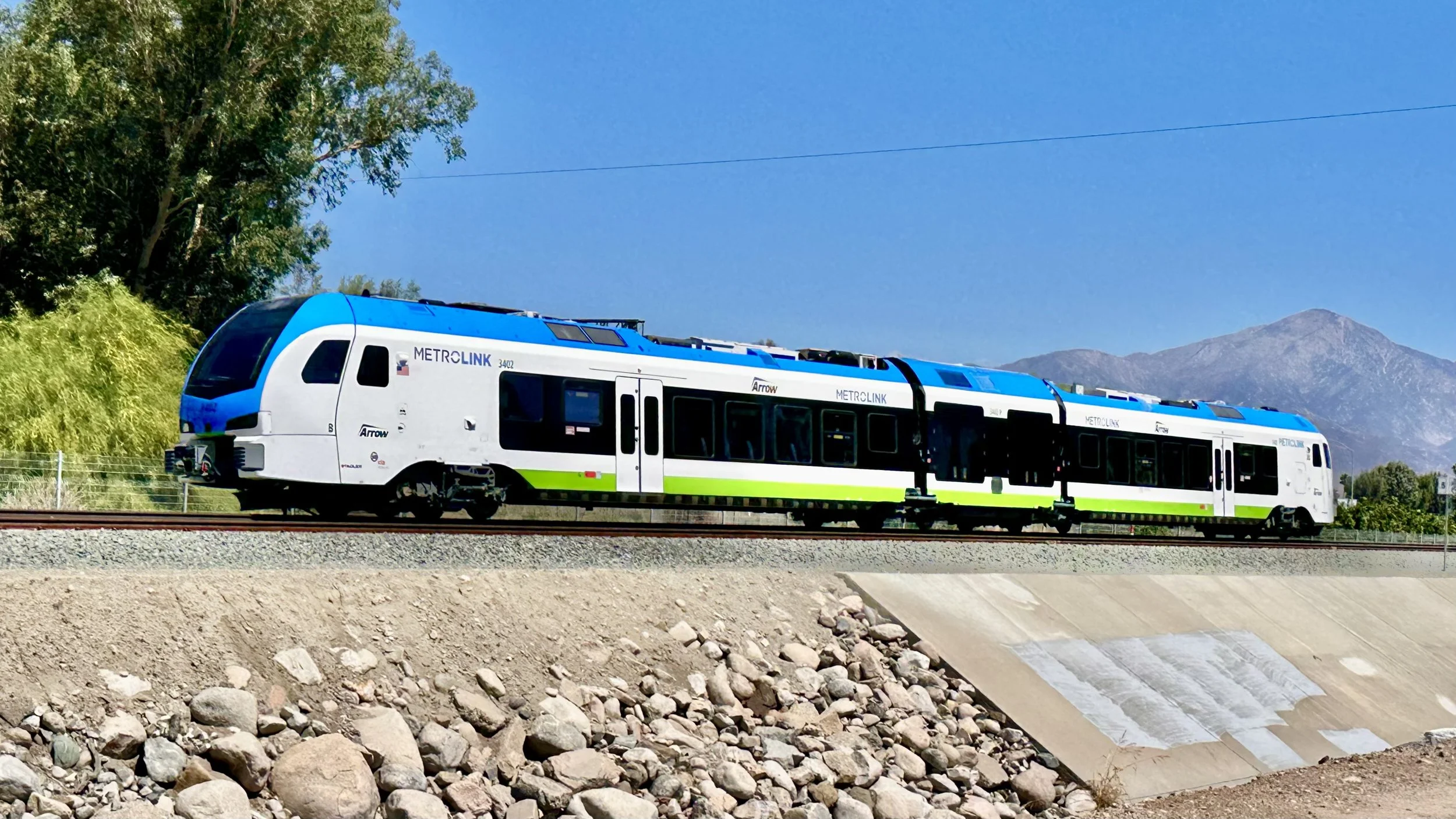
A note on vehicles: FLIRTs are the newer, bigger siblings of GTW 2/6s, having larger motors that allow for two additional trailer cars, but keeping the middle “Power Pack” mini-cars which contain the prime movers surrounding a ‘funhouse’ passenger hallway. Uniquely, Power Packs are swappable, allowing a spare kept for maintenance, and making the DMUs forward-compatible with alternative fuels by swapping in Power Packs which contain pantographs (EMUs), batteries (BEMUs), or Zero Emission Hydrogen Fuel Cells (ZEMUs). During TEXRail construction, Stadler opened a factory in Salt Lake City to manufacture its passenger trains, making FLIRTs now the de facto modern standard for (buy-America-compliant) DMUs.
As far as models go, while nobody manufactures US-prototype Stadler DMUs (either GTW 2/6s or FLIRTs), these vehicles are very common as European prototypes, and there have been many versions on and off through the years in HO and N scales with DCC and Sound. However, Stadler’s cheeky lineup has been slightly scrambled when introduced to the US. KISS’ are still the same double-decker EMUs, such as seen on Caltrain or every square centimeter of Switzerland. However, in EU markets, FLIRTs are similar to US versions, but as EMUs lacking the center Power Pack. What the US understands as FLIRTs are visually more similar to European WINKs, the spiritual successor of the GTW 2/6 which are generally shorter and do possess Power Packs (although they’re still different models; FLIRTs have their traction motors underneath the cabs at each end, whereas WINKs and GTWs have their traction motors beneath the prime movers inside the Power Packs).
Models of EU FLIRTs are almost as common as GTWs, possess the same general shape and characteristic front end, and are decently easy to come by in DCC and Sound, but lack the Power Pack distinctive of US FLIRTs. Unfortunately, models of WINKs are much rarer. Thus, a strict prototype modeler could buy models of both a FLIRT and a GTW 2/6, then kitbash the Power Pack from the GTW into the FLIRT and remove the FLIRT’s pantograph and extra coaches. Alternatively, one could easily abort the kitbash and compromise on an unmodified FLIRT lacking a Power Pack, use a Stadler GTW 2/8 (with a Power Pack and extra middle car but lacking the proper cabs), or buy the Hornby OO Stadler FLIRT with Power Pack as stand-in models until someone manufactures a US FLIRT.