Check out the full series on Youtube
In 2025, as I was fleeing the US as a refugee, I bicycled the length of (and rode end-to-end) all 10 Diesel Multiple Unit Hybrid Light Rail (DMU) transit systems in the US to document them for other modelers and advocates. The RiverLINE was bicycled as a proof-of-concept in May, eBART in November, Silver Line in January 2026, and SMART in both December 2025 and February 2026, but the rest were all captured on a single five-week Amtrak trip from PA to TX, CA, OR, and WA, spending 2-4 days in each city. Below are selected pictures from the journey, free for use by others with attribution, to help spread knowledge and encourage construction of real and model examples of this marvelous and revolutionary technology which can bring transit to any existing rail line for little more than the cost of vehicles and platforms. If you have any questions, please don’t hesitate to contact me.
Table of Contents
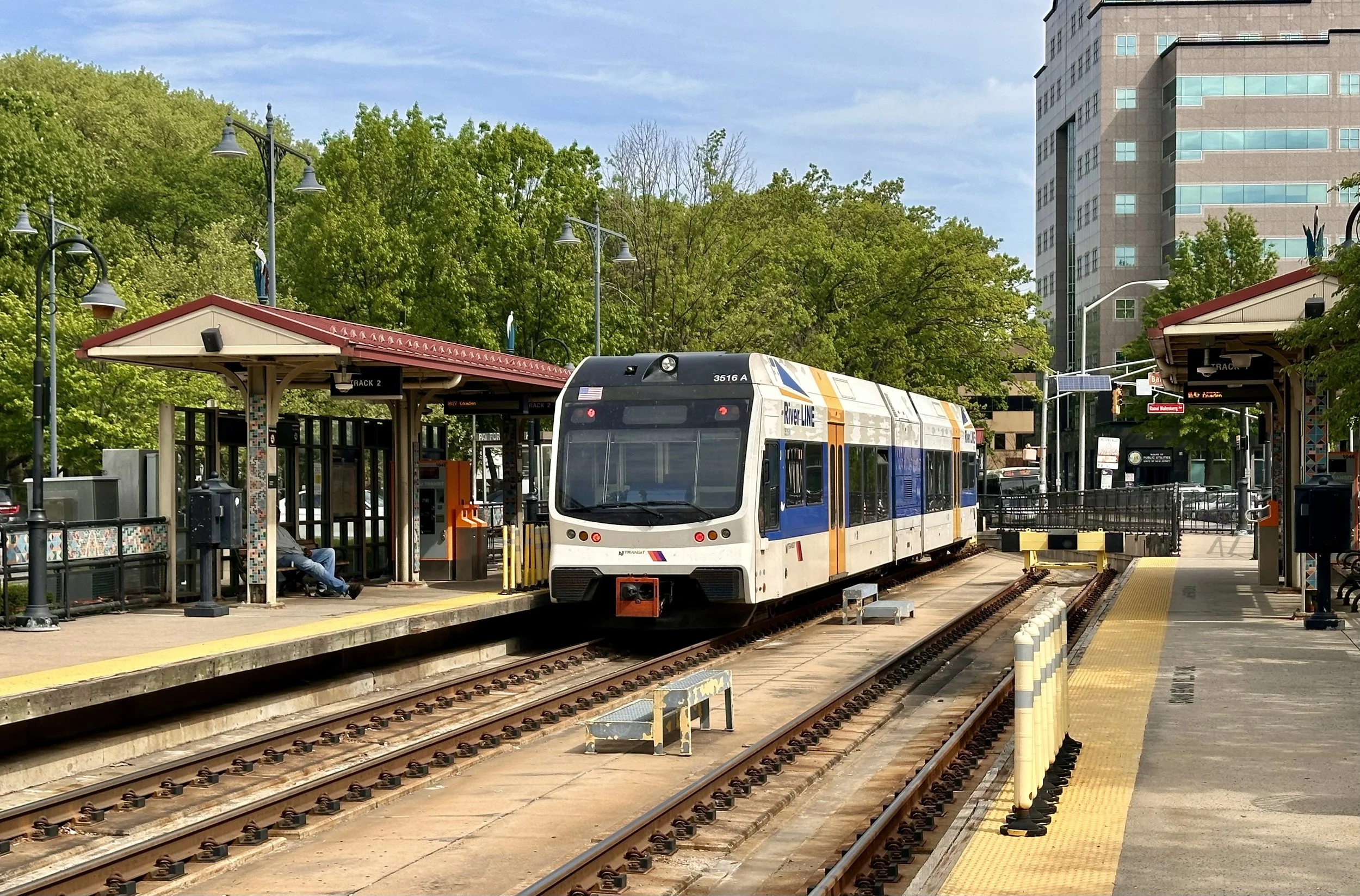
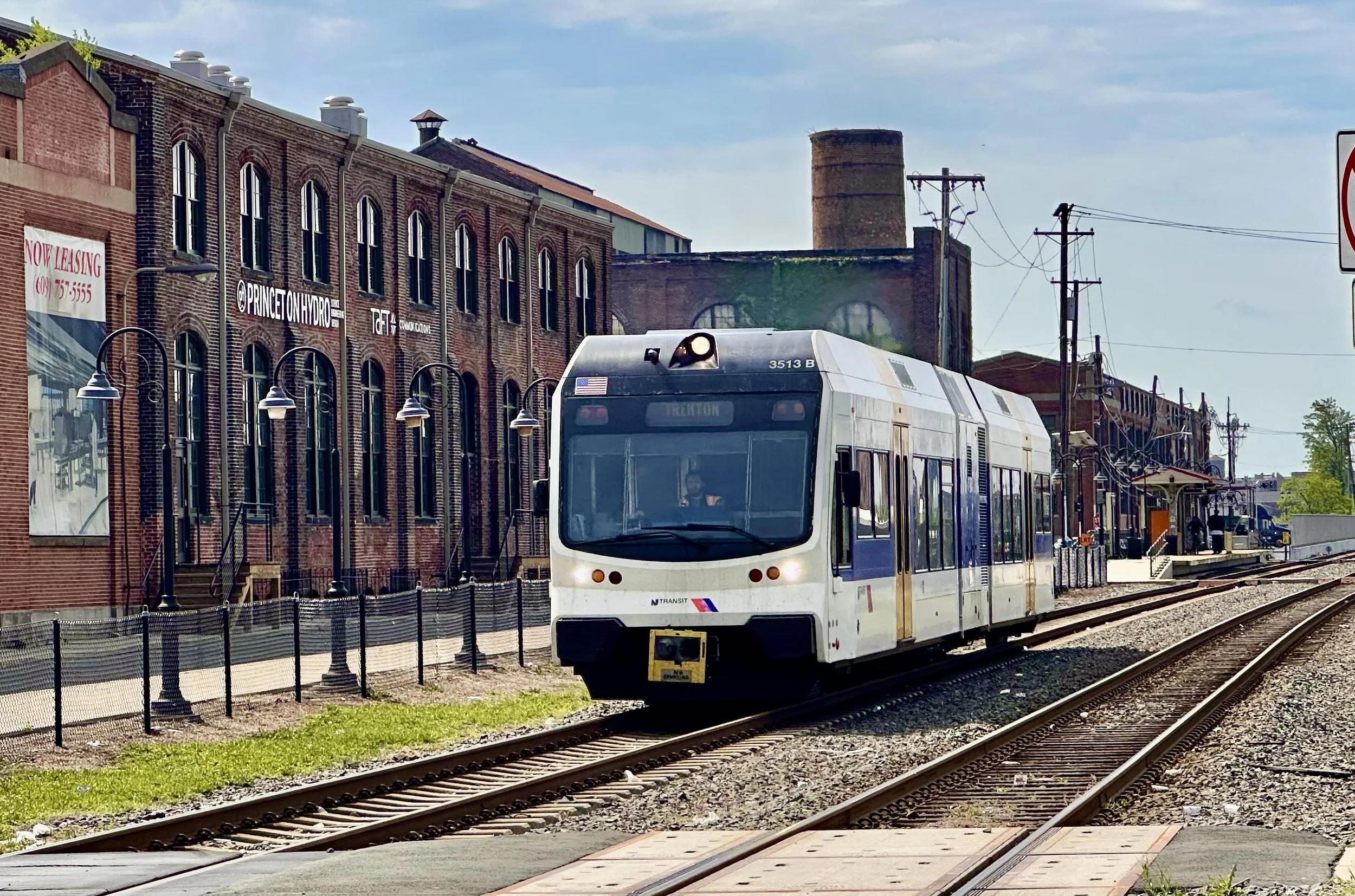
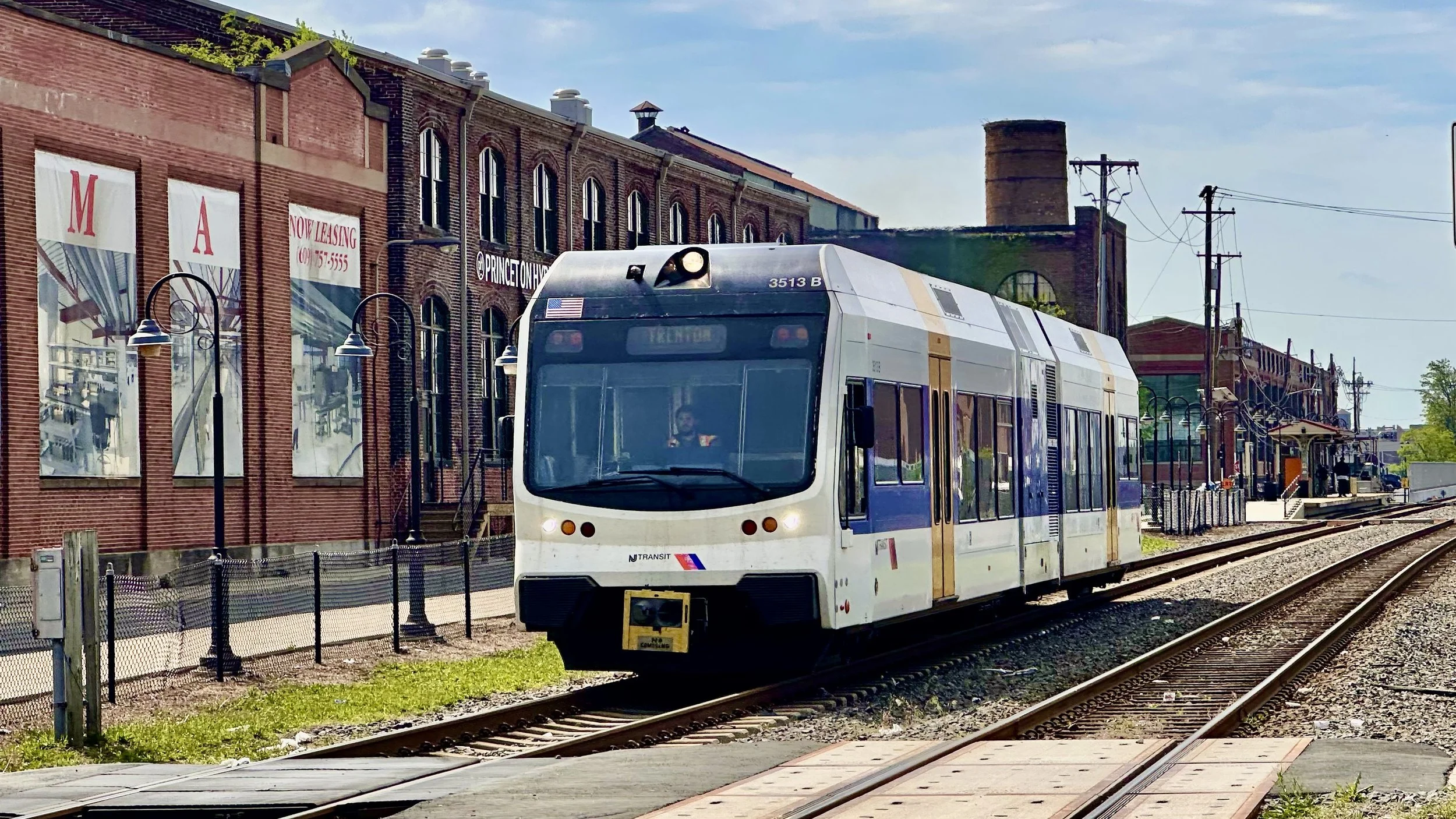
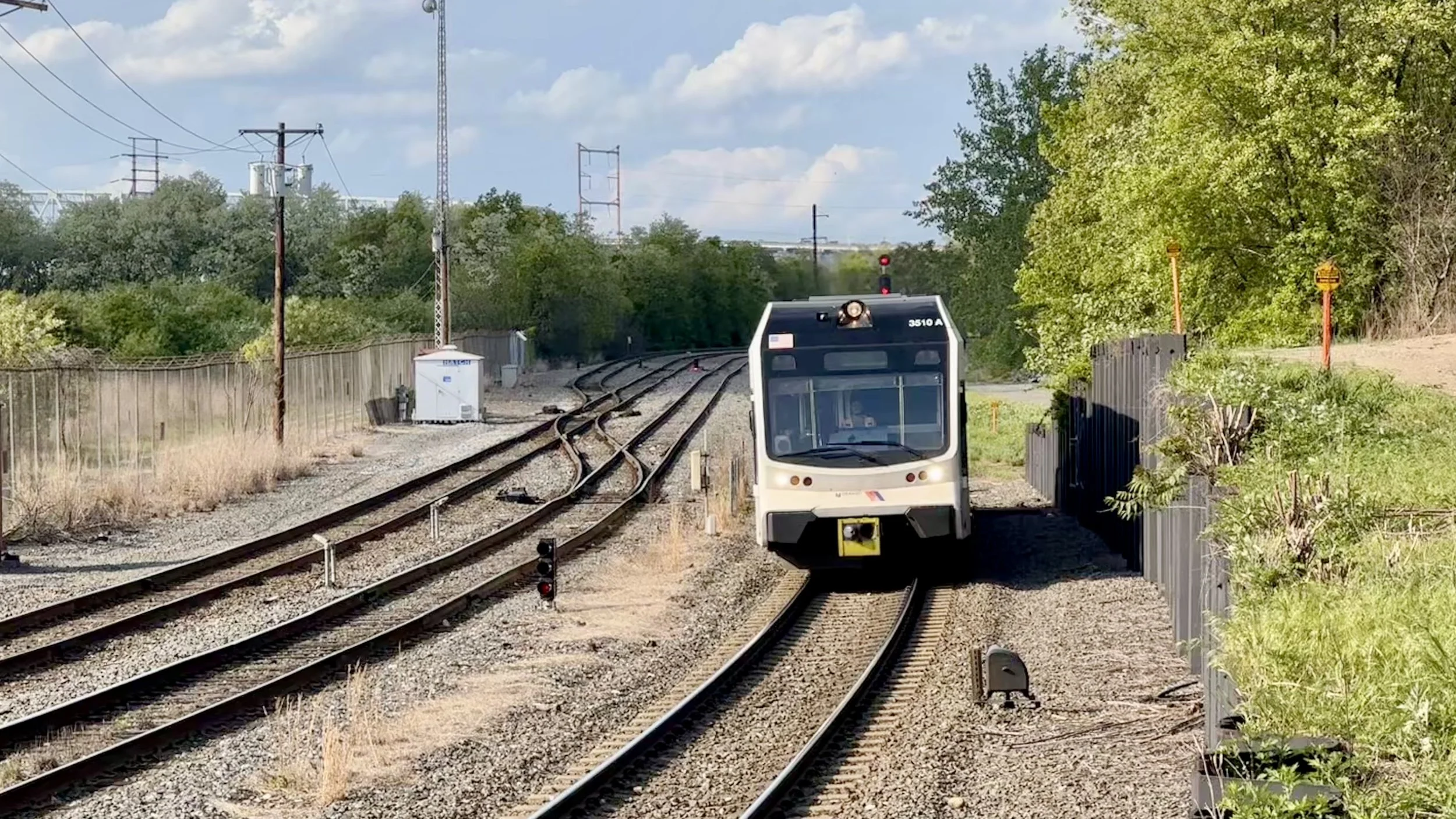
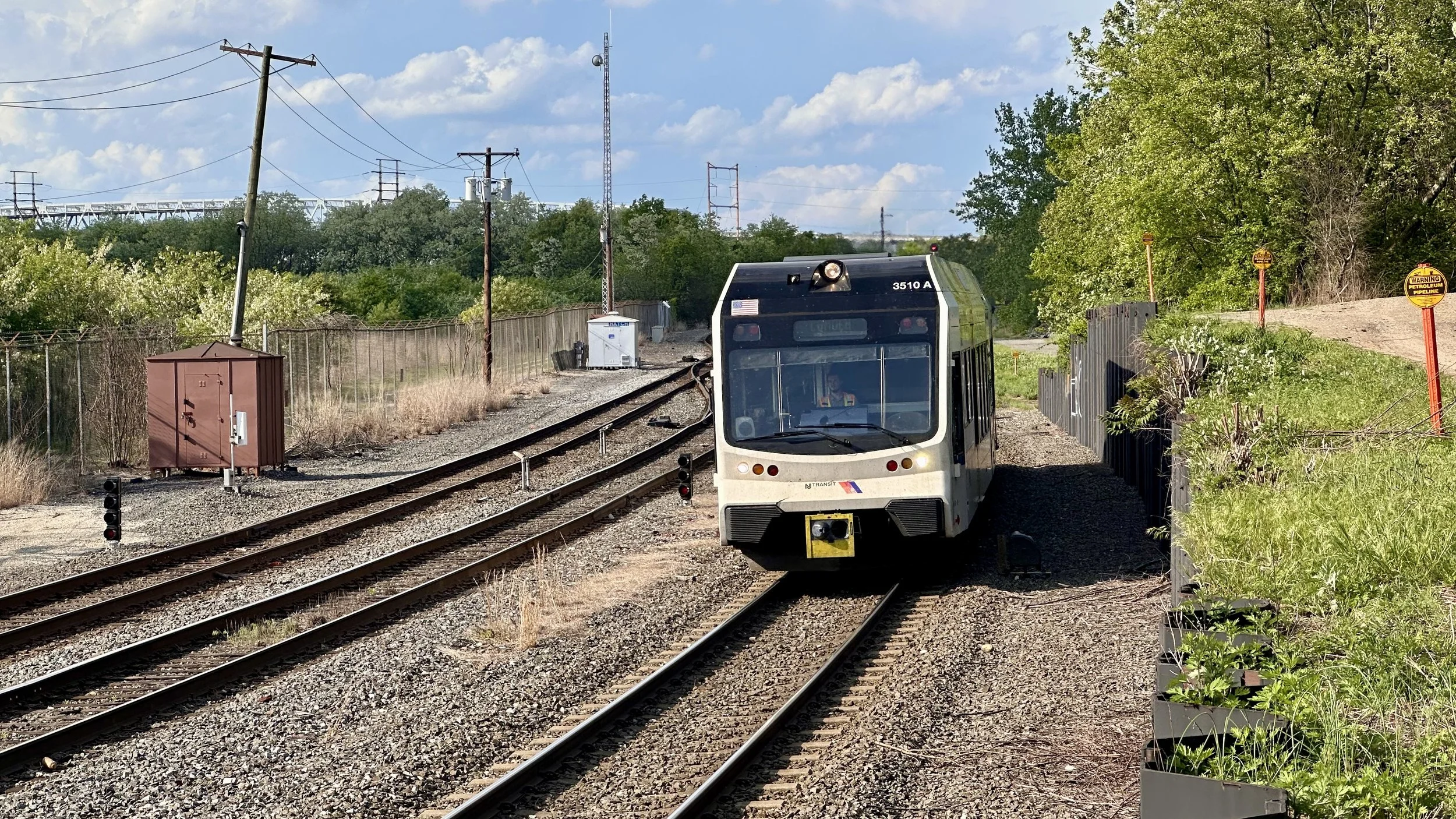
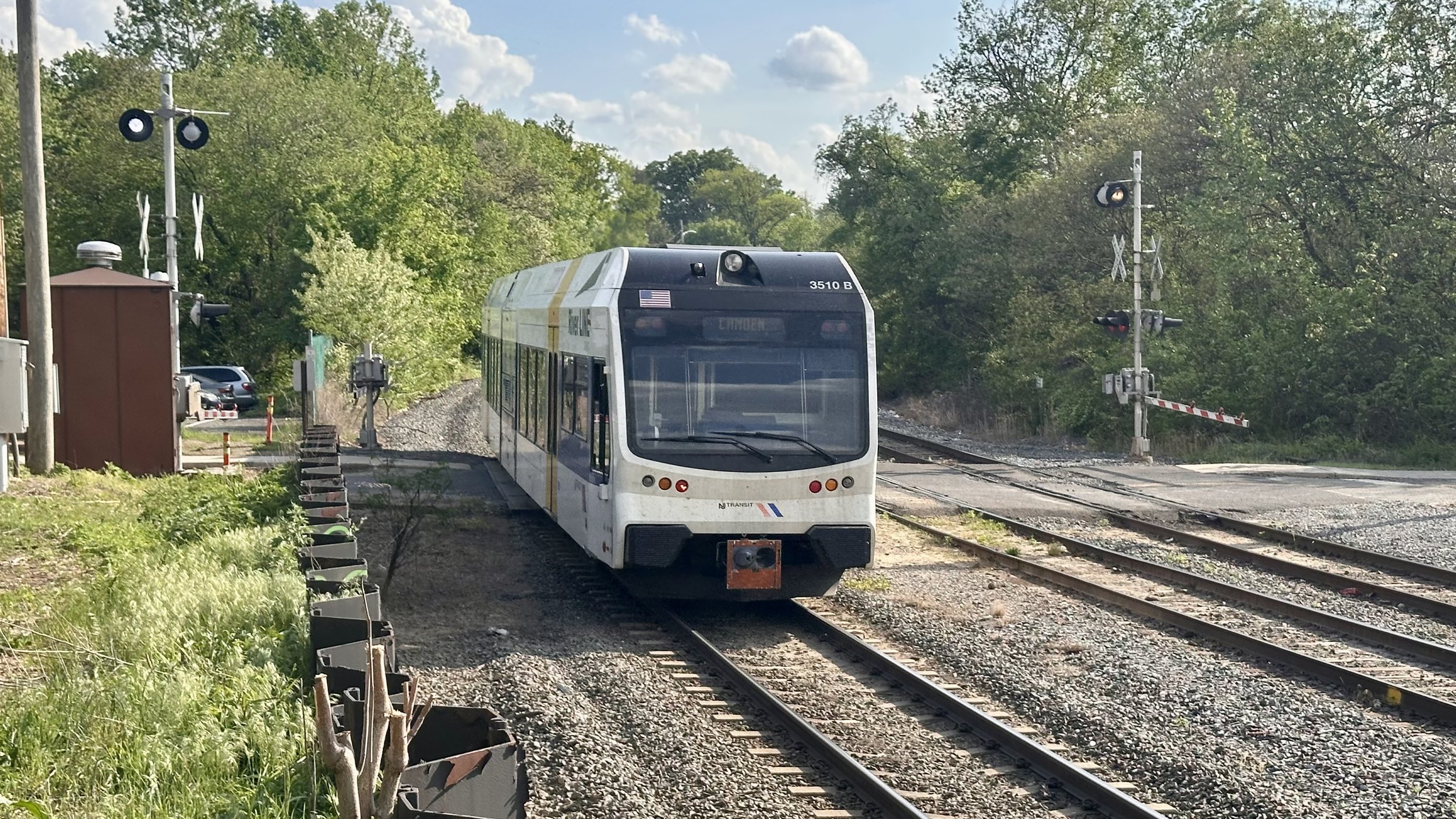
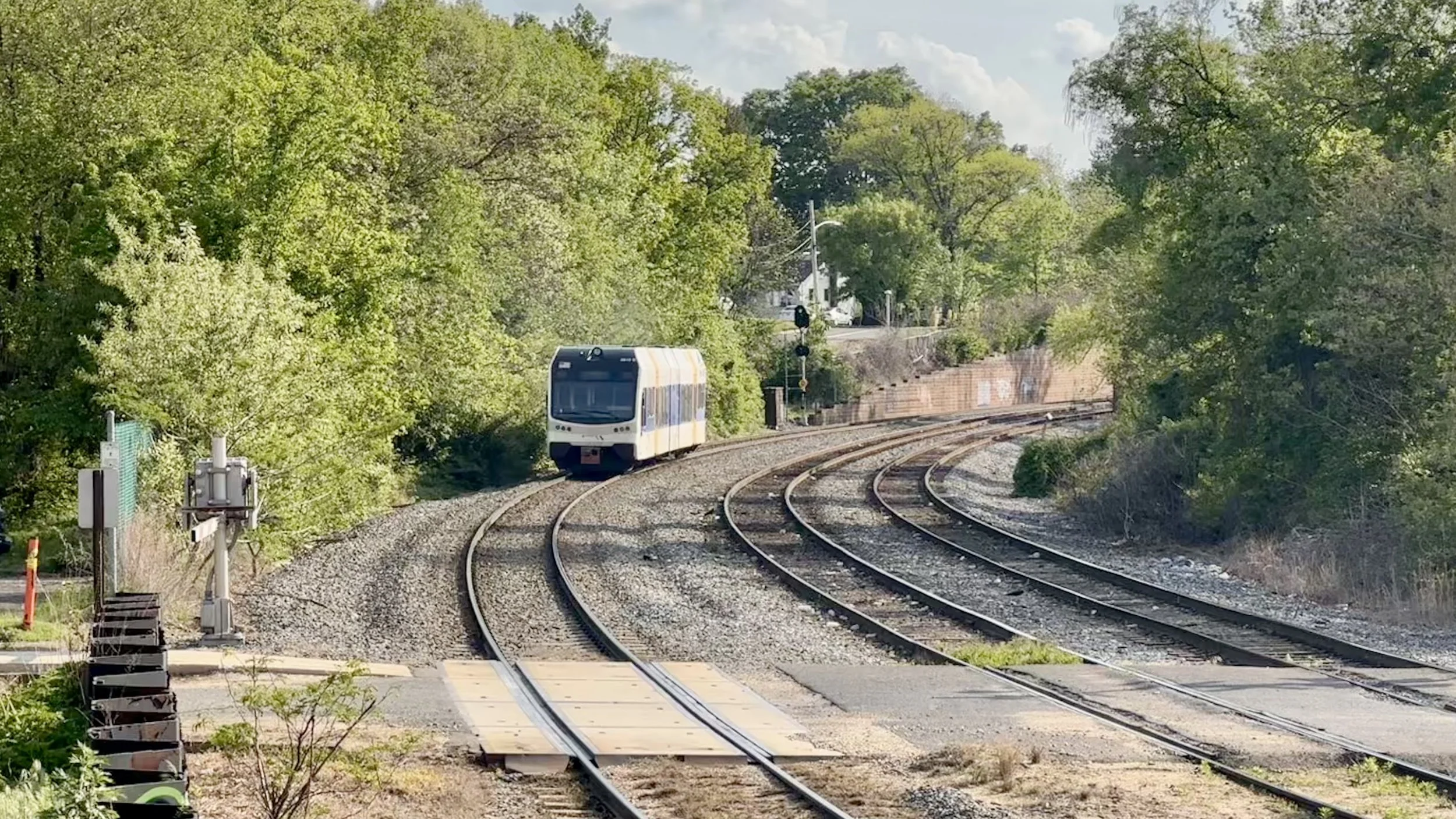
NJT River Line
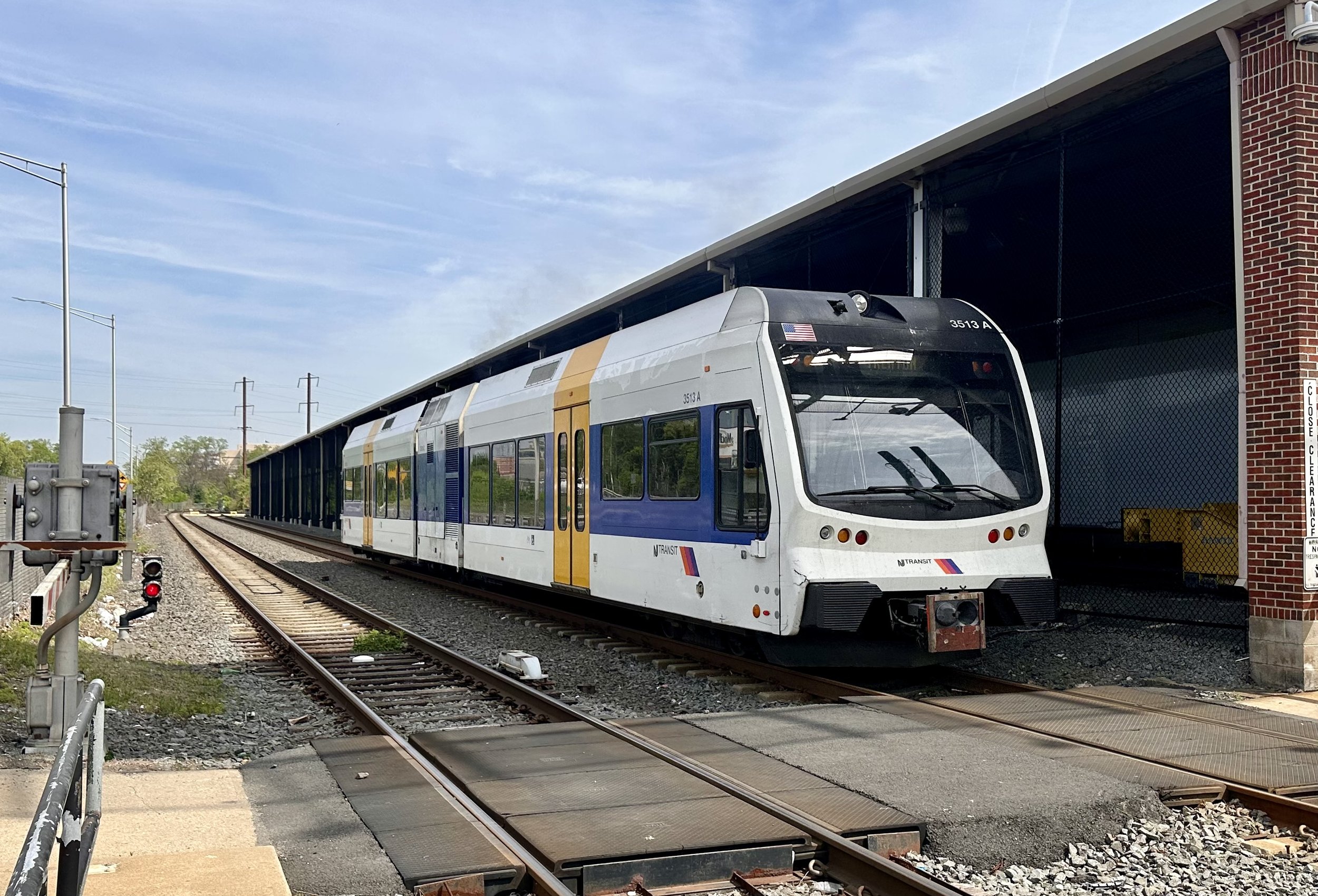
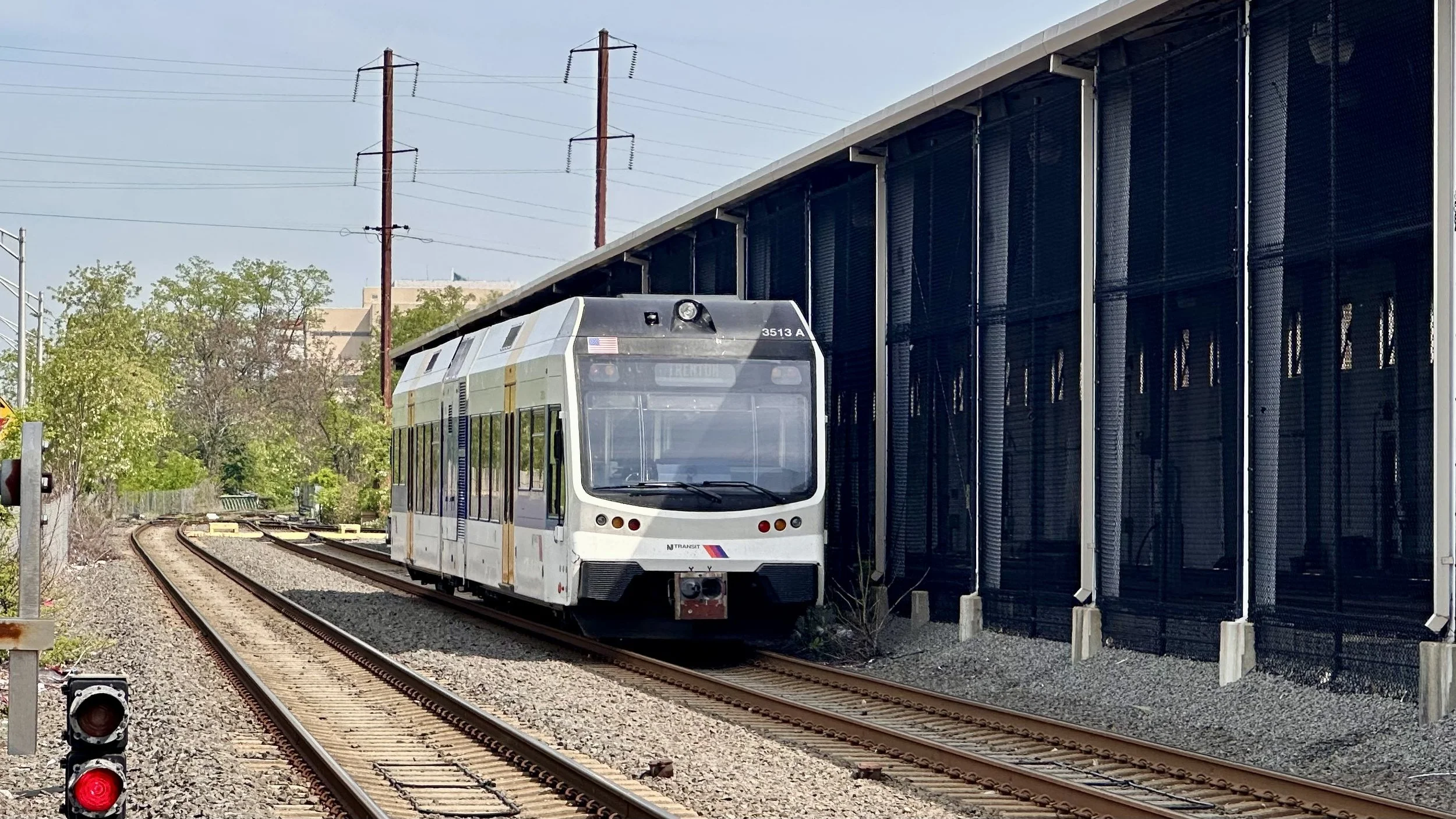
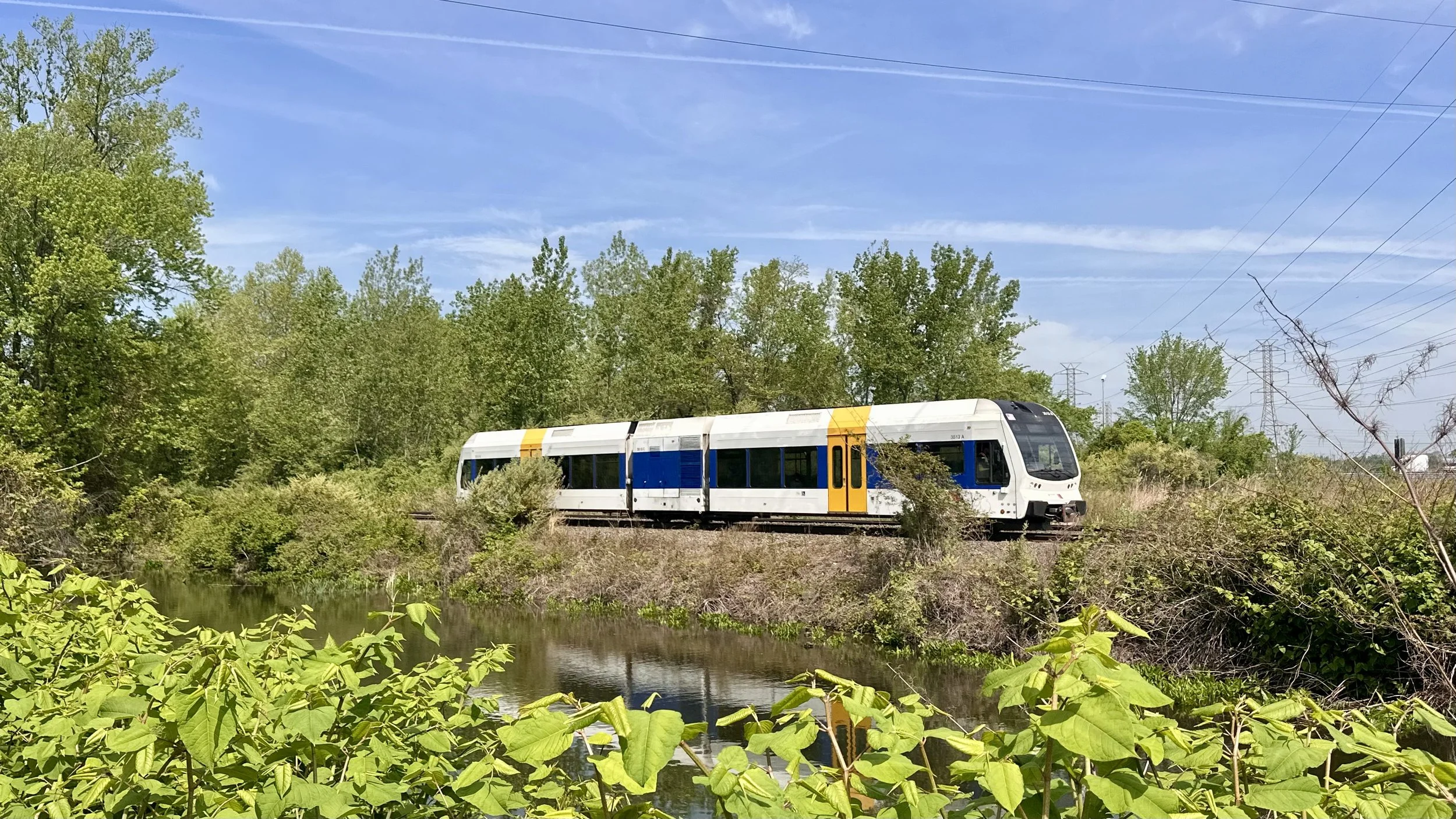
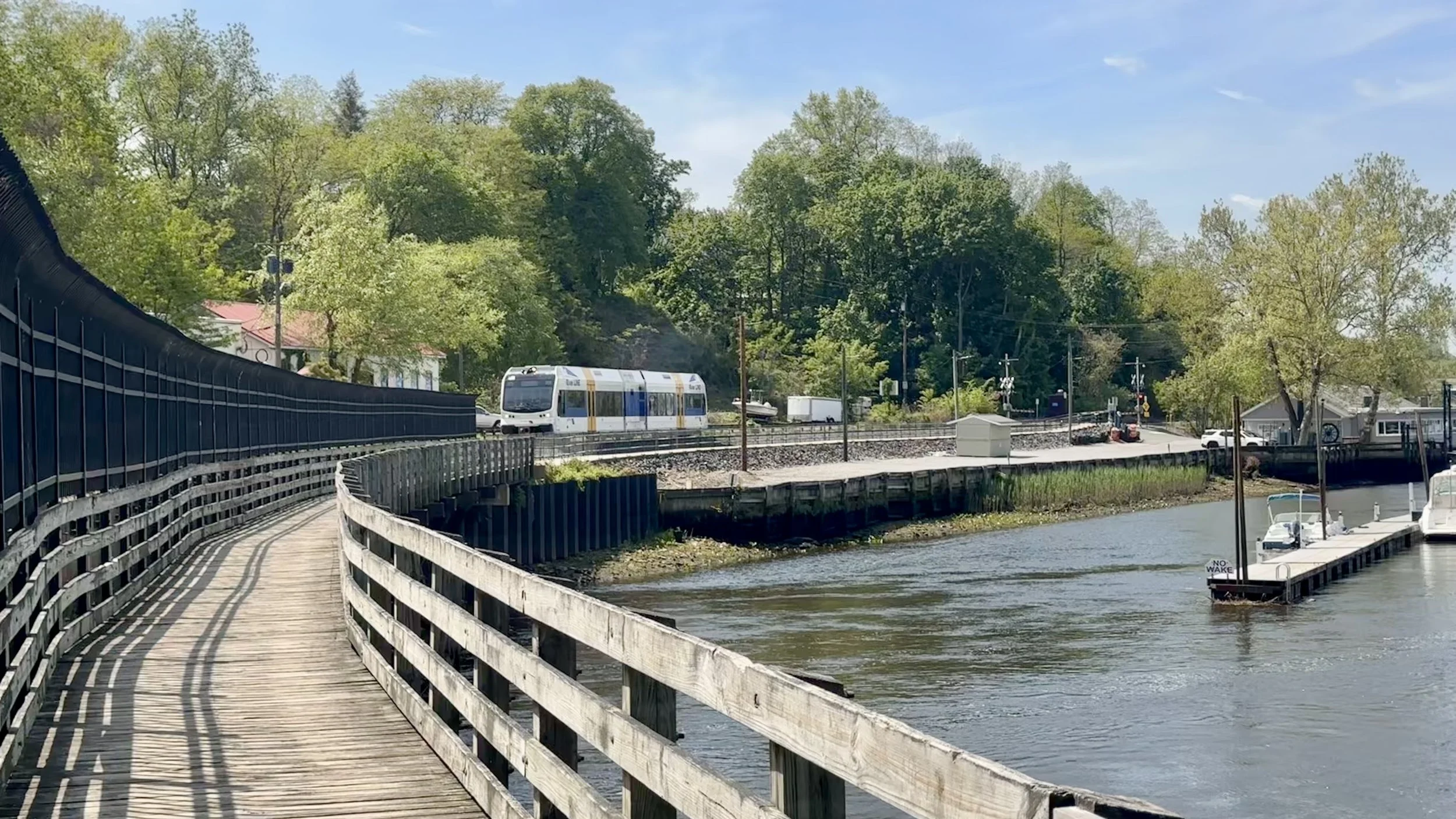
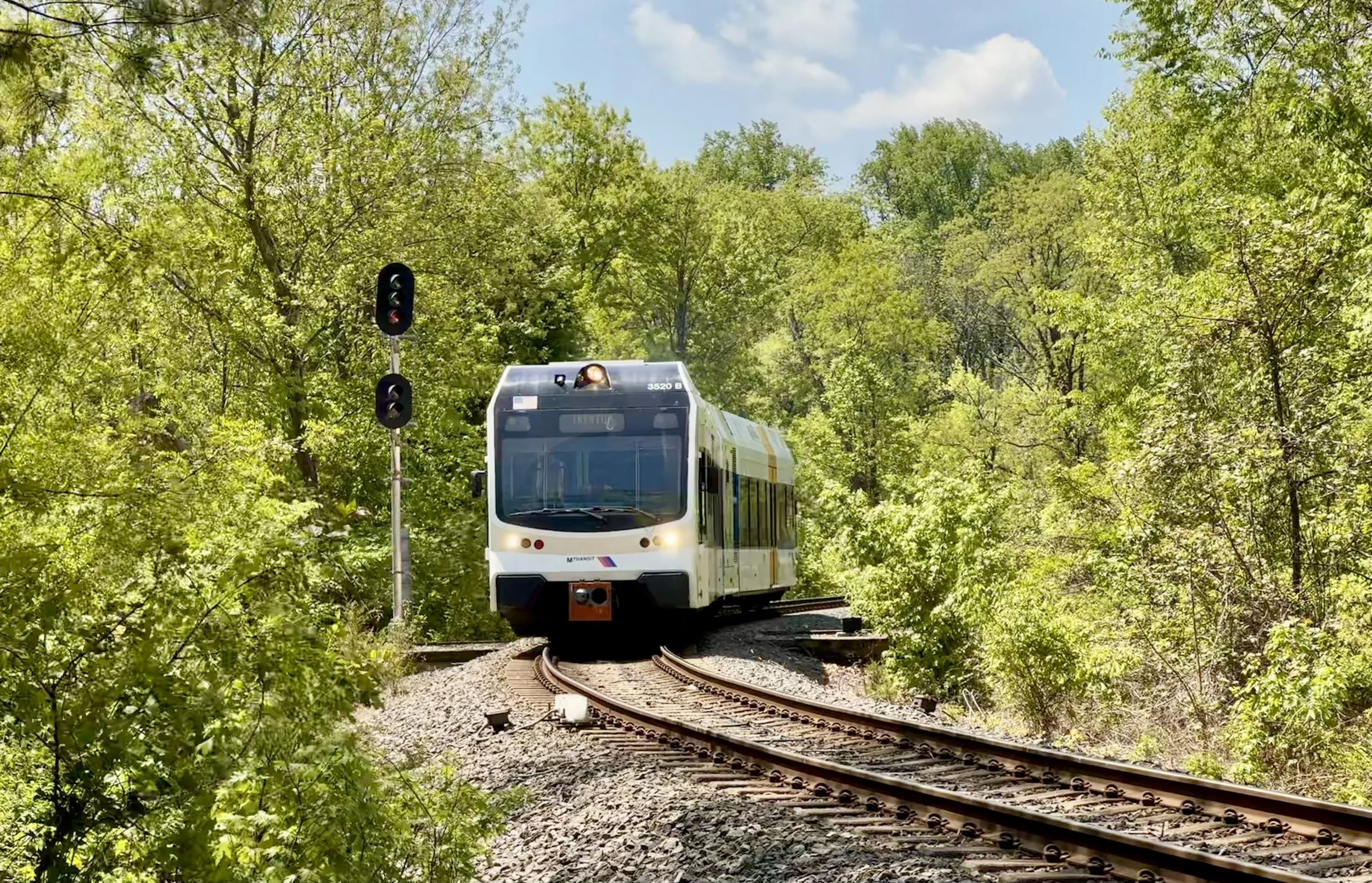
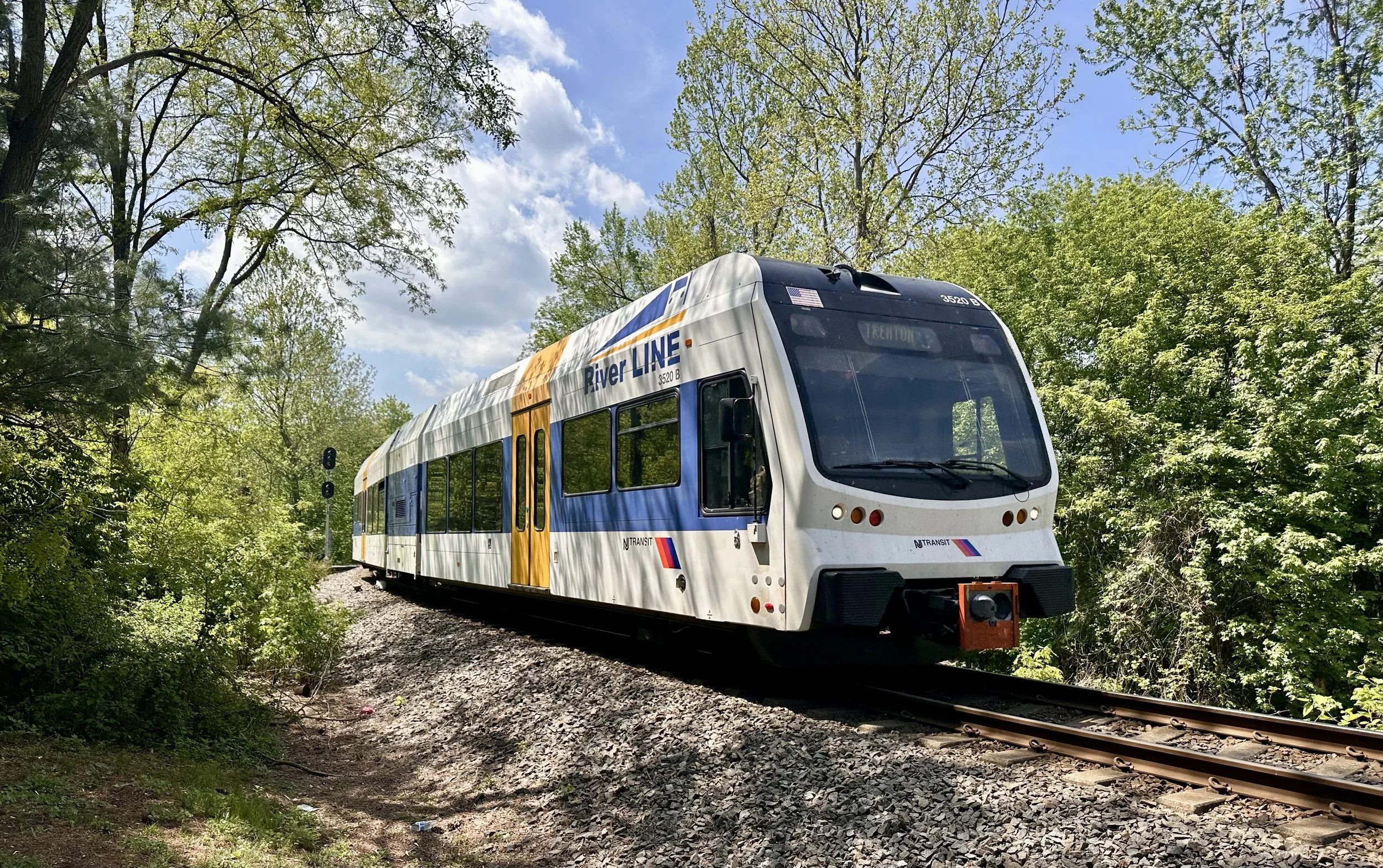
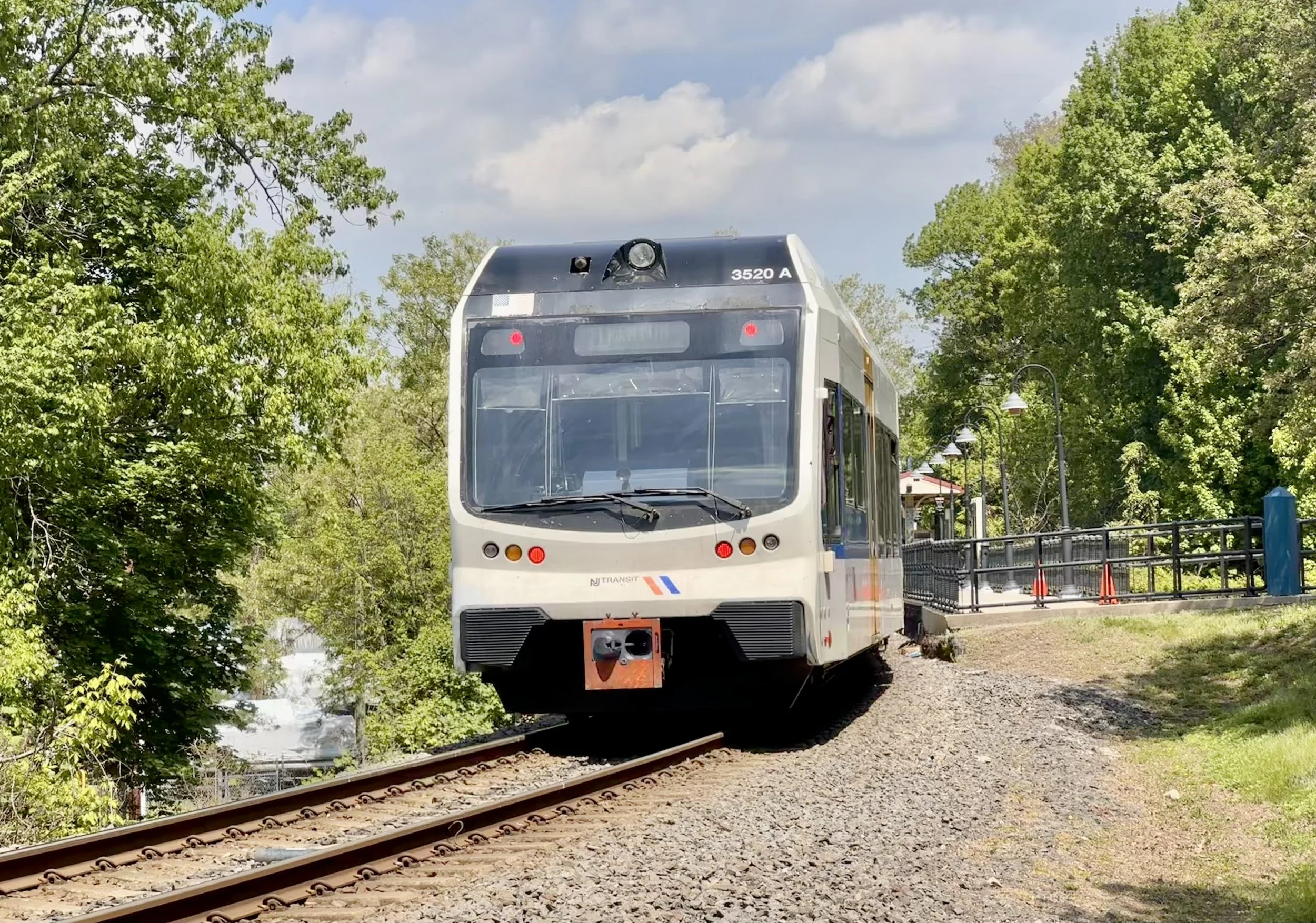
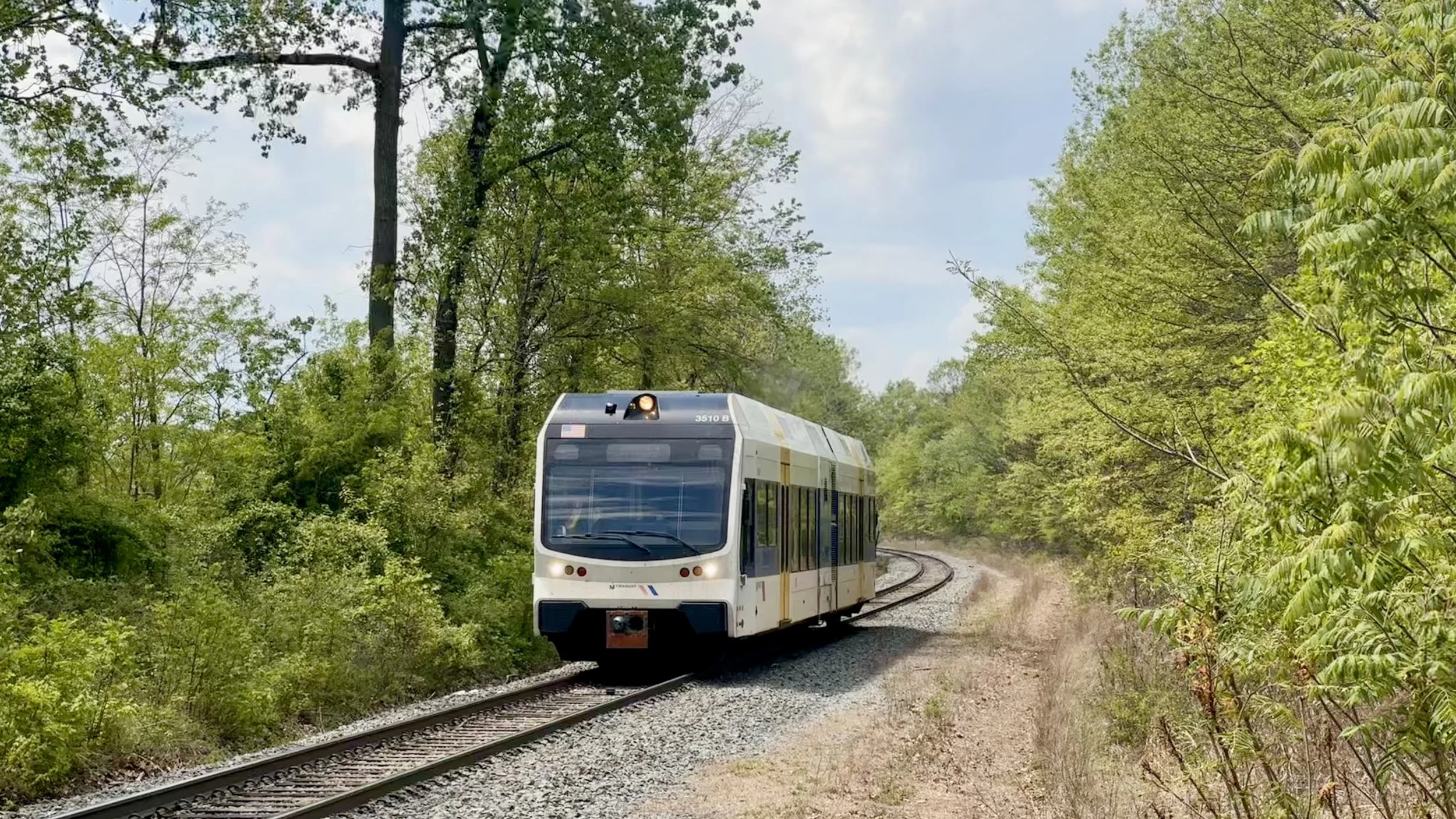
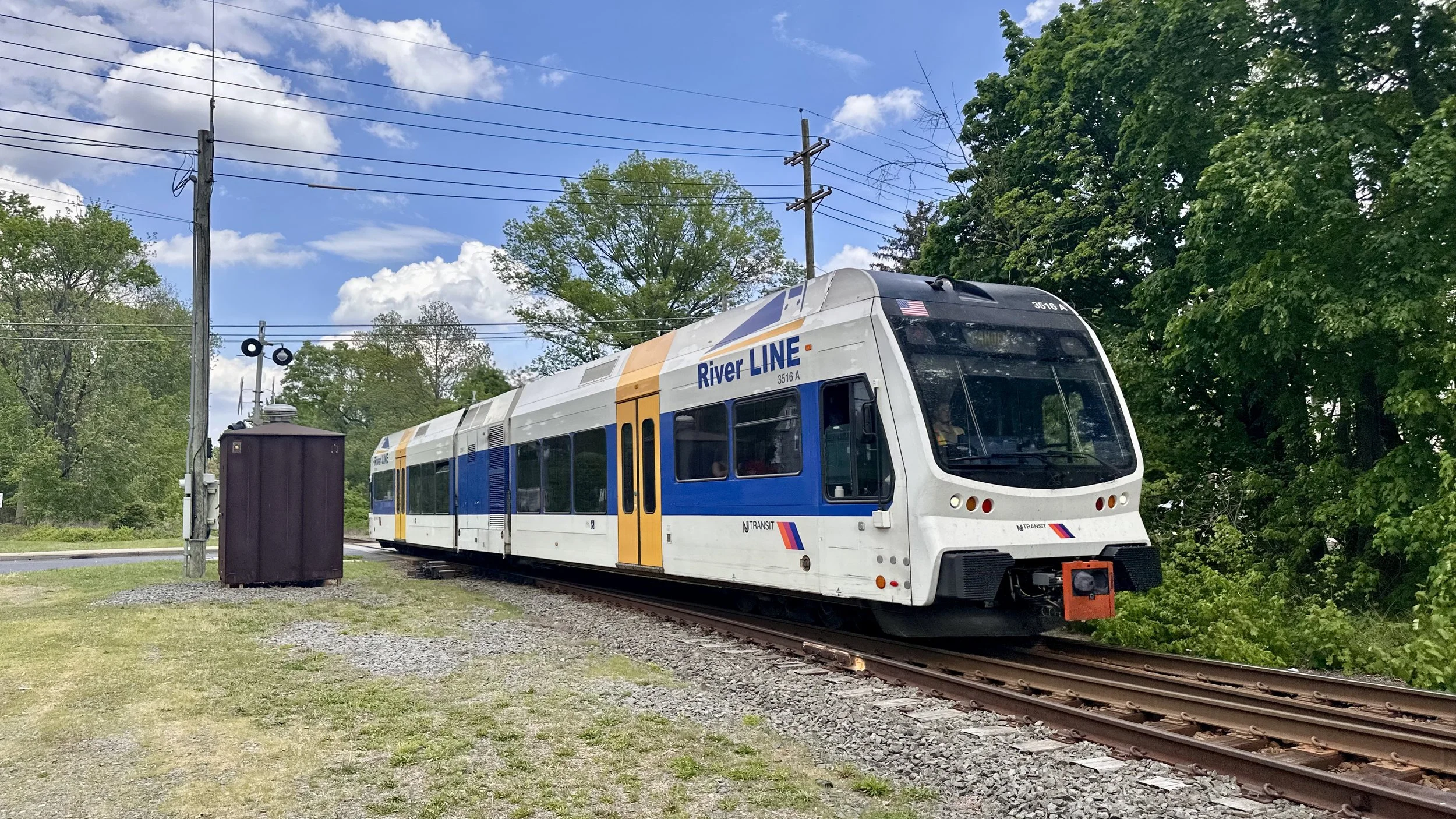
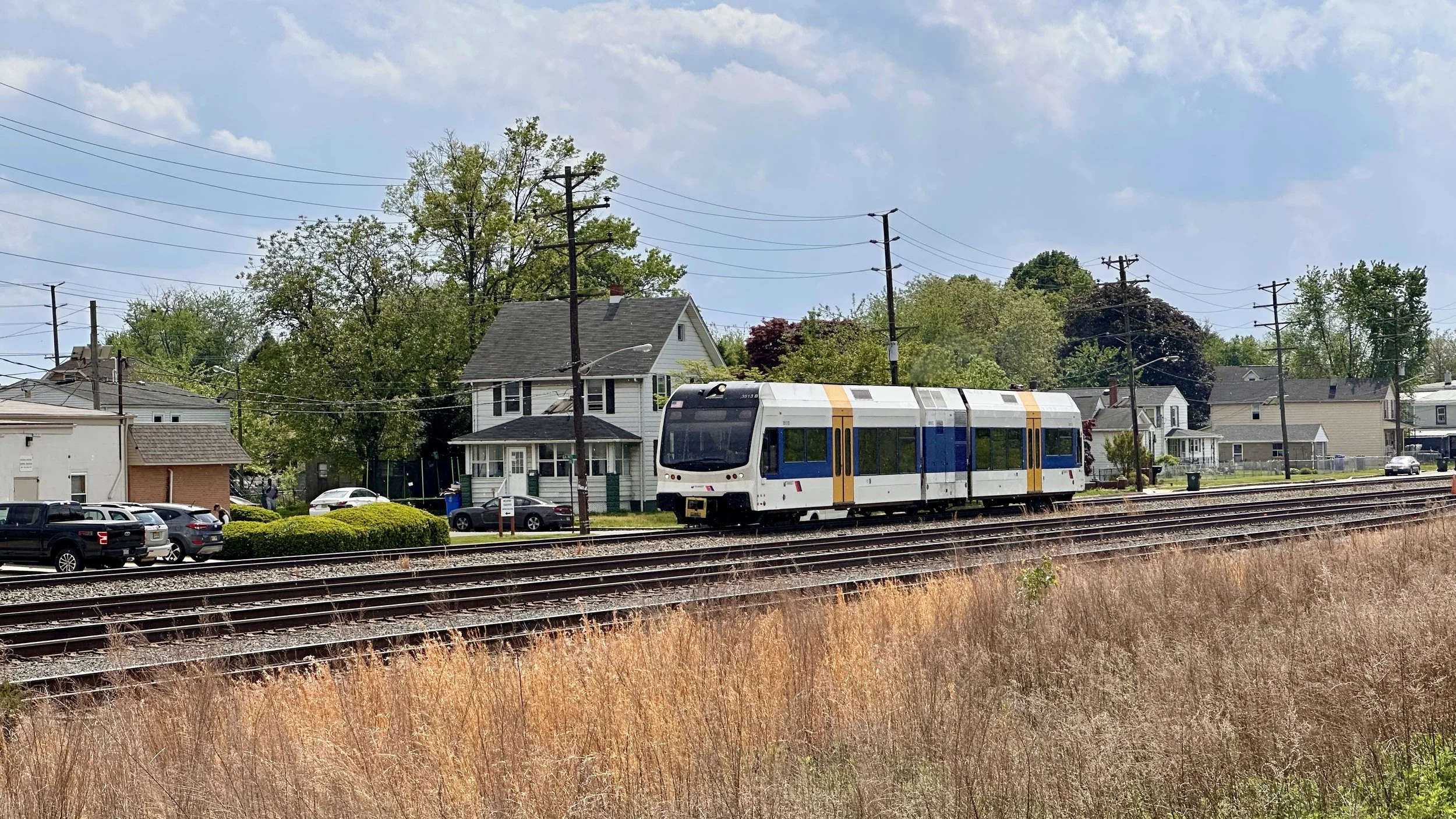
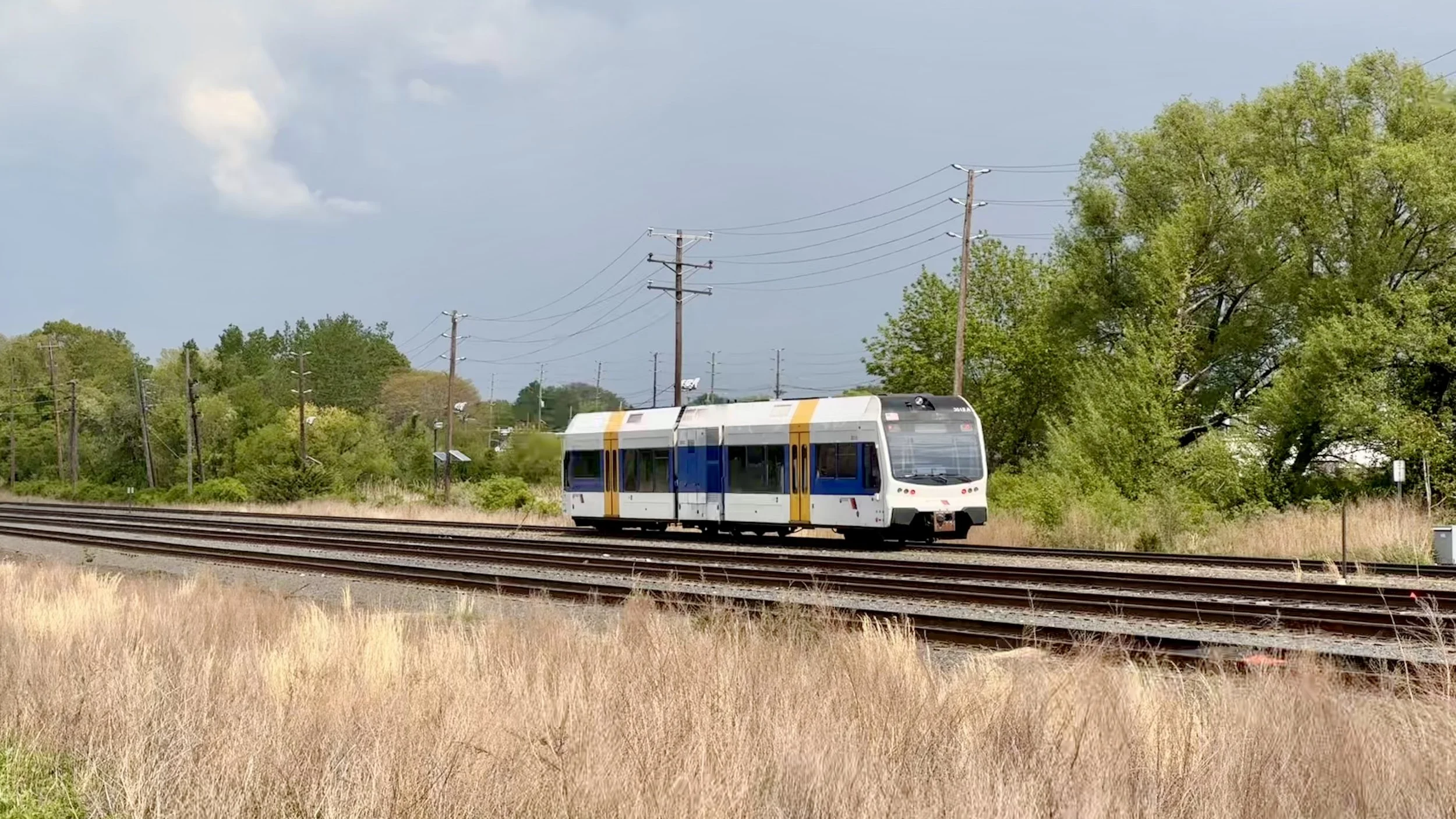
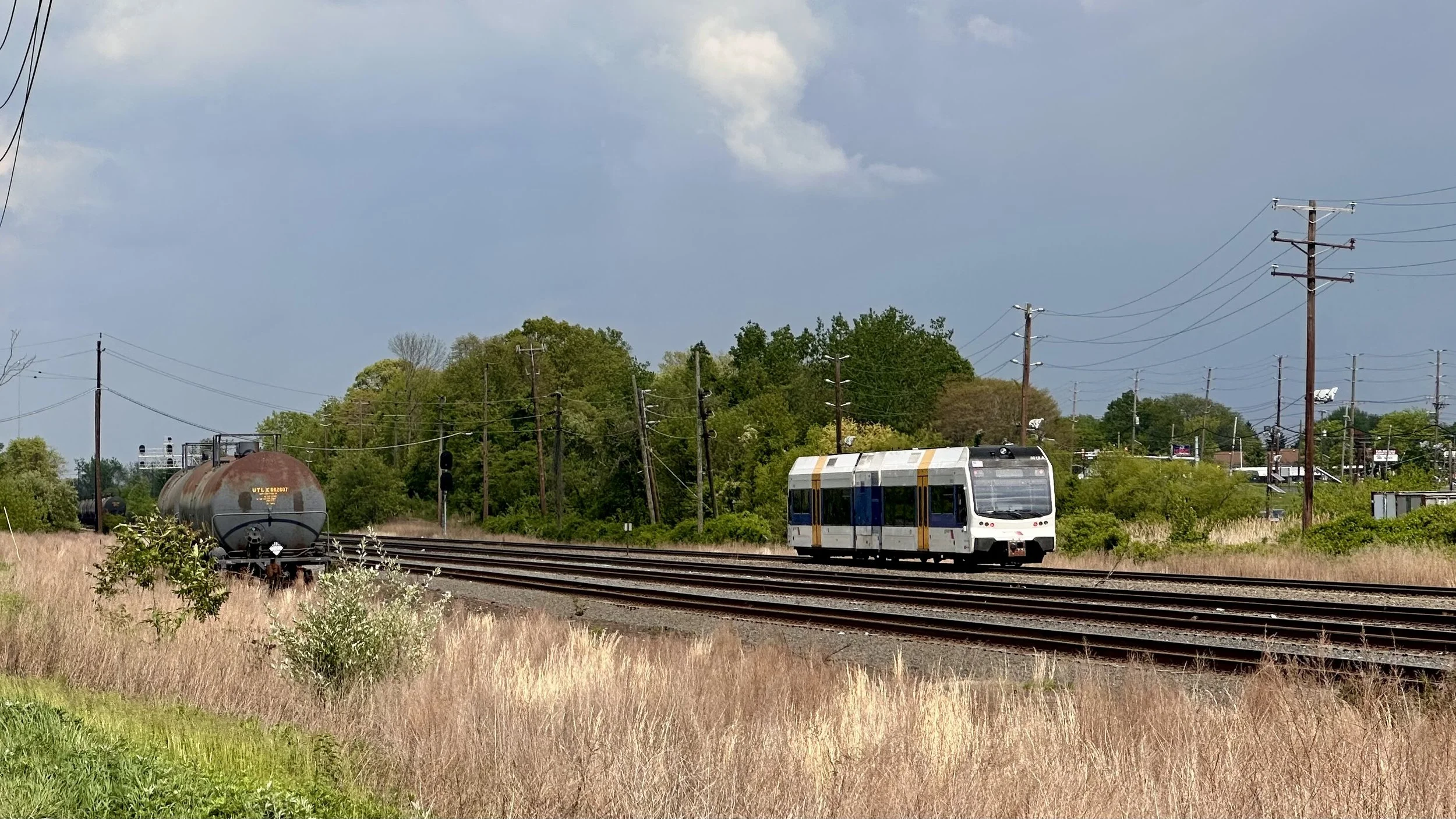
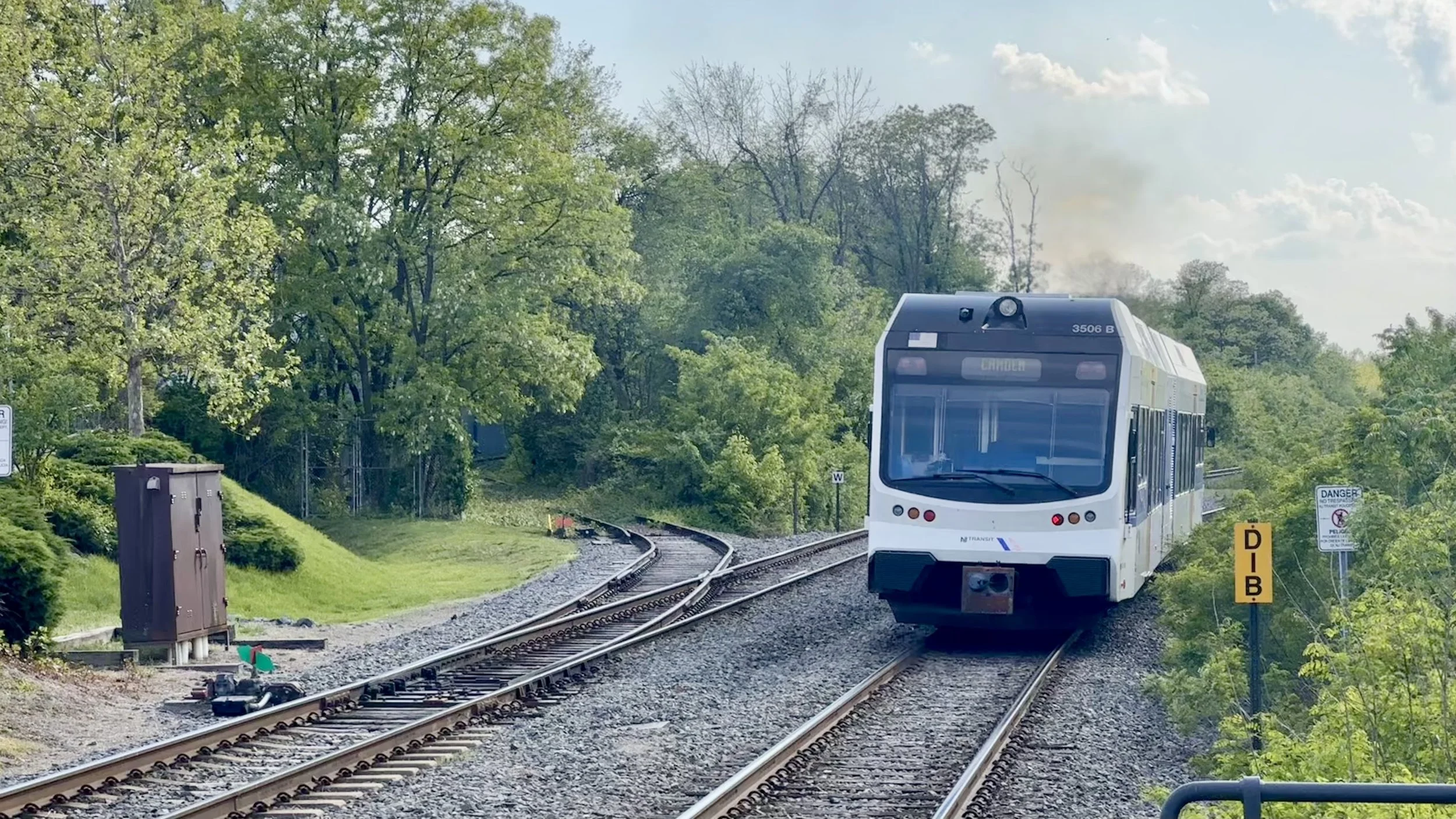
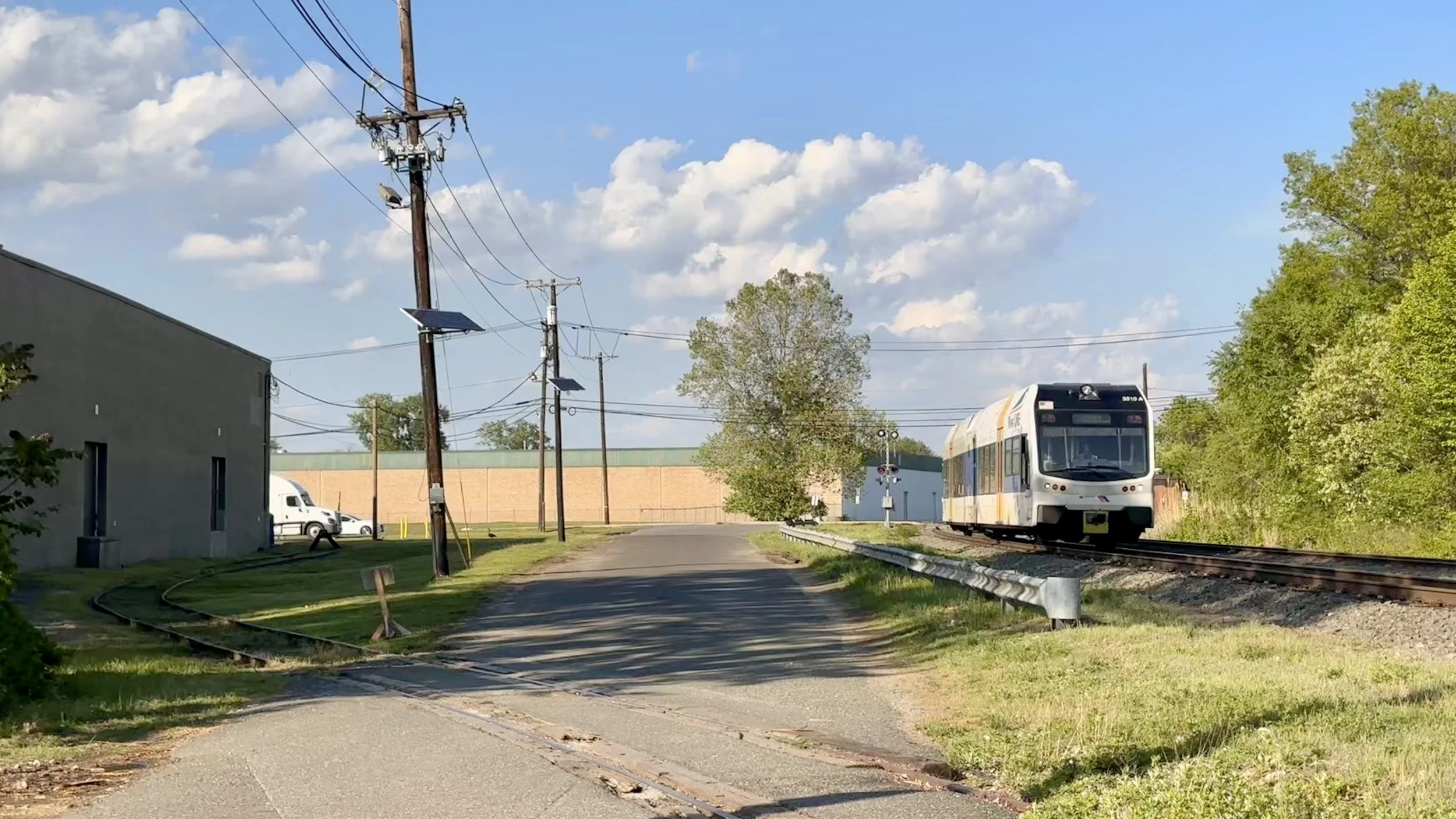
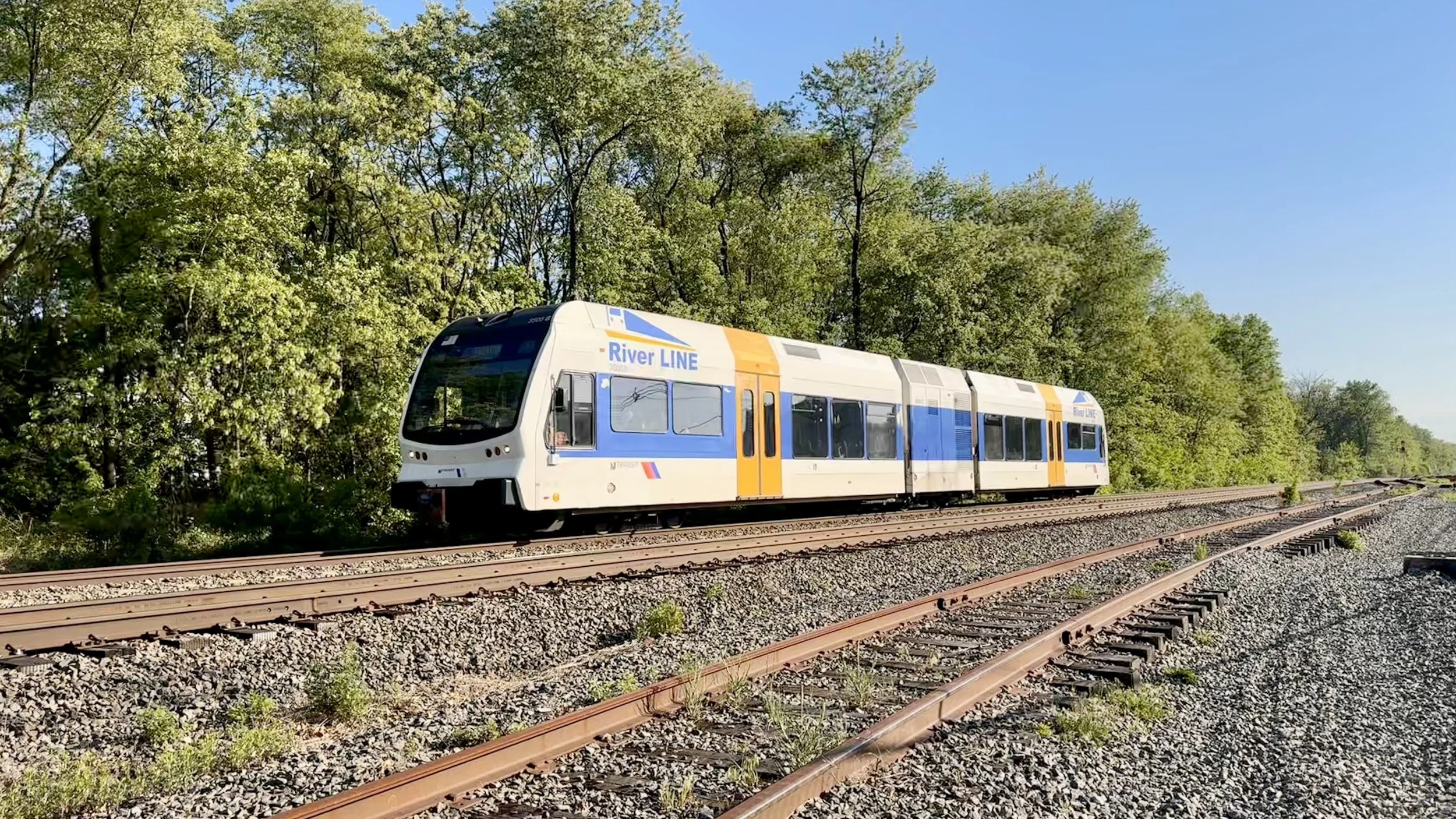
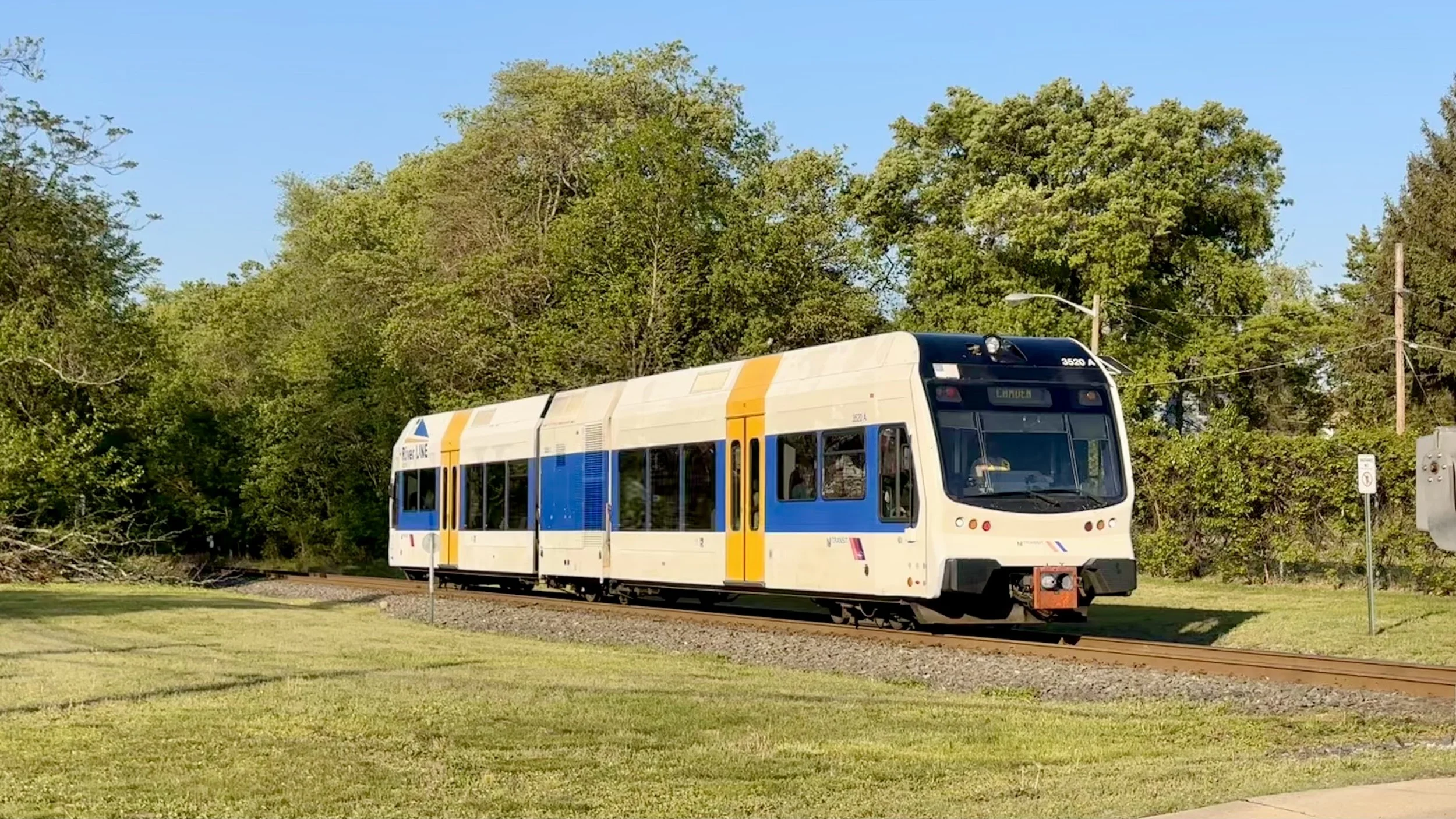
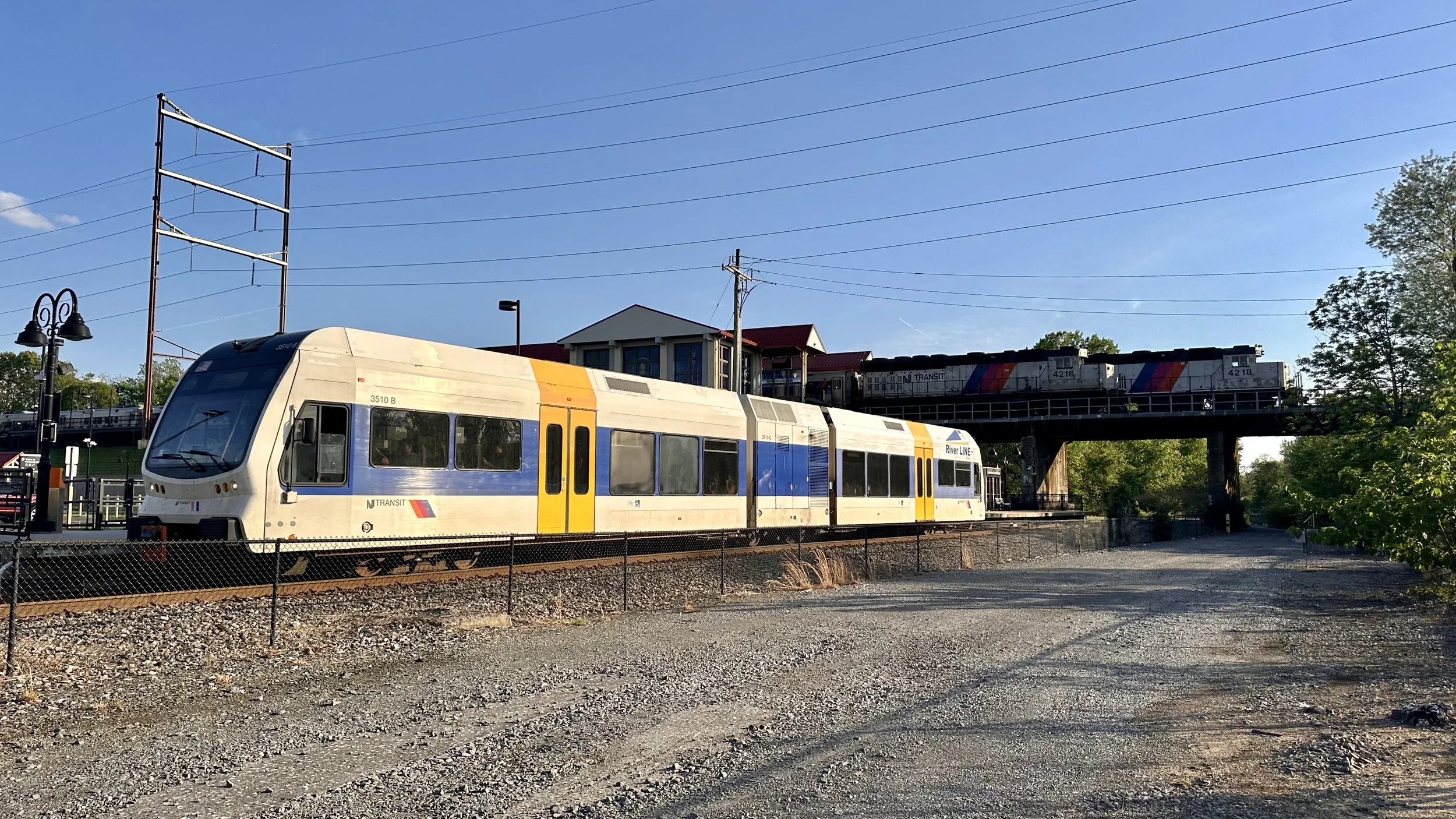
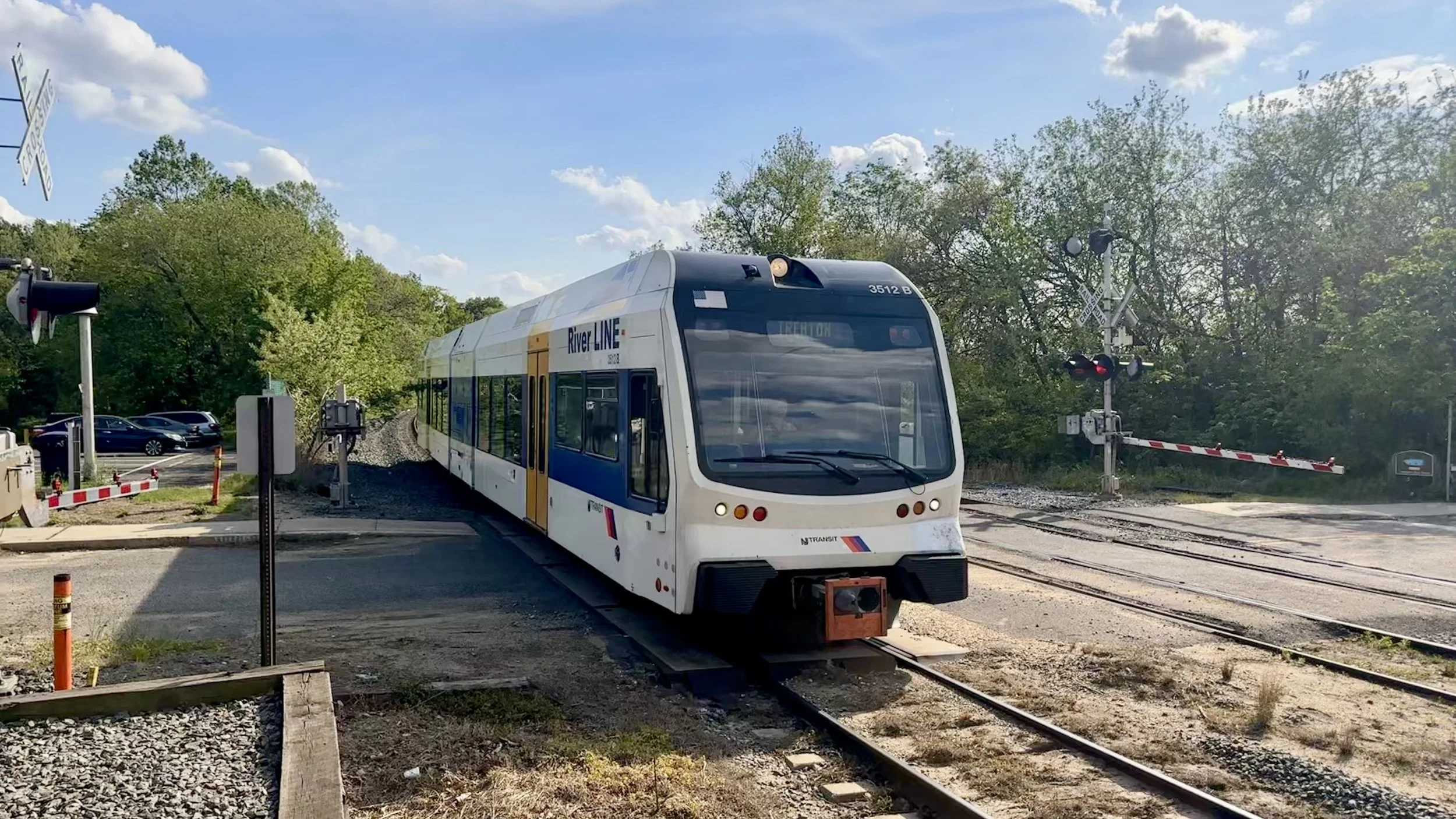
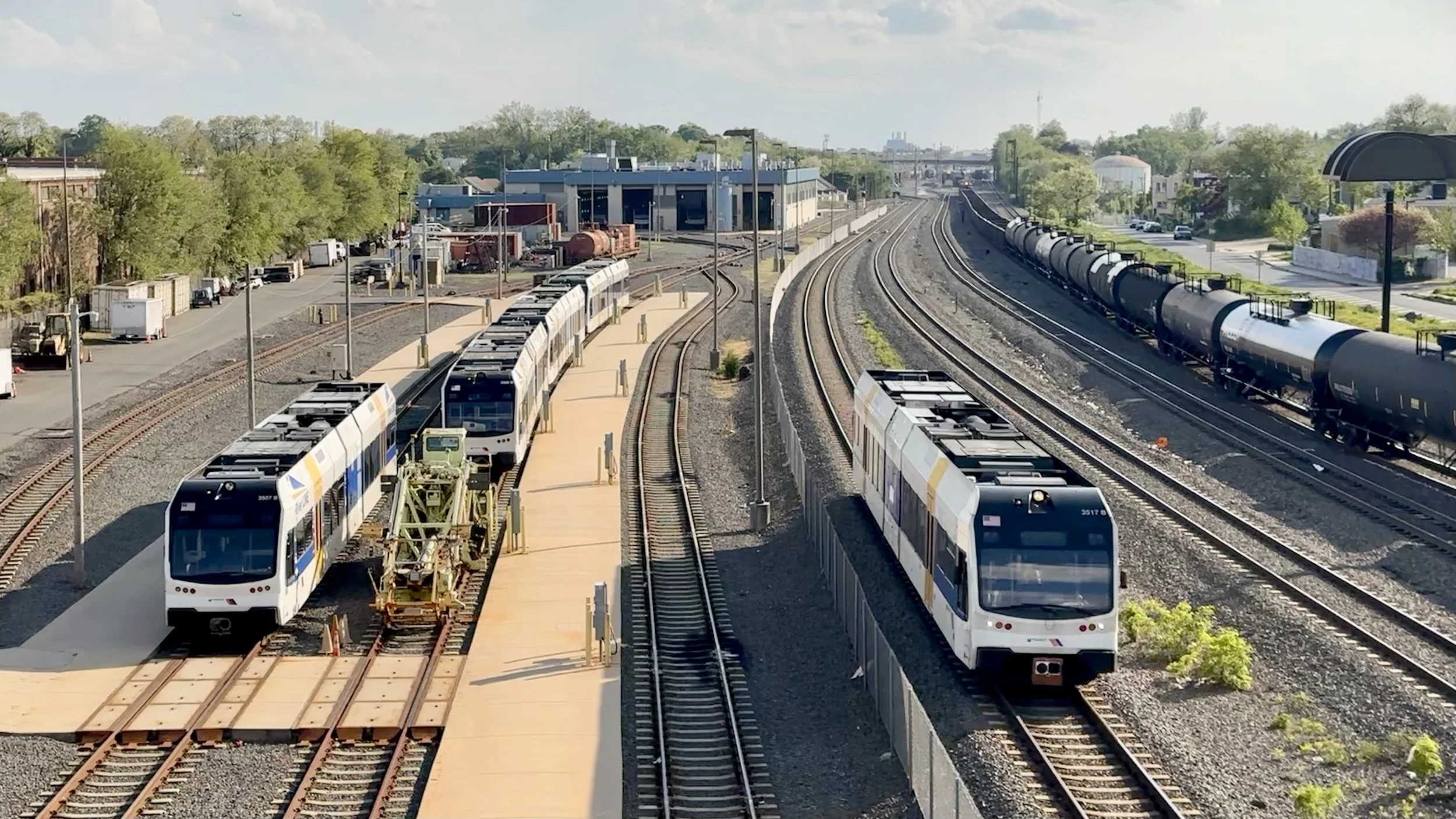
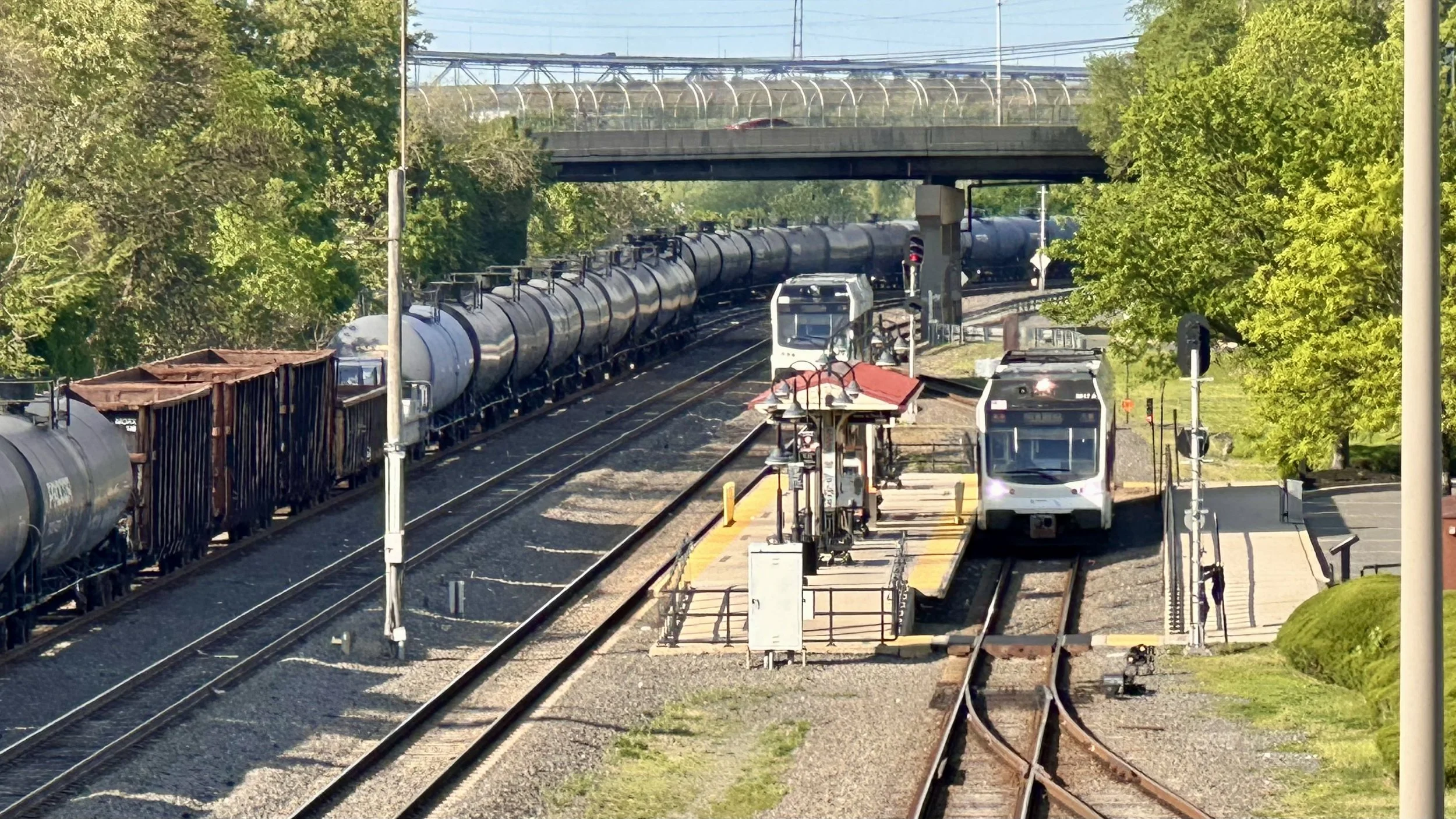
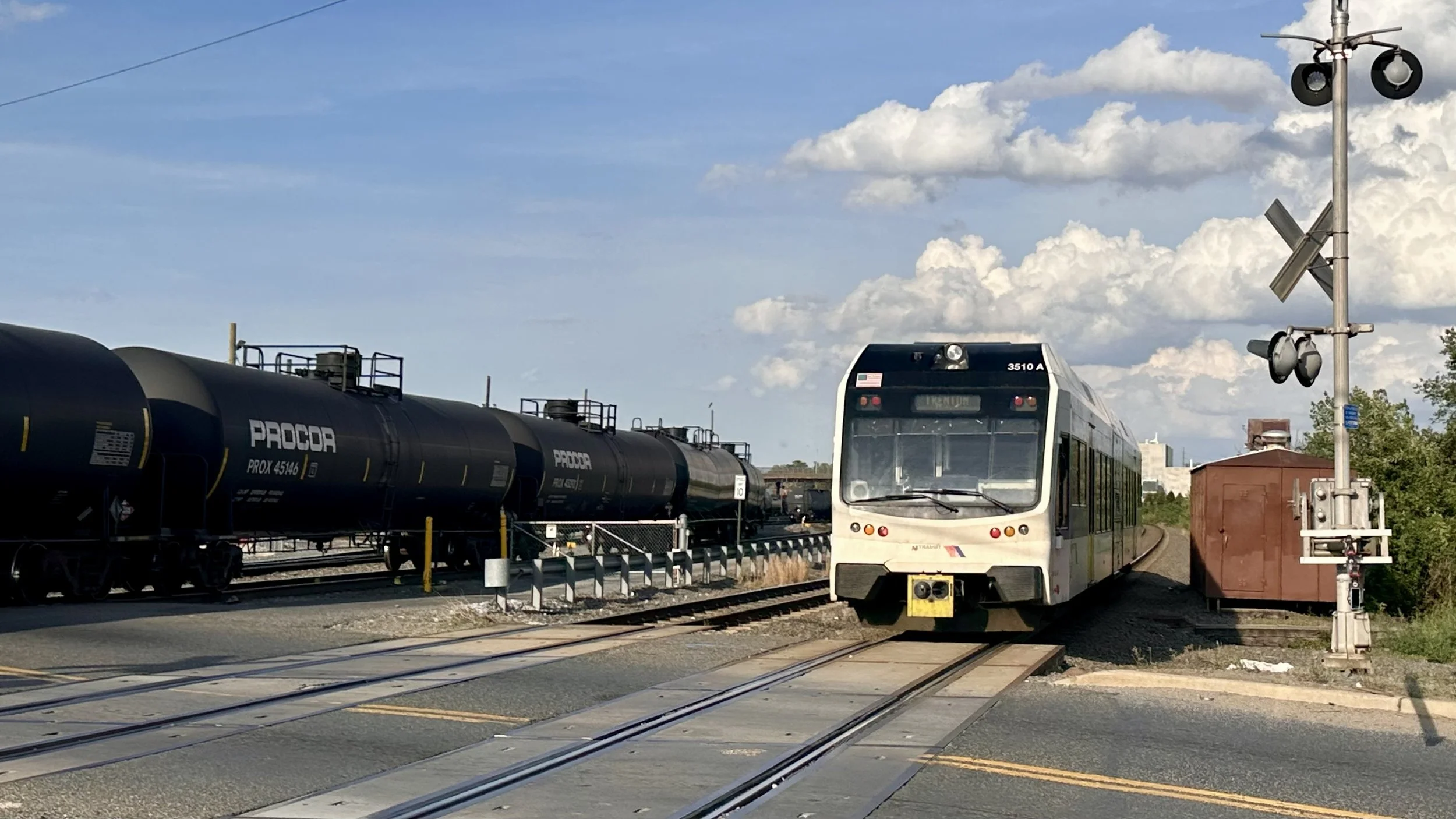
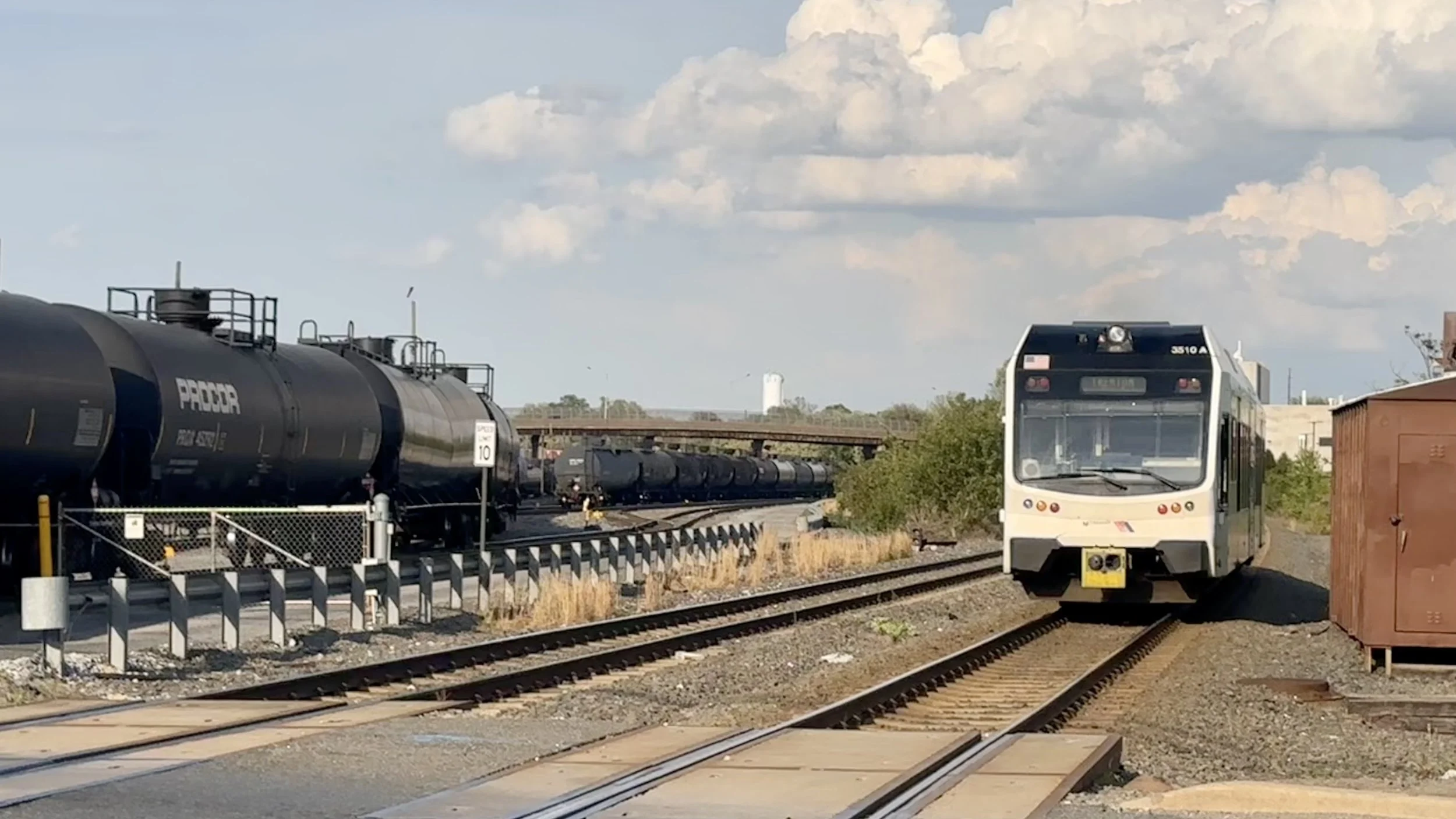
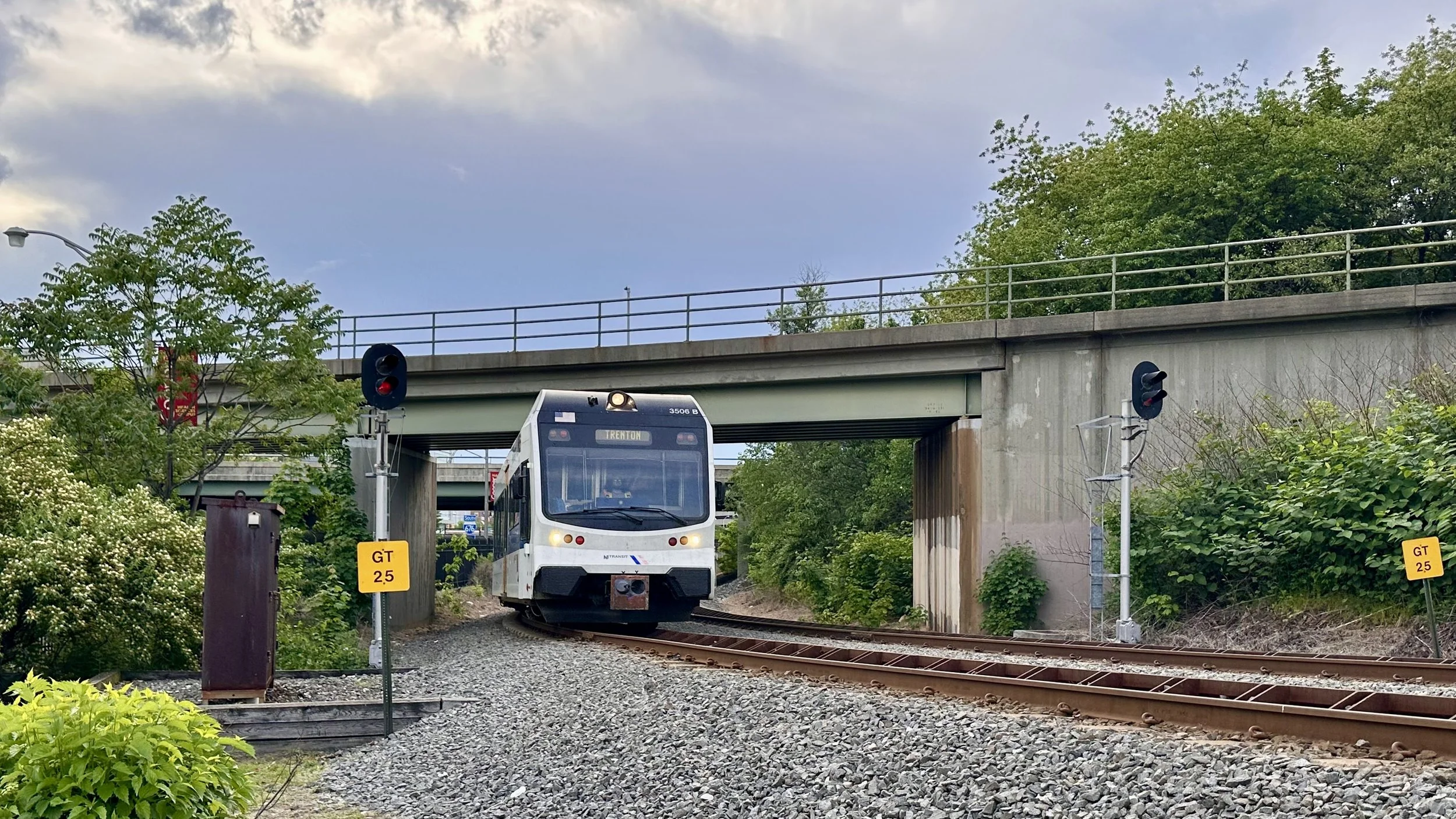
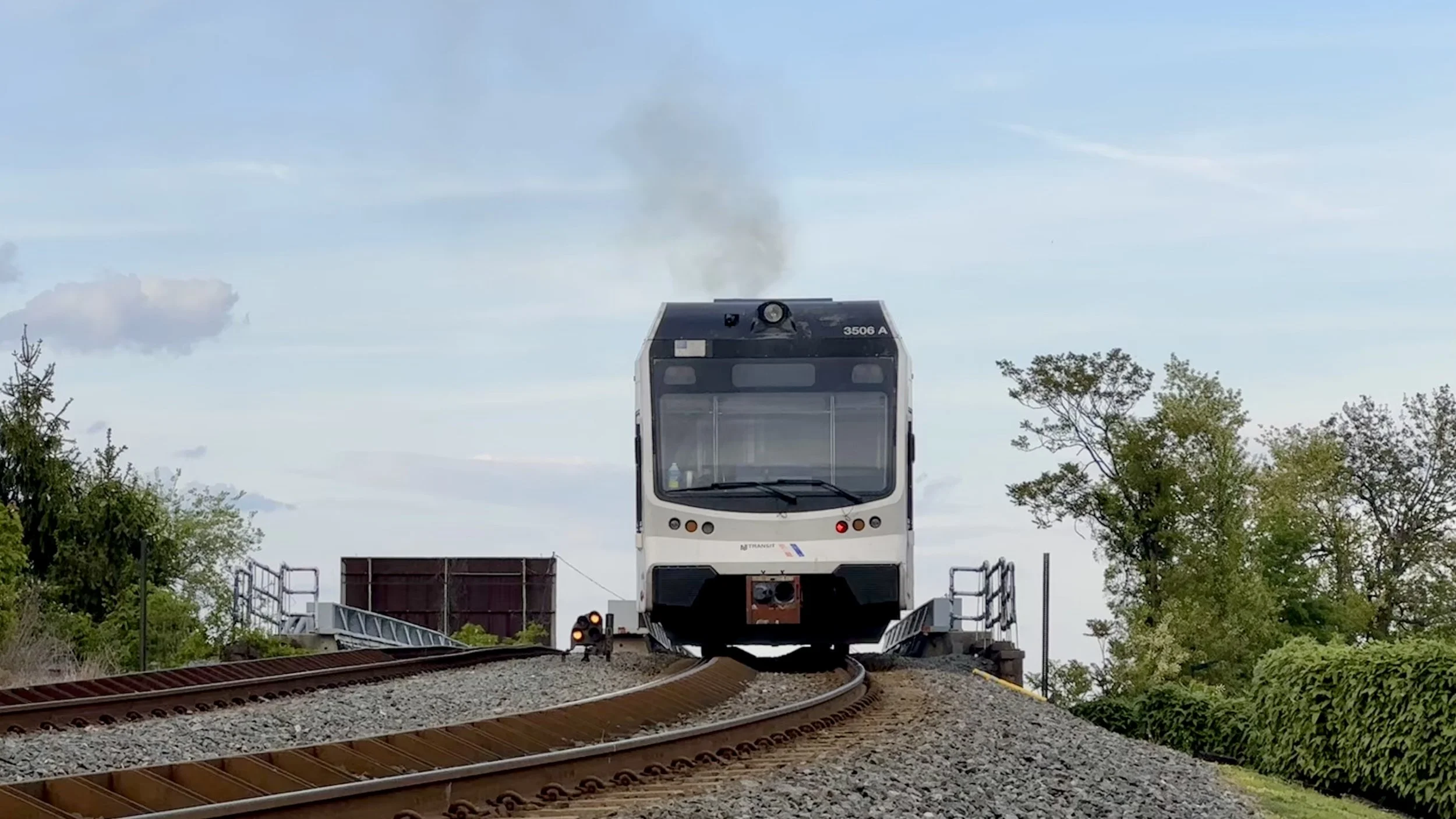
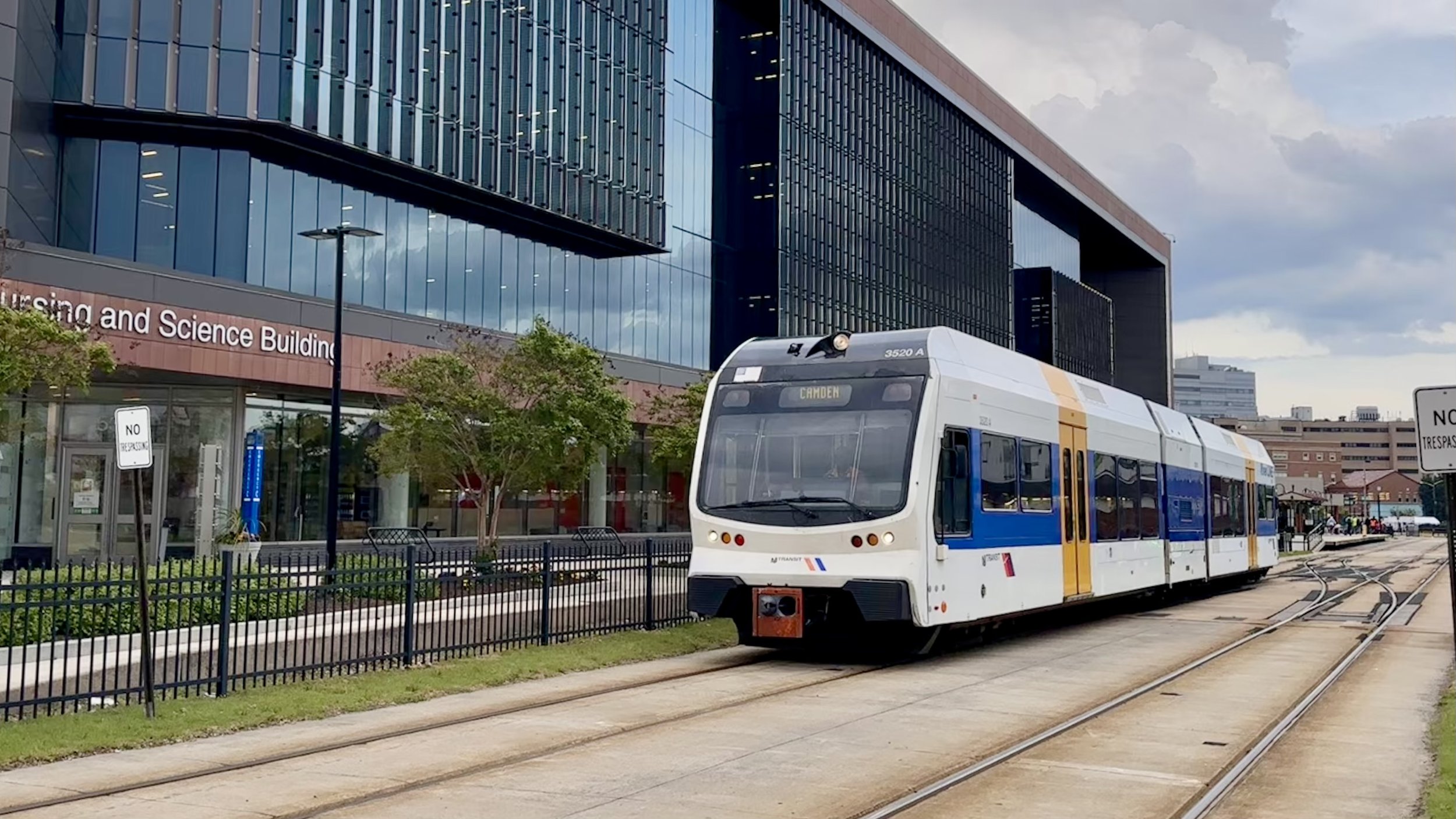
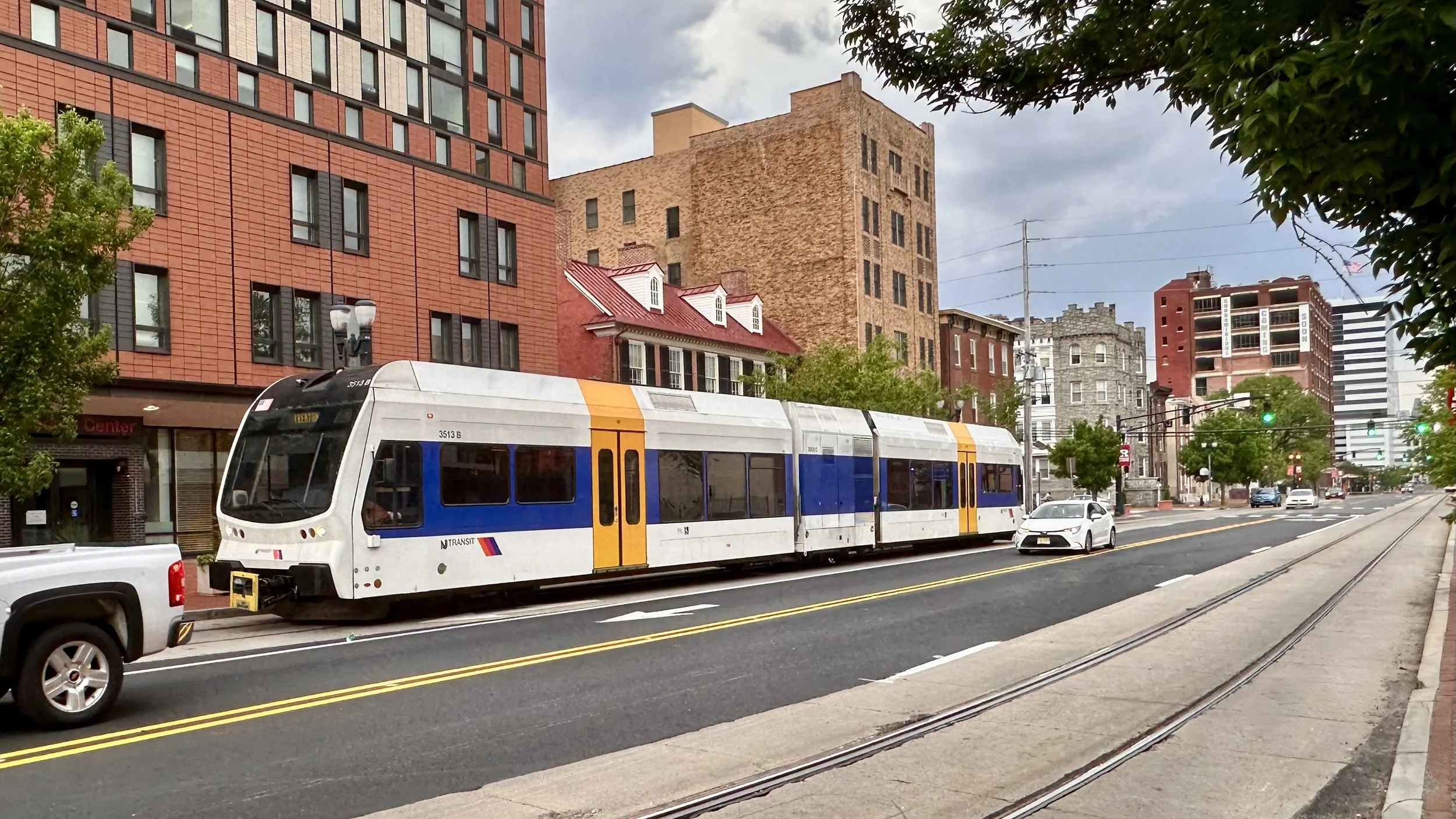
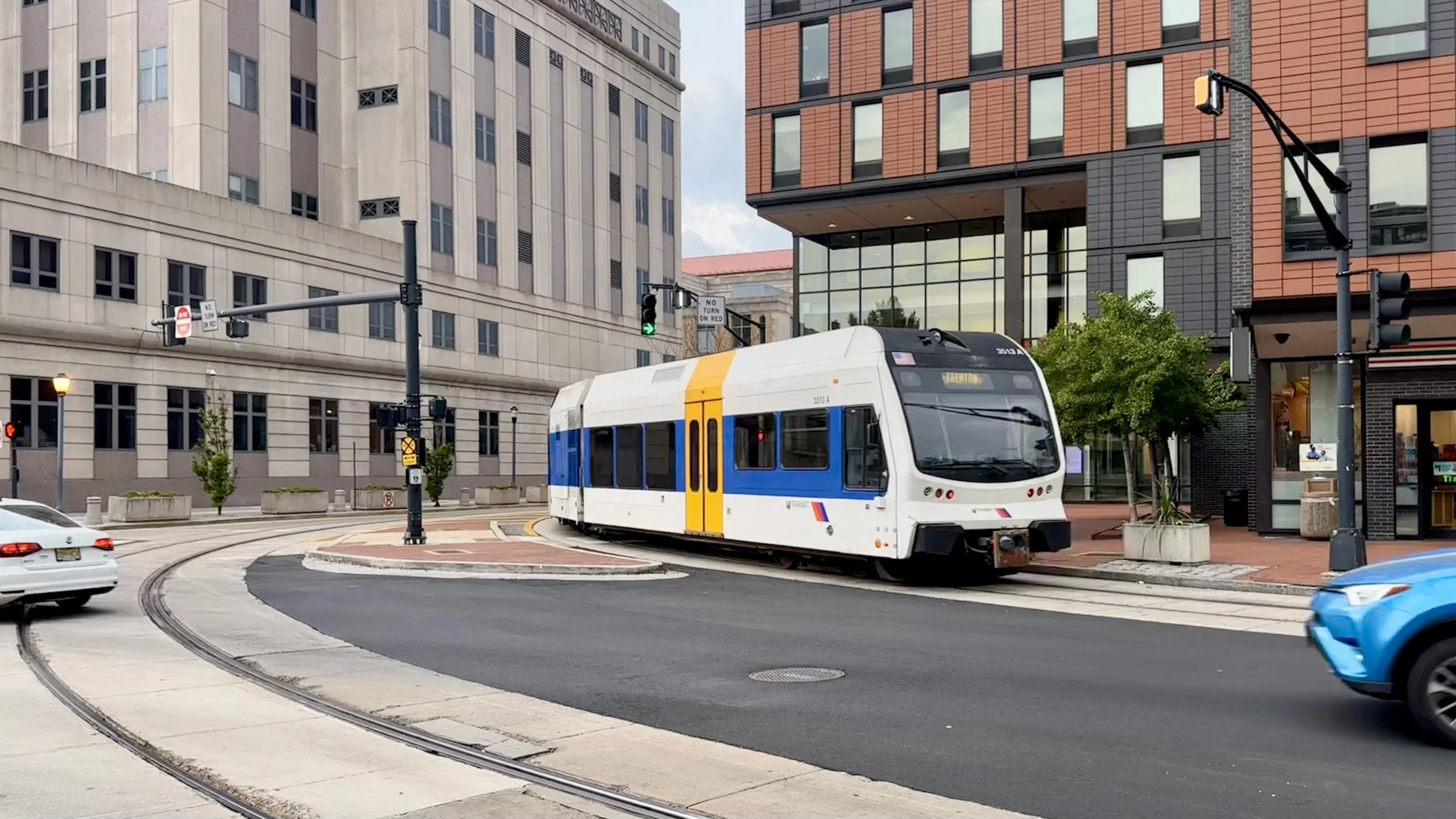
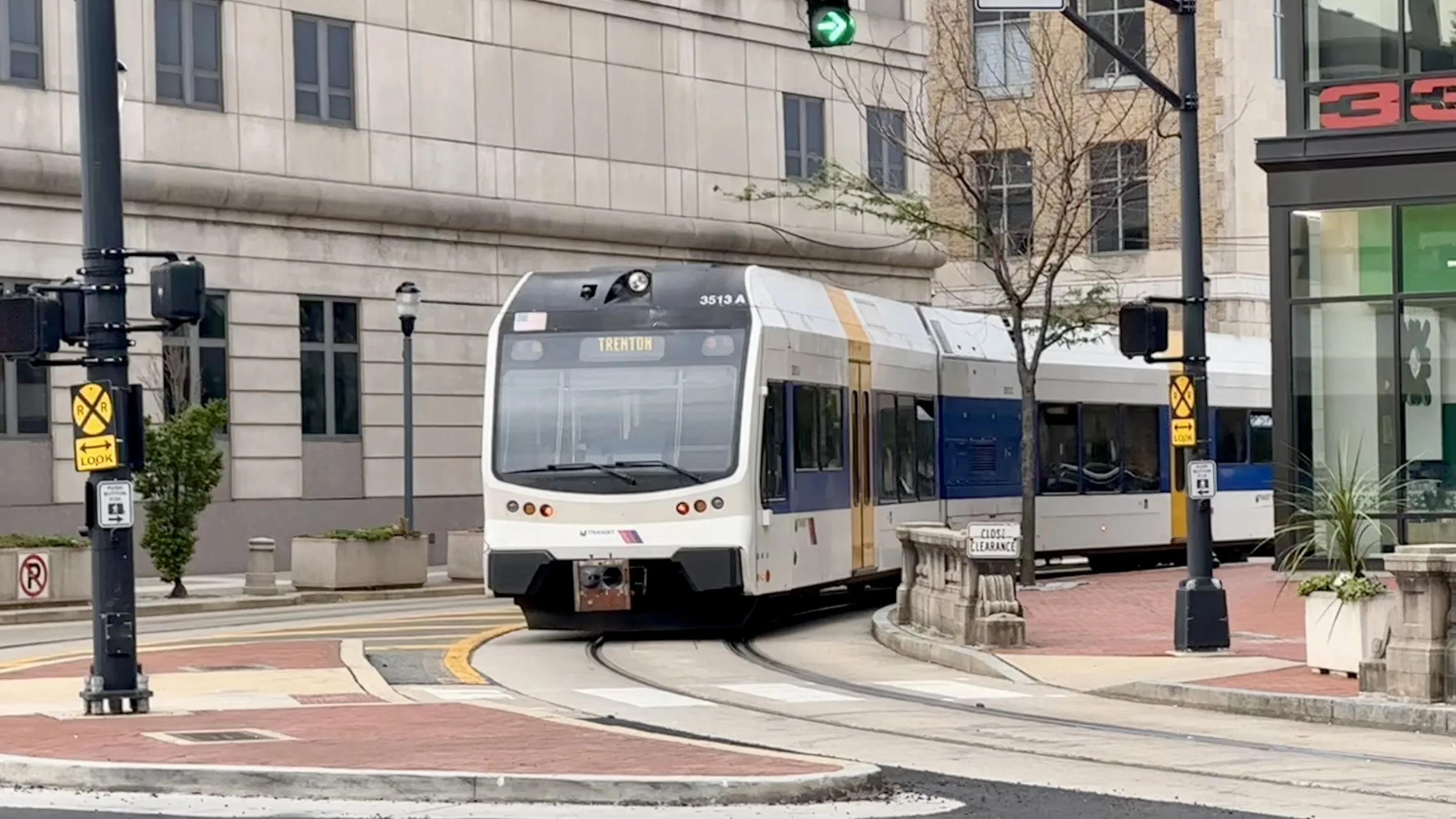
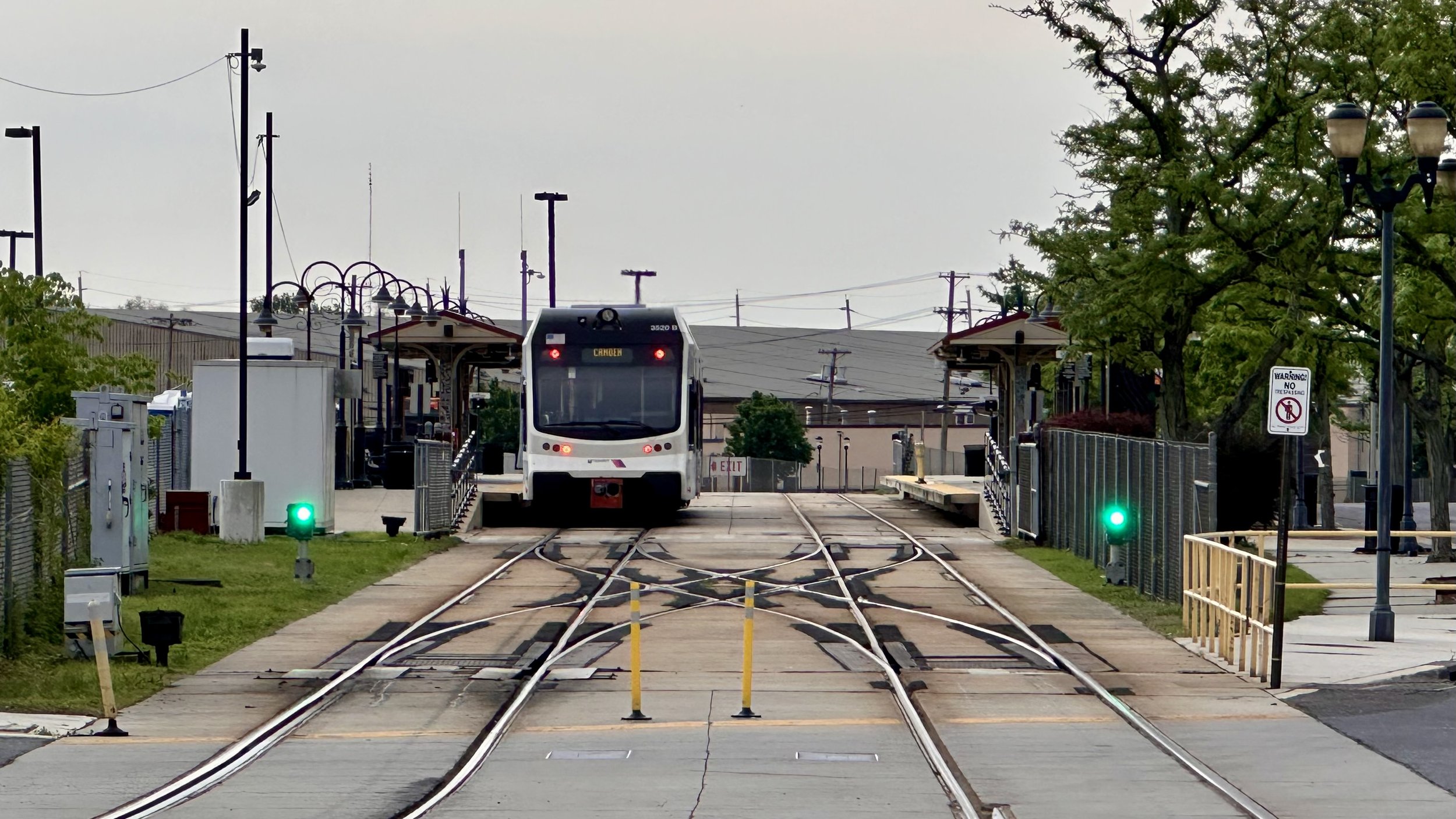
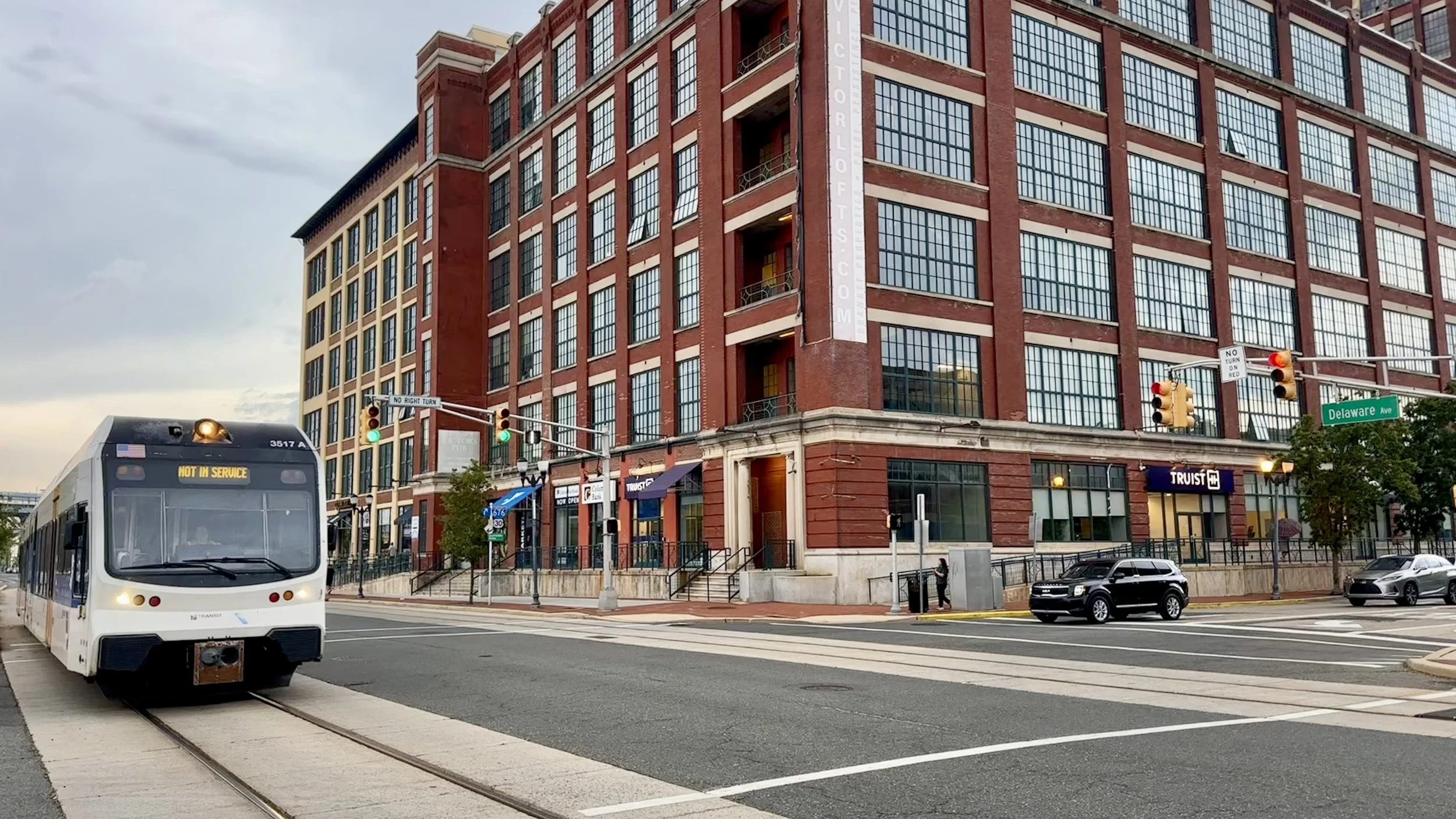
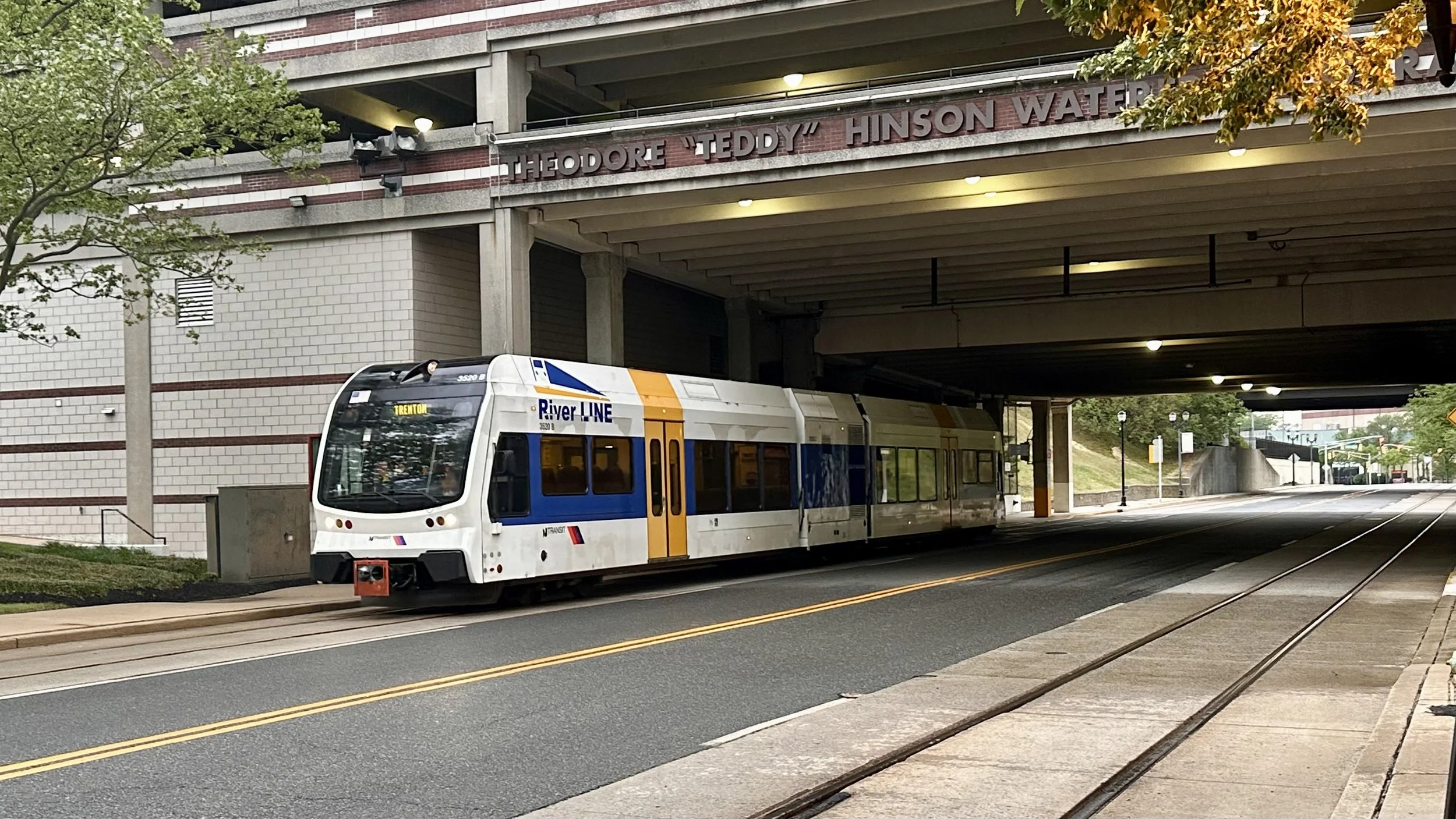
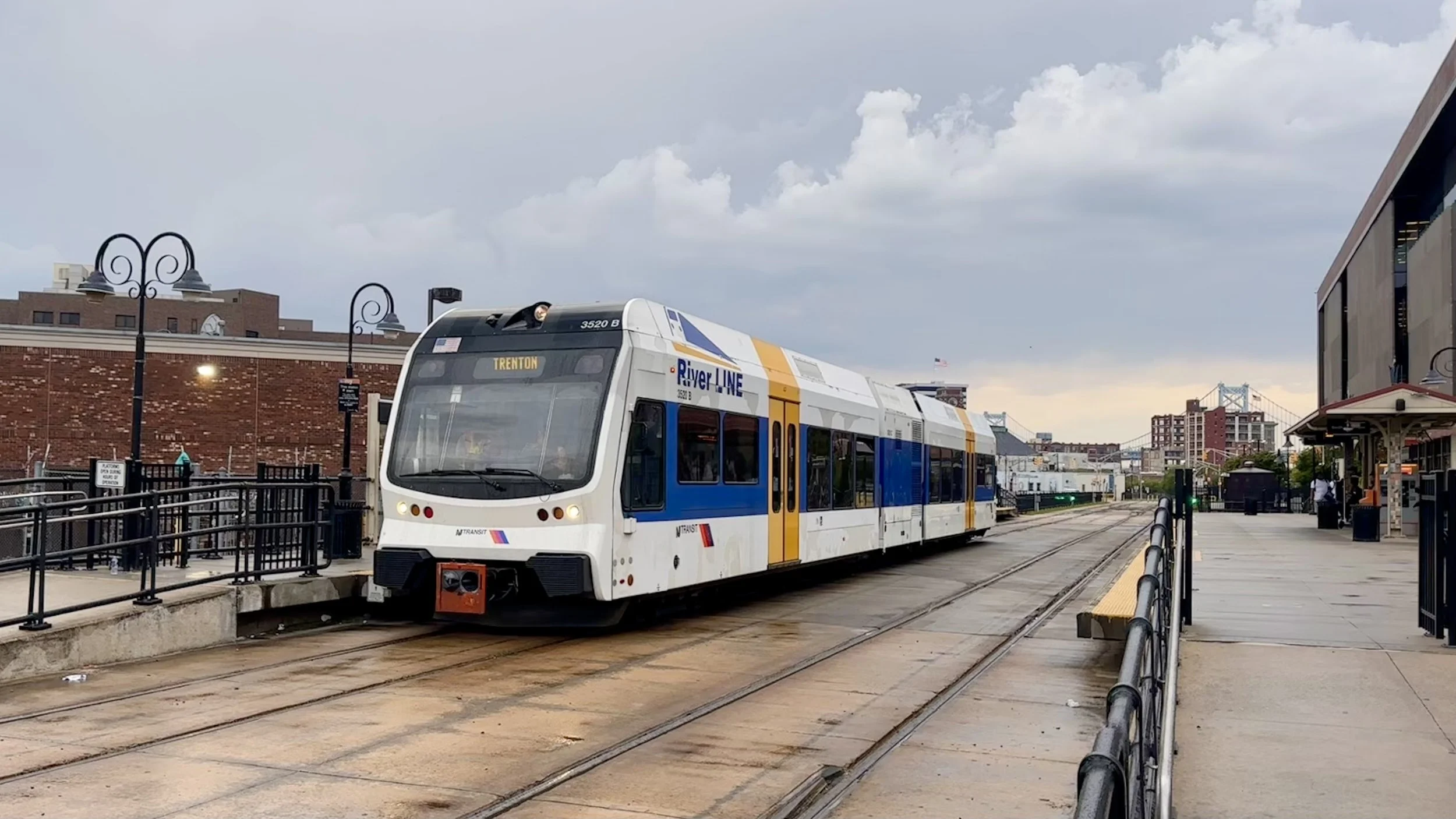
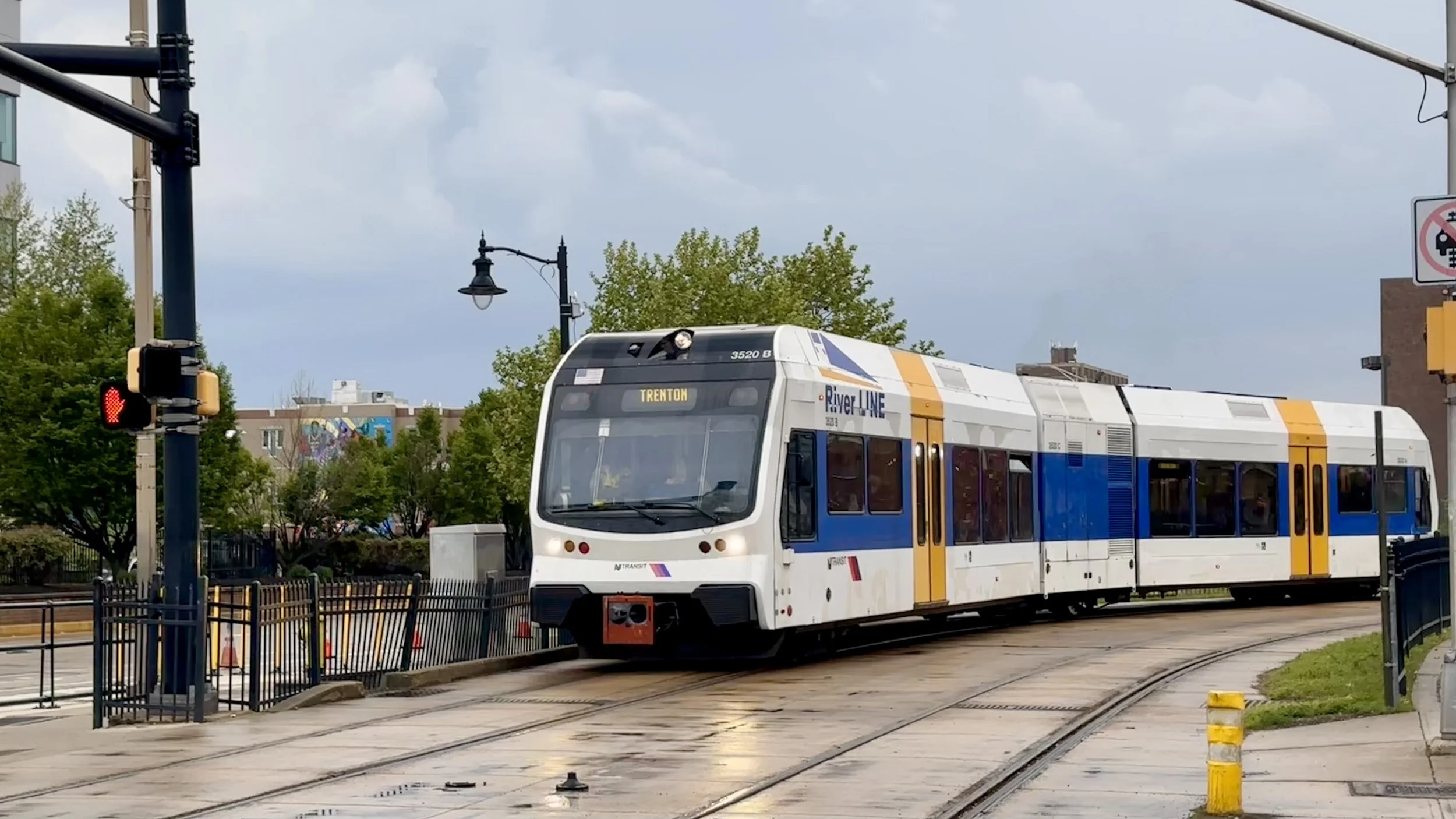
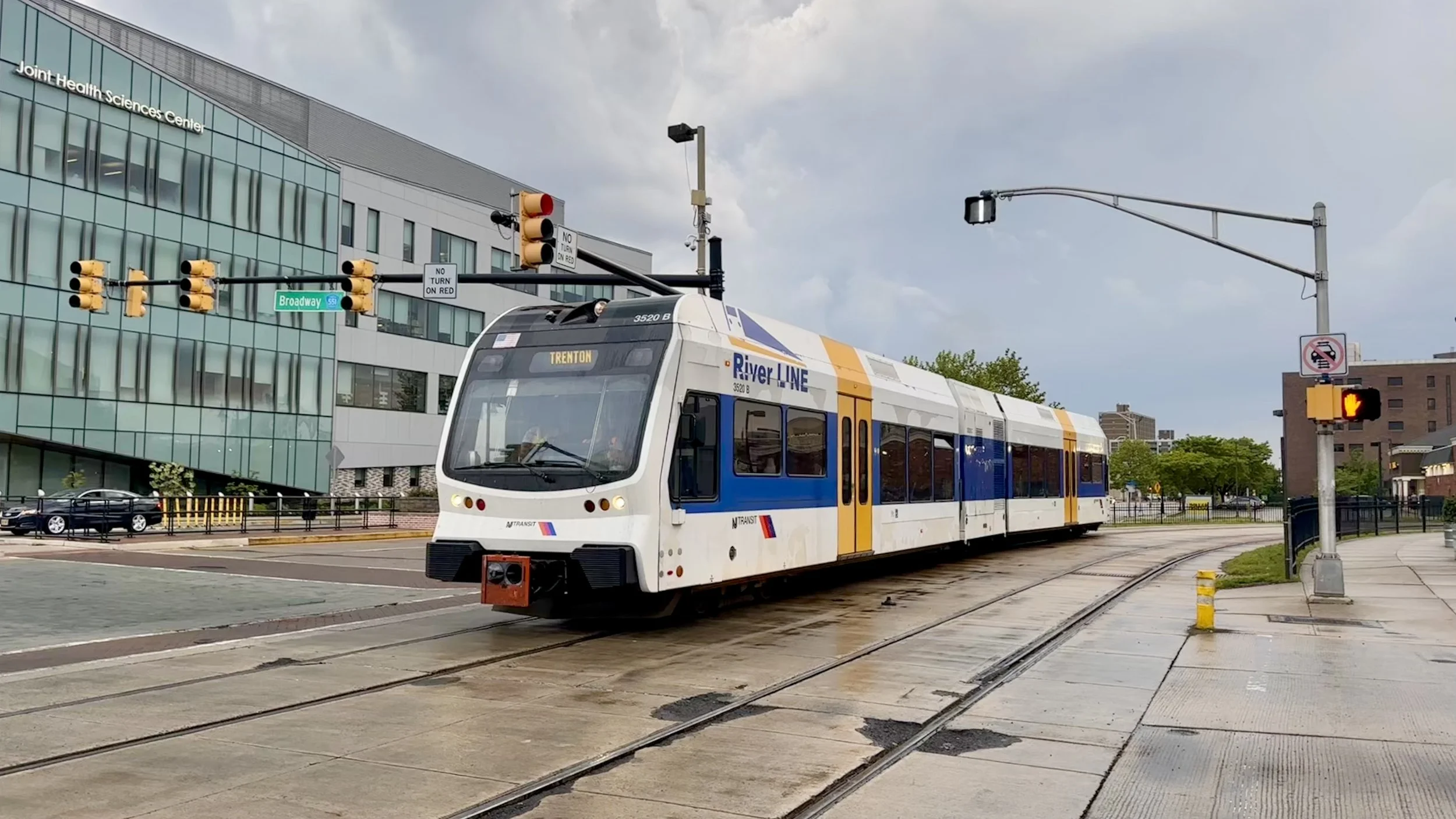
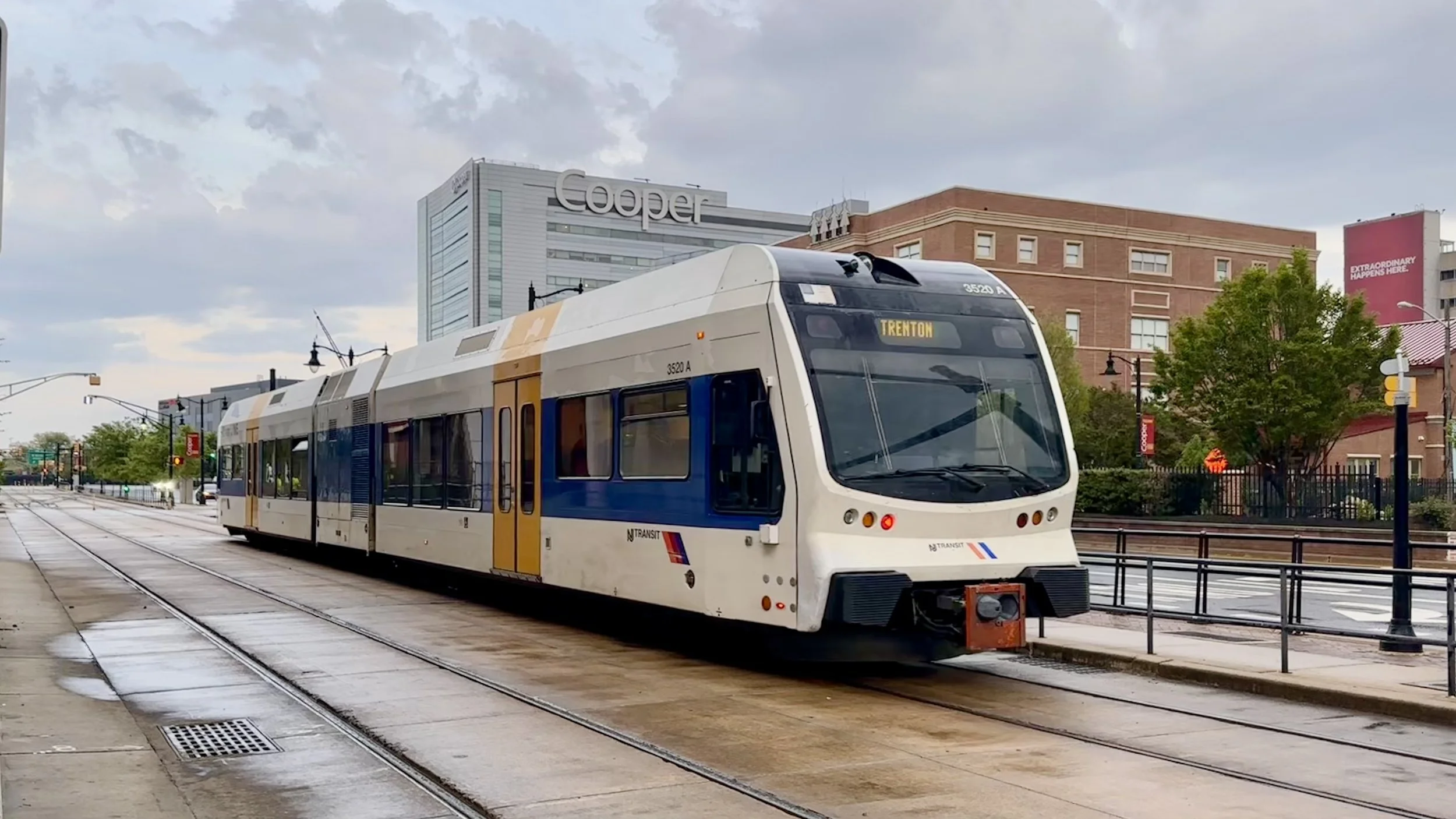
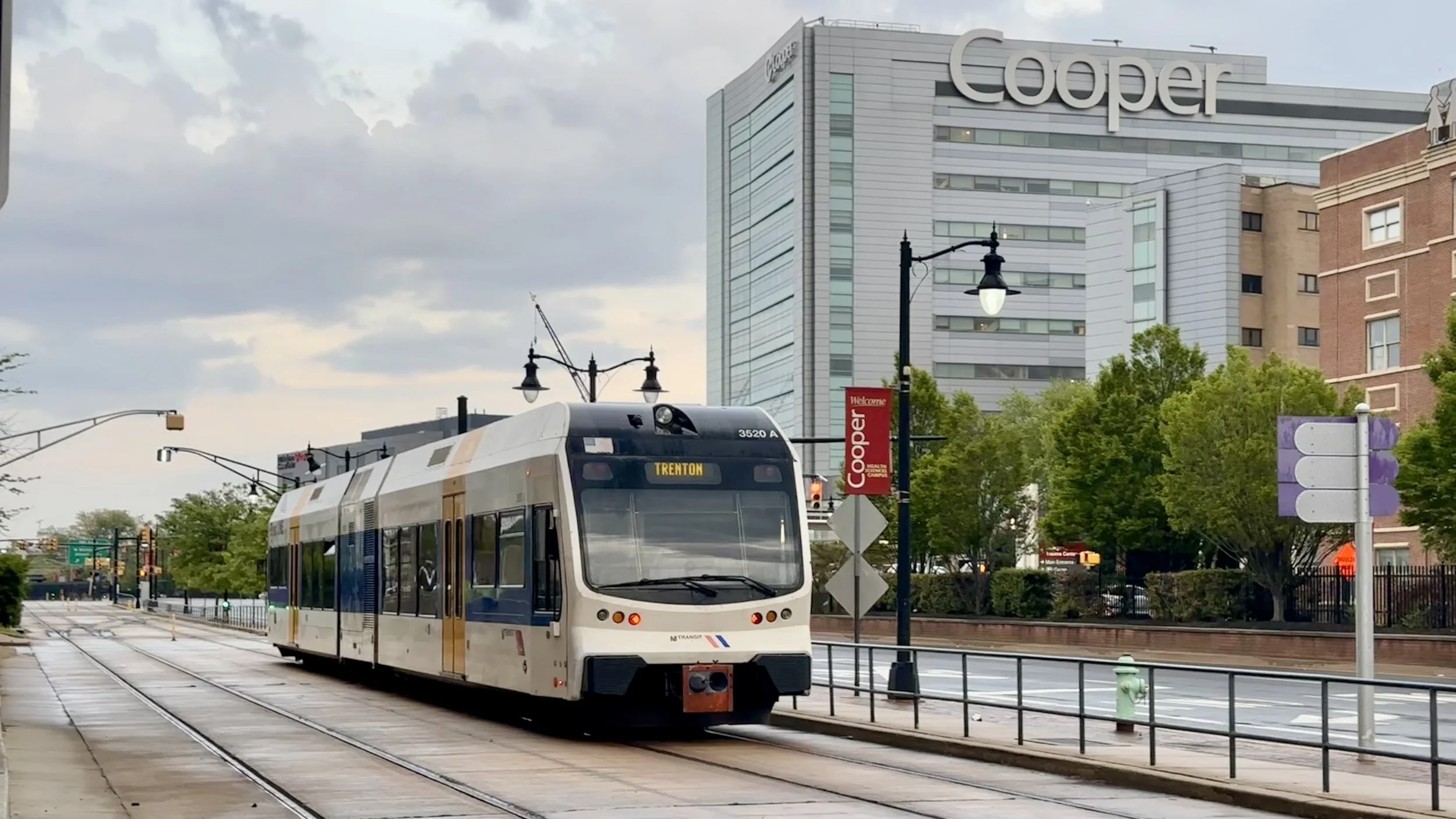
The first DMU in the US opened in 2004 and uses modified Stadler GTW 2/6s departing half-hourly along a route between Trenton NJ, the State Capitol, and Camden NJ, just across the Delaware River from Philadelphia PA. A second route, the Glassboro-Camden Line, is currently under construction southeastward from Camden to Rowan NJ. Almost a Euro-style small intercity rail, each DMU is packed with people traveling between historic colonial communities, with rail connections to NYC, Atlantic City, and three separate routes to Philly.
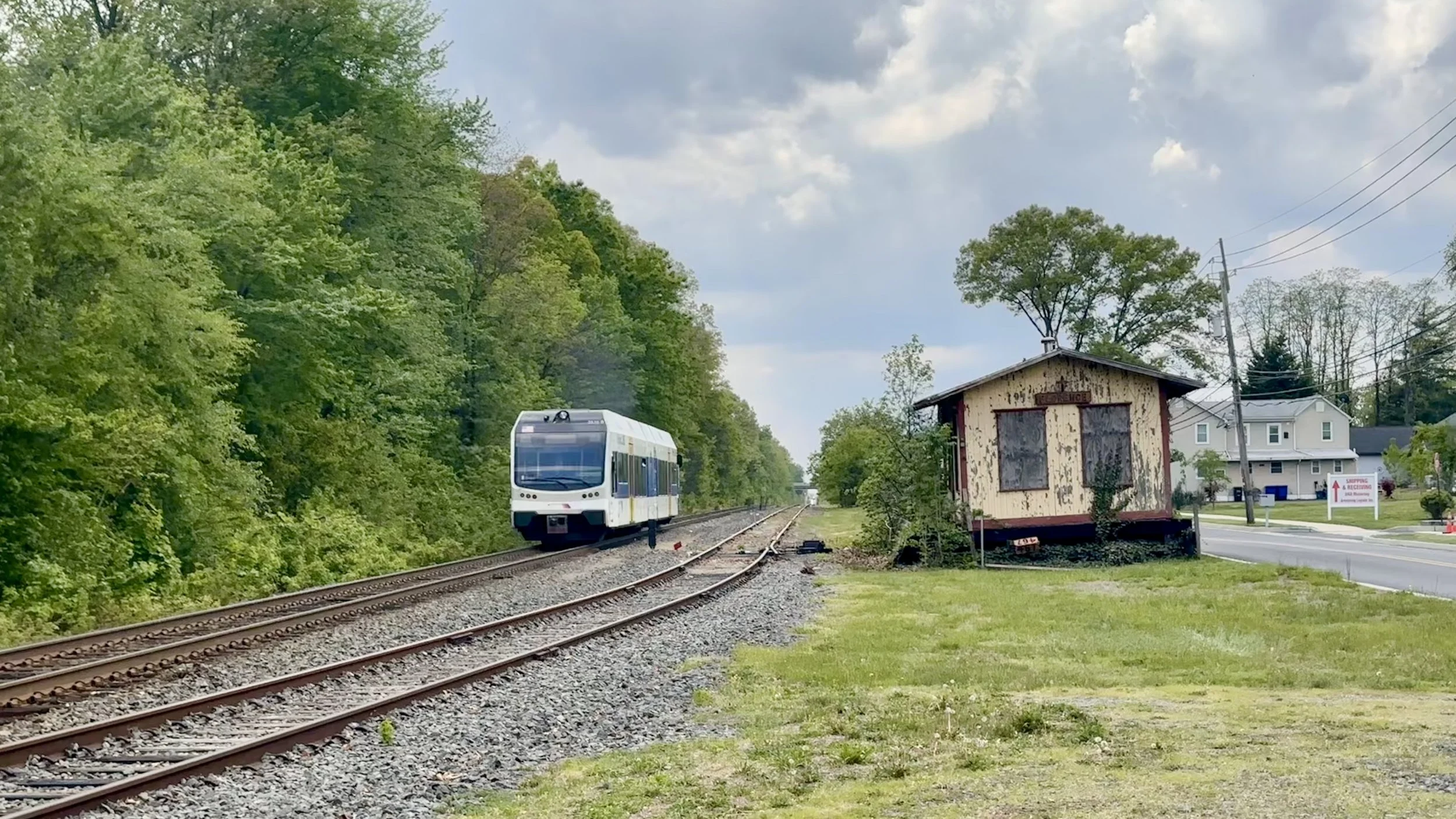
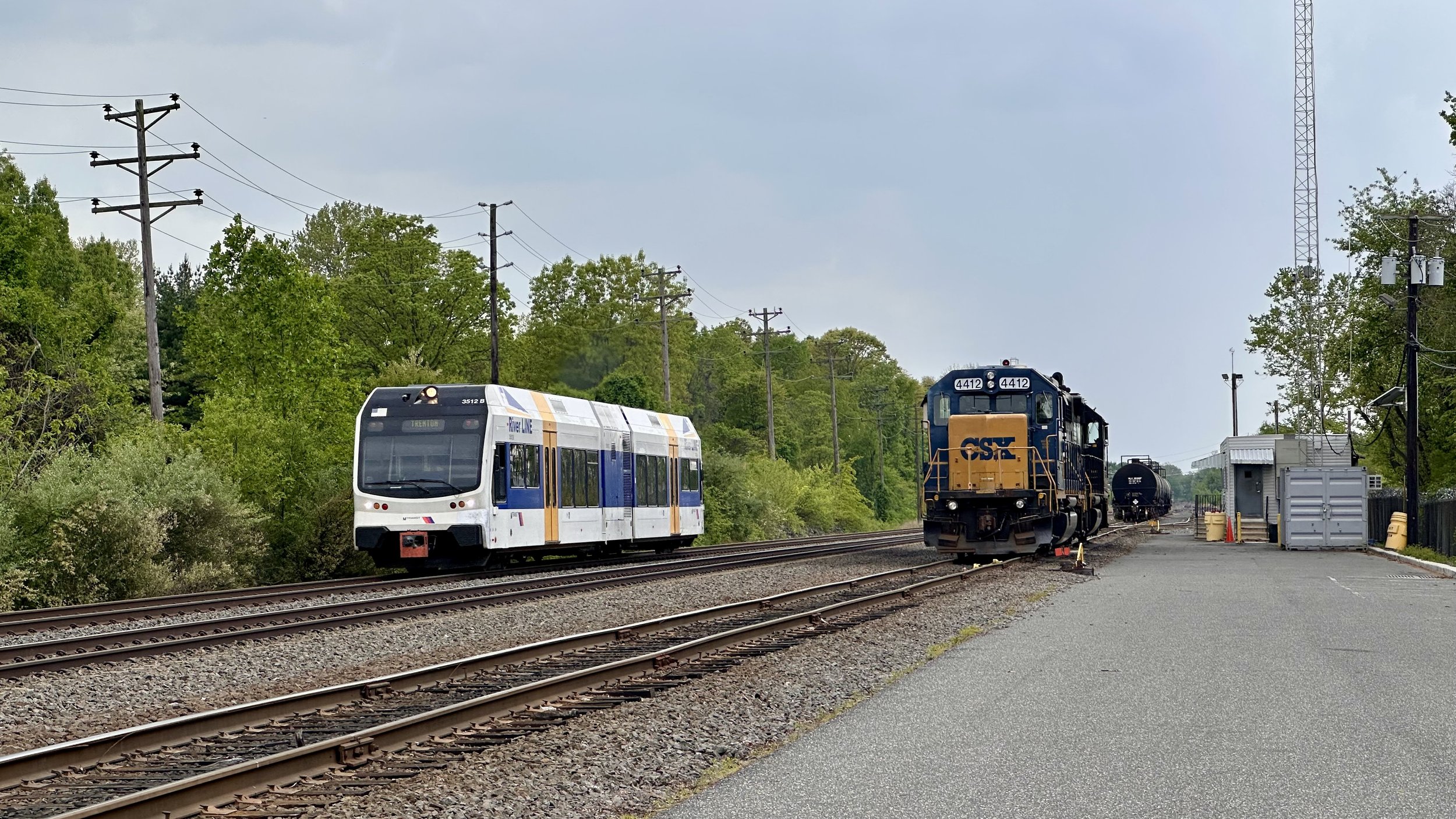
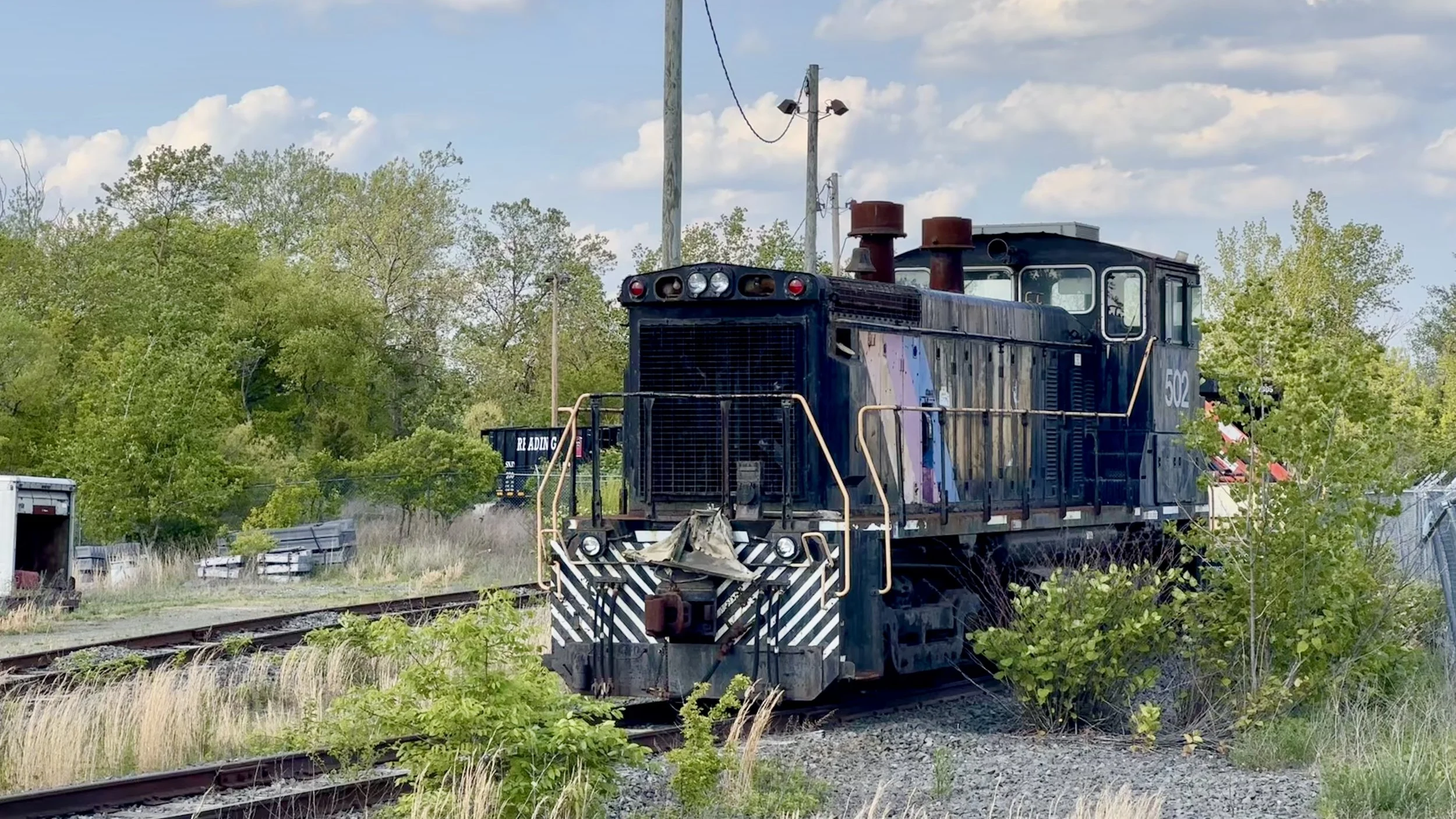
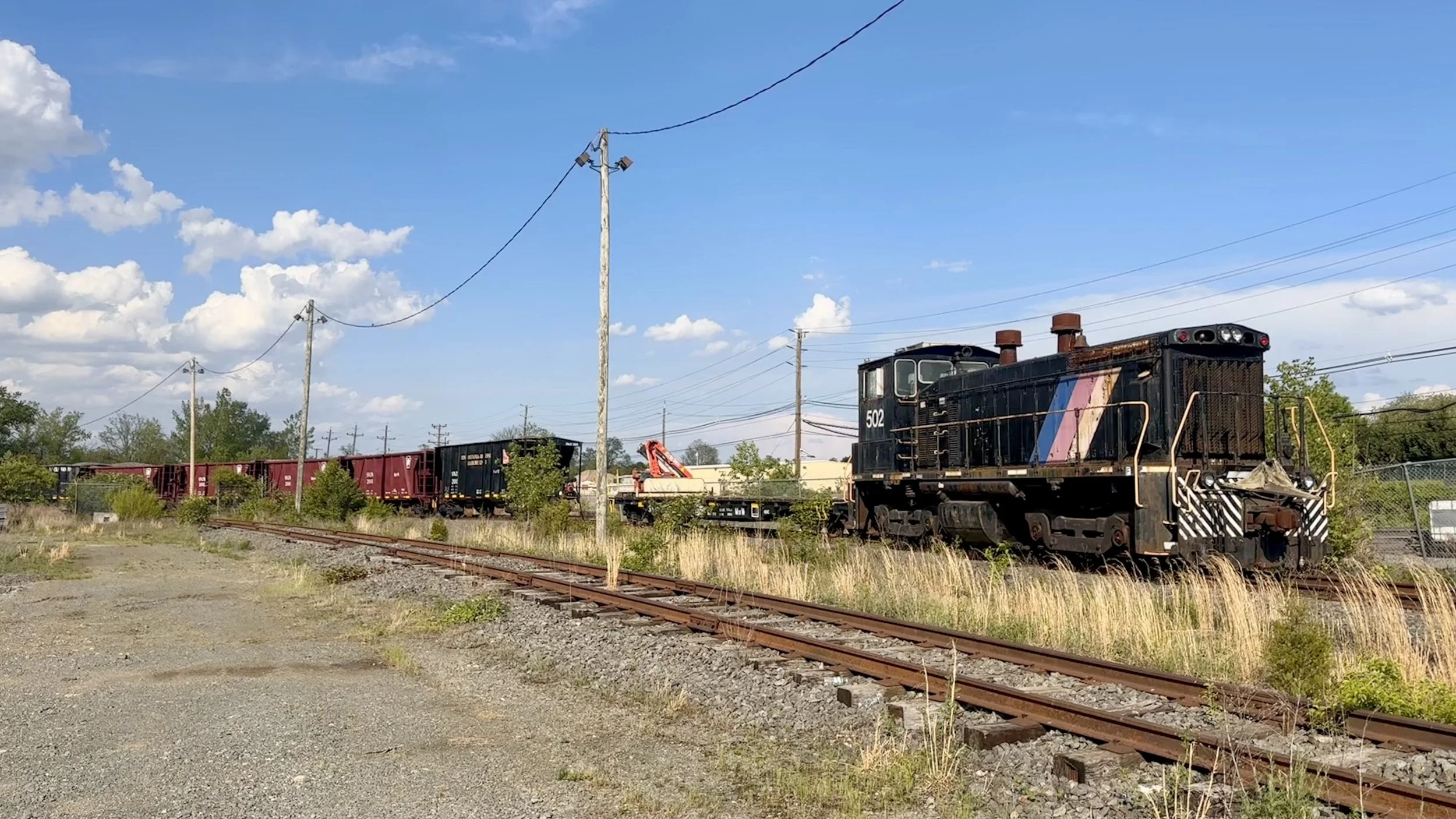
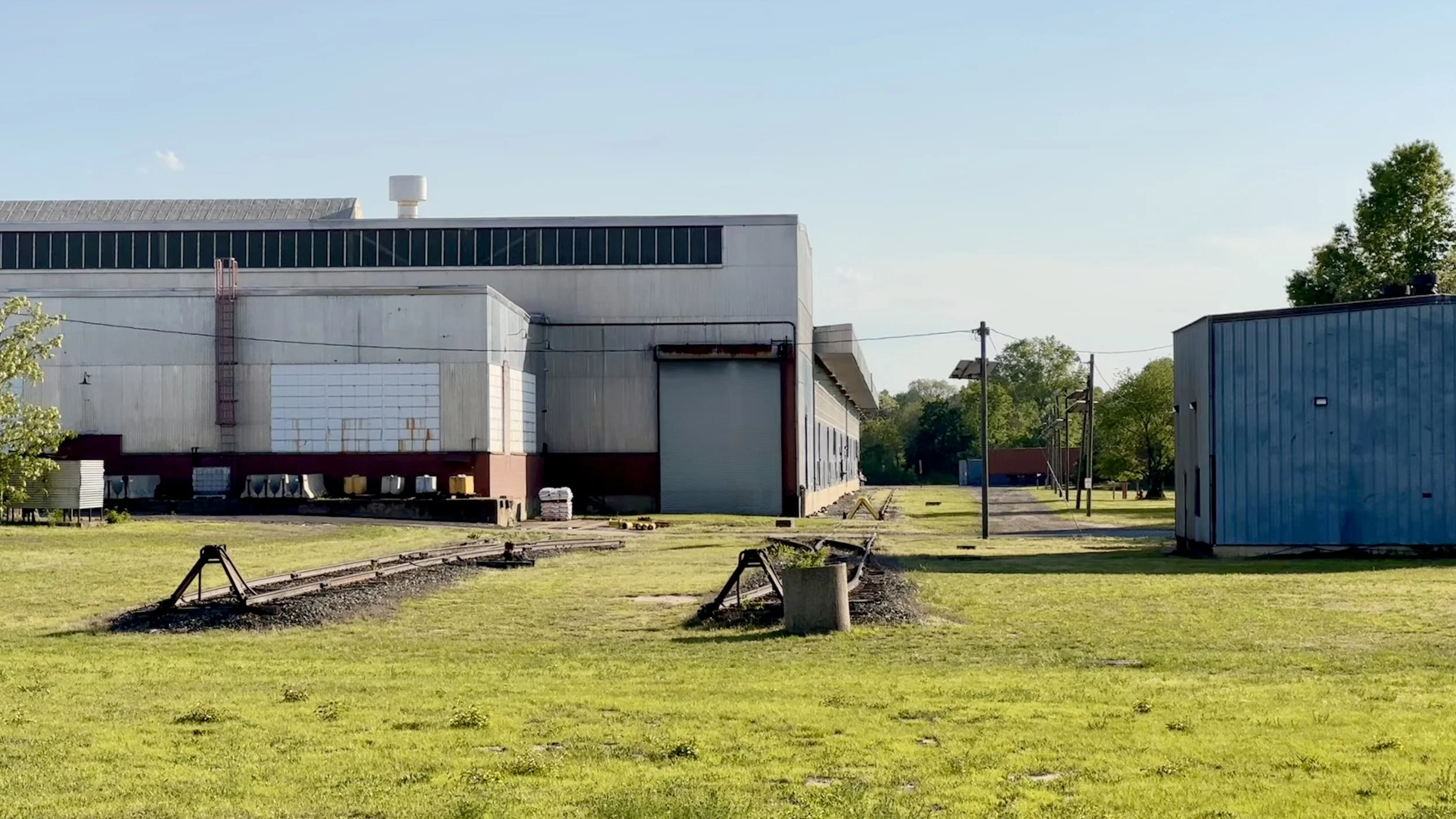
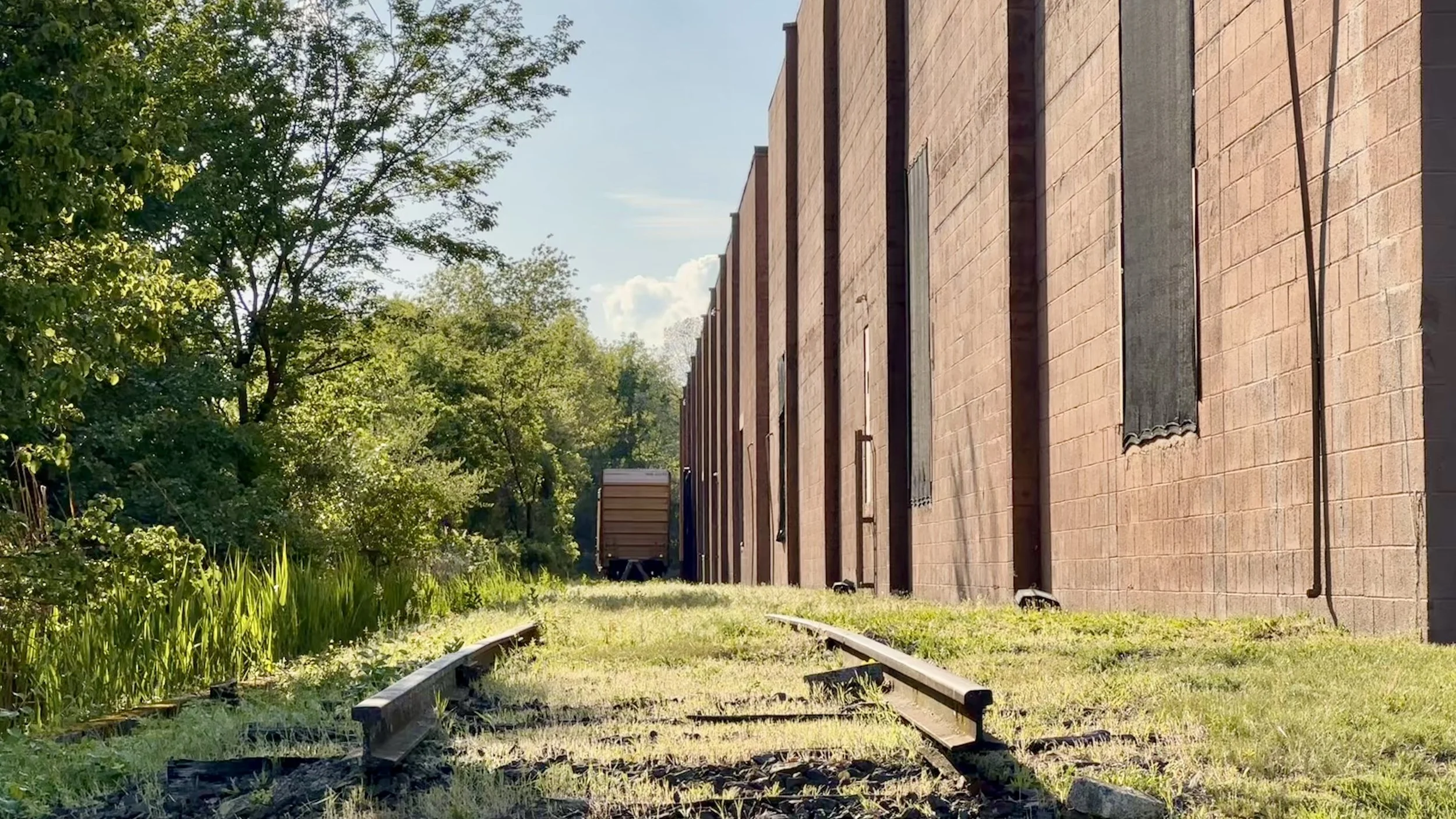
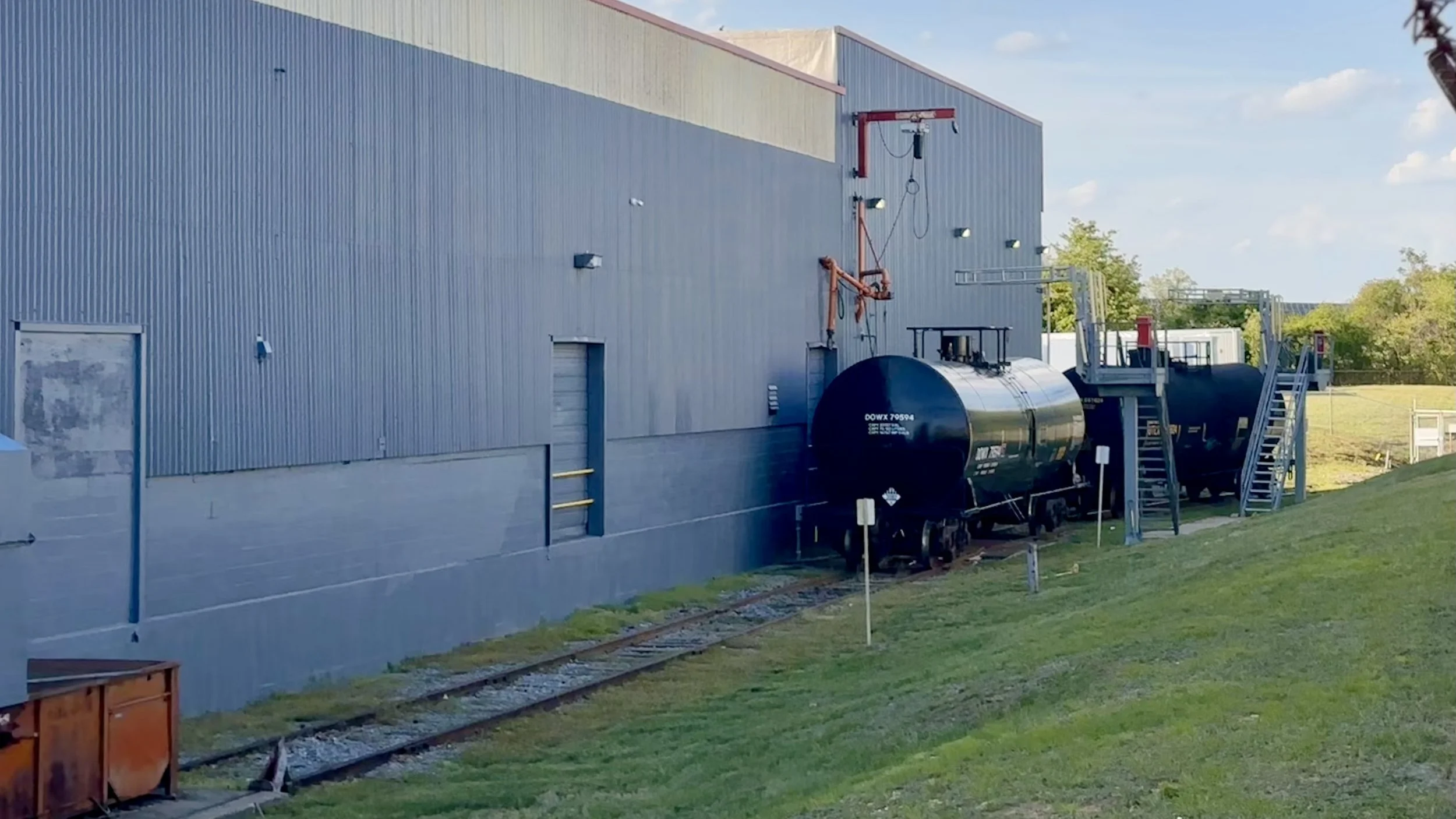
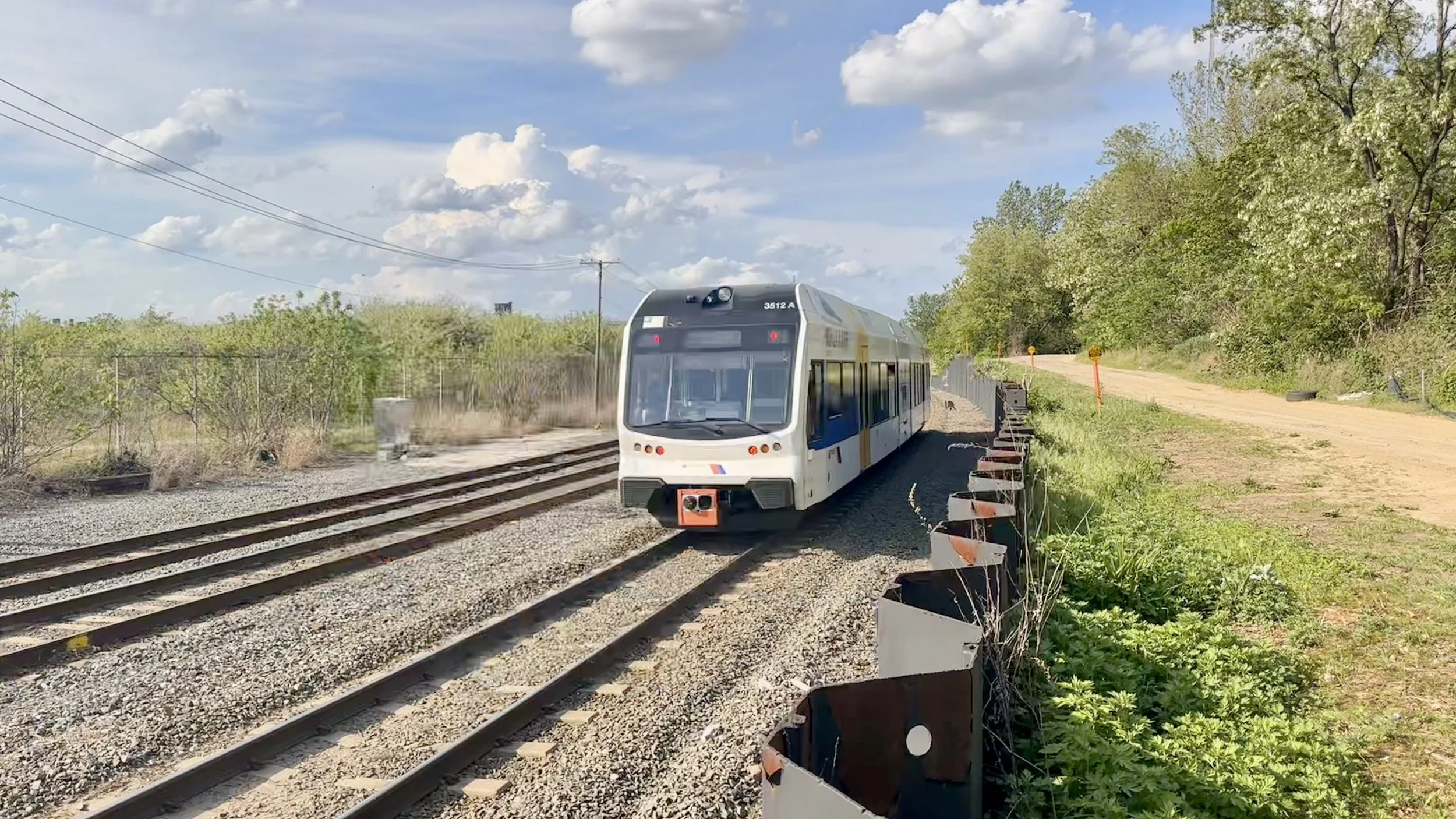
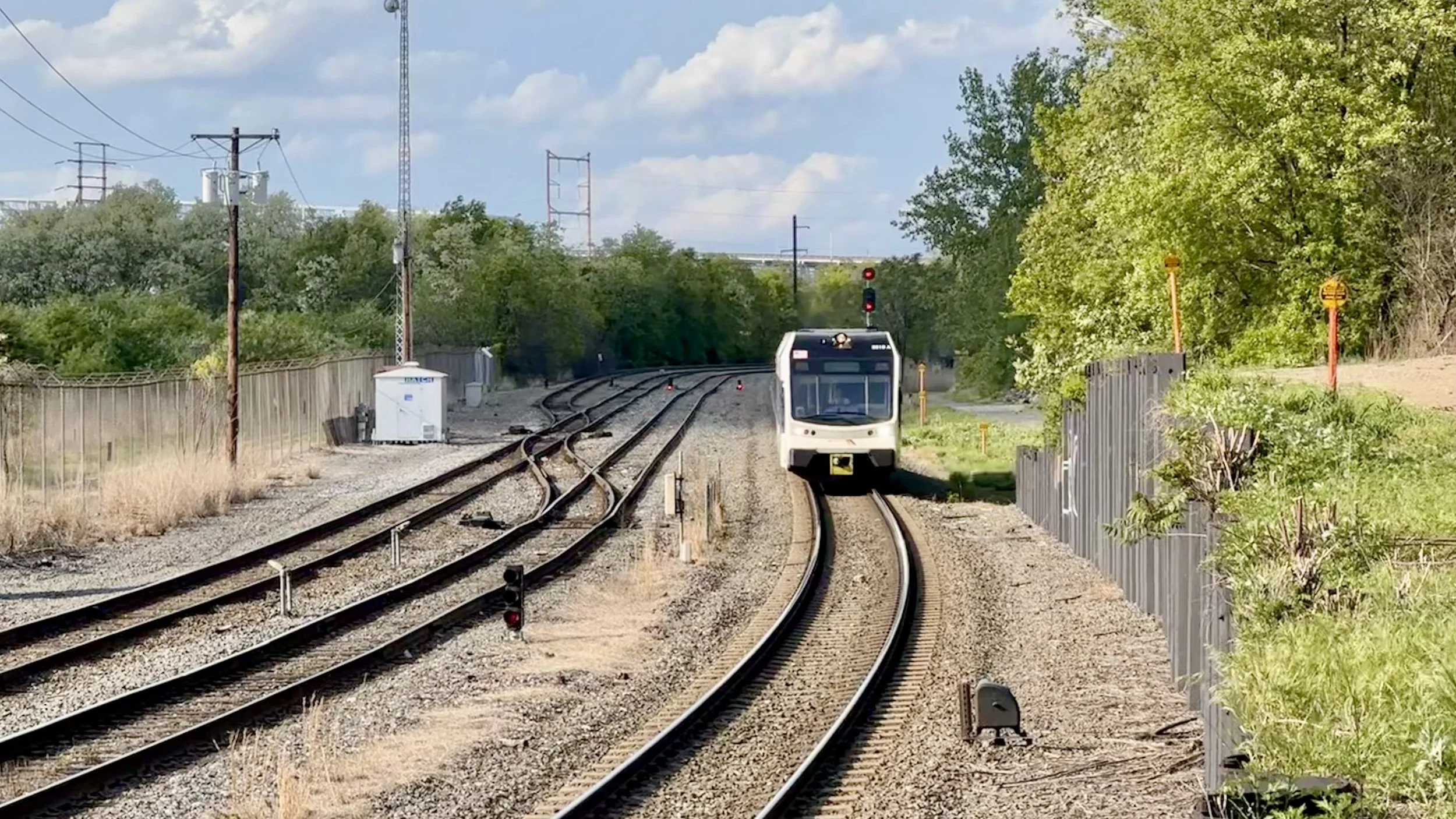
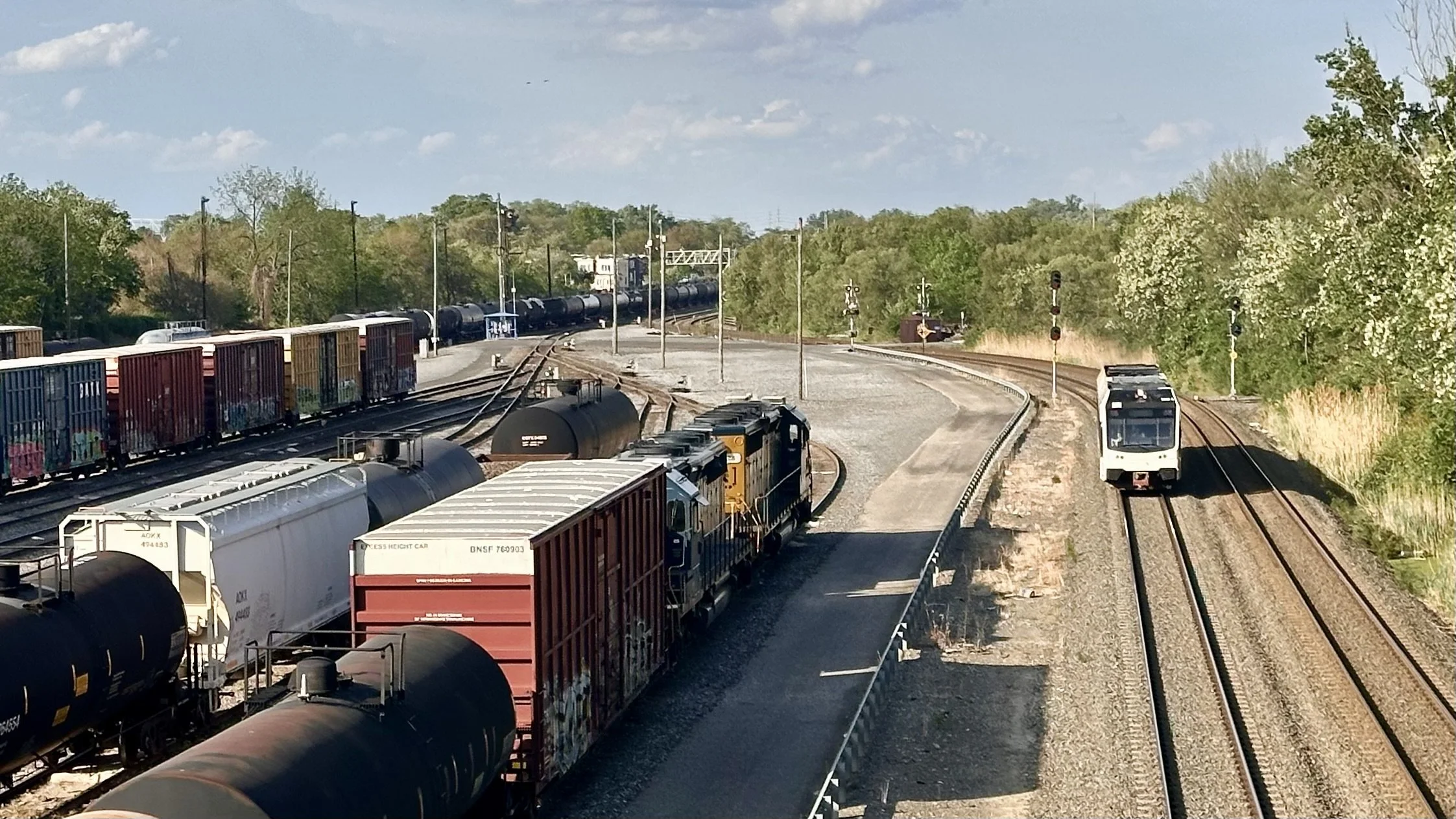
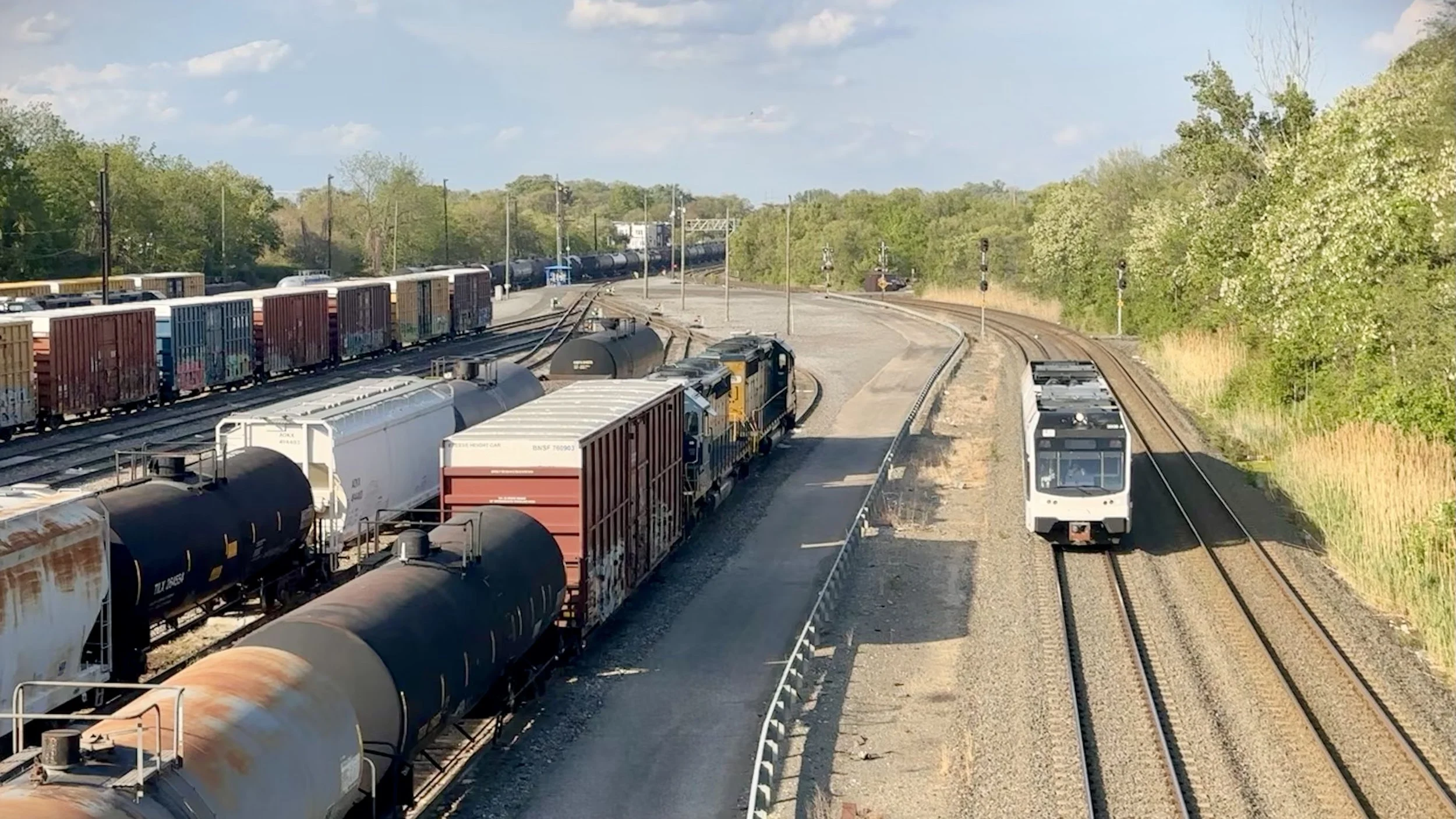
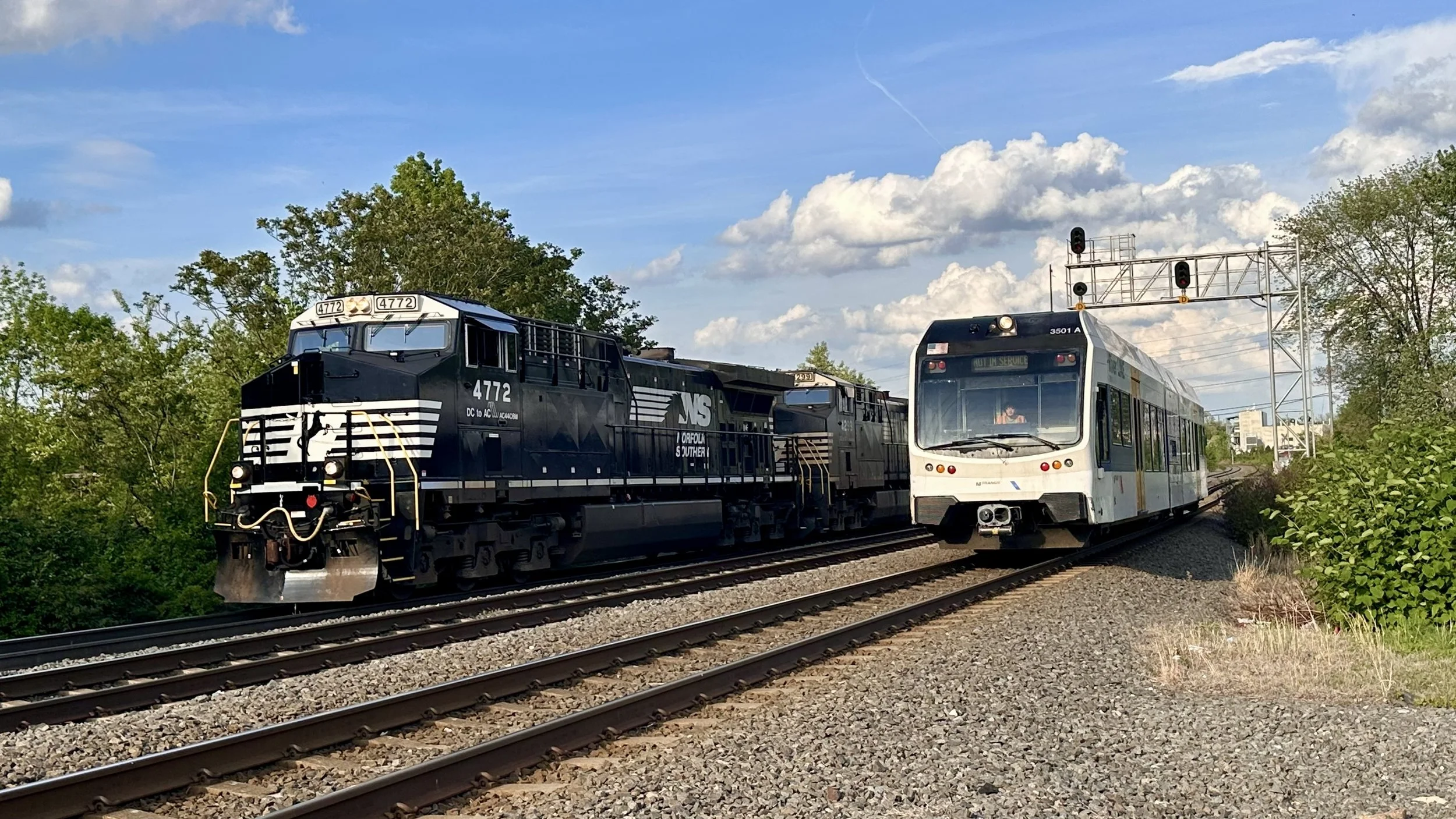
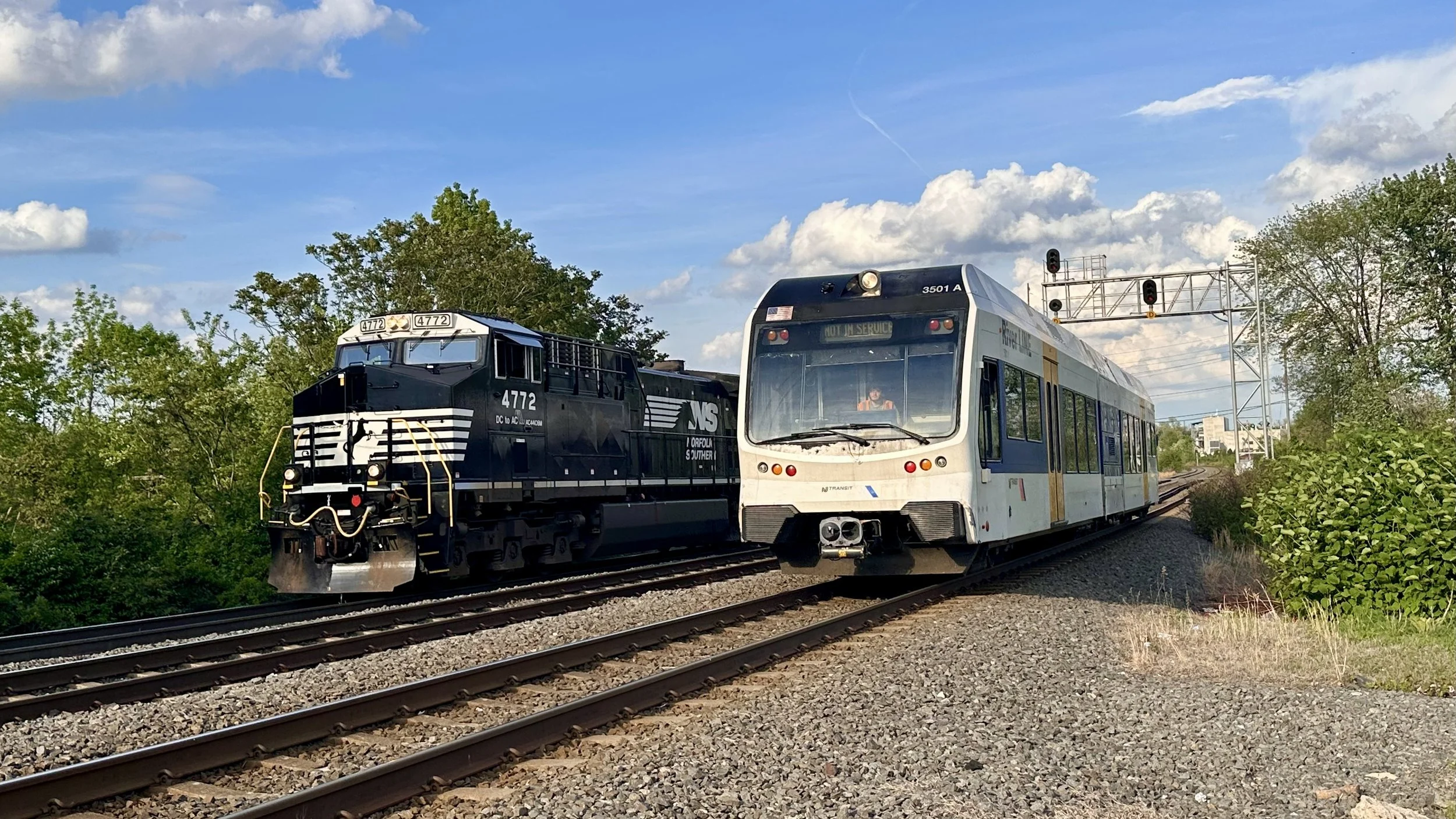
The DMU’s southern third parallels major freight rail lines near Pavonia Yard, then travels next to multiple rail-served industries and switching areas in its middle third, and has an otherwise quiet upper third near Trenton but for the isolated Burlington Yard for freight near Florence. Sometimes, the DMU takes ownership of the single-track mainline, forcing the yard’s switch job to lock itself up in Florence during passenger train hours to switch the industries within yard limits, but its southern third has a track or two to itself paralleling one or more freight mainlines, such as for neither to impede each other’s movement.
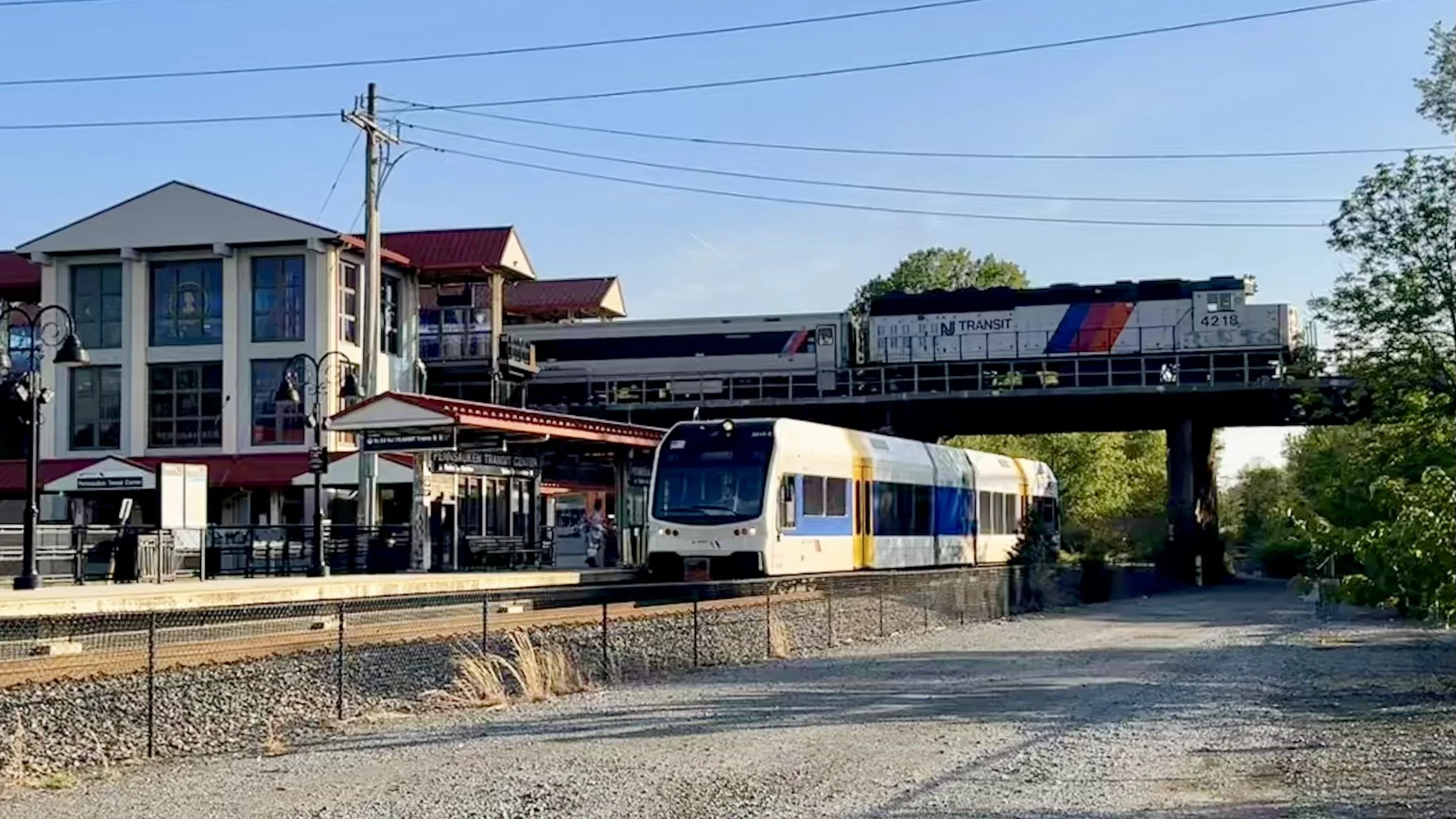
At its extreme northern and southern edges, the River LINE has DMU-exclusive rights of way with flange-squeelingly tight curves and steep grades, ducking over and next to the Northeast Corridor and under a road to serve the Trenton Transit Center on one end, and, on the other, runs in mixed traffic with automobiles to serve several major events centers in Camden while also connecting to PATCO.
While predated by the O-Train in Ottawa – the original North American DMU transit system, which even started with second-hand ex-German LINT passenger vehicles – the NJT River LINE pioneered the intense mixing freight rail and transit, paving the way for many DMUs to follow. For modelers, it offers an exciting admixture of frequent passenger trains with freight levels from branchline to mainline. However, its vehicles are bespoke and currently not produced in any scale, so true prototype-based modeling would be difficult and require kit bashing.
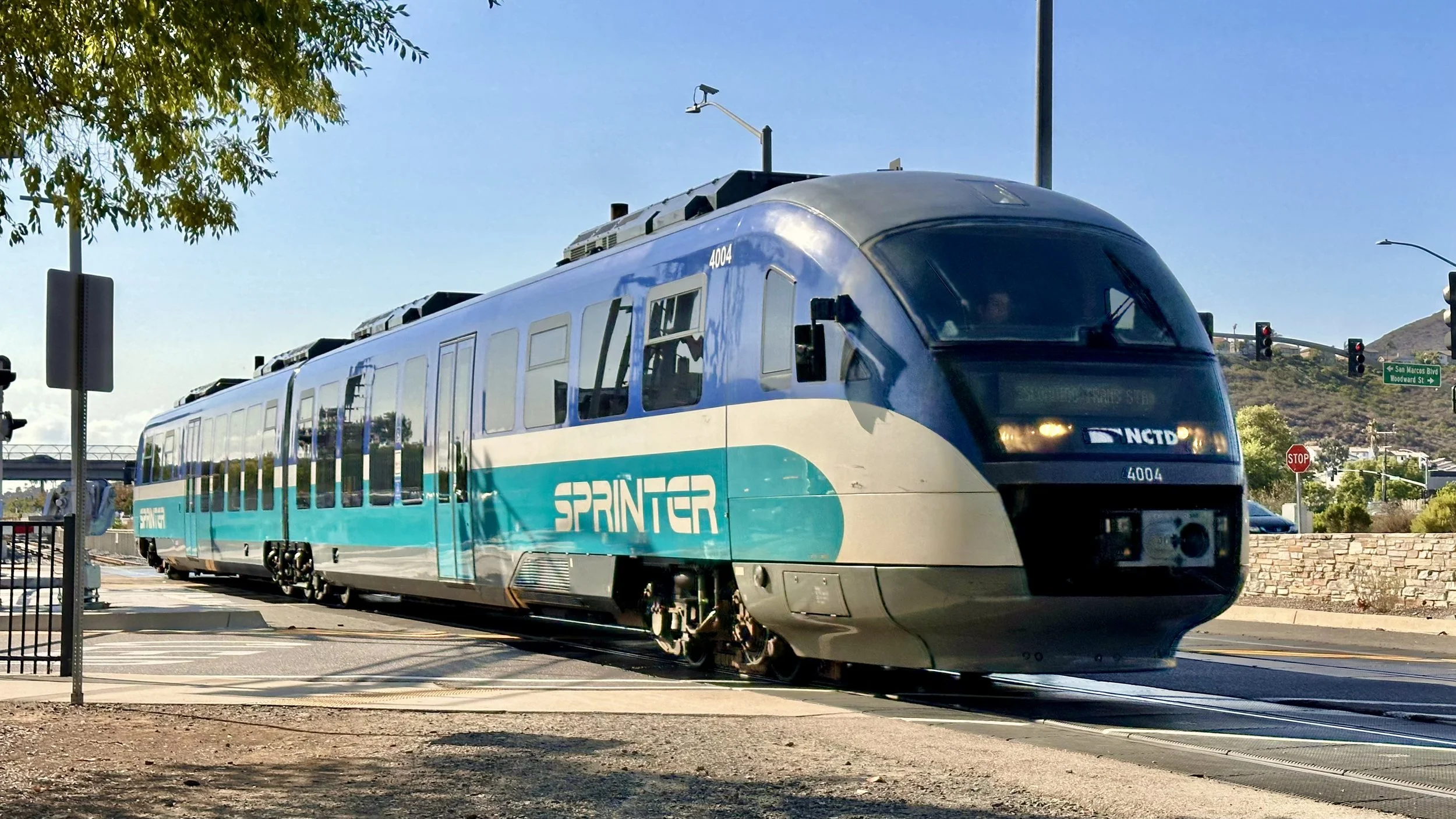
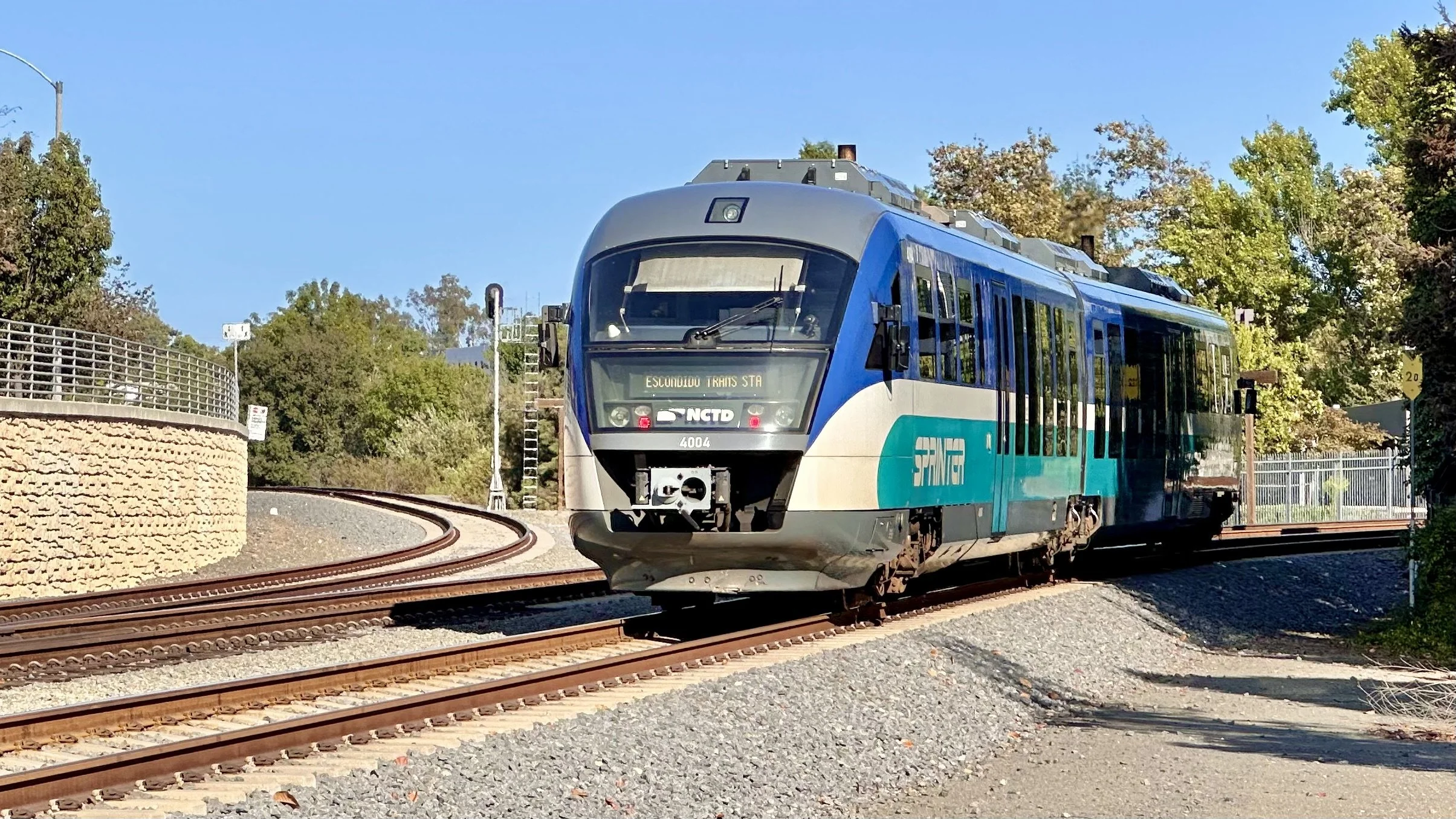
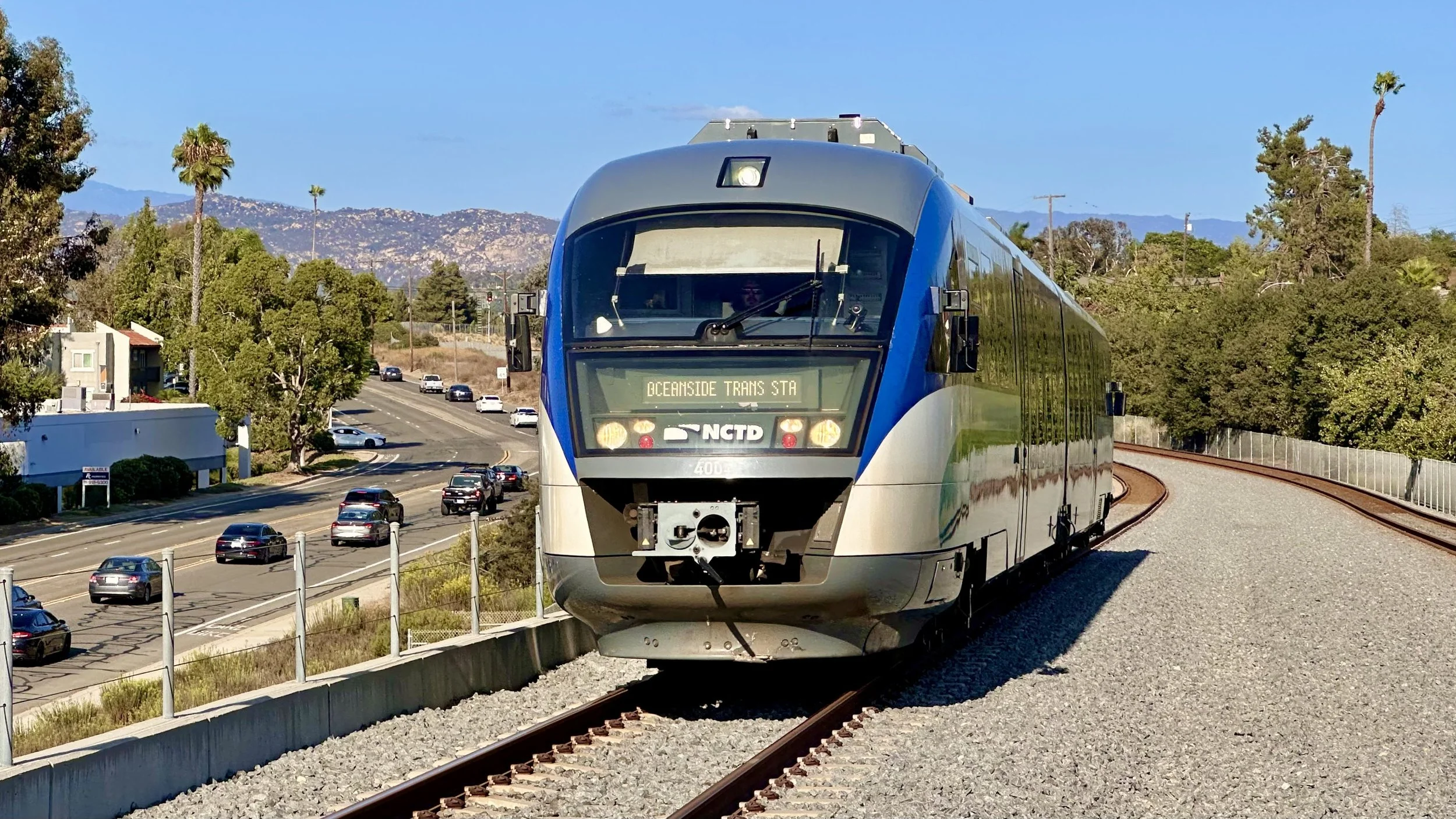
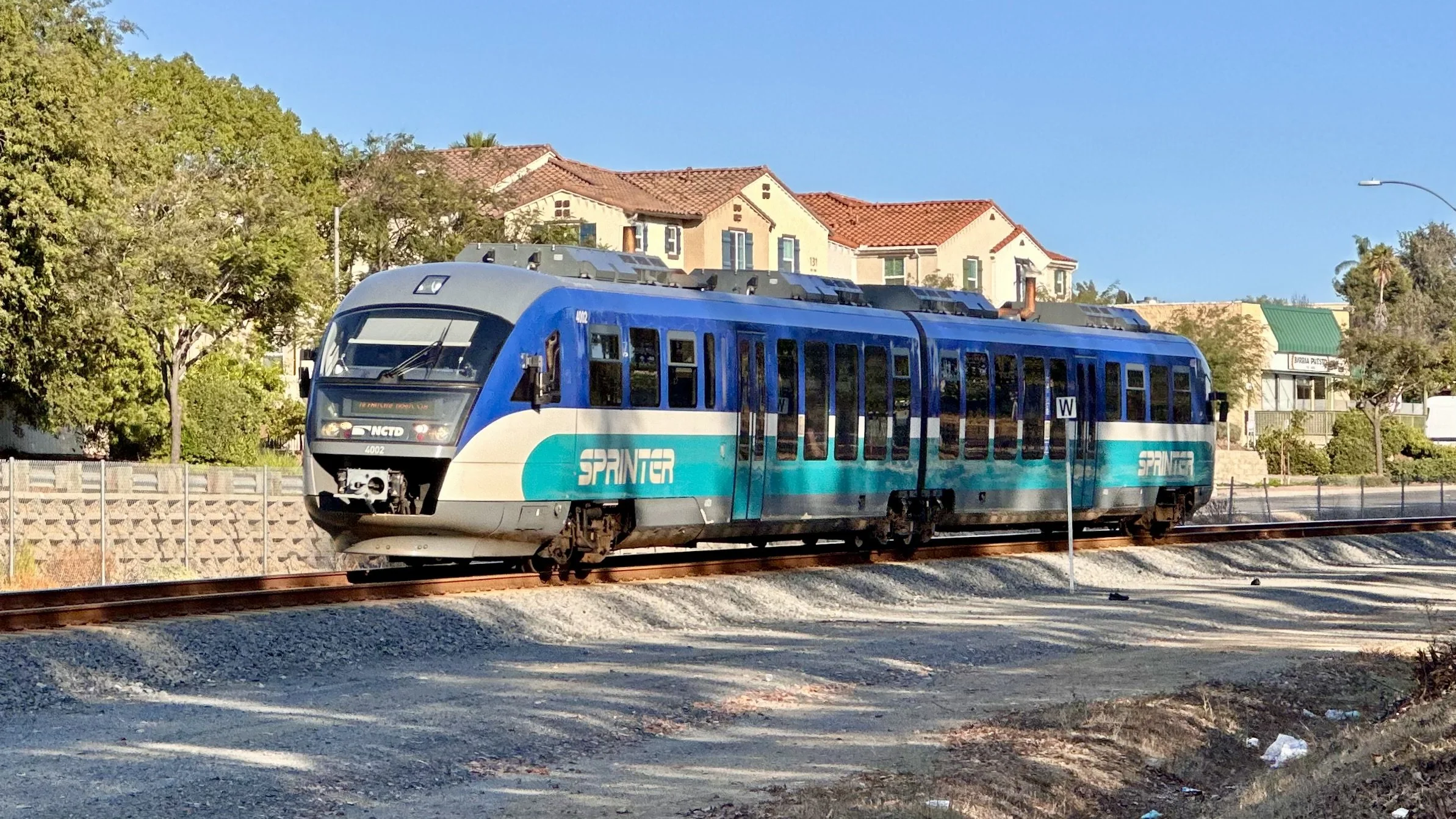
NCTD Sprinter
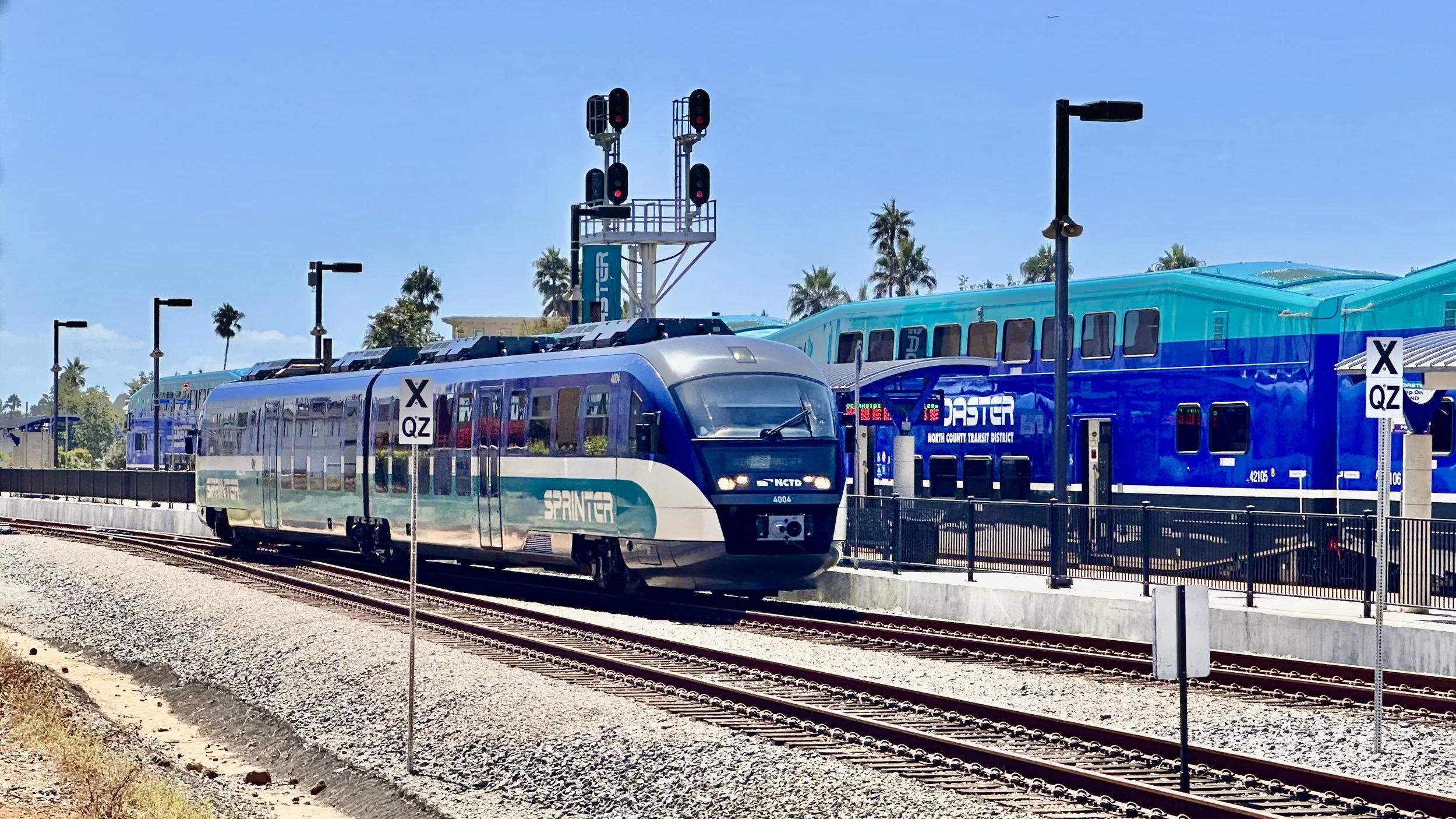
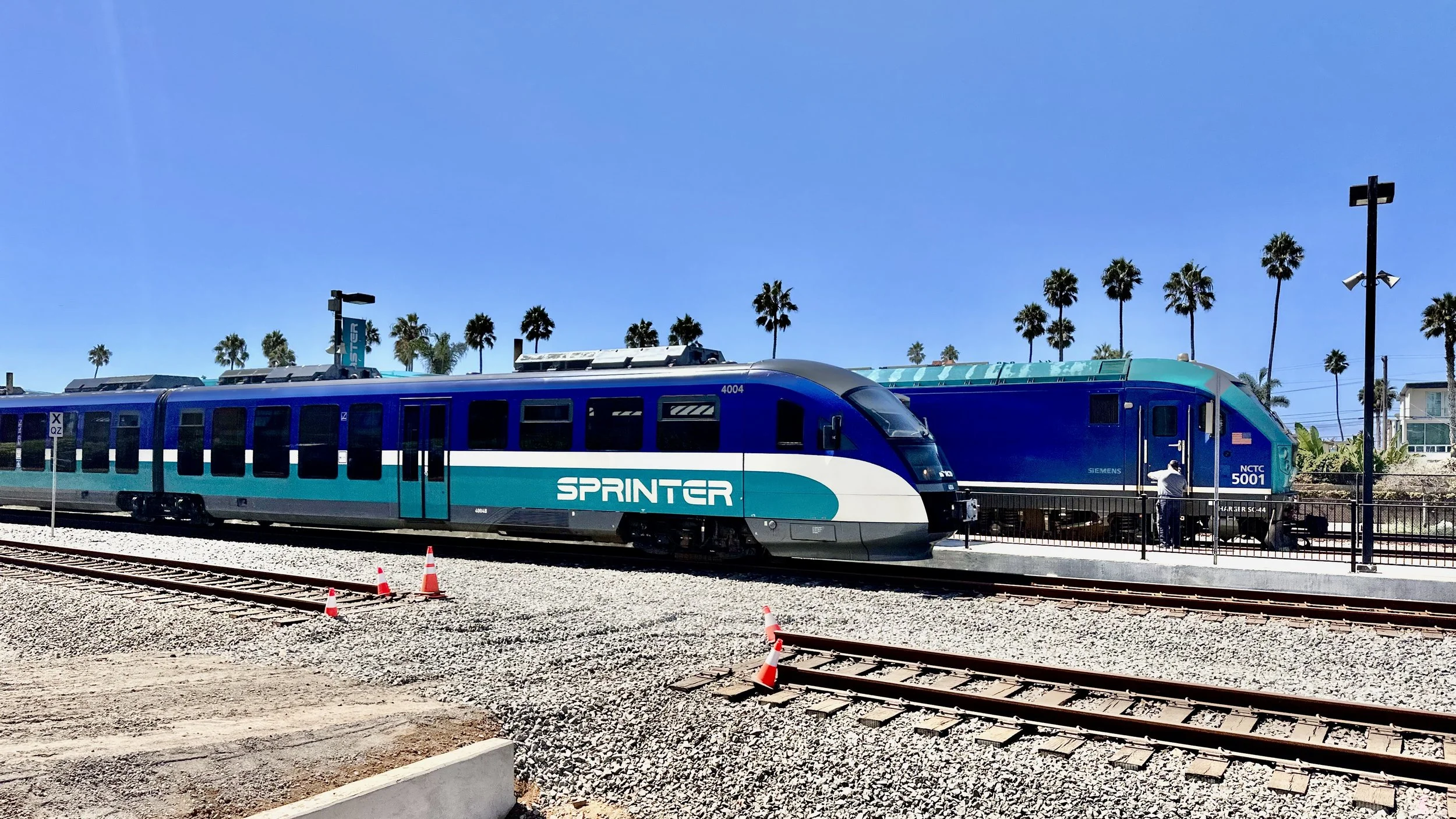
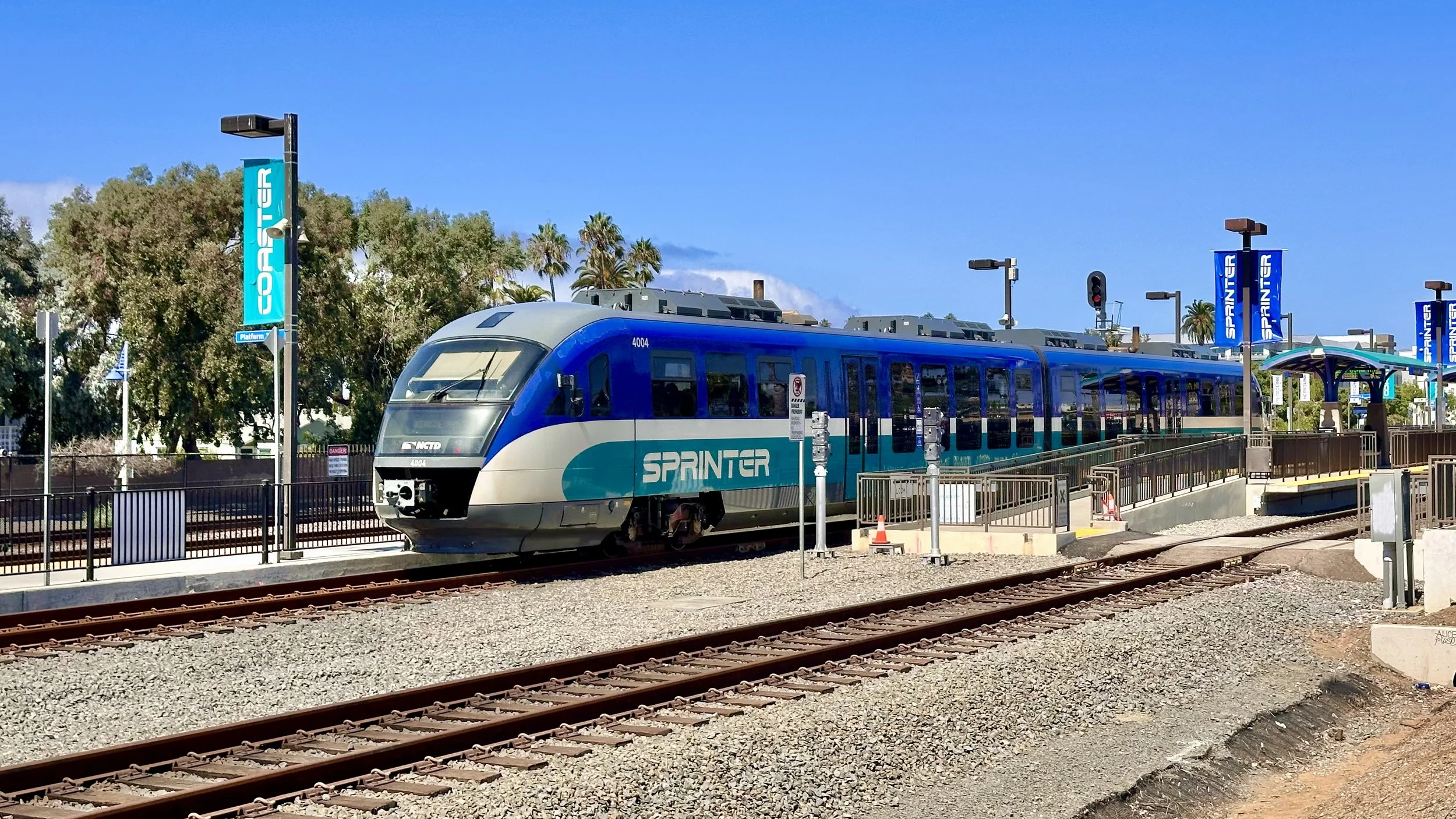
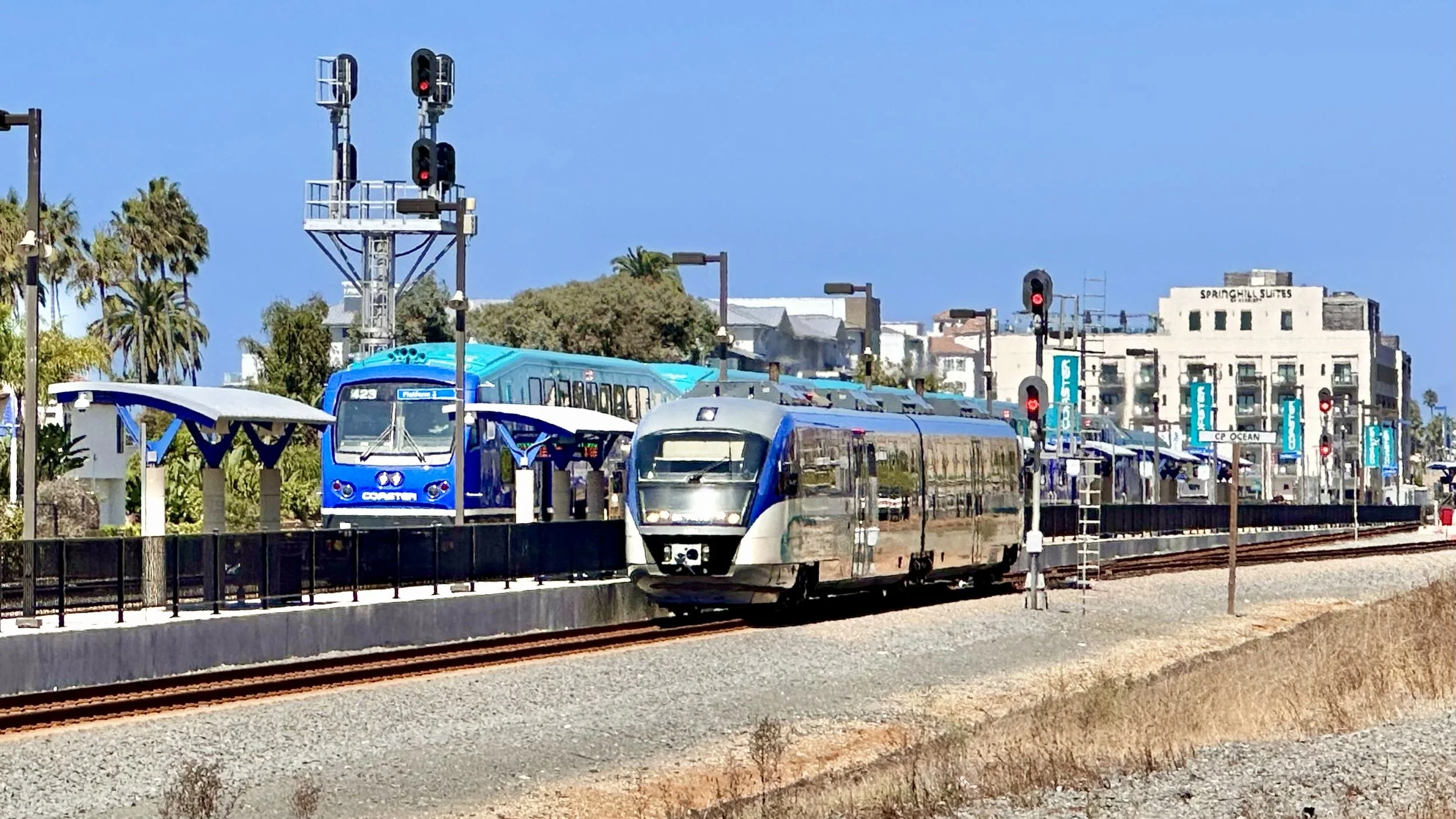
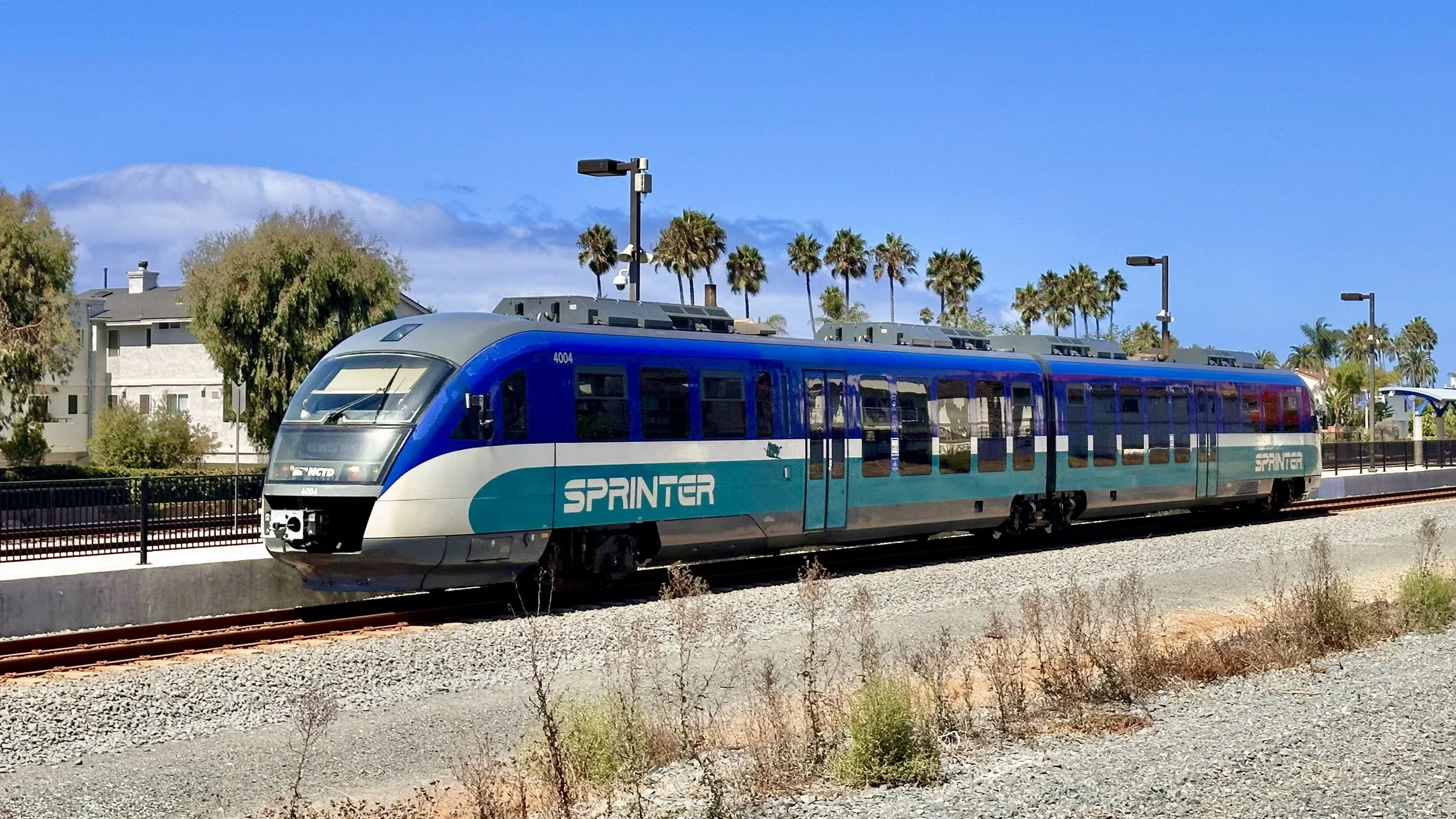
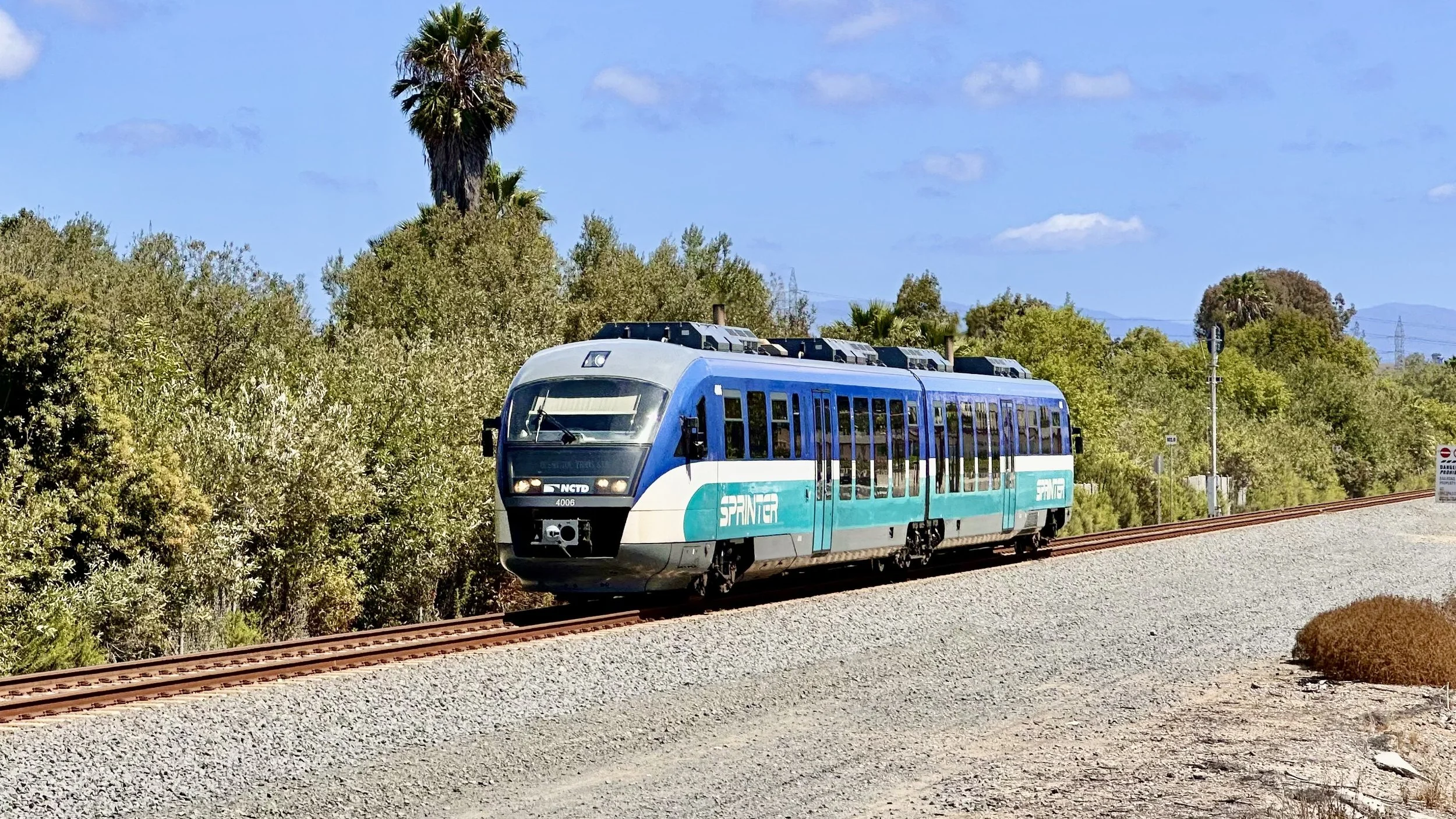
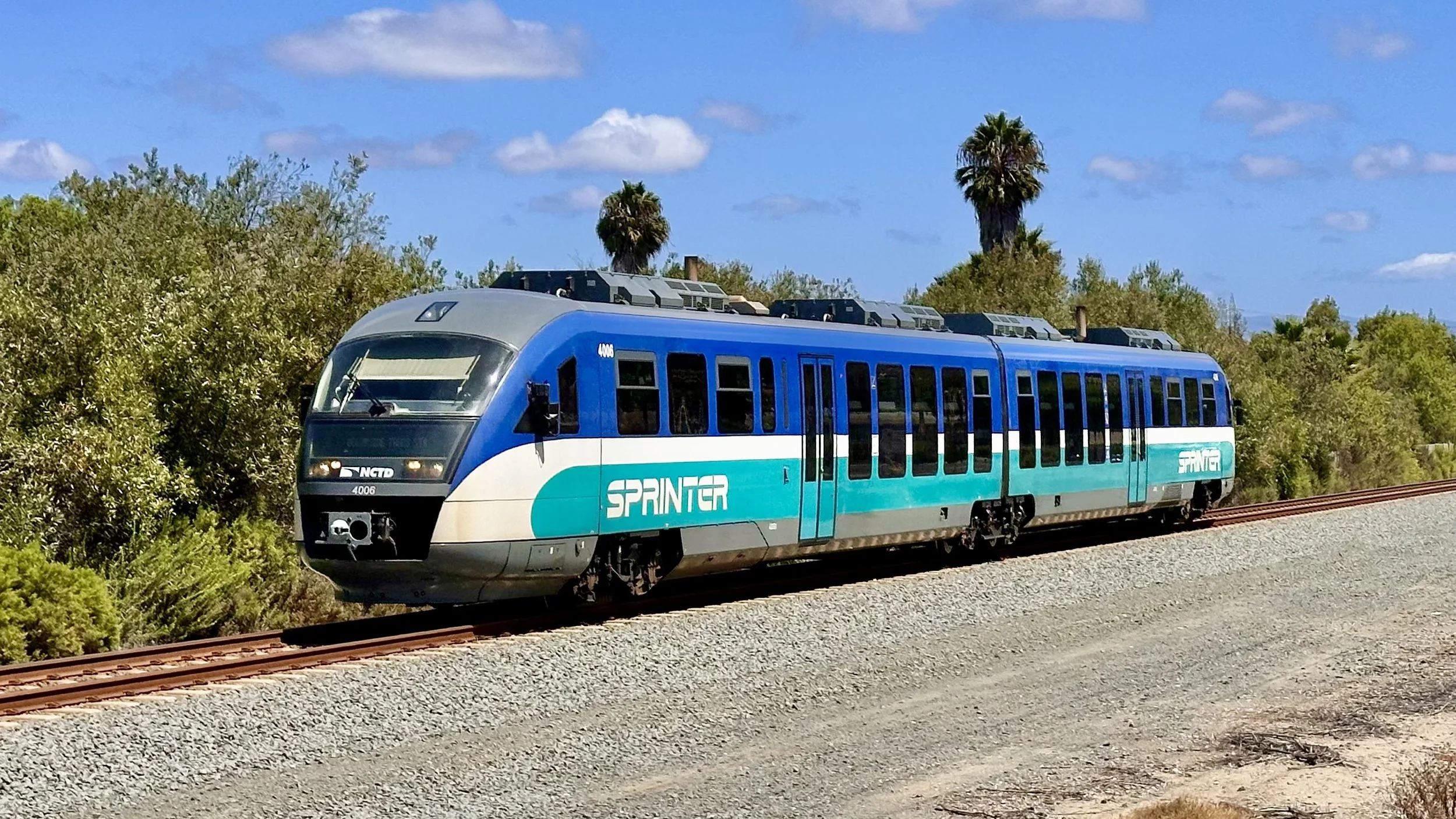
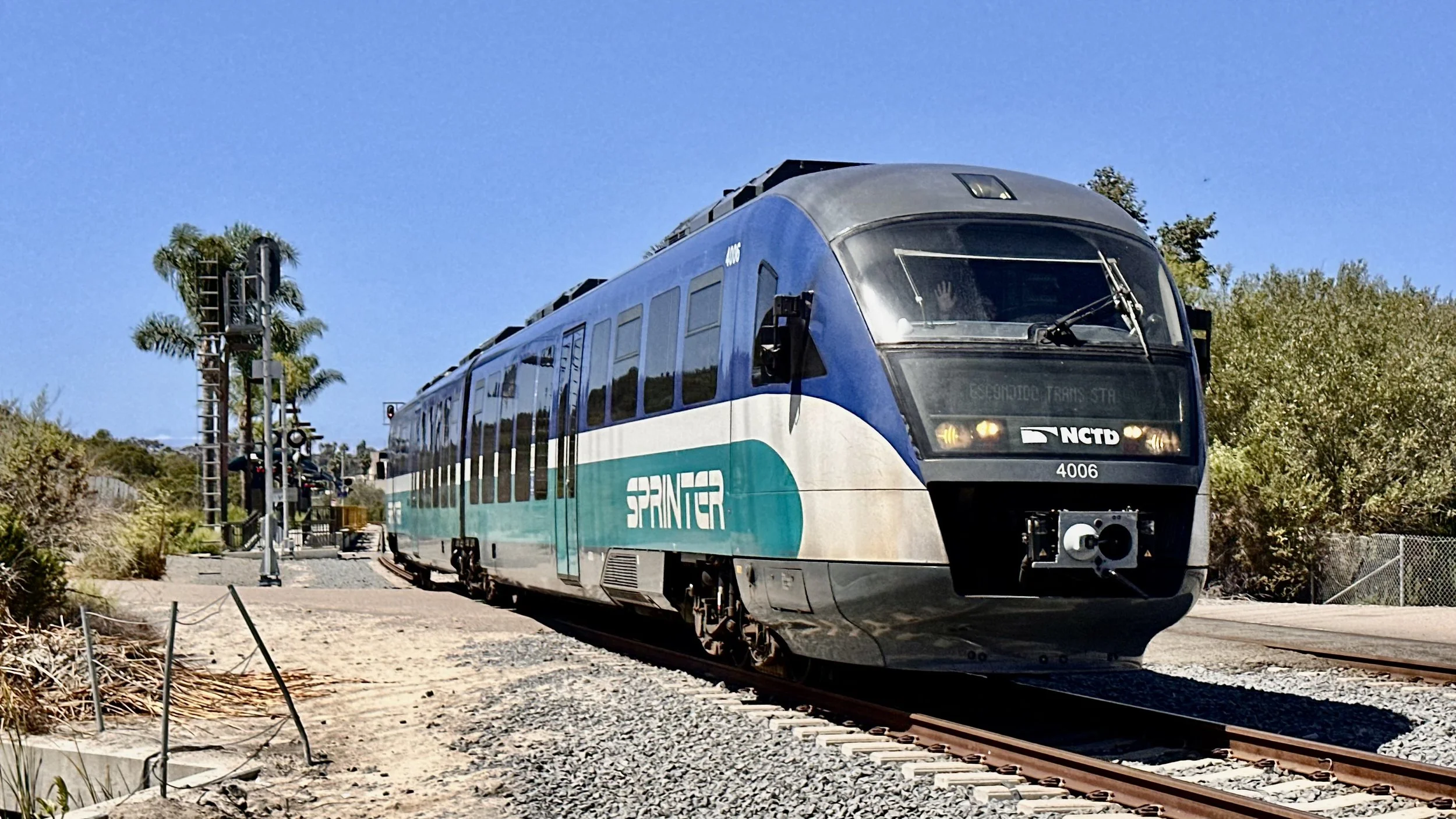
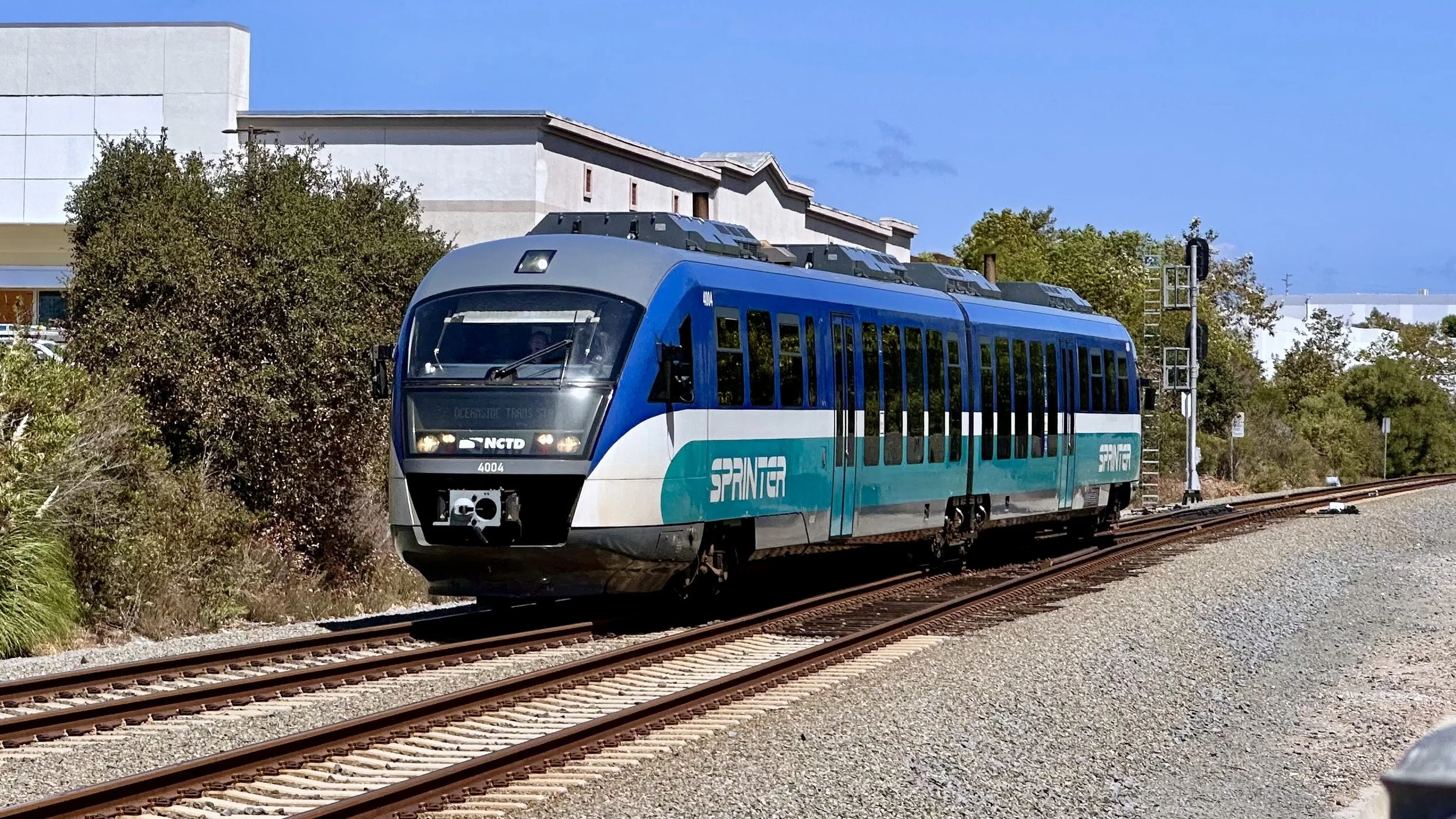
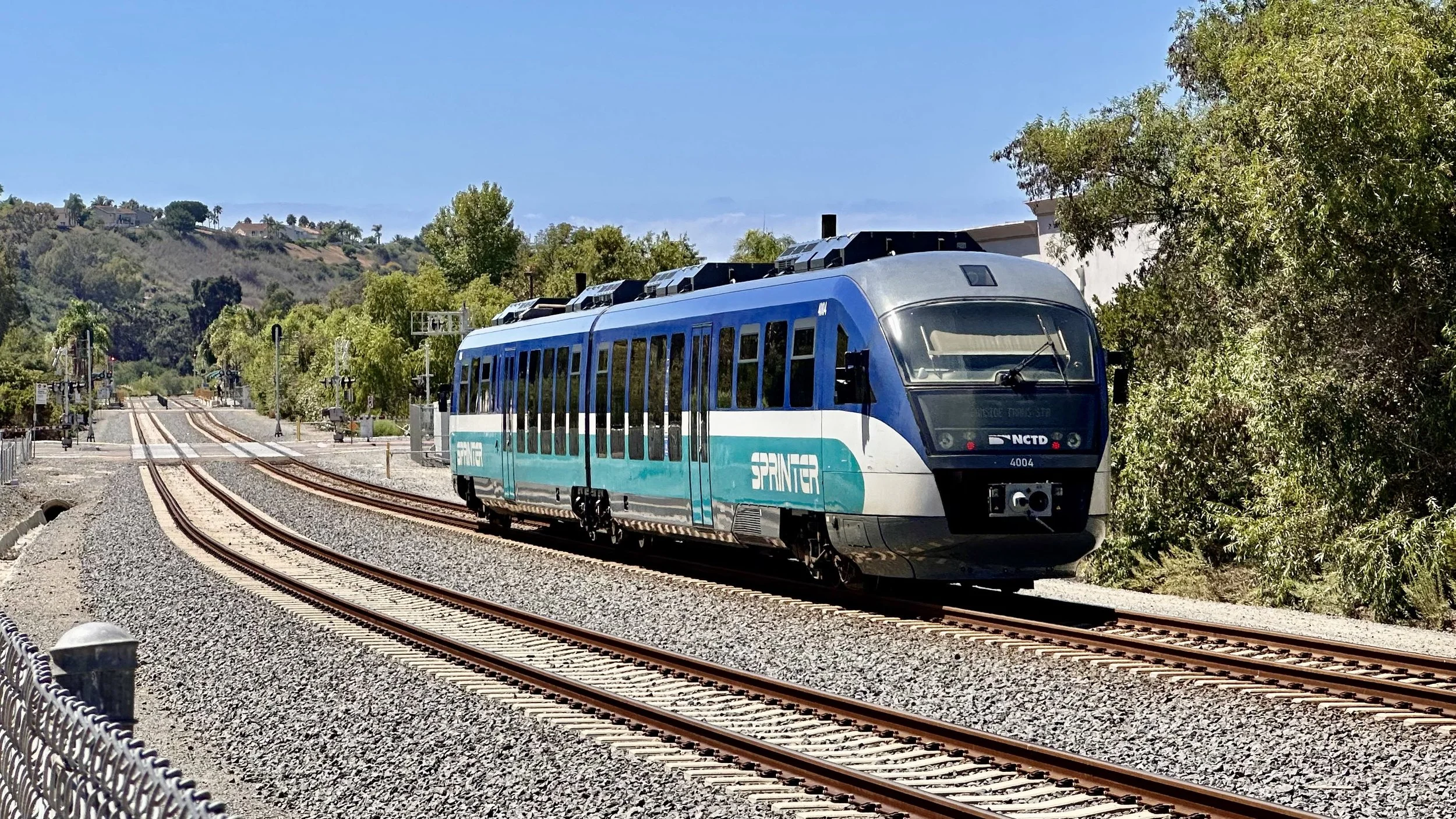
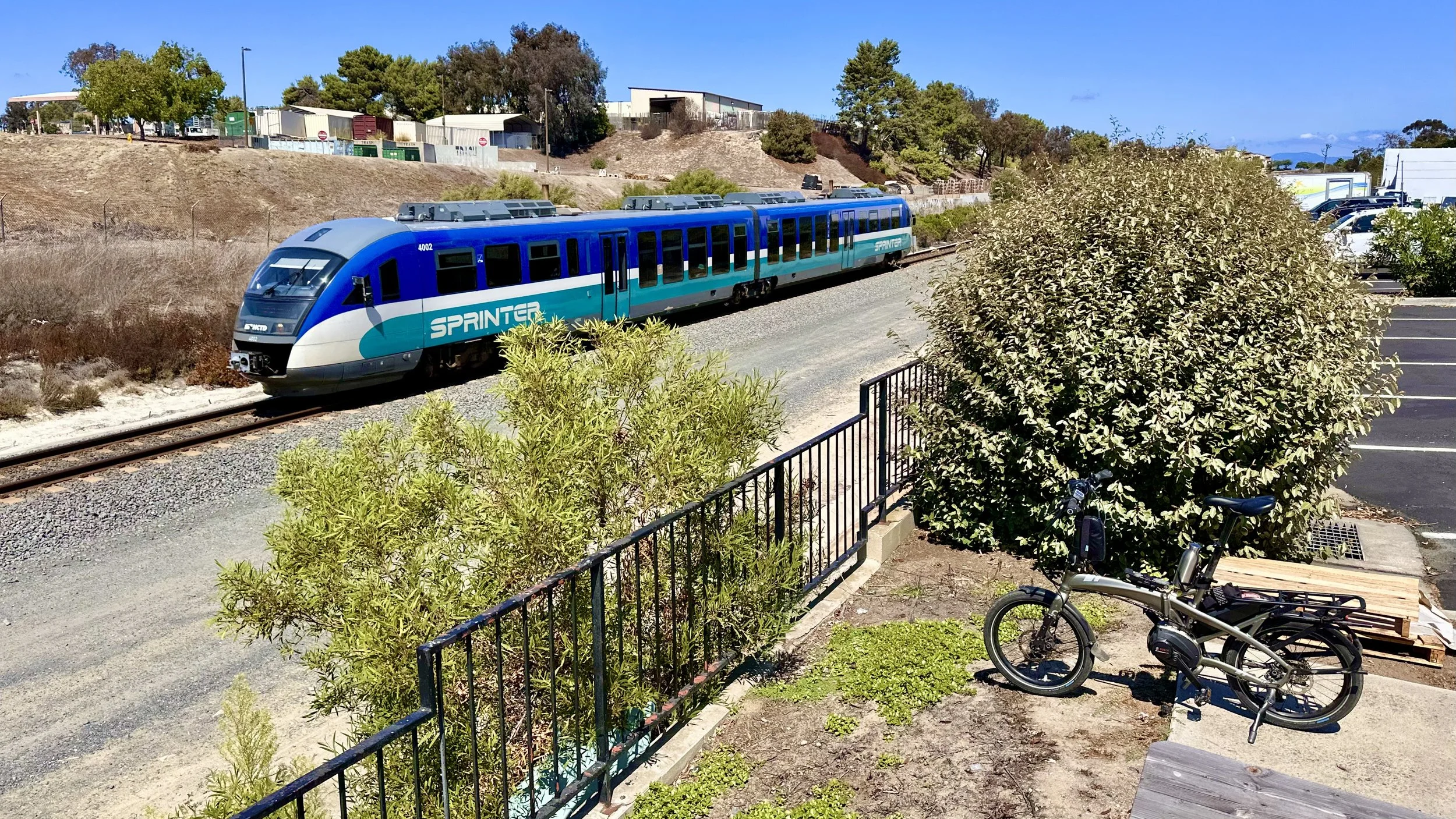
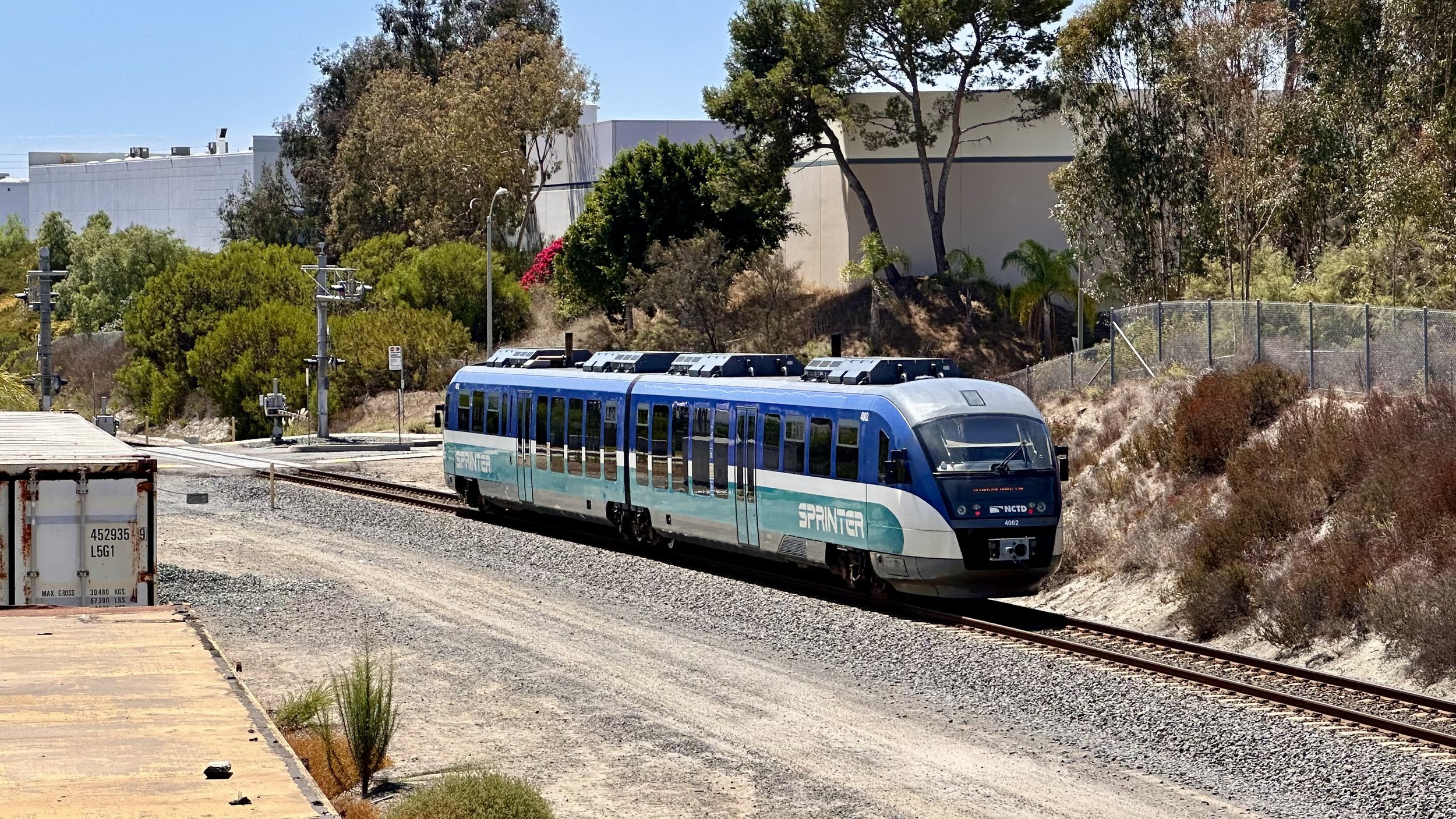
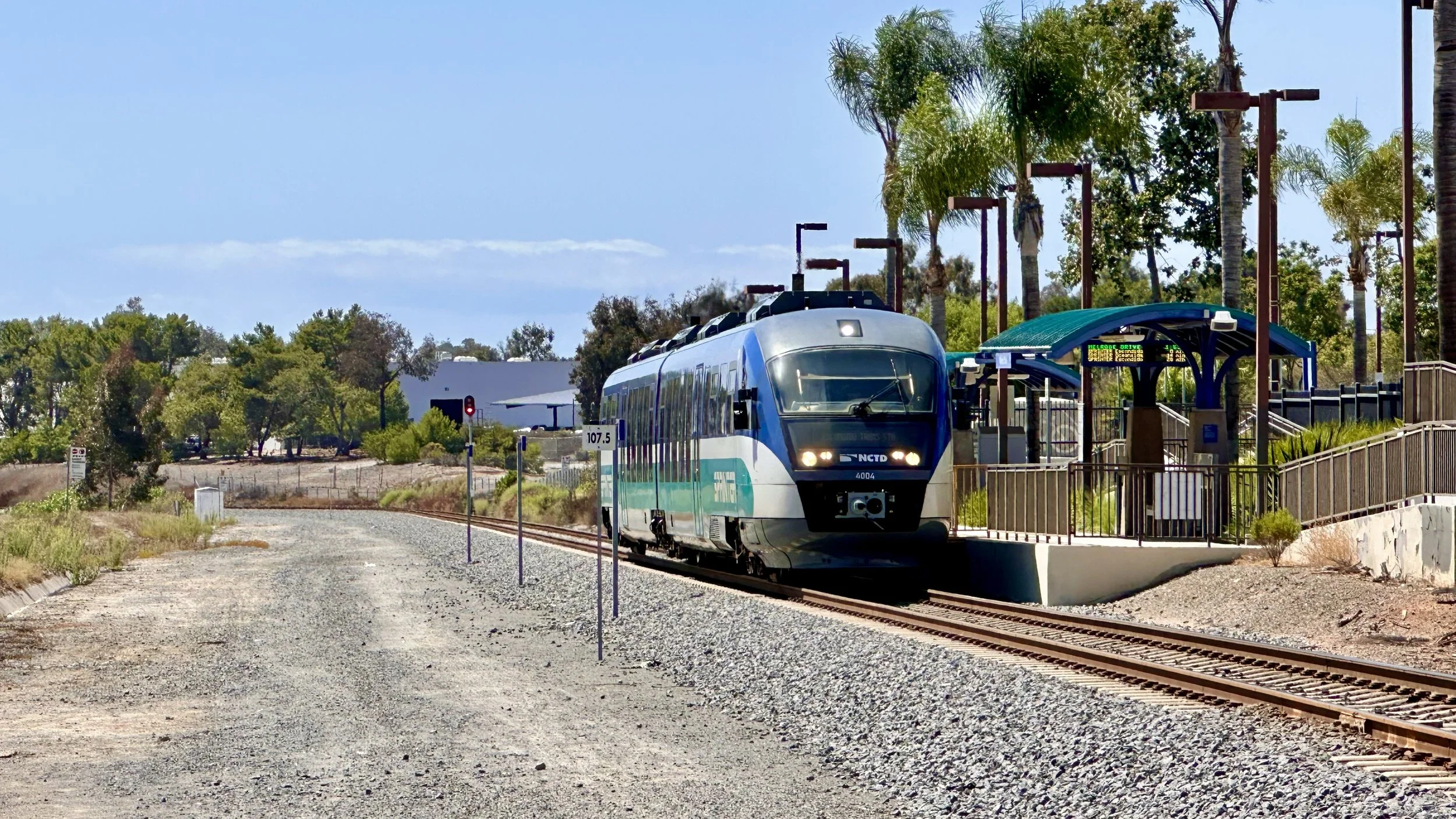
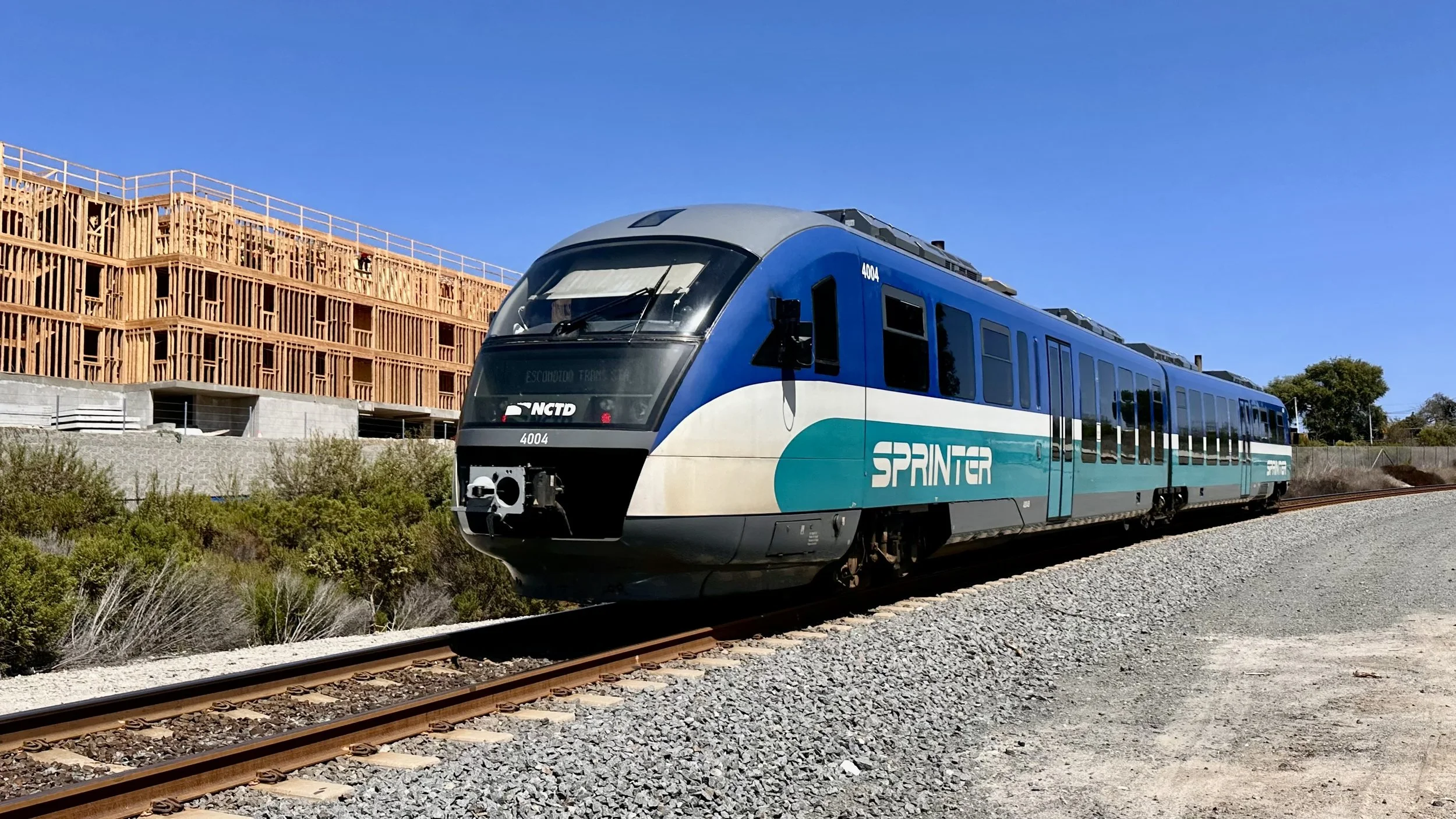
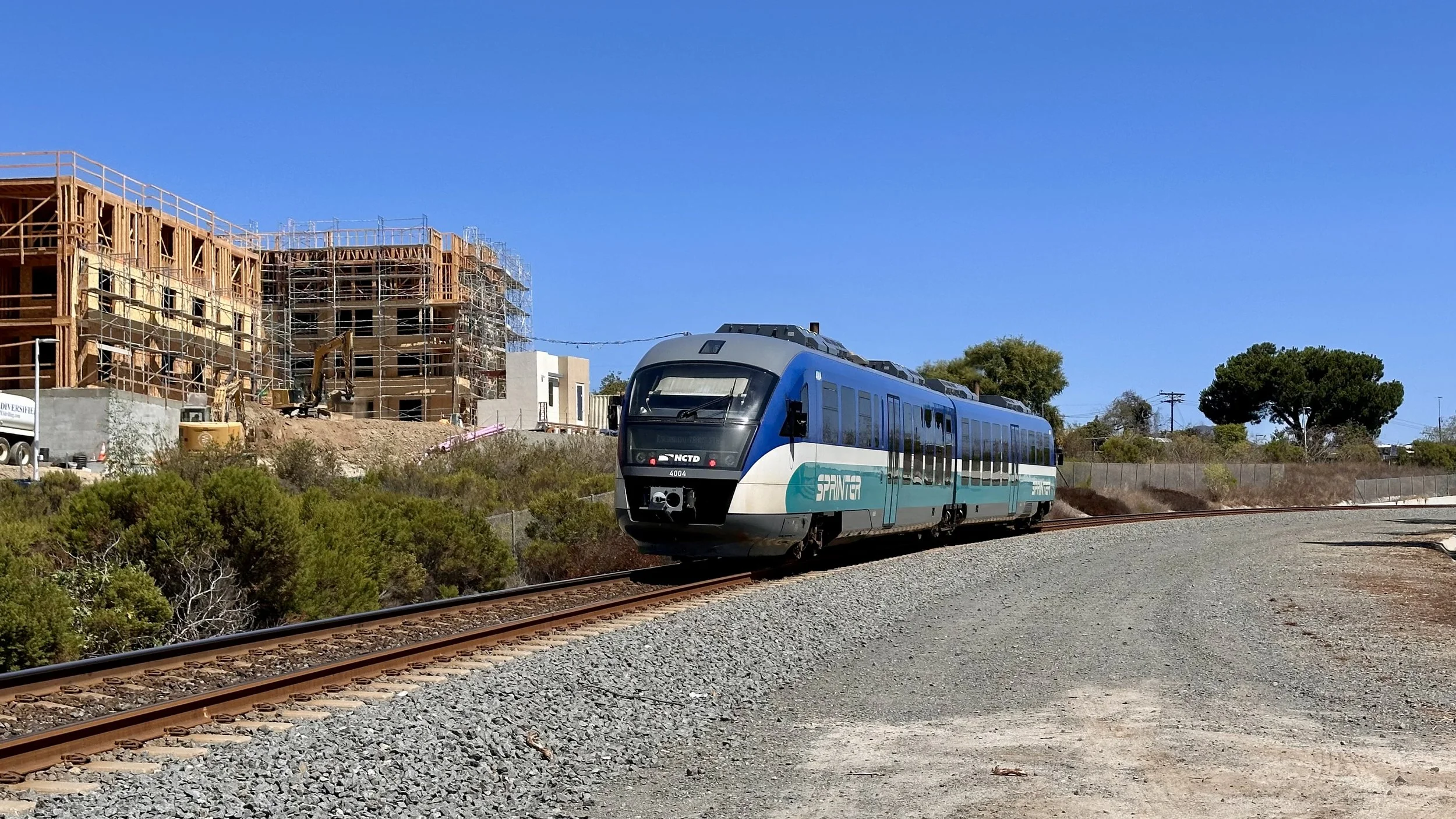
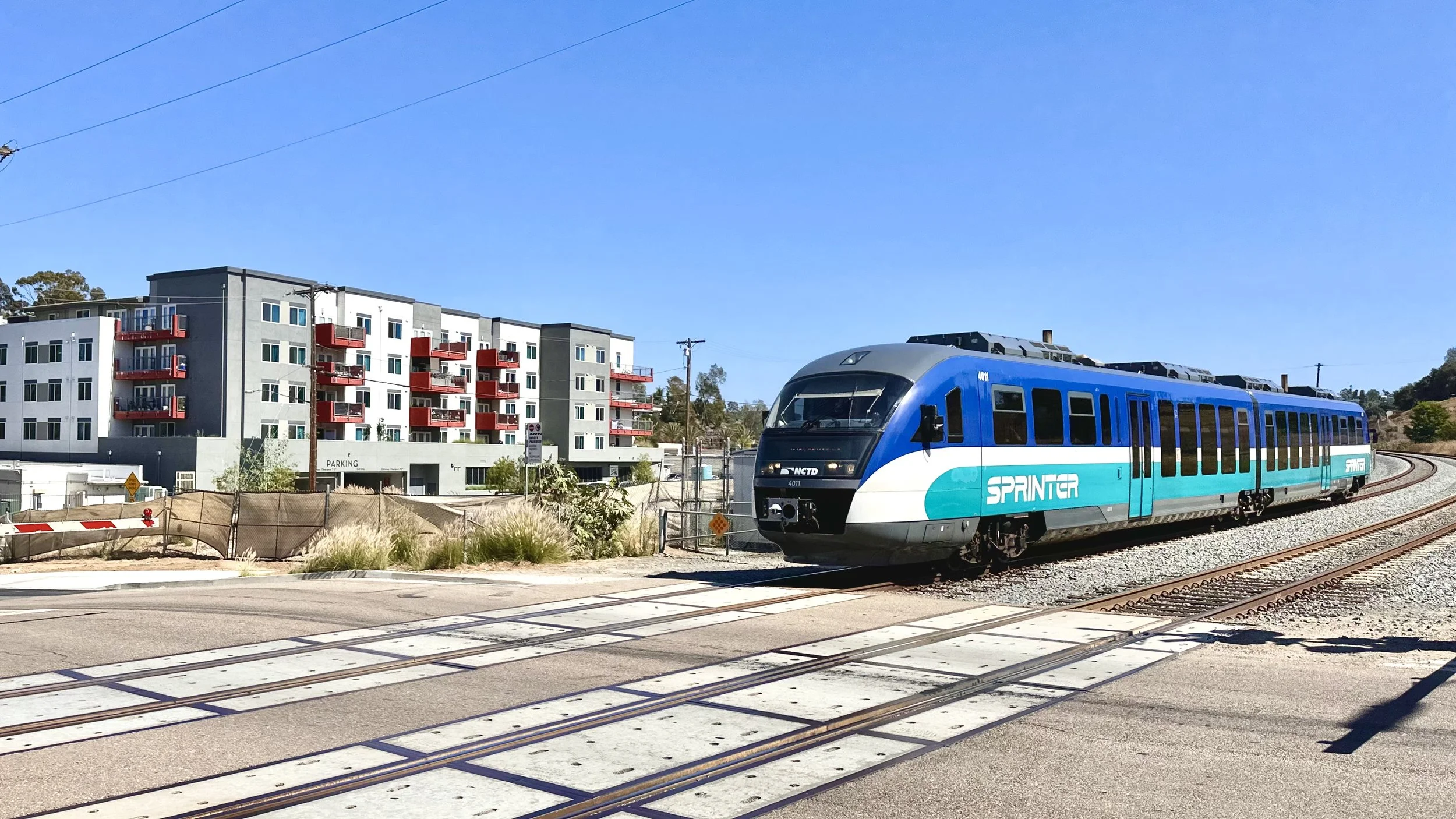
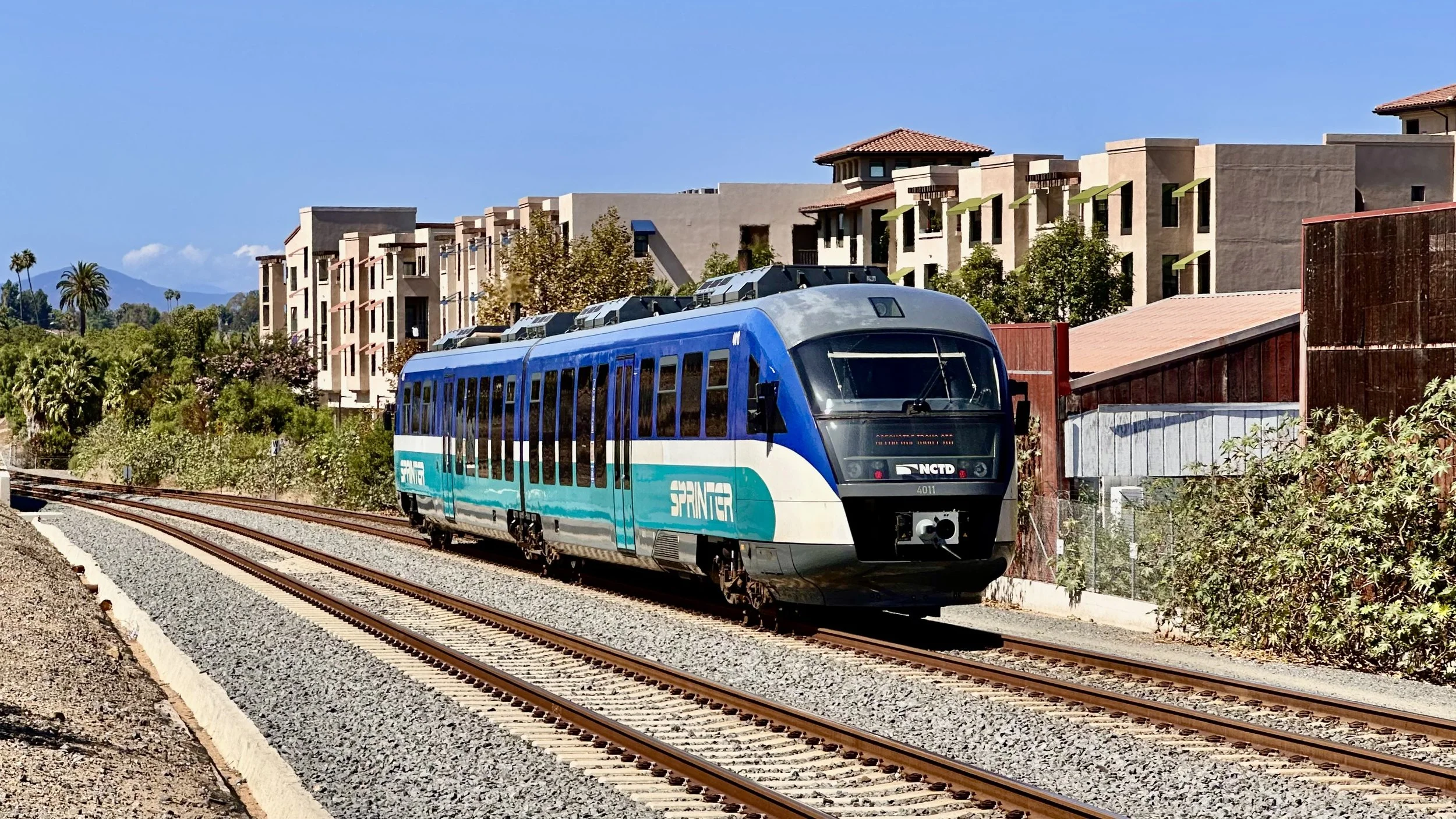
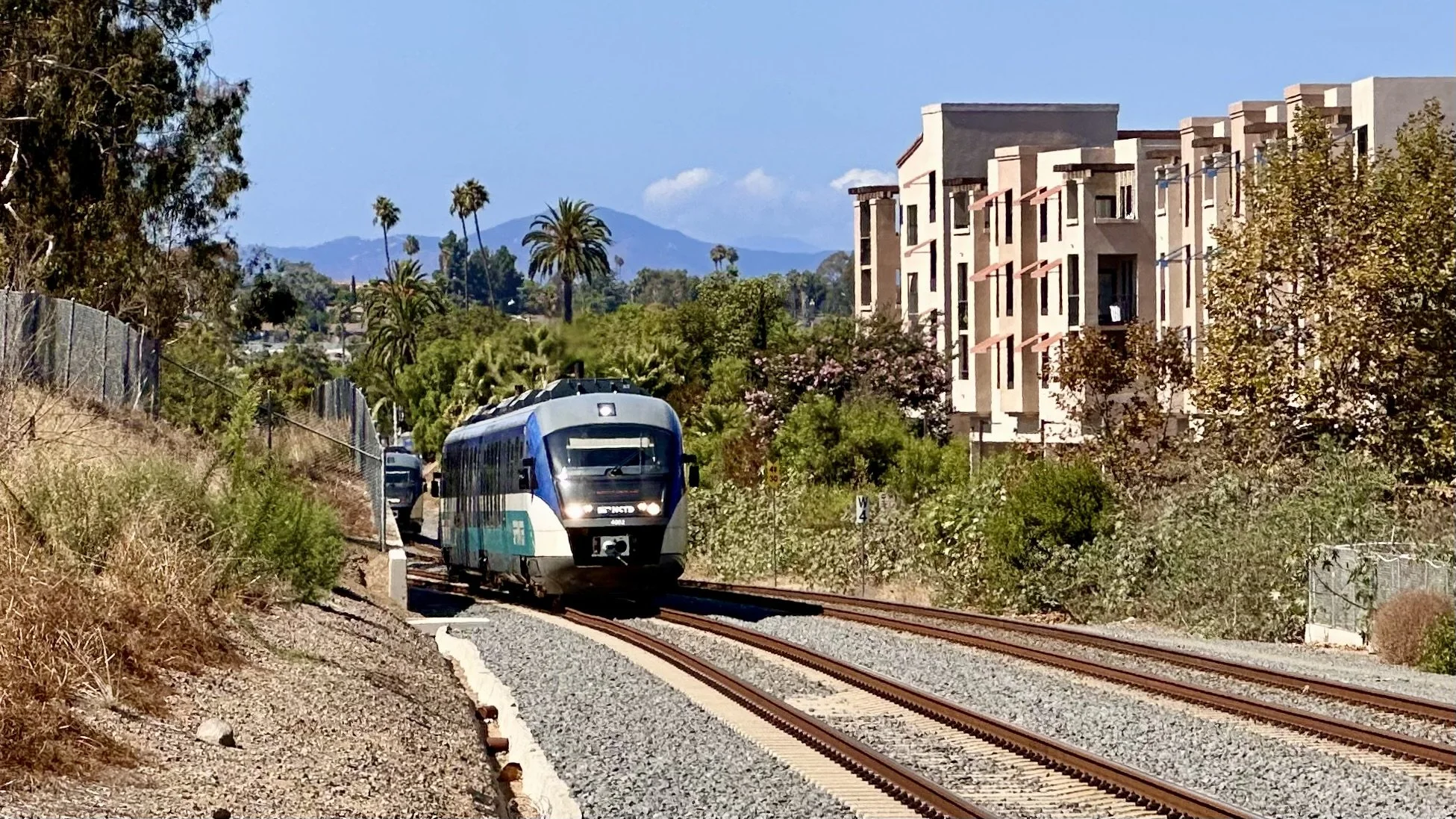
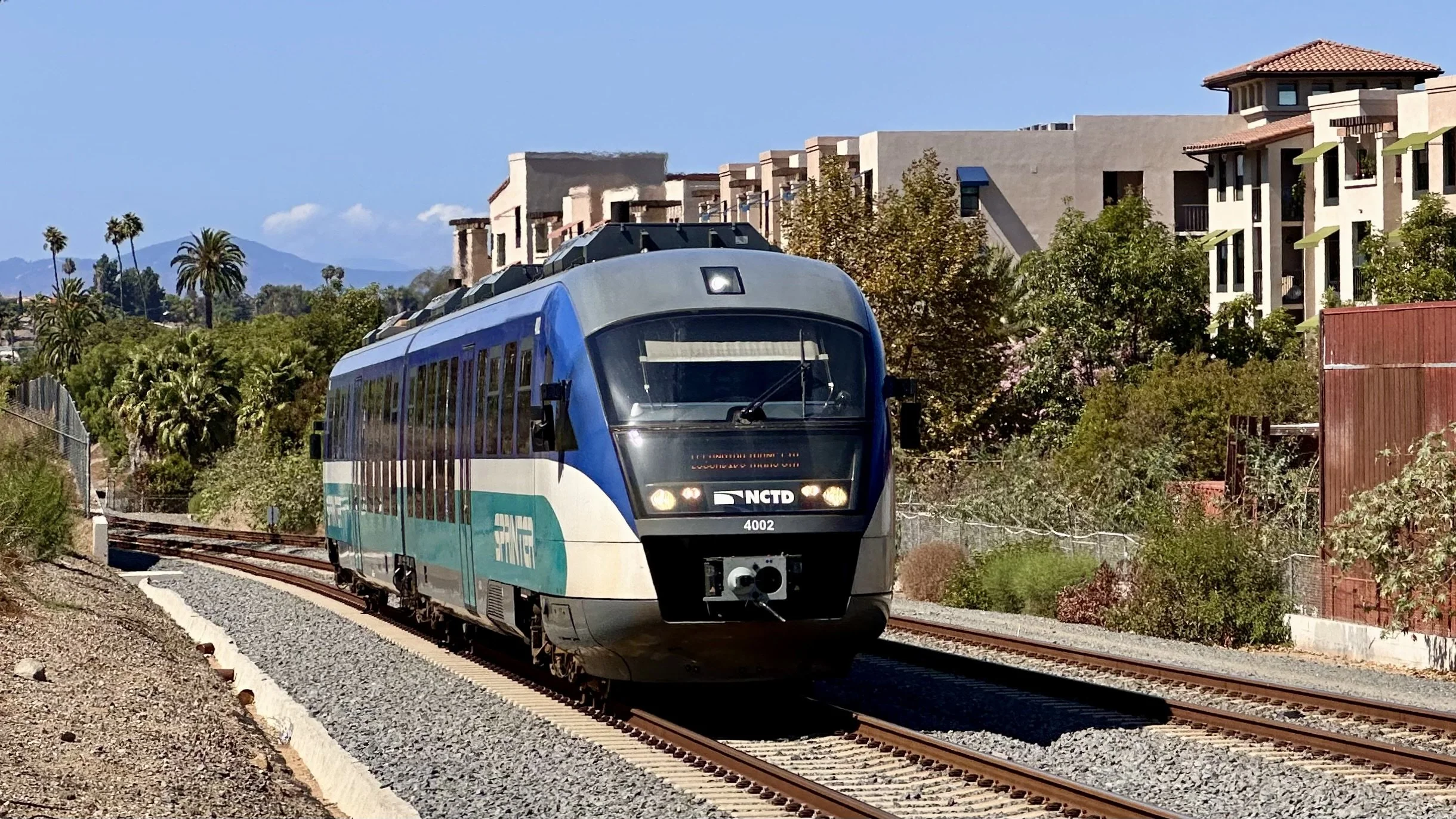
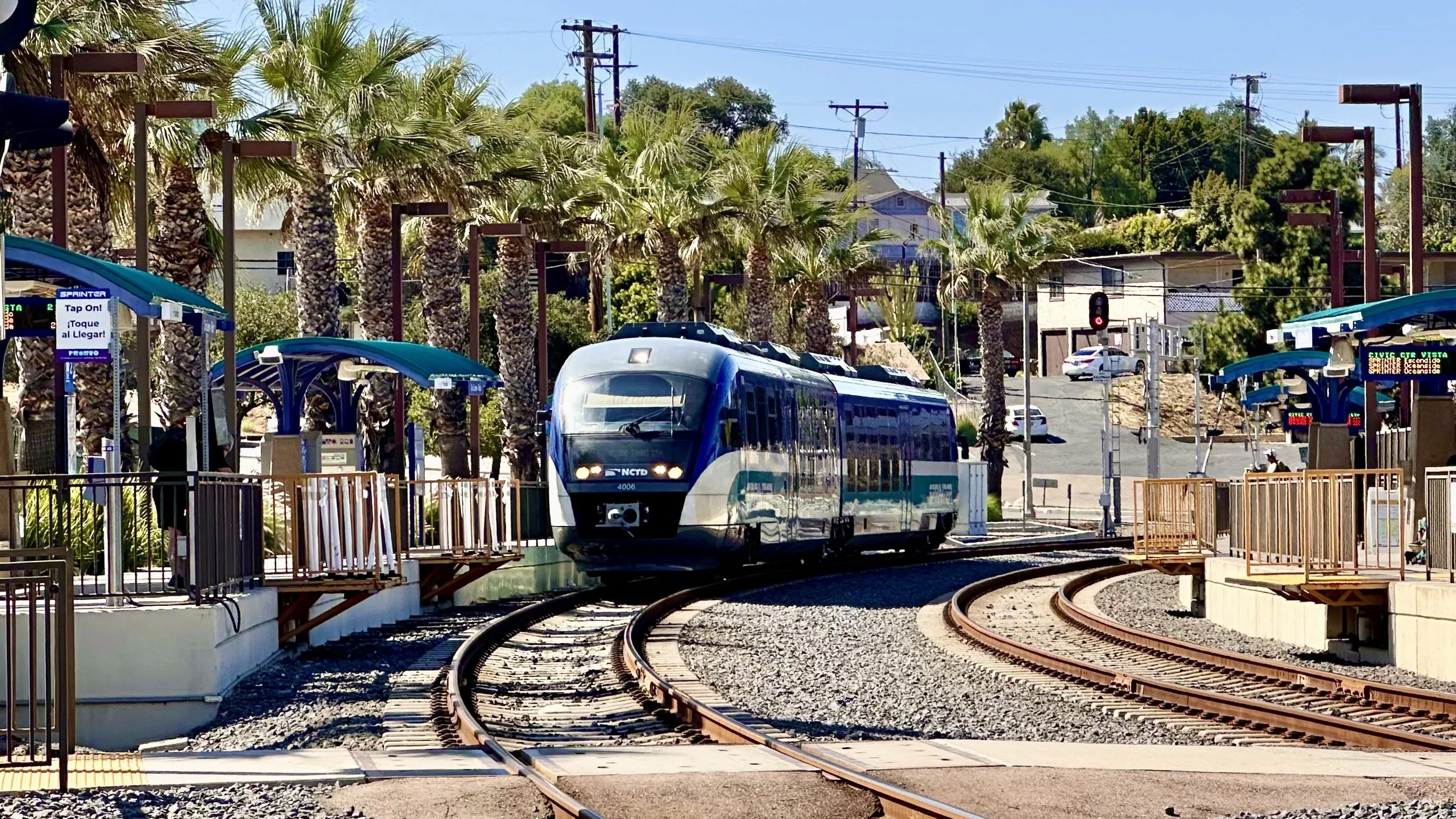
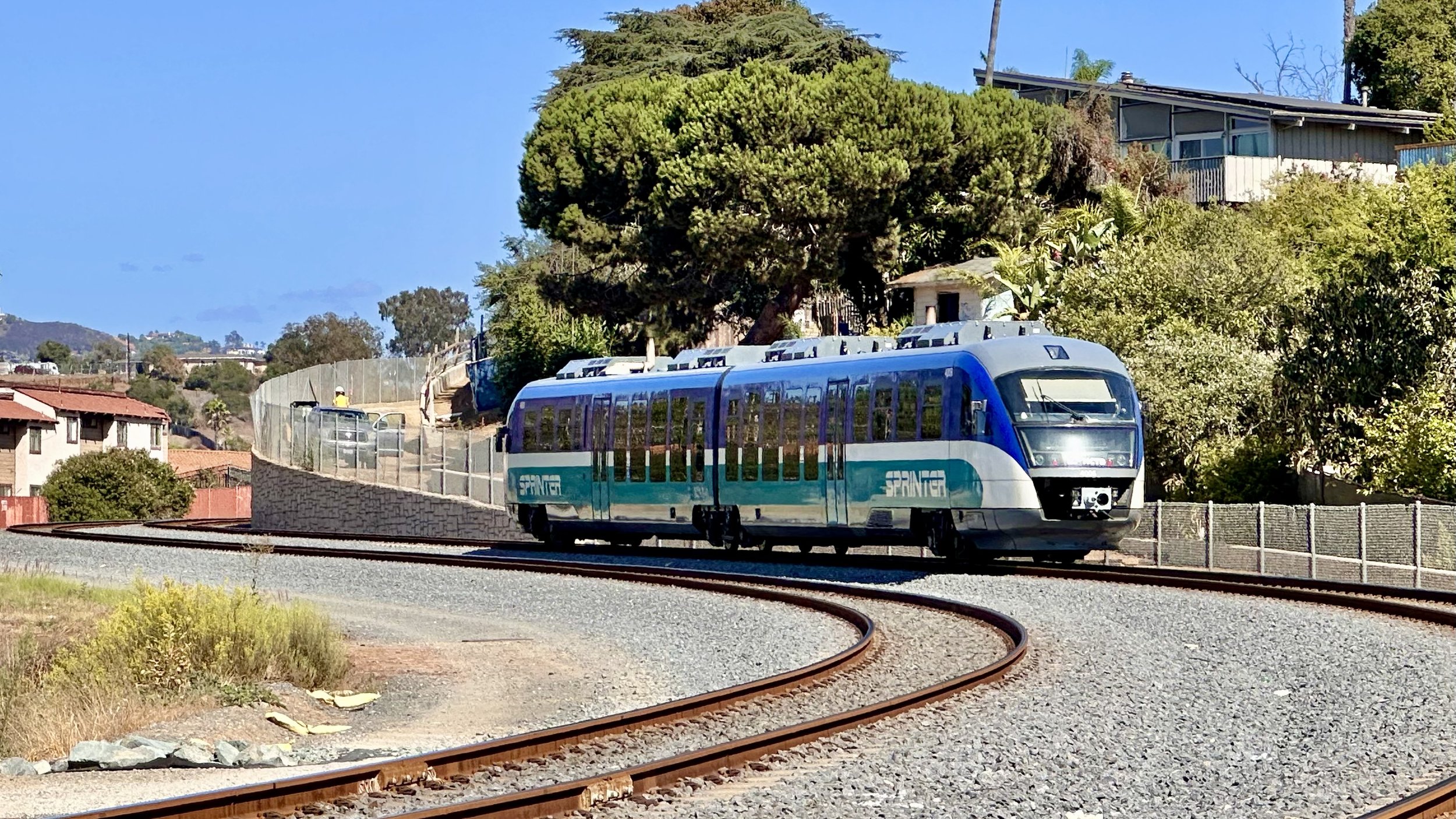
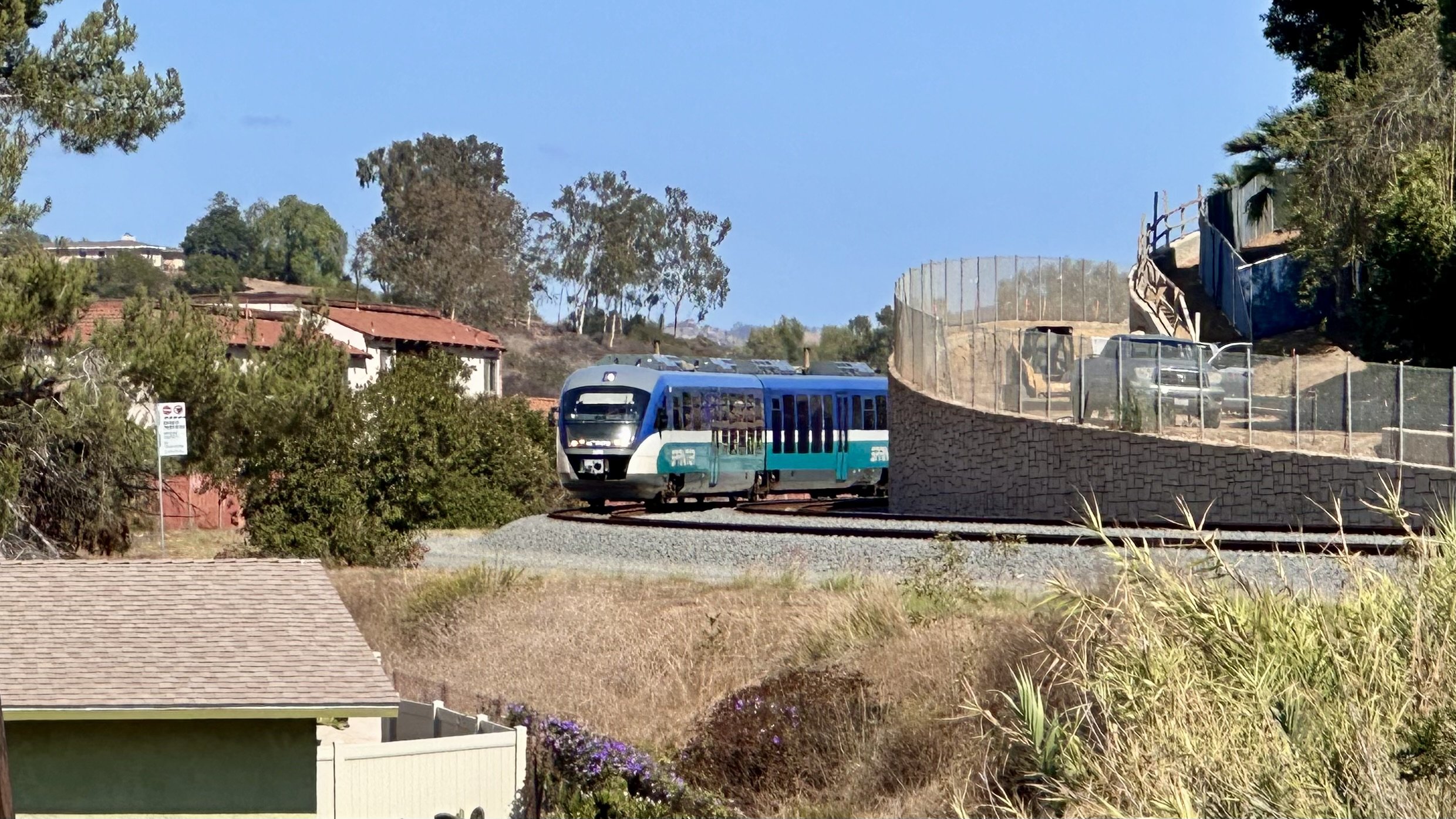
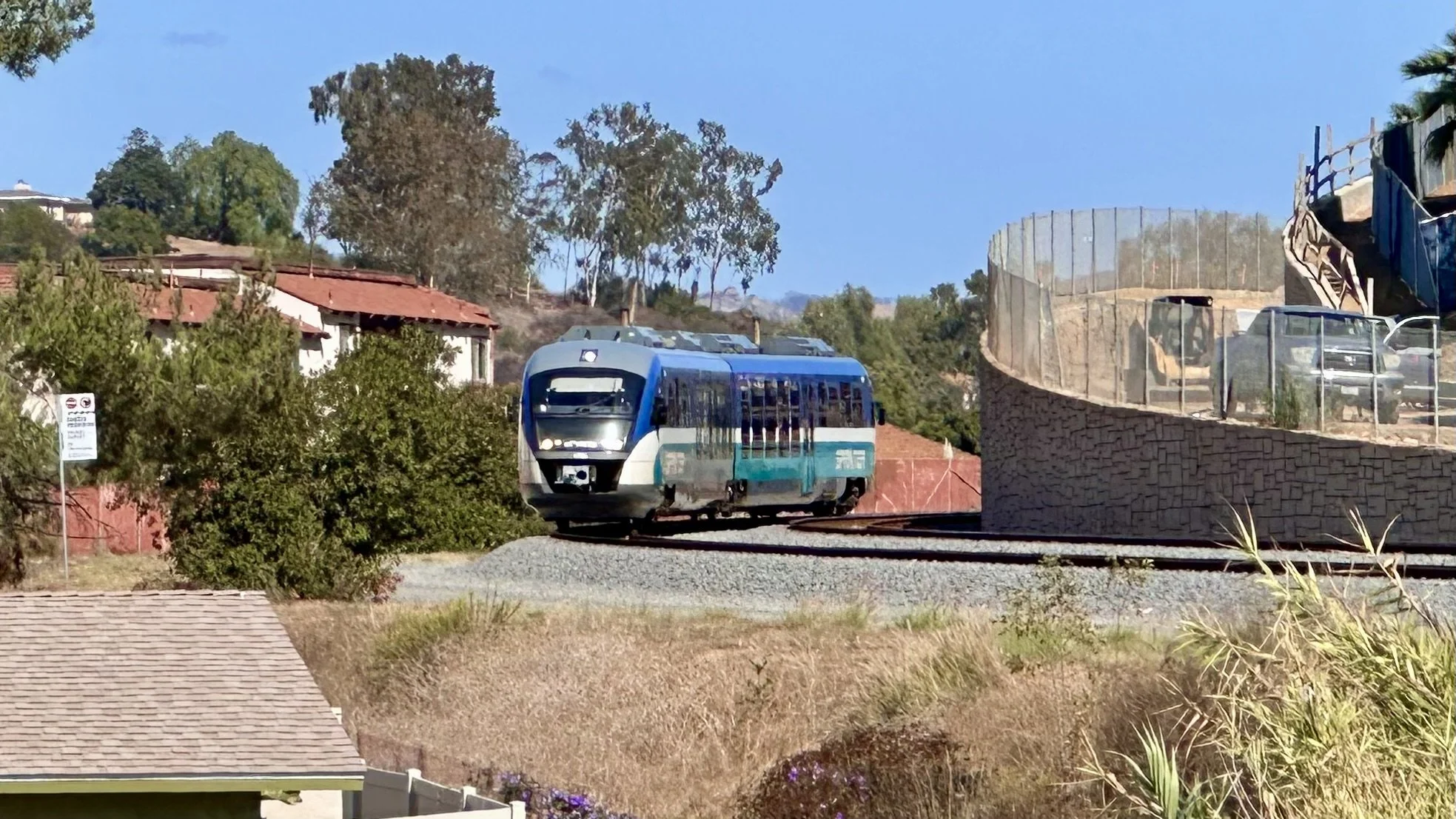
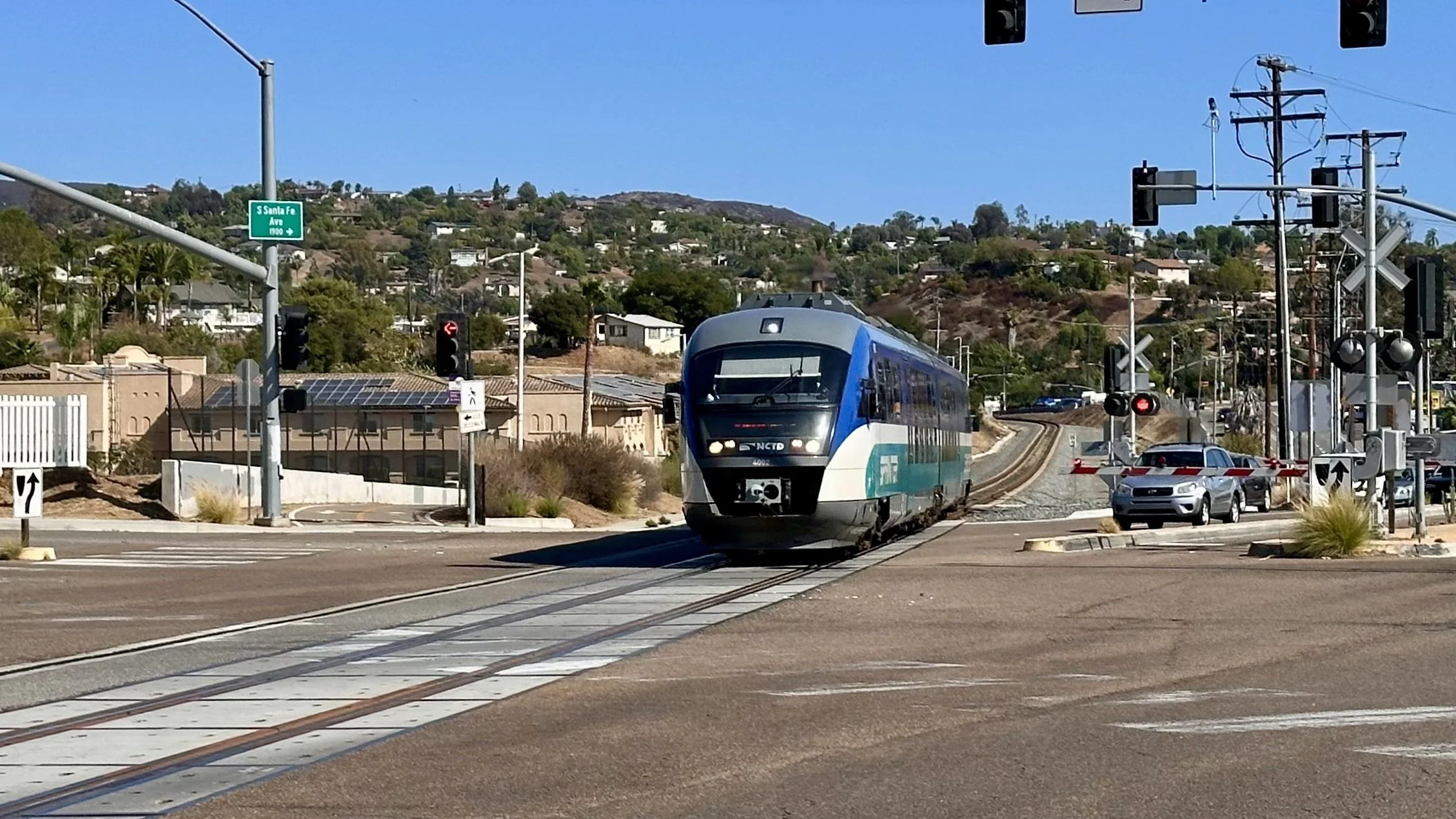
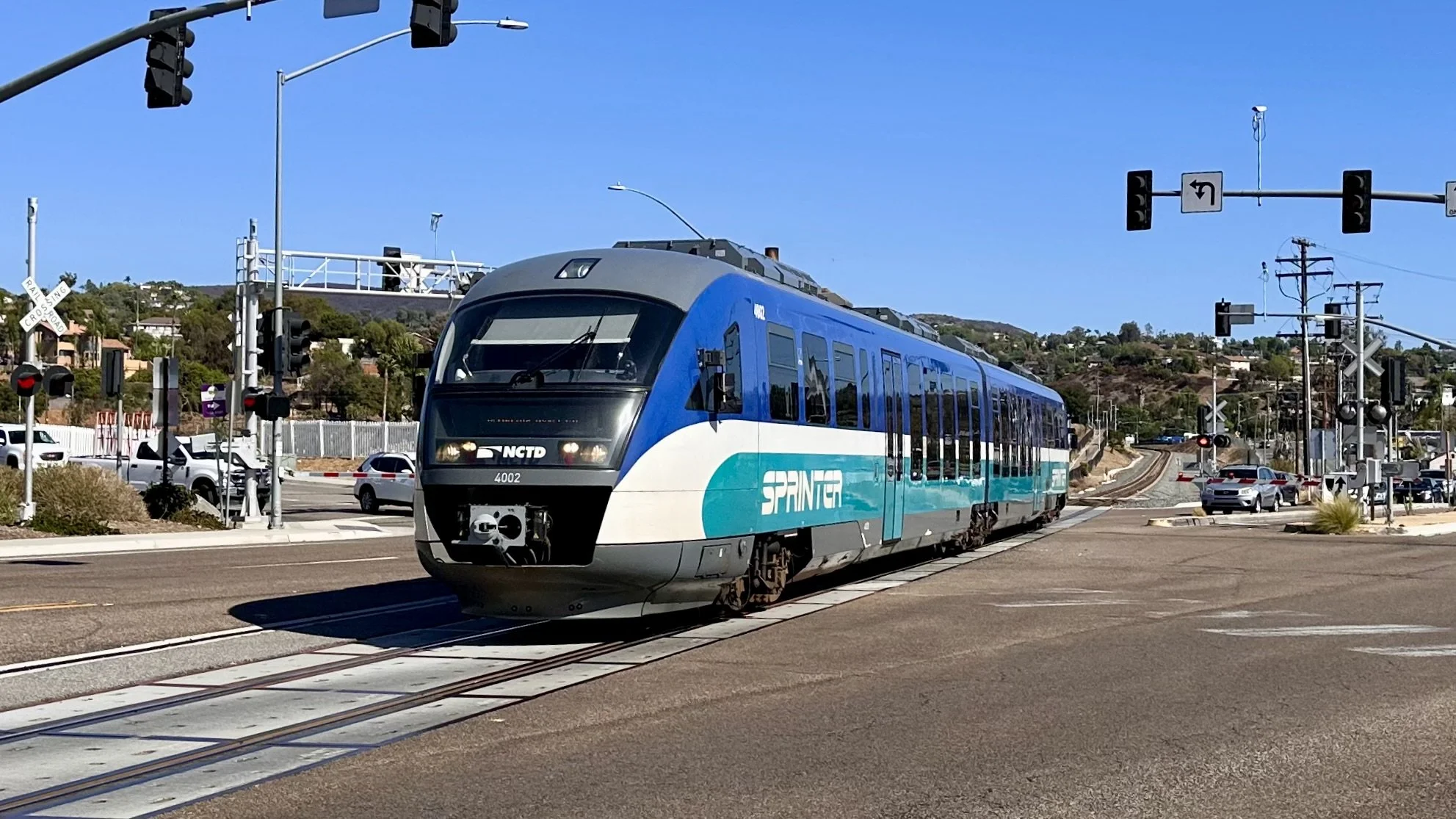
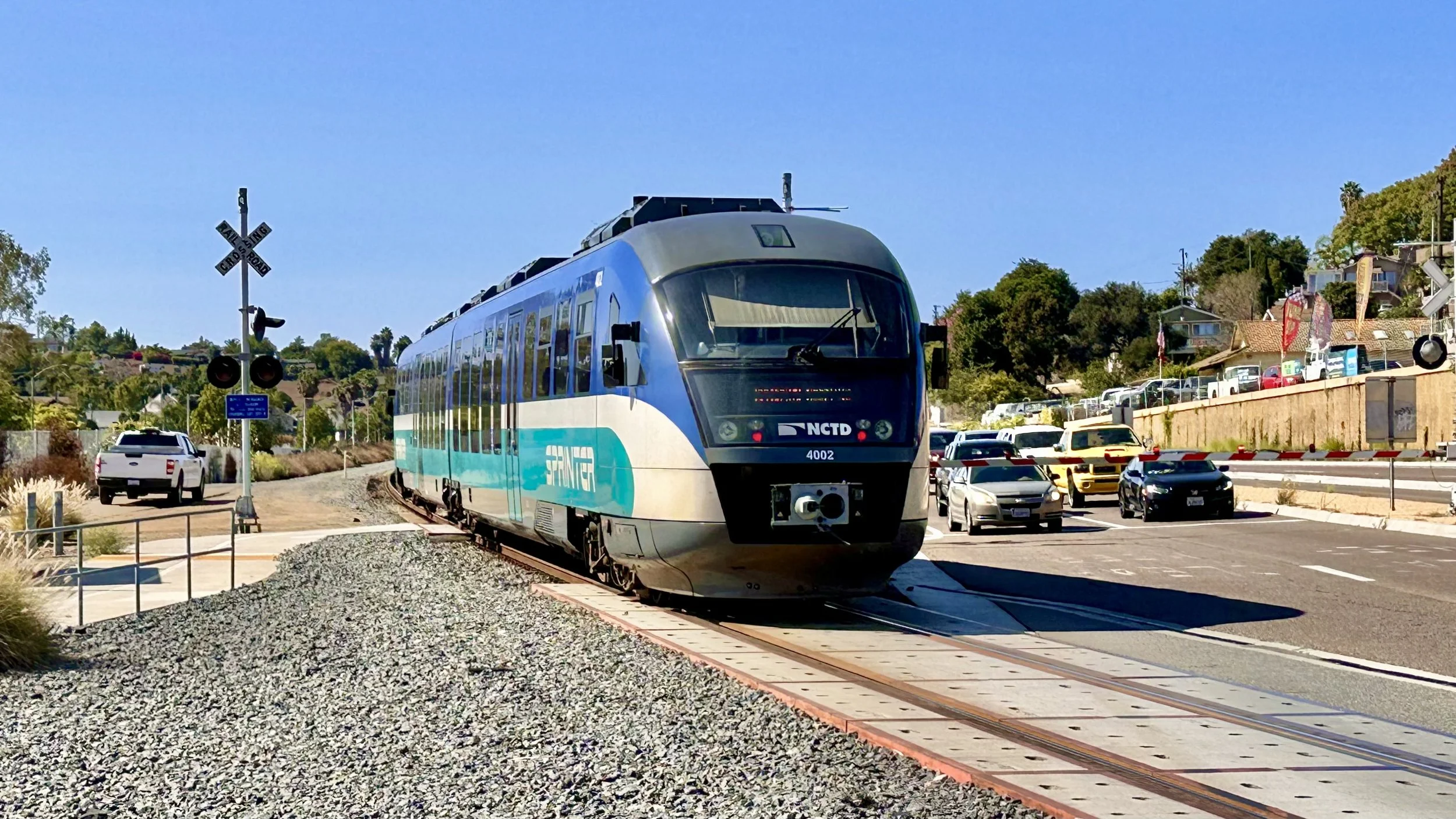
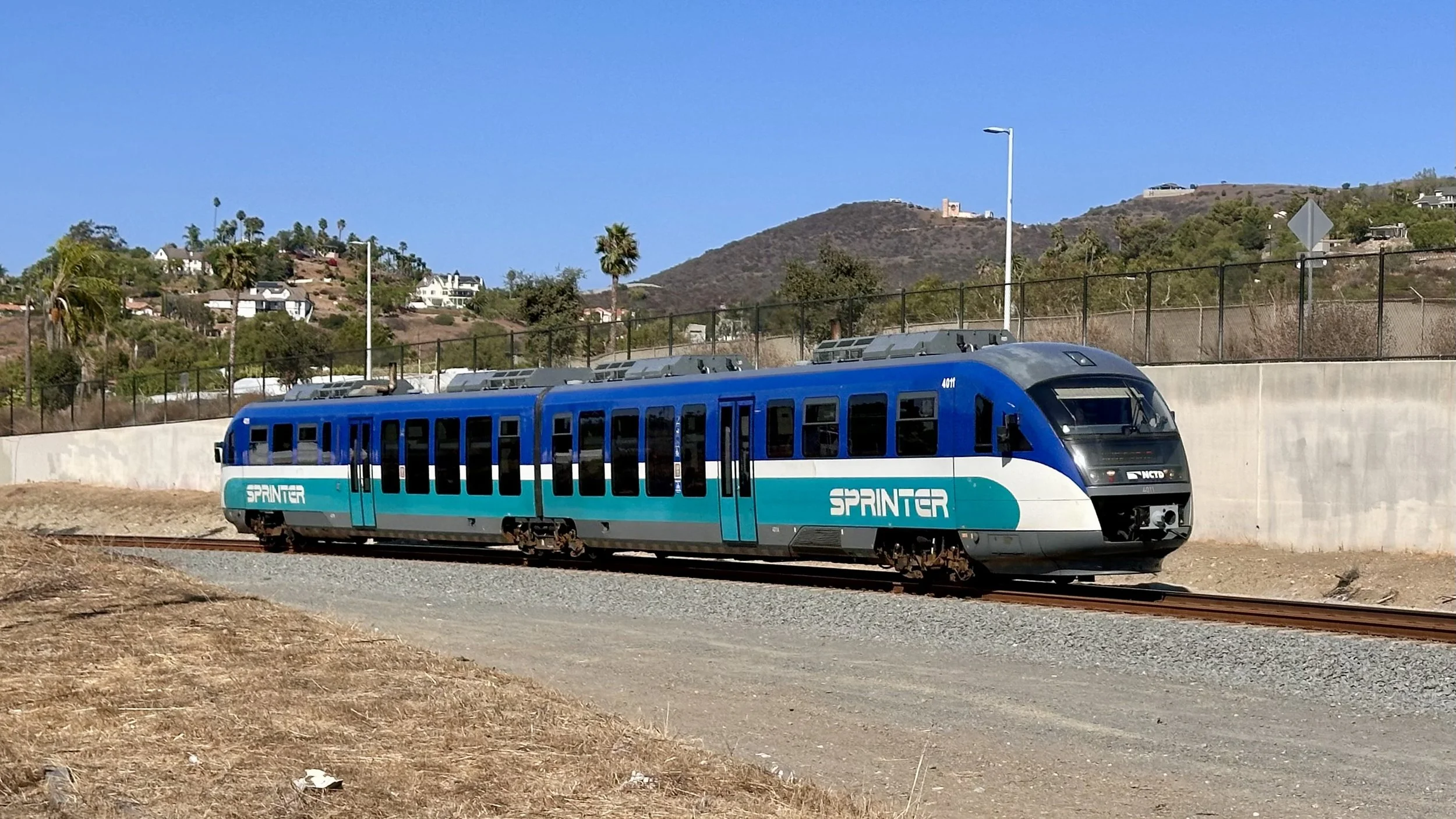
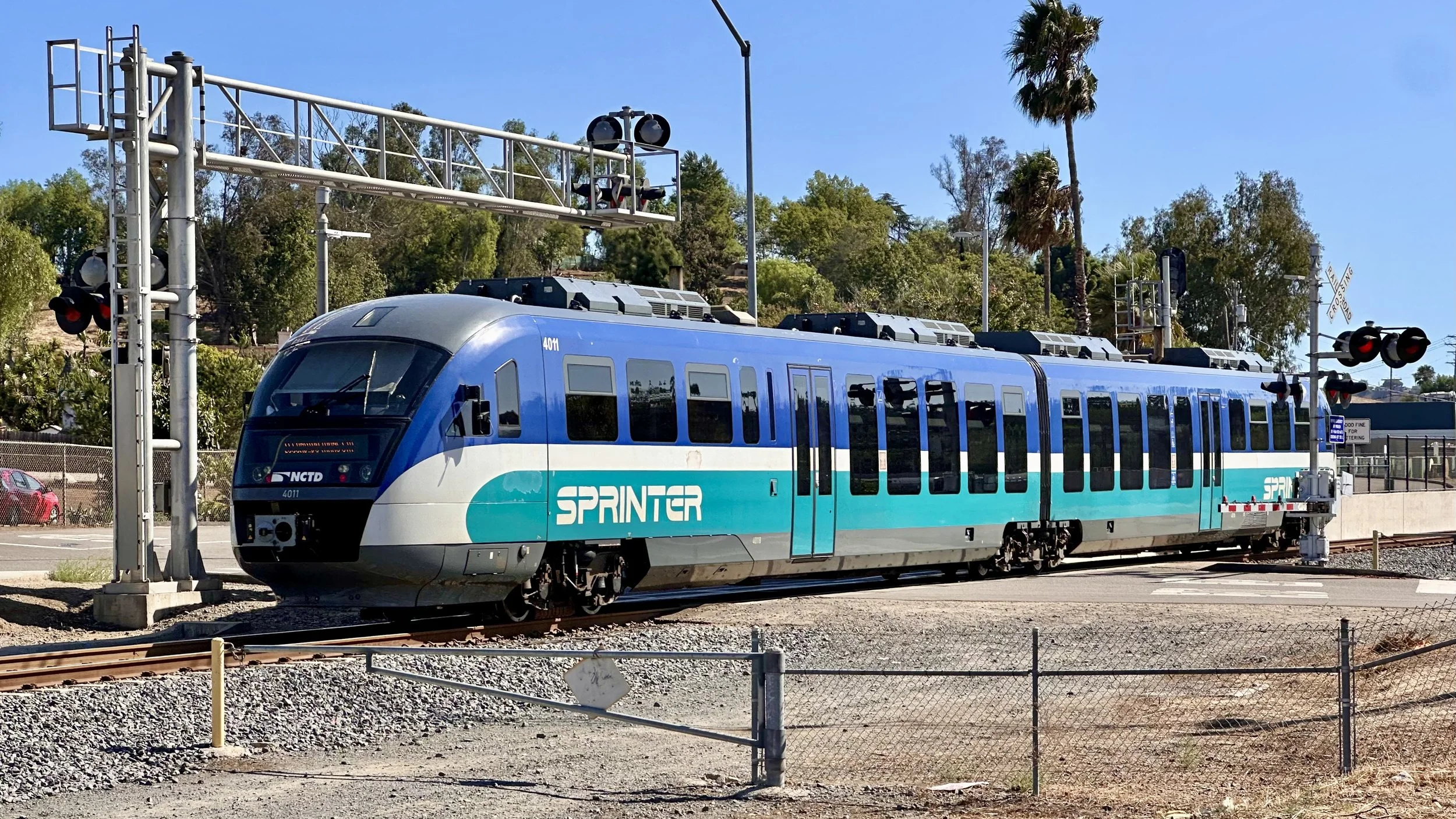
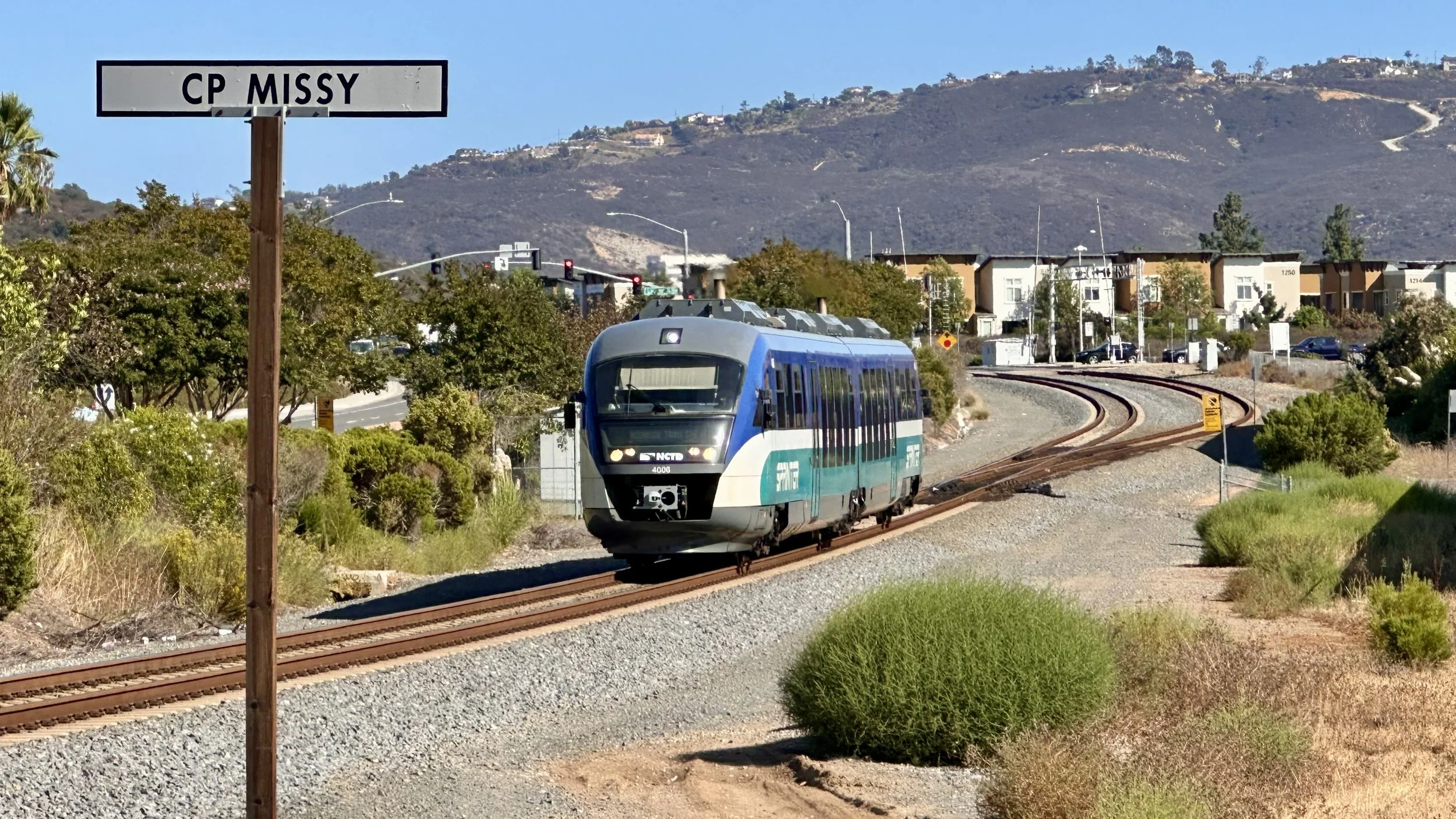
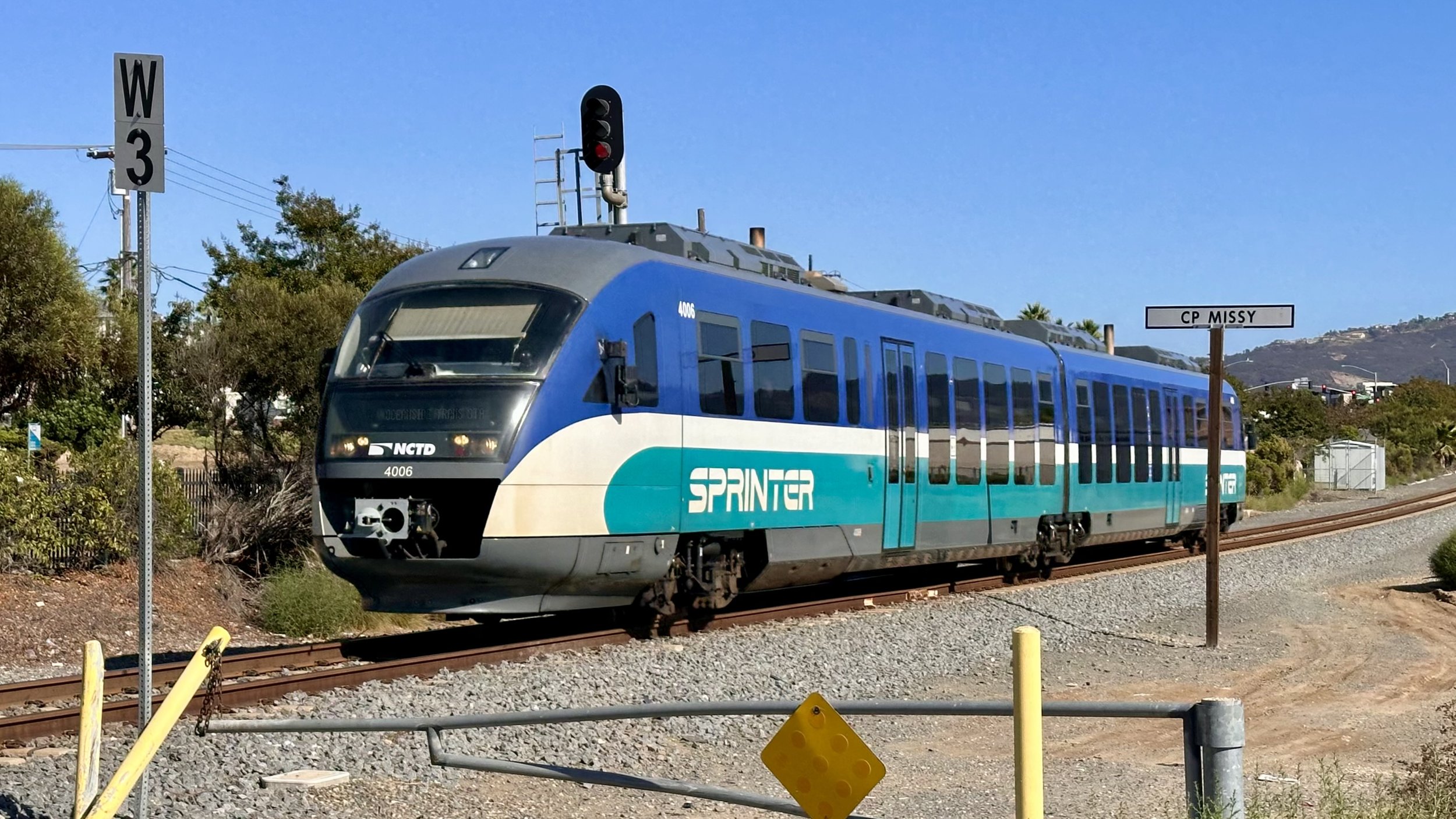
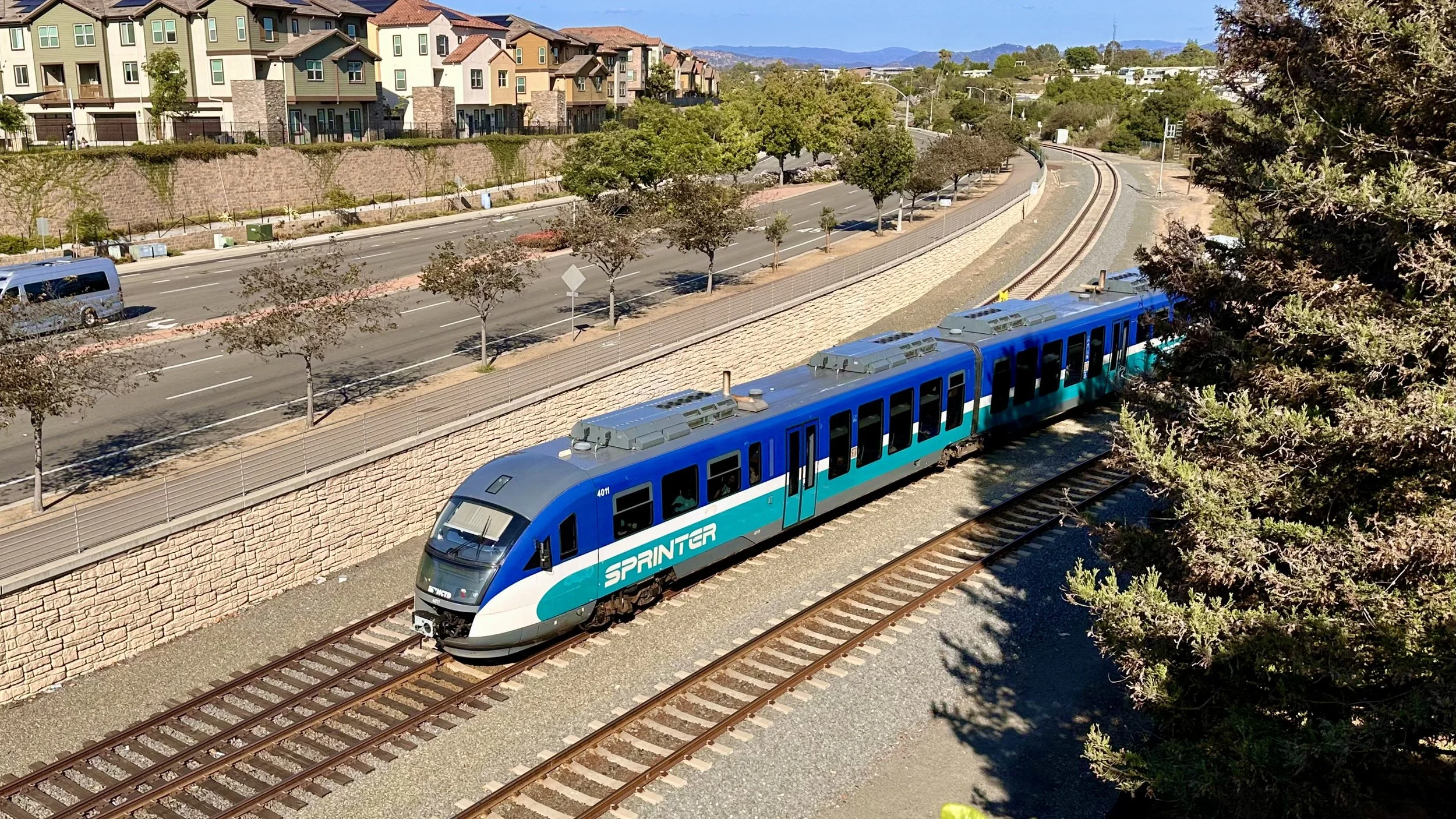
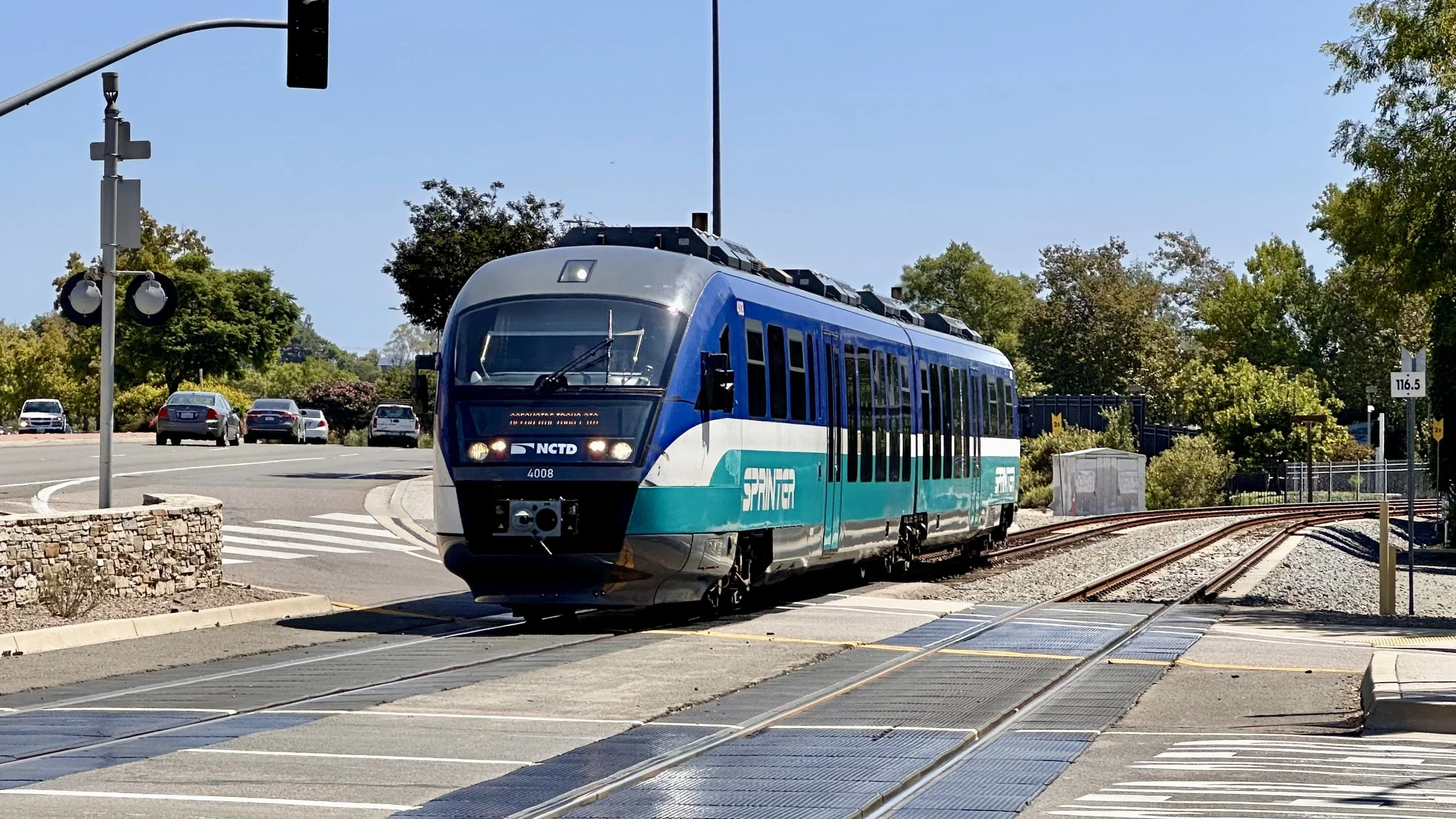
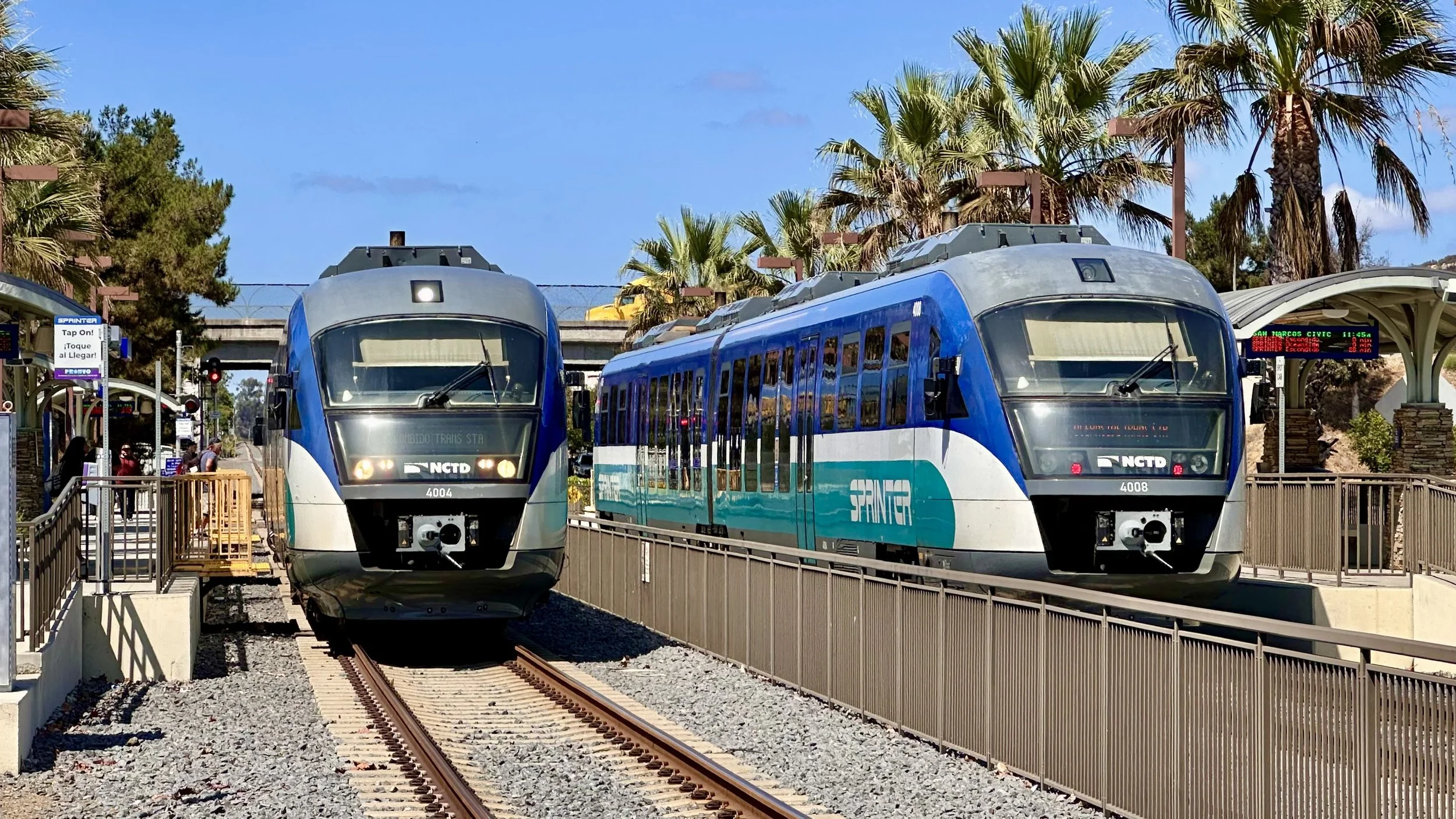
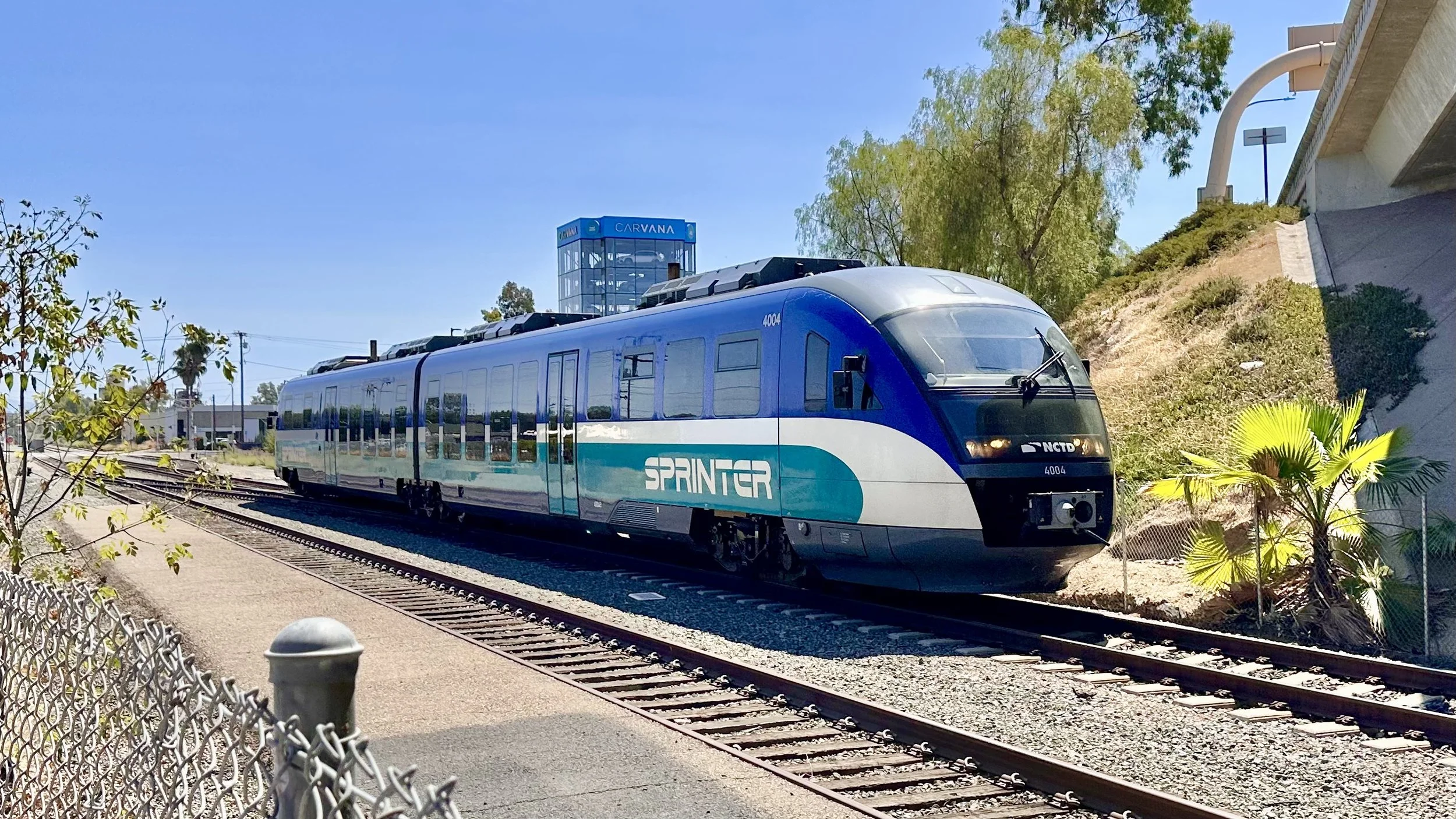
The second US DMU was the Sprinter in 2008 between Escondido and Oceanside in Southern California. Also using vehicles made in Europe – this time Siemens Desiros, most classically found on rural German train lines – the Sprinter took over an old Santa Fe branchline with unexpectedly intense mountainous character. Straight lines and flat grades are in short supply.
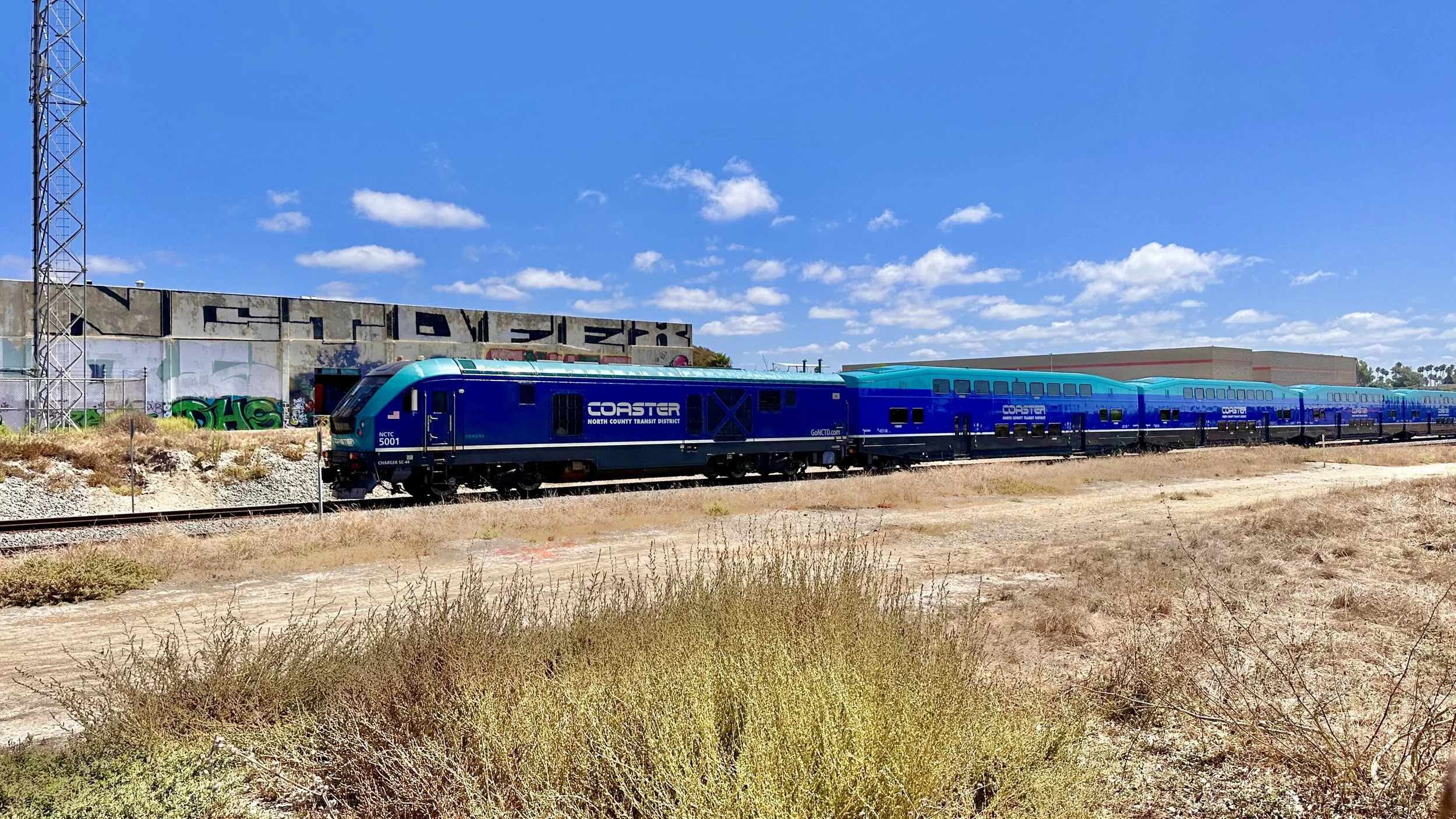
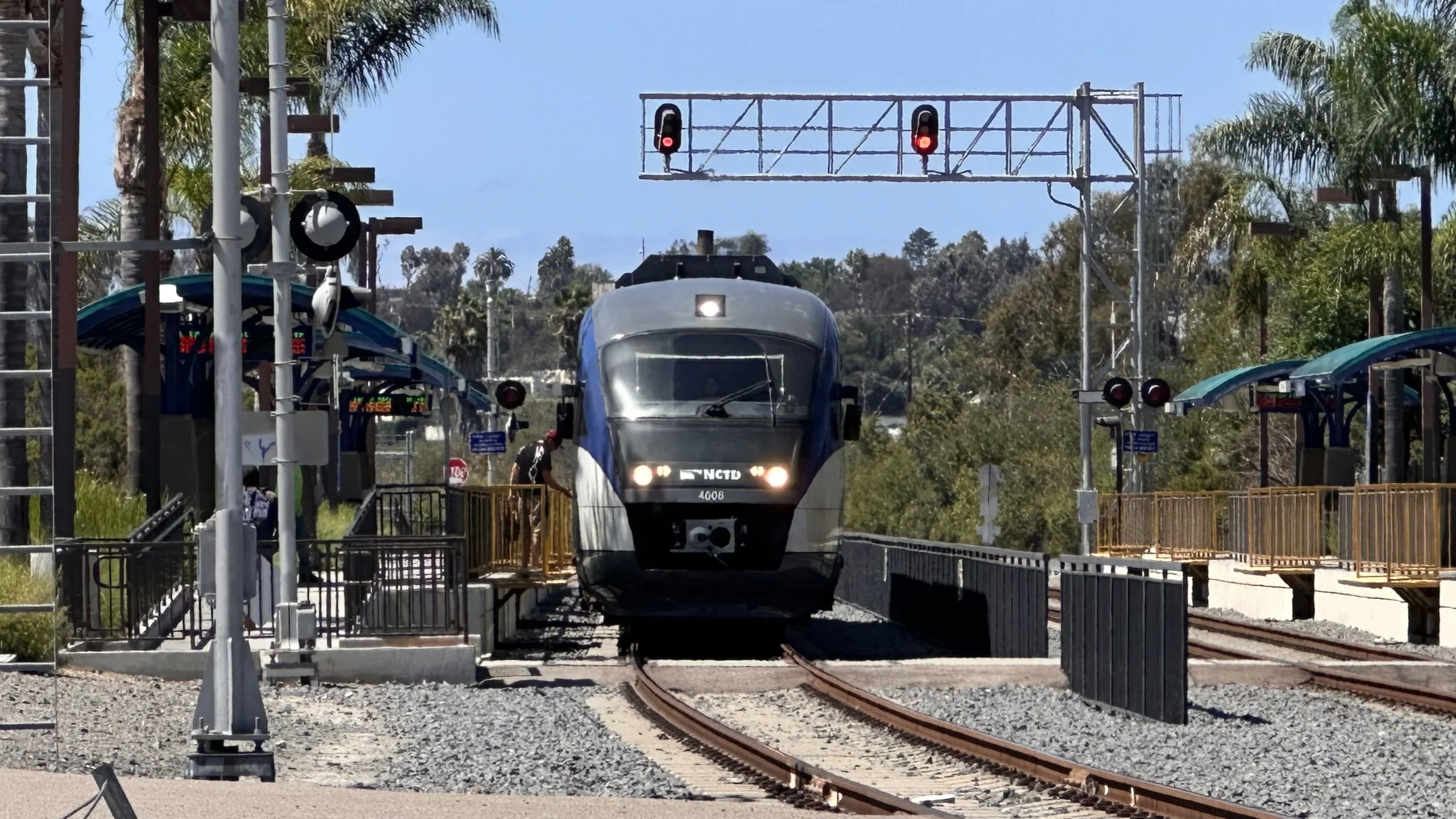
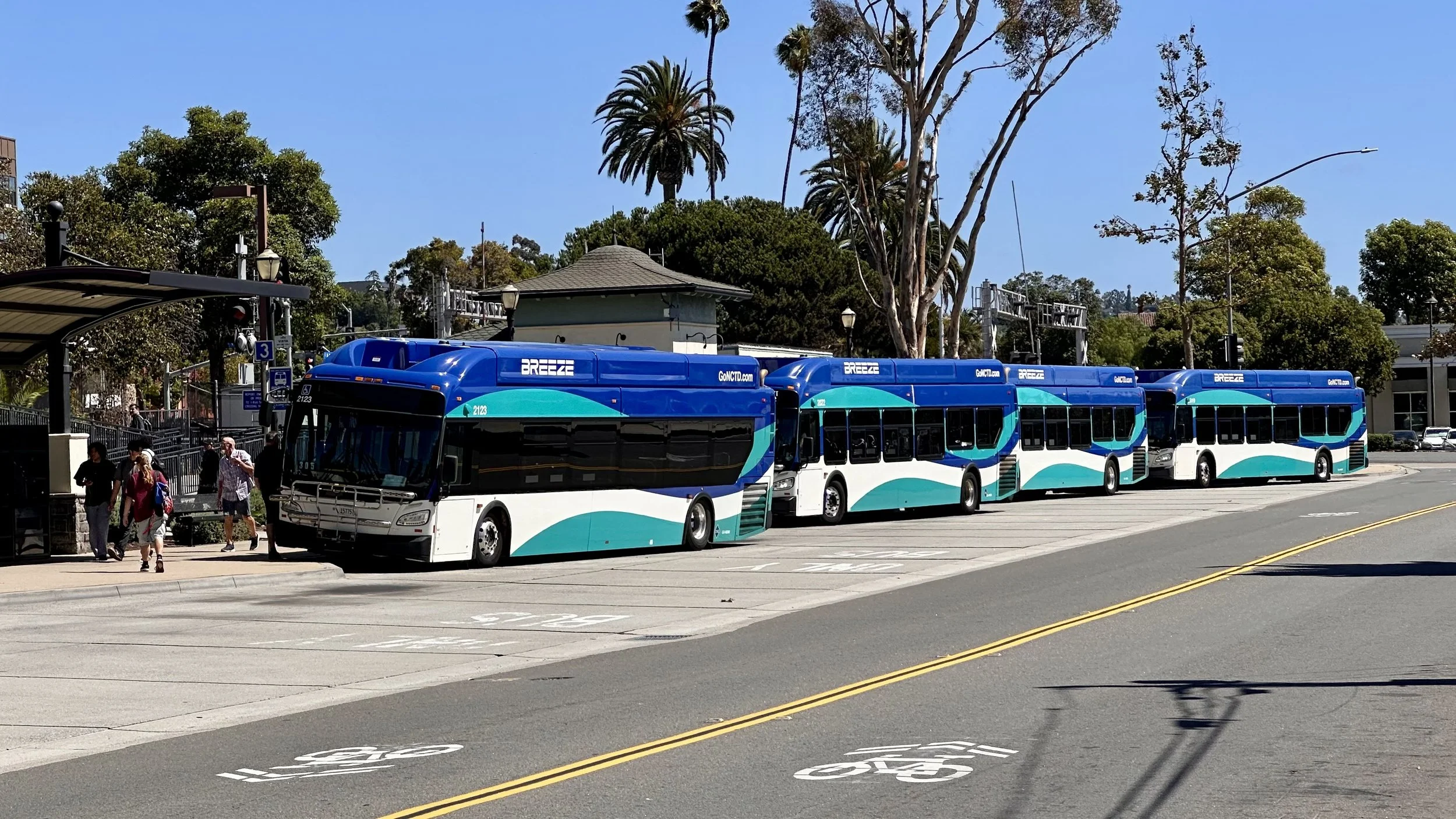
Oceanside is a major node in the region’s rail transit, approximately an hour from San Diego and two from downtown LA, it’s served by Metrolink to LA (with a few daily trips to San Bernardino), NCTD’s Coaster to San Diego, and Amtrak’s Surfliner to both. Due to its long tenure, the region has reoriented itself to make the Sprinter its backbone. Transit-Oriented Developments of modern, attractive apartment buildings are found throughout, particularly in the cute walkable vicinity of Vista’s two stations. Furthermore, almost every station has bus connections timed for convenient transfers to and from the trains.
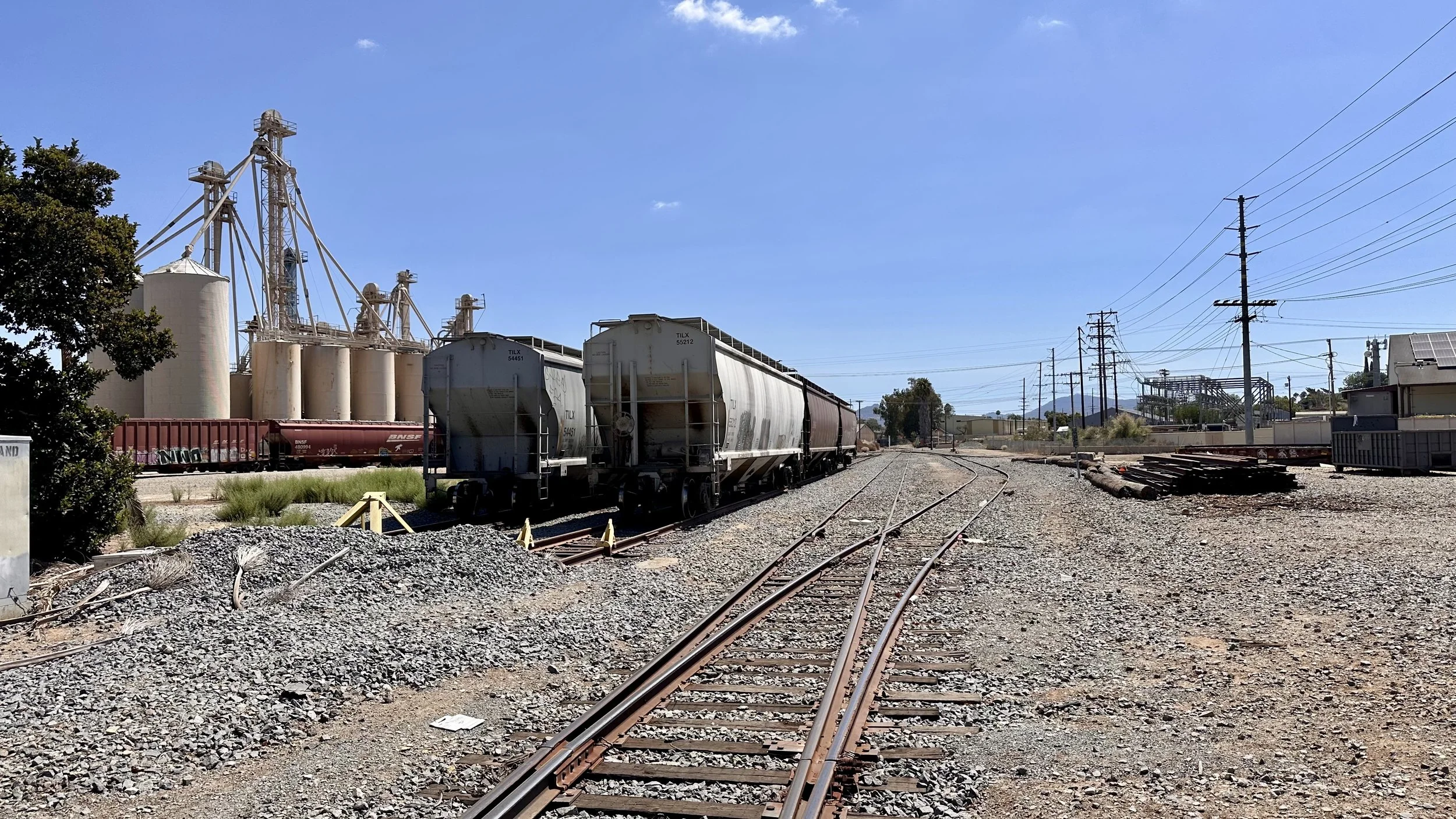
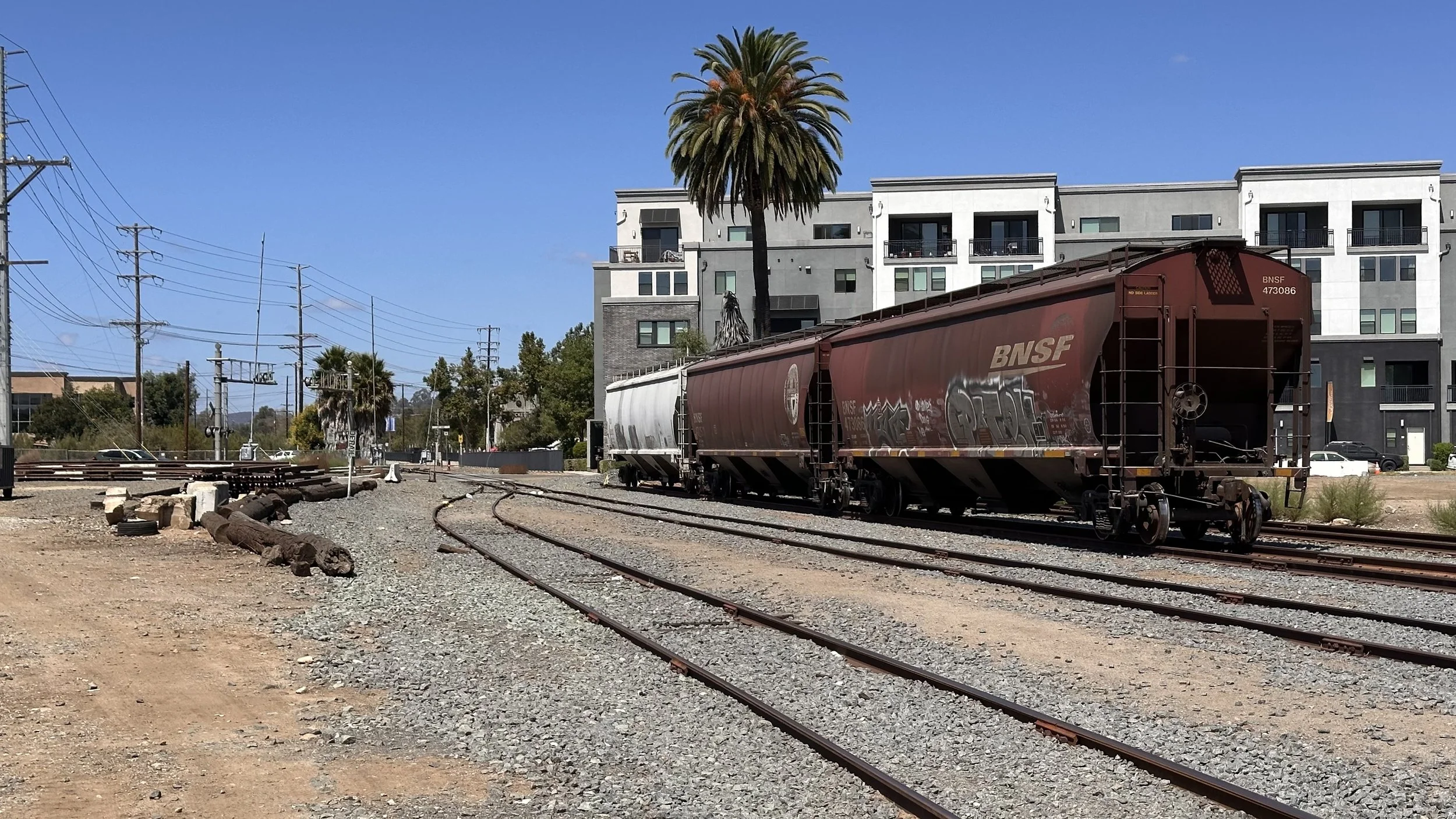
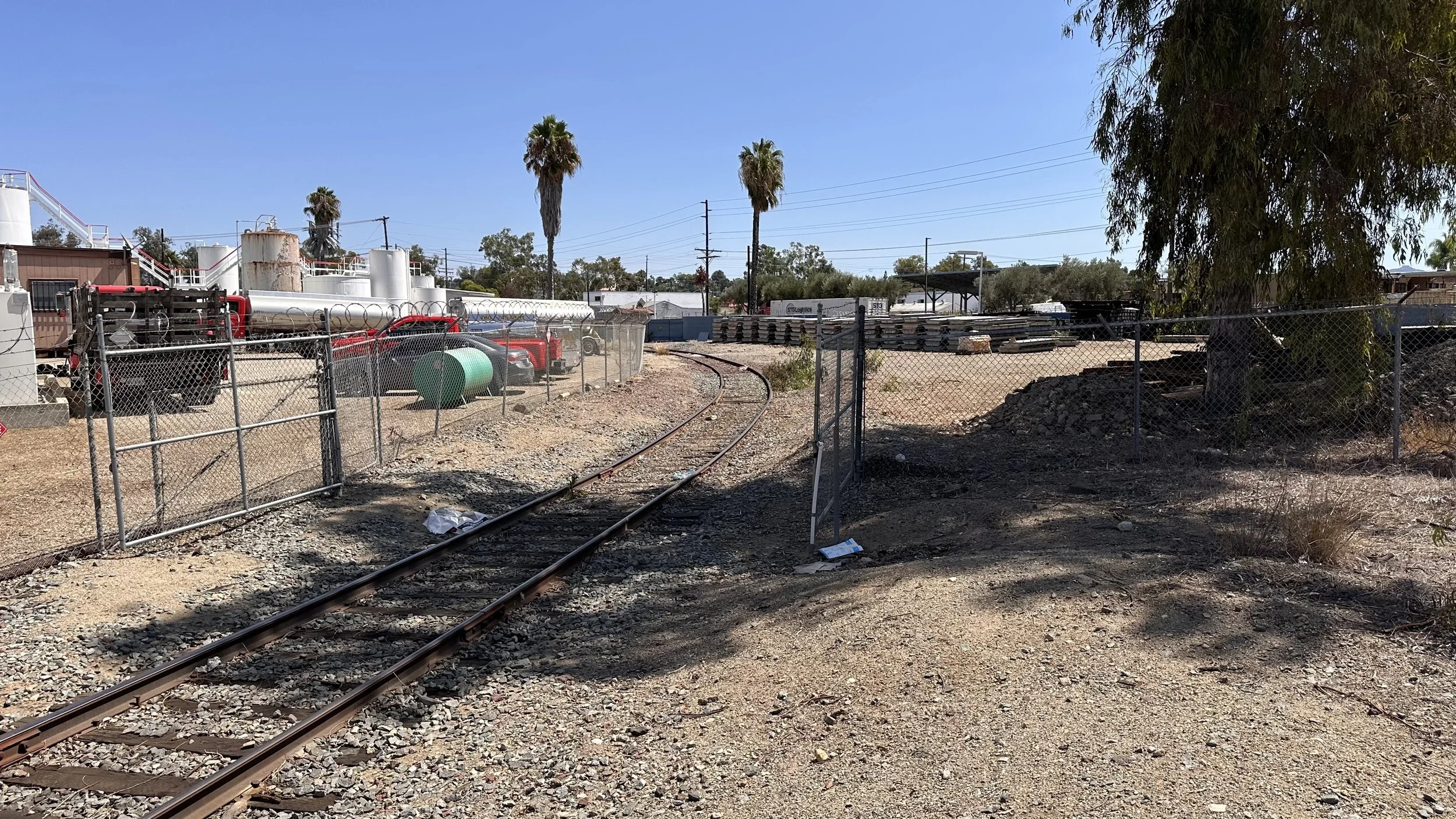
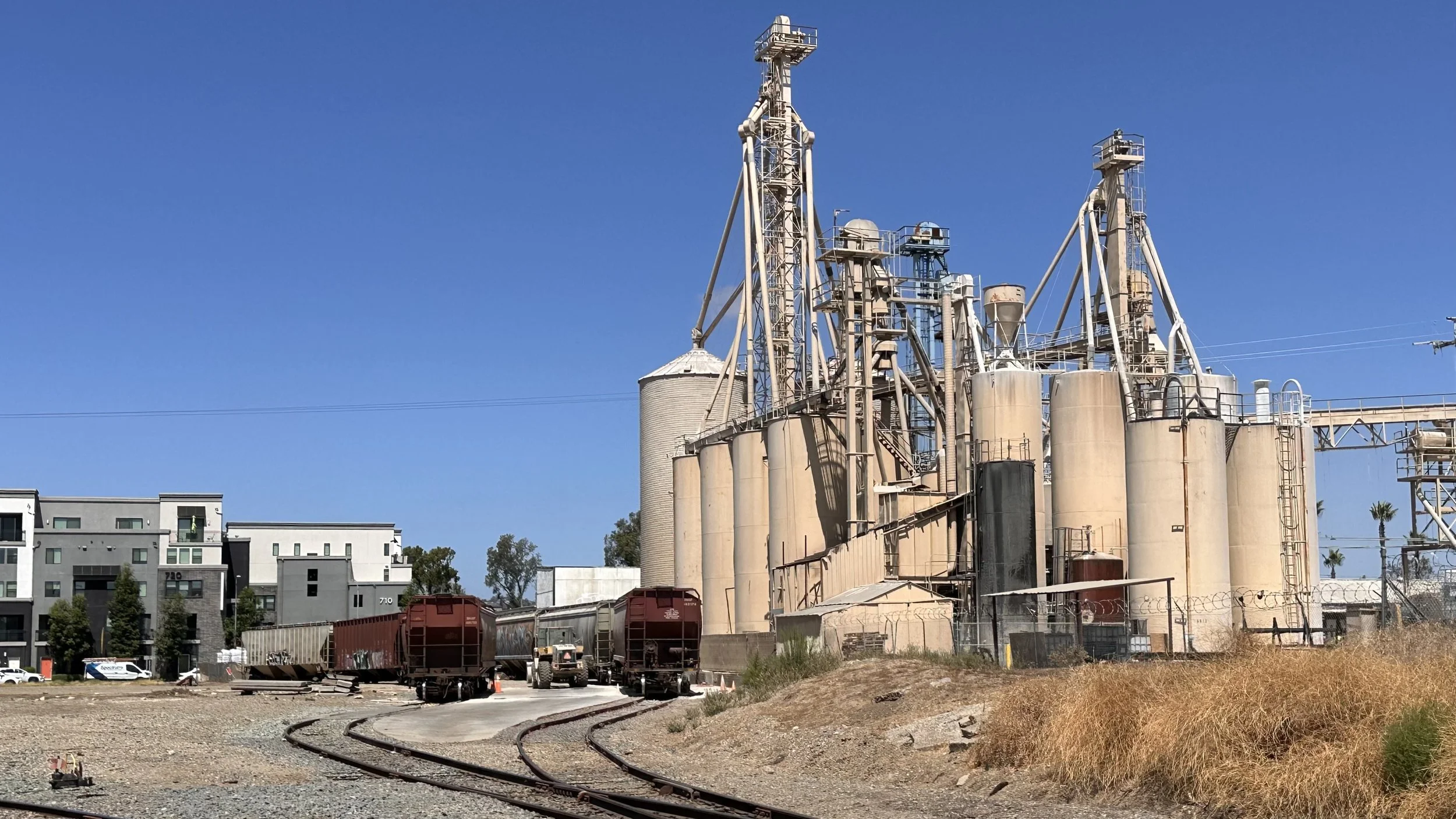
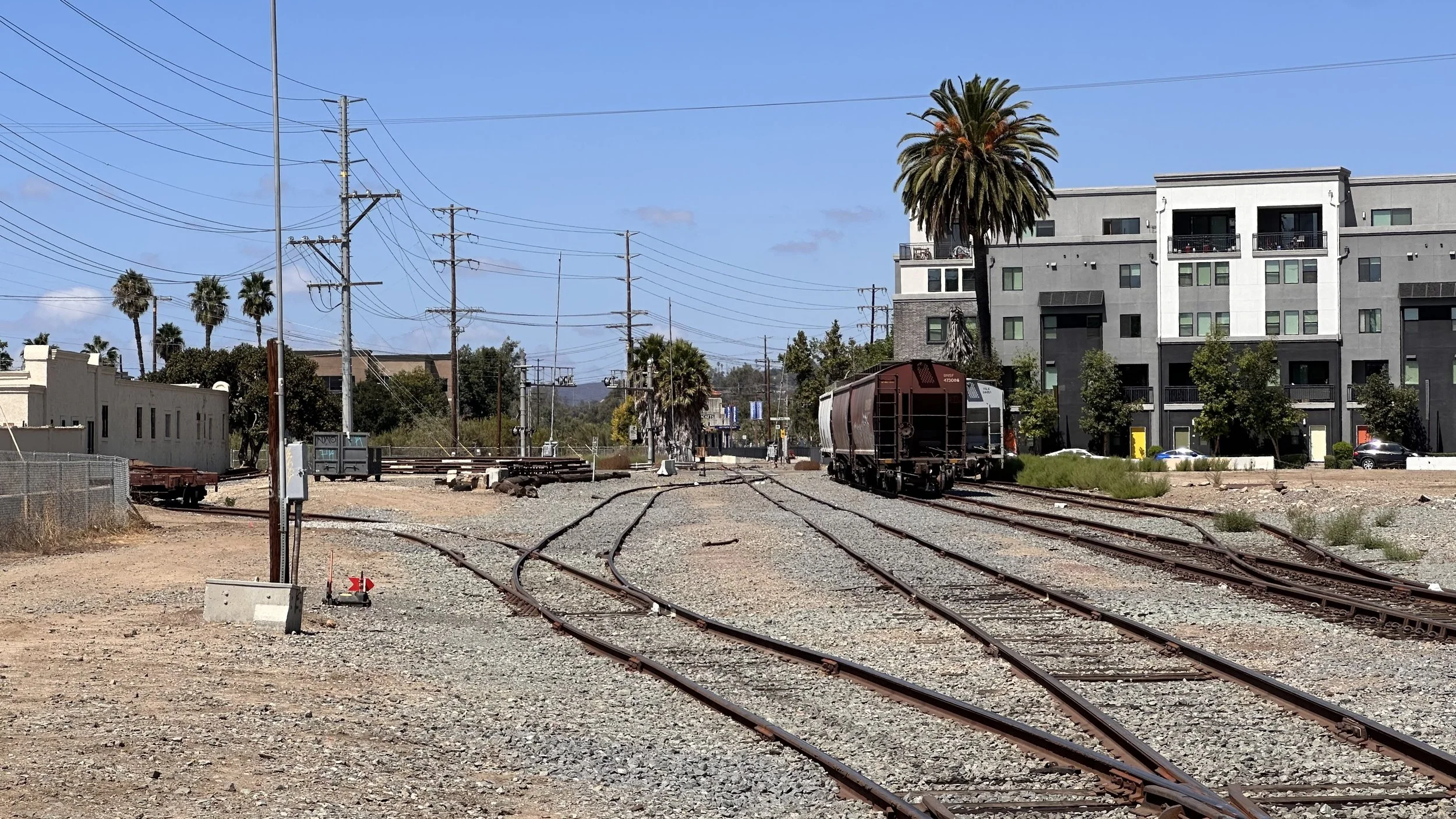
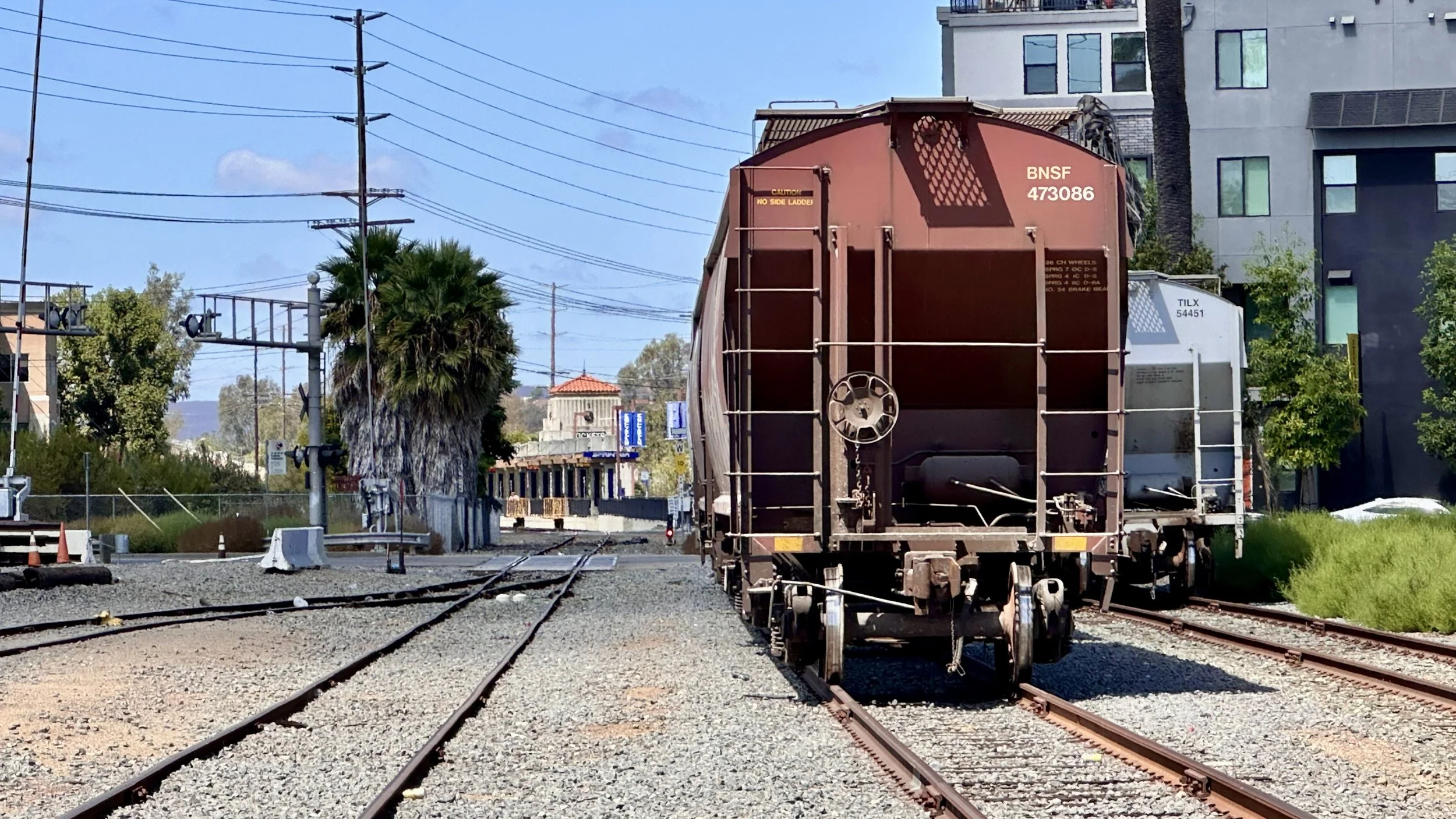
The route is shared with freight trains, but only a few a month to serve the sporadic industry spurs along the line. Notably, there is a divergence mid-route where the DMU takes an elongated double-track concrete viaduct over a highway to an elevated station at Cal State San Marcos then back again, but the freight train keeps the original right of way at ground level and serves a few industries. Most significantly, freight trains carry on two blocks past the end of the line in Escondido to a large seven-track switching puzzle serving a grain elevator, team track, and oil dealer.
To accommodate freight trains with a wider loading gauge, each platform has yellow gangways that fold up at night allowing freight trains to pass. DMUs historically ran in pairs during peak hours, and platforms are sized to accommodate, but equipment shortages due to aging vehicles currently preclude this. Headways are half-hourly, and almost precisely half the line is double-tracked. The Sprinter also has long portions of its route paralleled by bike trails (primarily on its eastern half), making use of the right of way’s low grades to provide regional bicycle connections. Construction is underway to extend the trails further along the DMU’s route.
As far as modeling goes, the Sprinter is the easiest to pull off given Piko’s recent offering of DCC Sound Sprinter Desiros in HO Scale, and the relative abundance of Desiro models in other scales for European prototypes. However, the line is much quieter on the freight front and is unlikely to justify a model railroad larger than a small room. The Sprinter’s infrastructure is very pike-sized, with an incredibly modelable Operations and Maintenance Facility (OMF) and Escondido switching puzzle capable of easily fitting on a 4x8 or a narrow shelf layout. Overall, the Sprinter is a spectacular example of DMUs in action, turning underutilized freight lines into regionally-important frequent transit routes, and demonstrating how passenger railroading prototypically fits on even the smallest switching layouts.
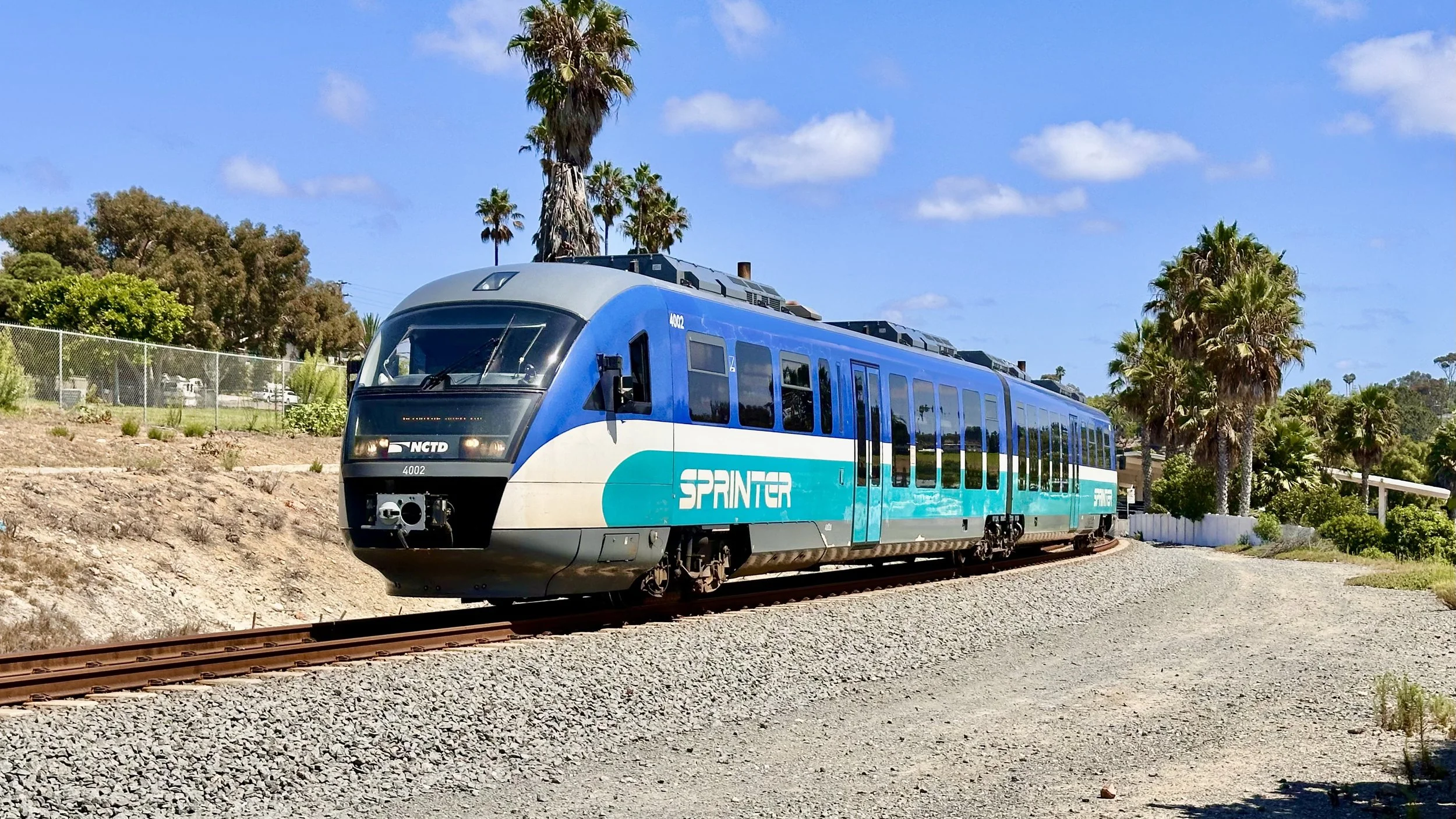
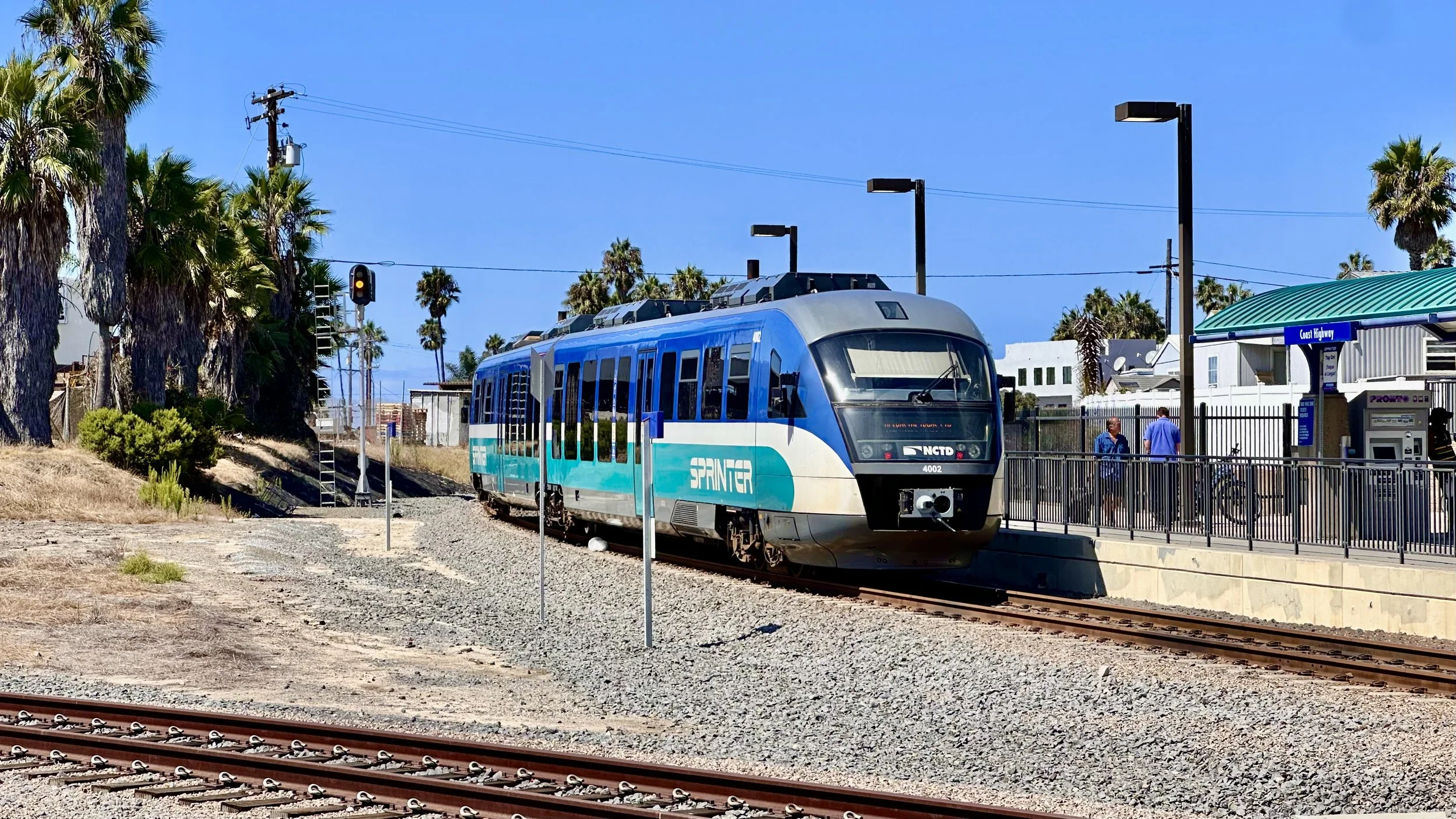
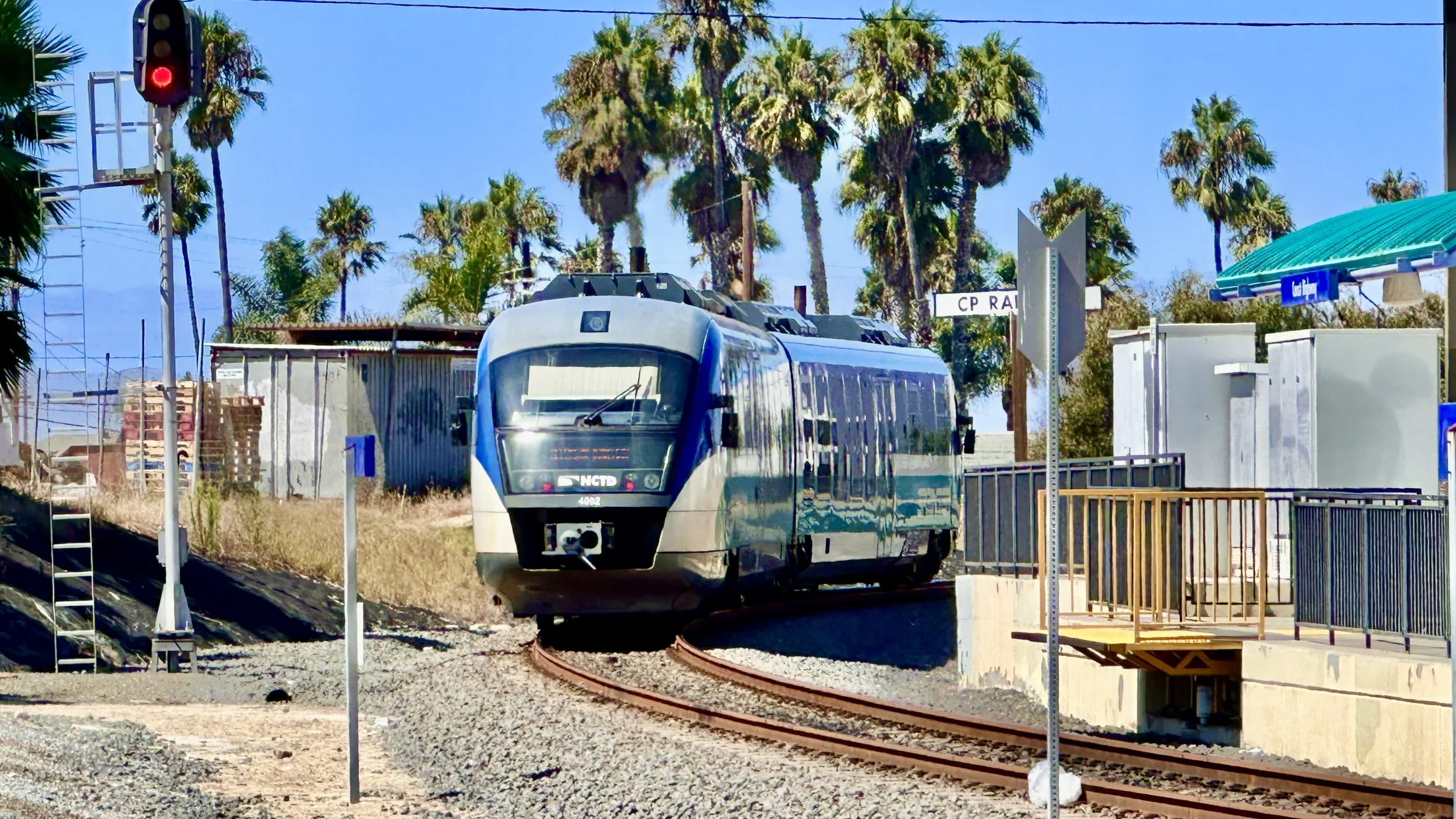
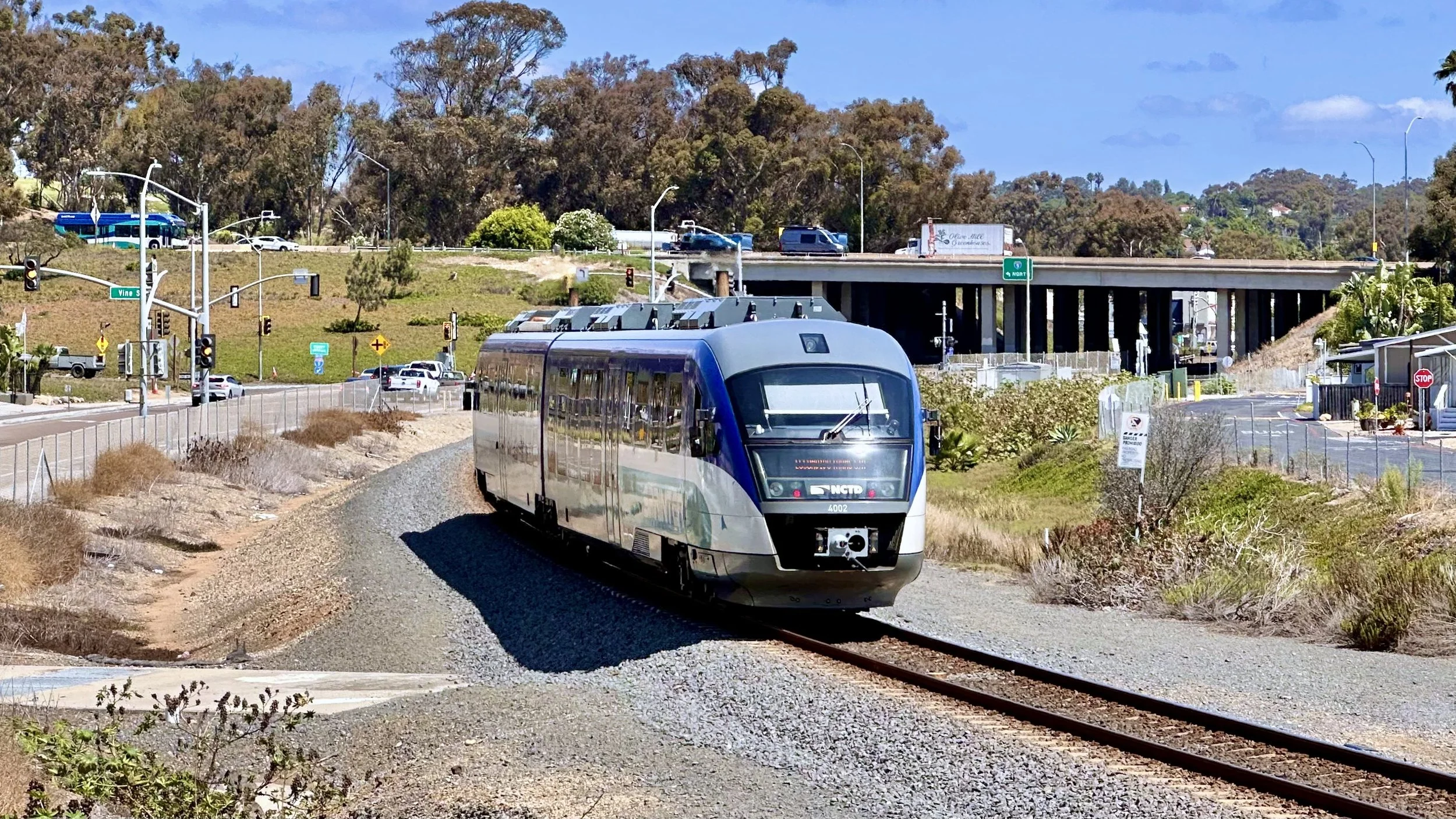
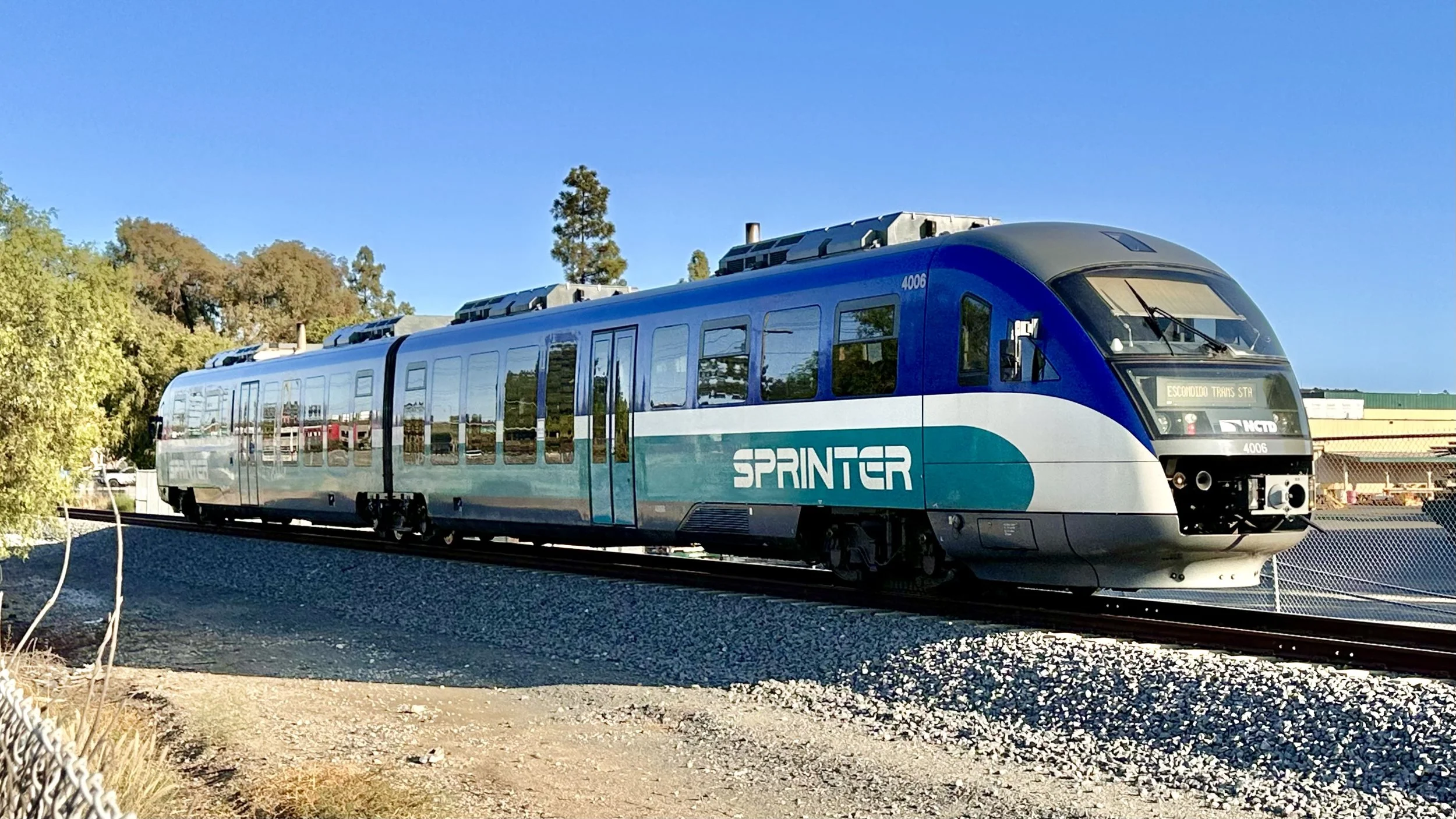
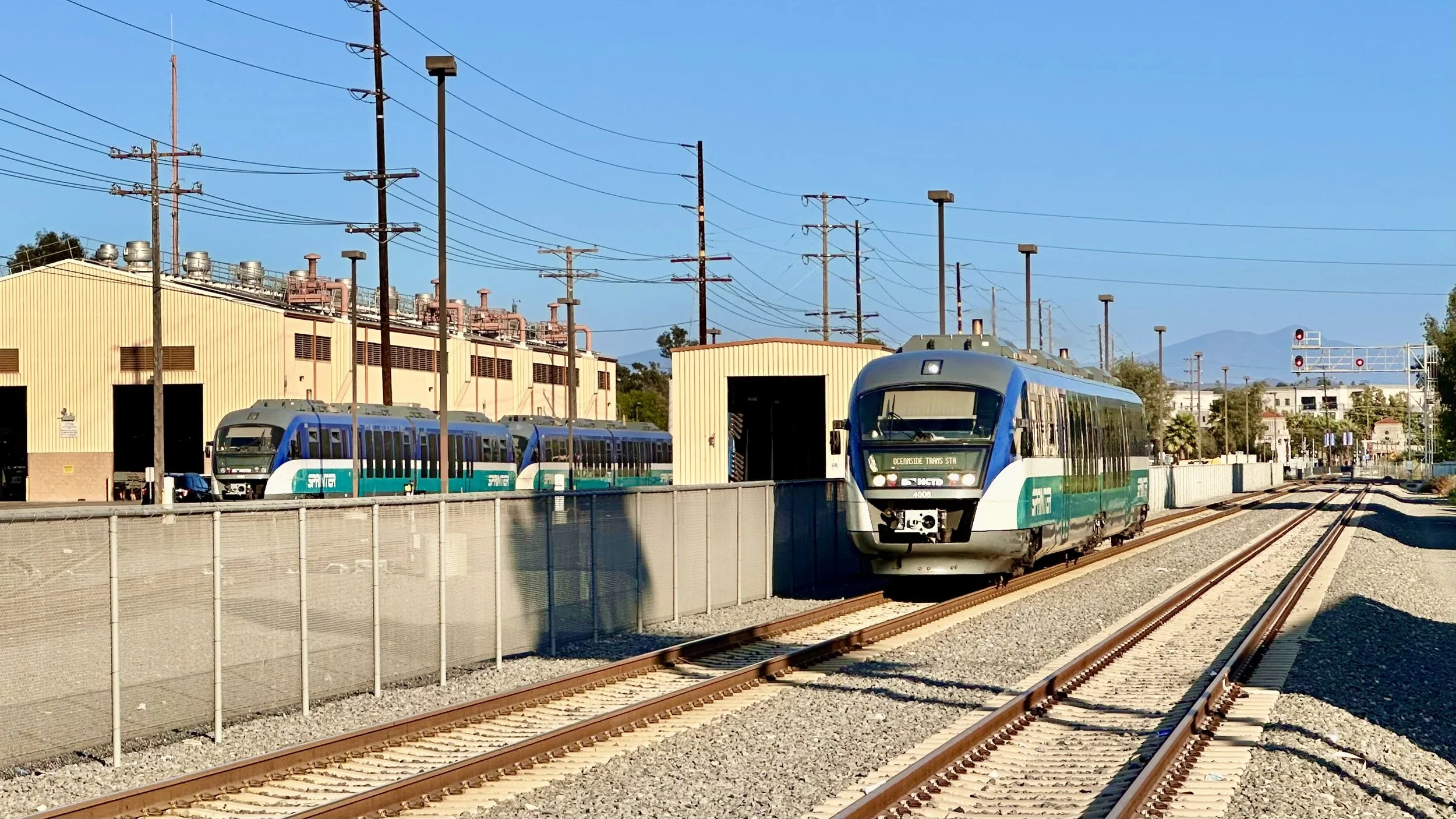
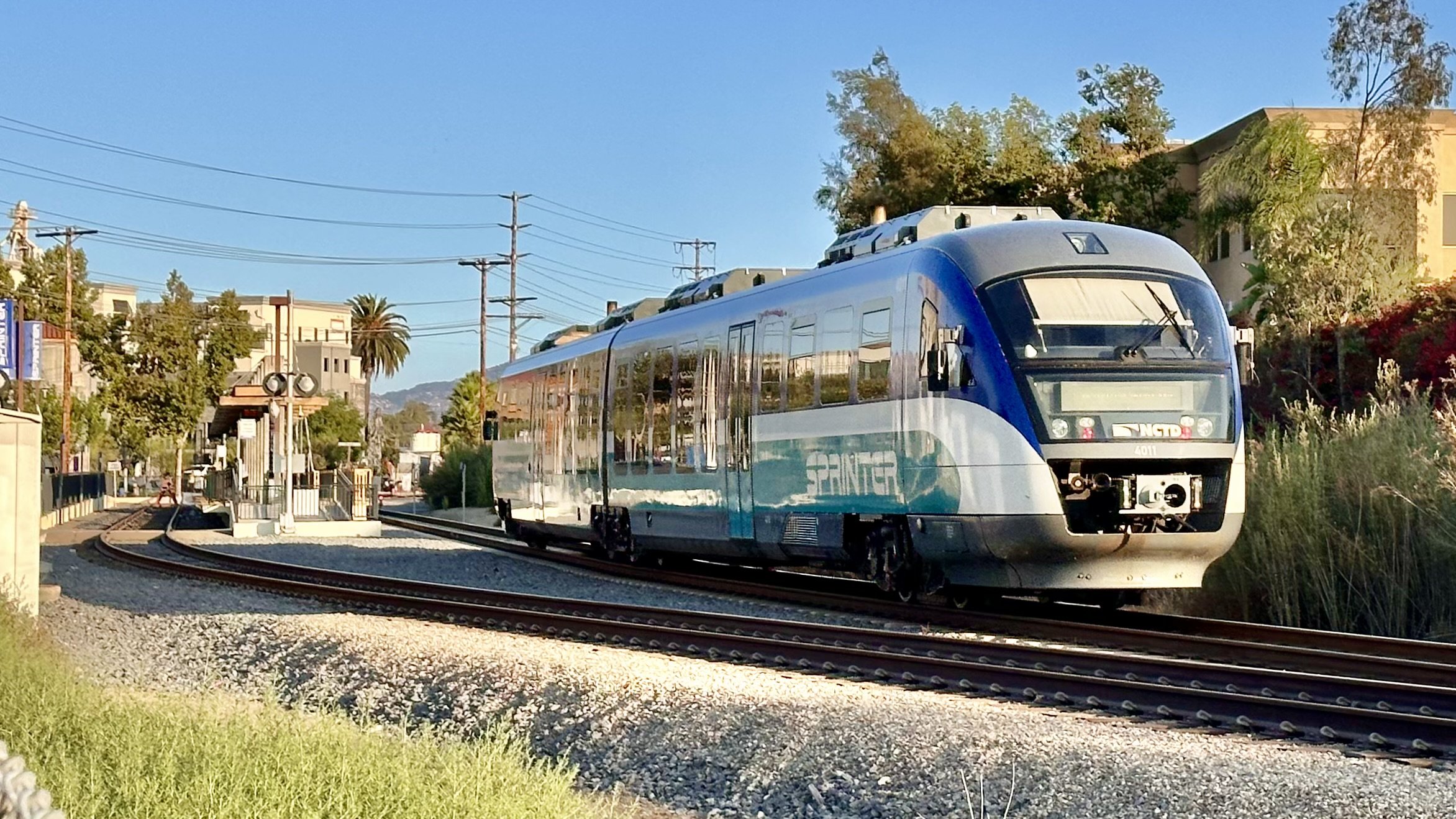
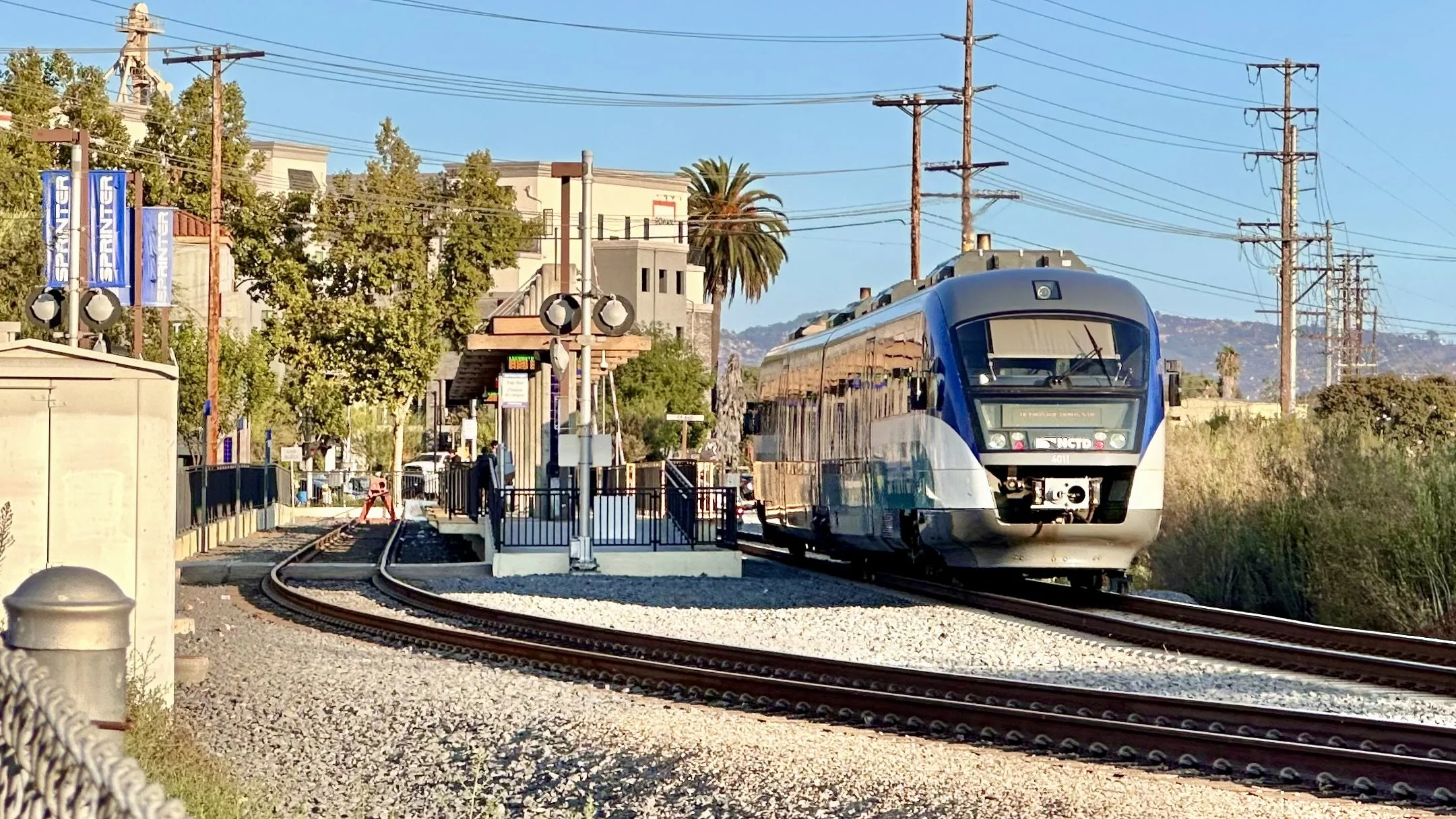
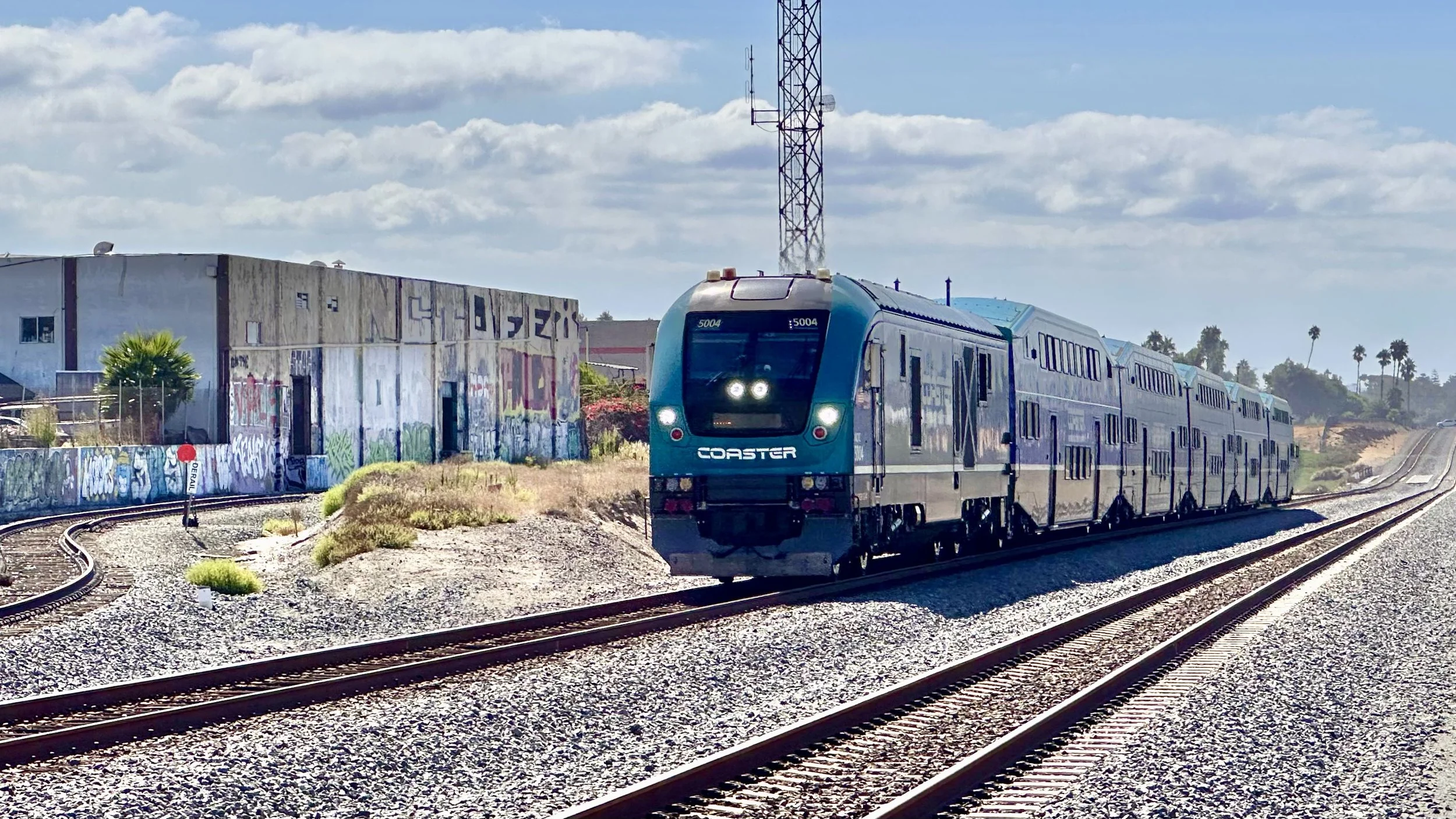
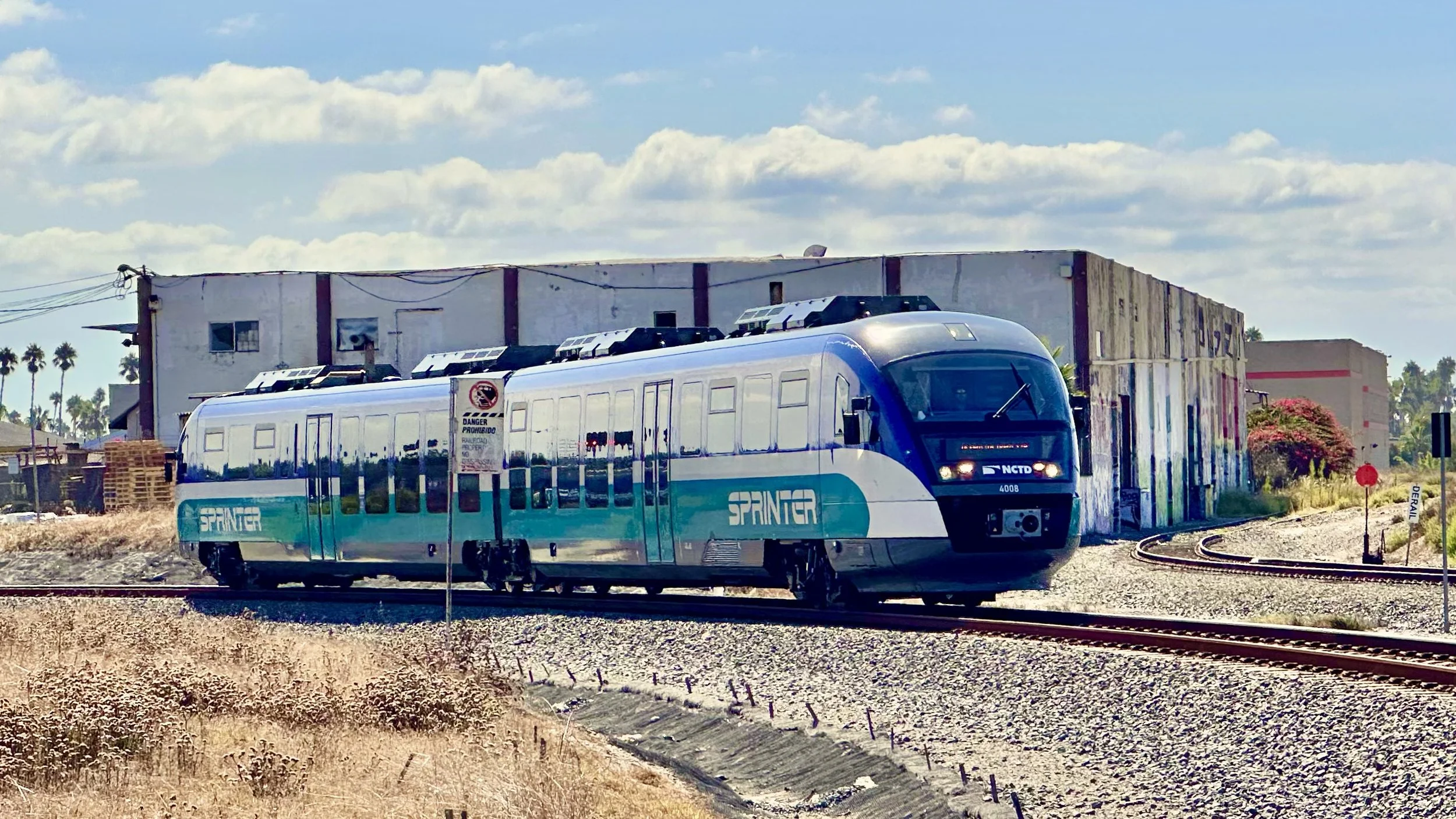
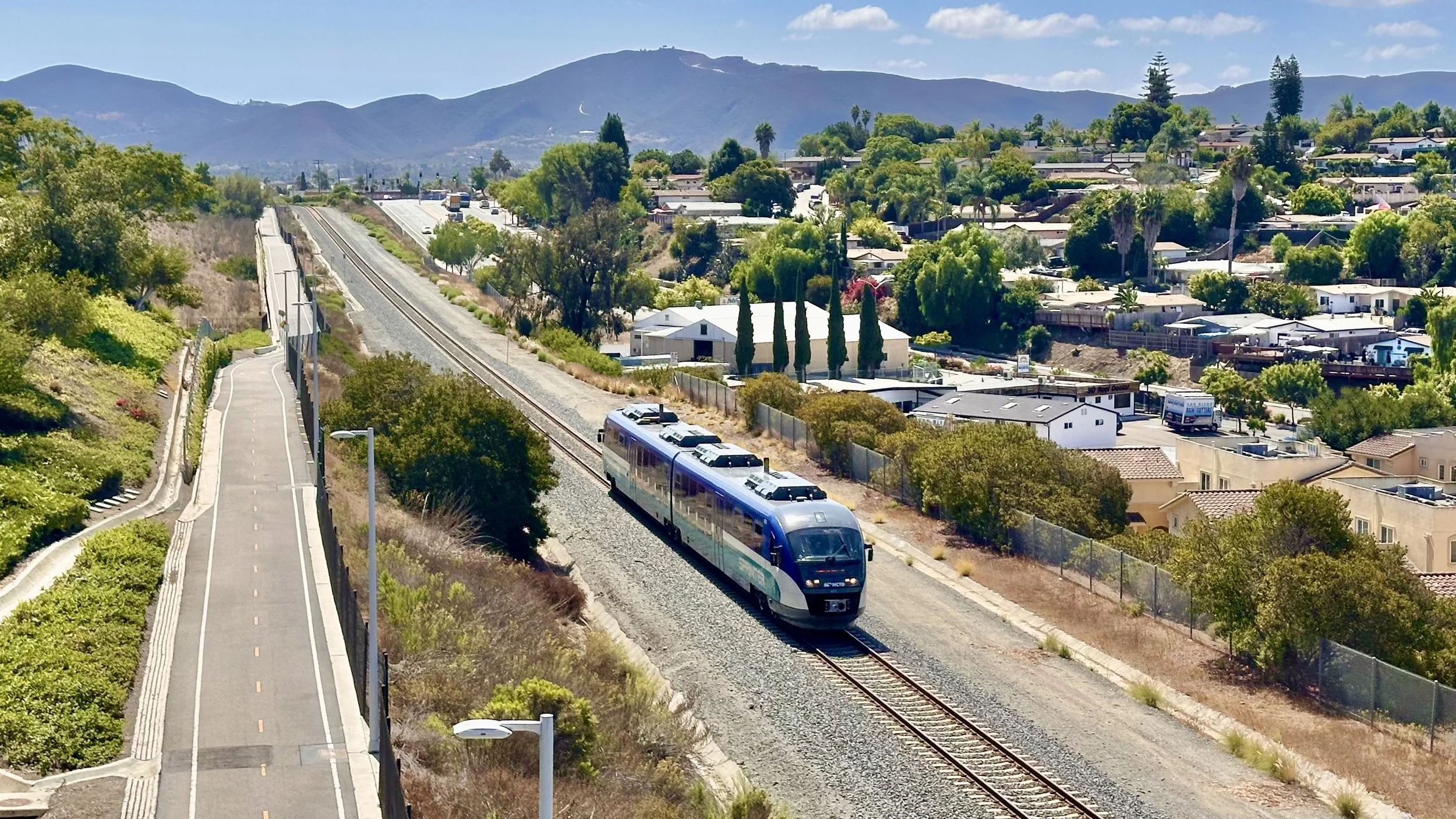
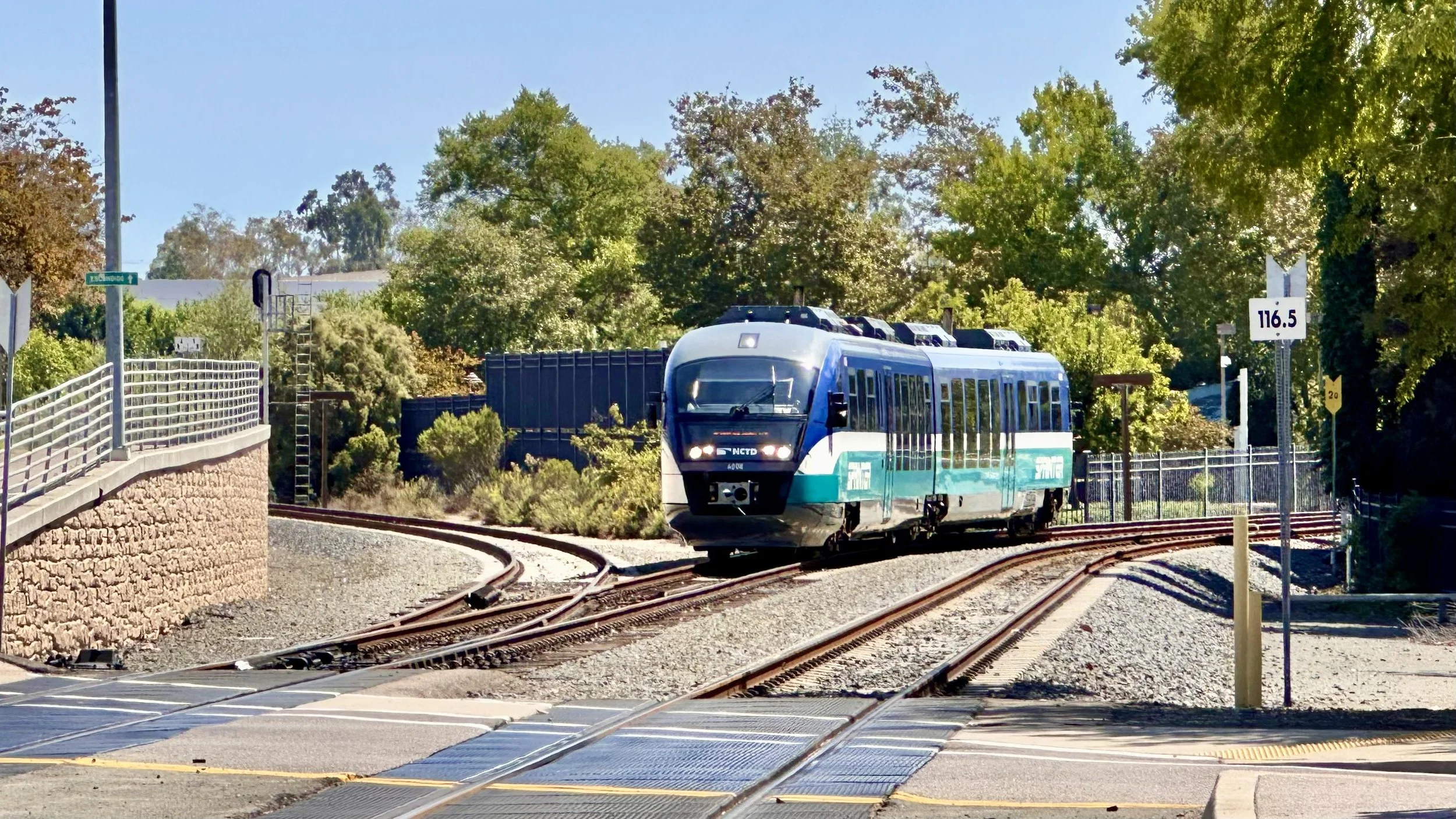
Trimet WES
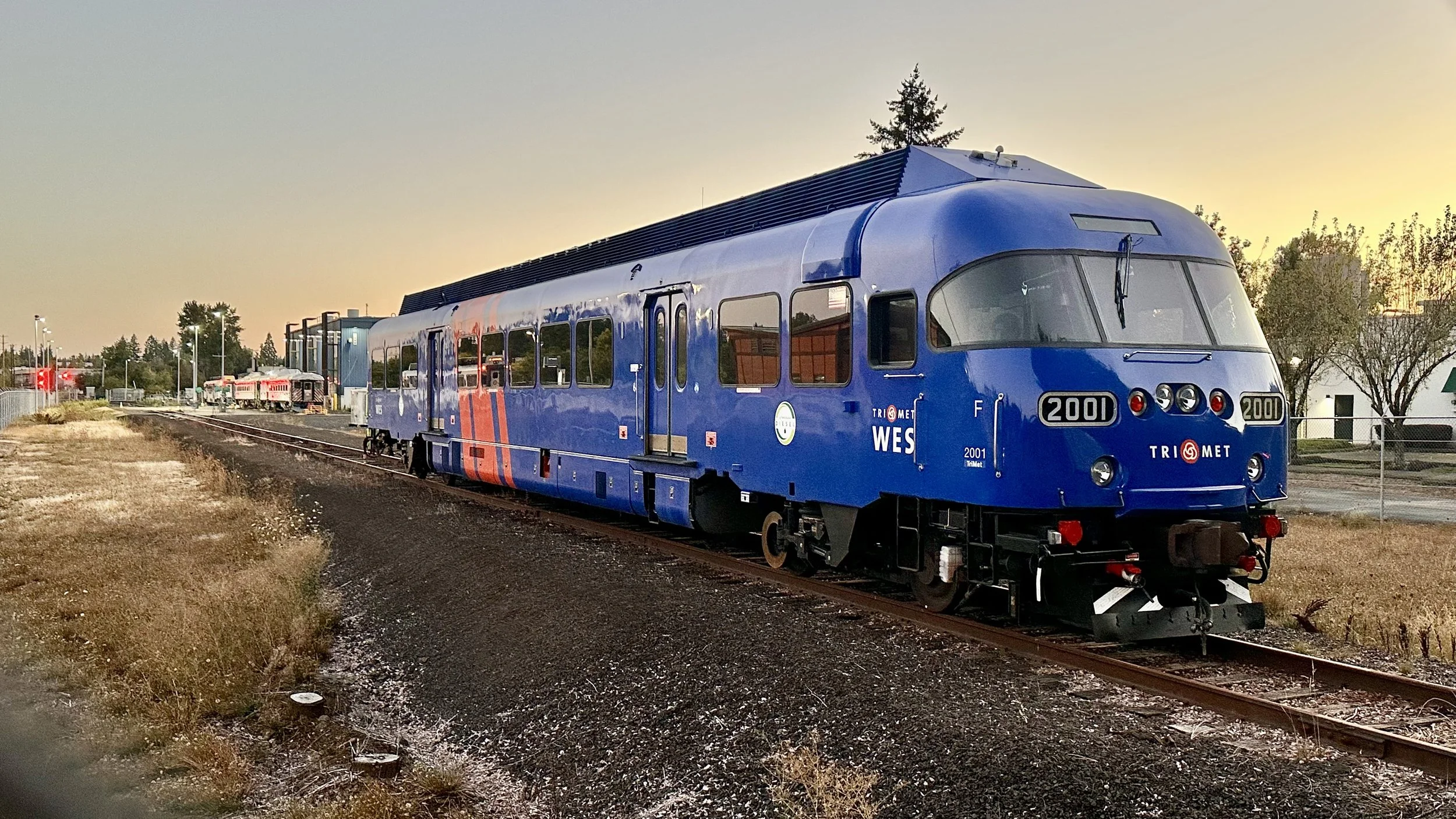
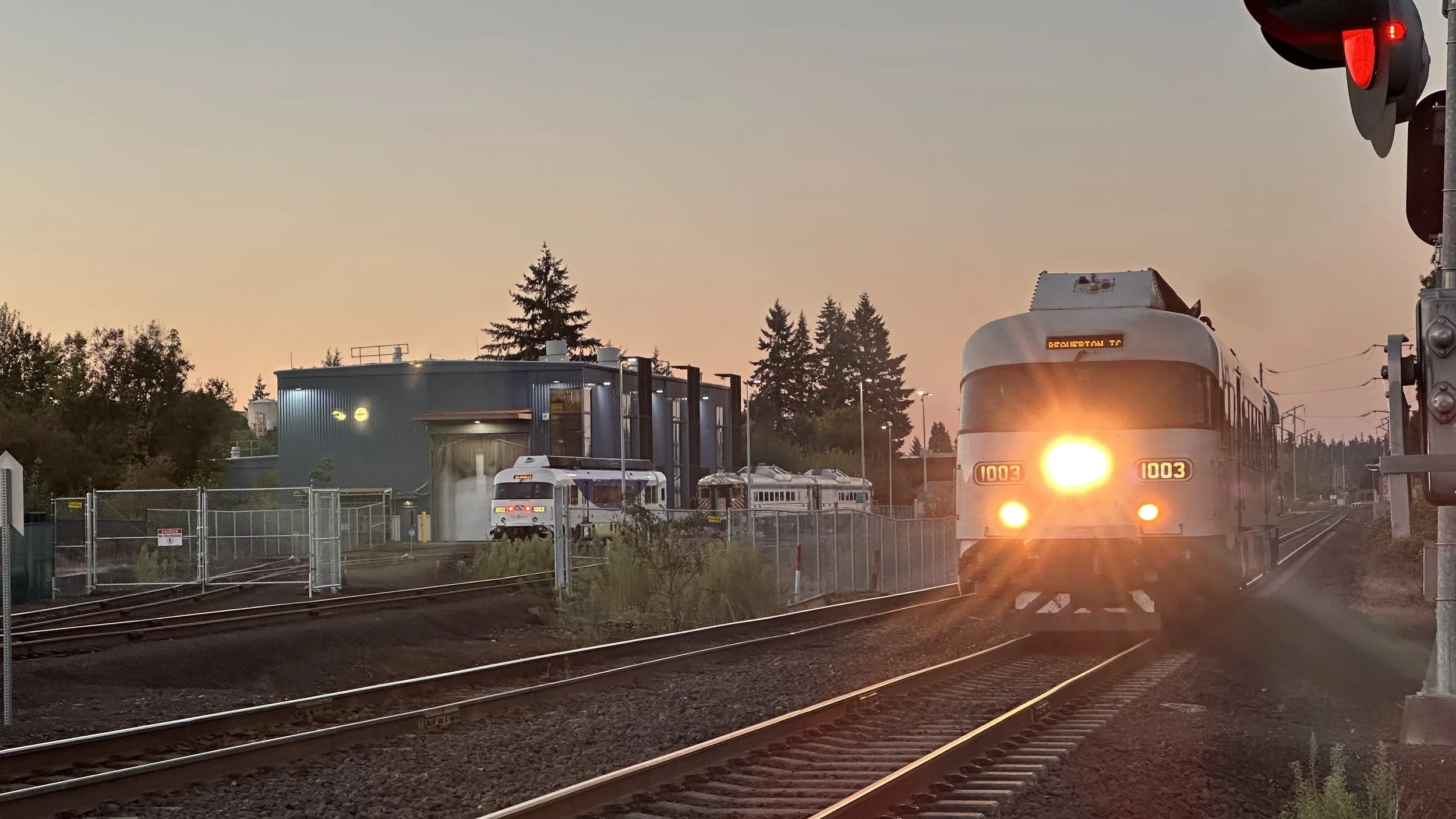
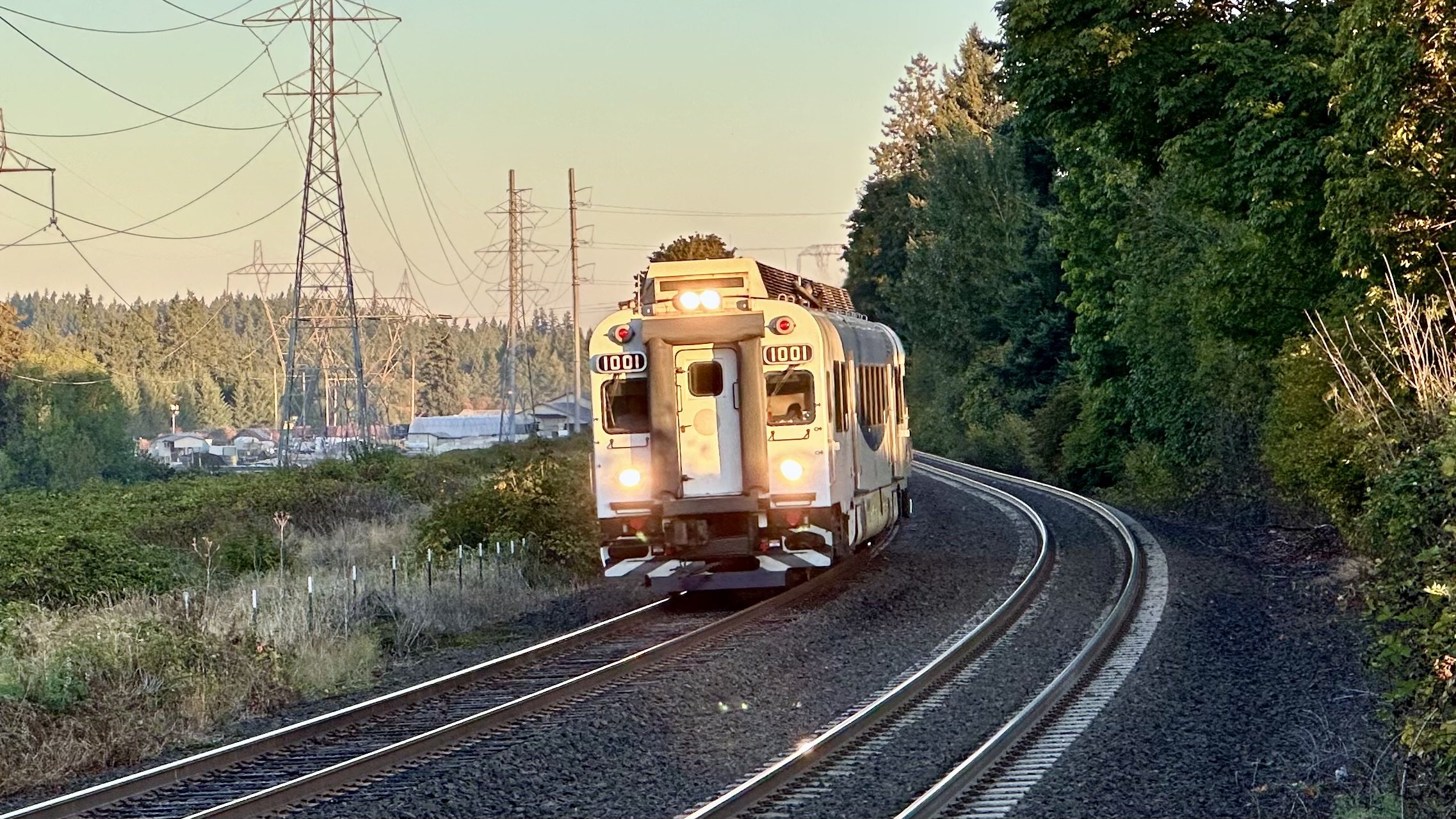
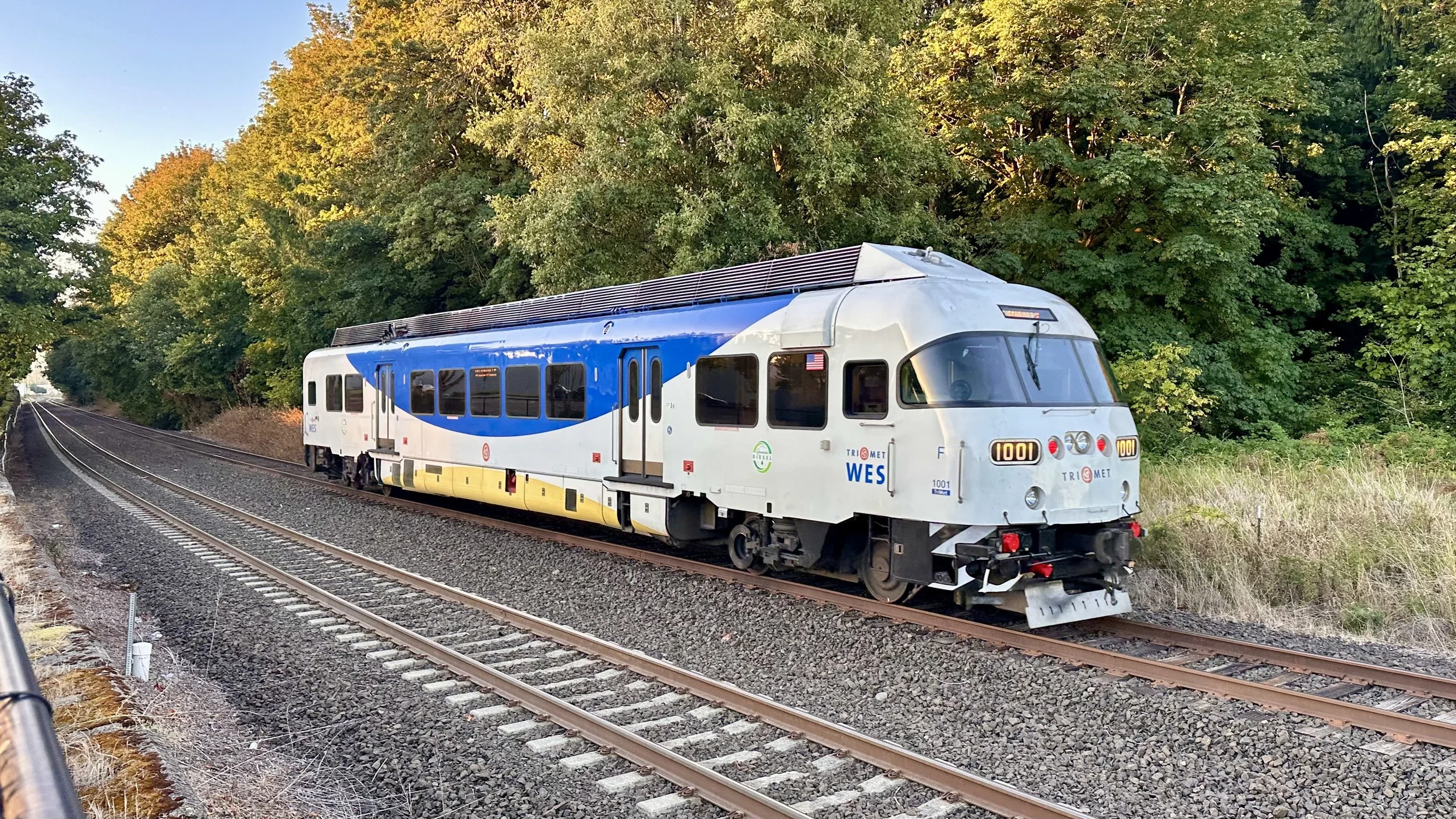
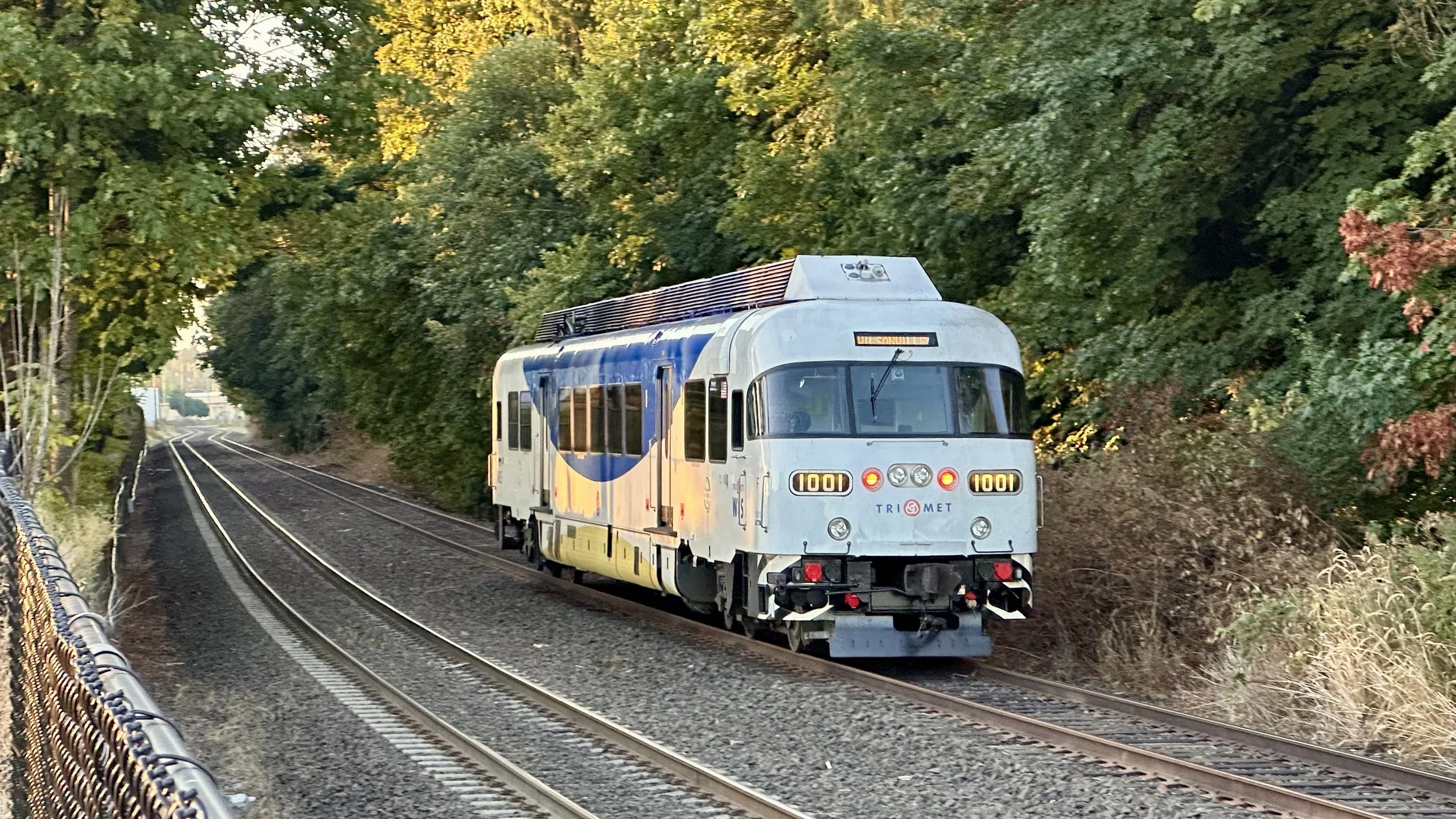
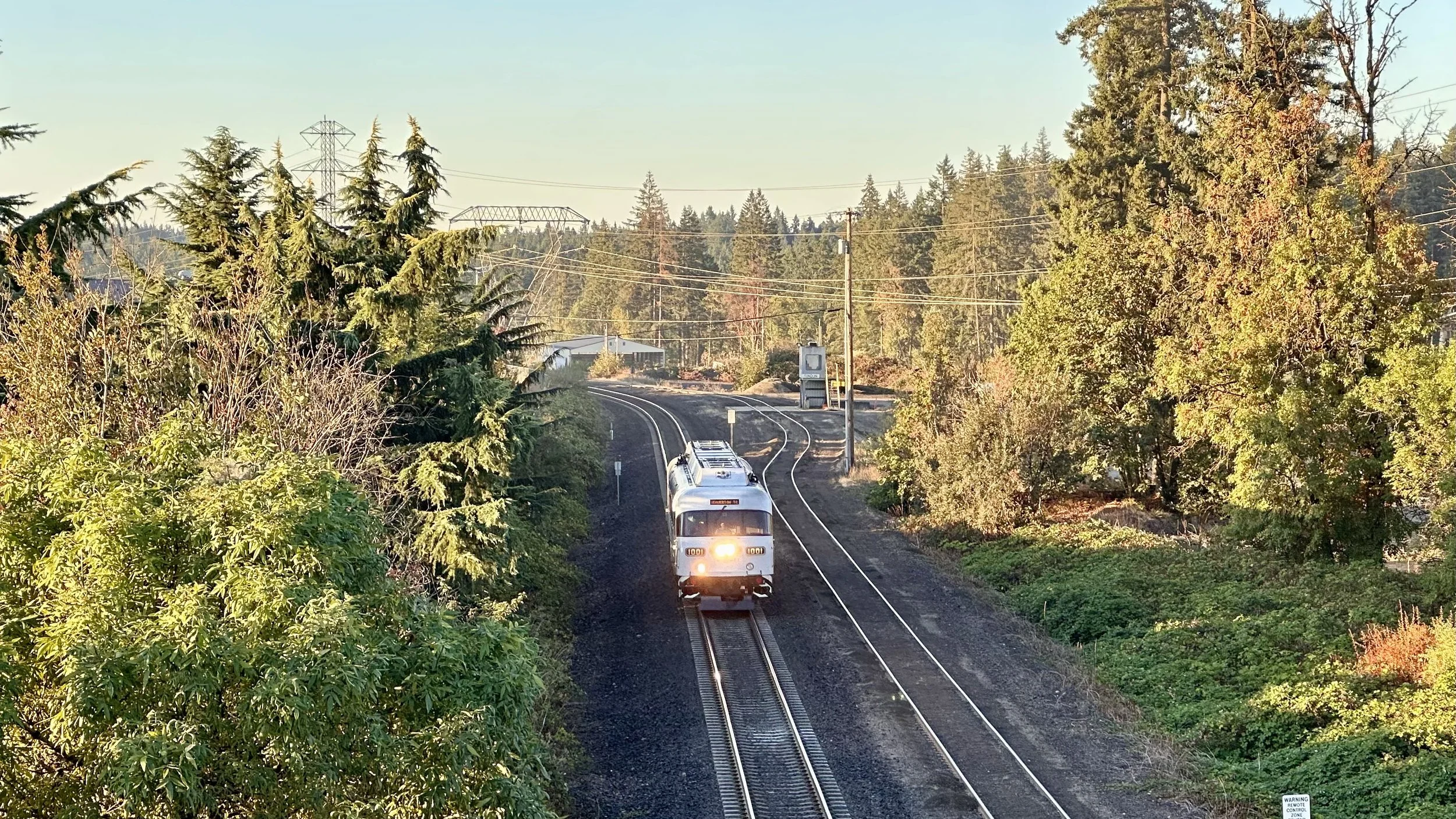
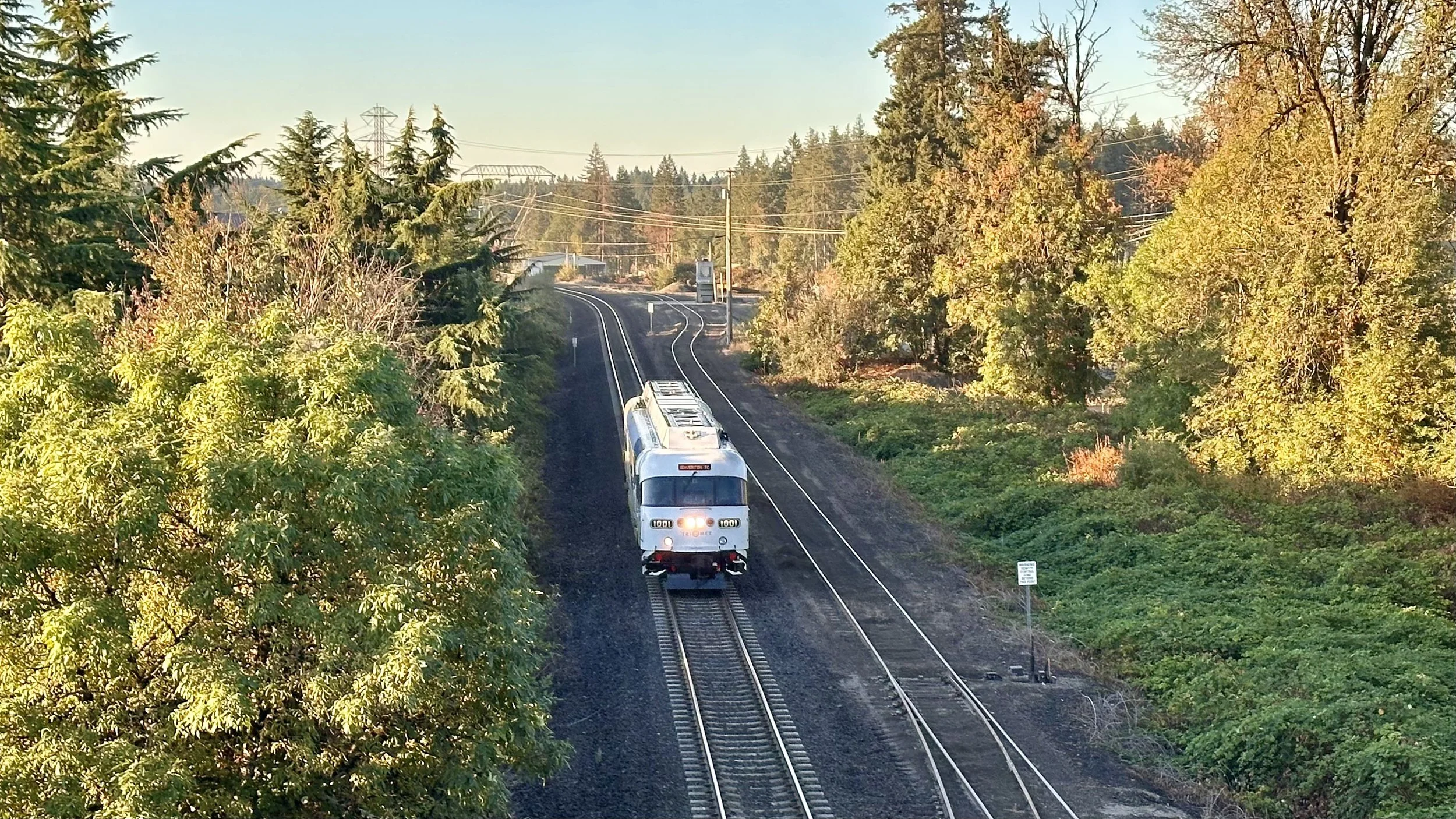
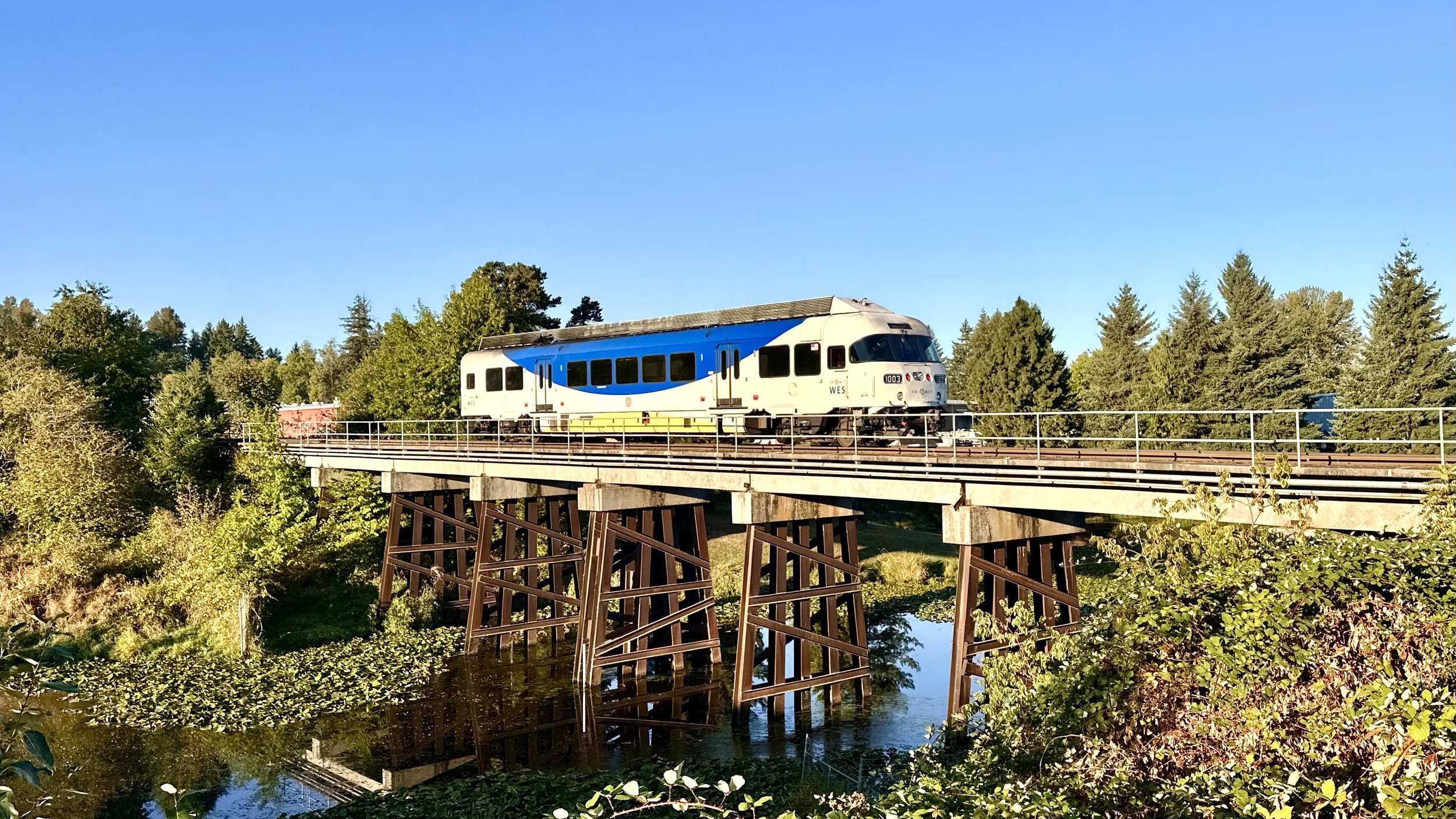
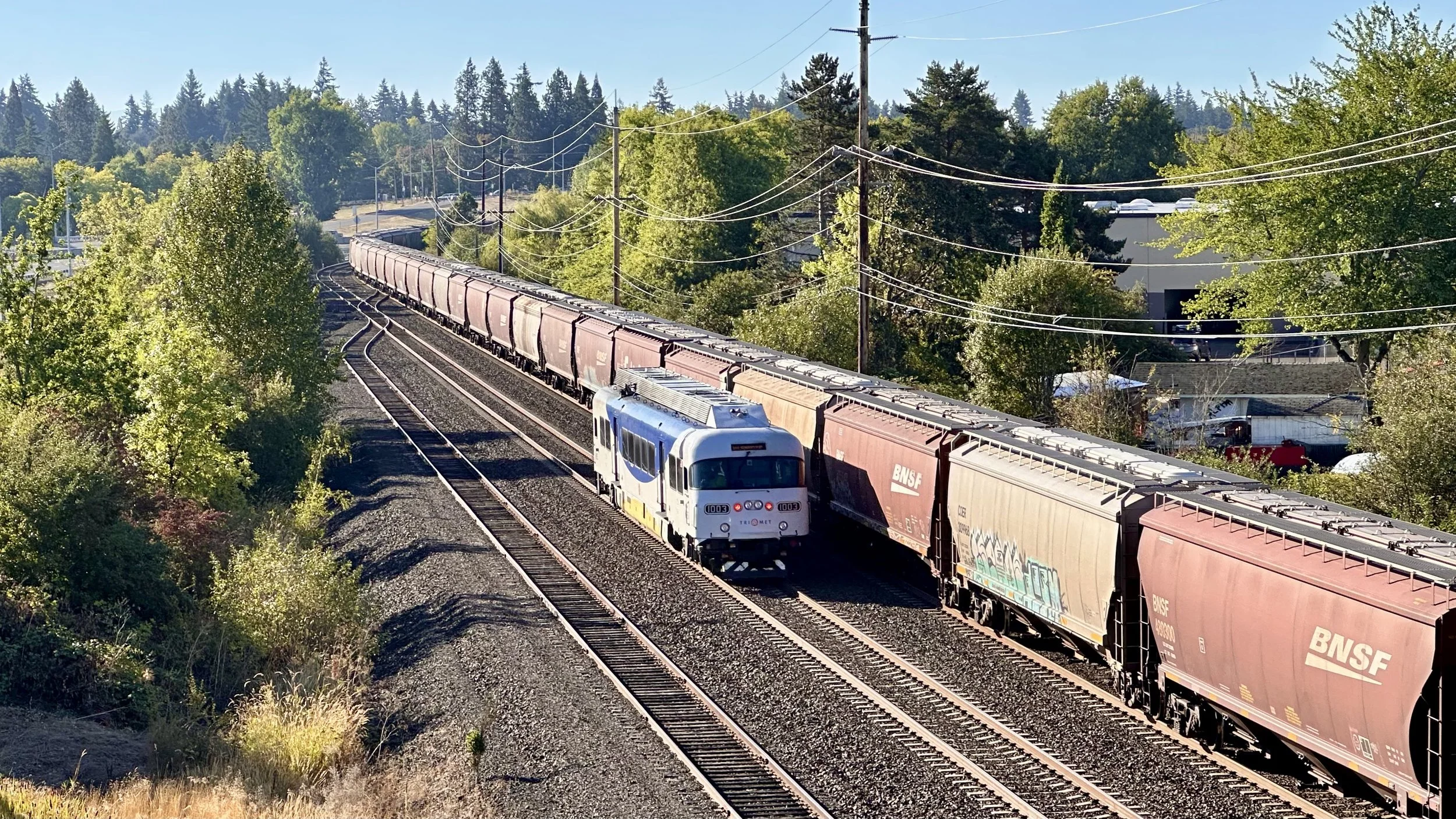
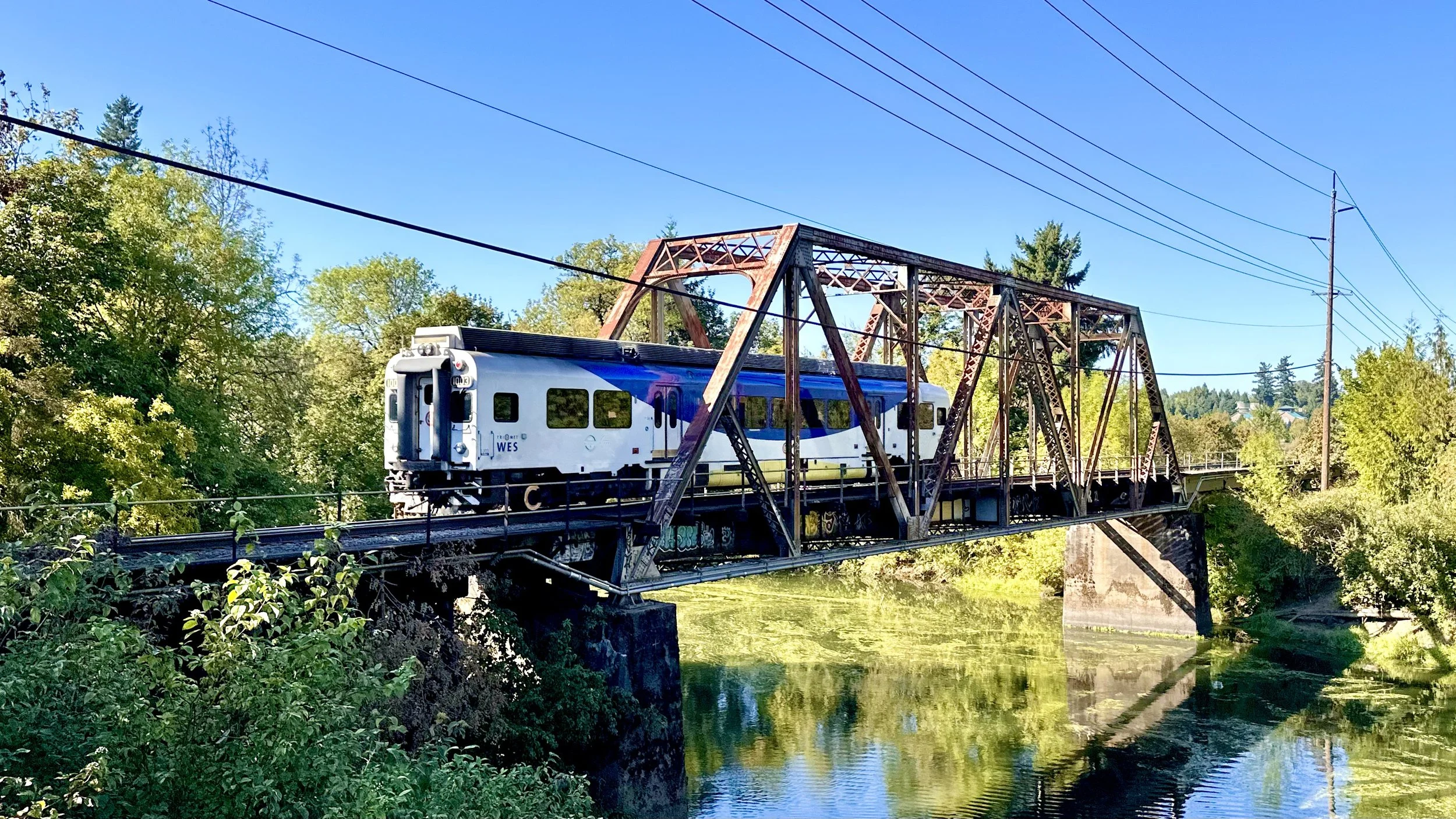
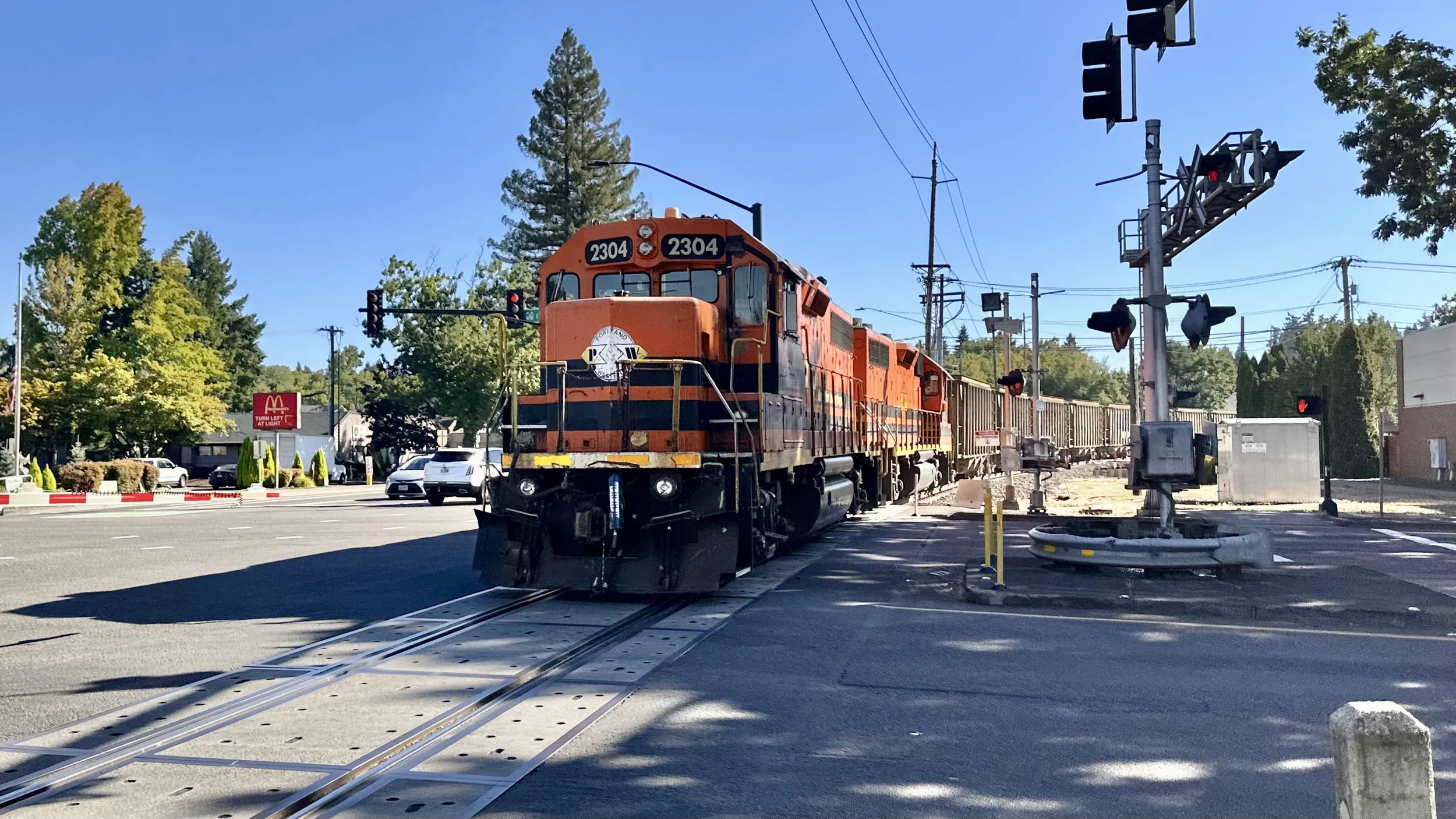
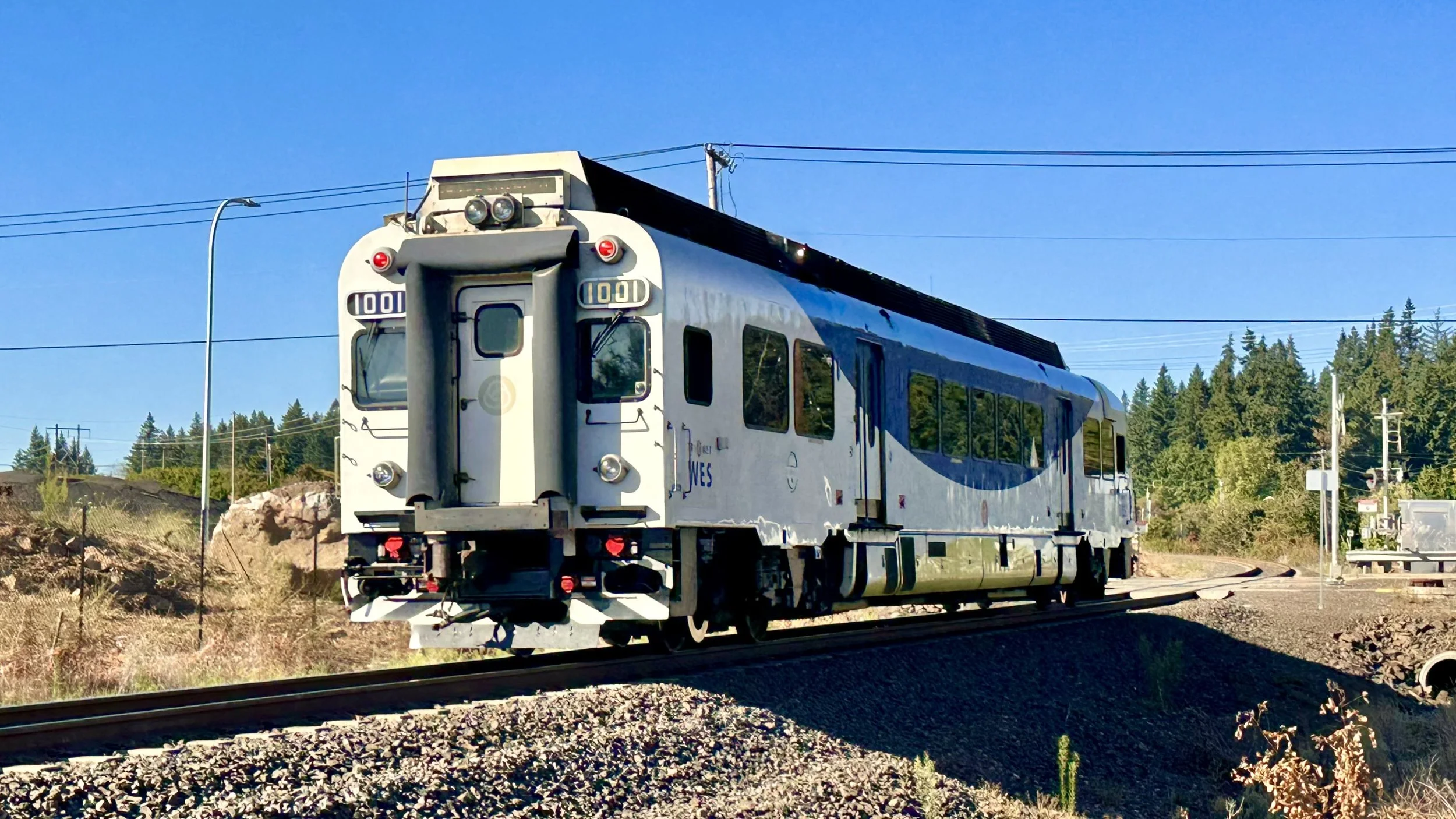
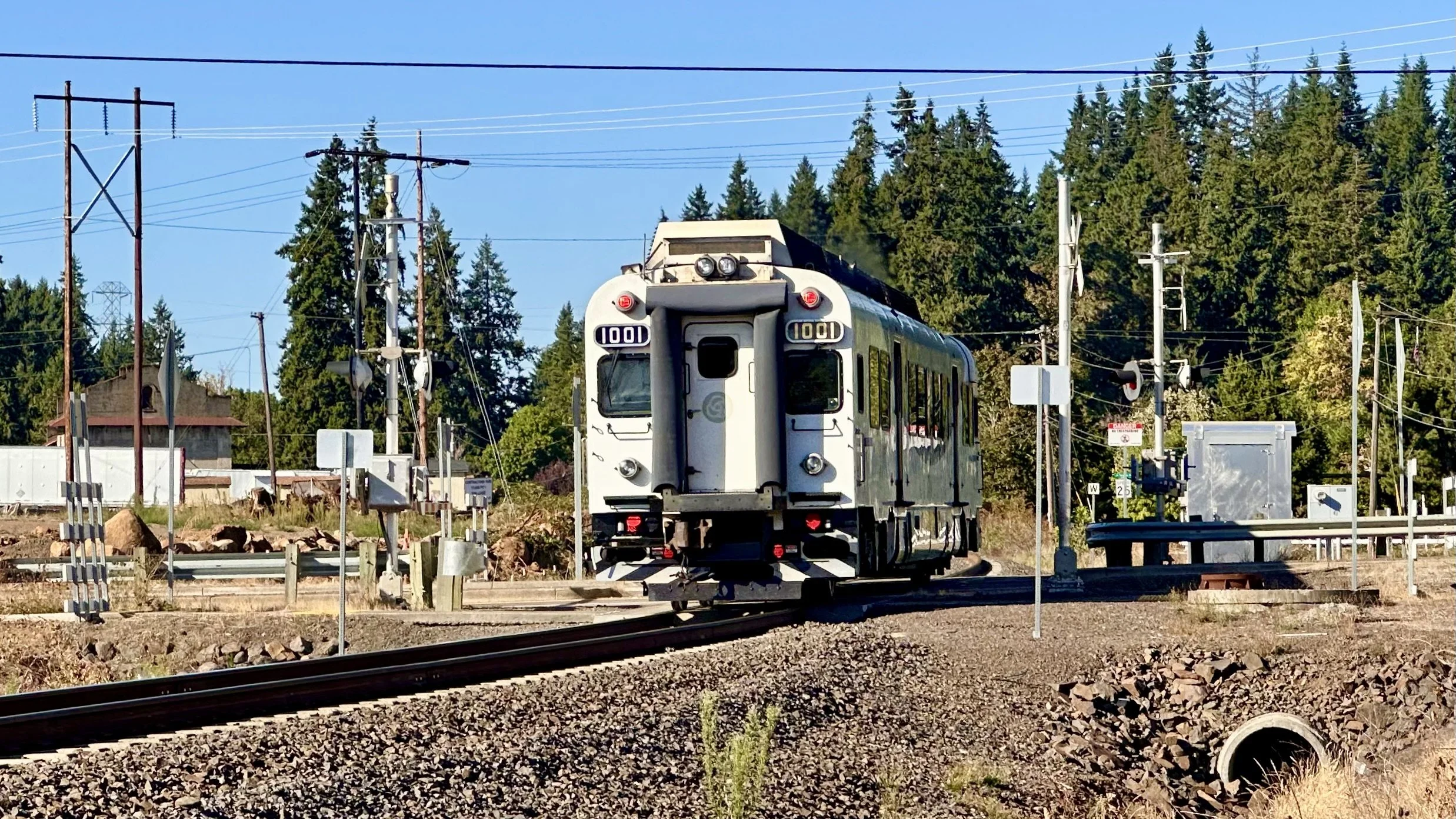
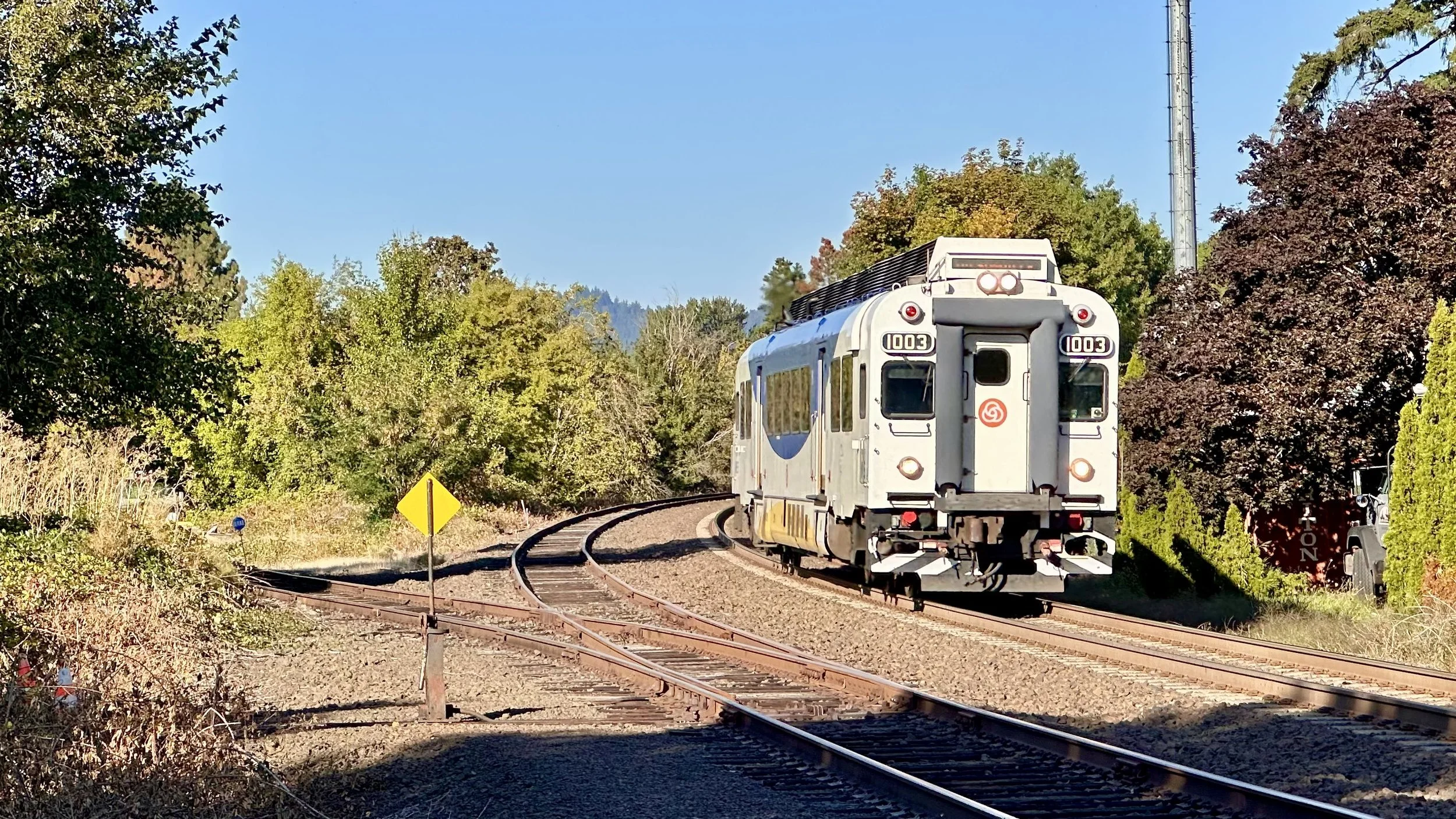
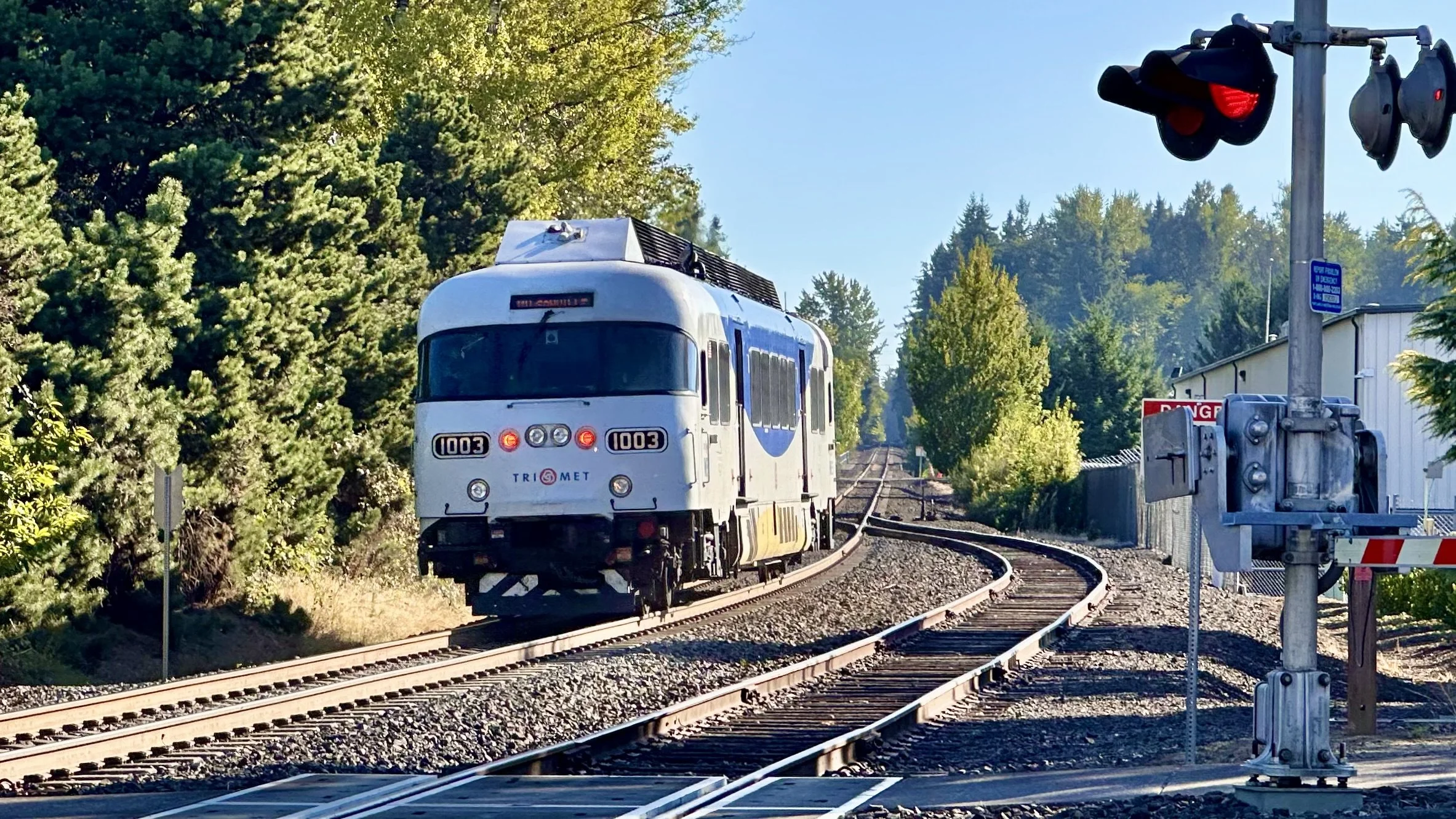
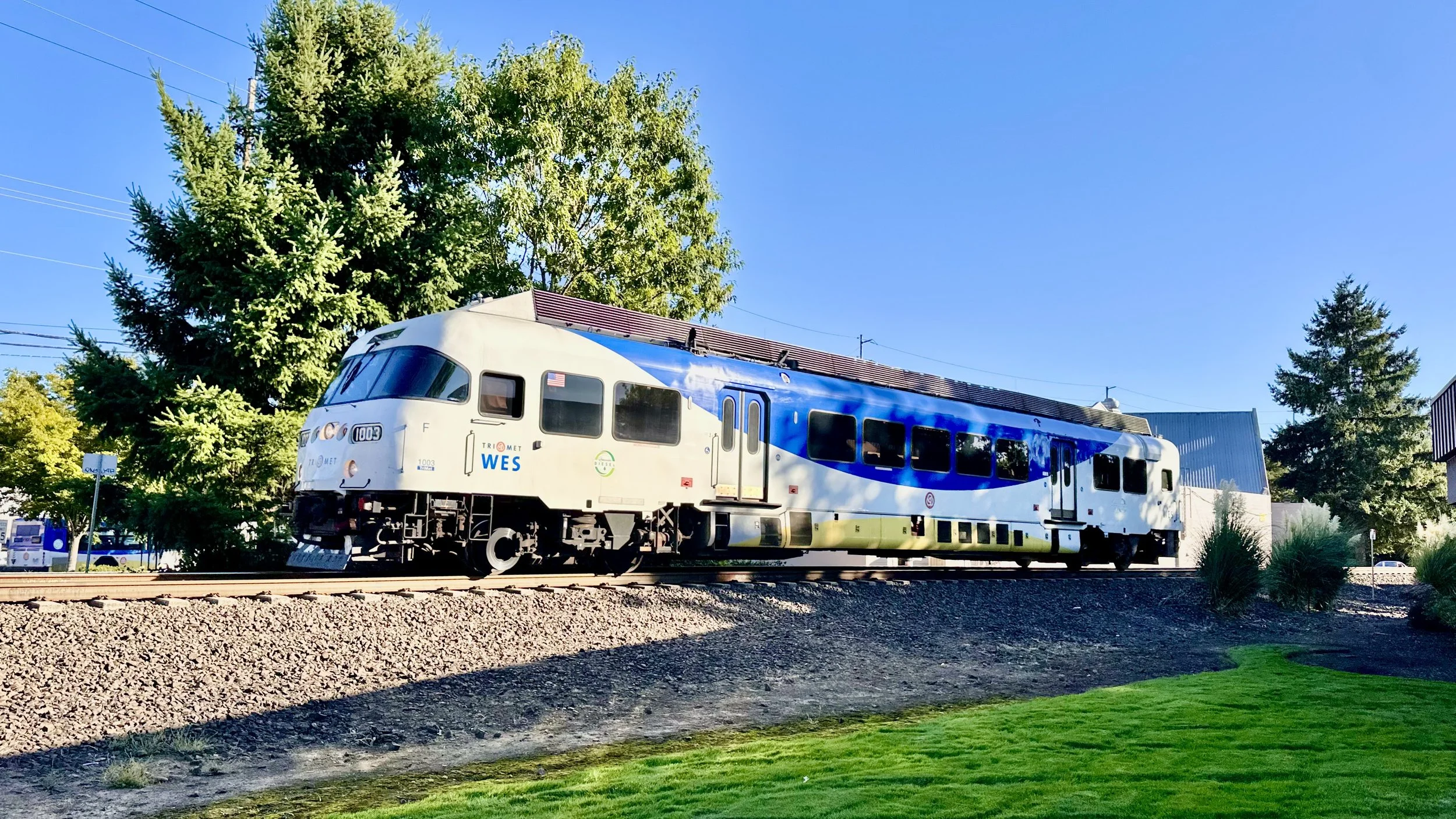
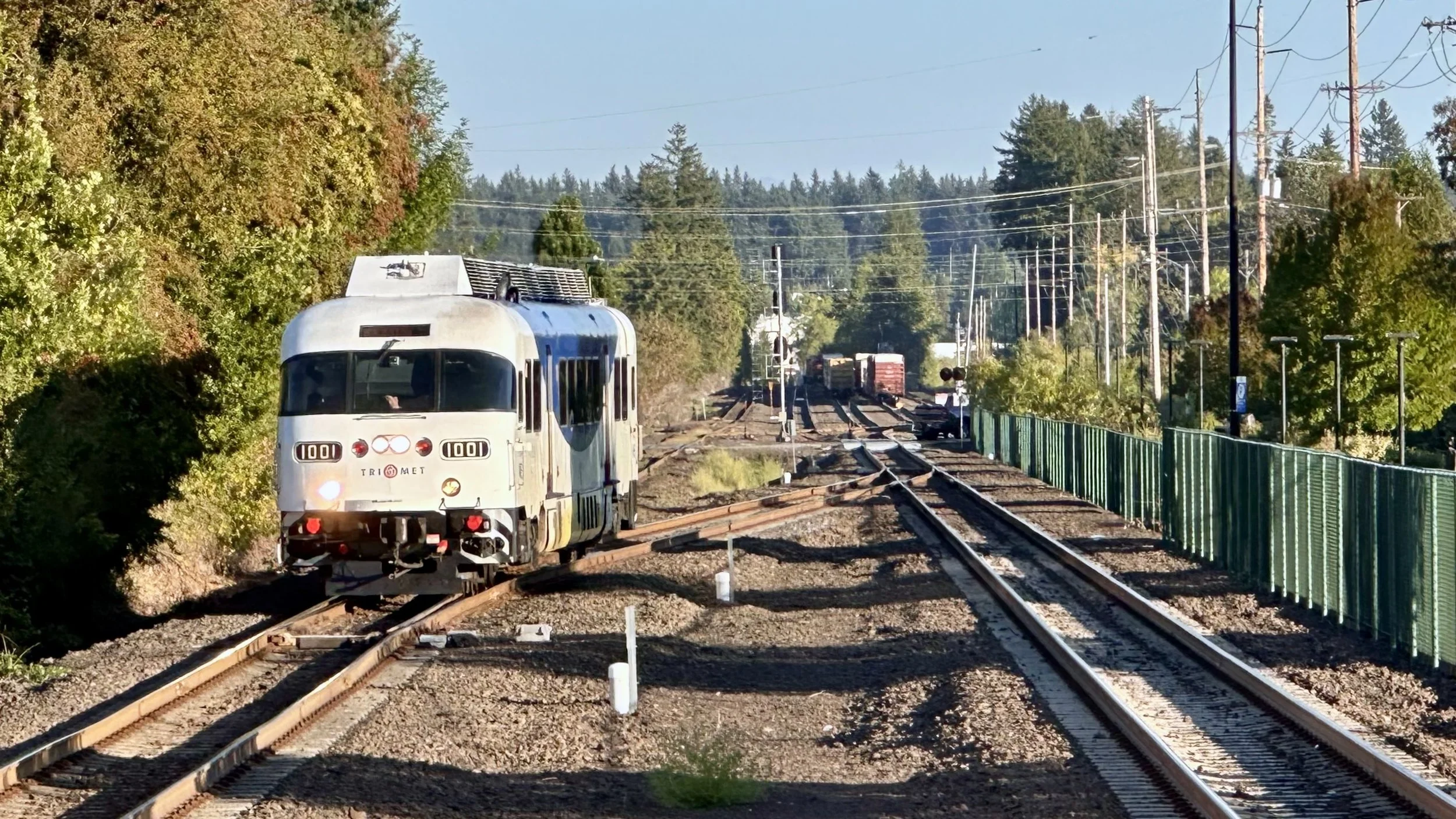
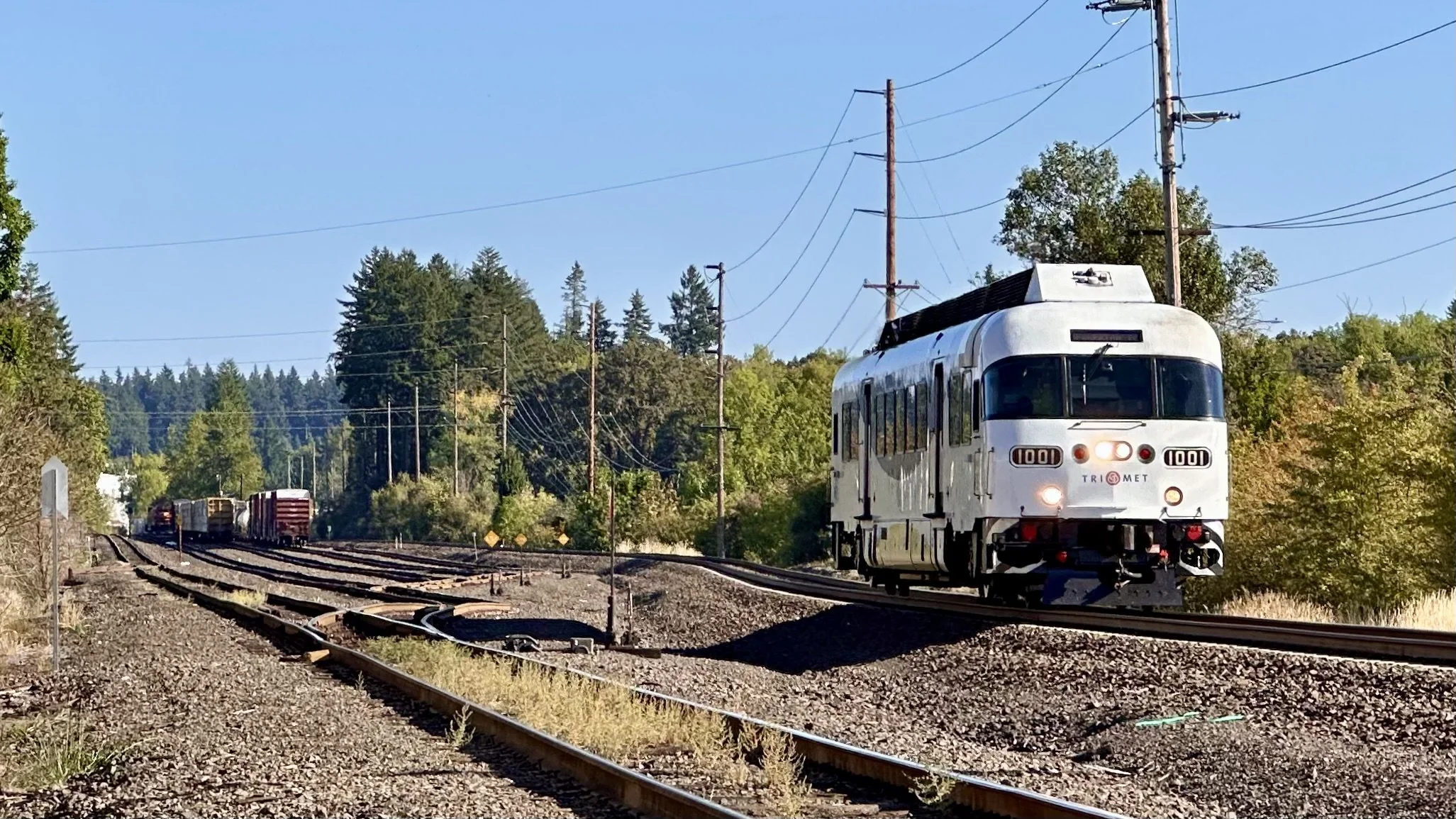
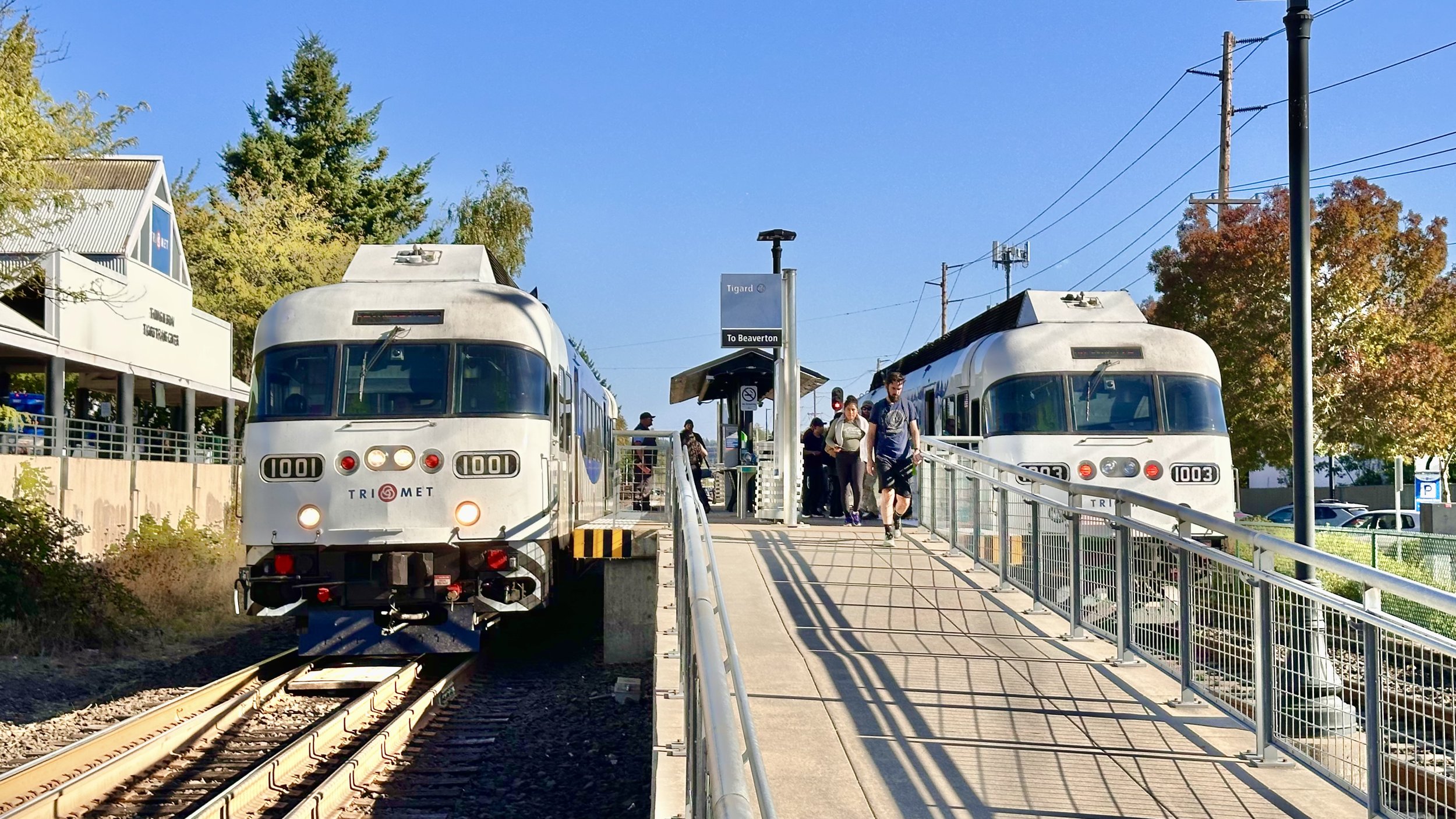
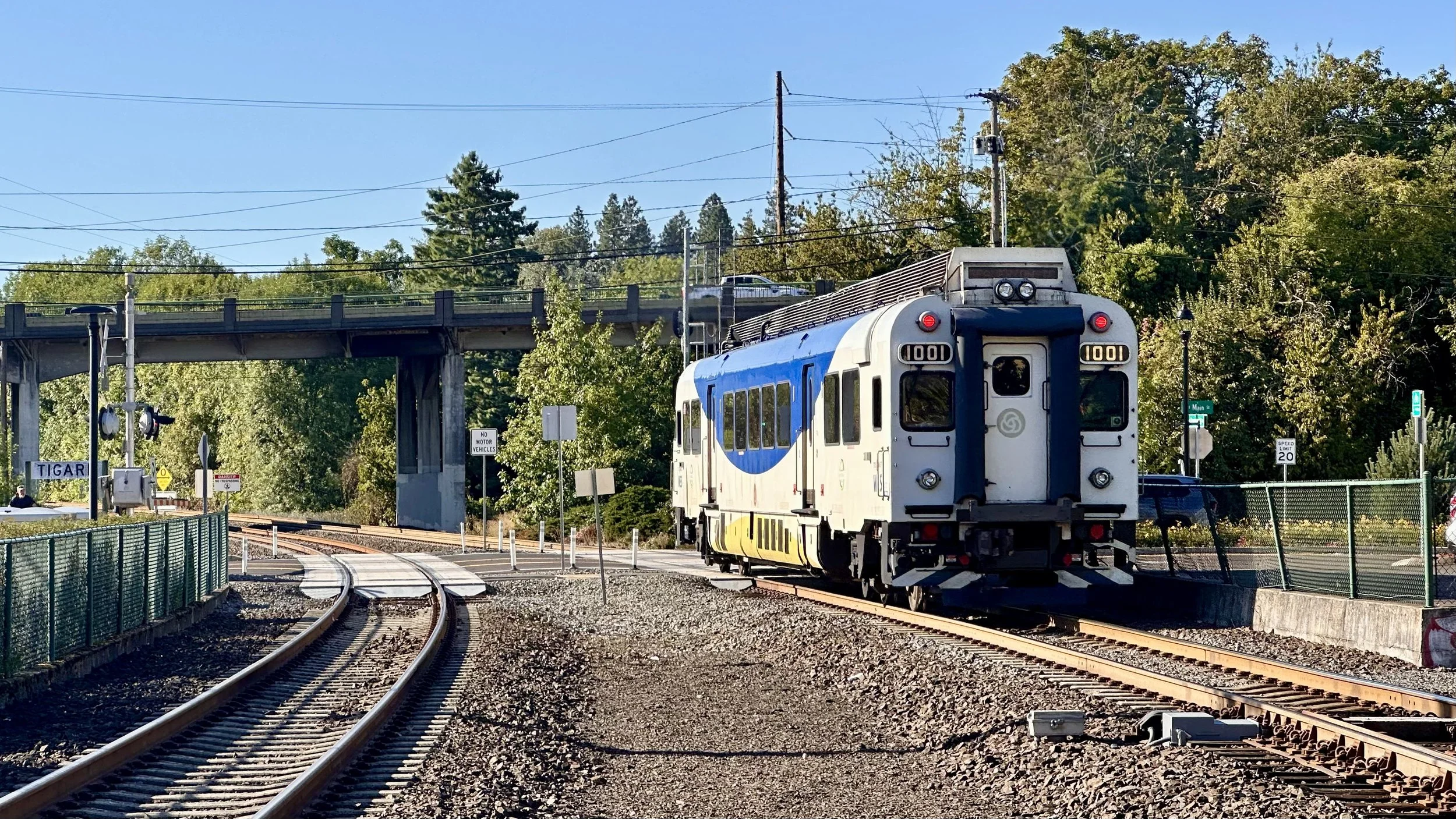
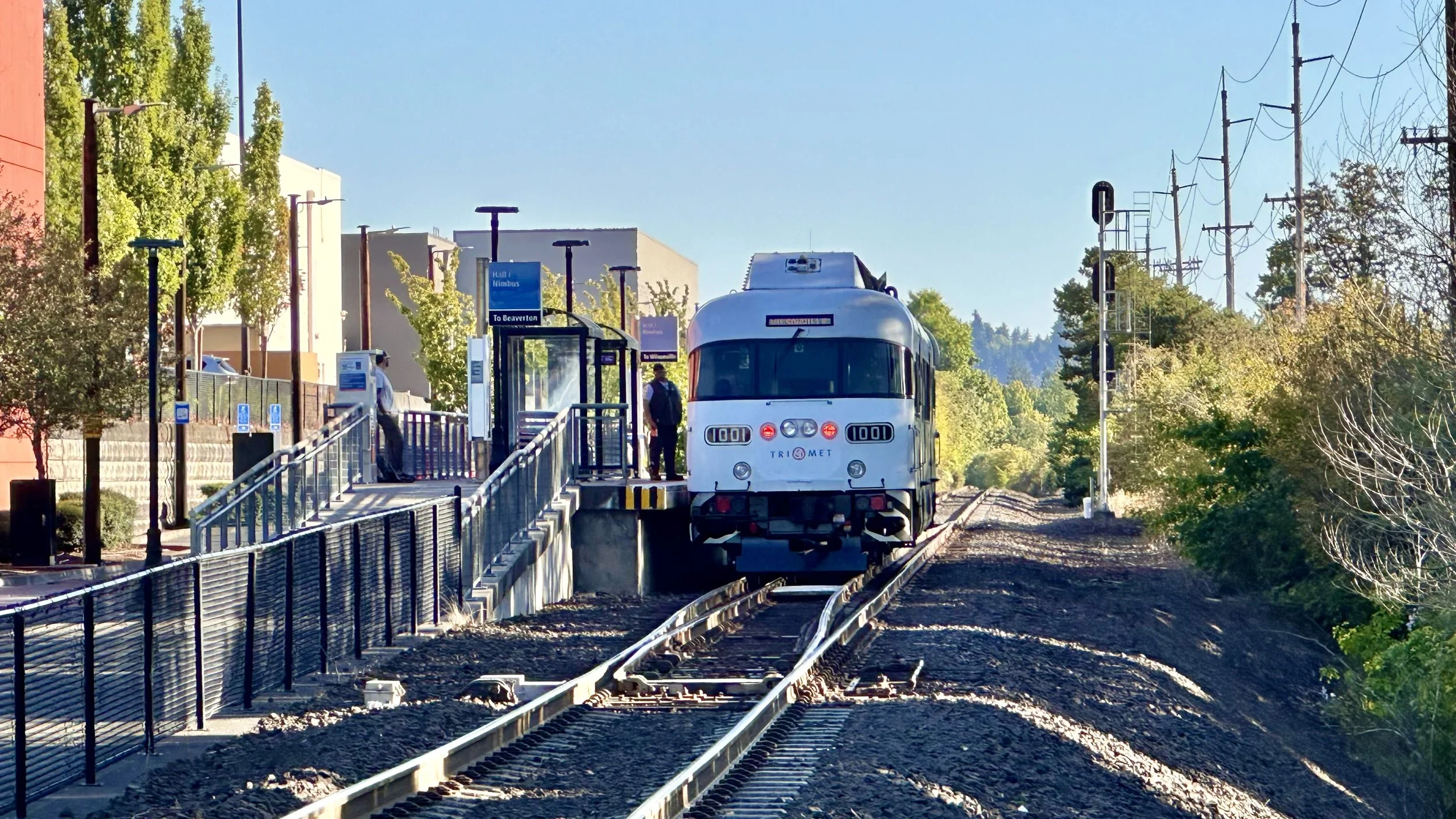
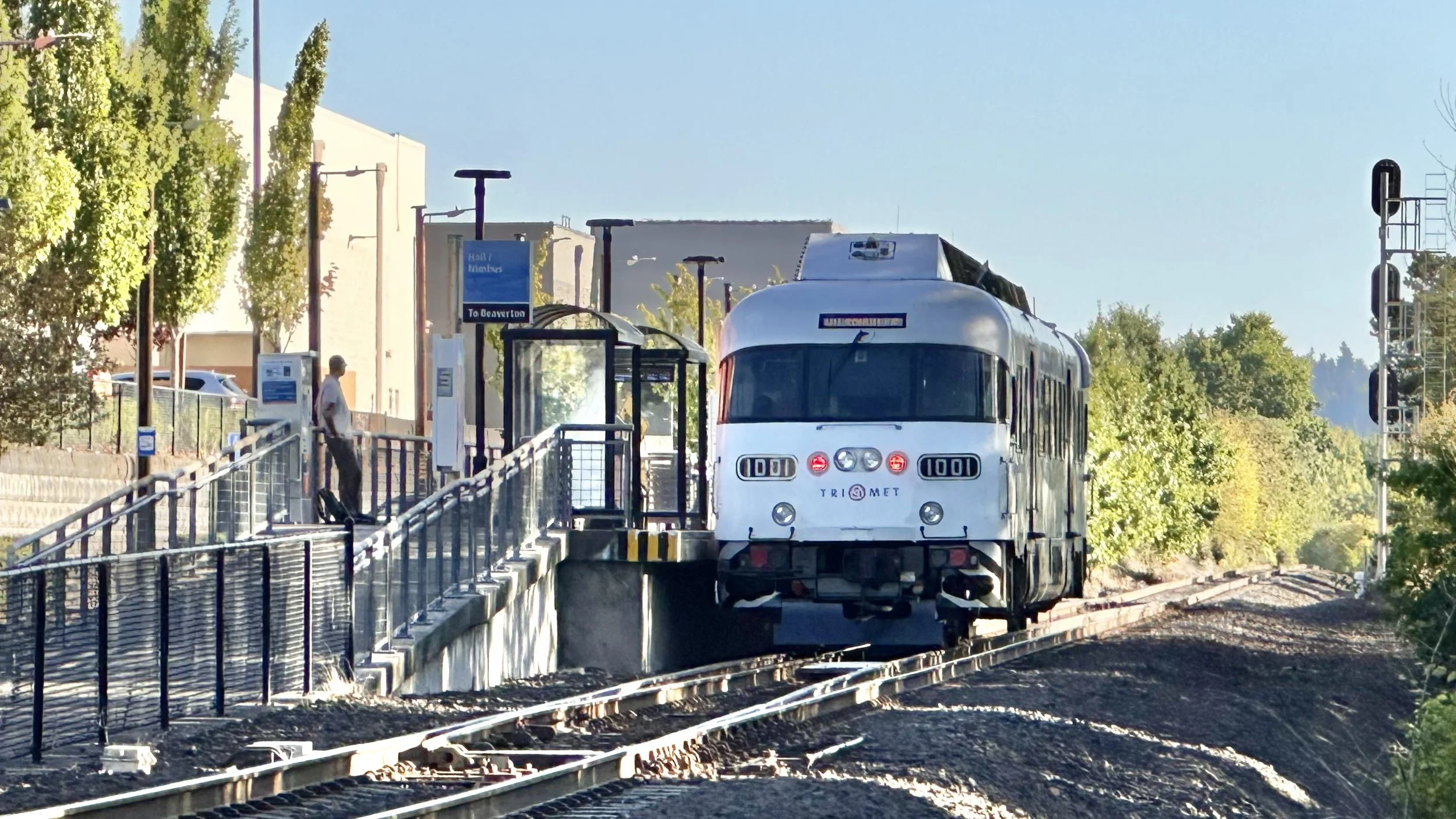
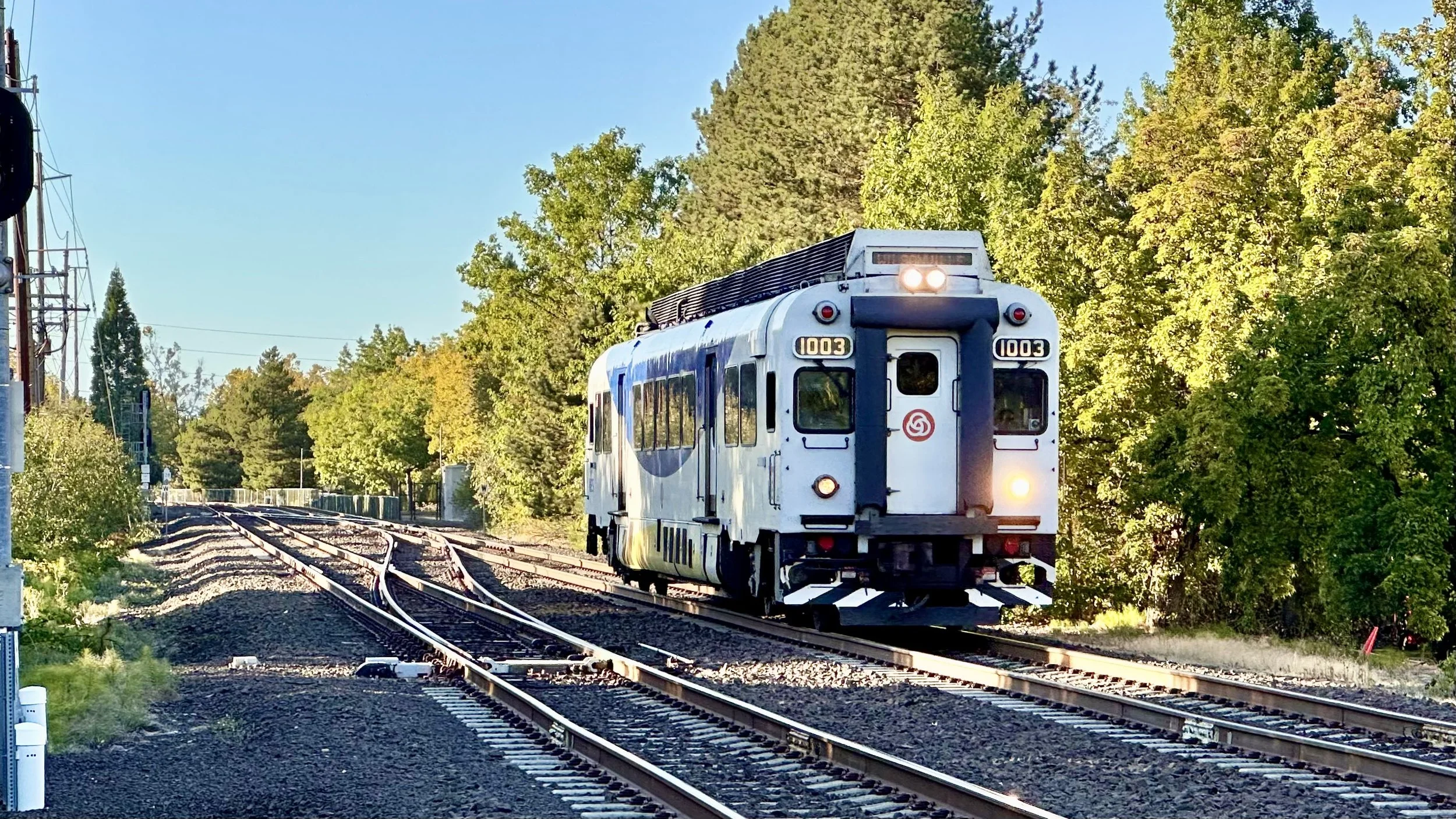
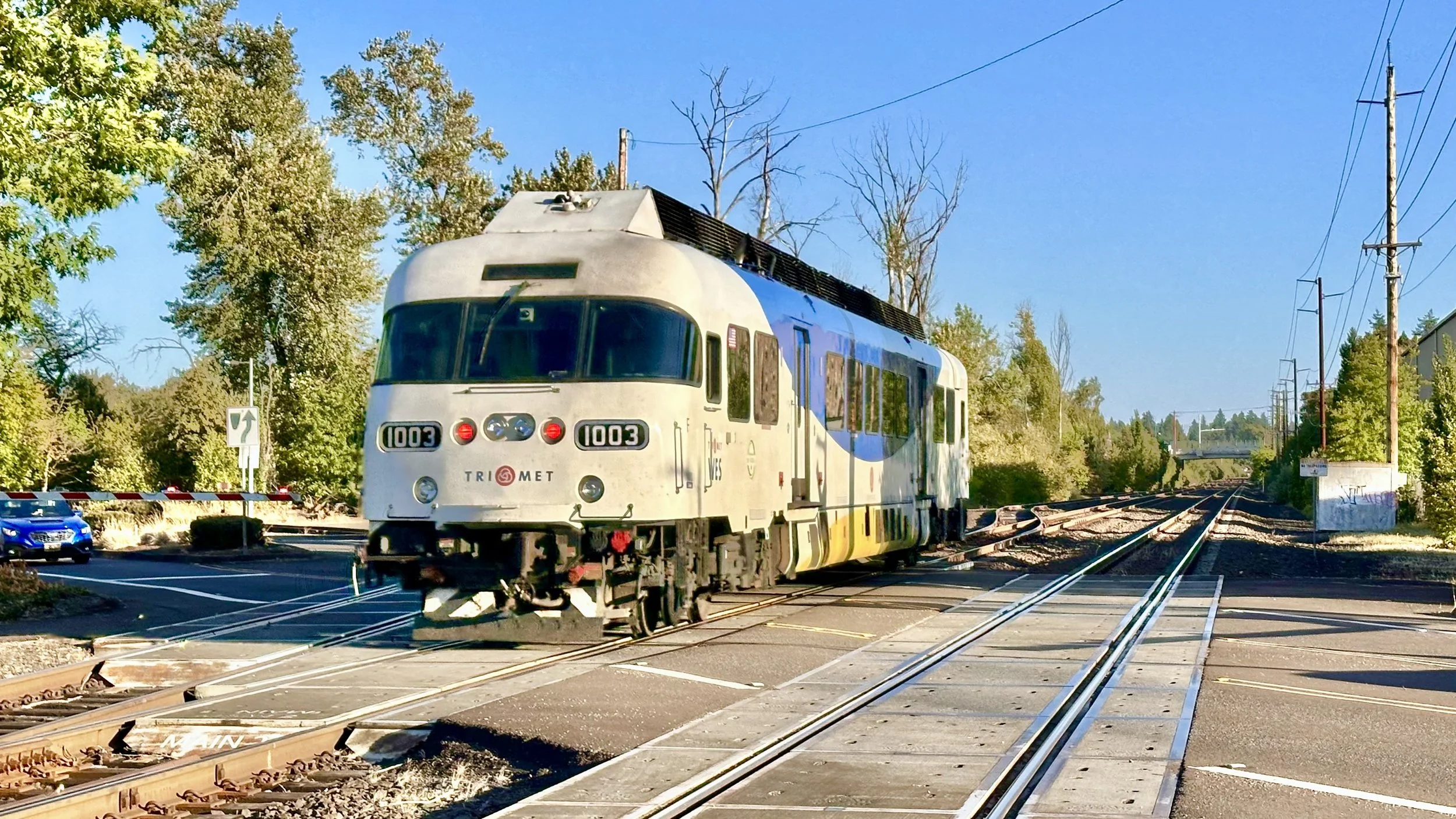
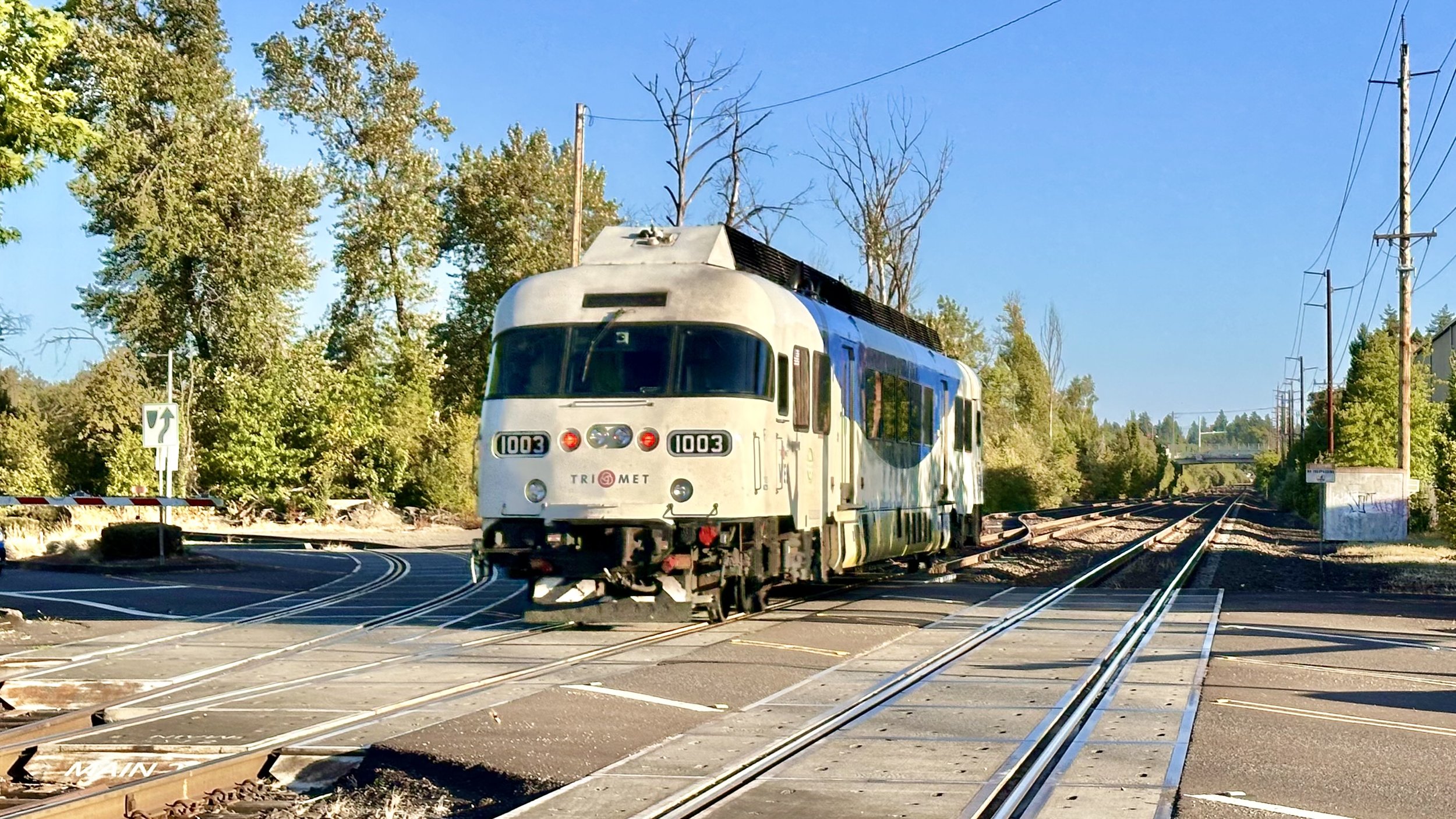
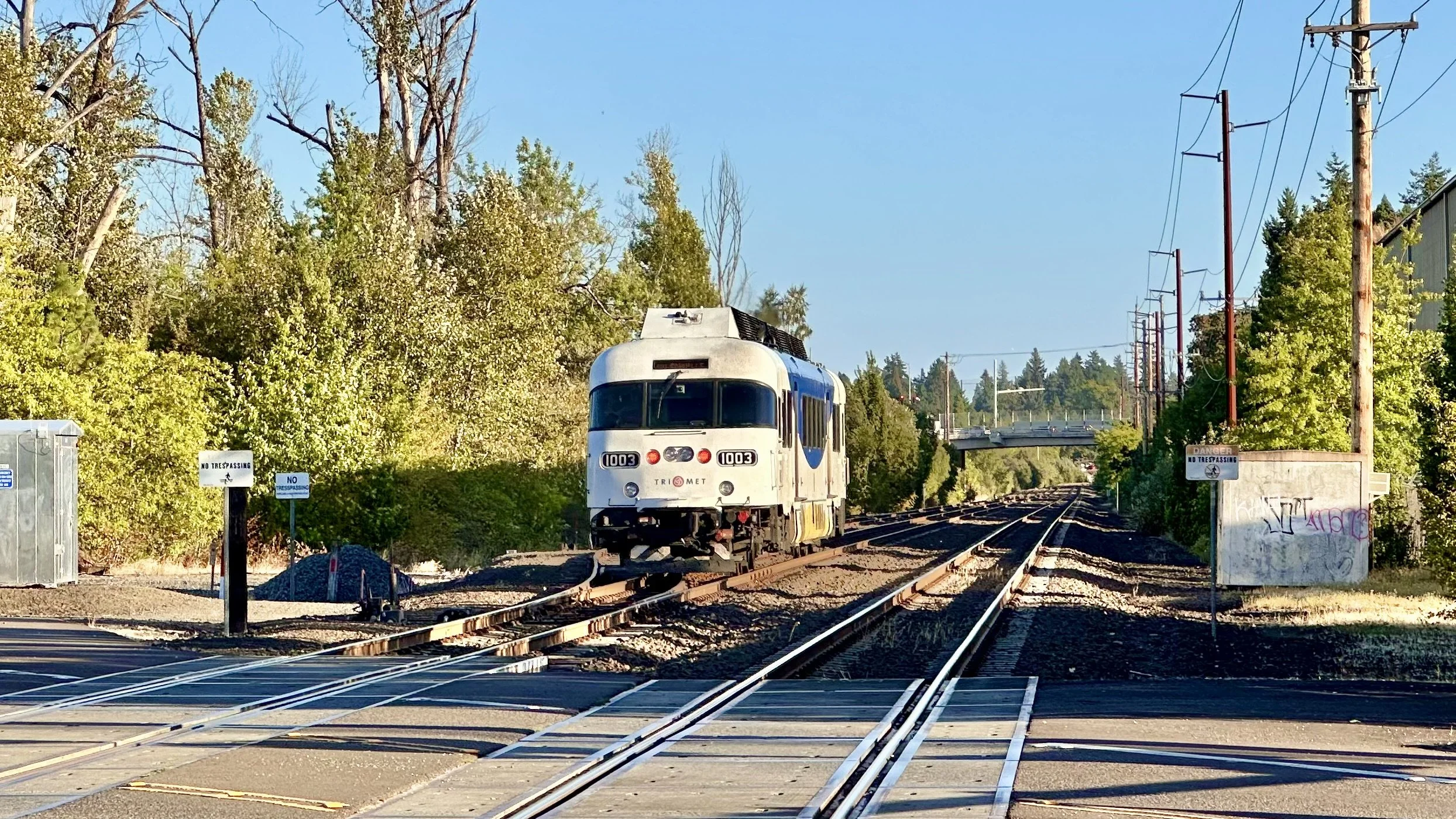
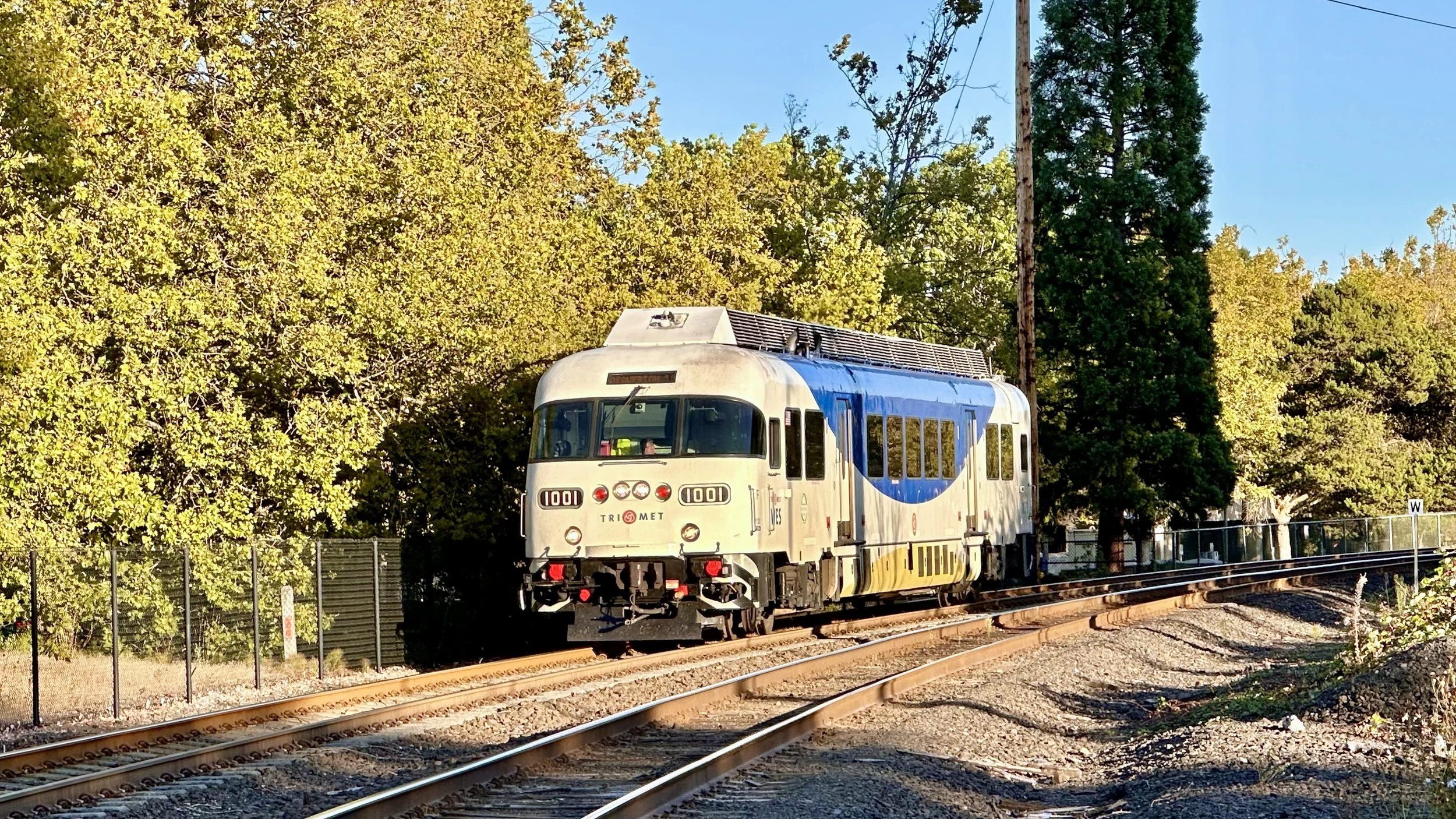
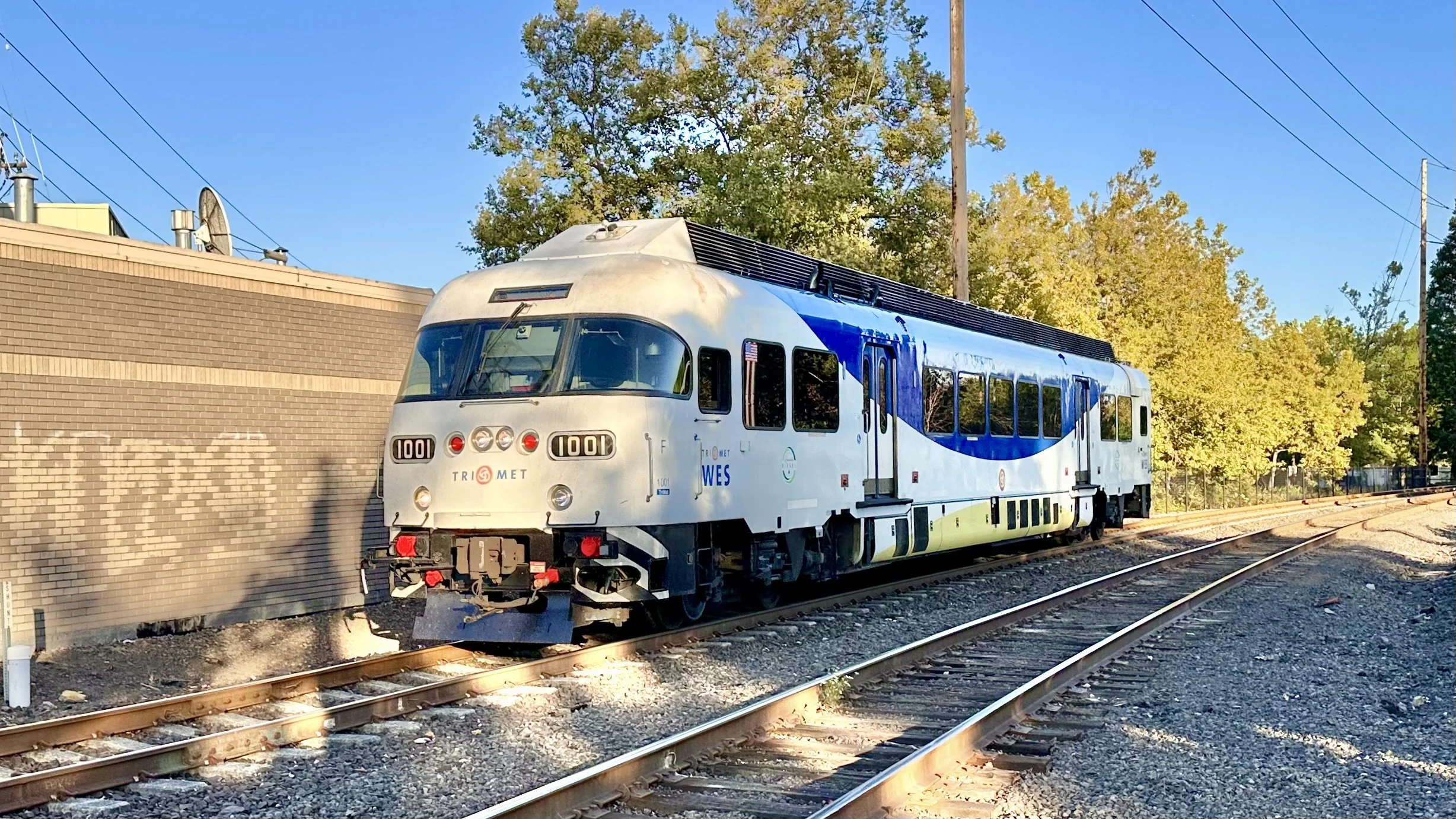
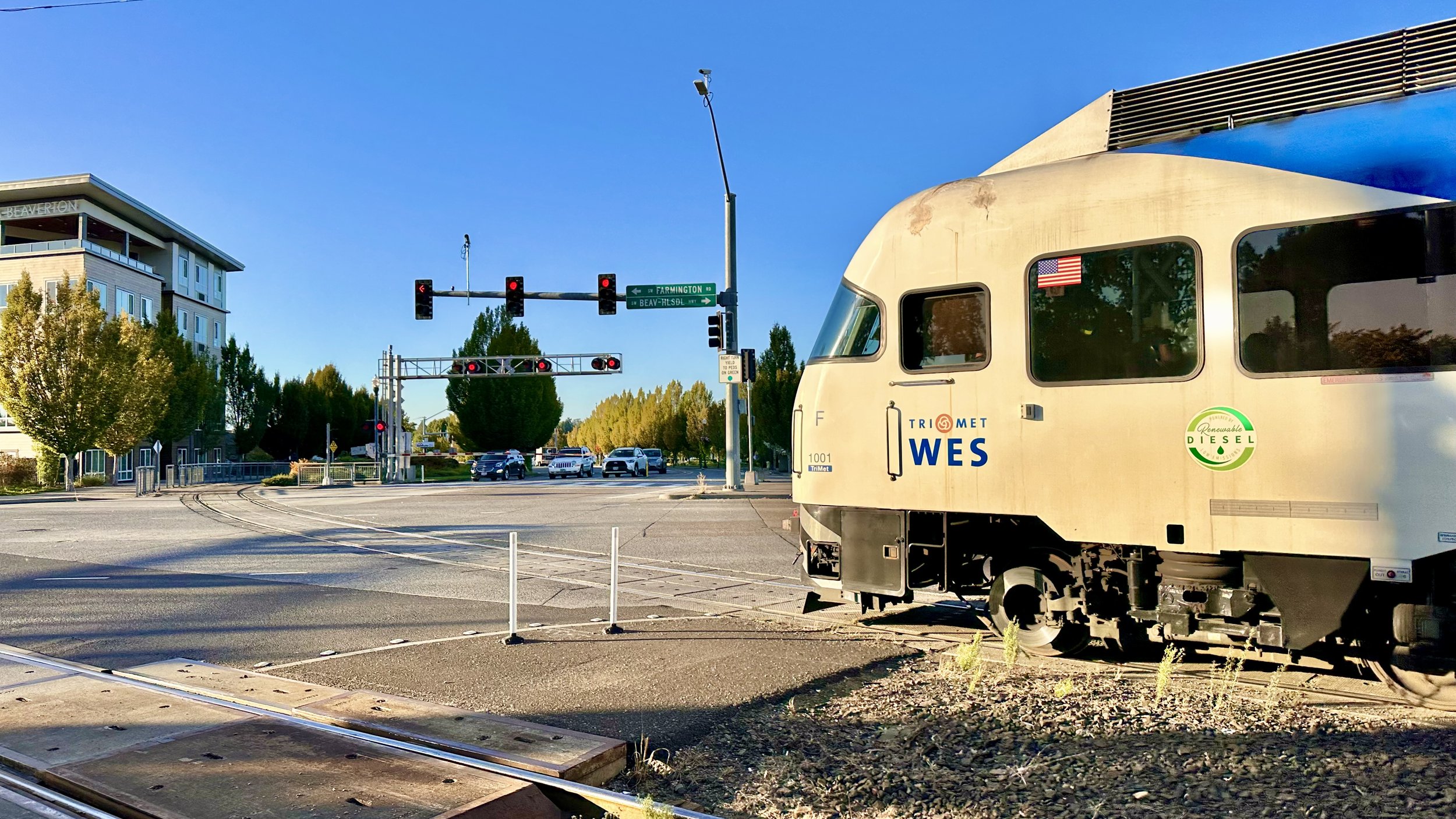
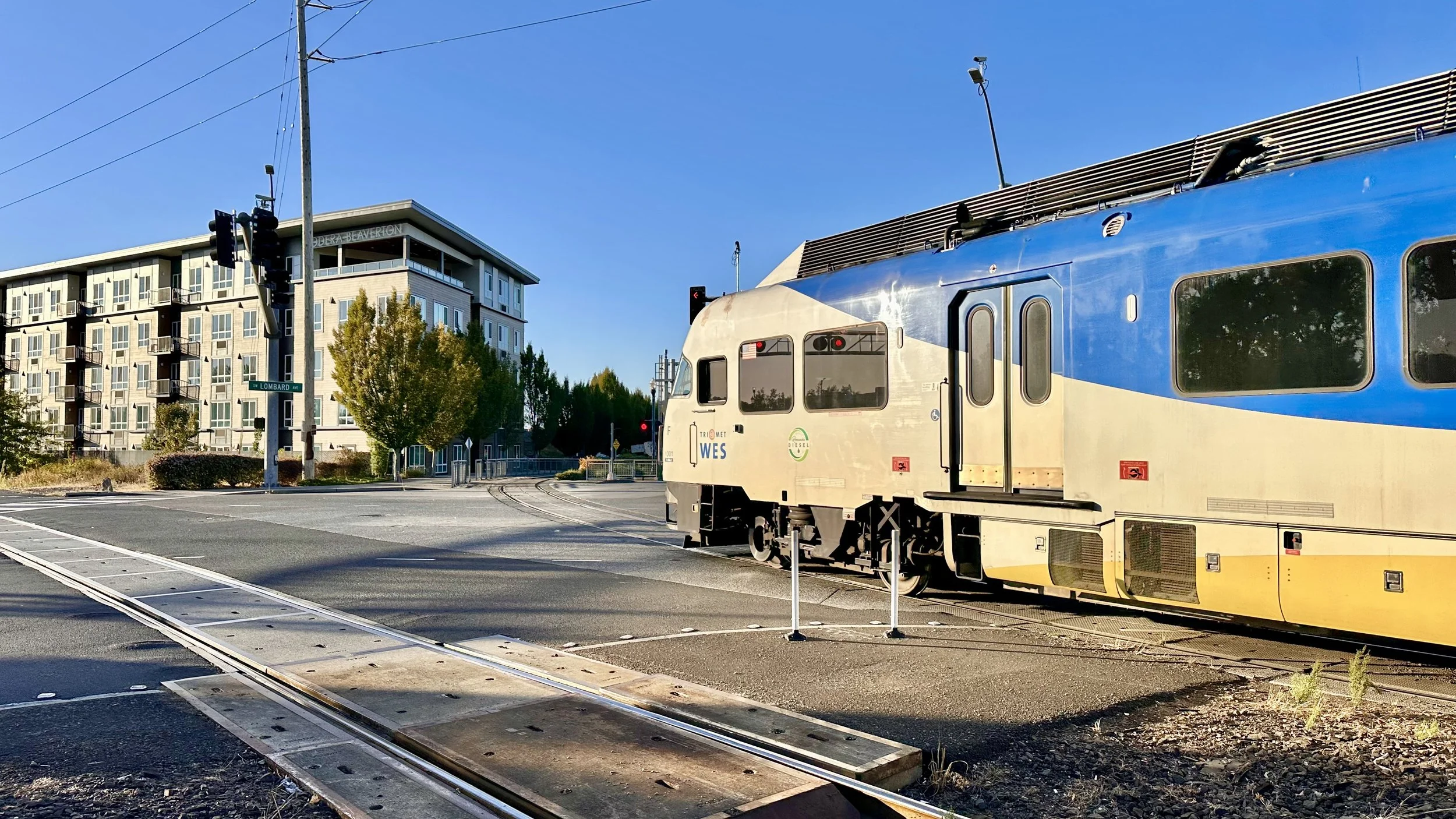
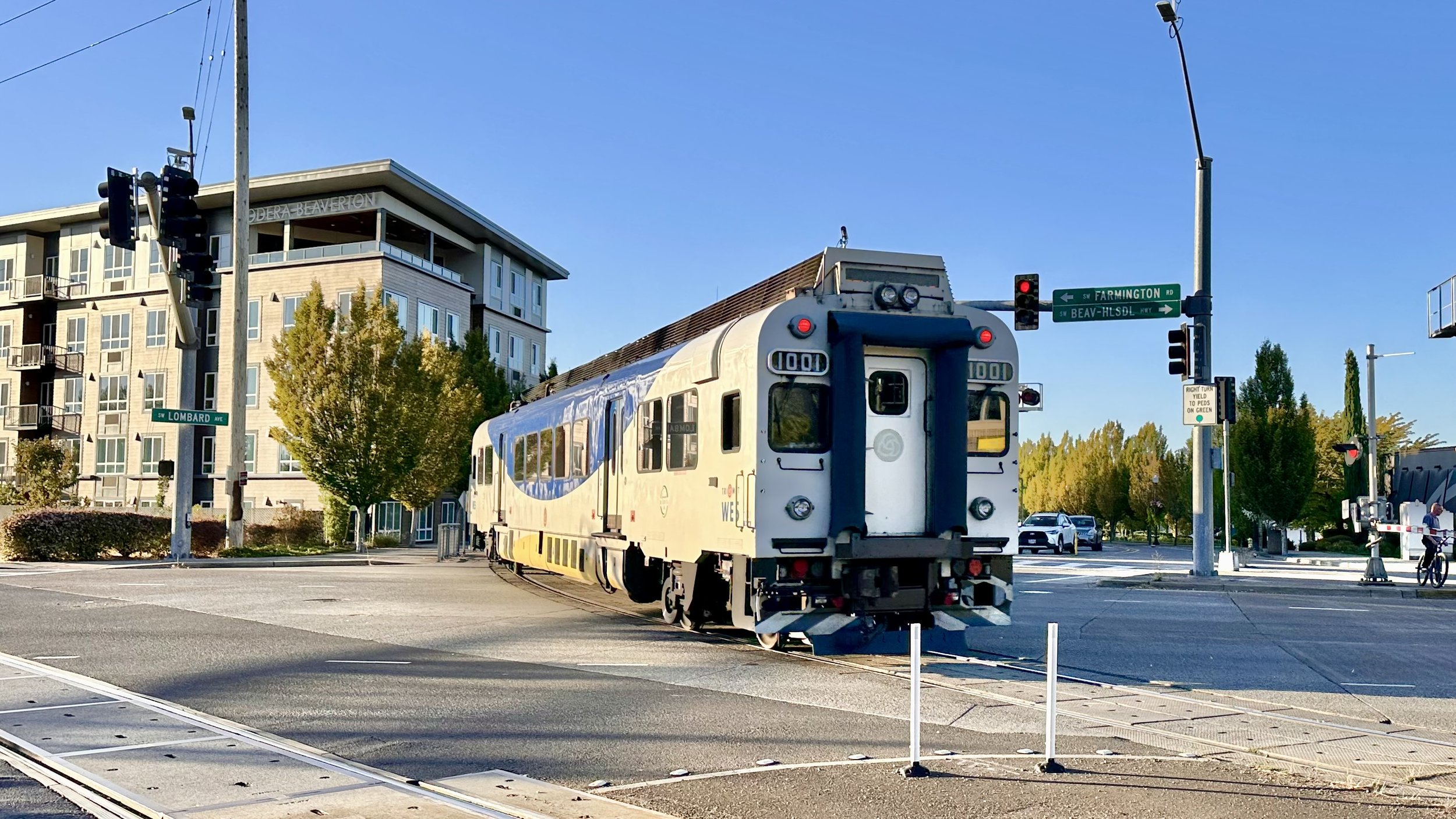
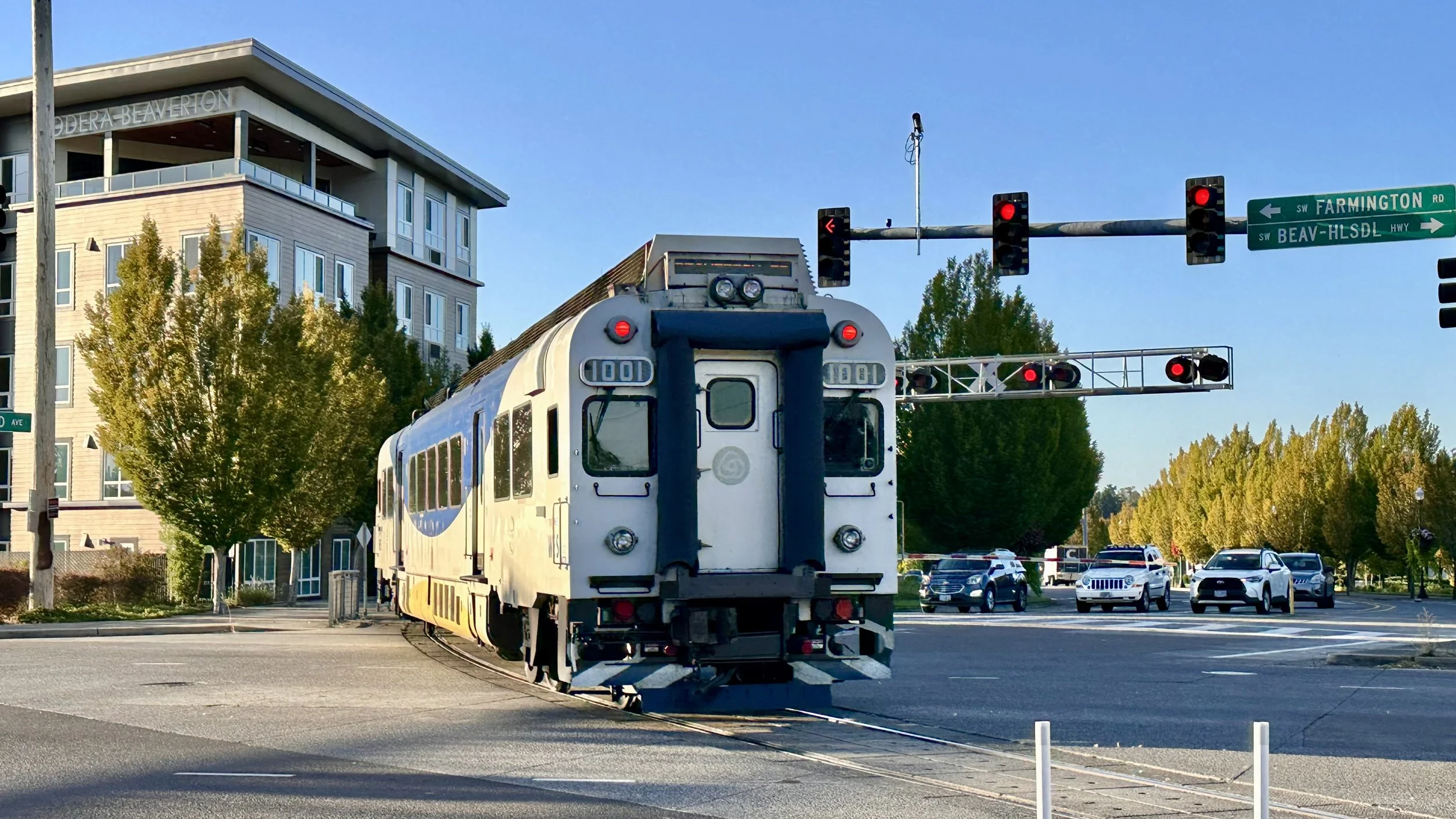
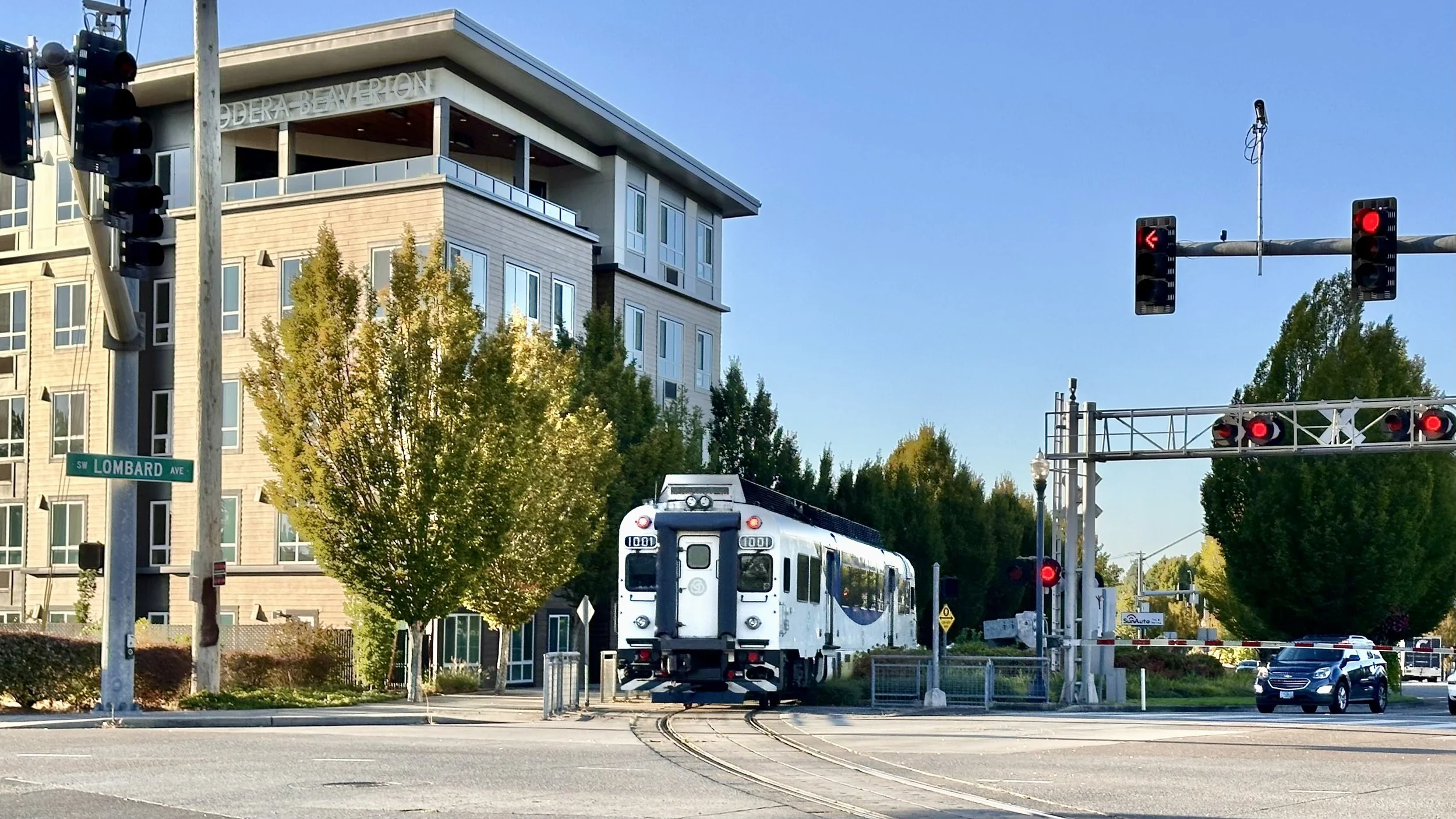
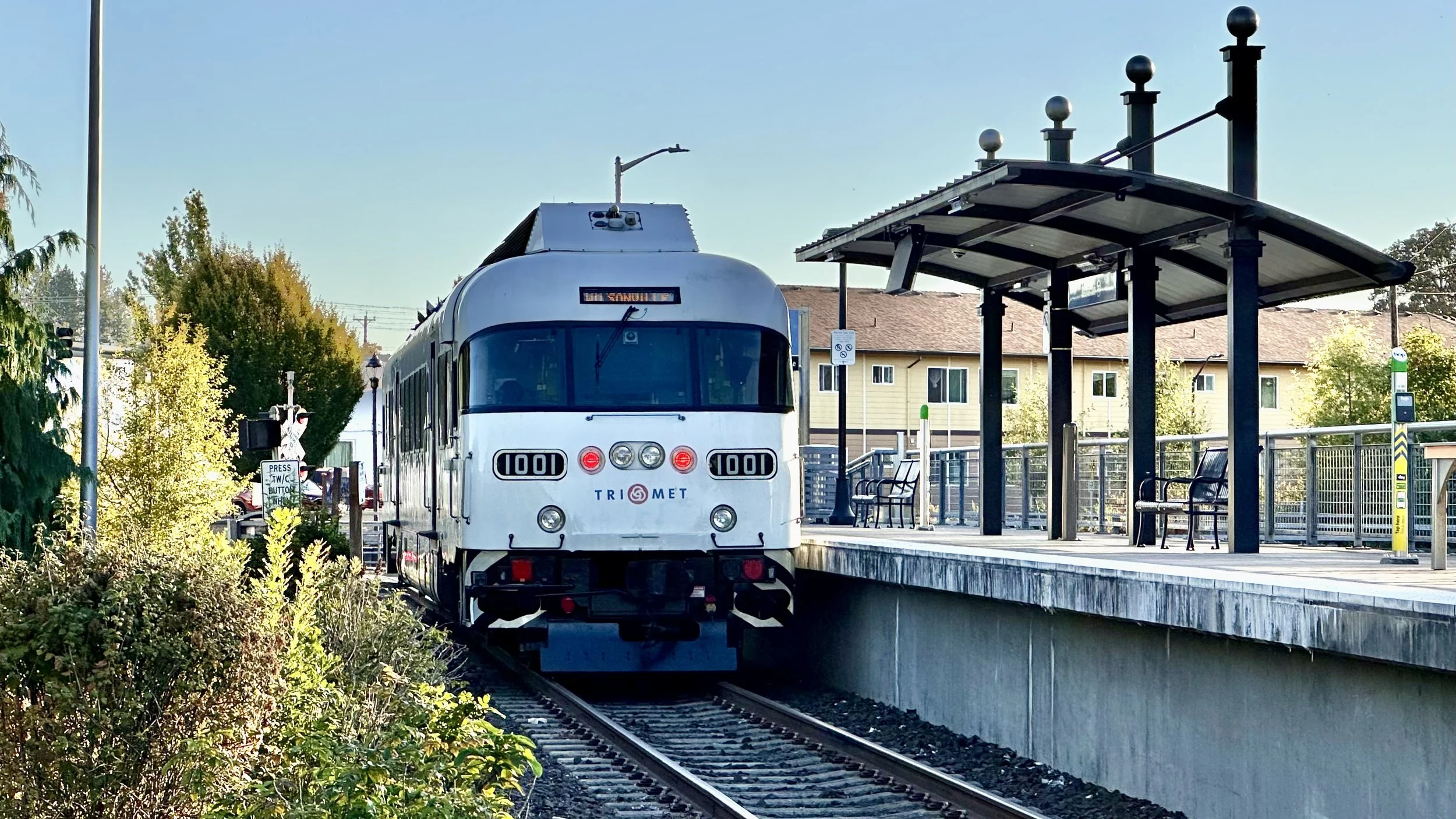
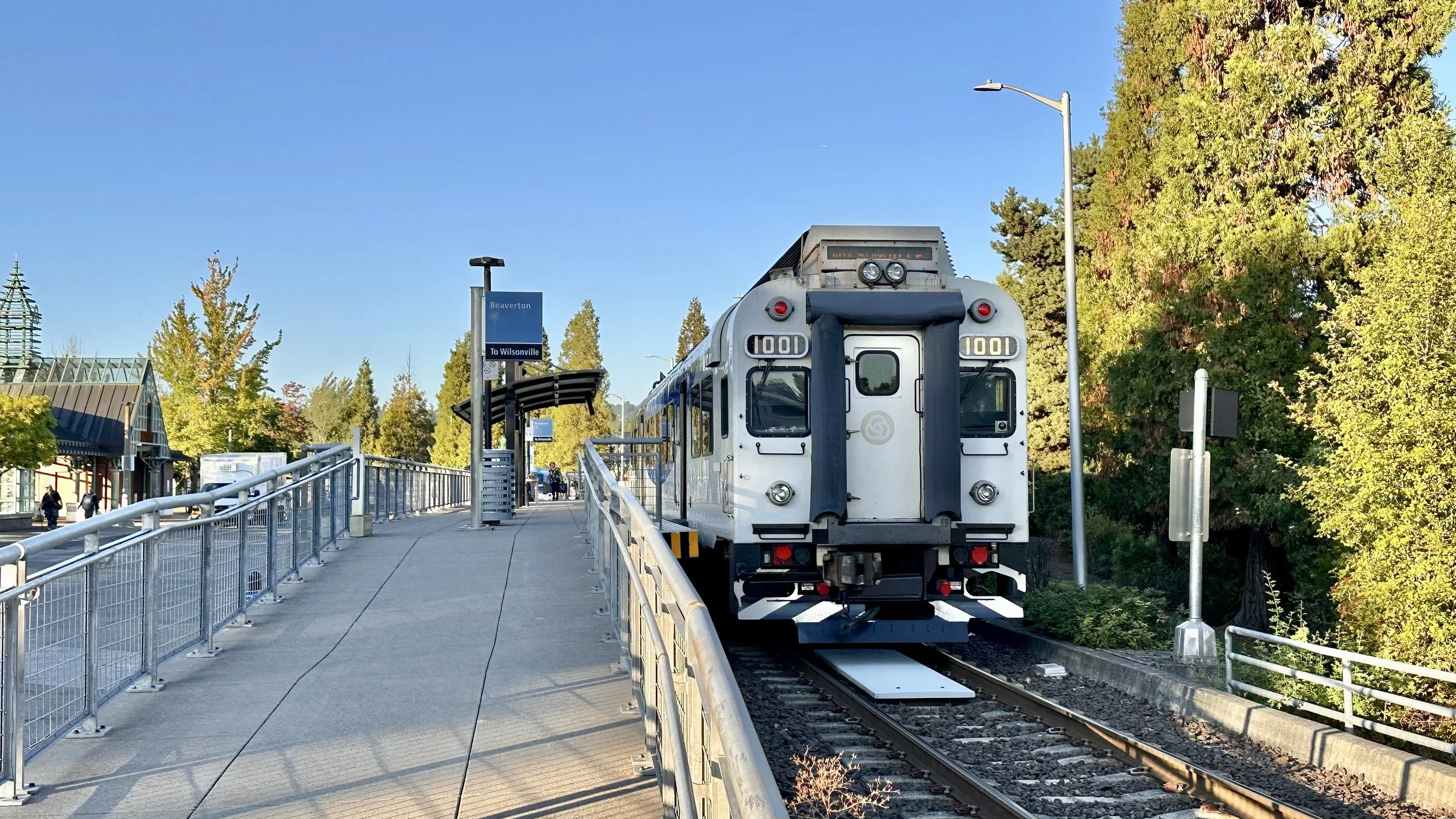
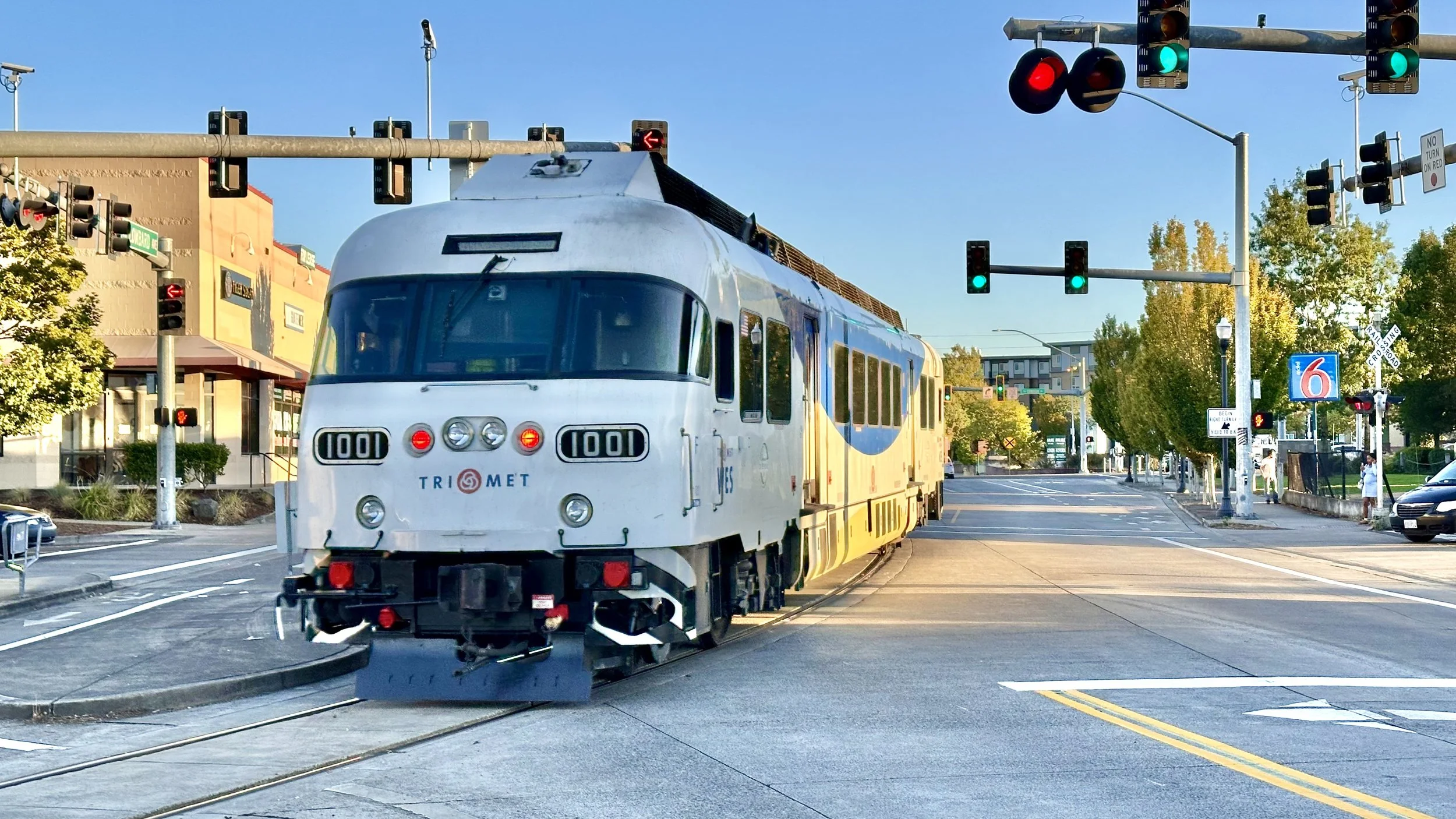
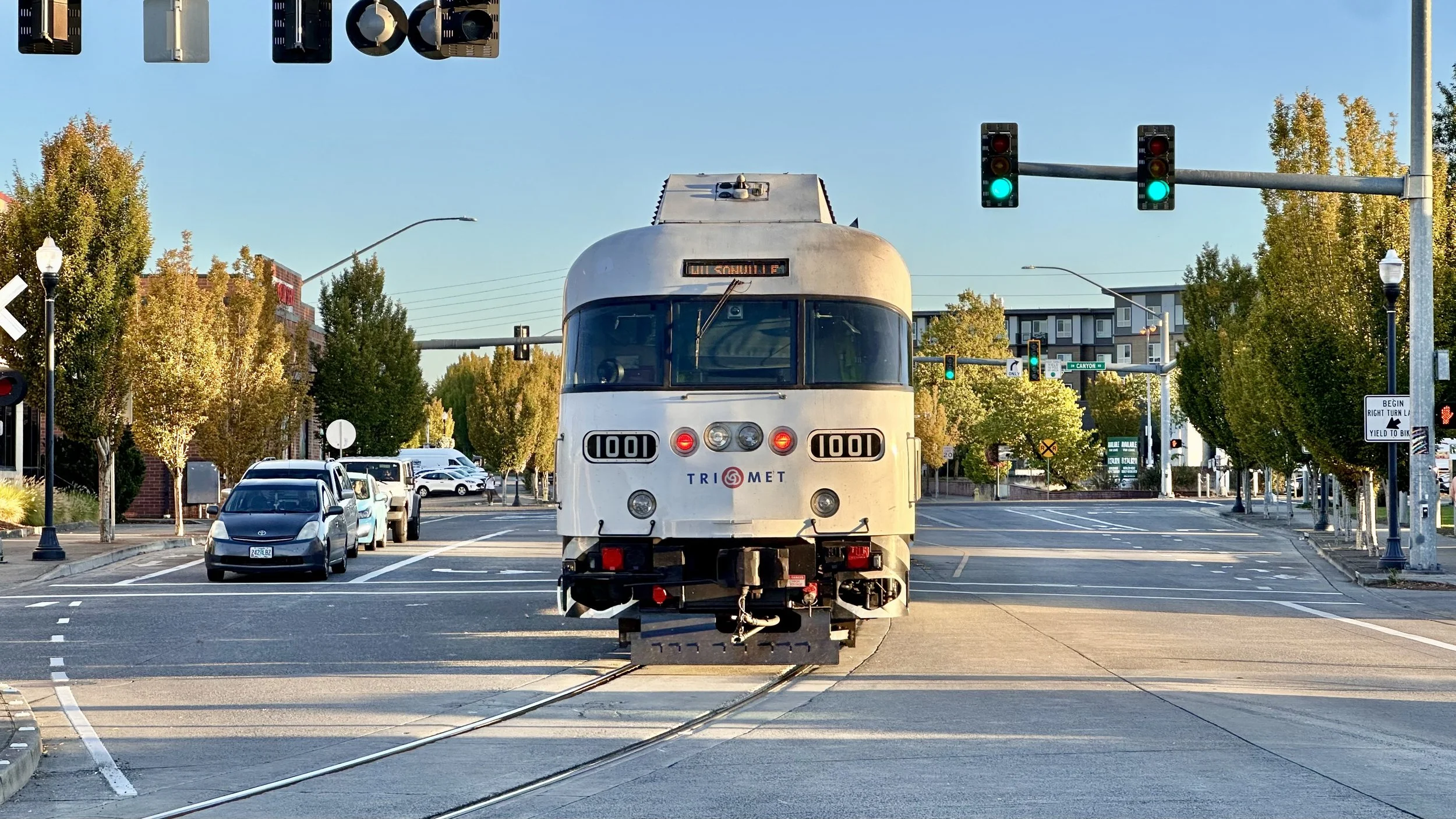
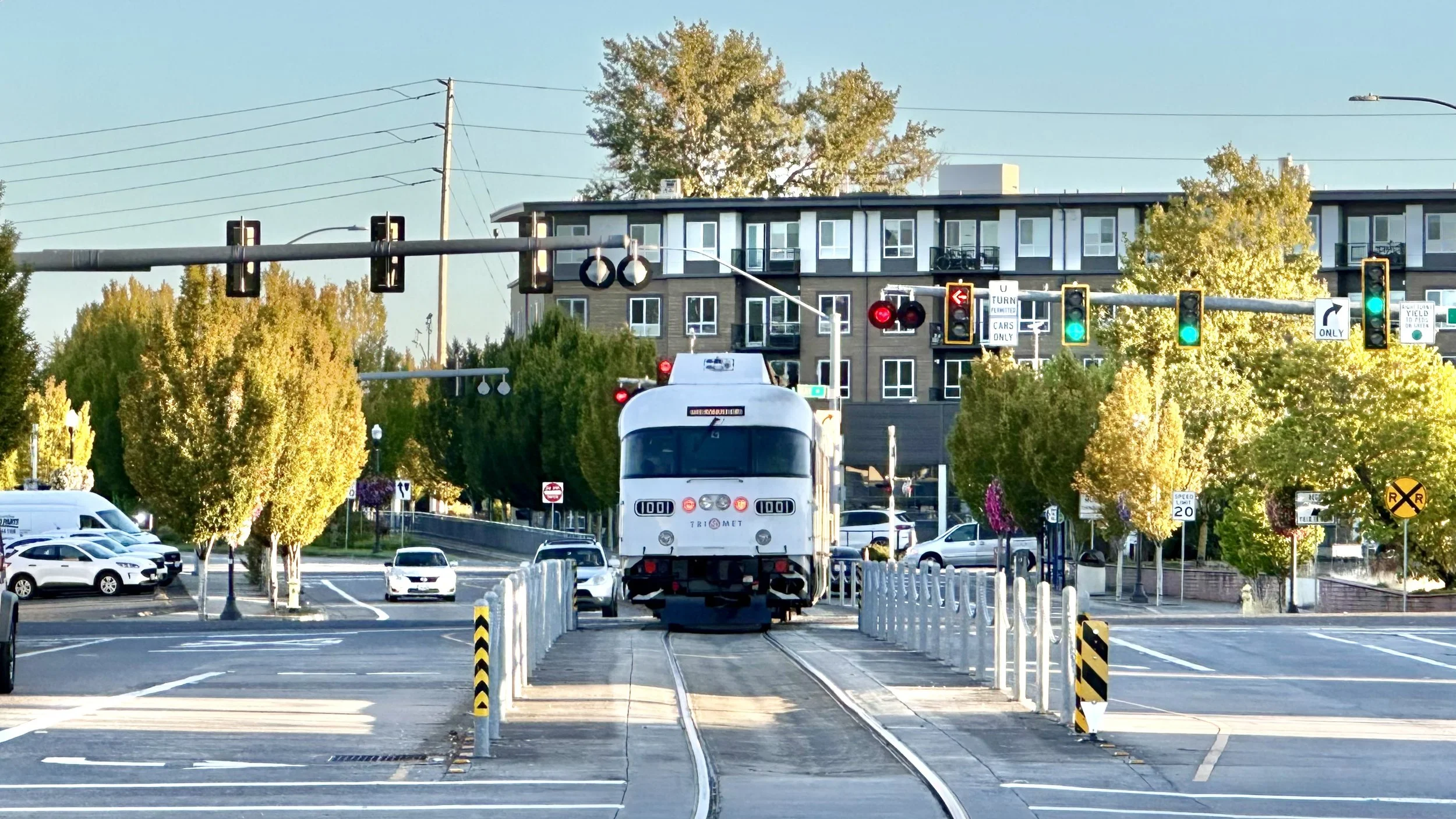
Opening in 2009, the third US DMU and first to use FRA-compliant vehicles, the Westside Express Service serves only five stations between Beaverton and Wilsonville, OR, a mere 10 times a day, every 45min from 0600 to 0900 and 1600 to 1900. However, because it is the most direct connection for southwest Portland communities to the multiple light rail lines at Beaverton, and because it offers reverse commutes with a lack of comparable parallel bus route, each car is almost standing-room-only on every single trip. WES is often mistakenly identified as the lowest-ridership commuter rail in the country, but that’s simply because of a lack of seats offered.
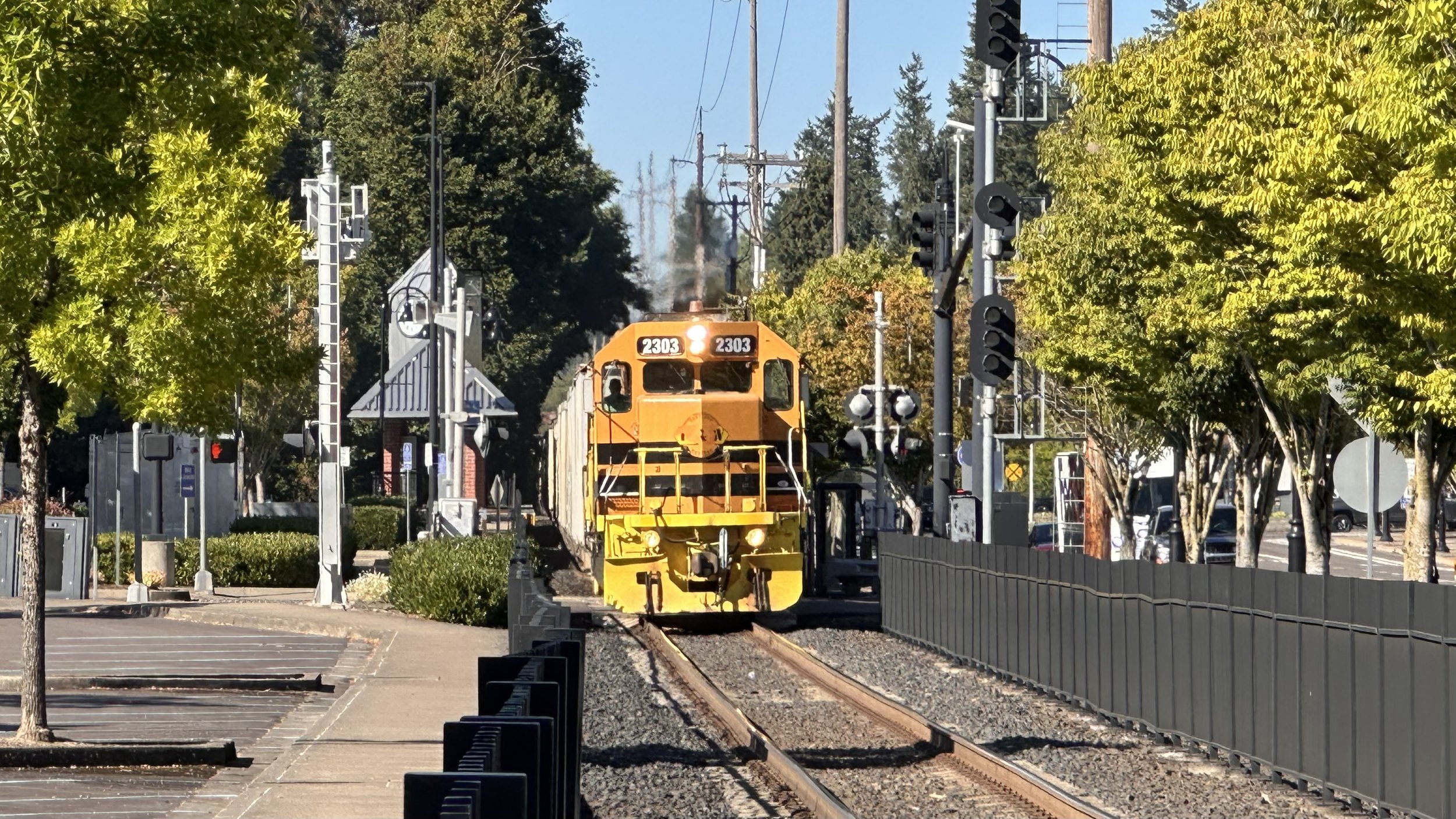
WES’ DMUs were built by the infamous Raider/Colorado/US Railcar which went bankrupt during construction, and are thus five of a kind, never again to be replicated. However, because they were built for the American market, they are FRA-compliant and thus allow unrestricted mixing between passenger and freight trains, in contrast to most other DMUs which temporally segregate passengers during the day and freight at night. This results in much, much more freight activity and almost no DMU-exclusive tracks; G&W subsidiary shortline Portland and Western’s freight trains wind across the line all day, passenger trains or not. Despite all the freight action and several major junctions and yards, there are very few on-line industries and switching opportunities, the tracks primarily being mainline interweavings of routes across the region.
Budd RDCs were used during the startup of operations, and are maintained for occasional use as backups. DMUs are bidirectional, although the southbound cabs are adjacent to a diaphragm for rare pairings with the non-powered trailer car (#2001). To accommodate all the freight traffic, most stations have gauntlet tracks, allowing the DMUs to take the inside rails for centimeter-sized gaps for accessibility, but keeping freight trains well away from the platforms.
While WES punches above its weight as a transit system and demonstrates that even heavy freight mainline railroading can benefit from frequent passenger trains, its lack of switching opportunities, mainline complexity, and difficulty in sourcing vehicles makes it less viable as a modeling subject.
CapMetro Rail
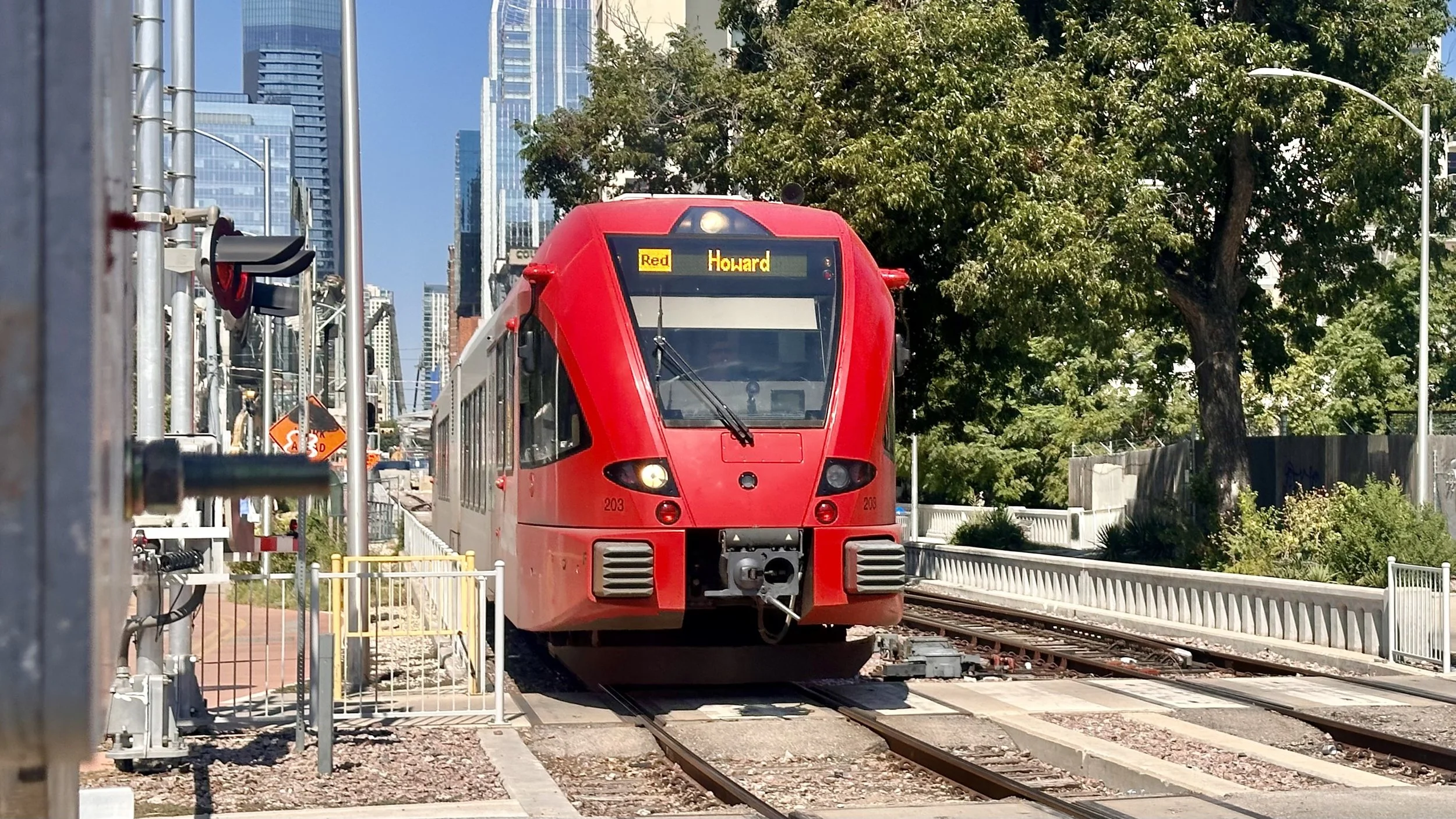
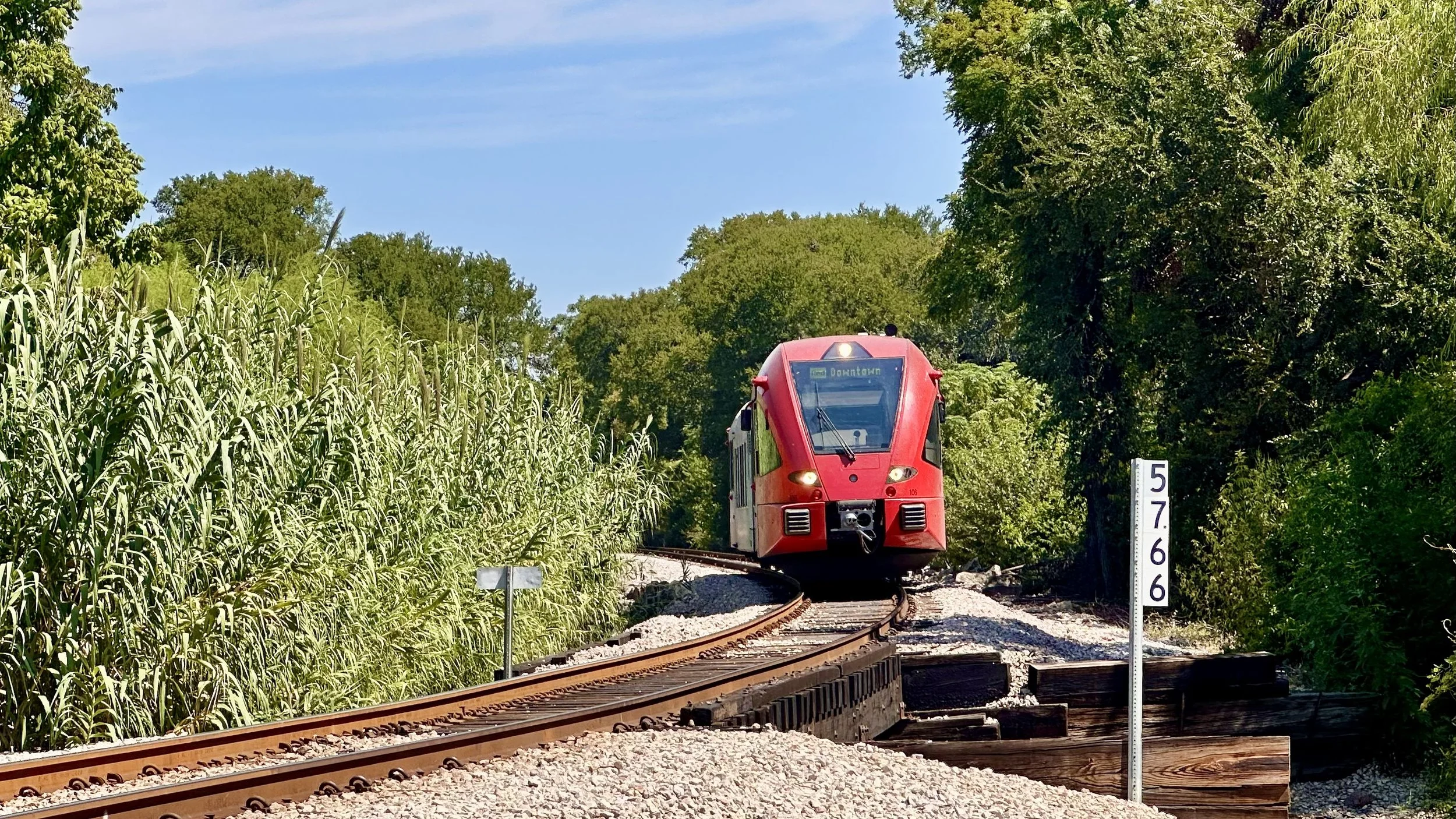
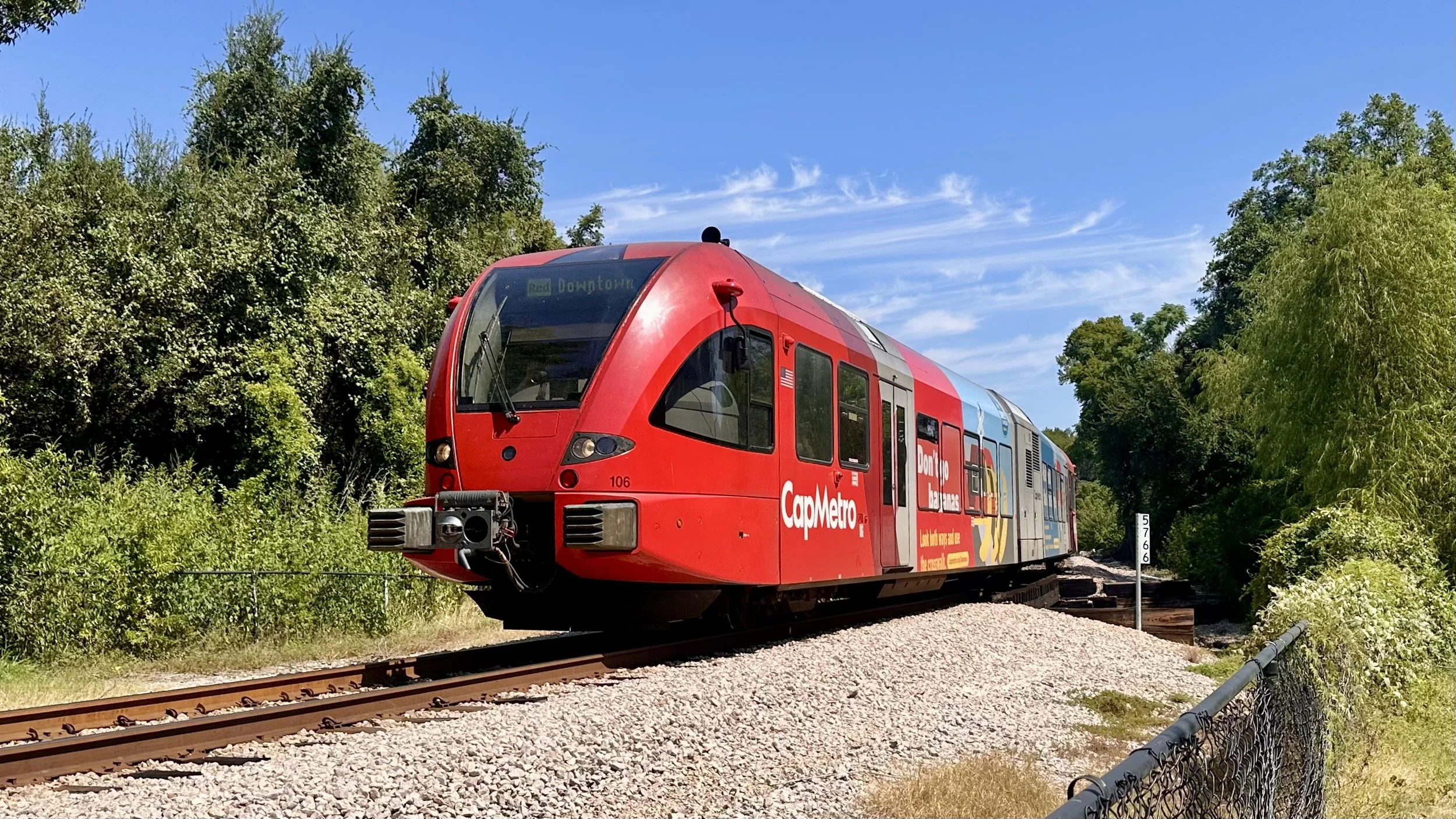
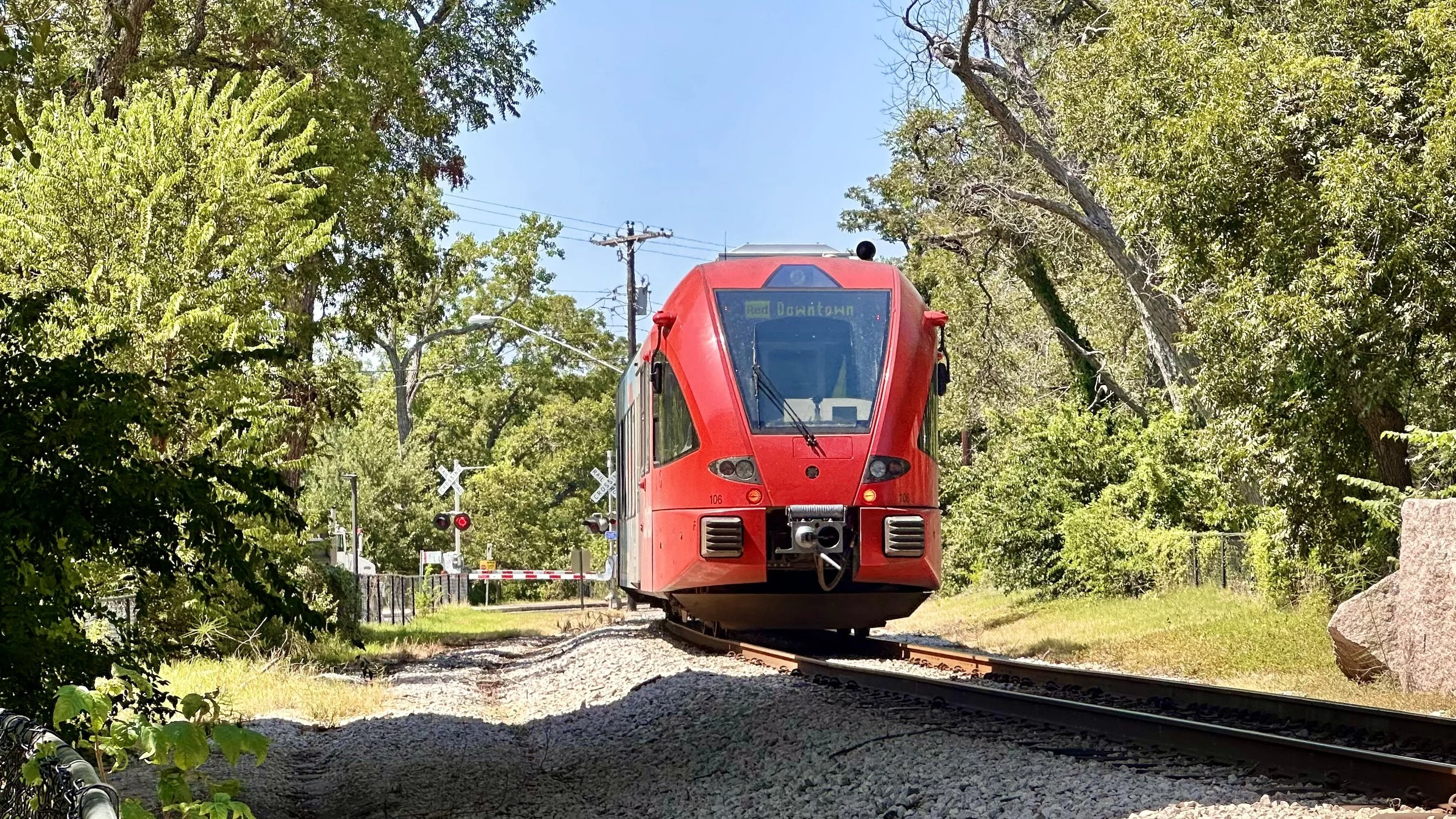
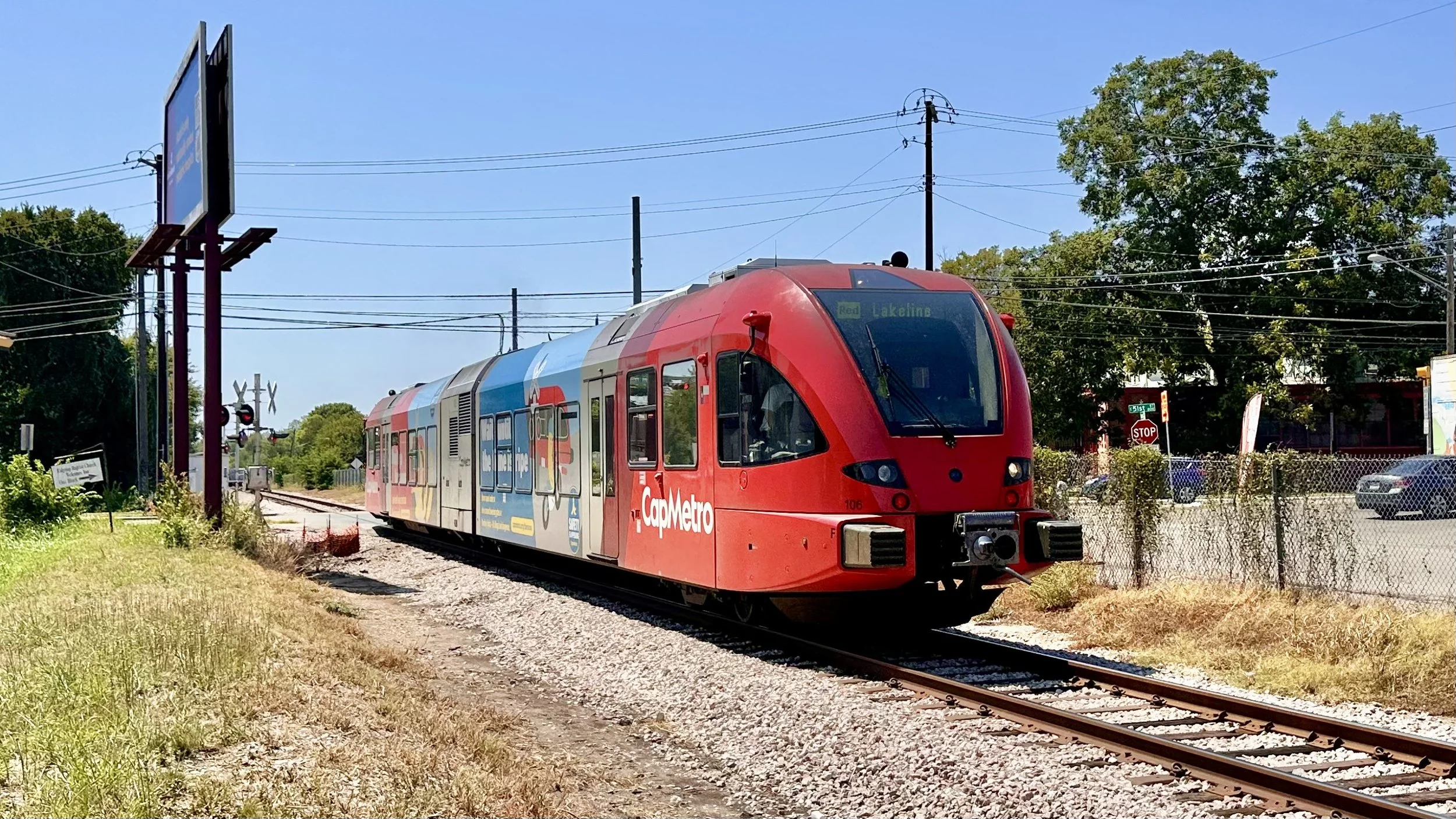
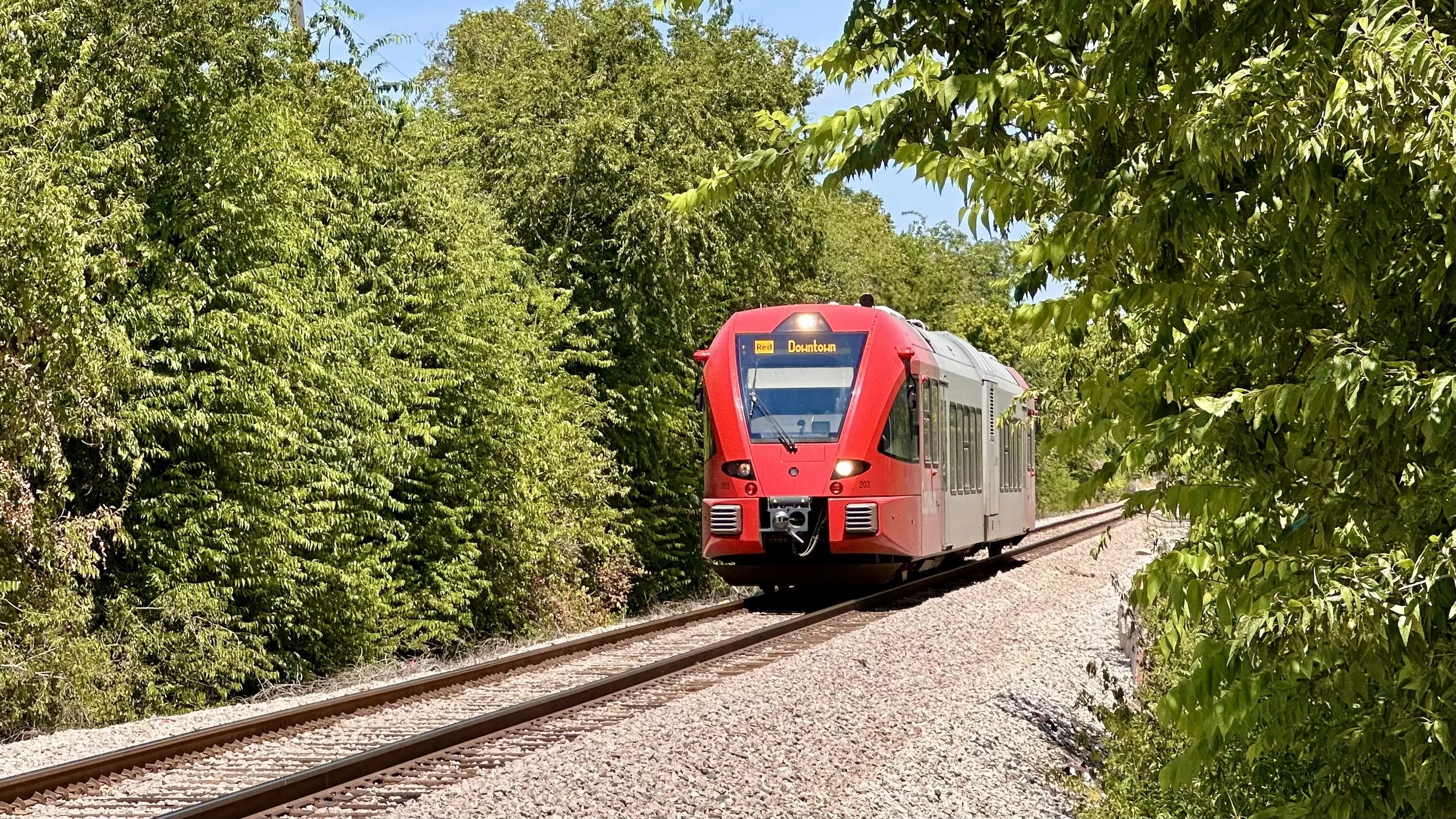
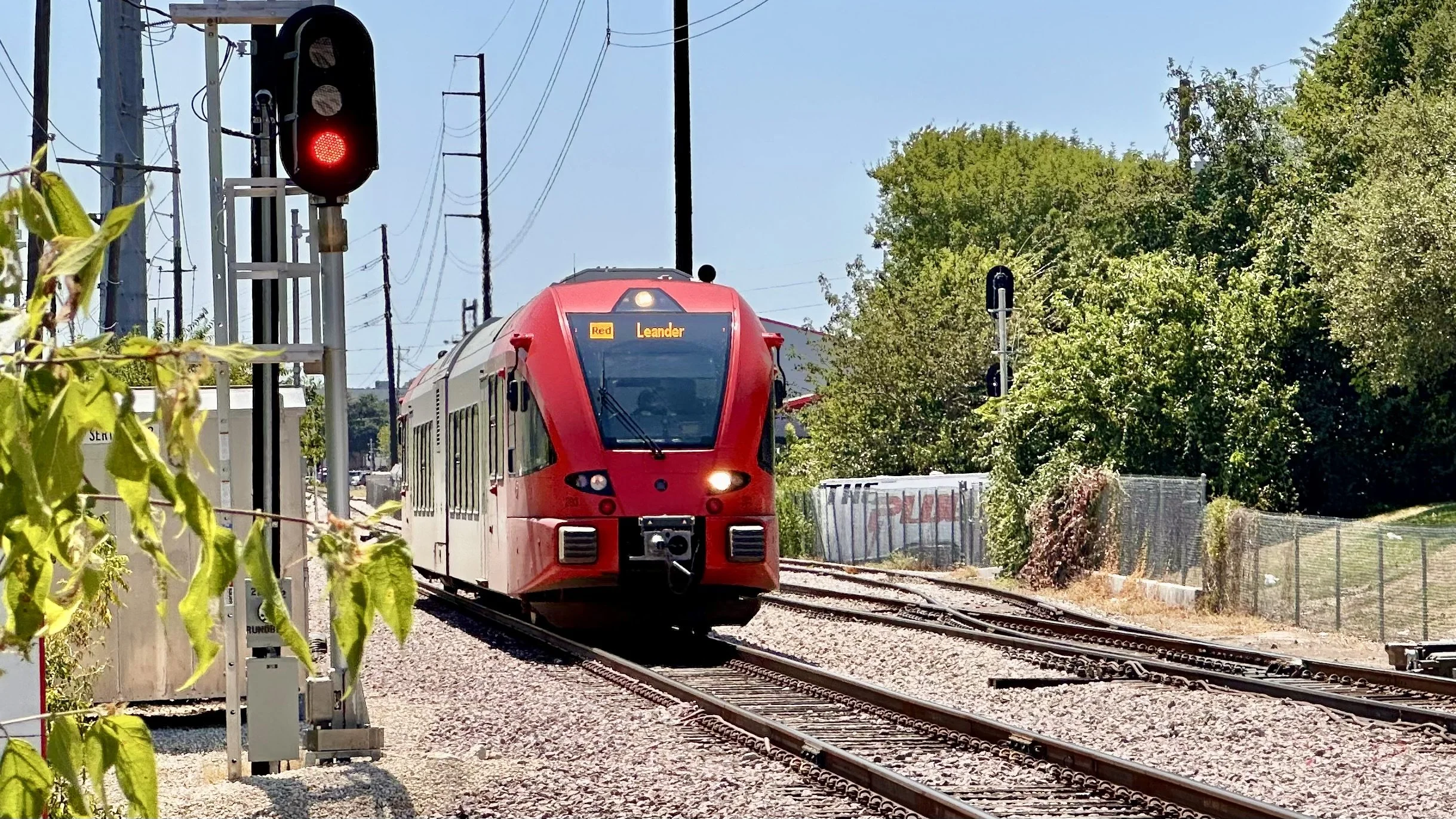
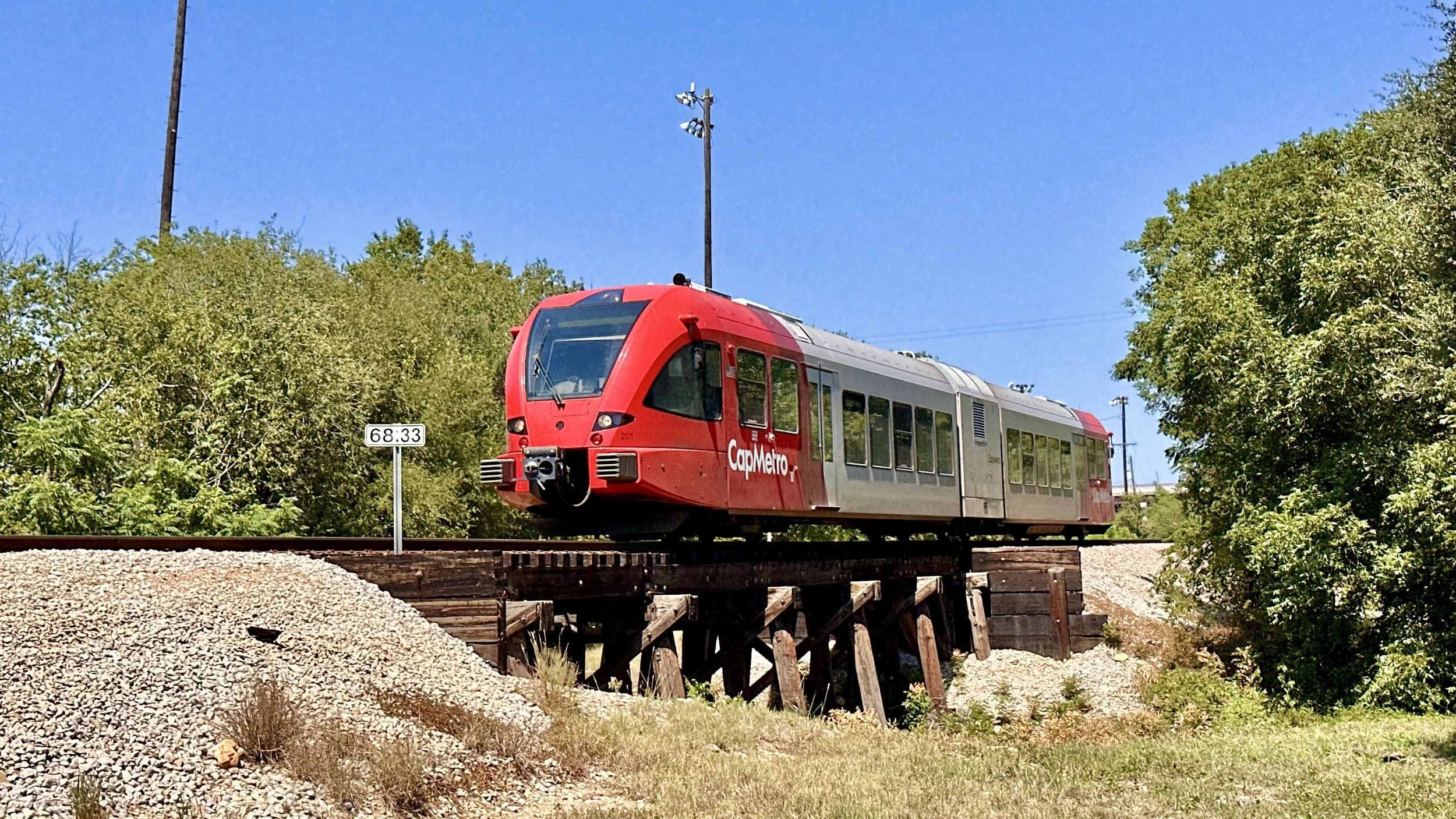
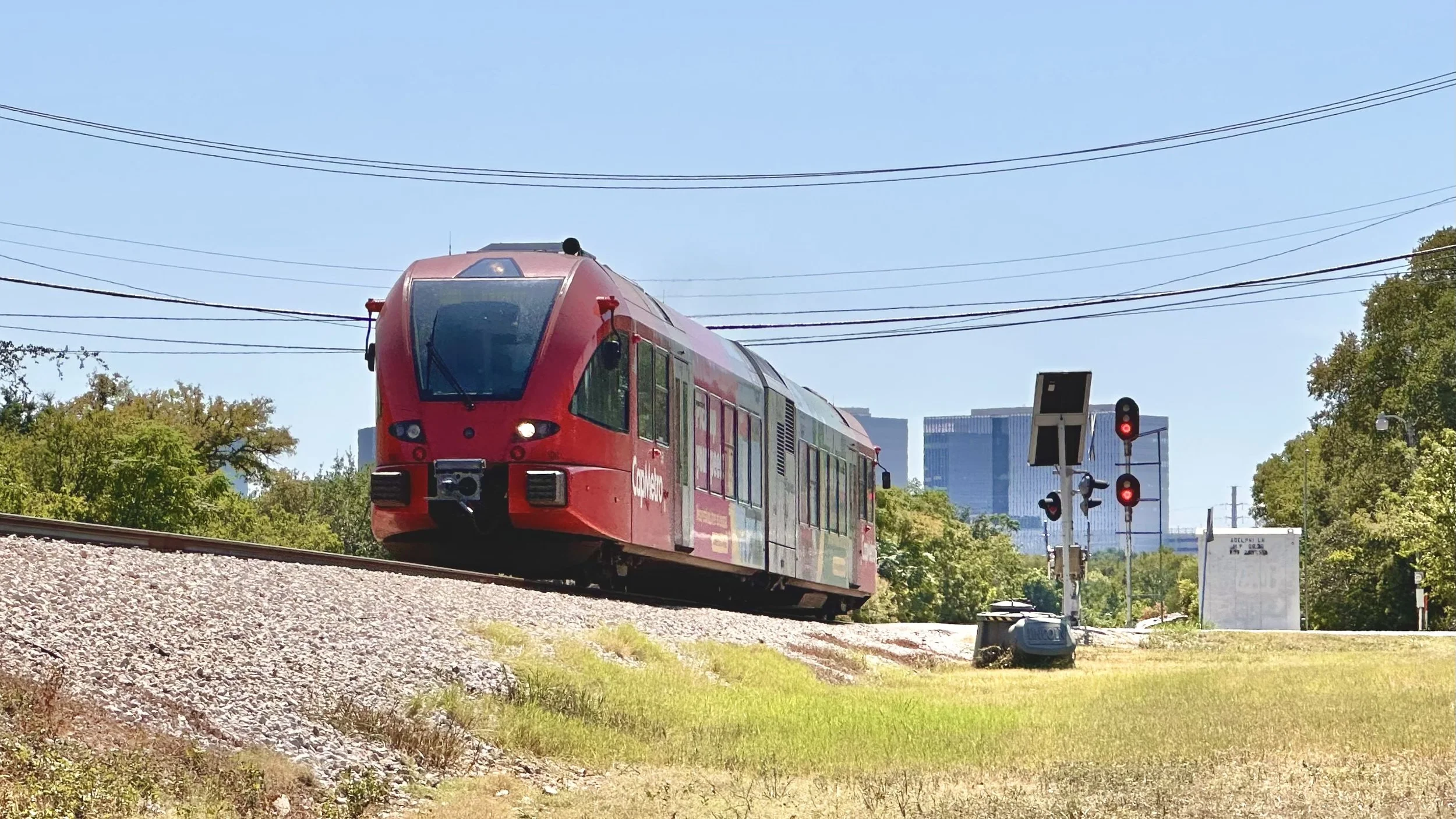
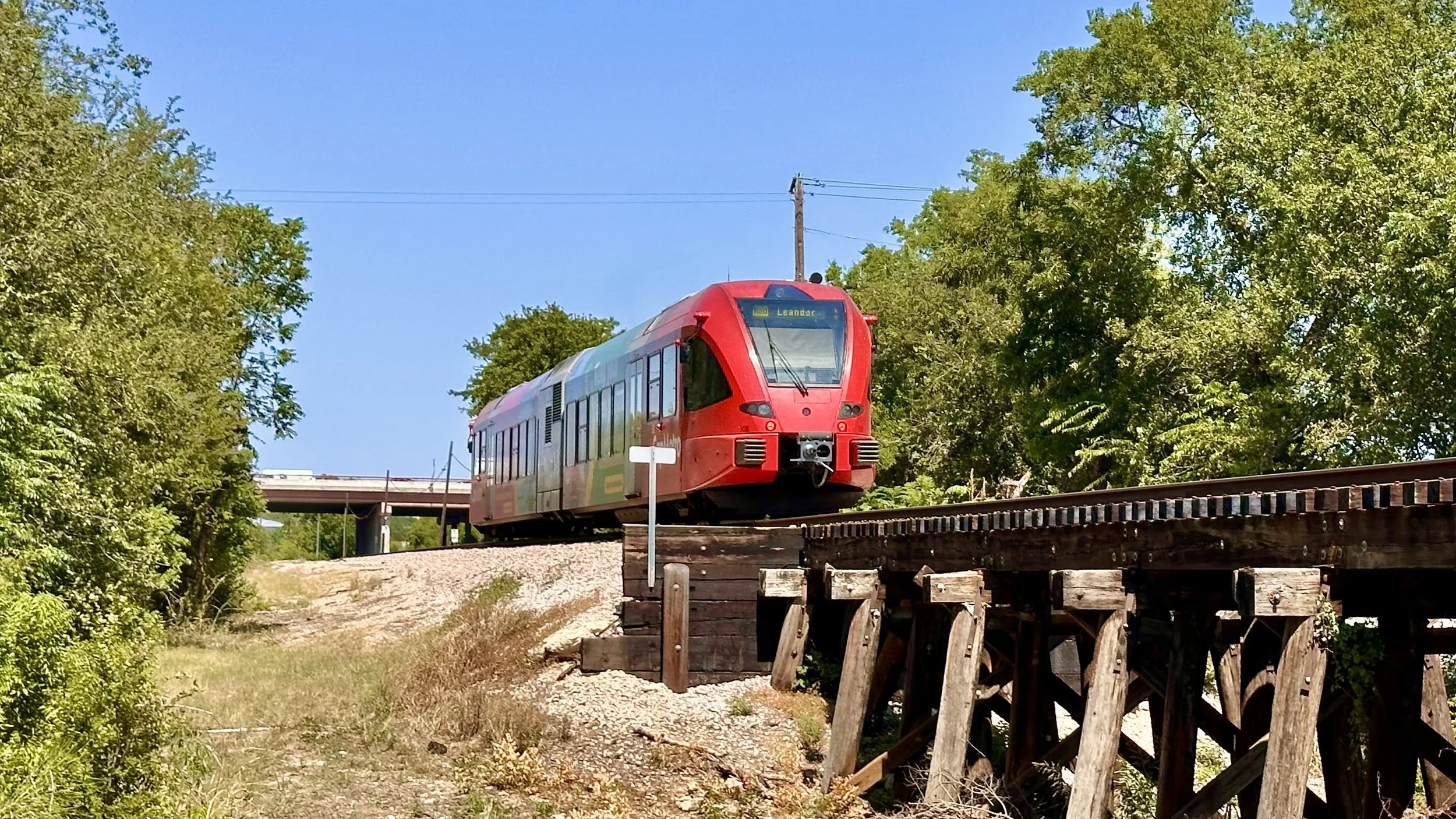
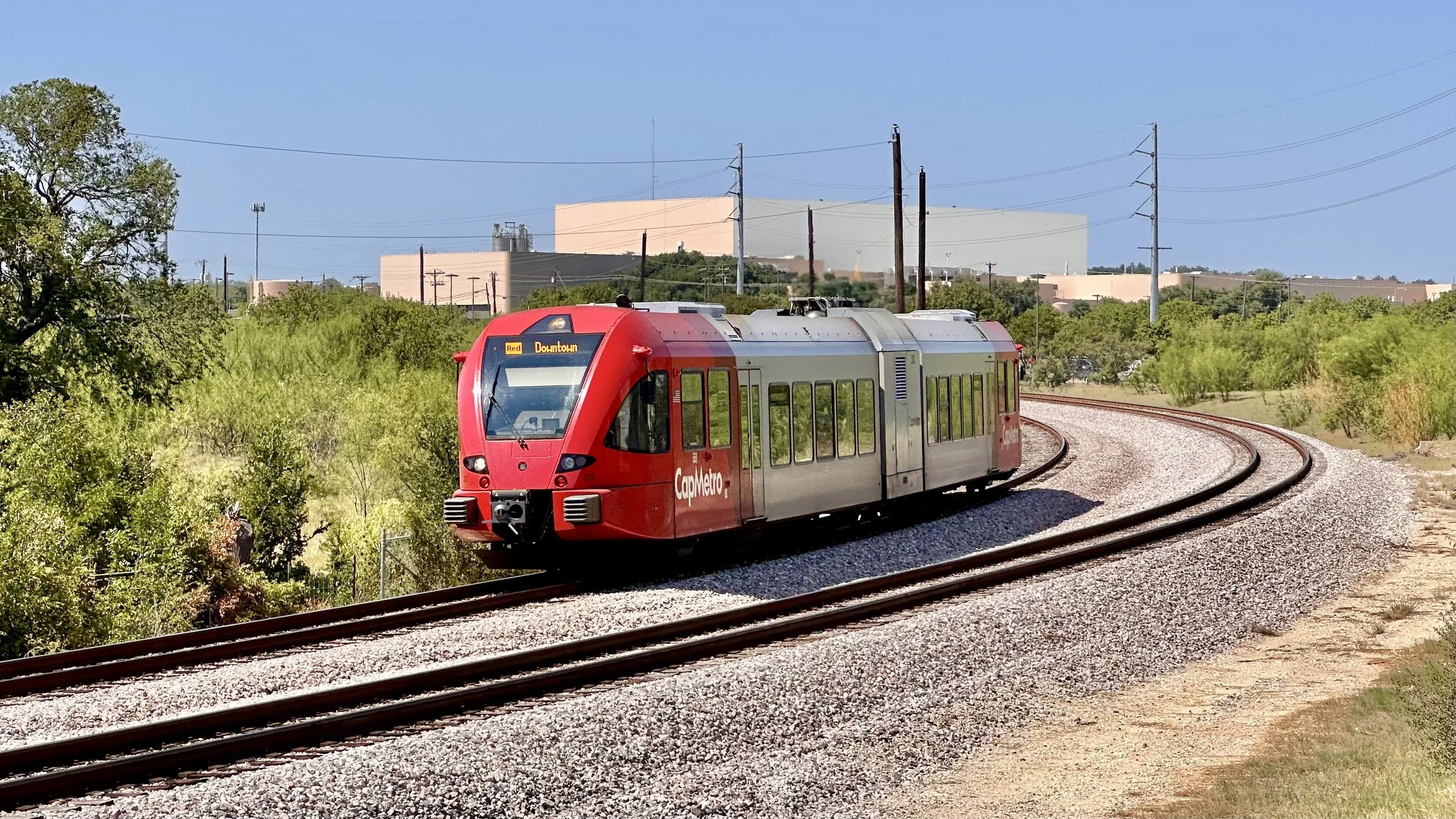
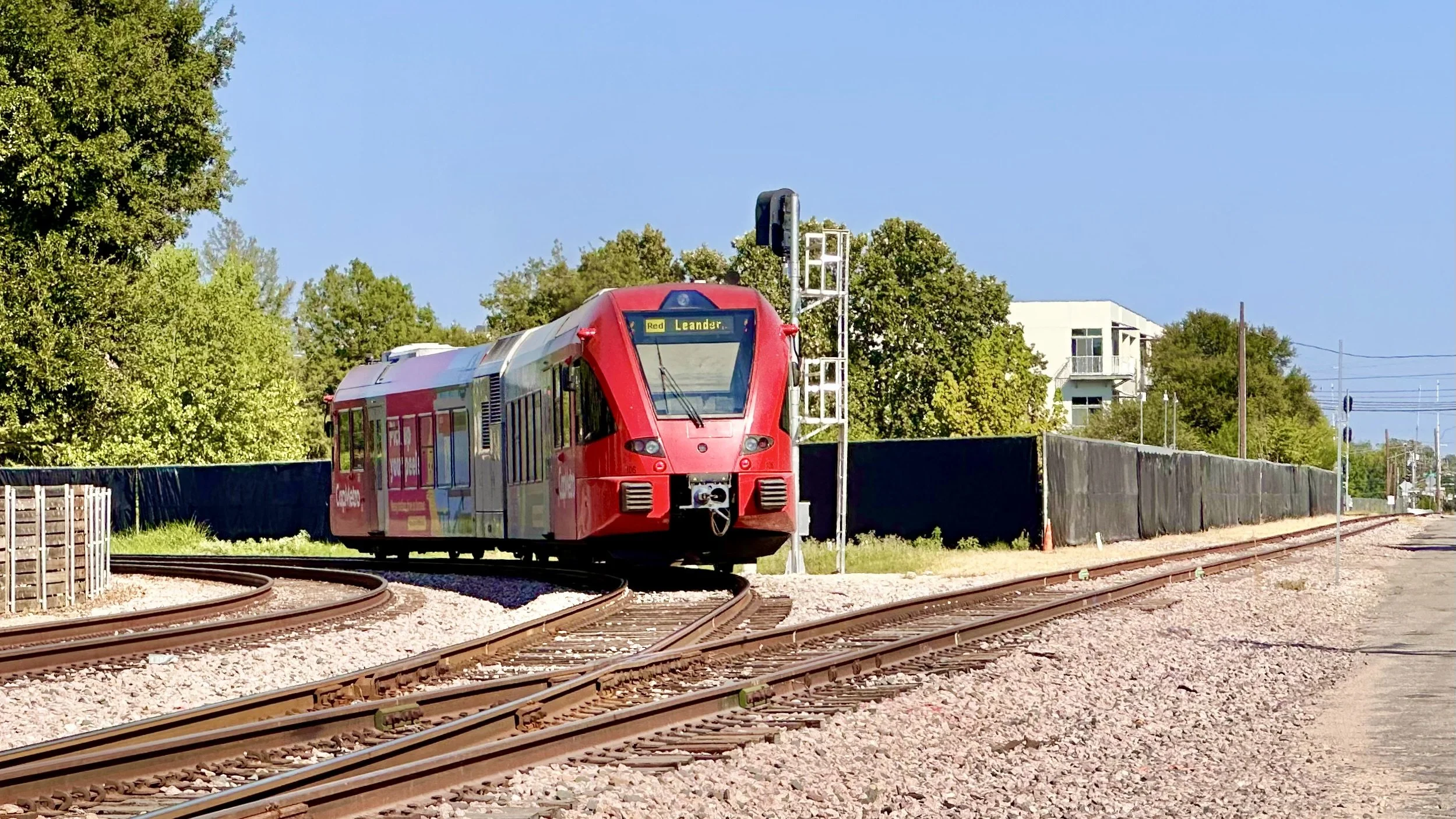
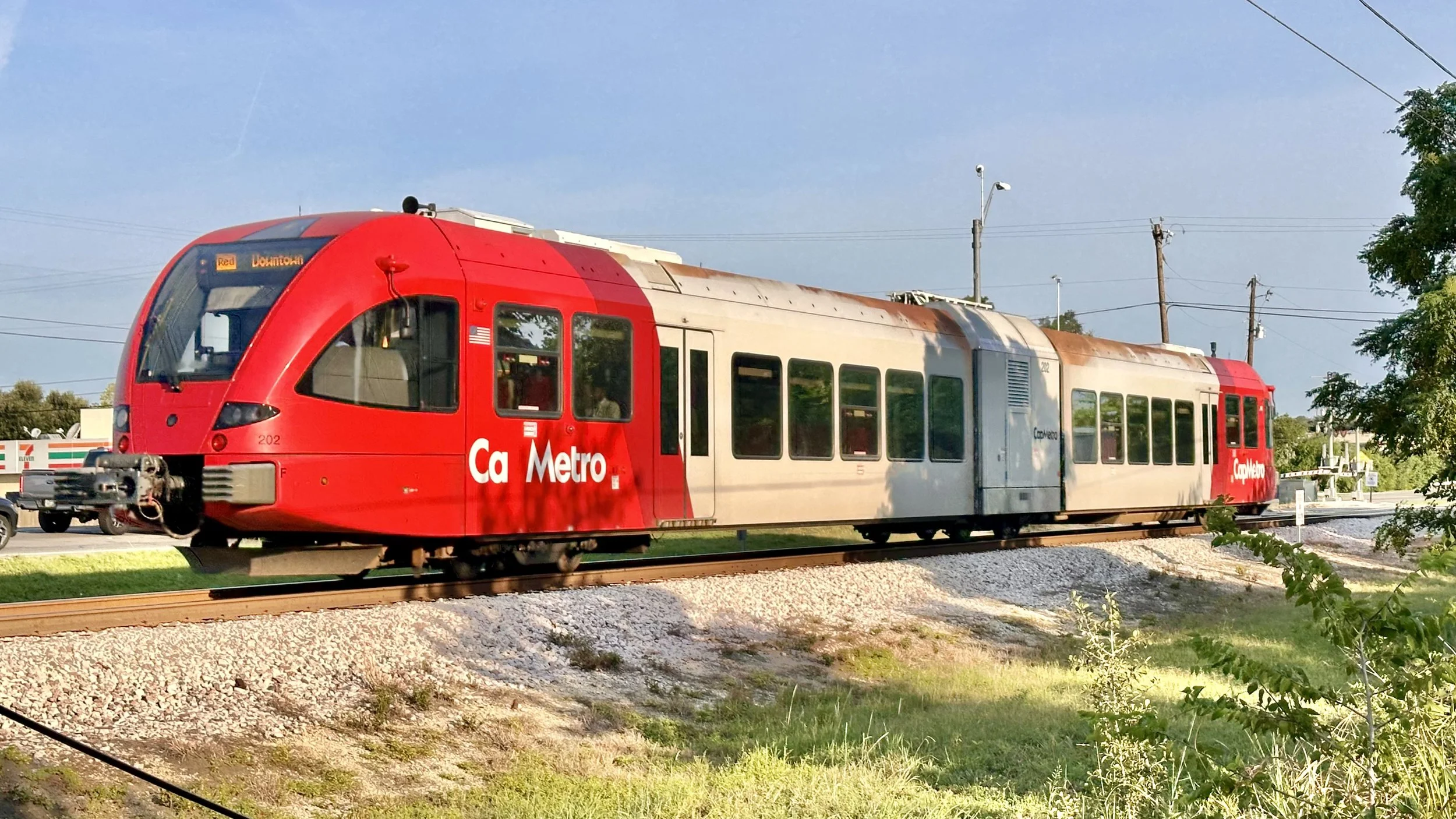
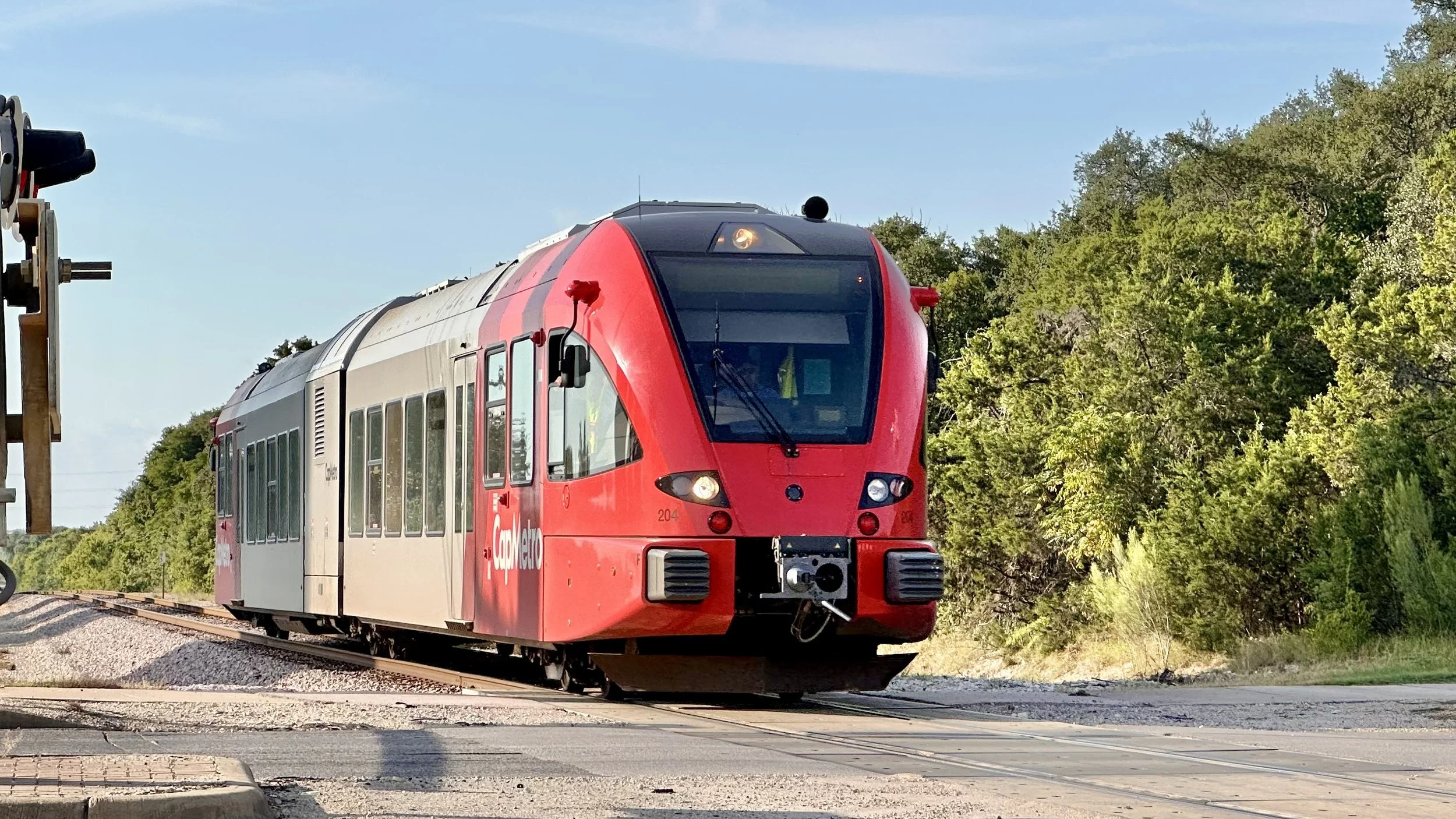
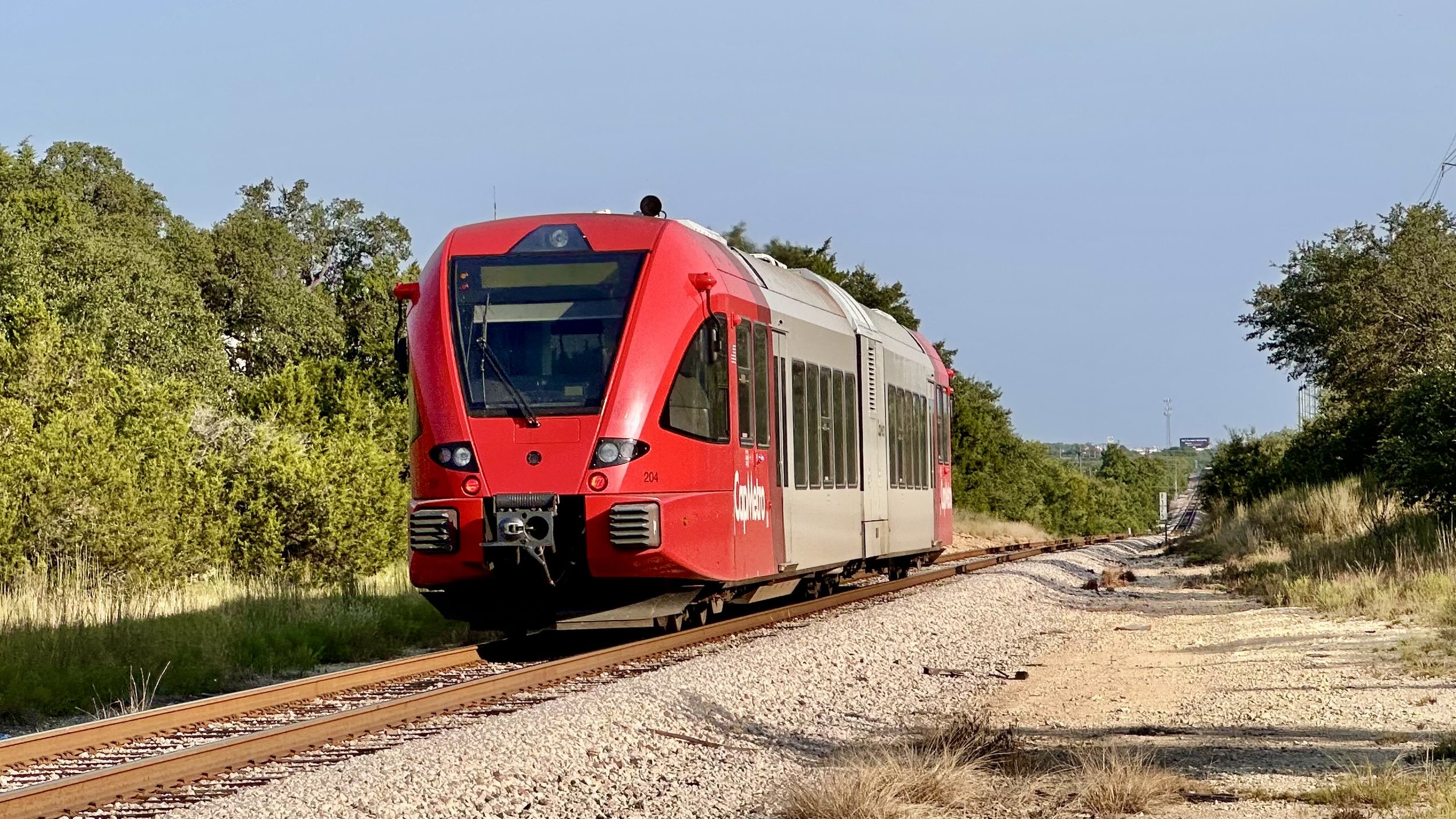
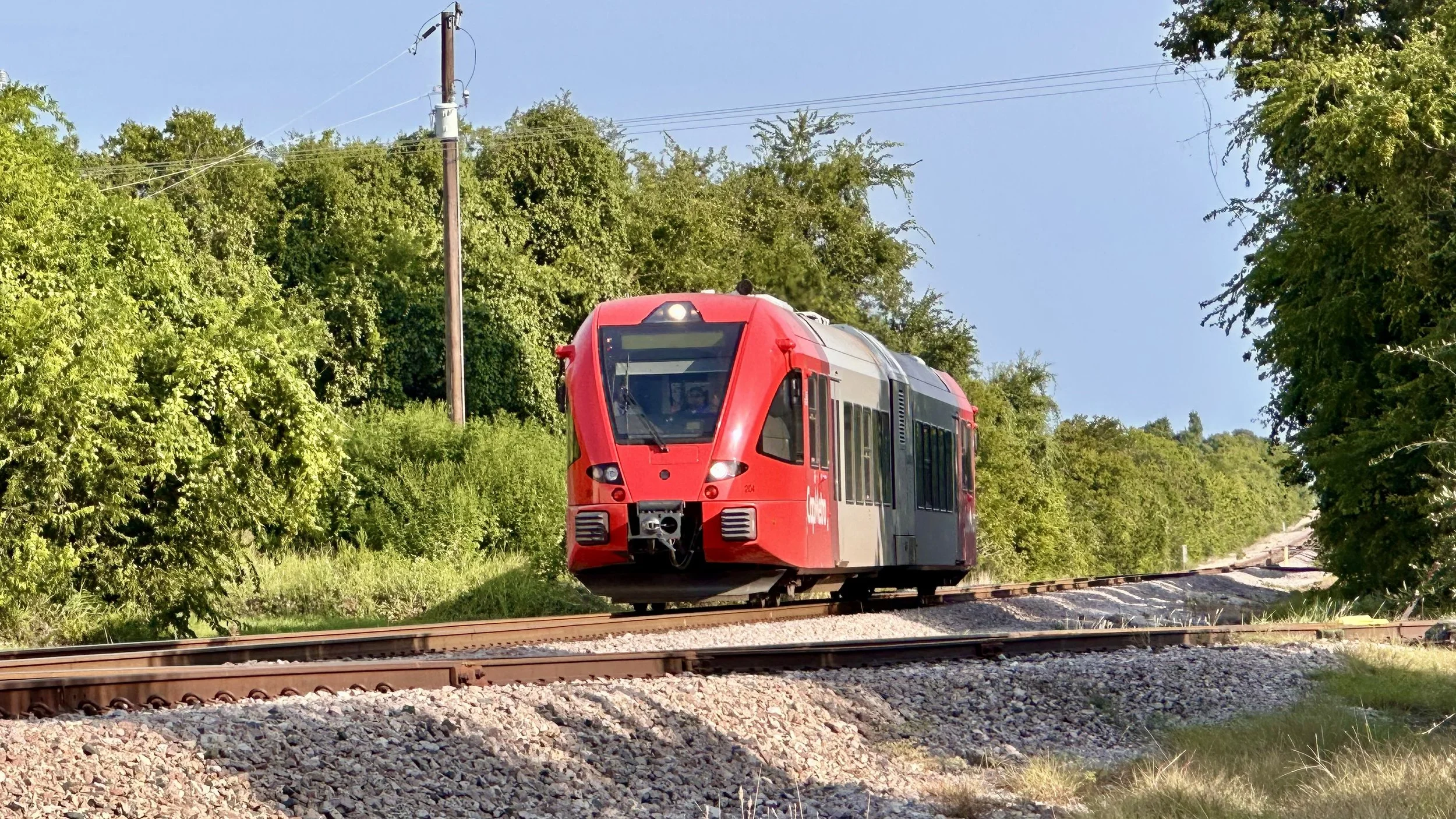
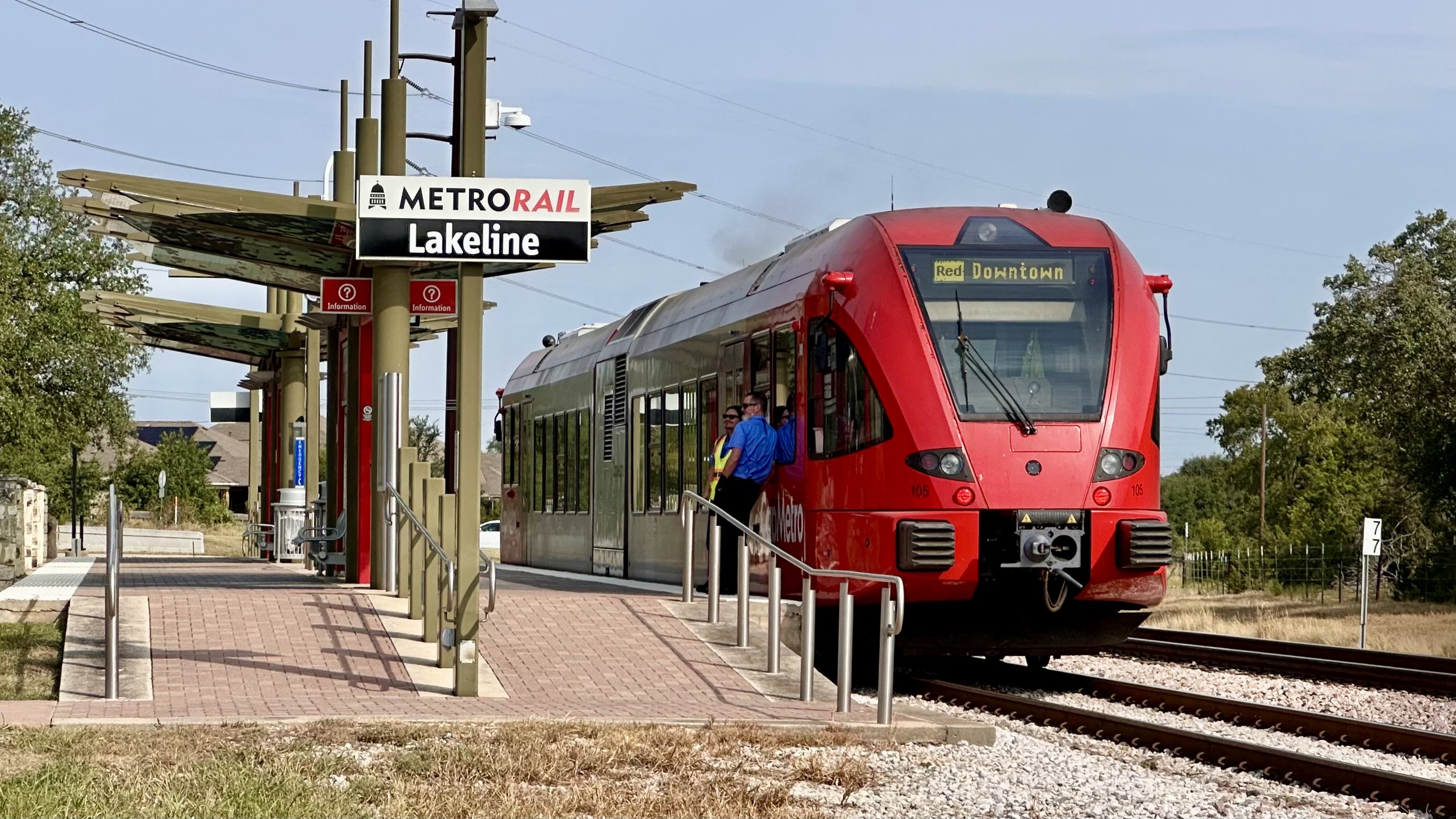
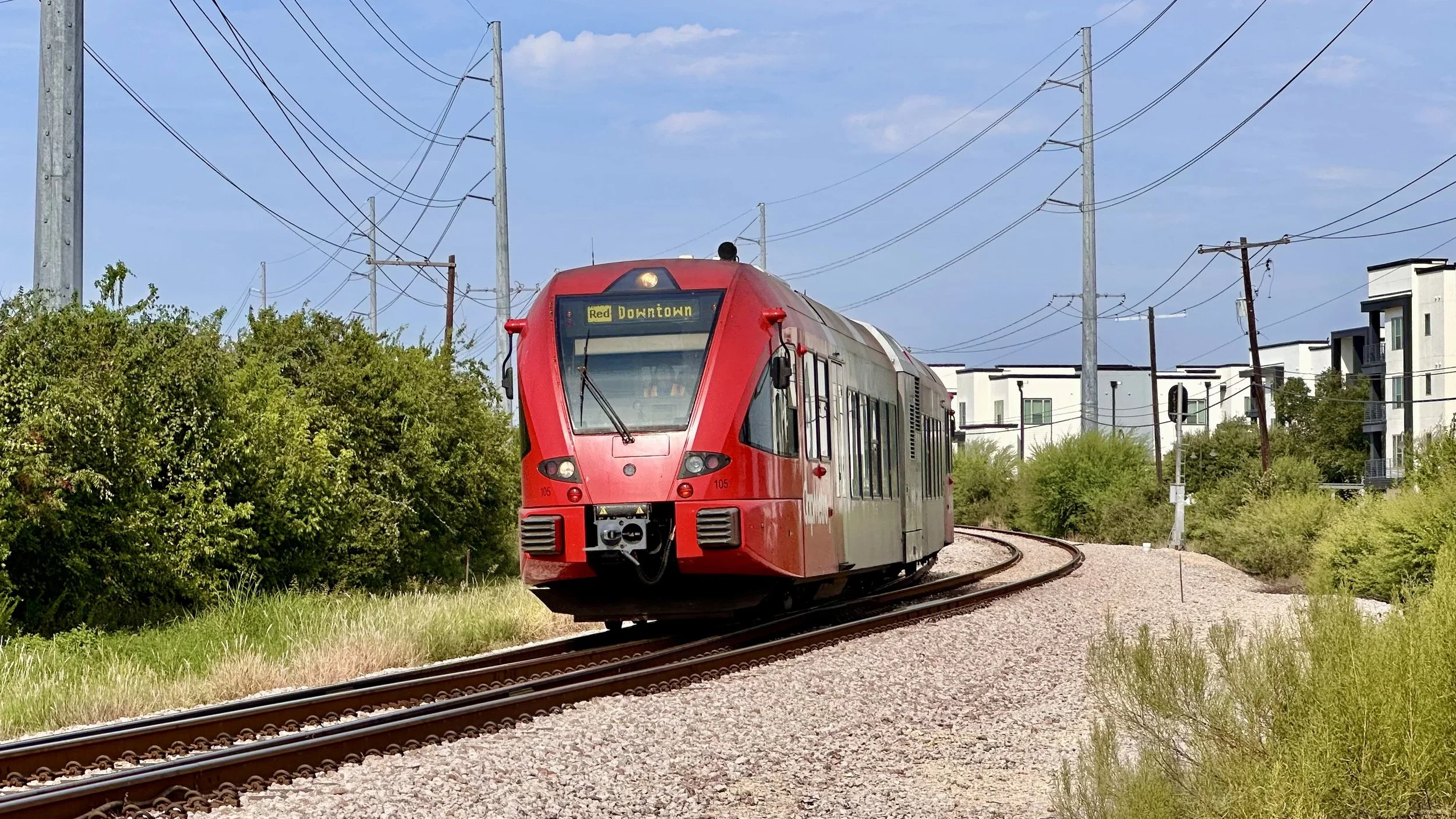
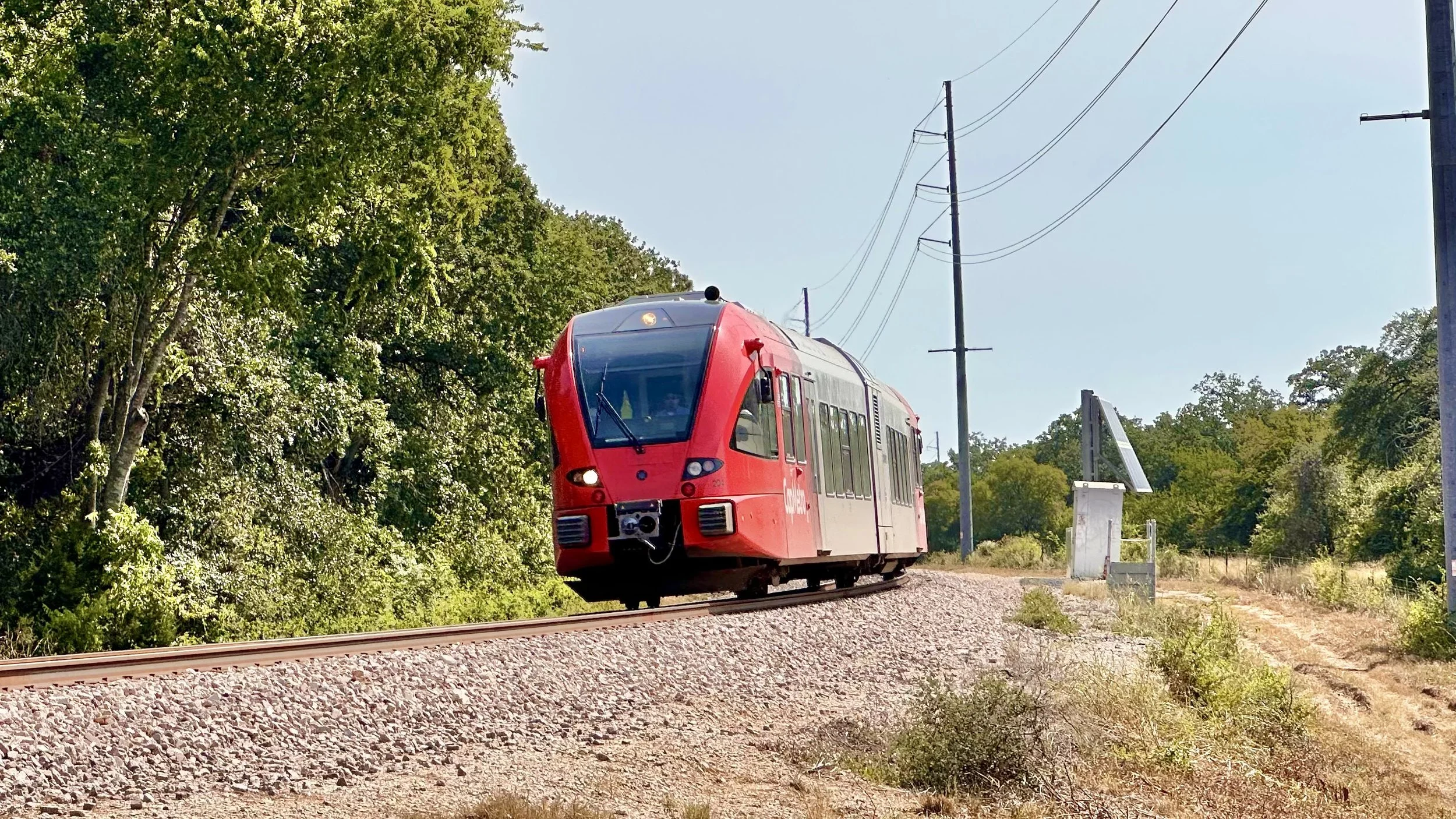
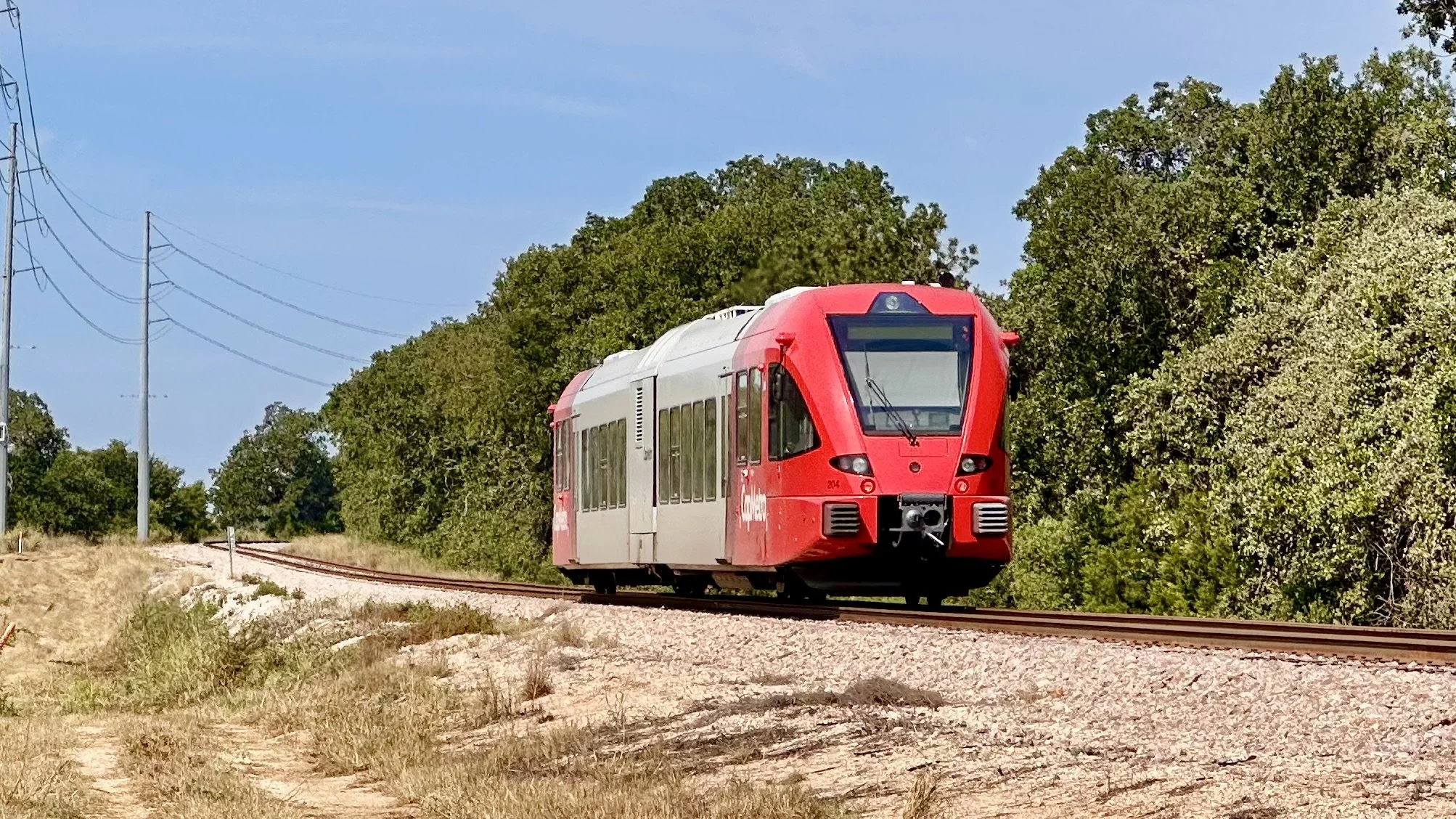
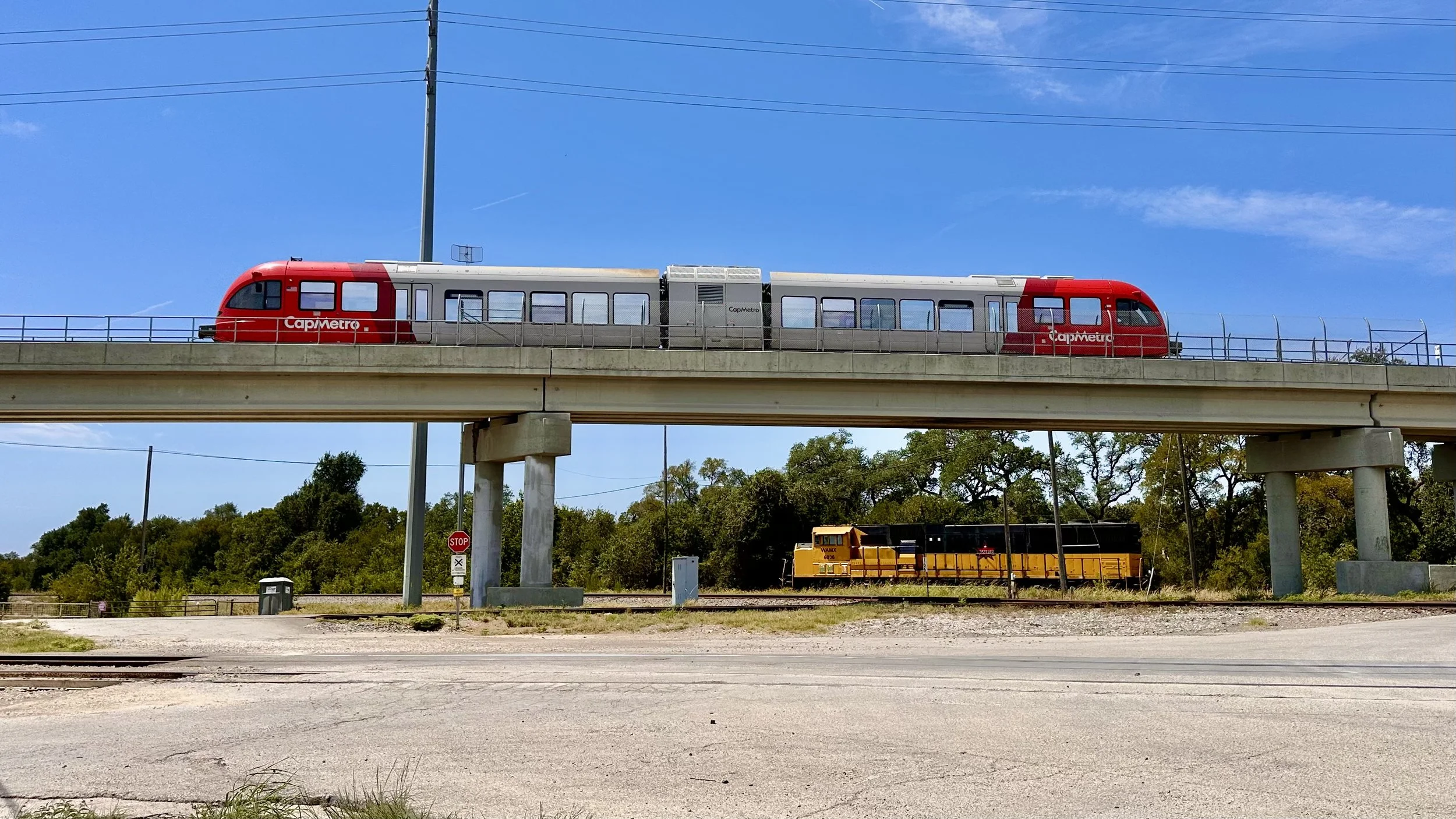
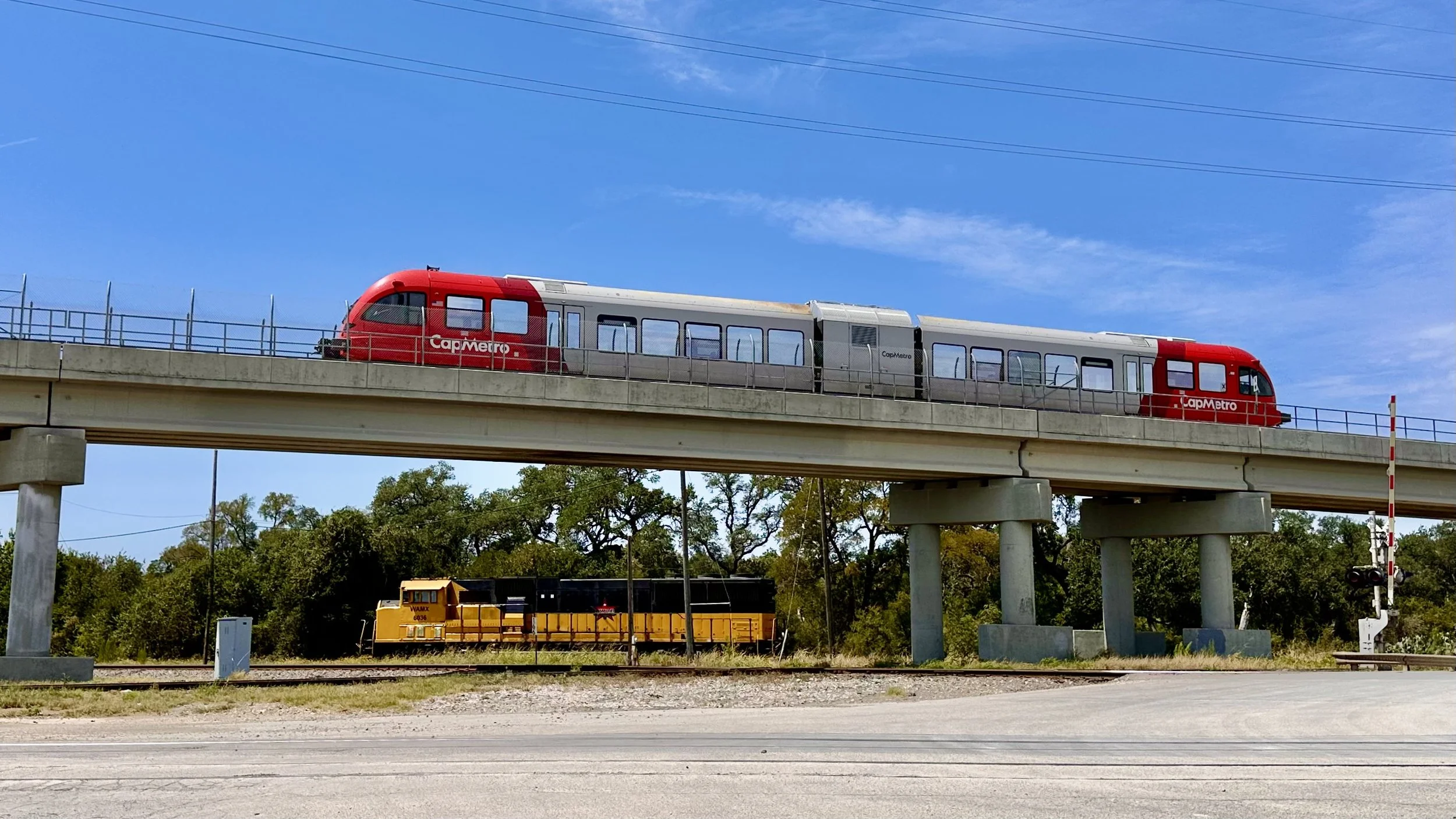
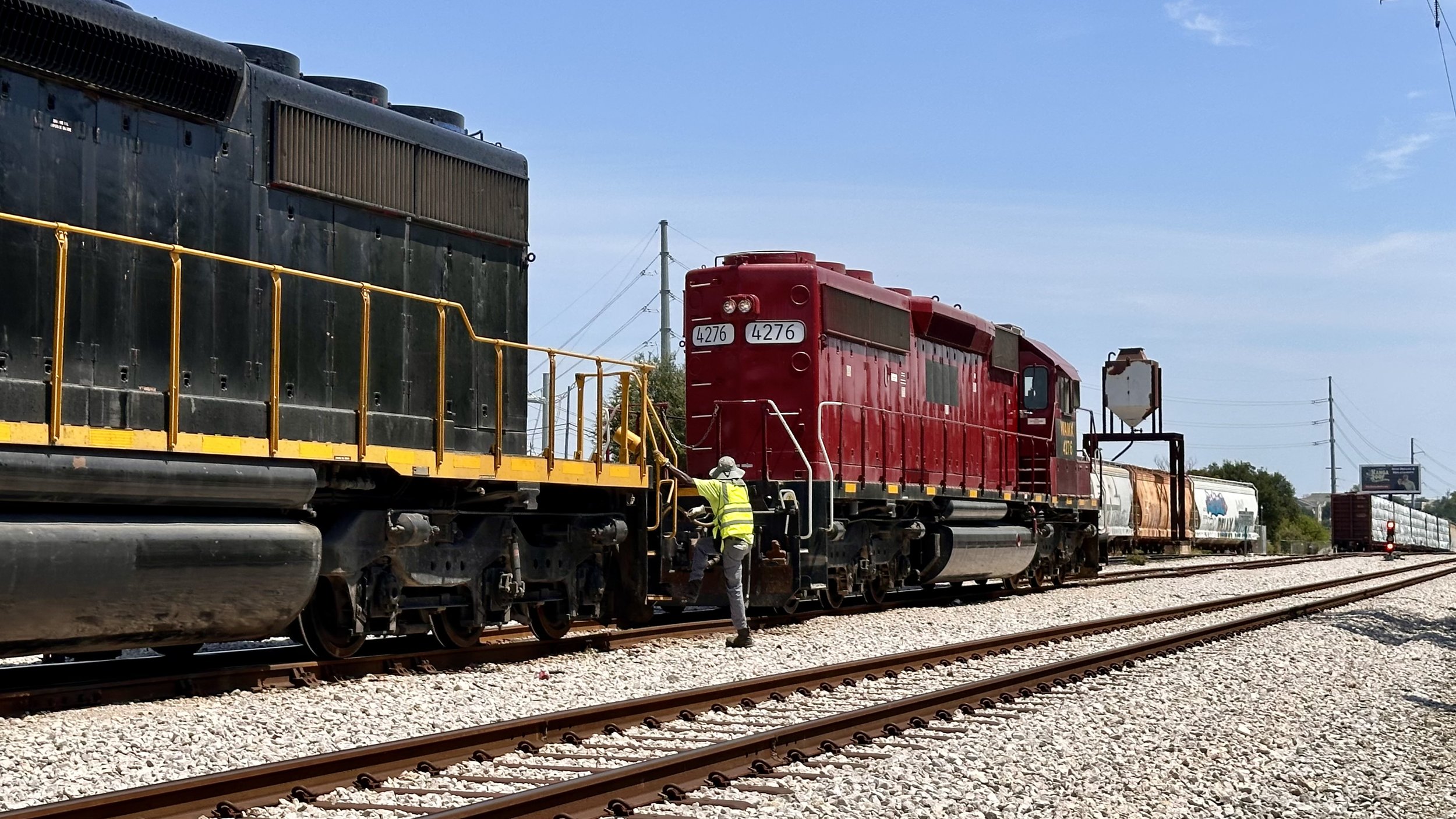
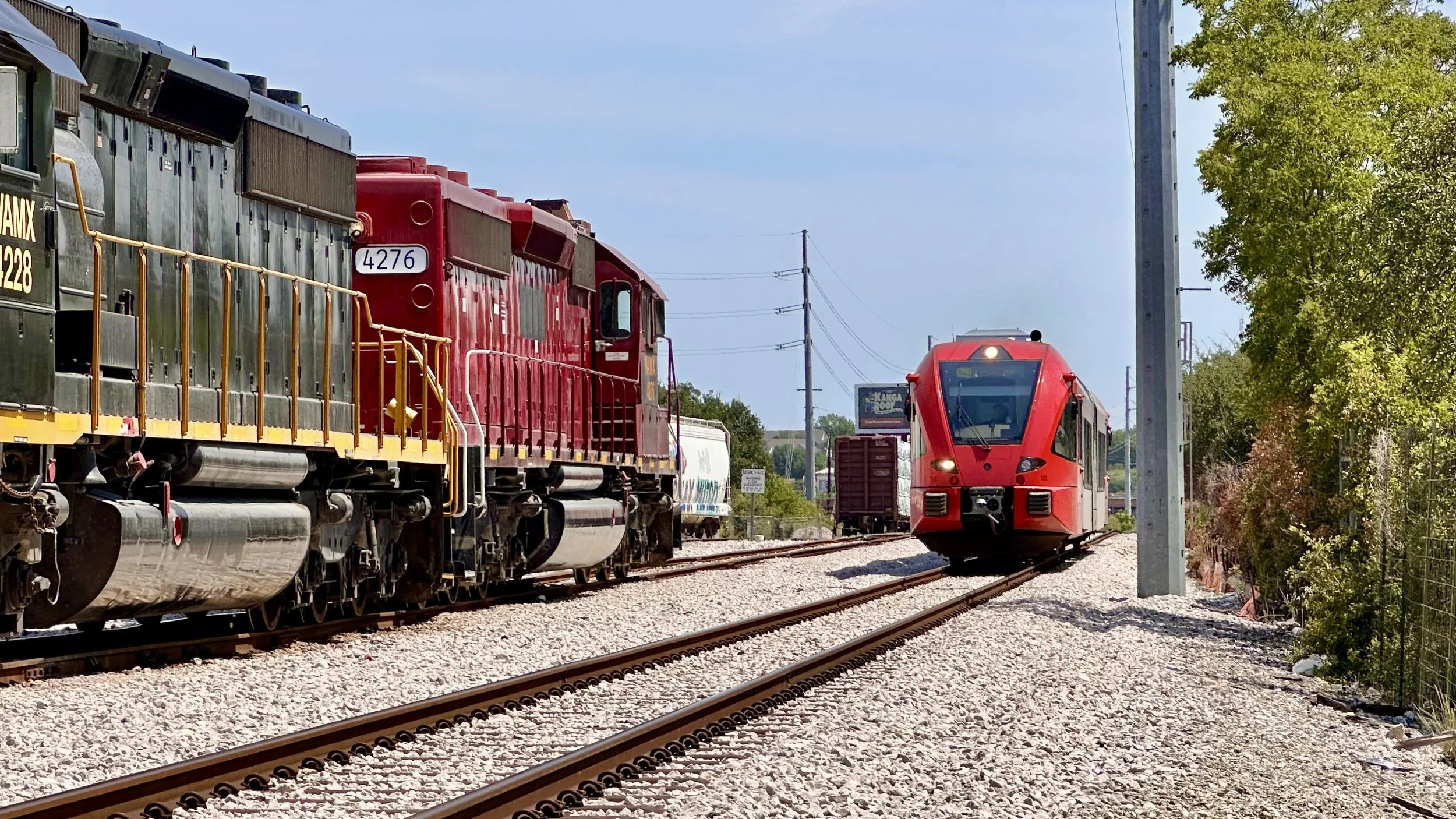
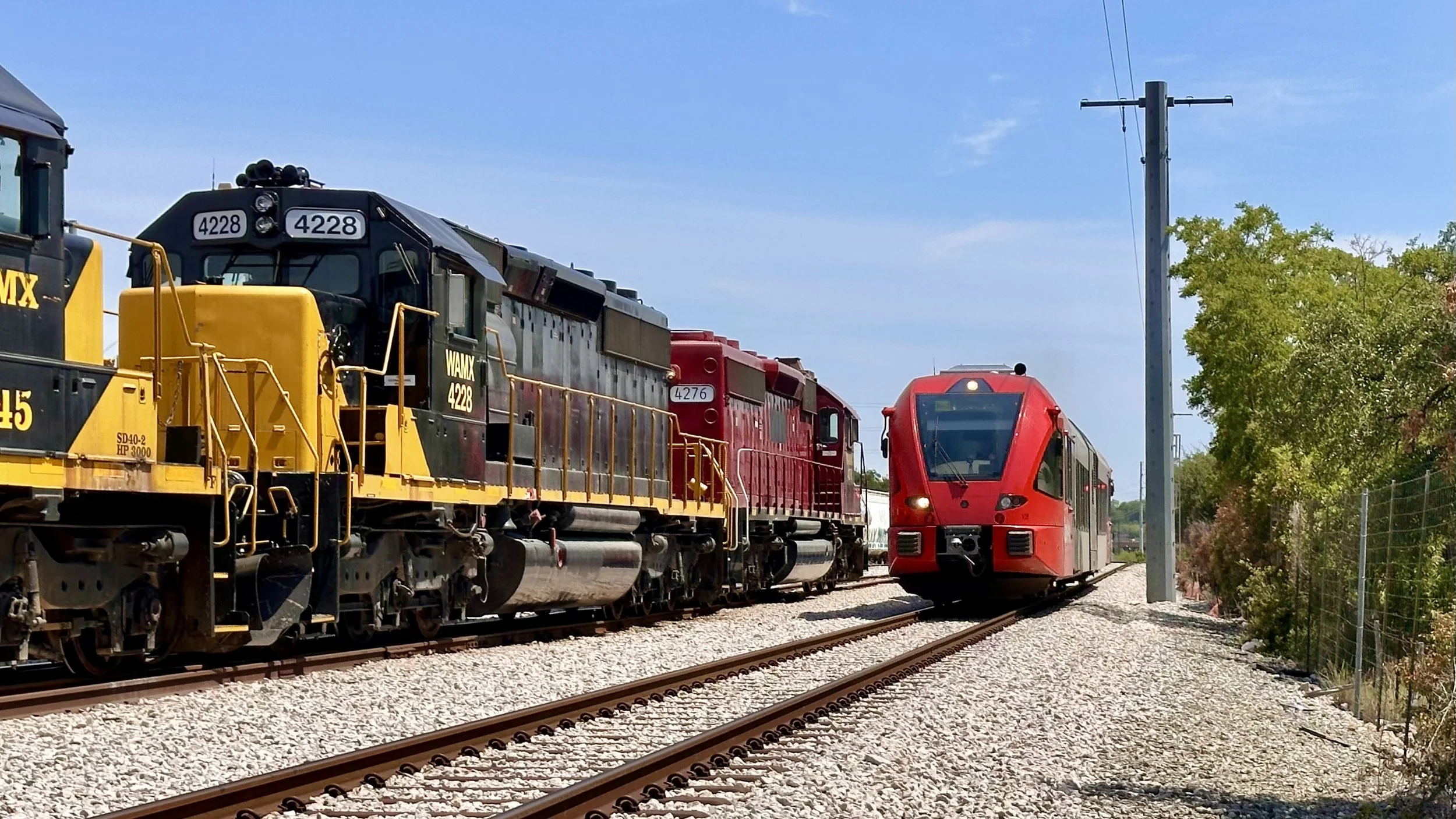
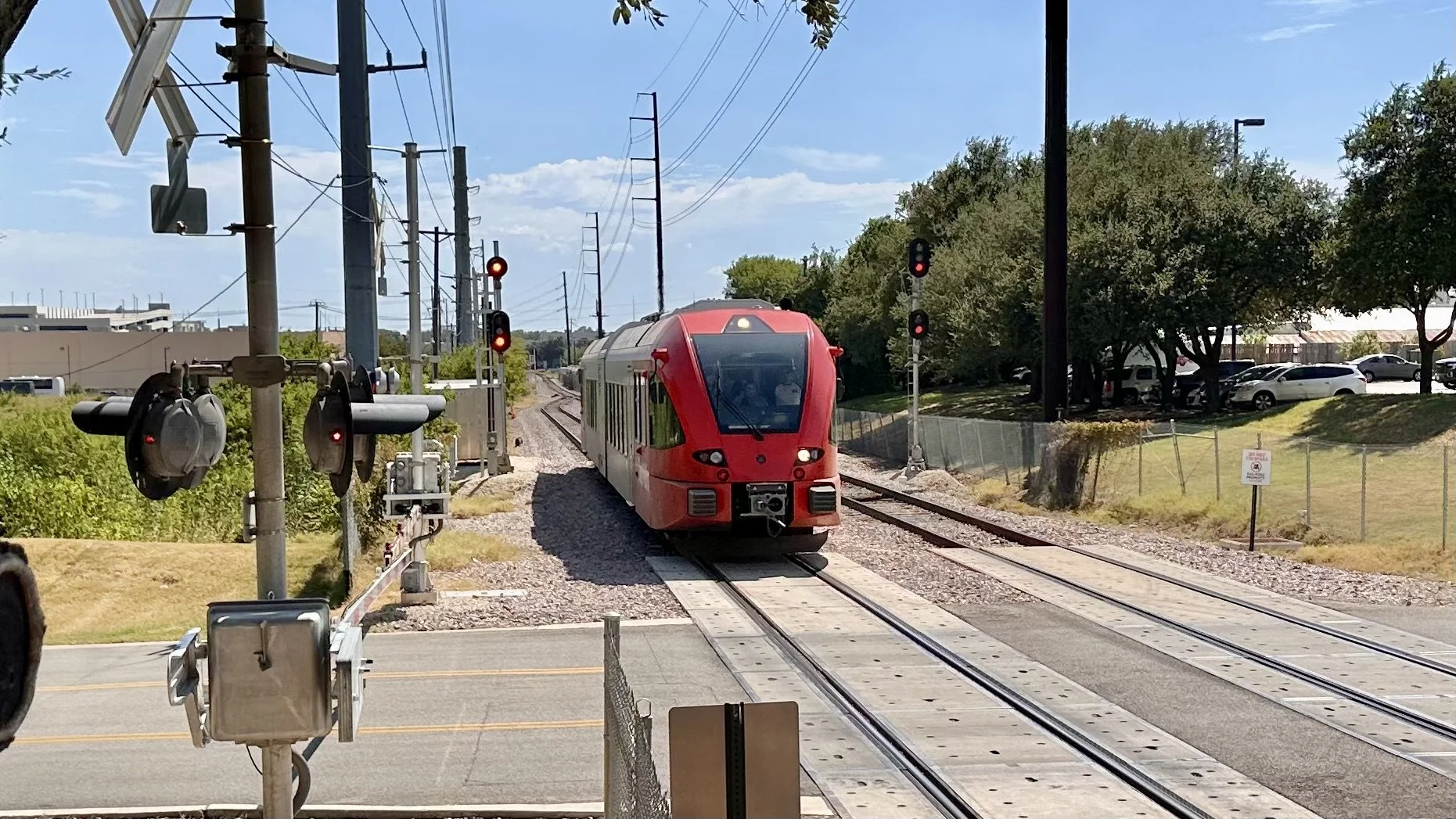
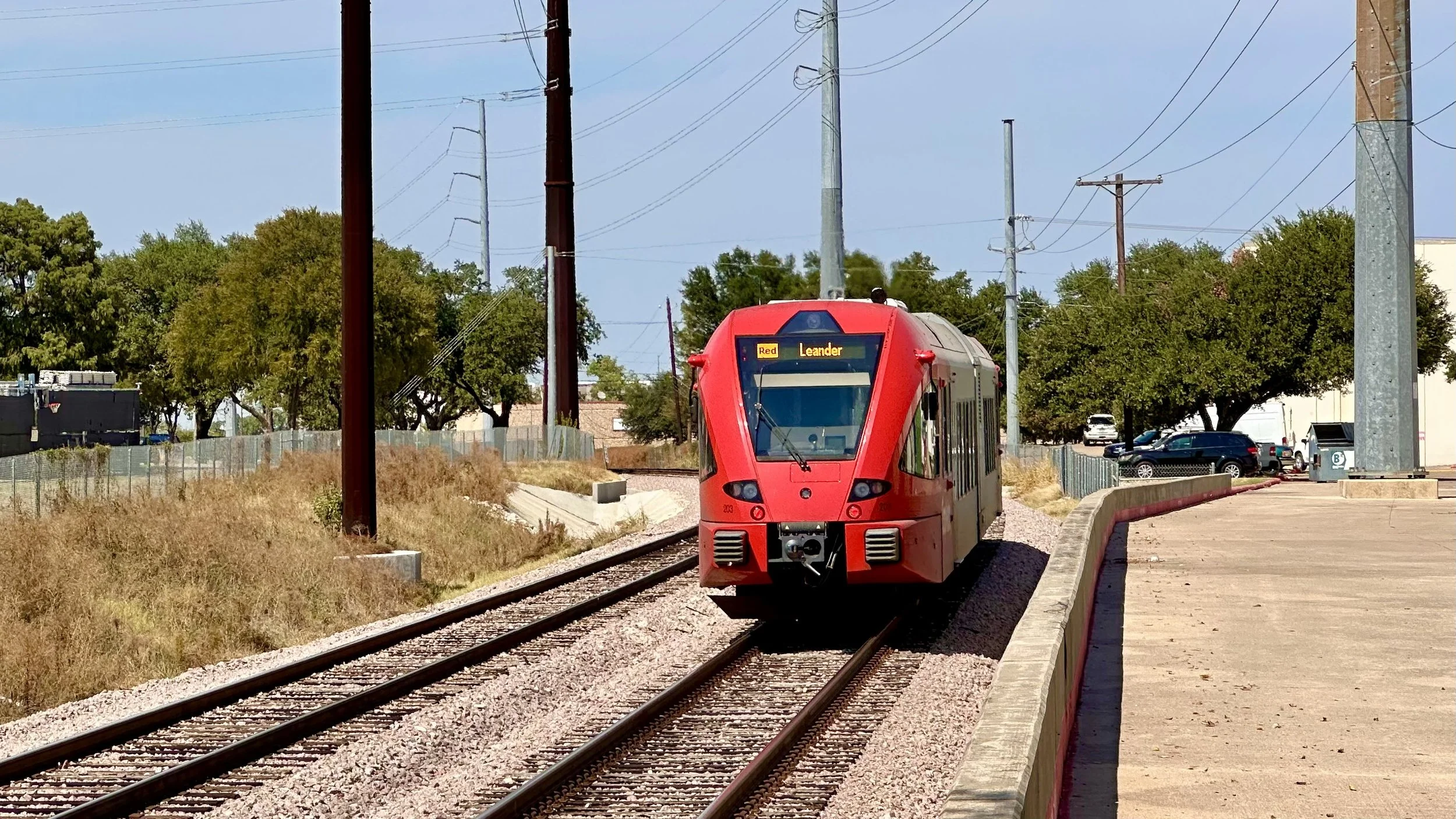
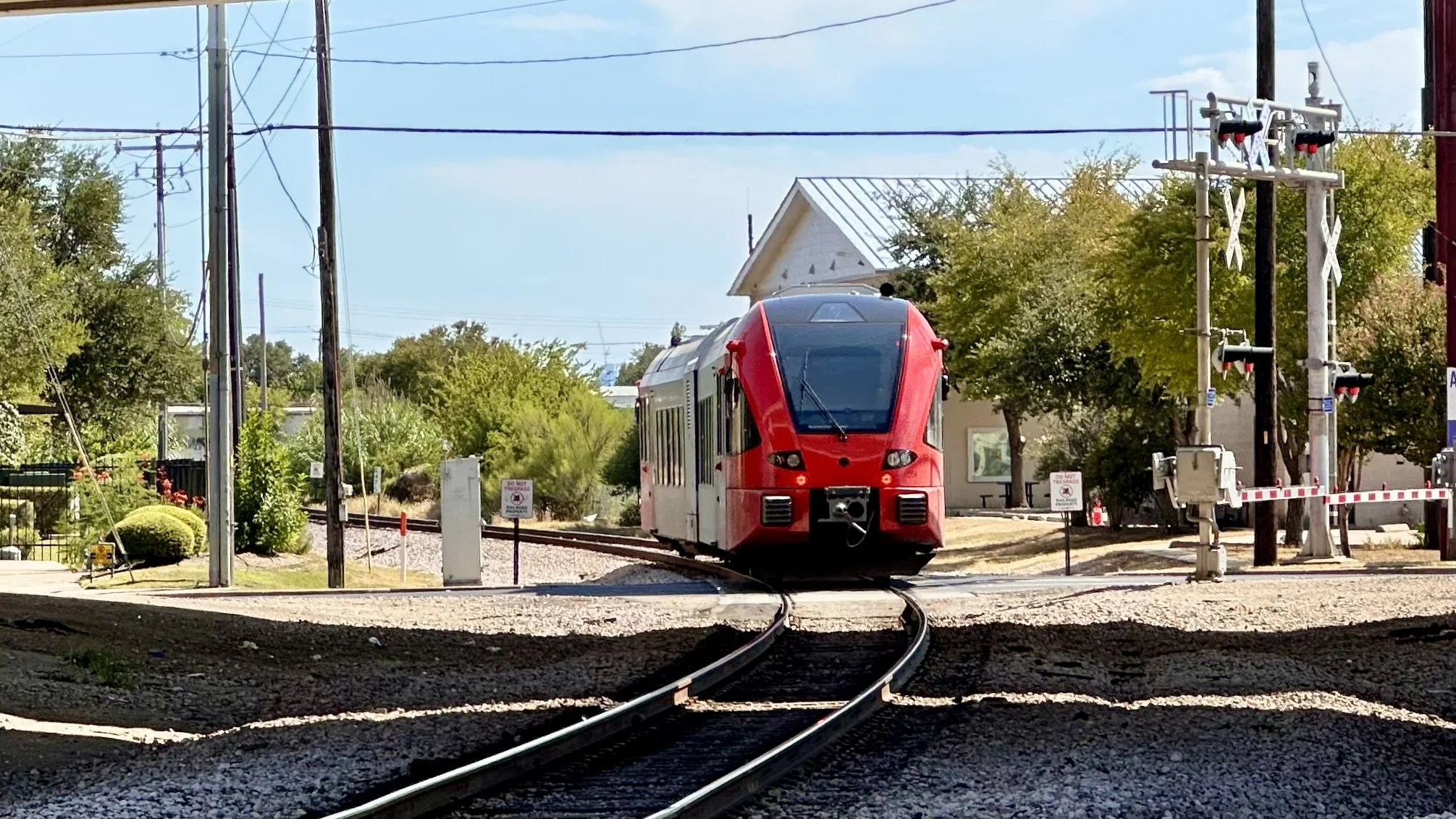
The first of a suite of DMUs to use unmodified Stadler GTW 2/6s (named according to the Swiss locomotive classification system, having two powered and six total axels), CapMetro opened its Red Line rail service between downtown Austin and its northern suburbs in 2010. Unlike almost every other DMU, double-tracking is extremely limited, platforms are only a single DMU long (Plaza Saltillo Station even has only two mini-highs, one for each door), and service is very “peaky”, essentially operating as an ultra-pint-sized traditional commuter rail. While peak-hour peak-direction commuters can see headways as short as every 20min, reverse commute frequencies are as bad as every 90min, and there are very large gaps in service during the middle of the day on portions of the line. Unfortunately, from experience, the Red Line’s operation is reflective of CapMetro’s other transit options, with busses being infrequent, inconvenient, and often phantom.
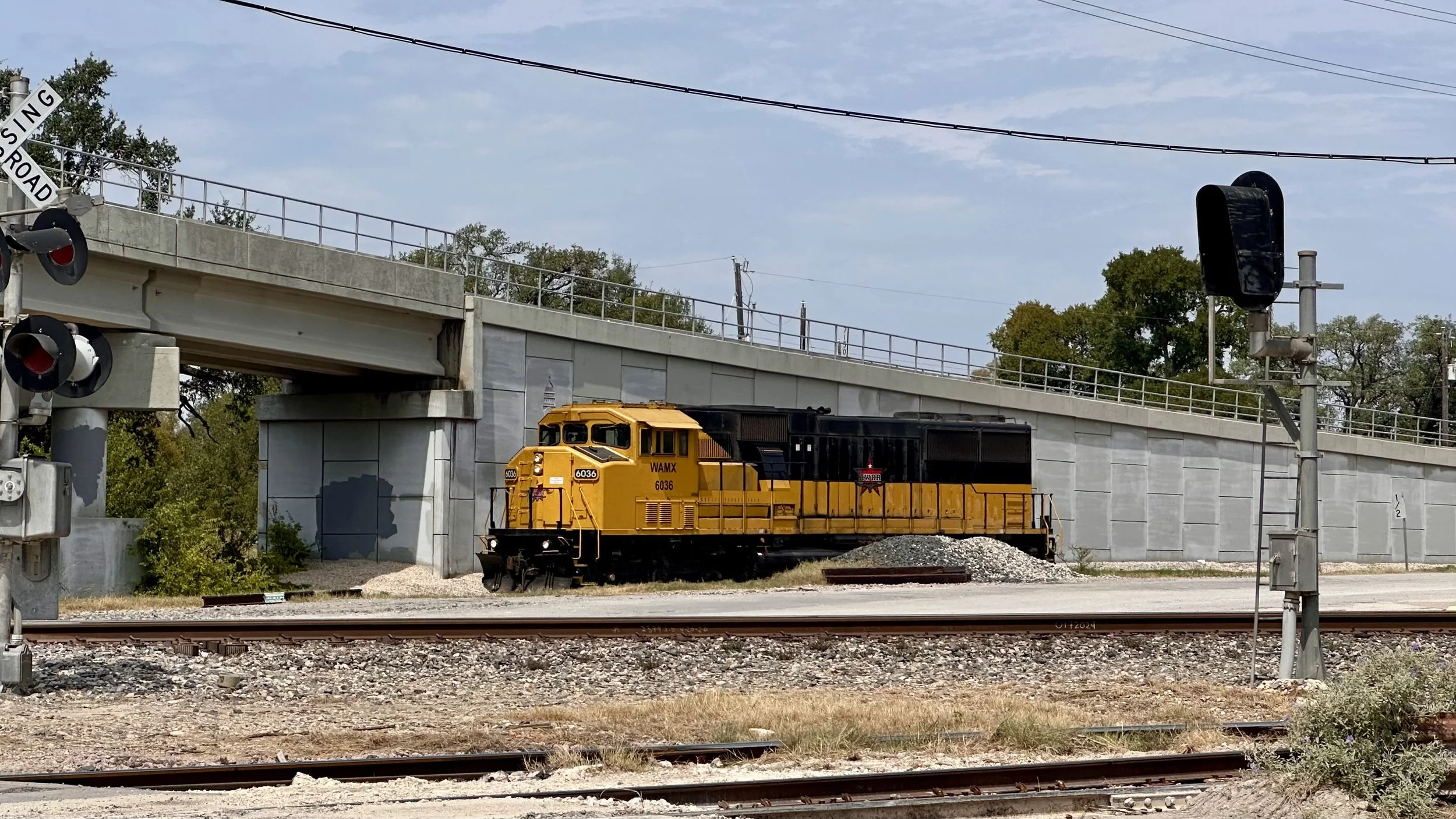
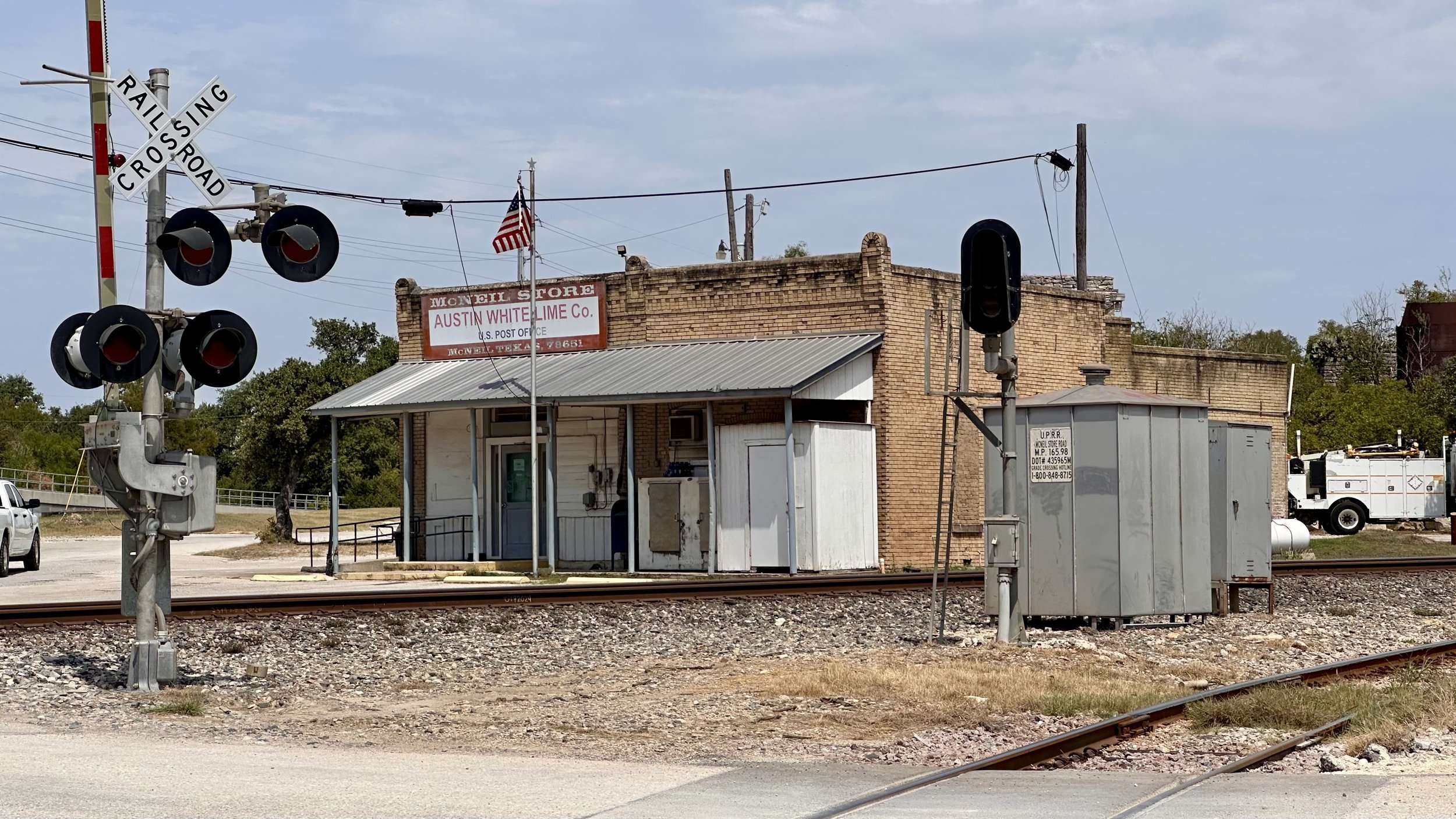
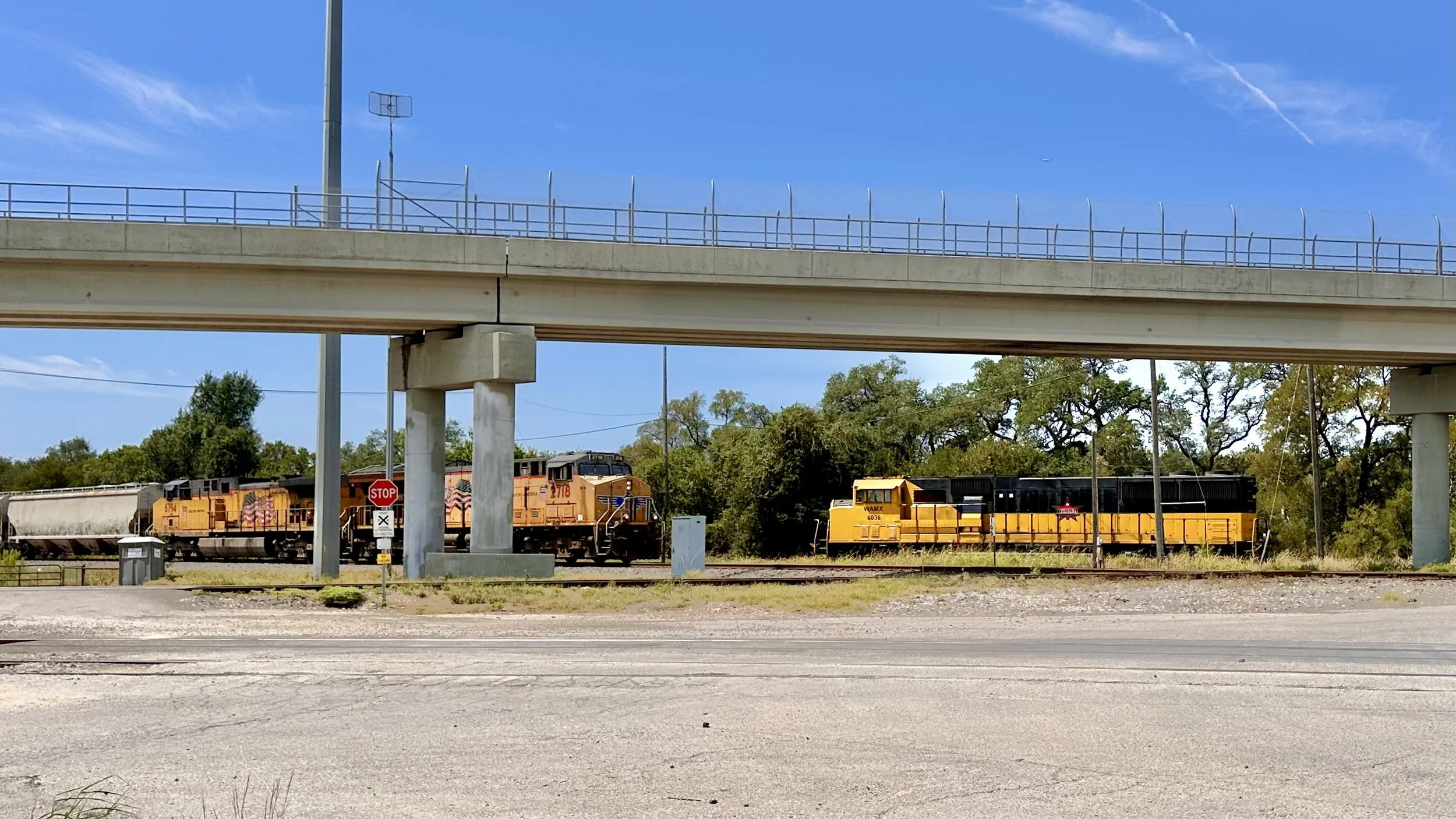
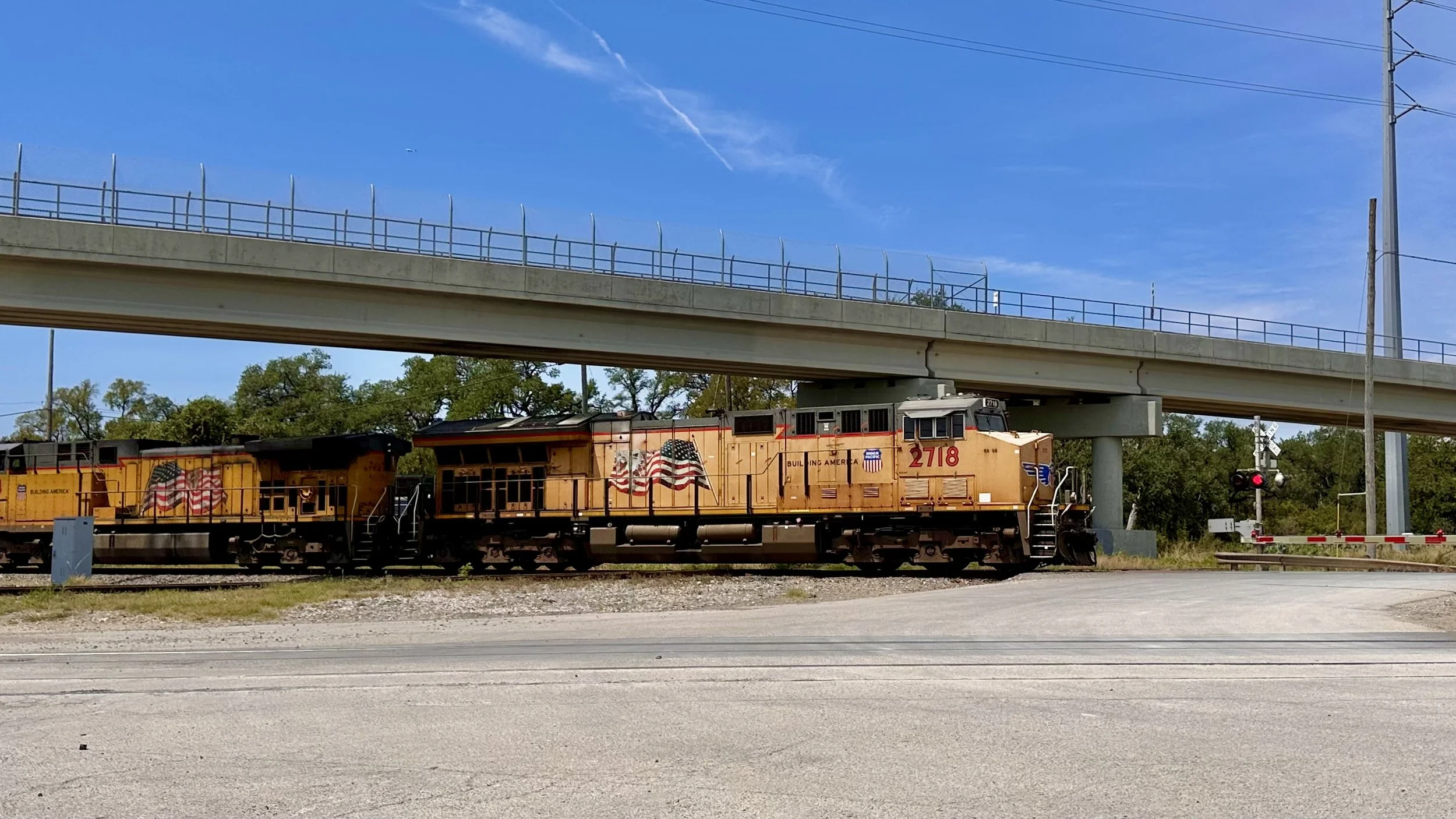
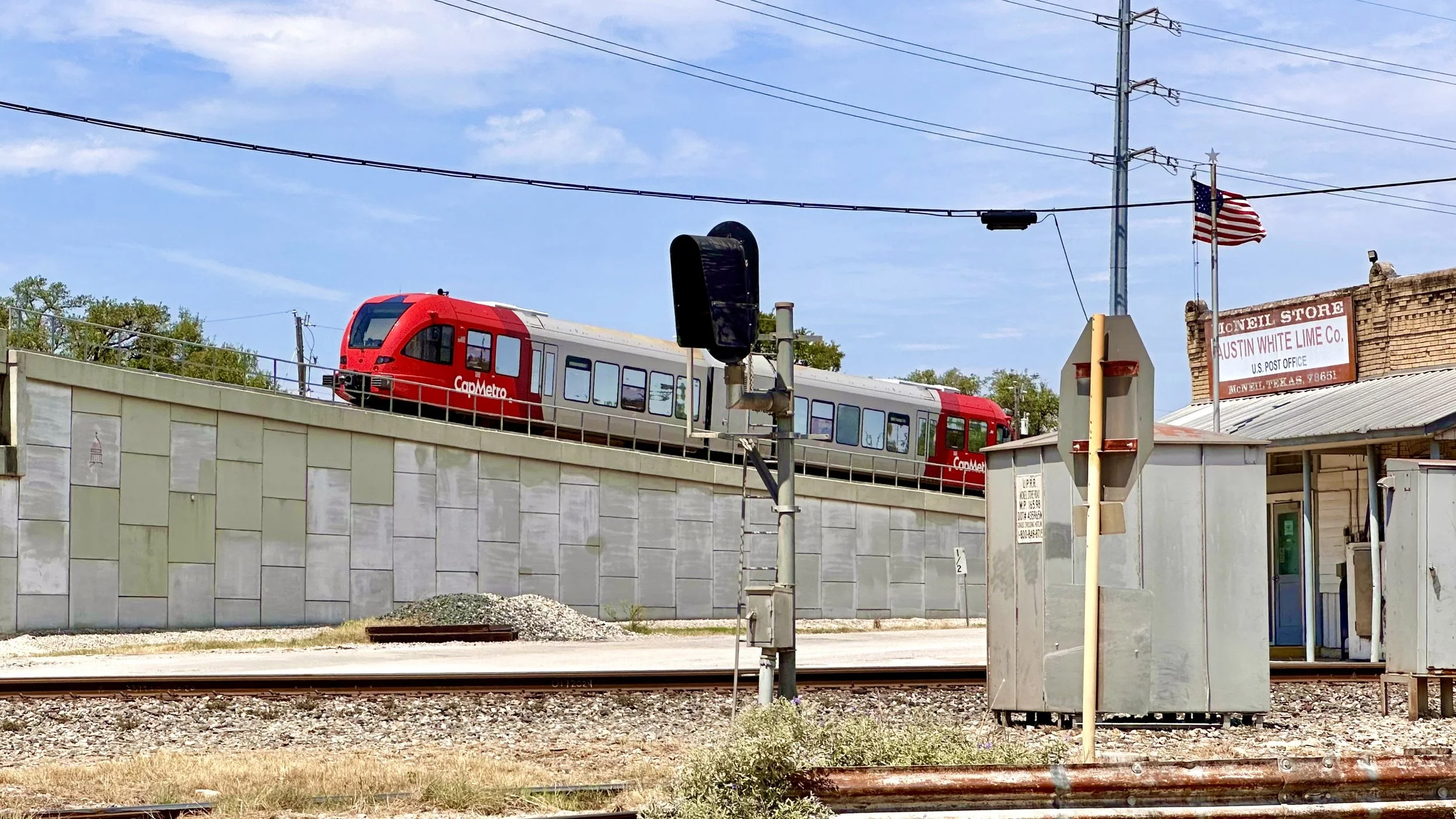
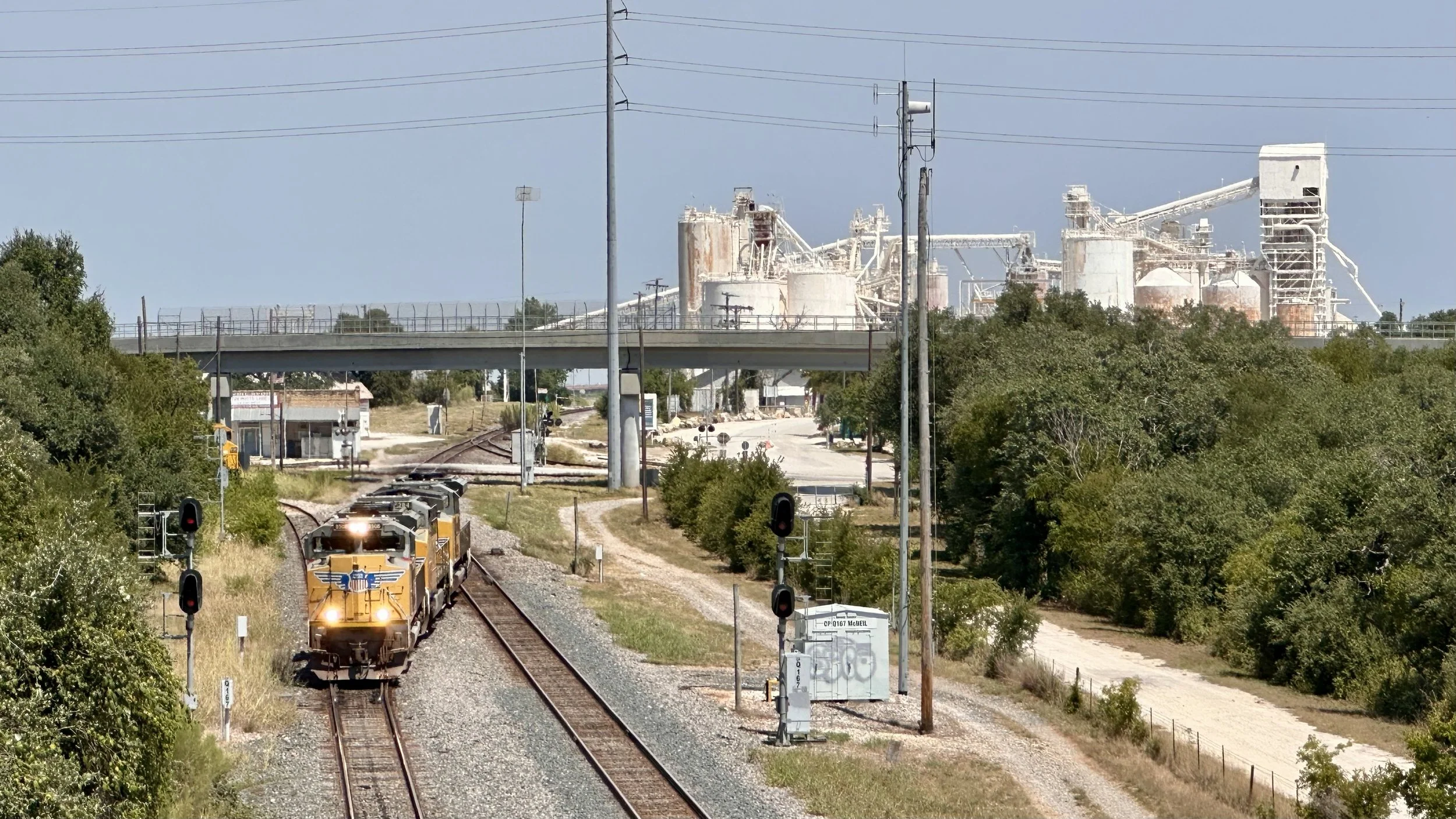
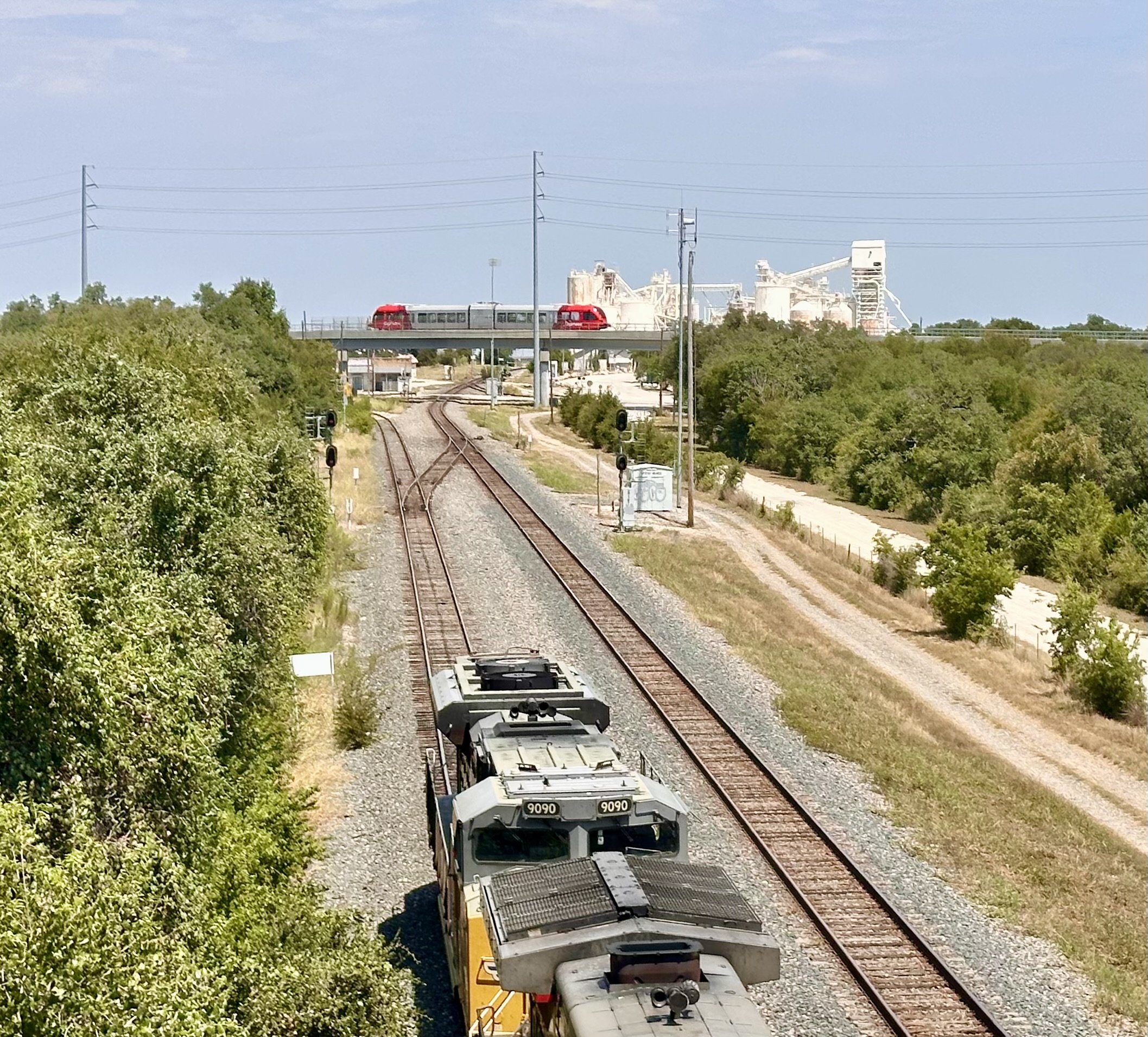
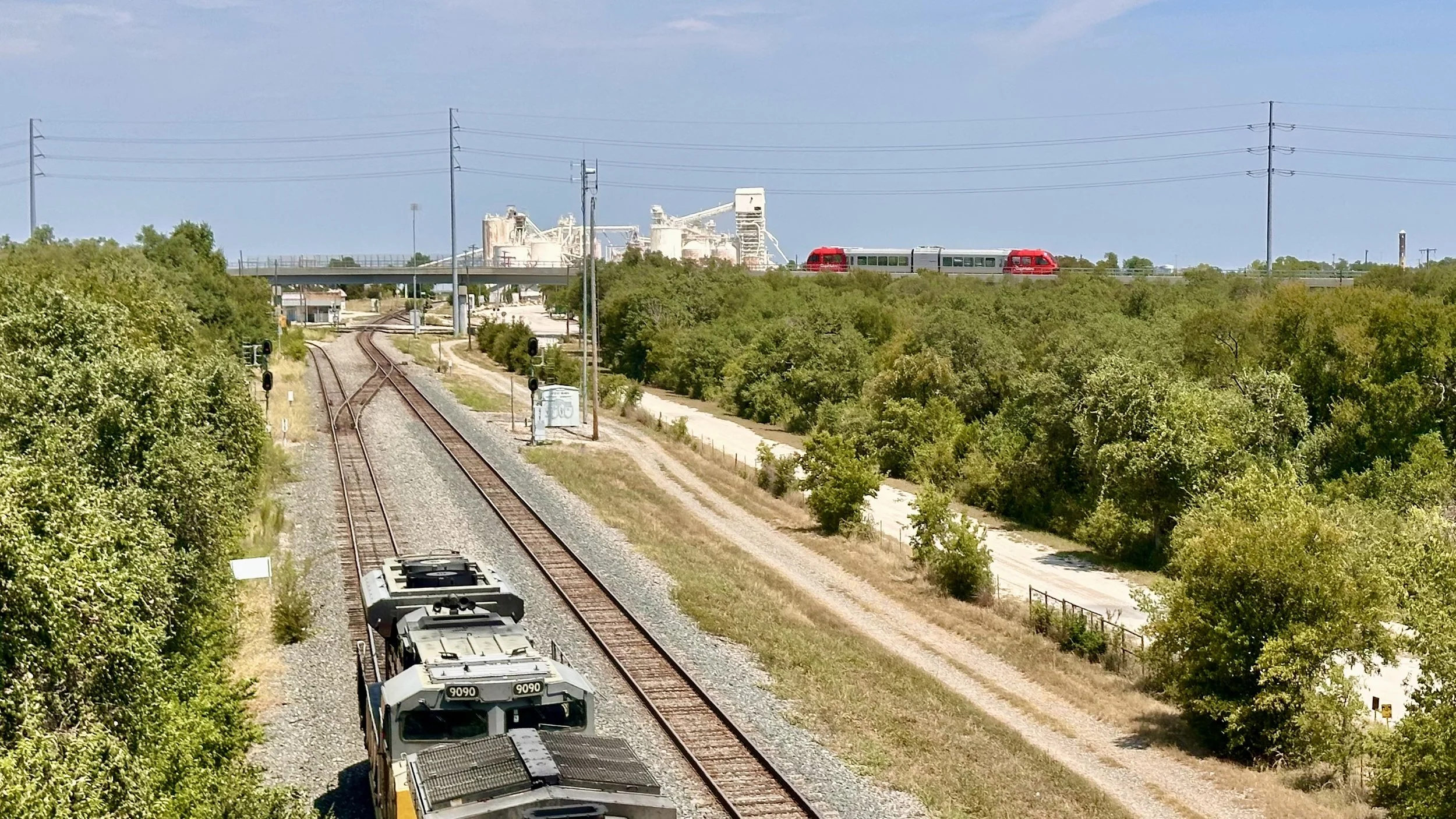
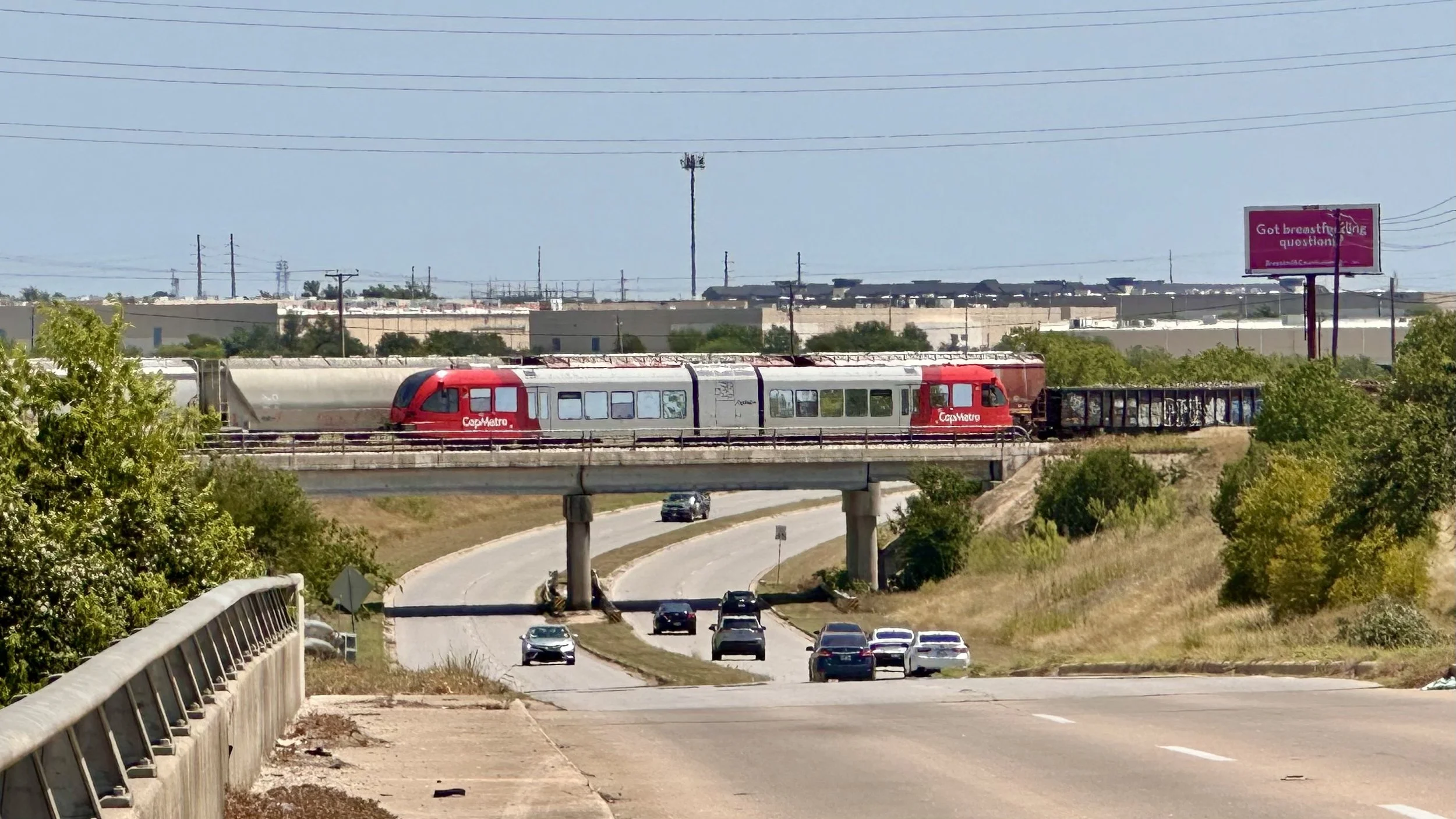
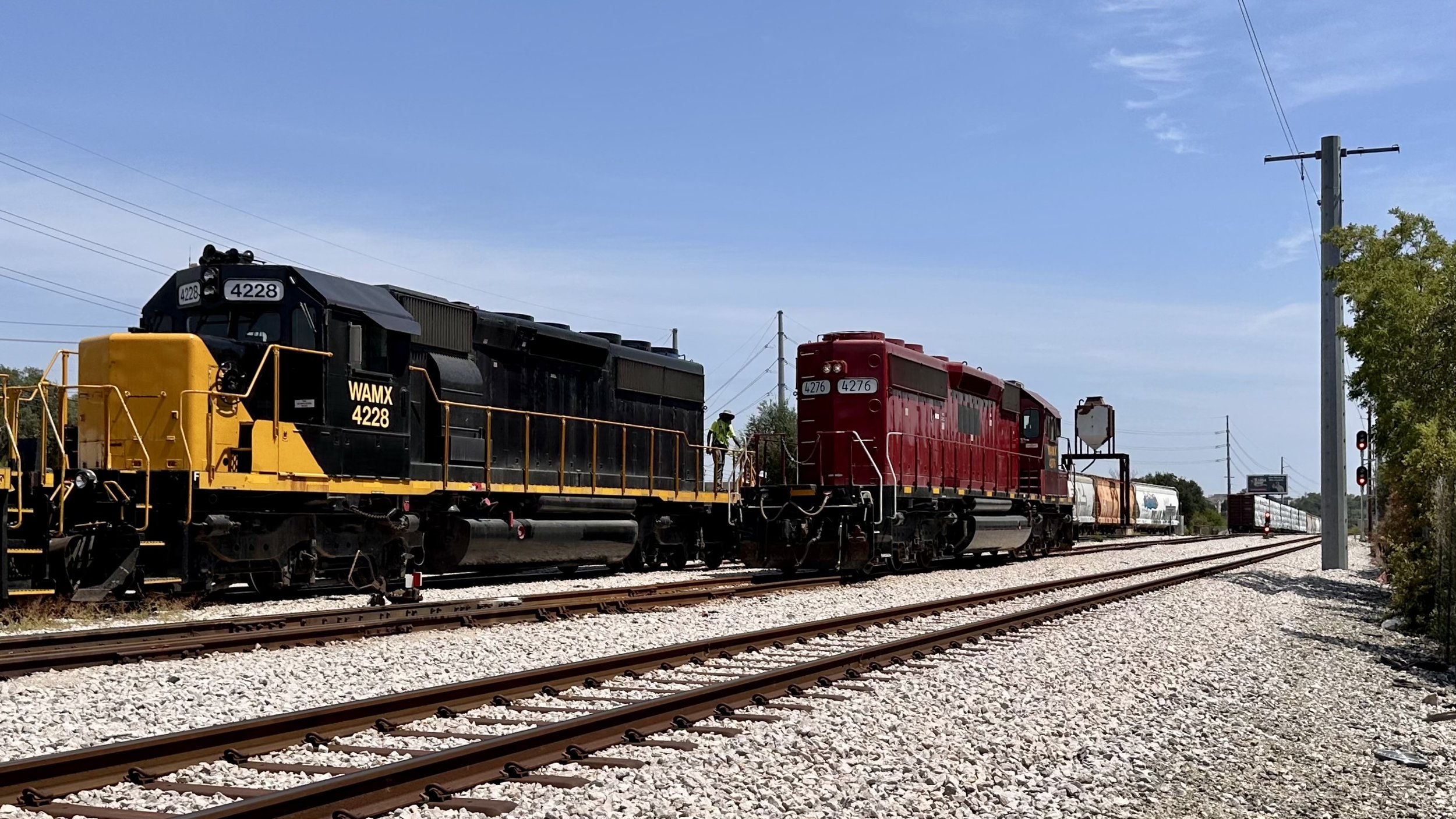
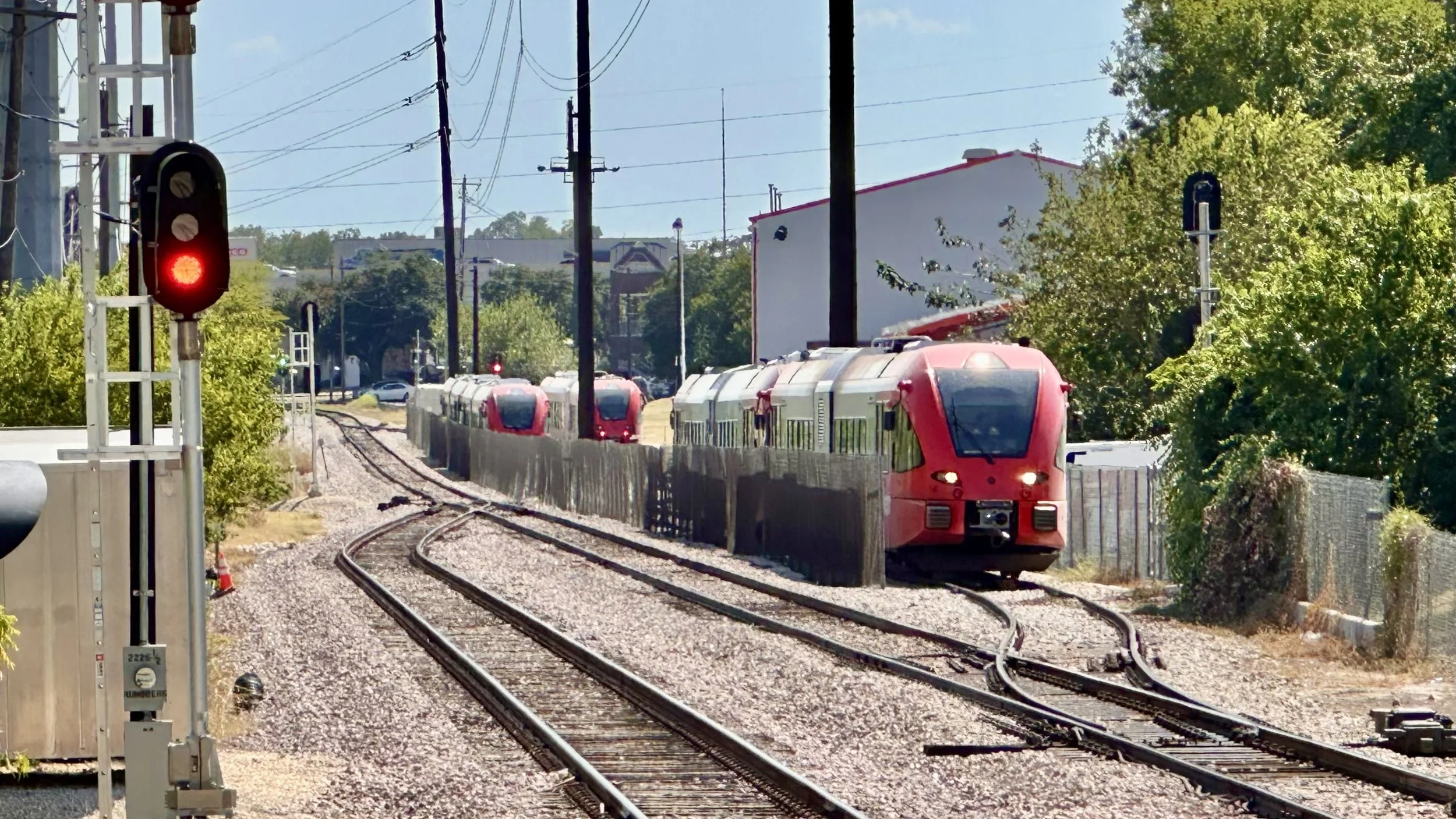
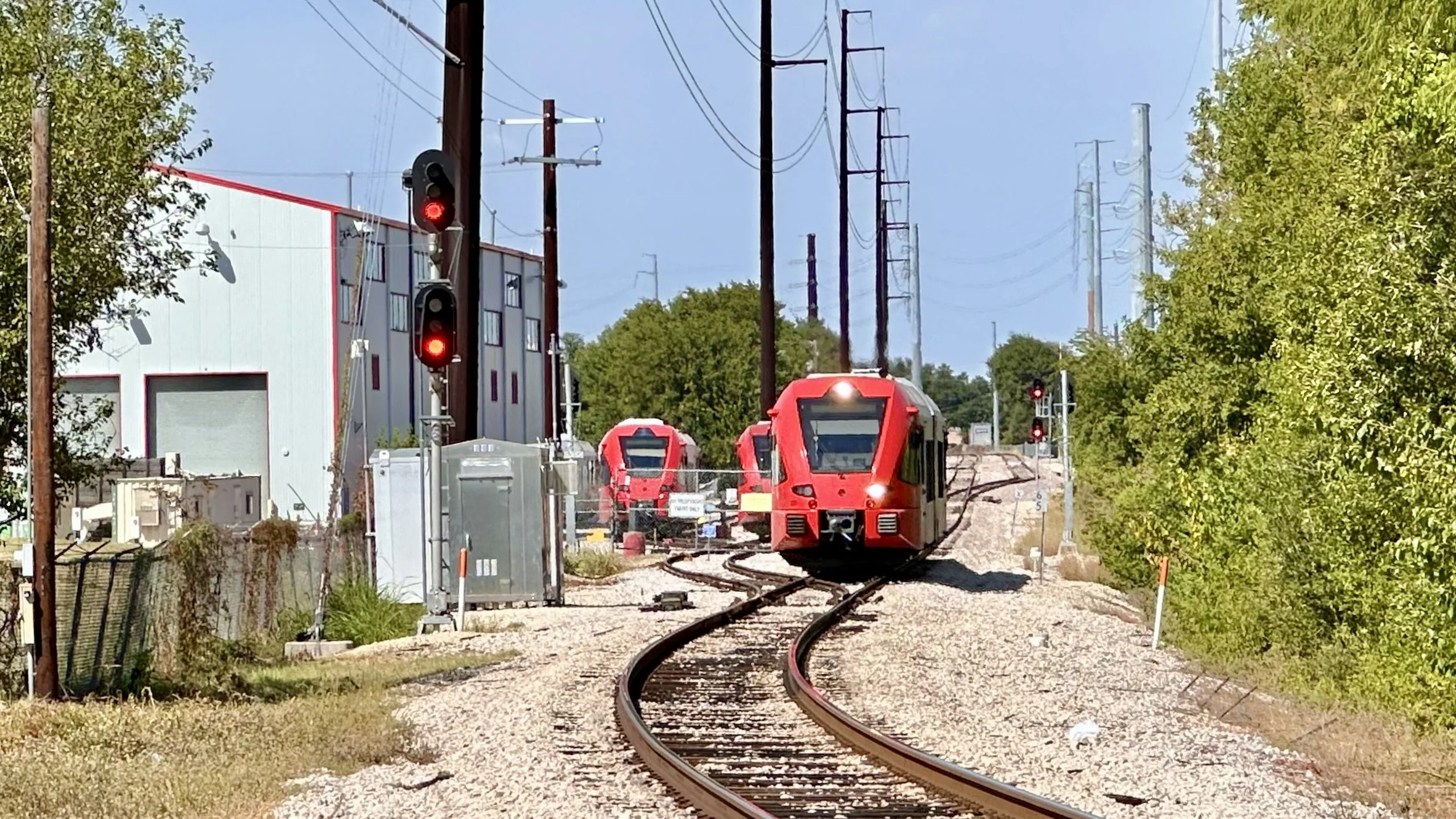
However, as bad as CapMetro Rail is for car-free urbanism, it’s simply delicious for modeling. The few on-line industries are more than made up for by the route being dead middle of the Austin Western’s mainline between its connections to UP in the east and several large limestone mines in the west. AW has a medium-sized yard near Howard Station which is bookended by large warehouse switching areas on one end and a limestone mine and UP interchange on the other. At this interchange in McNeil TX, the DMU uses a brief flyover up and over the interlocking to disentangle the DMU from interference by the busy UP mainline (upon which runs Amtrak’s Texas Eagle daily between Chicago and San Antonio).
The heavy degree of freight traffic actually influences DMU schedules. During the day, all 20 DMU round-trips run between Downtown Austin and Kramer, and 18 continue to Howard. However, only a portion continue past the freight yard at Howard, with 16 trips serving Lakeline and merely 12 reaching Leander (both primarily in the afternoon). The schedules are designed specifically to make a mid-day pocket for freight trains to access Howard Yard and the multiple major industries and mines beyond it, freeing up the main around Lakeline from 1100 to 1300 and Leander from 0900 to 1400.
As a backbone of regional transit, the Red Line is utter garbage, with limited departures, inconvenient schedules, poor integration with a similarly problematic bus system, annoying disconnection from major destinations throughout the region, and overall grossly suburban character. But as a modeling subject, the combination of heavy freight railroading, dense, operationally-varied passenger trains, and readily-available models in multiple scales from European manufacturers is a showcase of how tightly DMUs interact with traditional mainline freight railroading and makes CapMetro Rail one of the prime candidates for a mid-sized or larger prototype-based DMU layout.
DCTA A-Train
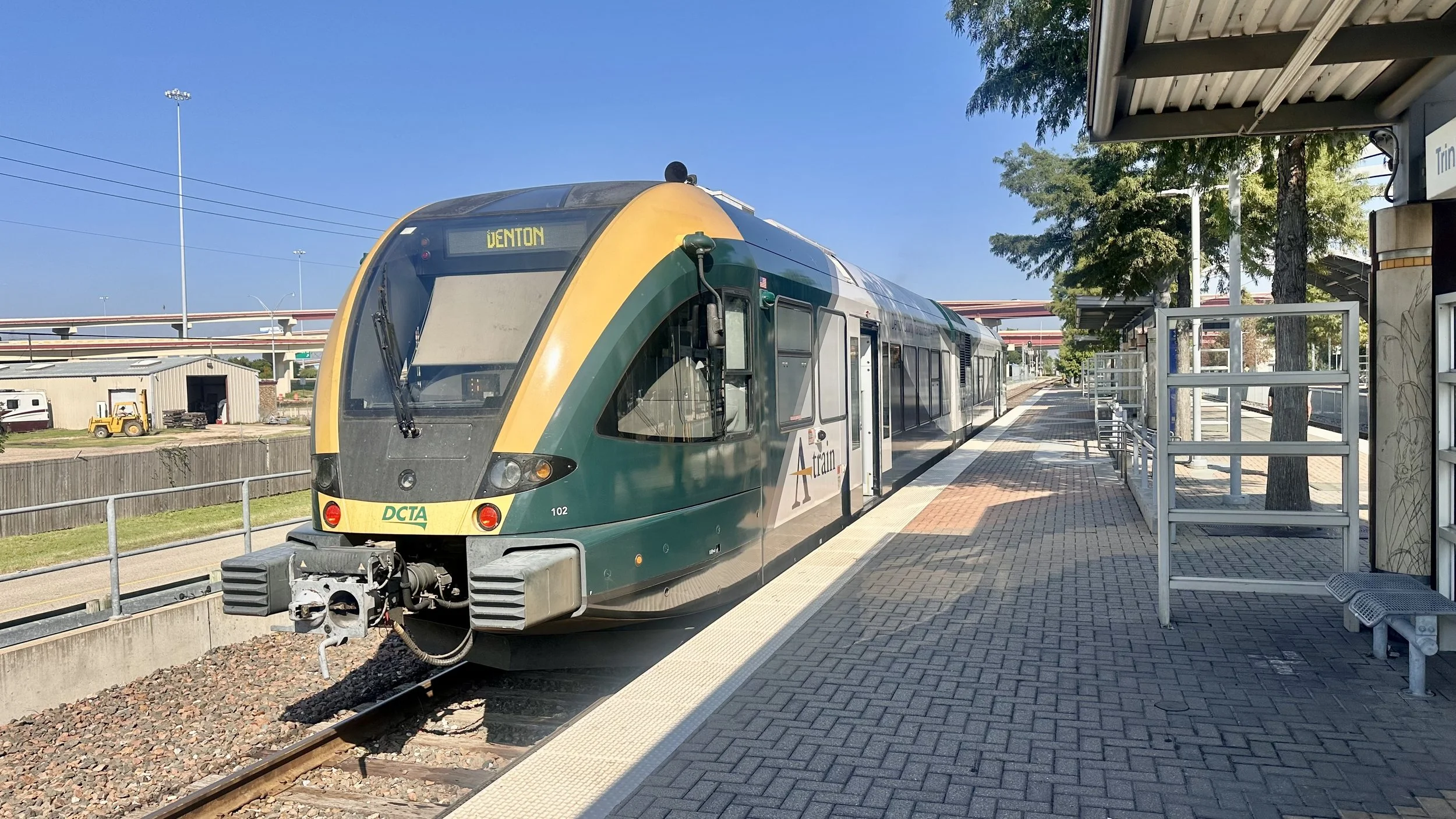
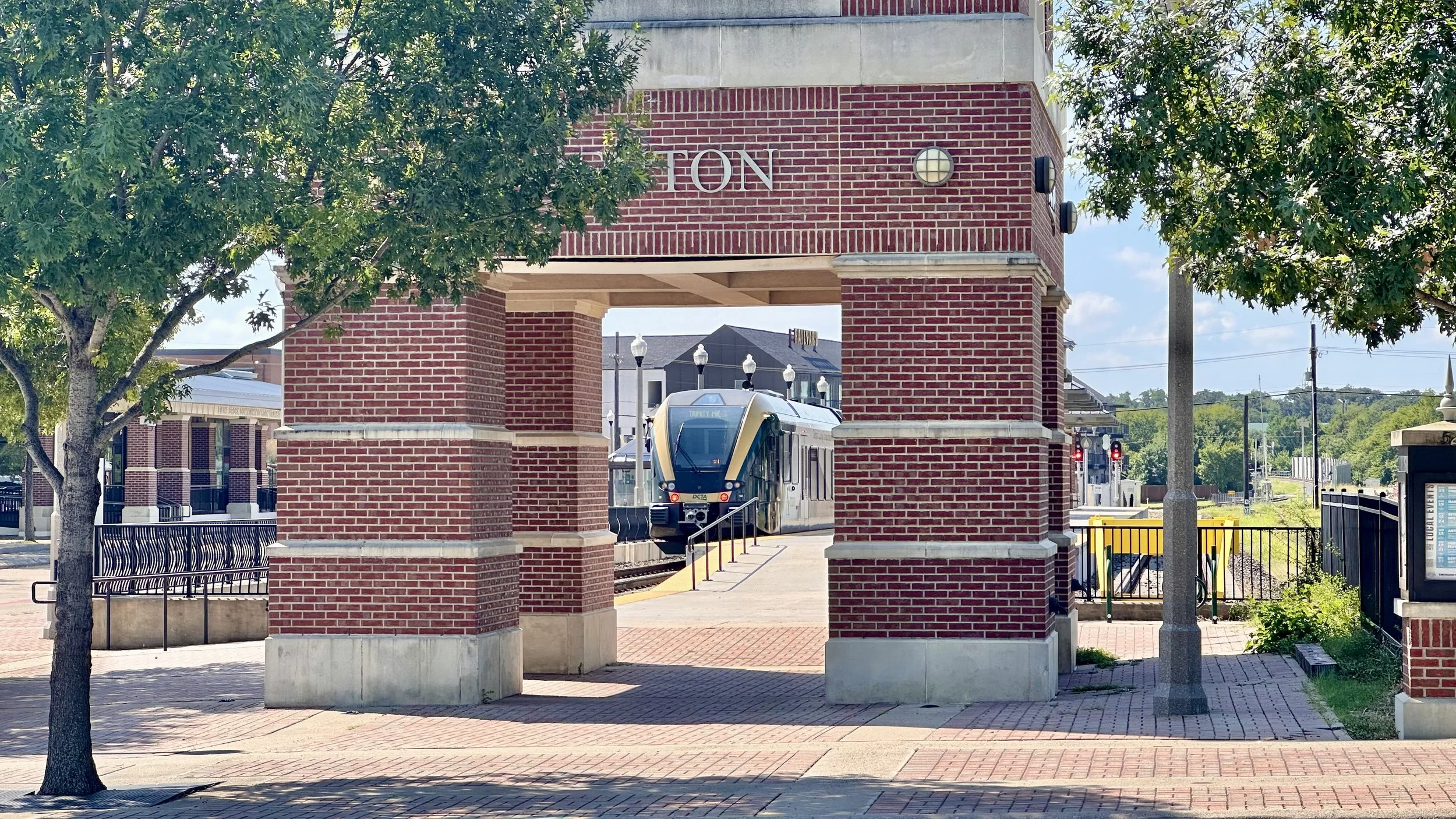
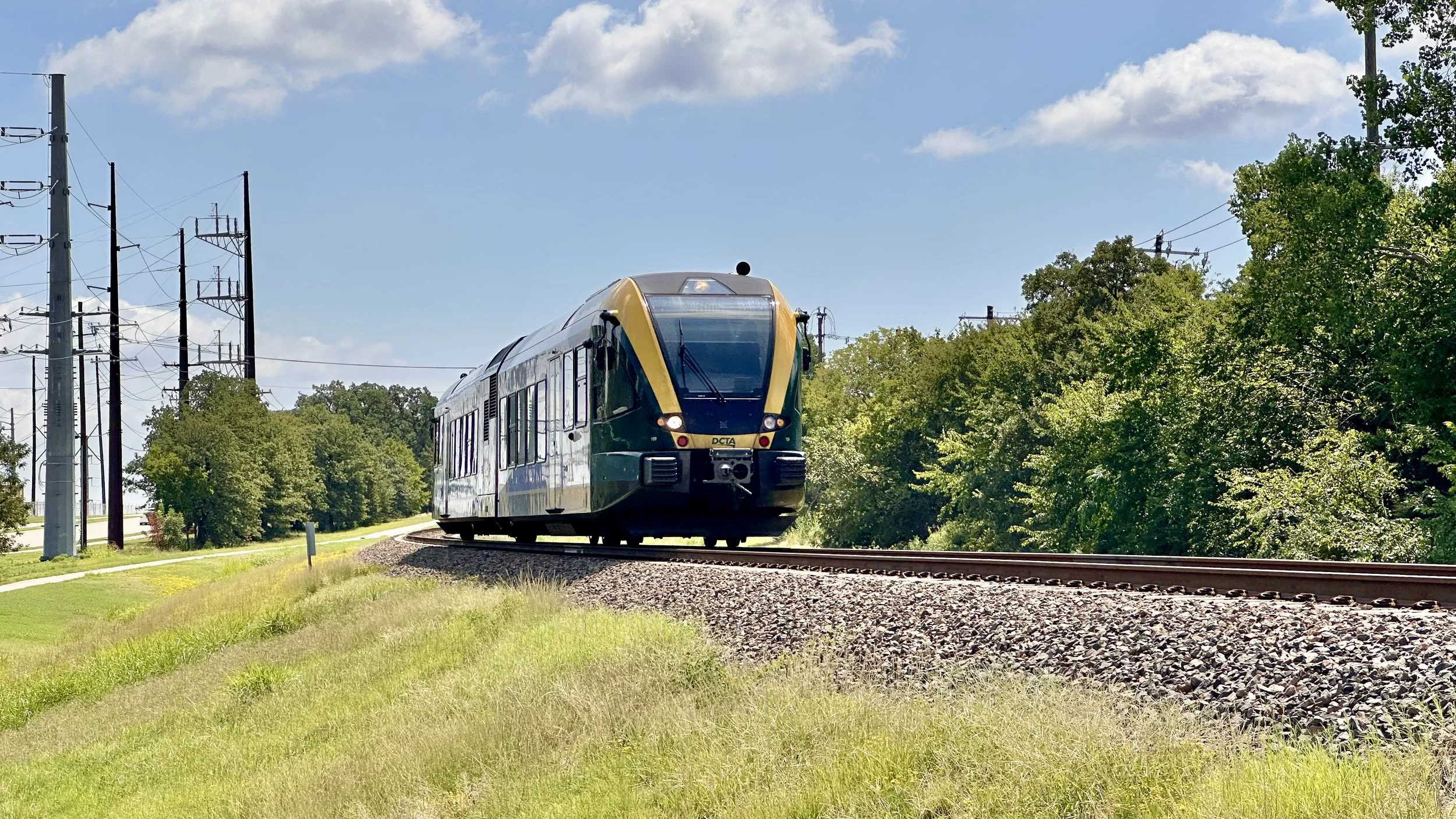
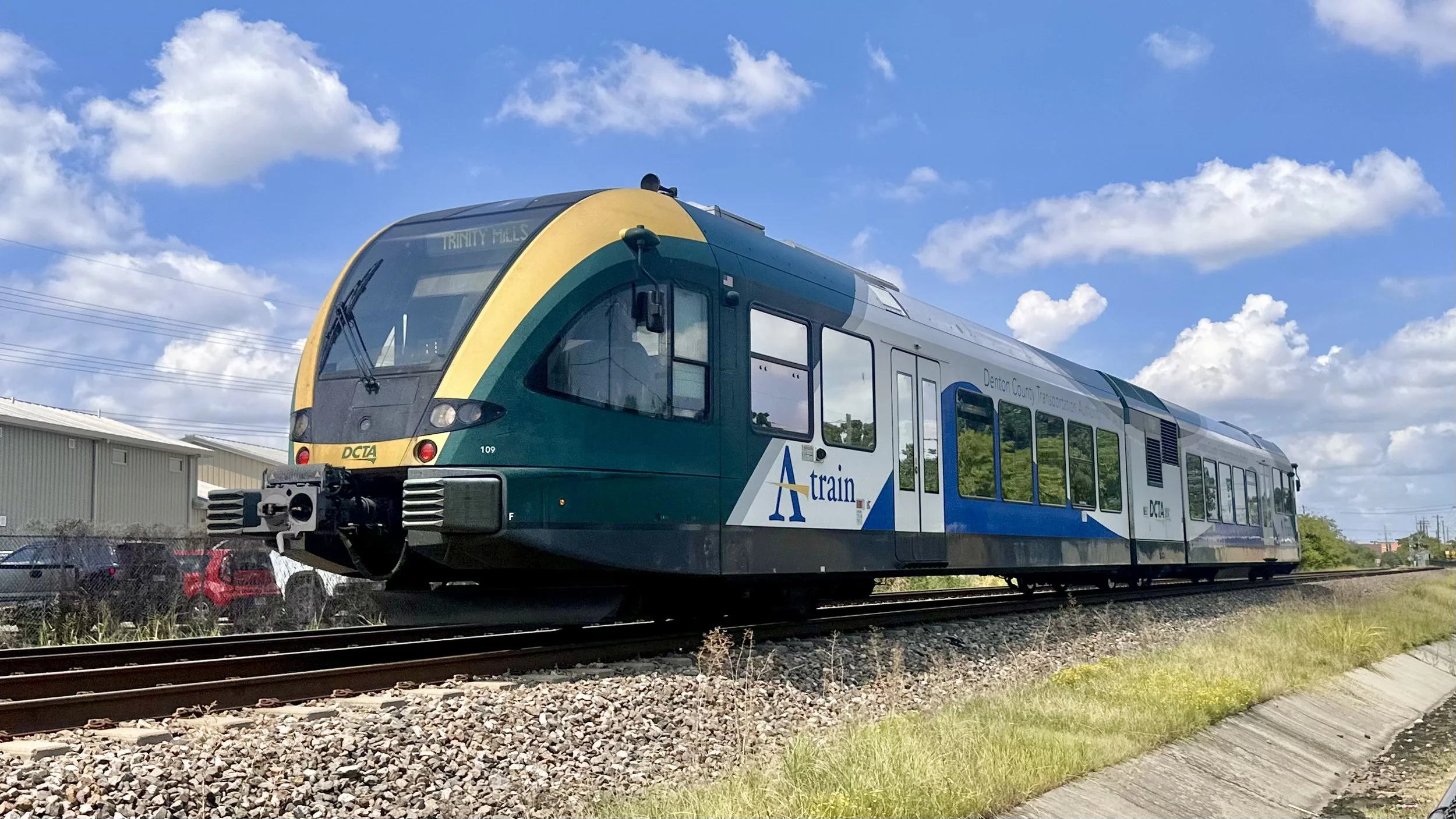
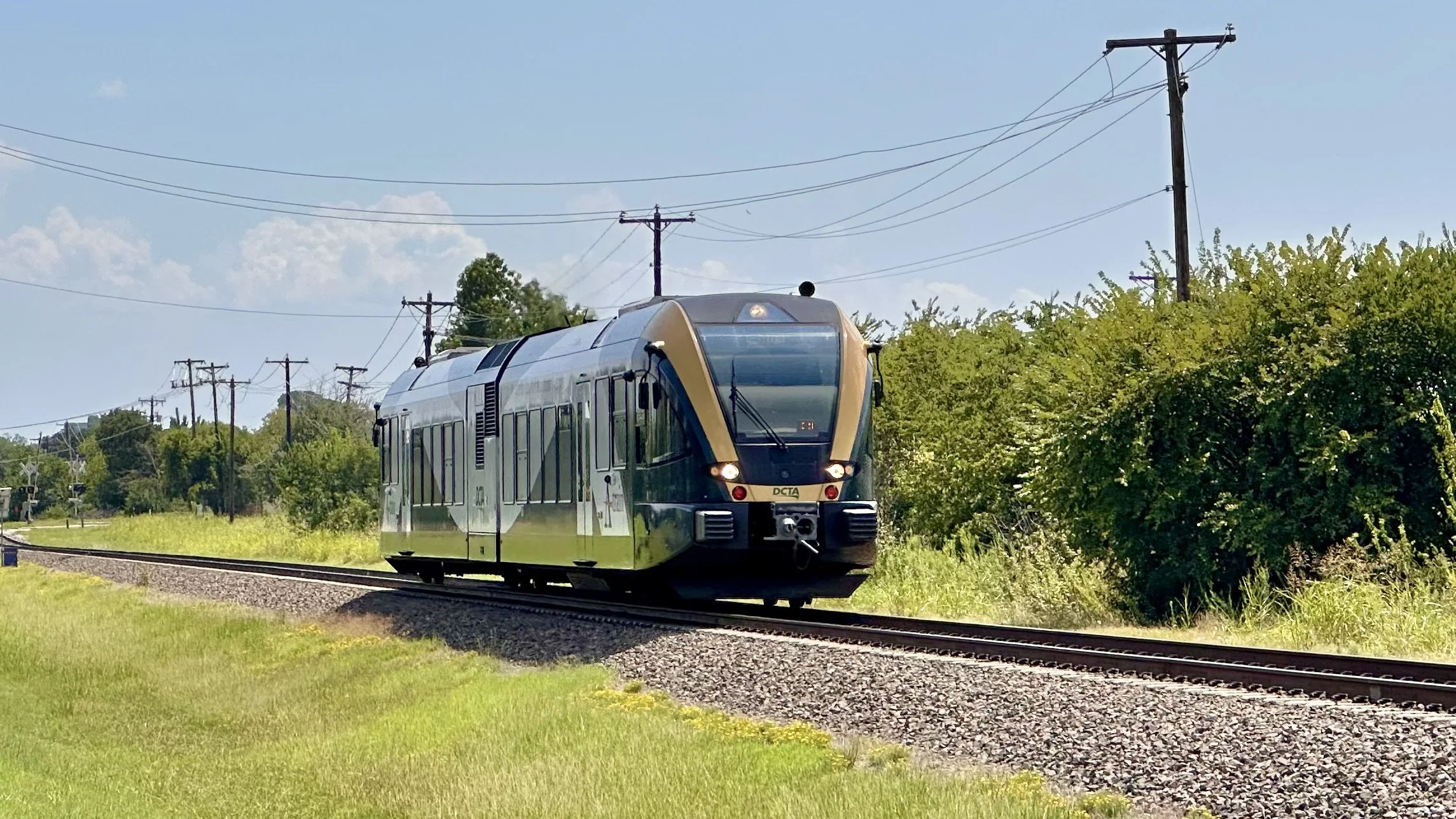
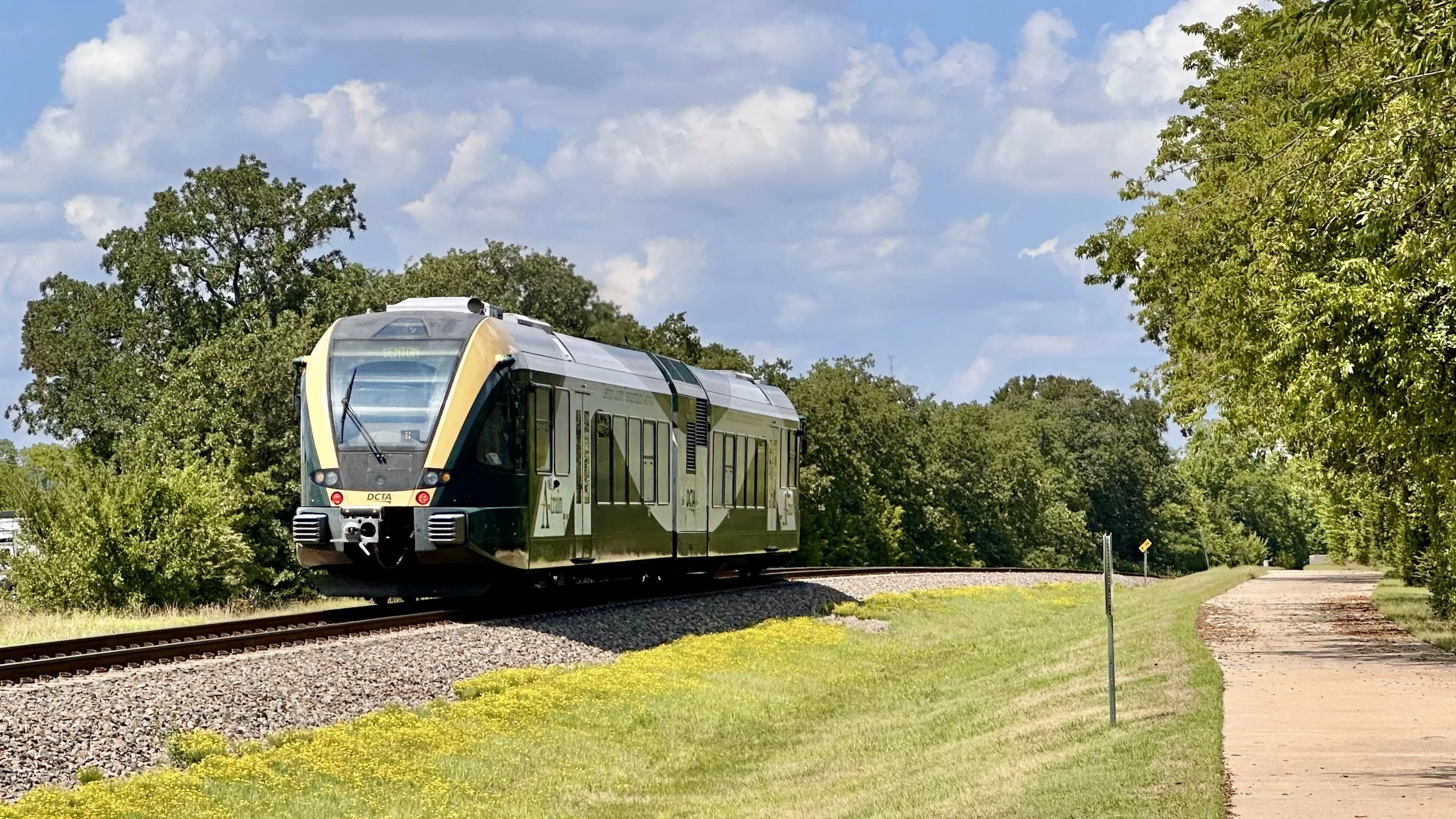
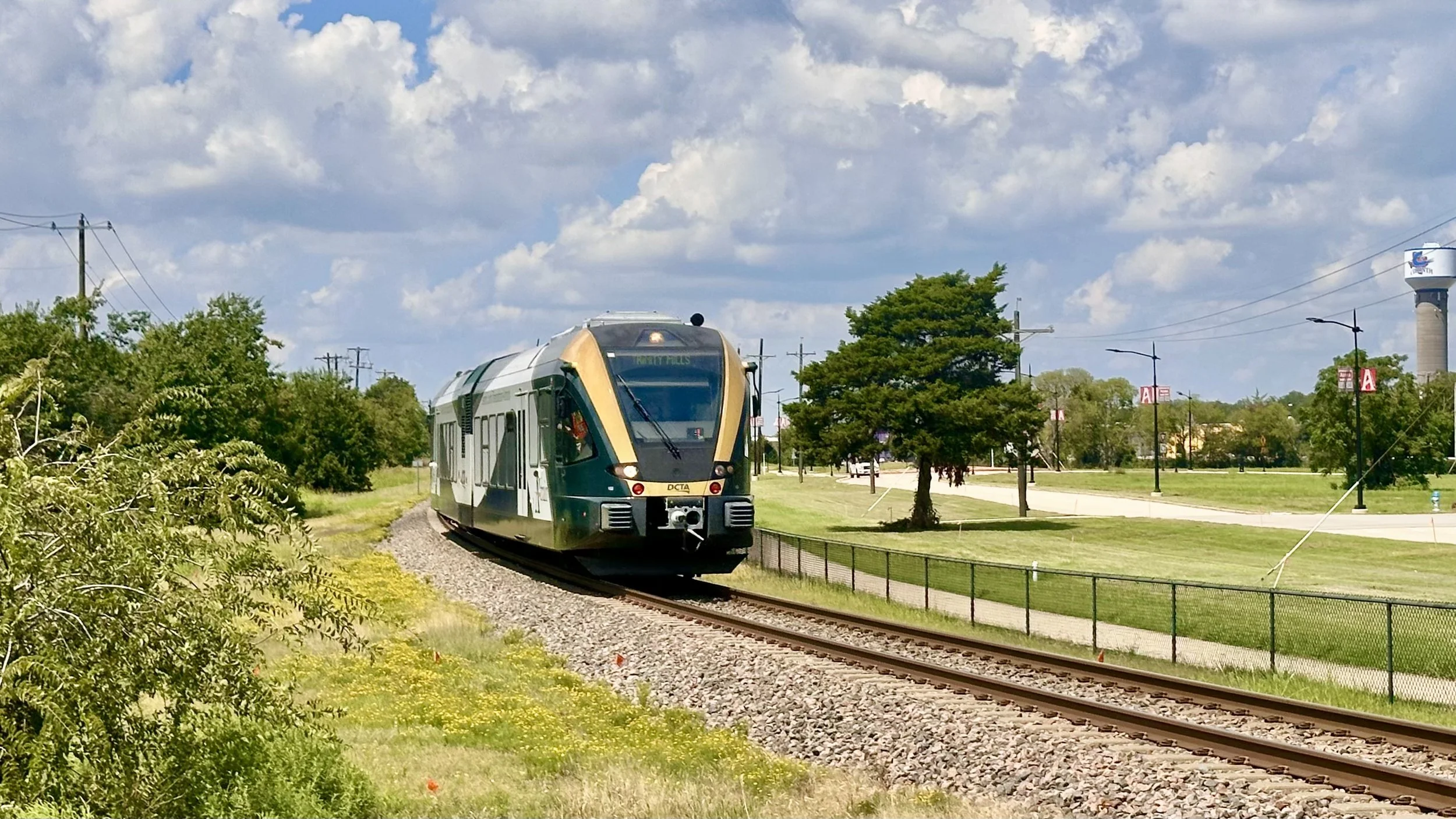
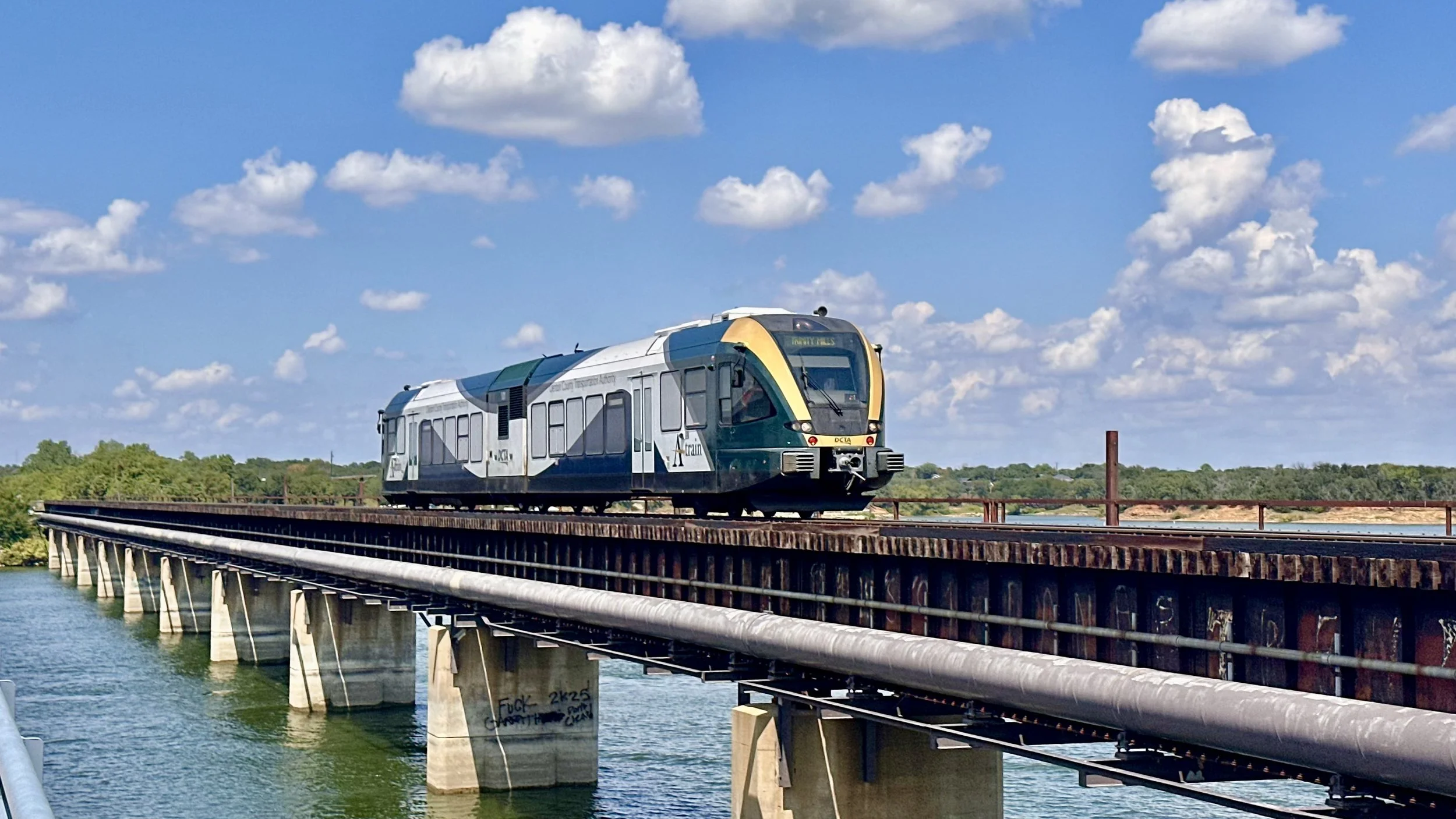
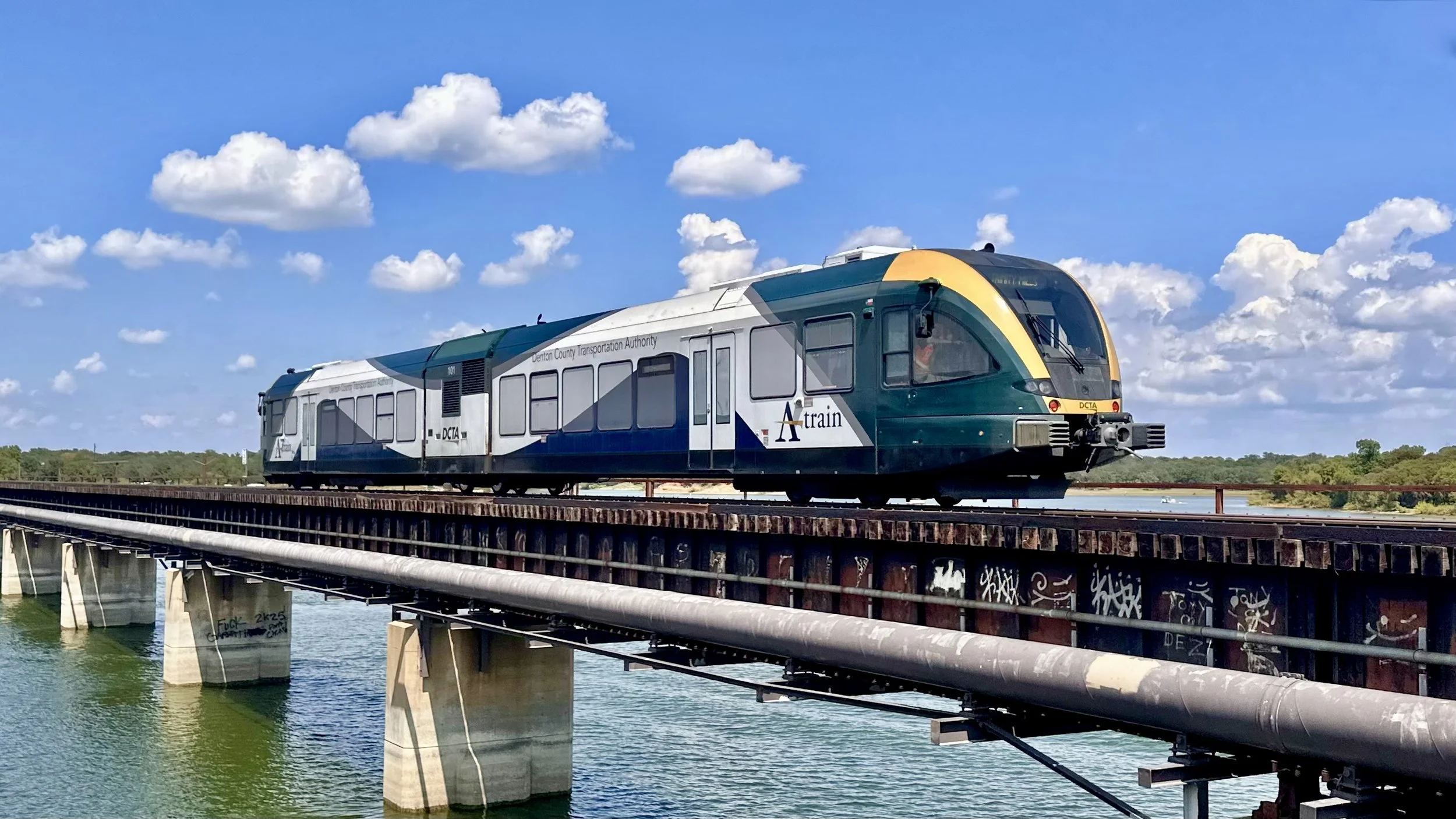
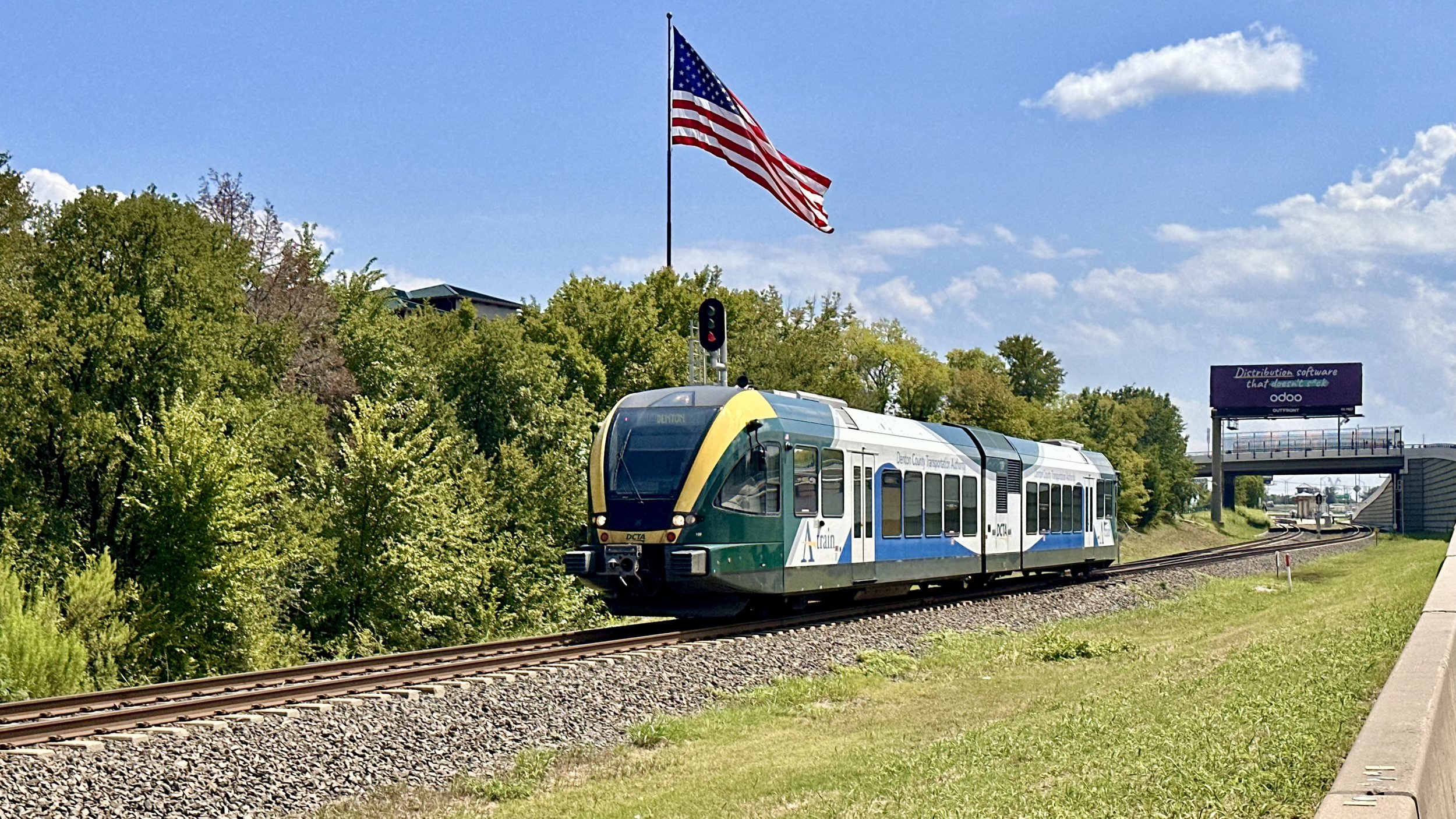
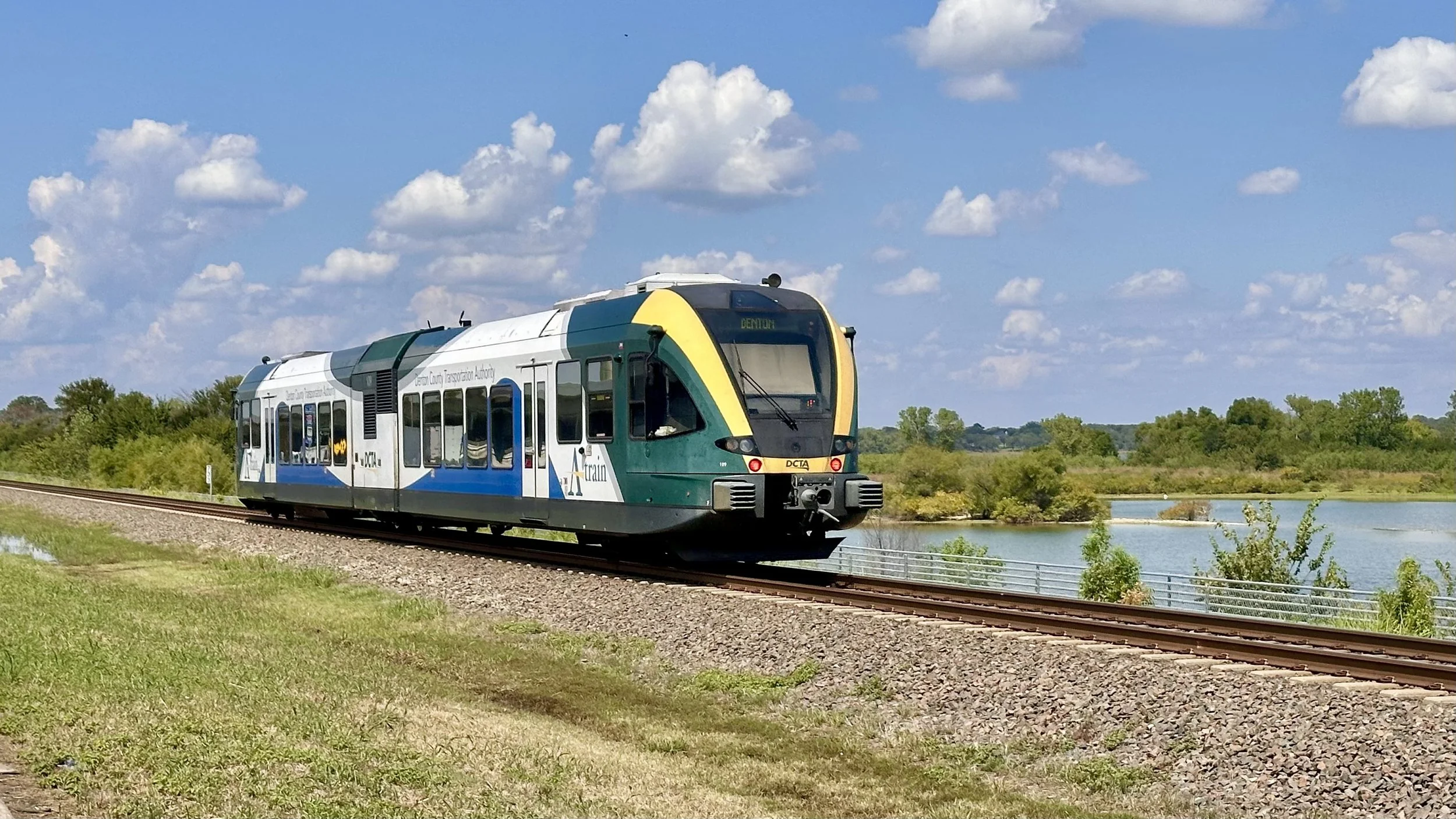
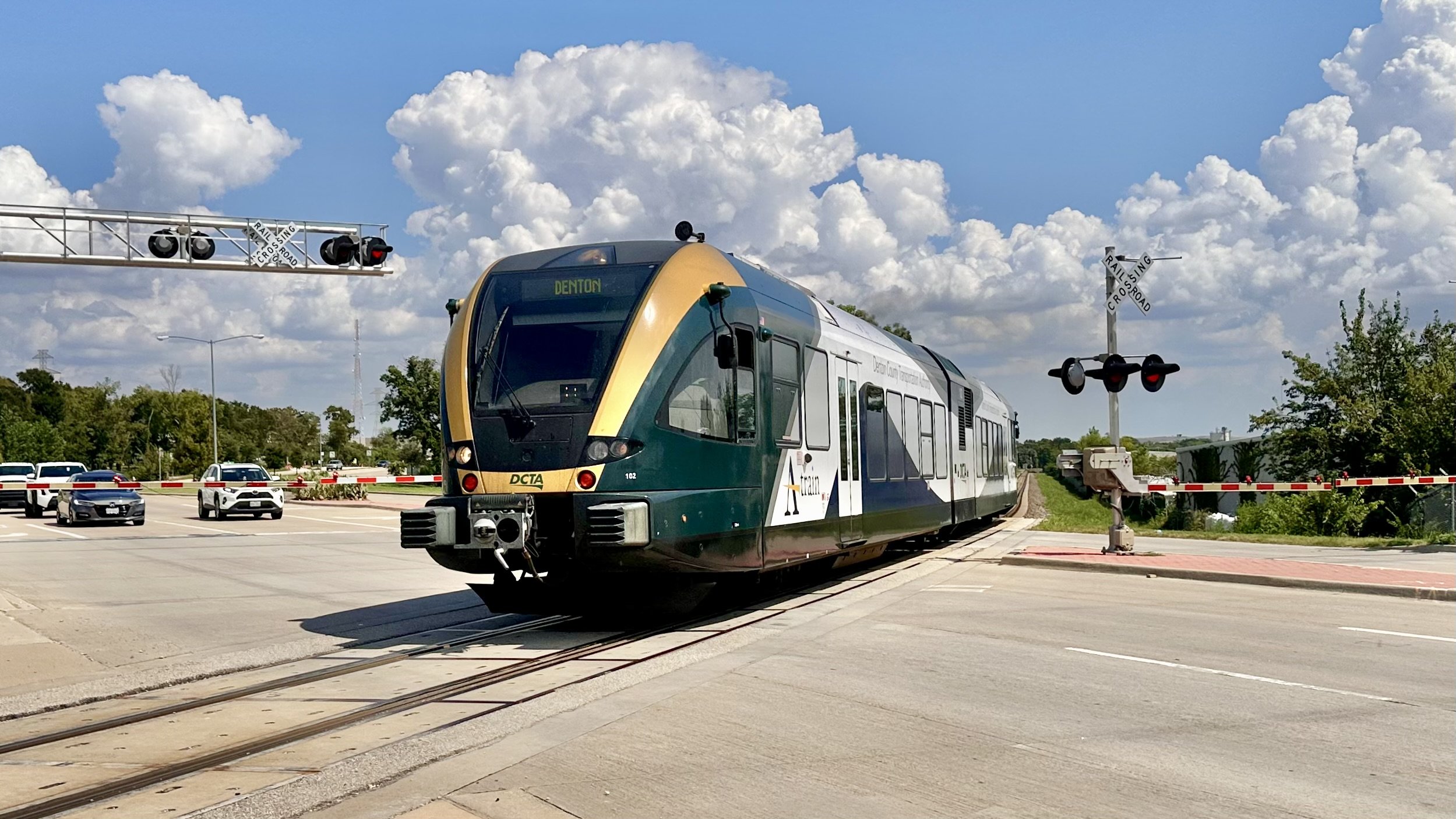
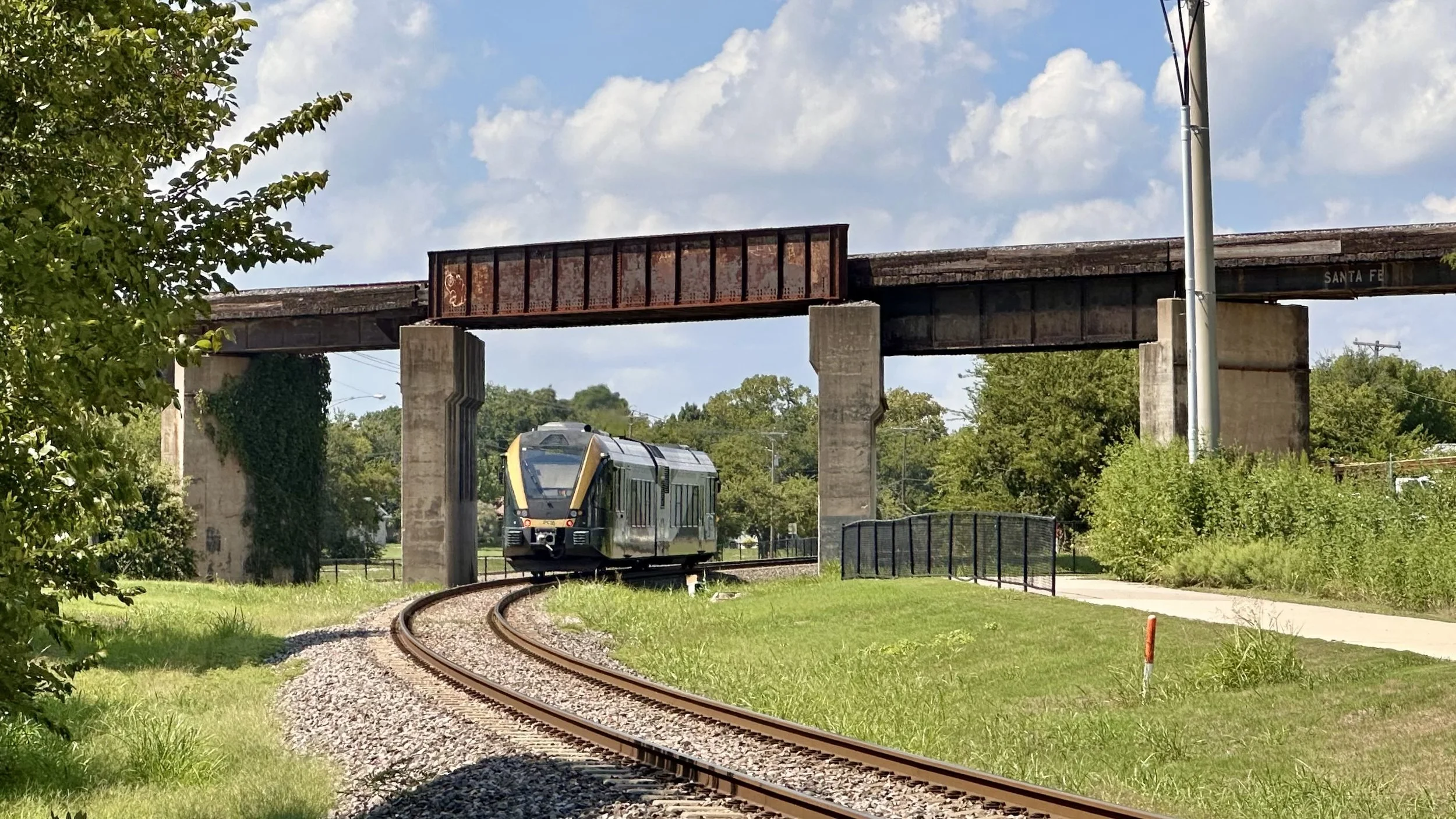
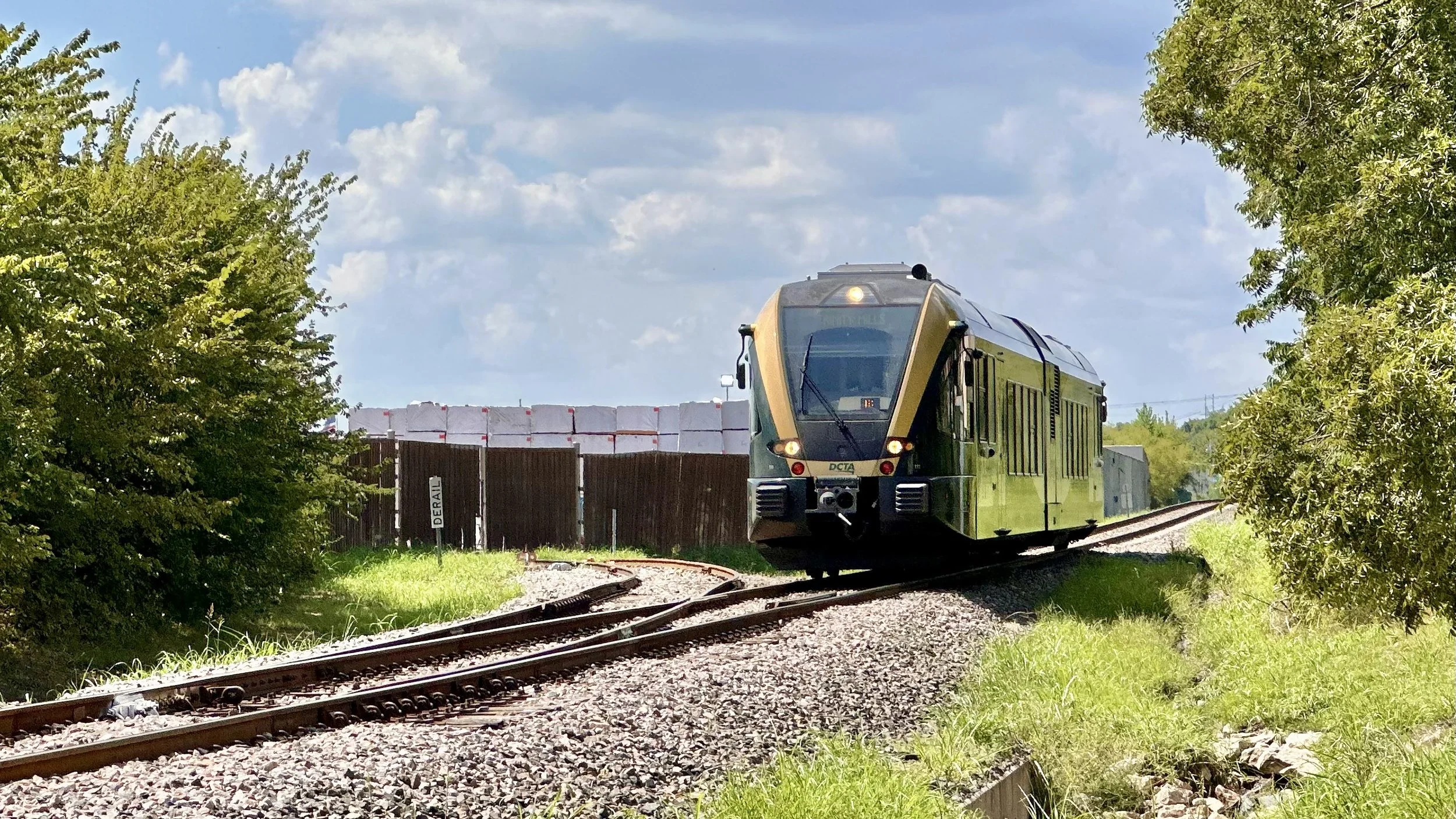
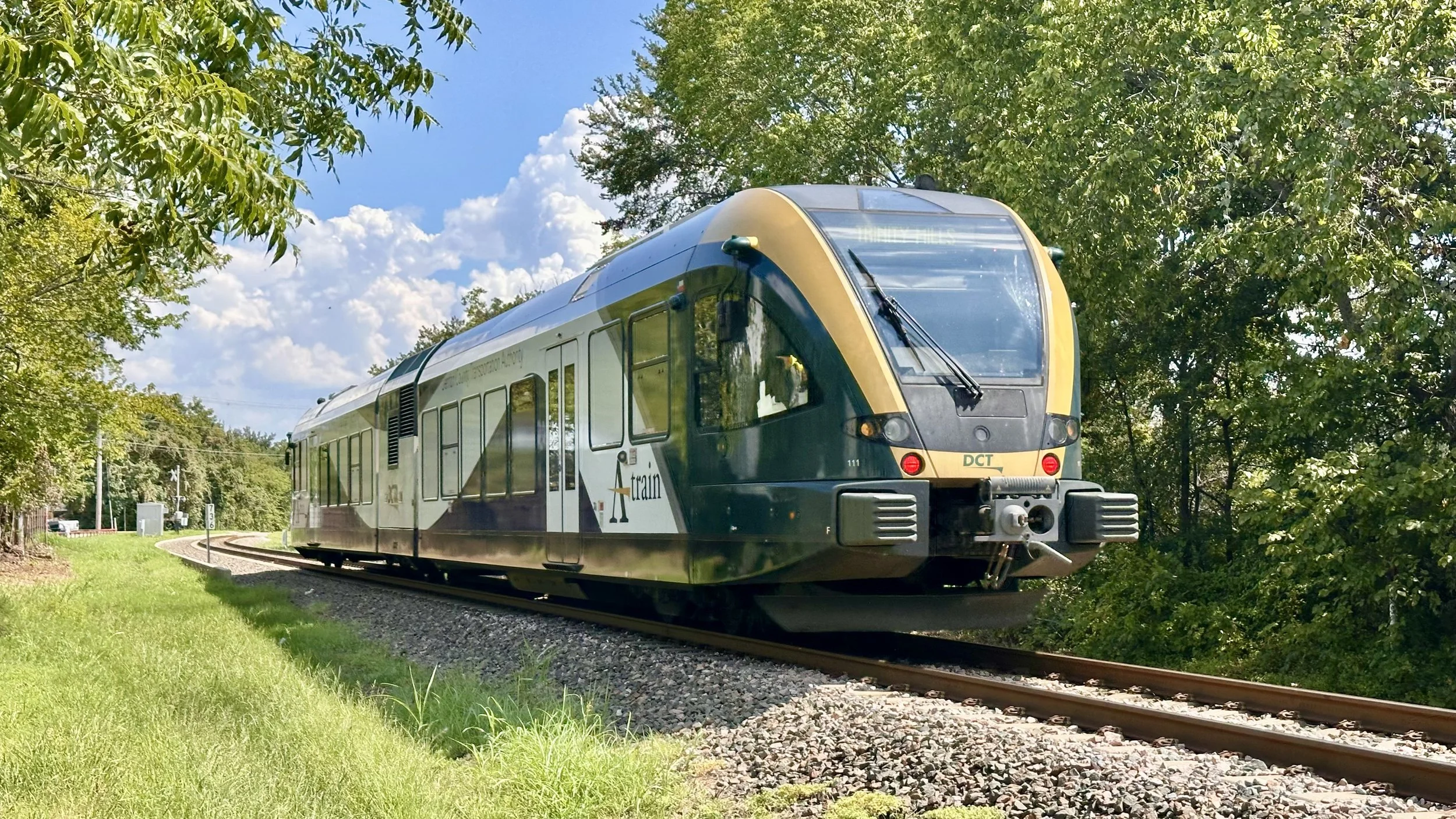
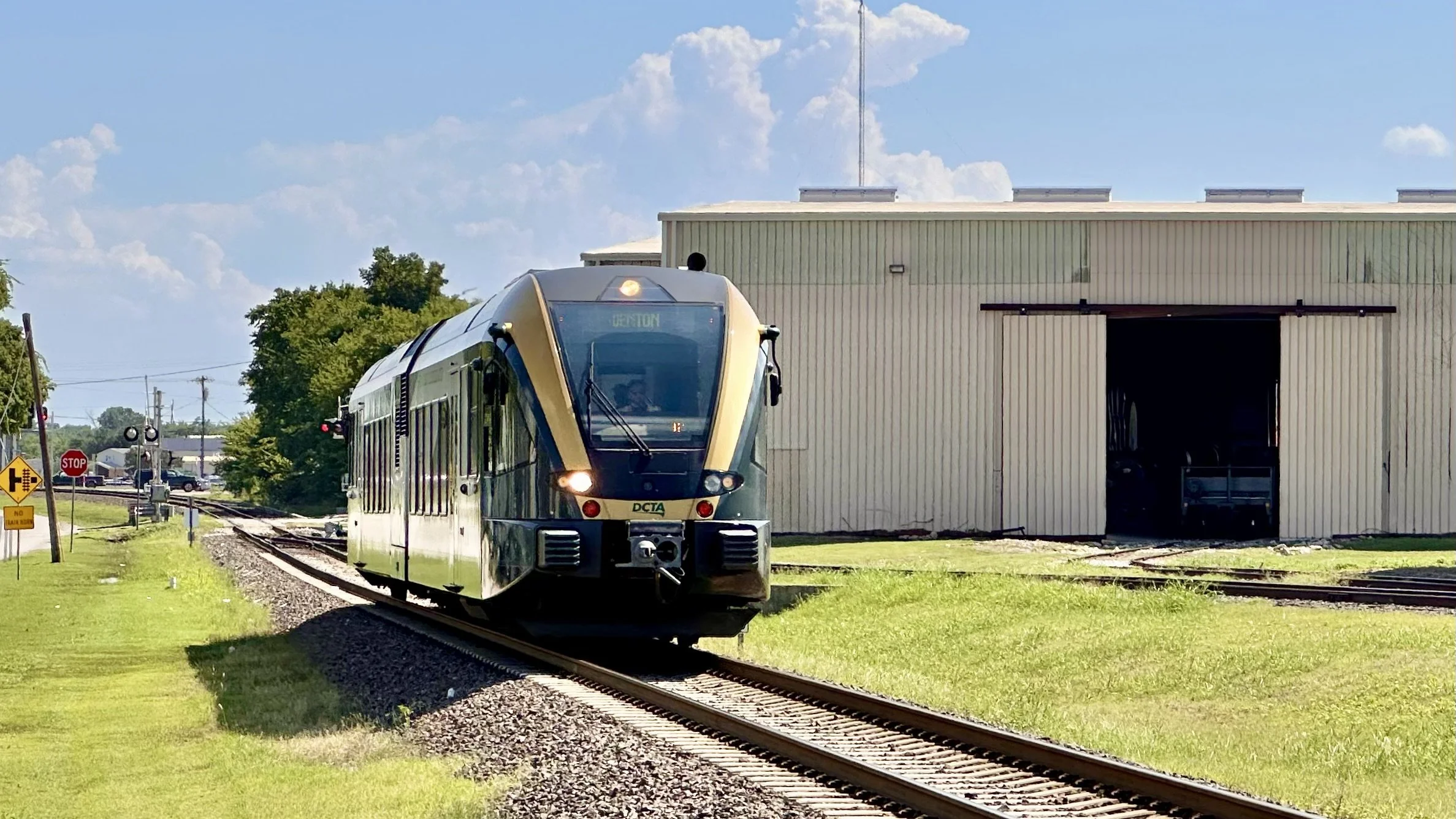
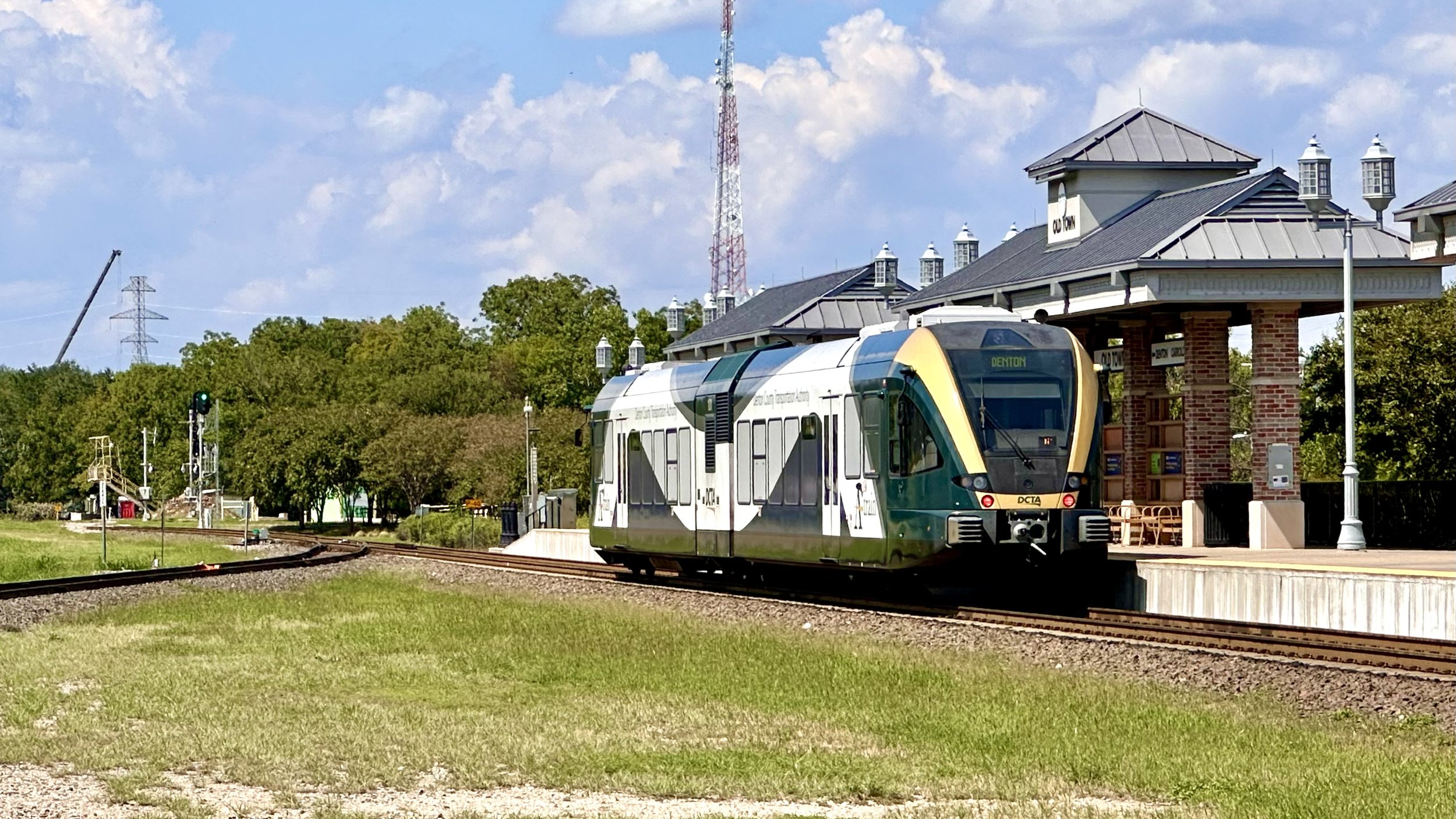
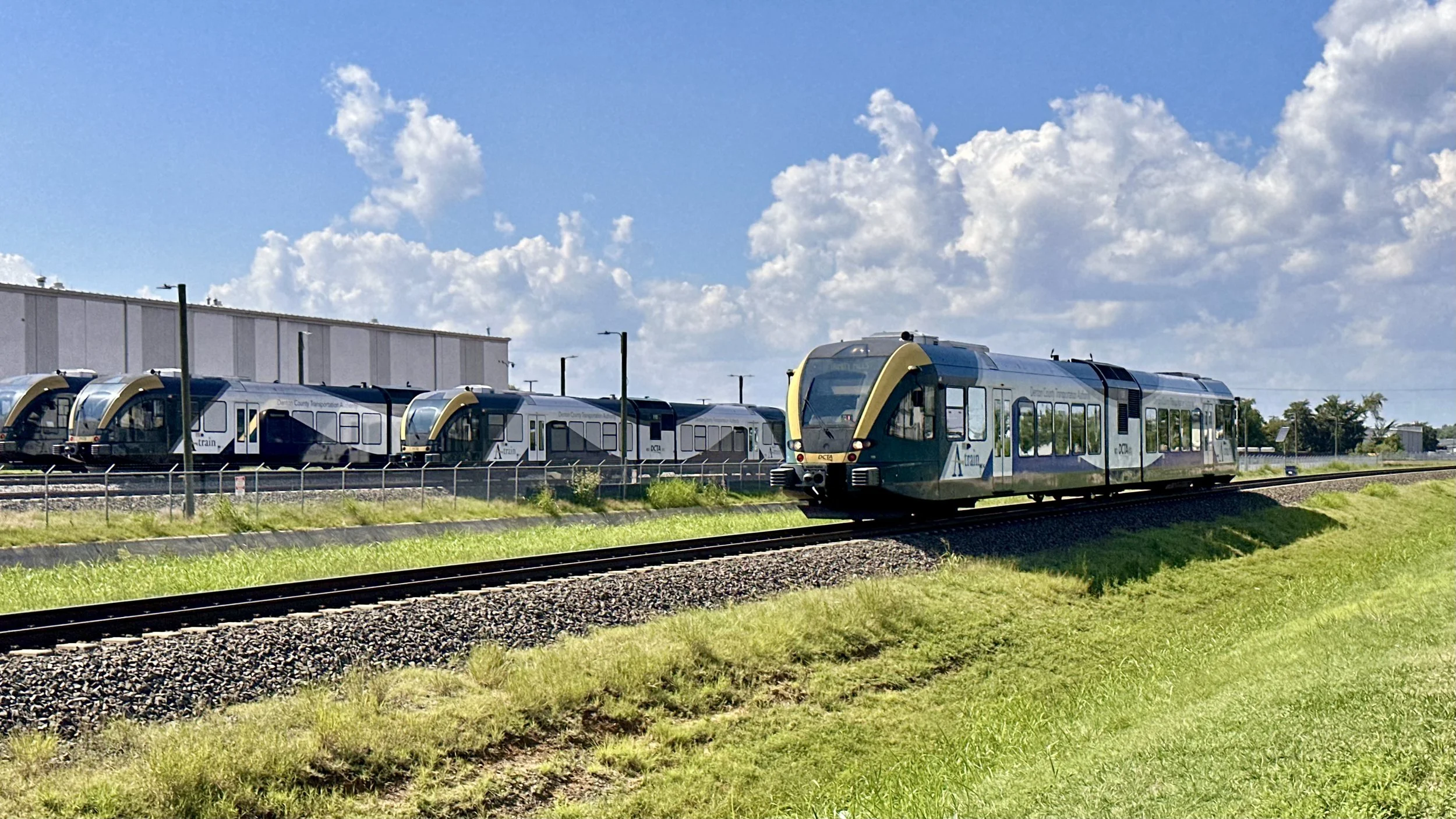
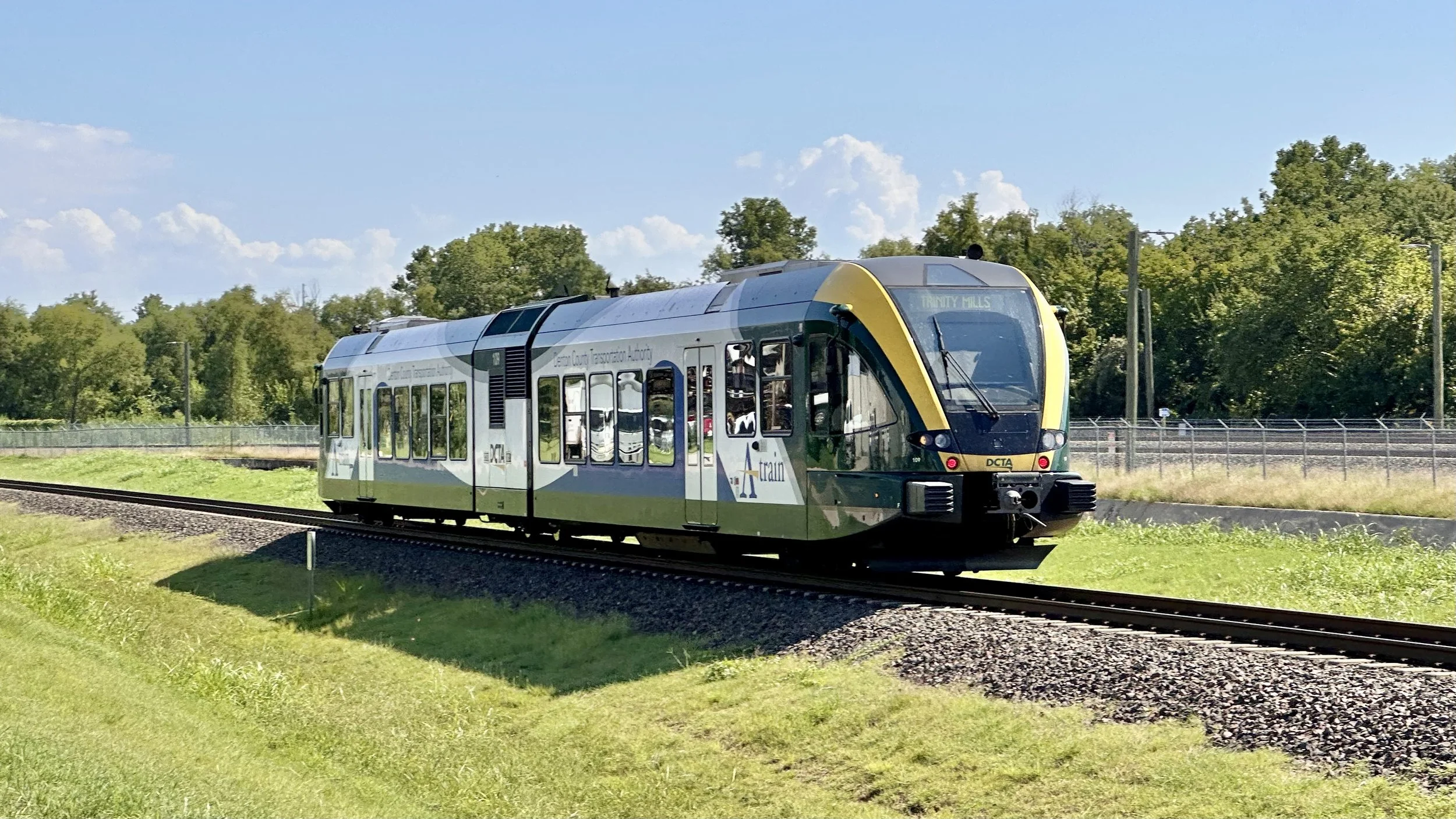
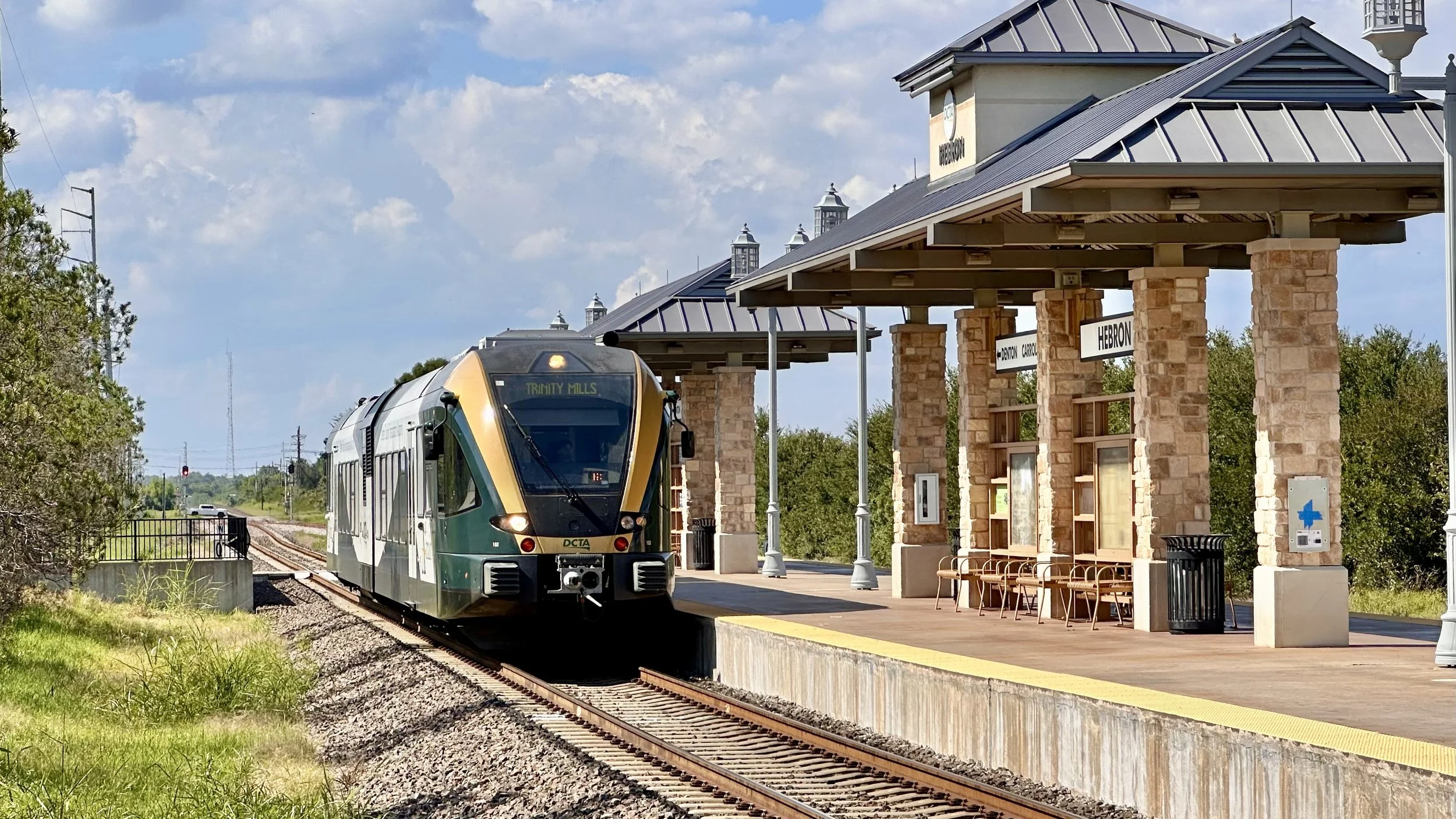
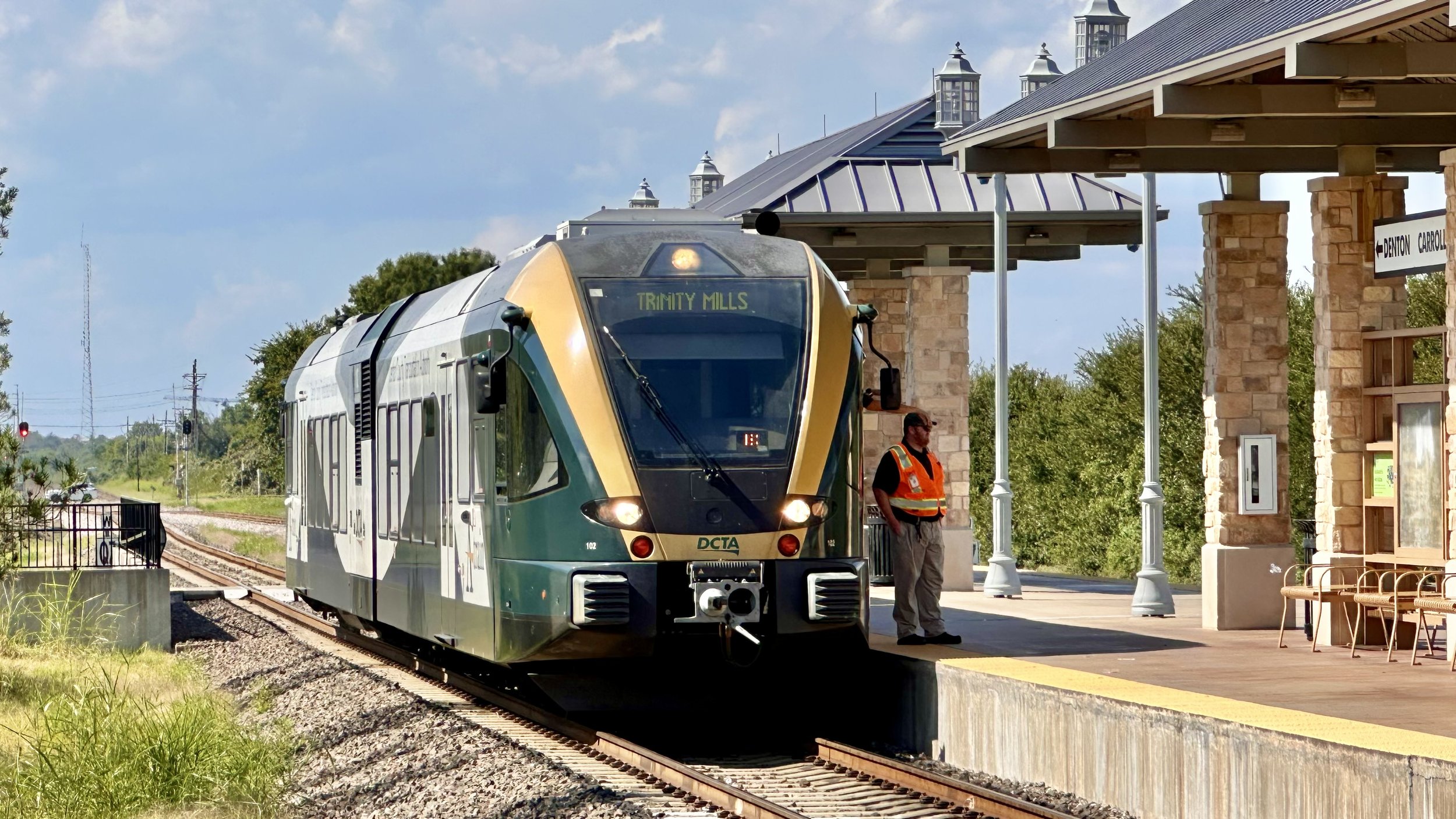
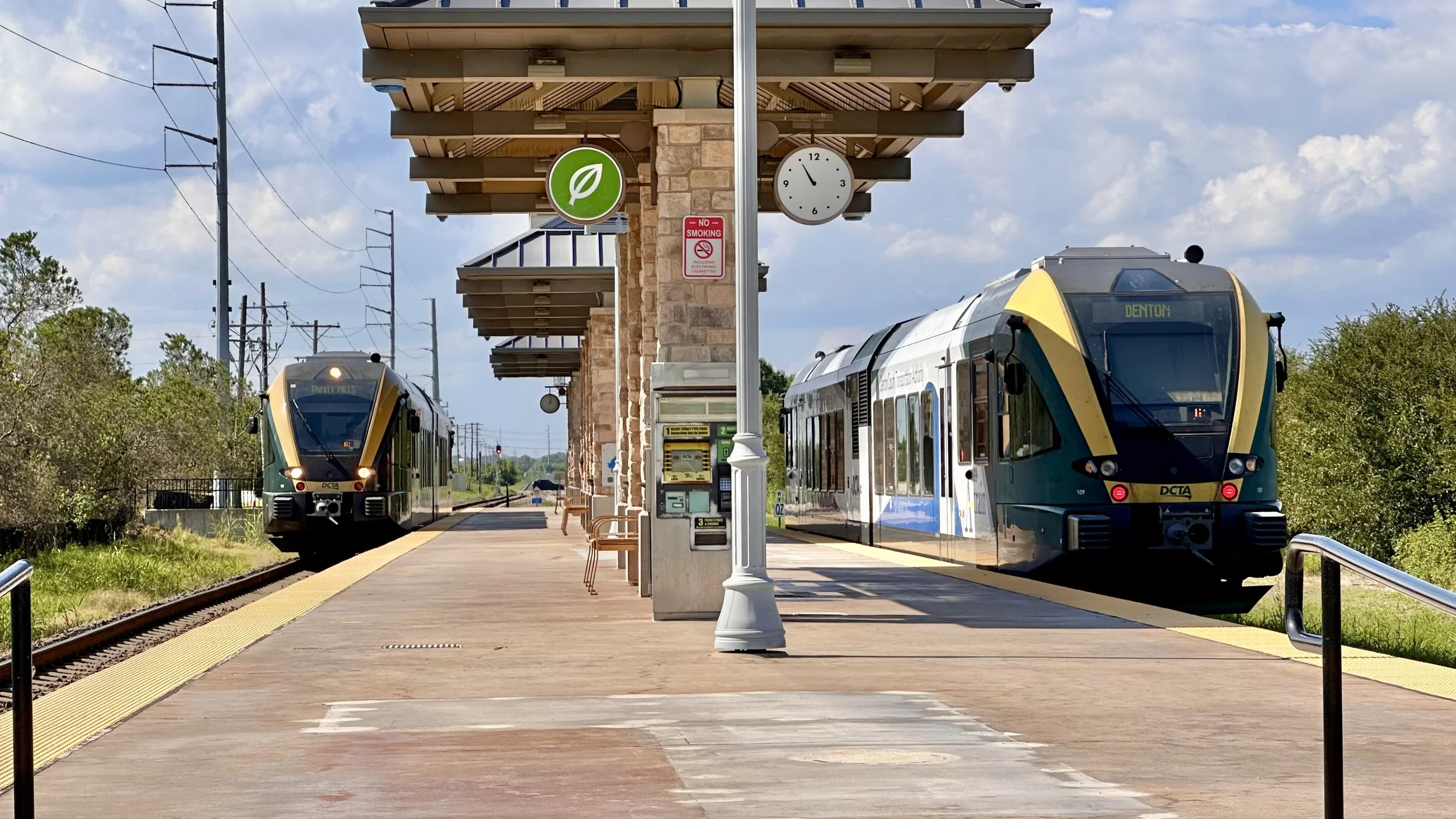
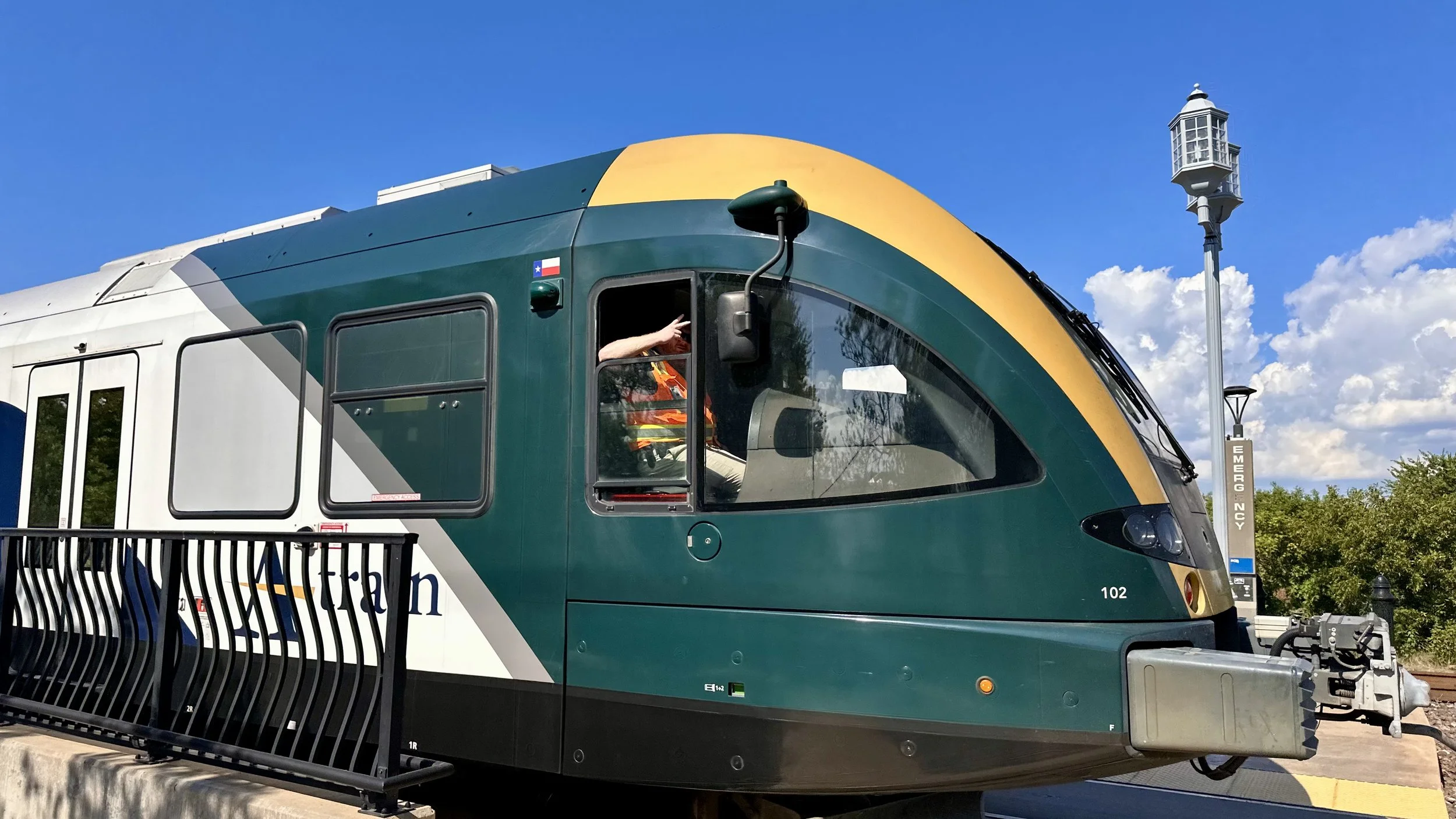
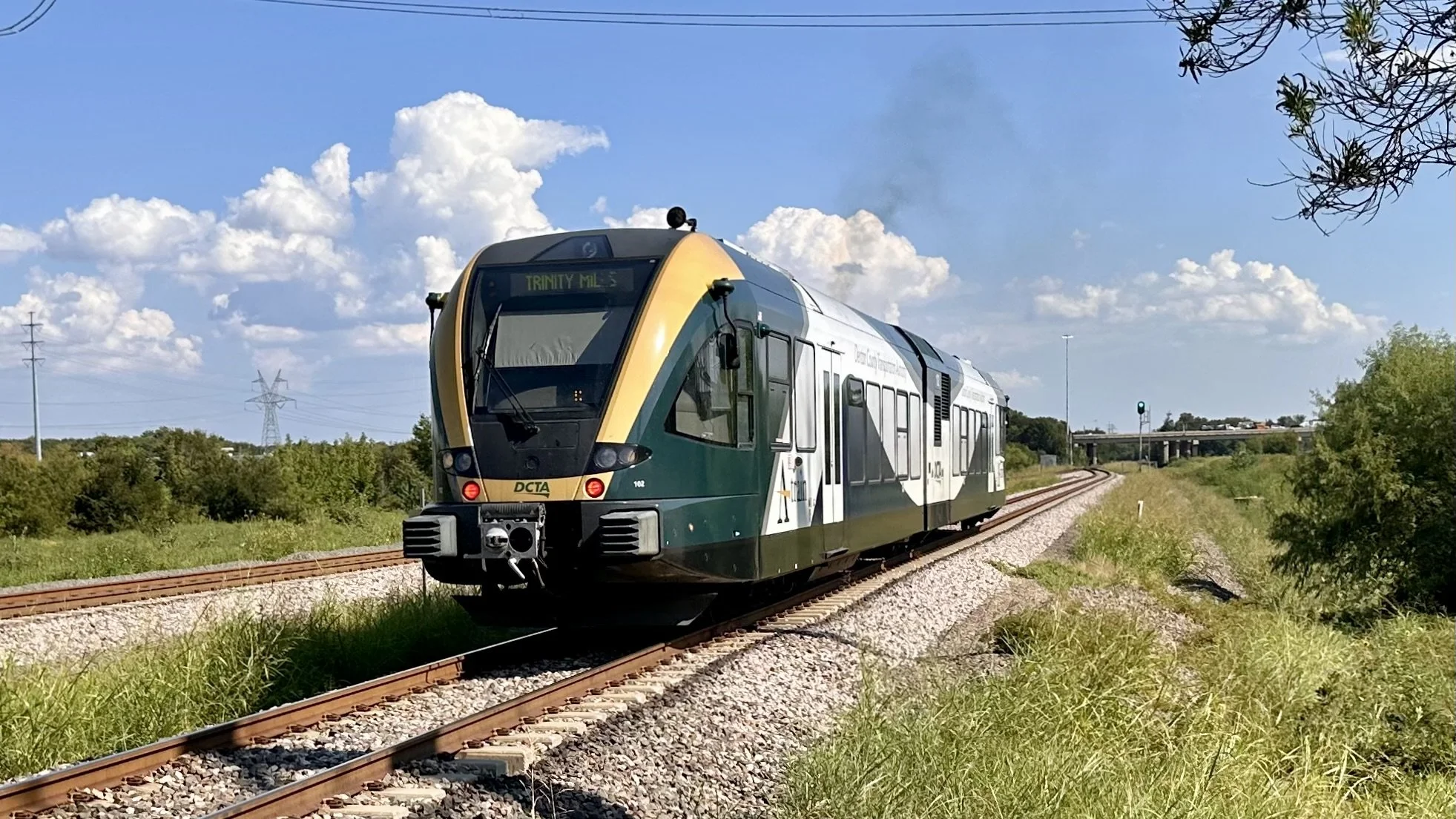
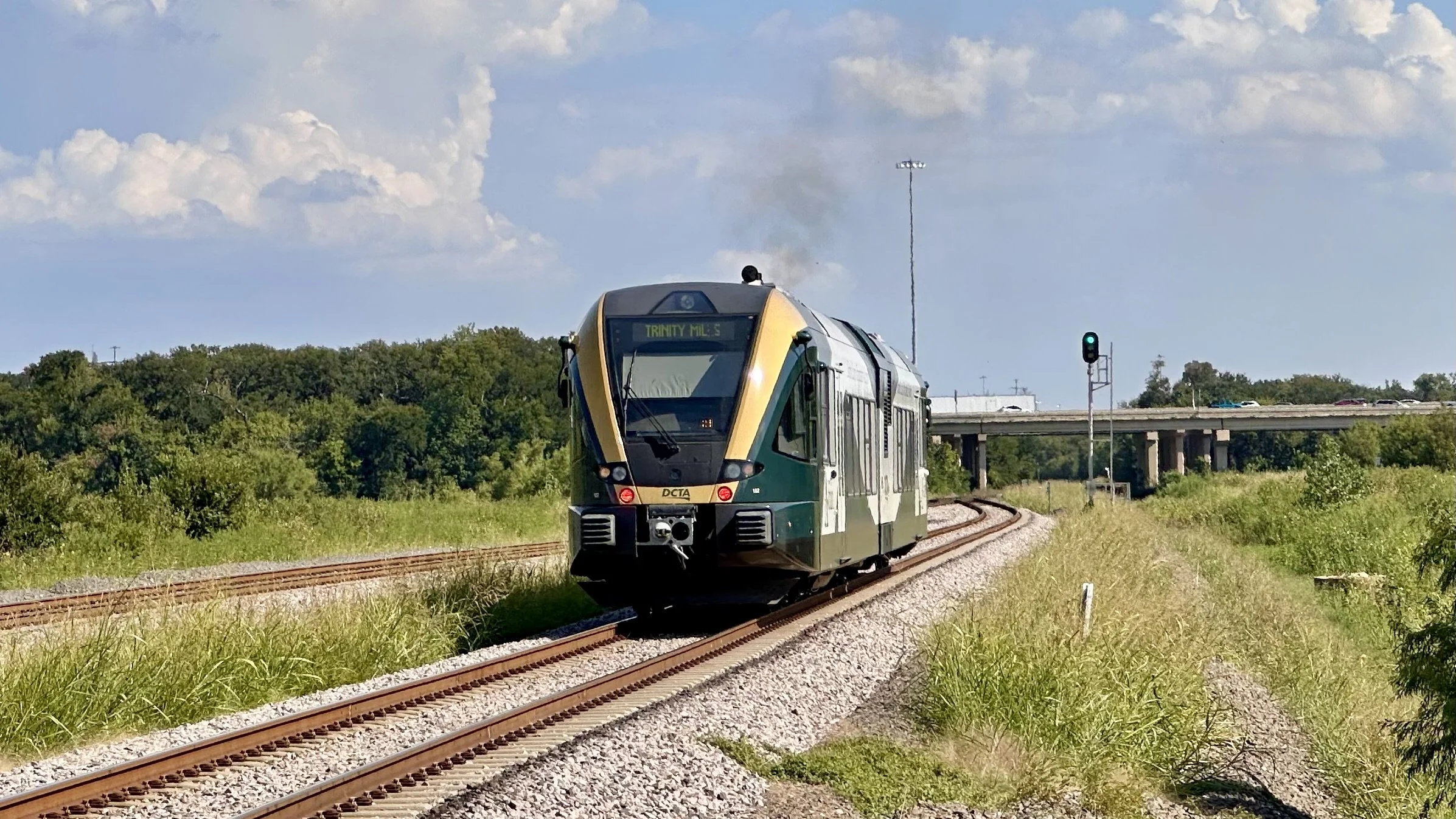
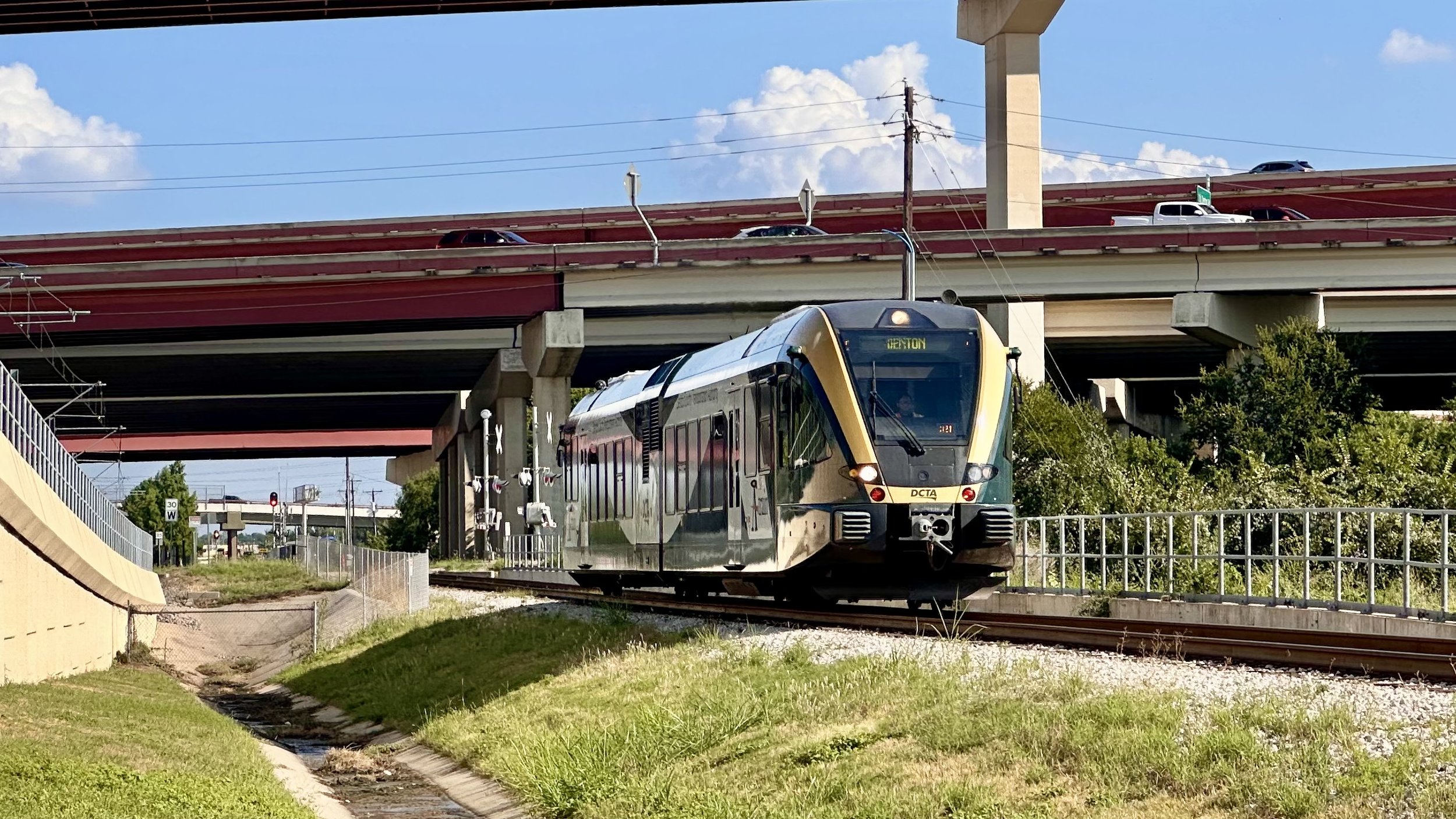
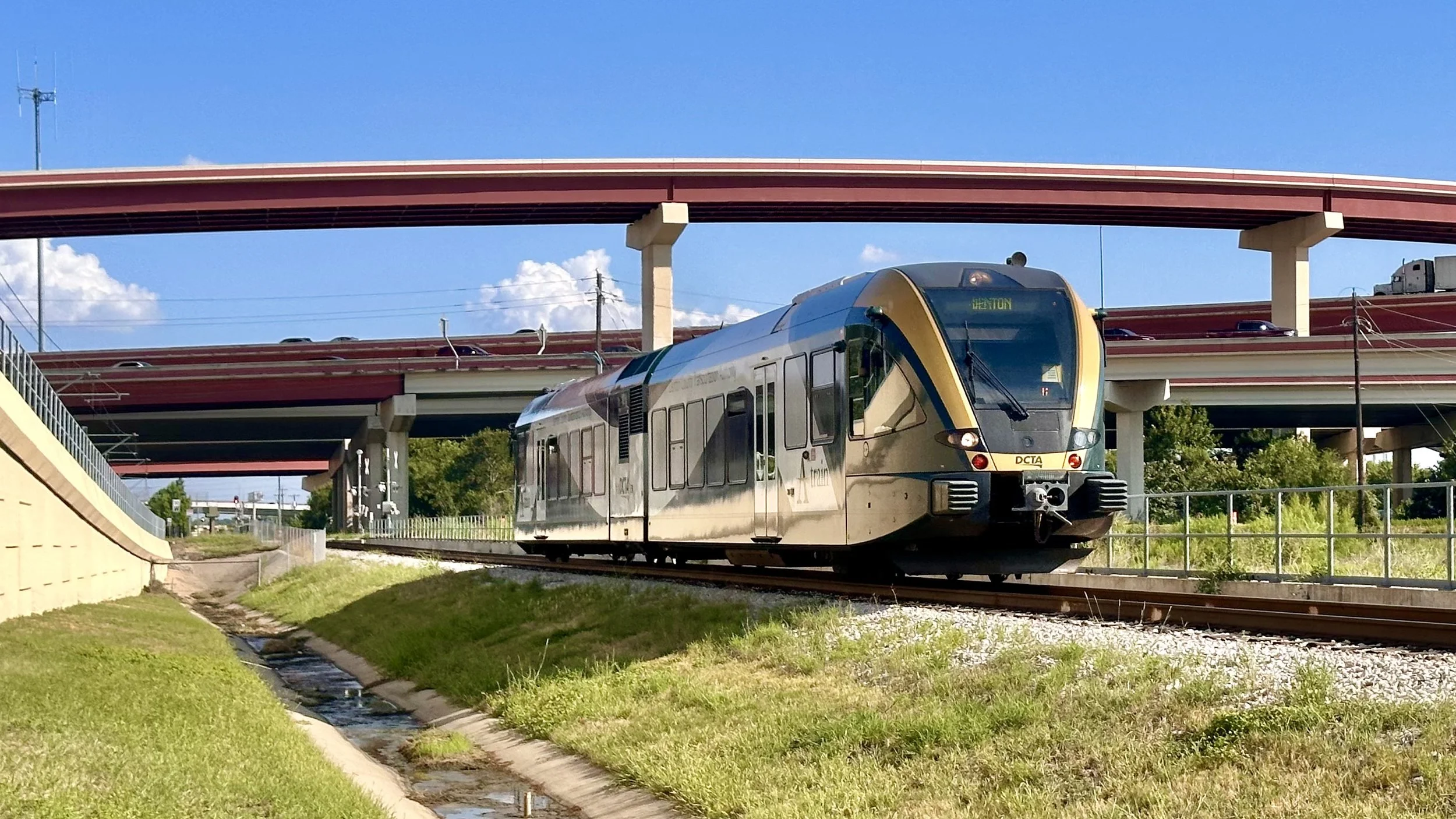
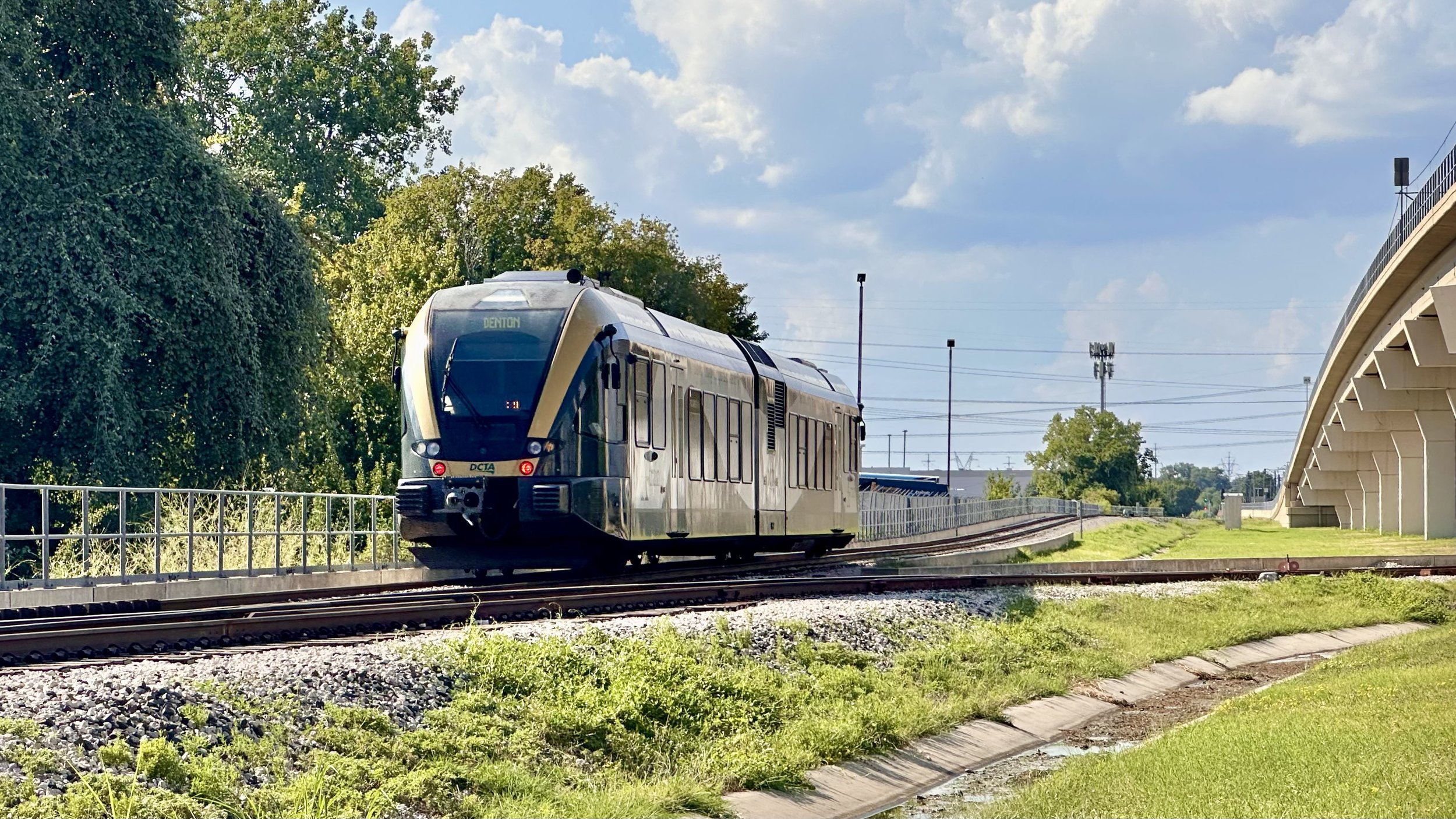
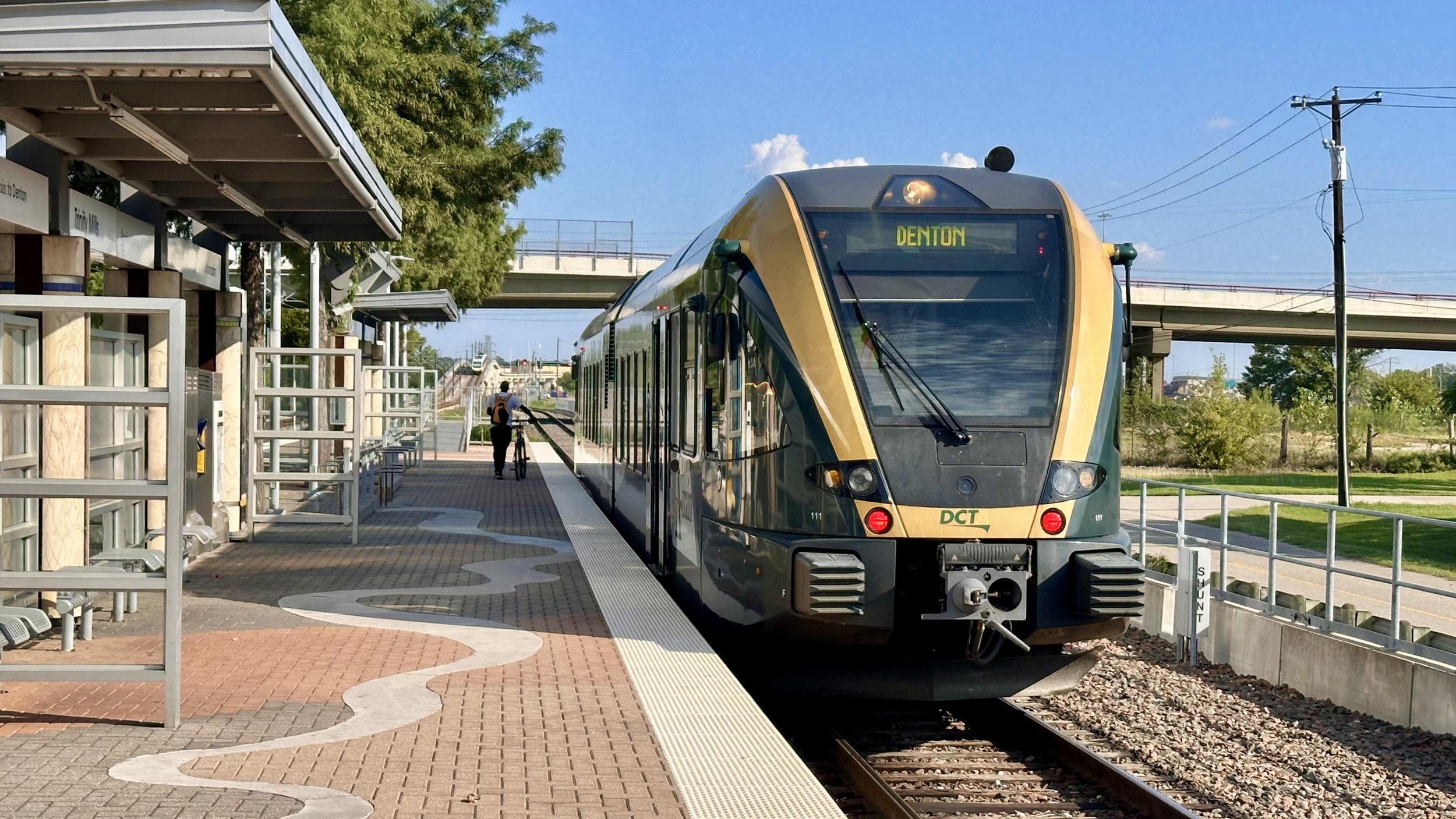
Opening in 2011 as the second DMU in Texas, the A-Train – so named because it serves Denton, at the apex of the DFW Metroplex (the A is even stylized with a thicker right line, depicting the A-Train’s route with respect to the region) – extends the DART Green Line from Downtown Dallas to Trinity Mills Station (oddly, one station short of the light rail’s terminus) all the way to Denton and the University of North Texas, one of the safest places for LGBTQ Texans.
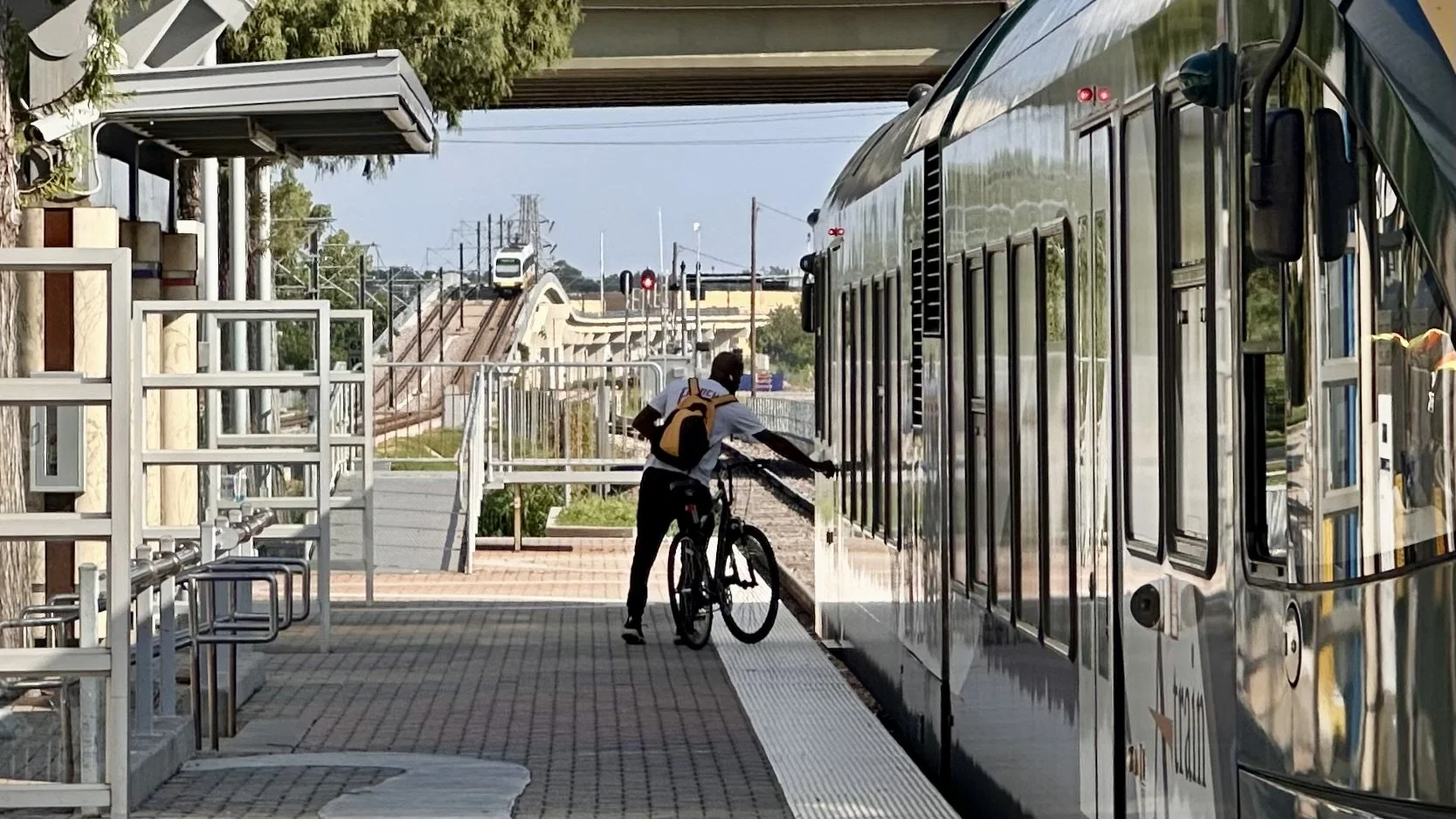
Seemingly quite small at only six stations and requiring a transfer to get to Dallas, the A-train is actually a remarkably useful regional train, working better for local commutes to and from Denton and weekend trips to the city than the daily super-commutes from Denton to Dallas one might initially expect. The all-day half-hourly schedules, long service hours, and timed cross-platform transfers to the Green Line make the A-Train even more seamless than many other DMUs. Furthermore, the A-Train was the first DMU to have a long-distance bike trail designed into its route from the beginning, paralleling almost its entire length to make for convenient last-mile connections. An infill station at a community college and an extension one station south to connect with the new Silver Line at Carrolton station are both planned.
Freight-wise, the A-Train is a branchline-style DMU with light freight traffic, similarly to the Sprinter. The end of the line at Trinity Mills is just short of a very large and complicated switching district; the DMU passes a few additional spurs in its first few kilometers; and a few more sporadic spurs and switching areas are found up the line to a switching area near the half-way point at Old Town. Denton used to have a northbound freight connection to the UP Choctaw Subdivision, but this has since been removed.
While less dramatic and exciting a modeling subject as other DMUs, the A-Train demonstrates once again how closely DMUs fit in with traditional freight switching lines. Its one-track southern terminus amidst a switching area is small enough to fit on any layout, and the Stadler GTW 2/6s are readily available in multiple scales. A prototype-based layout would likely center around the Trinity Mills switching area and tack the DMU onto one end before heading off to staging. Alternatively, the A-Train inspires freelancing DMU transit on practically any switching or branchline layout.
SMART
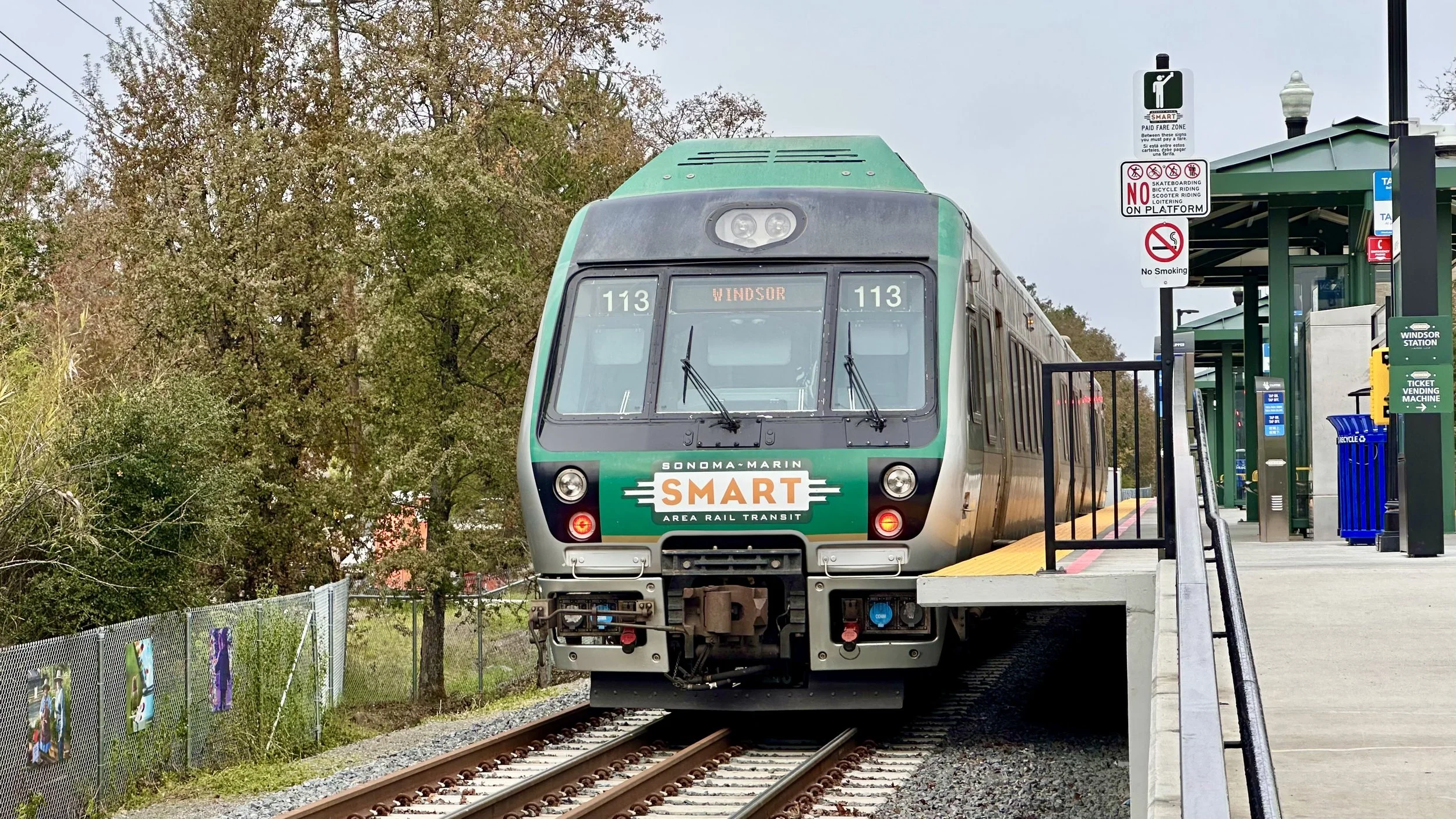
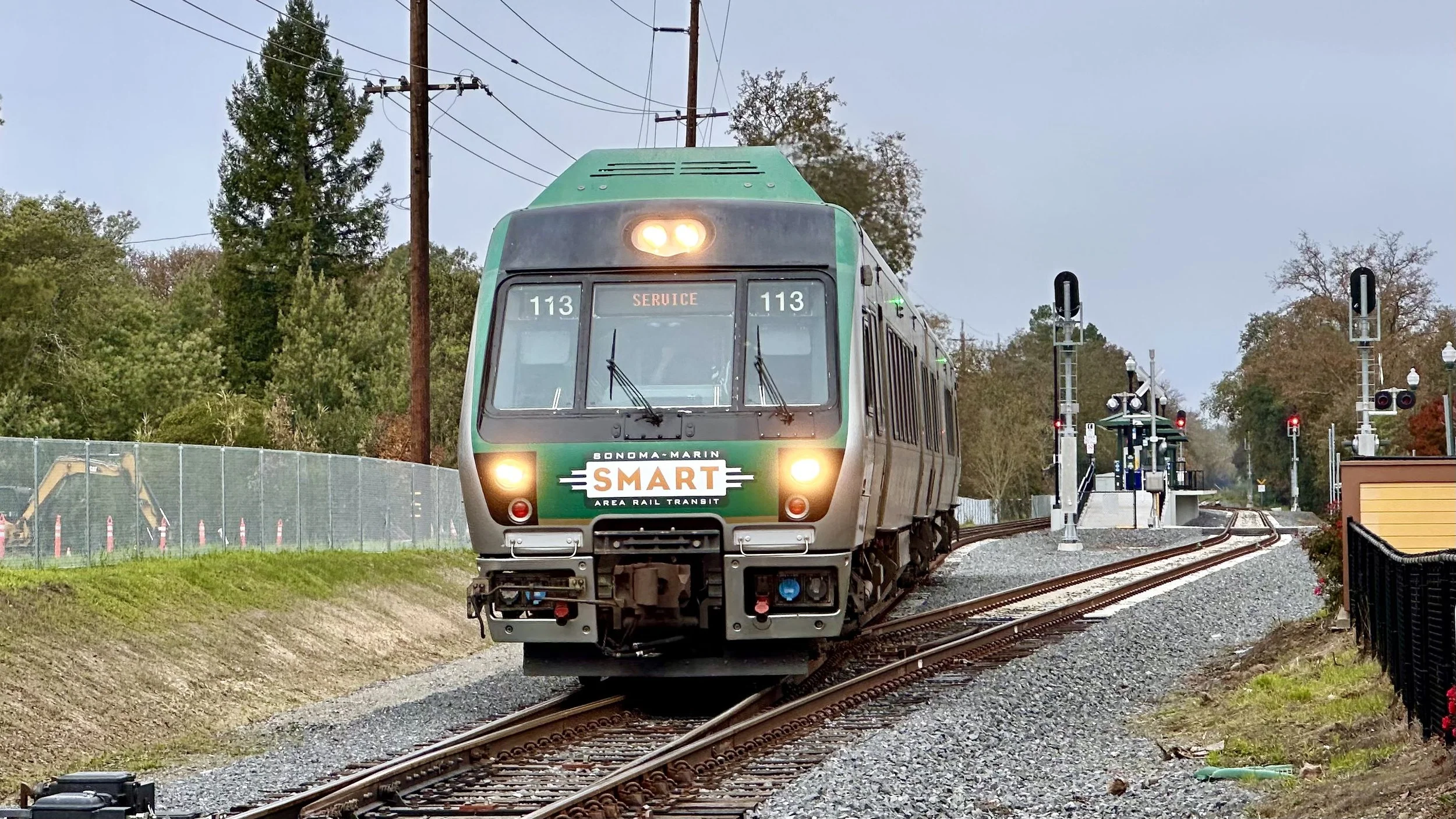
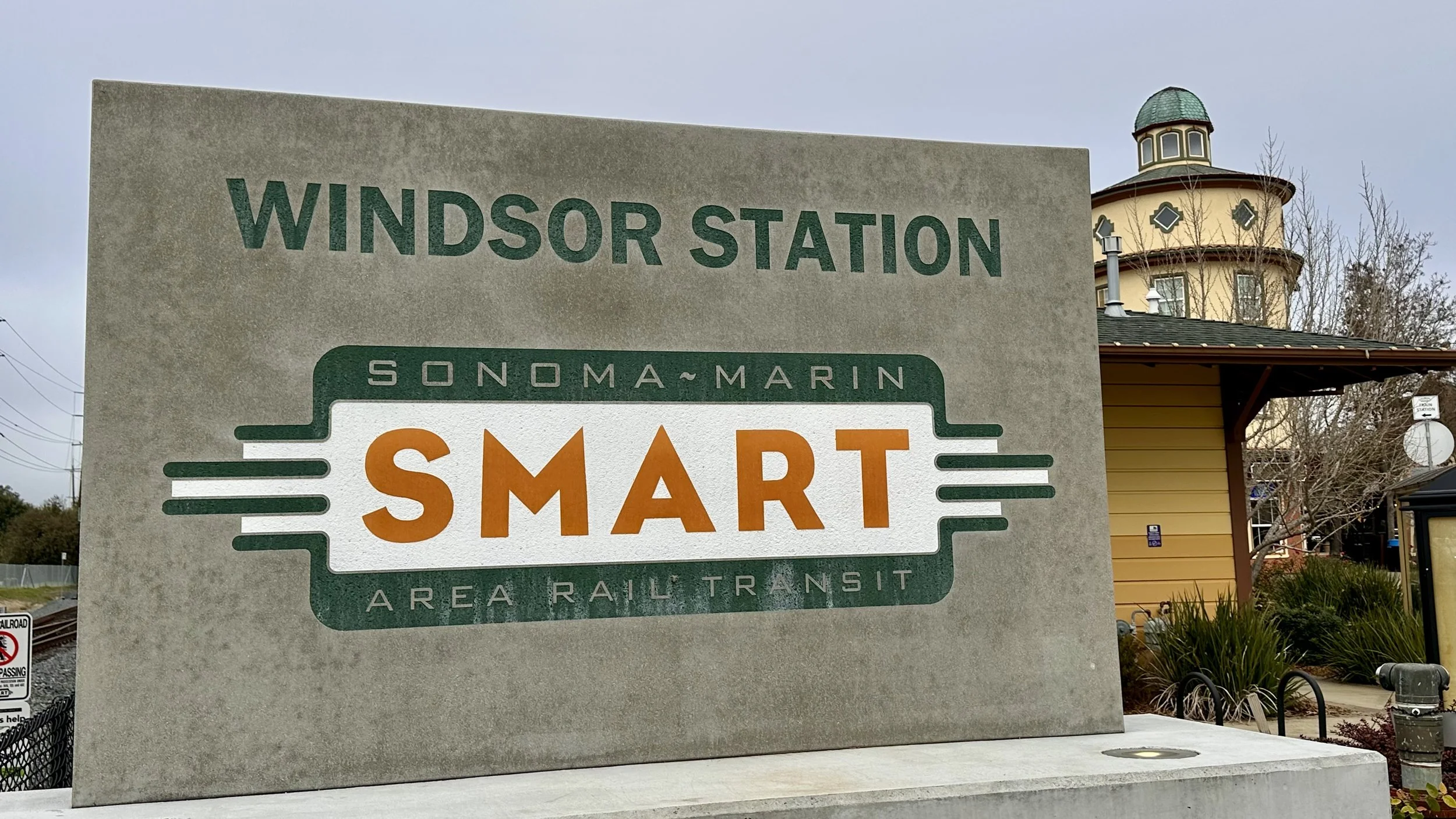
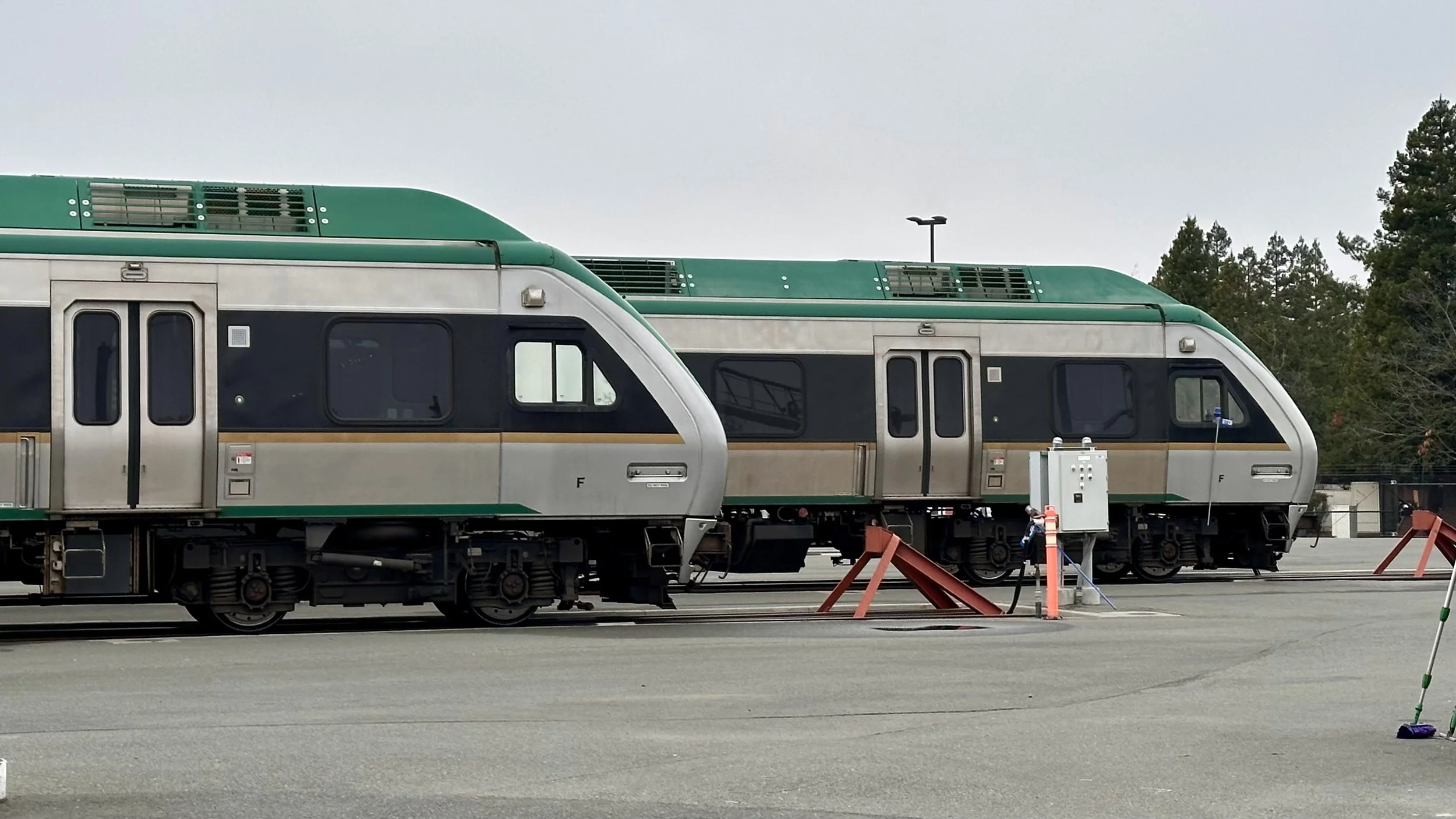
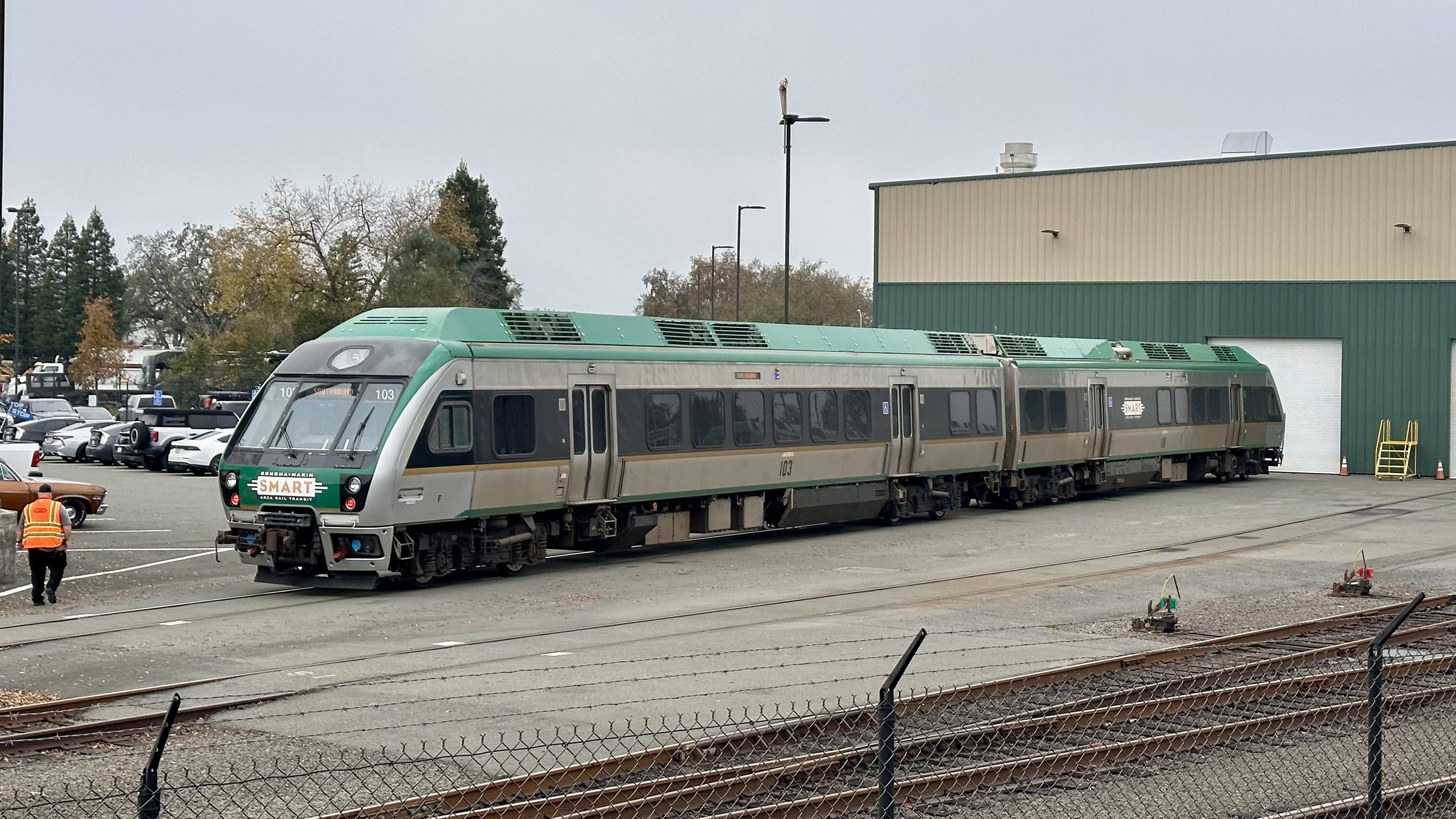
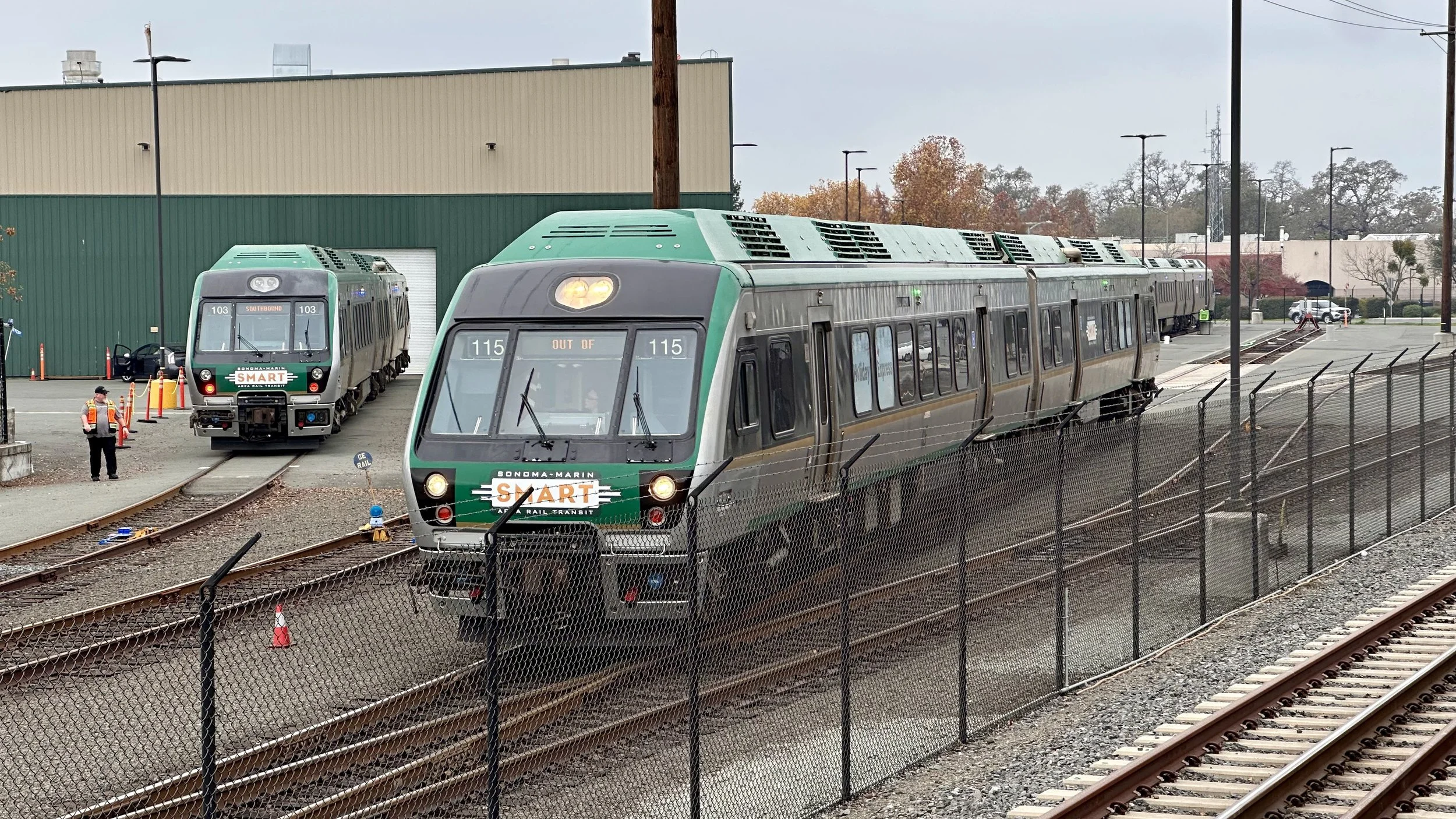
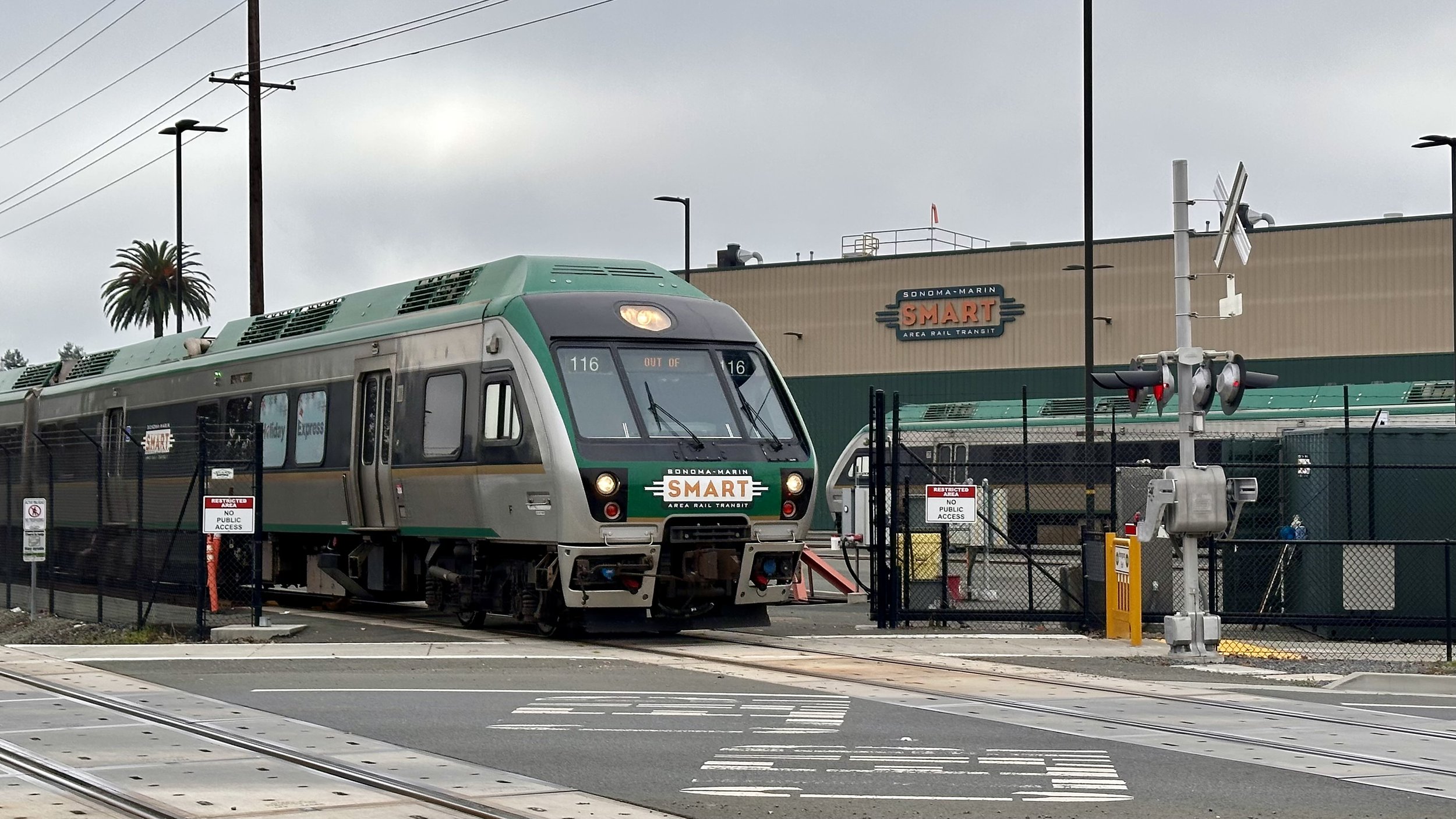
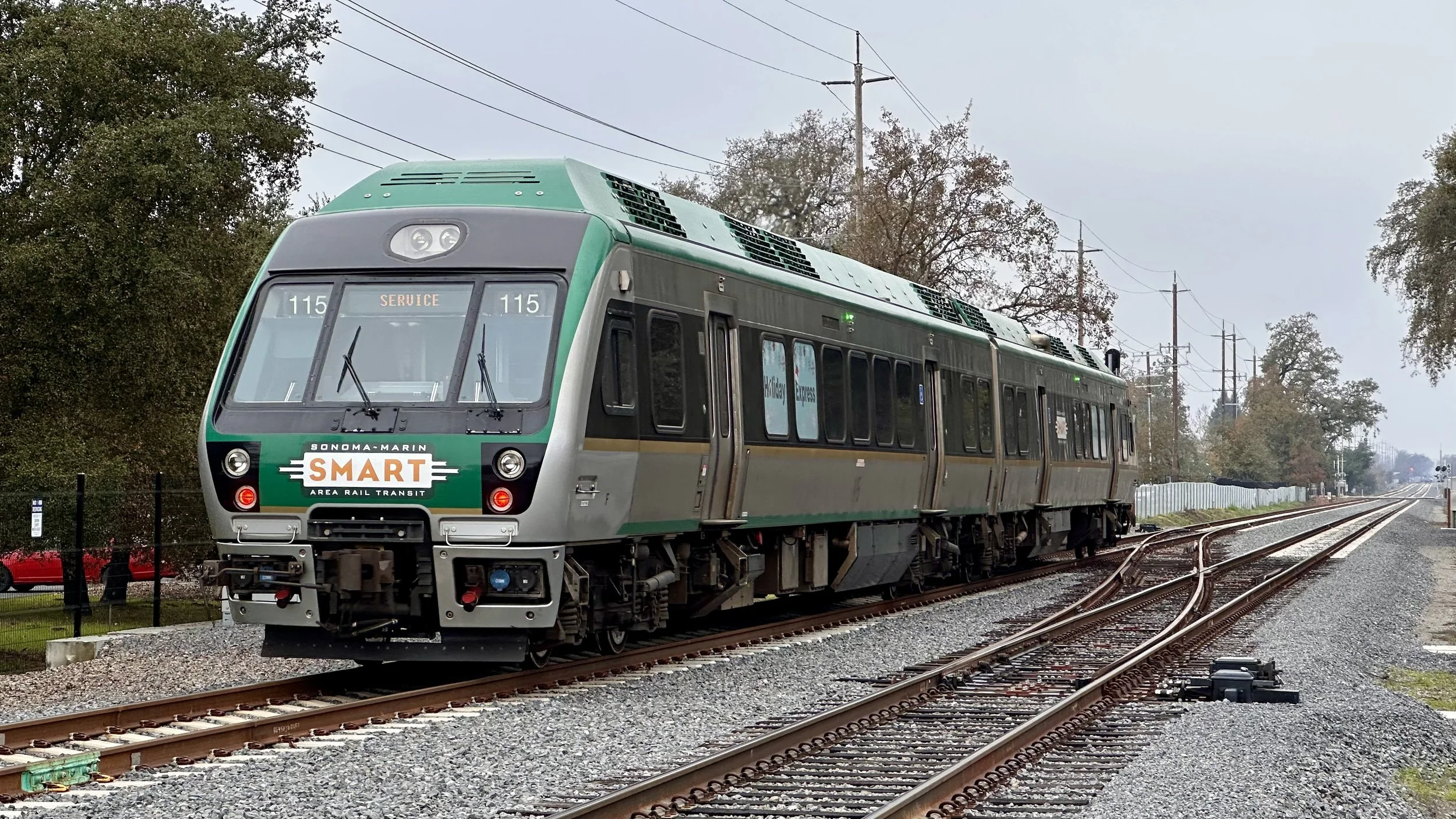
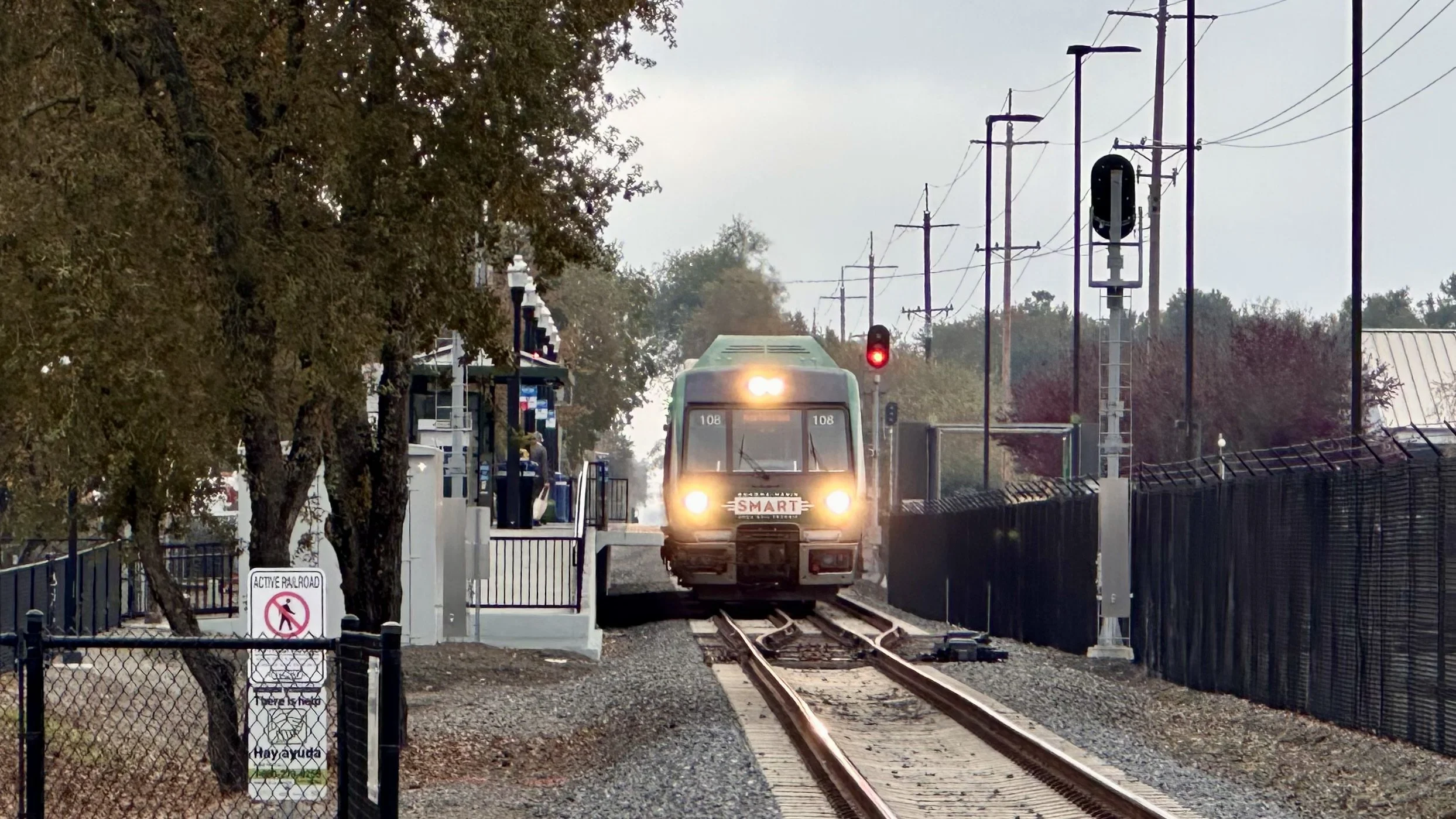
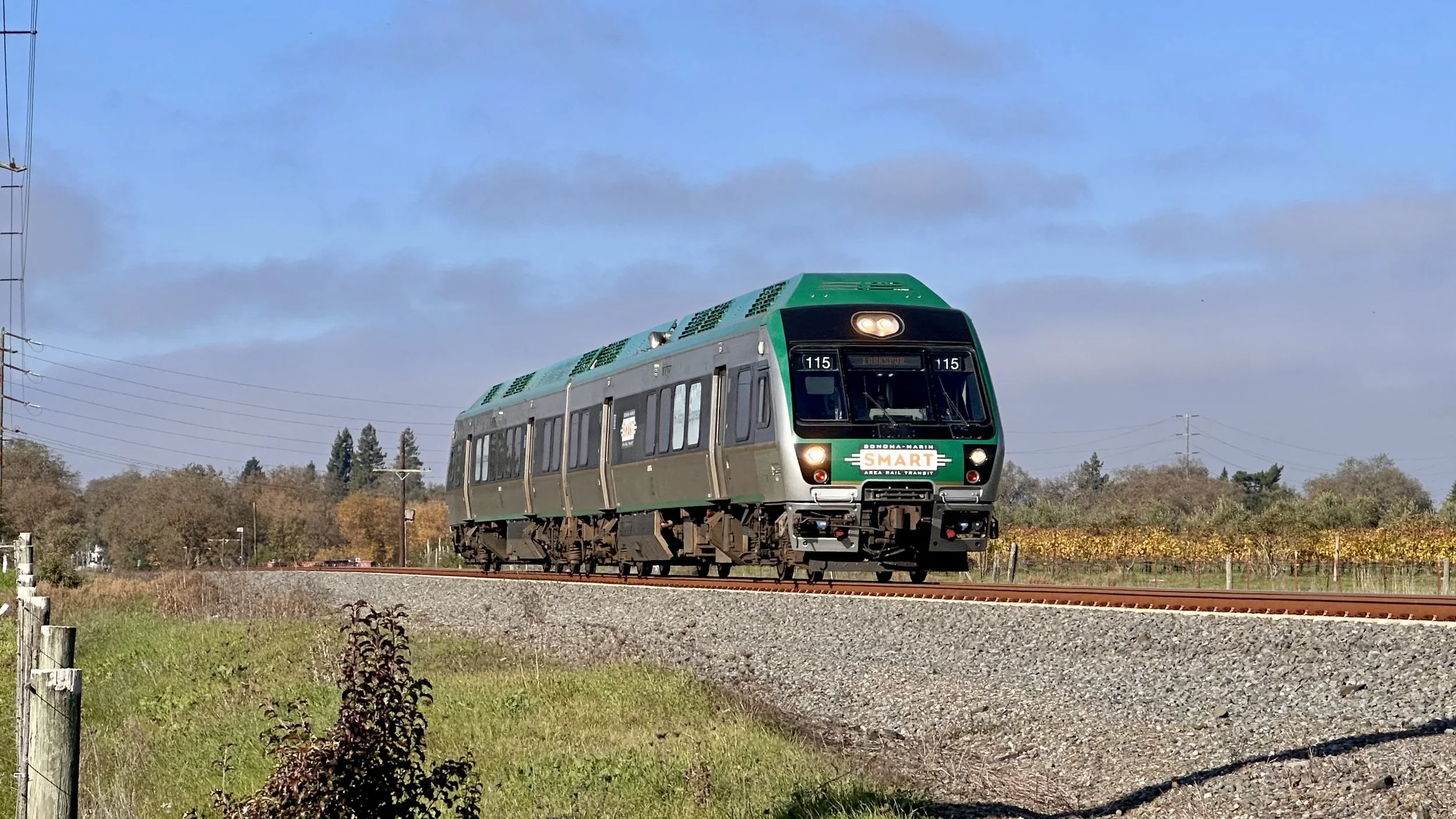
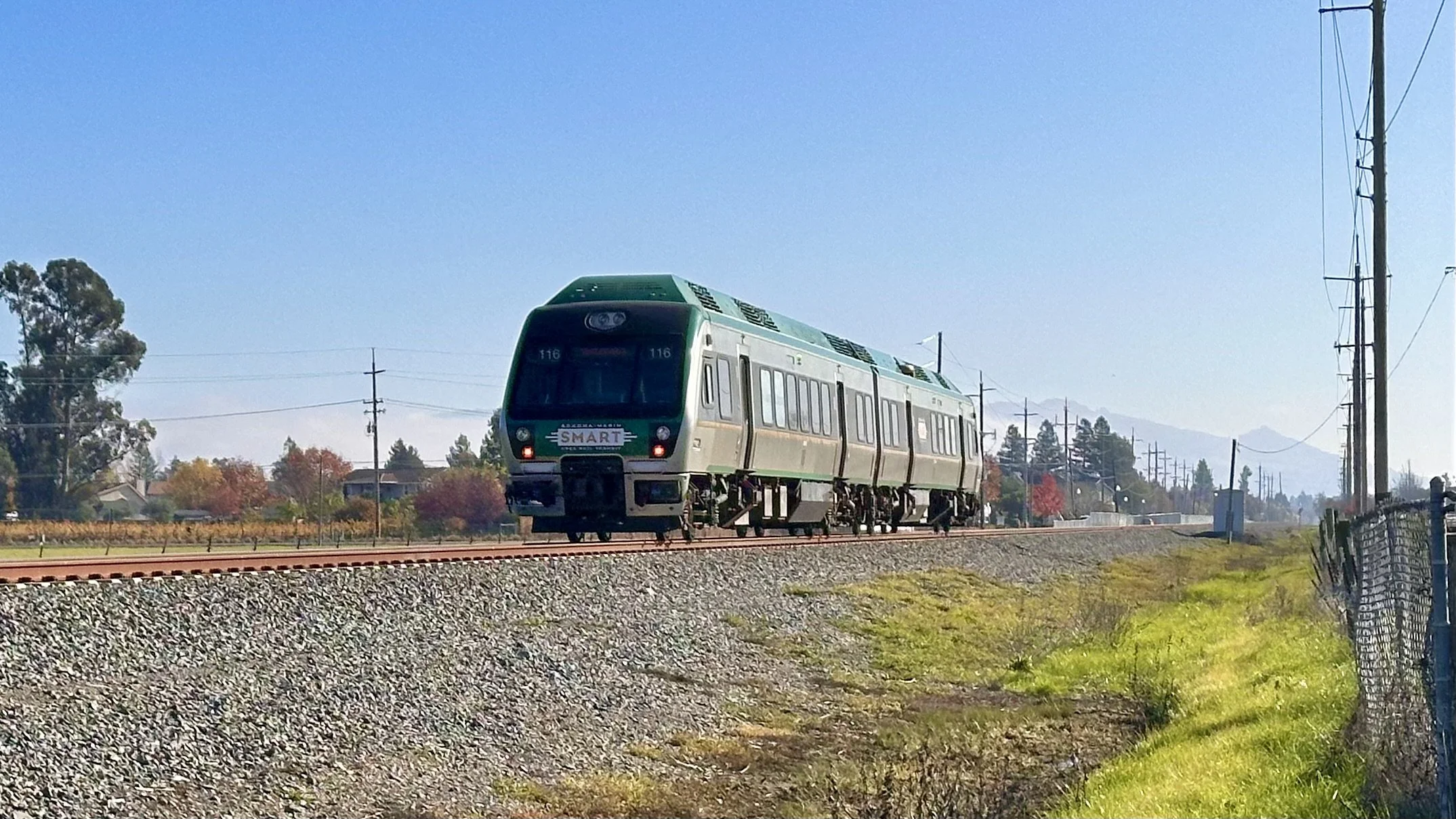
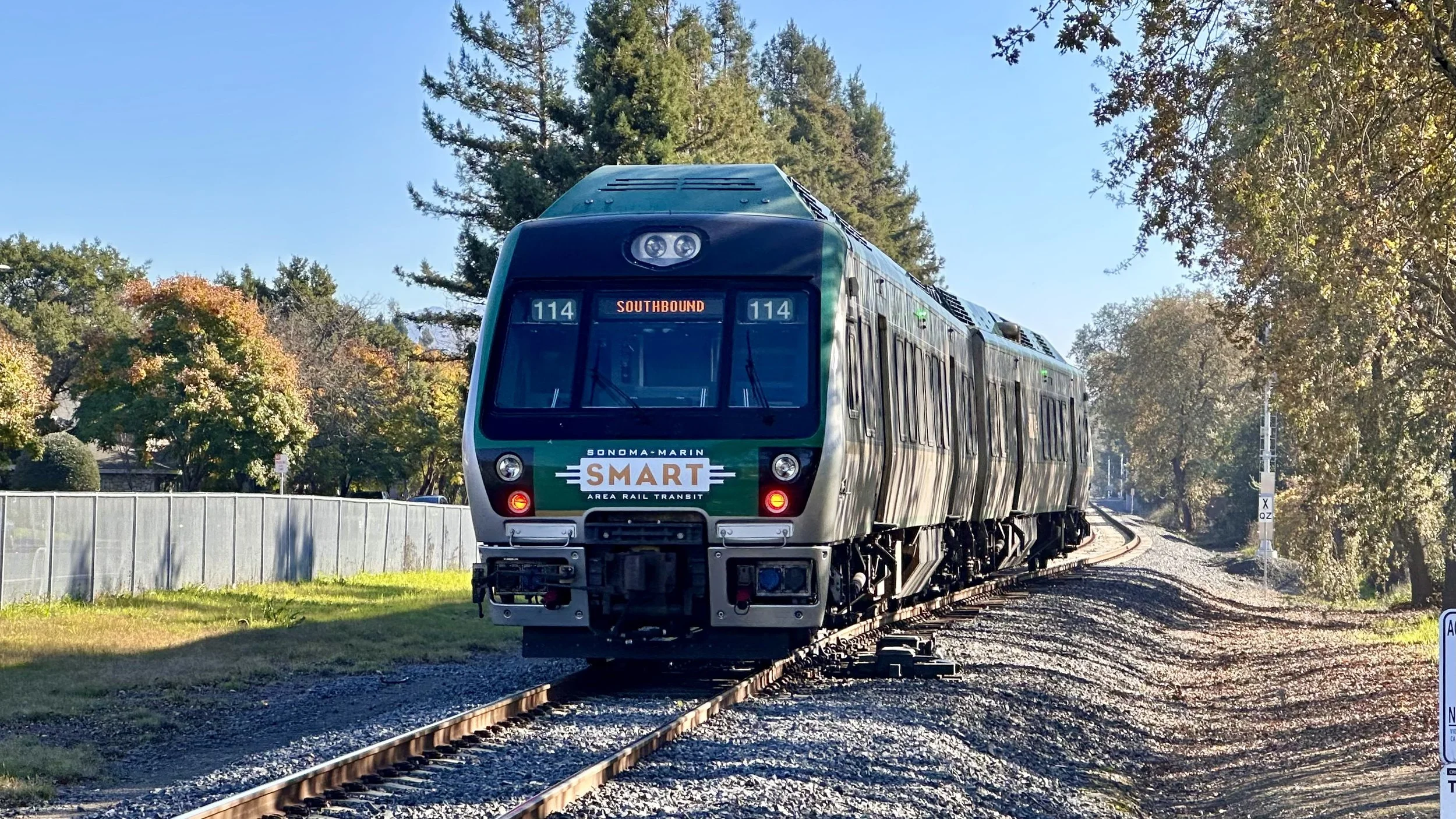
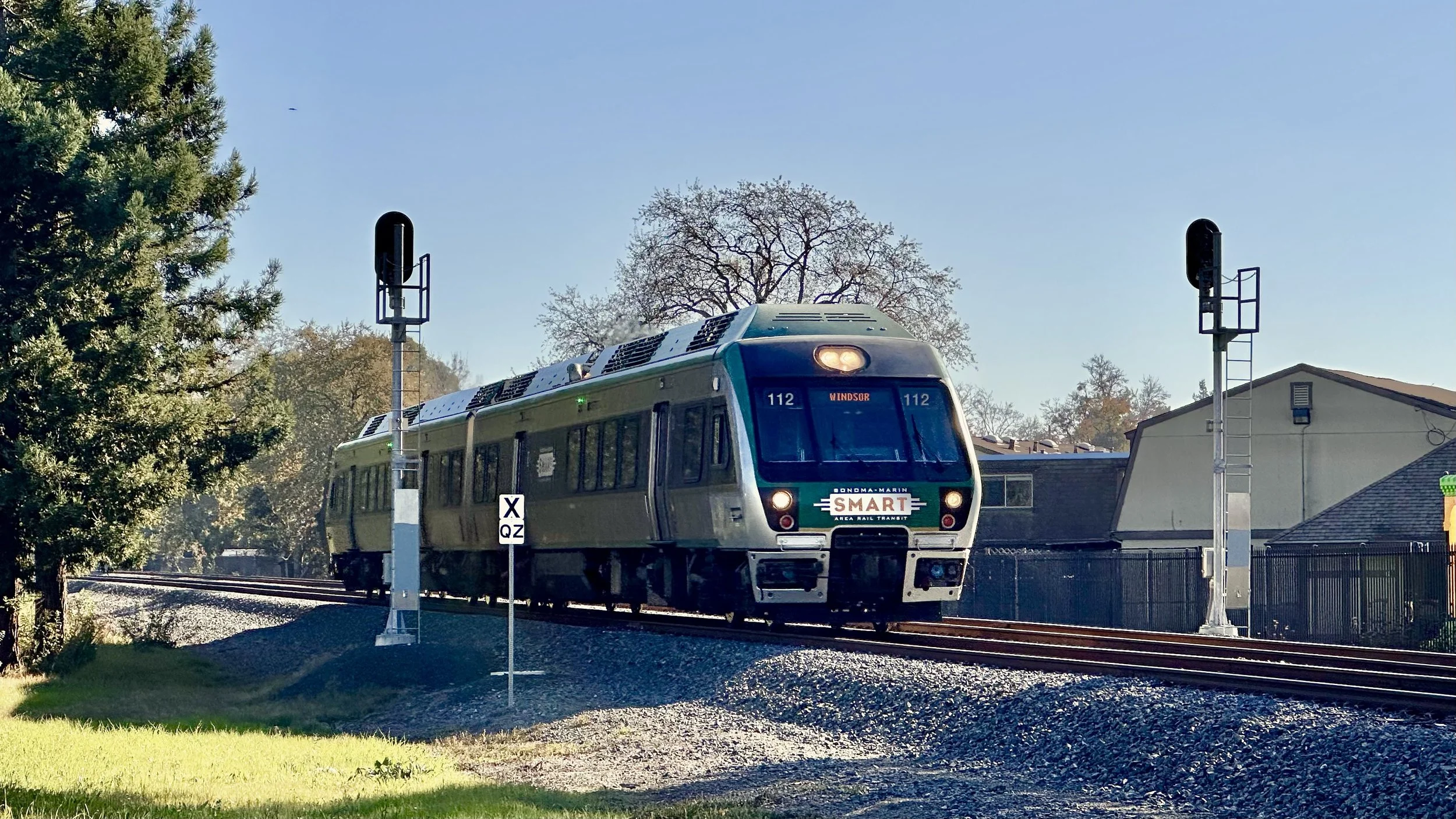
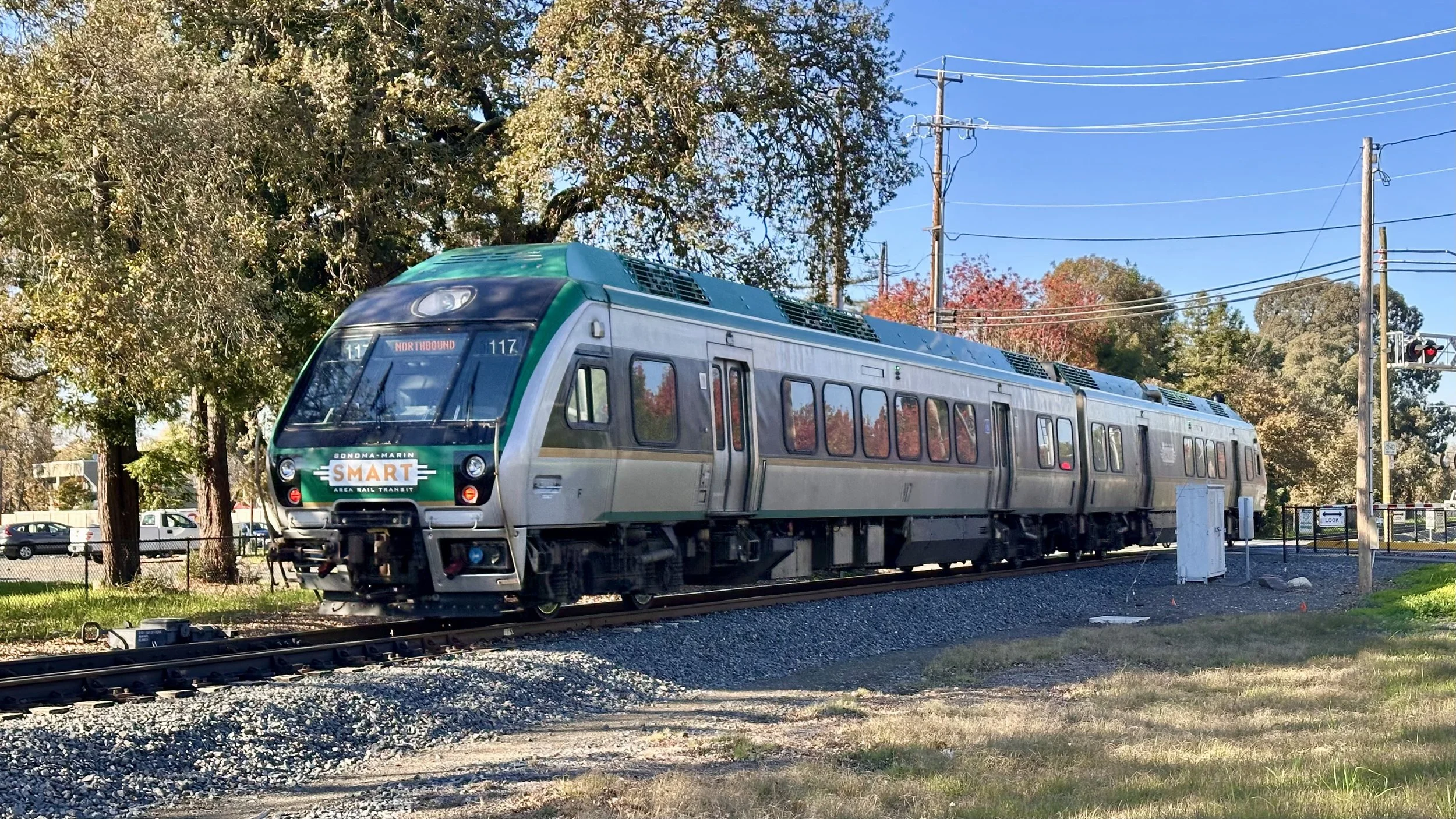
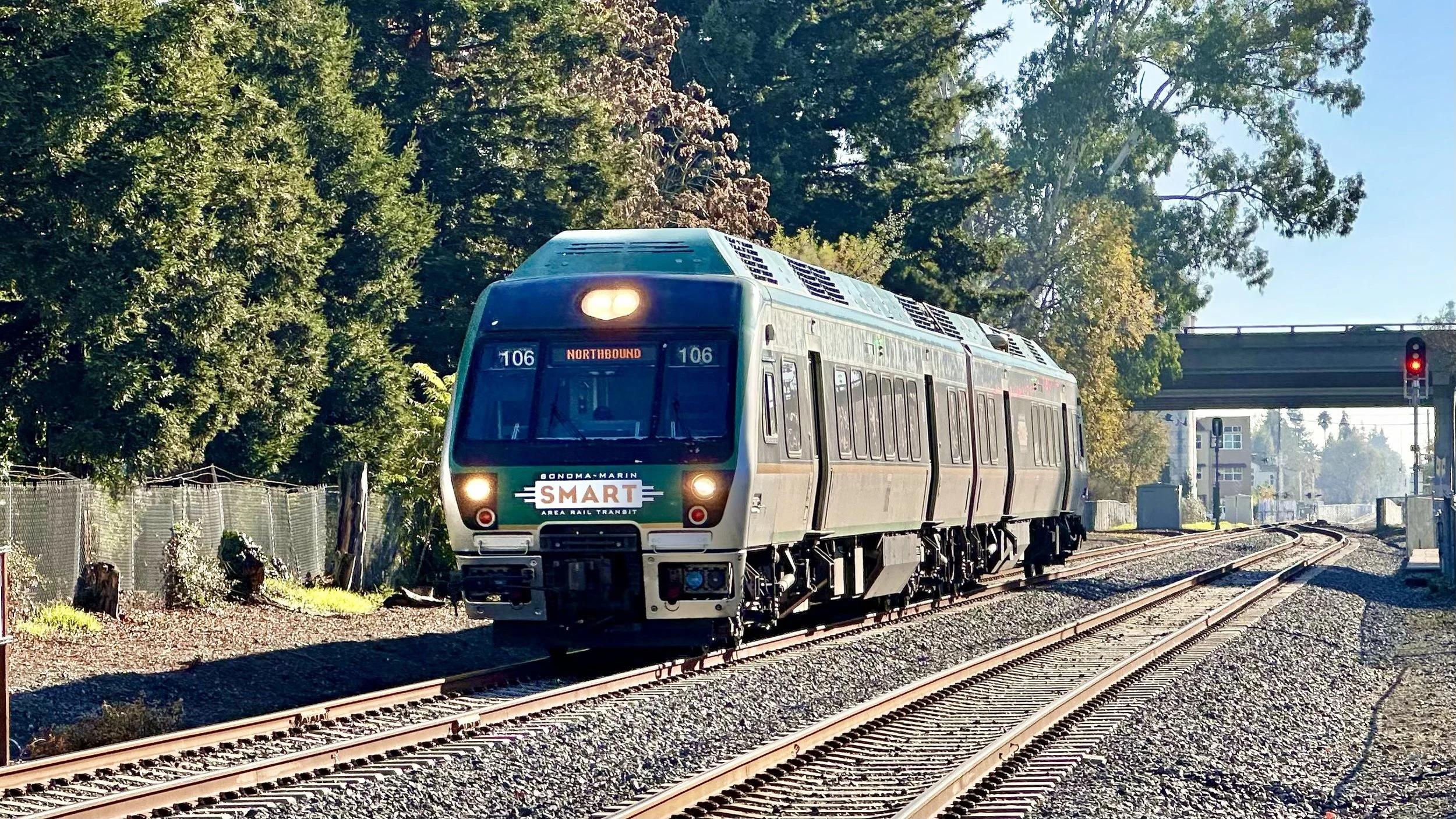
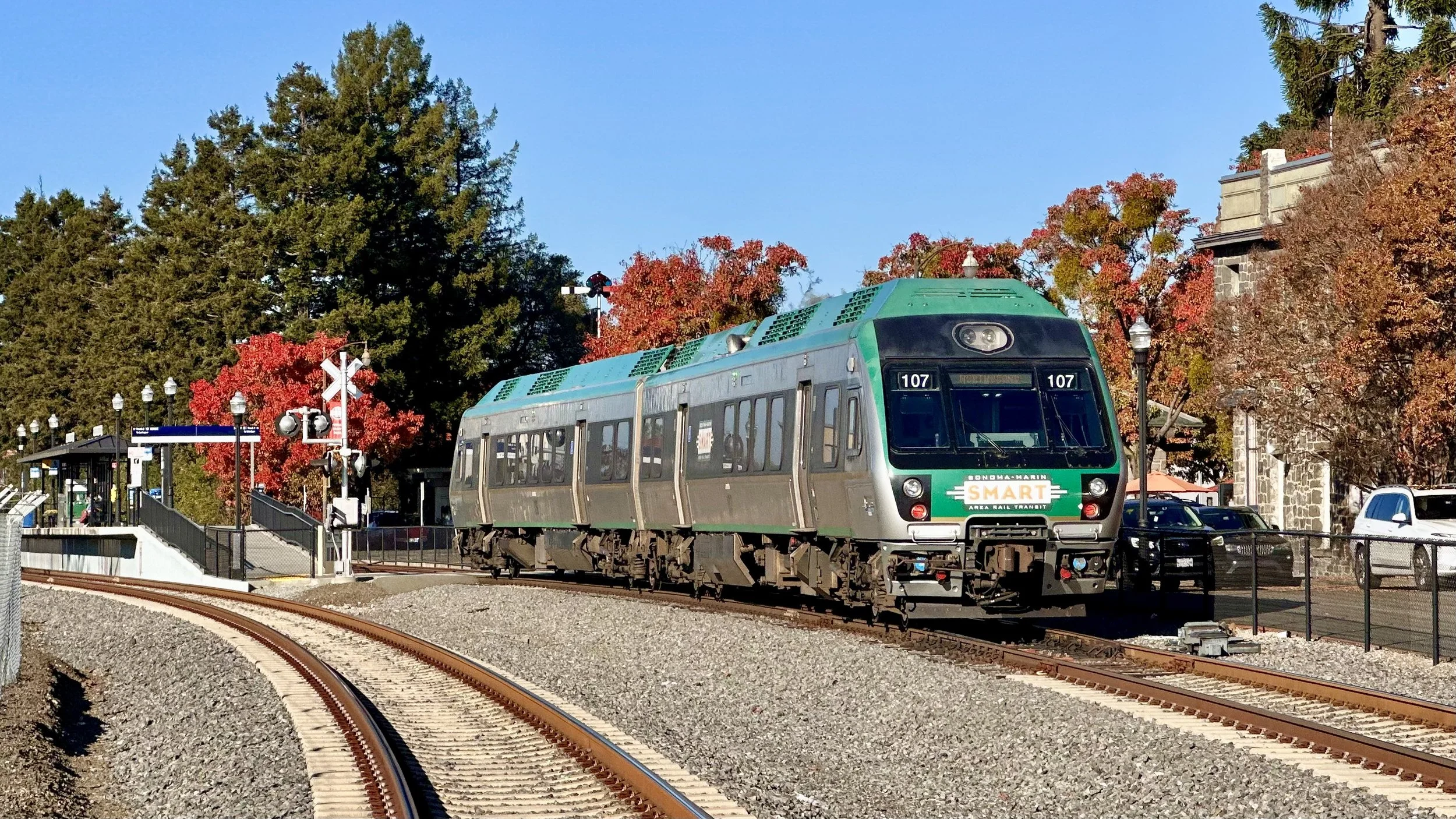
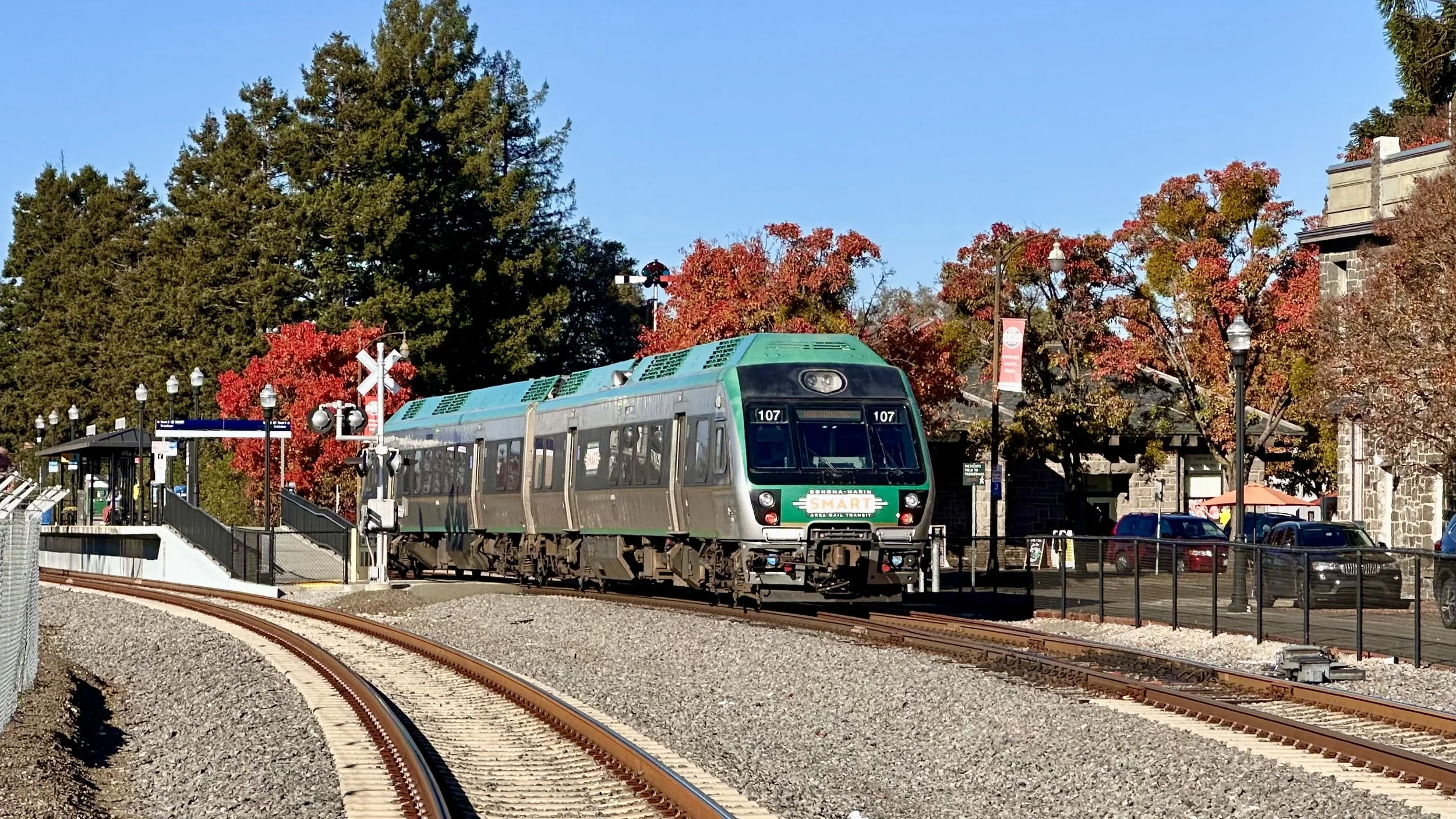
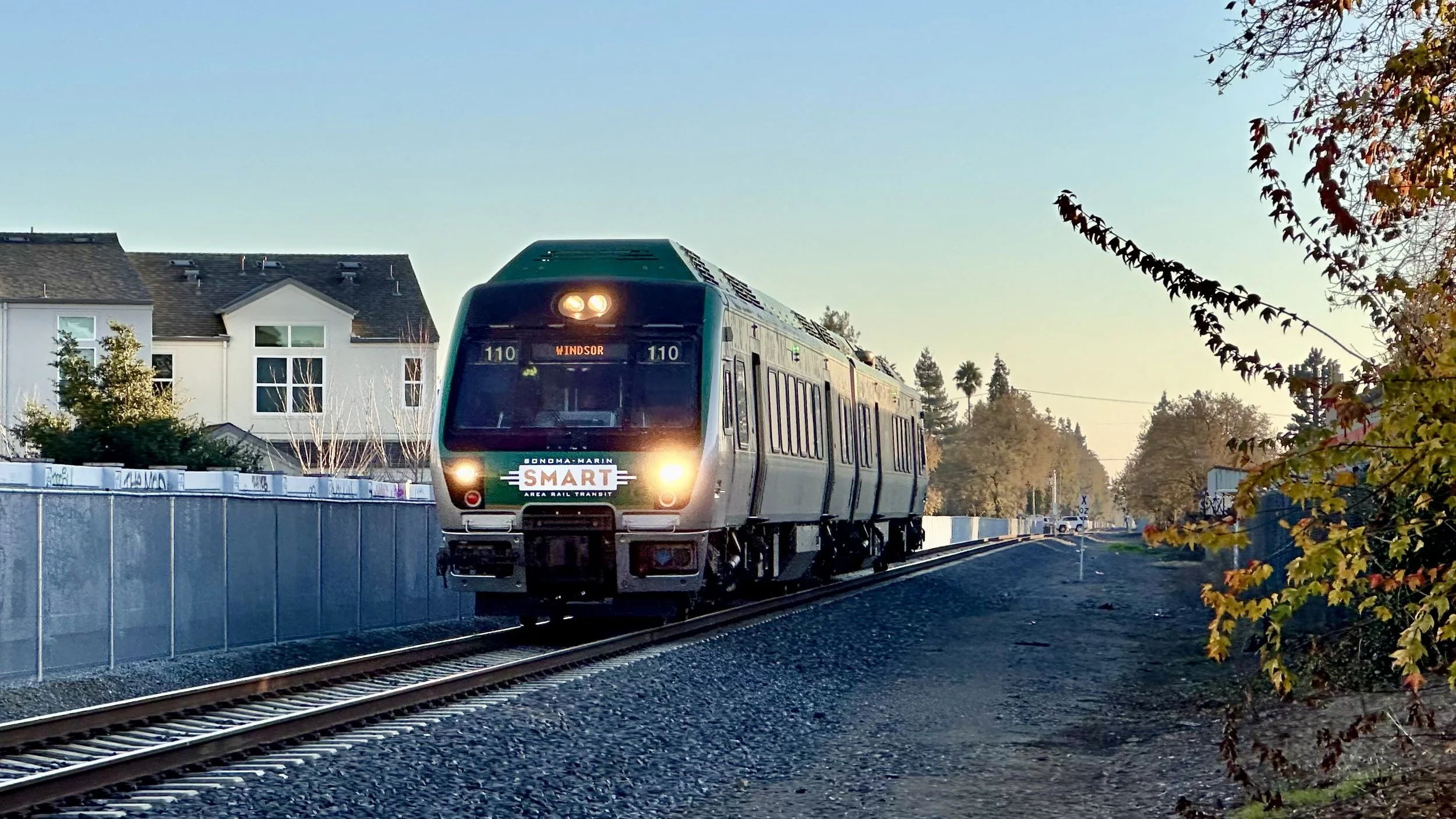
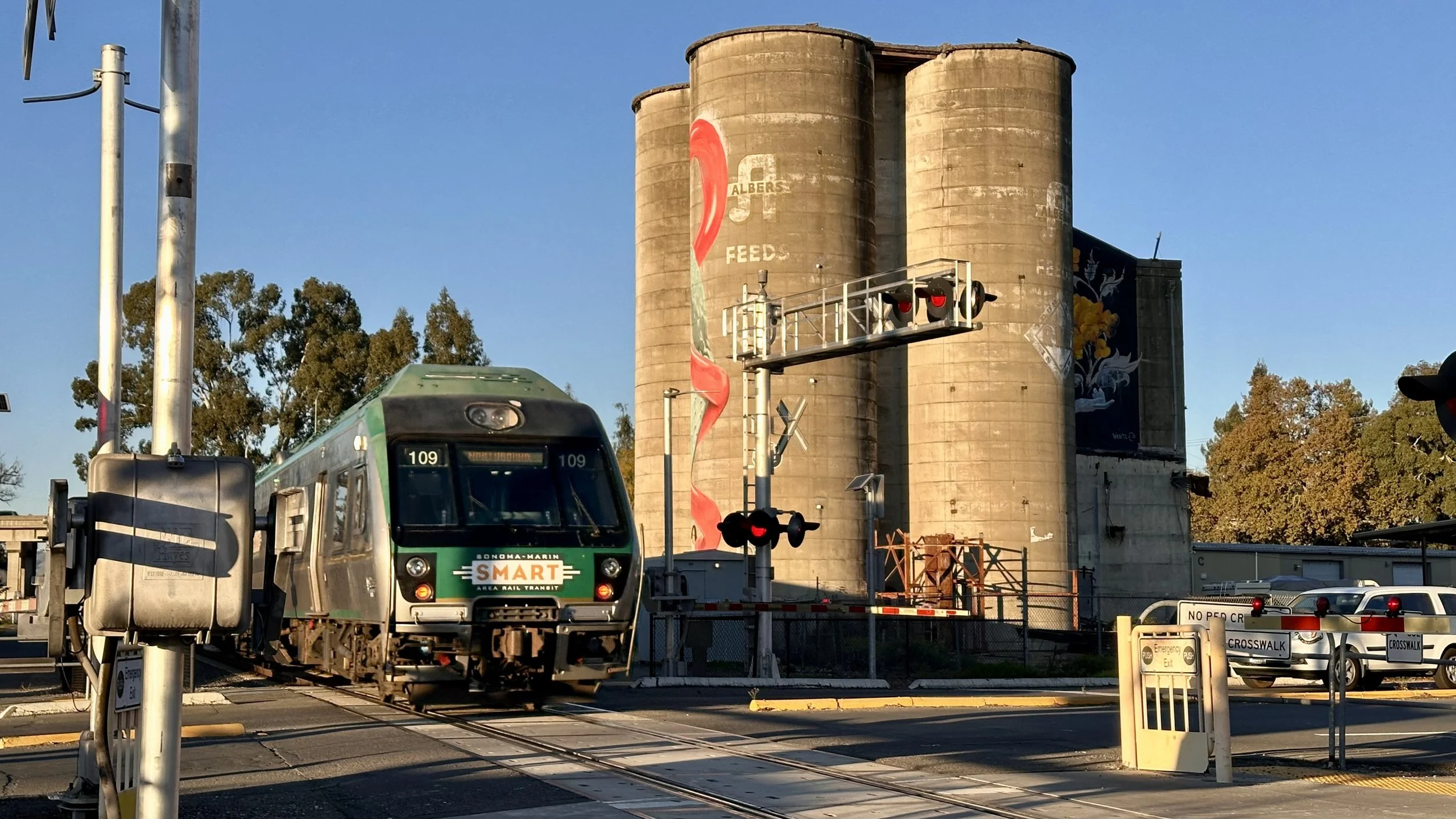
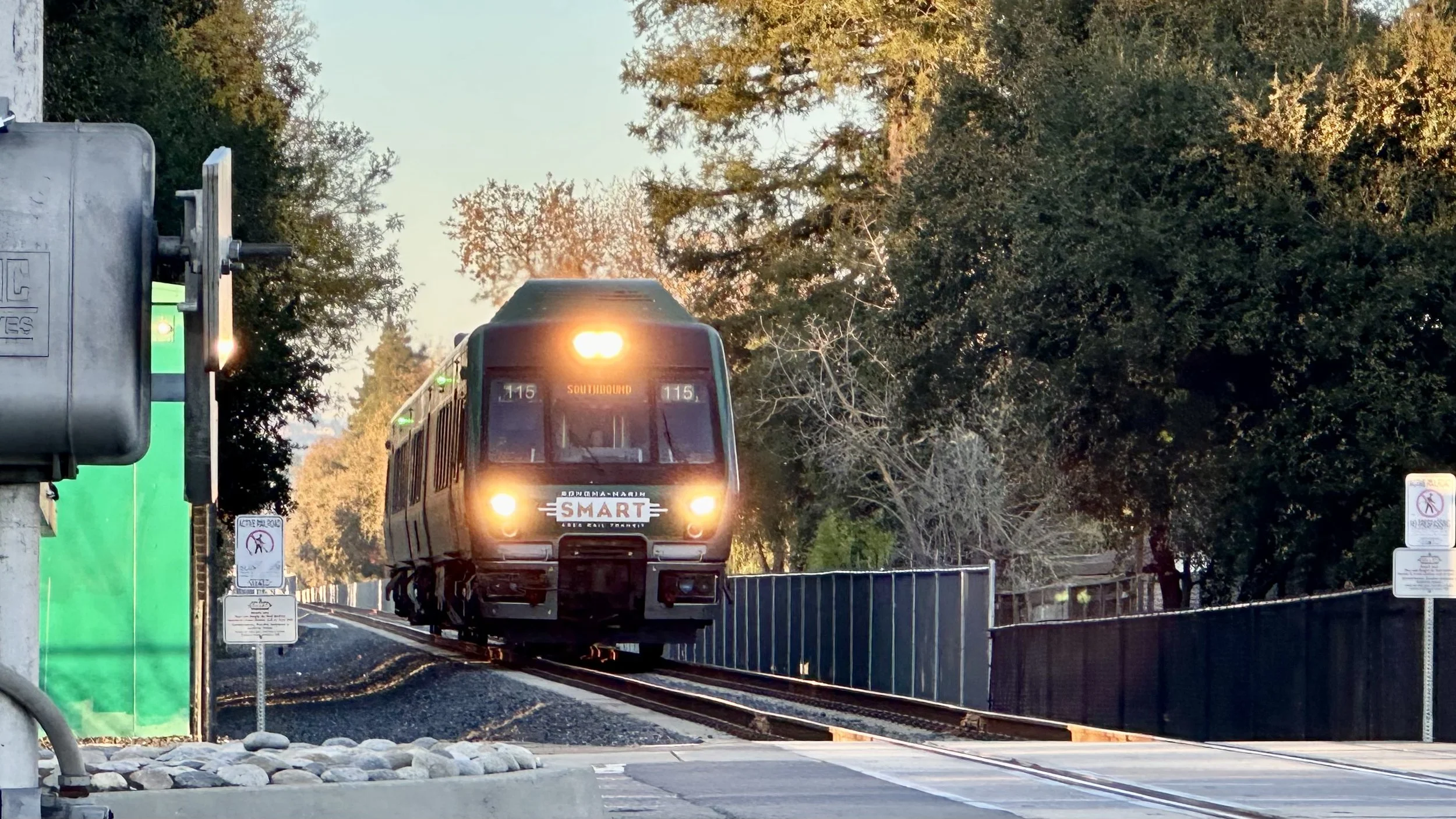
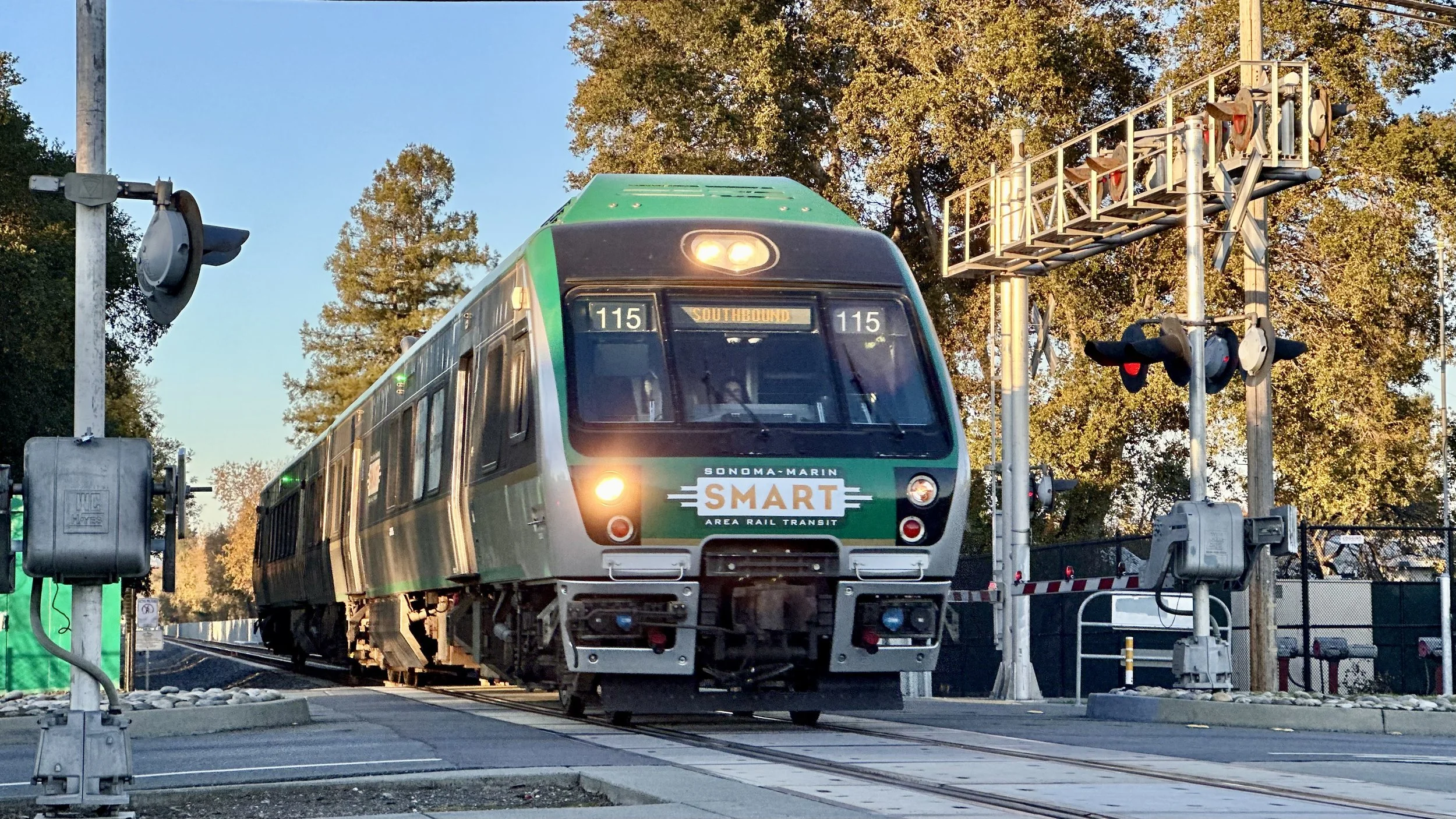
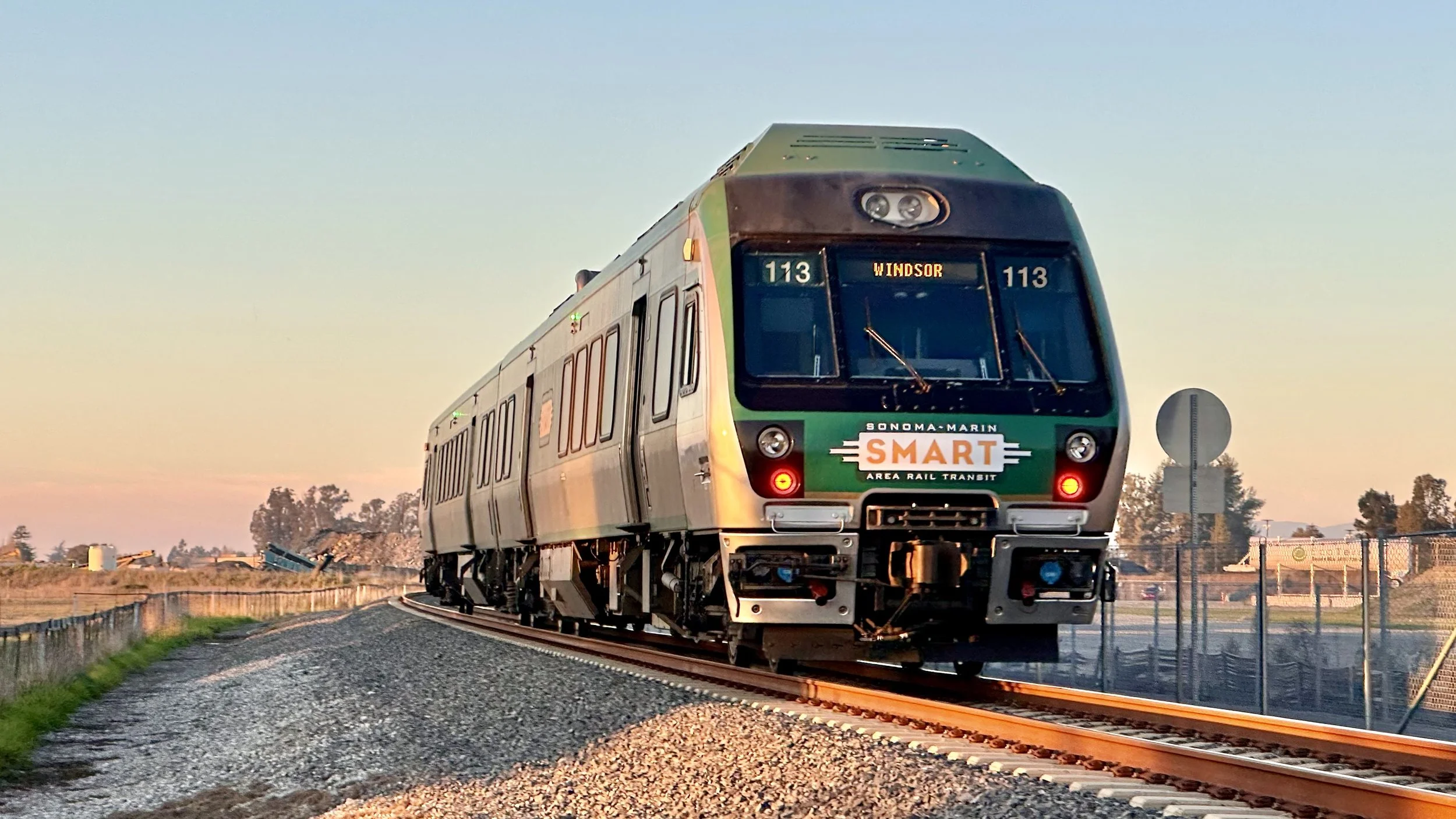
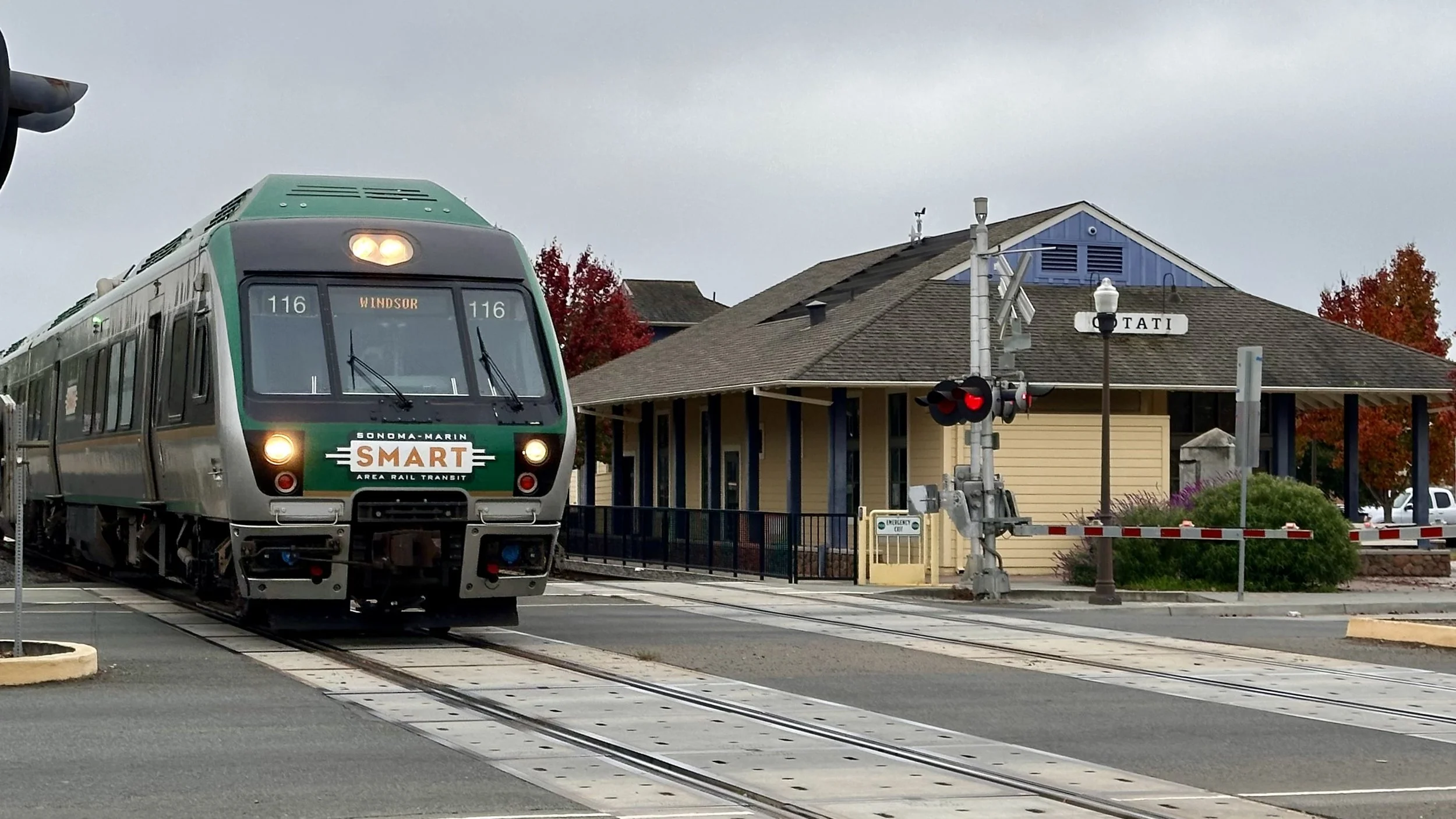
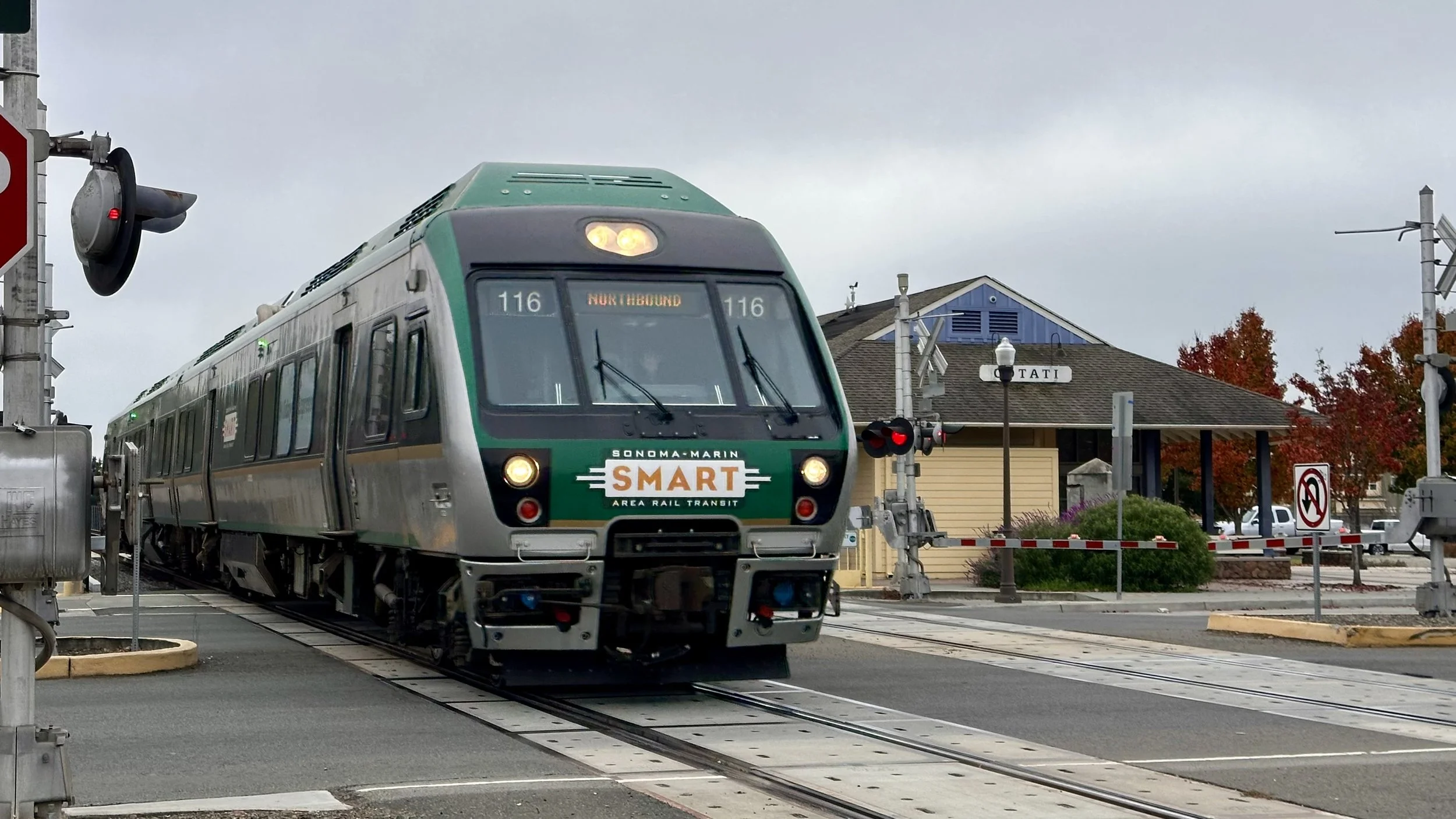
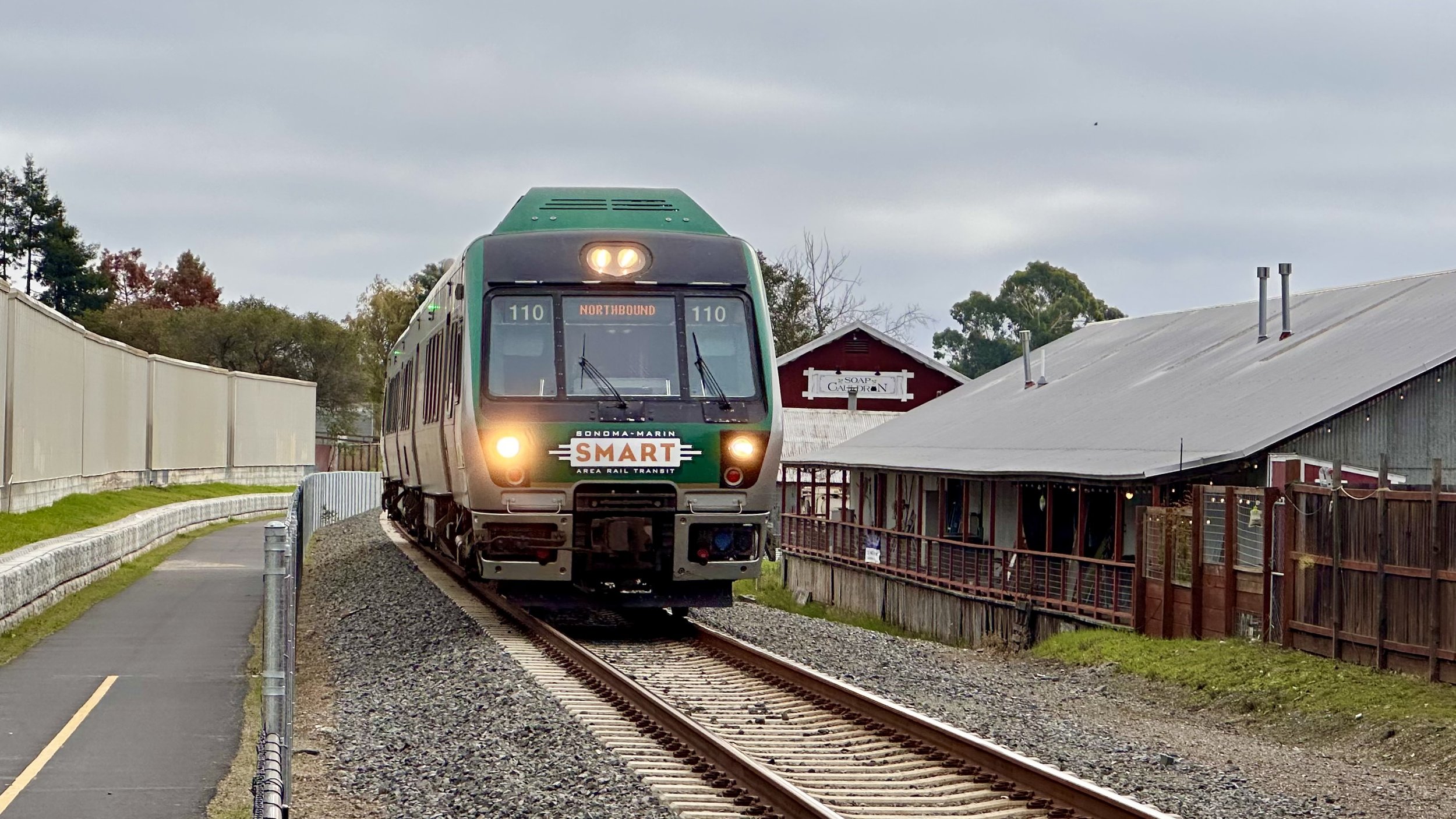
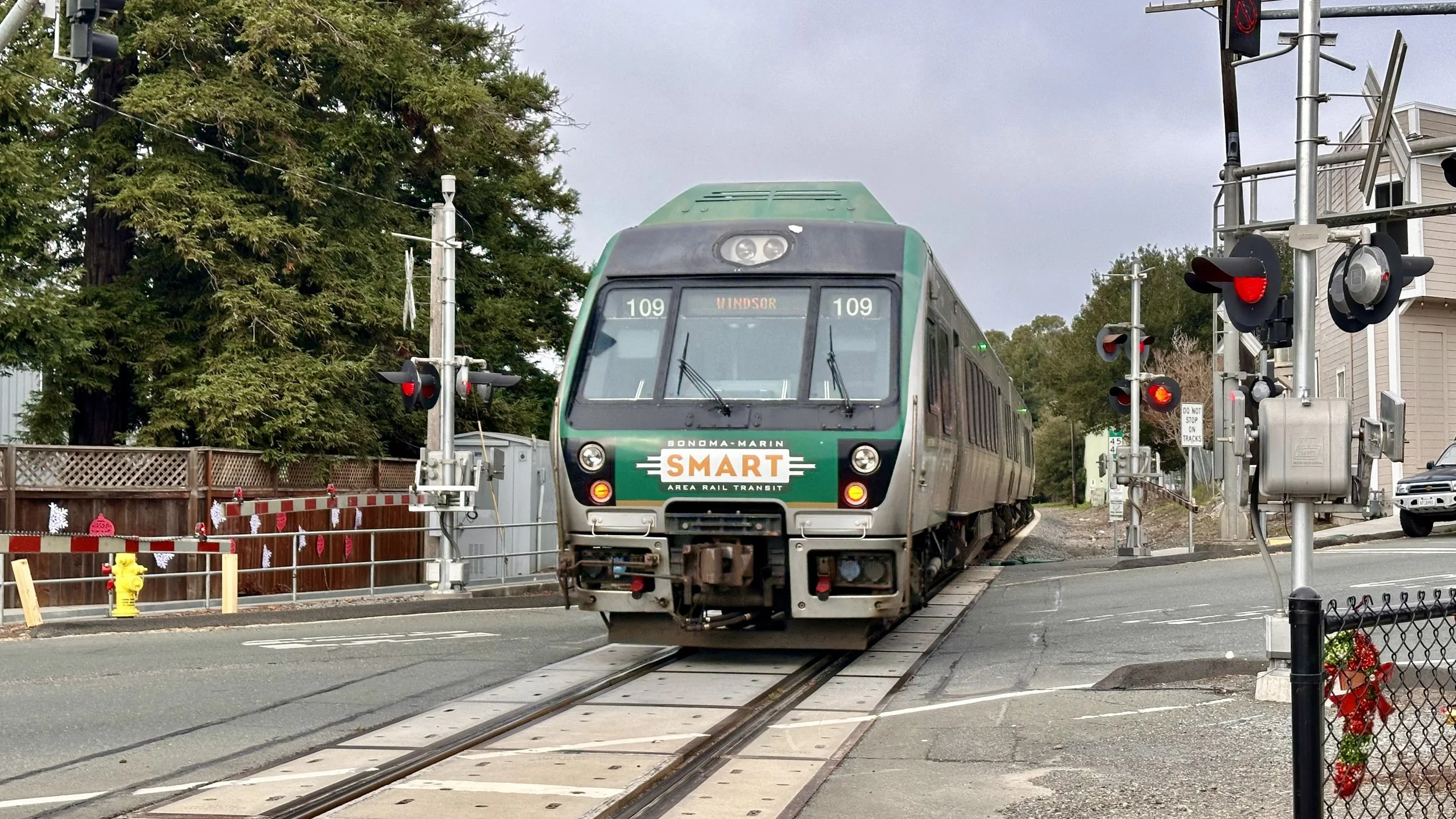
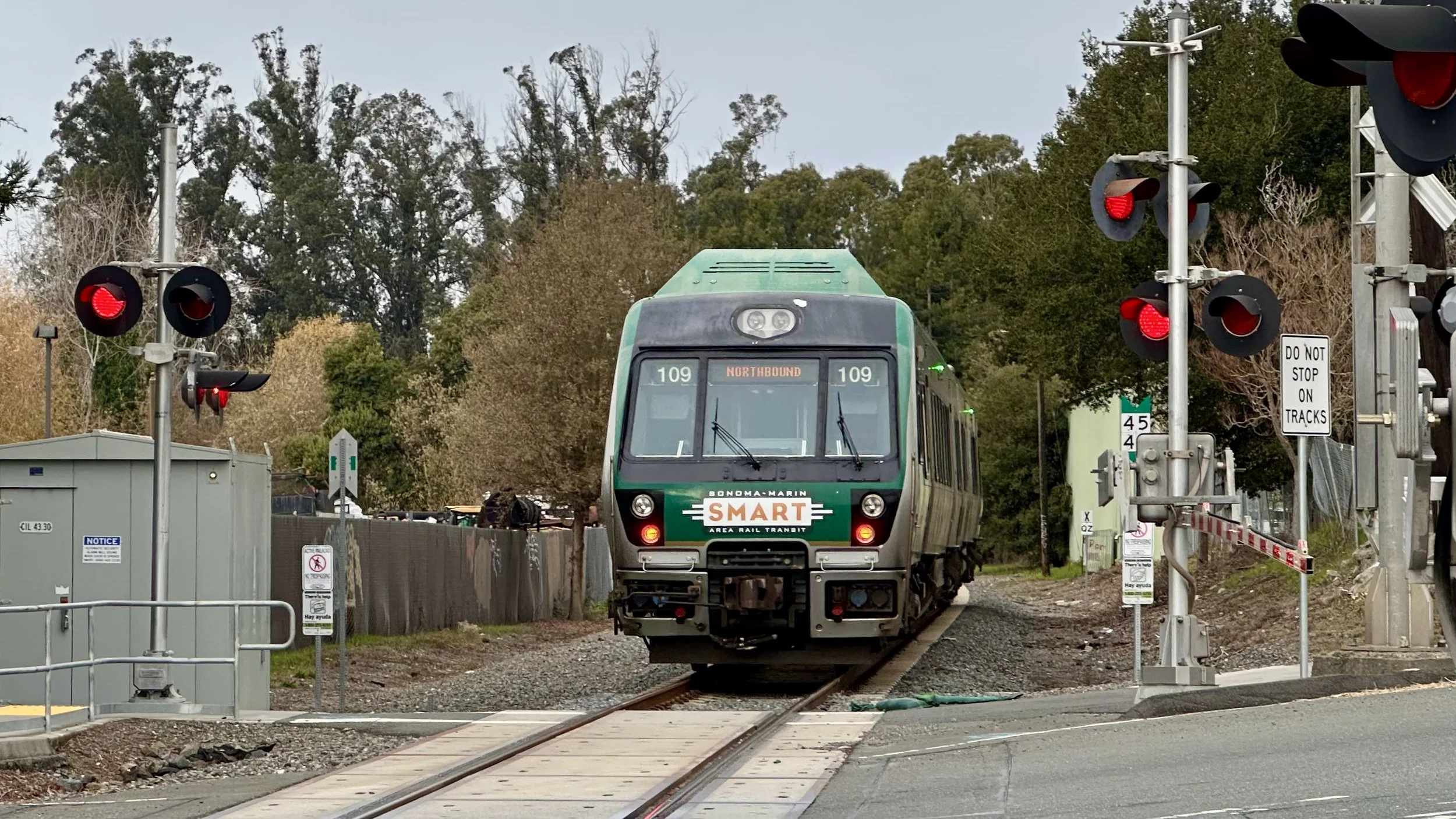
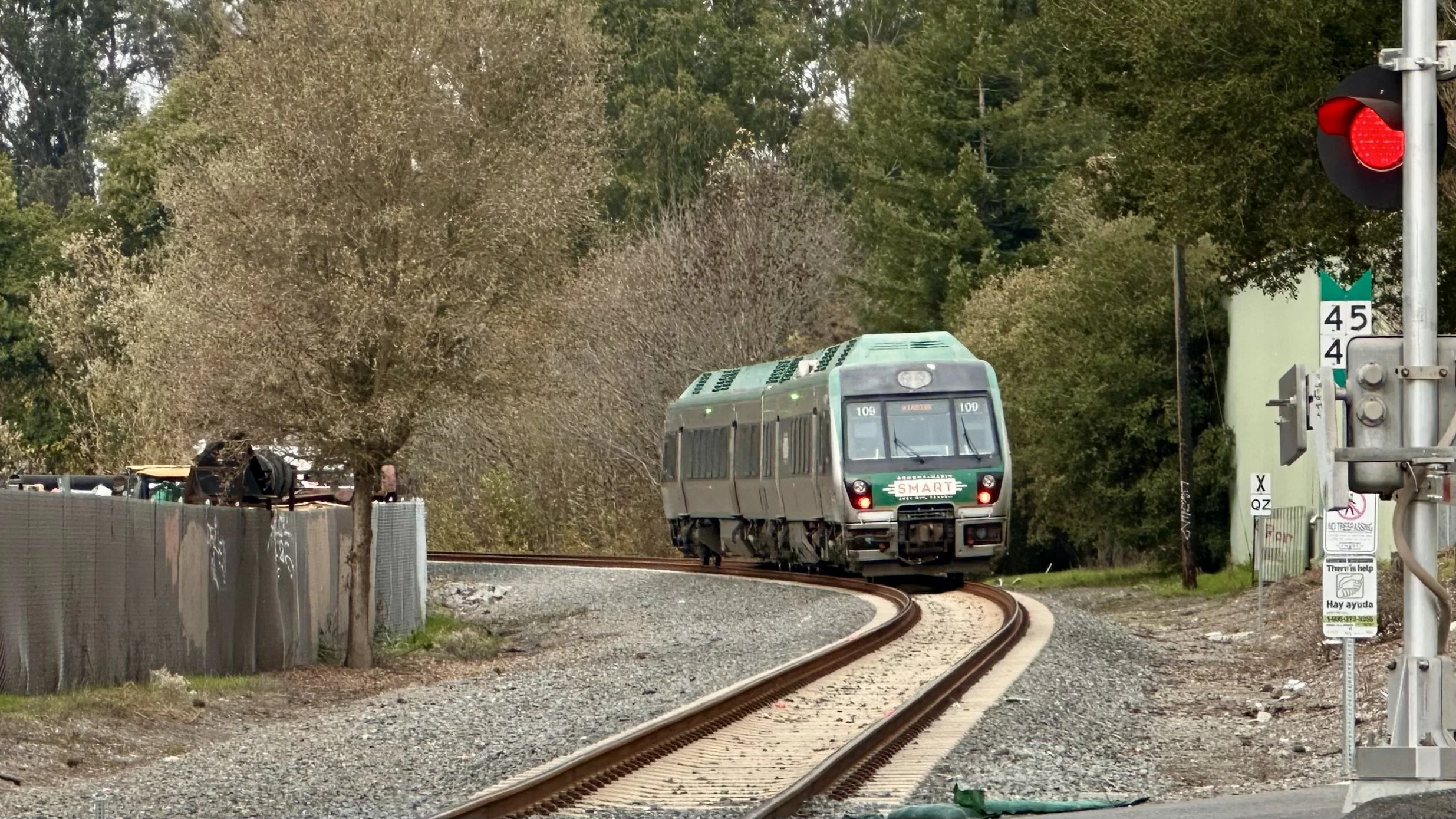
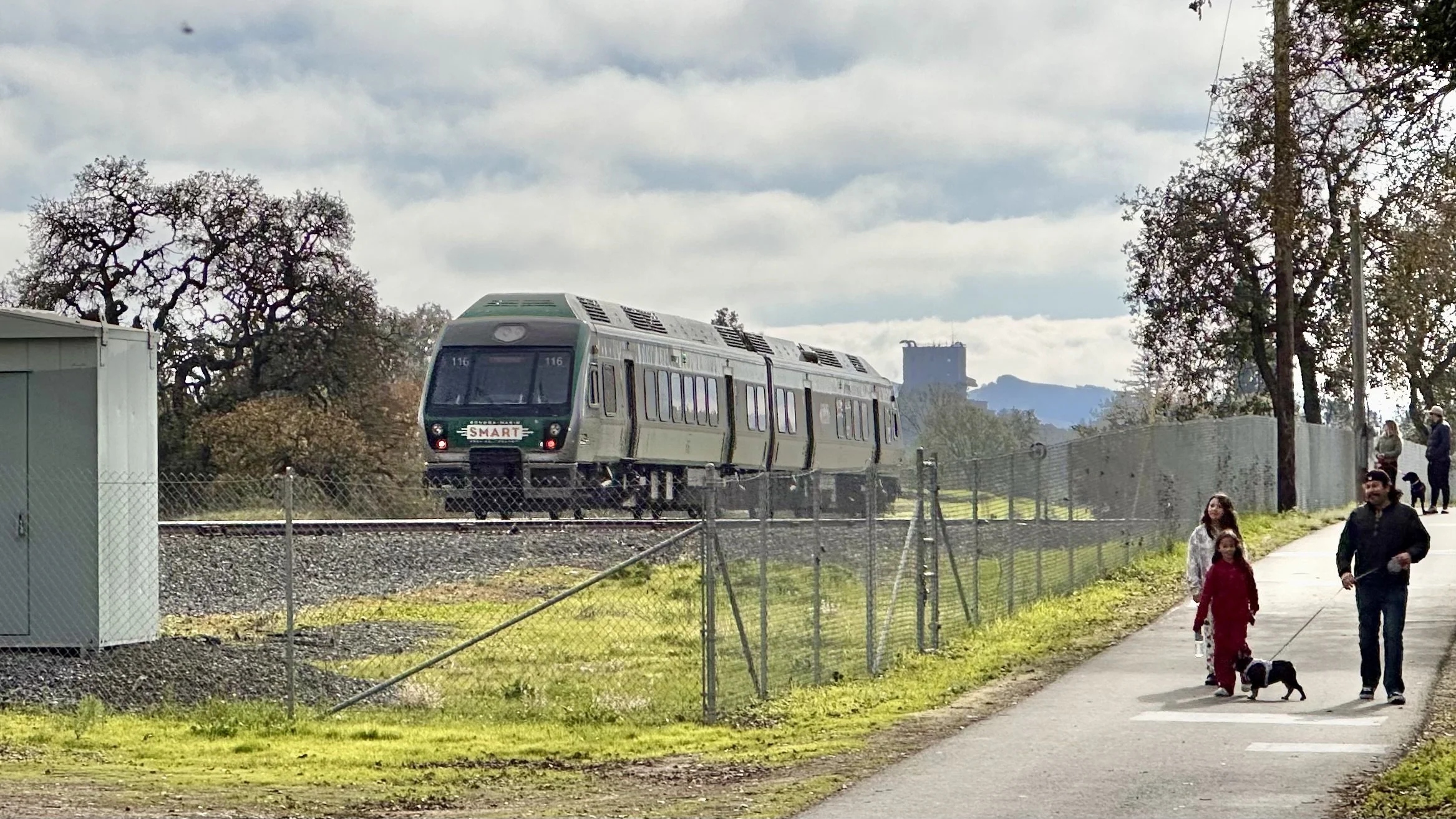
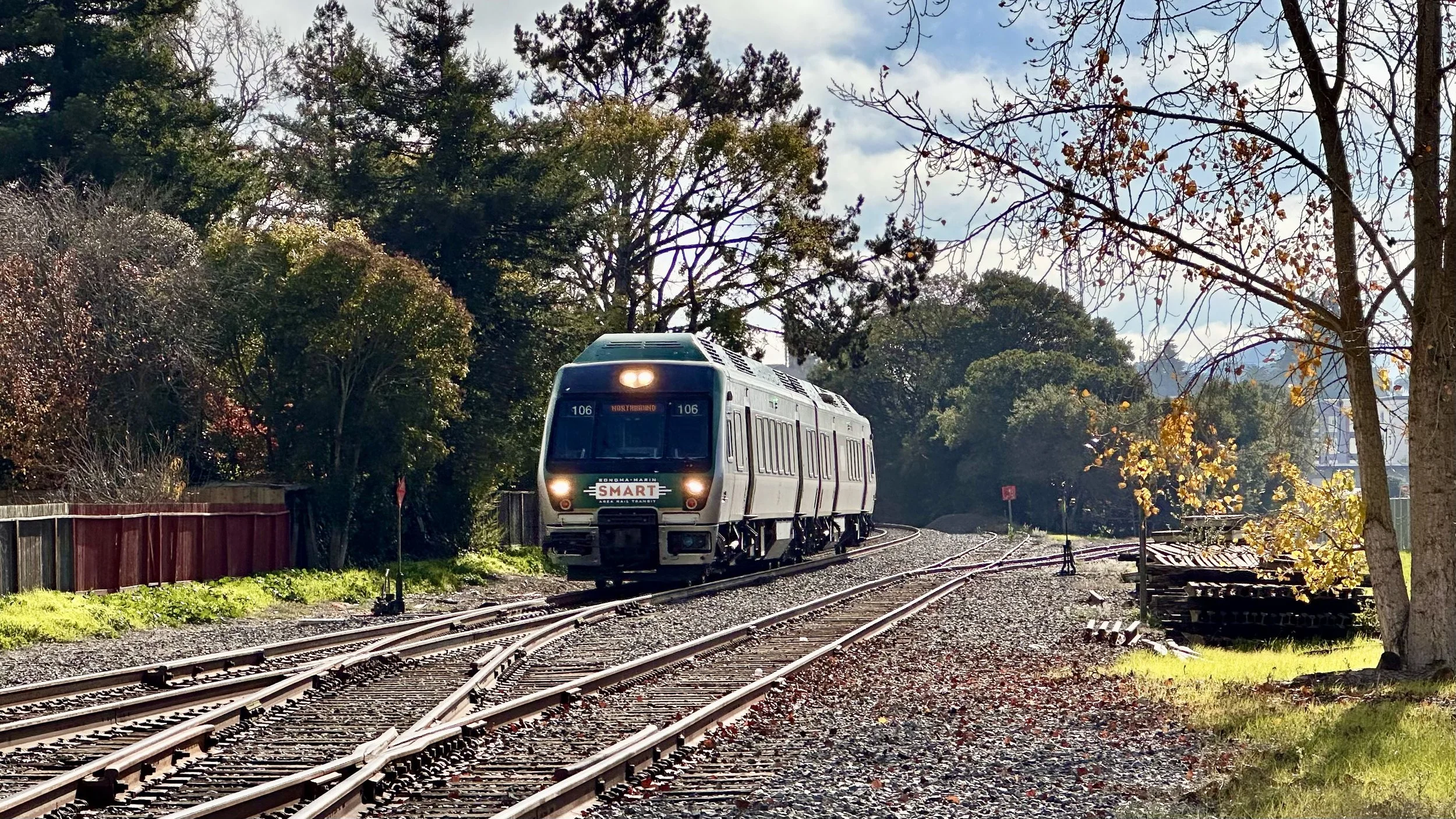
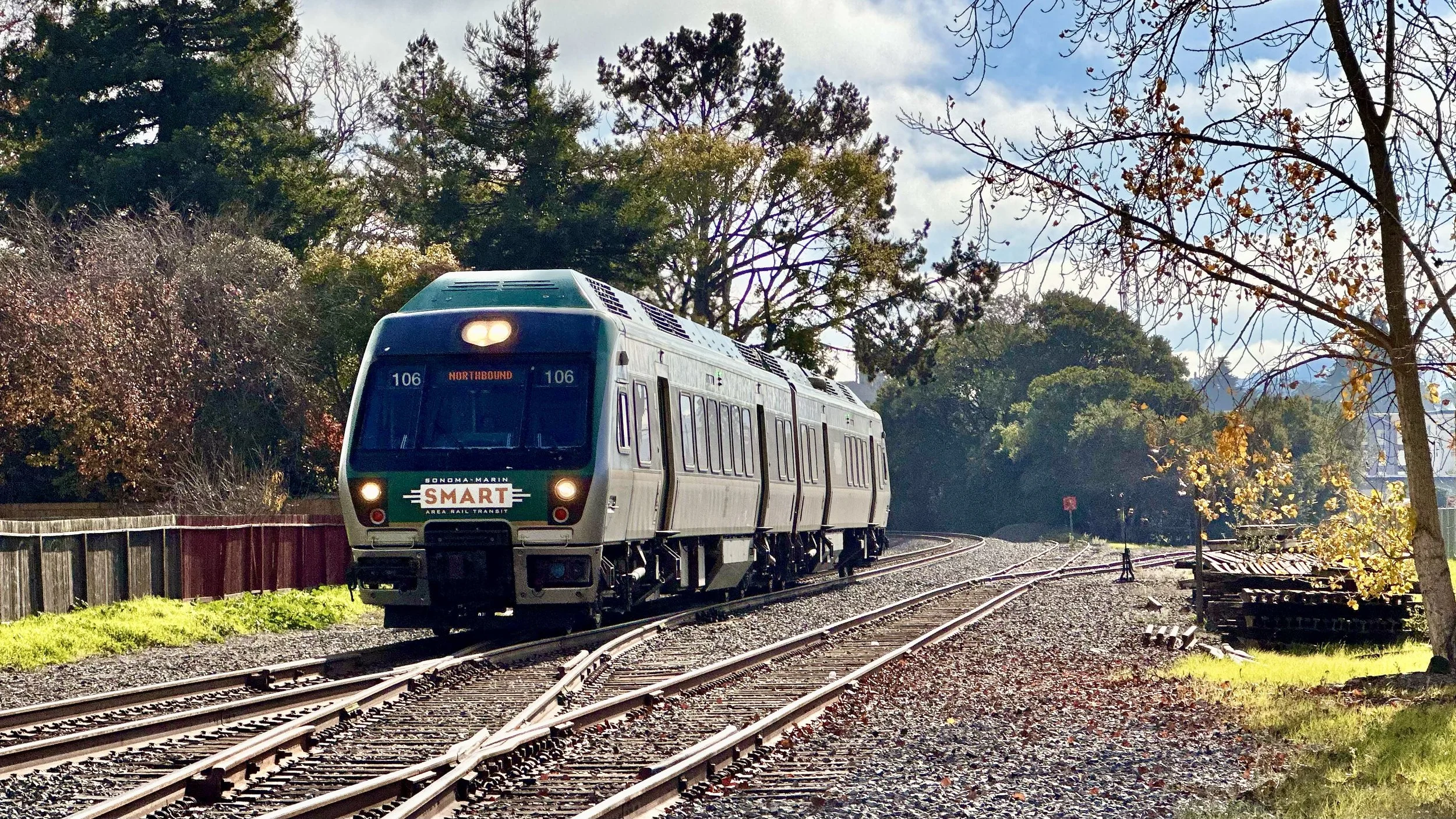
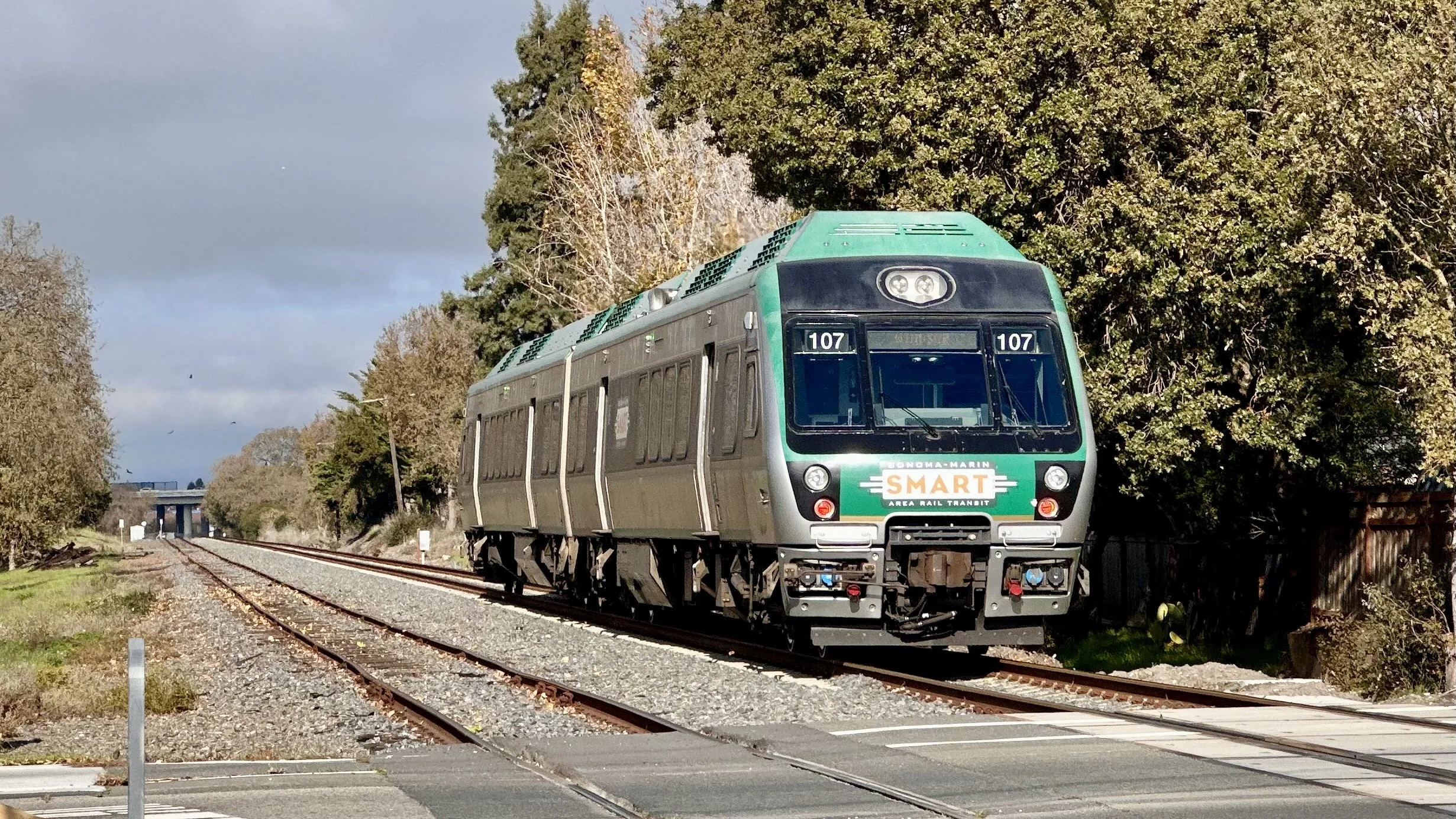
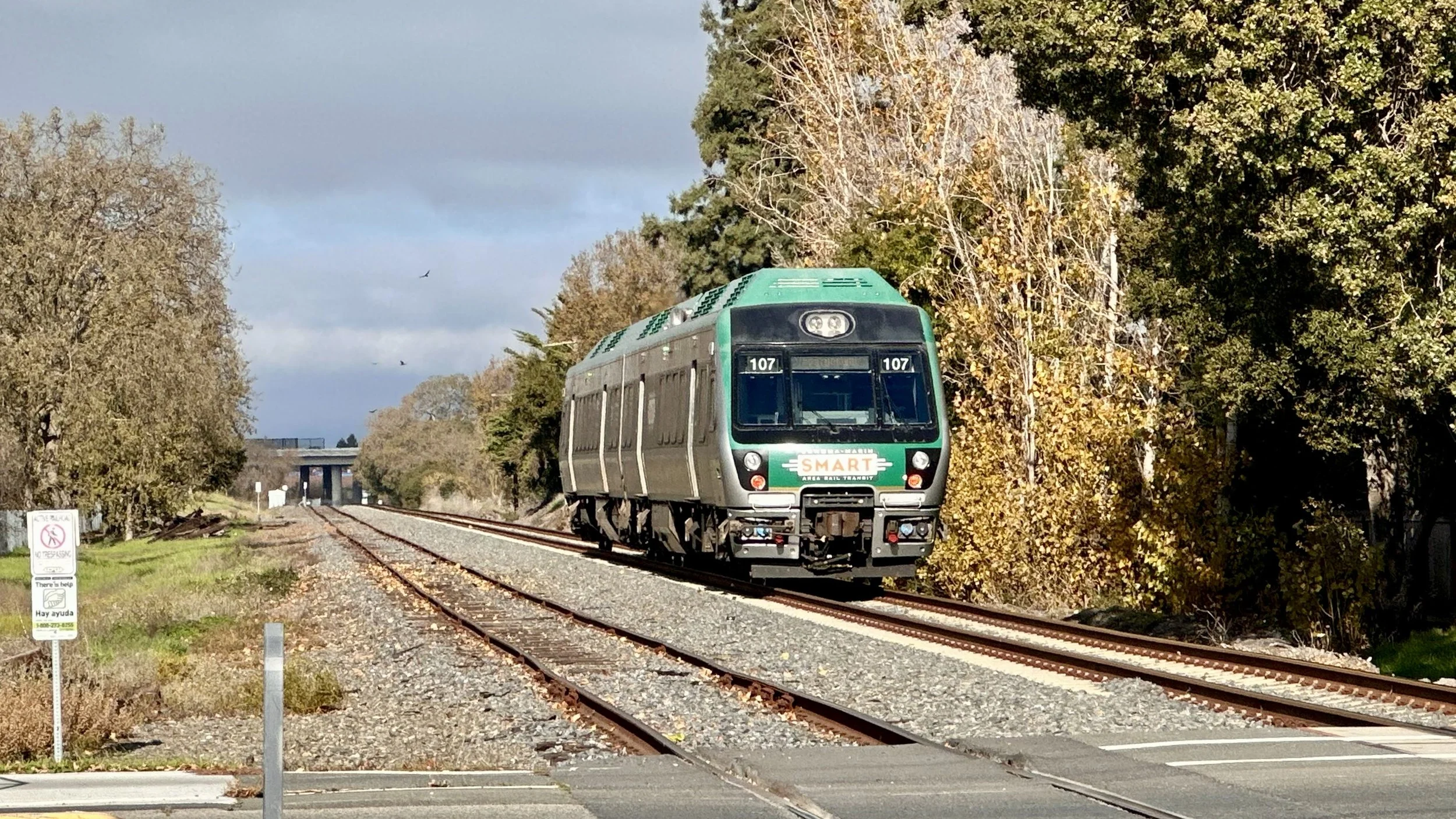
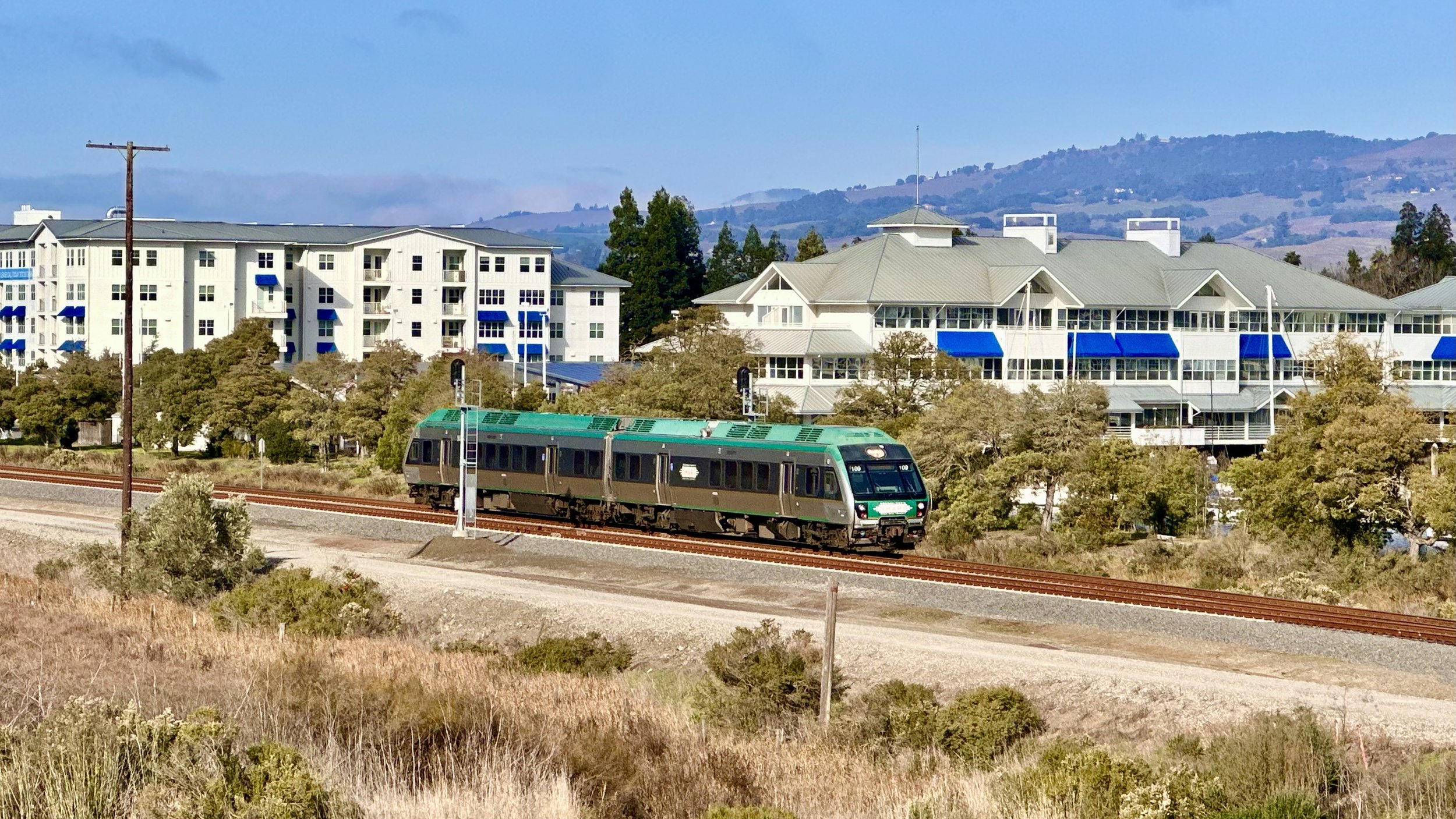
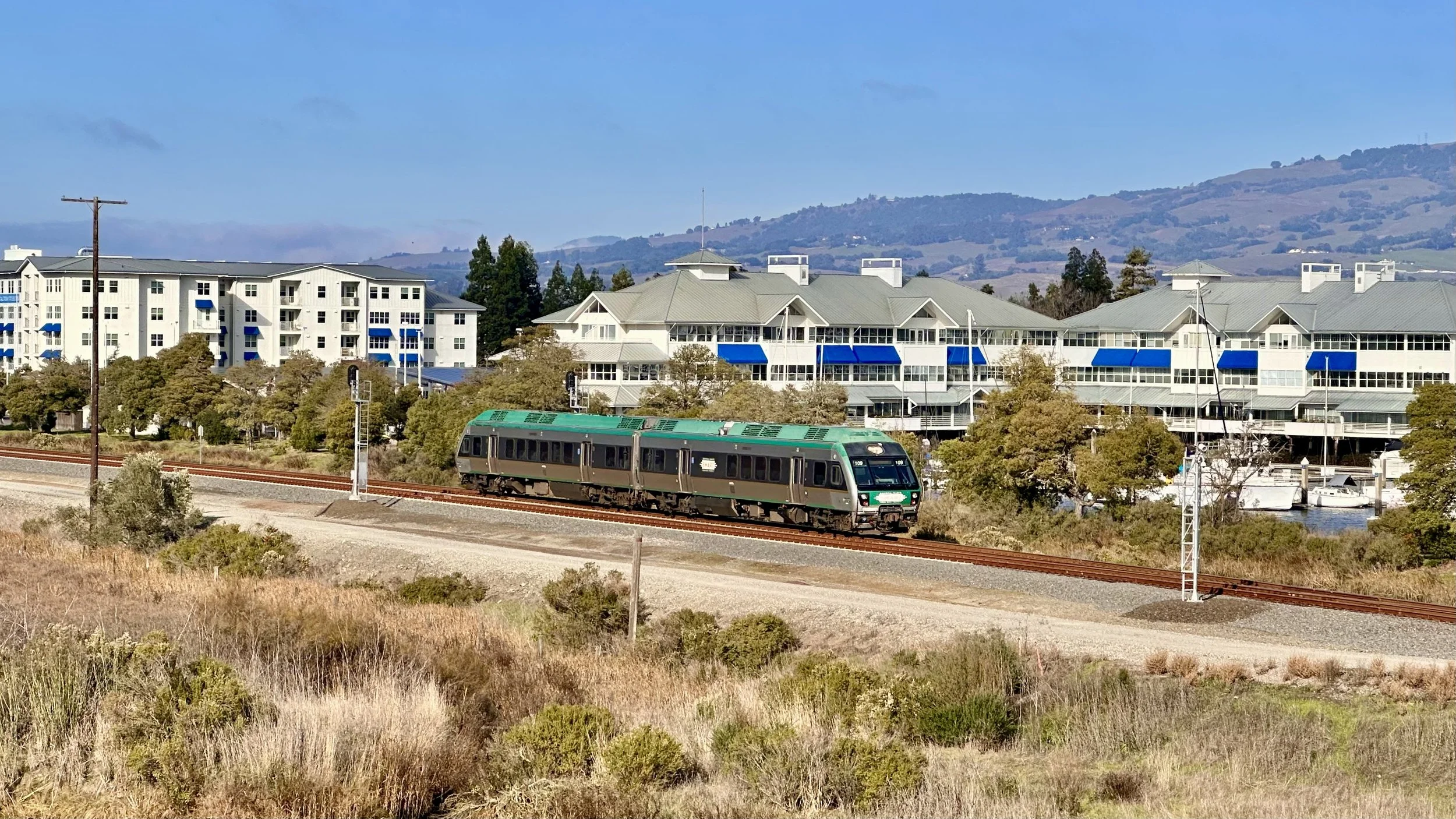
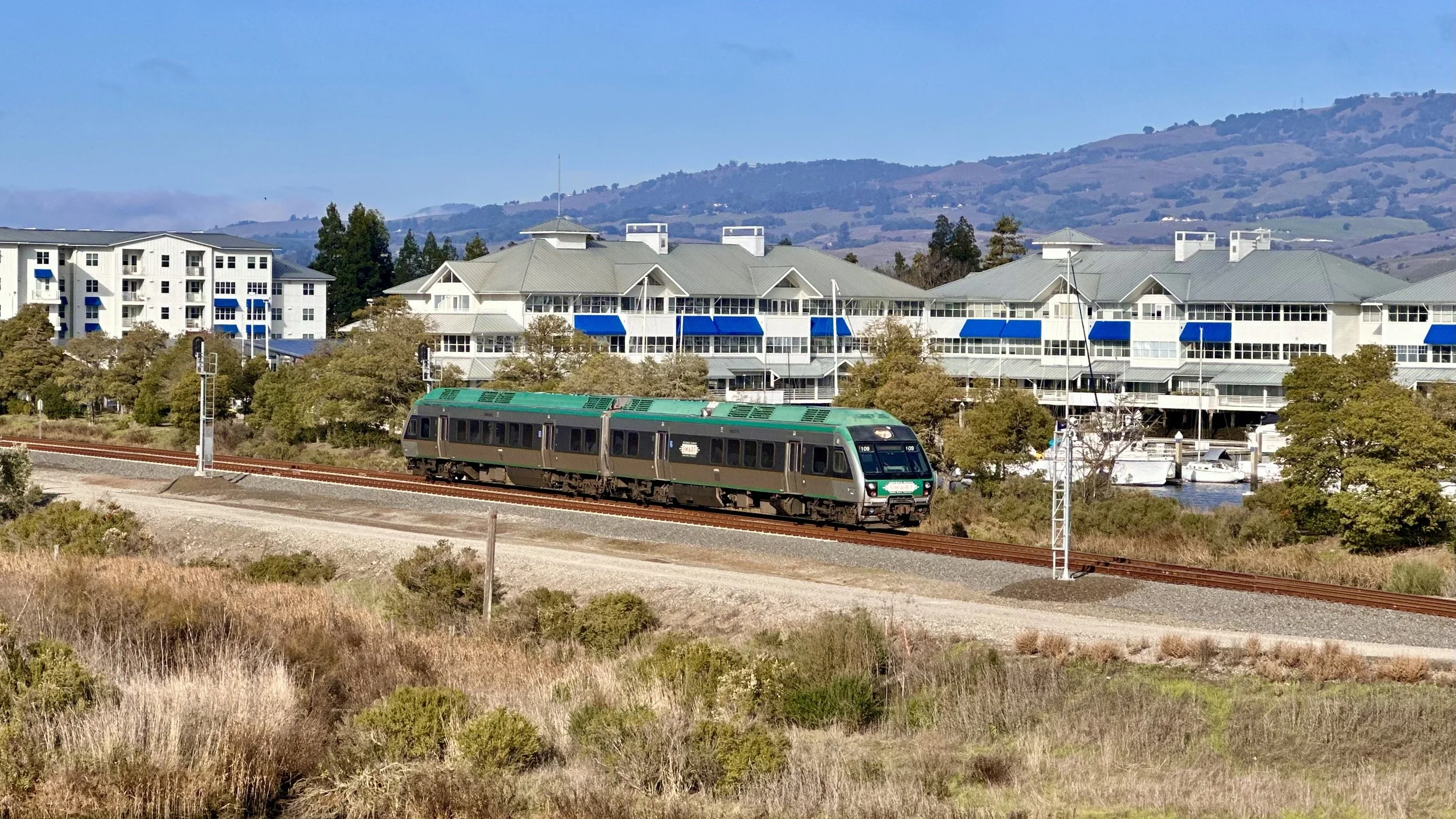
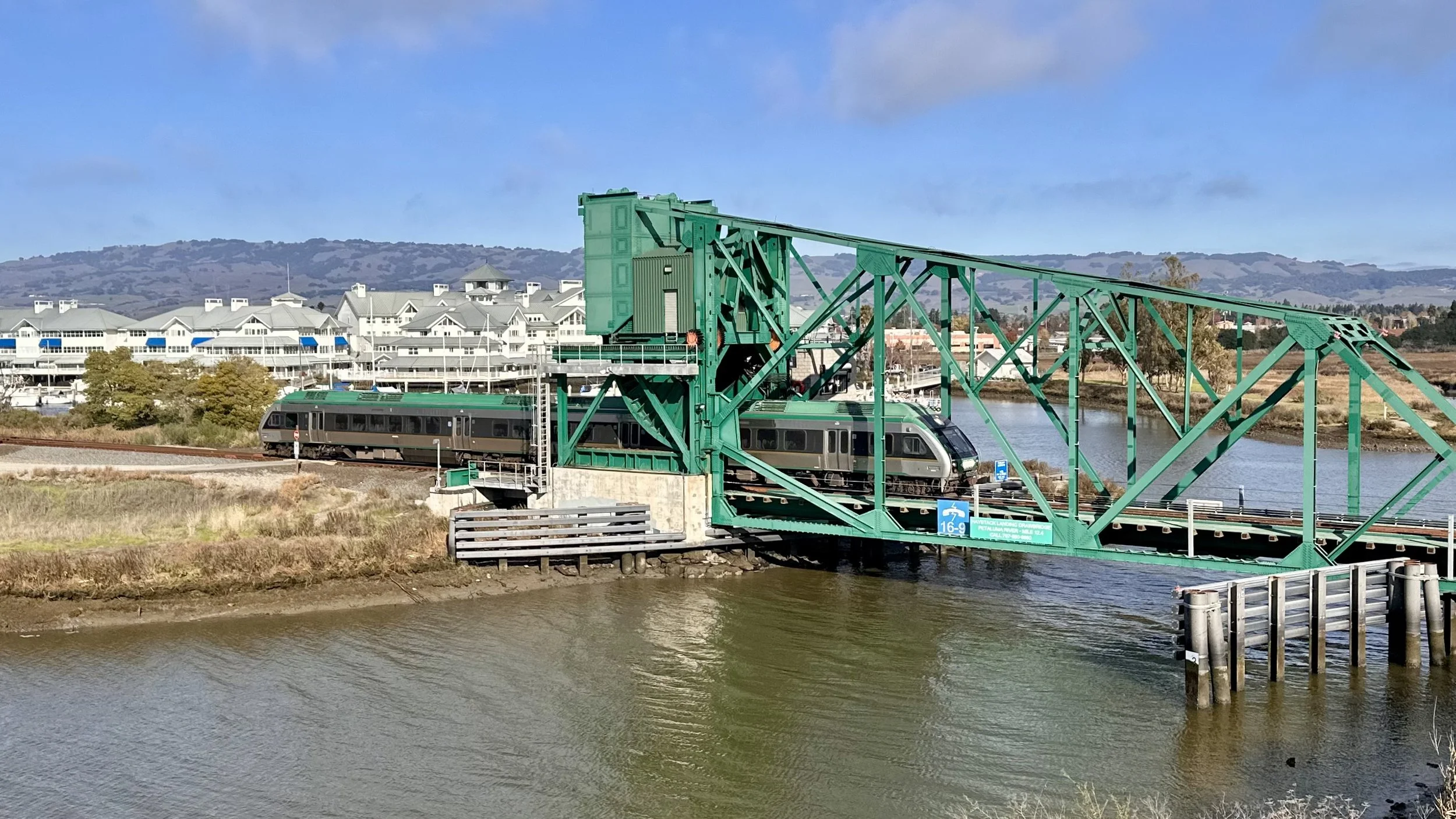
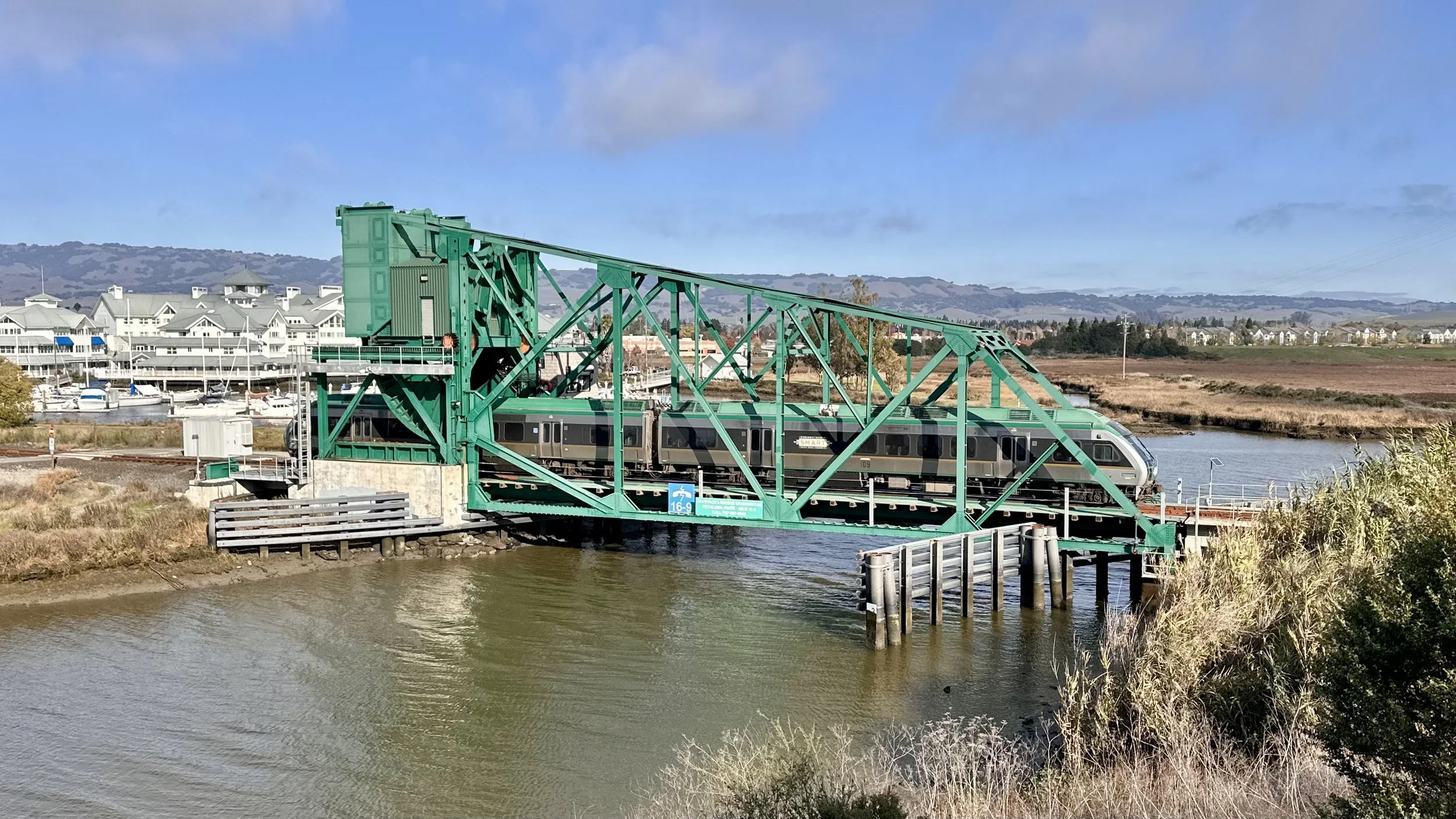
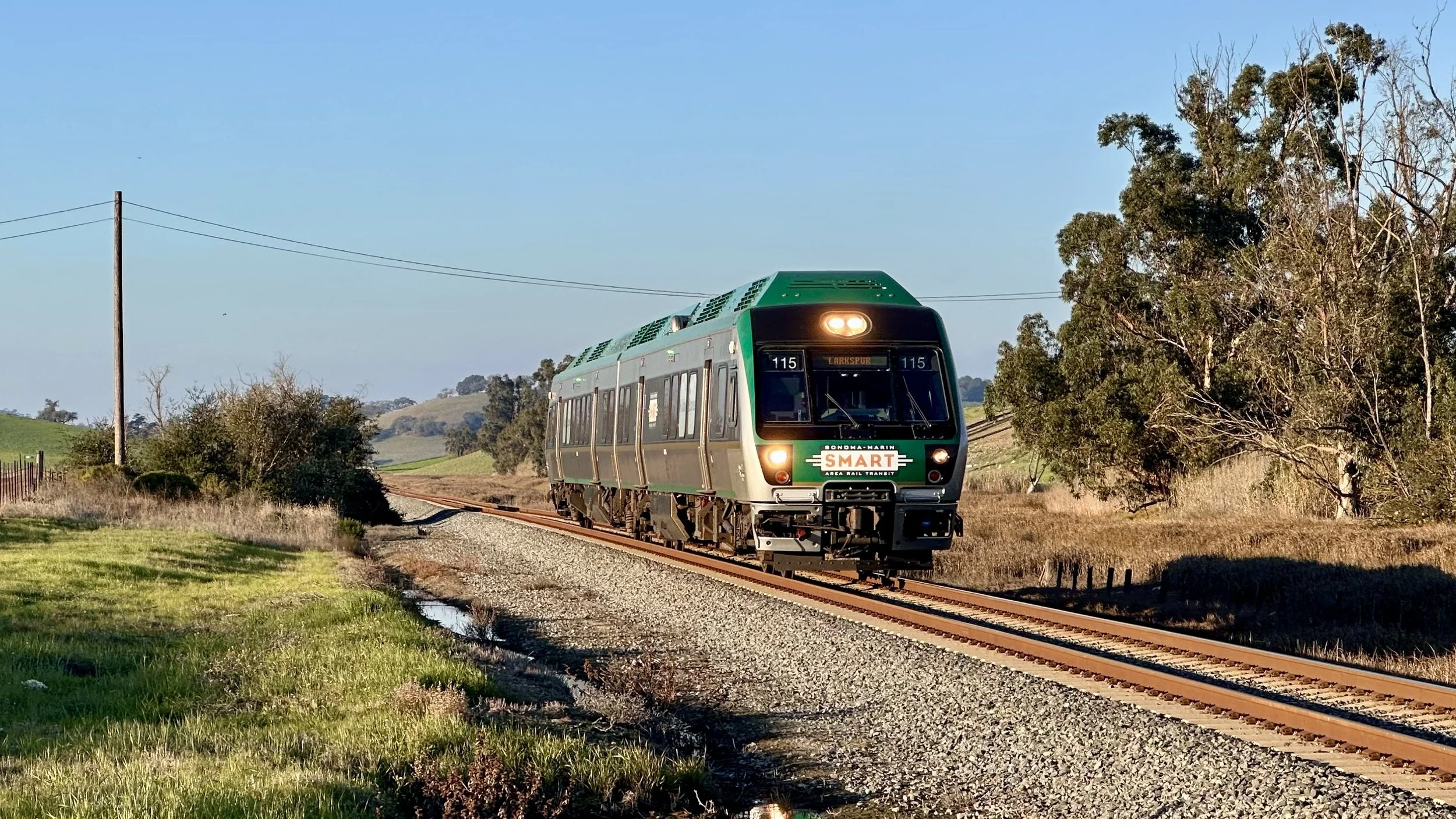
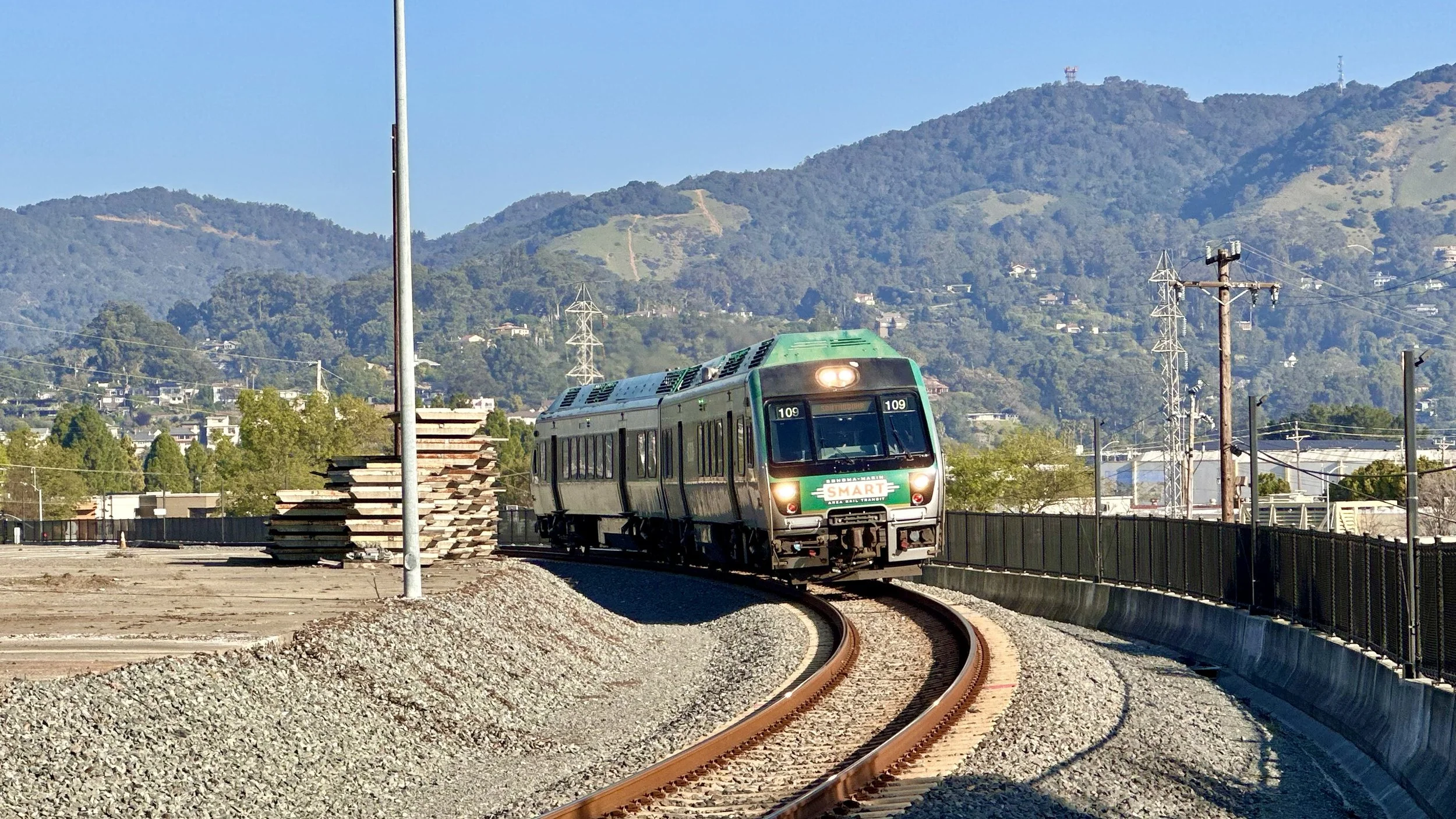
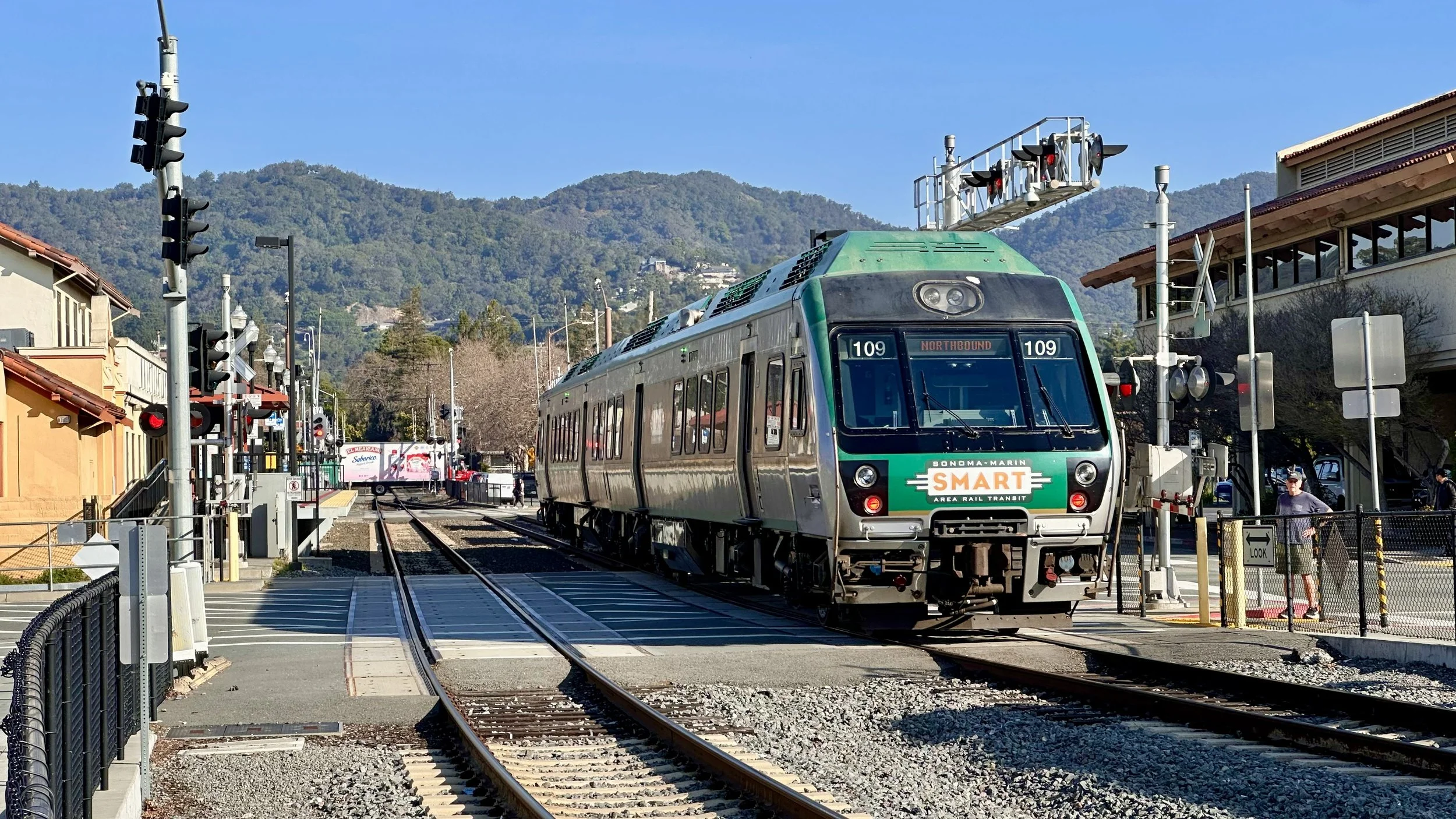
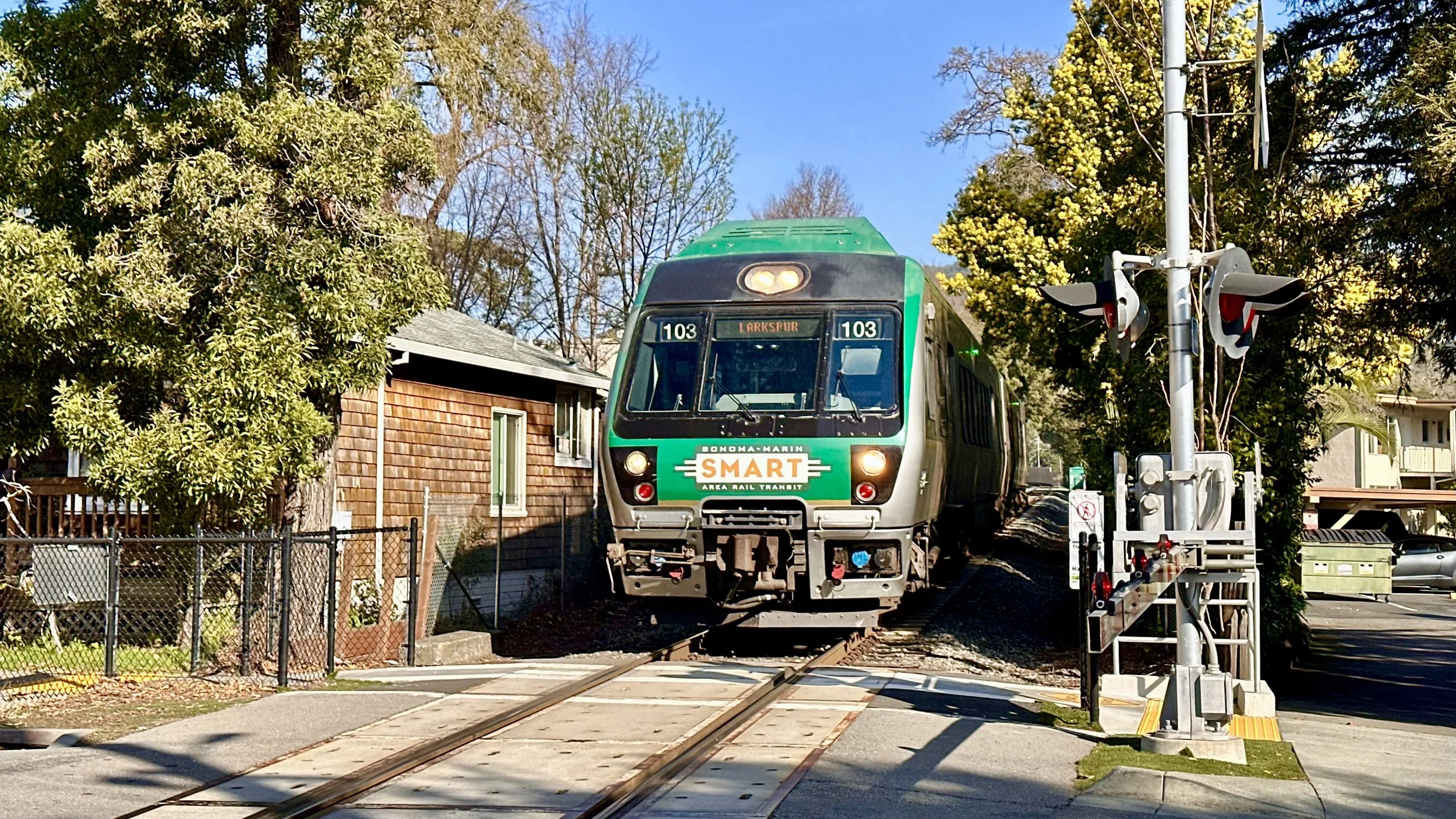
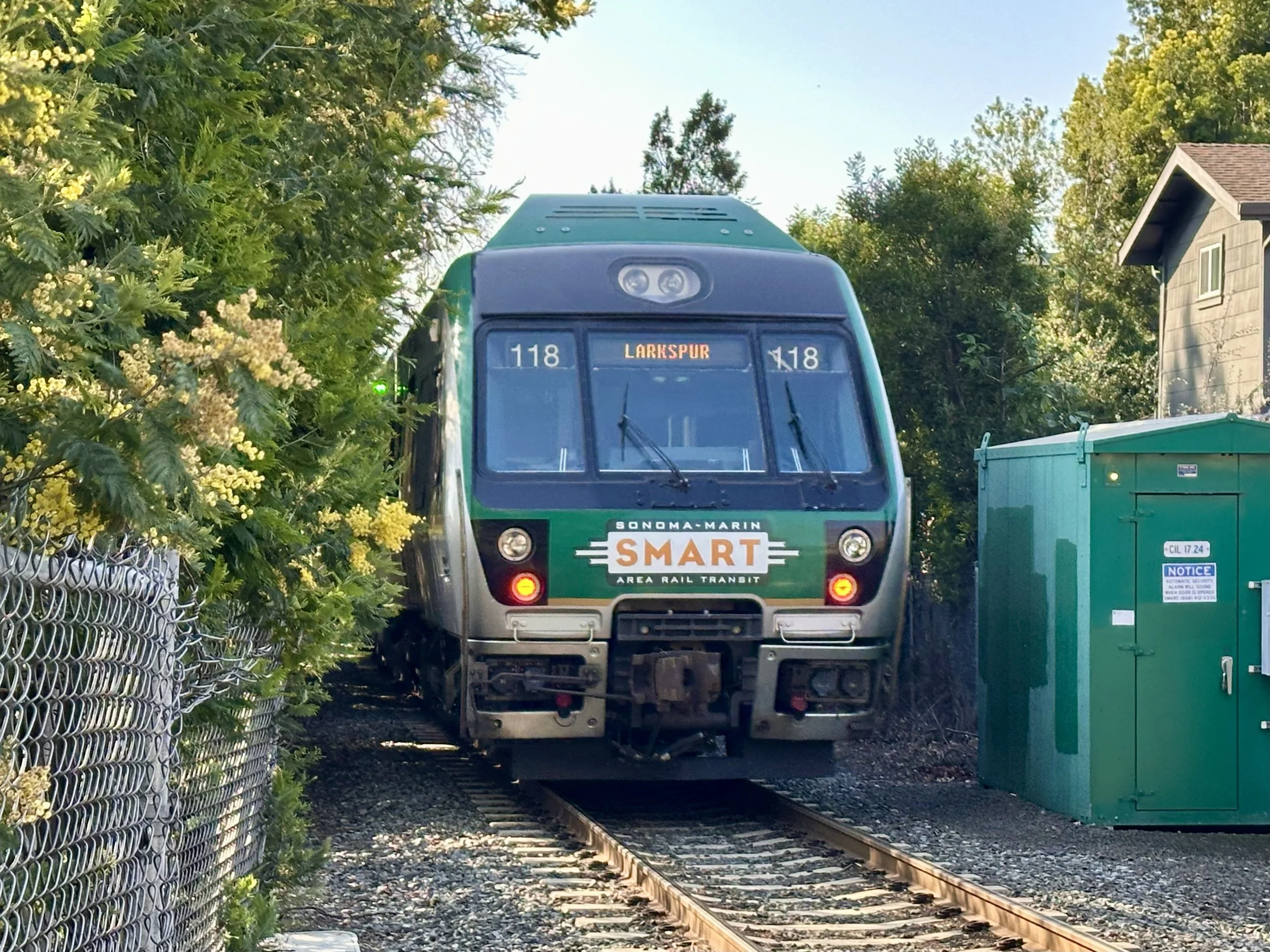
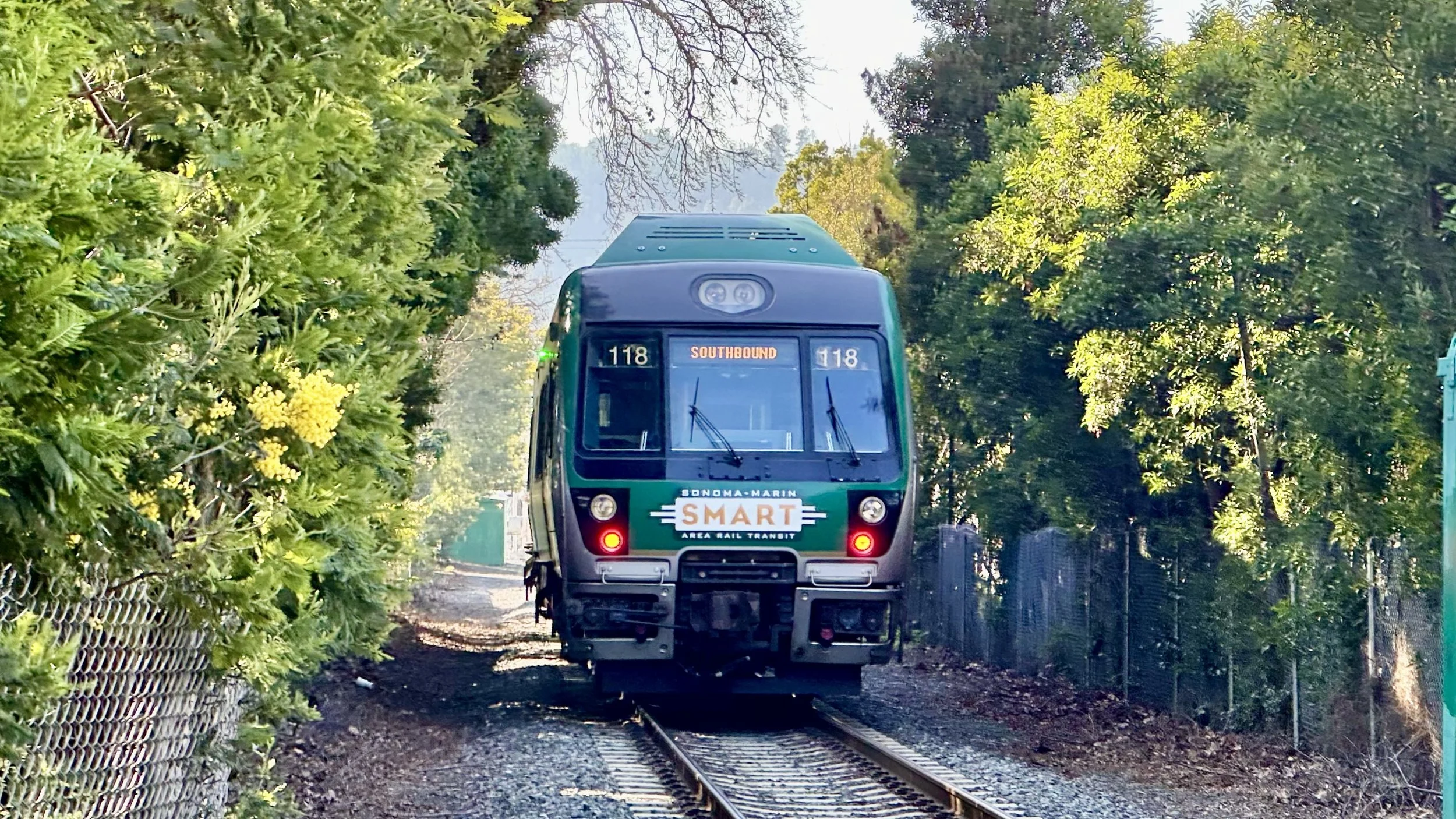
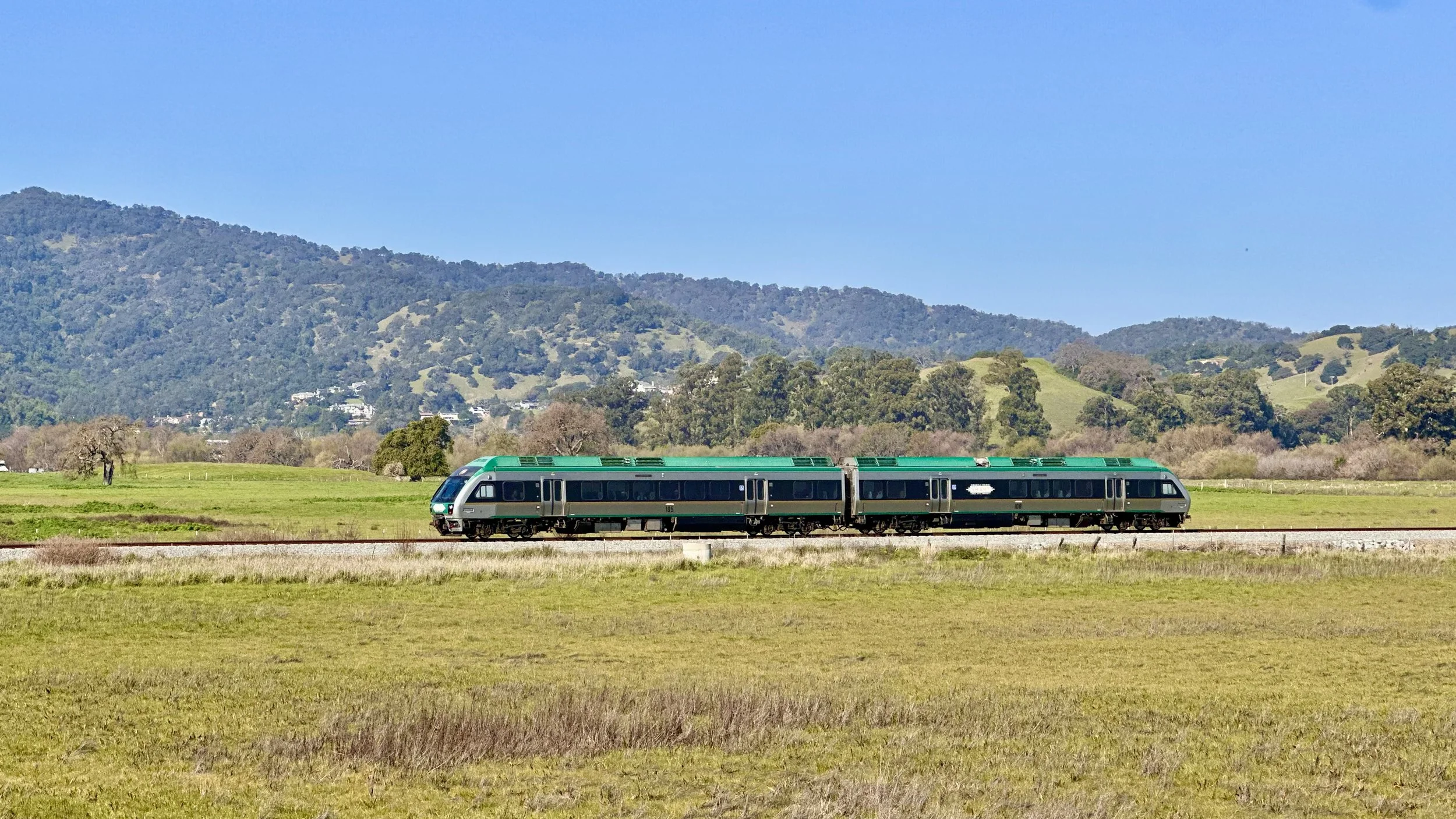
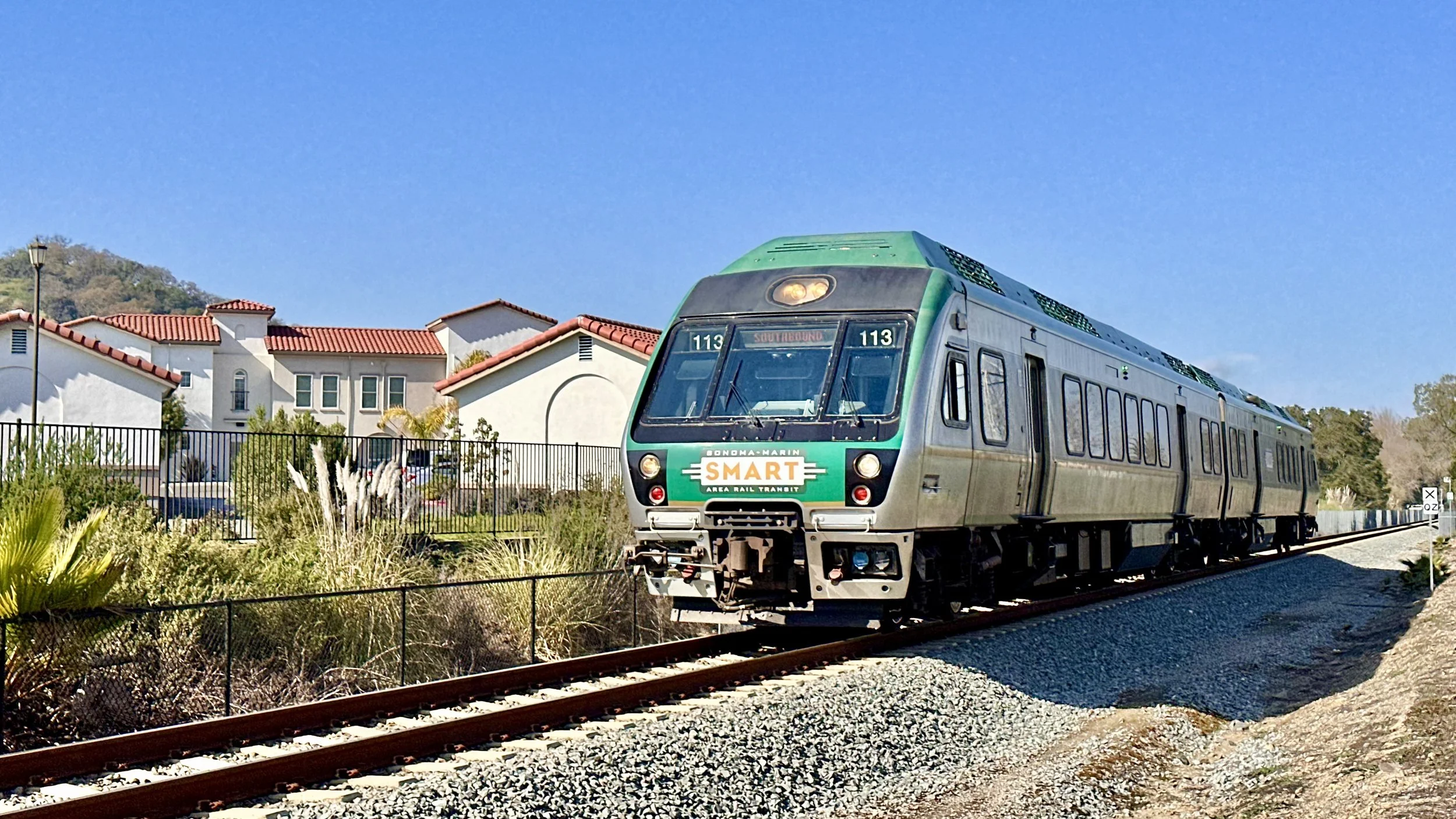
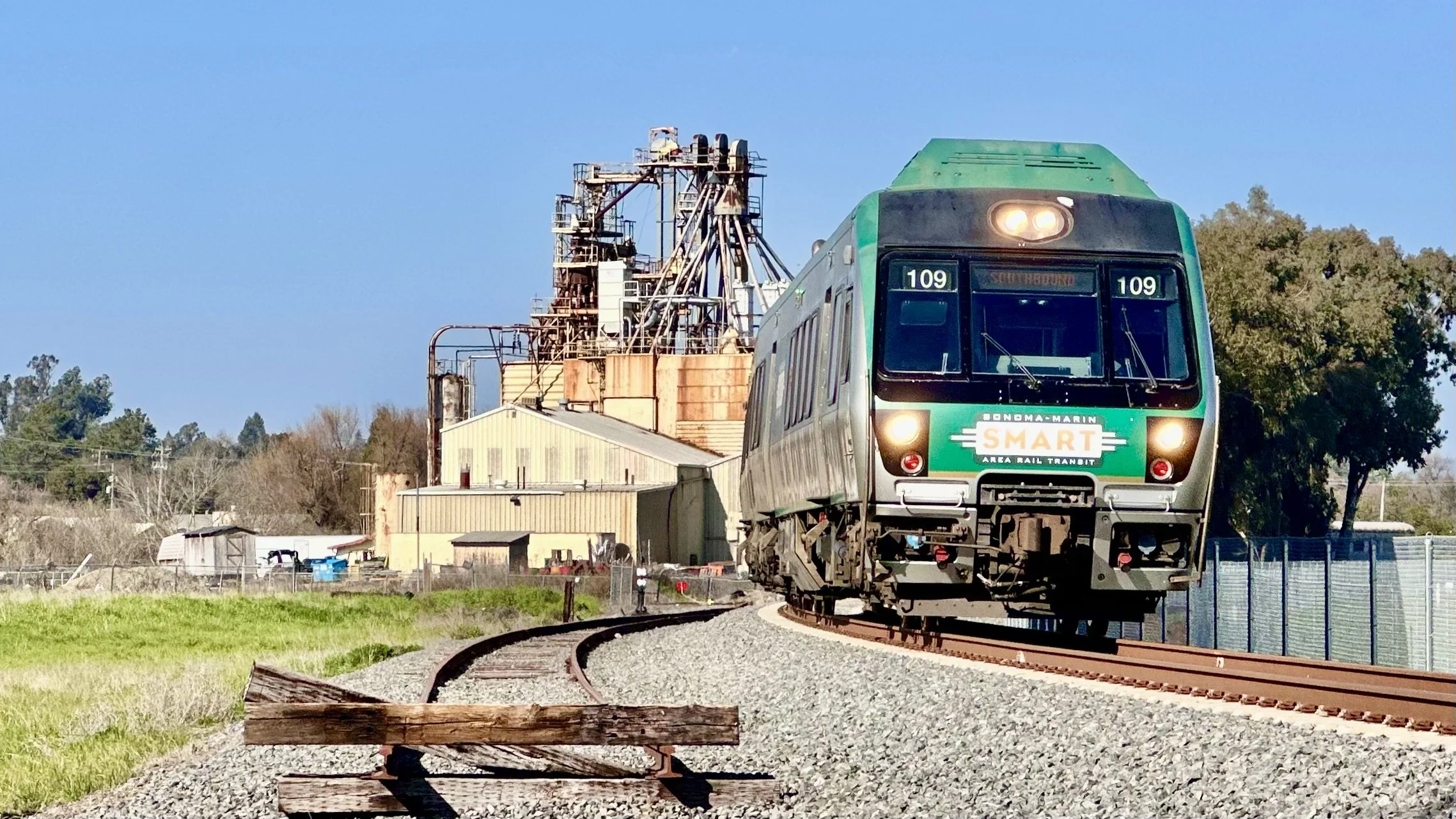
Opening in 2017, the Sonoma-Marin Area Rail Transit system, or SMART, reactivates the old Northwestern Pacific line in the North Bay Area, heading from a ferry connection at Larkspur north to San Rafael, Petaluma, Santa Rosa, and Windsor, and seeing regular extensions northward with the eventual goal of returning rail service to Arcata in Humboldt County. Paralleling the congested highway 101, SMART is a much-loved backbone of regional transit, with stations strategically in the heart of nearly every business district and often completely-packed trains.
The schedule provides all-day service from 0435 to 2210, but slightly favors peak-direction travel. While headways can be as good as every half-hour, there’s a gap of almost two hours in the middle of the day, and, given the system’s length, this gap can present very differently depending on which end of the line you’re on. Otherwise, schedules are typically more convenient than not, and many Larkspur arrivals and departures are (imperfectly) timed to ferries continuing onward to San Francisco’s Embarcadero terminal (unfortunately, both the ferry and train end prohibitively early in the evening for convenient sampling of San Francisco nightlife; nobody in their right mind likes an 0430 departure, but many people might need a midnight one).
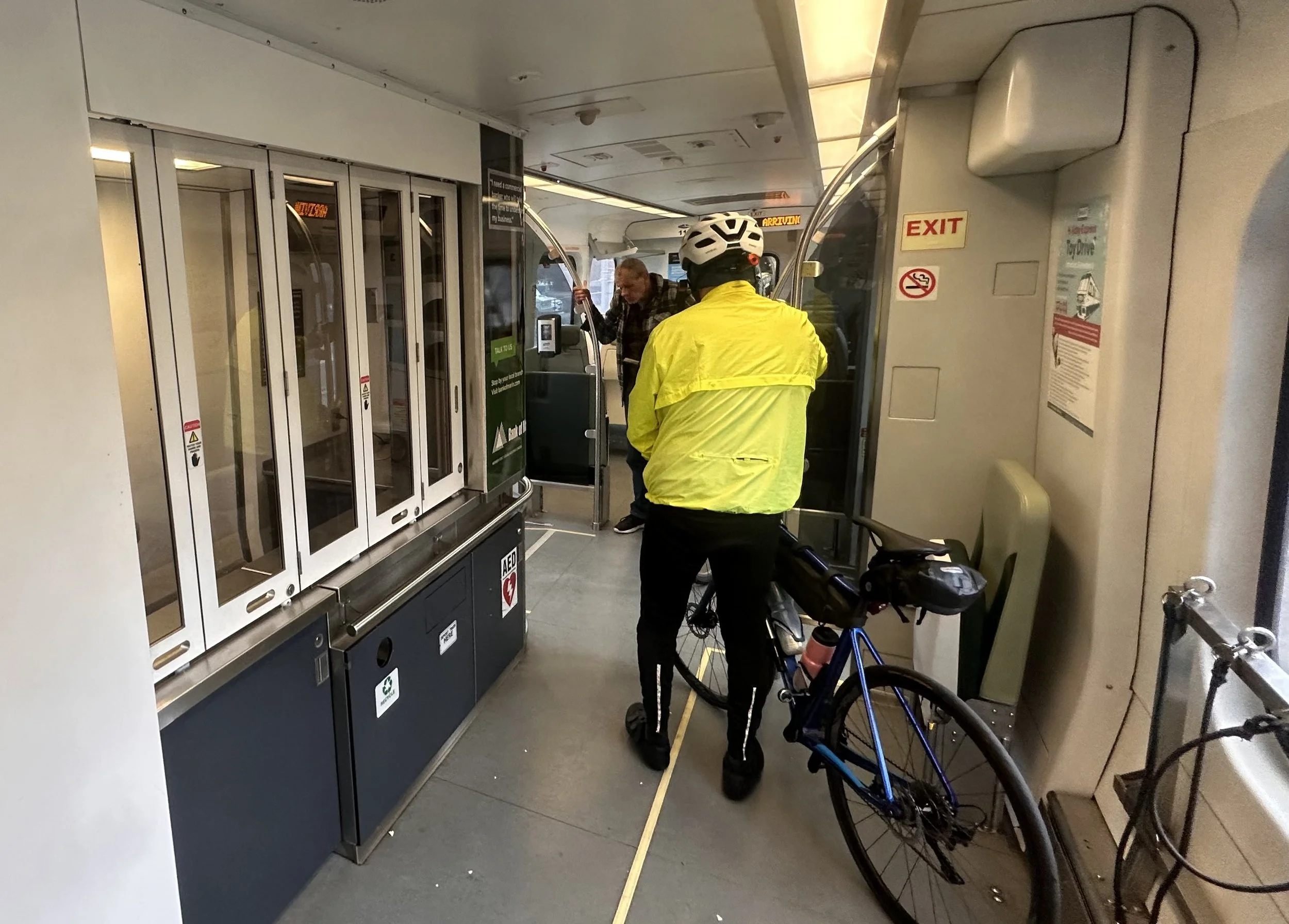
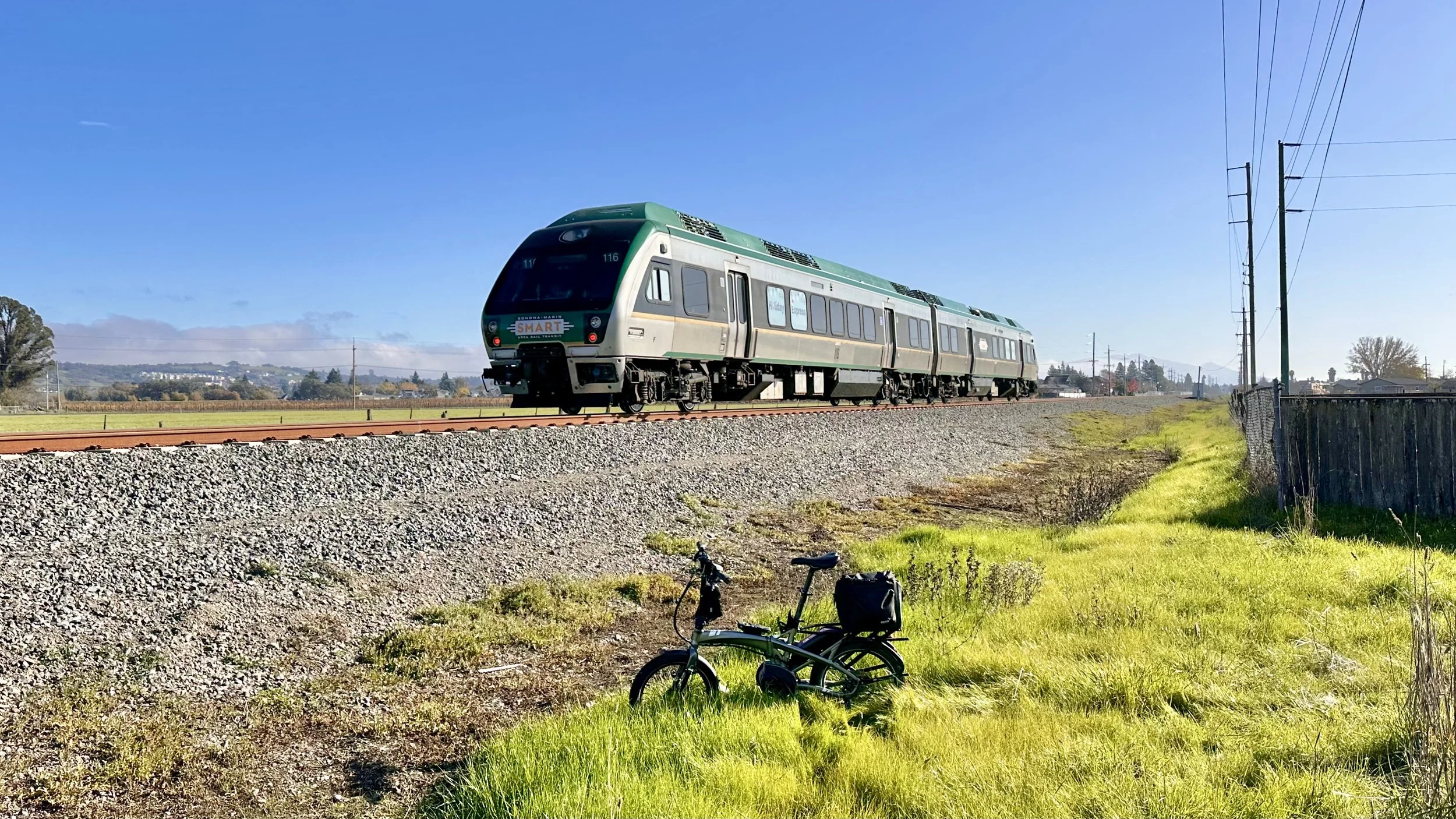
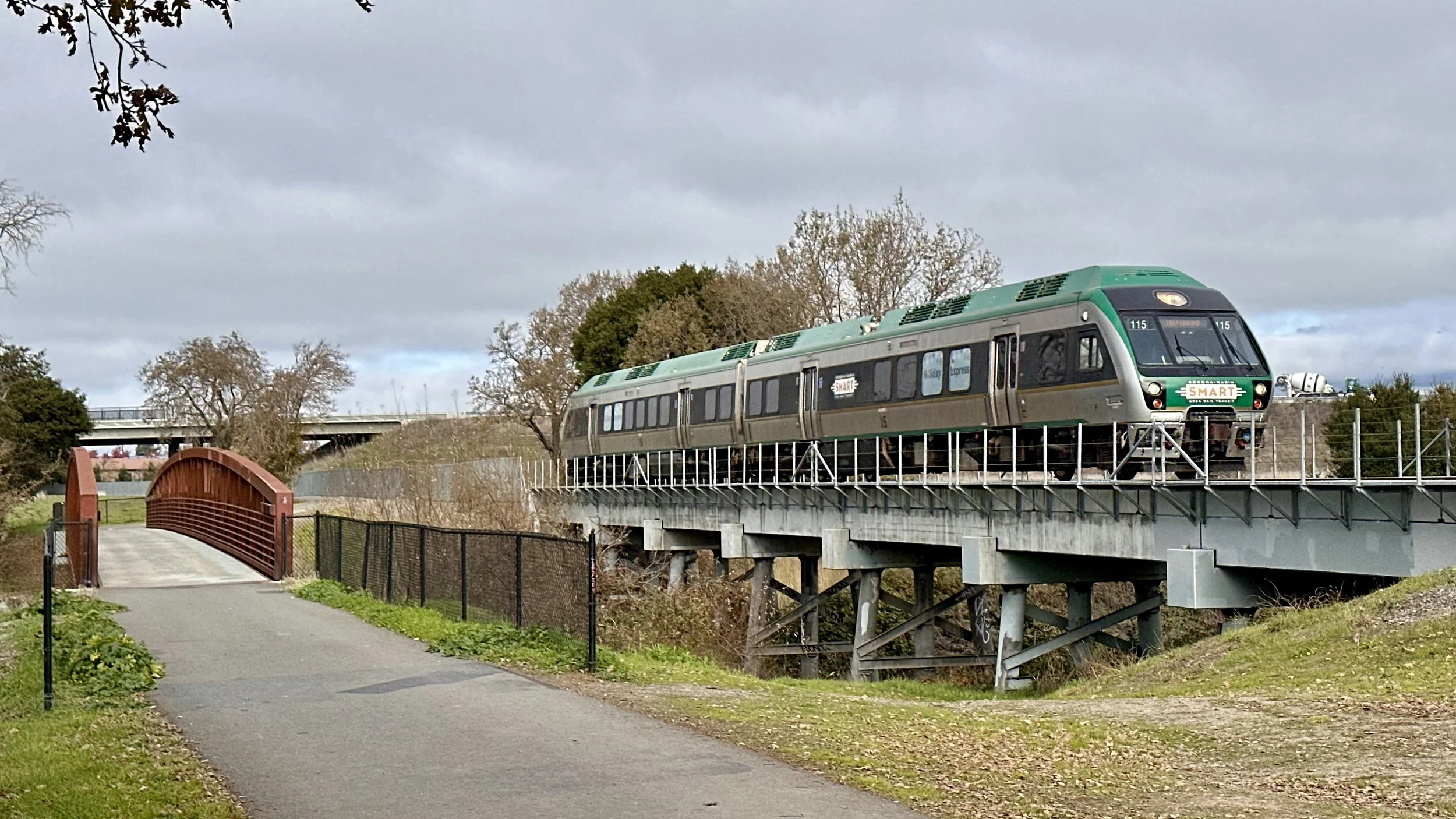
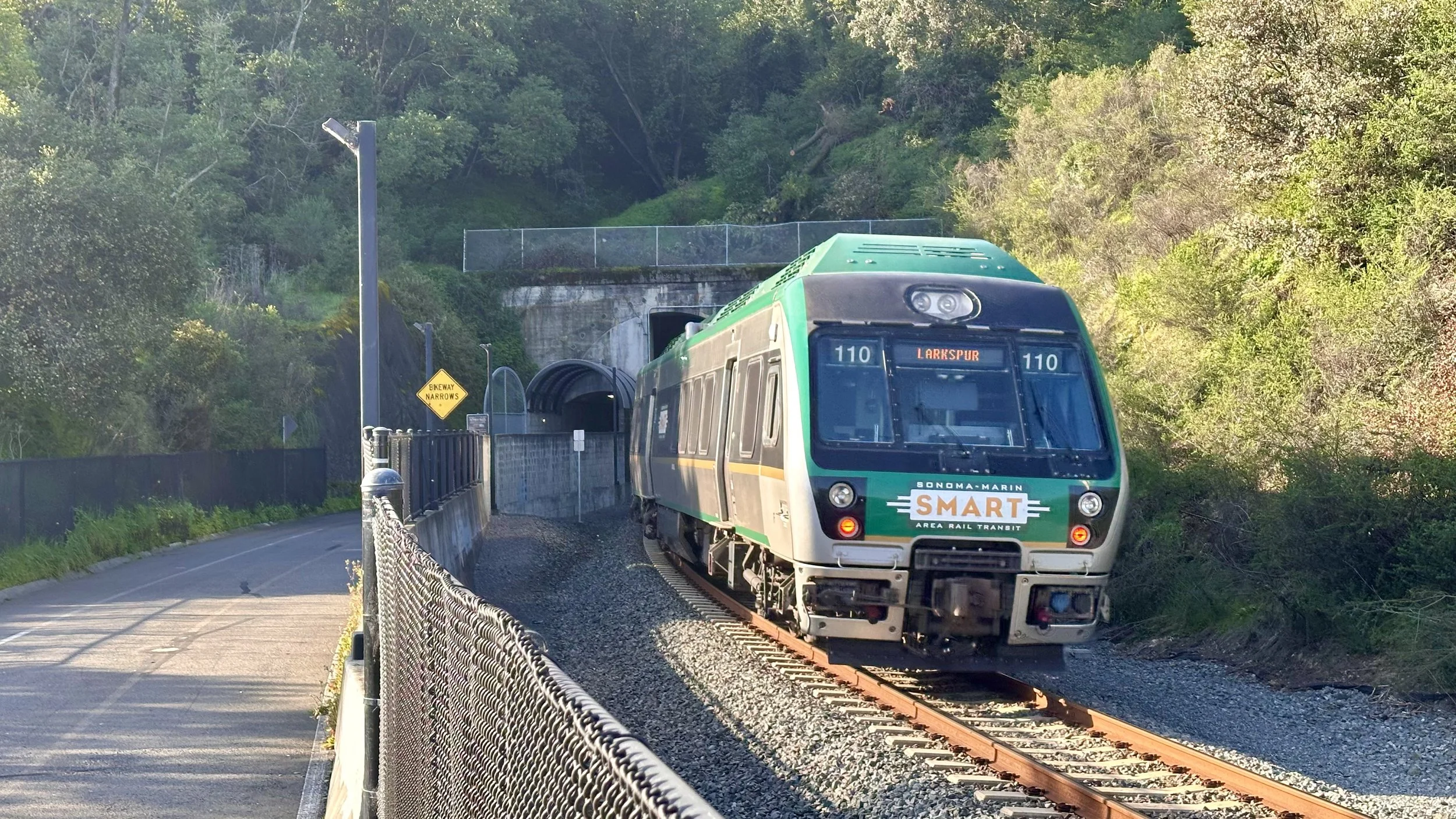
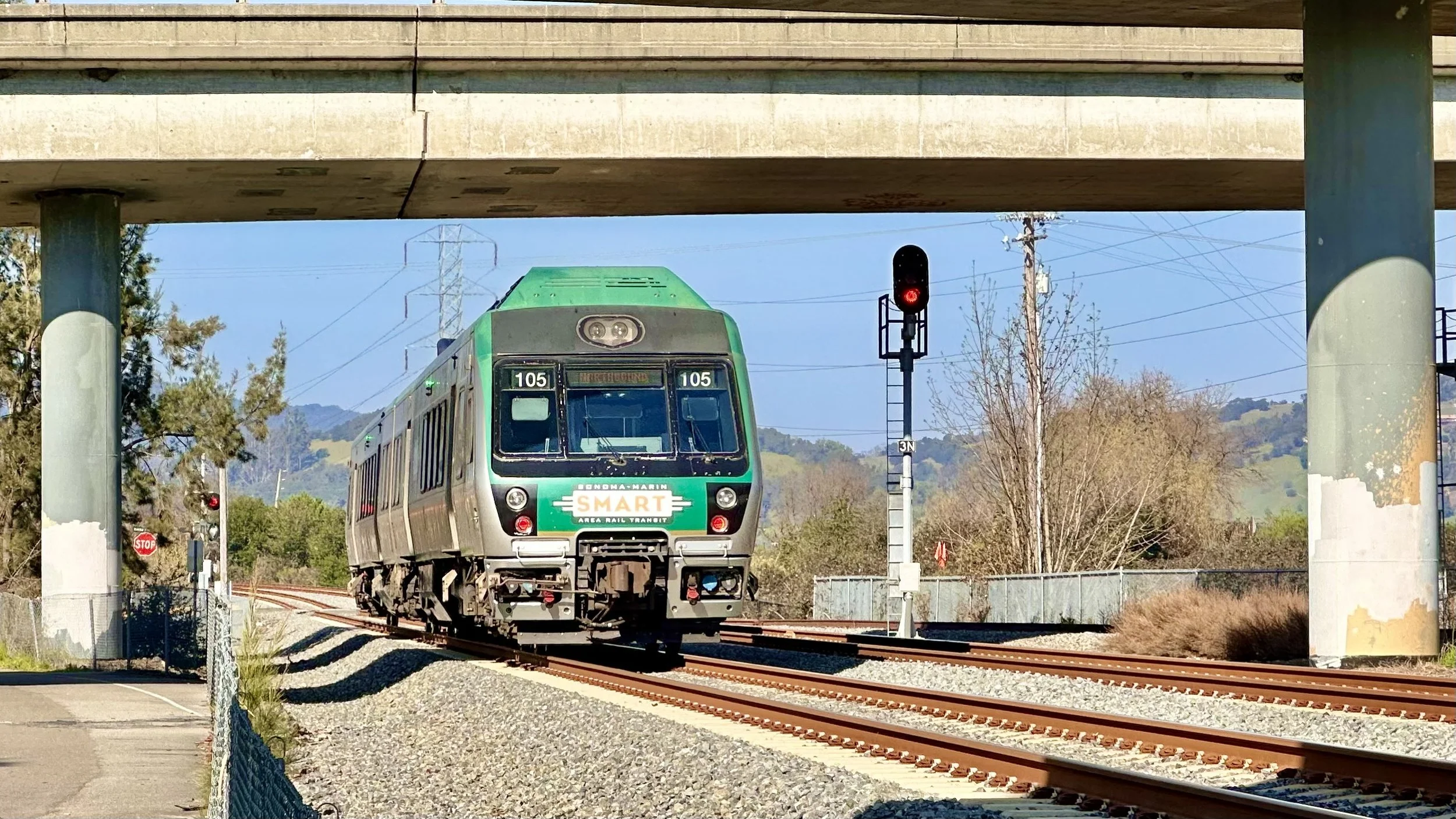
Notably, SMART also has an extremely extensive parallel bike trail which connects to almost every station (and even shares a tunnel with the train). SMART is very proud of its bikeability, has plentiful onboard bike space, and even recently took the “unprecedented” step of eminent-domaining the bike trail from itself so that bicyclists have unimpeded access to the region in perpetuity. Reflecting this good stewardship, the staff are incredibly kind; SMART allows children, teenagers, and the elderly completely free travel throughout the region; and the DMUs are regularly decorated for holidays and conduct toy drives or special excursions.
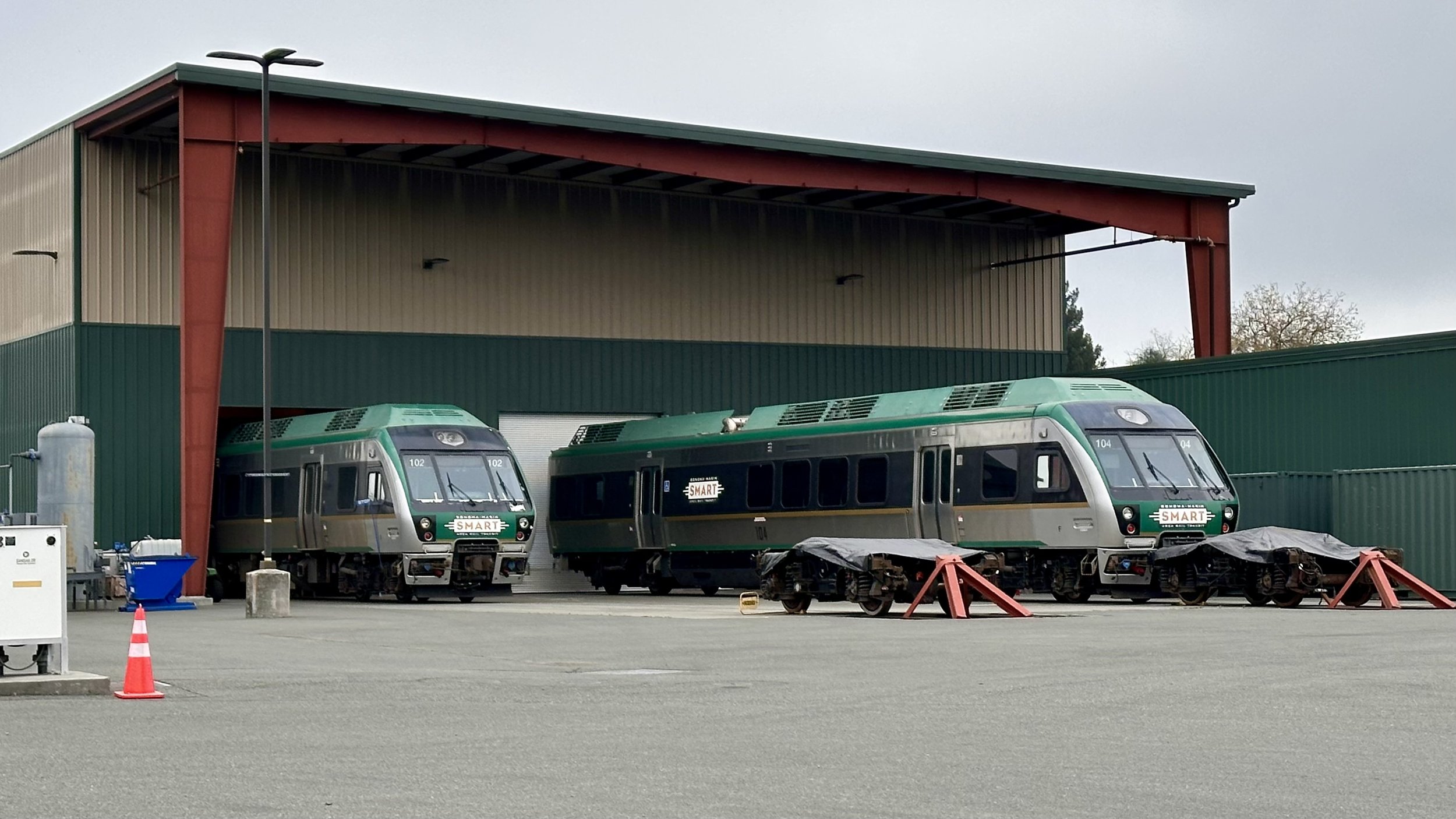
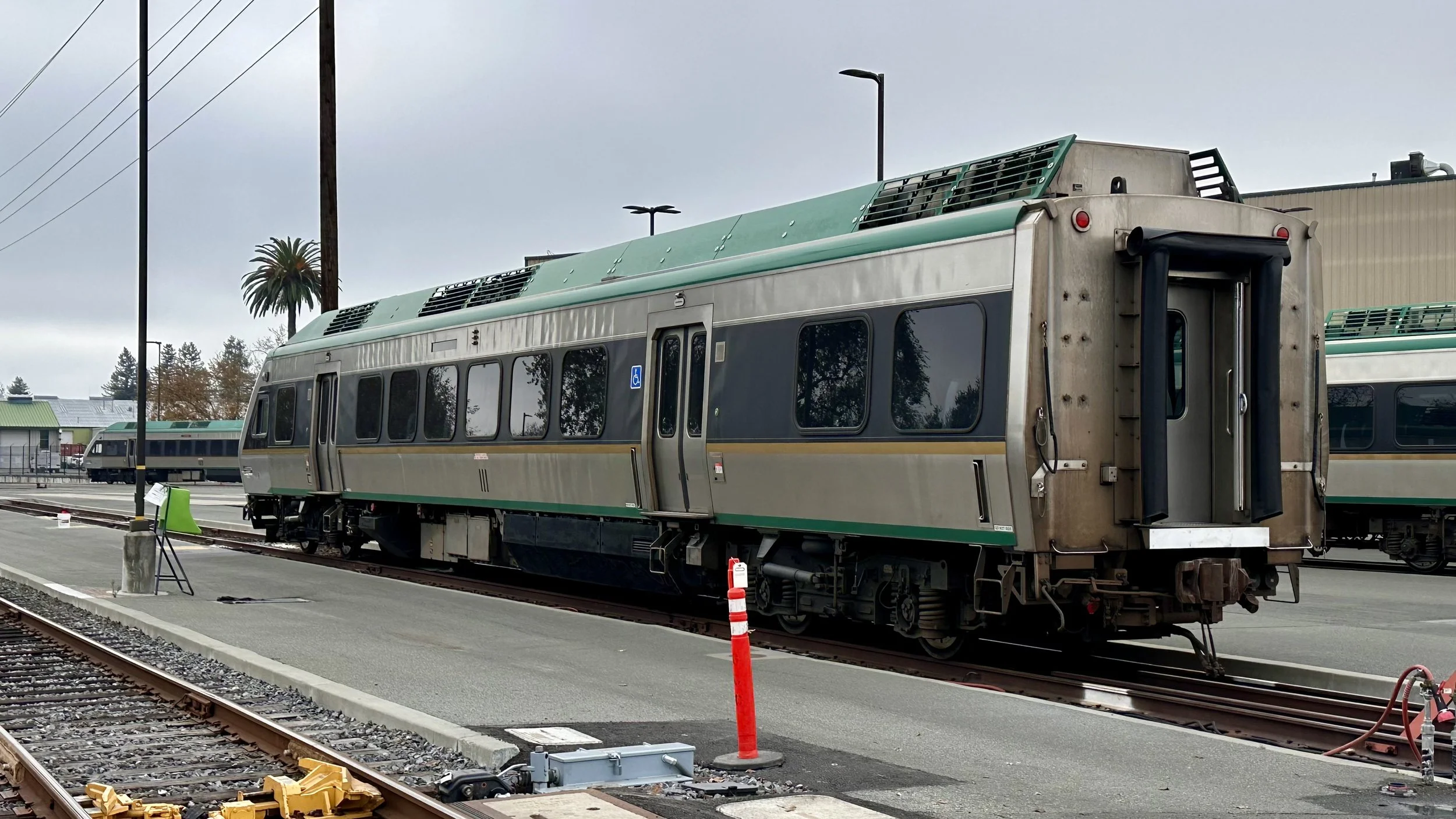
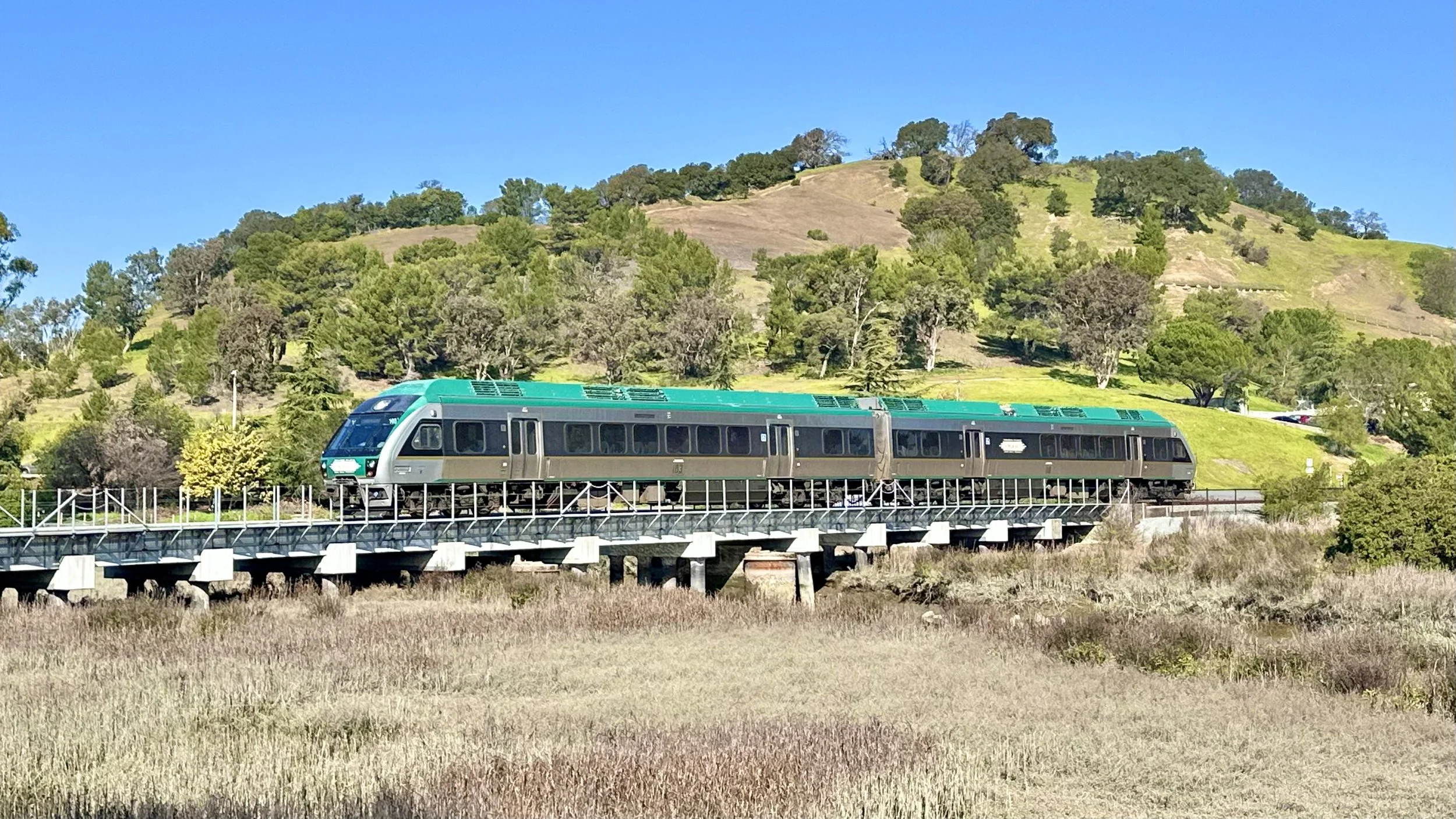
Speaking of the vehicle interiors, SMART is one of only two DMU systems to use Japanese-built Nippon-Sharyo DMUs (the other being the Union-Pearson Express between Toronto Union Station and the airport). Now no longer manufactured, they are extremely attractively appointed on the interior, with a spacious, airy feeling but comfortable and private seats, an extremely attractive light and dark green color scheme, and a restroom in the south-facing DMU and petite cafe in the north-facing DMU (sadly disused since COVID). While the UPE does have the NS middle trailer cars and while SMART built platforms to accommodate them, SMART did not order any middle trailer cars and runs only two-DMU lashups. Any additional increases in ridership or route extensions will strain fleet capacity, necessitating a mixed fleet with alternative vehicles, or, more likely, trading fleets entirely either to or from the UPE.
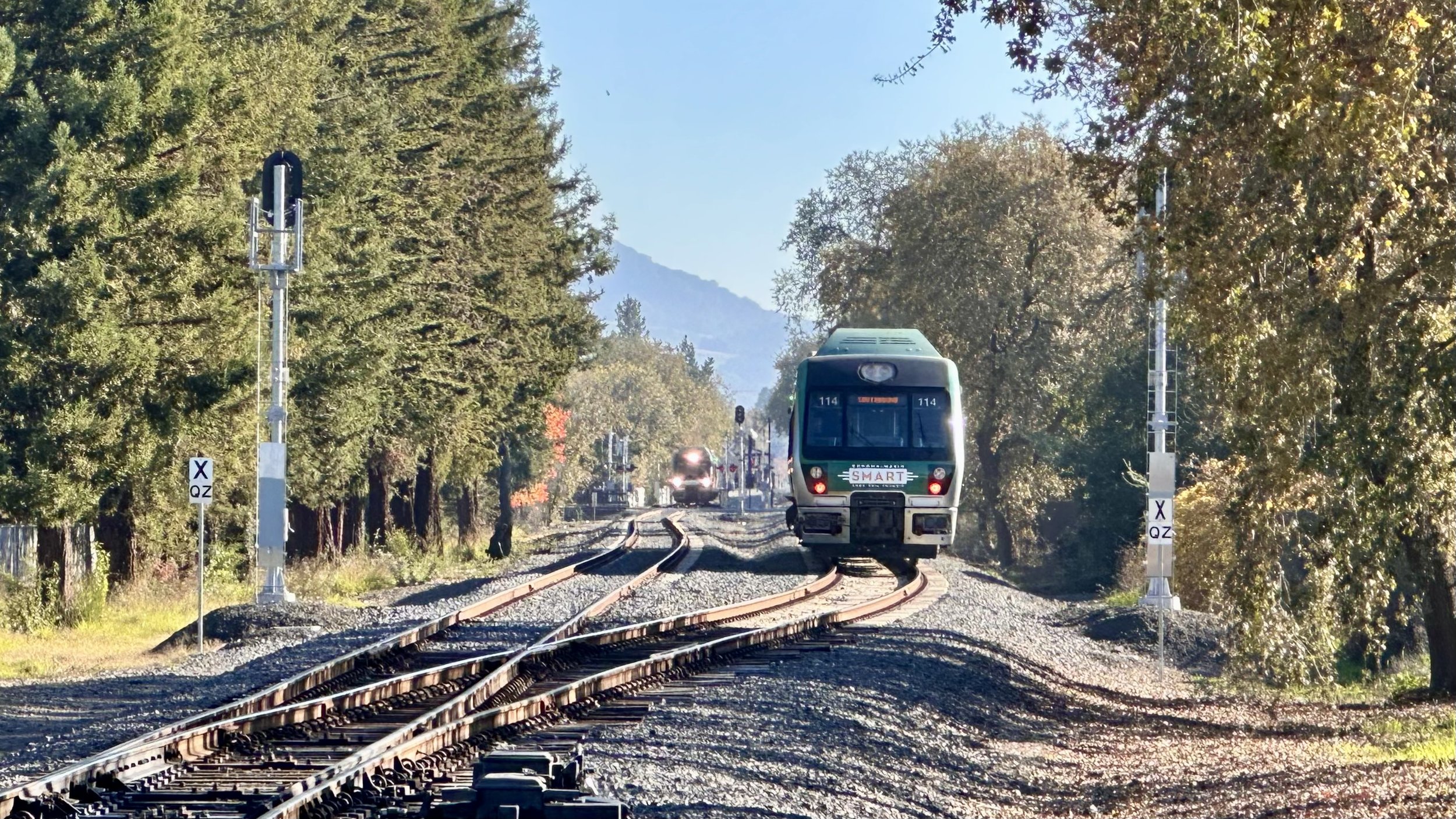
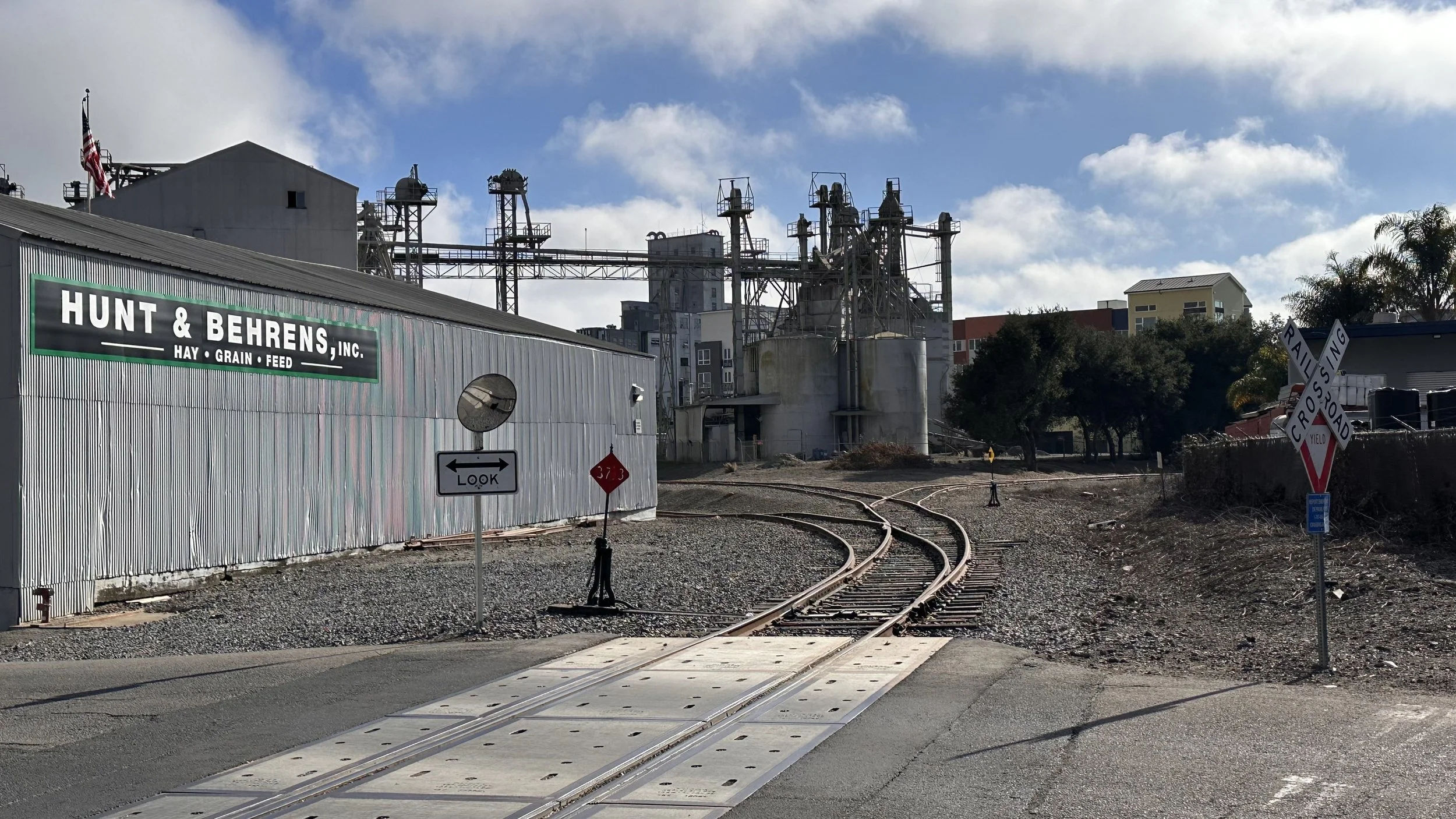
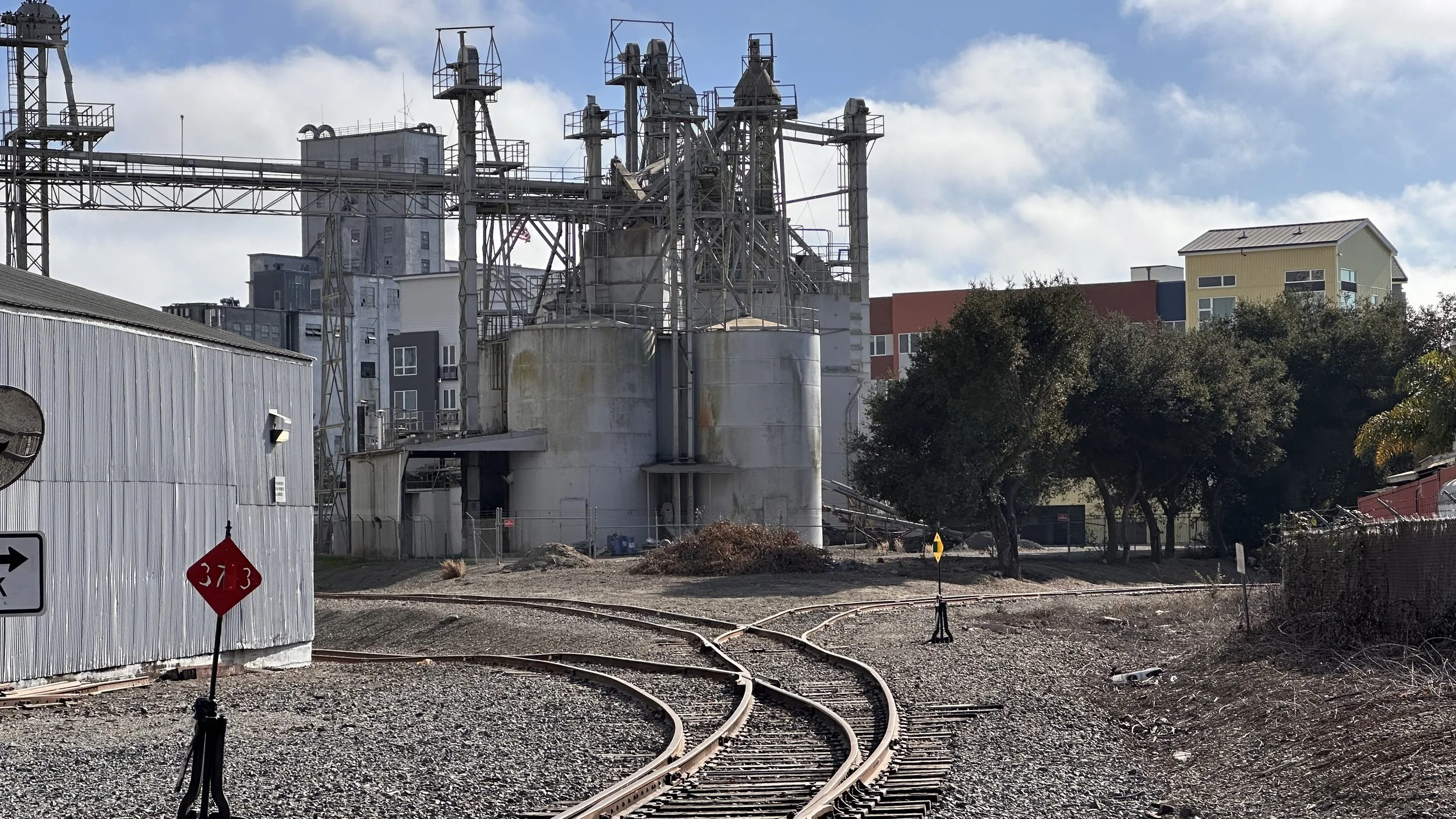
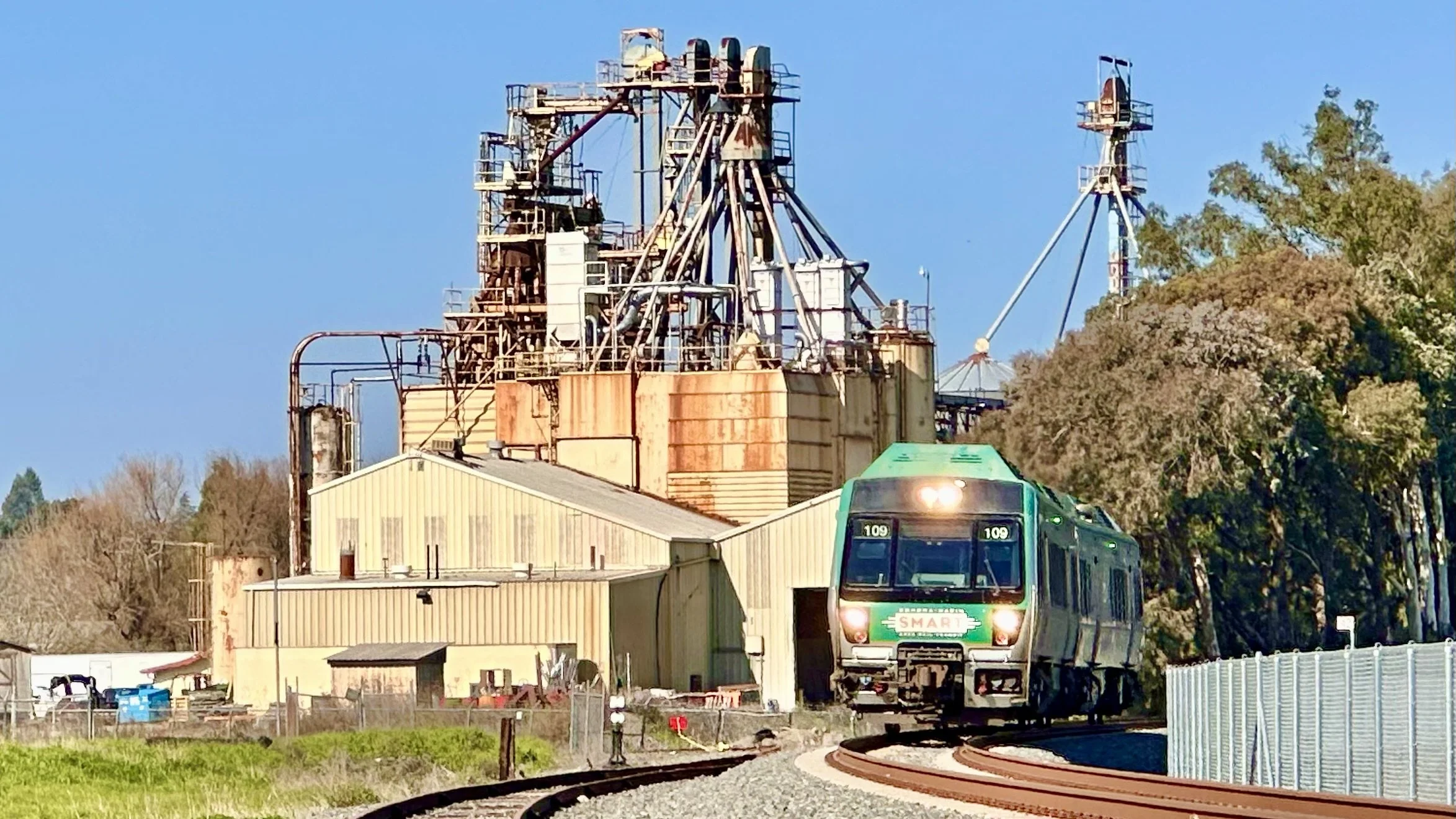
The Nippon-Sharyos are the only other FRA-certified DMUs, technically allowing daytime mixing of freight and passenger trains on the same rails, but, in practice, freight trains still come only at night. SMART also operates several freight-only routes which may someday see a DMU extension eastward for connections to Sacramento or San Jose. However, the current DMU route doesn’t see freight service until it’s joined by the freight line at a wye near Novato; all the stations northward have gauntlet tracks to allow for freight bypass, but most of the industries are in the vicinity of Petaluma.
While SMART doesn’t have as much freight or mainline action, it’s an extremely homey, neighborly, convenient, and versatile DMU system. Any prototype-based layouts would likely need to massively compress the route, focus on the freight-aligned segment between Novato and Petaluma, and have to build the DMUs from scratch. However, SMART does inspire adaptation of its medium-frequent regional rail along a medium-density freight line to many other model railroads of similar scope, and its highly variable schedule, as with CapMetro Rail, demonstrates how aperiodic passenger schedules can create daytime pockets for freight train coexistence and more dynamic model operations.
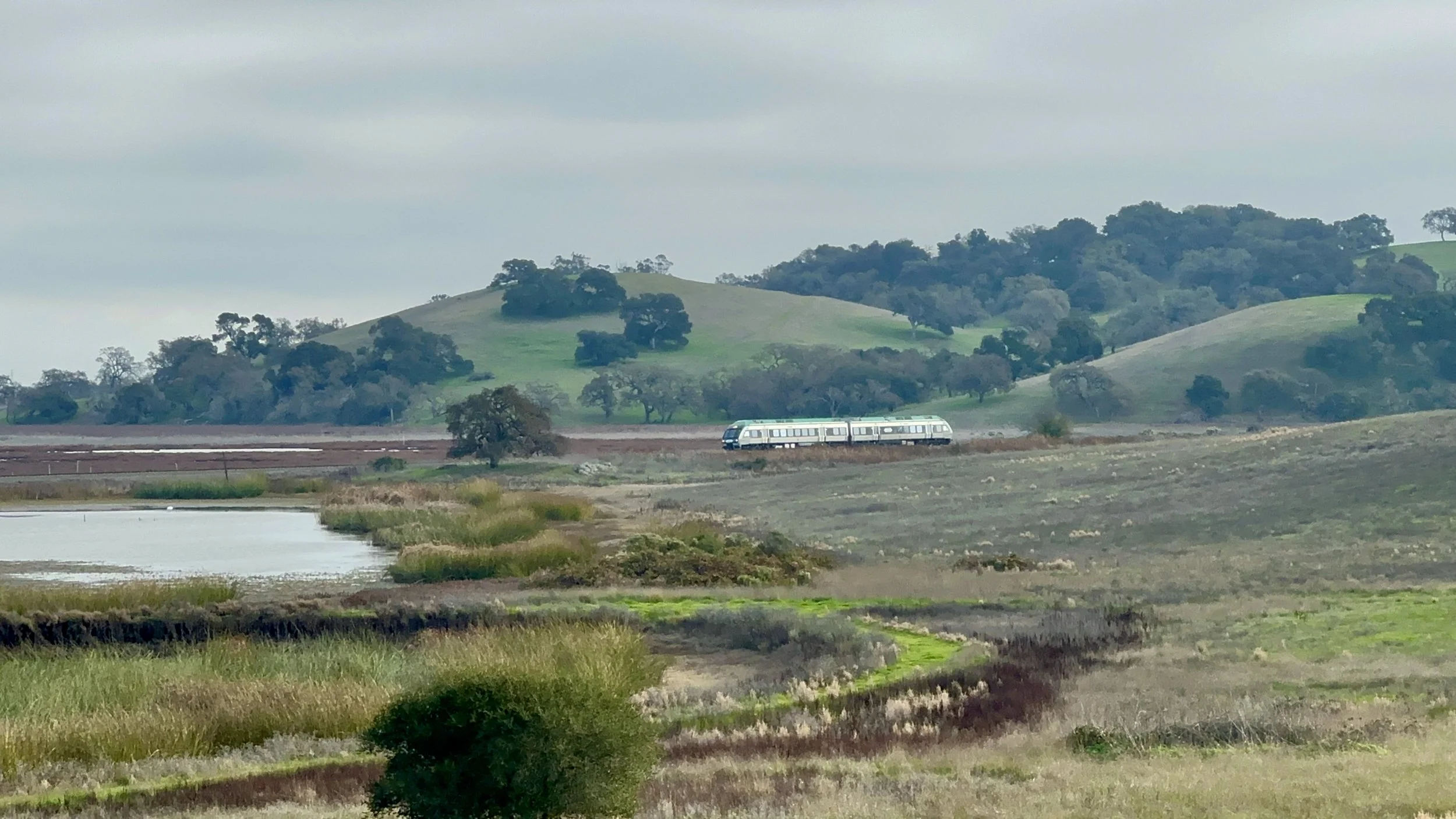
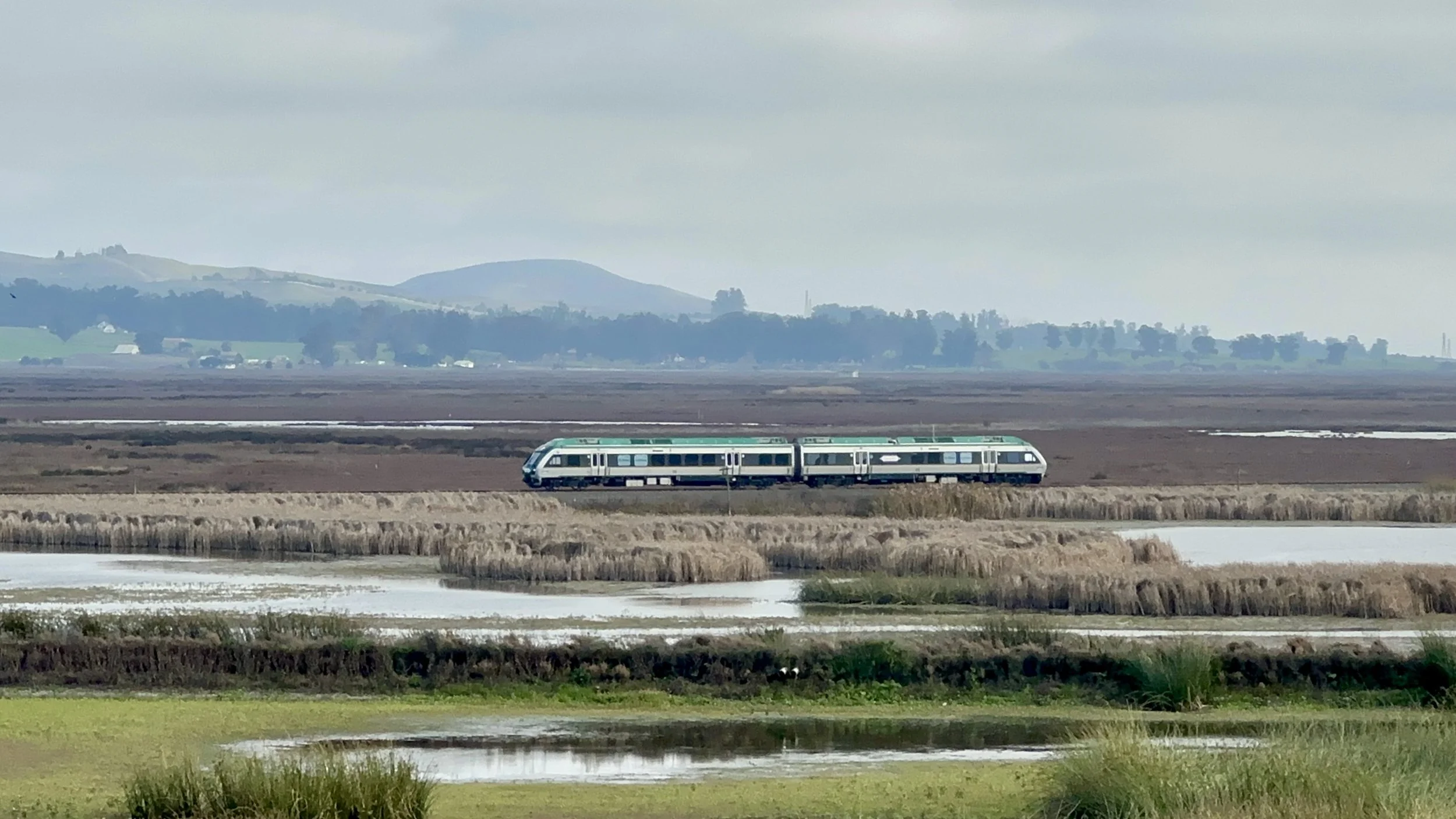
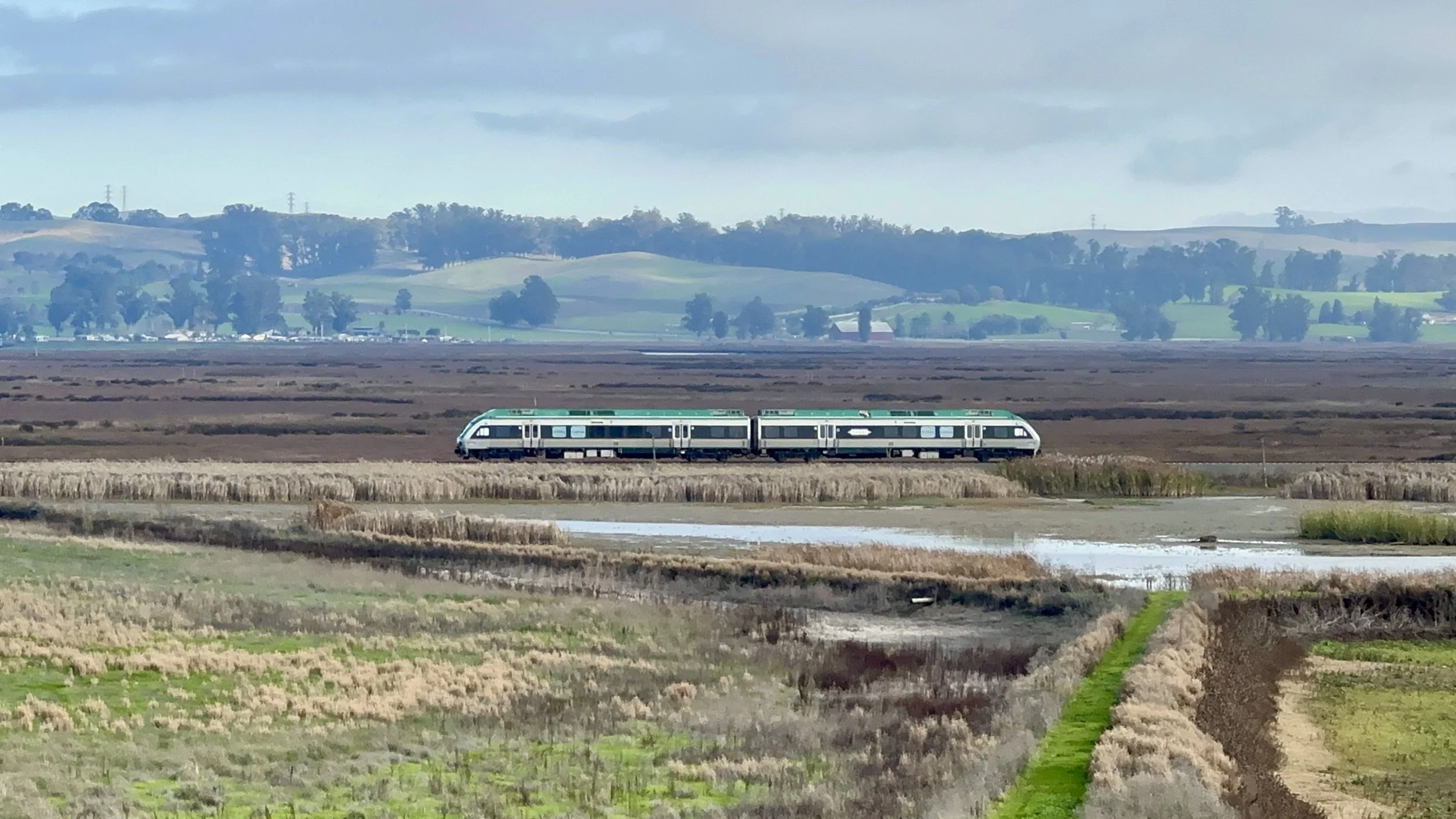
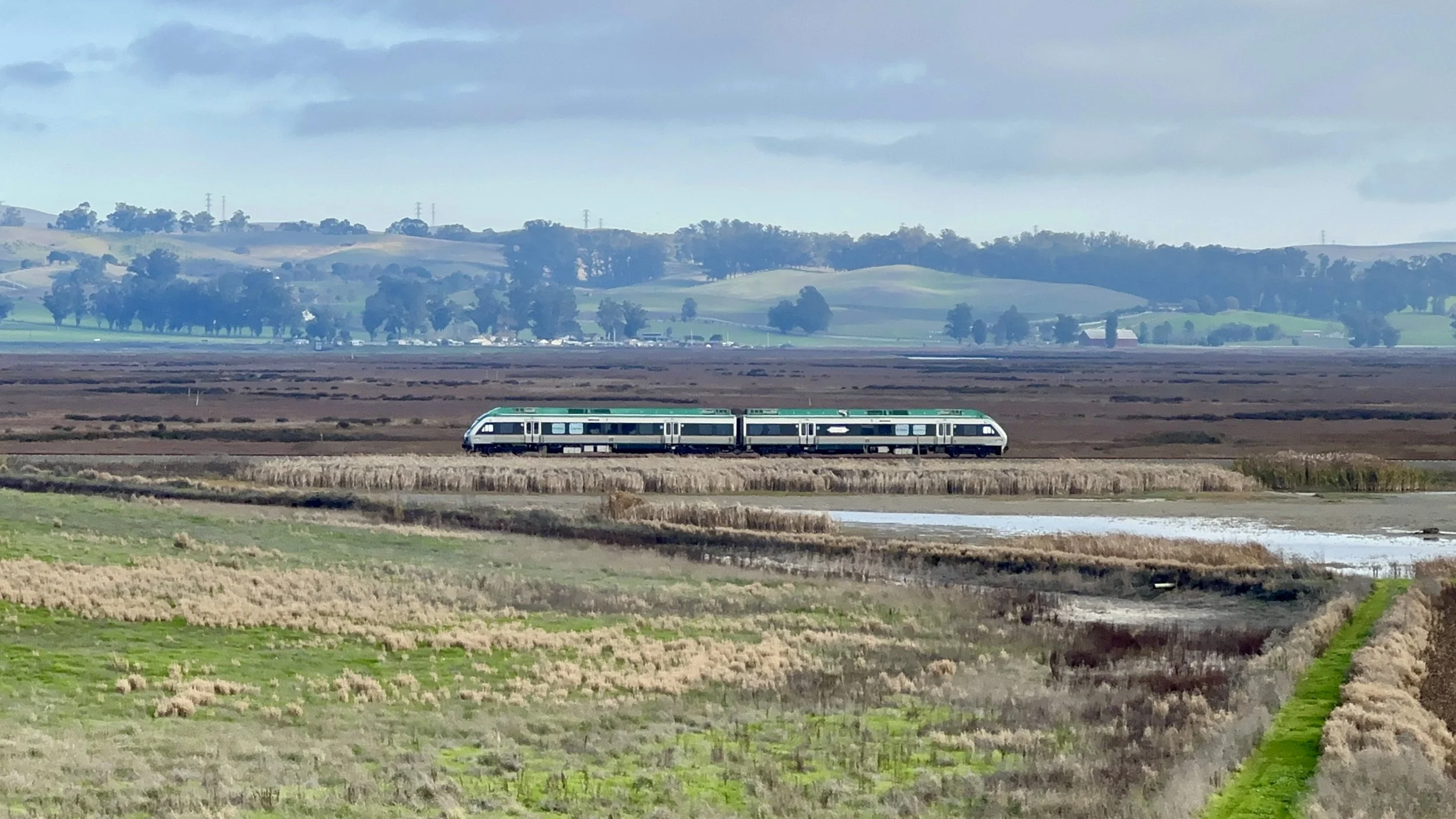
eBART
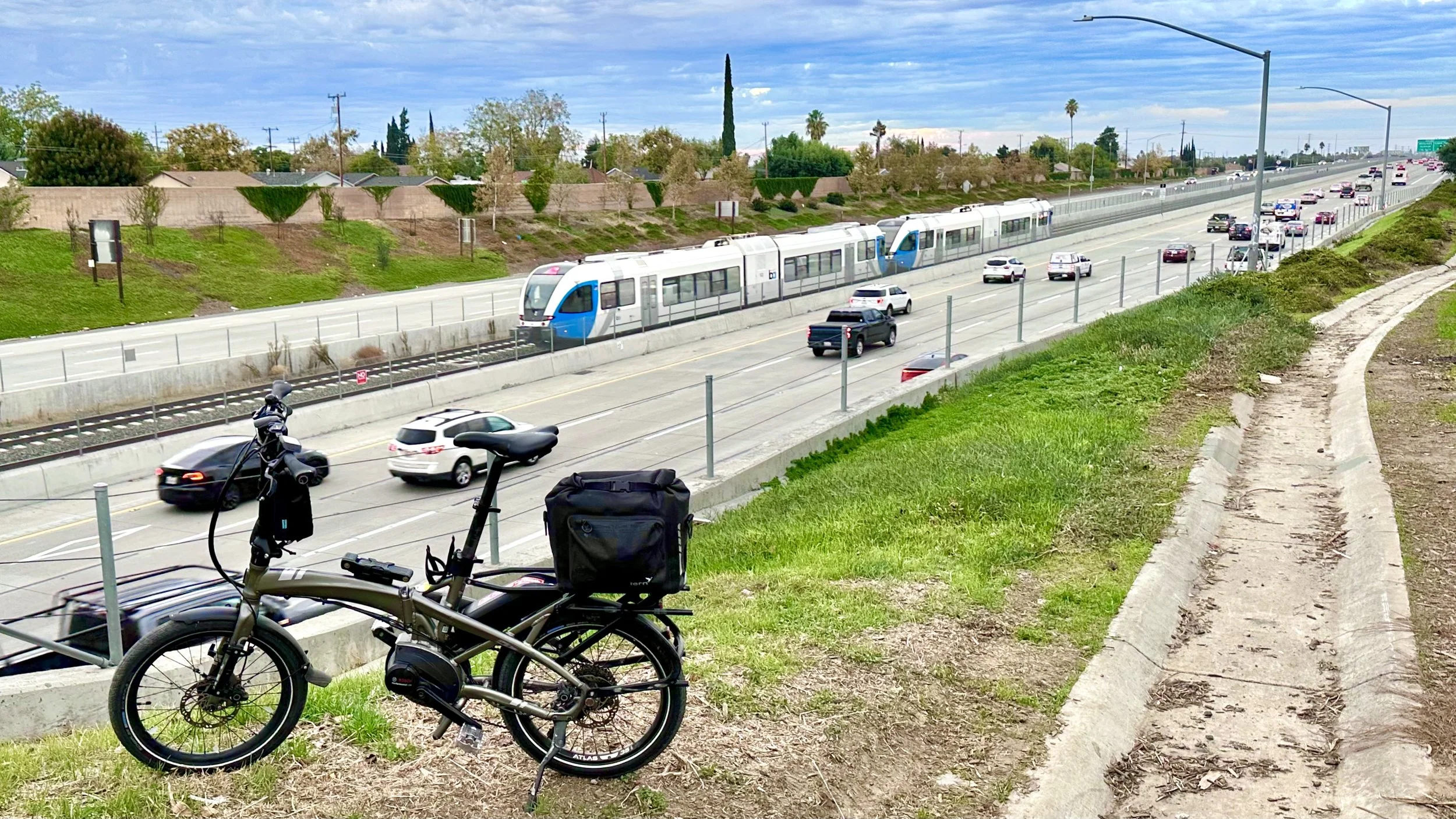
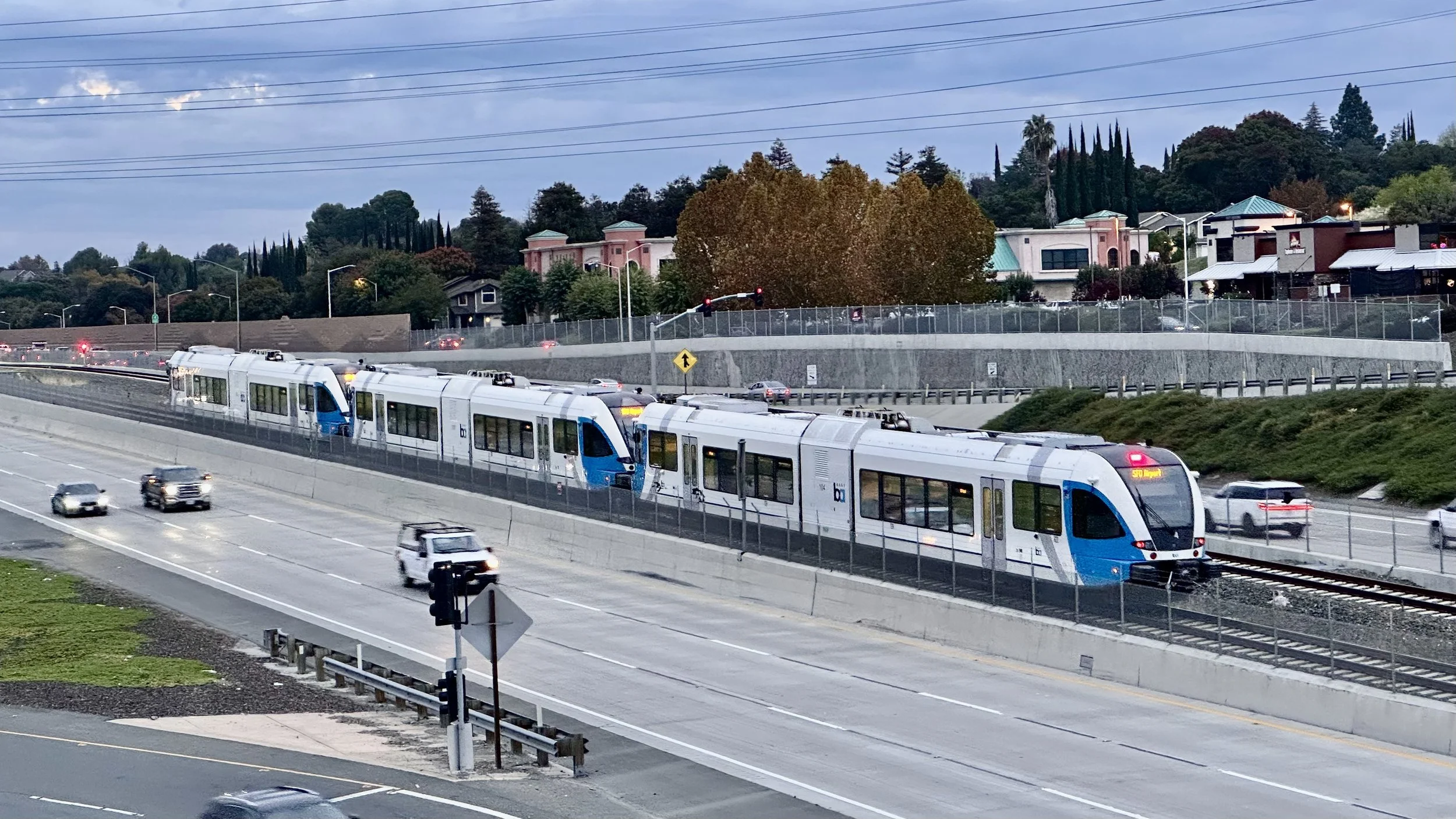
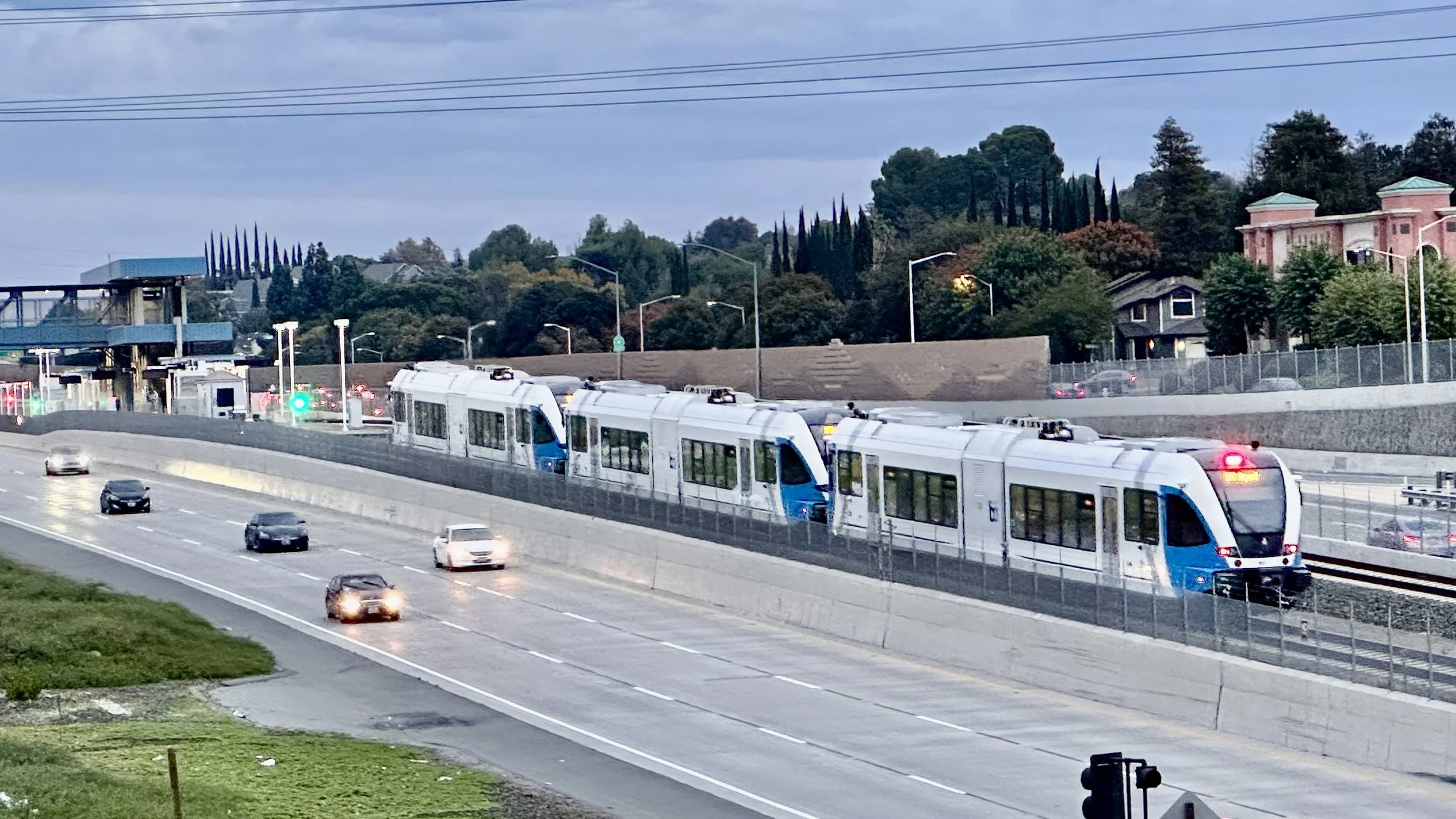
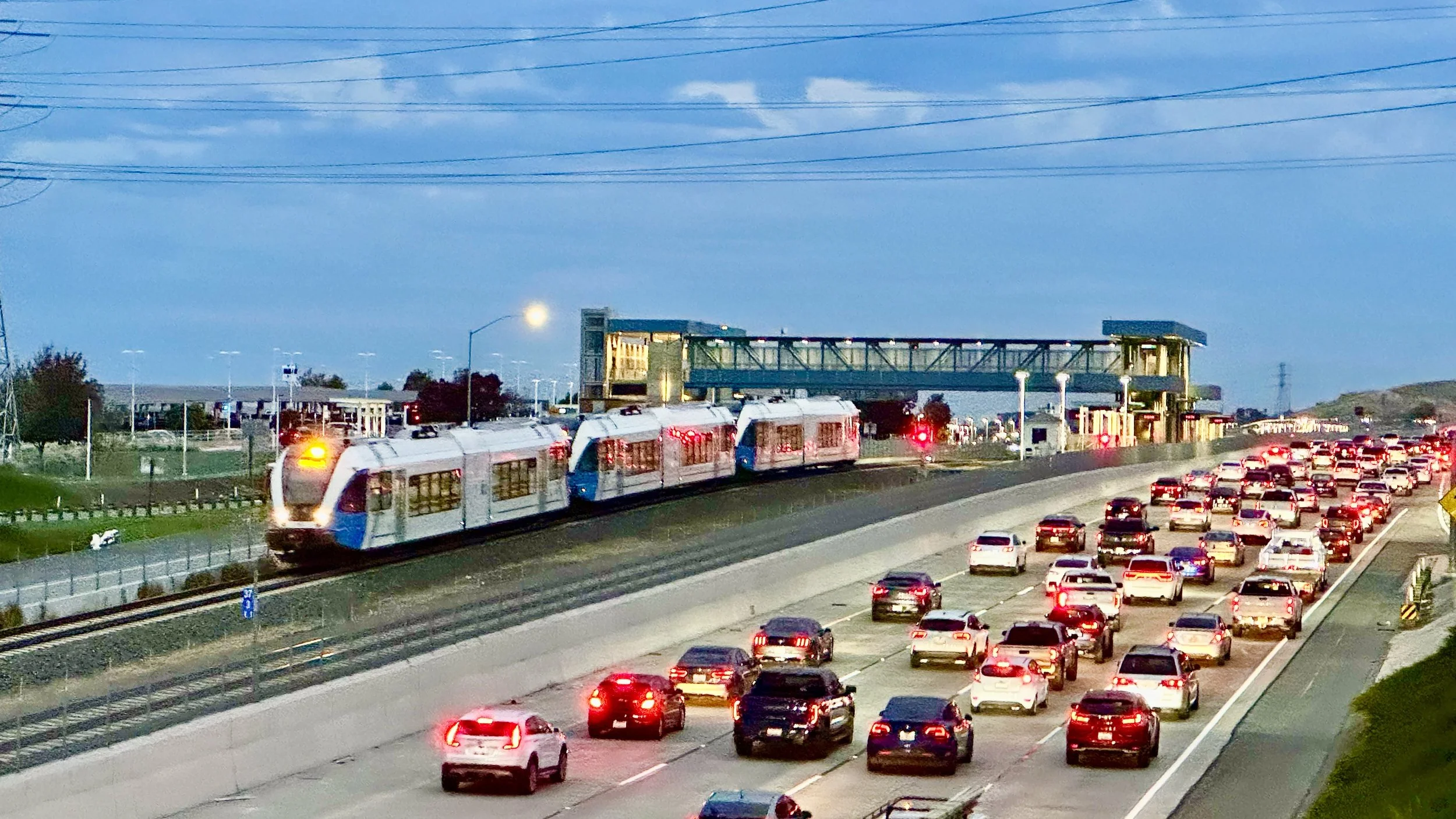
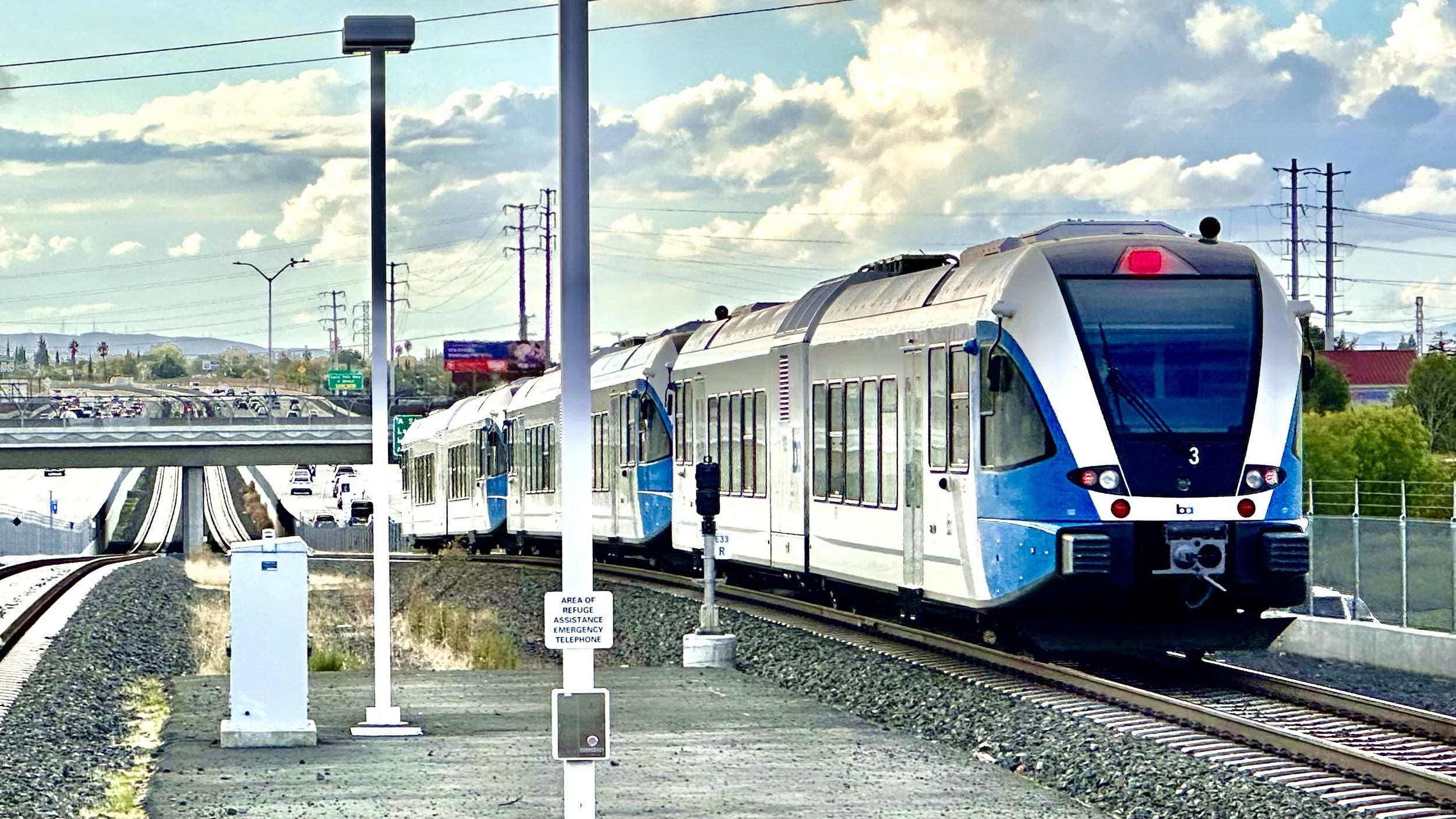
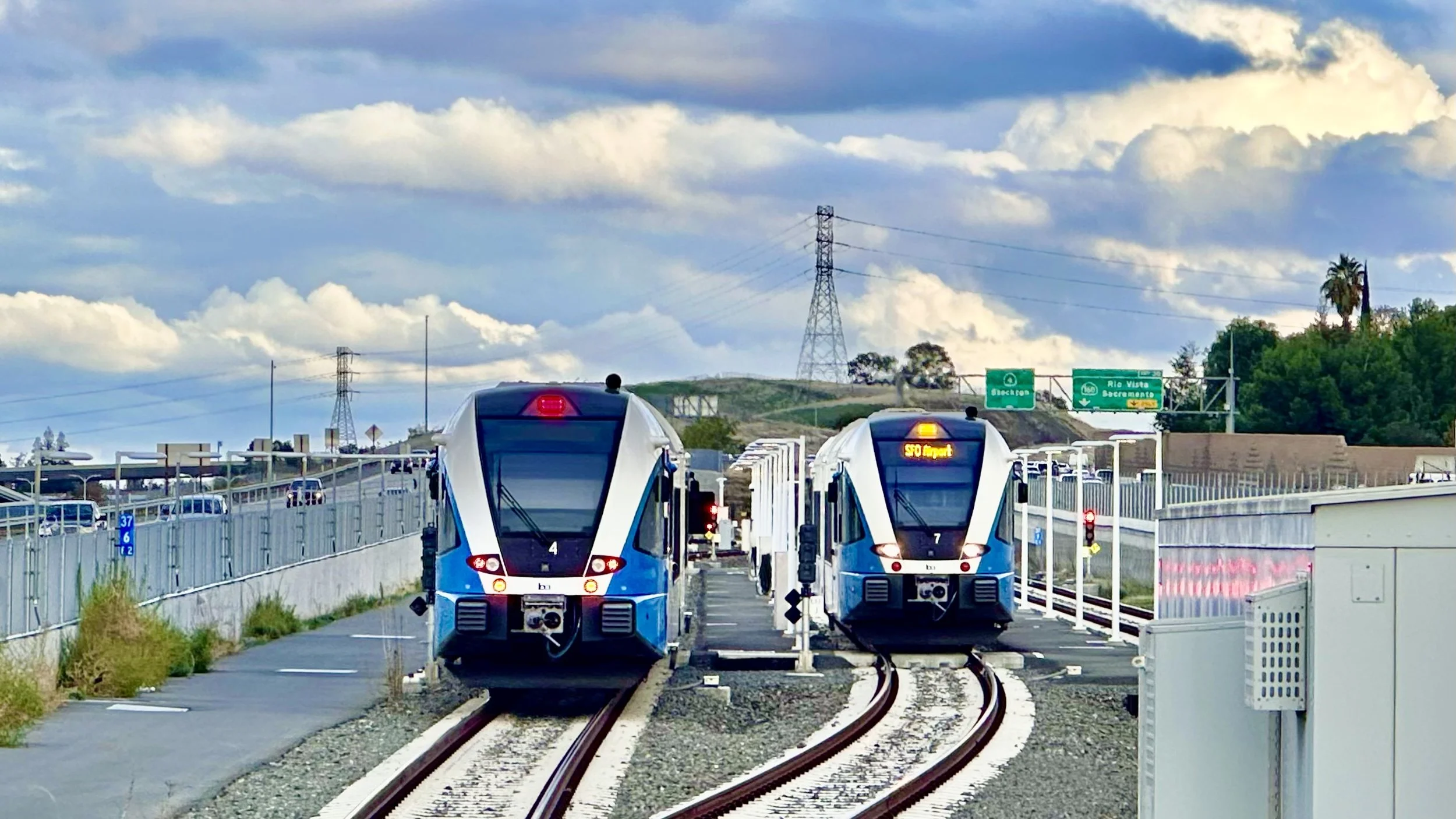
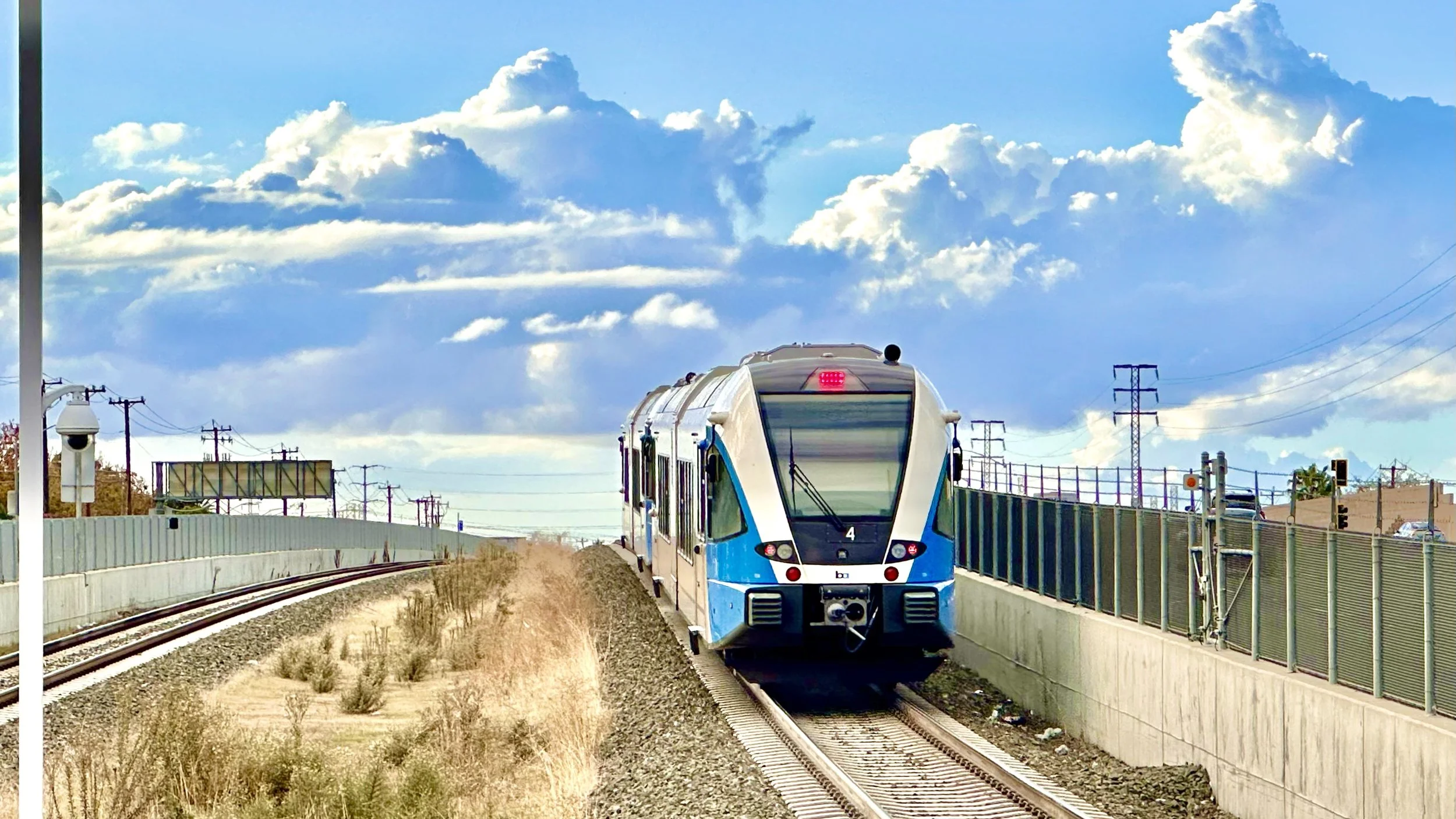
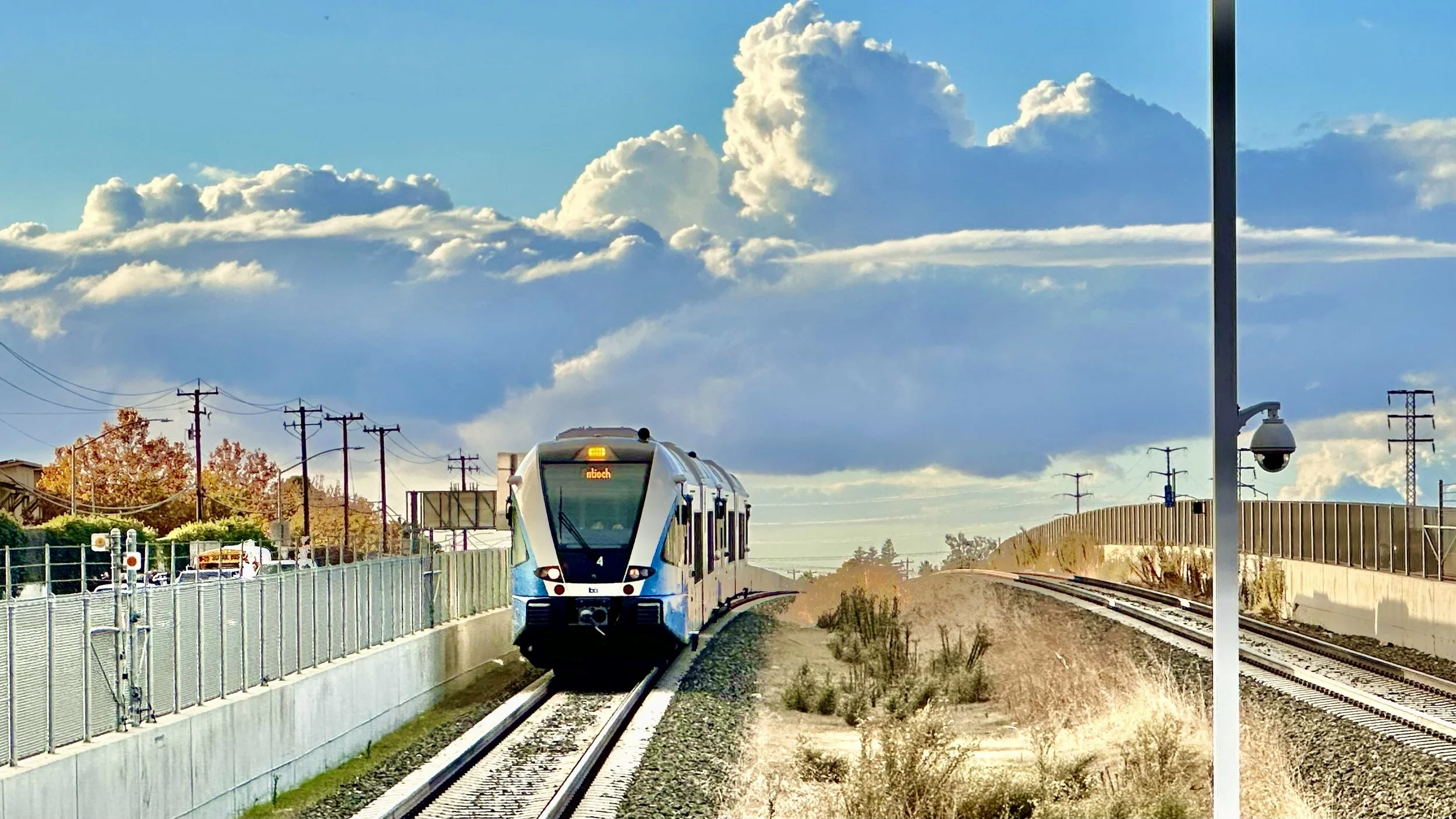
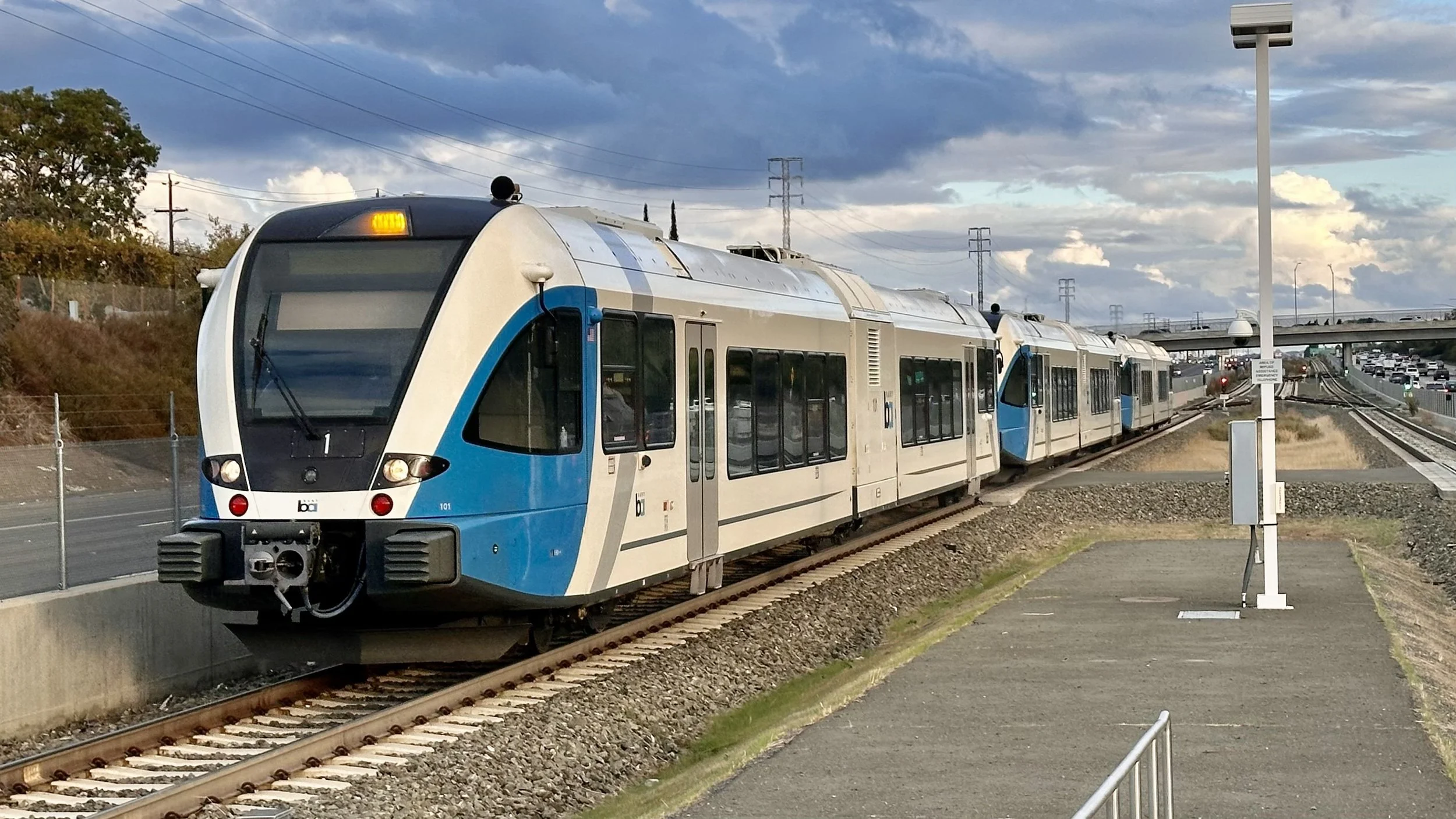
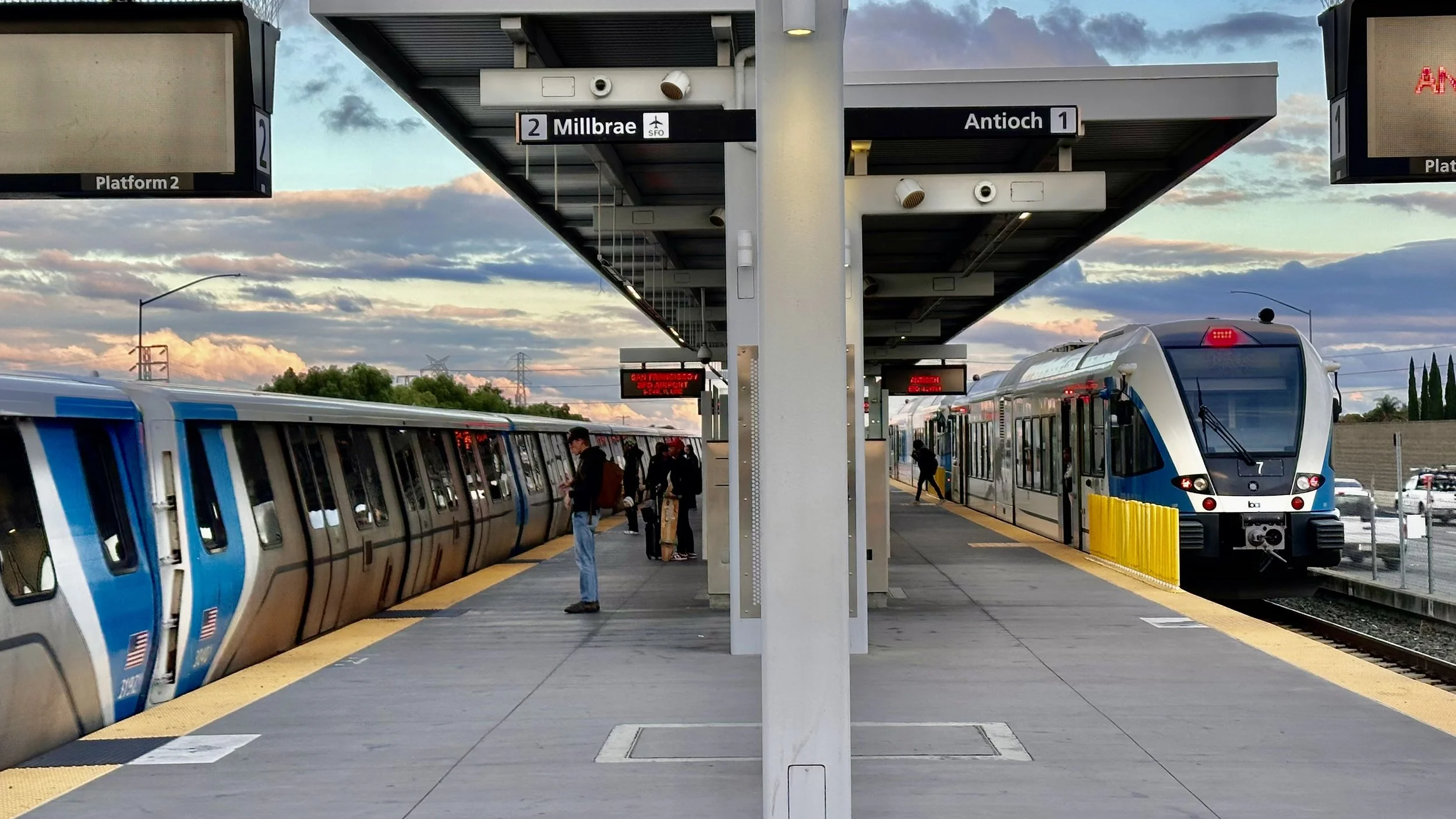
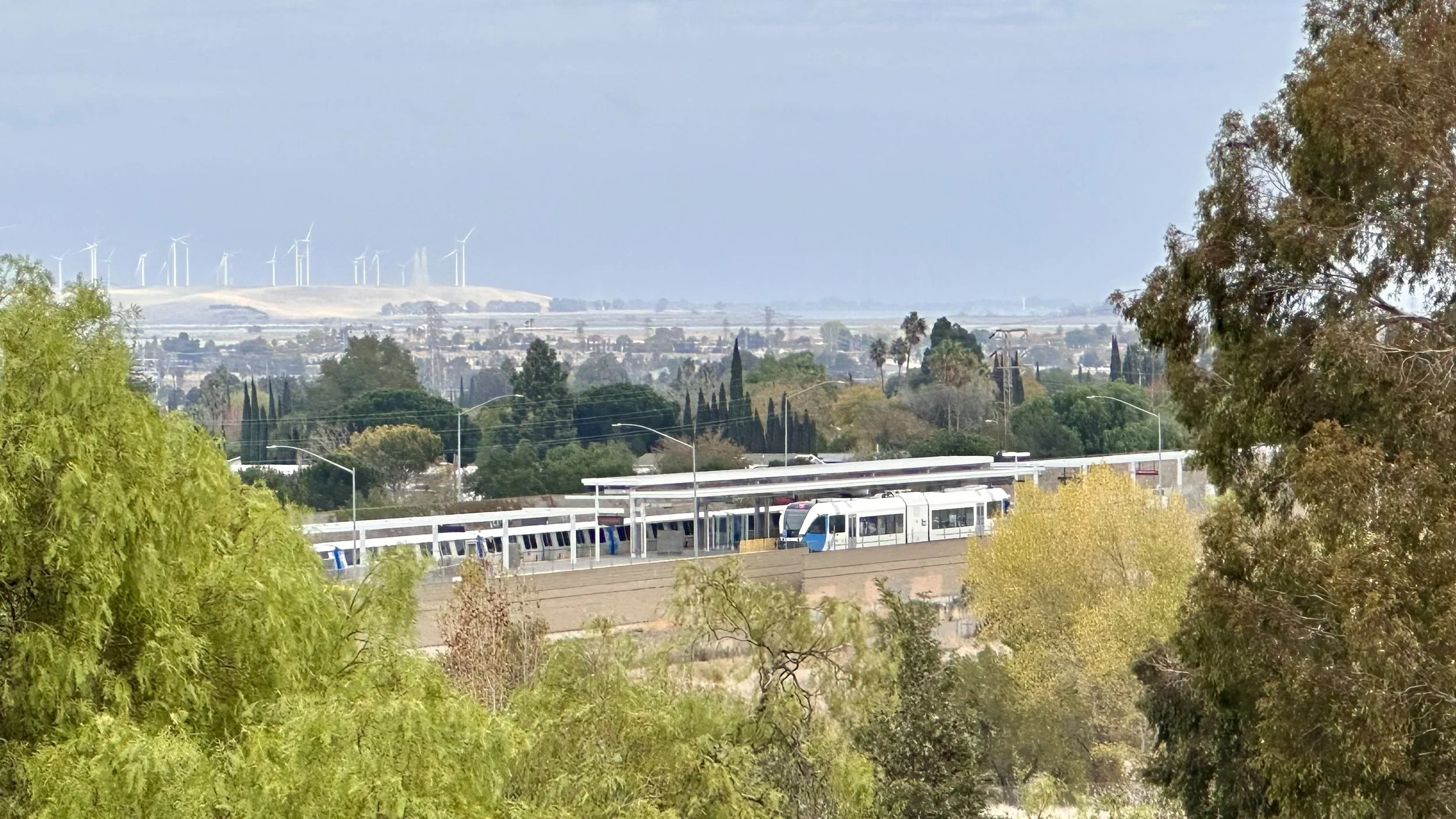
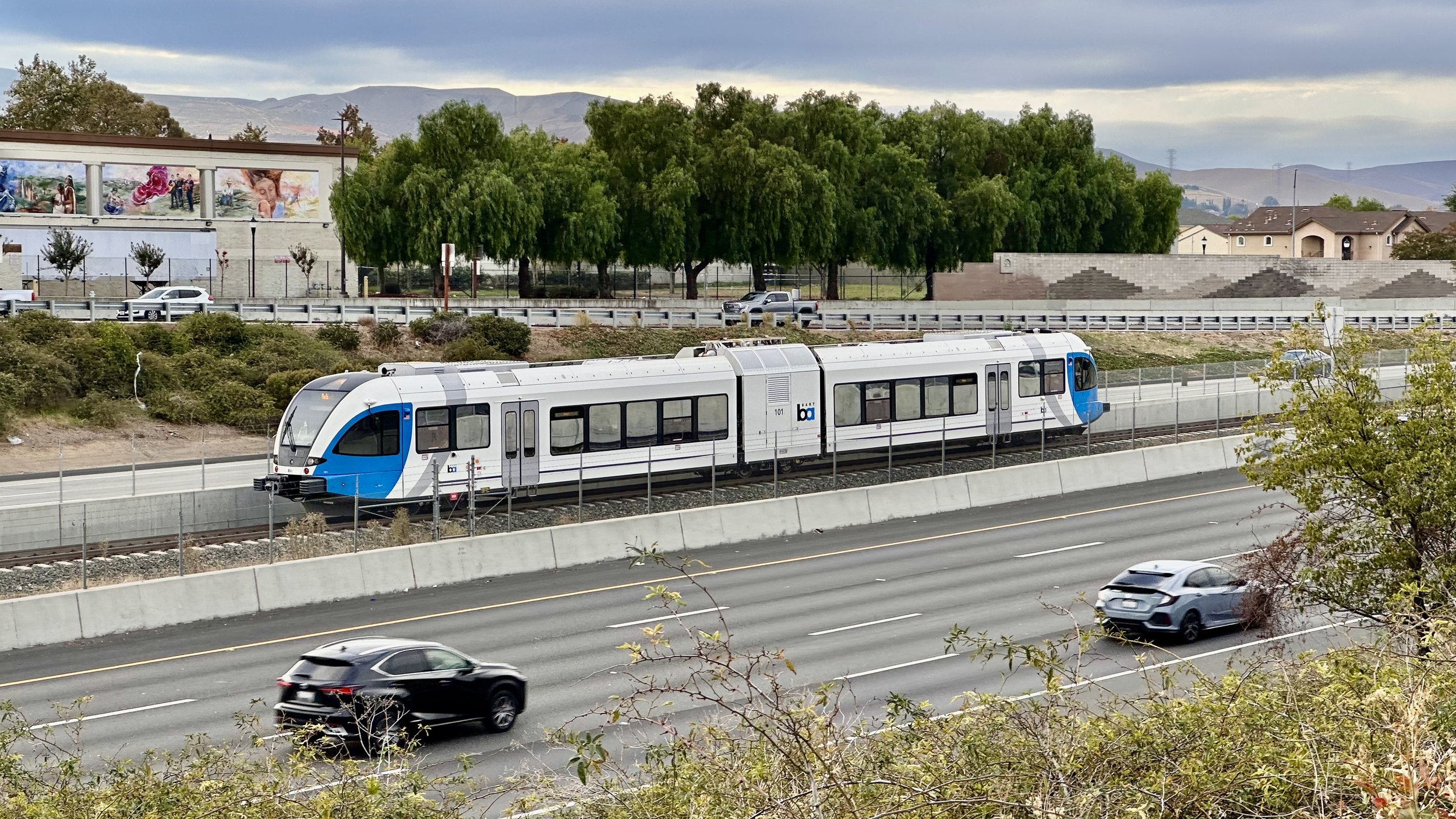
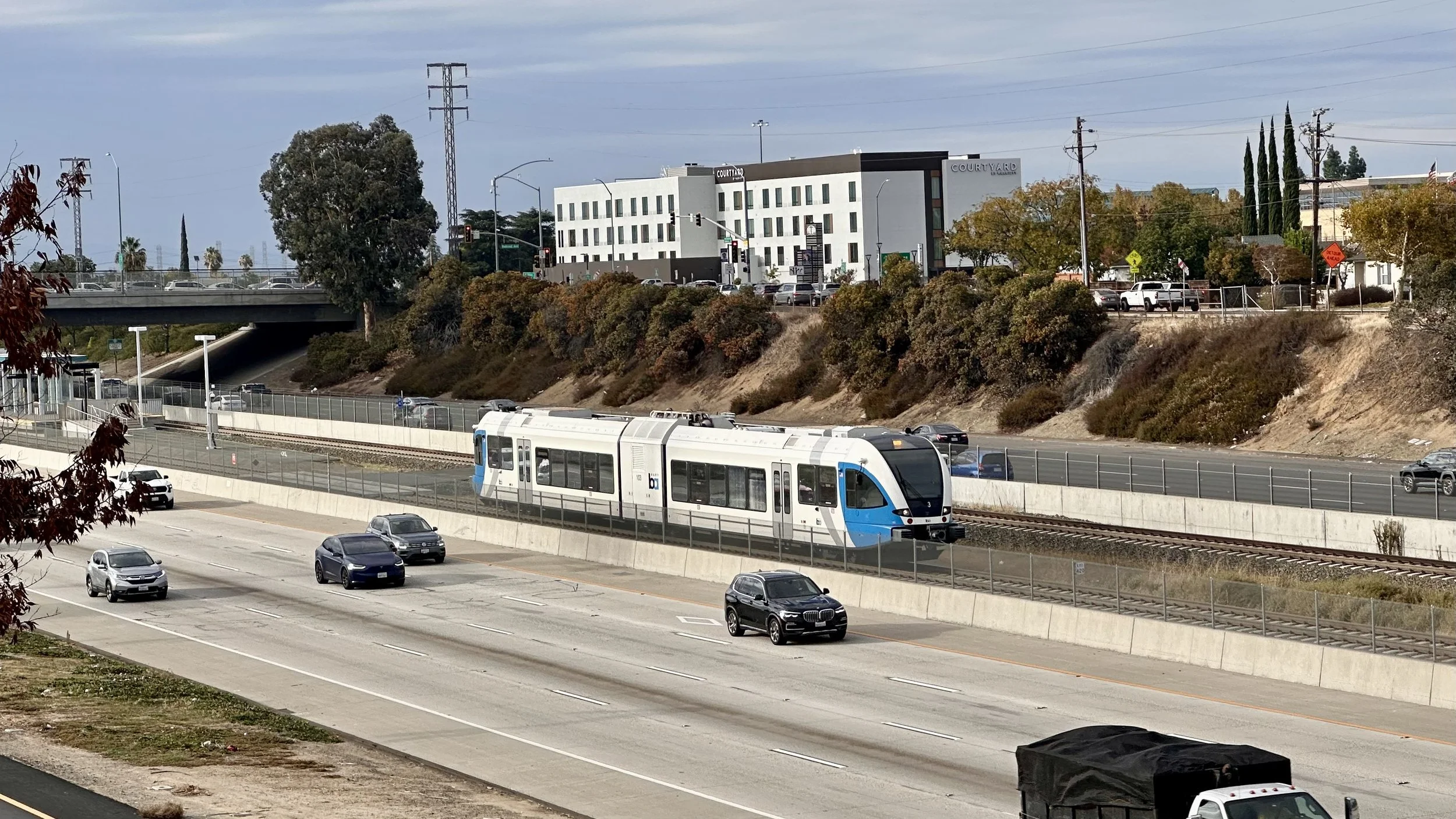
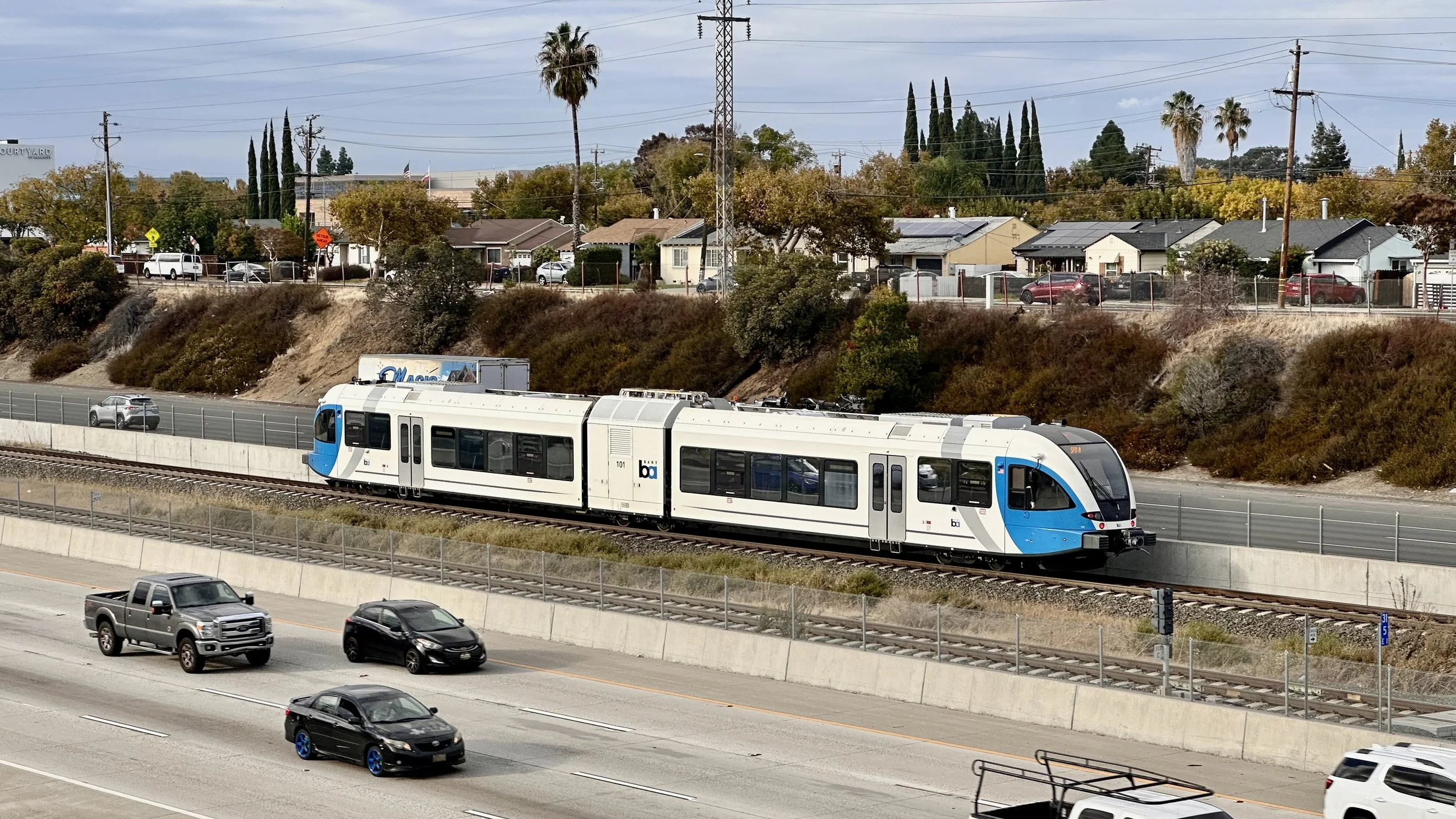
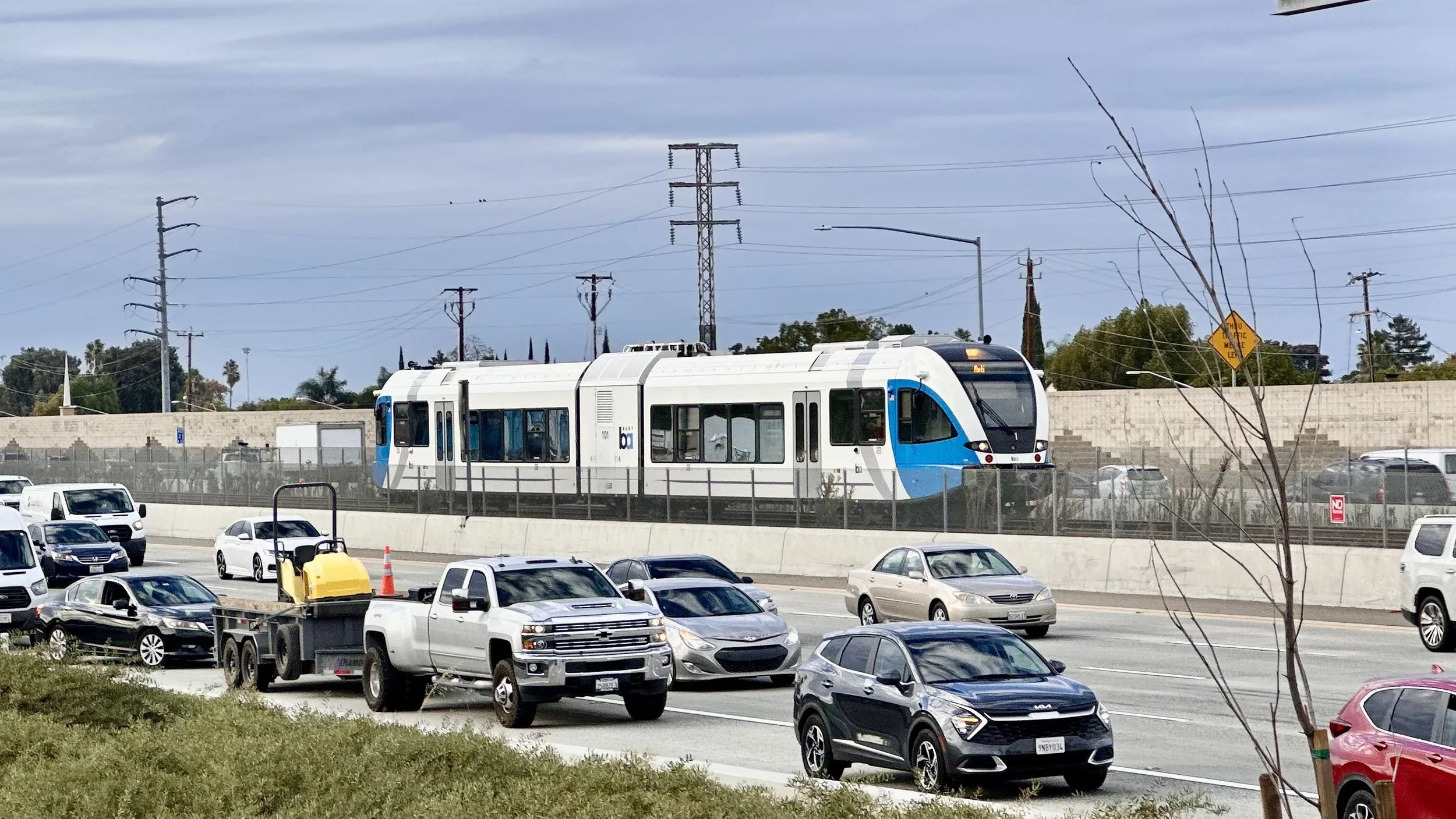
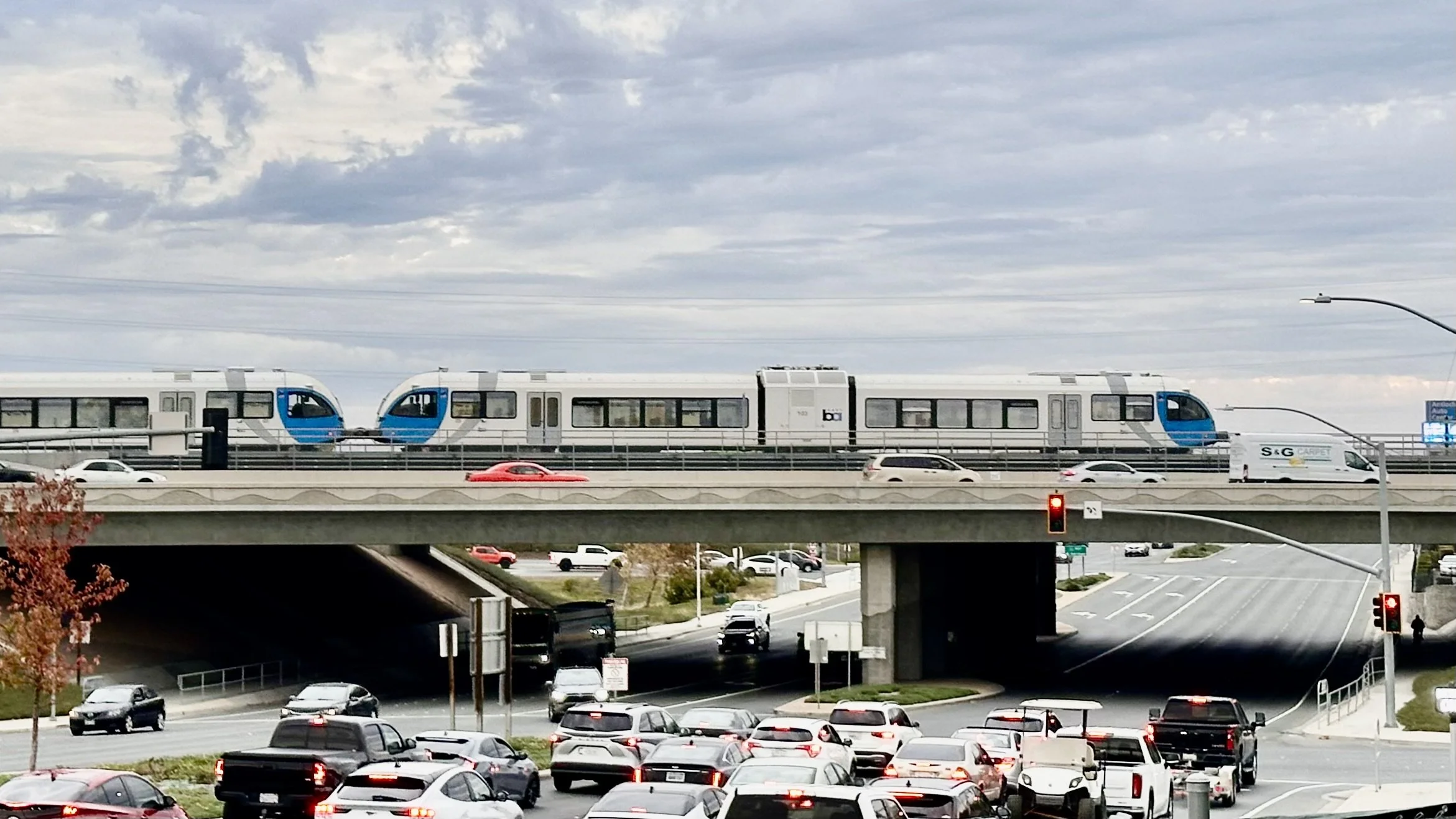
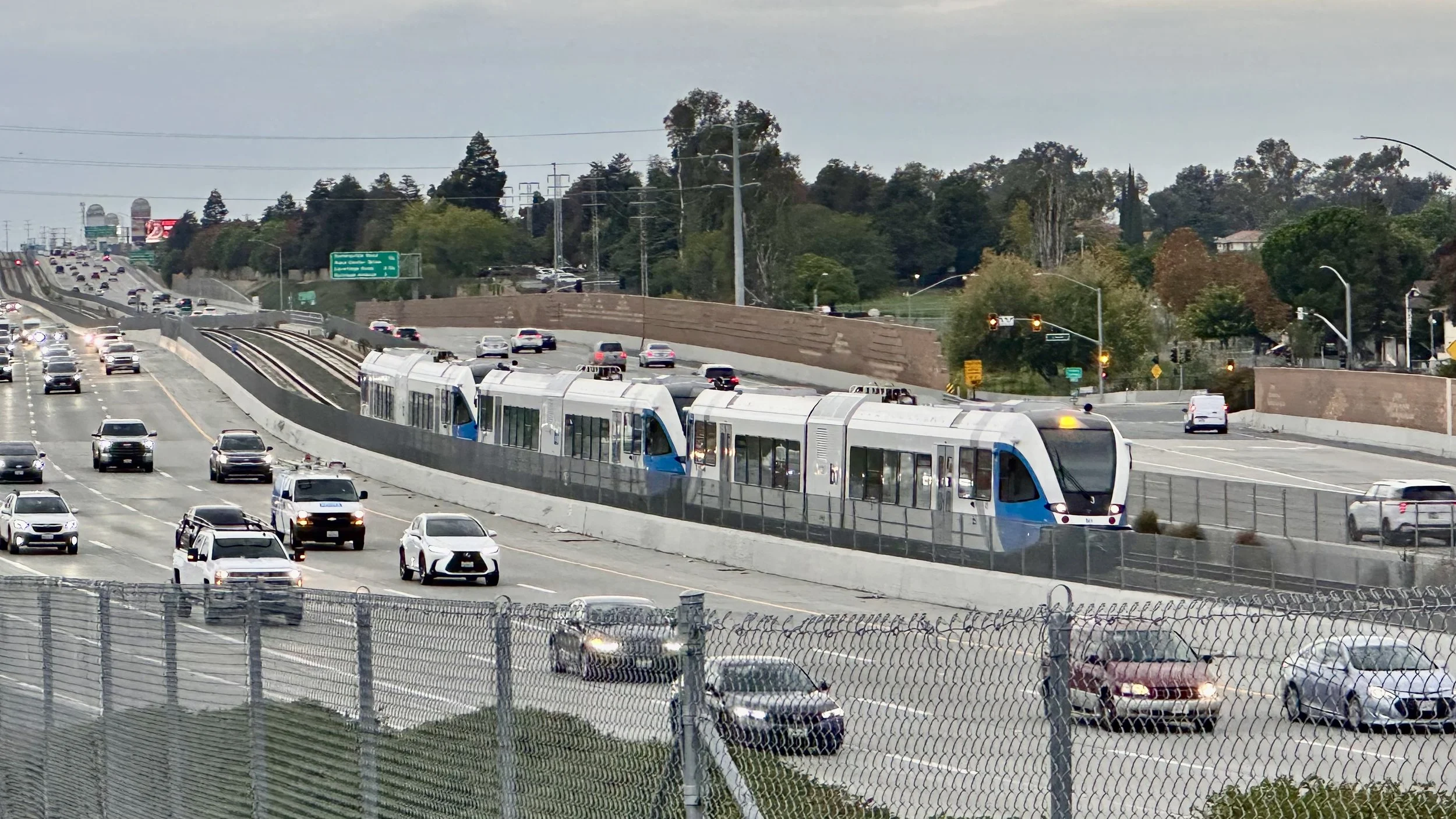
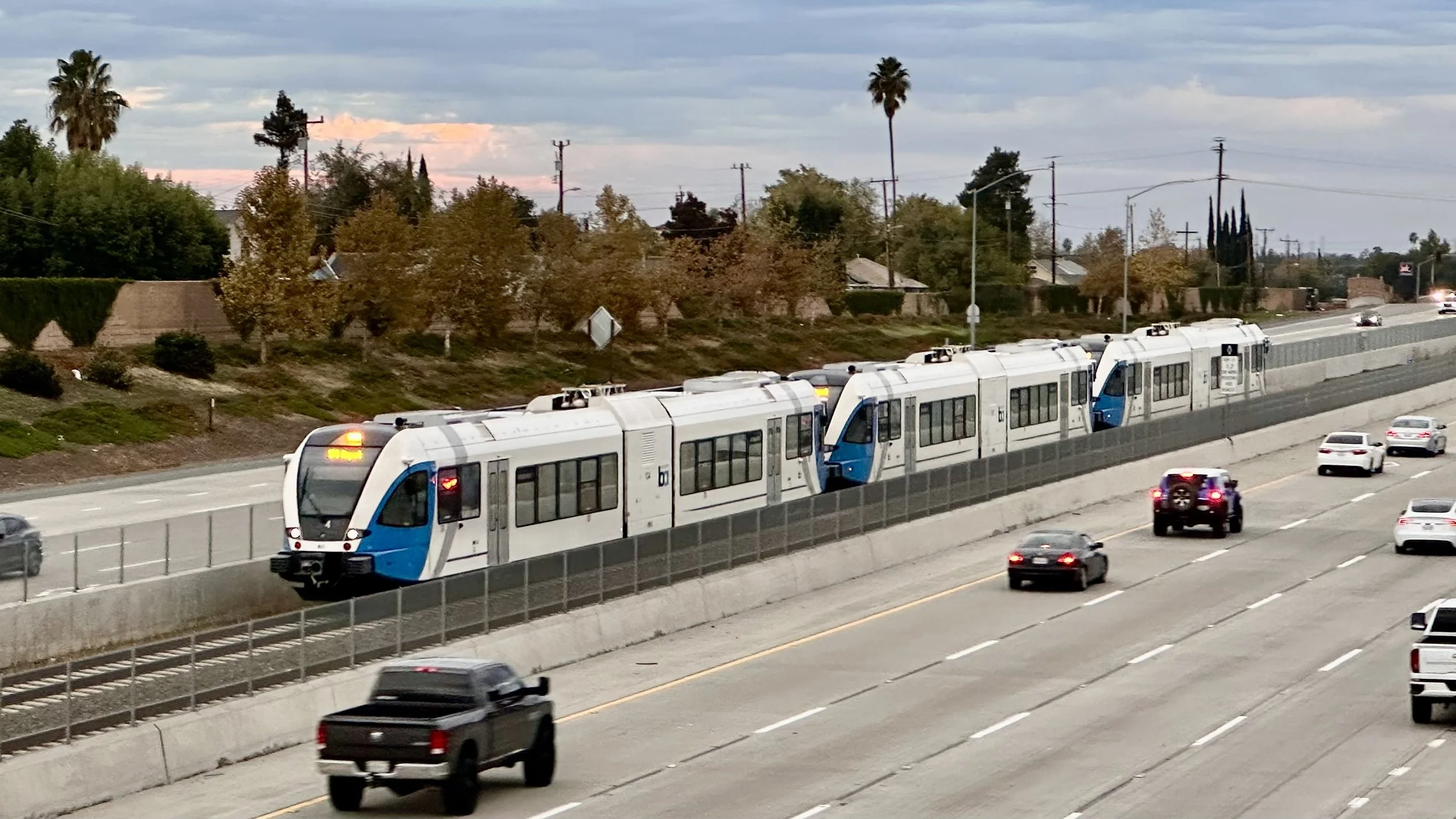
Opening in 2018 as the first de novo DMU, not built from a preexisting rail alignment, eBART is easy to lampoon. Not only does it have an extremely urbanism-hostile route, entirely down a highway median and serving only park-and-rides, not only does it have a horribly measly two-and-a-half stations, it’s a different vehicle type, different mode of power, and even different gauge from its parent subway’s broad-gauge, third-rail-powered EMUs, forcing a transfer and completely separate vehicle fleet. Youtuber BigMoodEnergy once observed “with the exception of the park-and-ride abomination called eBART, which I will never mention again because it should be stricken from the face of the earth.”
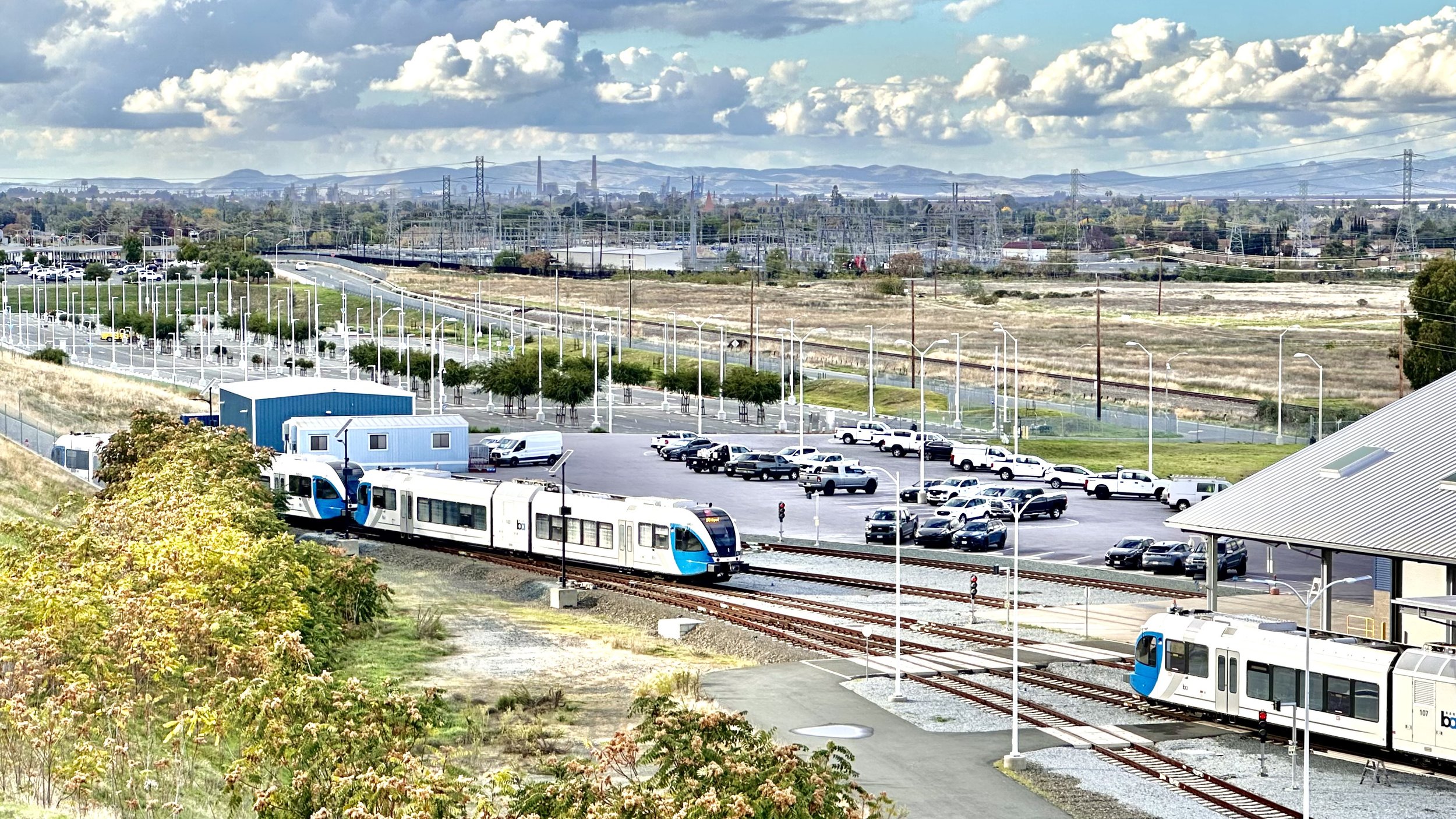
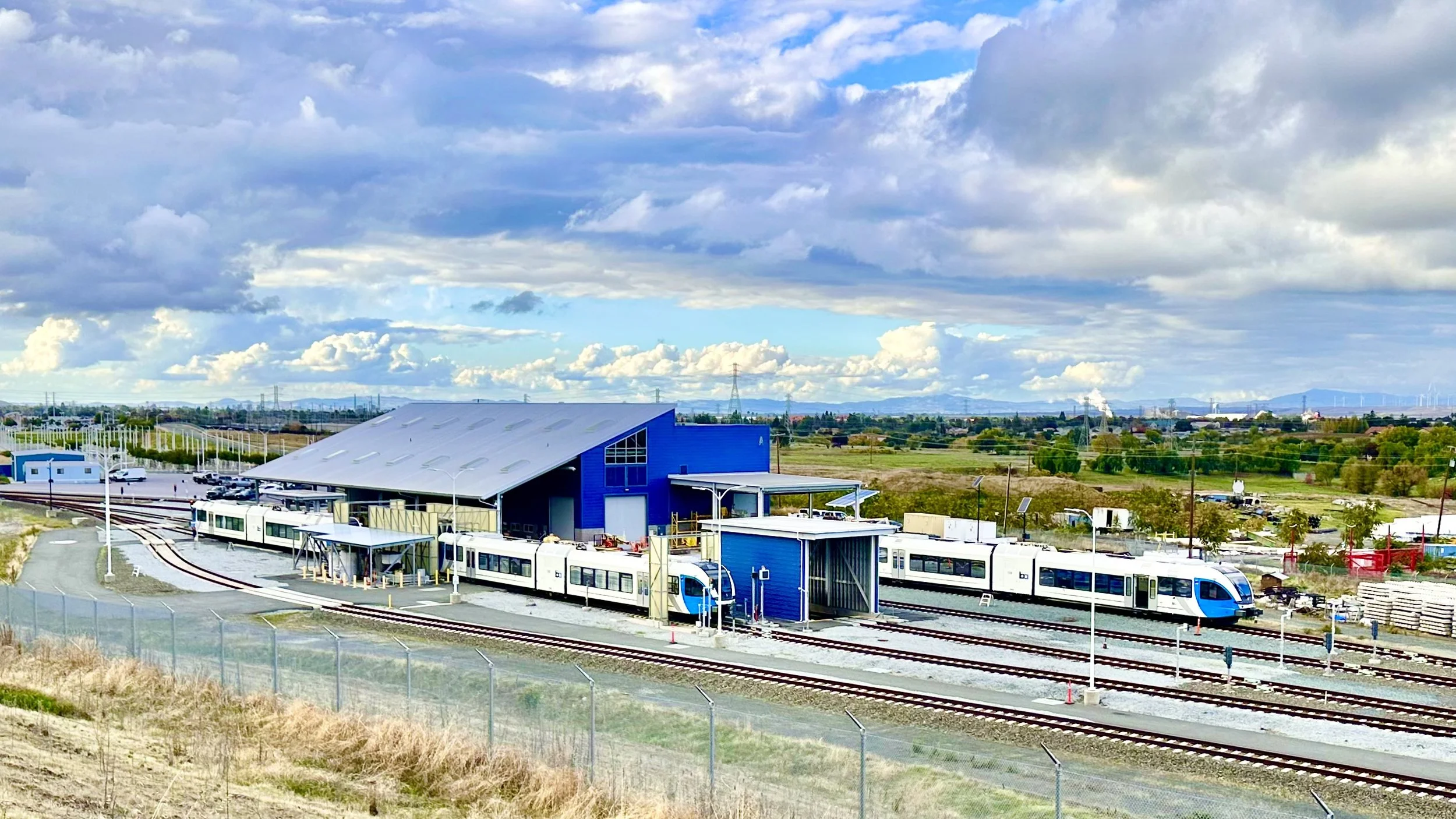
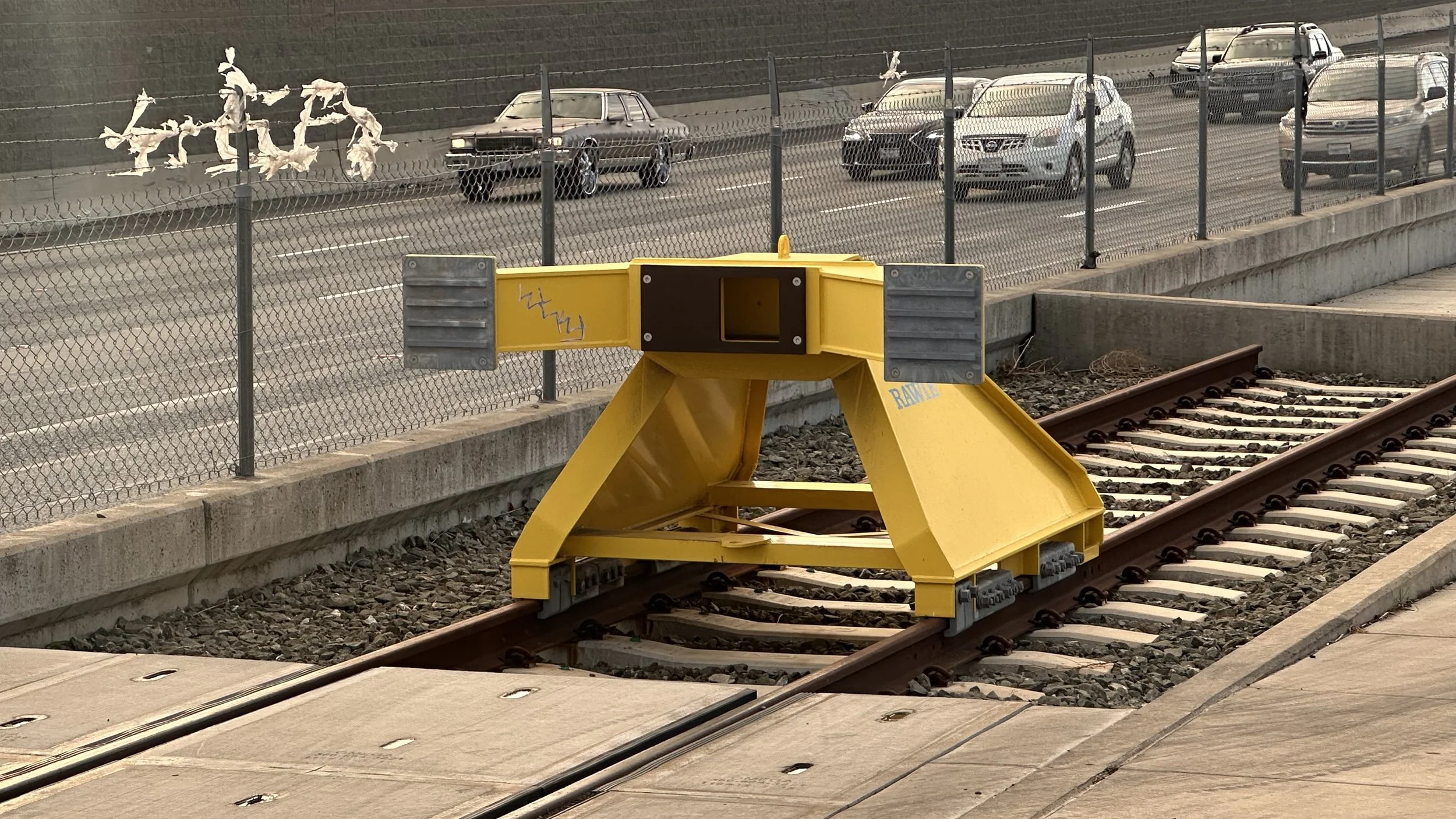
However, looking at the only portion of eBART outside the highway median, its OMF, somewhat explains this madness: the OMF merges right into a presently-disused freight line. Thus, the intention is to someday extend eBART back onto freight rails as with every other DMU. While a better alignment through downtown Pittsburg and Antioch should have been sought, expiring grants forced its axing in favor of the expedience of a highway alignment.
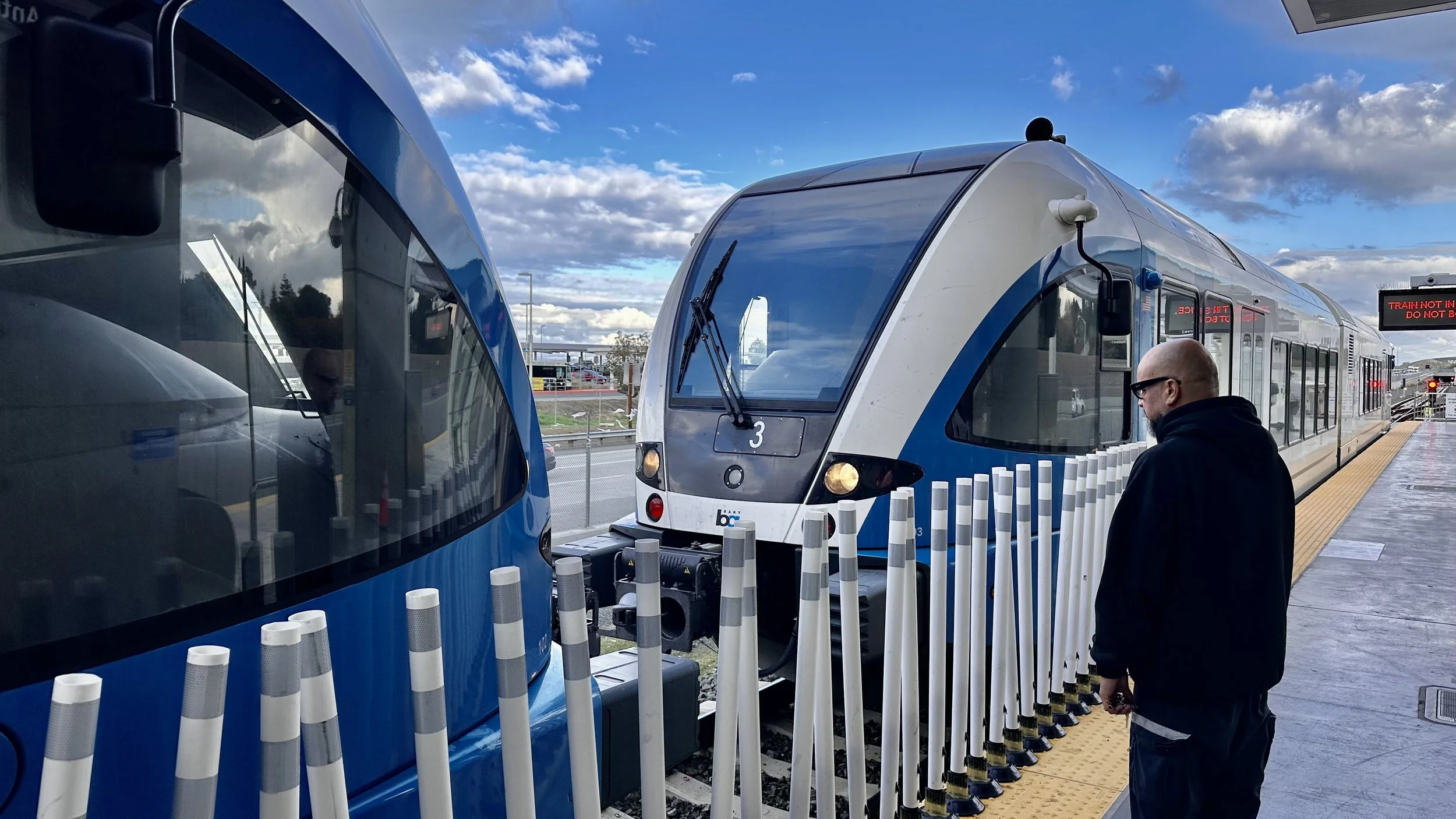
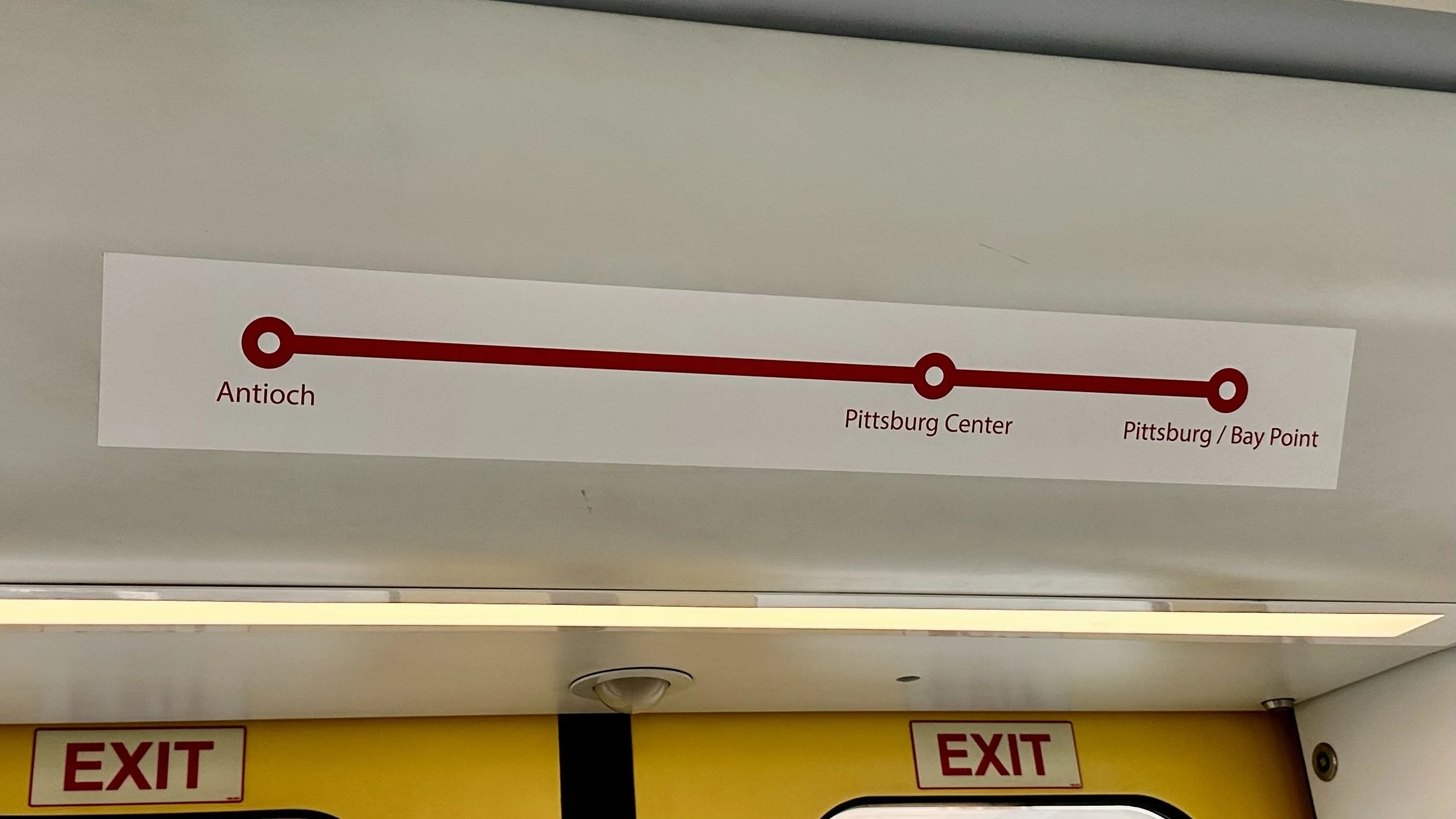
Mercifully, eBART’s operation is made as seamless with BART as possible. Every other Yellow Line train is timed for a cross-platform transfer at Pittsburg/Bay-Point Transfer Station lasting but a minute, and no additional fare is required. Most intriguingly, eBART only has two true stations, Antioch and Pittsburg Center; Pittsburg/Bay Point Transfer is a single-track station and inaccessible from the outside world; the only way there is from within the BART fare-zone.
eBART stations resemble miniature BART stations, with large mezzanines, pedestrian walkways, and fare gates. Uniquely among DMUs, platforms are sized for three Stadler GTW 2/6s, and trimeric DMUs run daily (most other systems are proportioned for only one or two DMUs). Even more interestingly, train lengths change significantly throughout the day, from one vehicle in the afternoon and overnight, to two during shoulder periods, to three at peak. Turnarounds at Bay Point Transfer are quick, about 5 minutes, but vehicles rest for a full 15 minutes at Antioch; this gives enough time to add or subtract DMUs from the consist on the platform, and the tail tracks between Antioch and the OMF tunnel is triple tracked, leaving plenty of room to store extra DMUs and trainsets.
While Rapido has recently produced models of BART subway cars, and a small automated bookshelf layout of Bay Point Transfer would be a creative way to showcase them, for the overwhelming majority of modelers, eBART is not a subject for prototype modeling. However, its scaling of DMU lashups larger and smaller throughout the day to match demand can add operational intrigue to typical transit operations. Most current DMU models require hidden drawbars, so it may be too difficult to change consists mid-op-session, but this can be easily worked around by sending a single DMU to the OMF and trading it with a pre-consisted two- or three-DMU lashup.
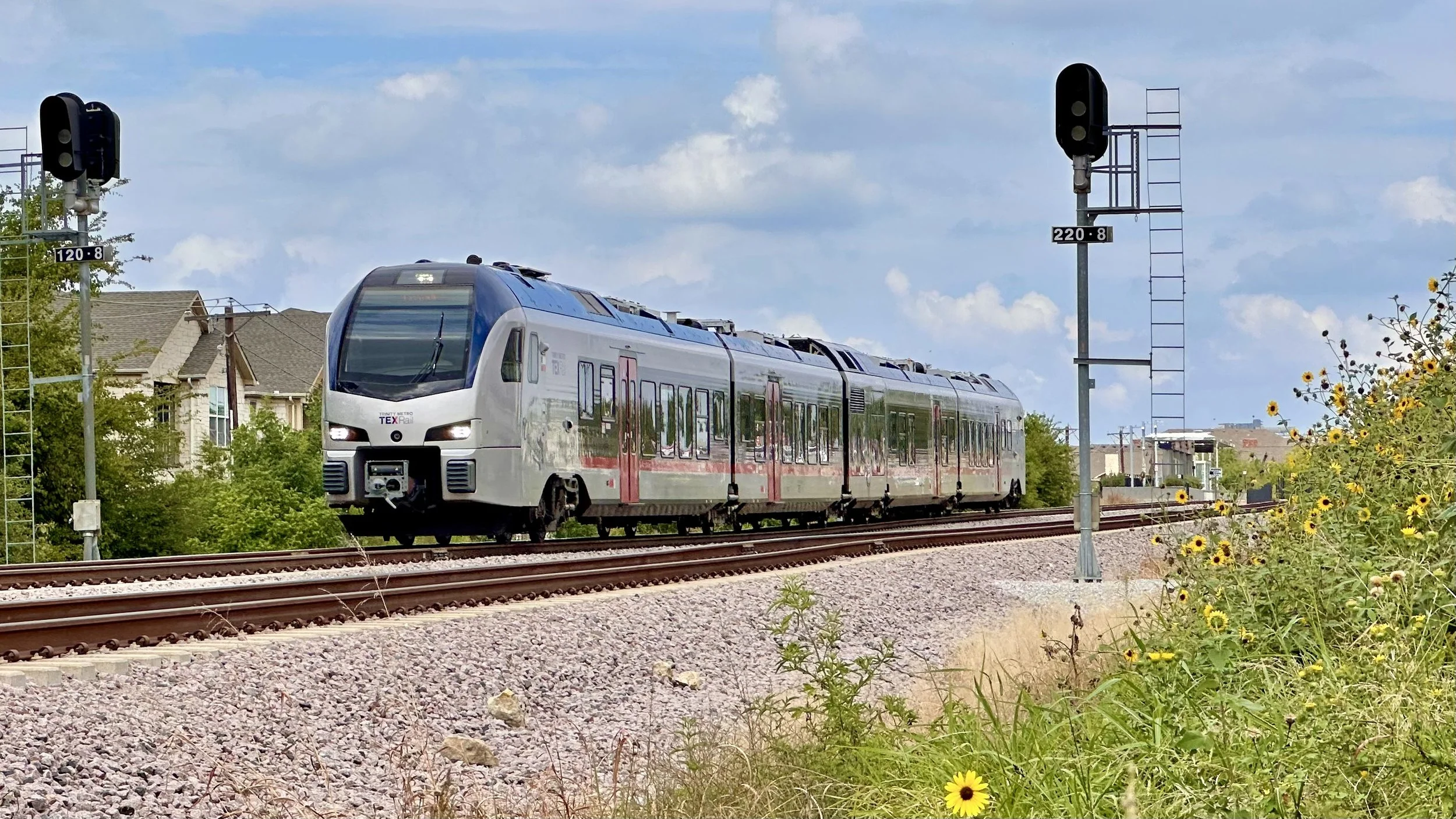
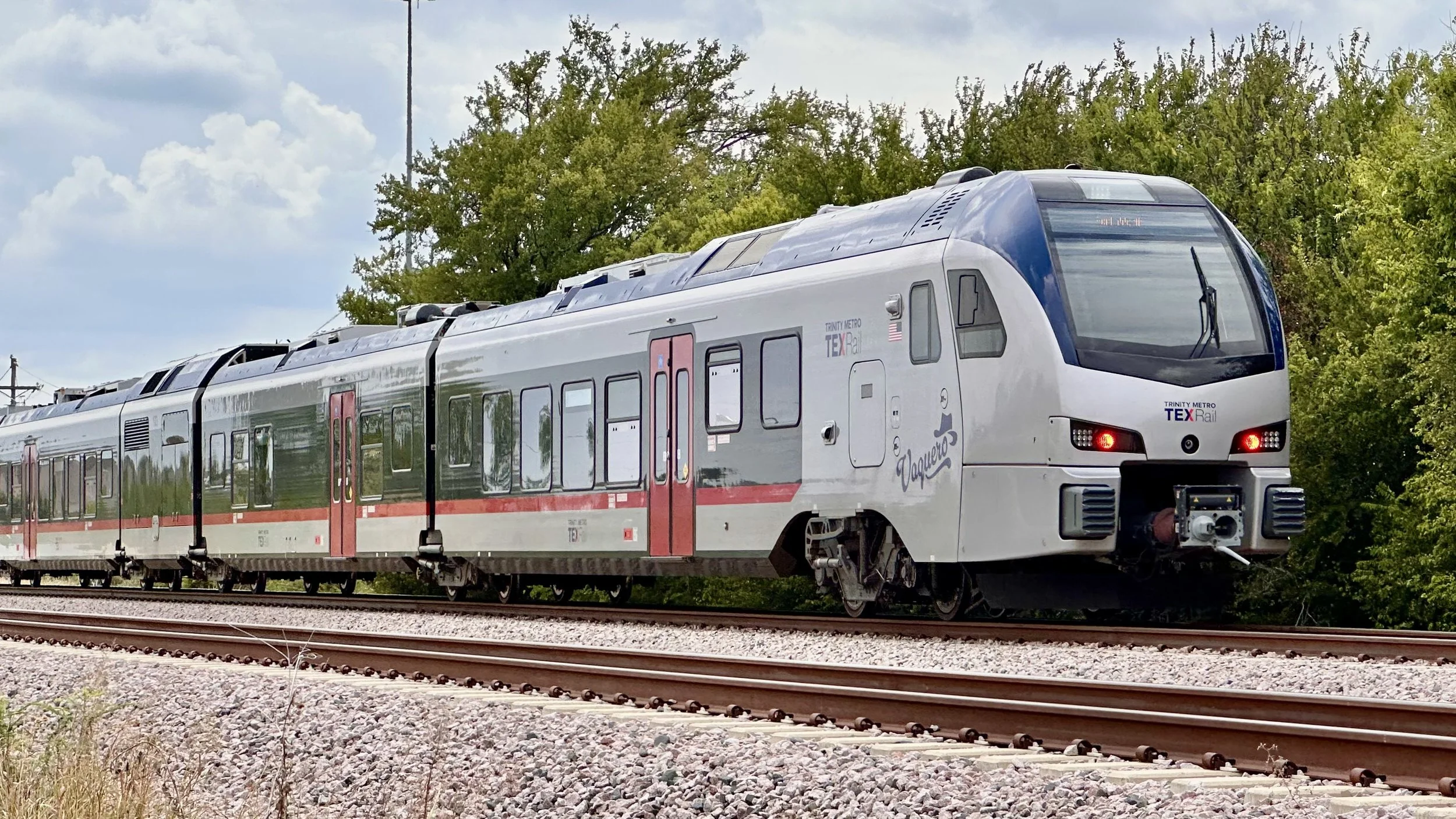
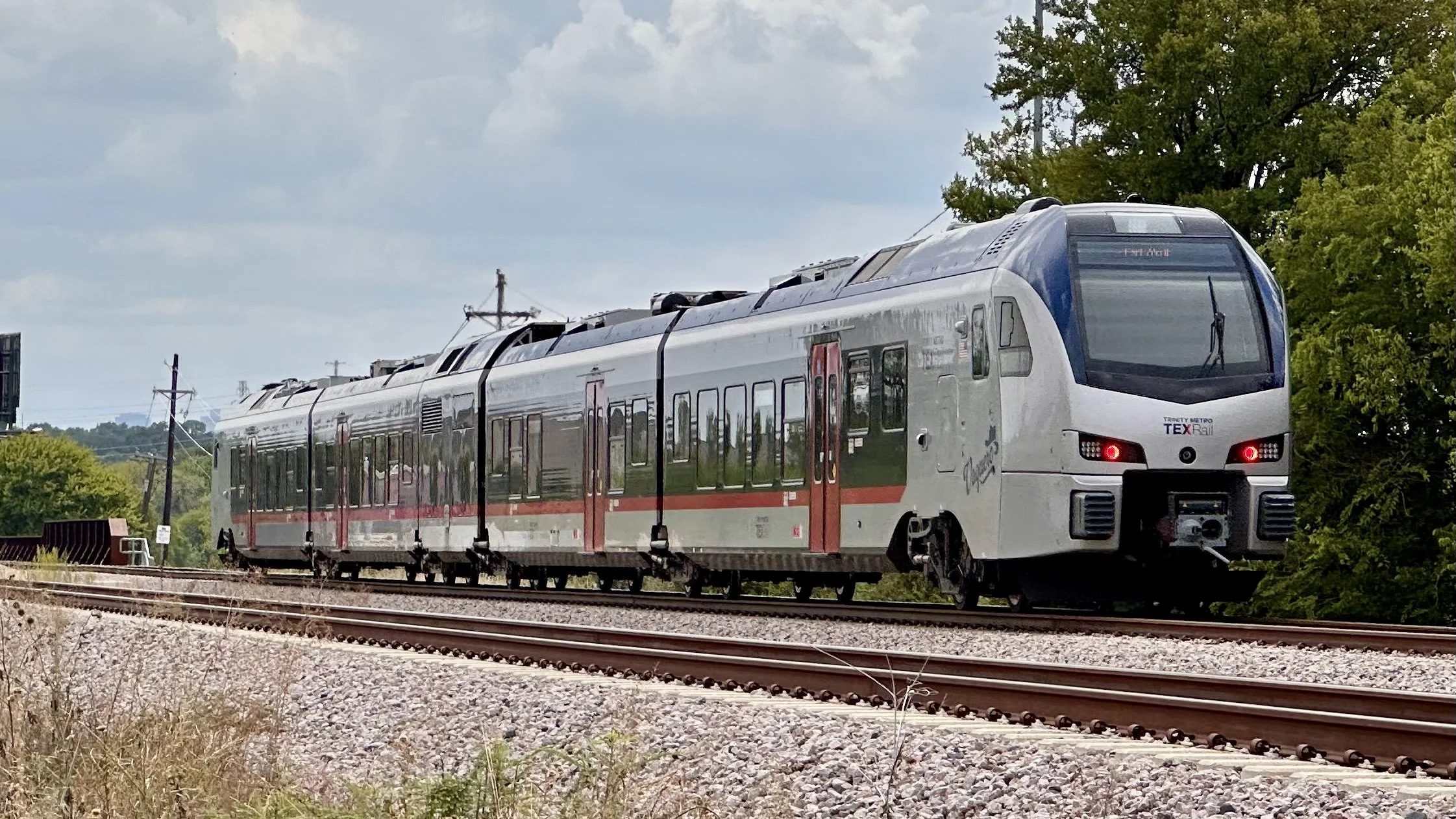
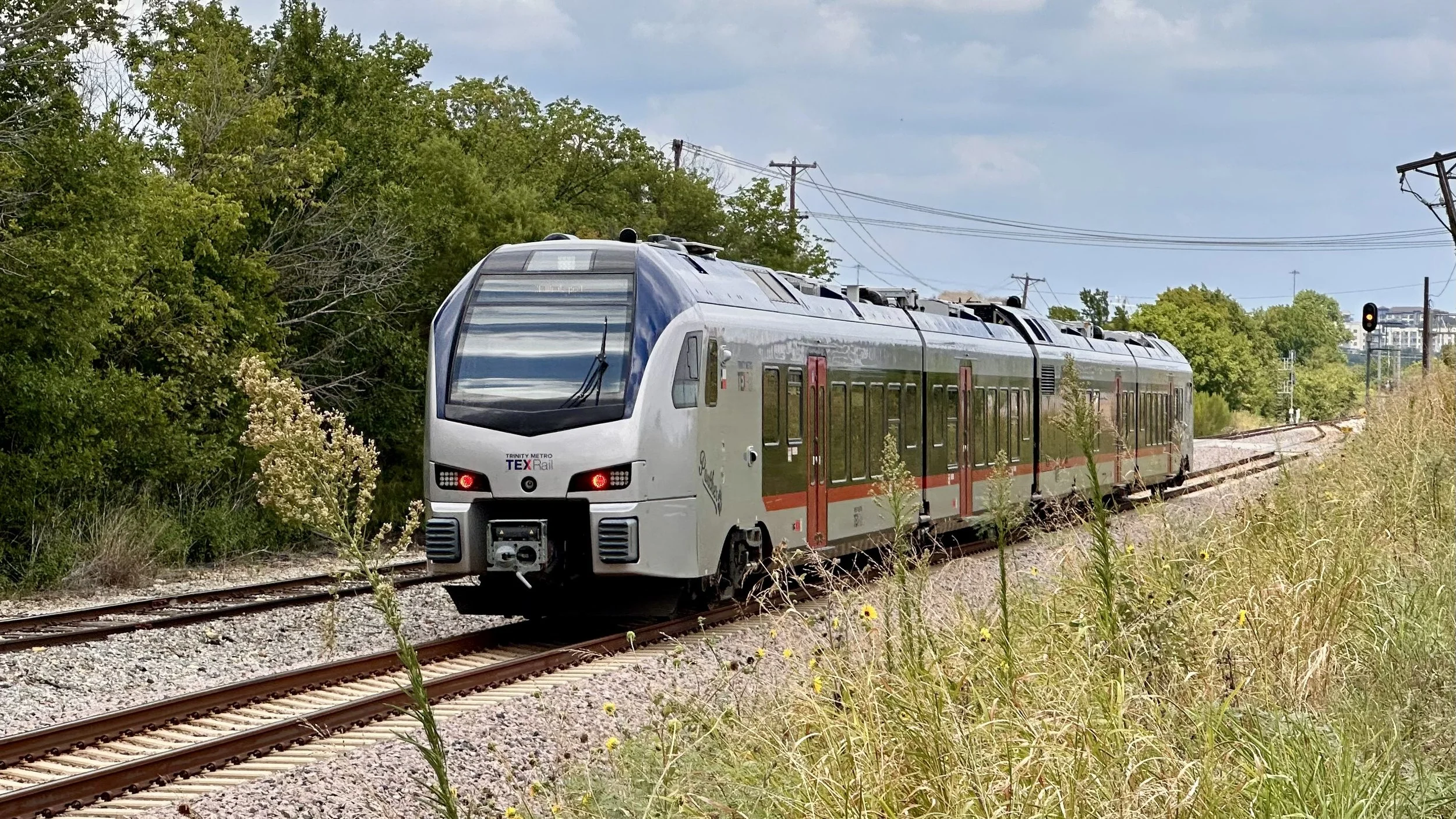
Trinity Metro TEXRail
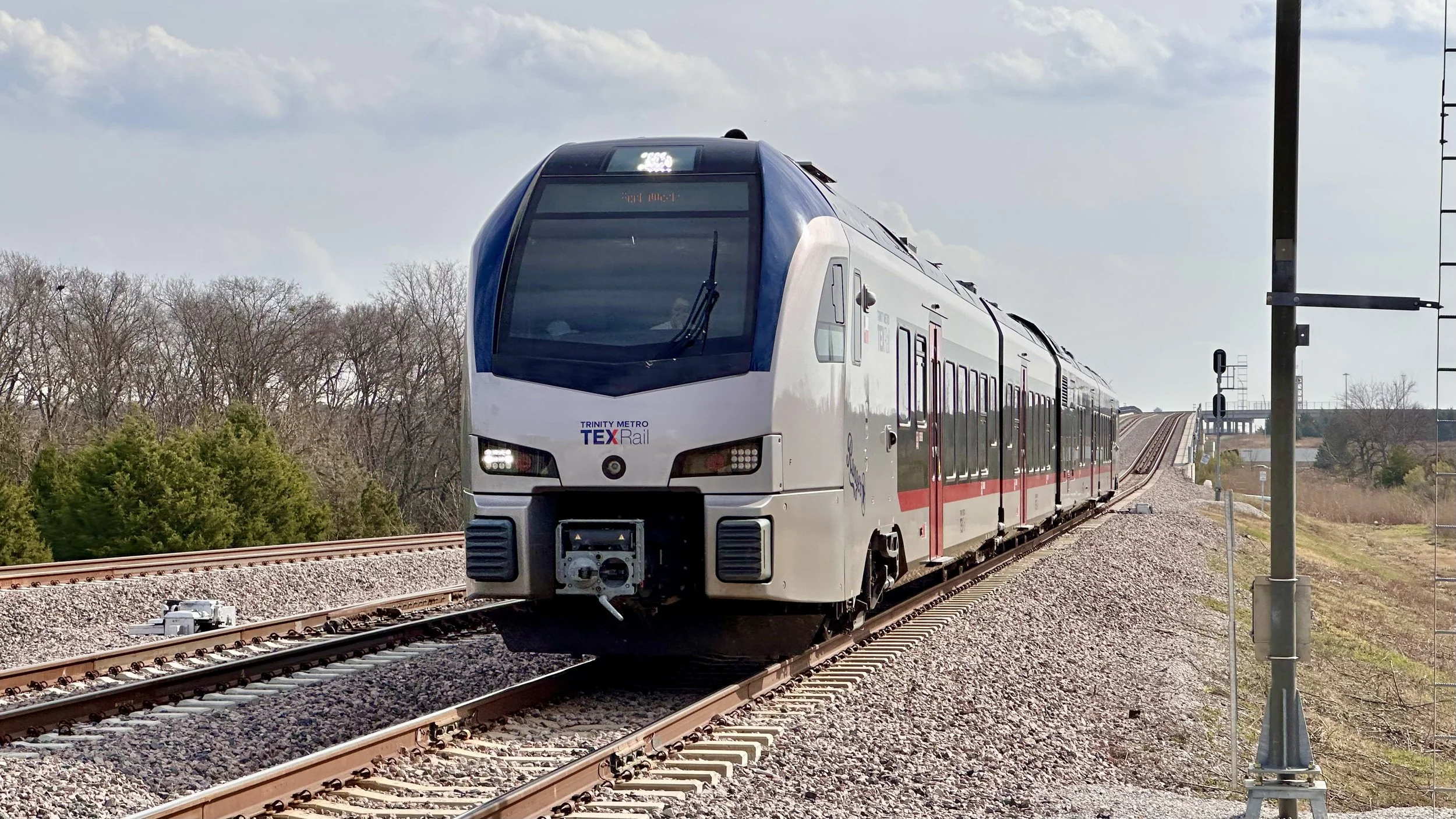
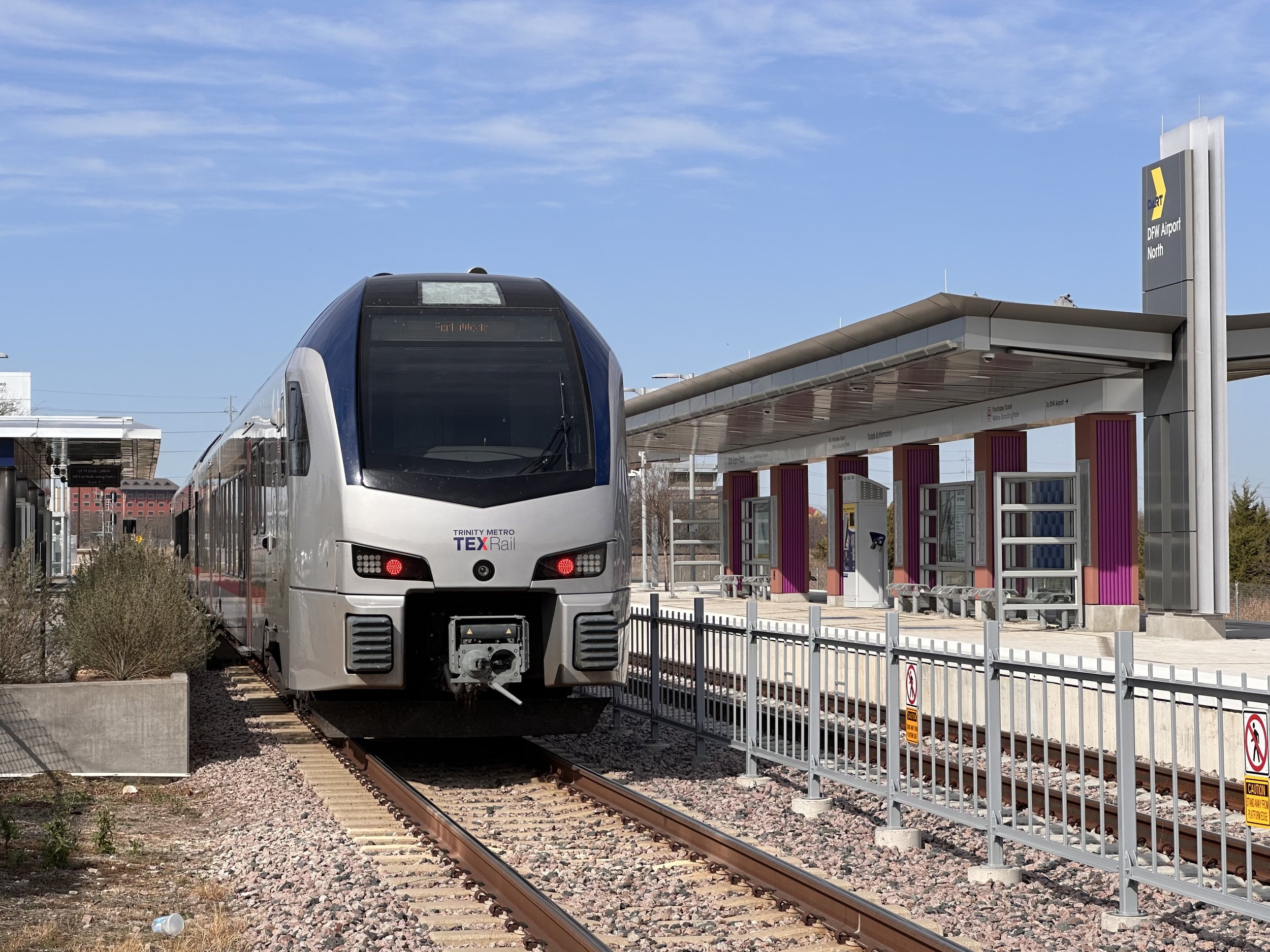
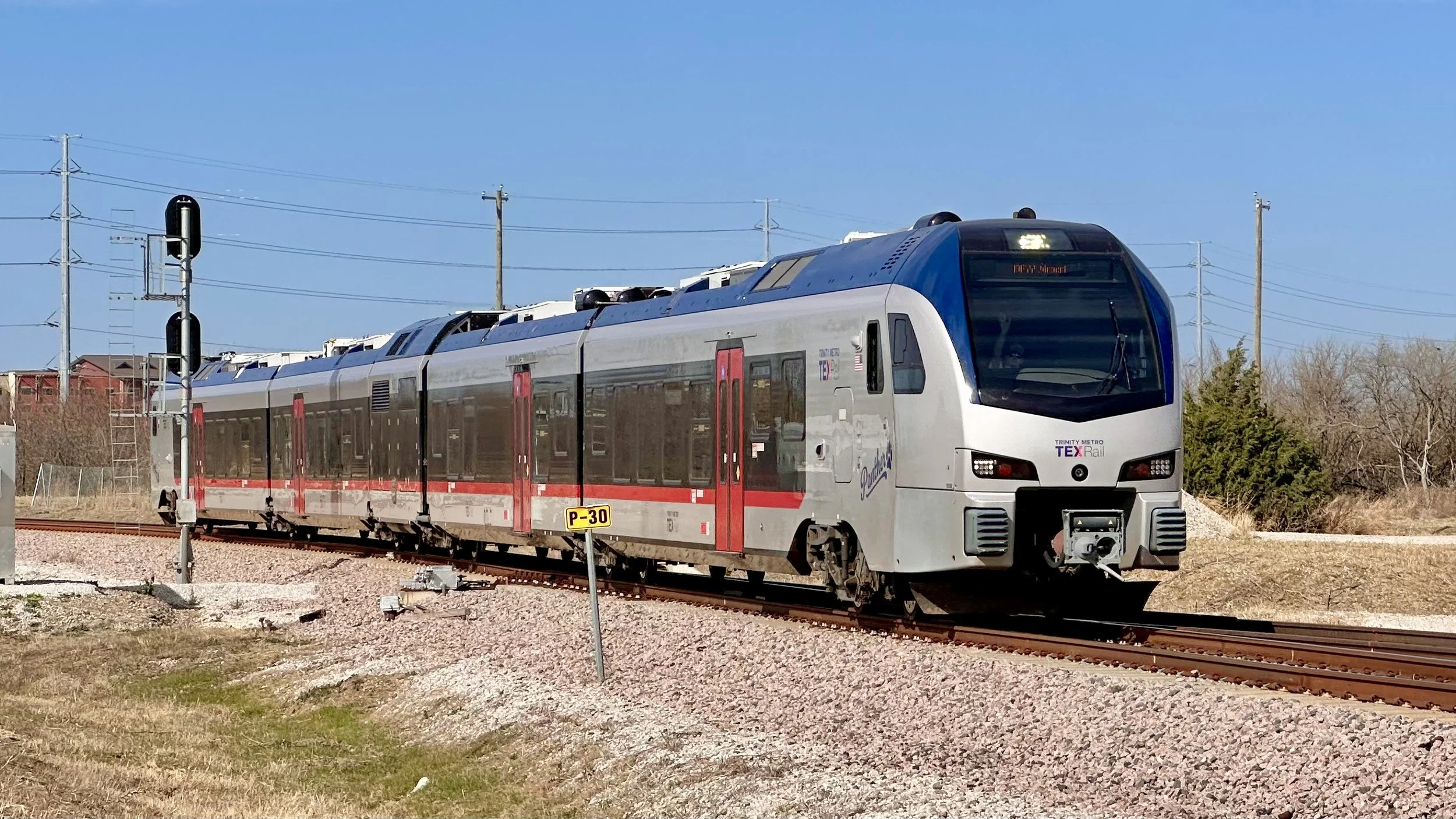
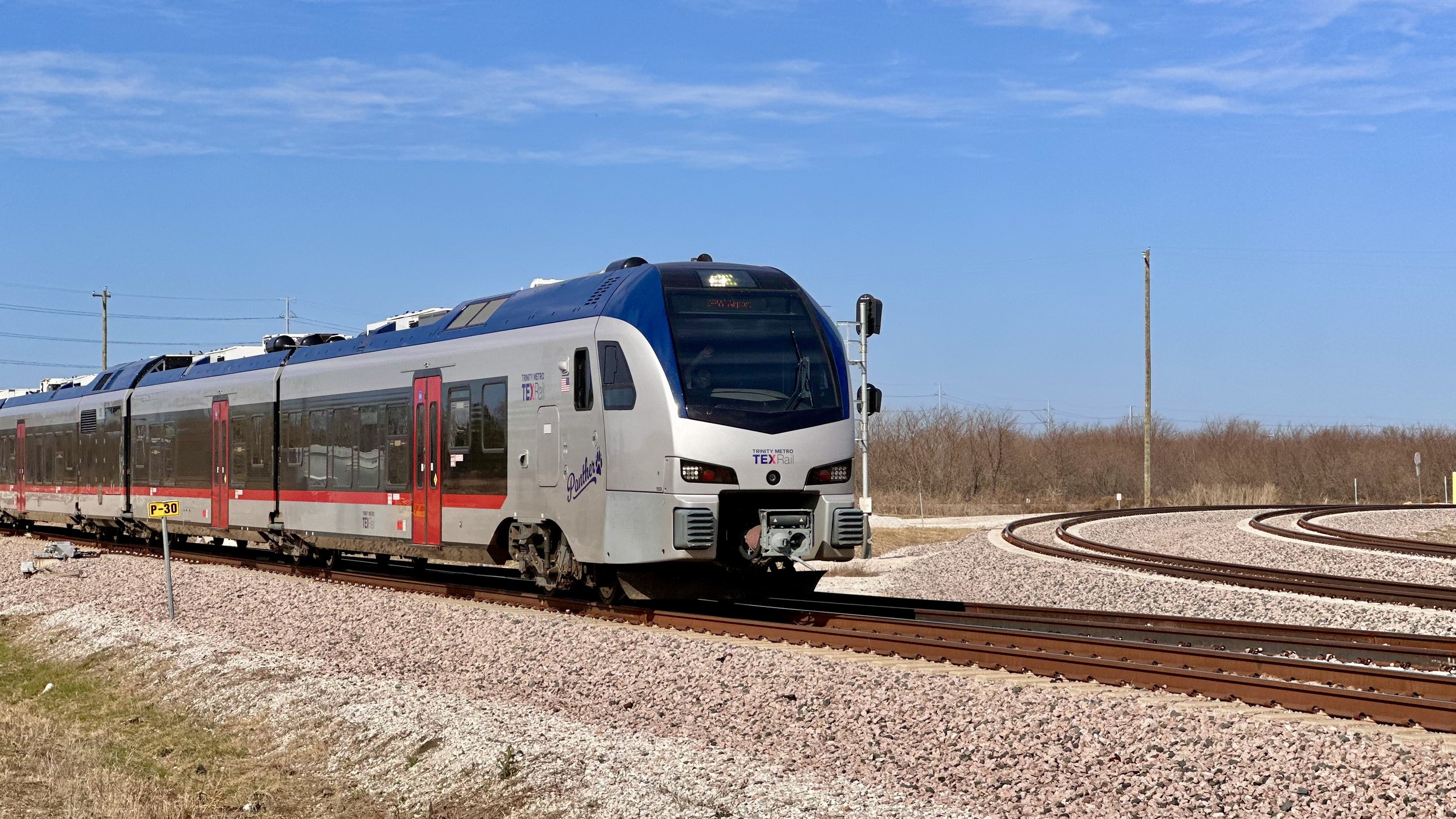
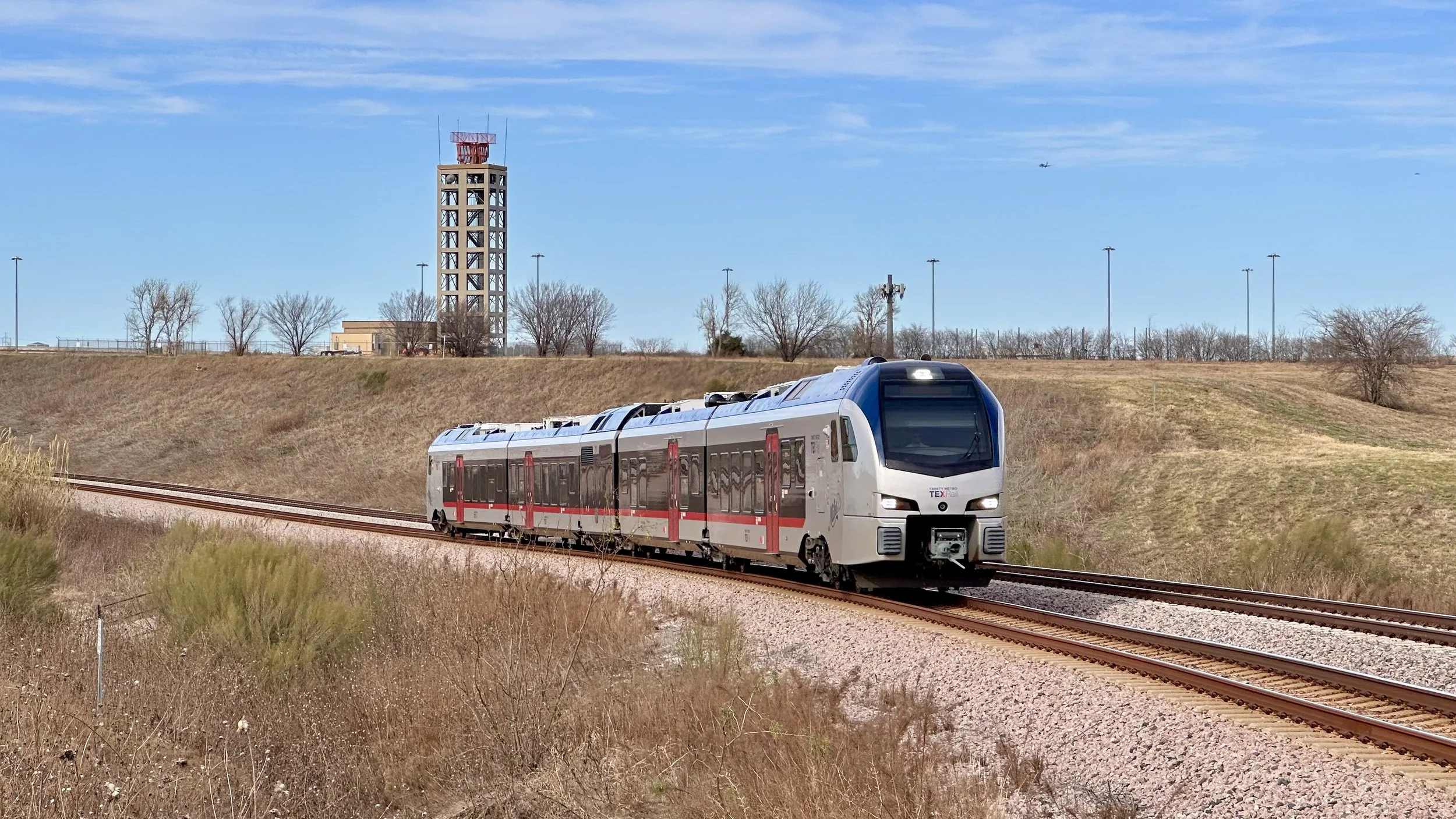
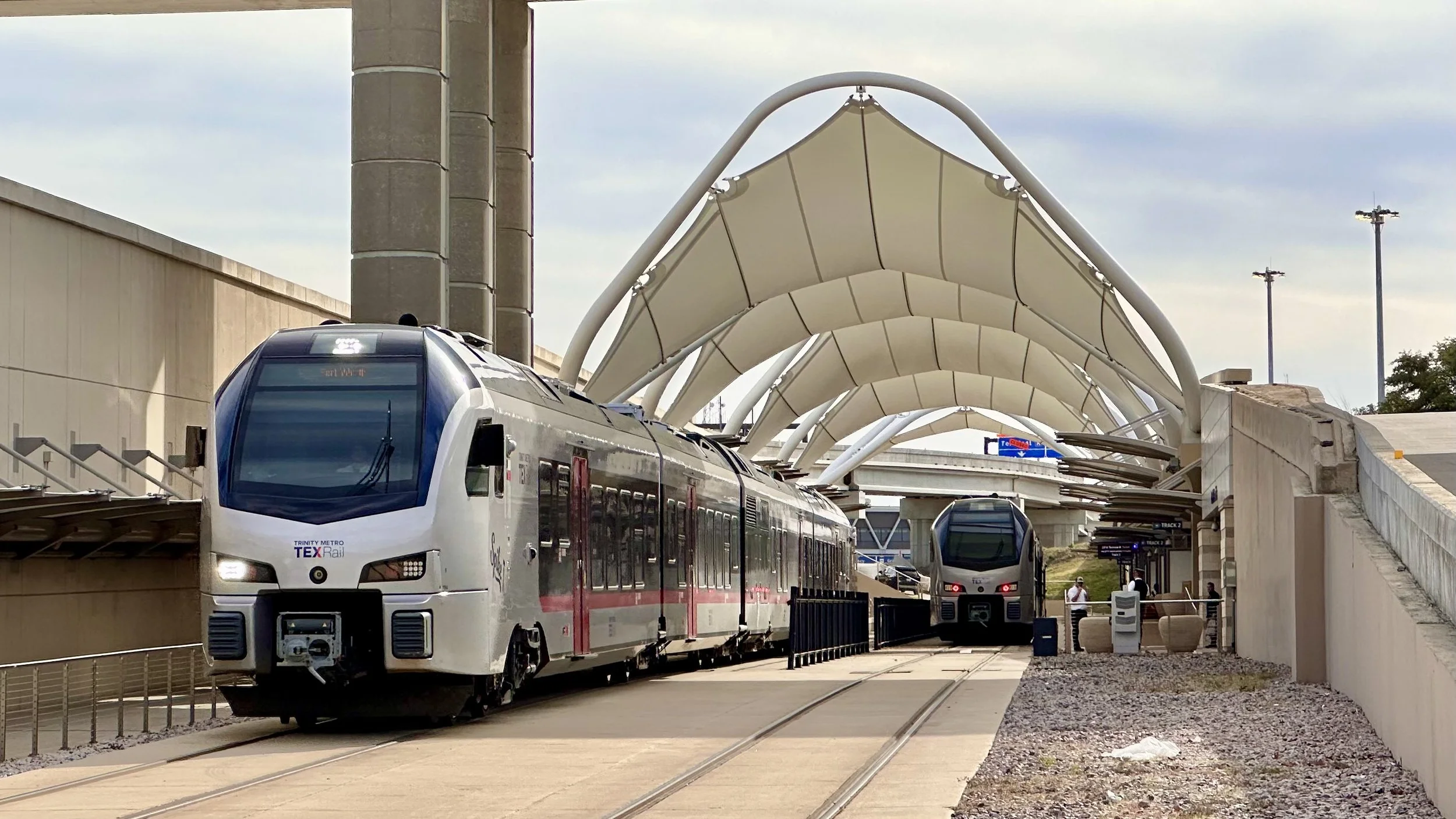
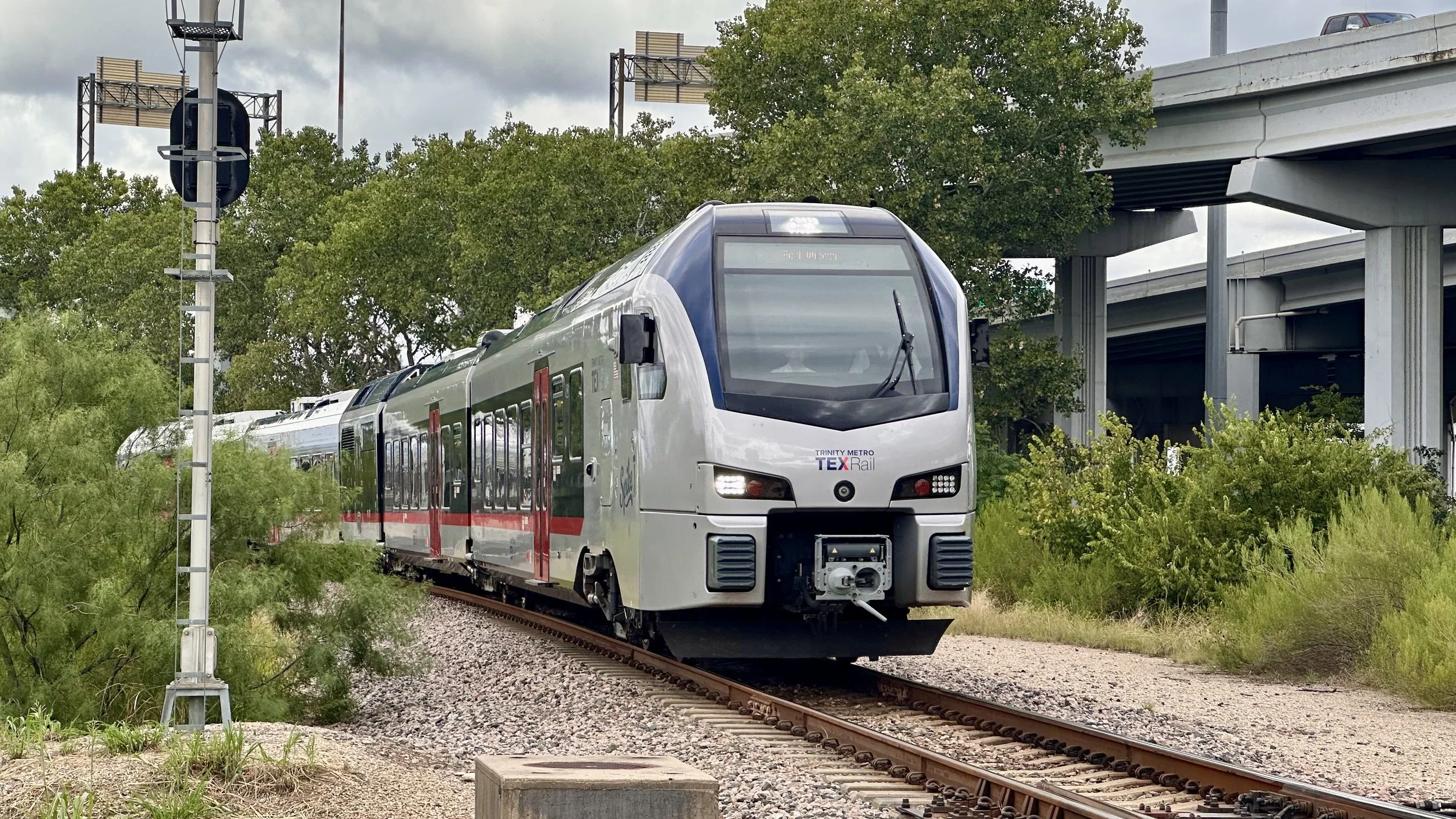
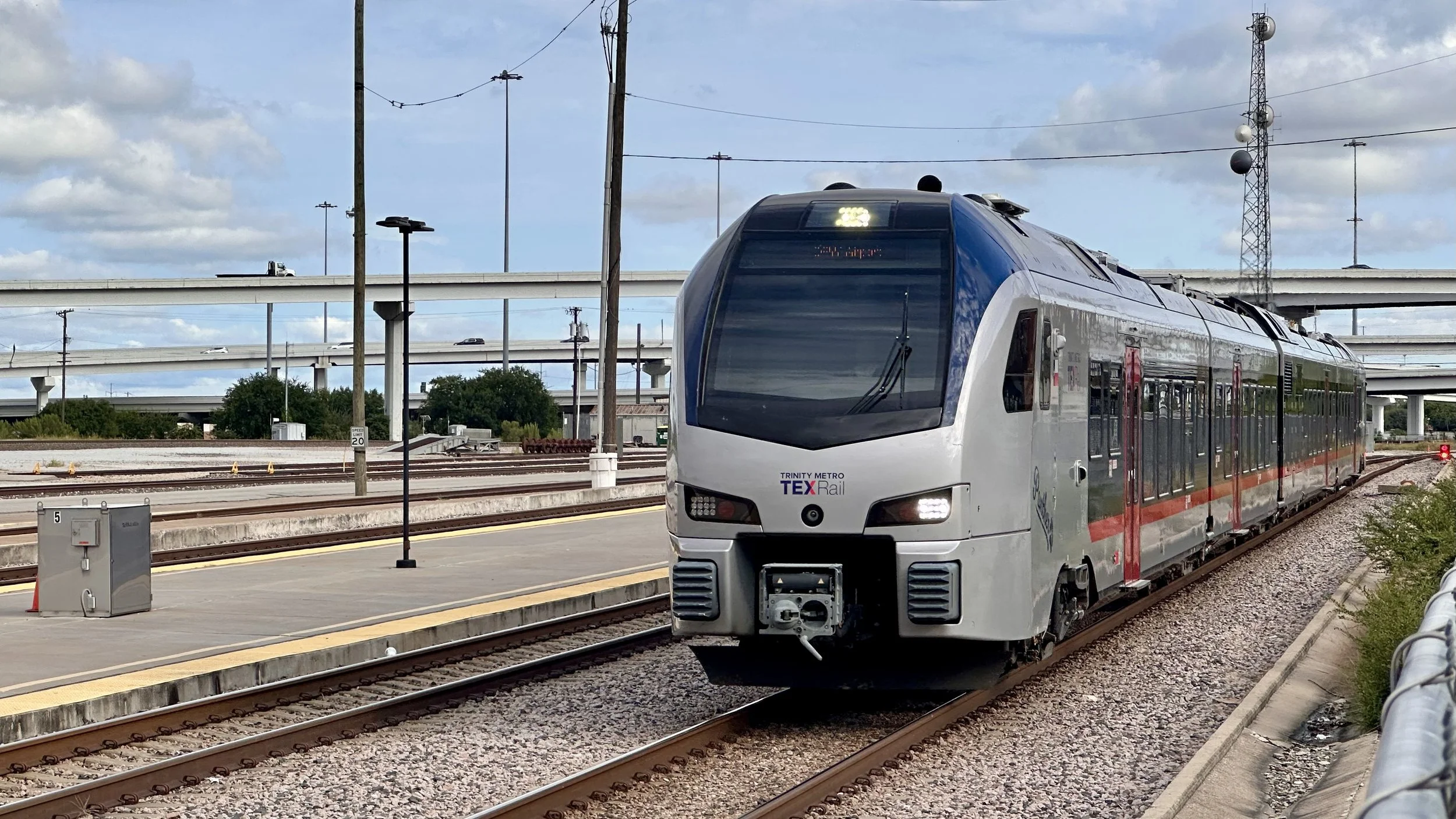
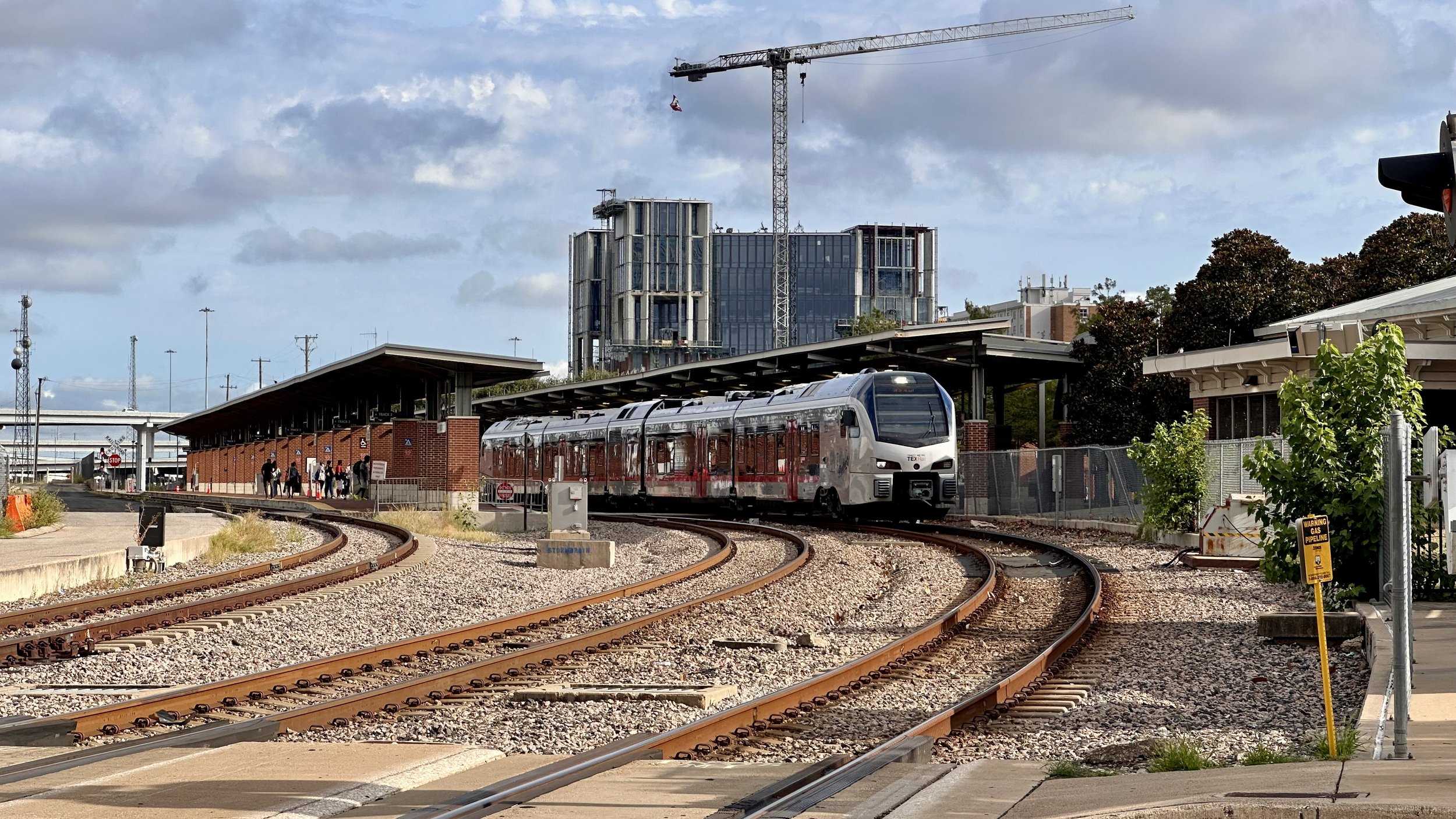
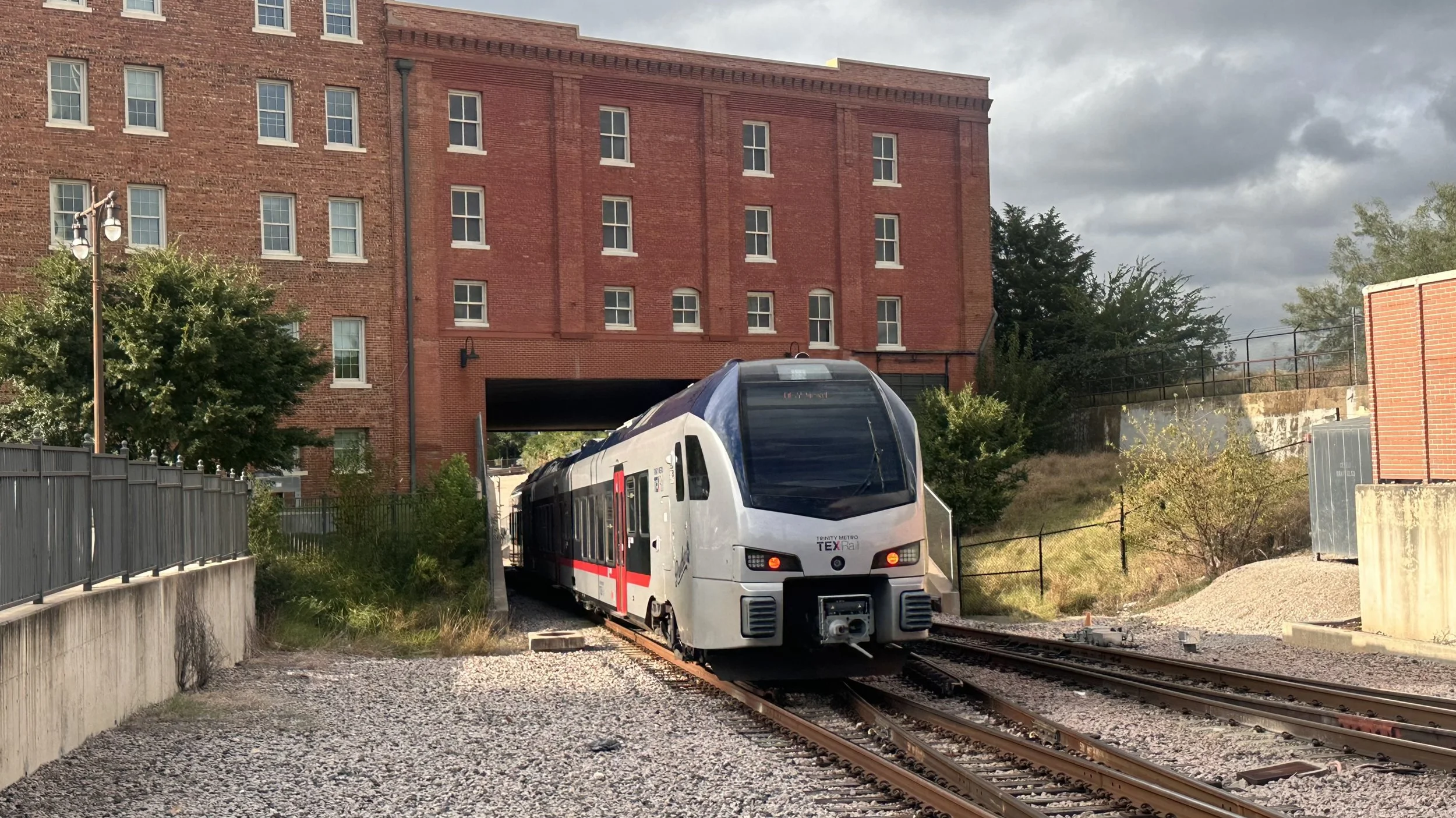
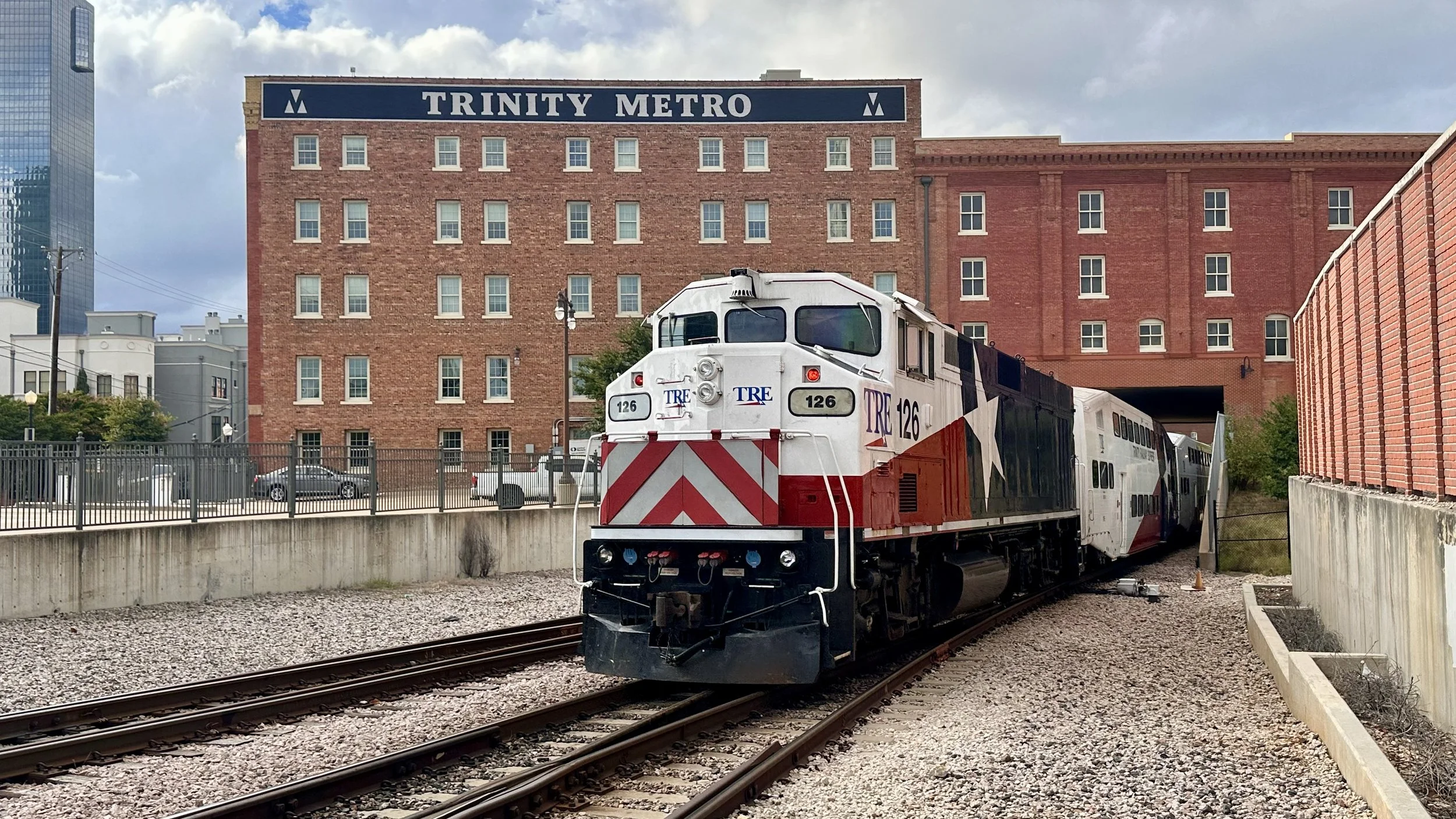
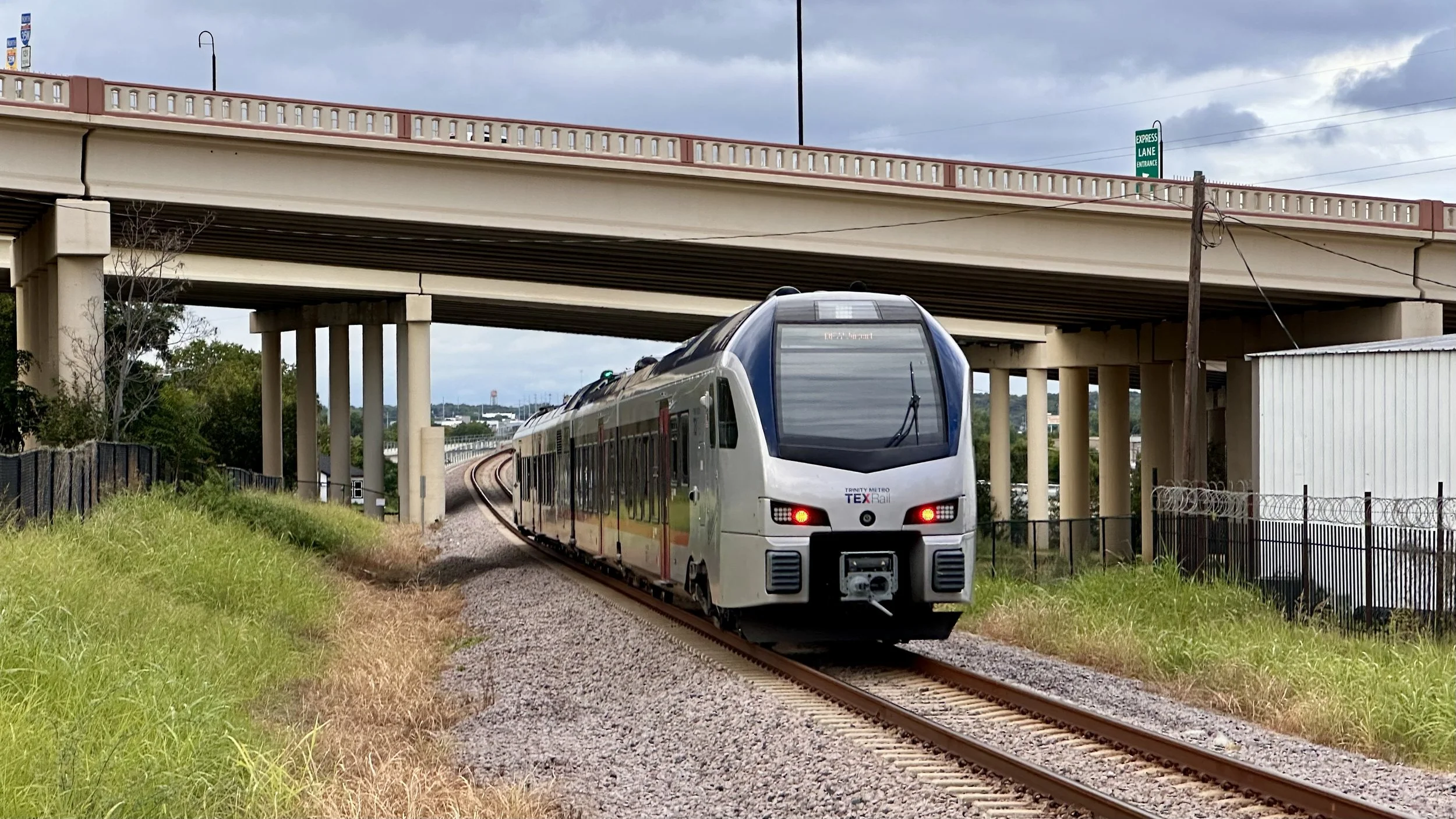
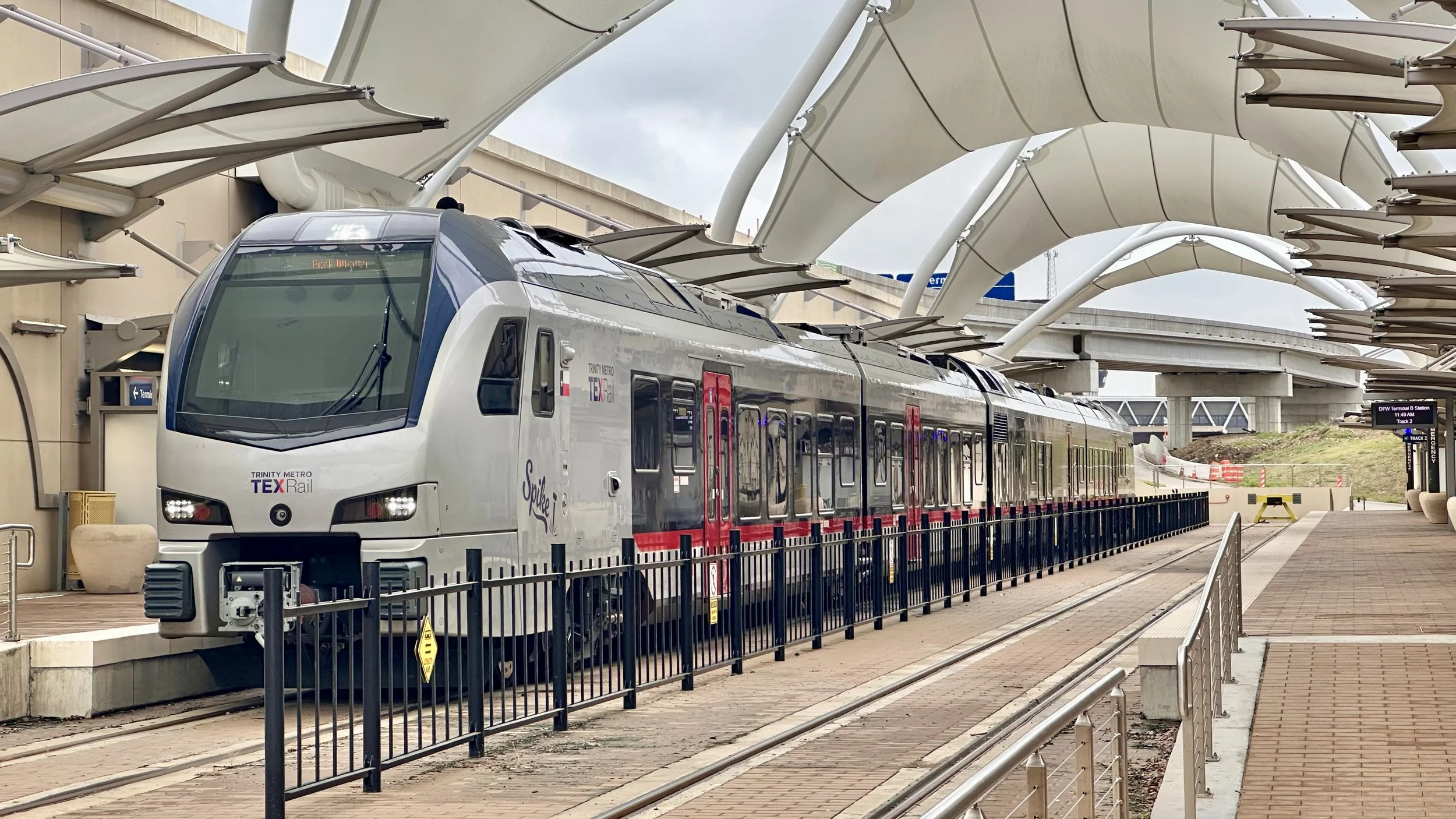
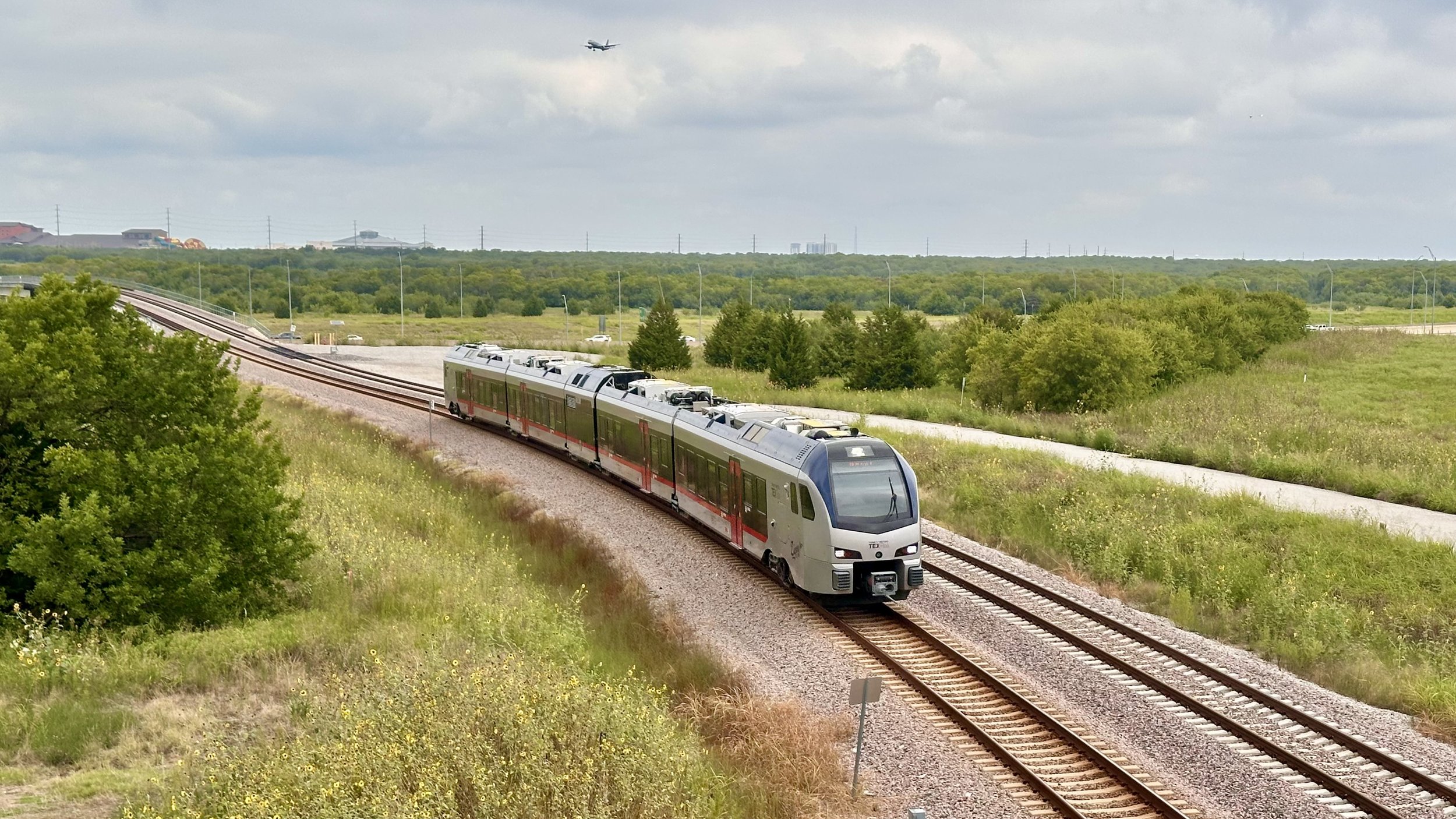
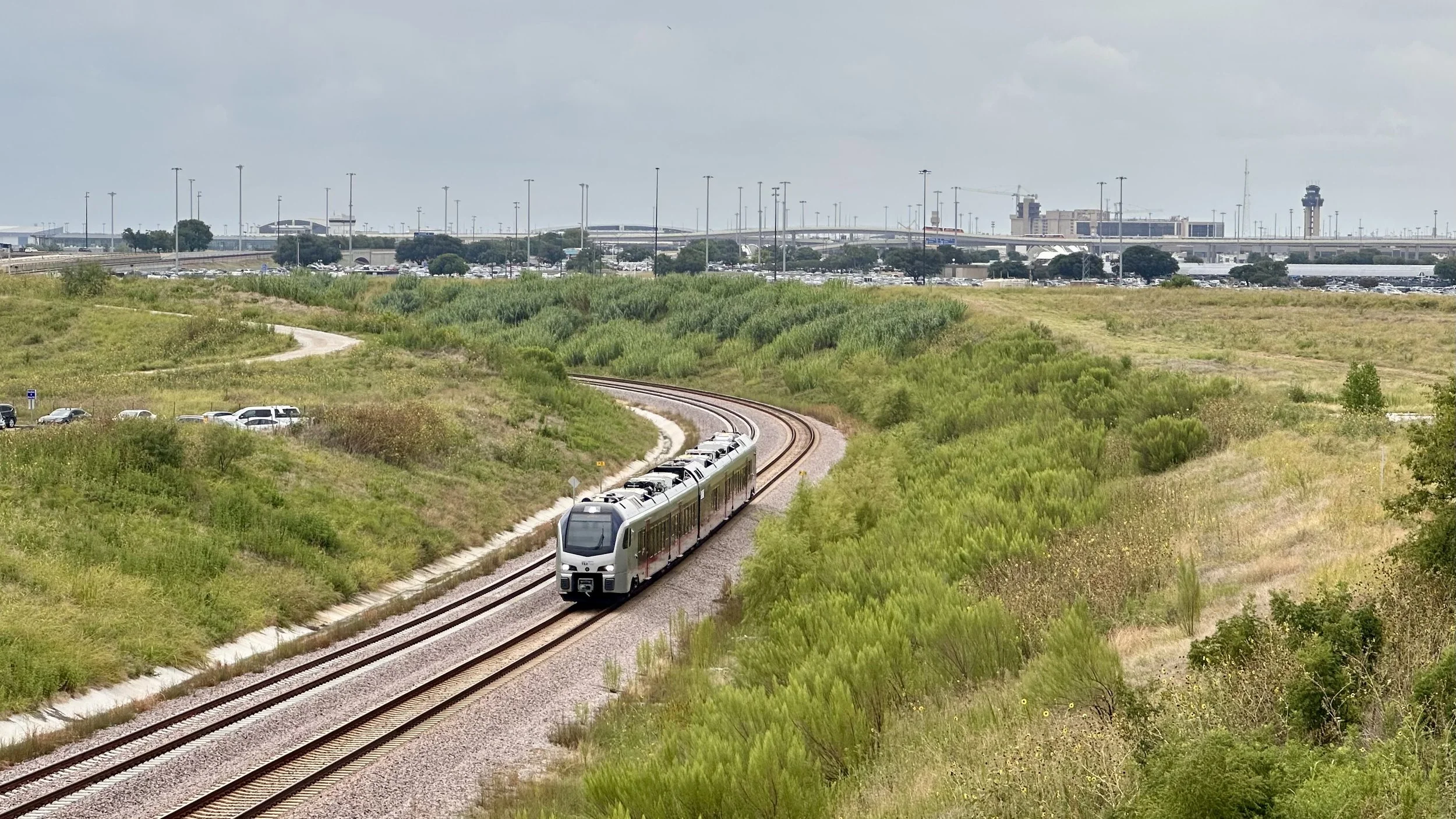
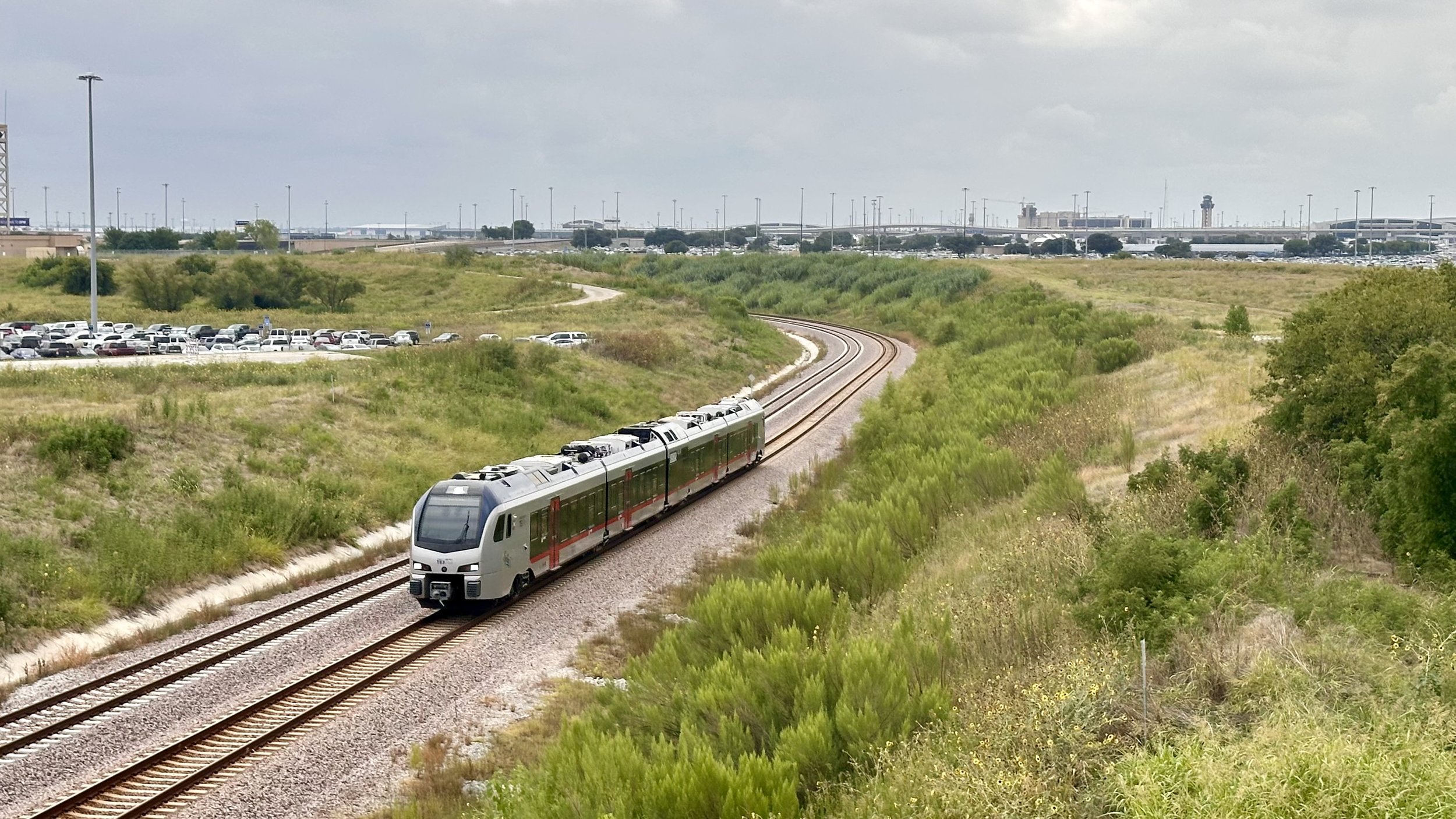
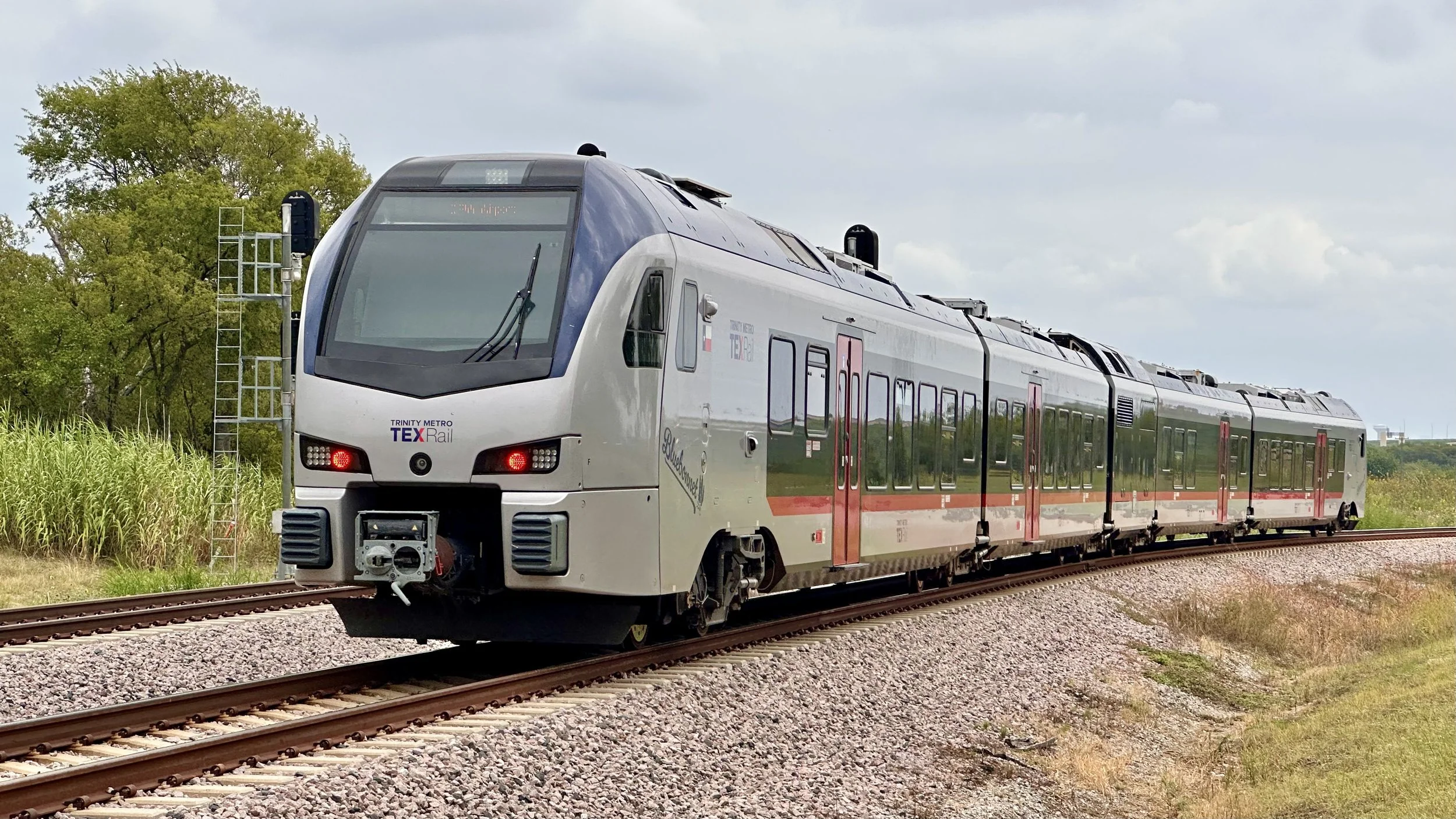
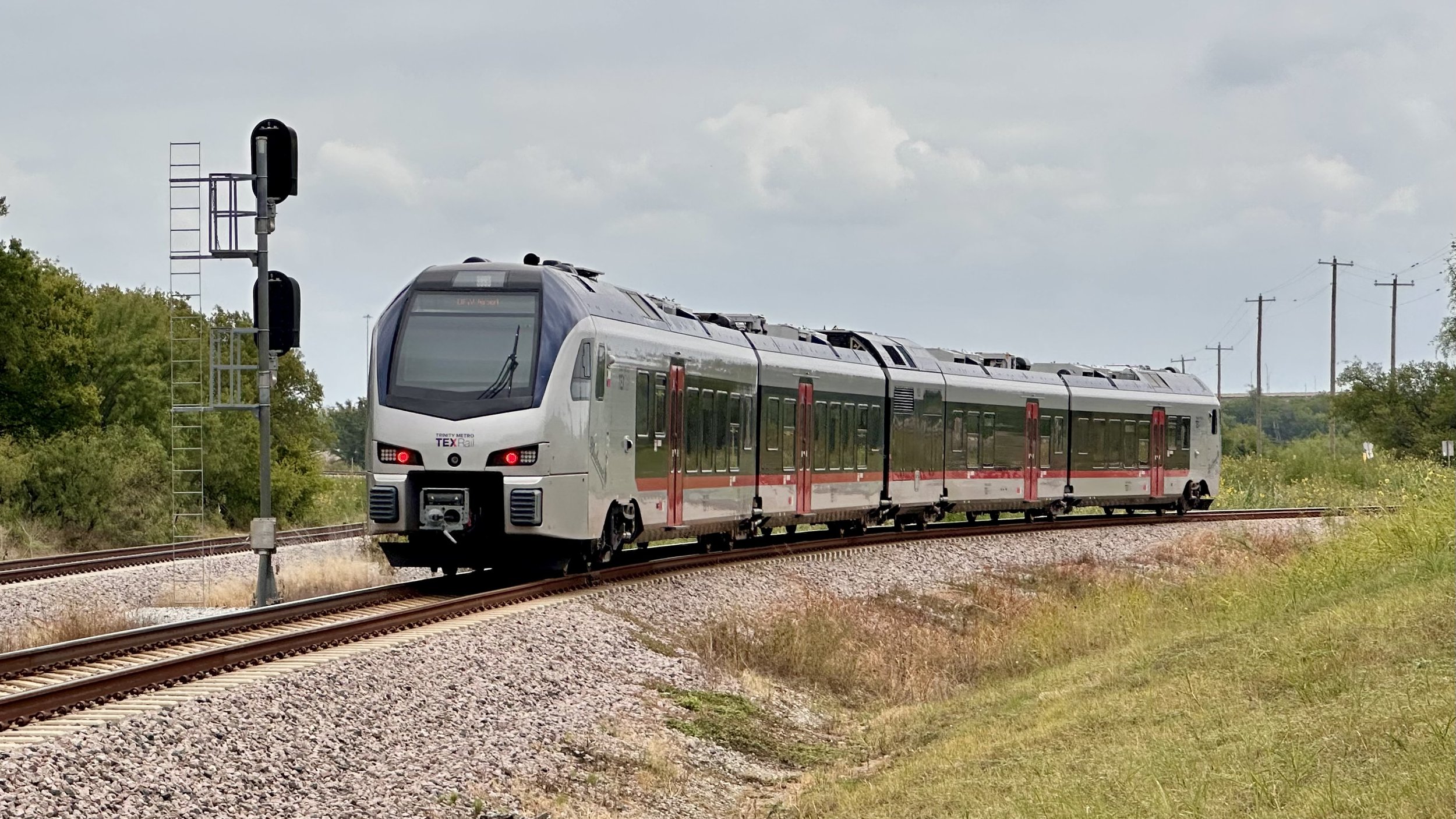
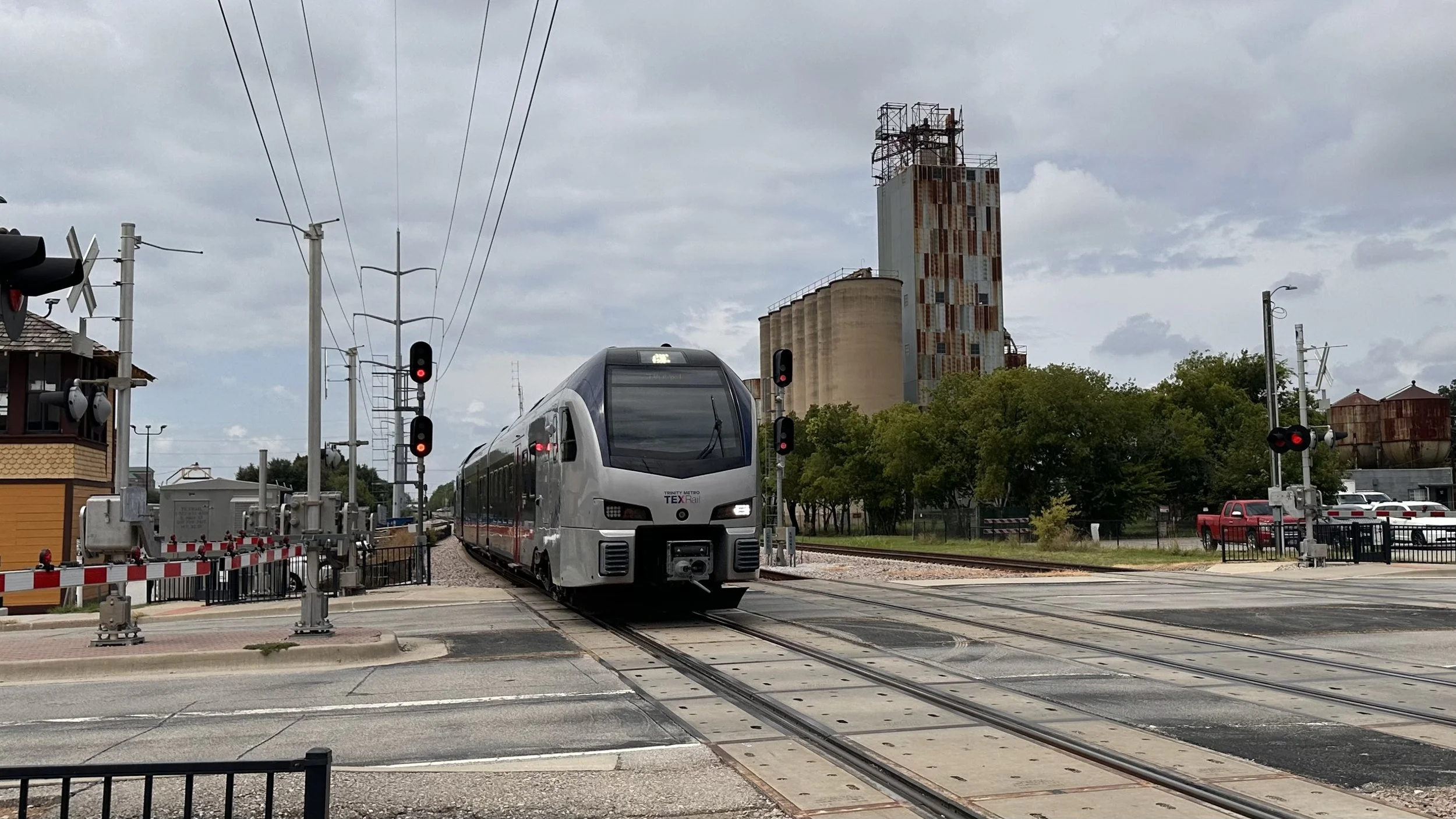
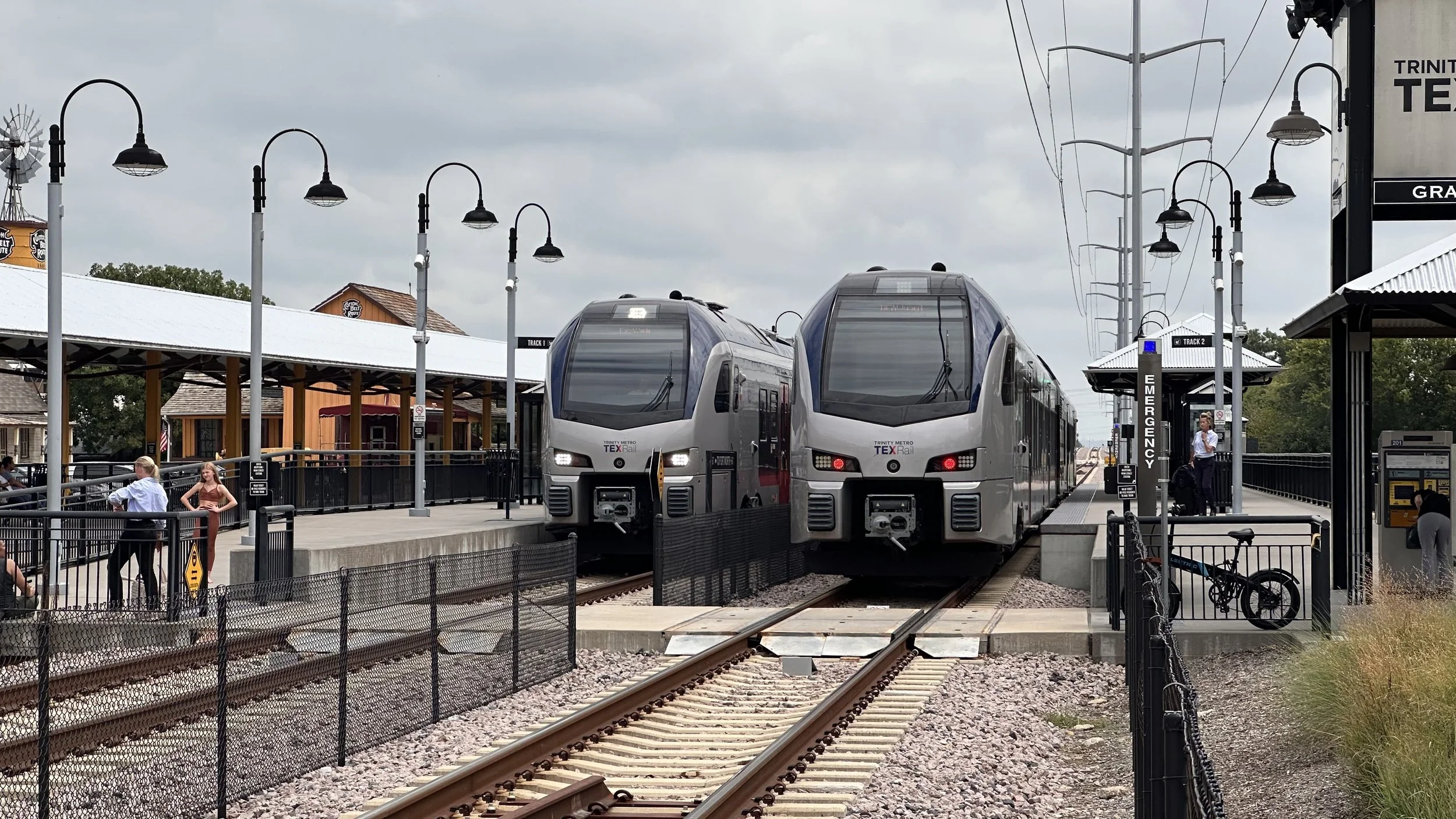
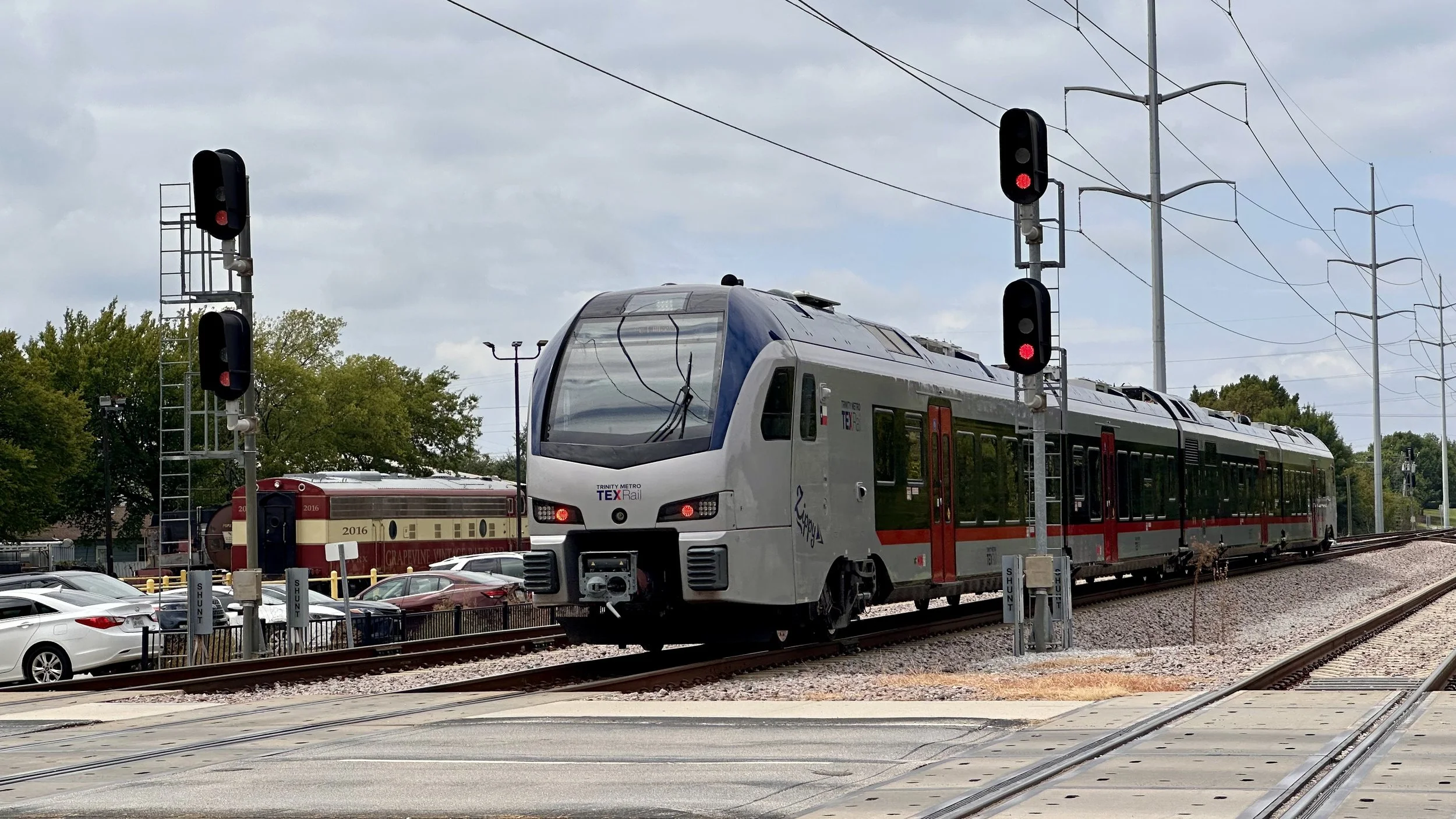
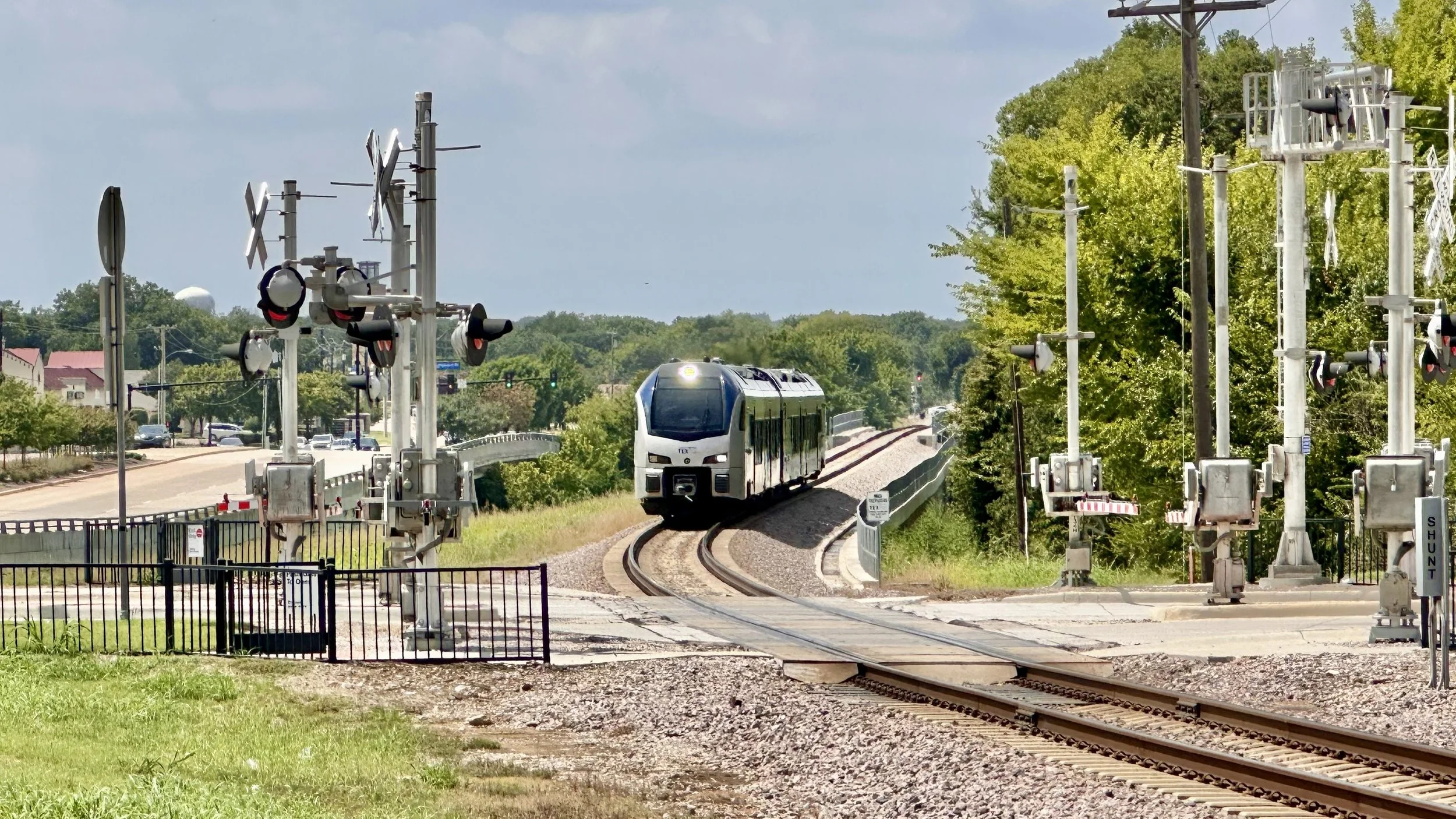
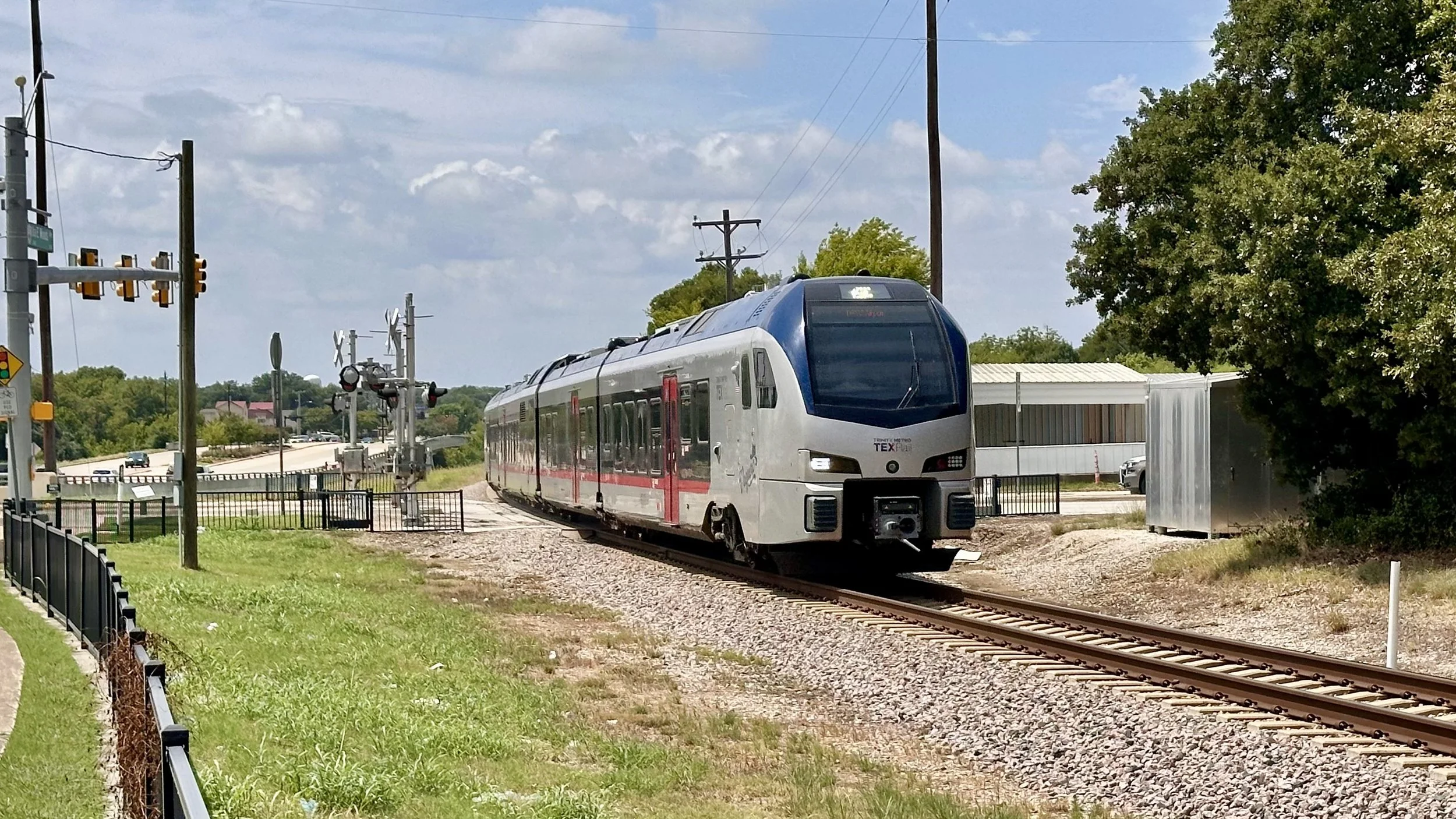
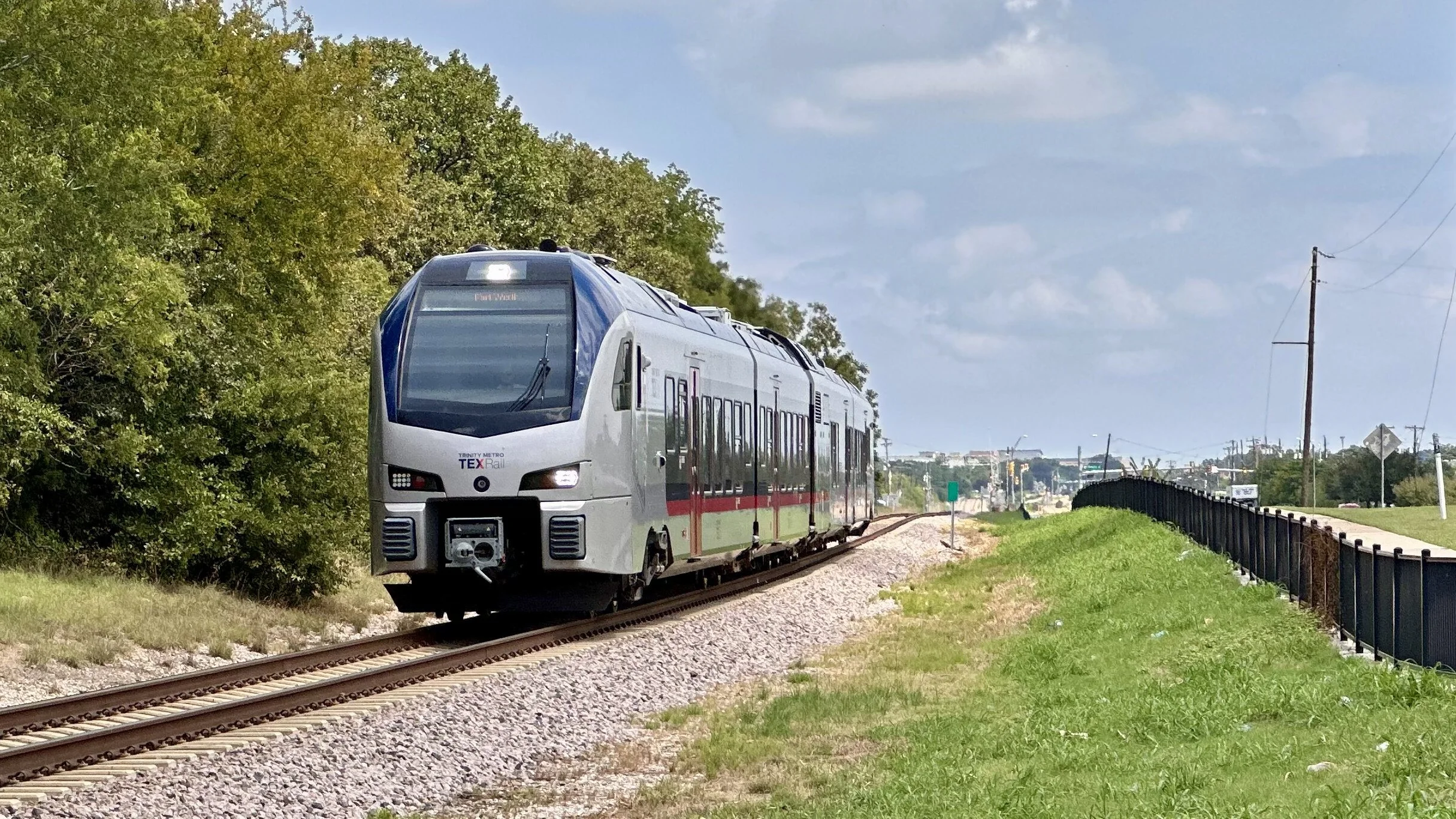
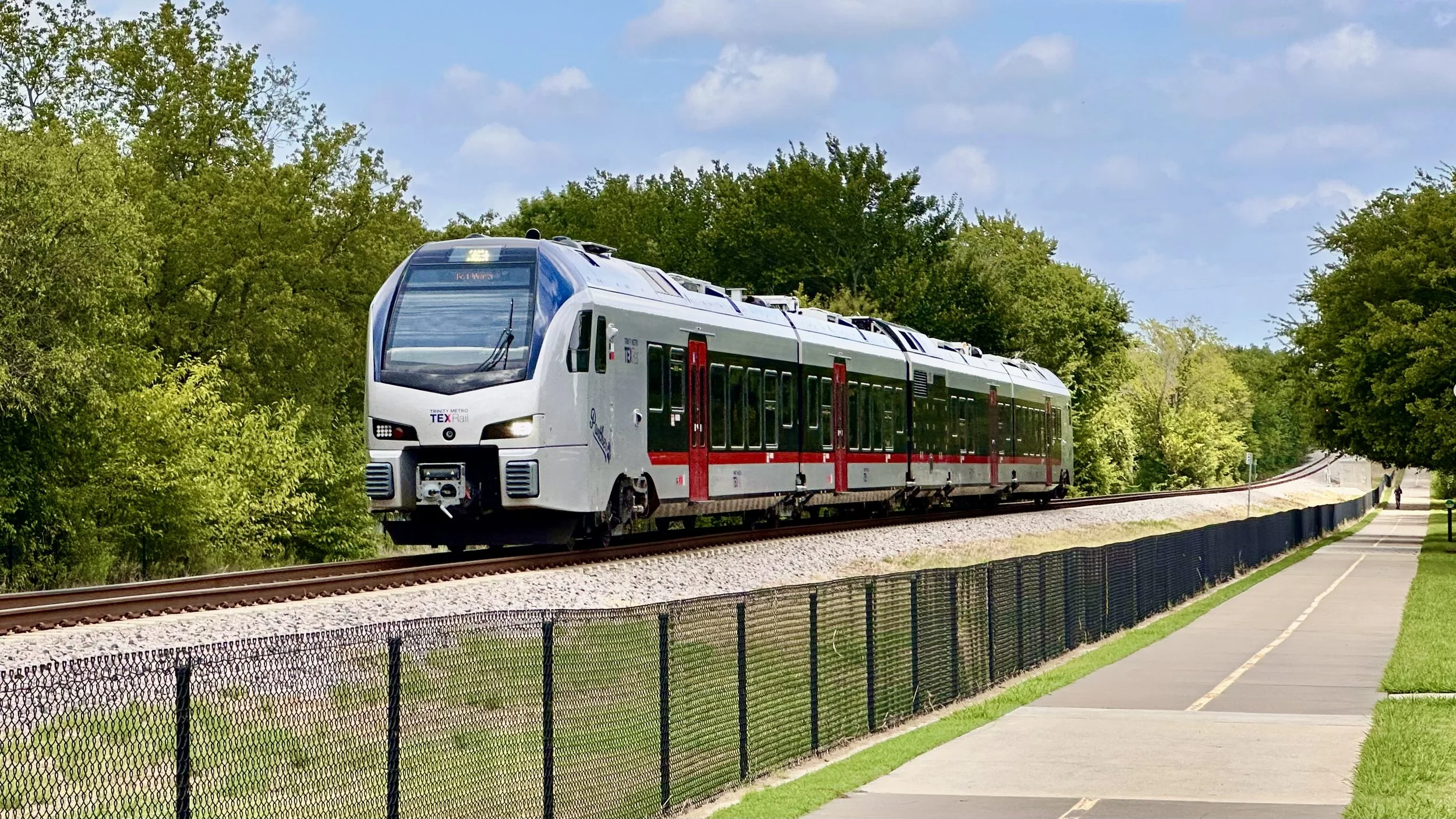
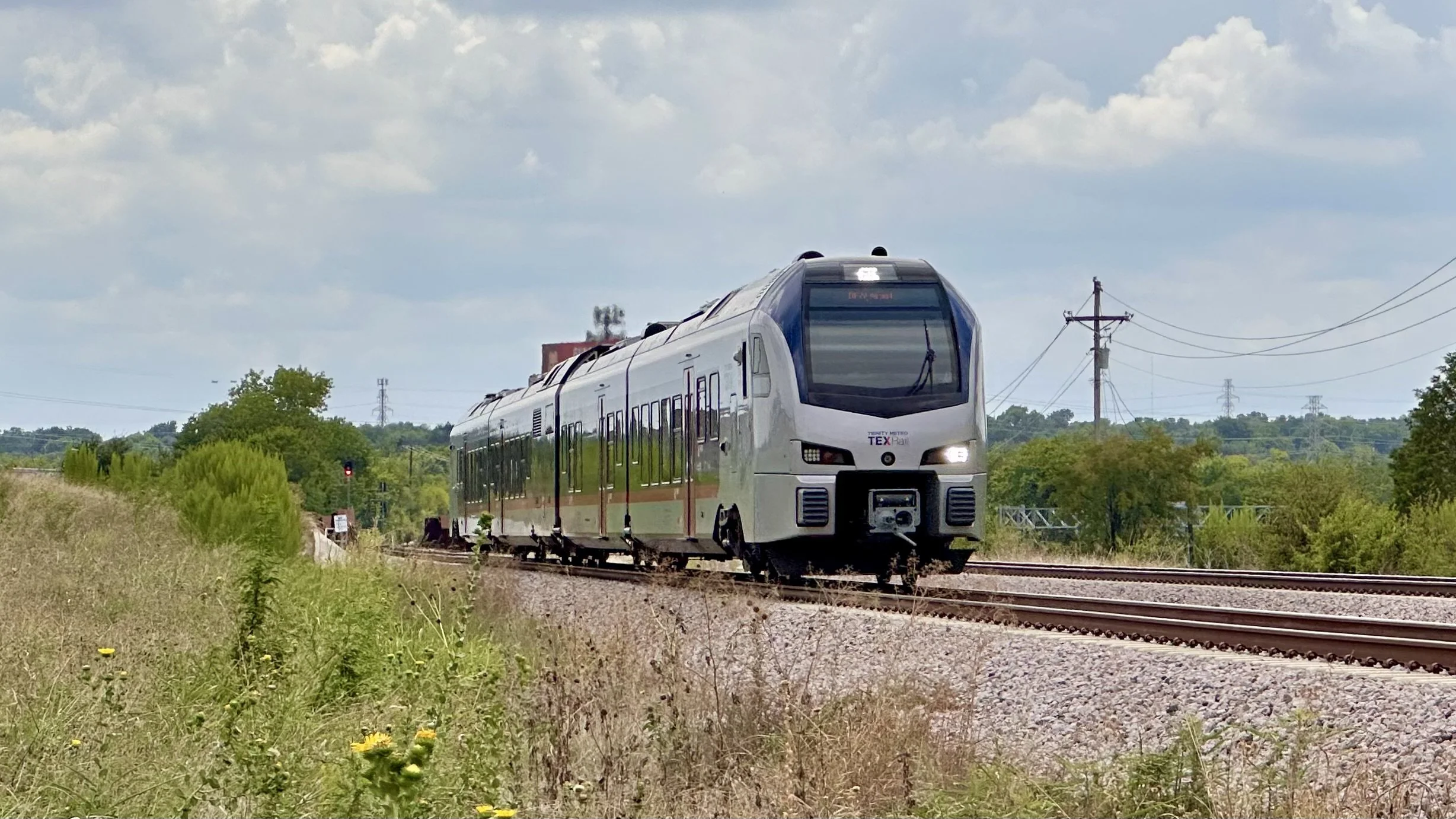
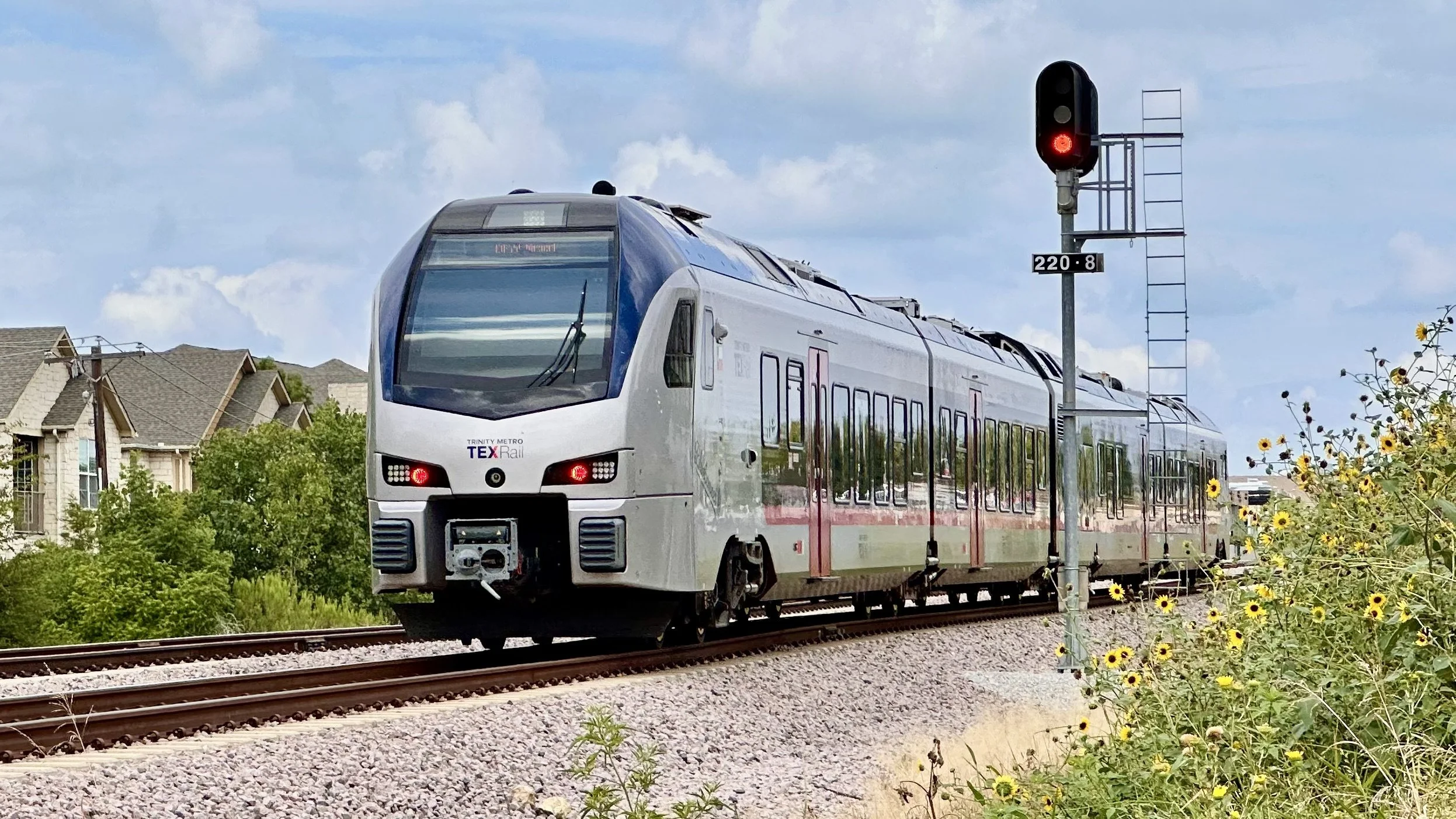
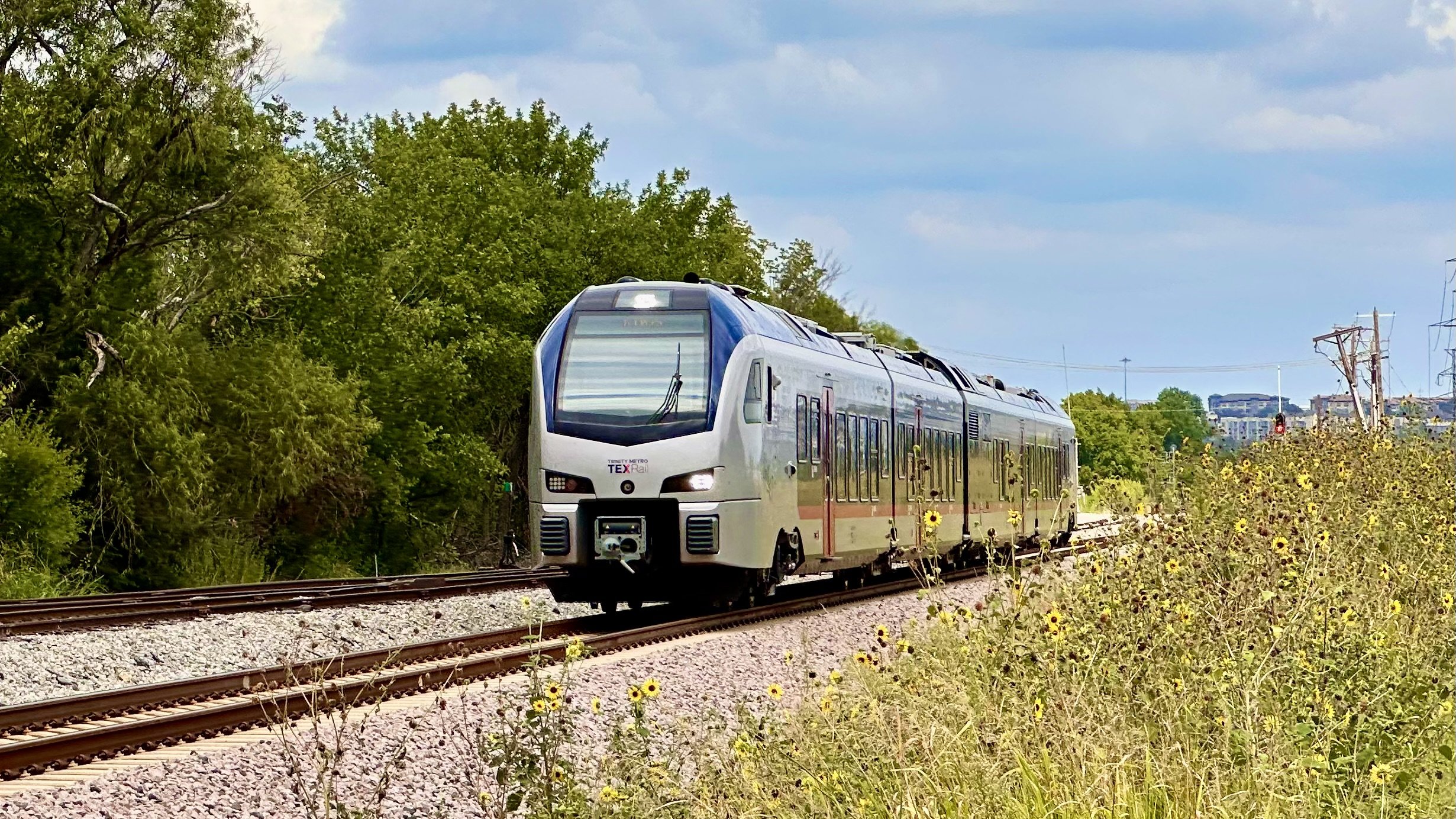
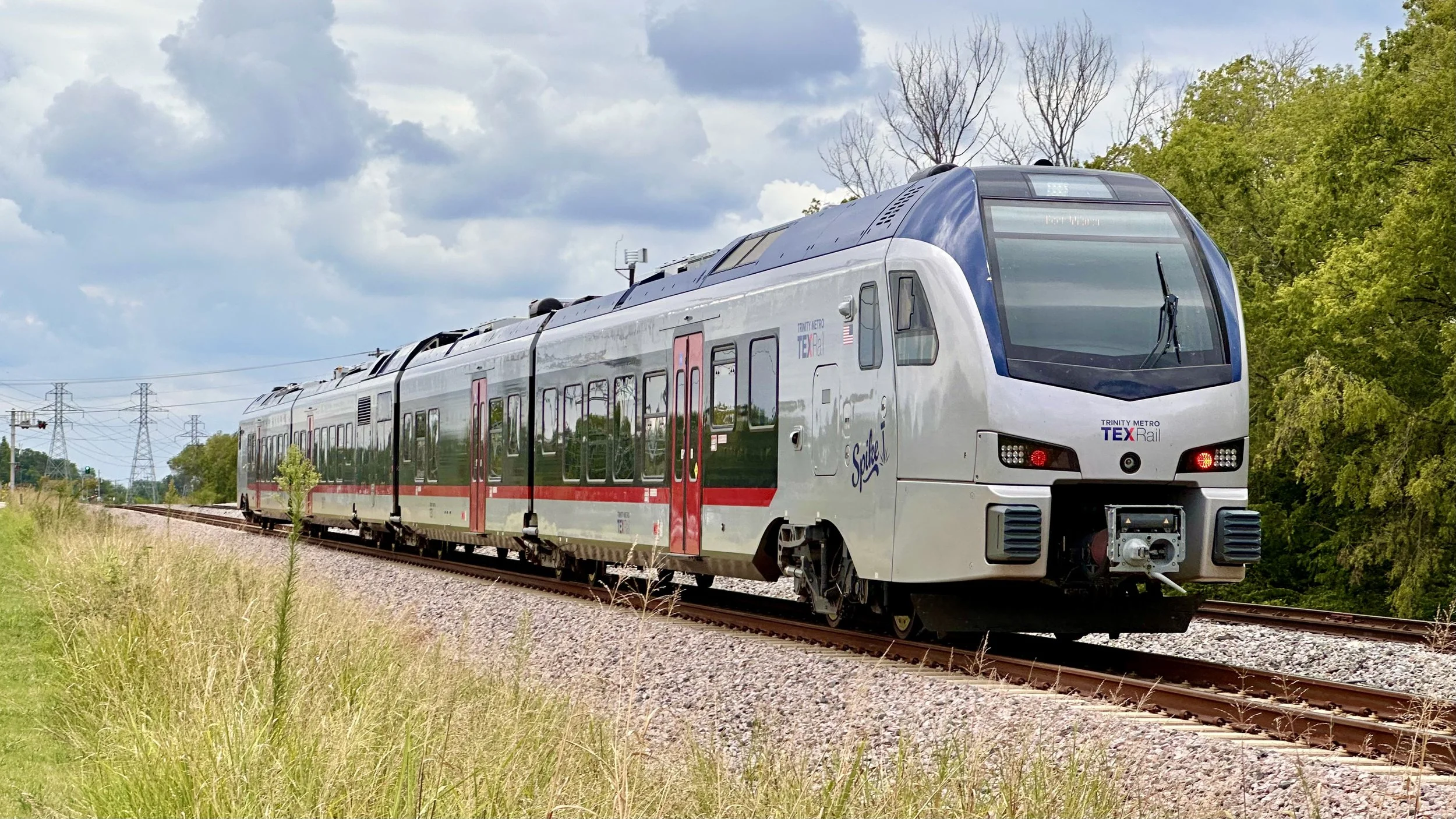
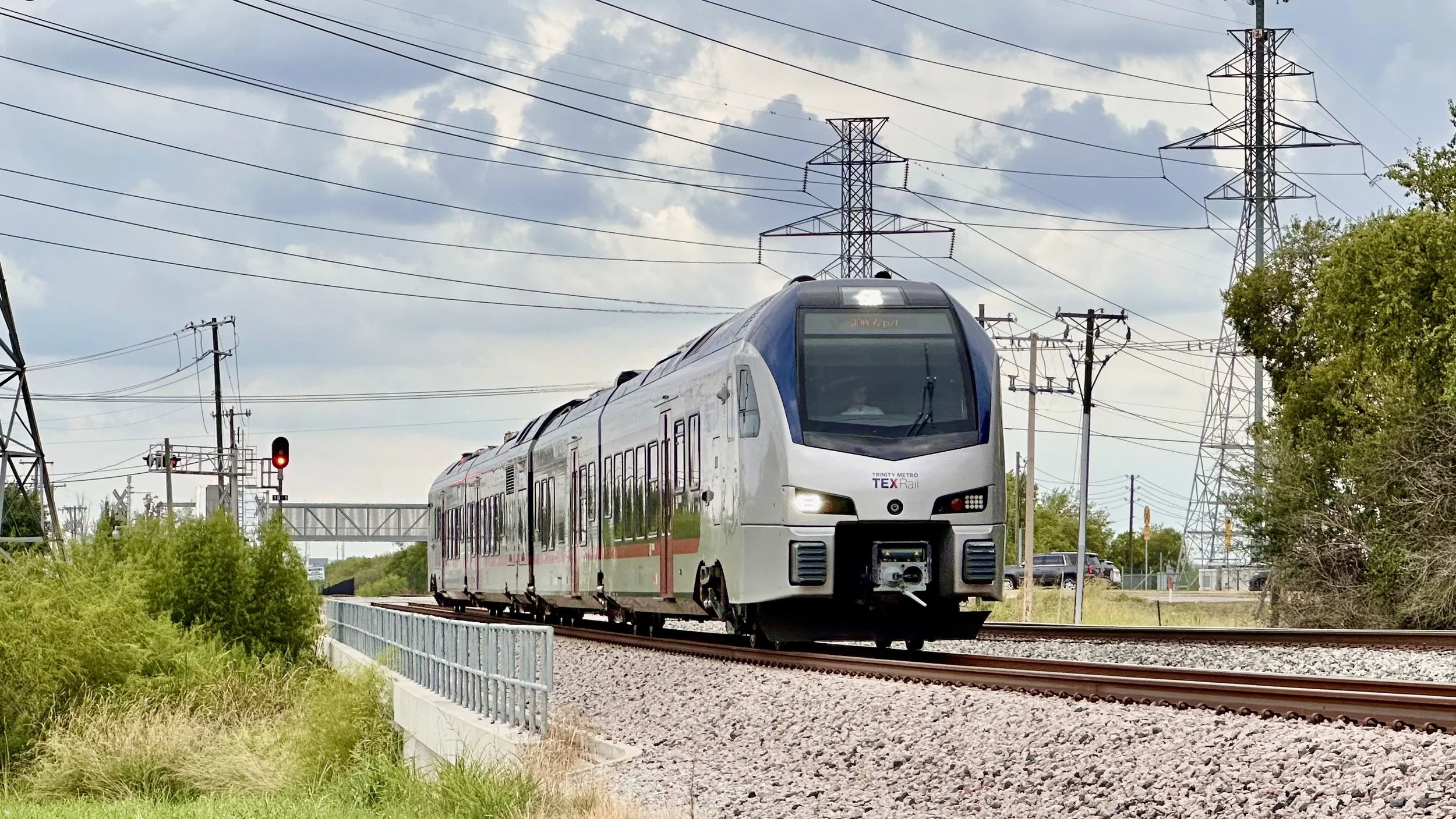
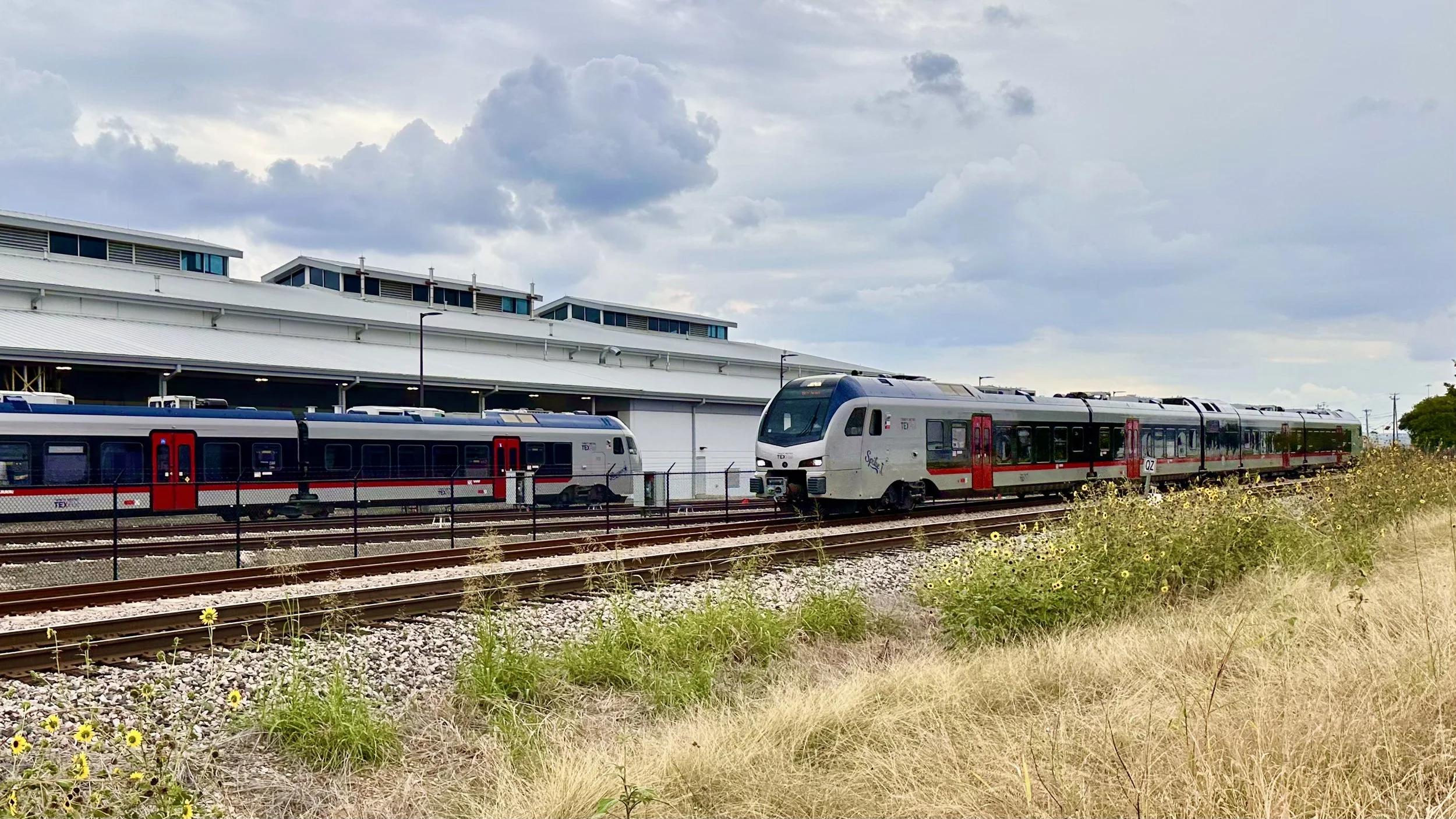
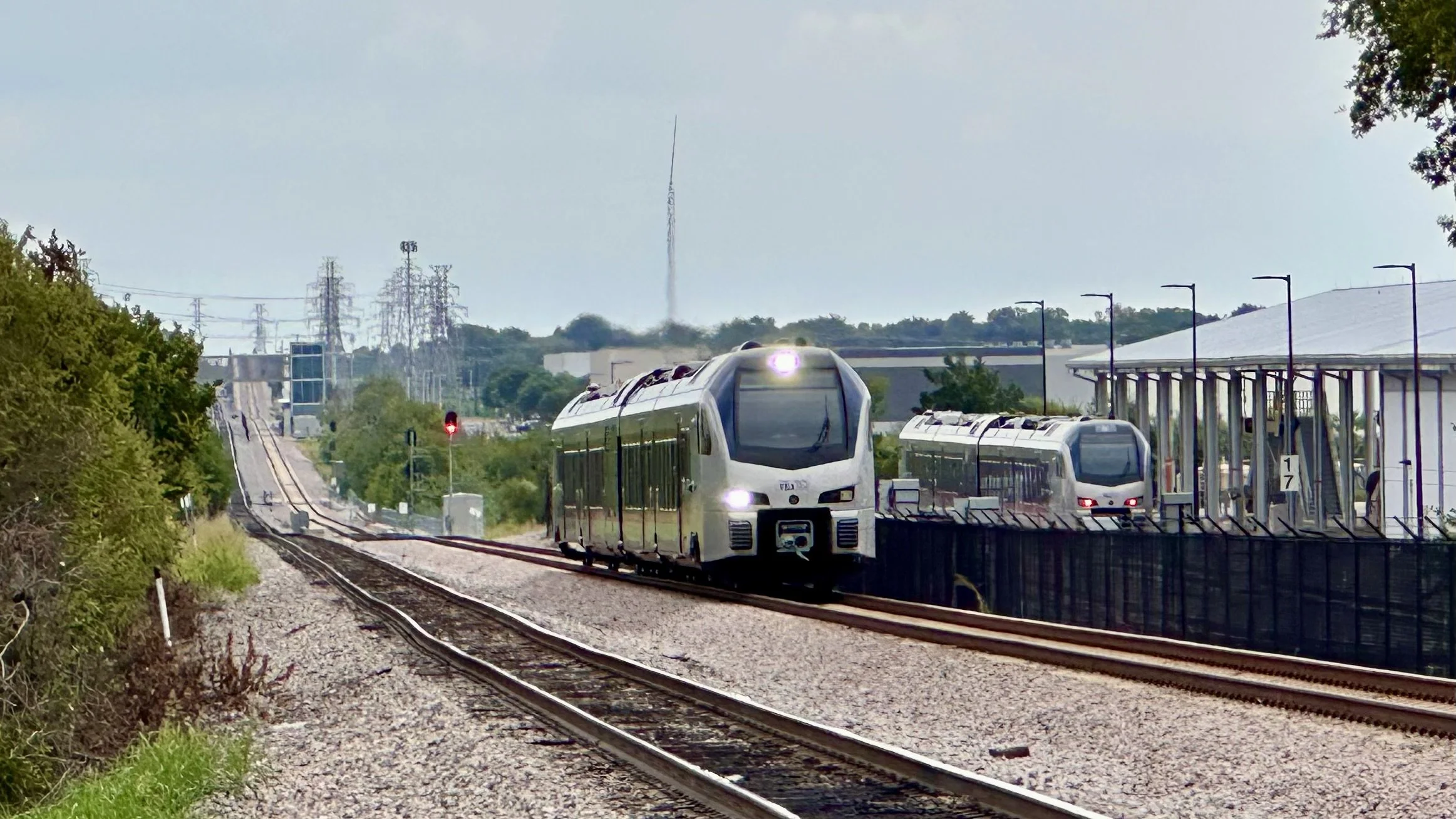
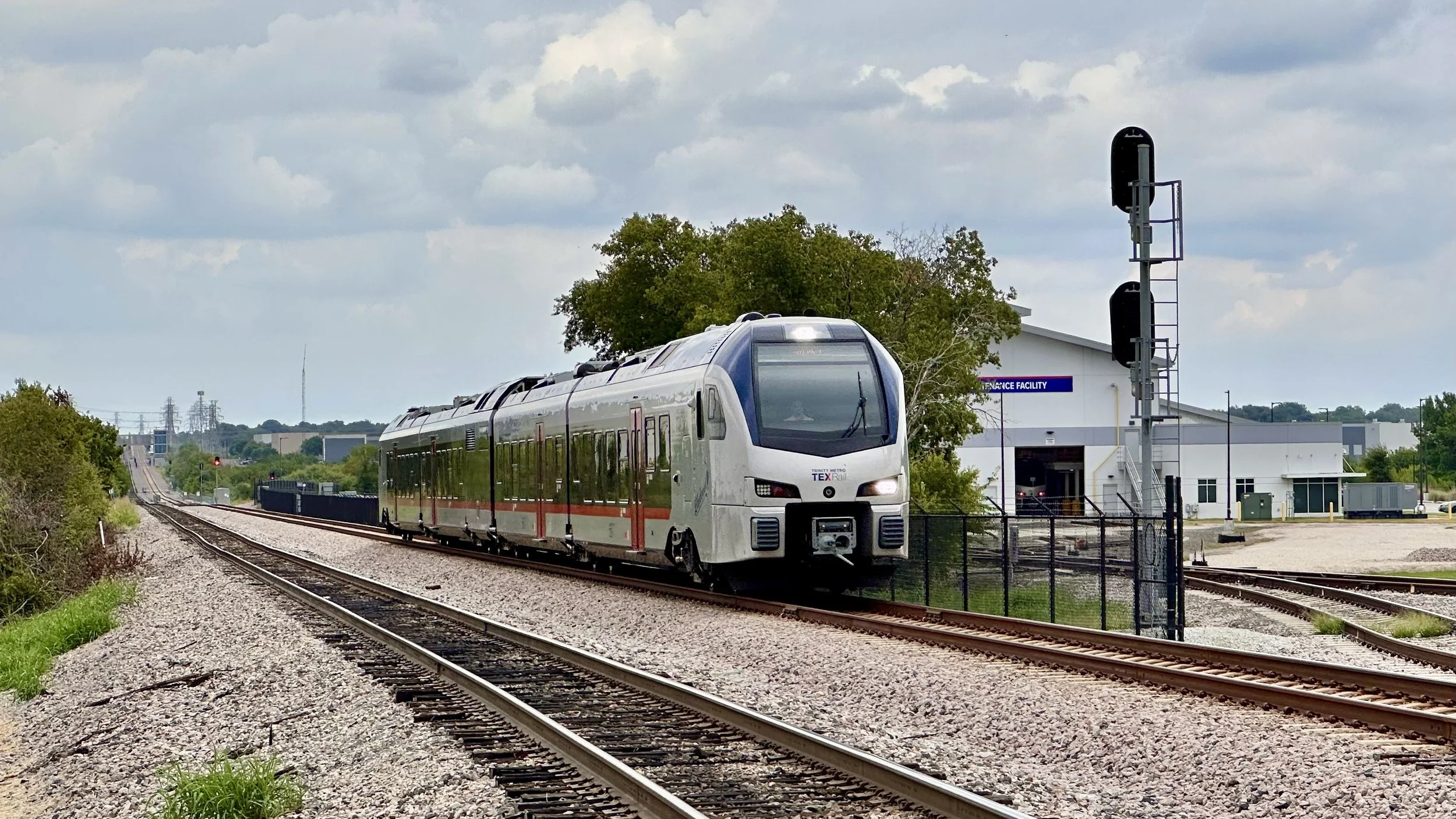
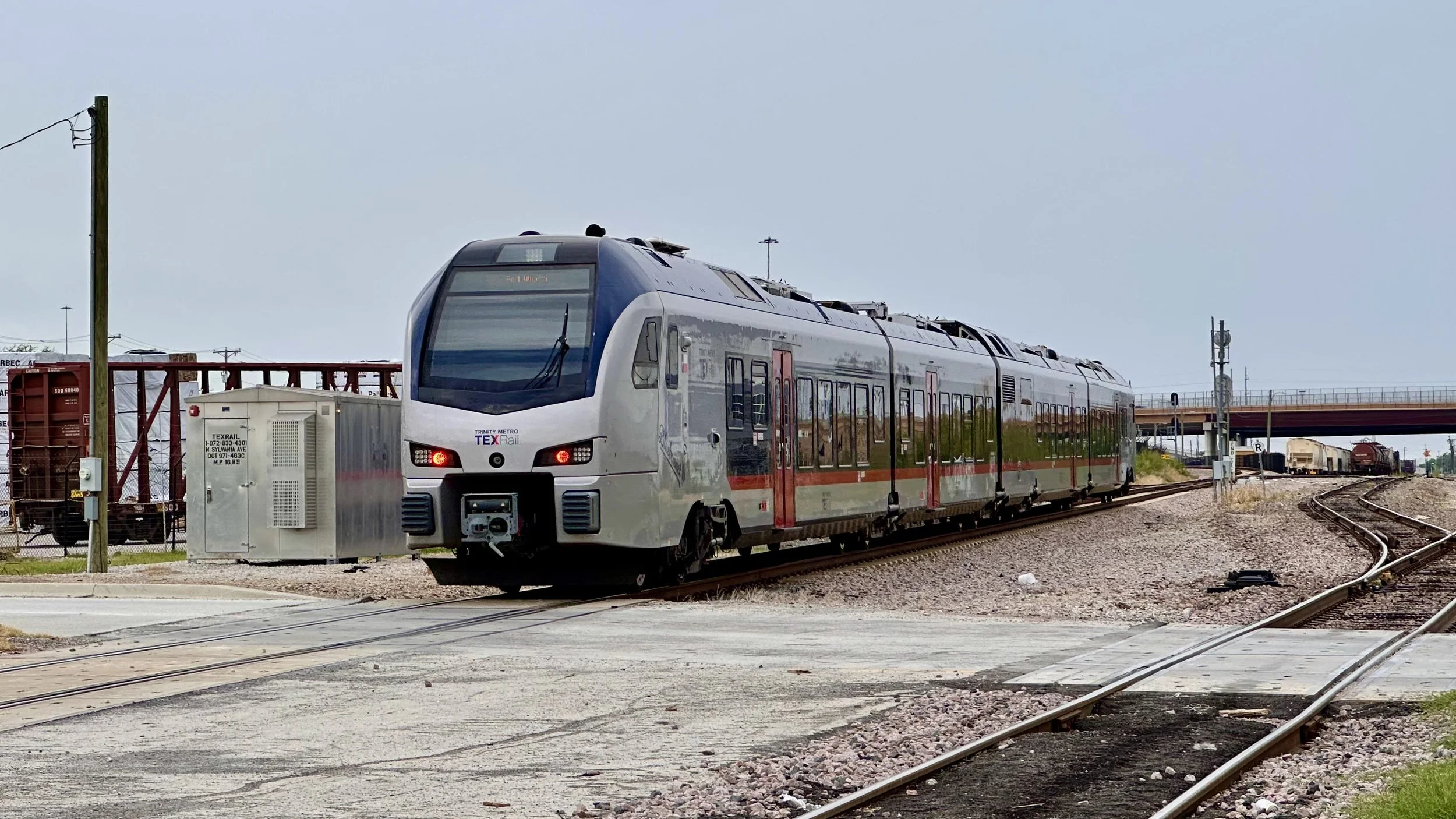
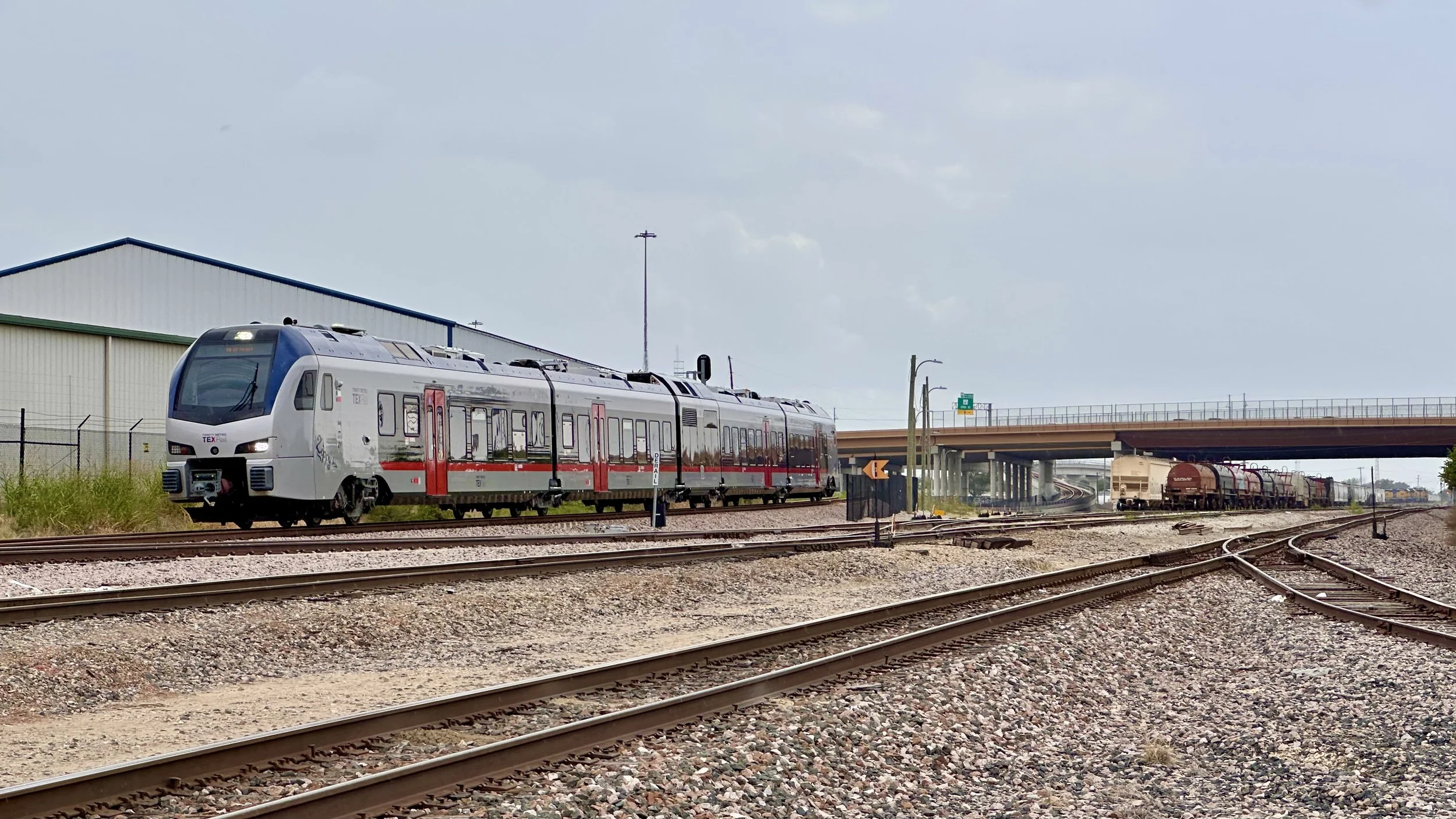
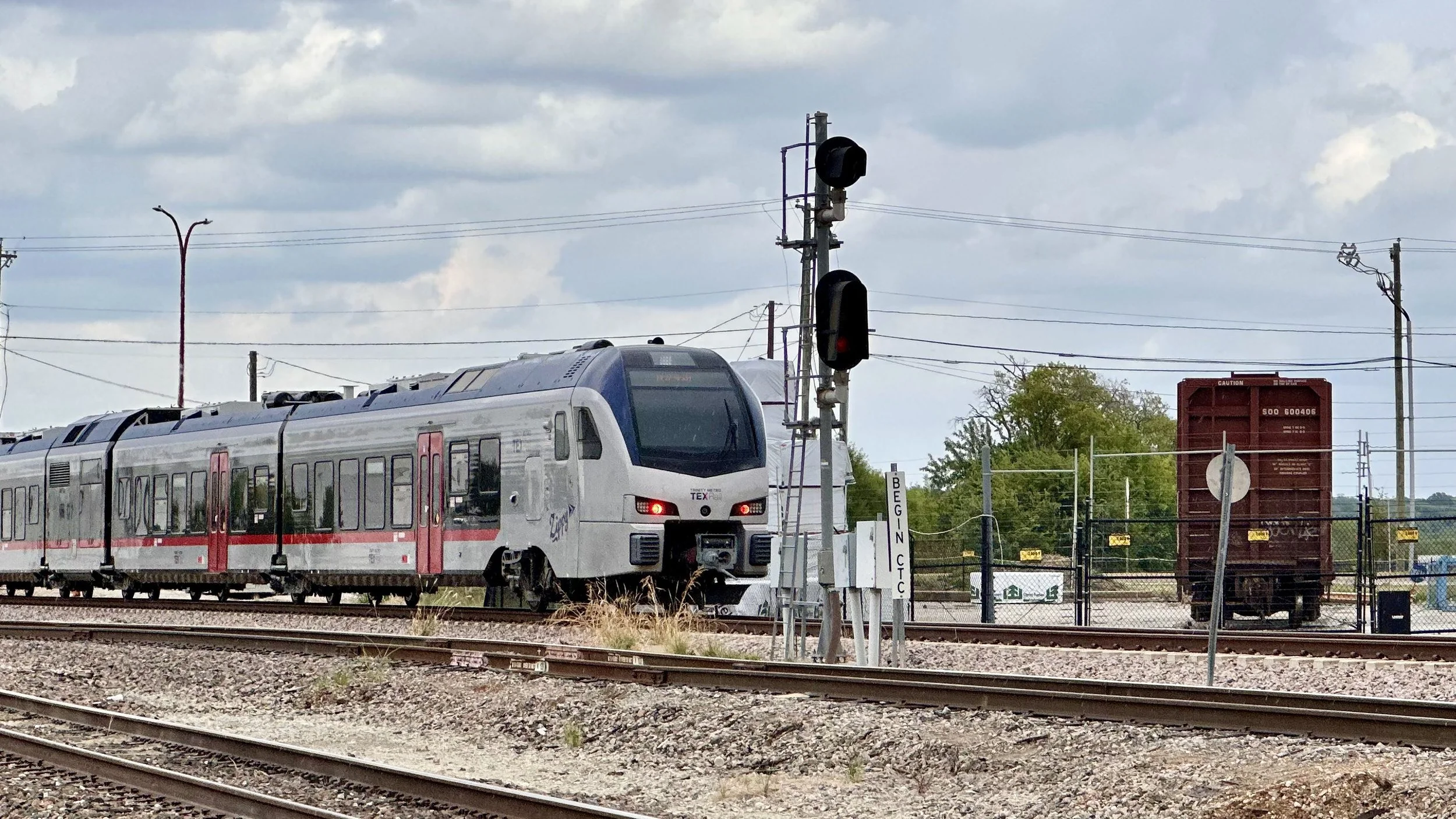
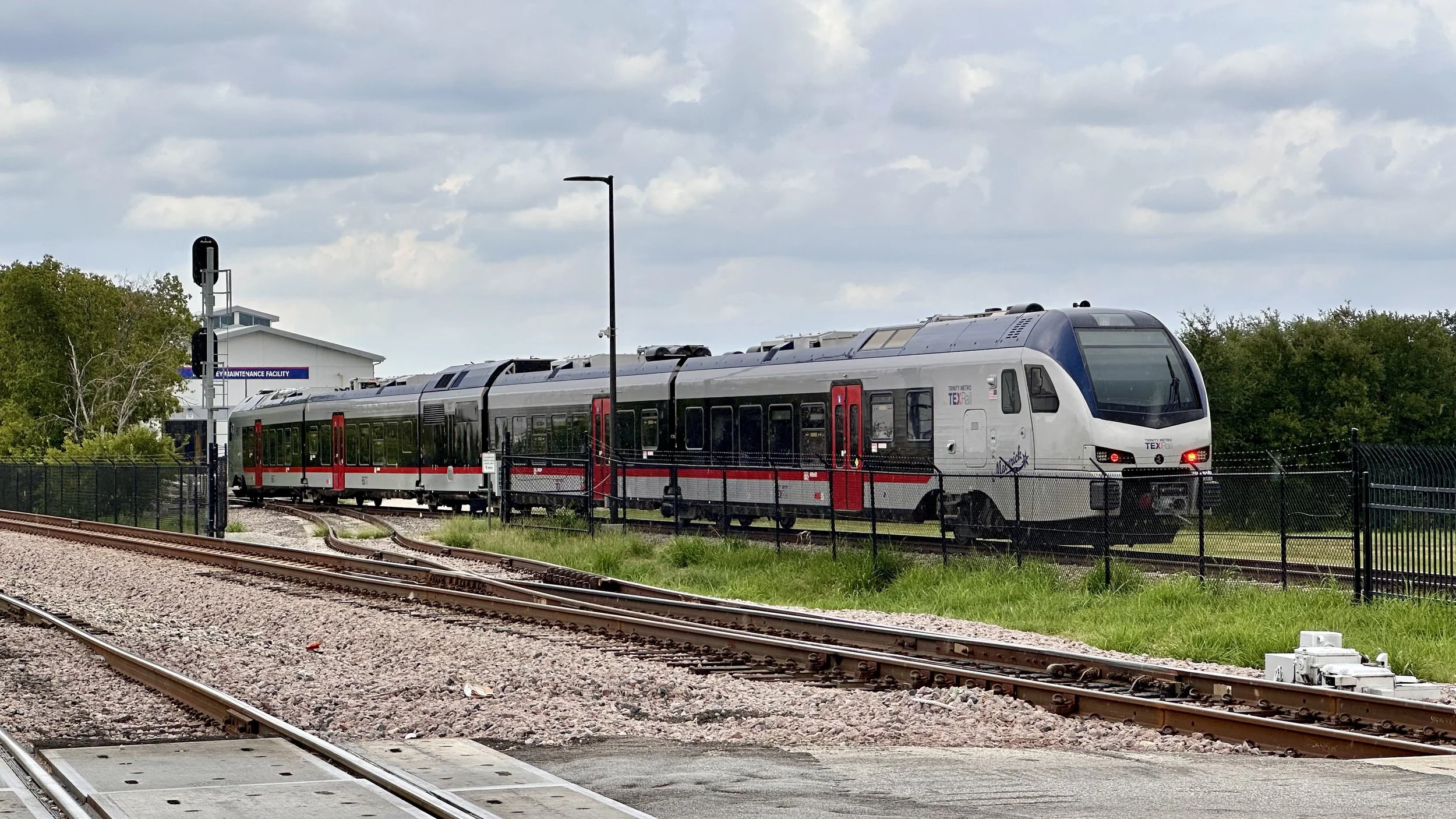
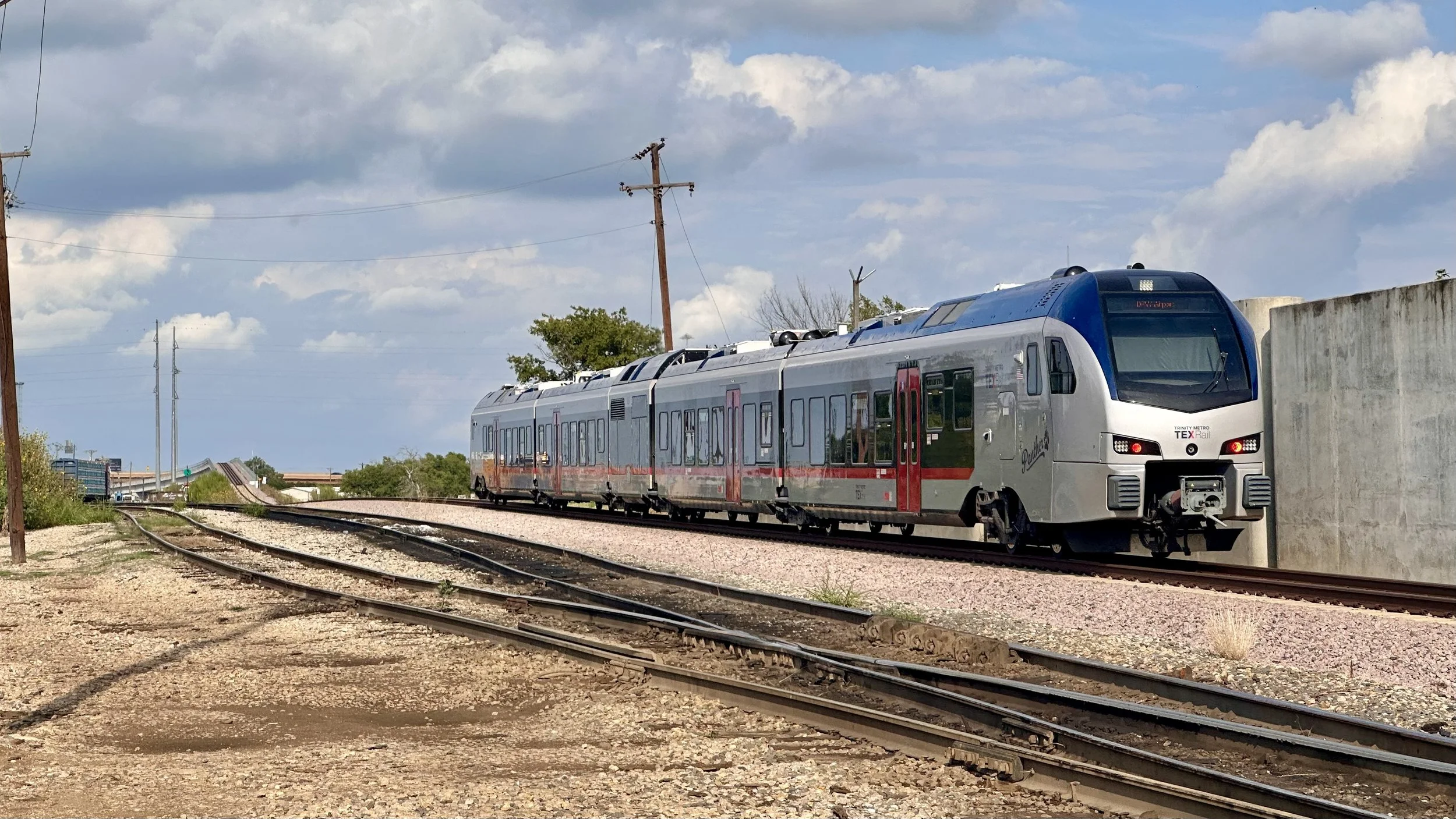
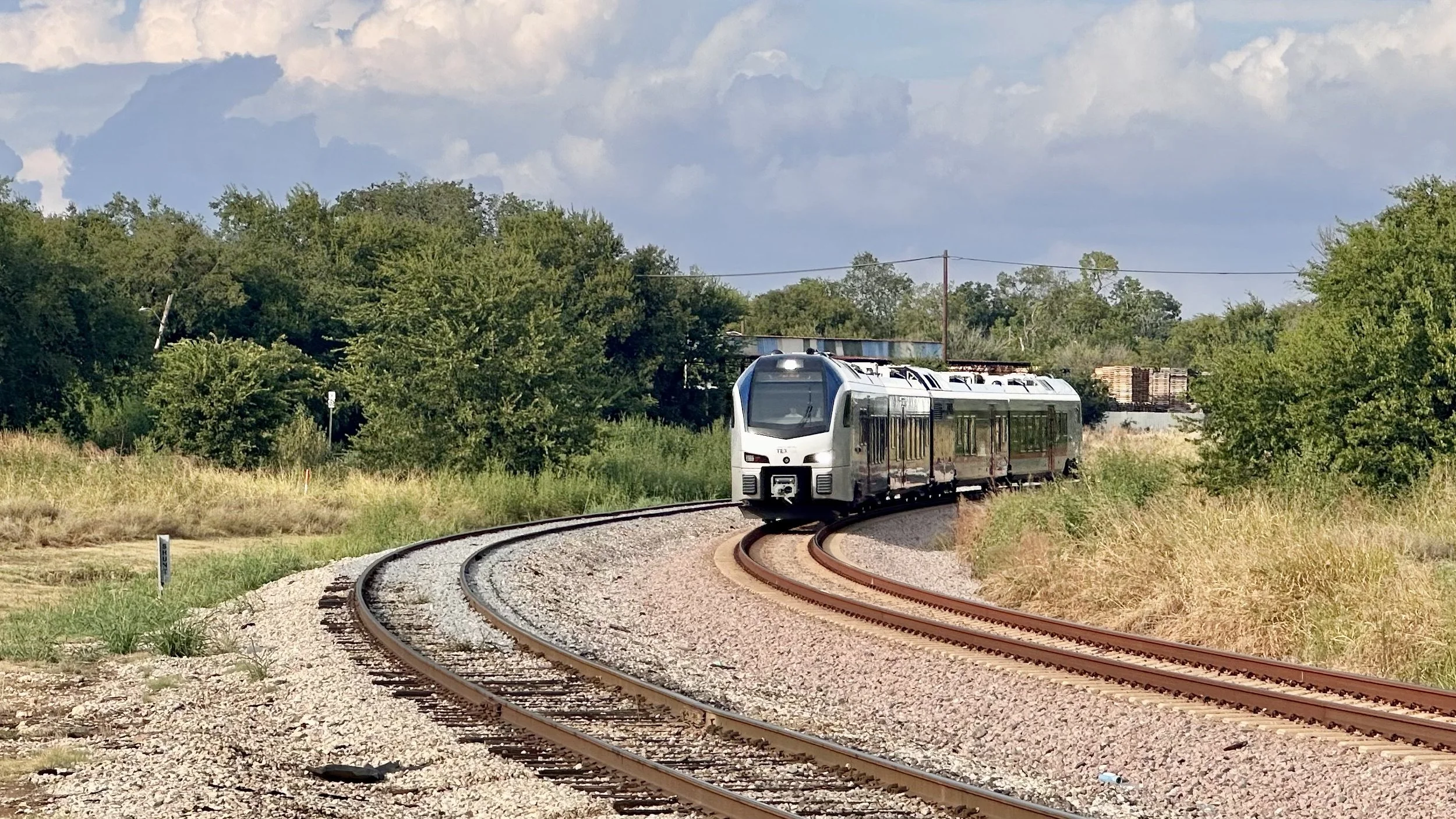
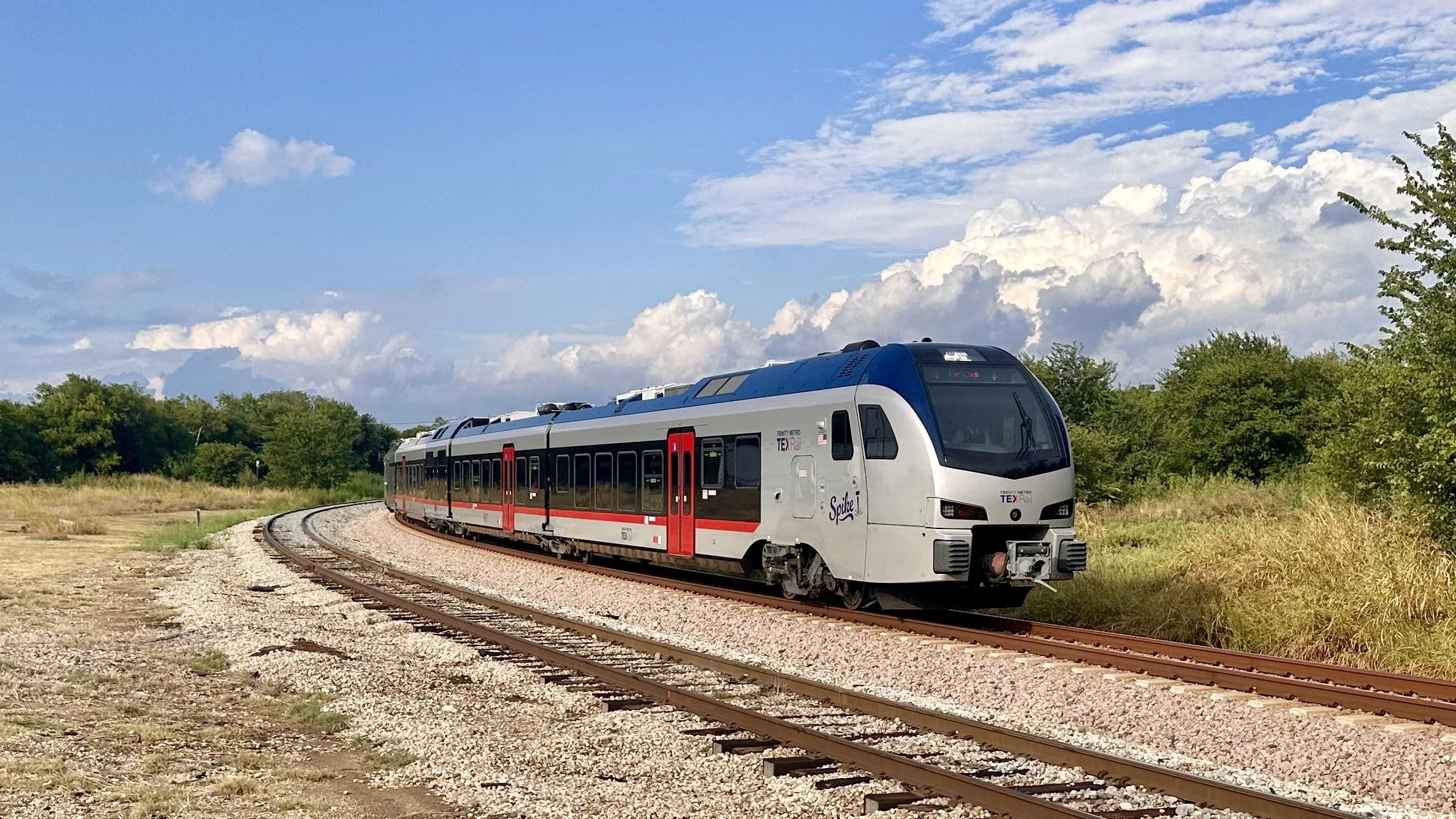
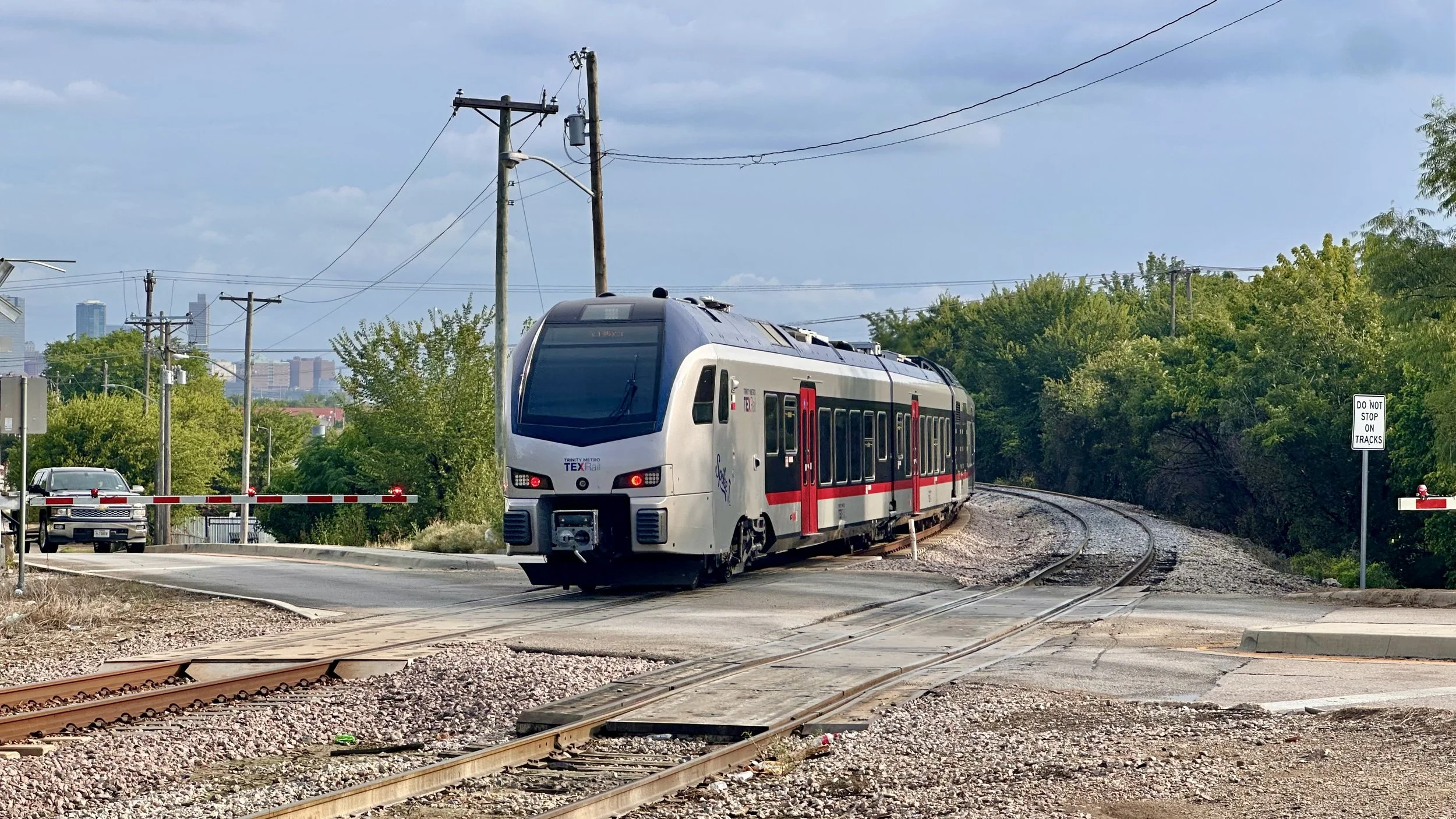
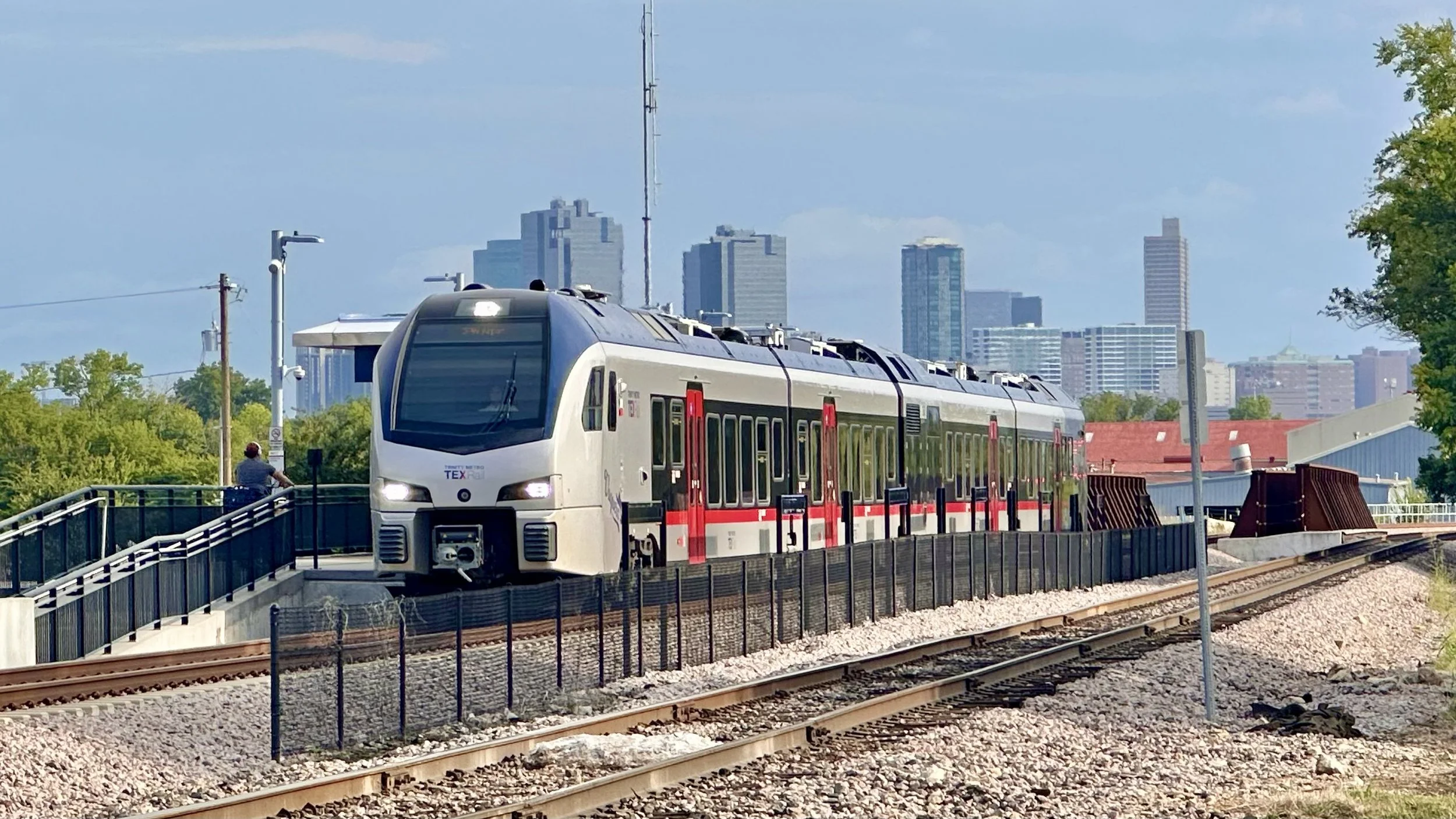
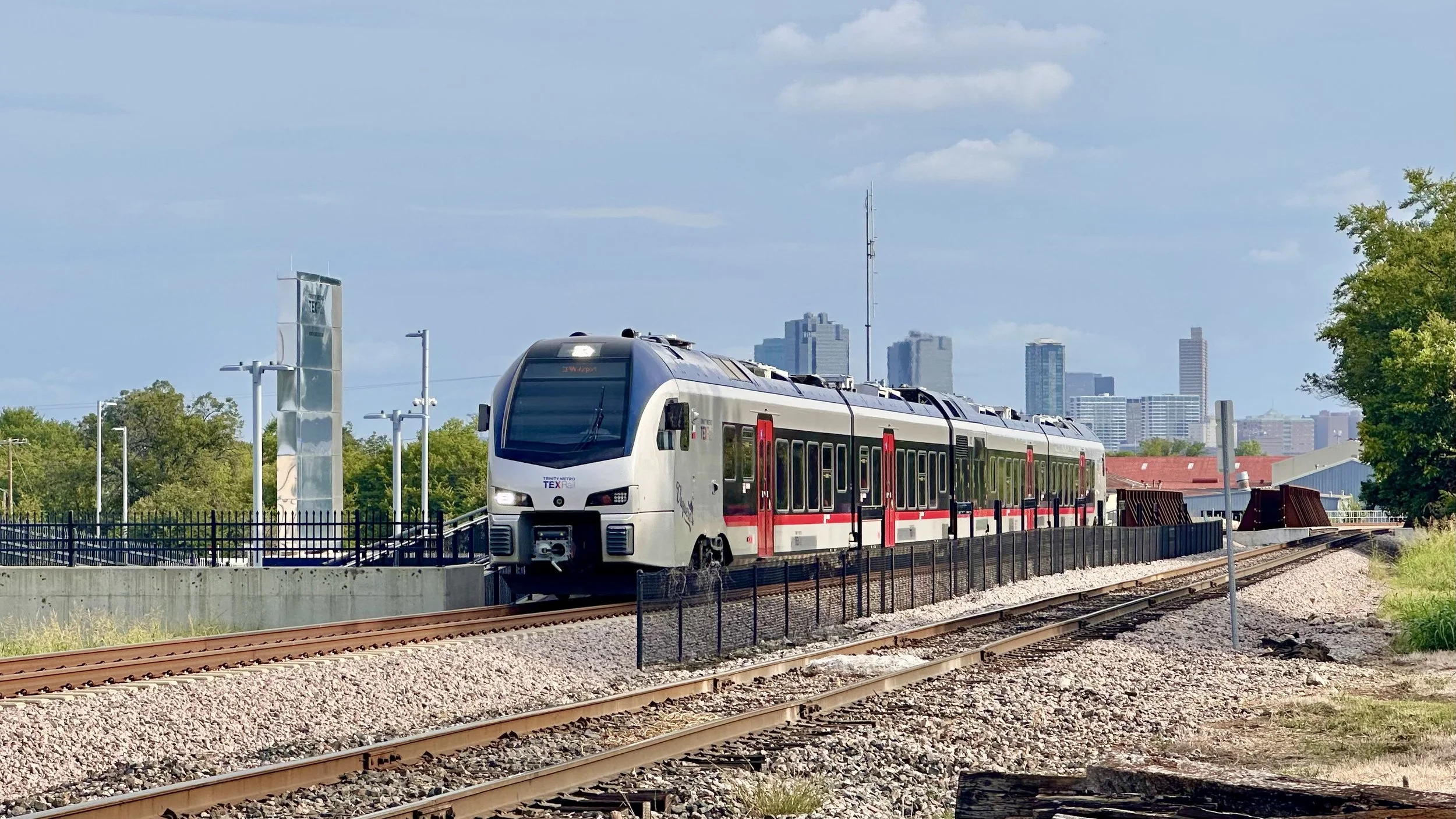
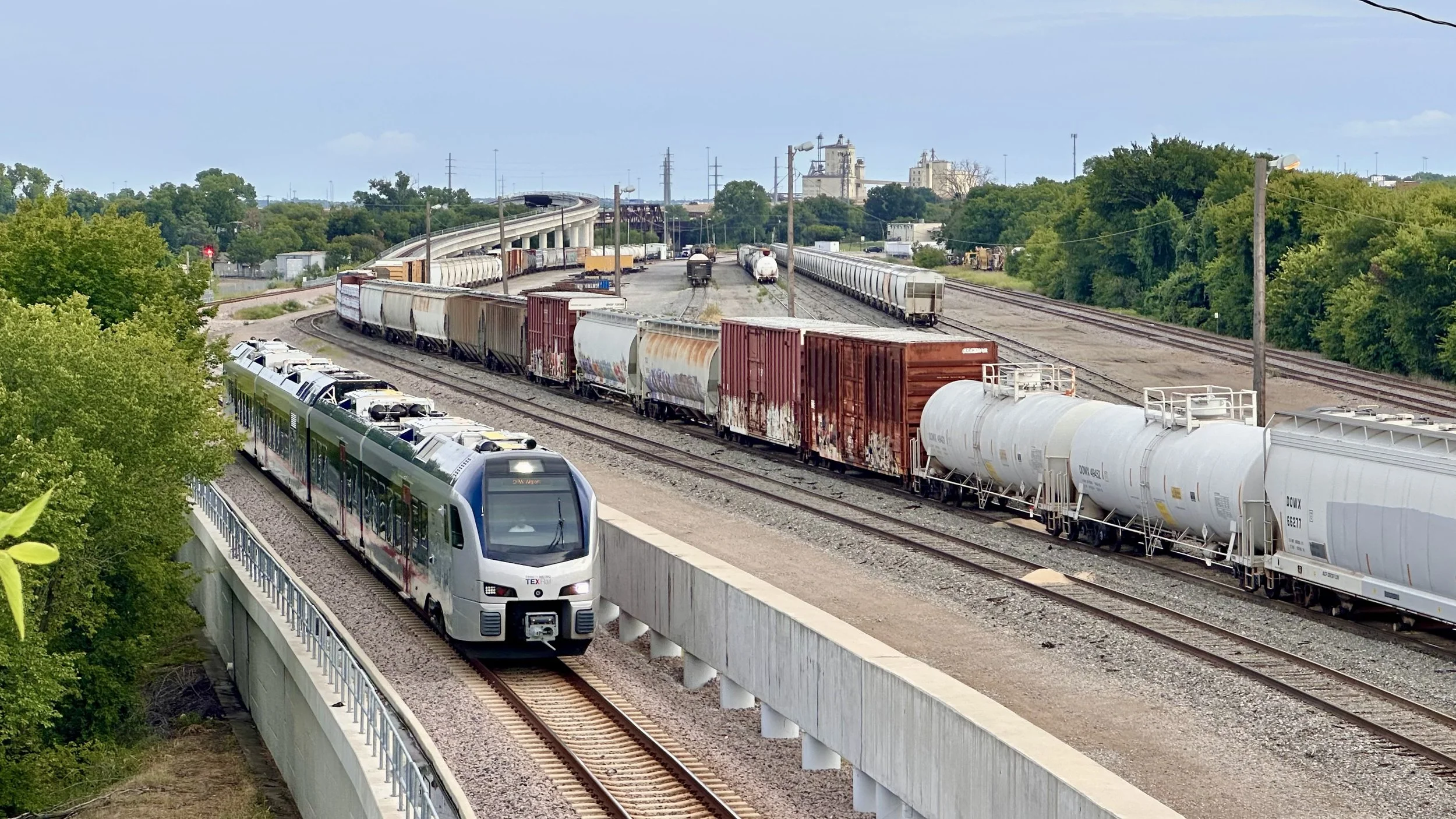
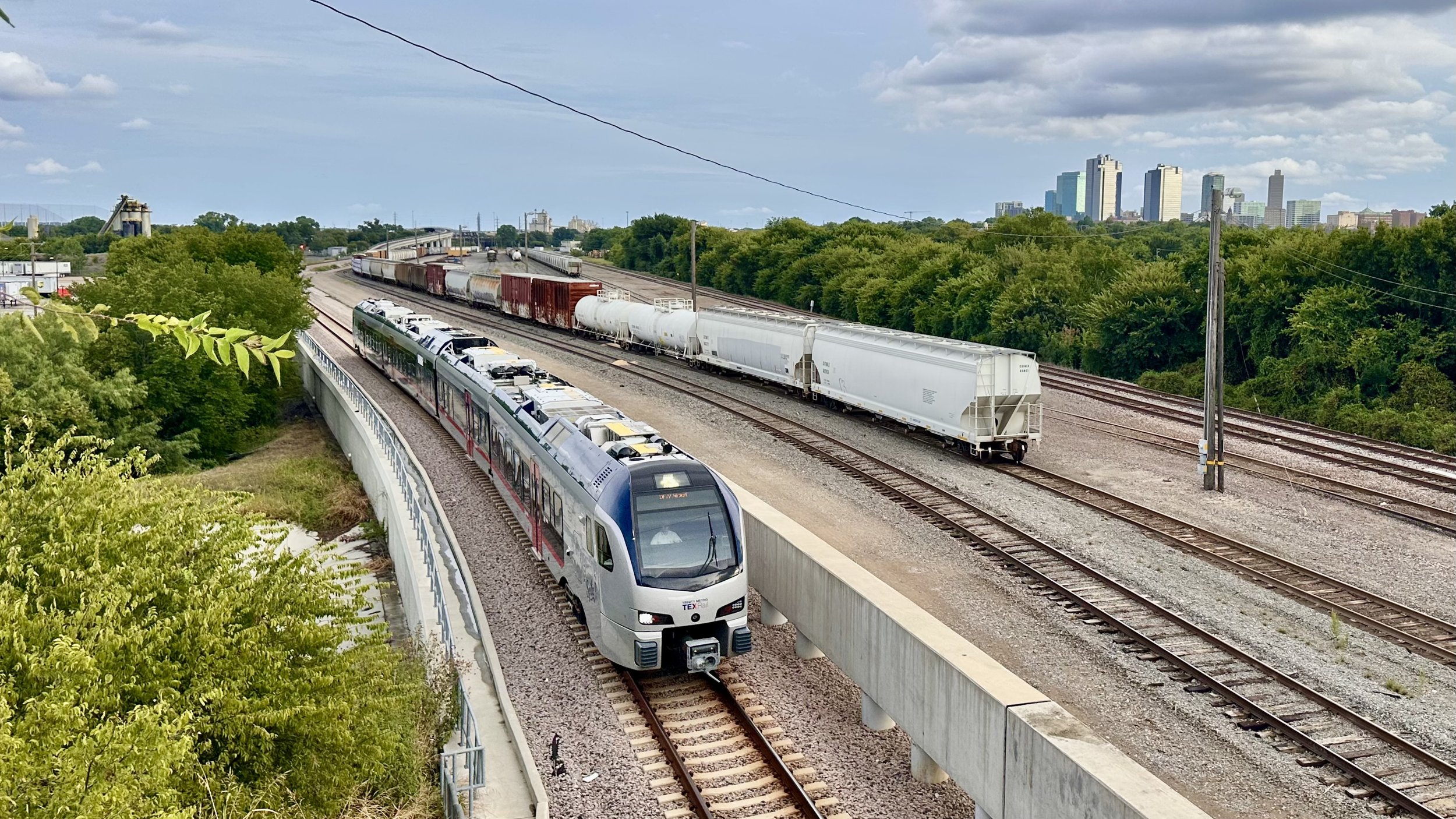
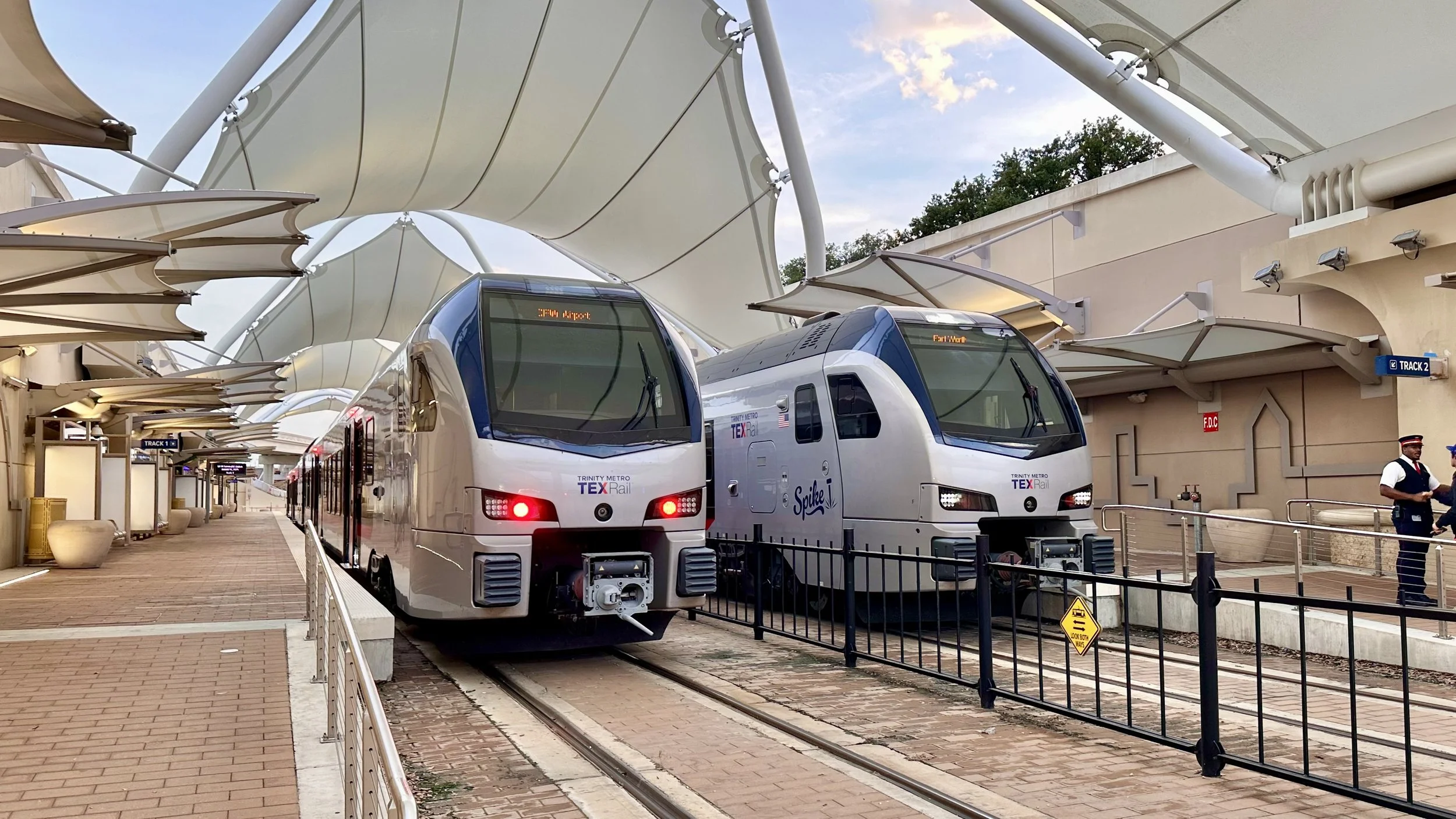
The first US DMU to use Stadler FLIRTs opened in 2019. Running between DFW Airport and offering a walking connection with the DART Orange Line to Dallas, TEXRail completes the (other) Texas (train) Triangle by connecting to the Trinity Rail Express (TRE) in Fort Worth, the commuter rail between Downtowns Fort Worth and Dallas (I’d call it regional rail, but for its utterly shameful lack of service on Sunday). Similarly to other DMUs, TEXRail is paralleled most of its length by bicycle trails, allowing for last-mile connections by bike. The line’s largely suburban character is punctuated by occasional islands of walkable density, particularly at Grapevine and Iron Horse Stations. TEXRail’s frequencies are unmatched, with half-hourly service all day every day from 0400 to 1900, then hourly until 0100. Weekends see the exact same service levels as weekdays, and holidays get extra trips, not a reduced schedule.
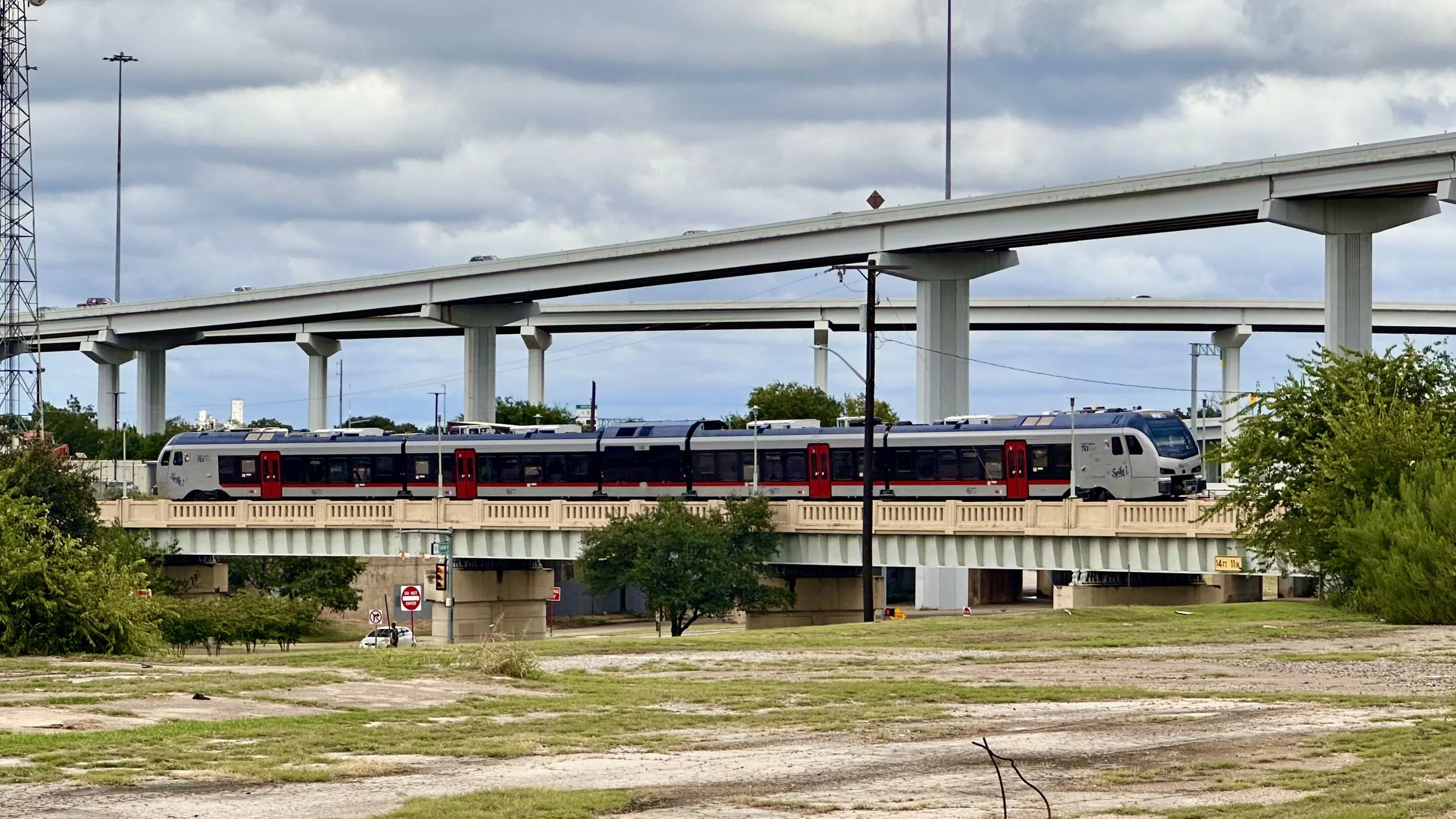
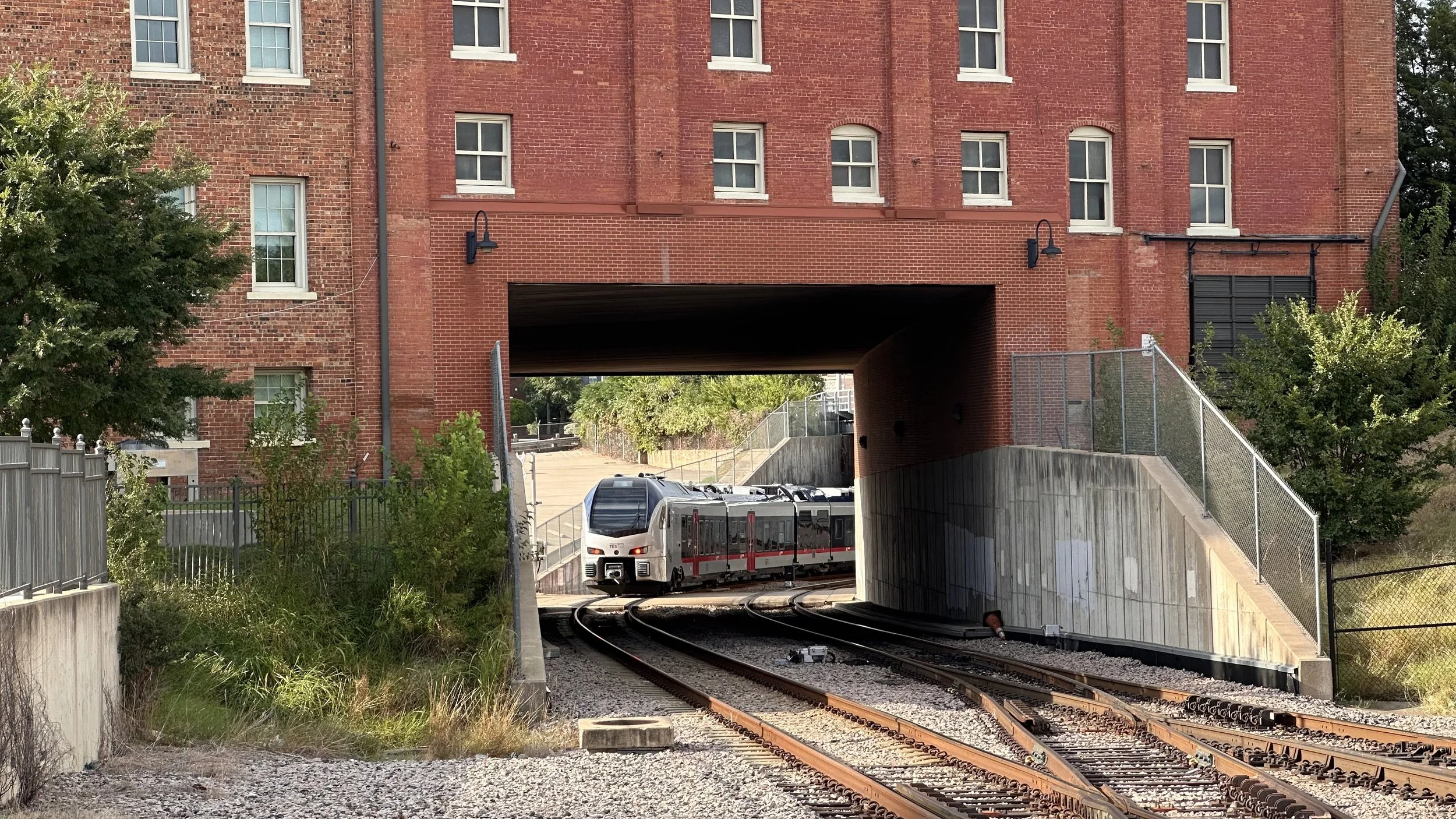
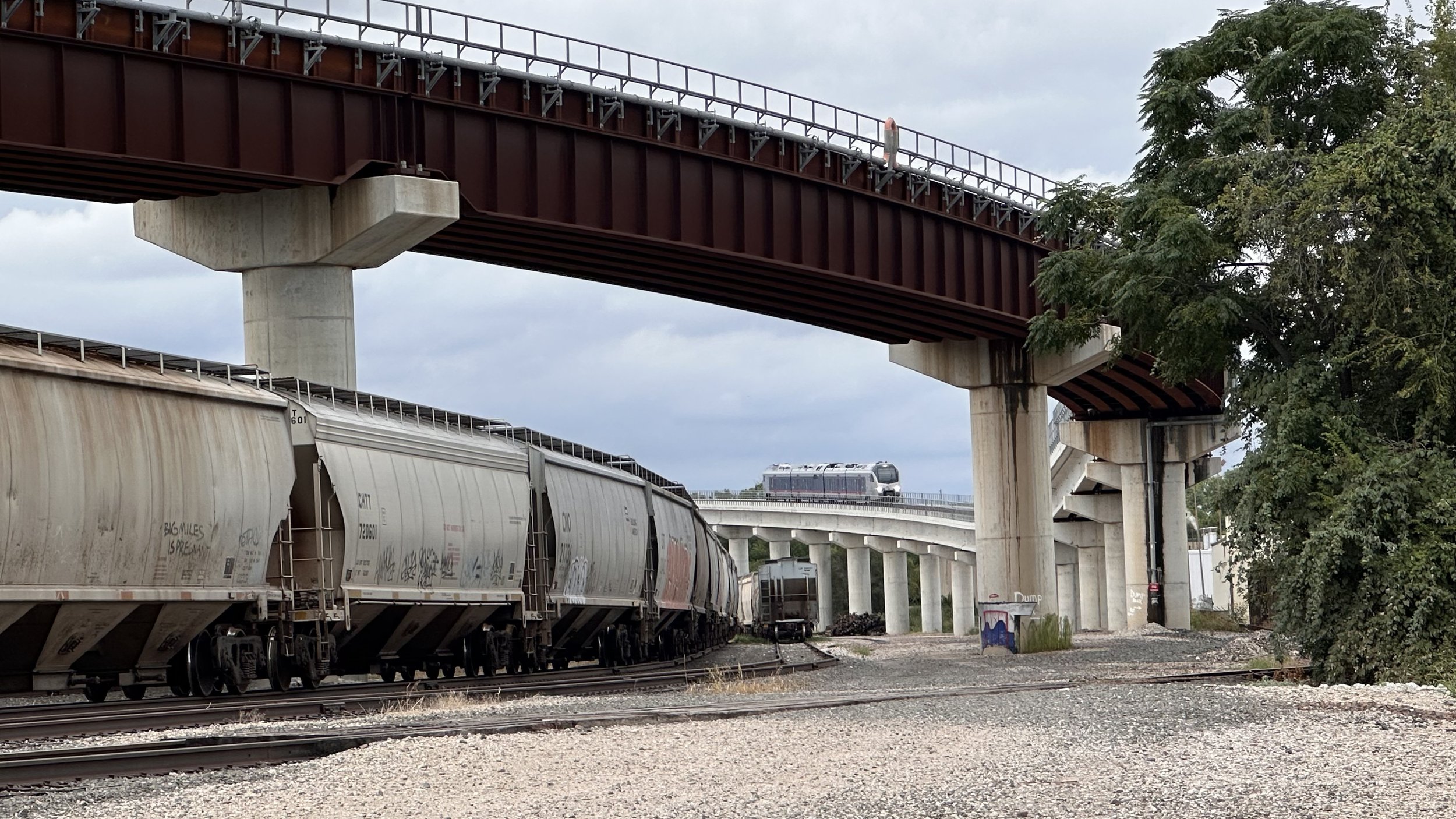
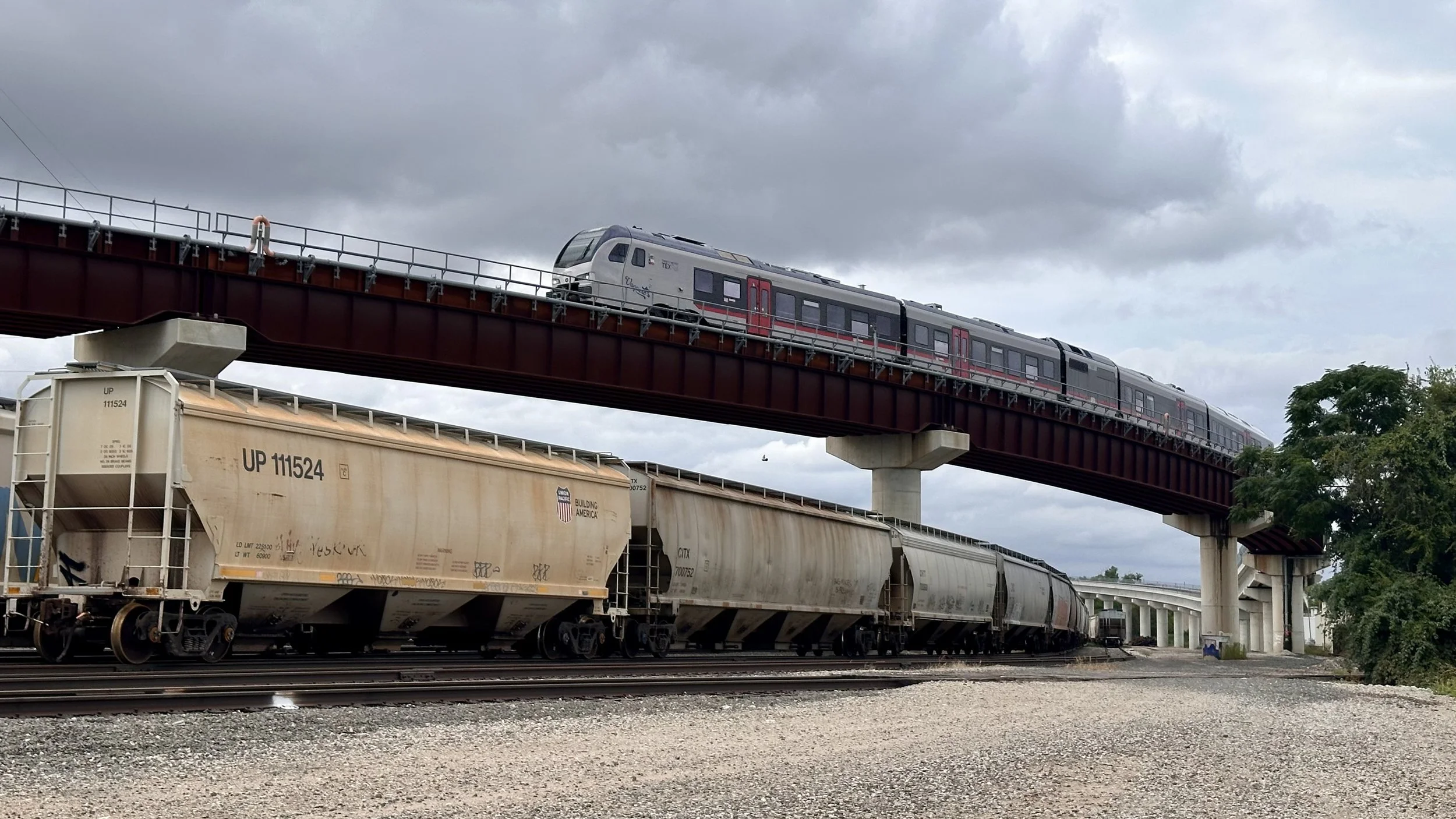
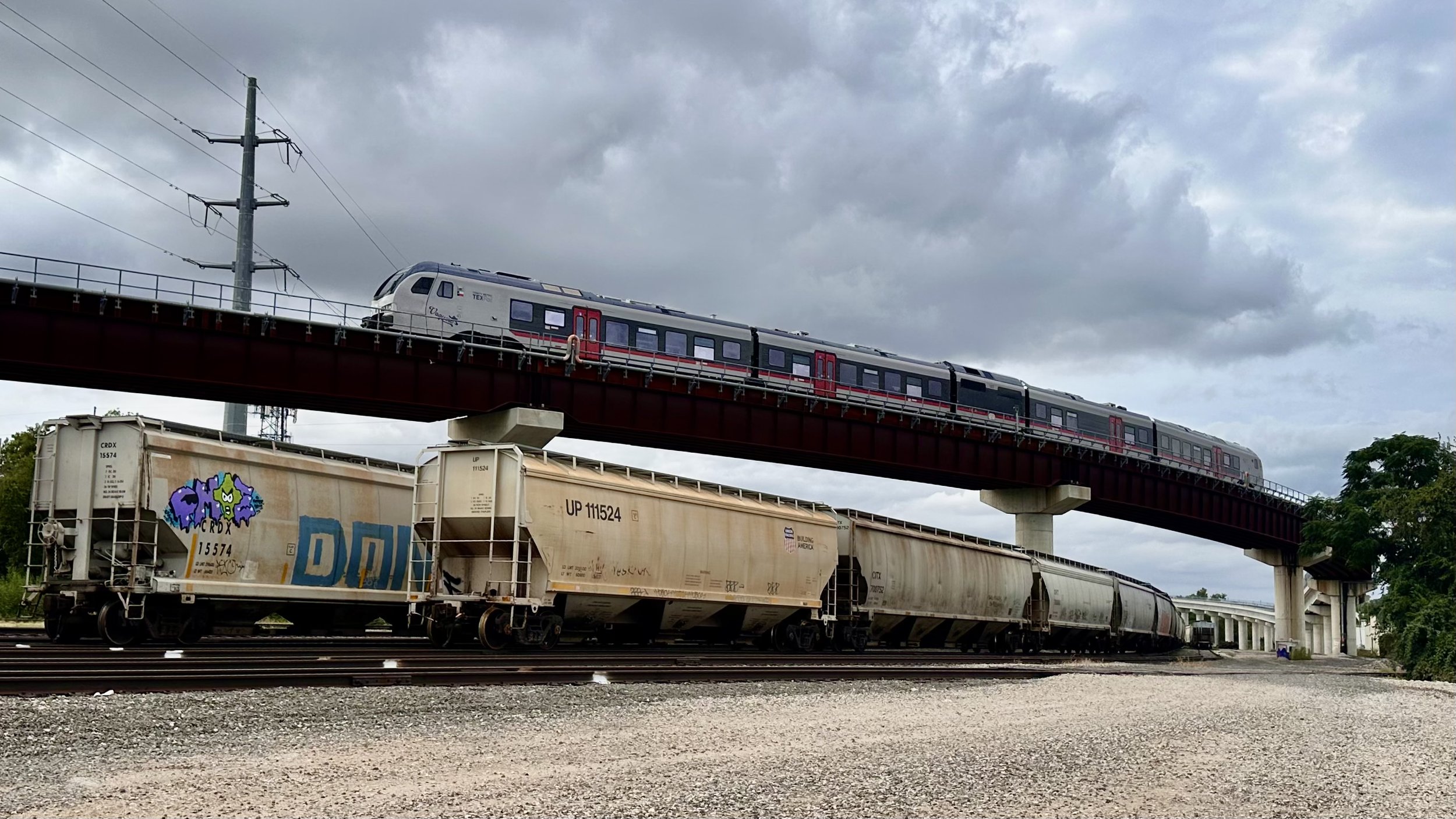
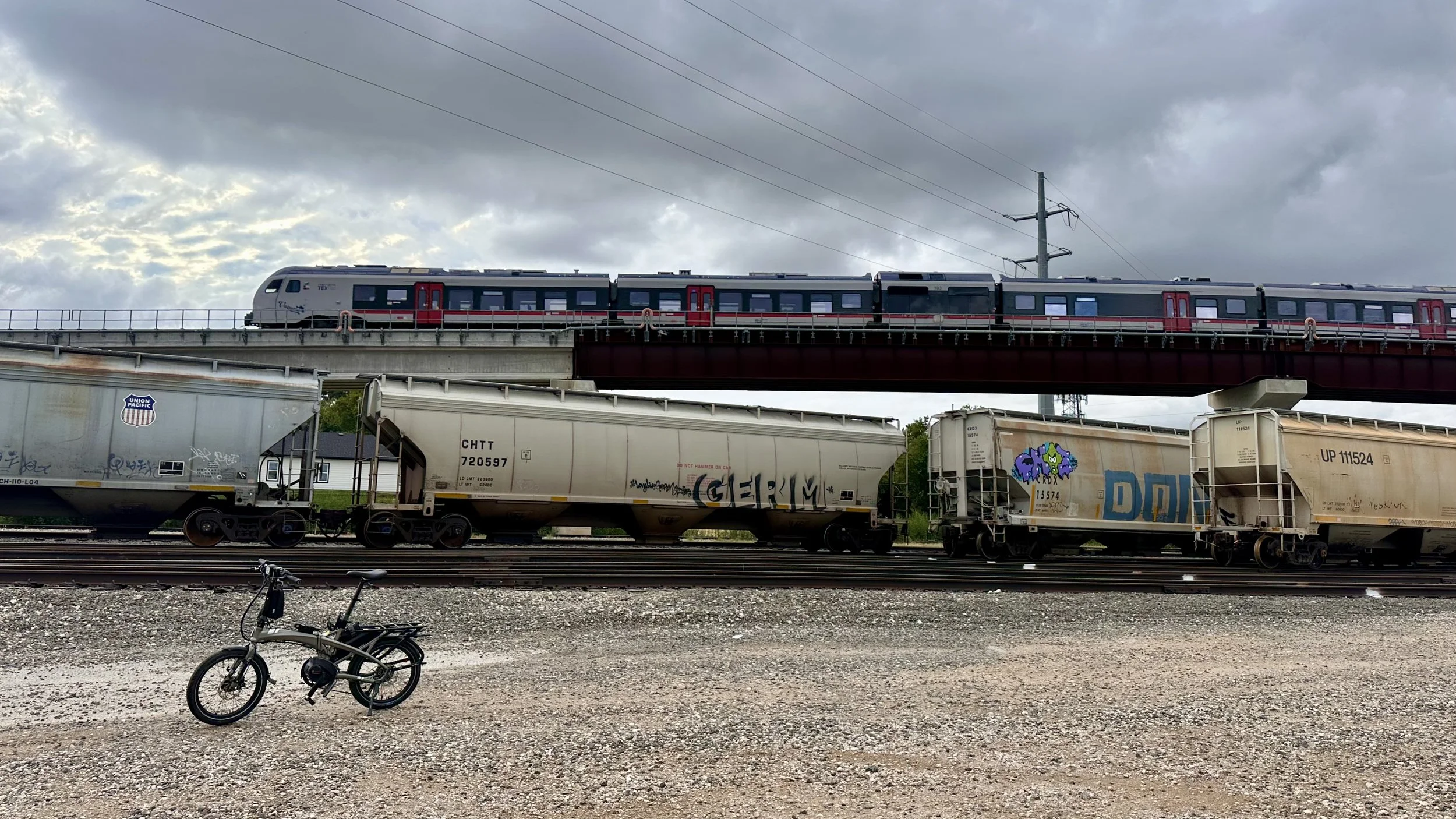
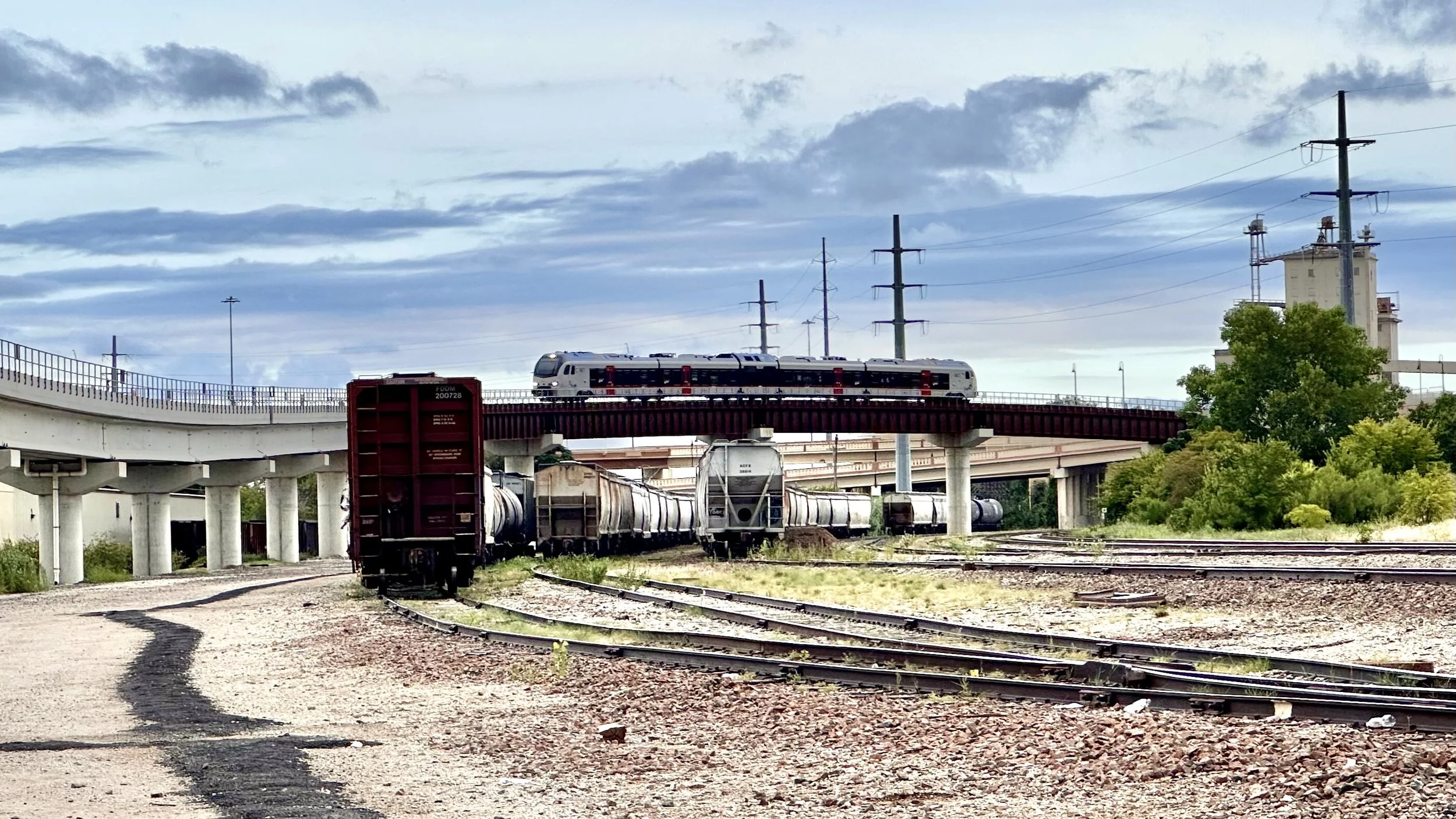
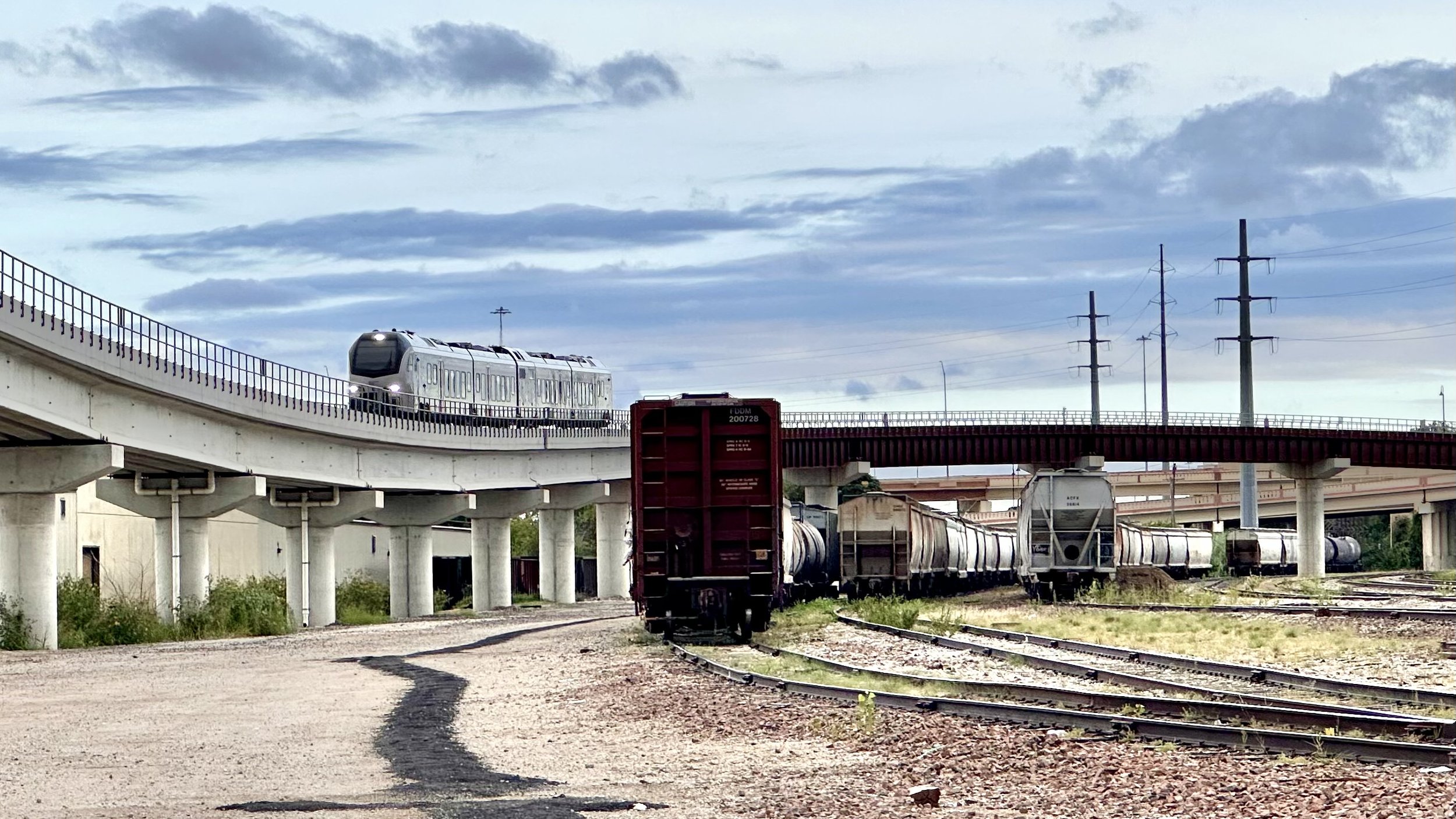
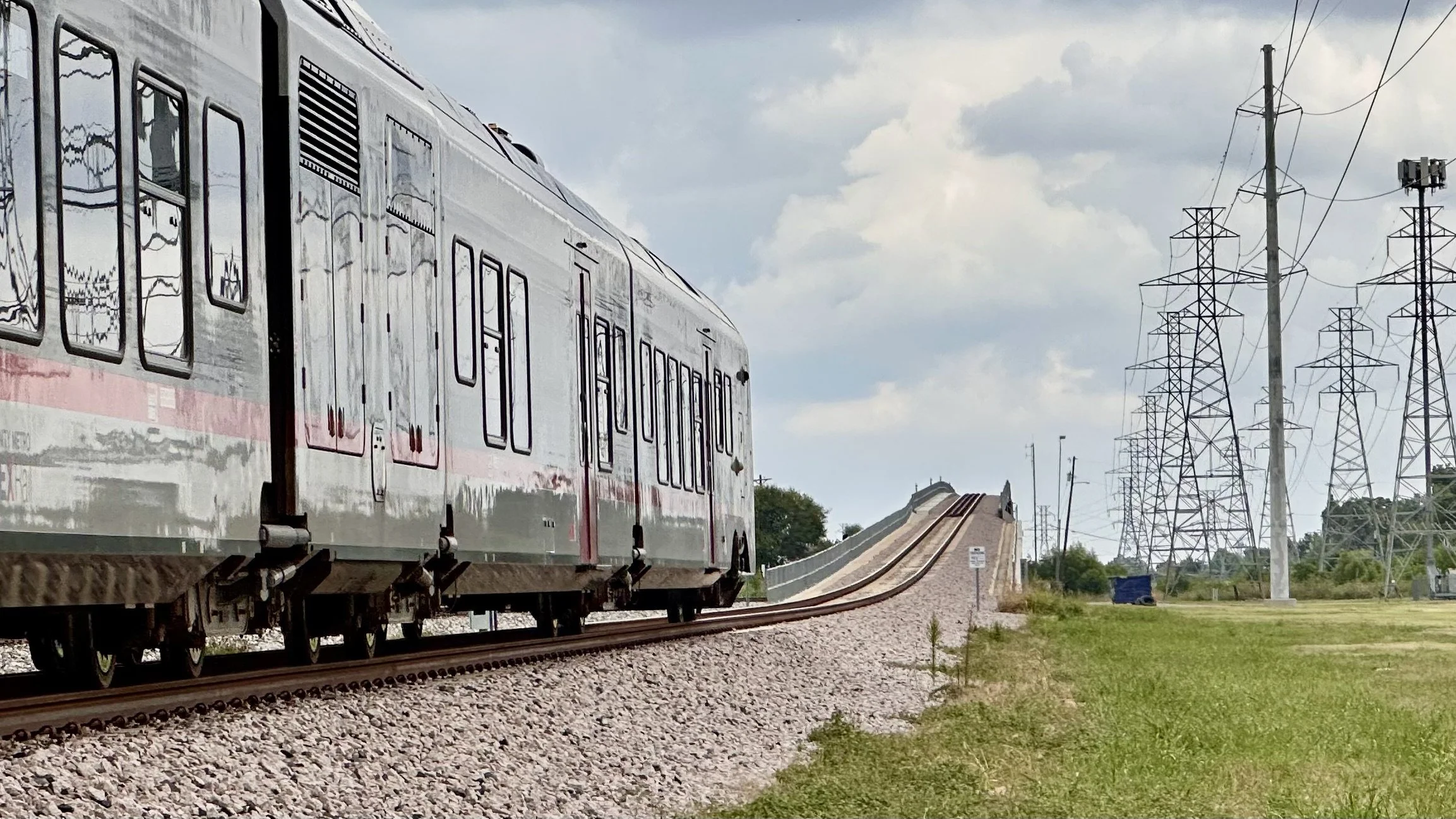
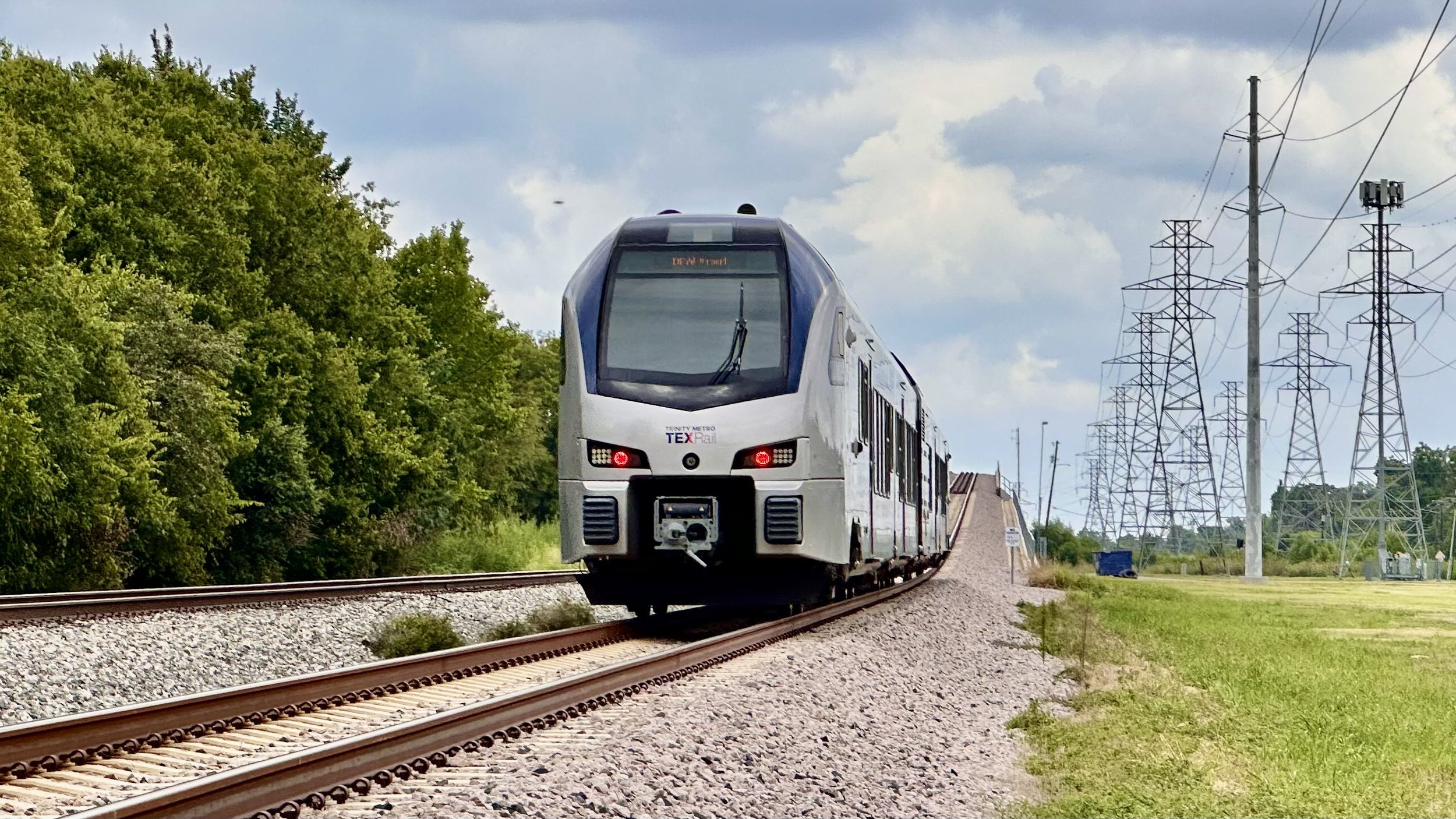
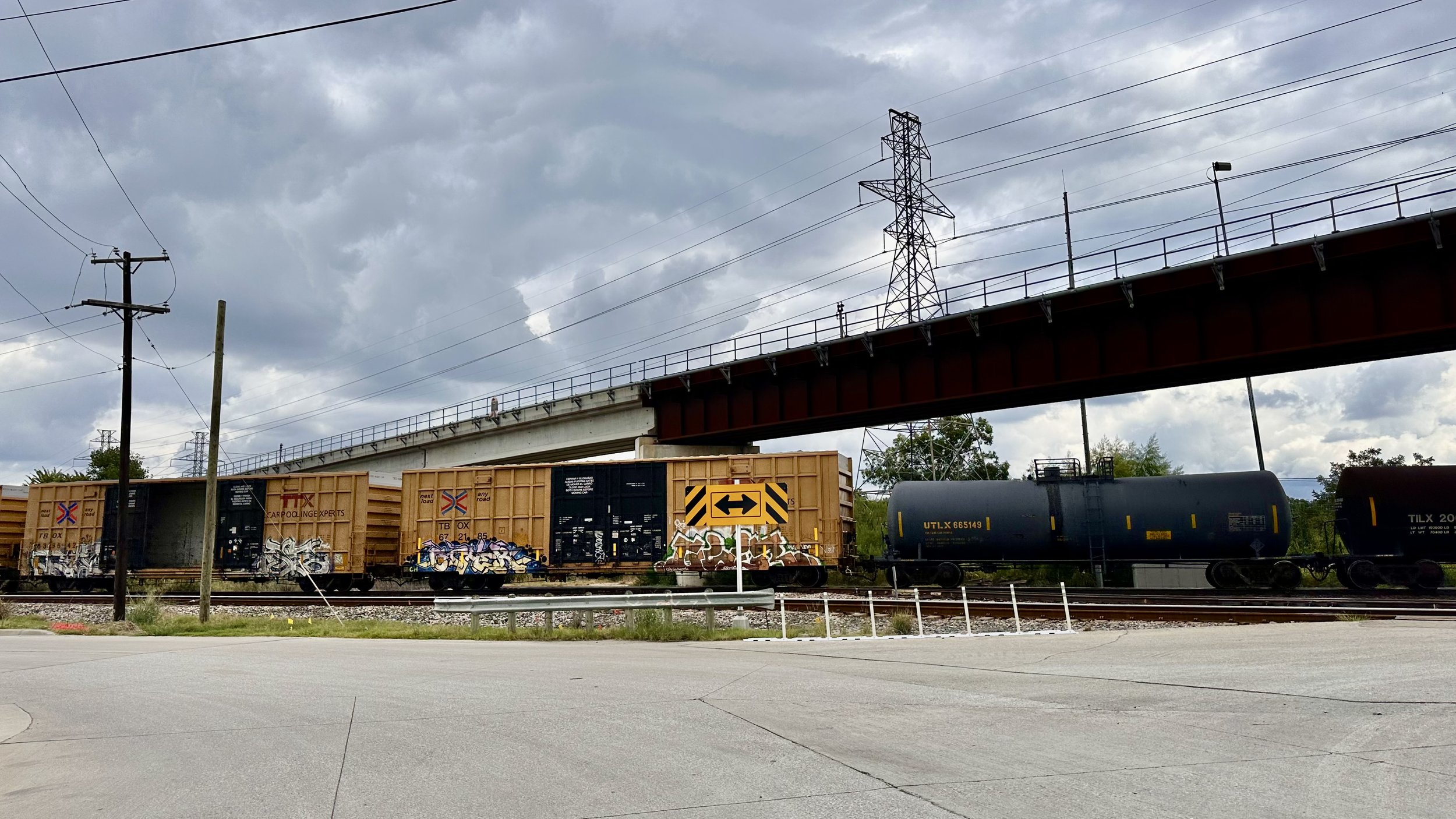
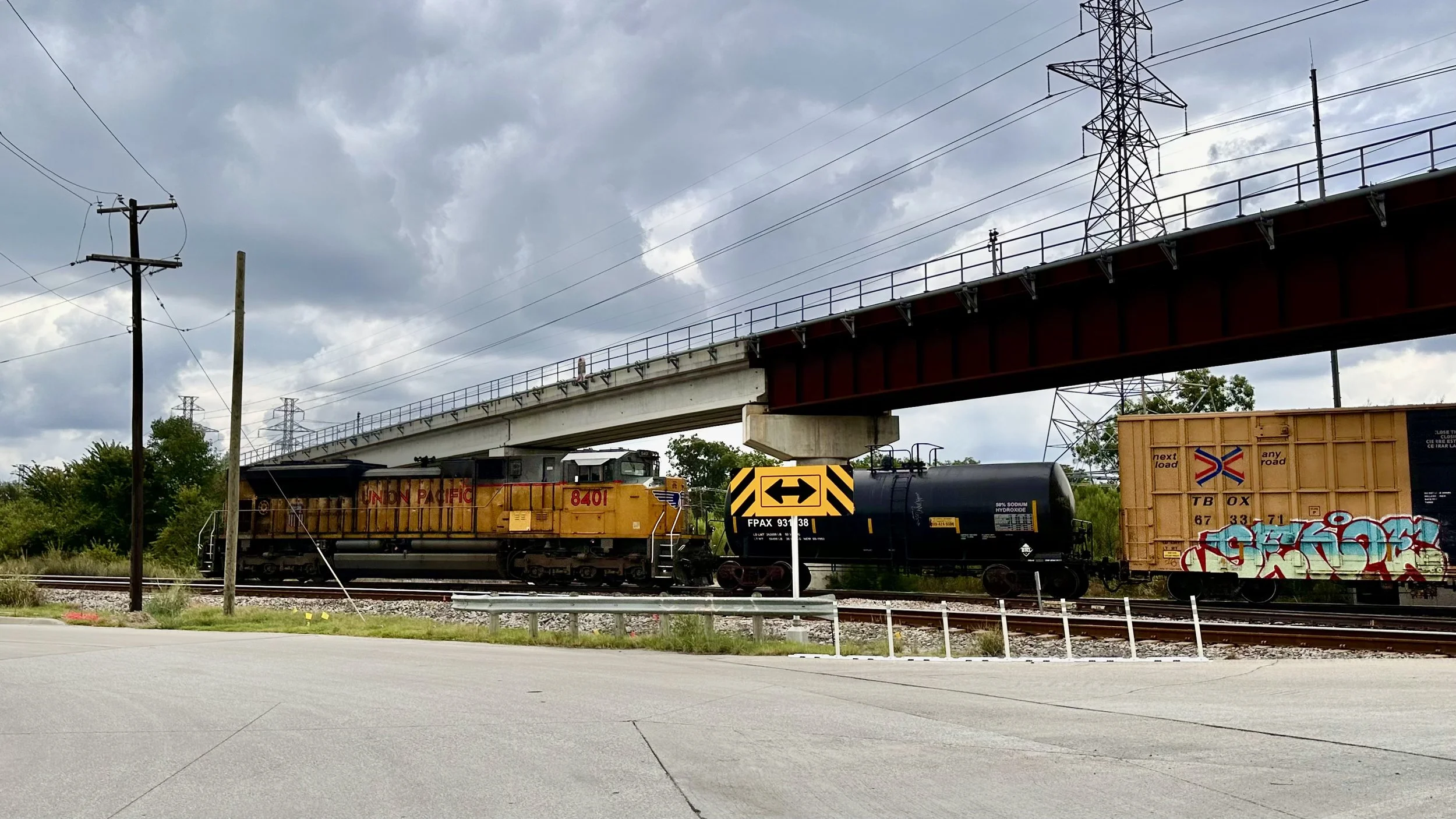
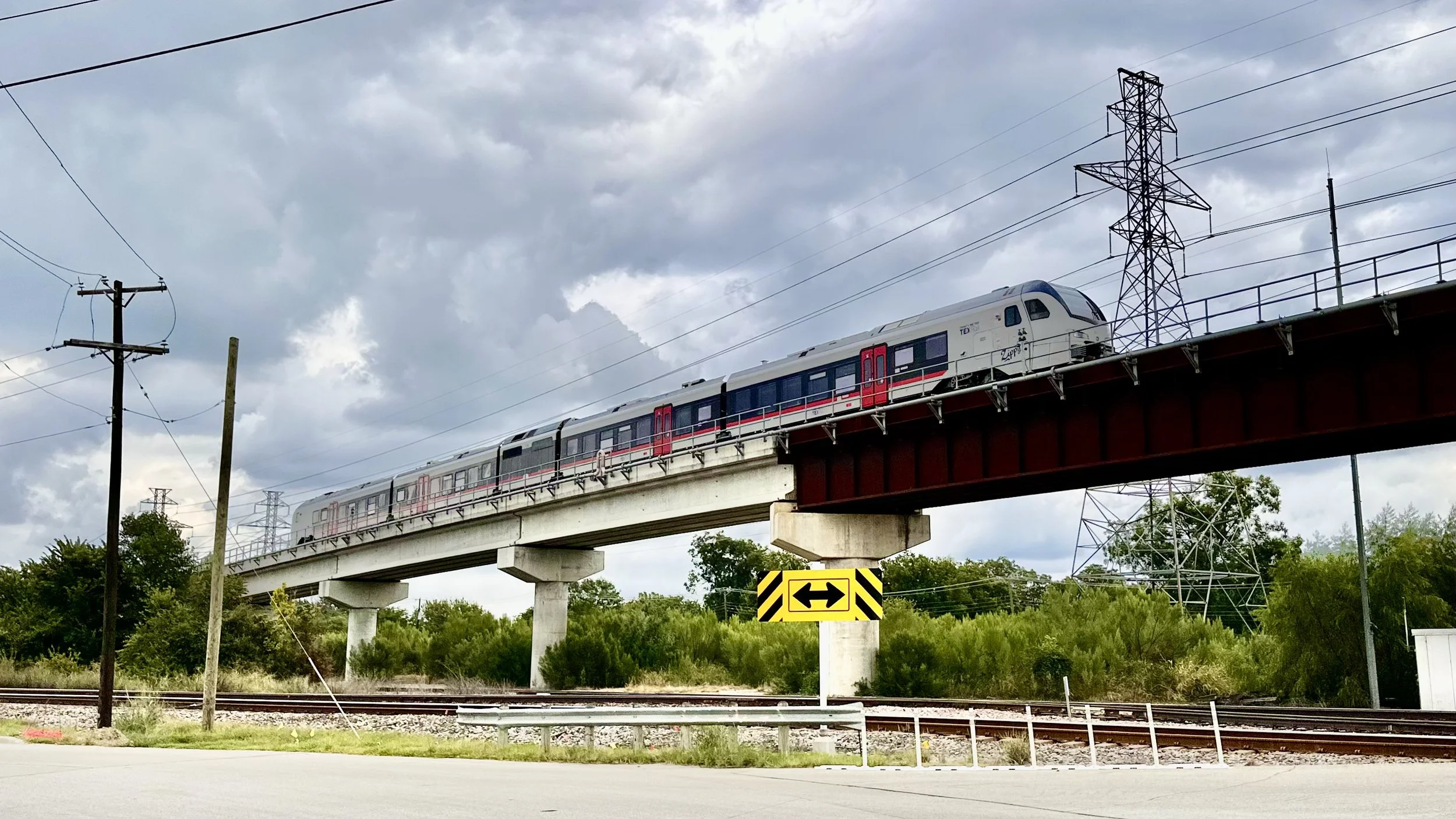
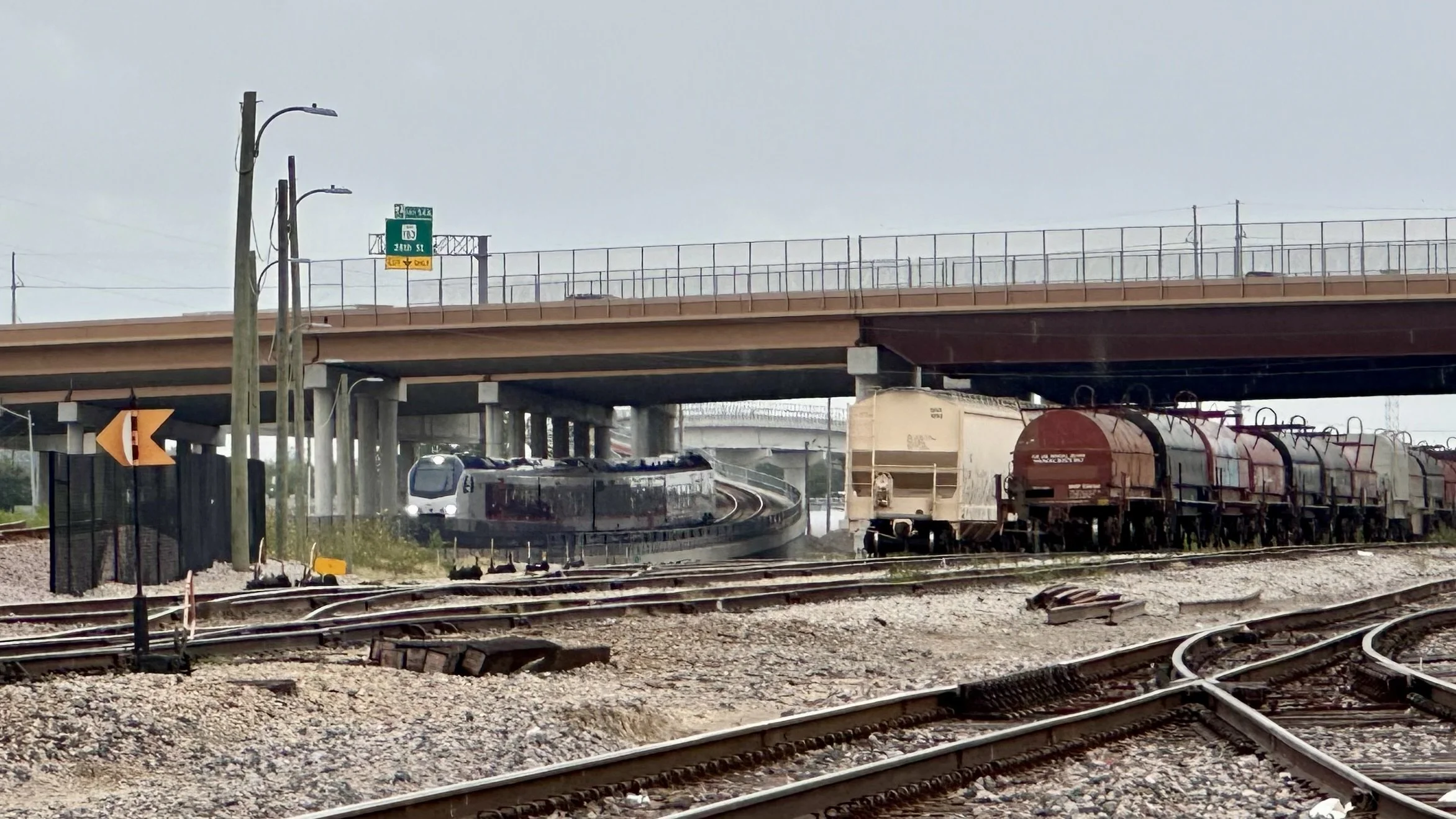
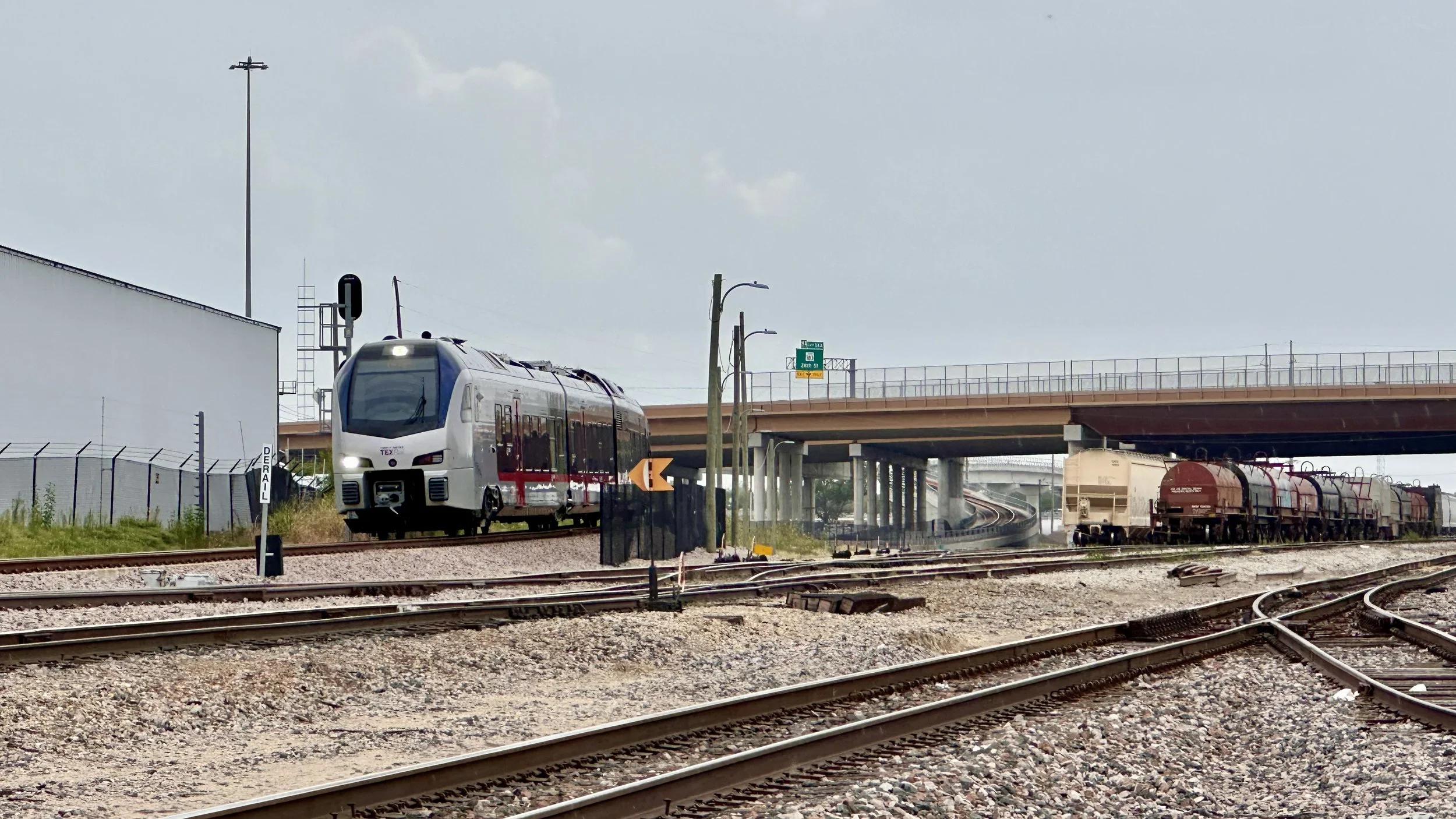
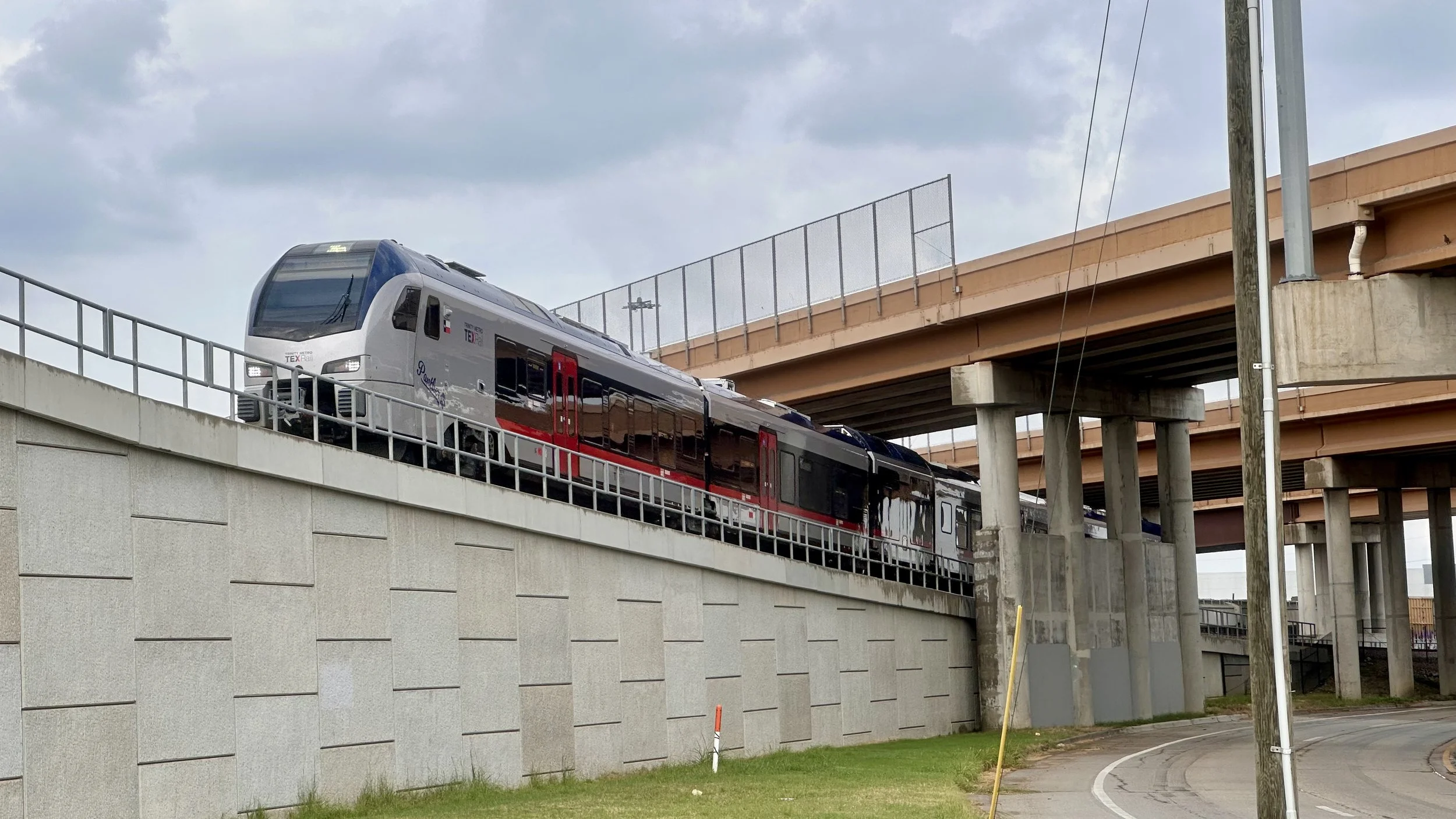
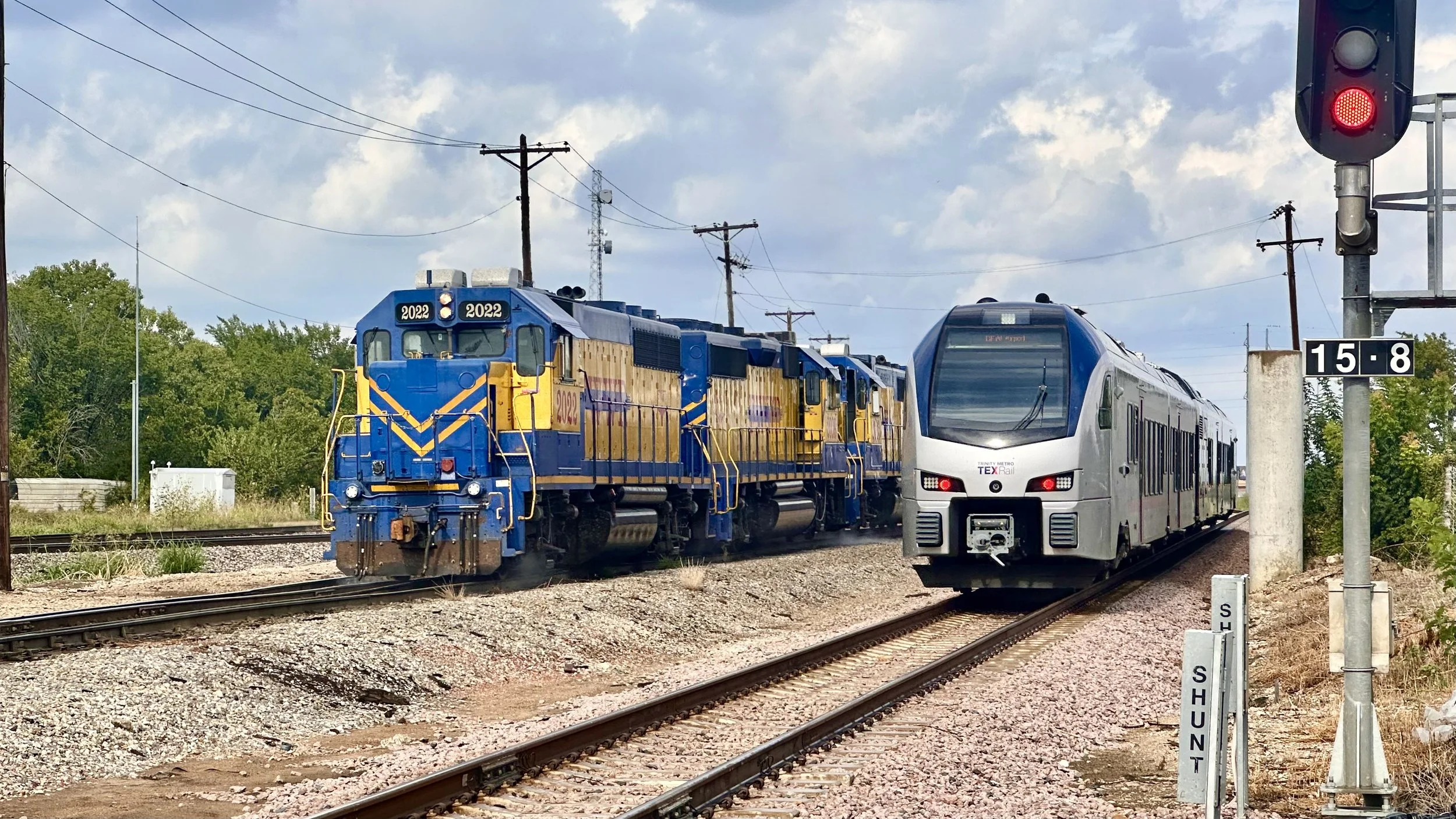
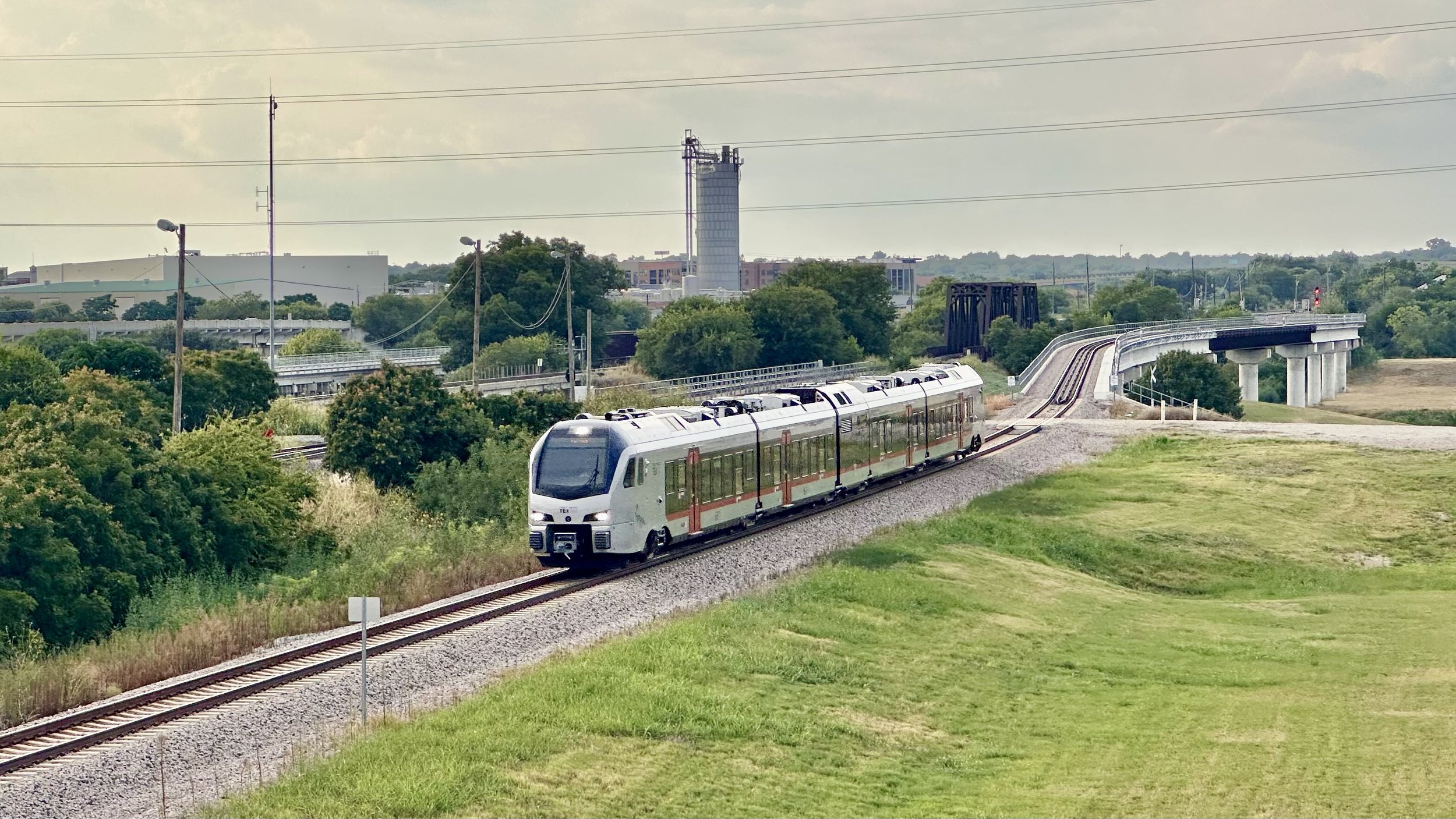
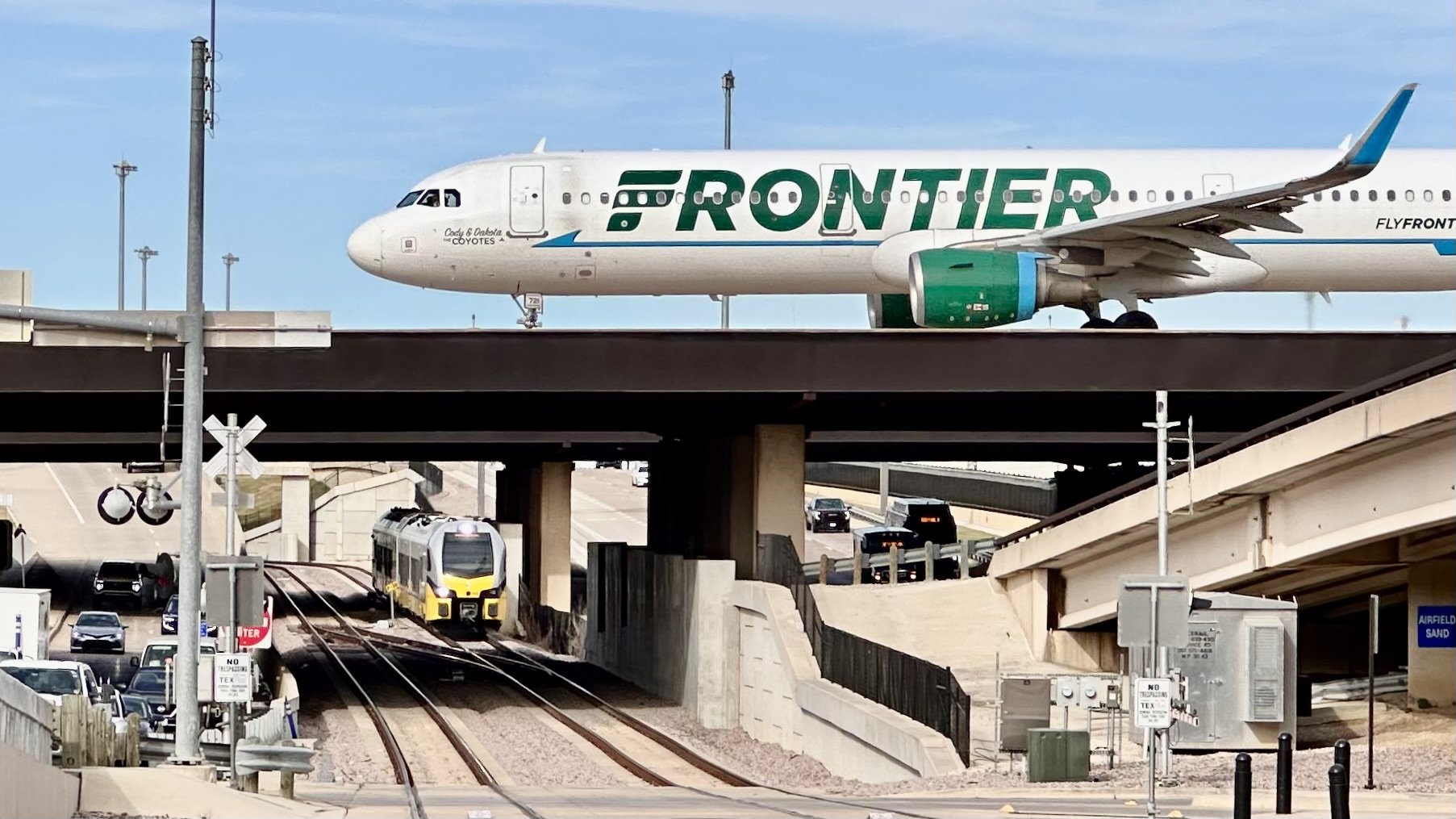
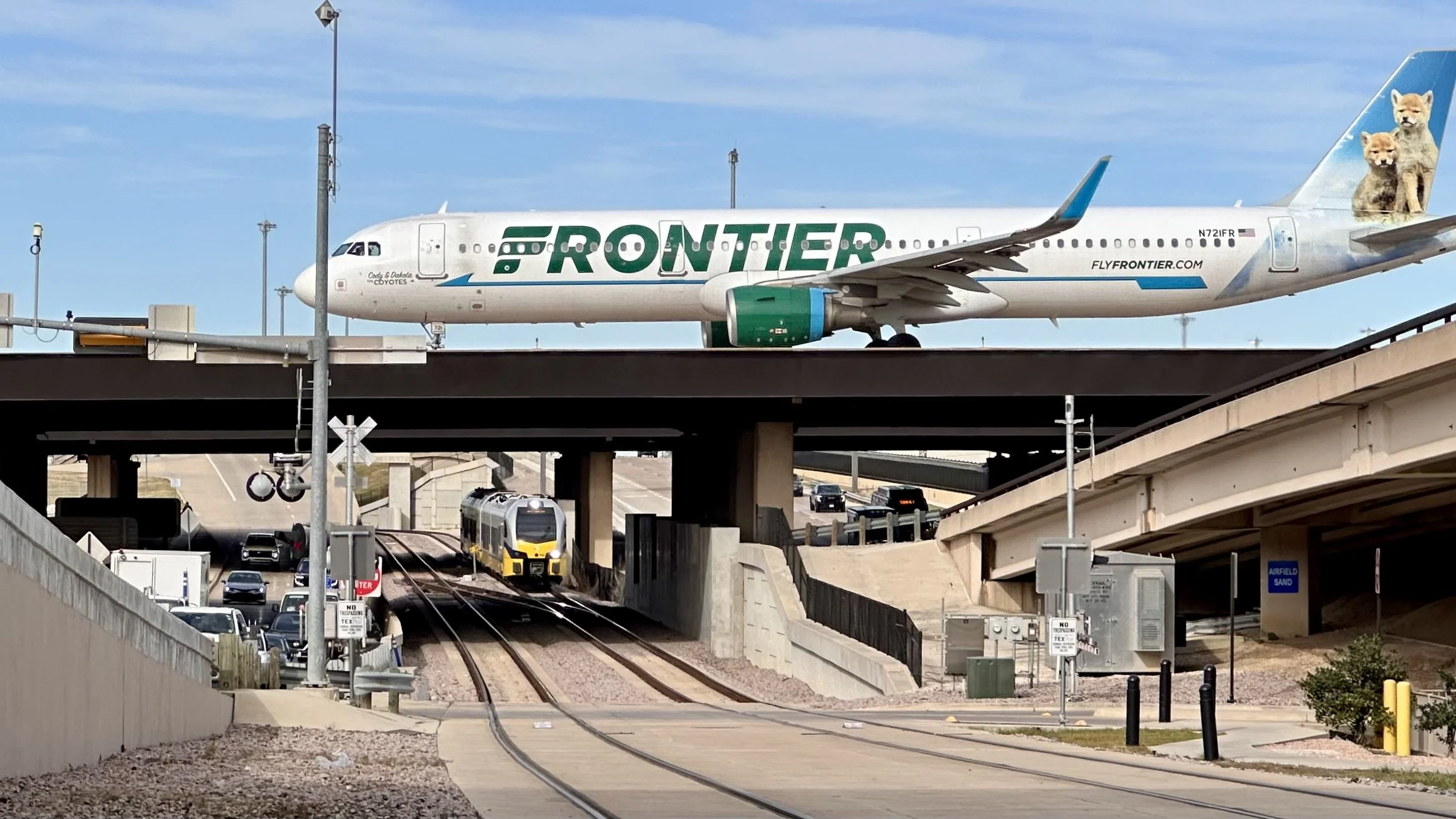
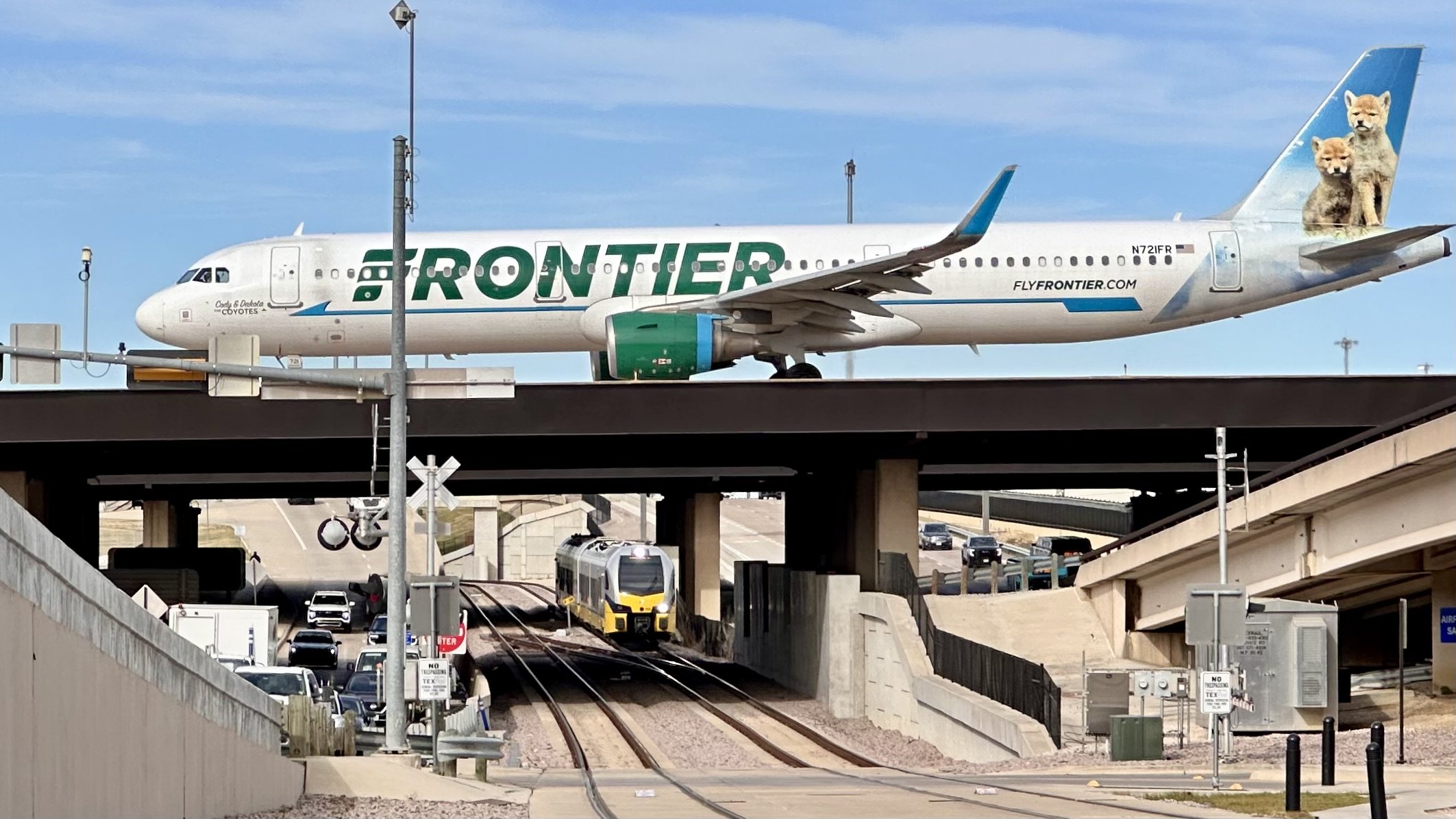
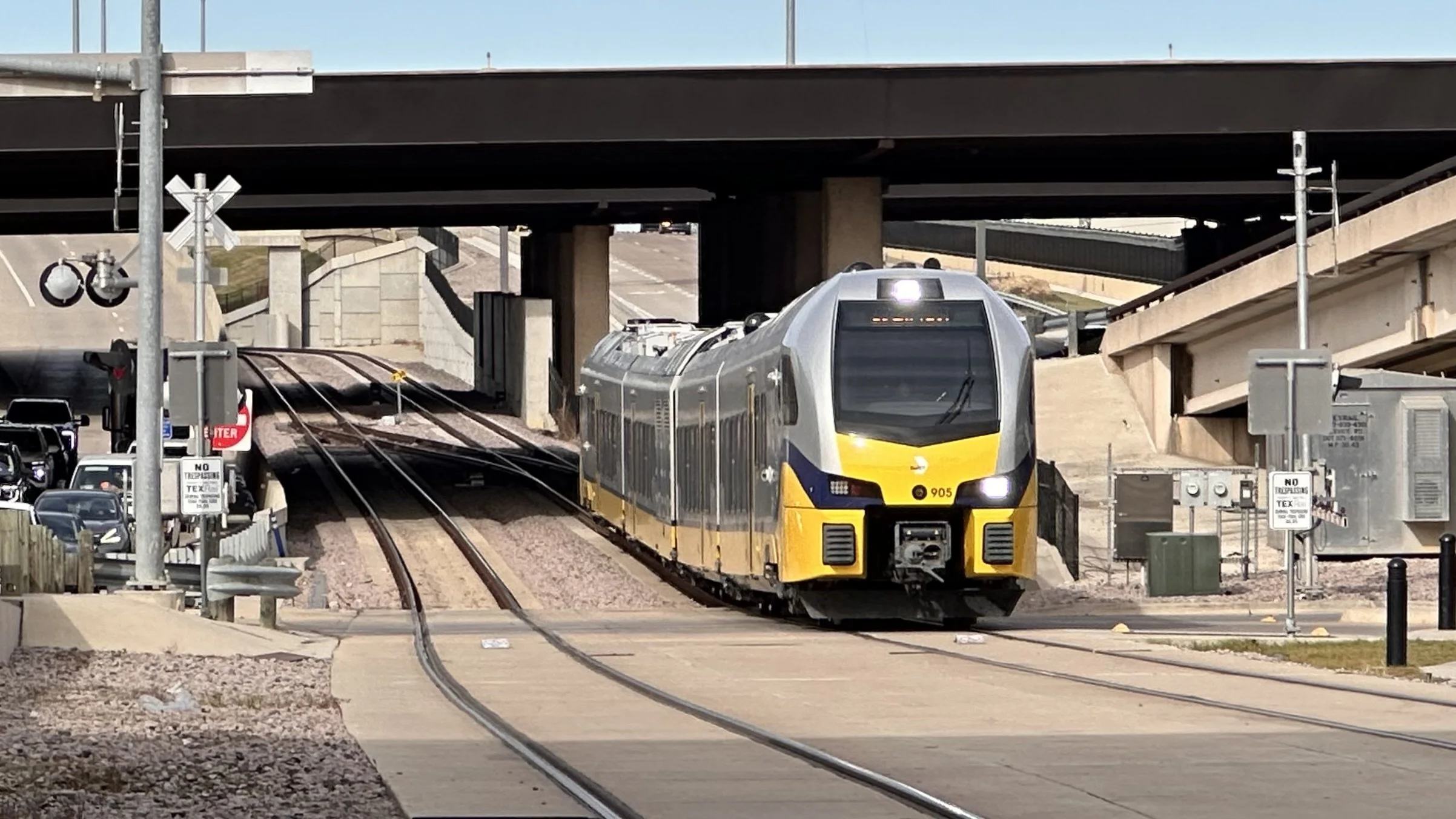
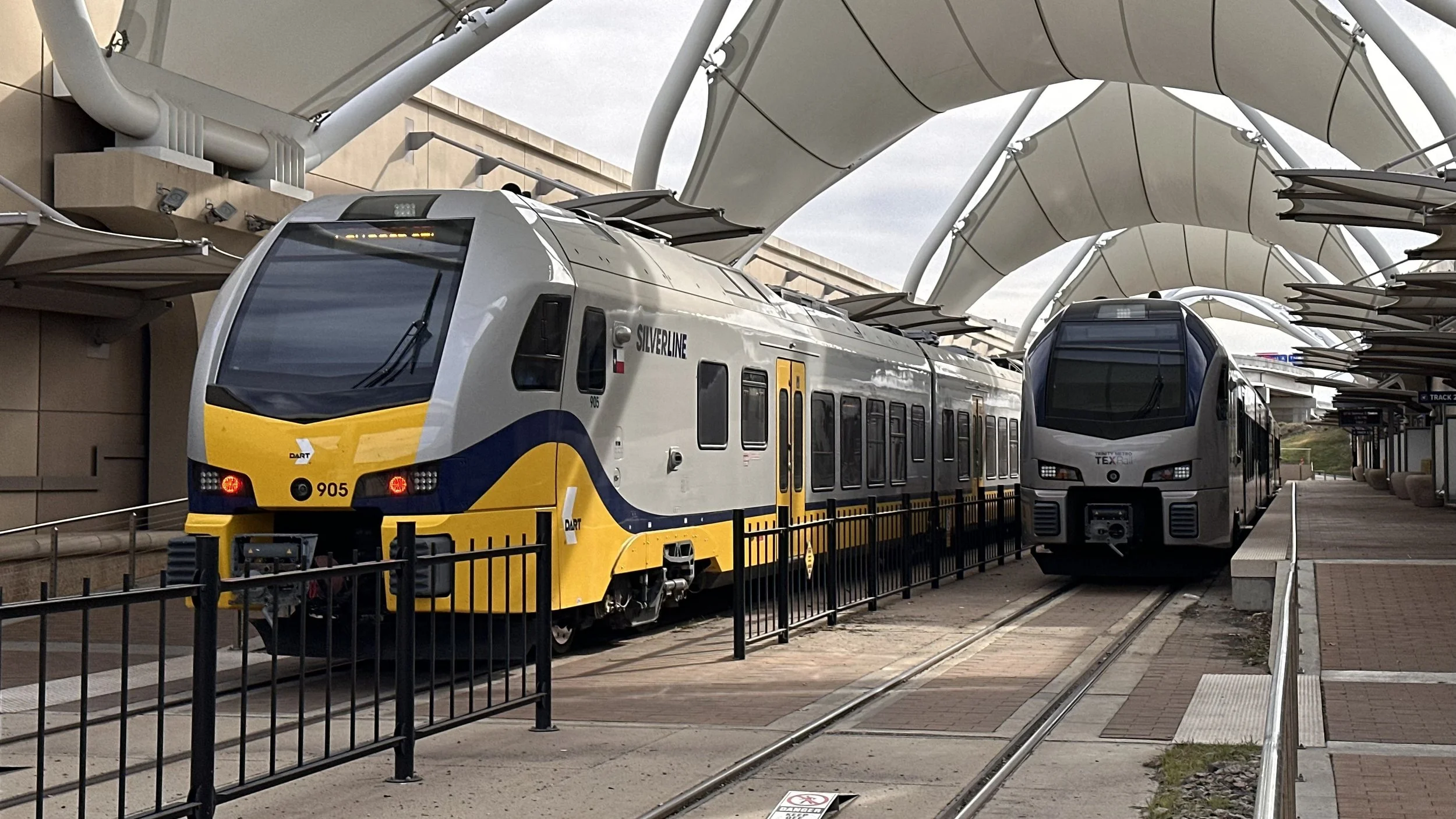
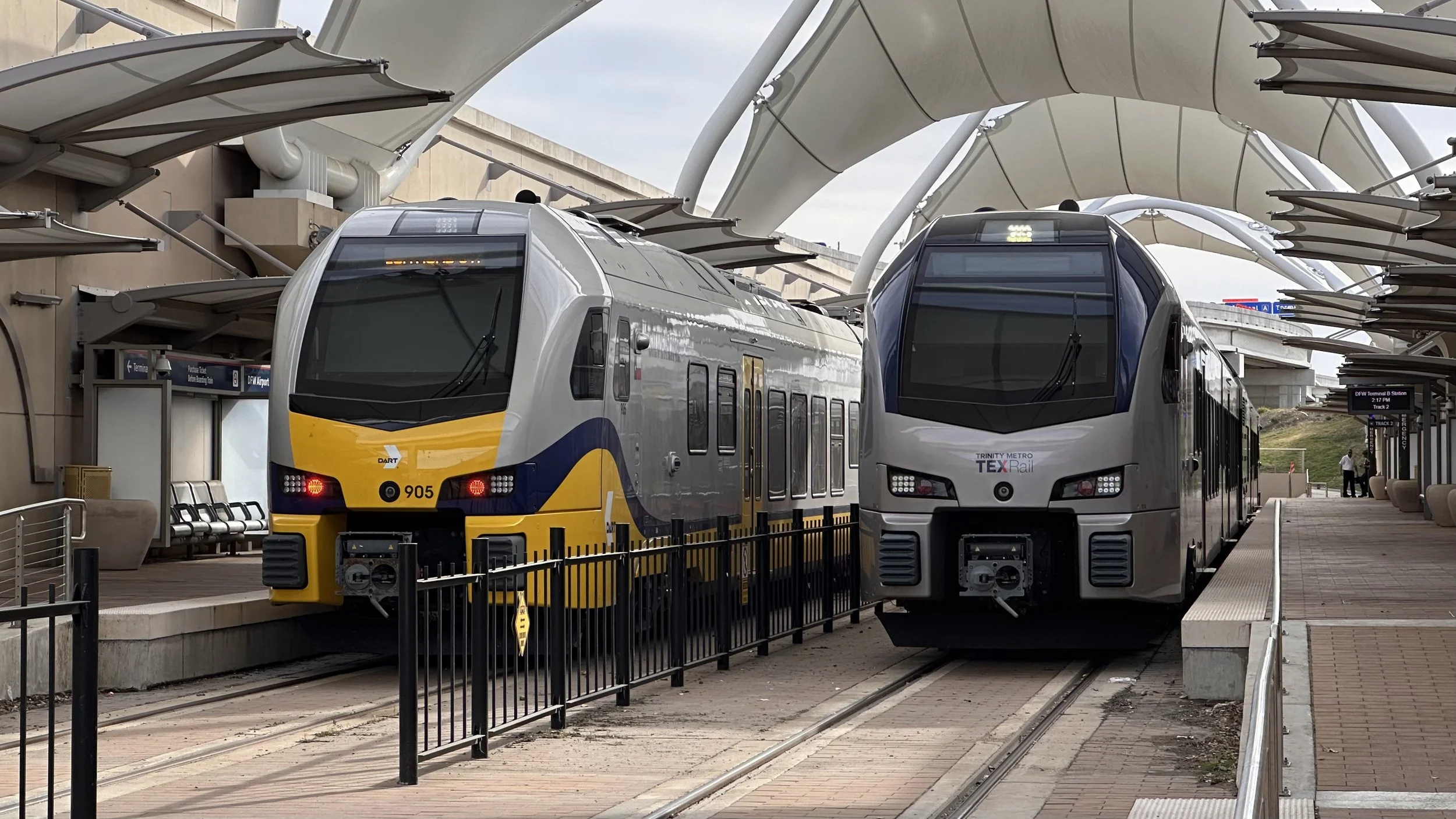
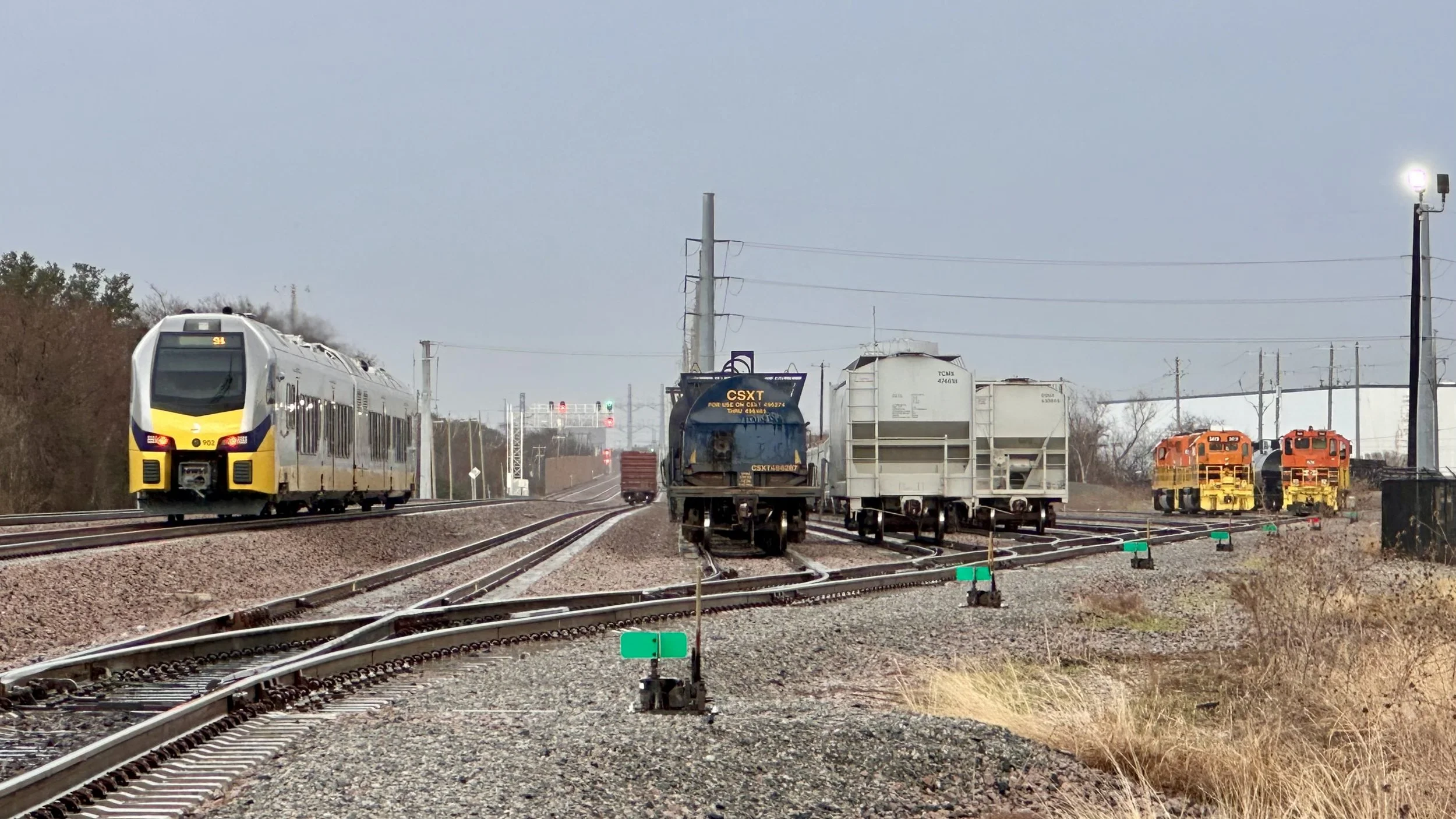
Notable is the sheer amount of freight rail integration, with DMUs passing through, next to, or over major yards for UP, BNSF, and the Fort Worth and Western (FW&W), in addition to occasional on-line industry spurs. The route is primarily built from the Cotton Belt corridor, the easternmost leg of the modern FW&W’s mainline and which continues further east as the DART Silver Line. TEXRail’s western end beyond Mercantile Center Station takes a complicated series of viaducts and underpasses to weave around five separate mainlines and the three yards near downtown Fort Worth, whereby one can make cross-platform transfers to the TRE and Amtrak’s Texas Eagle and Heartland Flyer. Whereas freight operates unrestrictedly west of Mercantile Center due to the DMU’s parallel and deconvoluted tracks or viaducts hopscotching over wyes, yards, or junctions, east of Mercantile Center is more than half single-tracked and freight must wait for night.
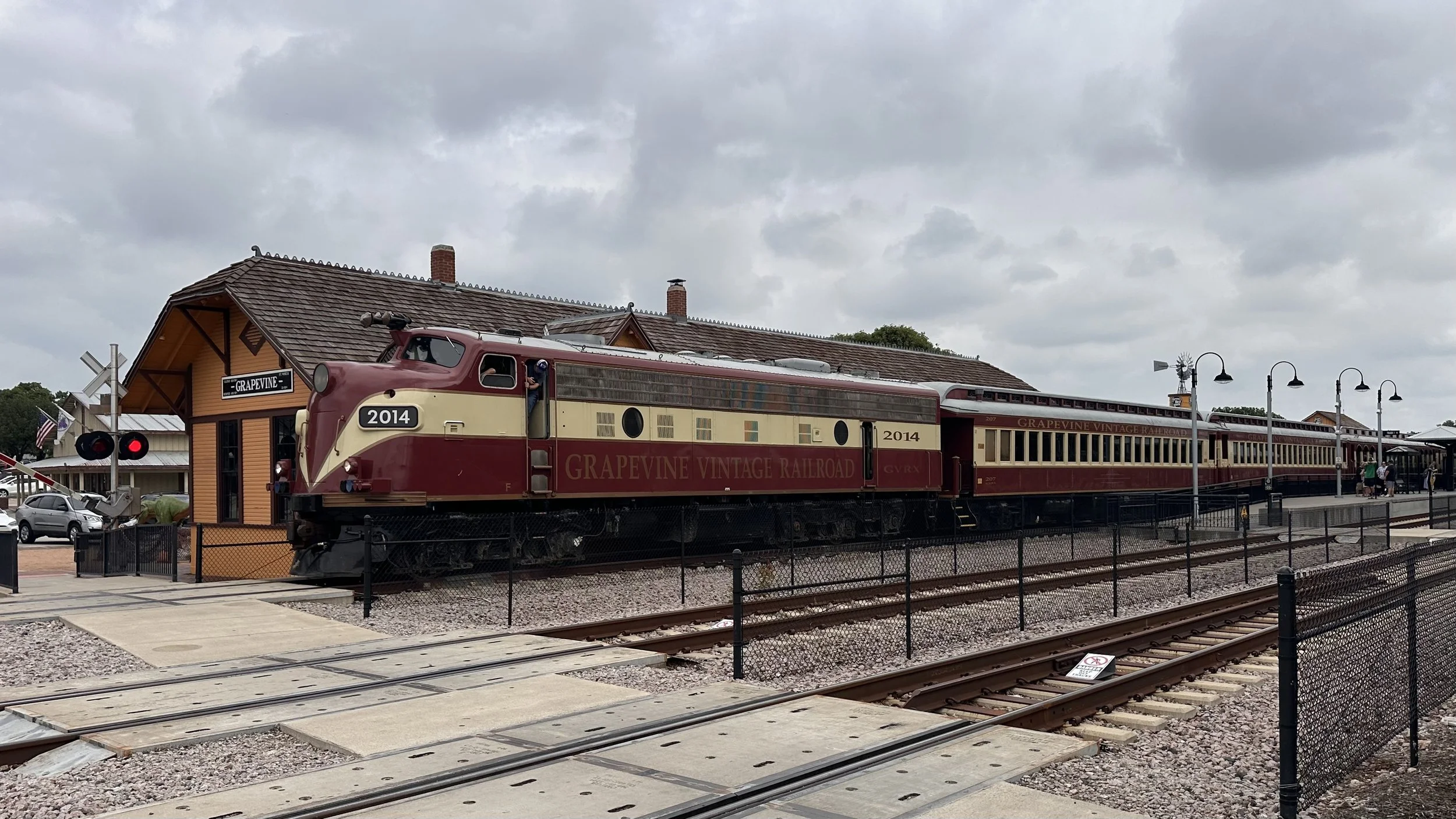
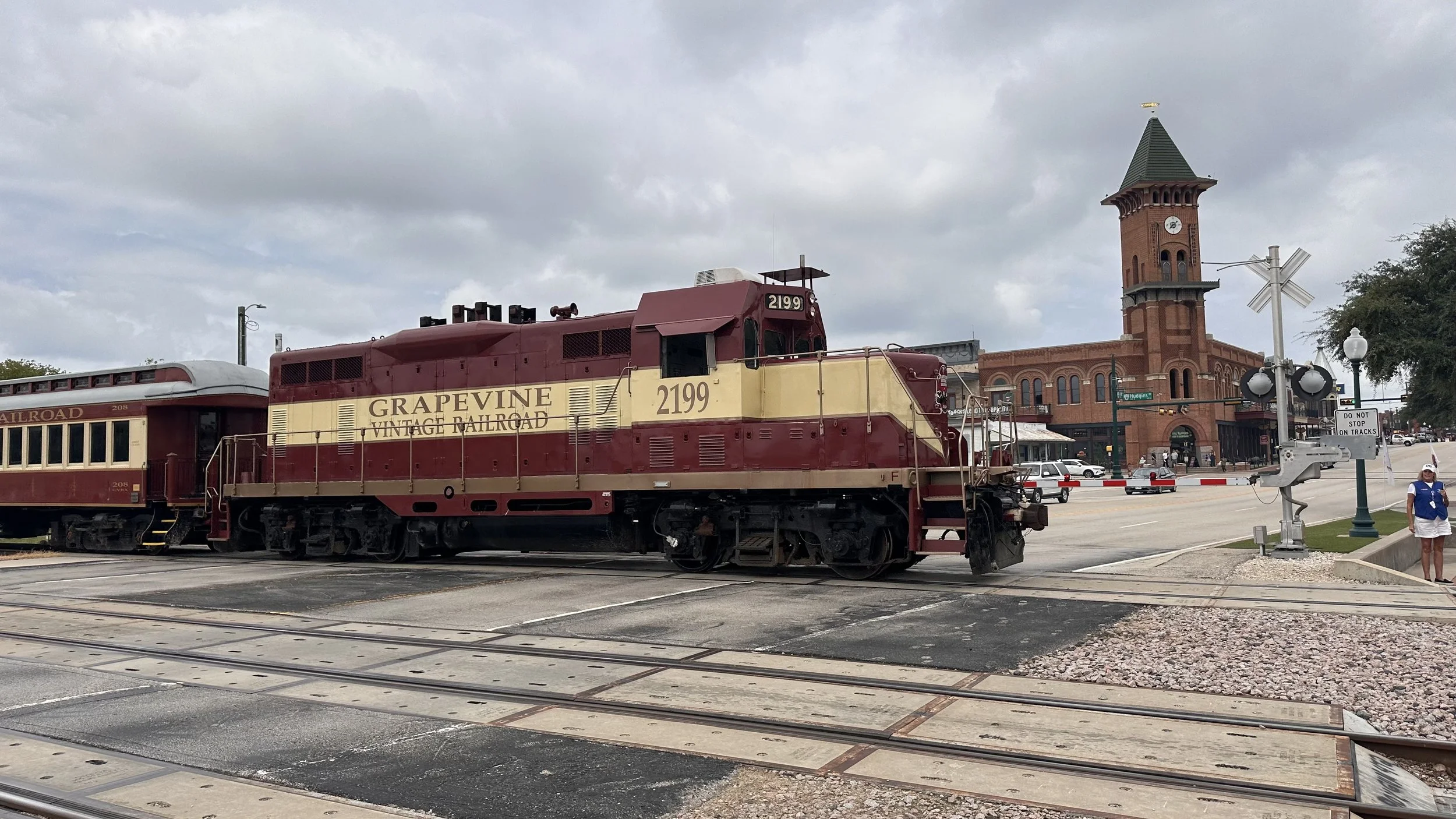
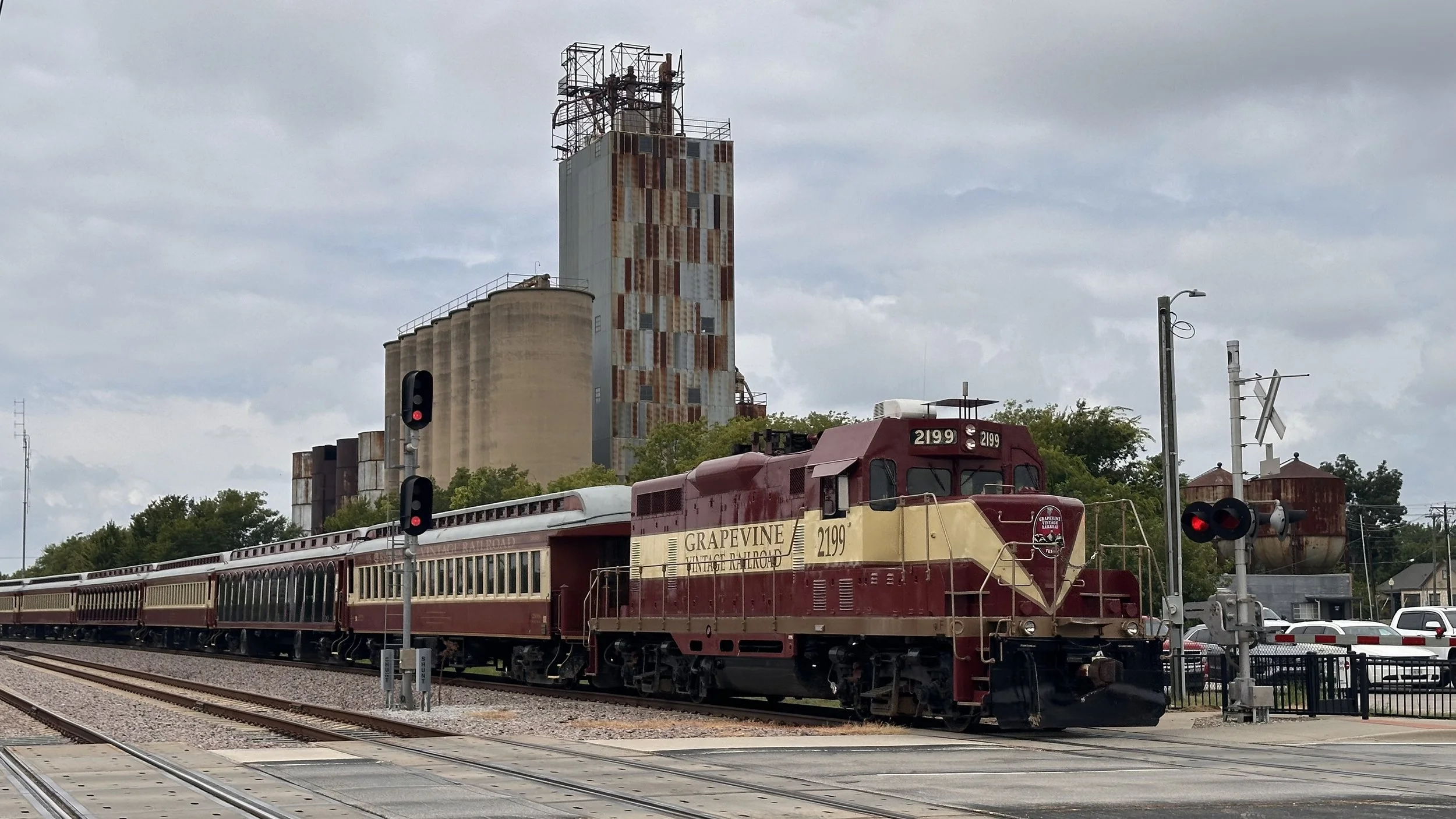
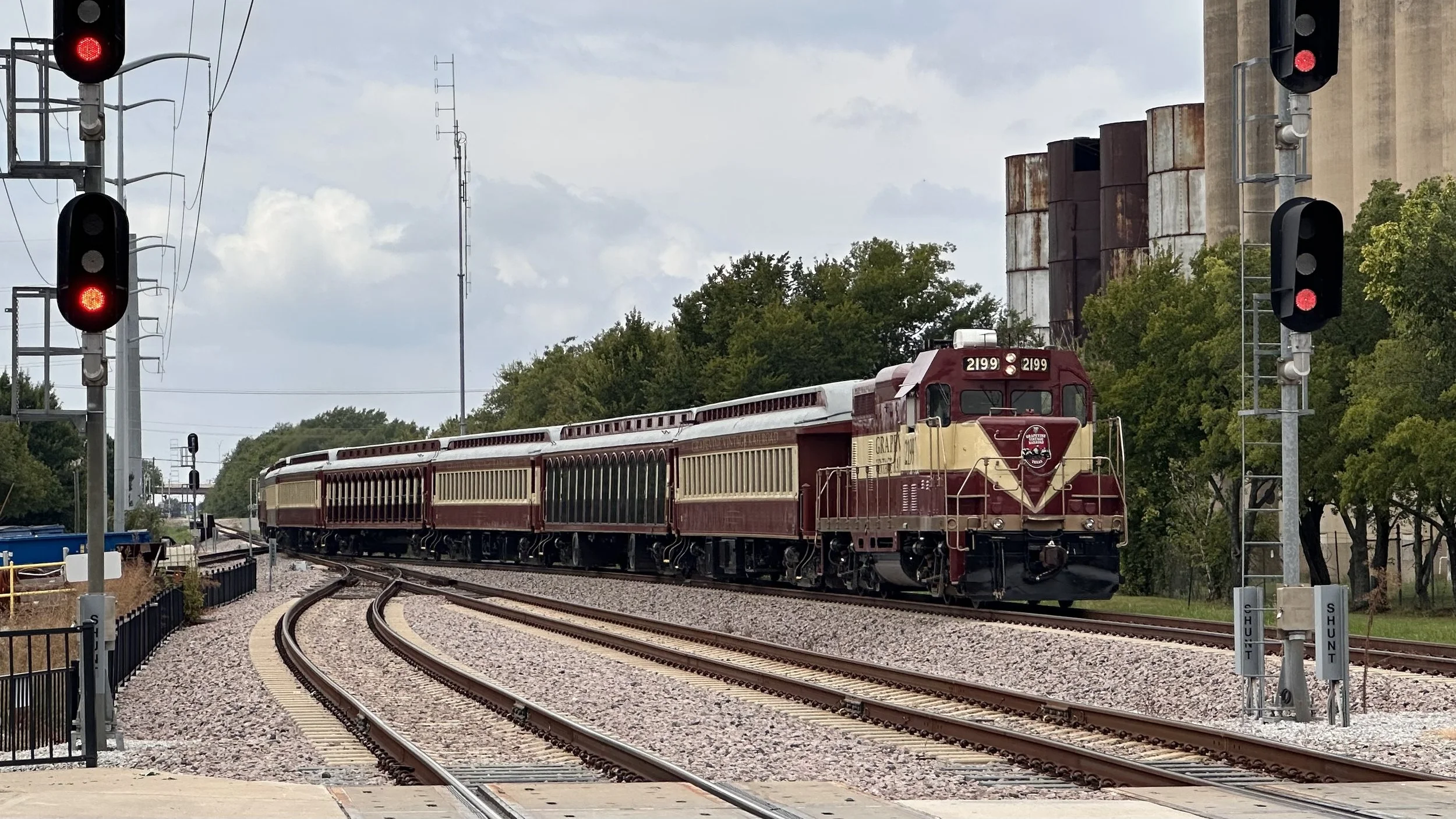
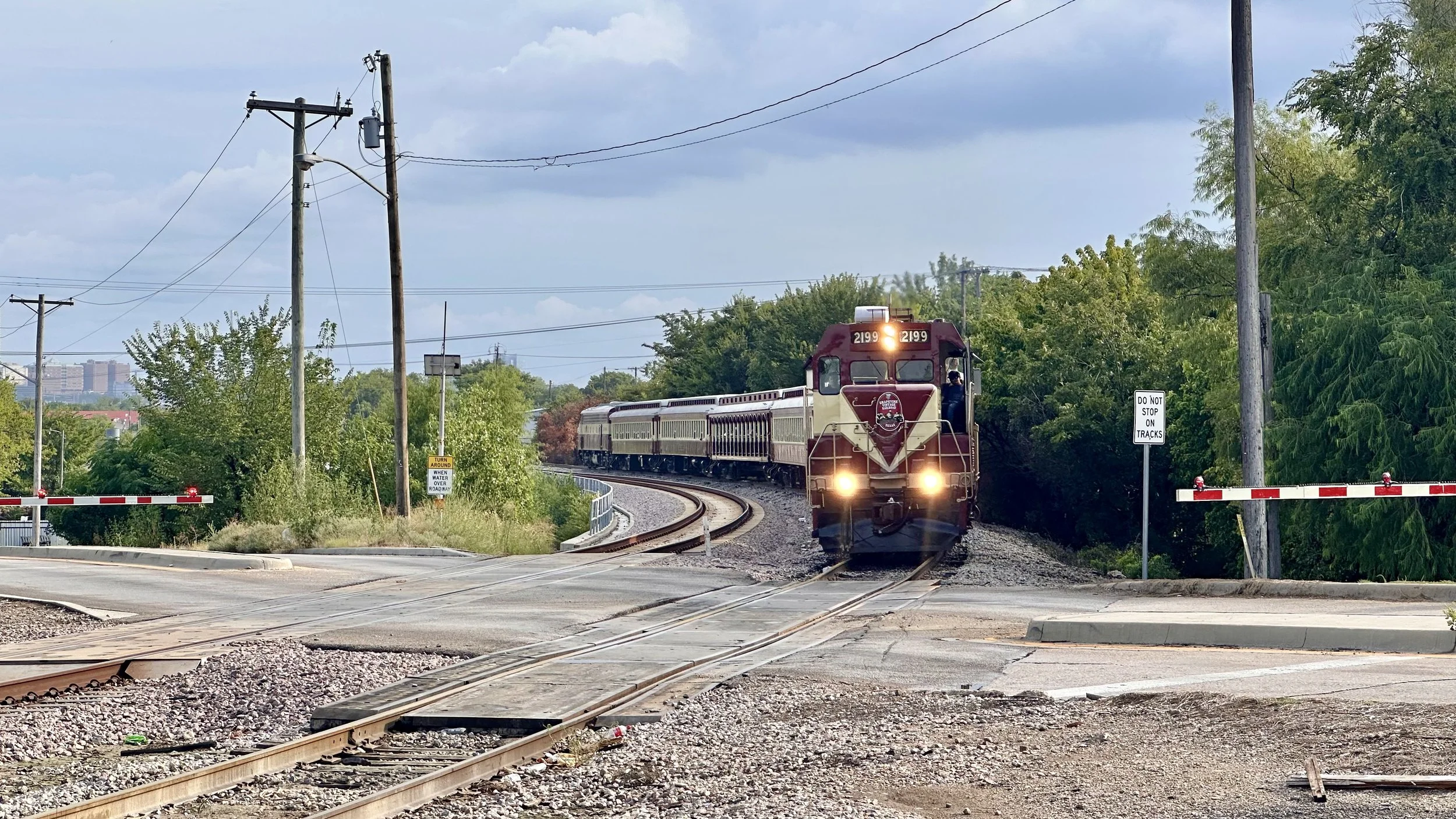
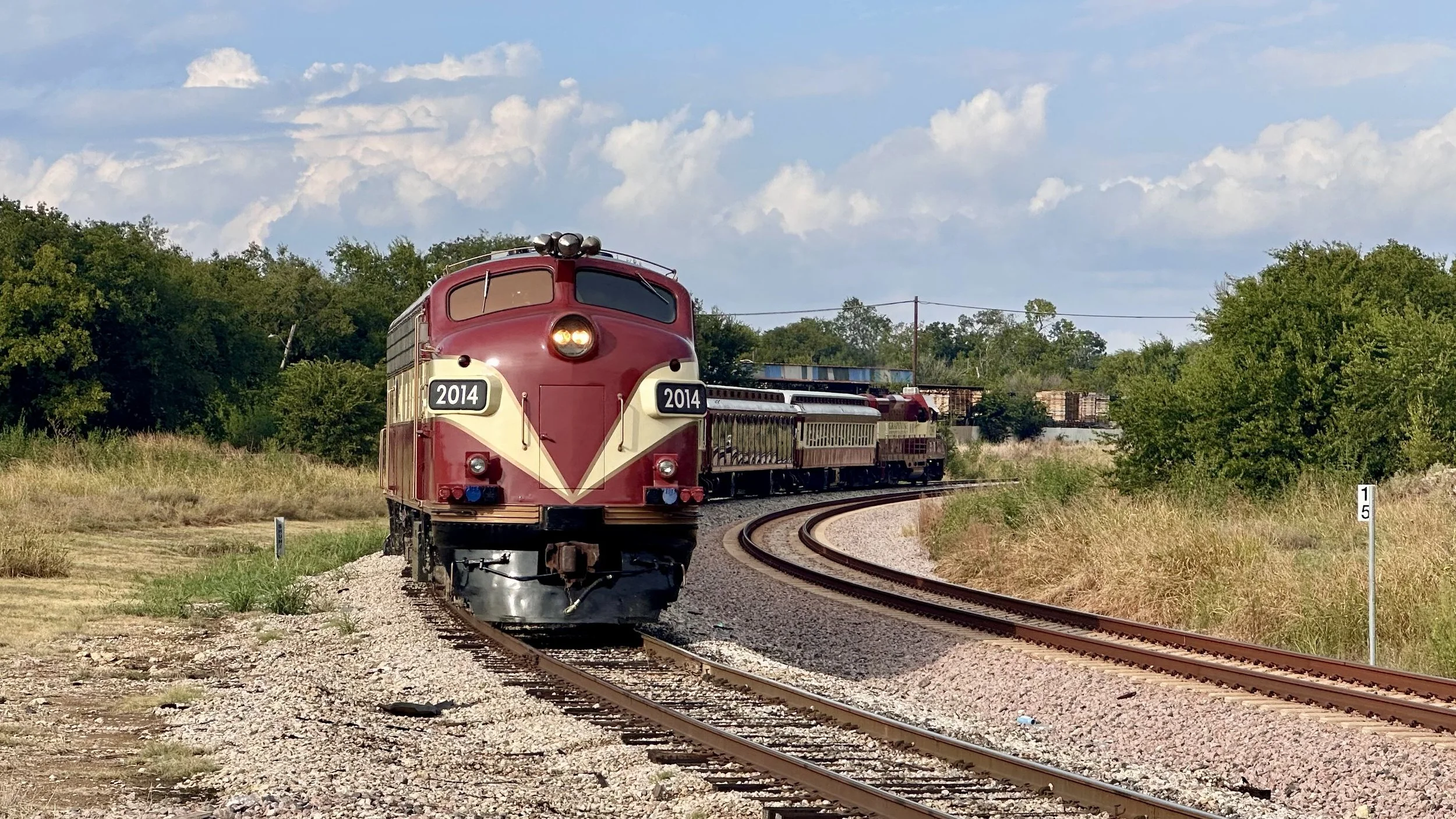
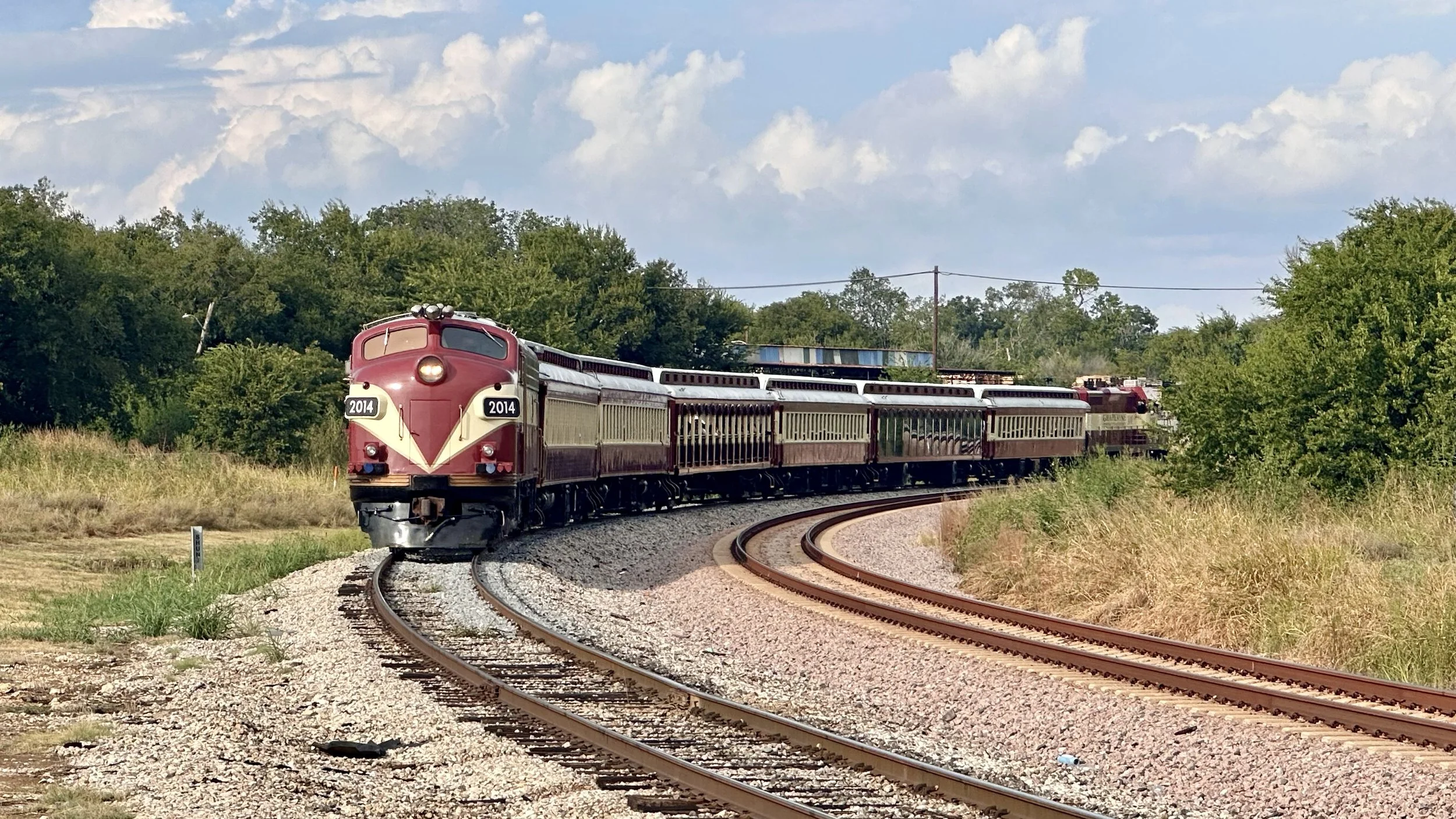
Uniquely to any other transit system, TEXRail shares tracks with the Grapevine Vintage Railroad, which departs daily from Grapevine to the Fort Worth Stockyards and back, and necessitates a brief locking of the mainline to DMUs (in accordance with FRA requirements) to allow the mainline tourist train through (though the GVRR quickly leaves TEXRail tracks and travels at ground level through the yards as it can’t make it up the steep DMU viaducts). F-units side-by-side with Euro DMUs, who would’ve thought!
Uncommonly, whereas most DMUs conduct crew changes by recalling DMUs to the OMF and sending freshly re-crewed vehicles back onto the mainline (such as on CapMetro Rail), by swapping crews at a mini-platform in front of the OMF itself (such as on the River LINE), or by delivering crews to a station near the OMF (most of the rest), TEXRail’s high quality leads them to conduct crew changes on the fly between Mercantile Center and North Side stations.
Overall, TEXRail proves that modern, frequent passenger trains are integrally linked with traditional freight railroading, and this one system provides nearly infinite strategies of freight-passenger coexistence for use by both transit advocates and modelers alike. Similarly to the River LINE, TEXRail inspires long, separate mainlines running through yards, but complicates this with several prolonged segments of viaducting over yards to avoid tracks or switch sides of the Right of Way. While building a prototype model of TEXRail would require a very large space, any modeler wanting an adventurous or distinctive scene should consider an elevated concrete viaduct weaving over the back of a major yard. Much like the real thing, it saves on space and precludes the need to re-lay old track!
Metrolink Arrow
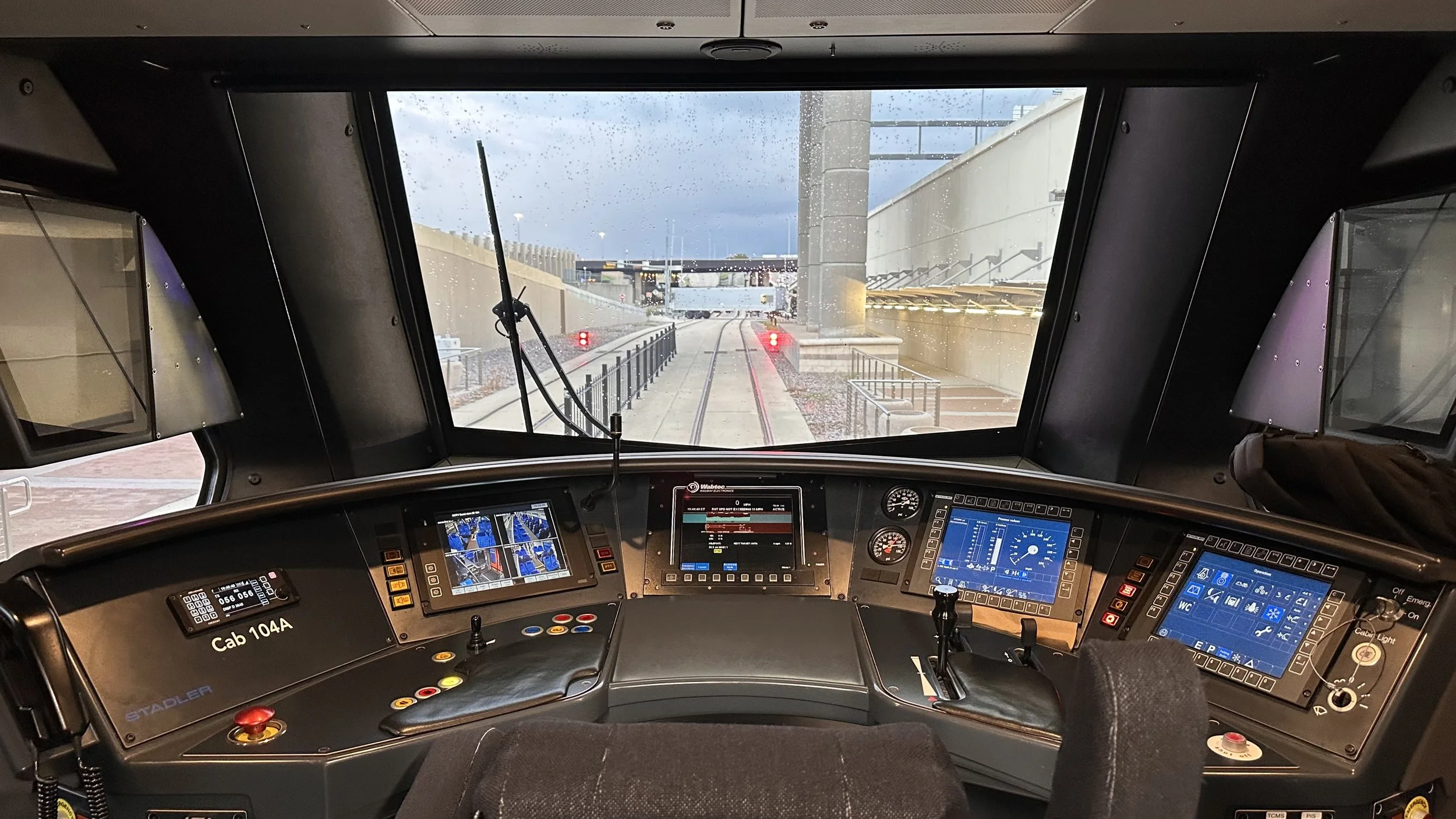
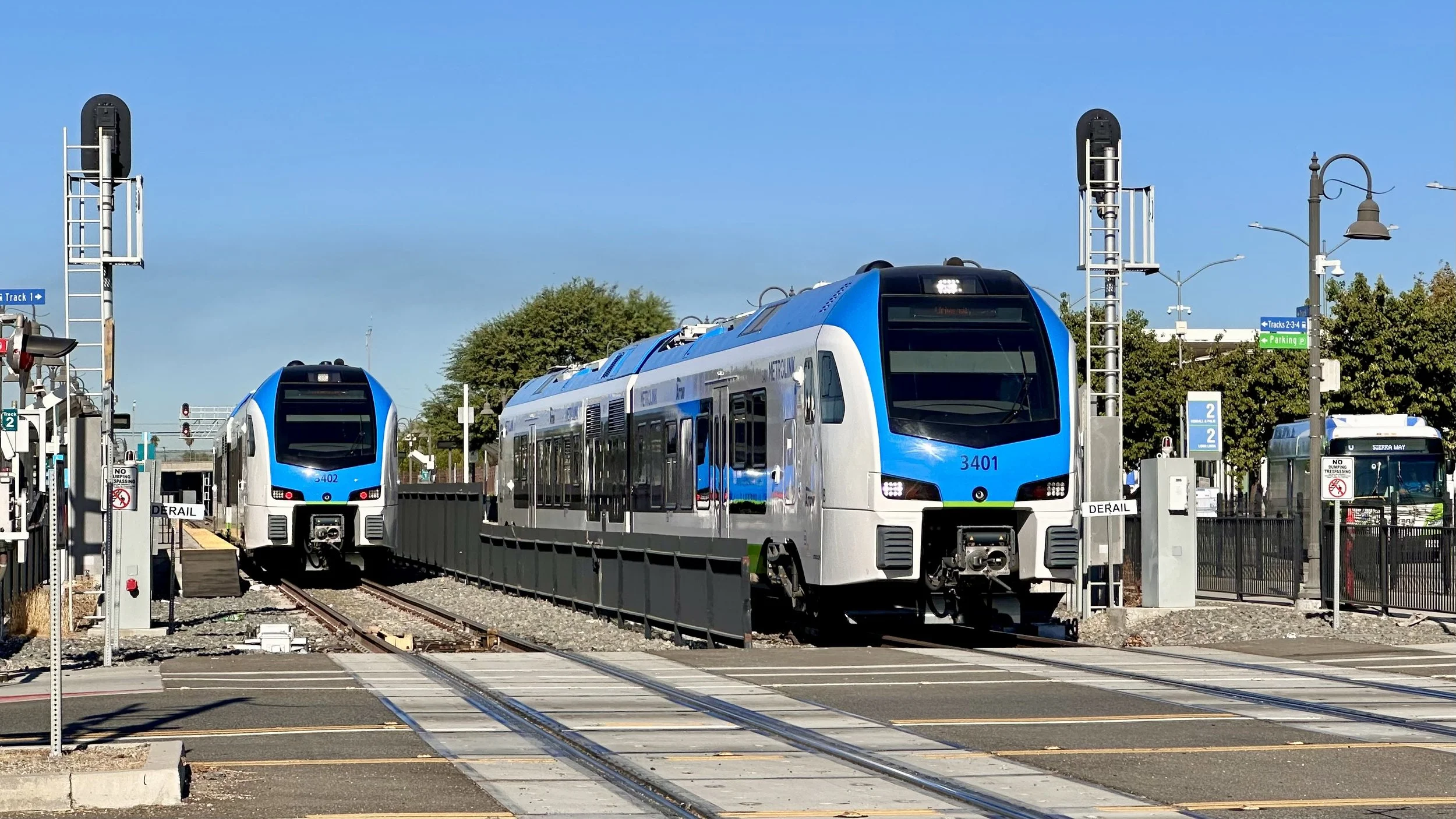
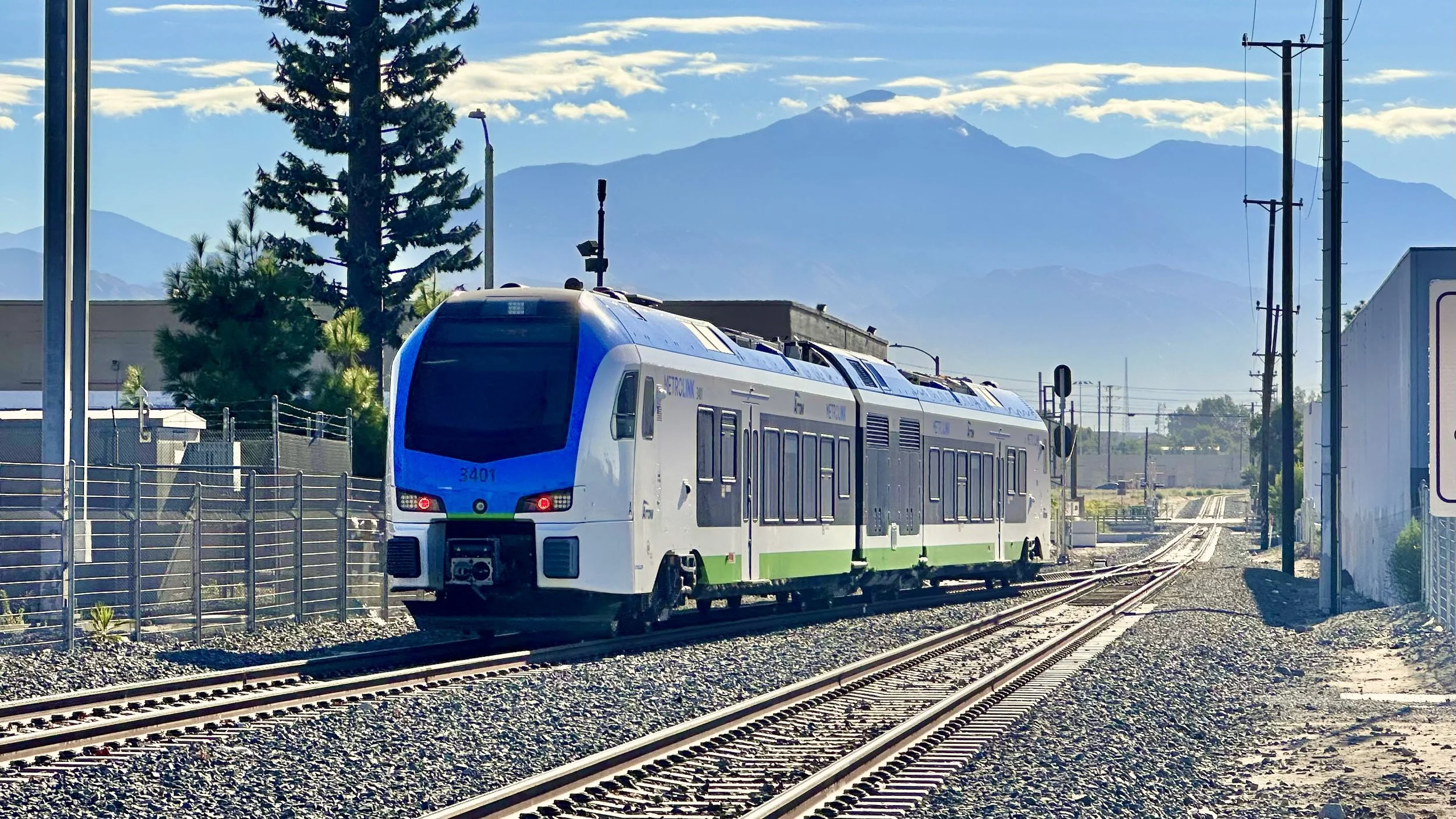
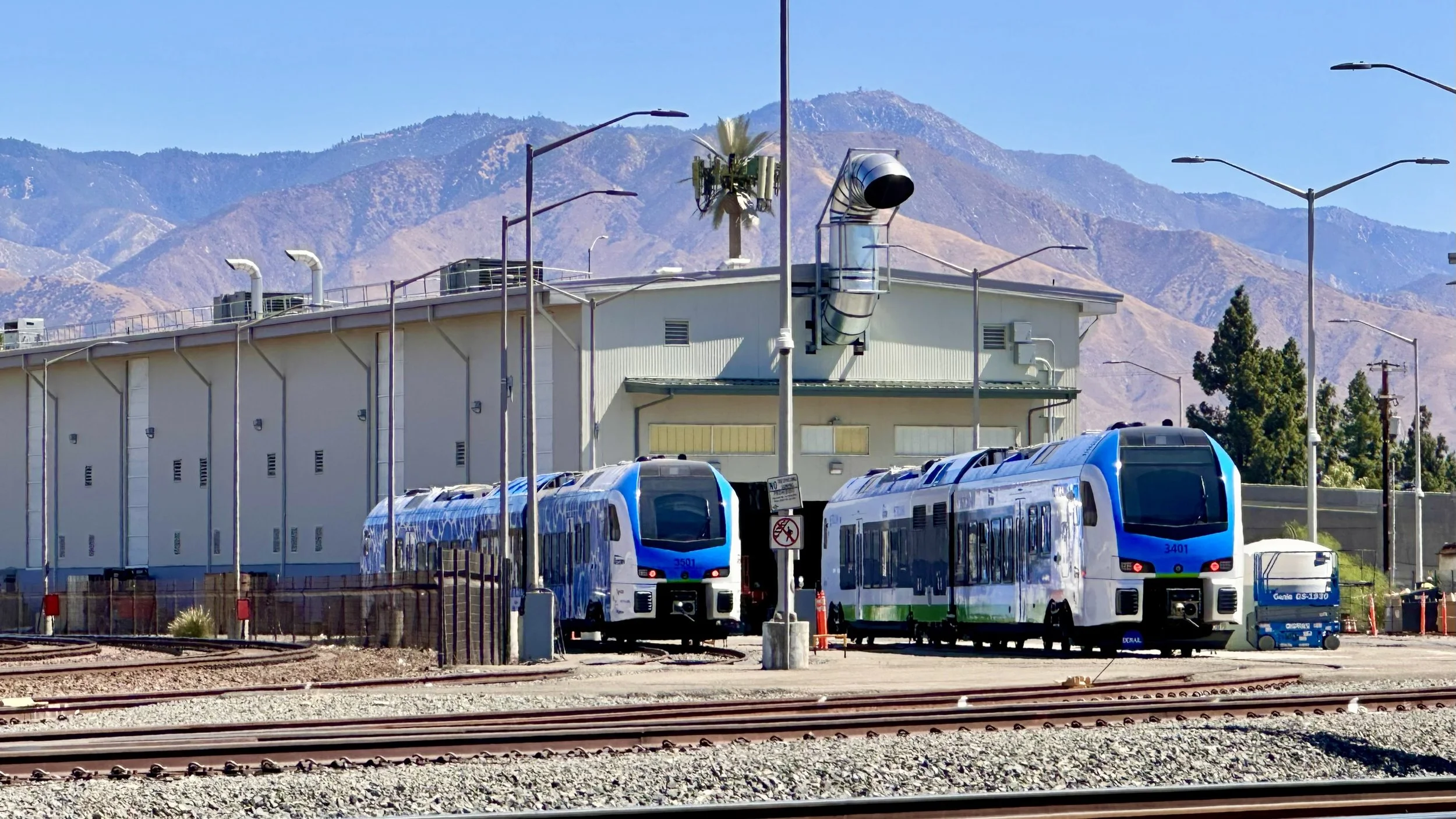
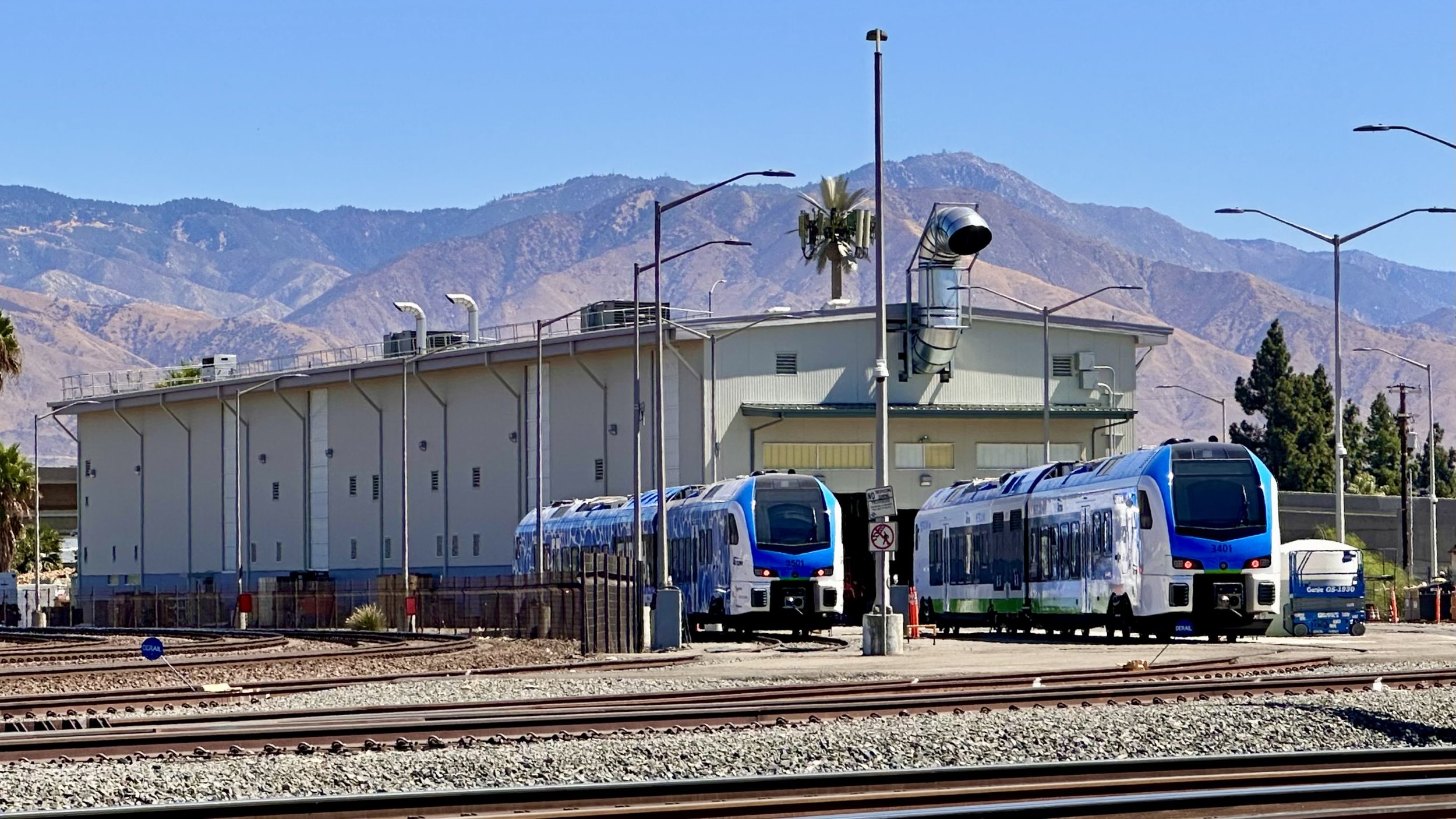
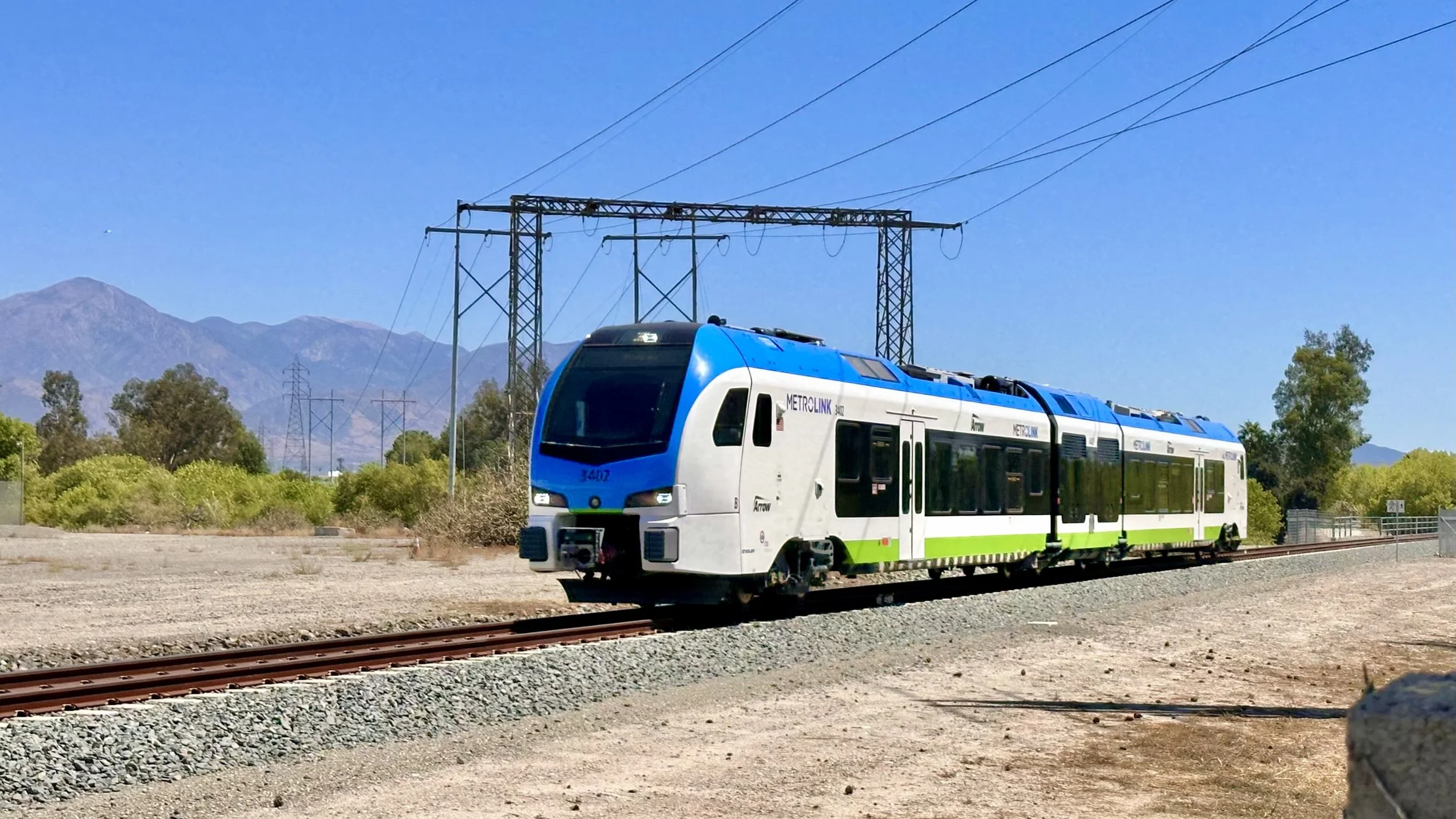
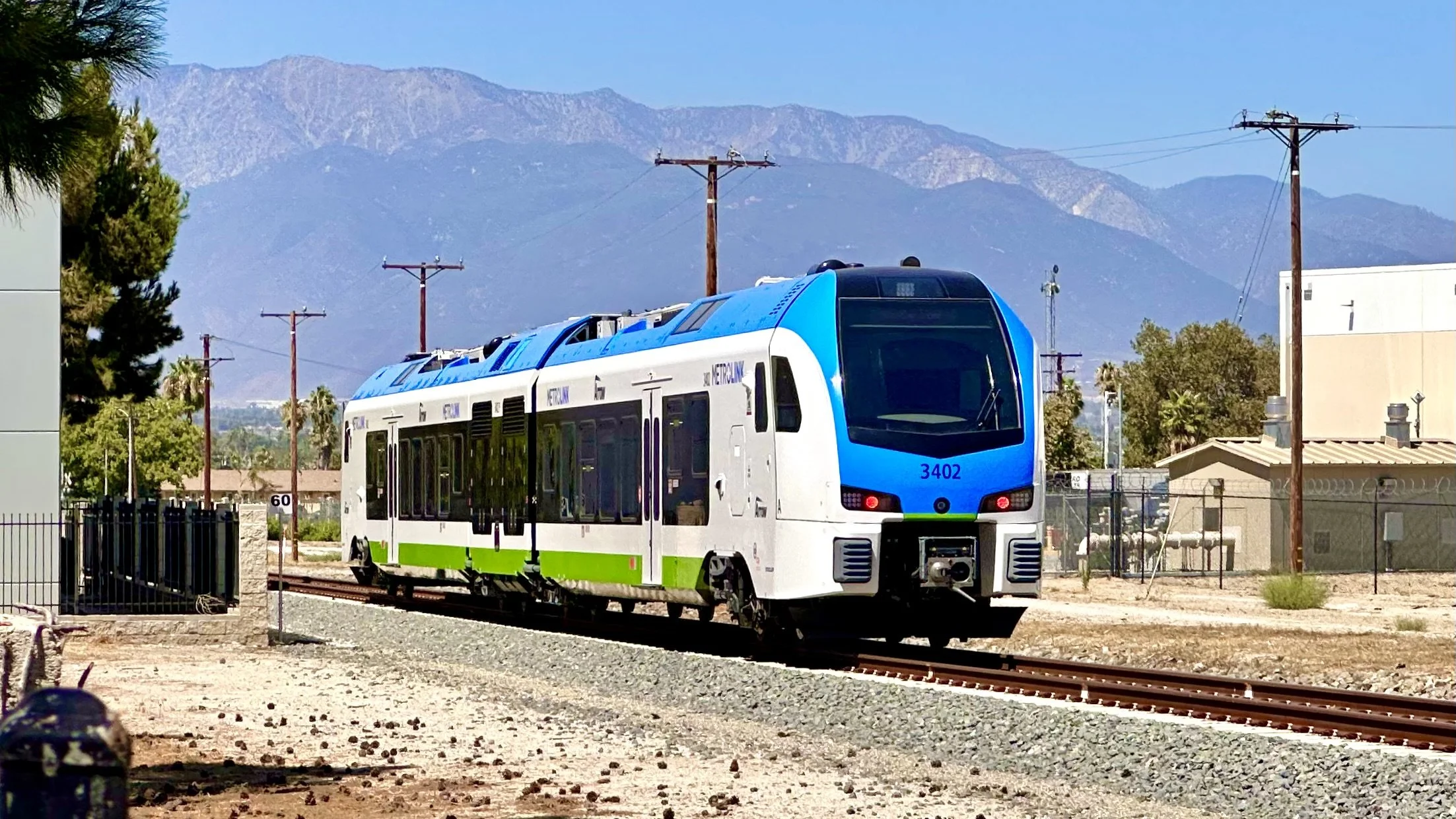
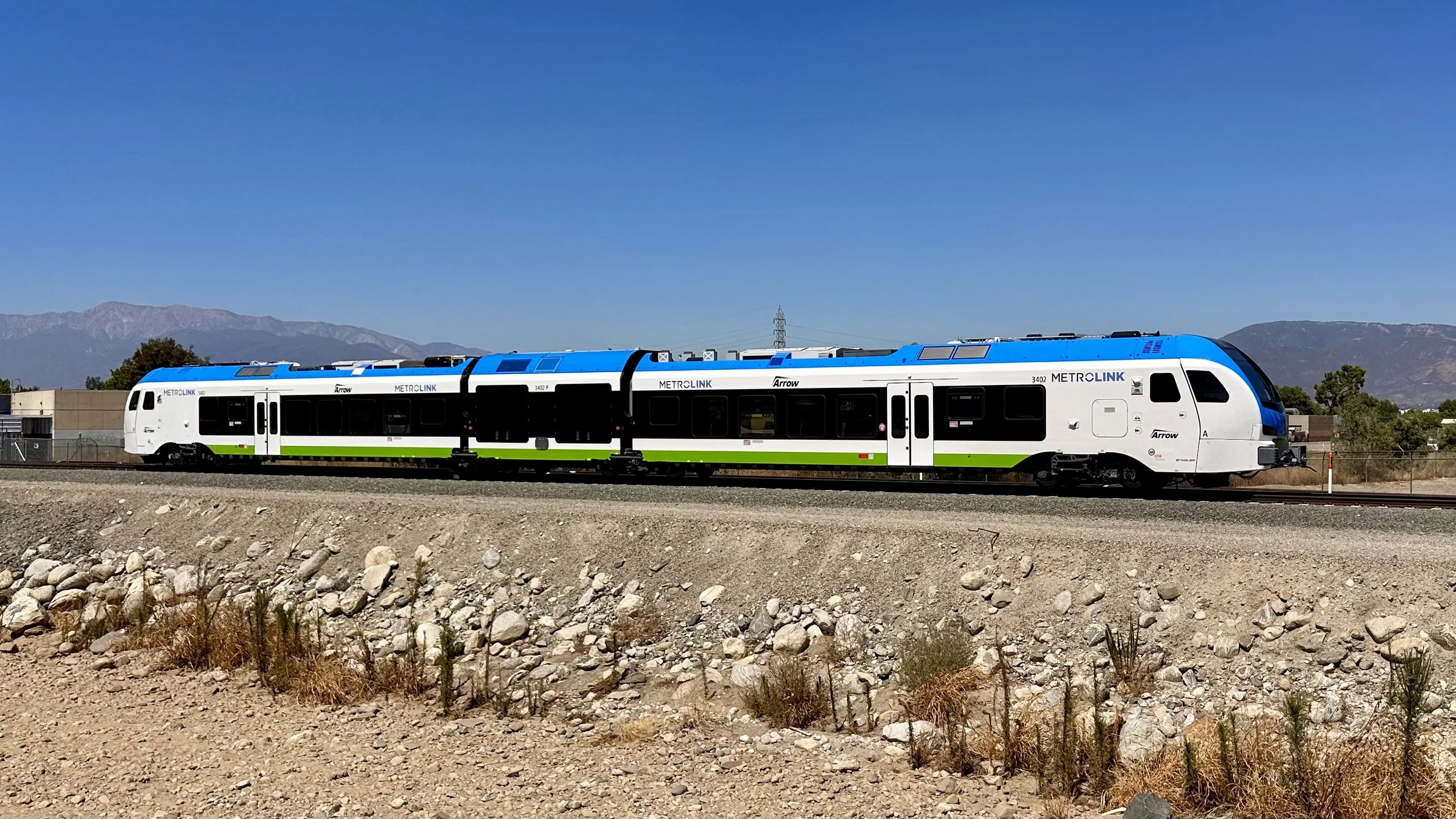
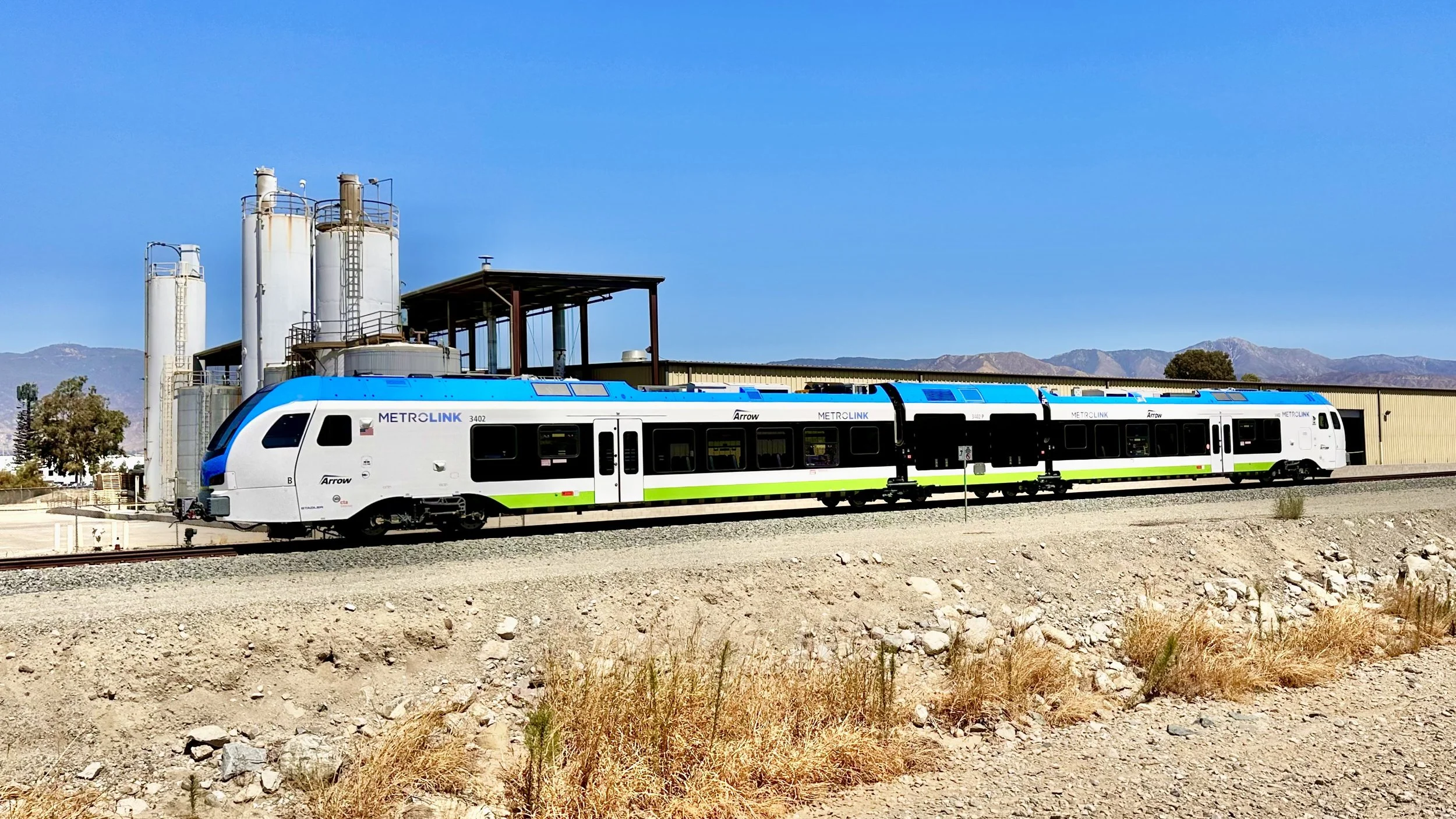
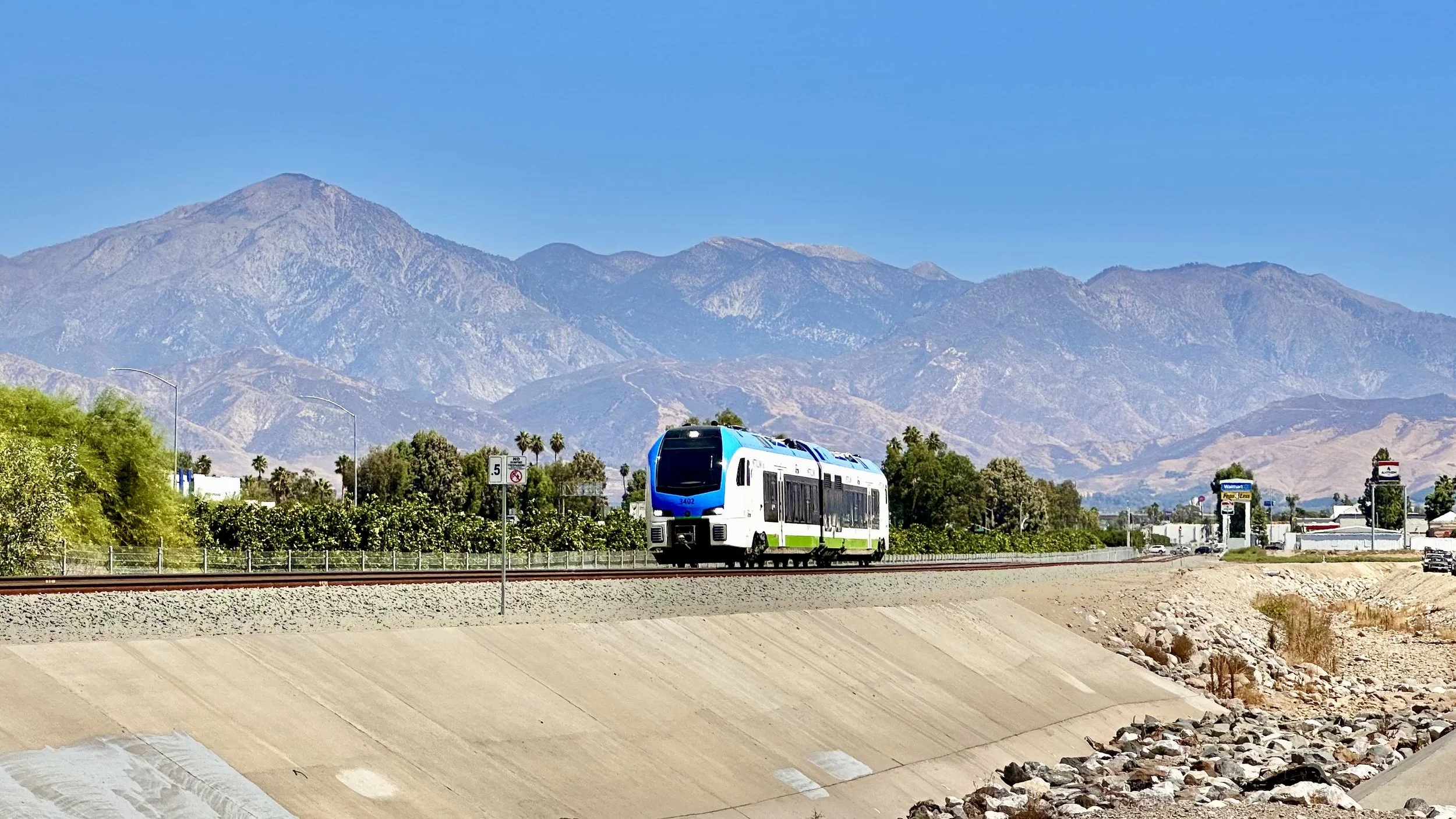
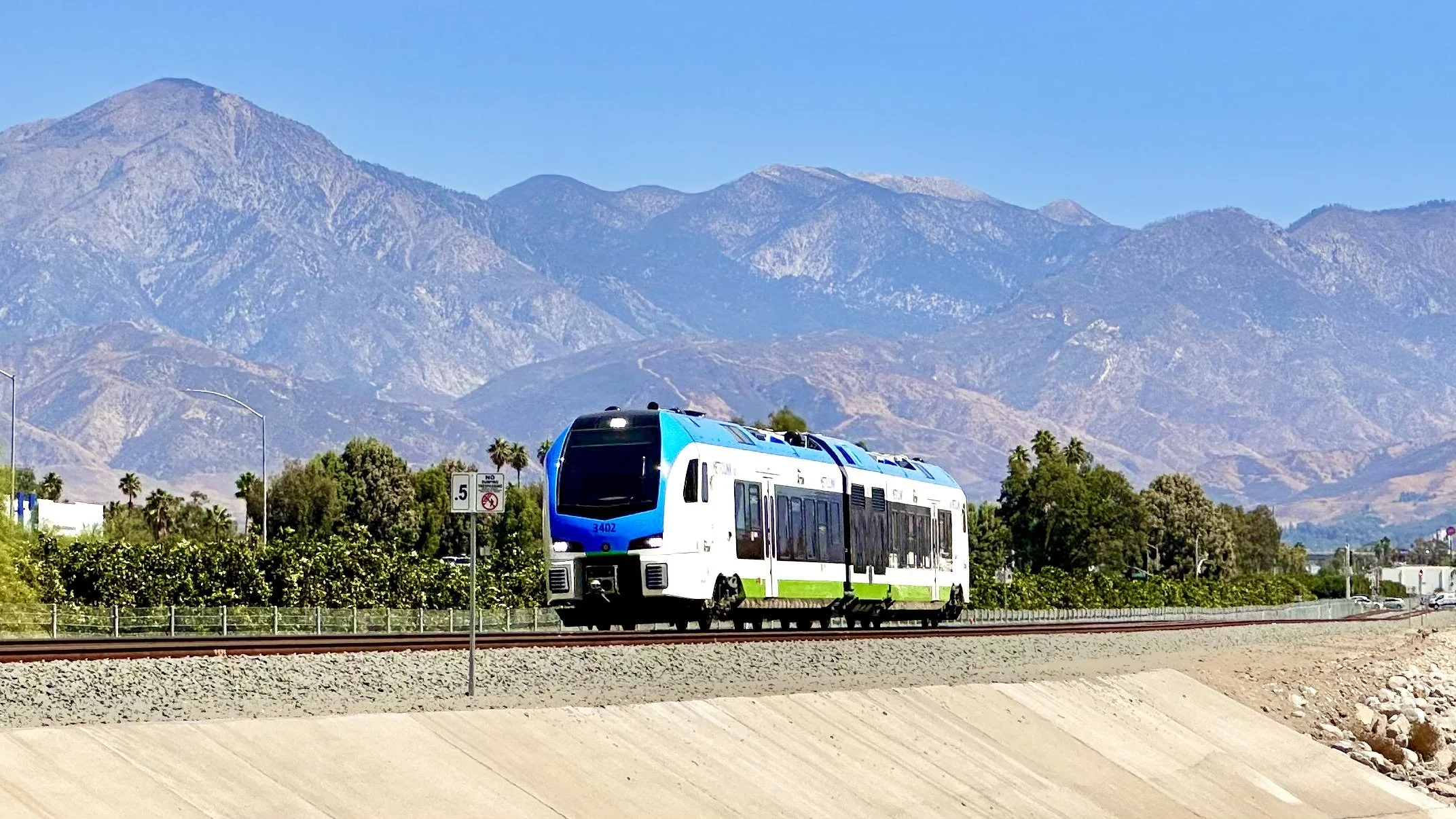
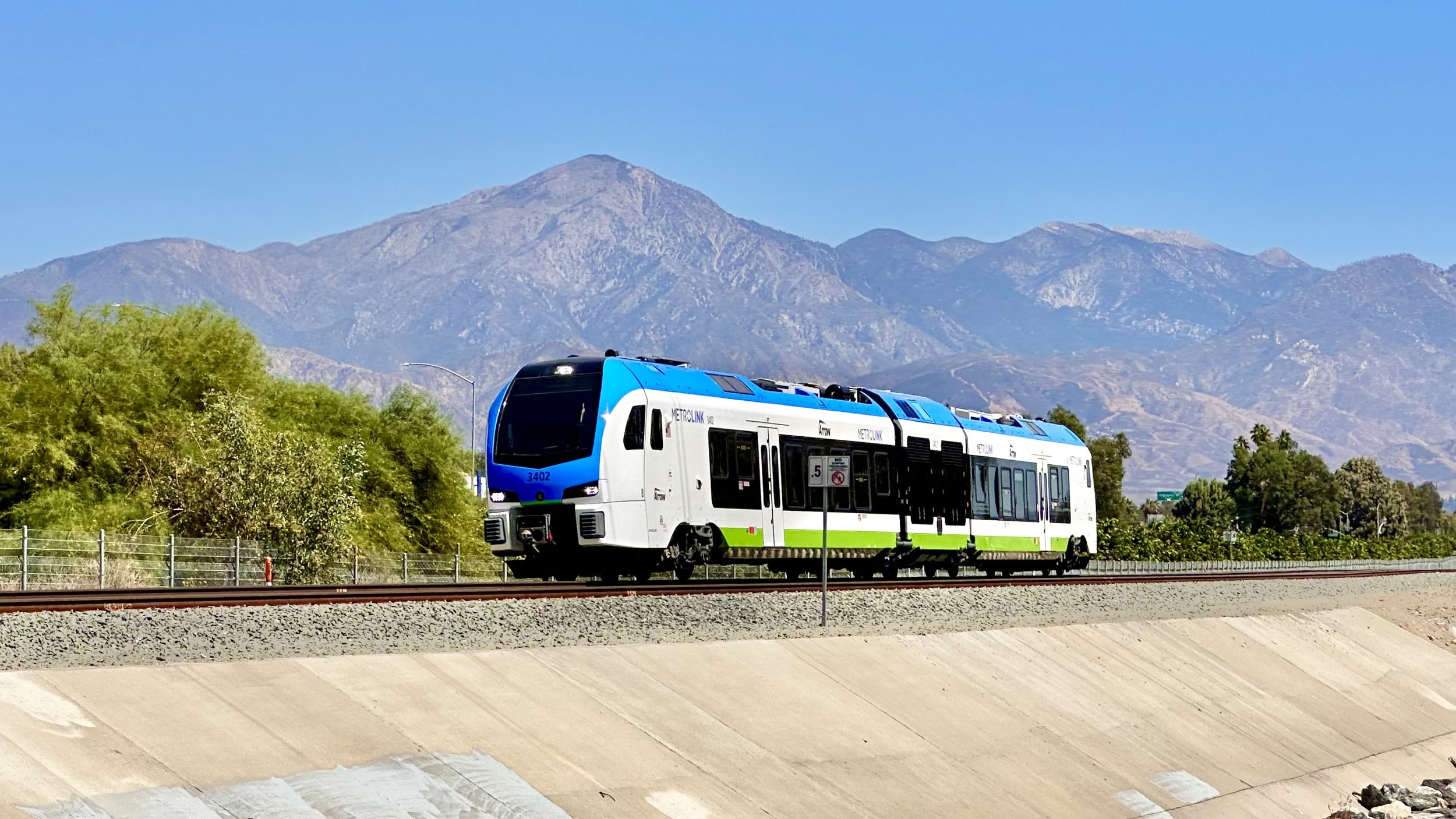
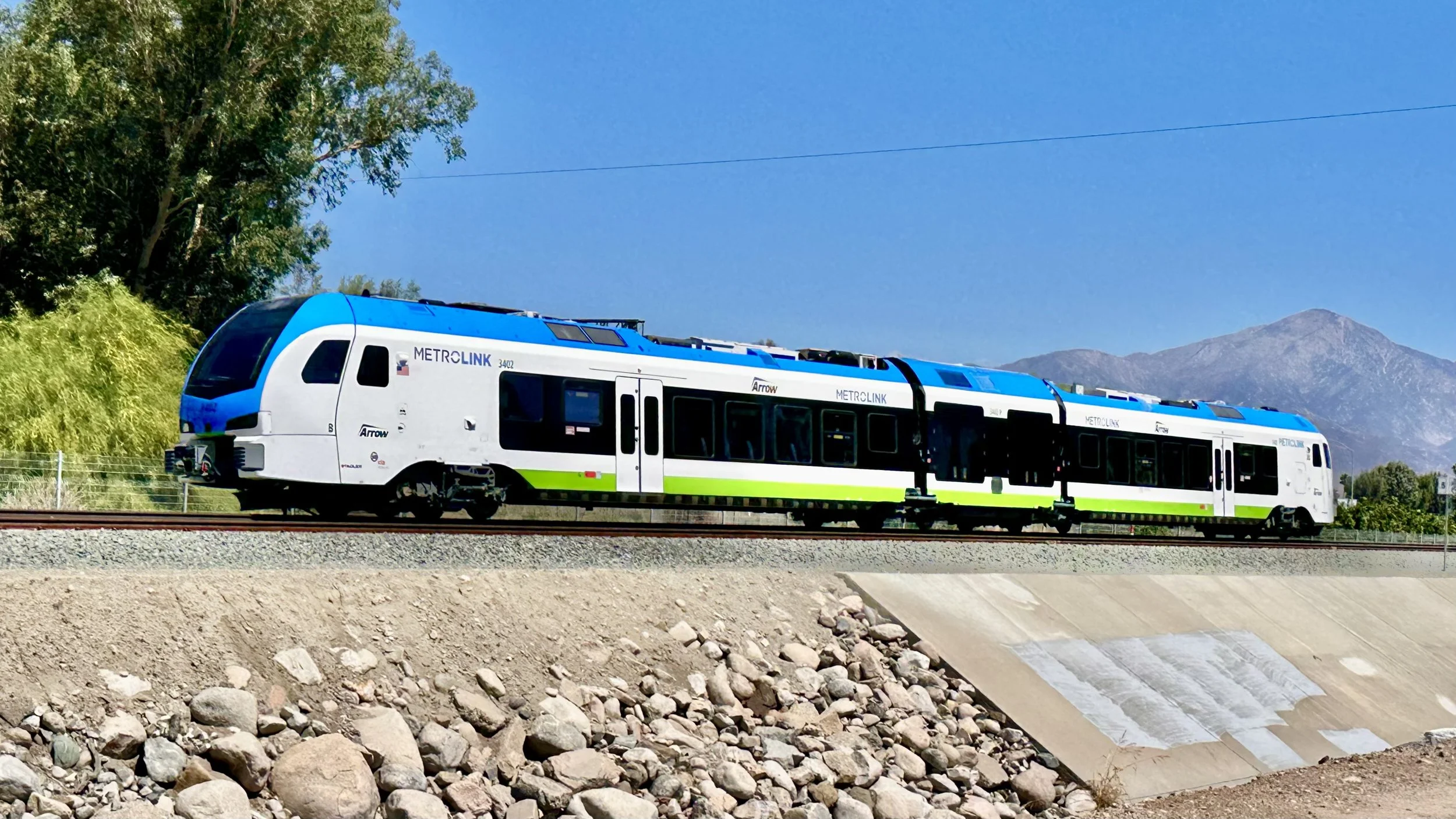
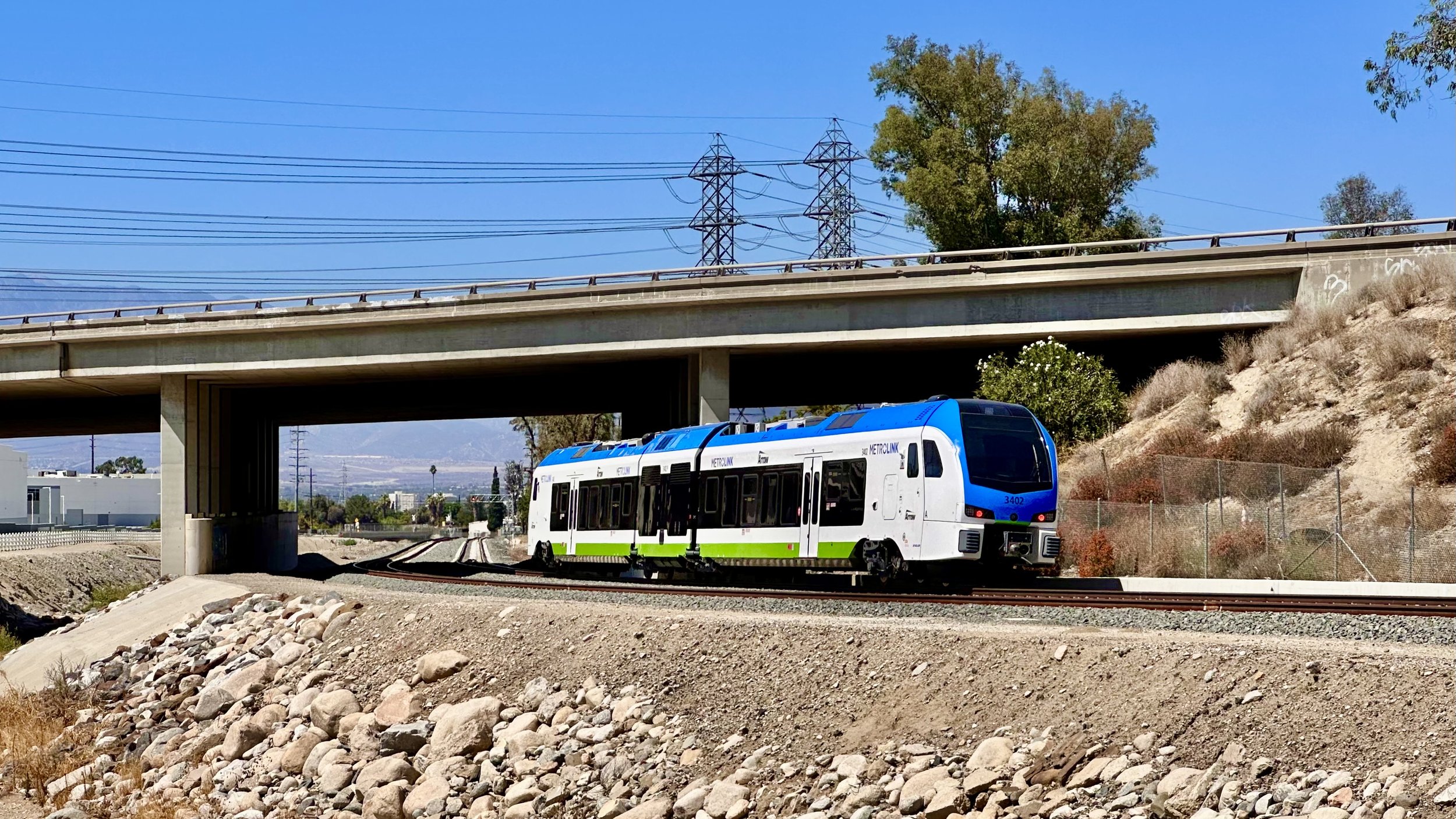
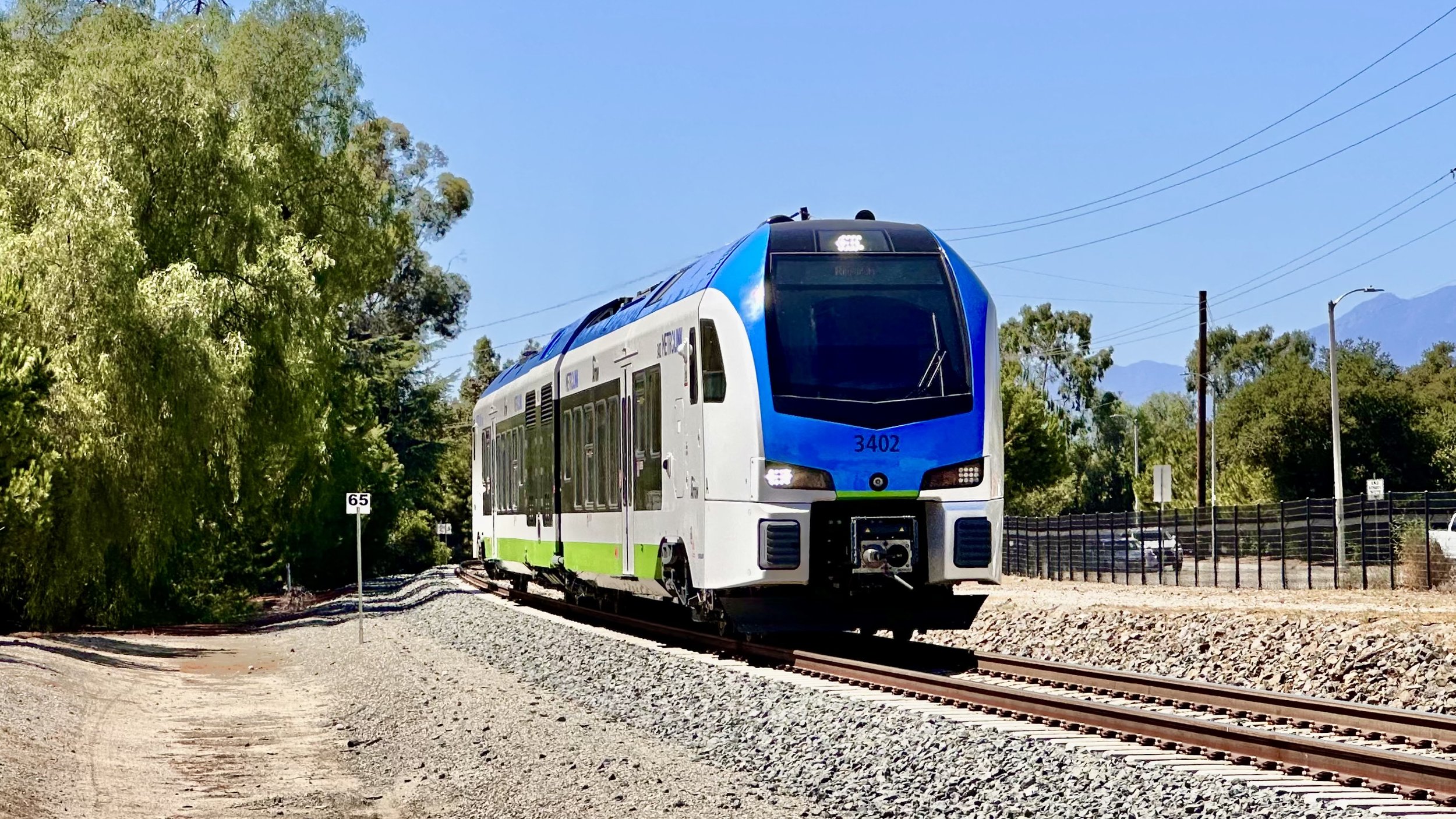
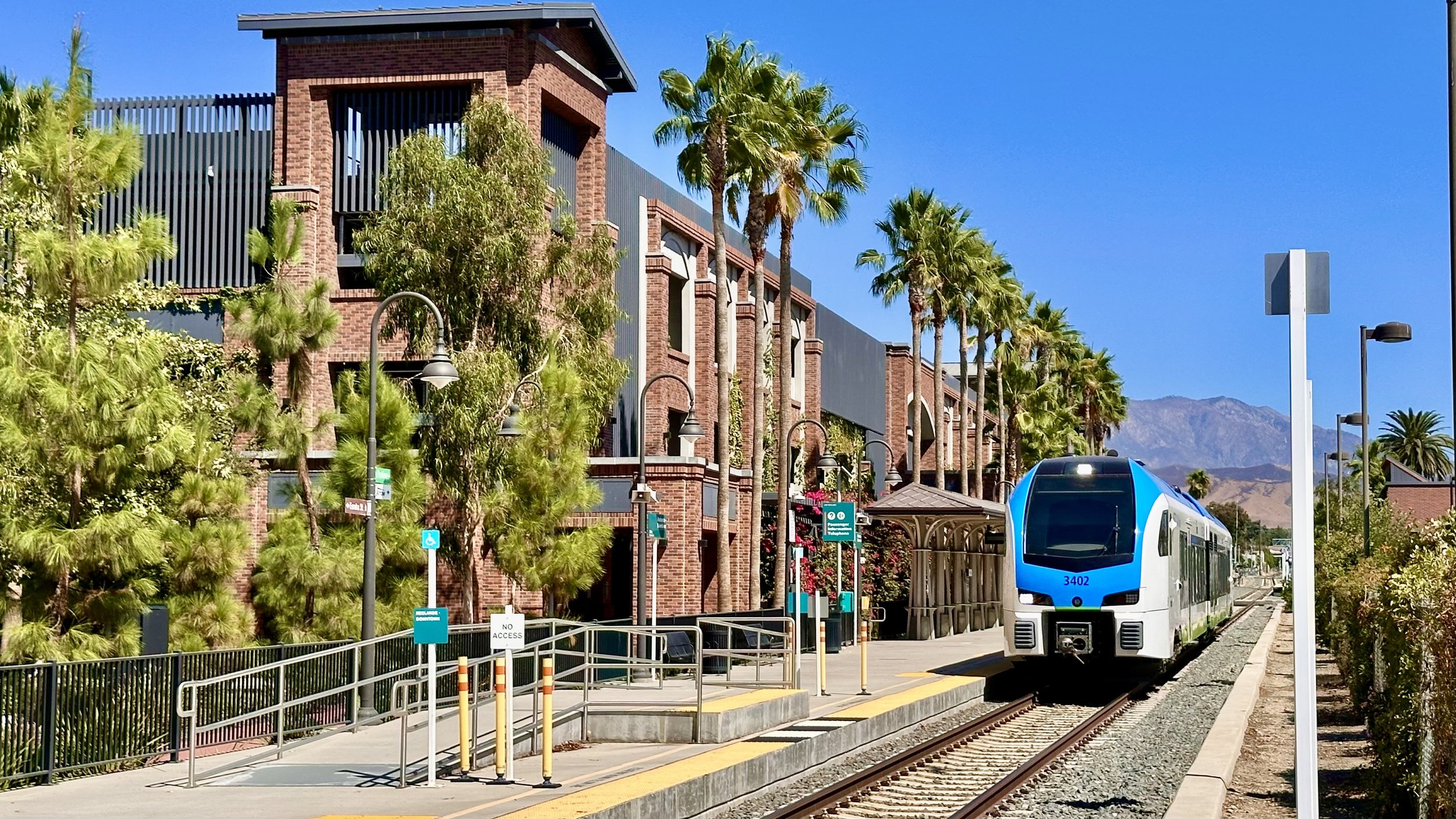
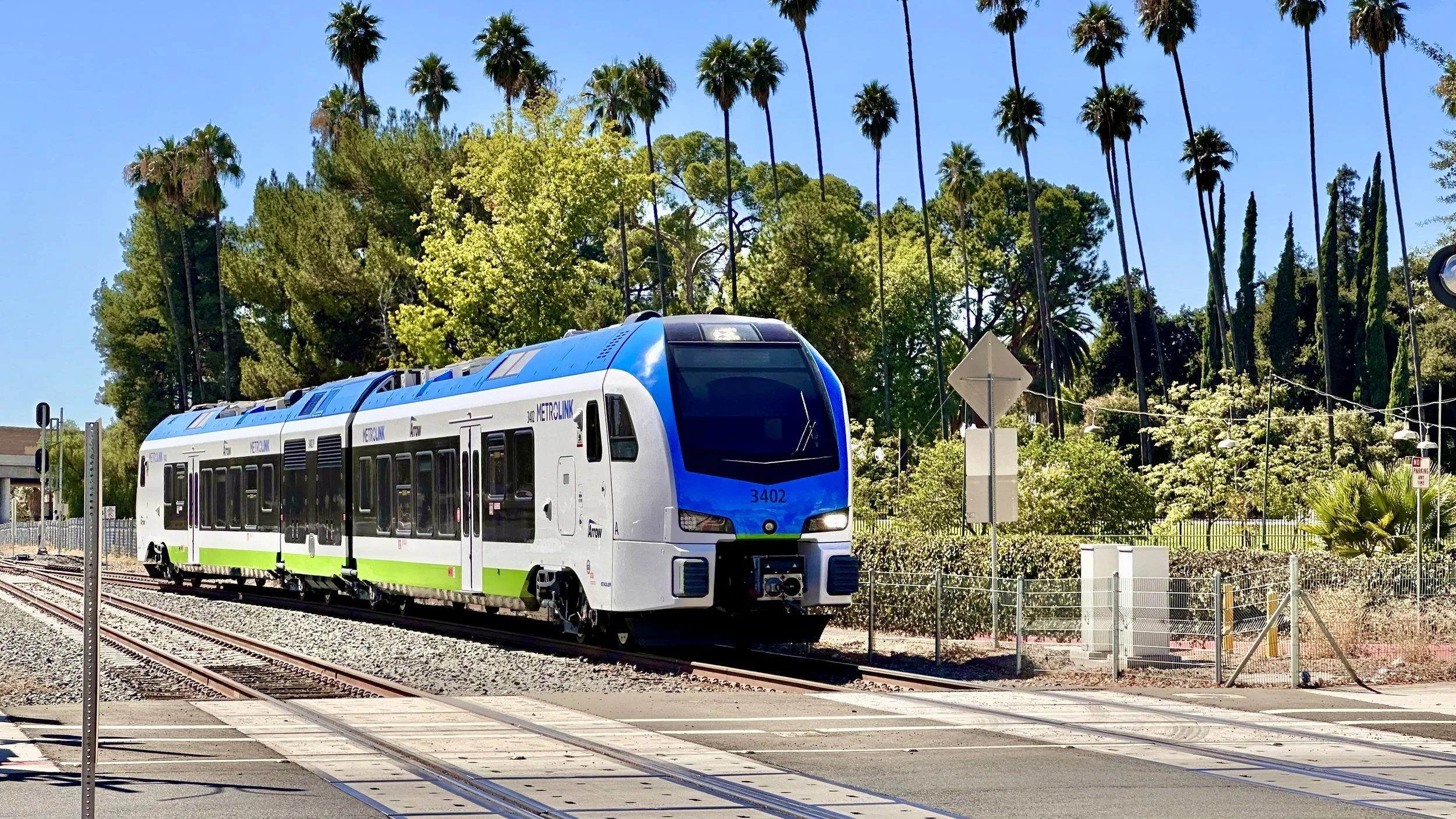
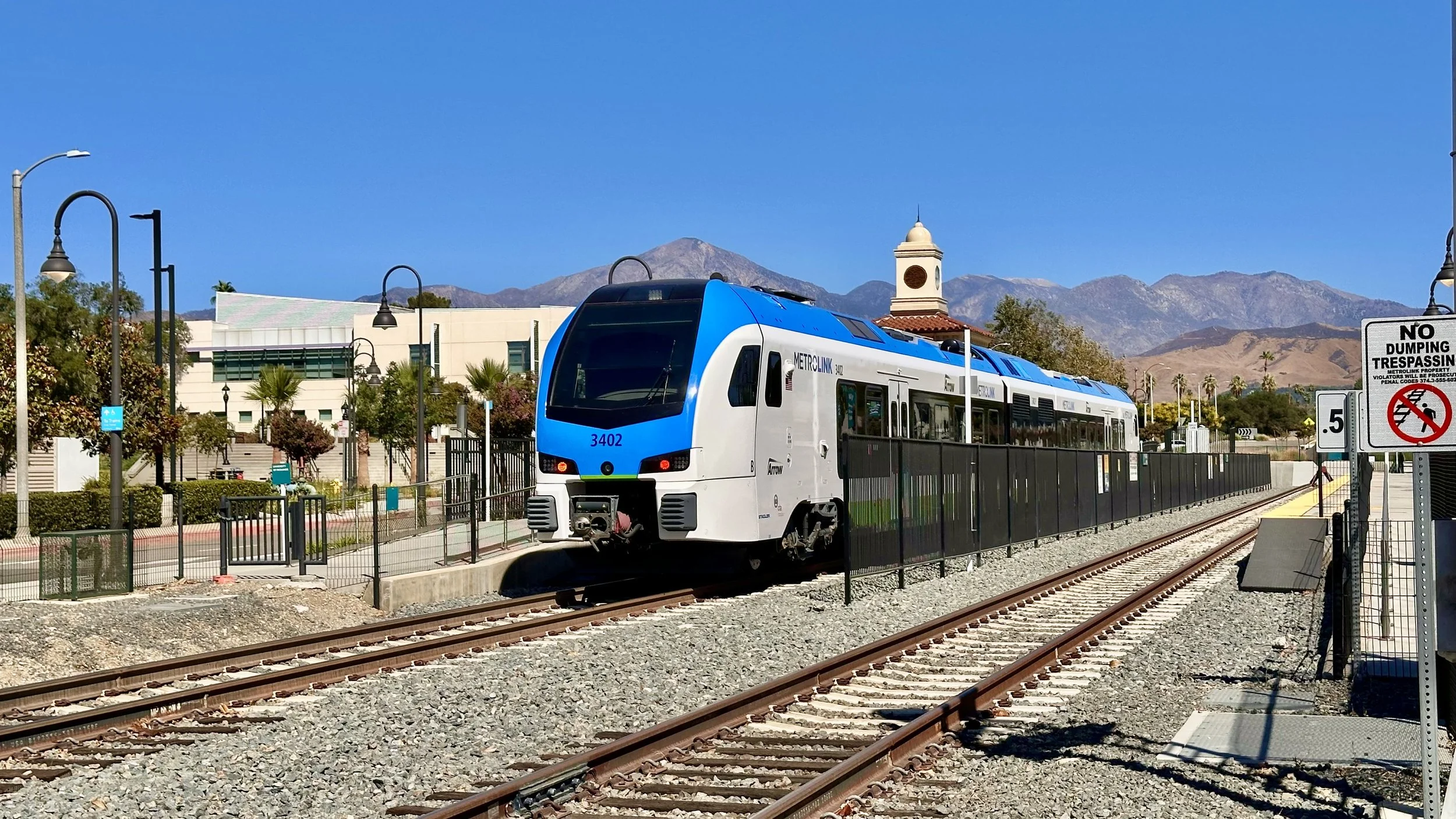
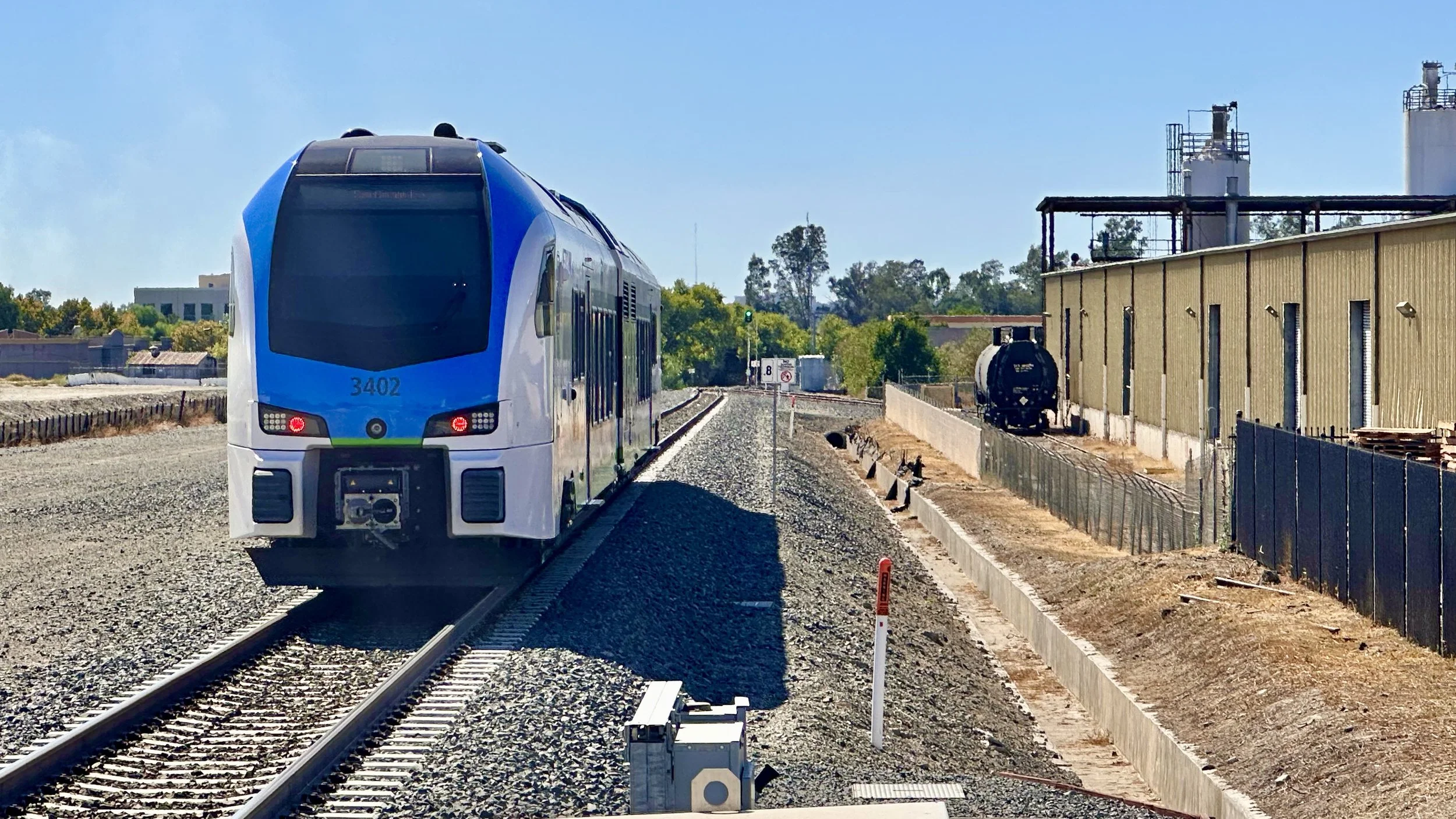
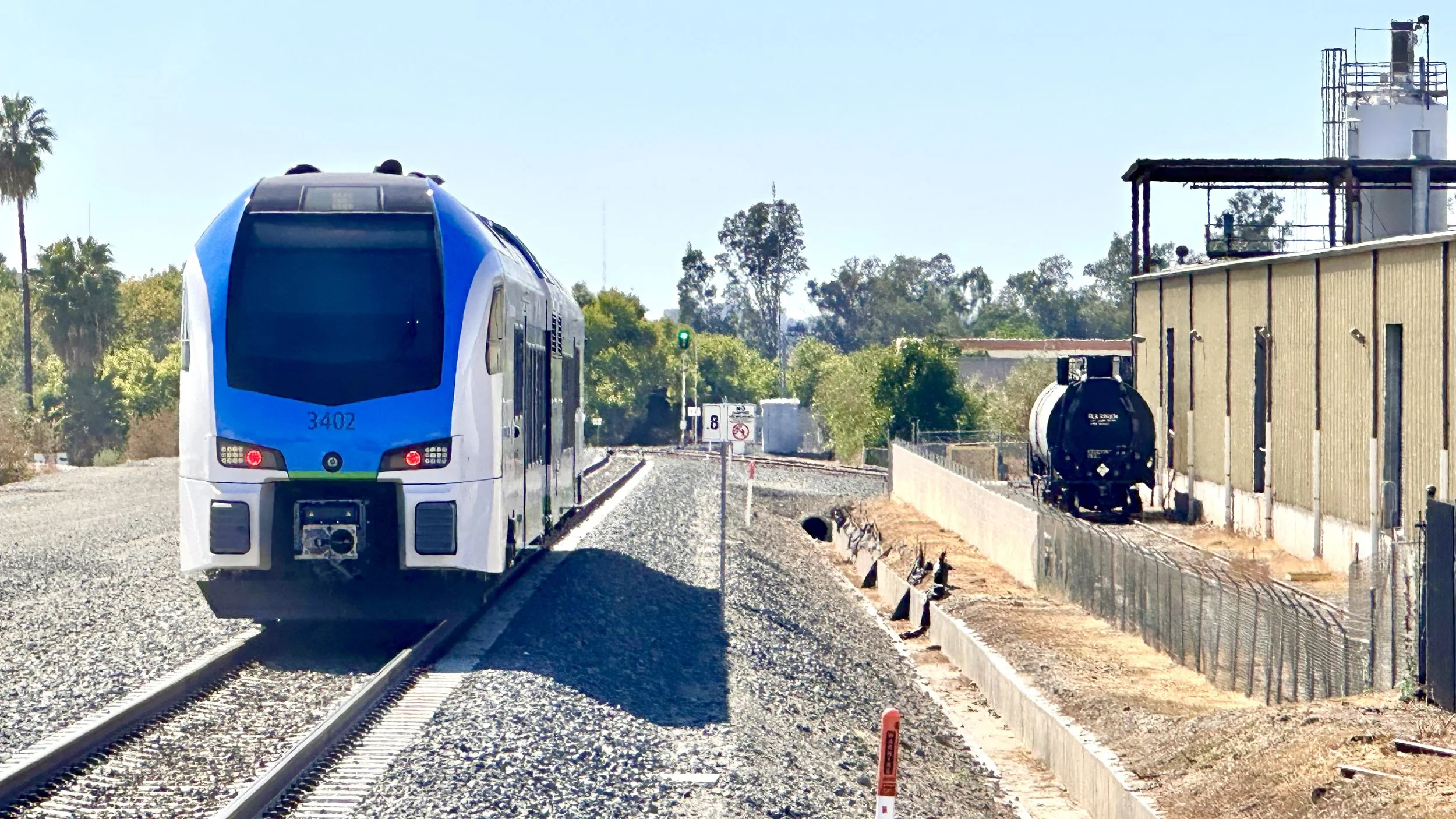
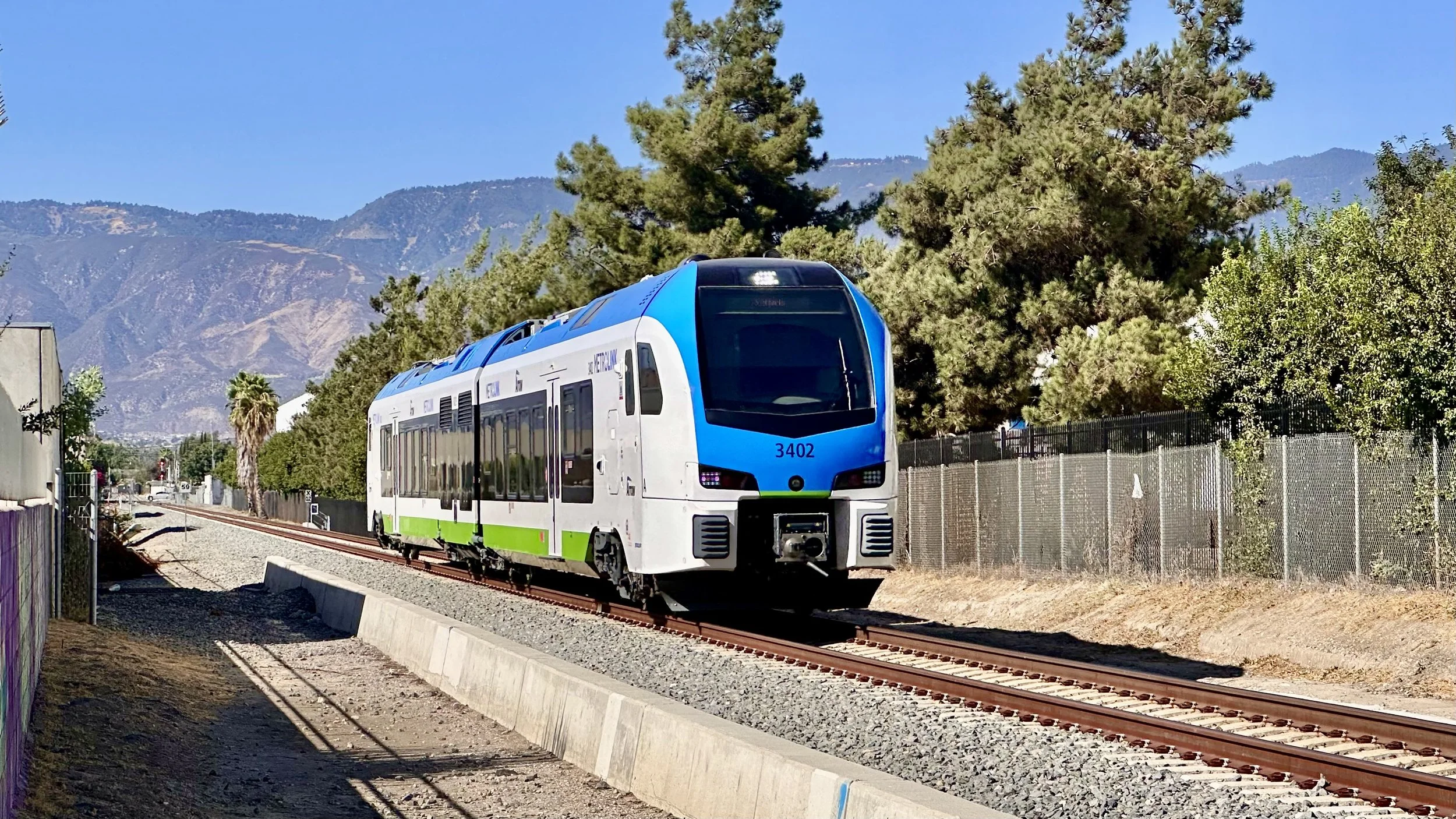
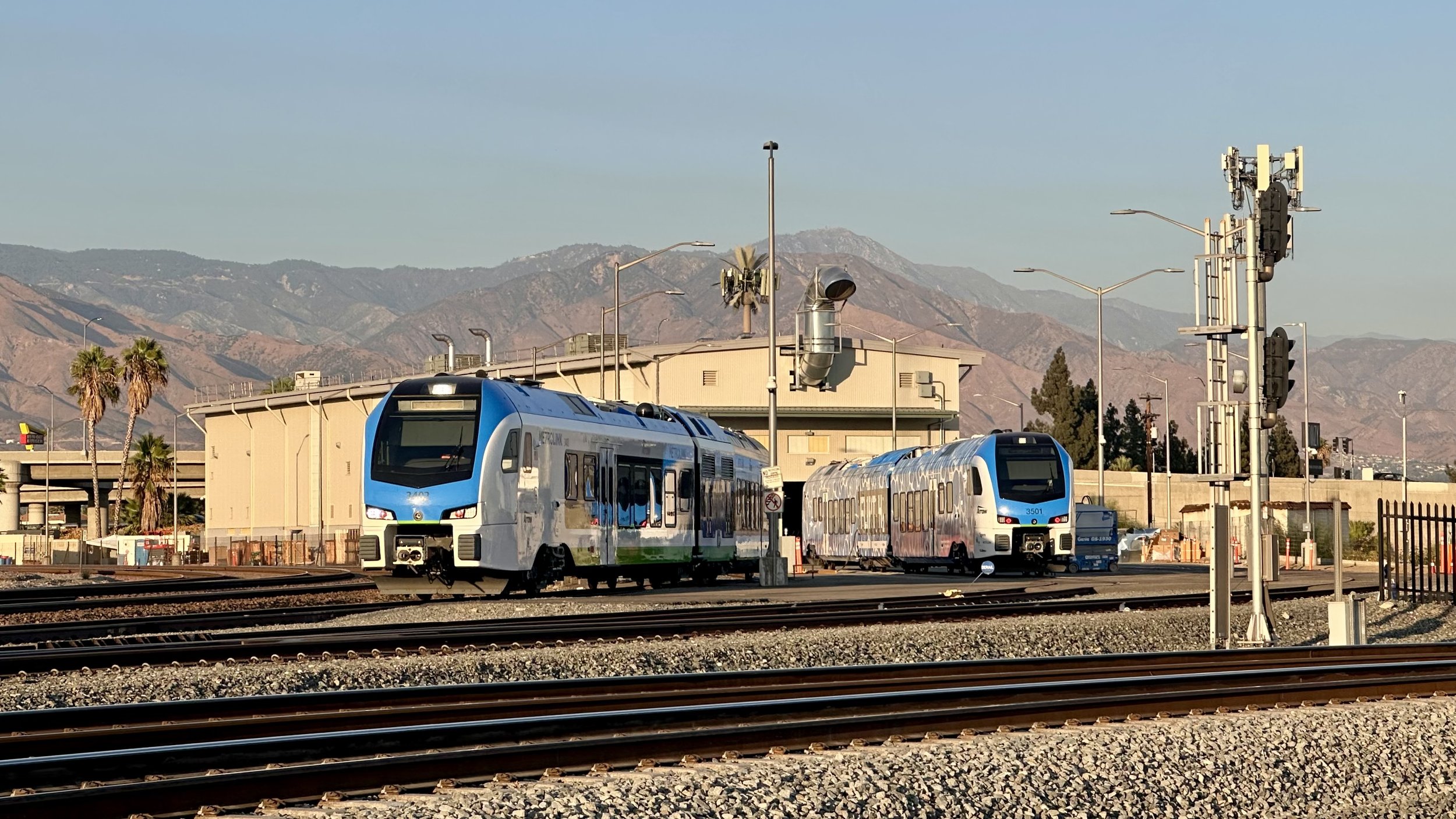
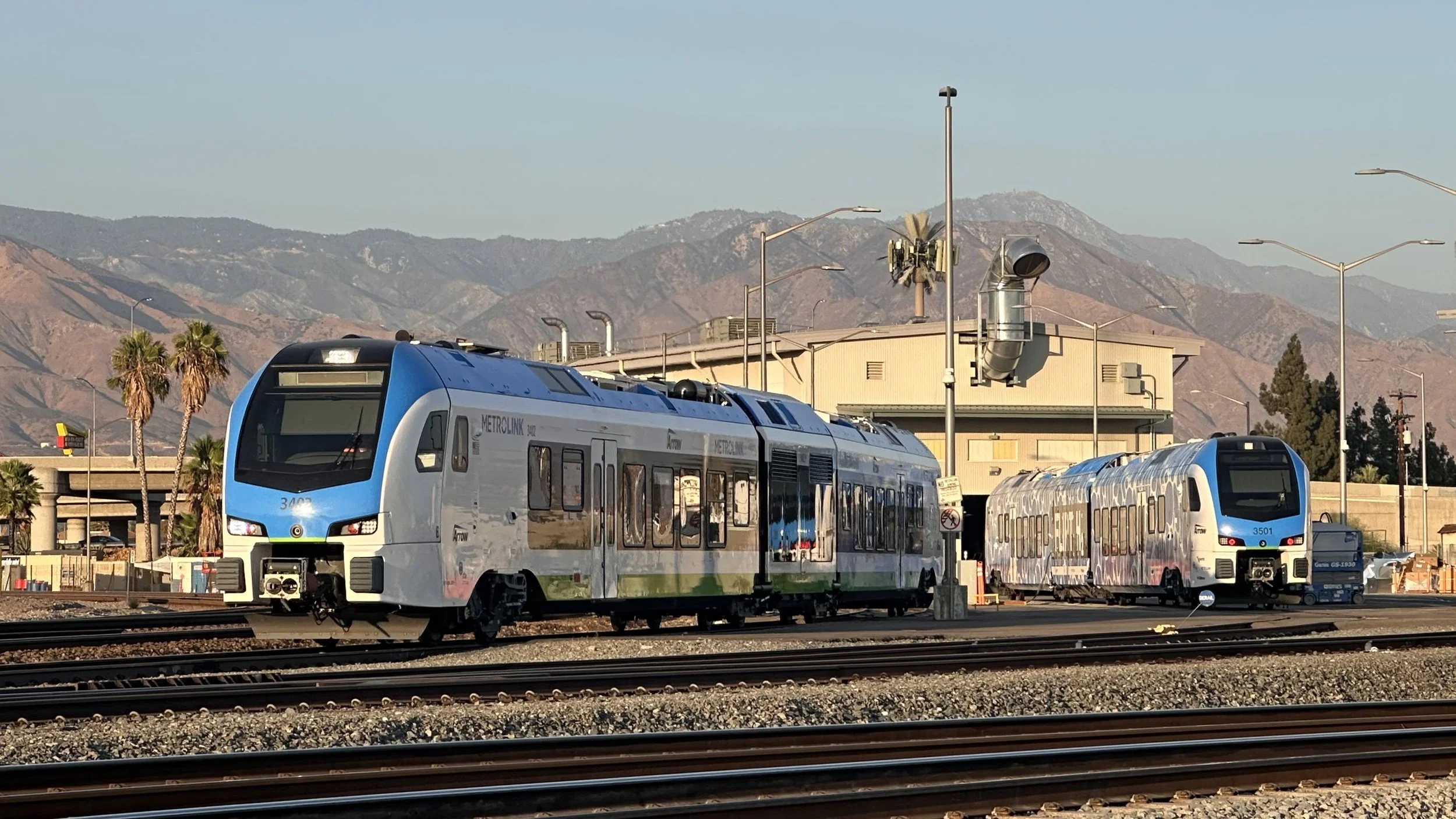
The penultimate DMU to open in the US was Metrolink’s Arrow in 2022 between San Bernardino Downtown Station (not to be confused with San Bernardino Depot Station) and the University of Redlands. The second-shortest DMU besides eBART, Metrolink’s culture hamstrings the poor Arrow to the point of unusability. At a gallingly awful hourly headway for a mere five close-by stations, operations are typically conducted with a single vehicle, despite there being four on the roster.
The core of the issue is Metrolink’s agéd concept of commuter rail (some of whose lines see a nation-lagging two departures a day), which is very peaky and focussed almost entirely on trips to Downtown LA in the morning and back in the evening. In this light, the Arrow is a cheap extension of the commuter rail, running but hourly to connect with slow mainline Metrolink trains to or from San Bernardino Downtown Station. As advocates note, Commuter Rail is not transit infrastructure, it’s car infrastructure, meant purely to relieve roads at peak times rather than provide a realistic alternative lifestyle.
But all is not lost yet. Arrow is more of a testbed for Metrolink and other California rail authorities, not just for DMUs, but also Hydrogen Fuel Cell trains as they try to curb emissions but are too lazy to do it correctly by stringing catenary wire. Arrow’s modest success is more likely to see backwards extension along existing Metrolink track to the Ontario International Airport, boosting frequencies and reverse commute options within the Inland Empire instead of being a dud like CapMetro Rail made purely to serve commutes to LA.
There is one on-line freight industry, a chemical plant. with a single spur. Arrow’s saving grace, however, is its OMF, which resides next to the San Bernardino Depot Amtrak Station and a very large intermodal and freight yard right on BNSF’s southern transcon. This puts DMUs line-of-sight from some of the heaviest mainline freight railroading on the continent, and posits the possibility of modeling just a freelanced OMF as if it were a switching job, revenue movements be damned. At appointed times during an op session, a switch crew could cycle a few DMUs through the OMF based on a maintenance schedule, then send one or a few off-layout into a staging pocket depicting crew changes or adding extra peak commute frequencies. This could be a very unique and colorful way to shake up typical switching puzzles found on many large layouts.
A note on vehicles: FLIRTs are the newer, bigger siblings of GTW 2/6s, having larger motors that allow for two additional trailer cars, but keeping the middle “Power Pack” mini-cars which contain the prime movers surrounding a ‘funhouse’ passenger hallway. Uniquely, Power Packs are swappable, allowing a spare kept for maintenance, and making the DMUs forward-compatible with alternative fuels by swapping in Power Packs which contain pantographs (EMUs), batteries (BEMUs), or Zero Emission Hydrogen Fuel Cells (ZEMUs). During TEXRail construction, Stadler opened a factory in Salt Lake City to manufacture its passenger trains, making FLIRTs now the de facto modern standard for (buy-America-compliant) DMUs.
As far as models go, while nobody manufactures US-prototype Stadler DMUs (either GTW 2/6s or FLIRTs), these vehicles are very common as European prototypes, and there have been many versions on and off through the years in HO and N scales with DCC and Sound. However, Stadler’s cheeky lineup has been slightly scrambled when introduced to the US. KISS’ are still the same double-decker EMUs, such as seen on Caltrain or every square centimeter of Switzerland. However, in EU markets, FLIRTs are similar to US versions, but as EMUs lacking the center Power Pack. What the US understands as FLIRTs are visually more similar to European WINKs, the spiritual successor of the GTW 2/6 which are generally shorter and do possess Power Packs (although they’re still different models; FLIRTs have their traction motors underneath the cabs at each end, whereas WINKs and GTWs have their traction motors beneath the prime movers inside the Power Packs).
Models of EU FLIRTs are almost as common as GTWs, possess the same general shape and characteristic front end, and are decently easy to come by in DCC and Sound, but lack the Power Pack distinctive of US FLIRTs. Unfortunately, models of WINKs are much rarer. Thus, a strict prototype modeler could buy models of both a FLIRT and a GTW 2/6, then kitbash the Power Pack from the GTW into the FLIRT and remove the FLIRT’s pantograph and extra coaches. Alternatively, one could easily abort the kitbash and compromise on an unmodified FLIRT lacking a Power Pack, use a Stadler GTW 2/8 (with a Power Pack and extra middle car but lacking the proper cabs), or buy the Hornby OO Stadler FLIRT with Power Pack as stand-in models until someone manufactures a US FLIRT.
DART SIlver Line
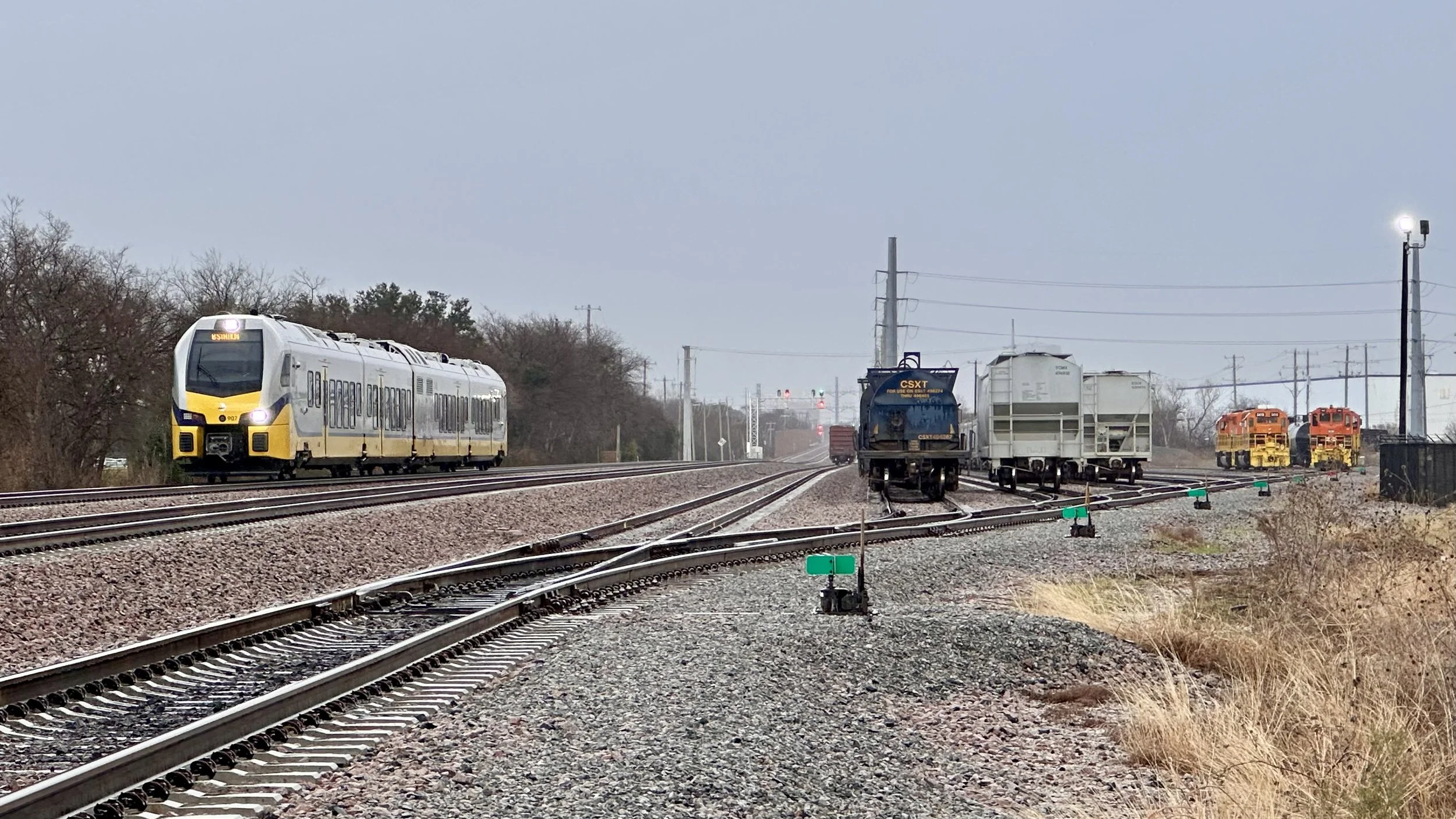
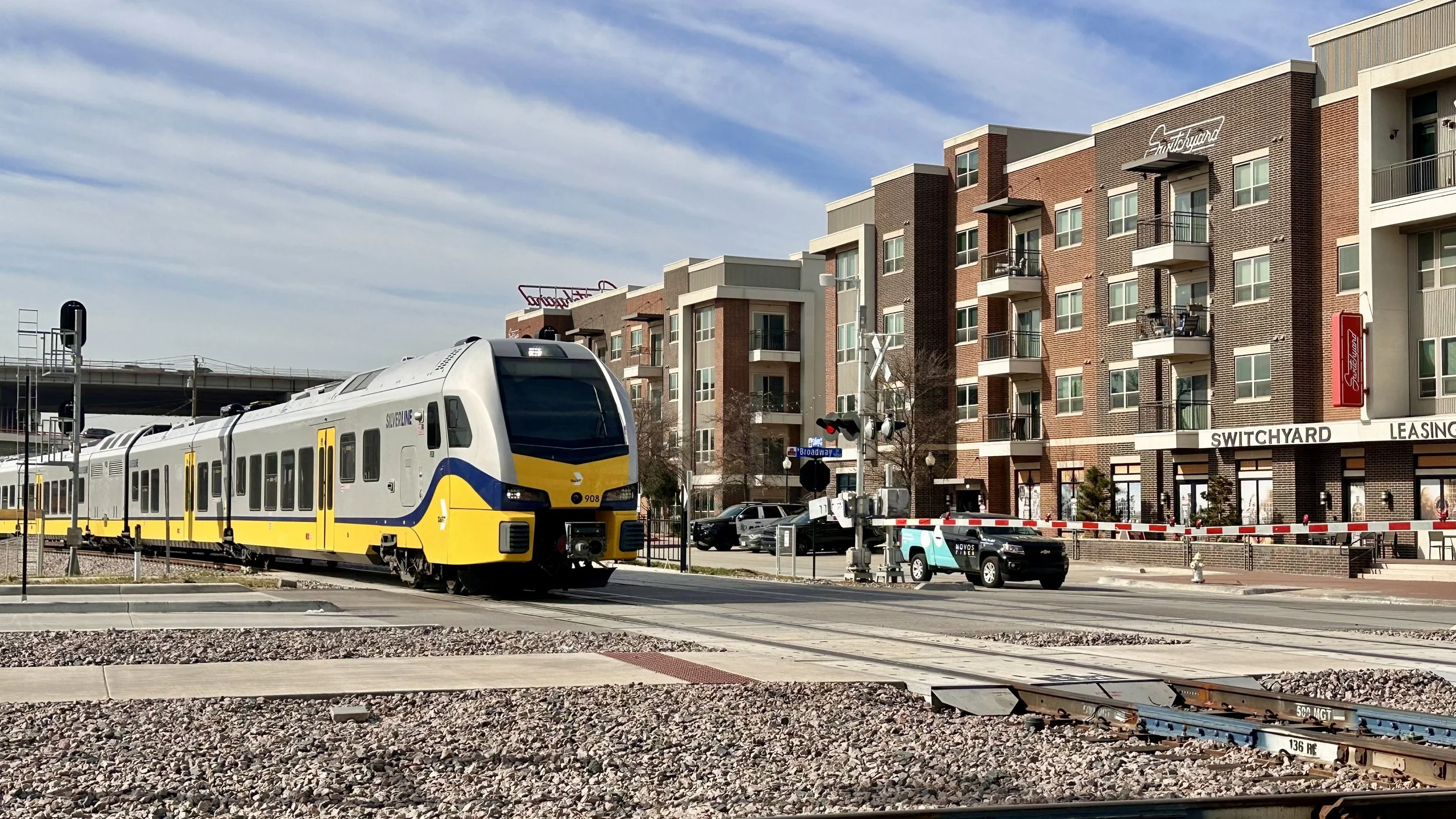
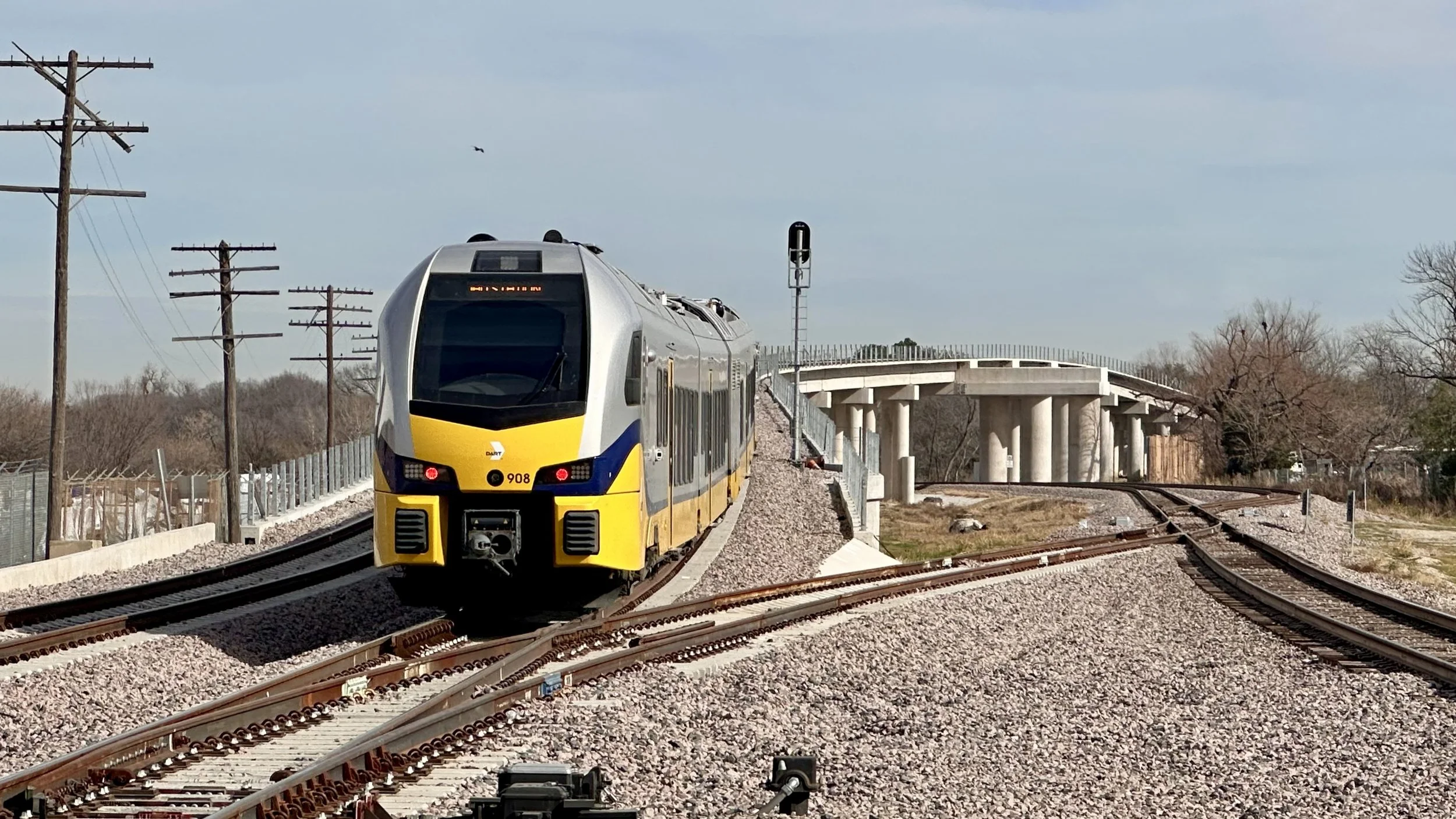
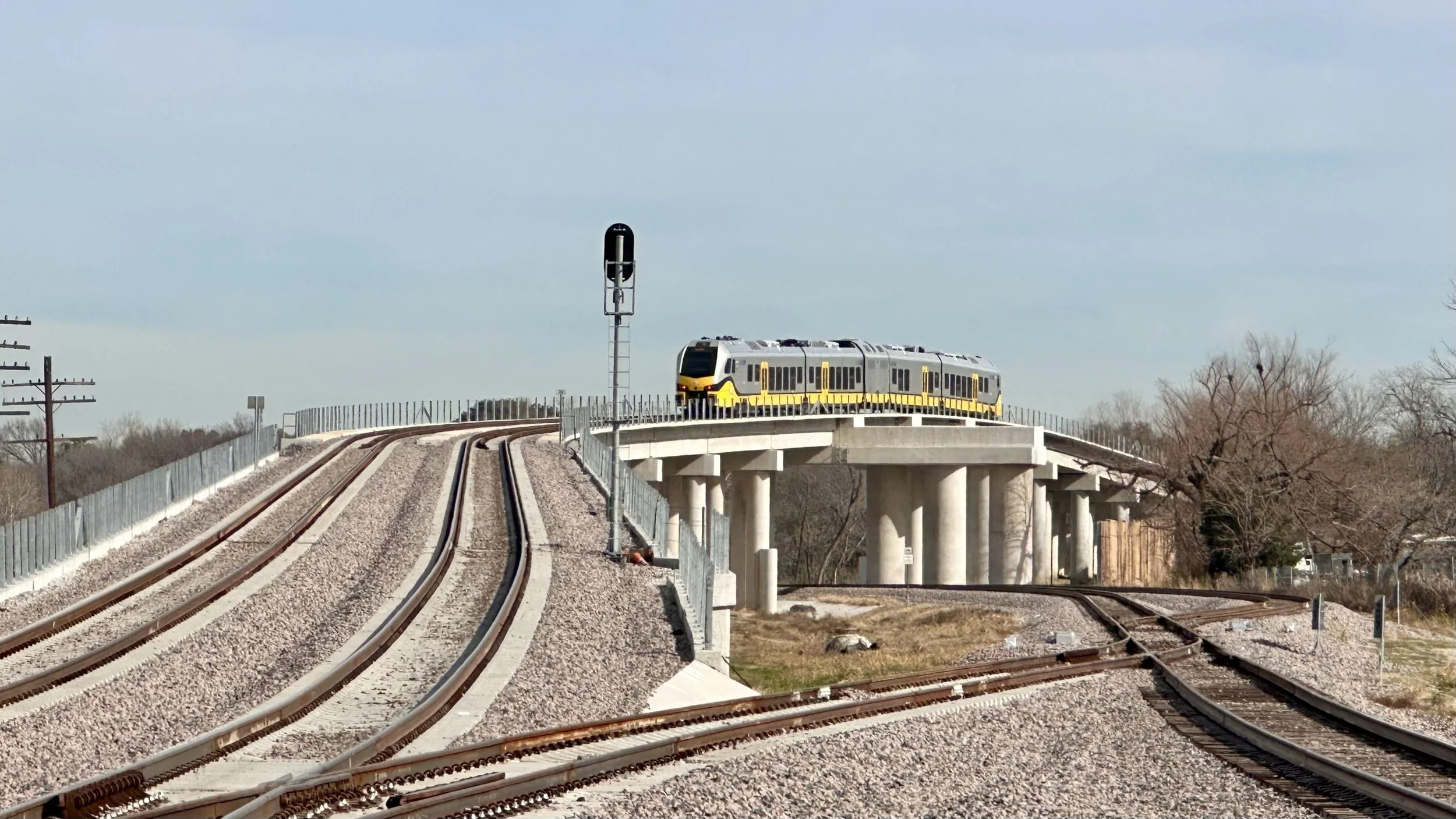
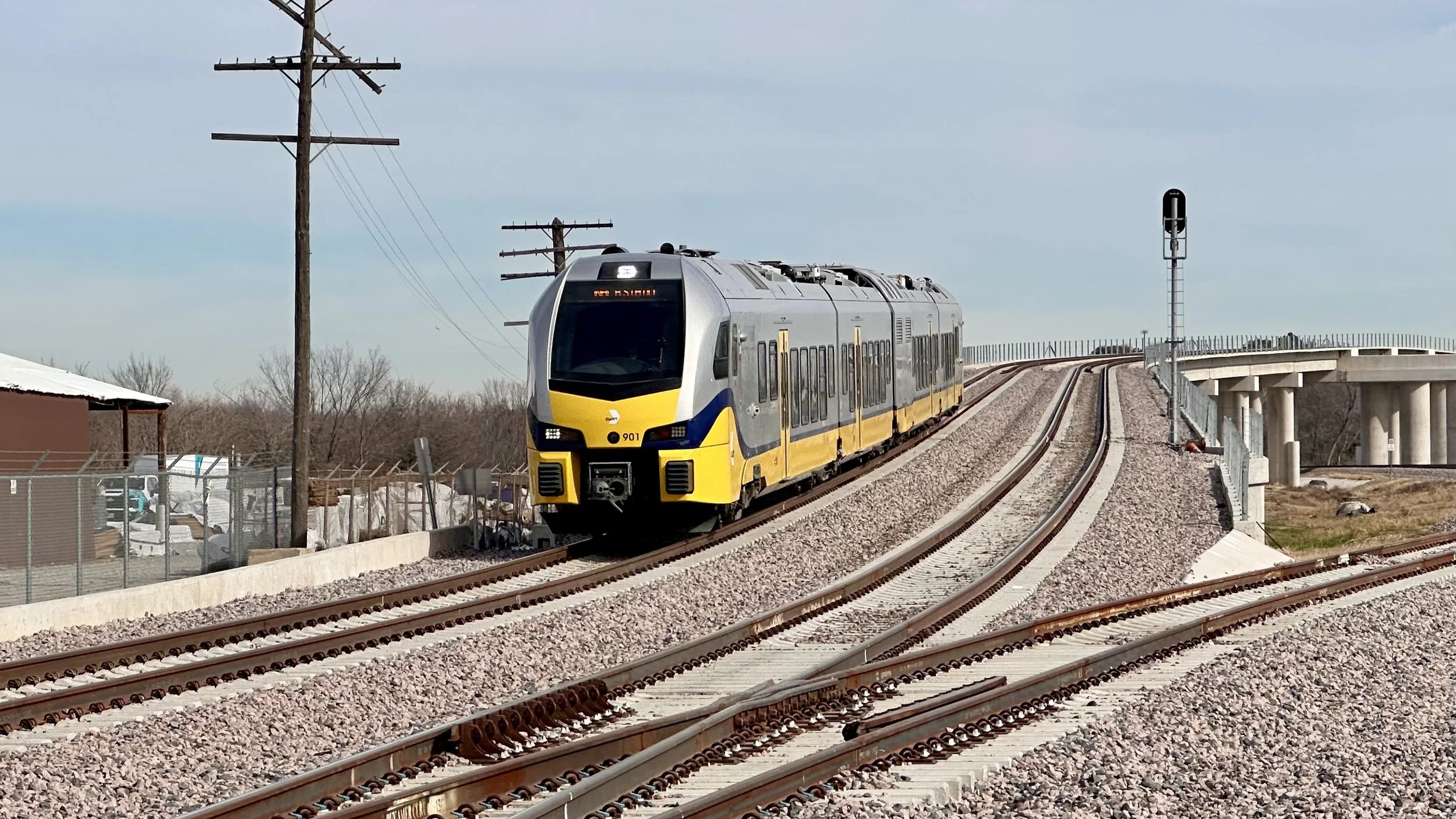
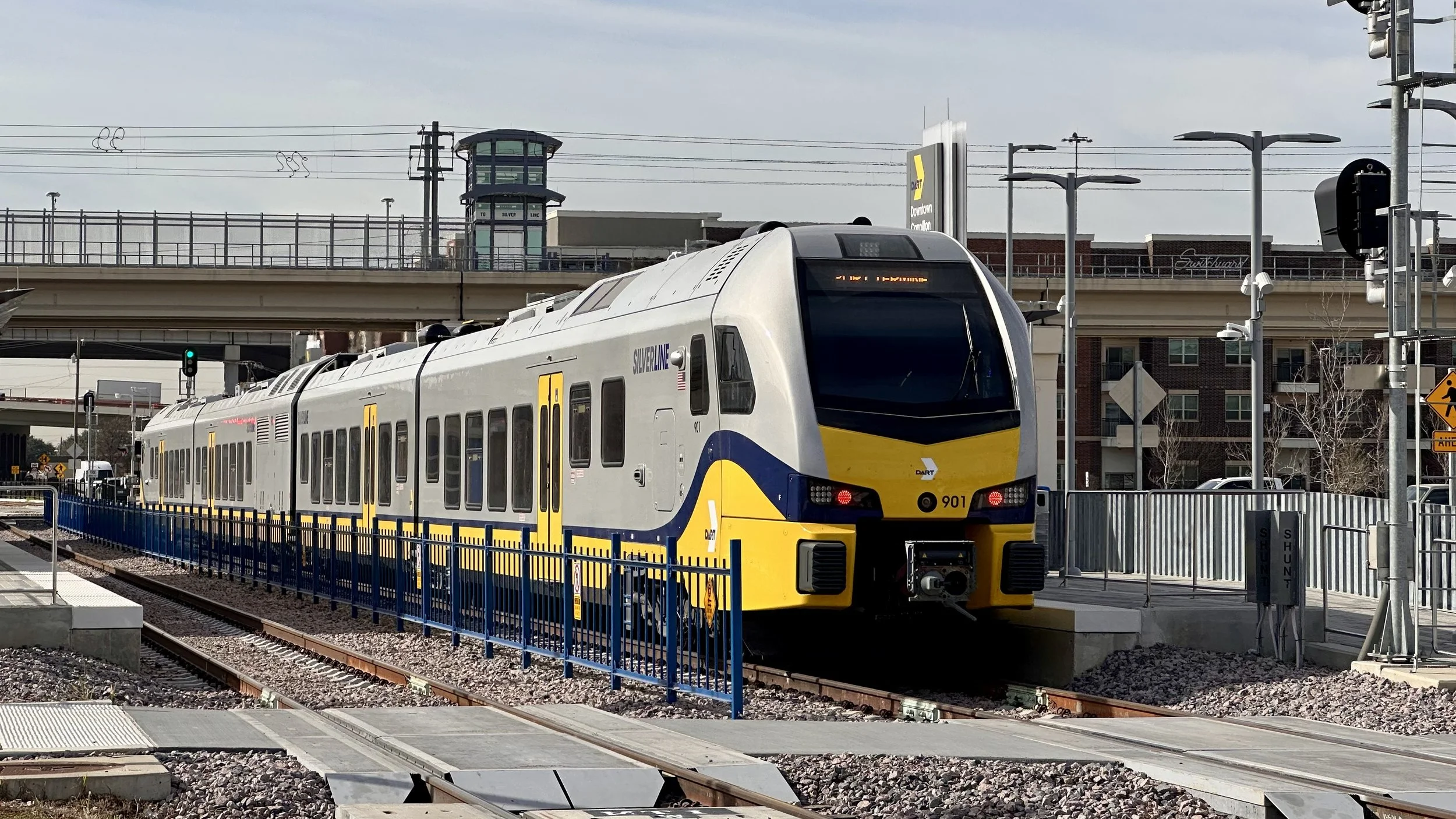
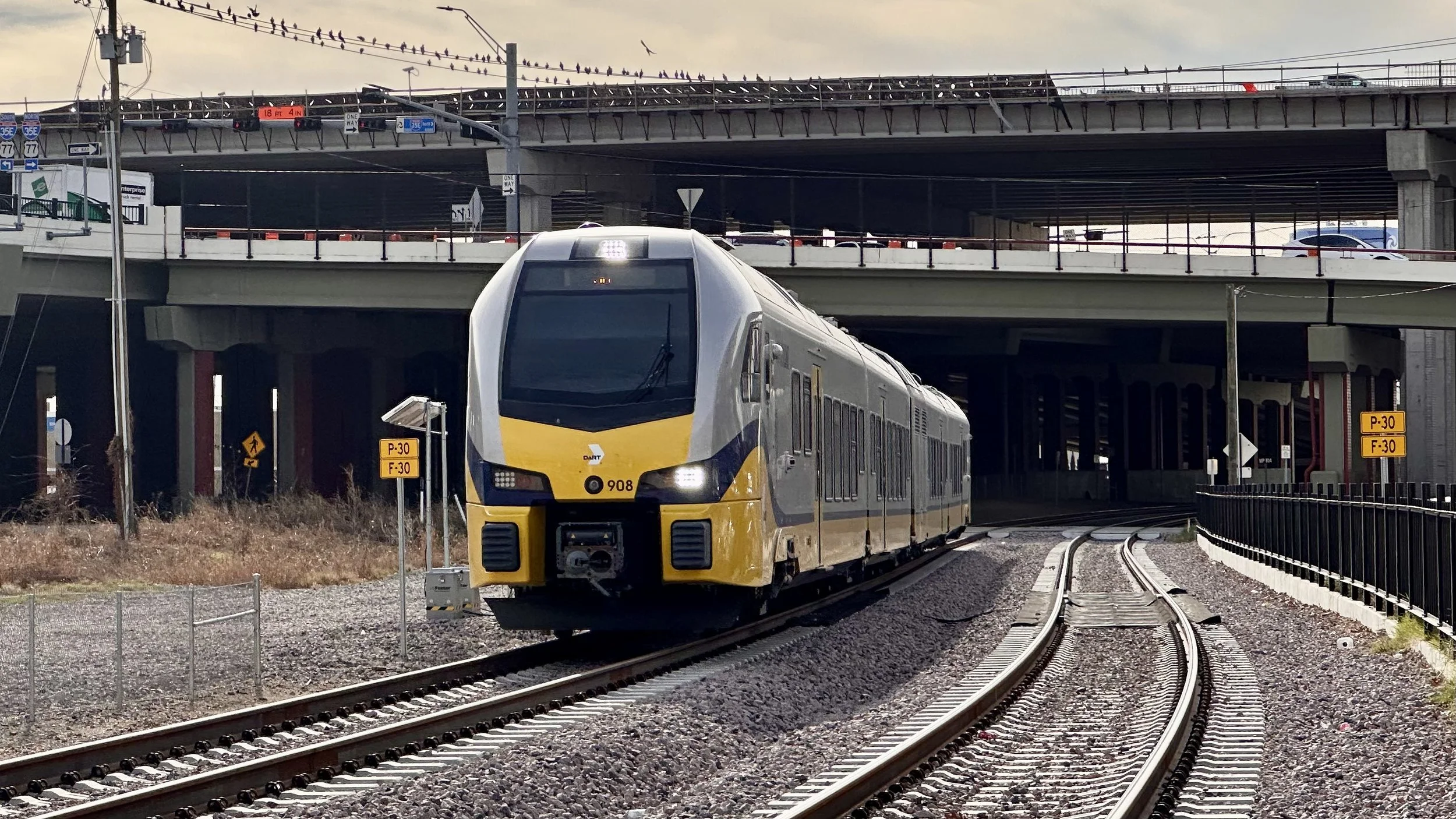
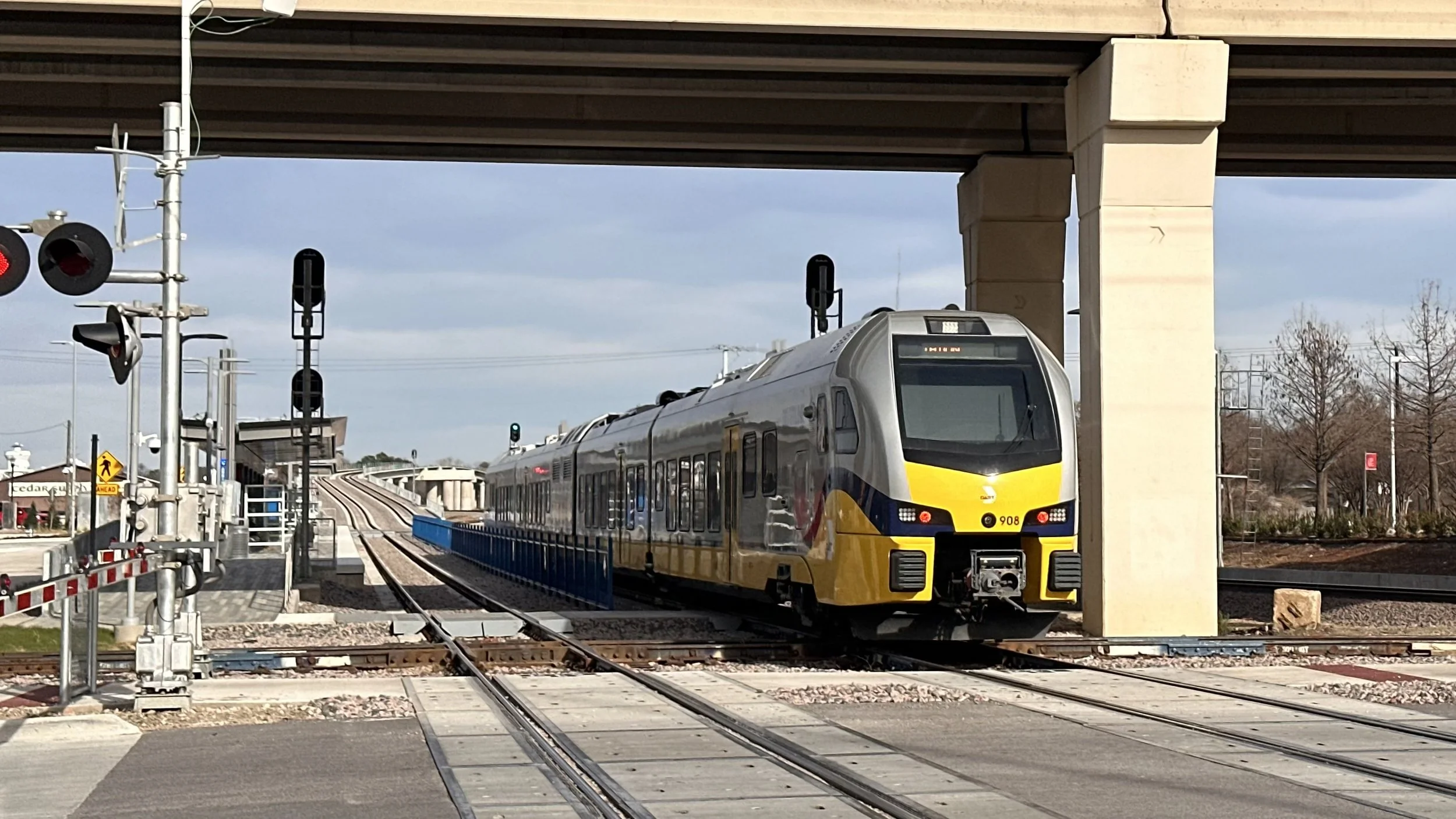
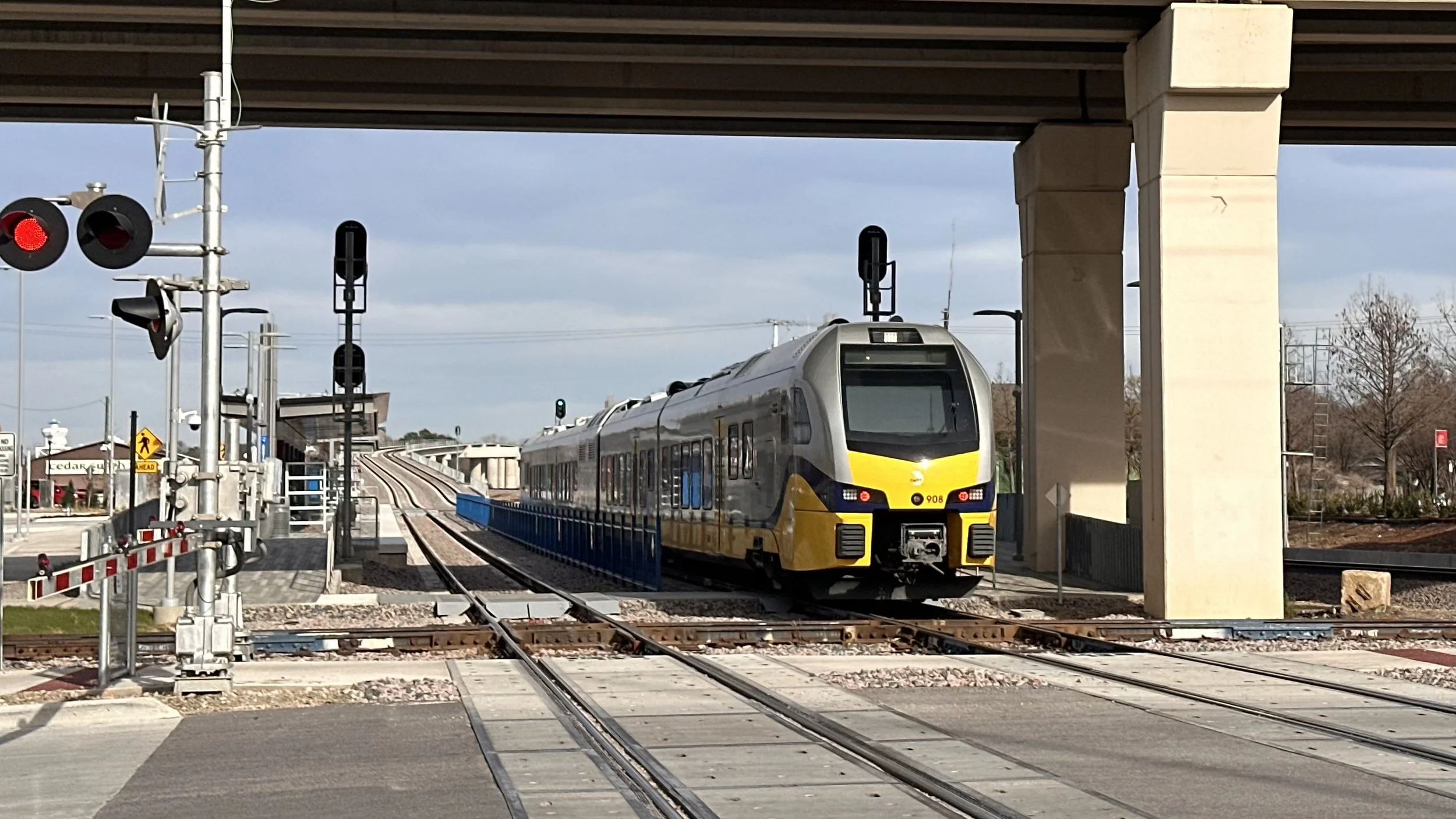
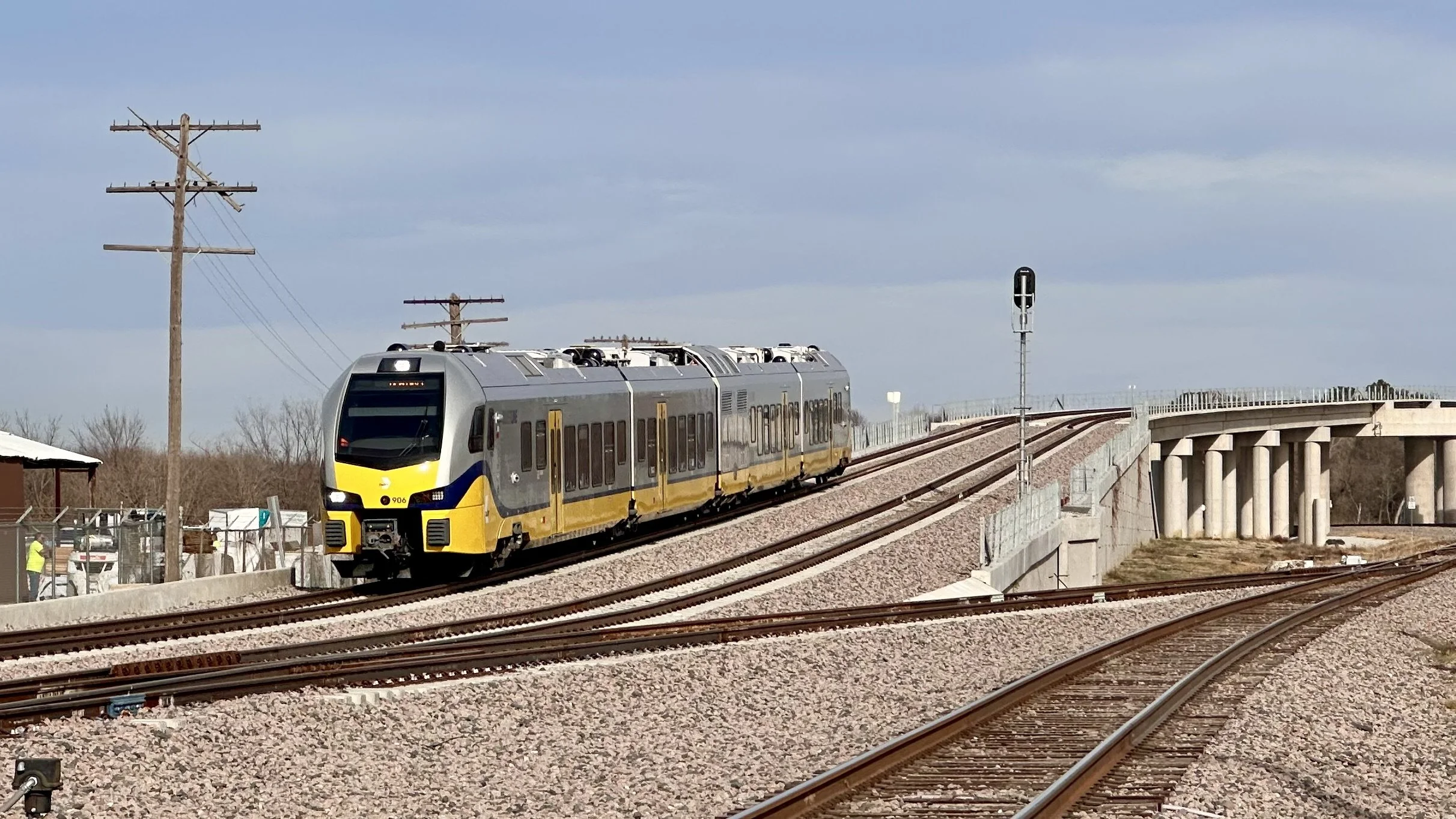
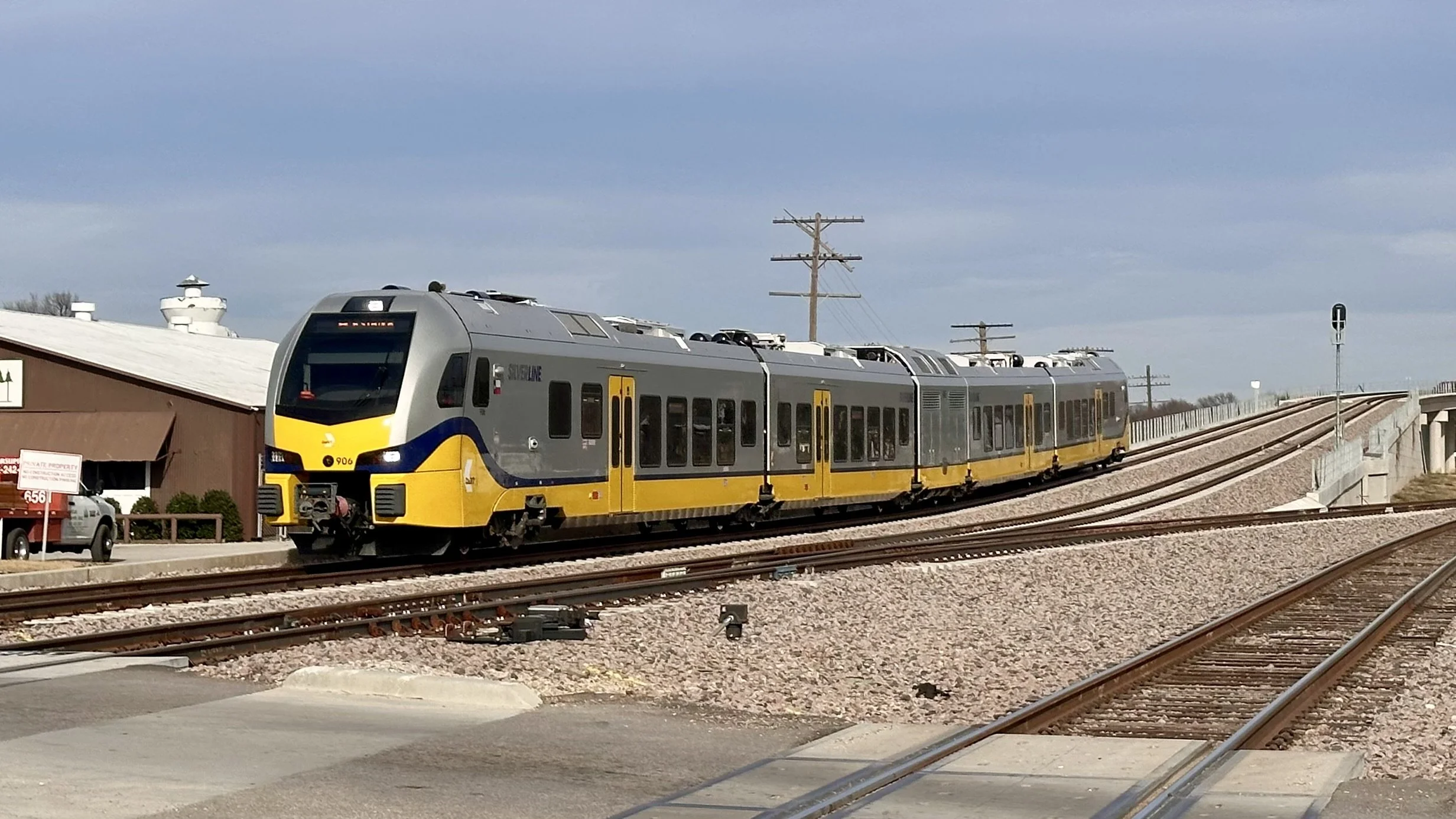
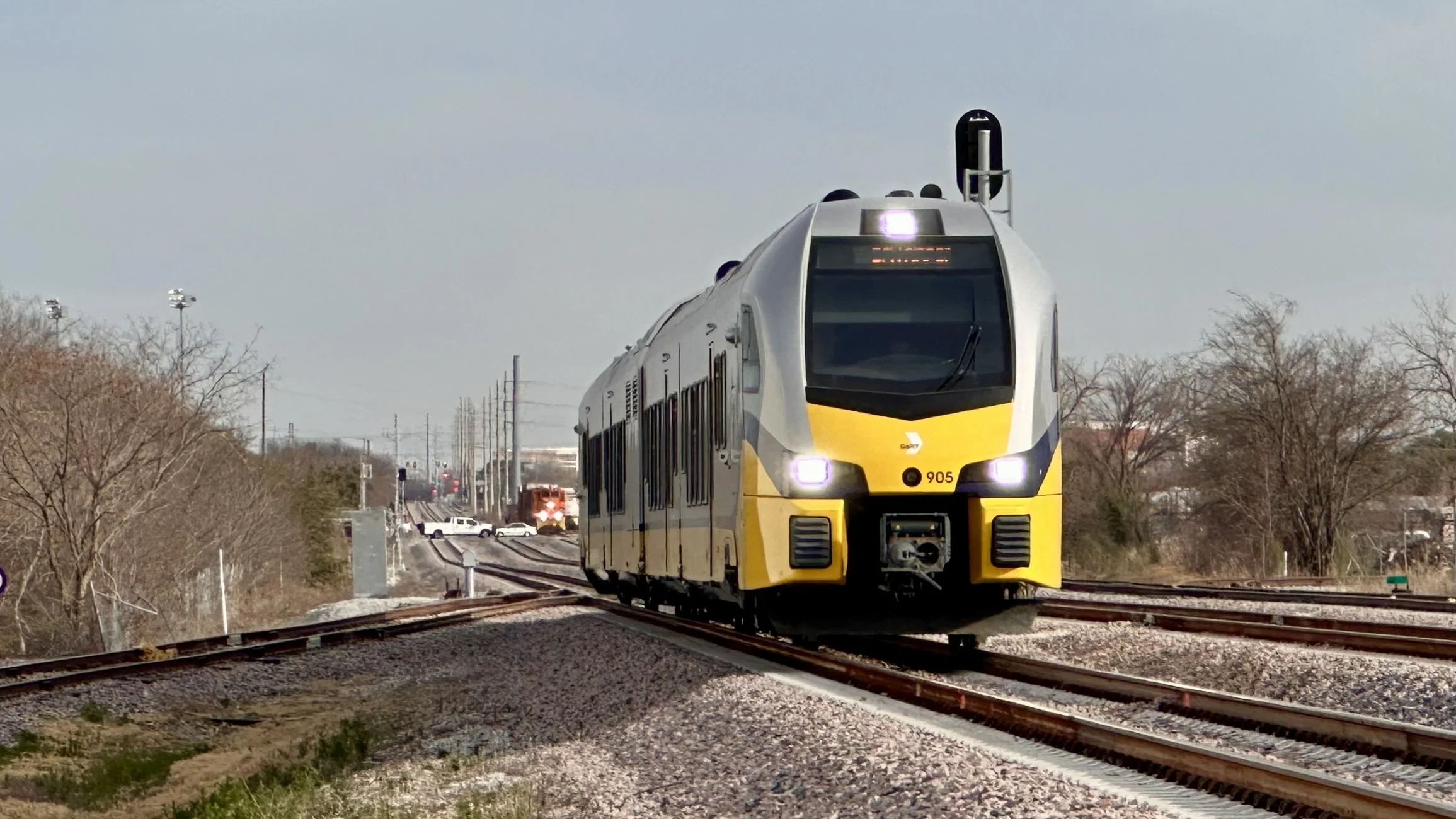
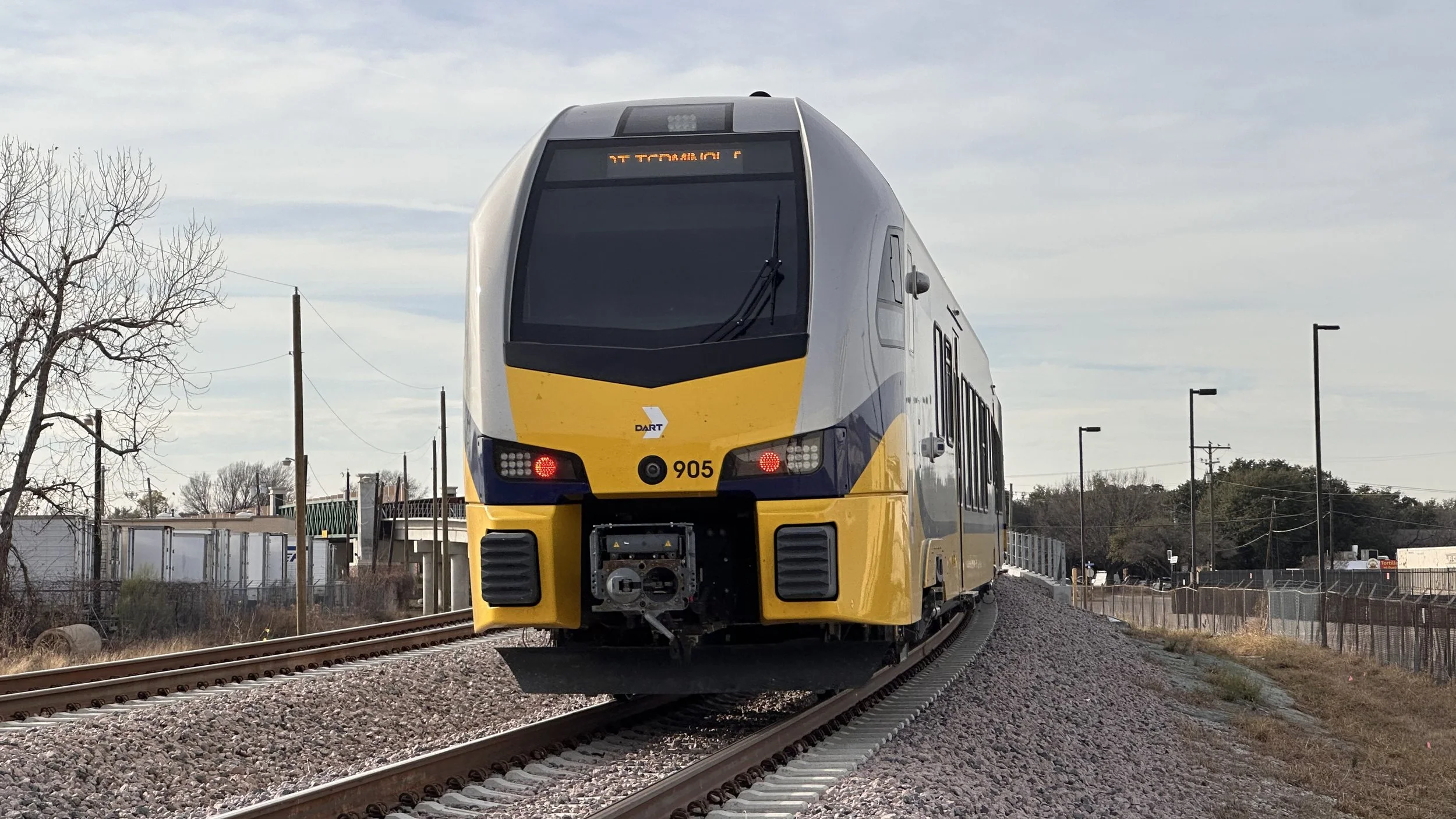
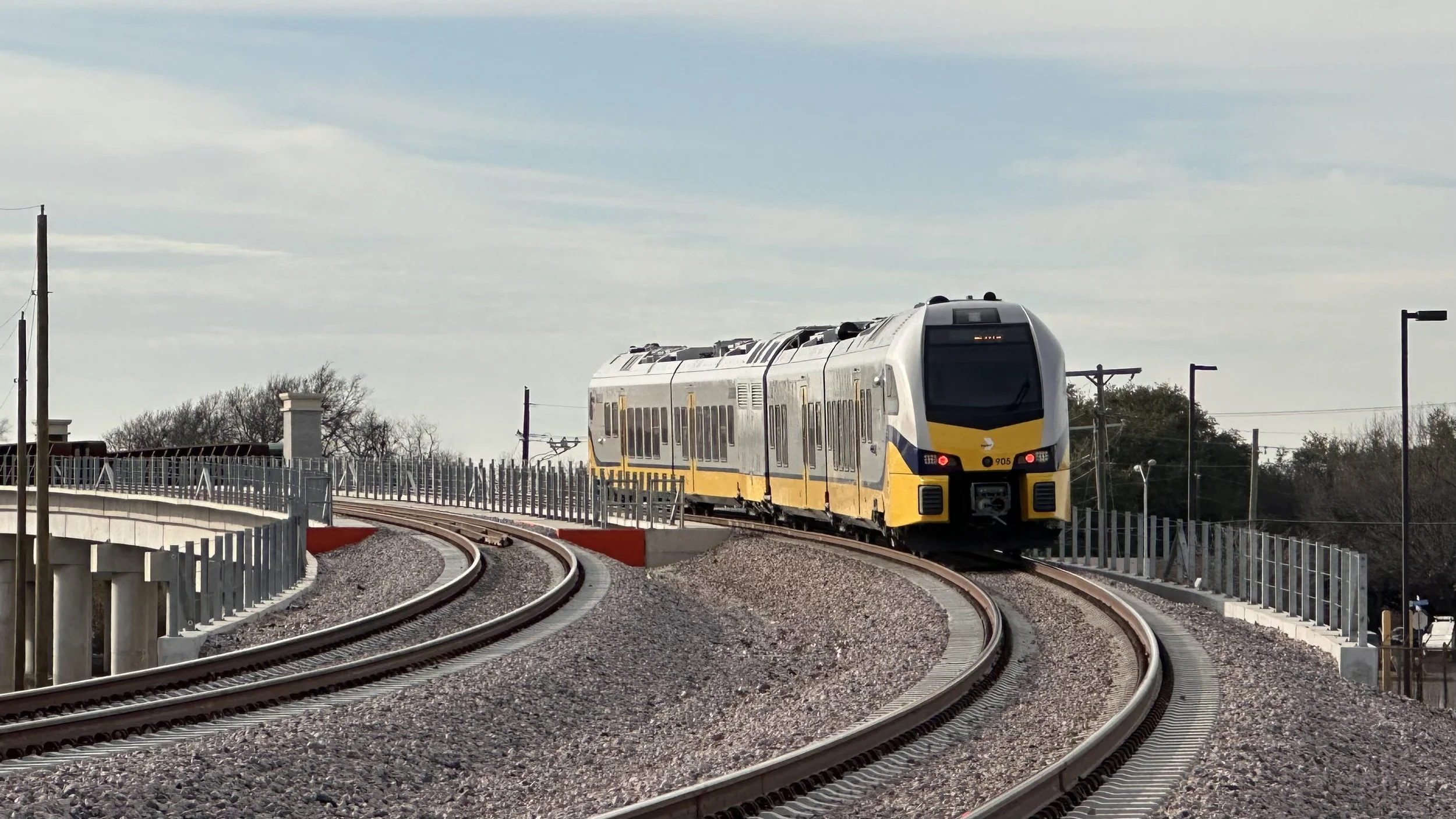
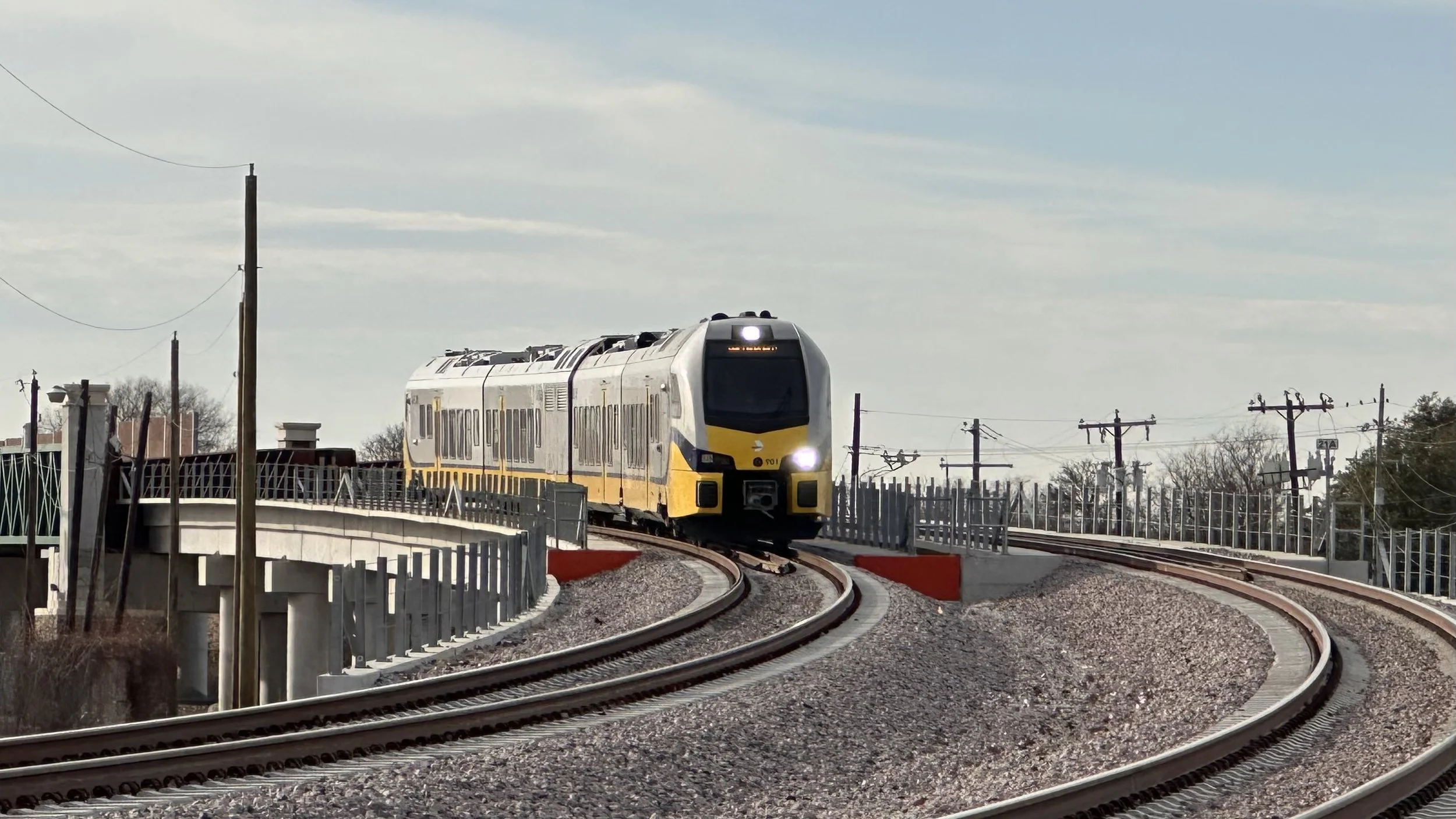
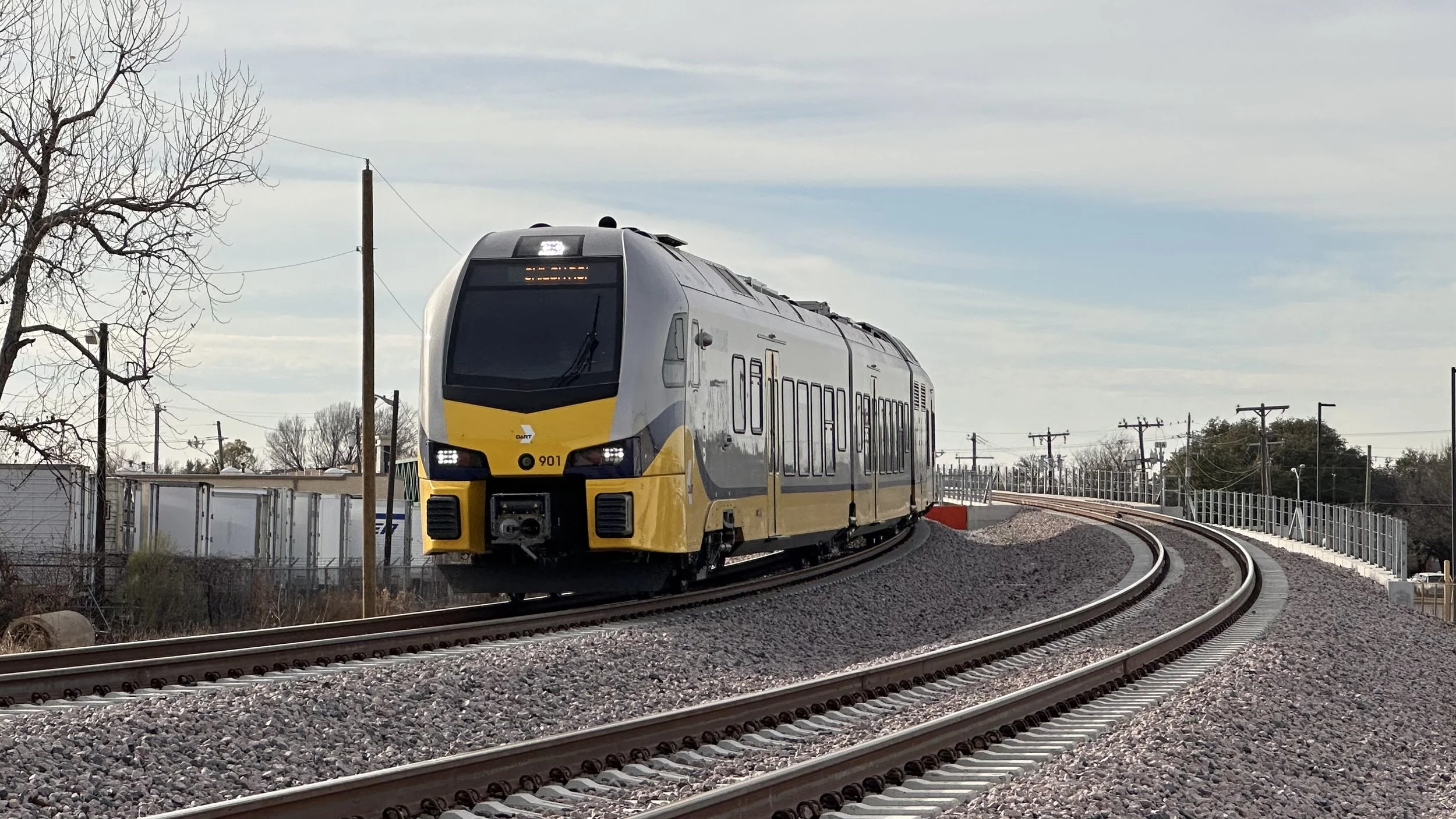
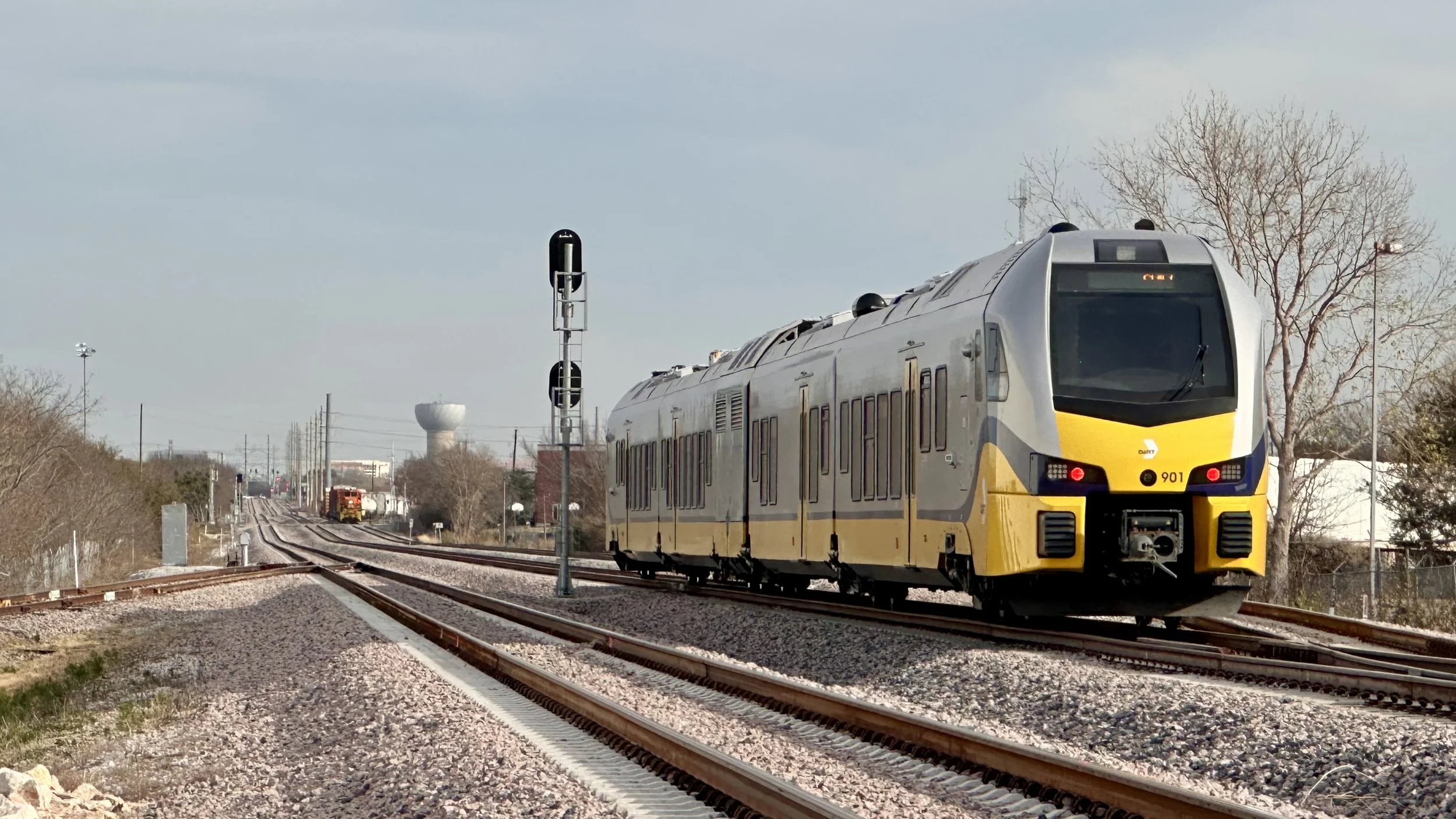
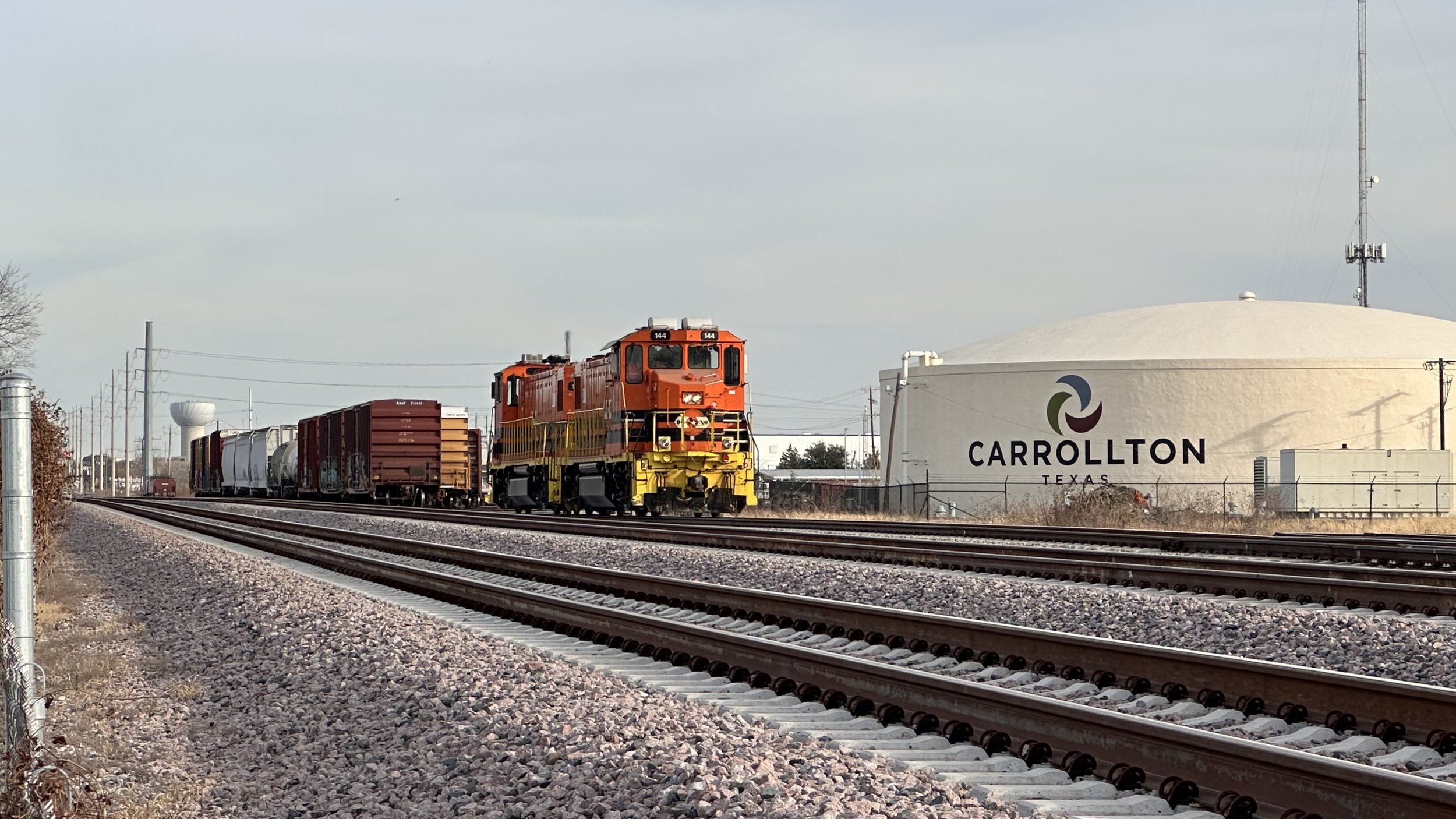
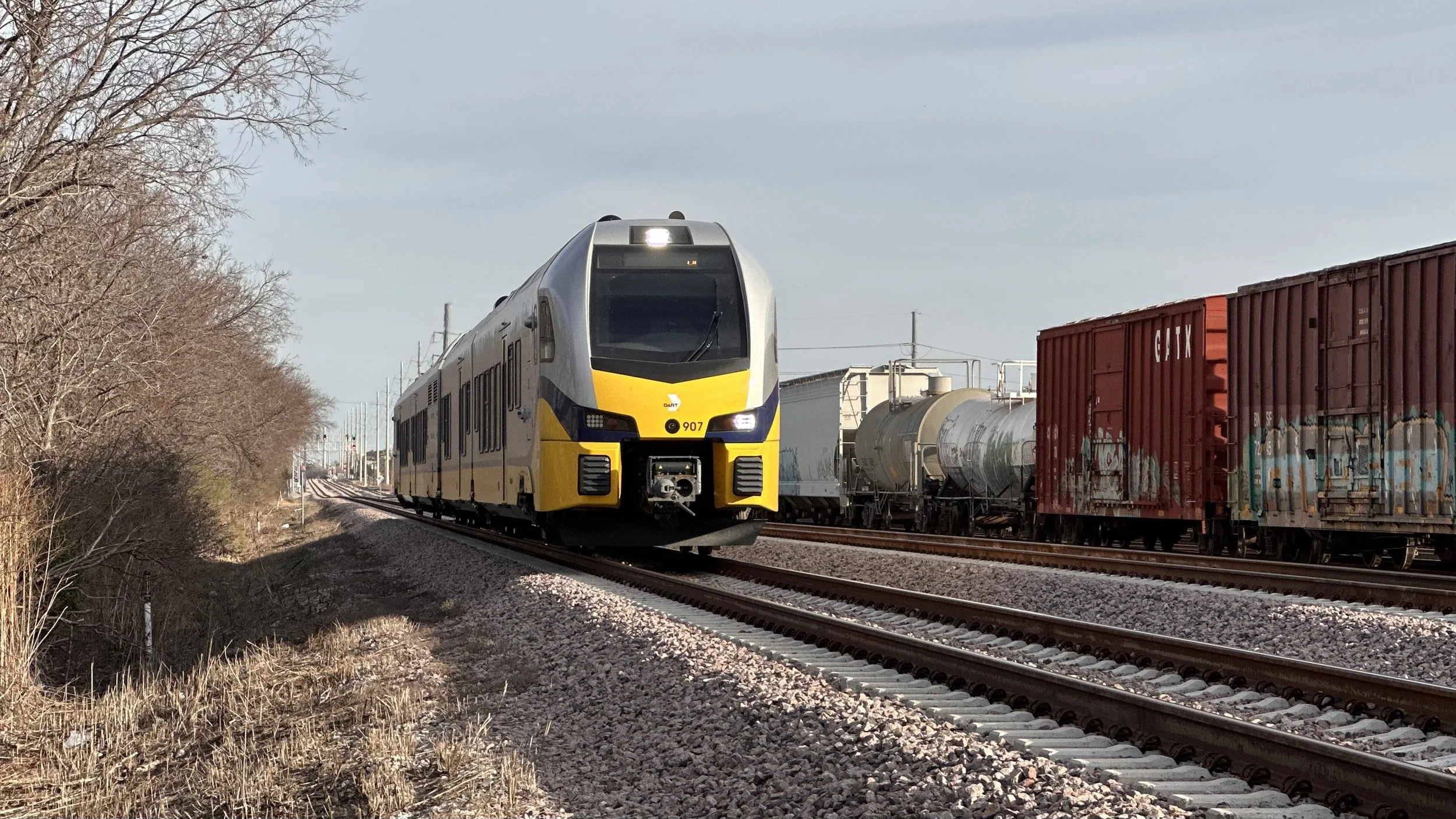
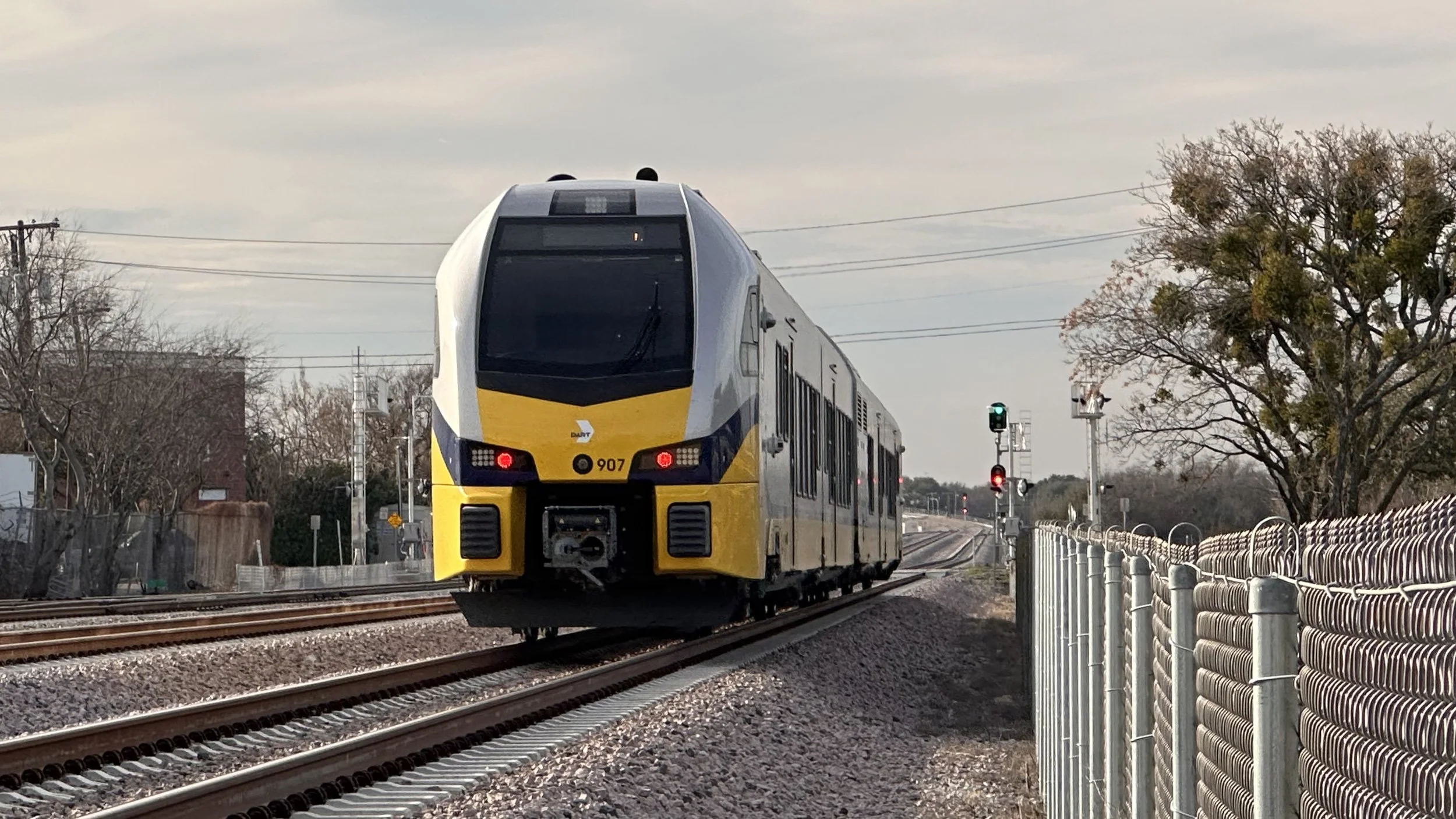
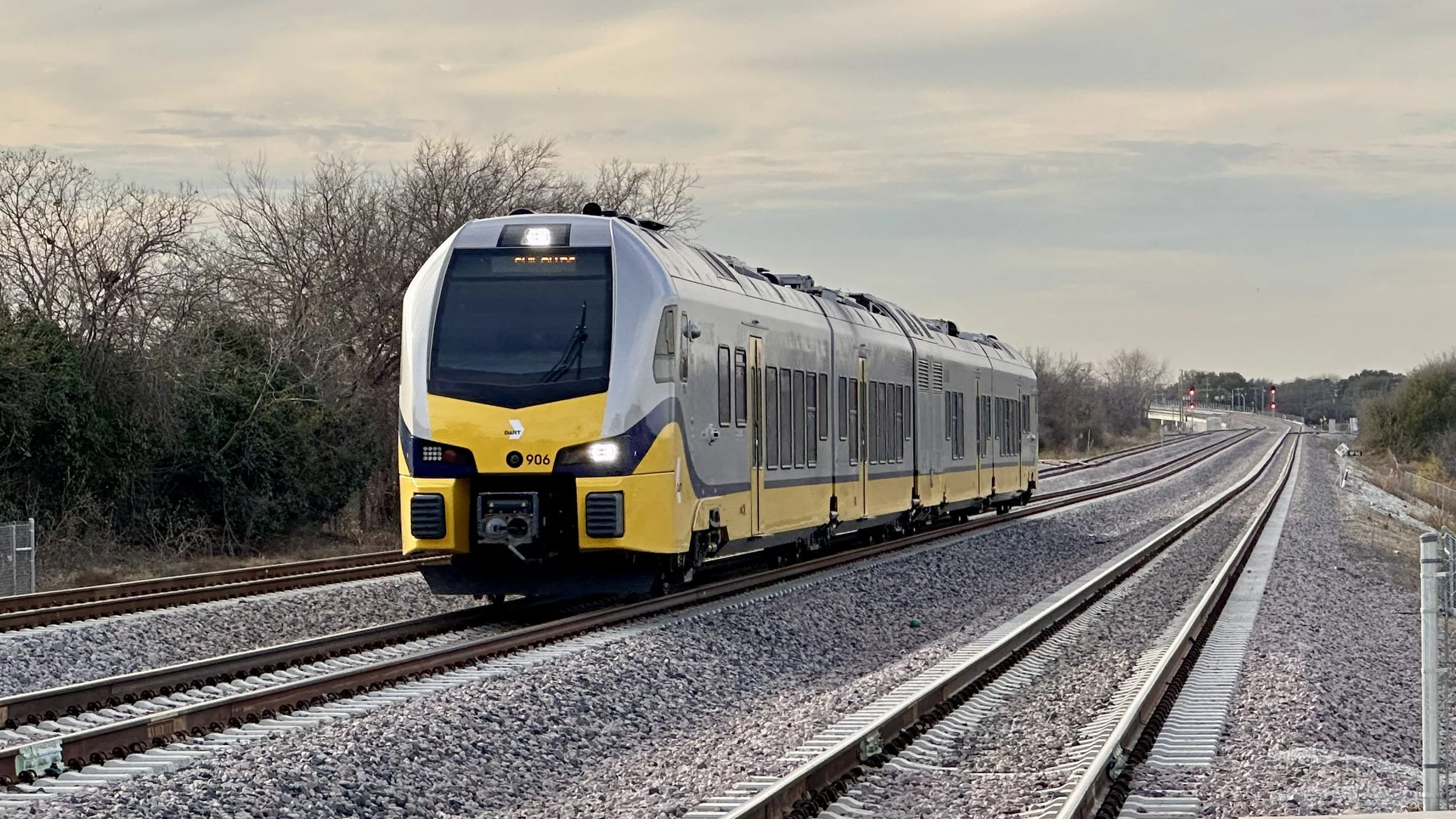
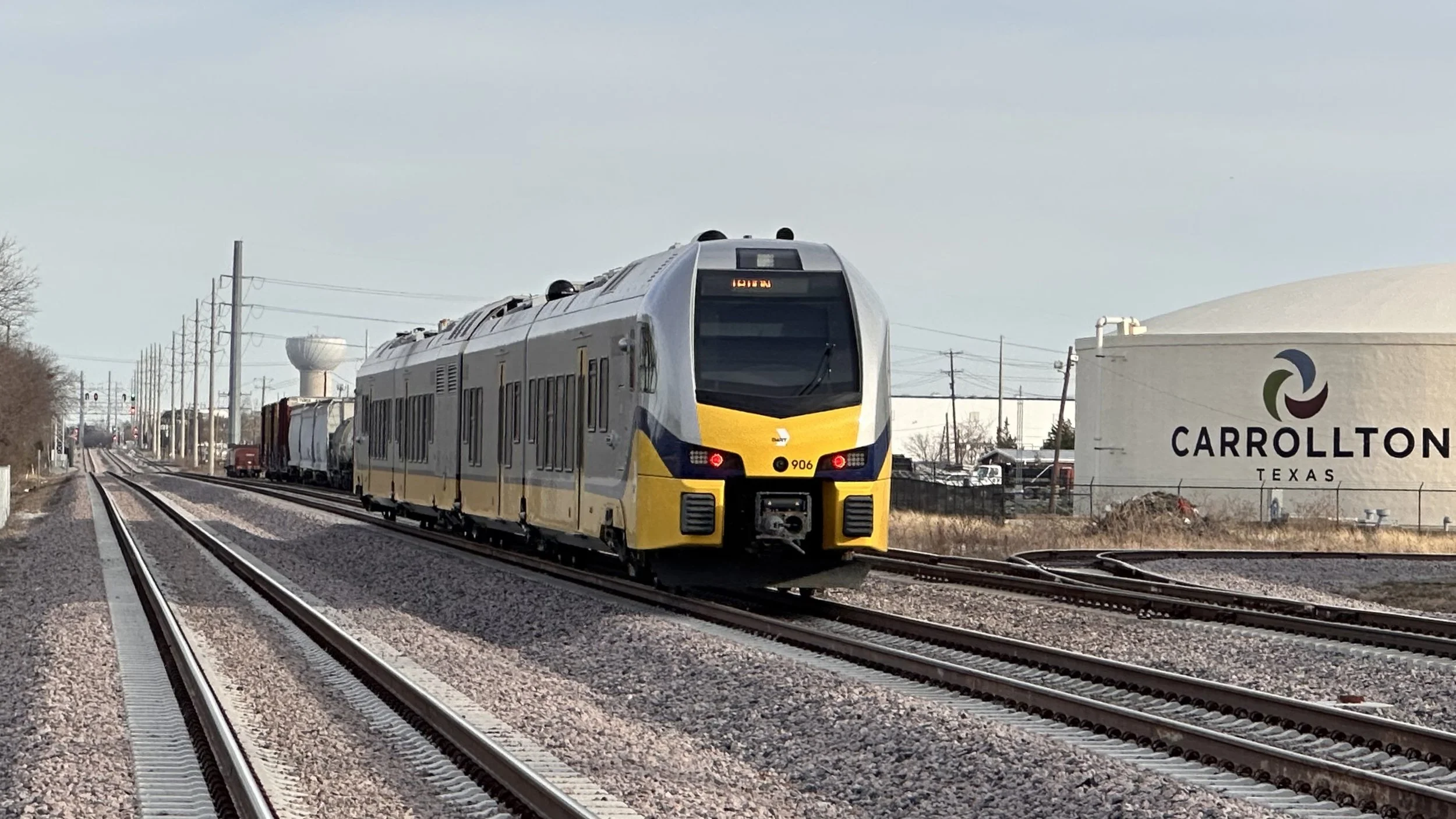
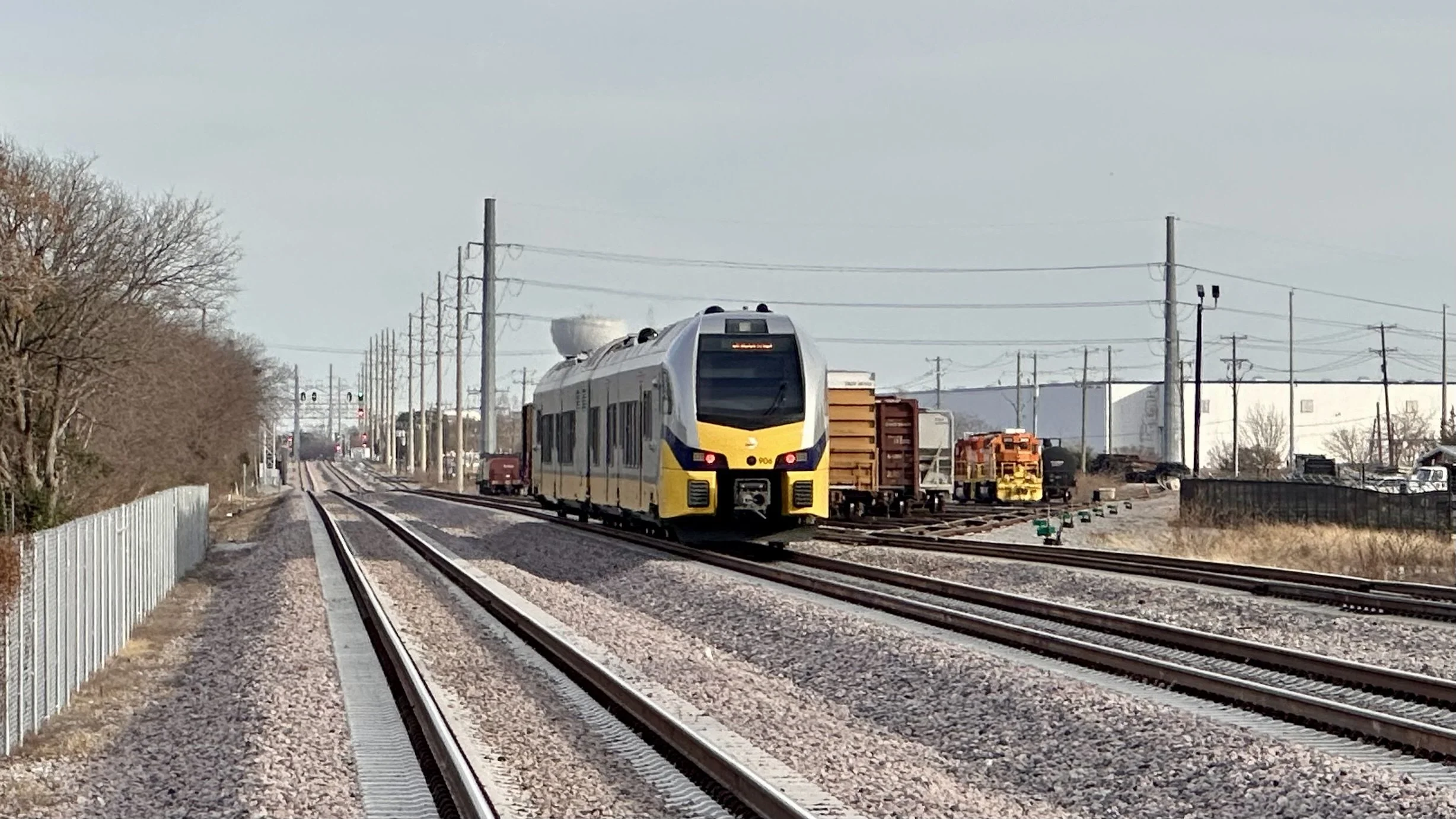
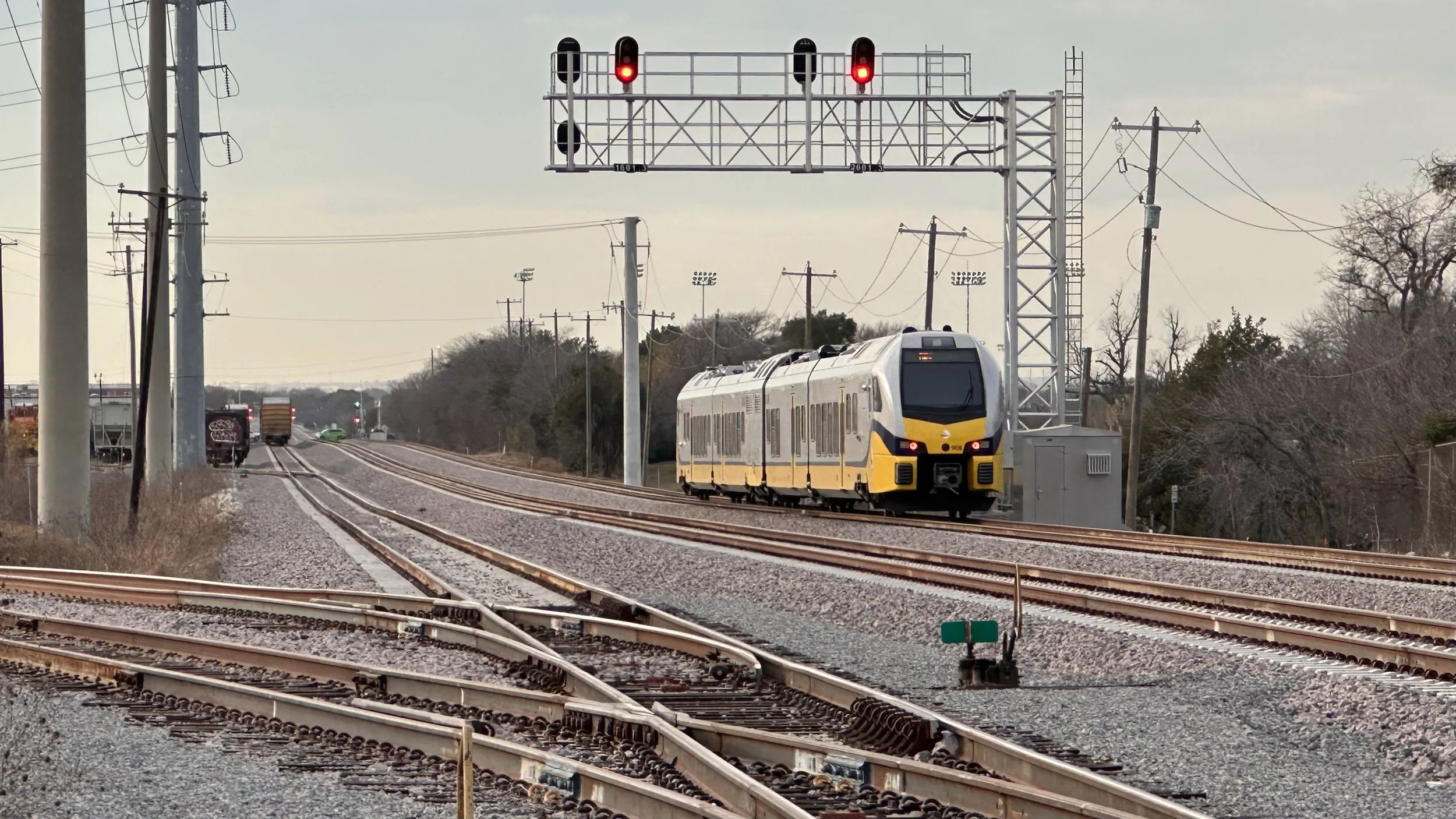
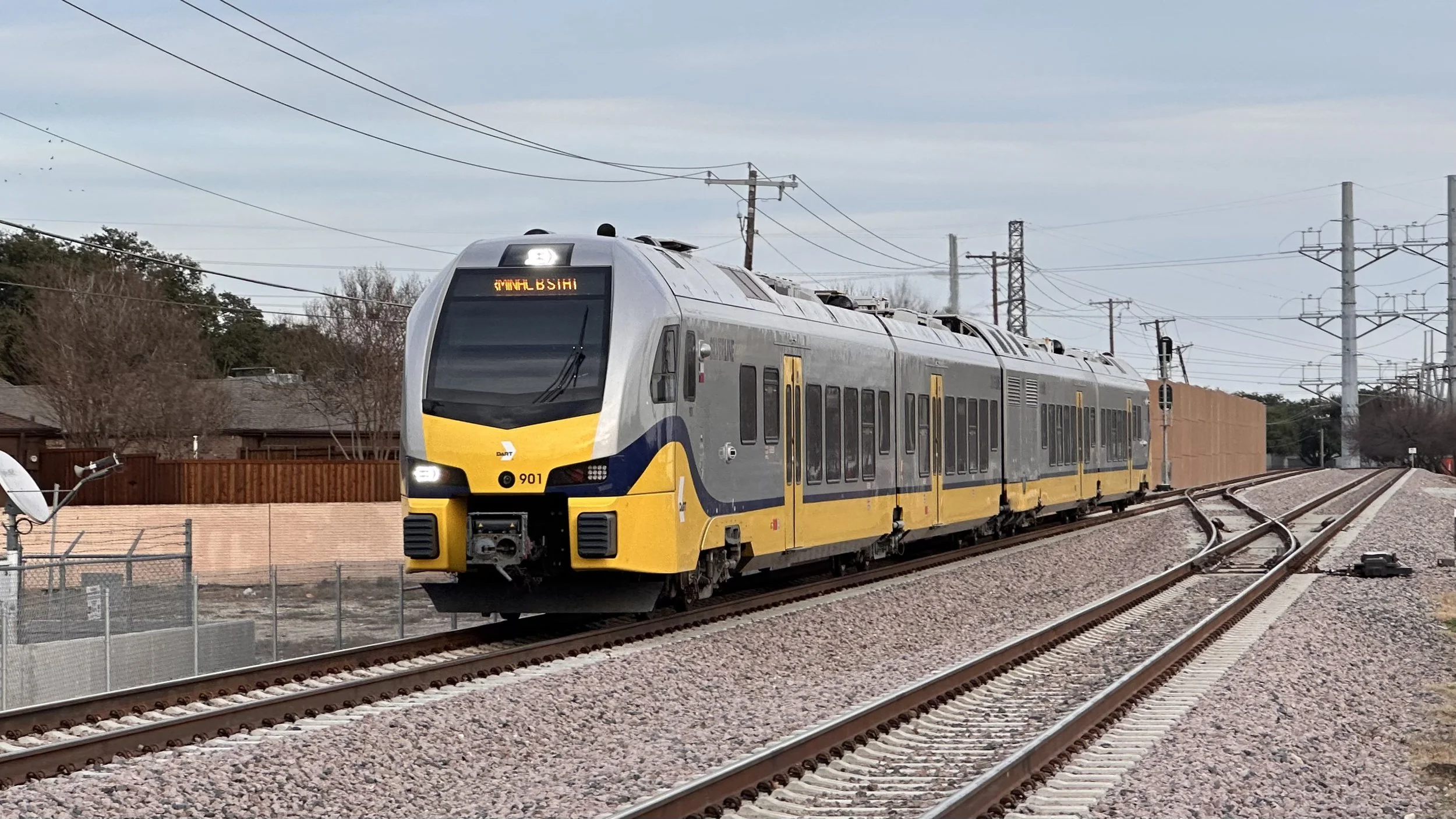
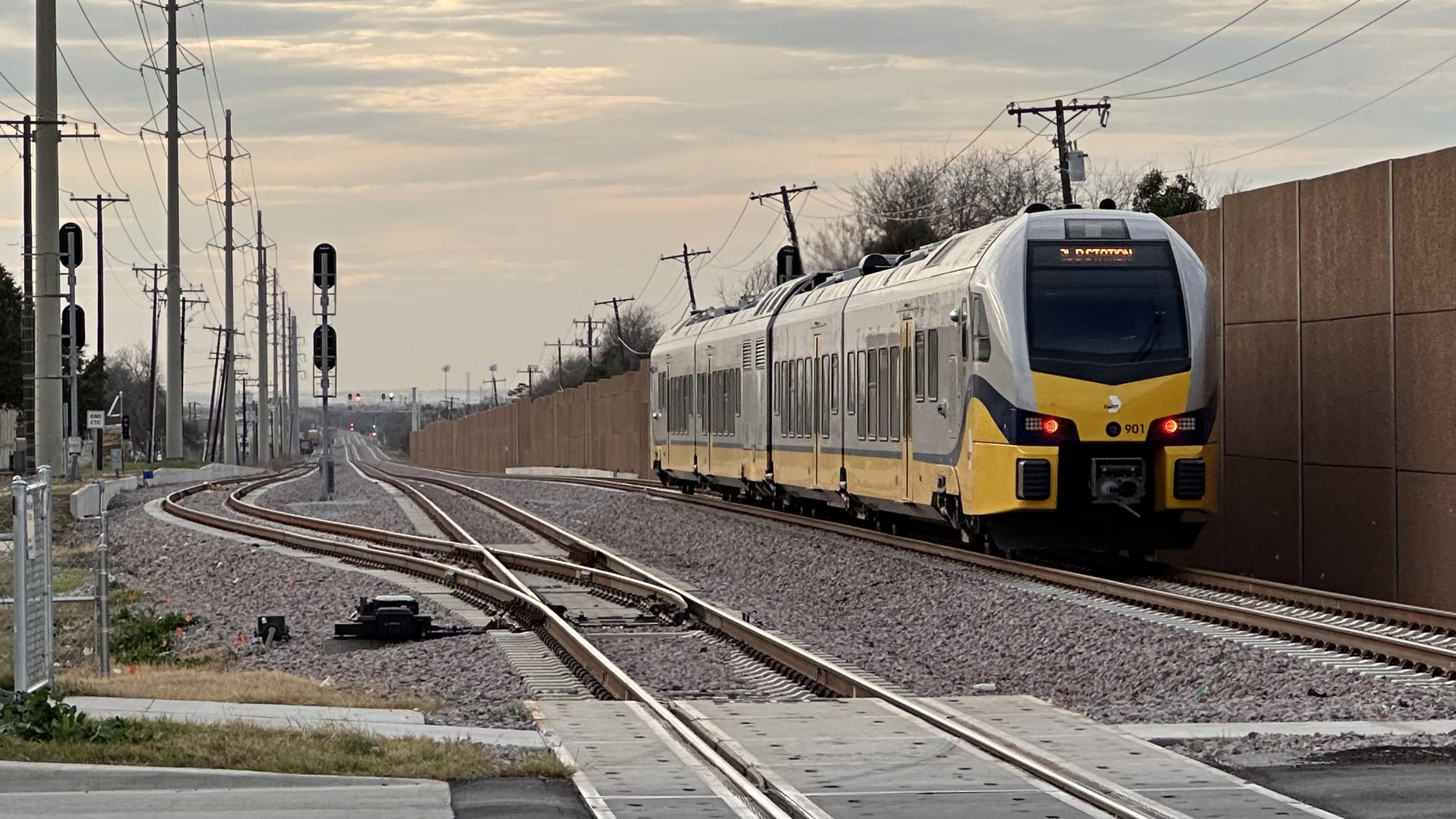
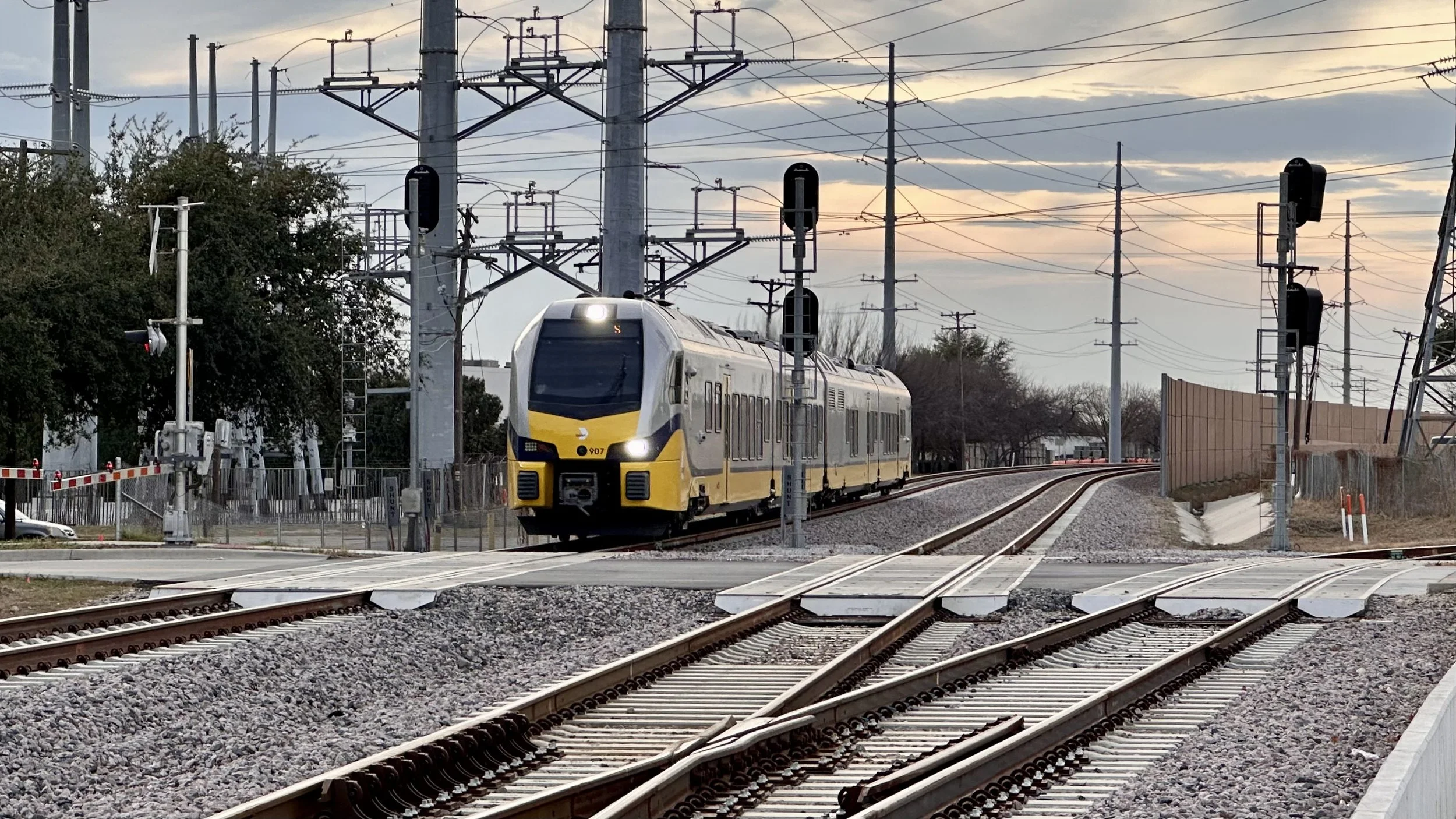
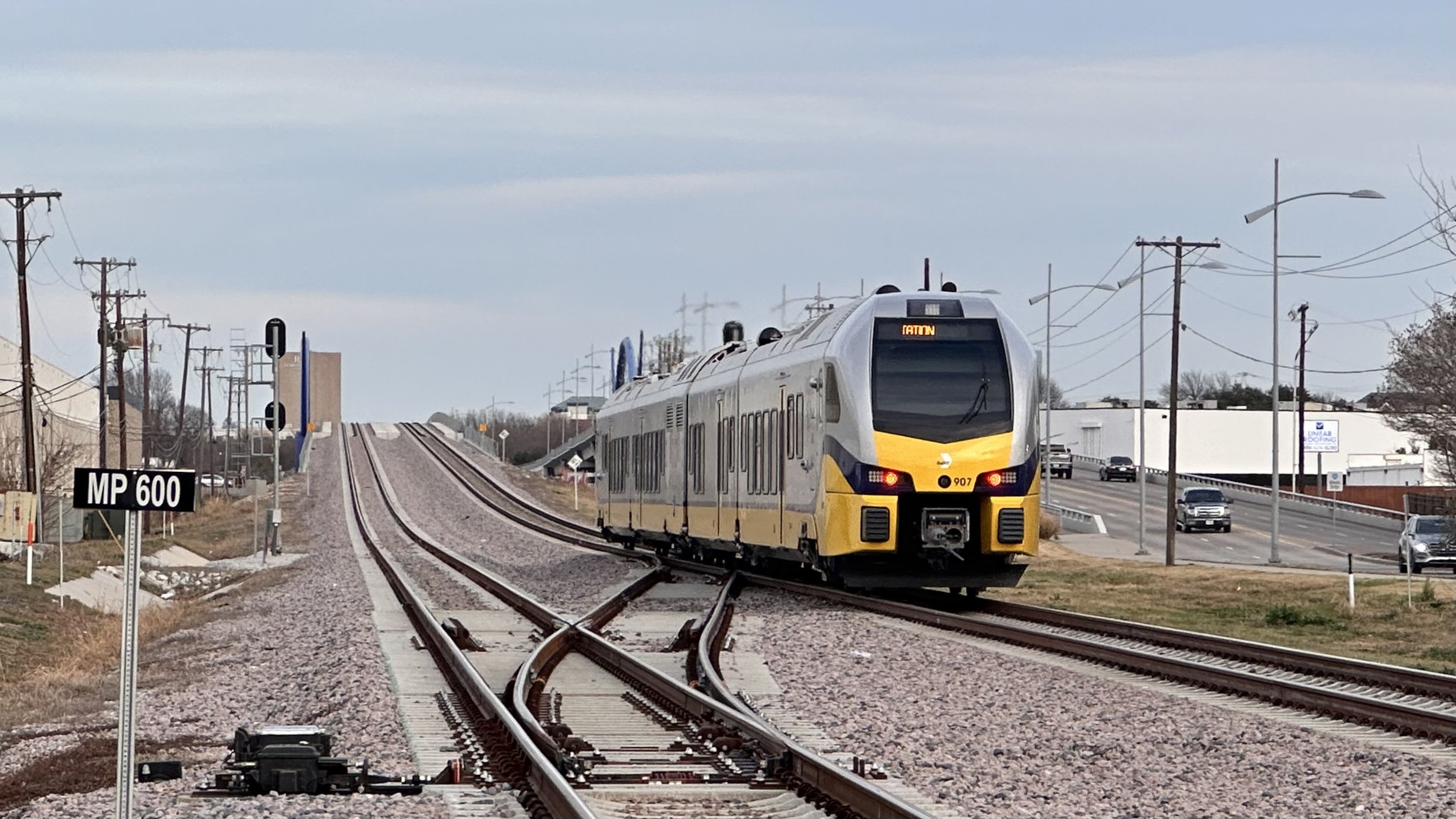
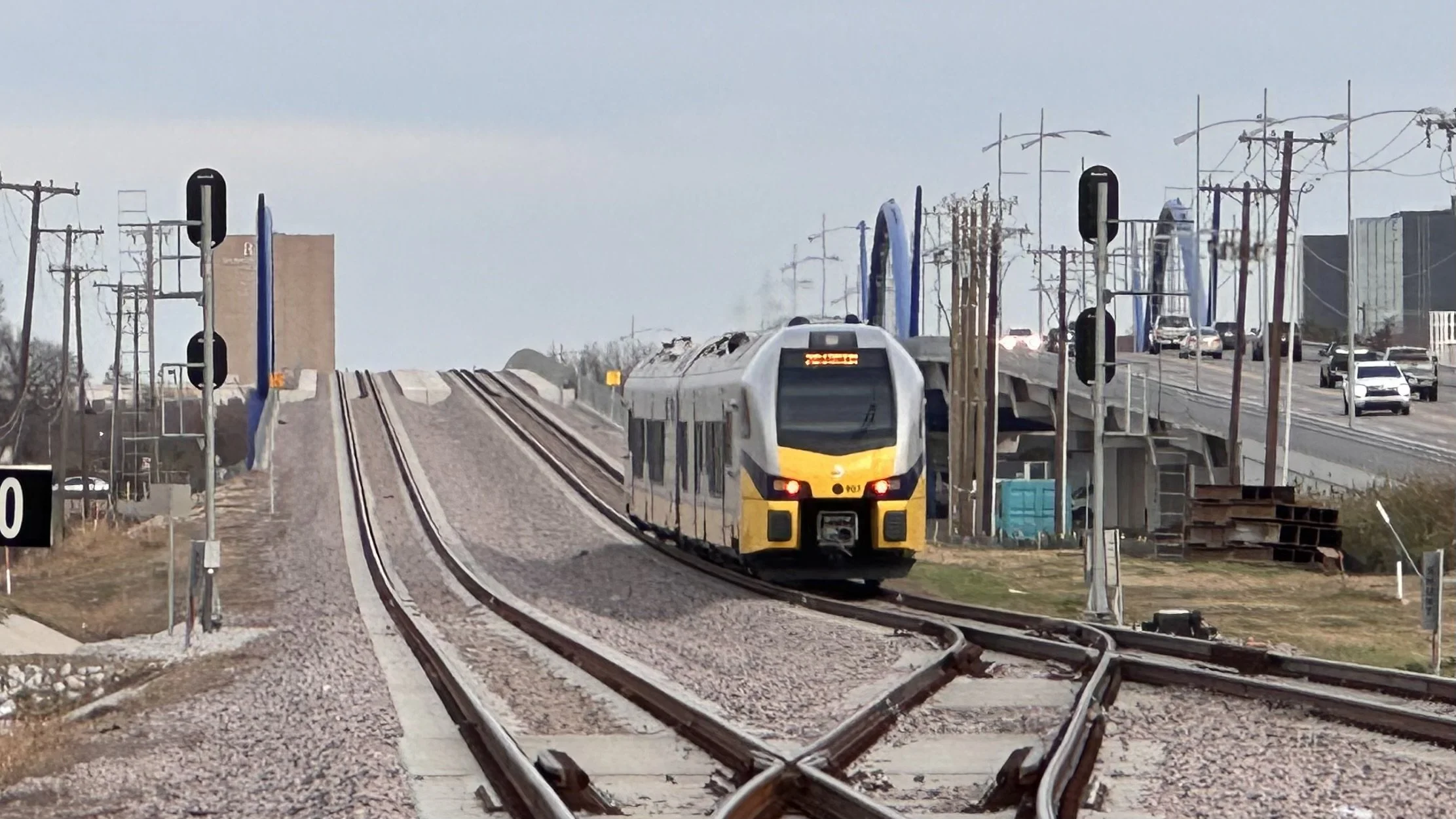
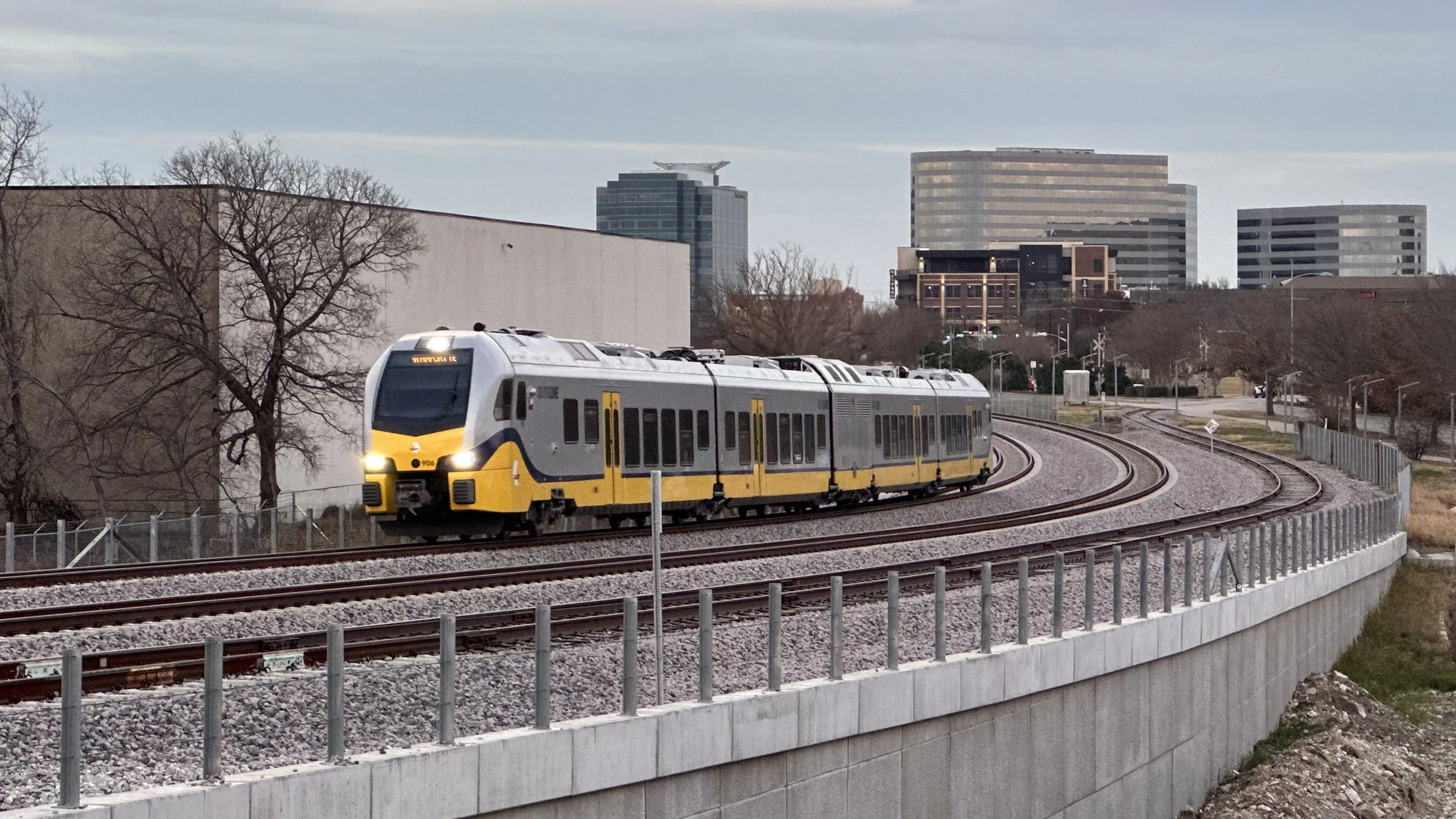
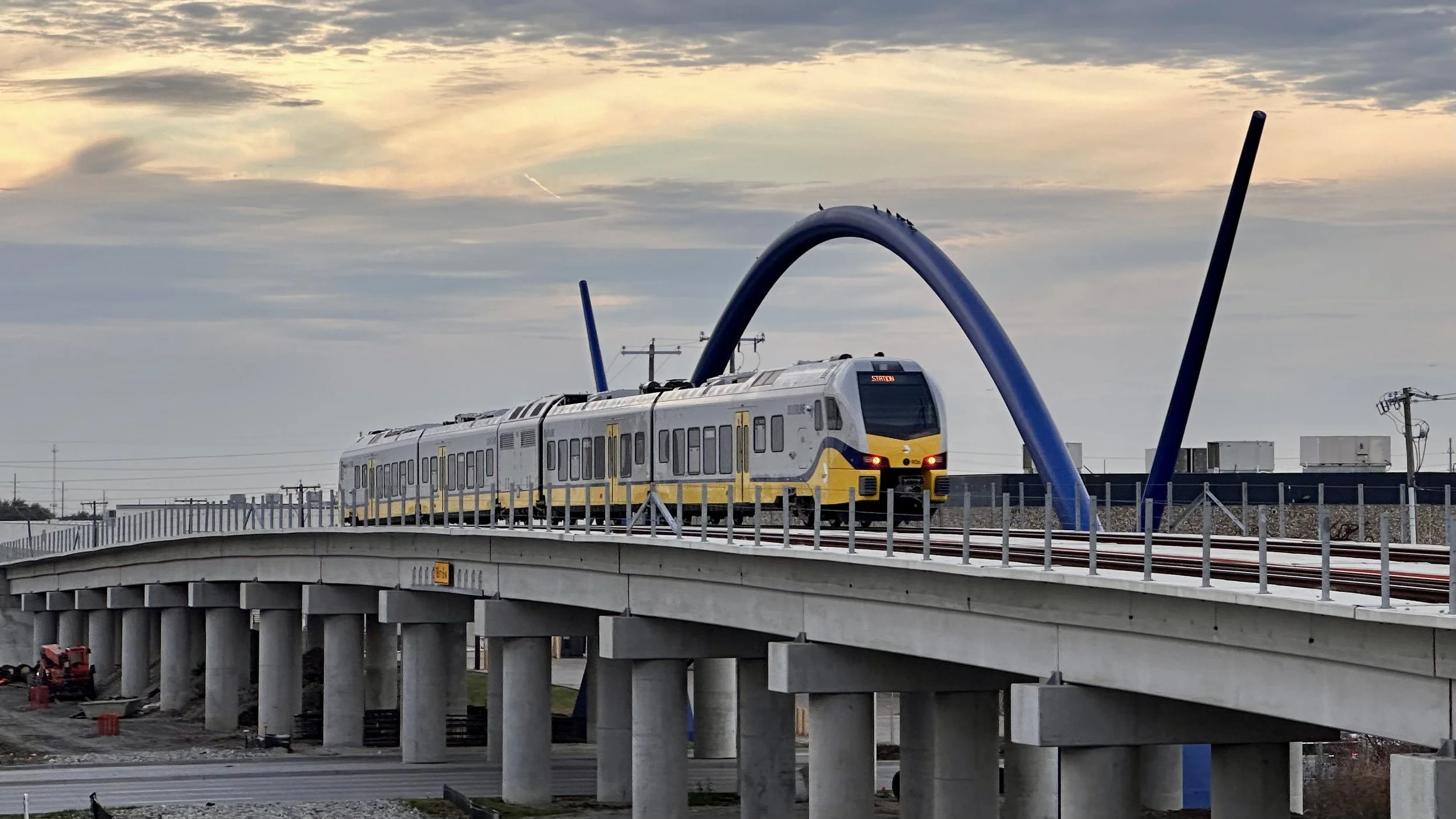
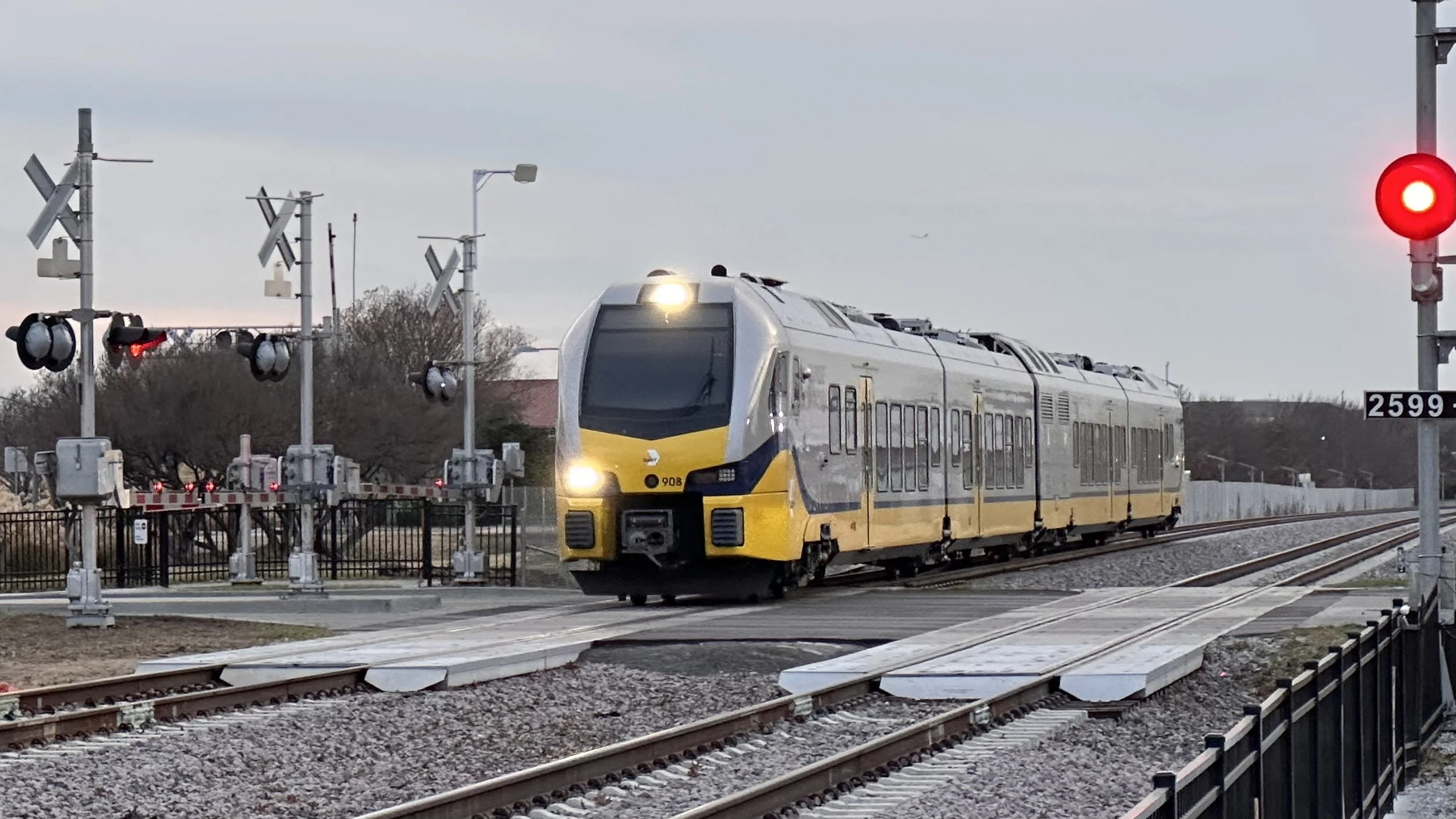
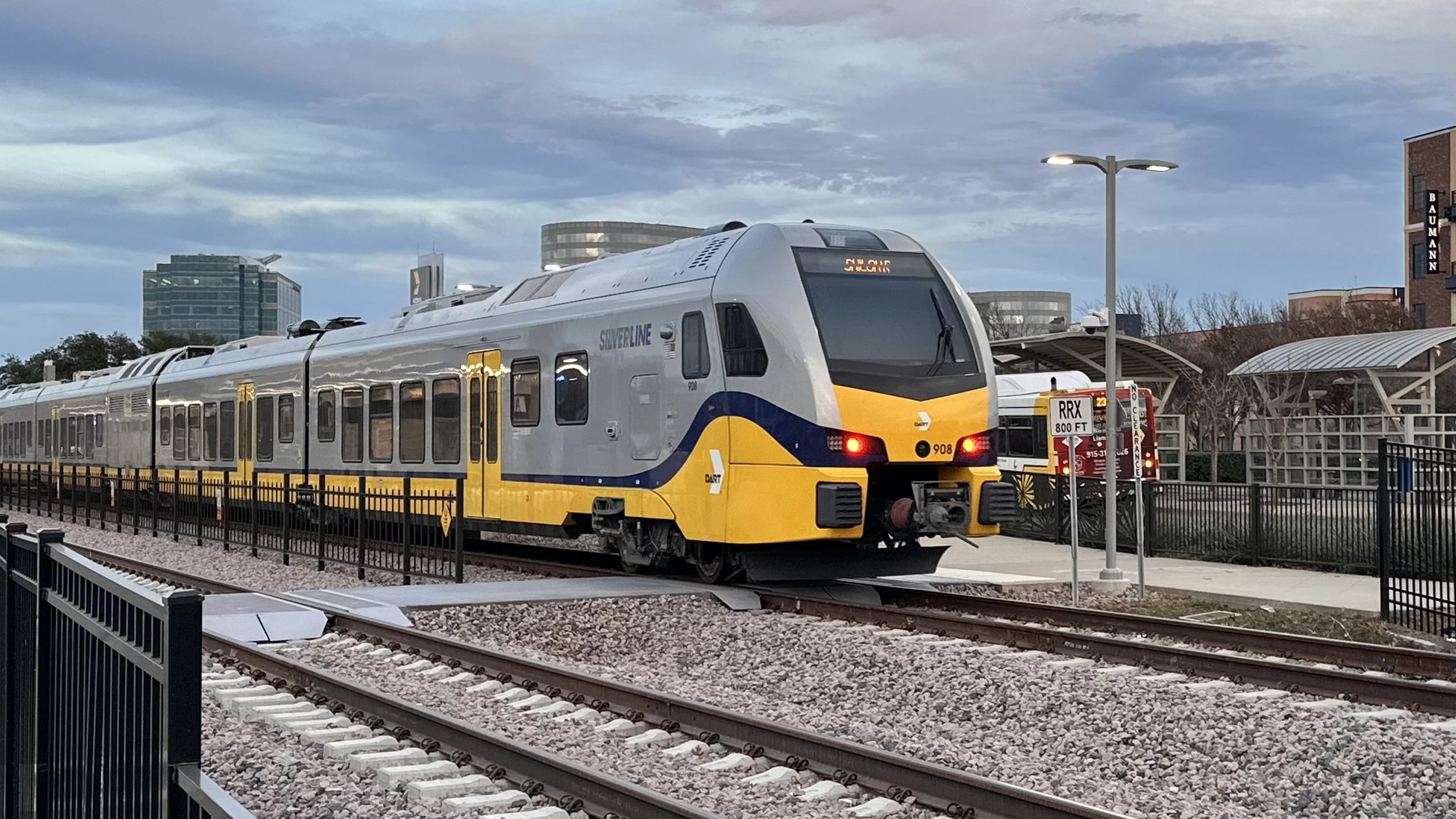
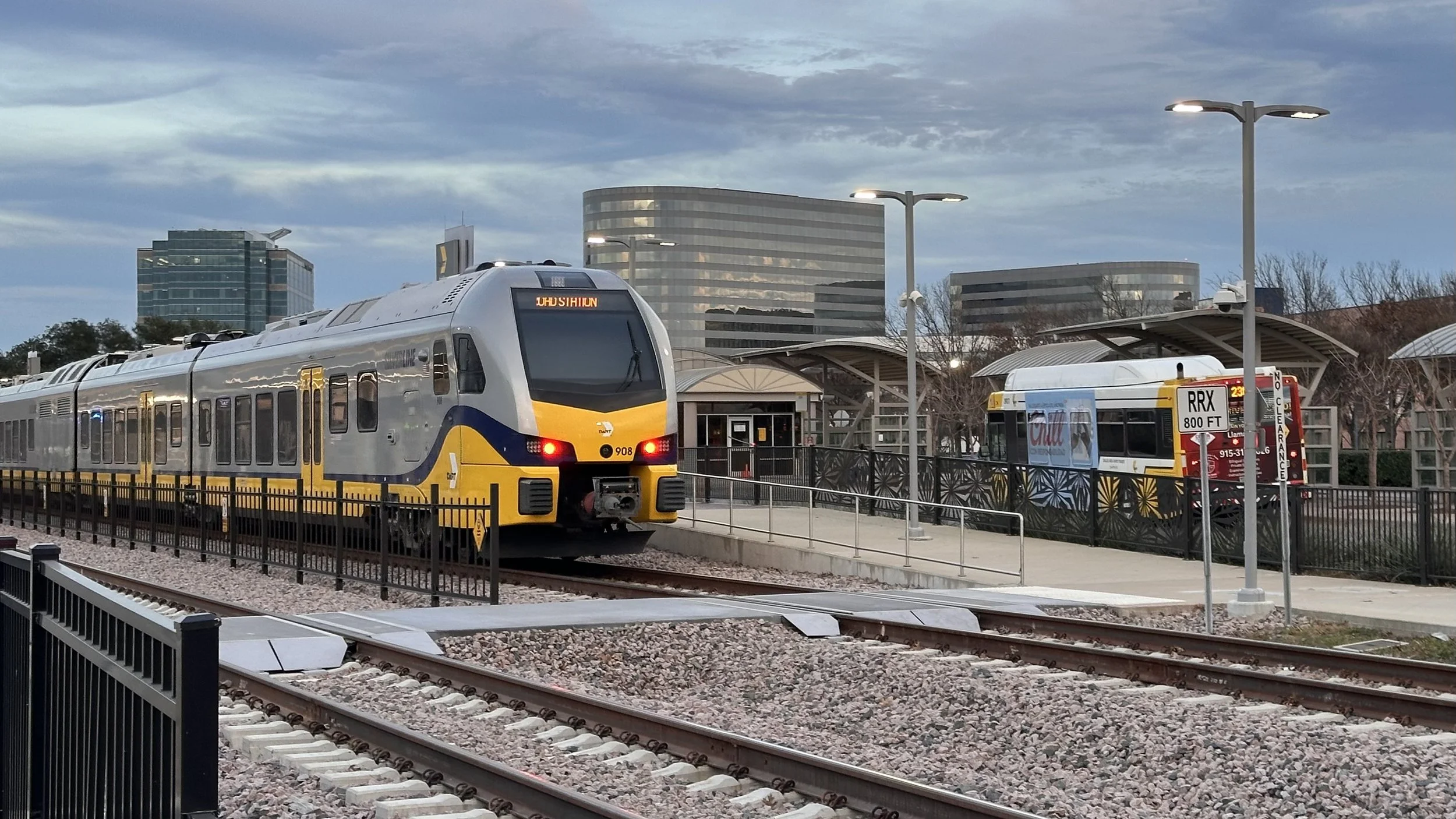
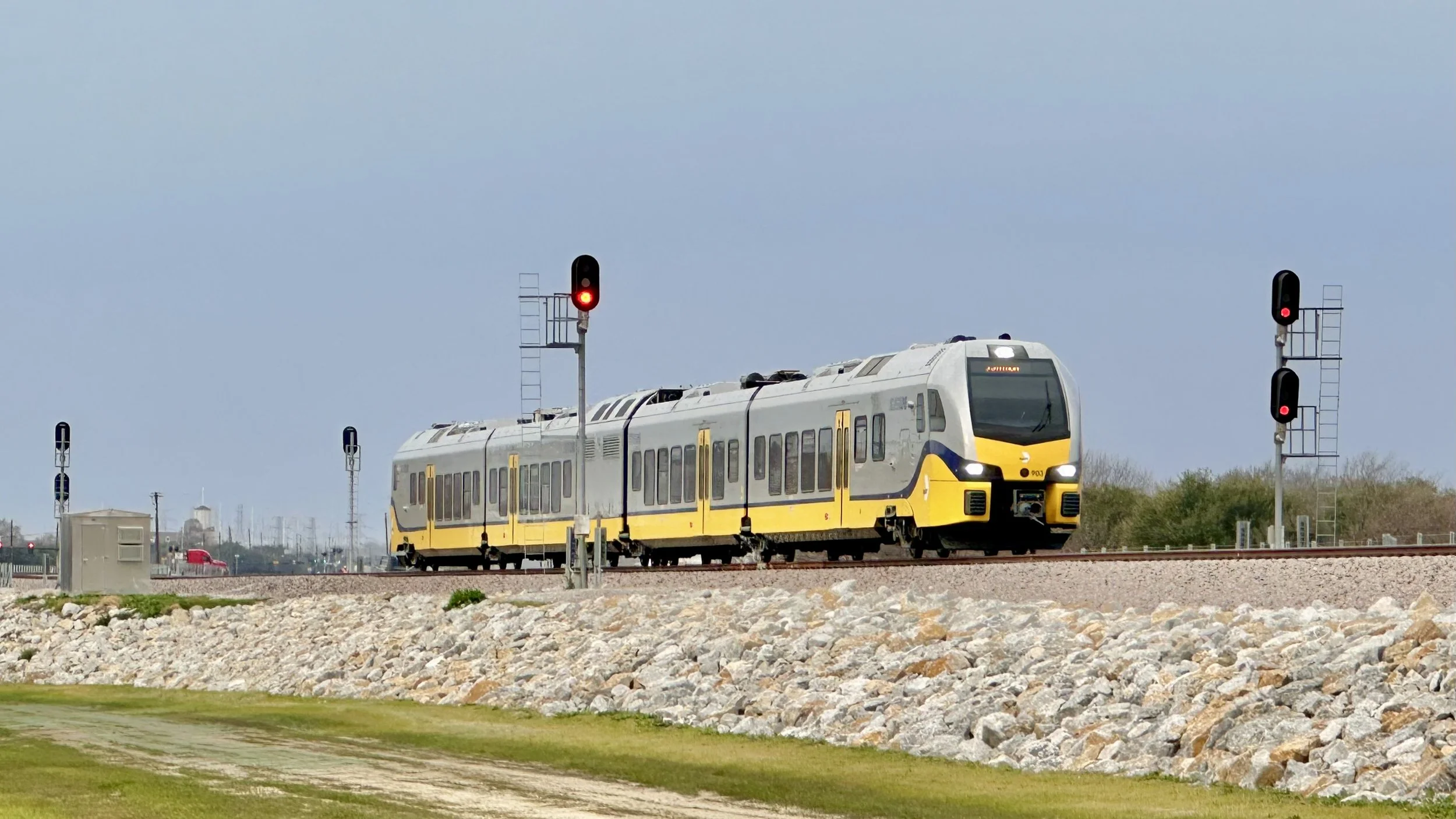
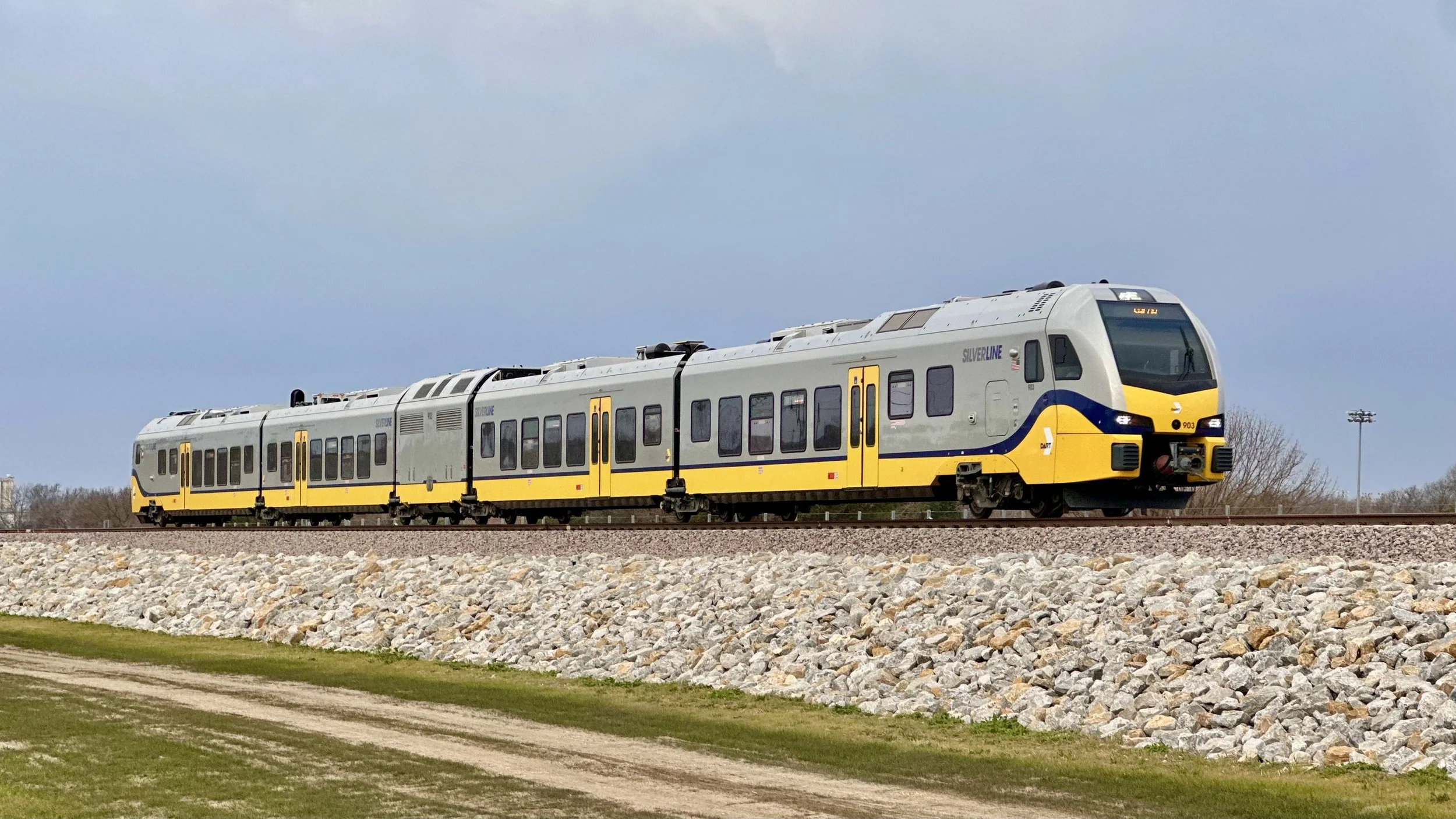
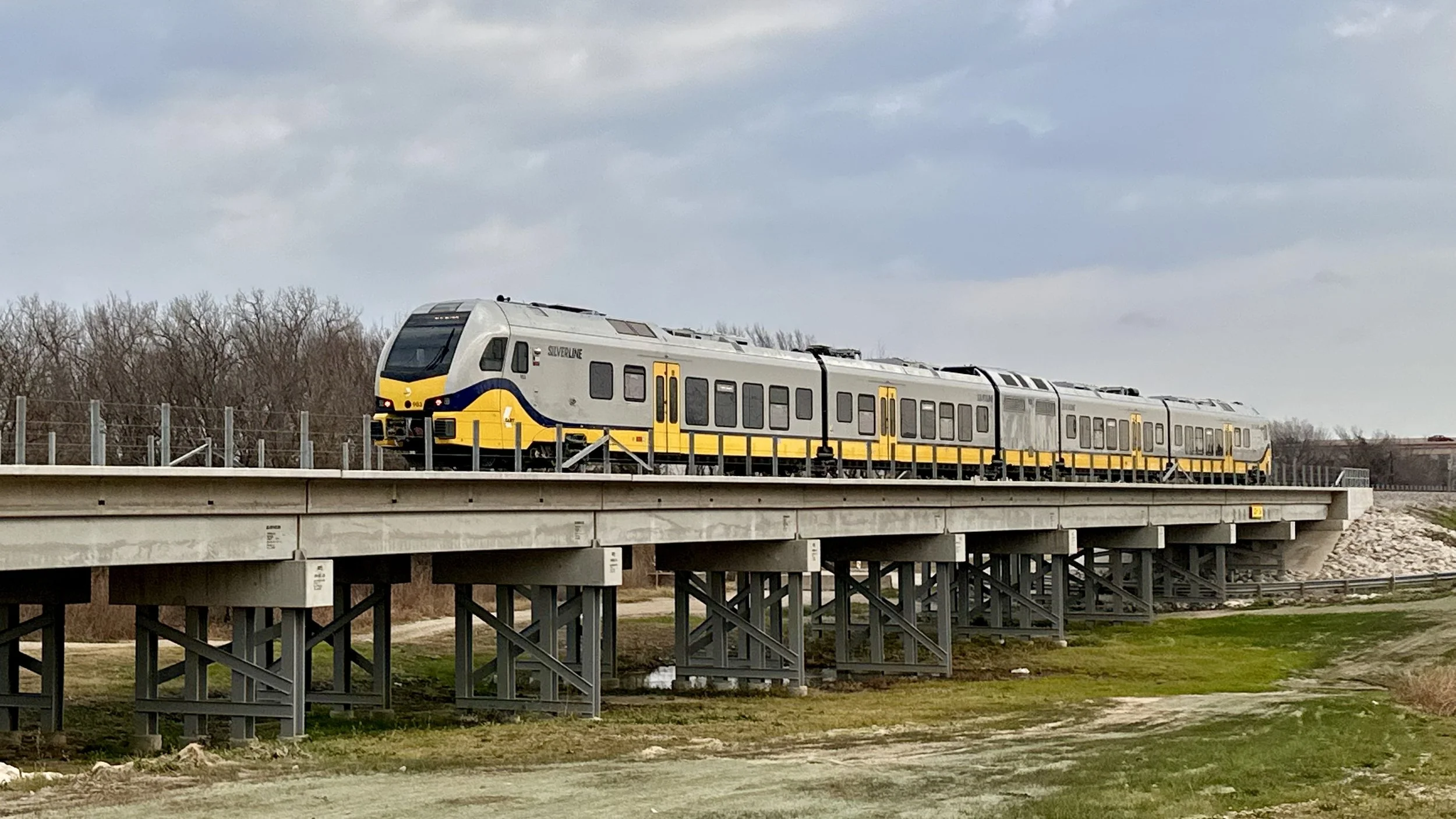
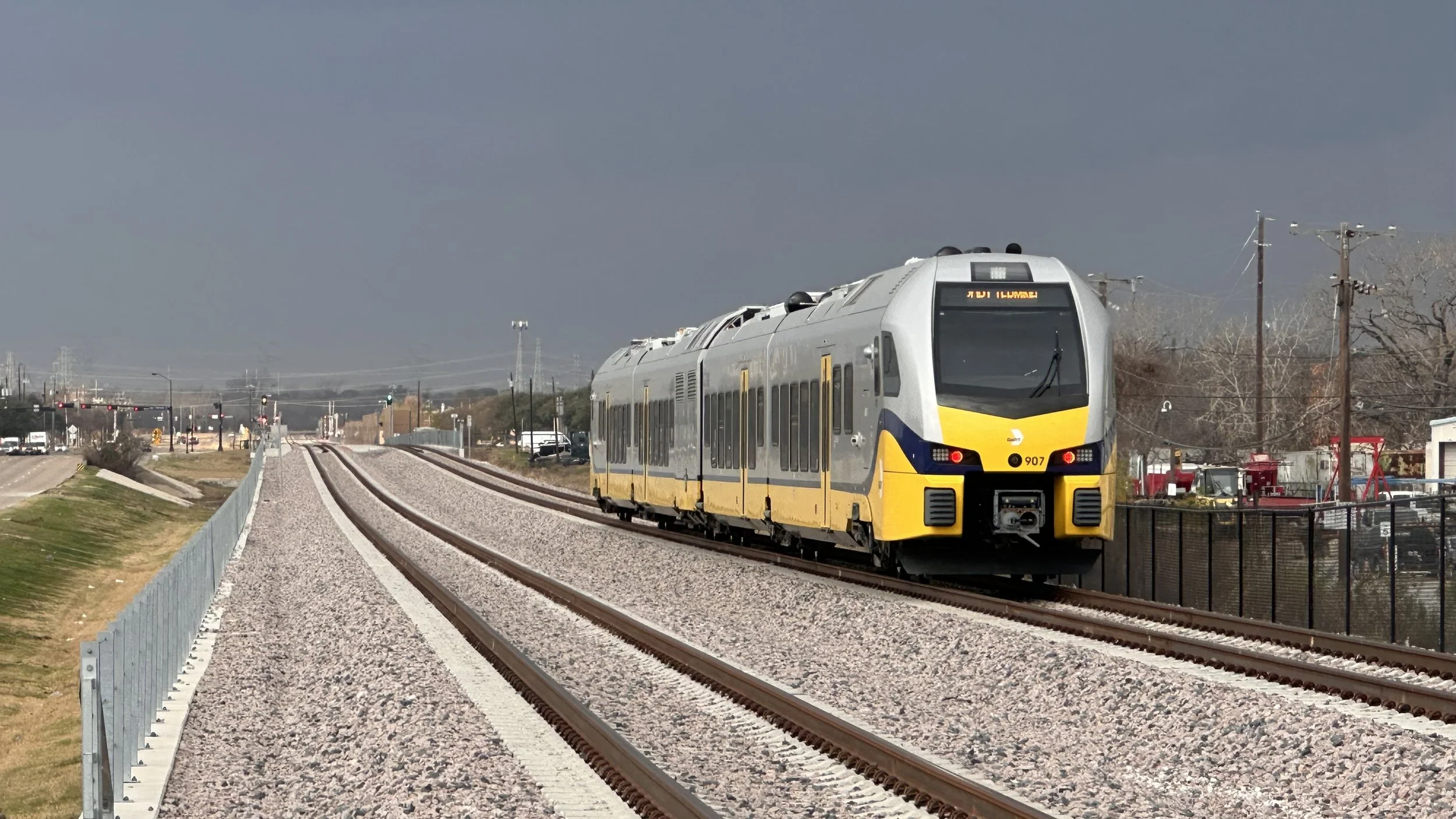
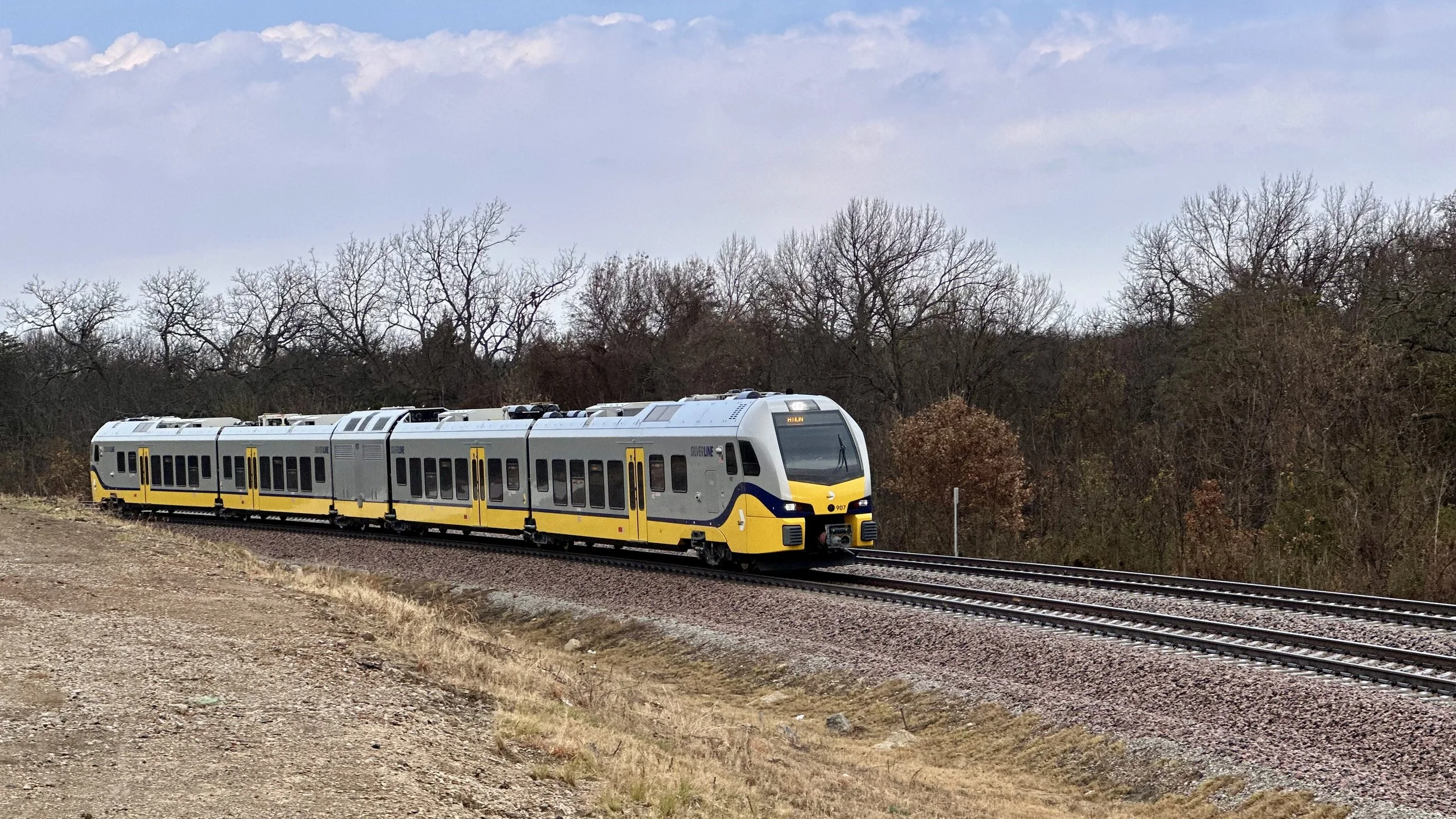
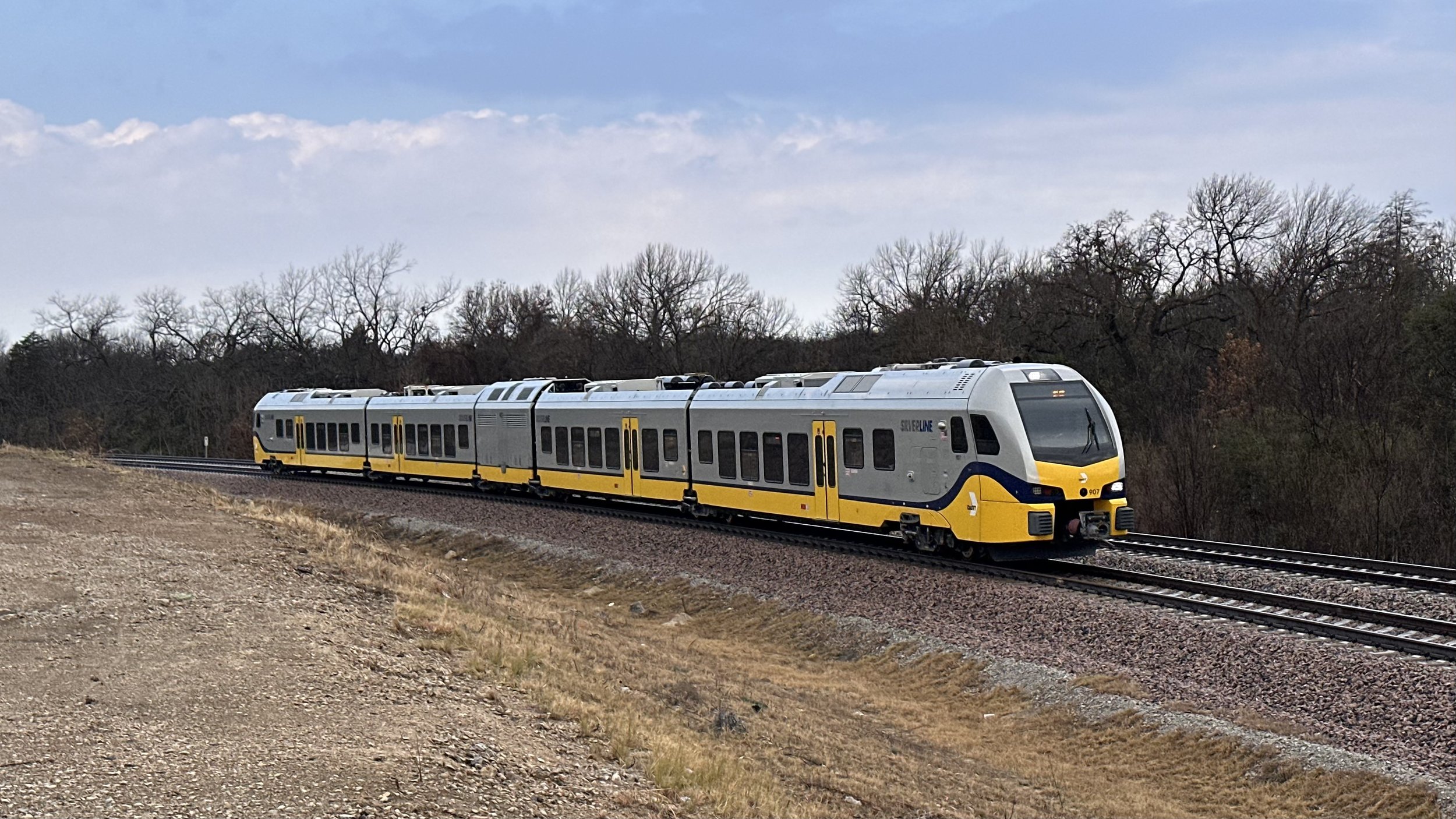
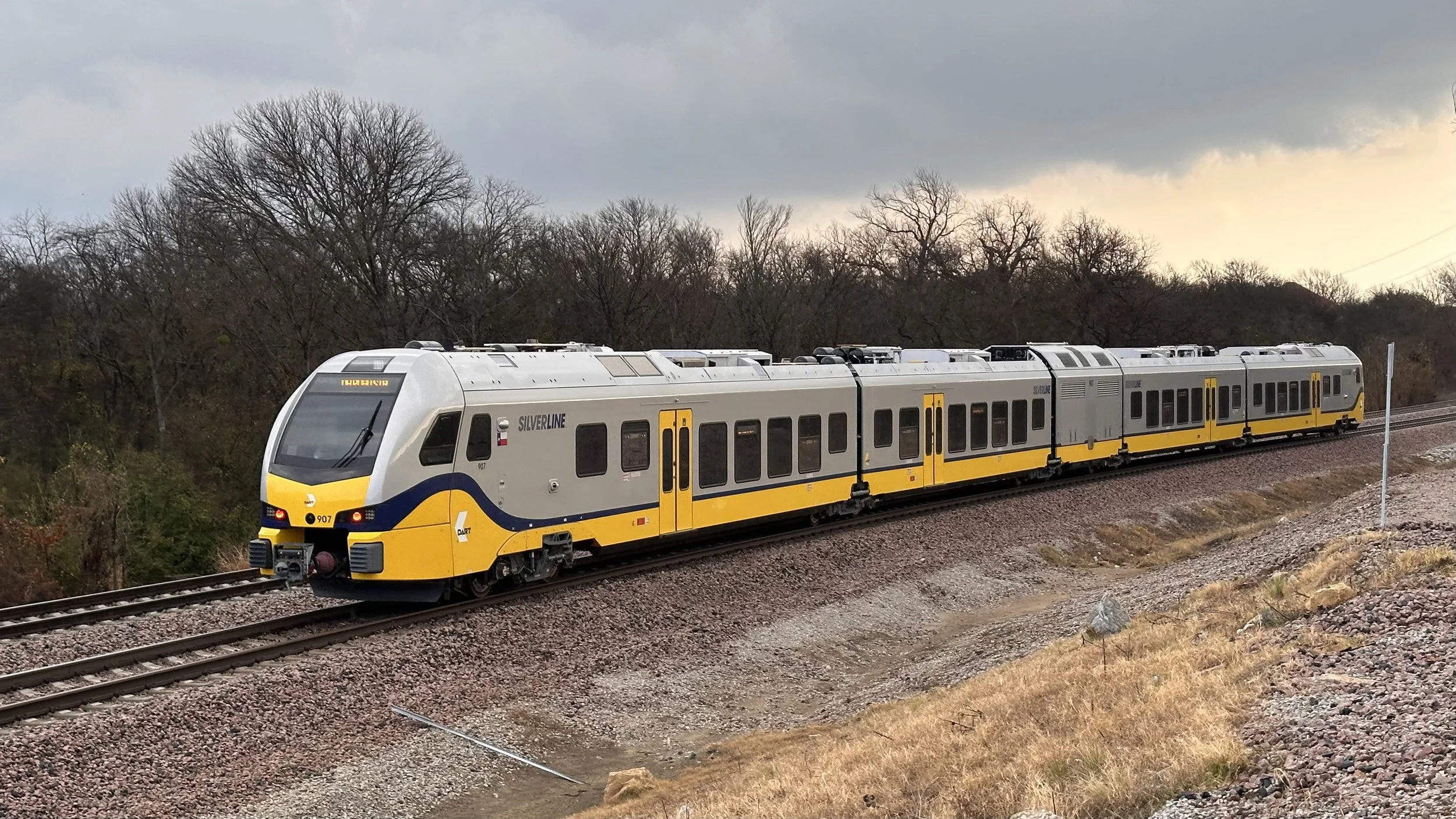
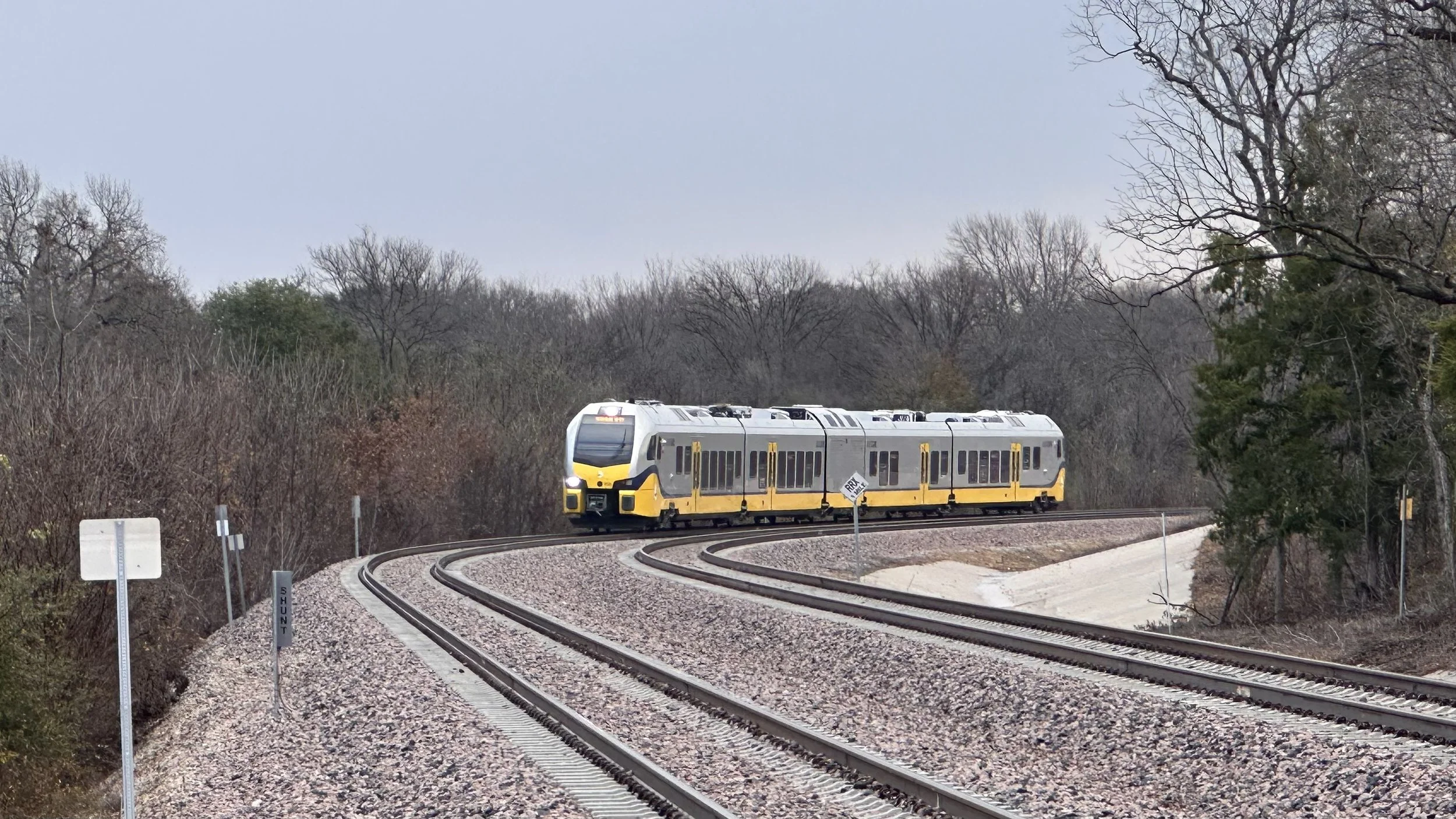
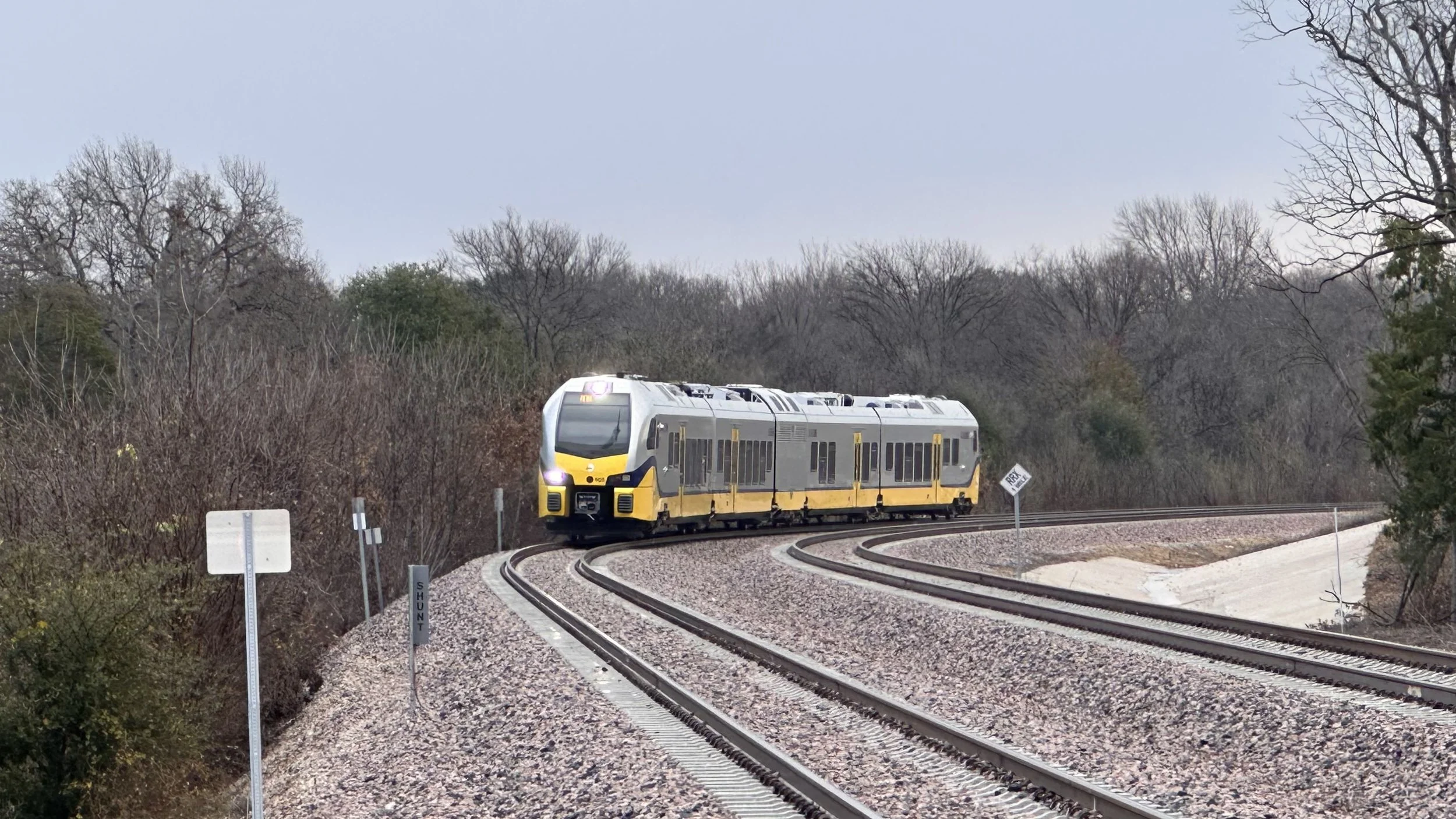
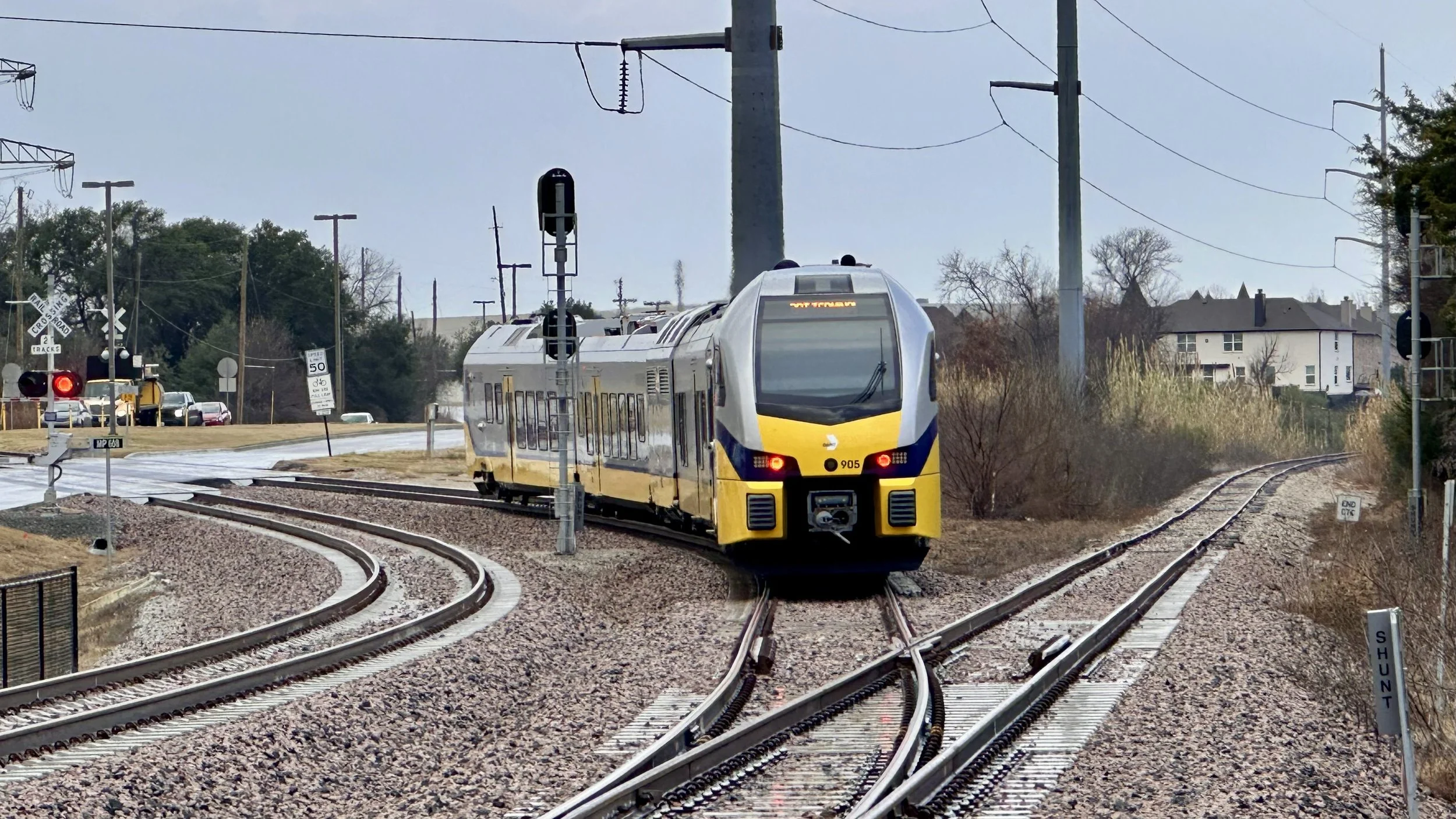
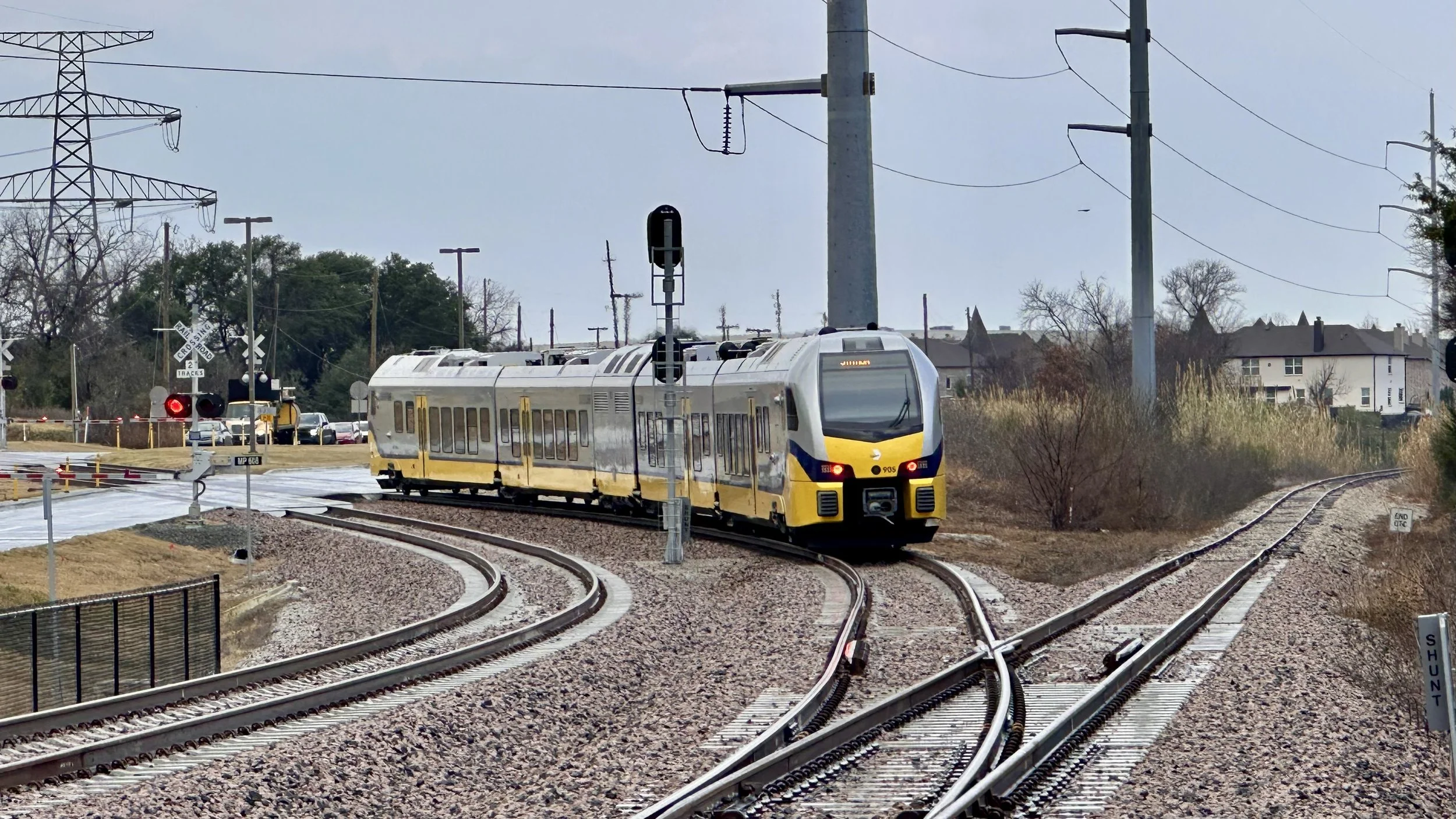
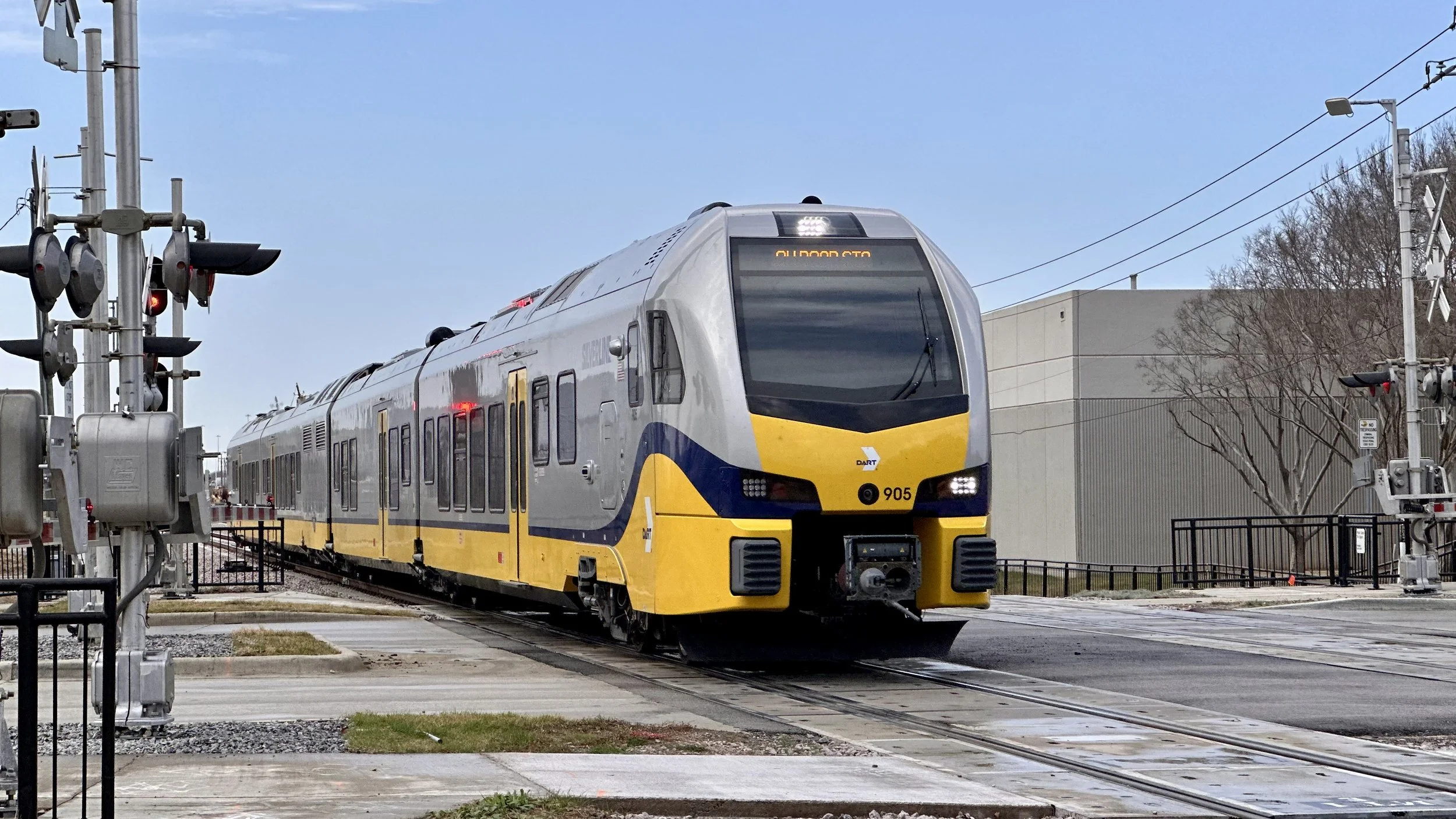
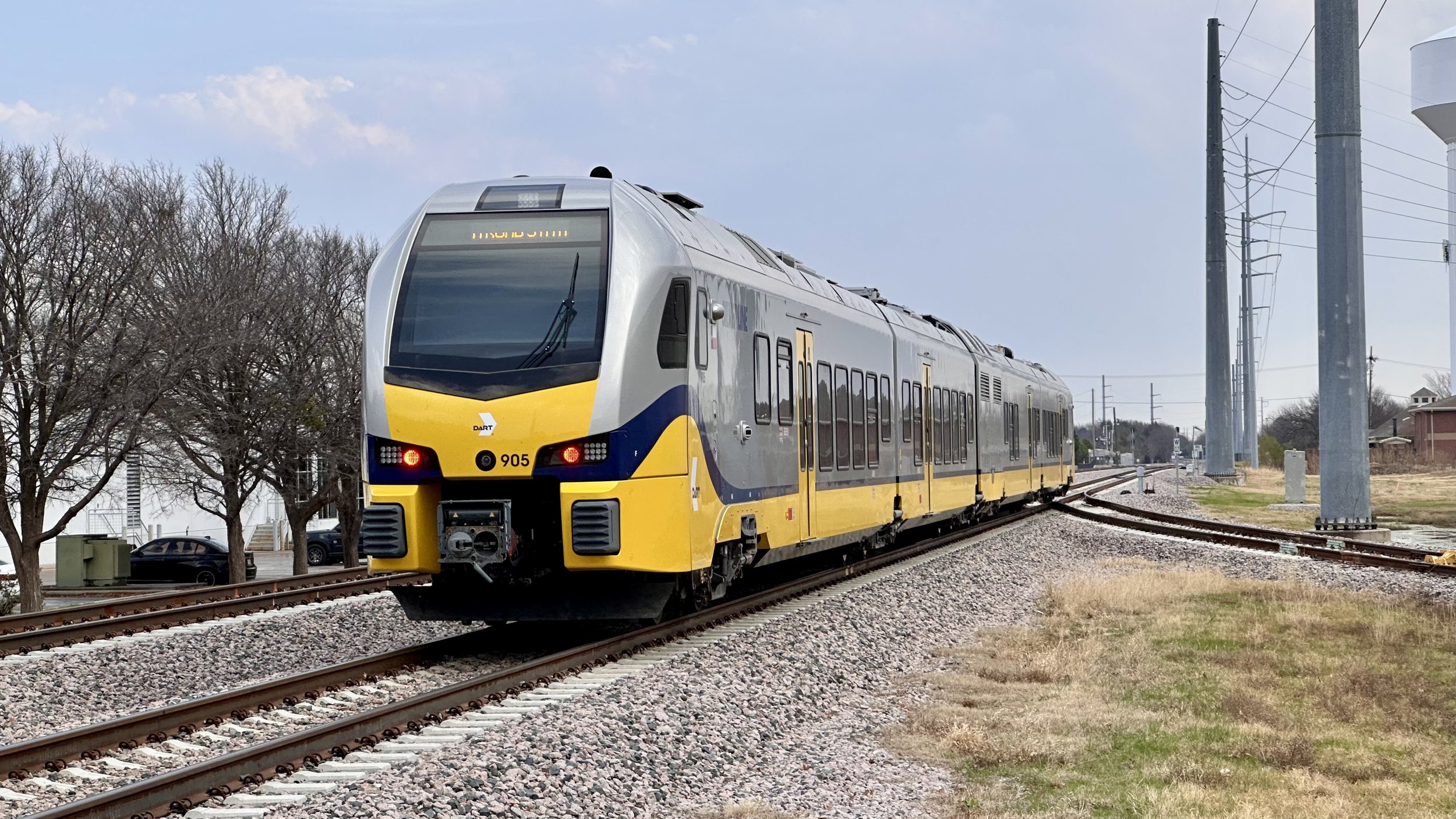
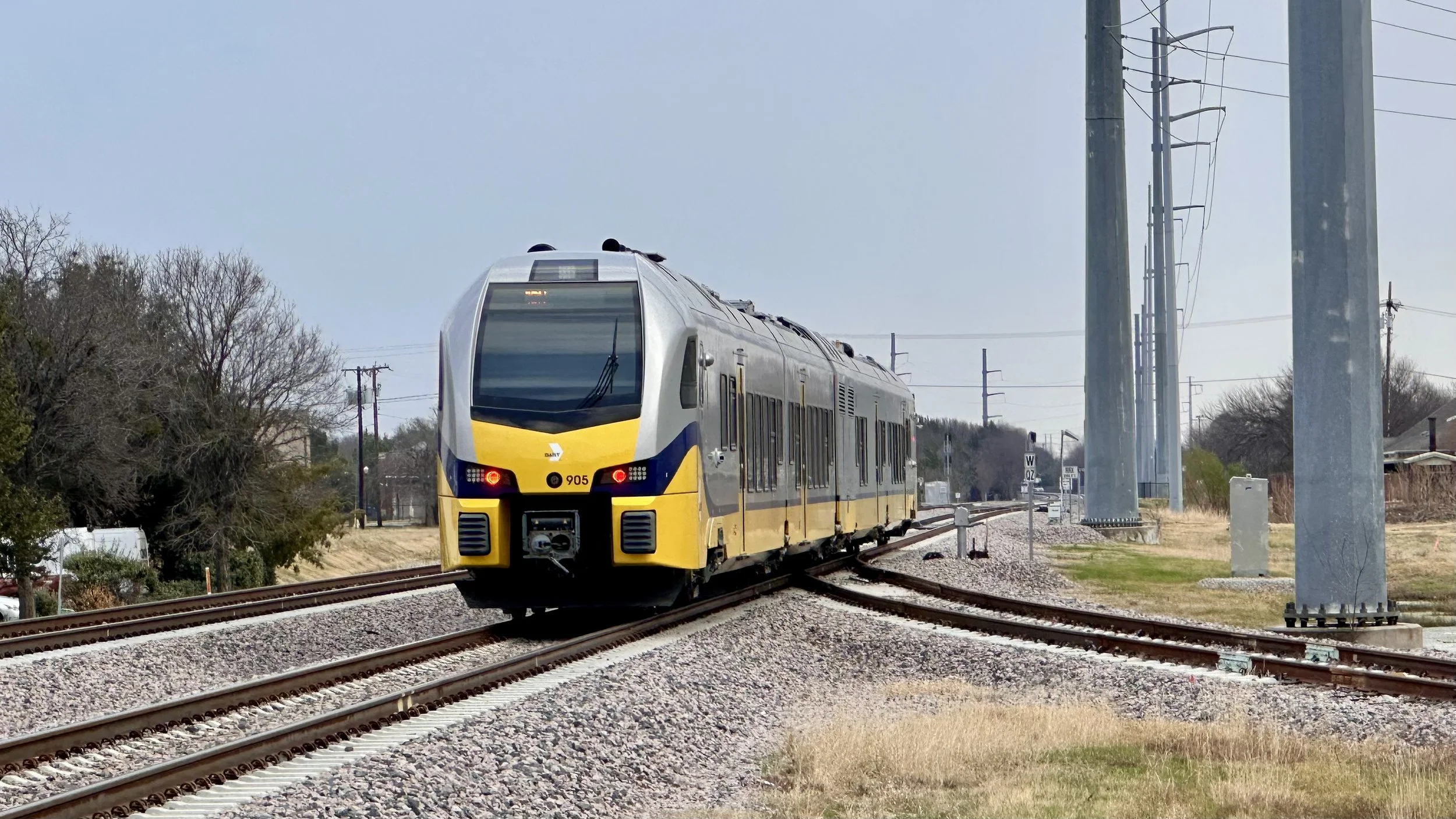
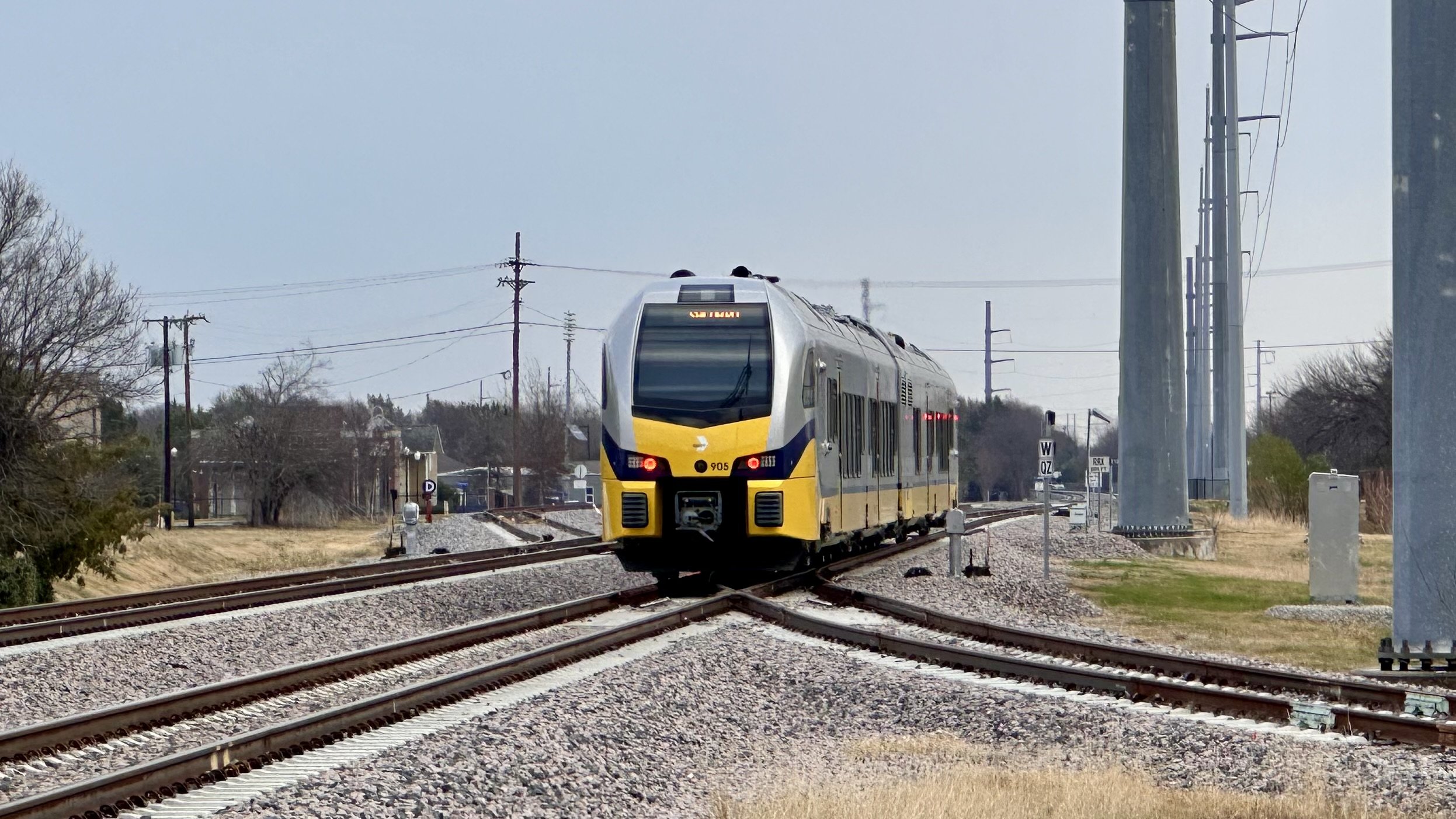
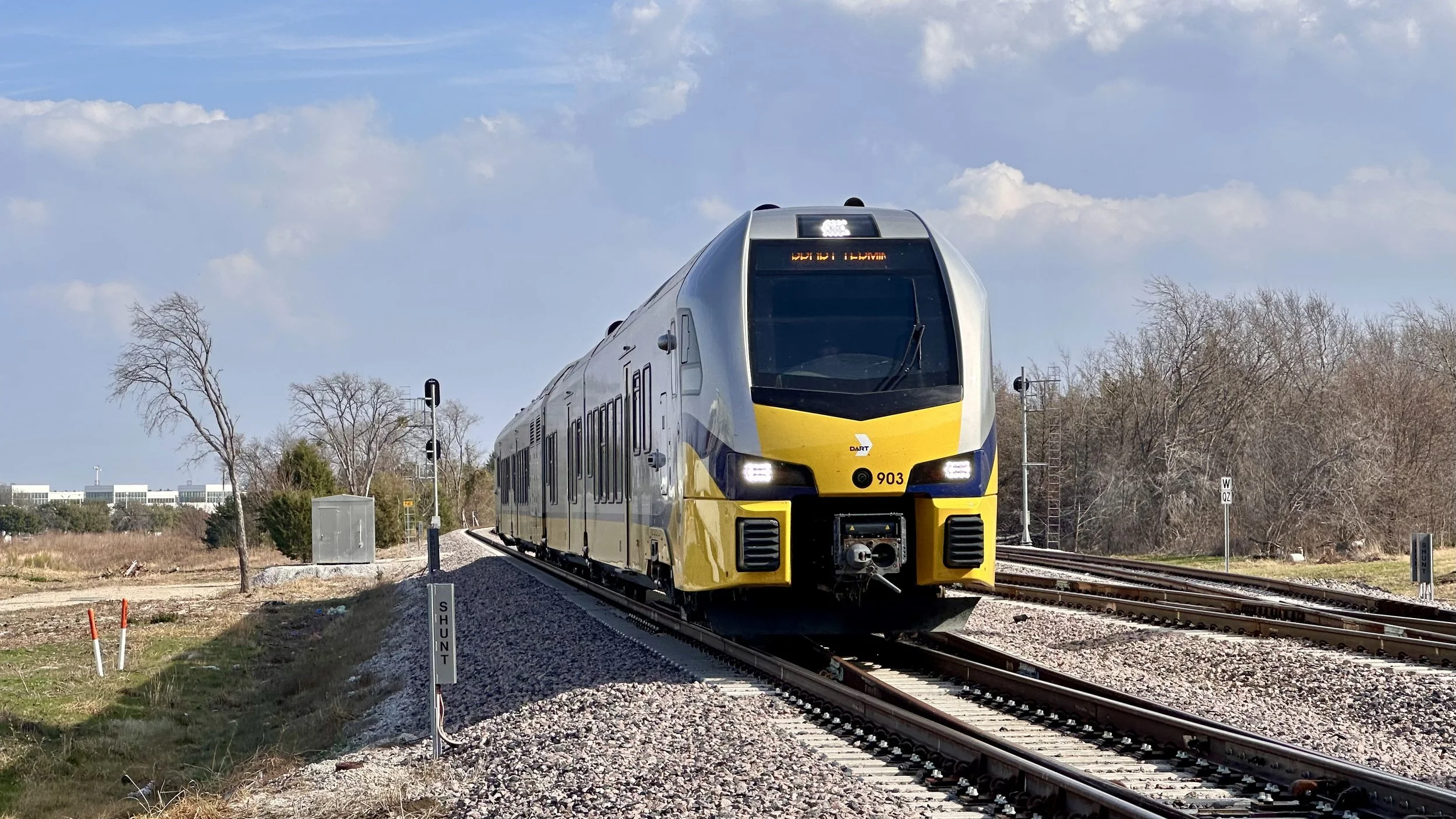
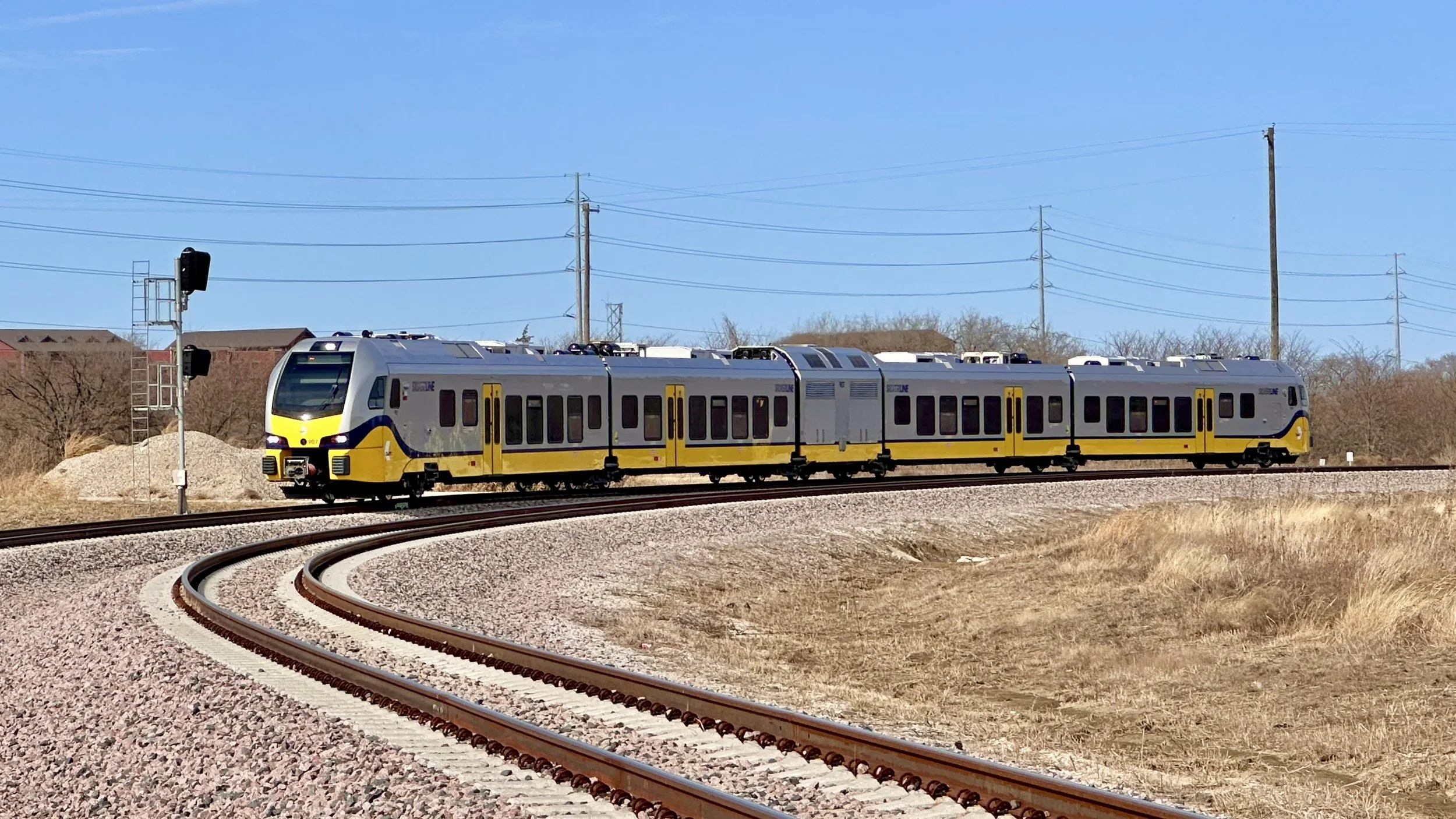
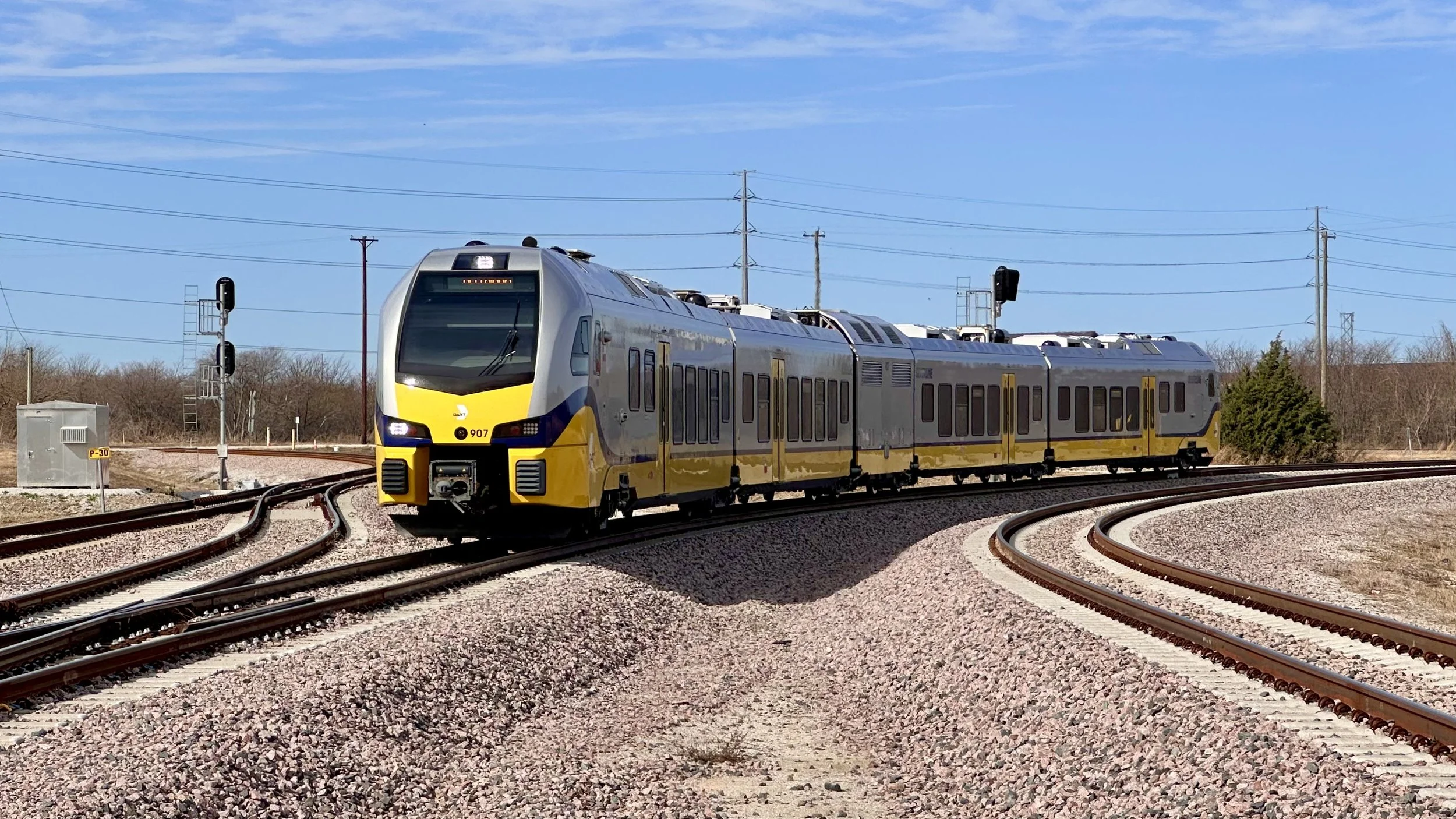
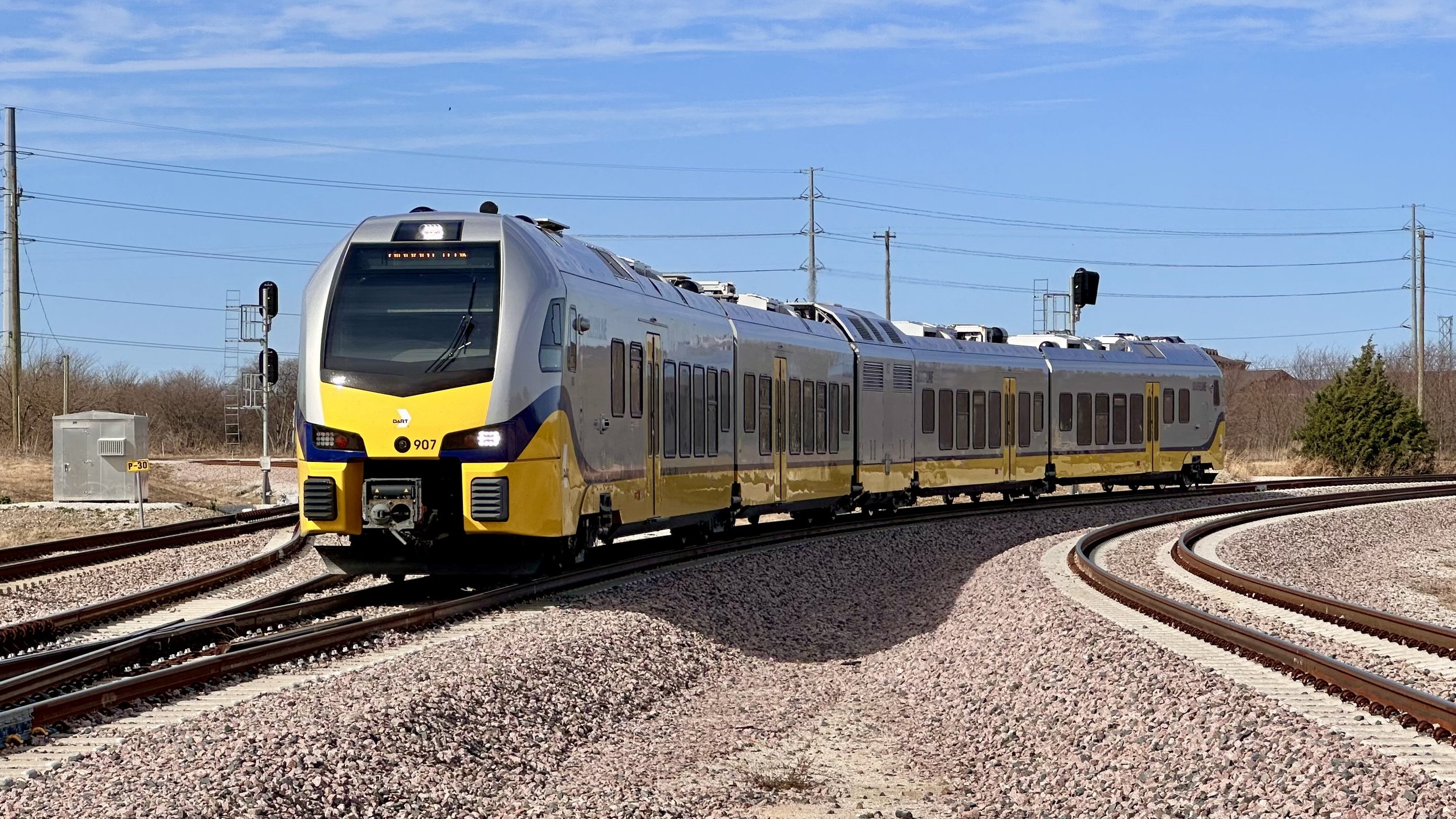
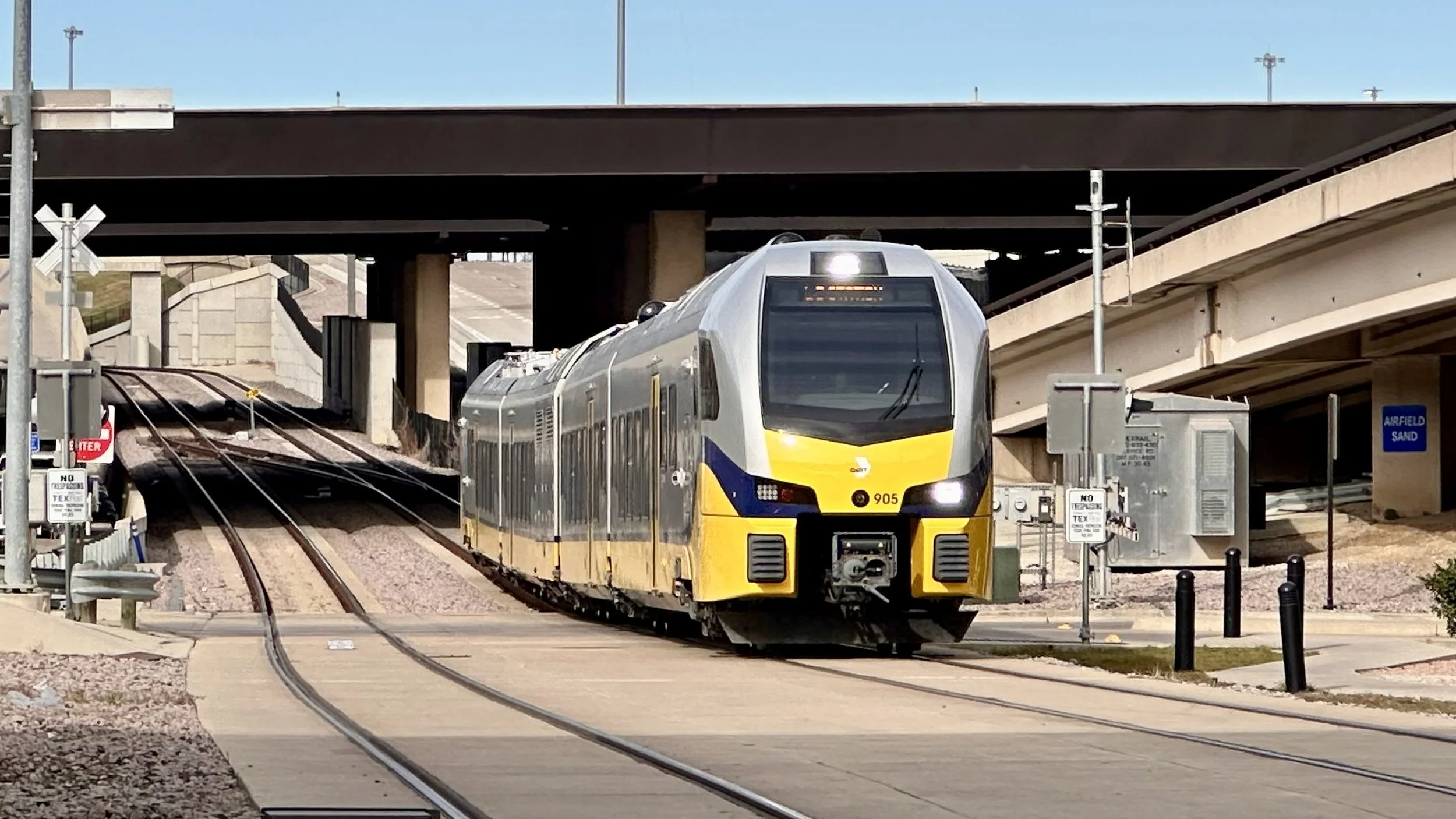
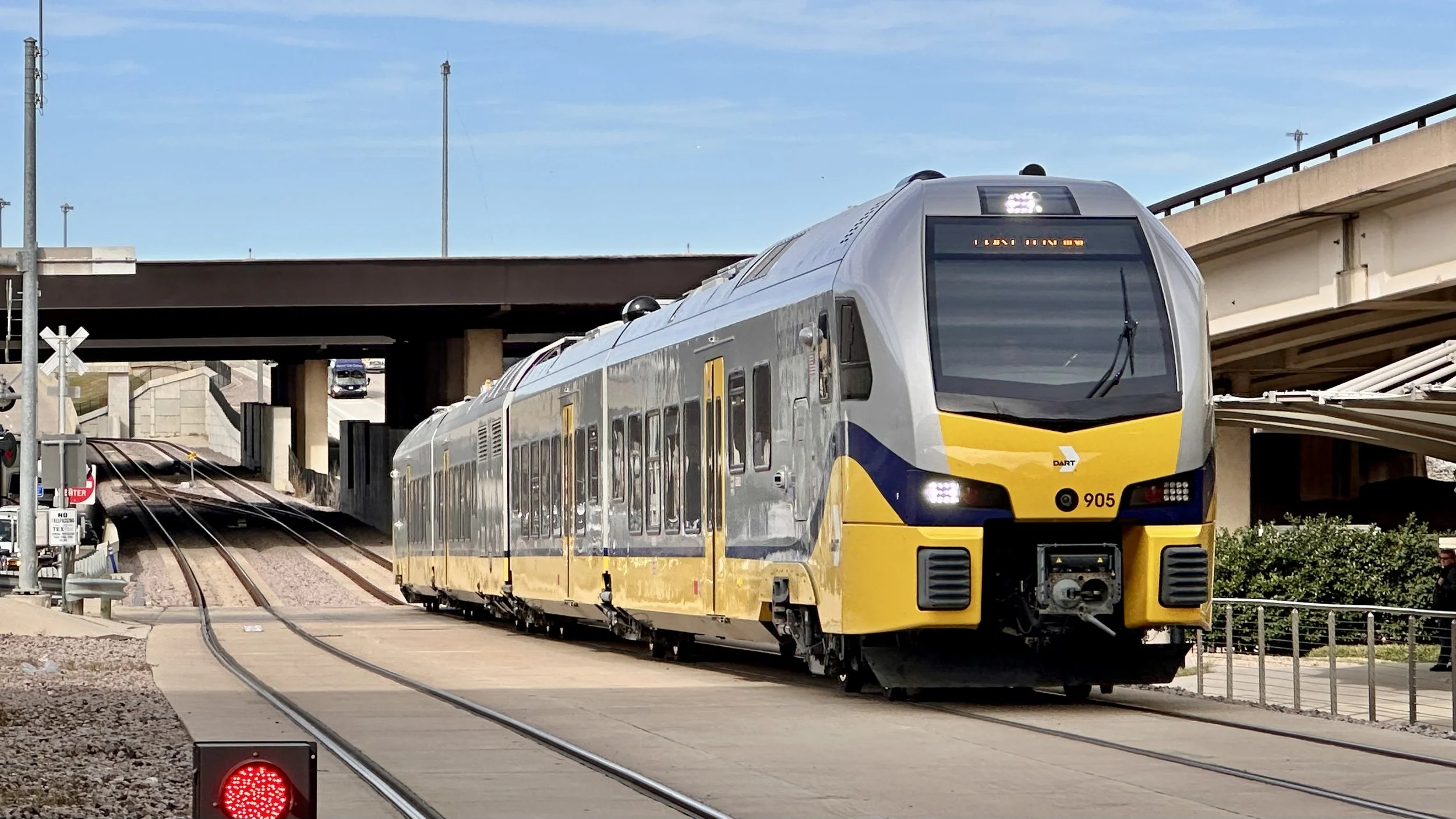
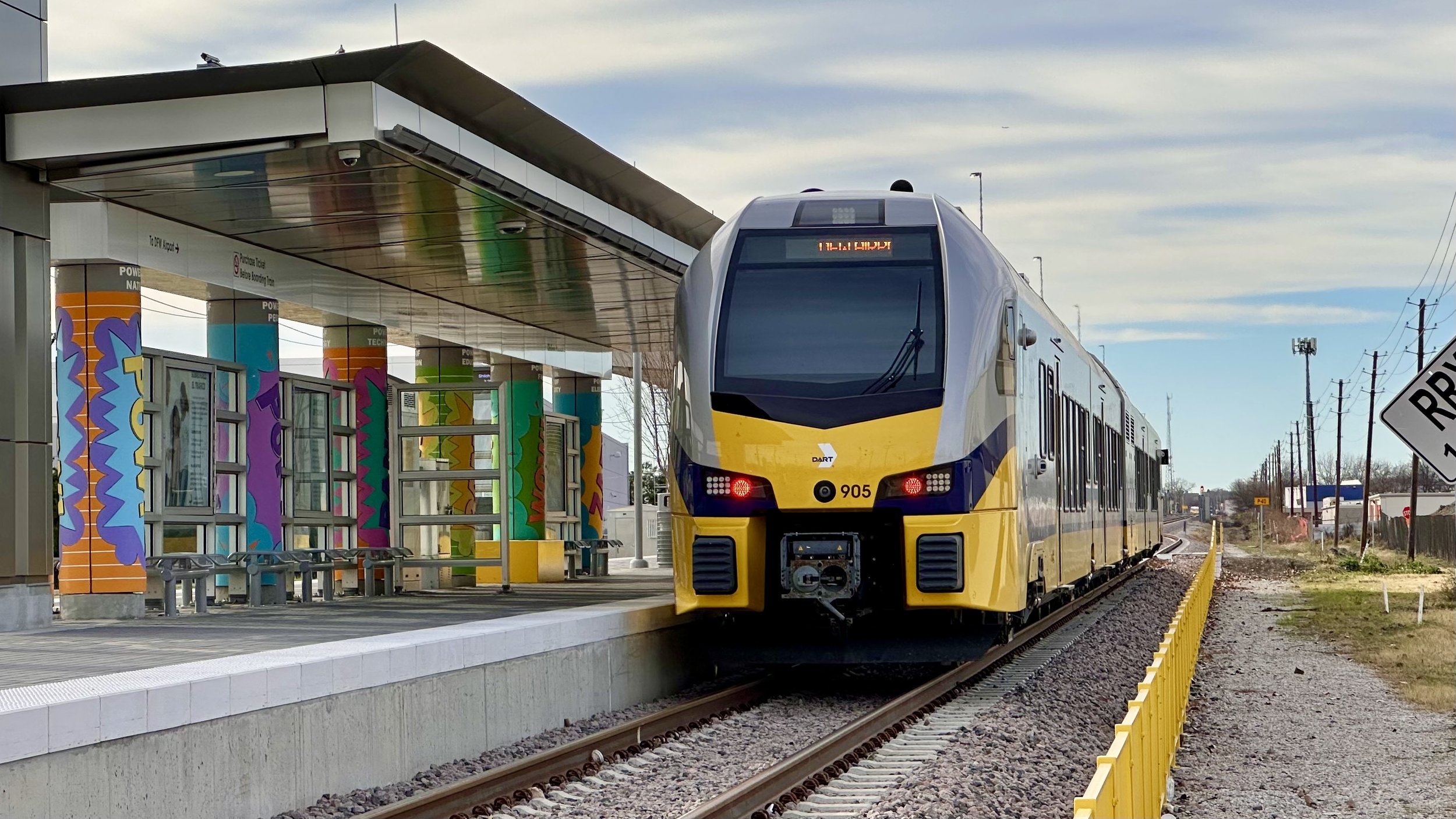
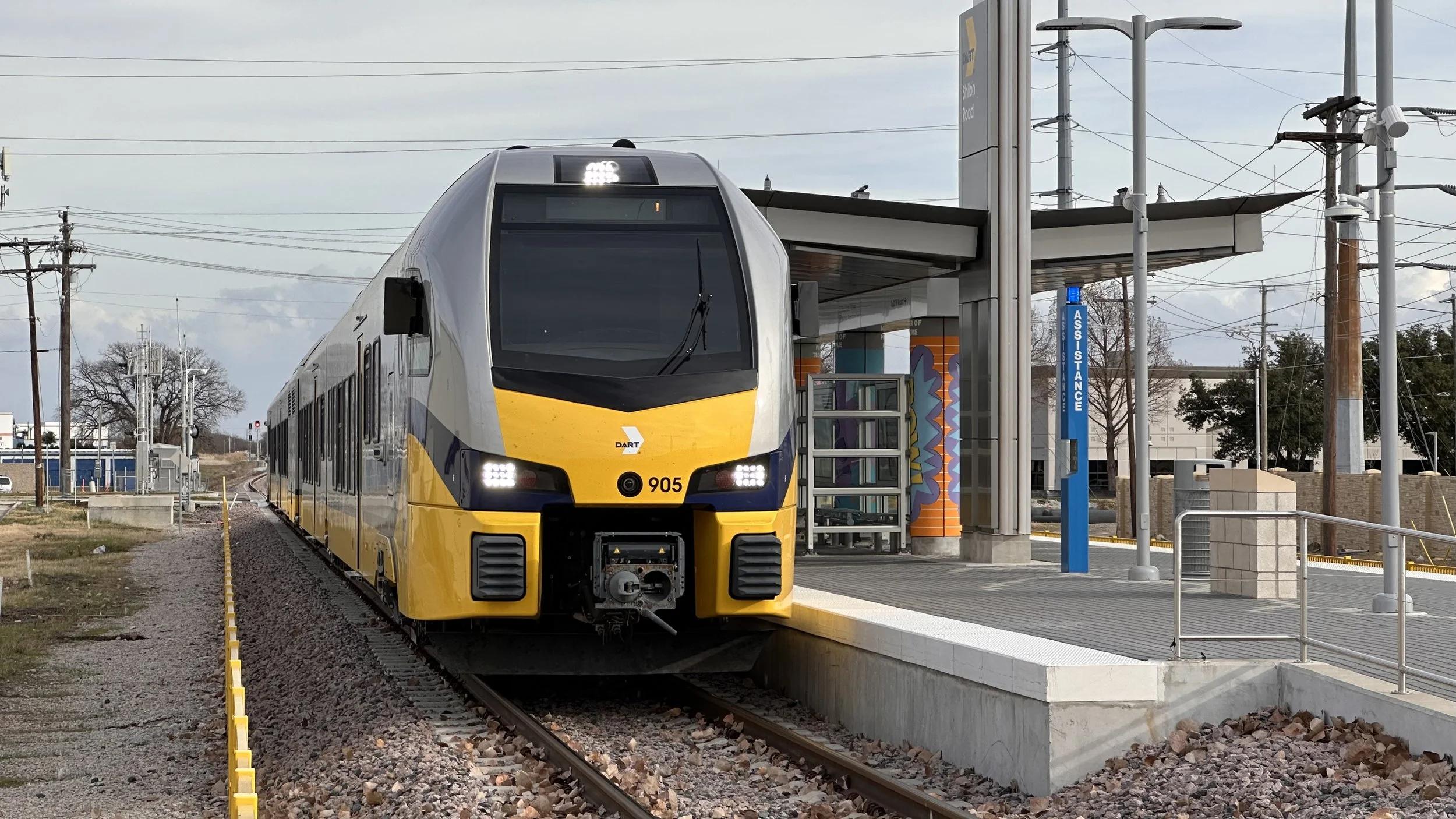
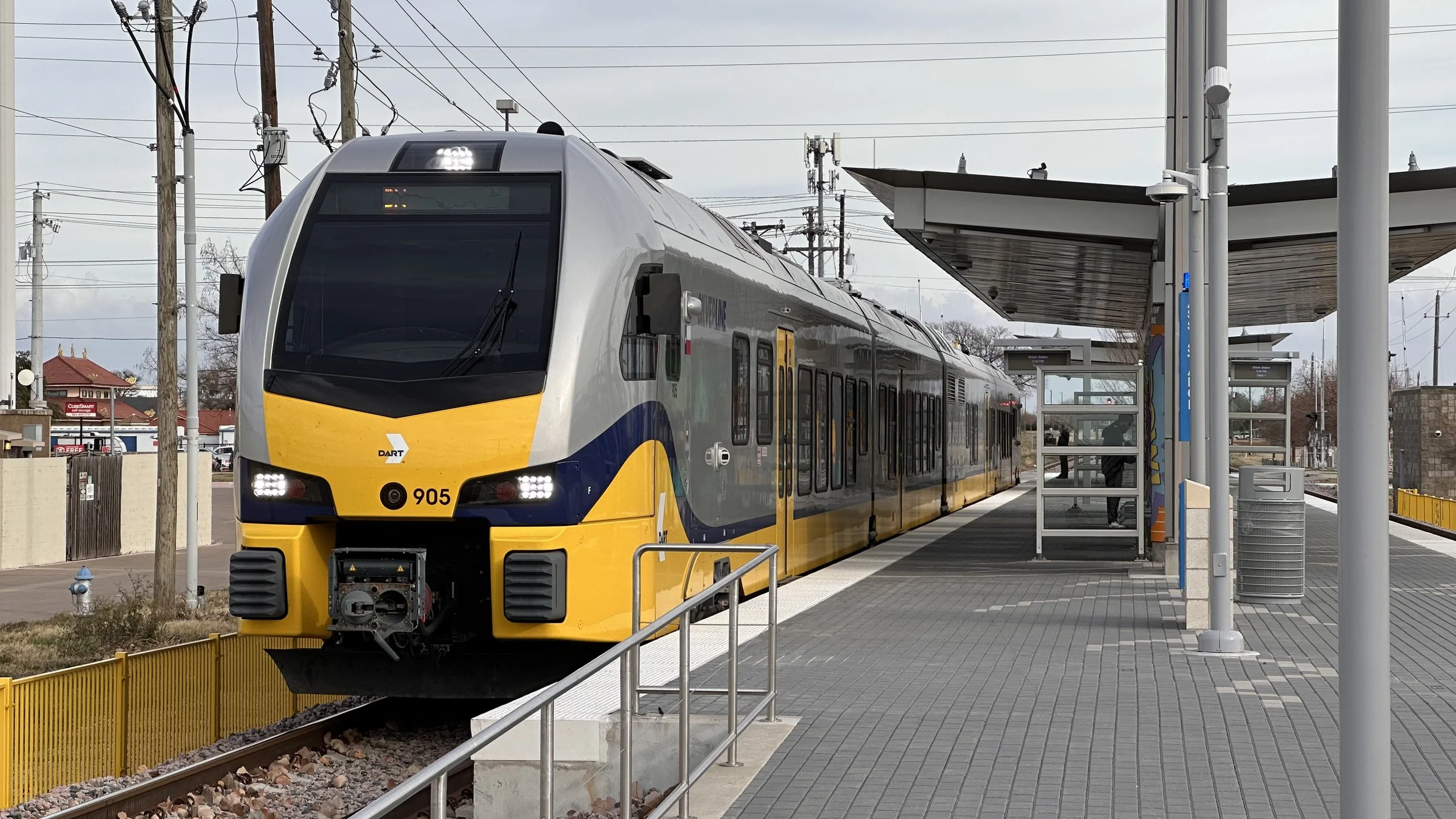
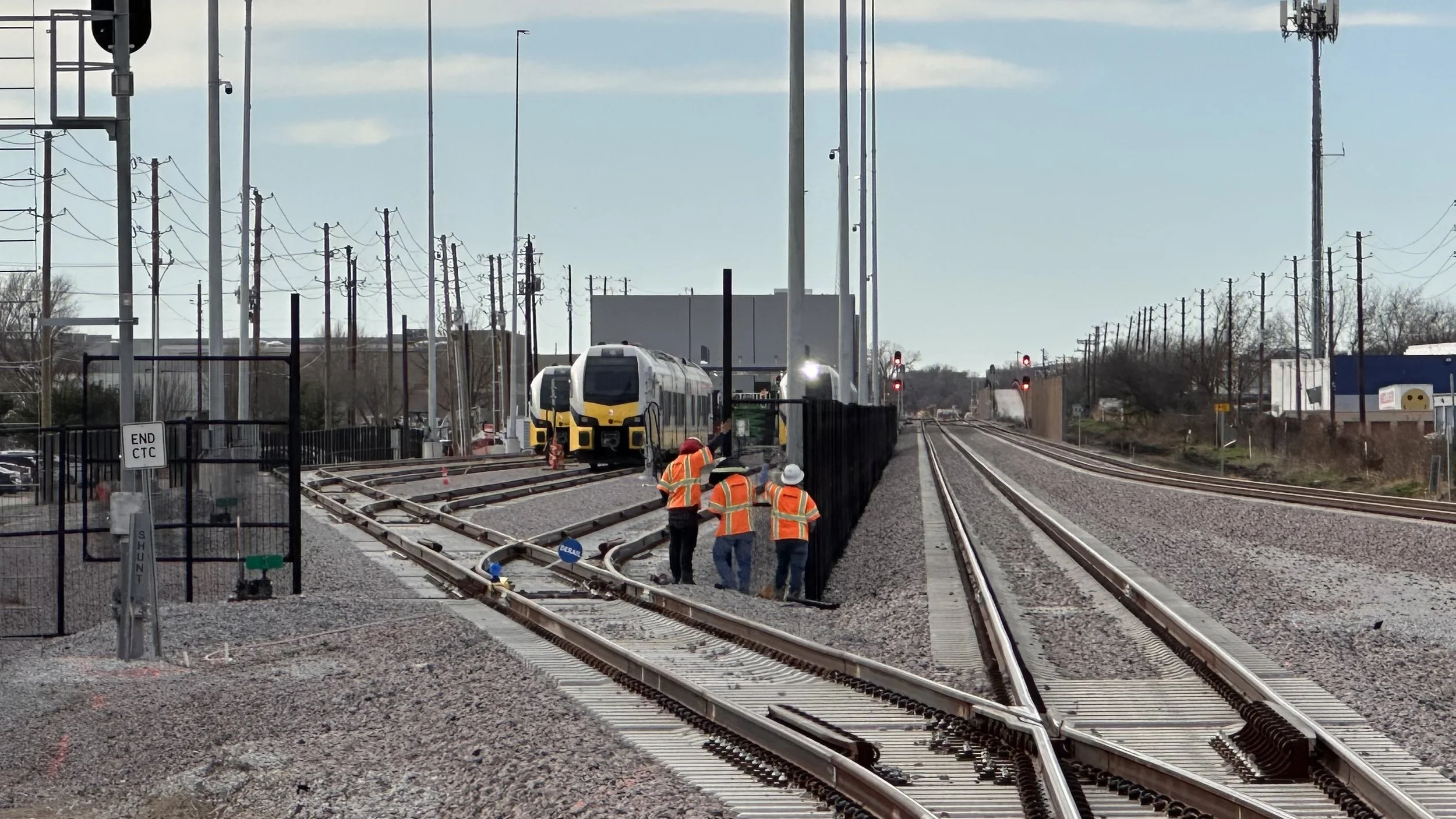
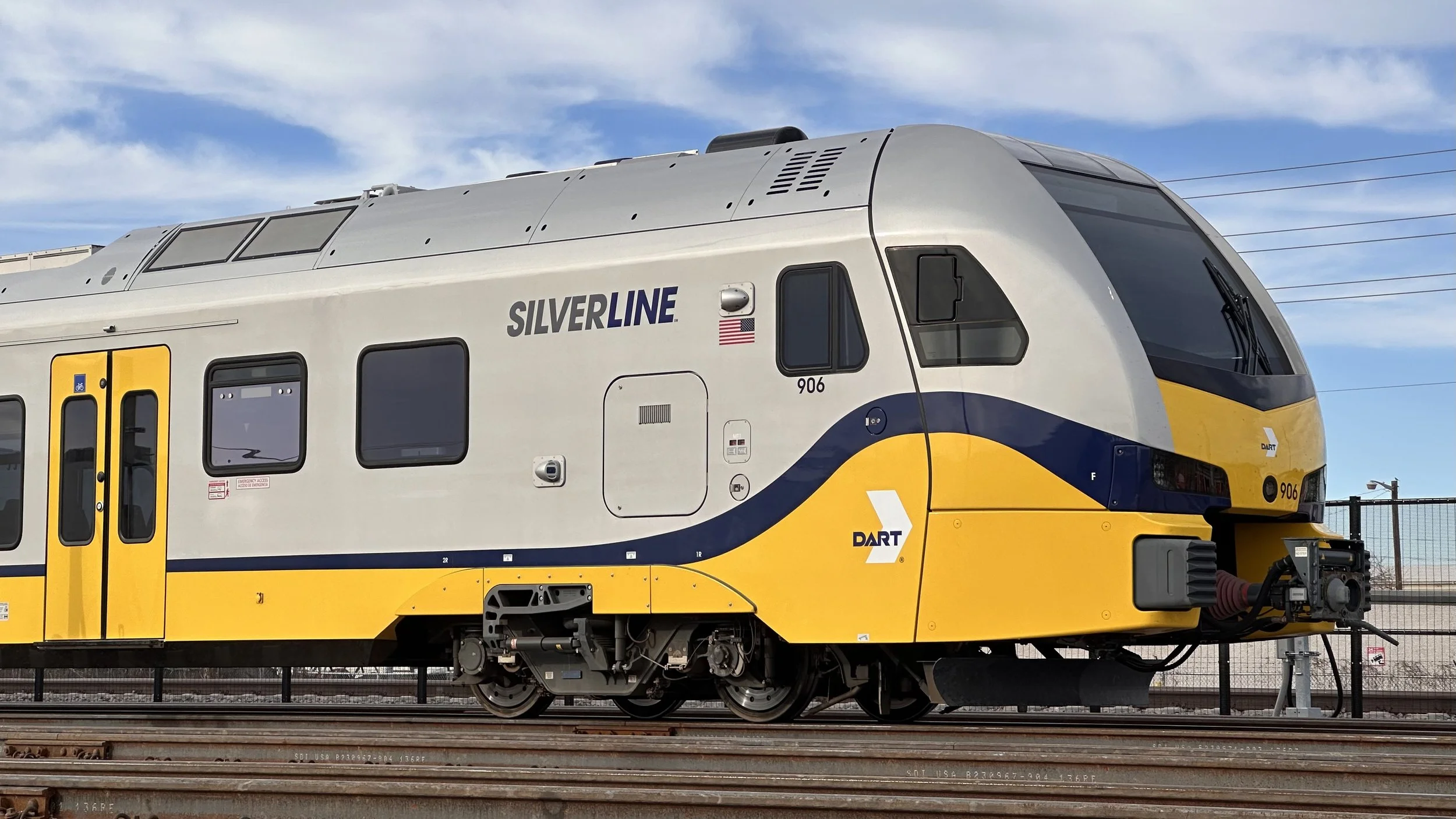
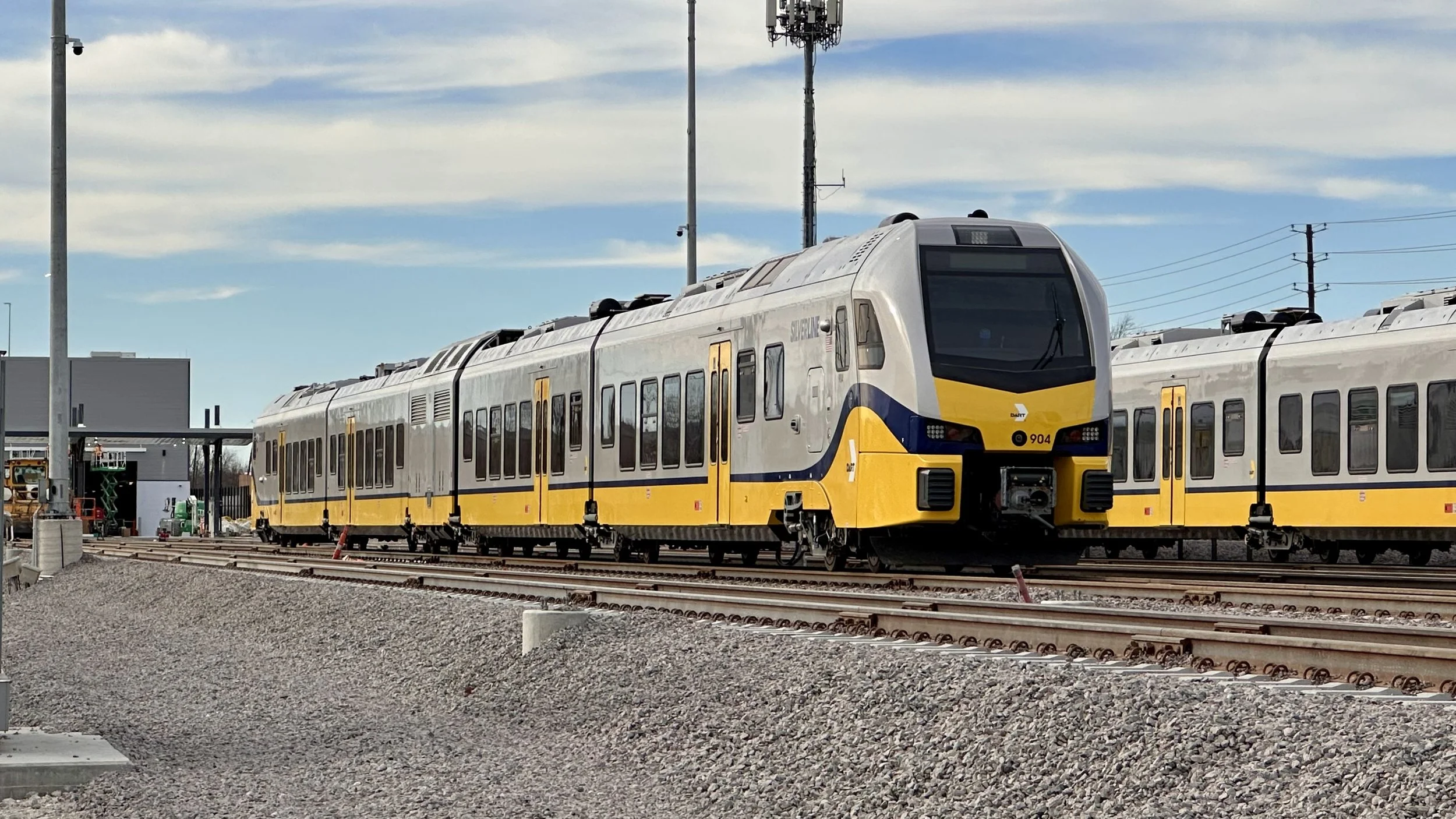
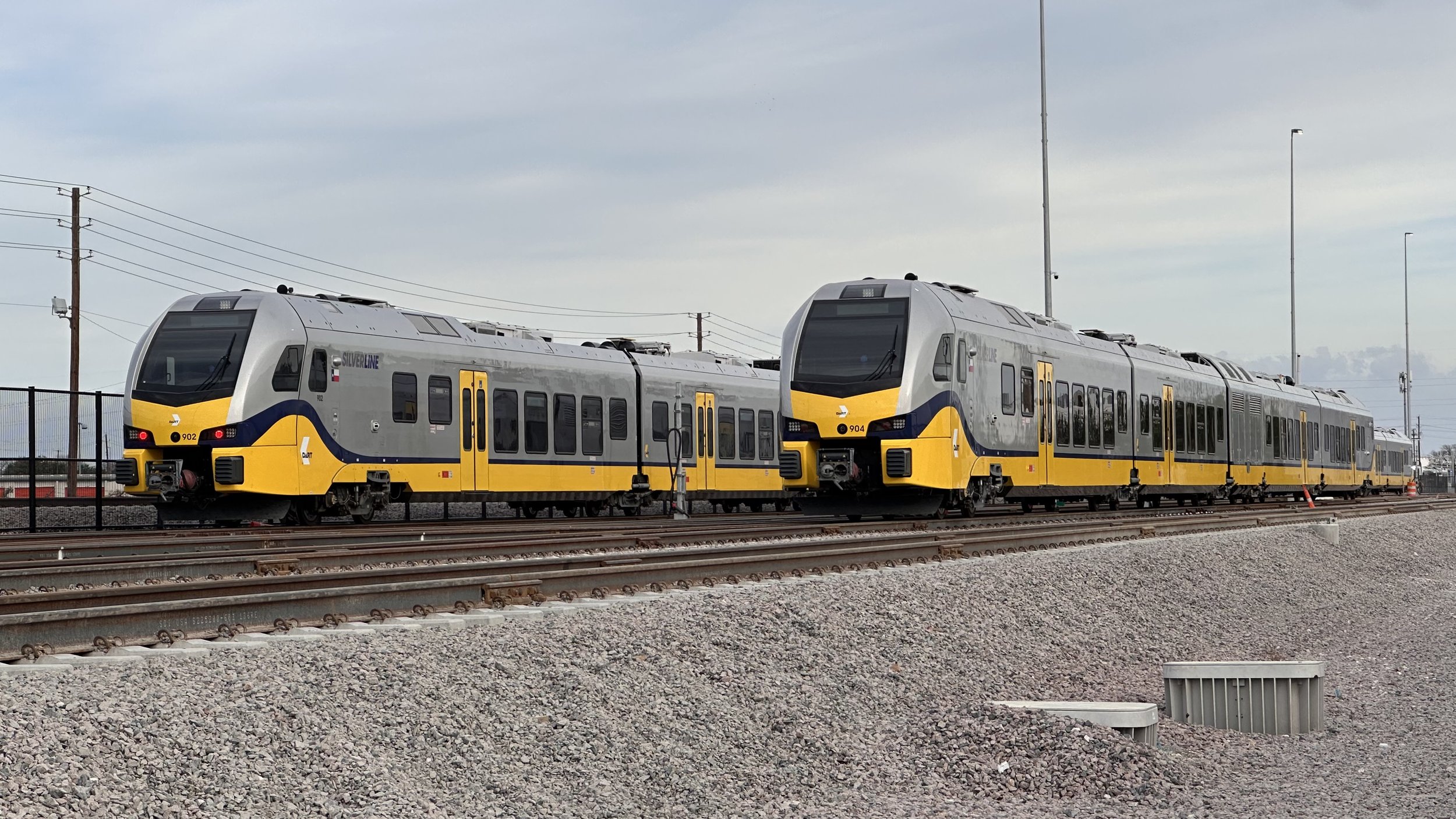
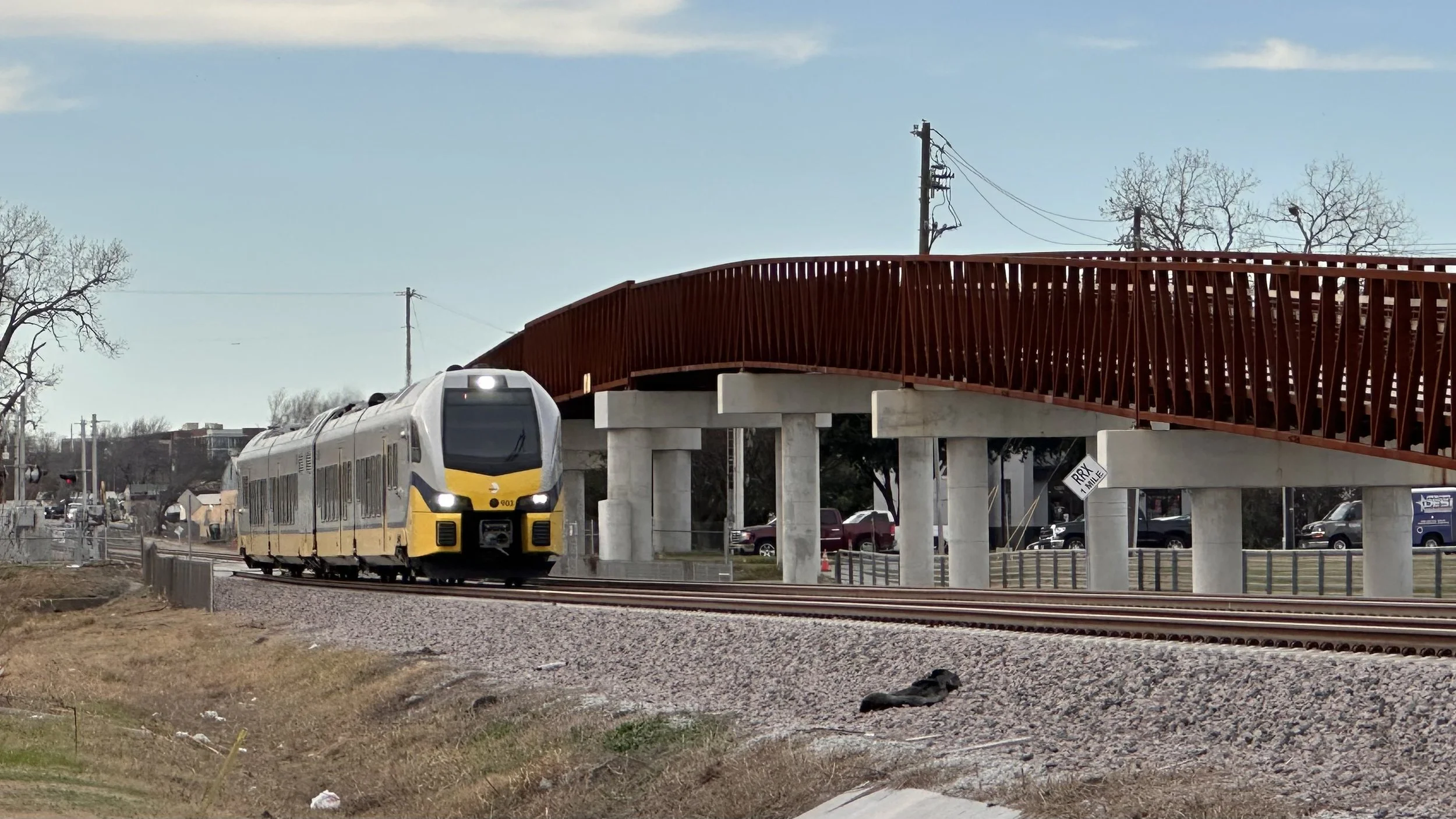
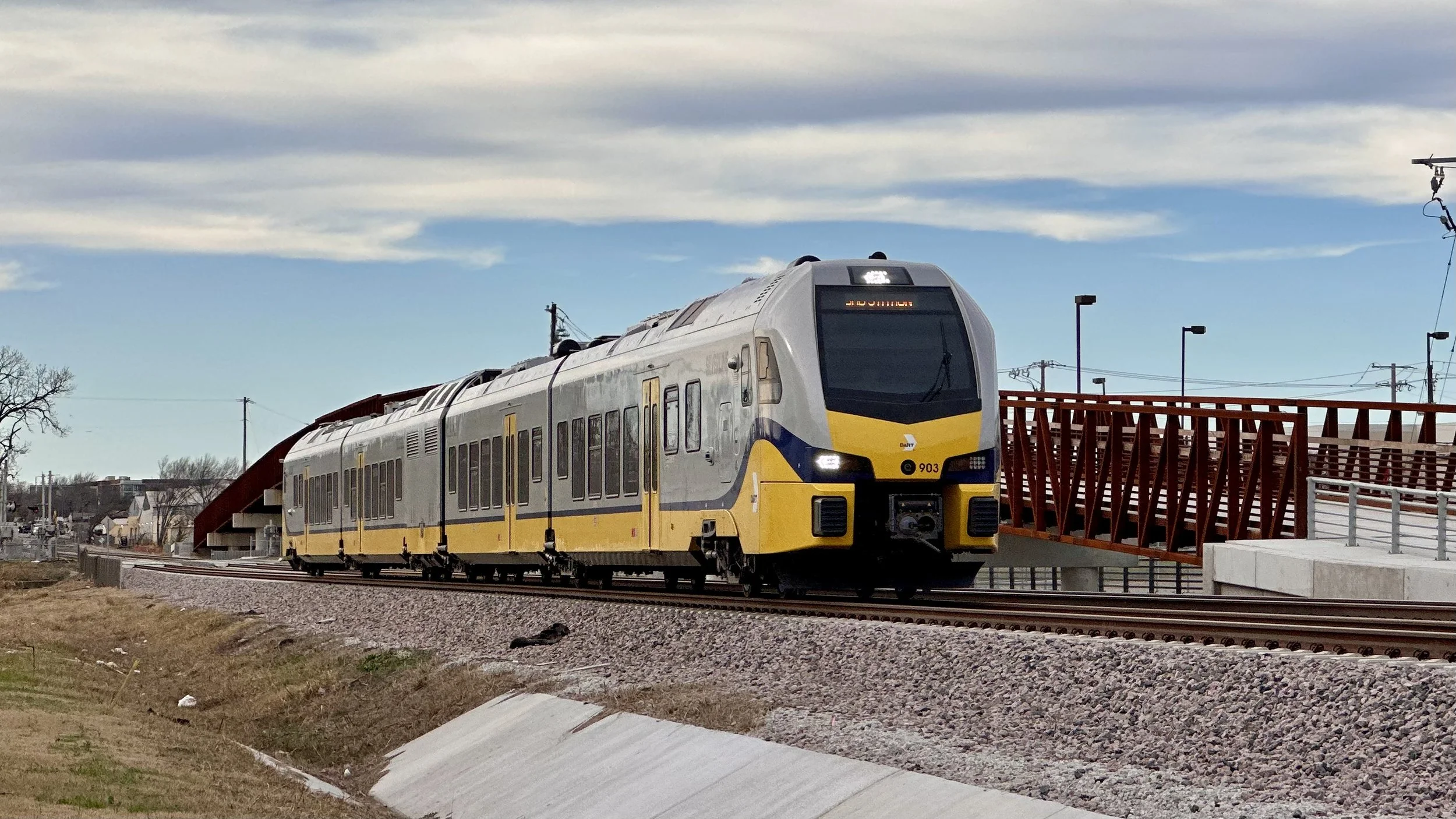
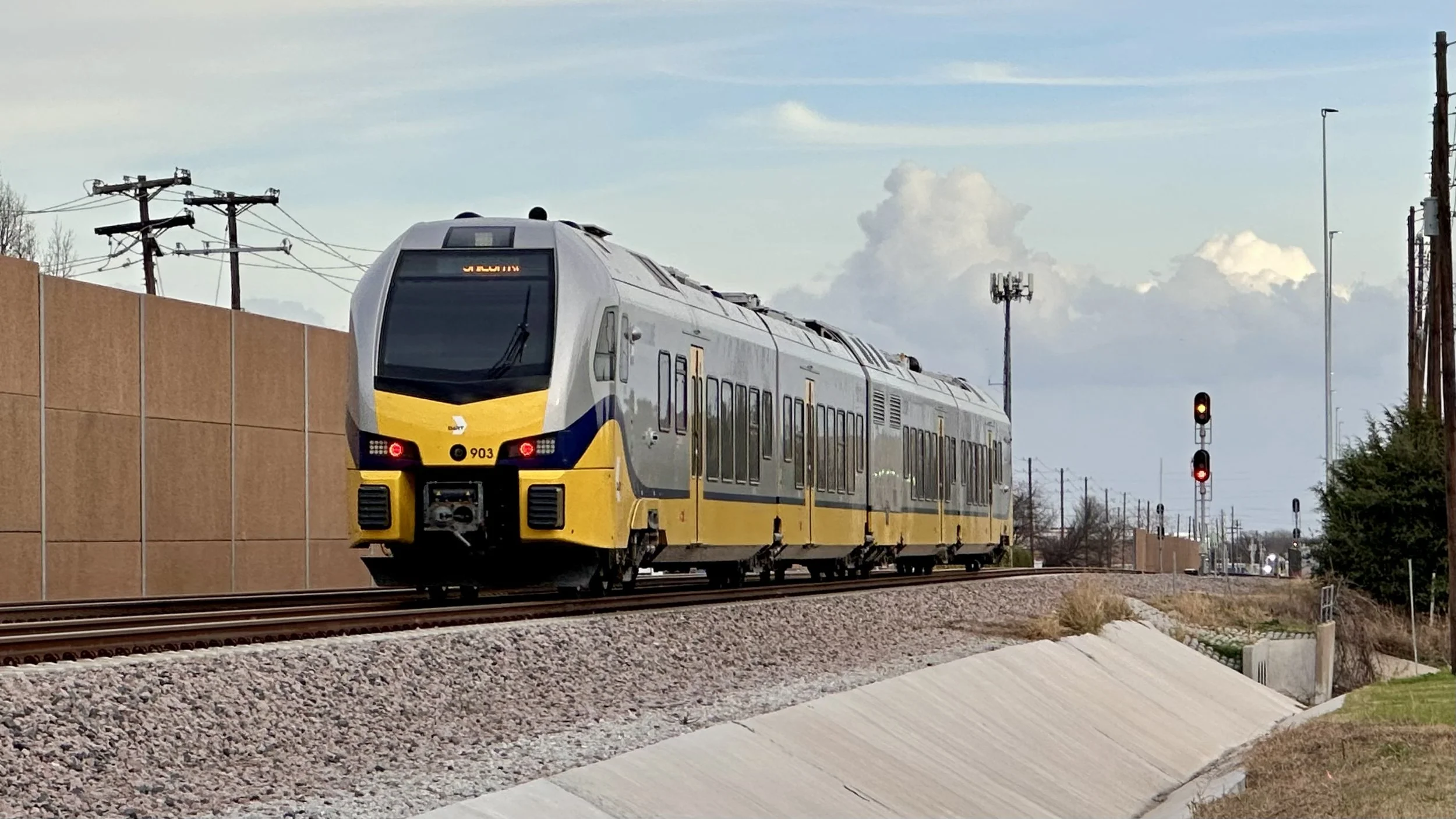
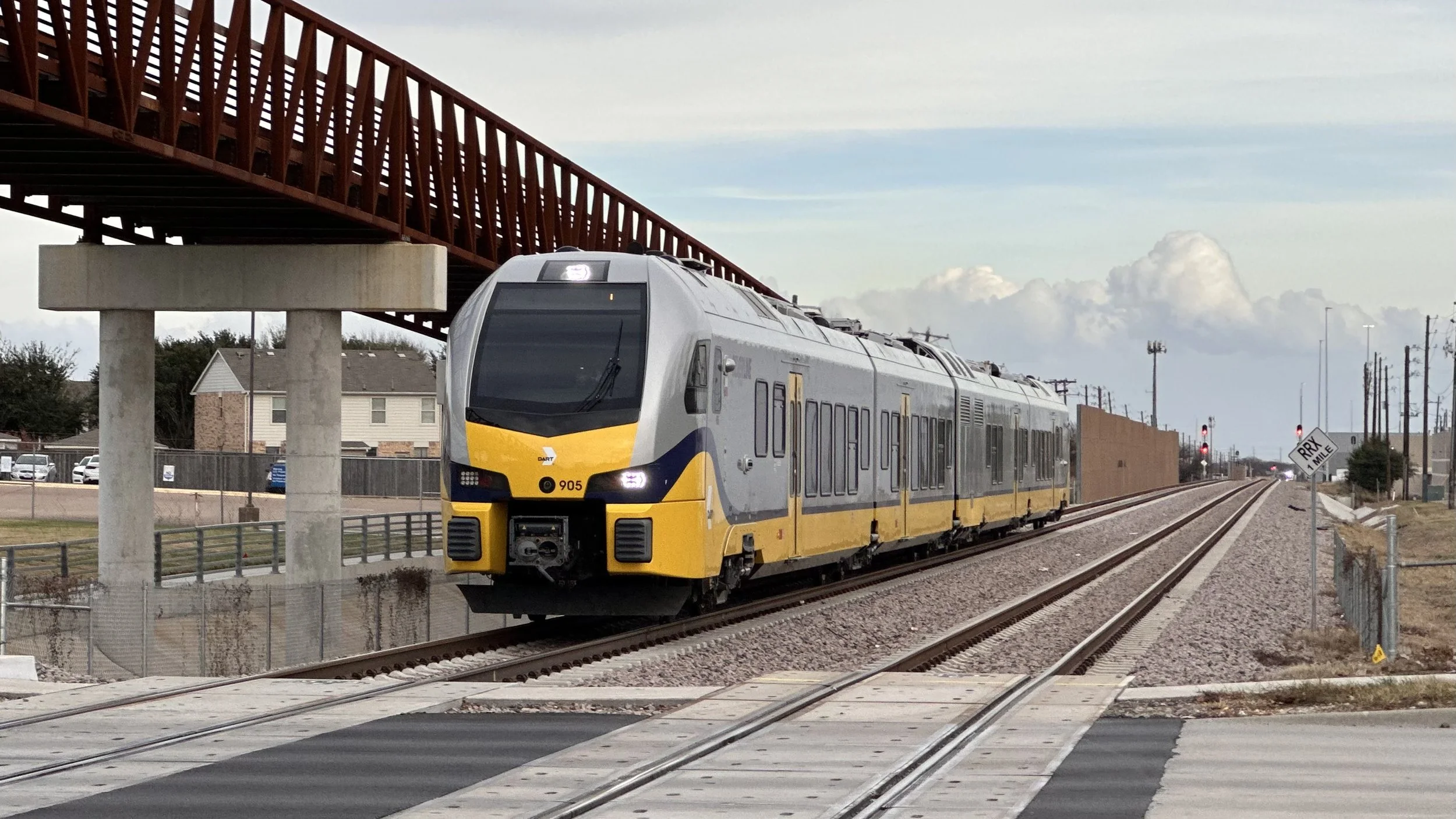
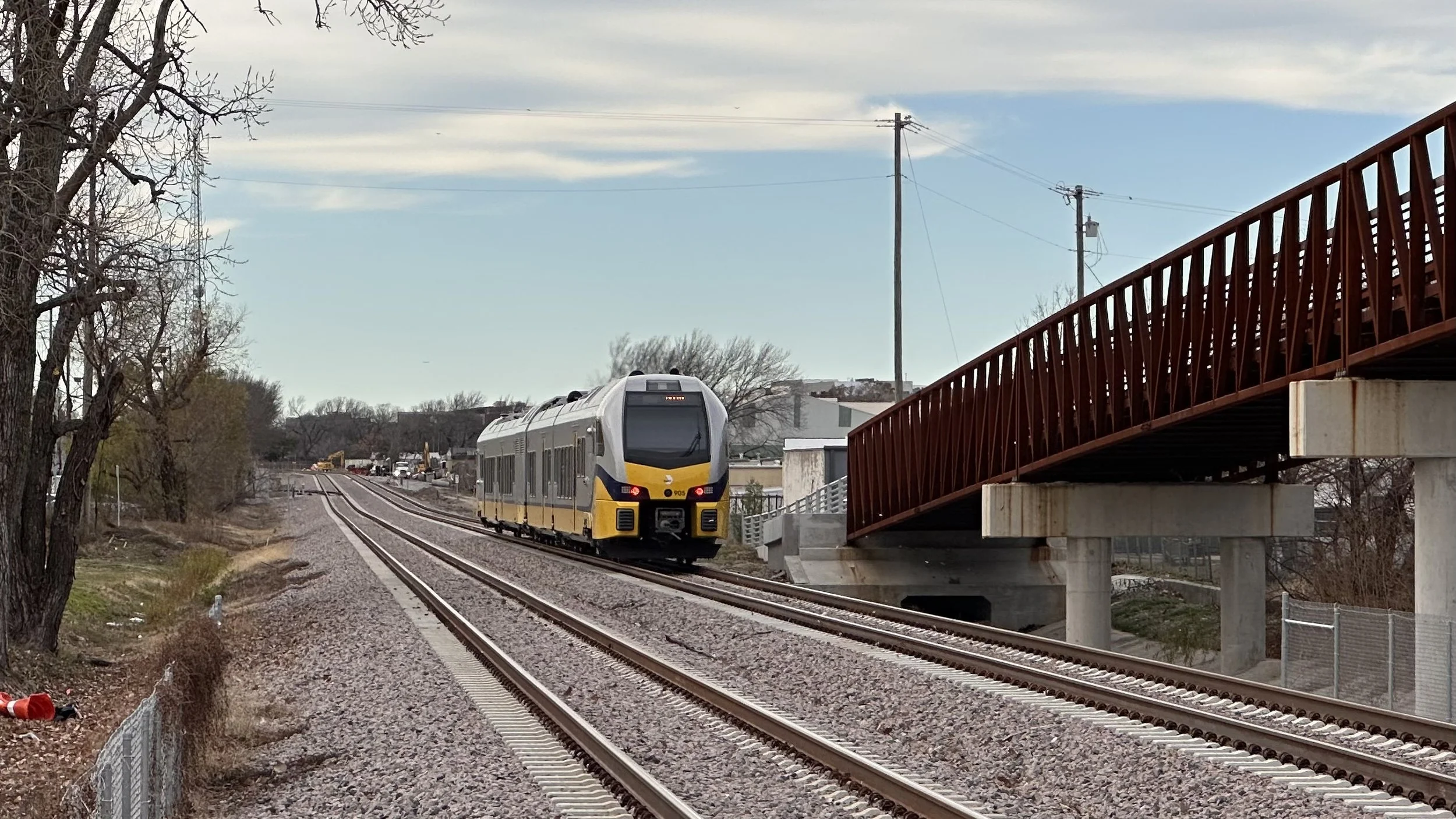
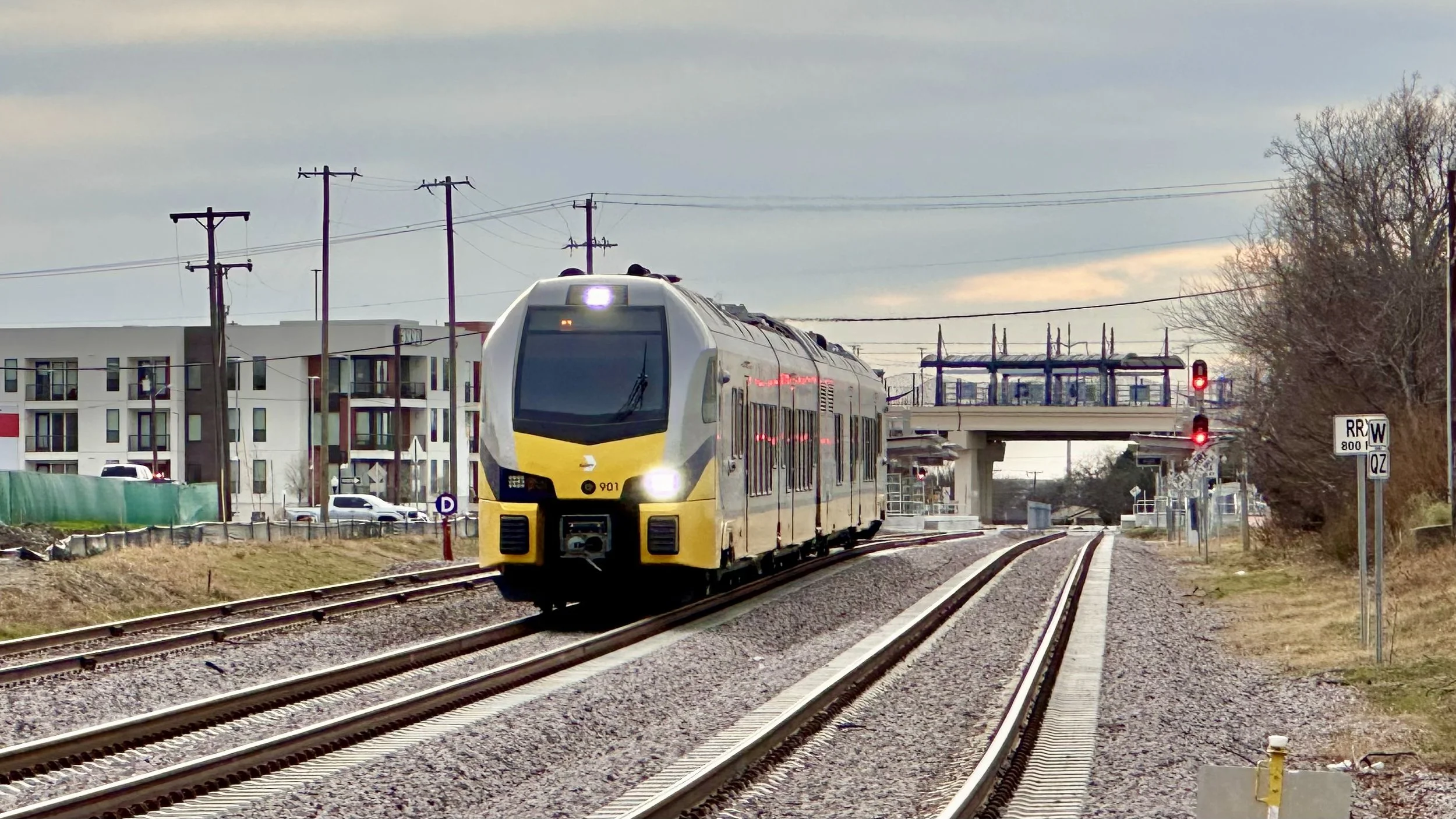
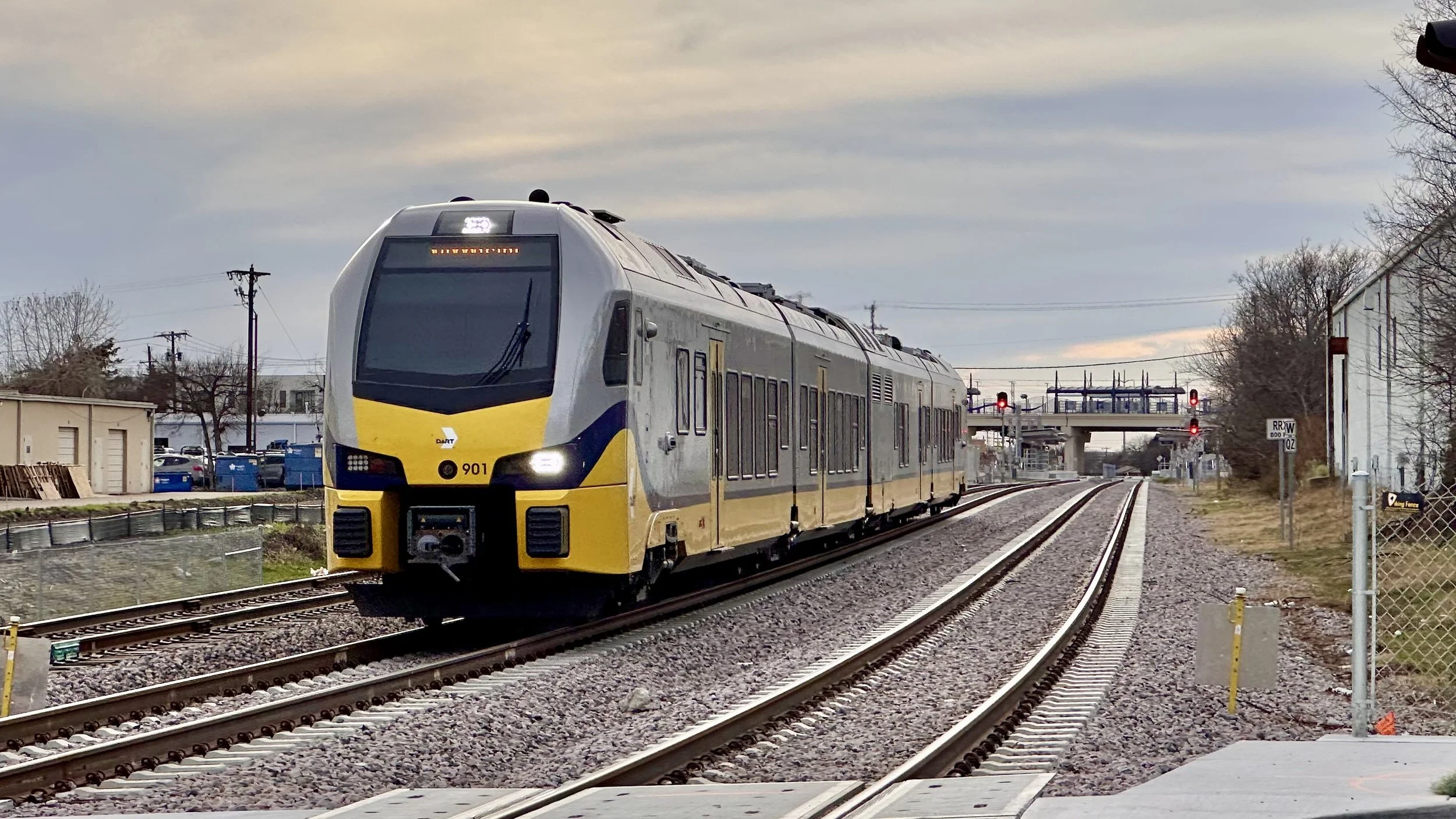
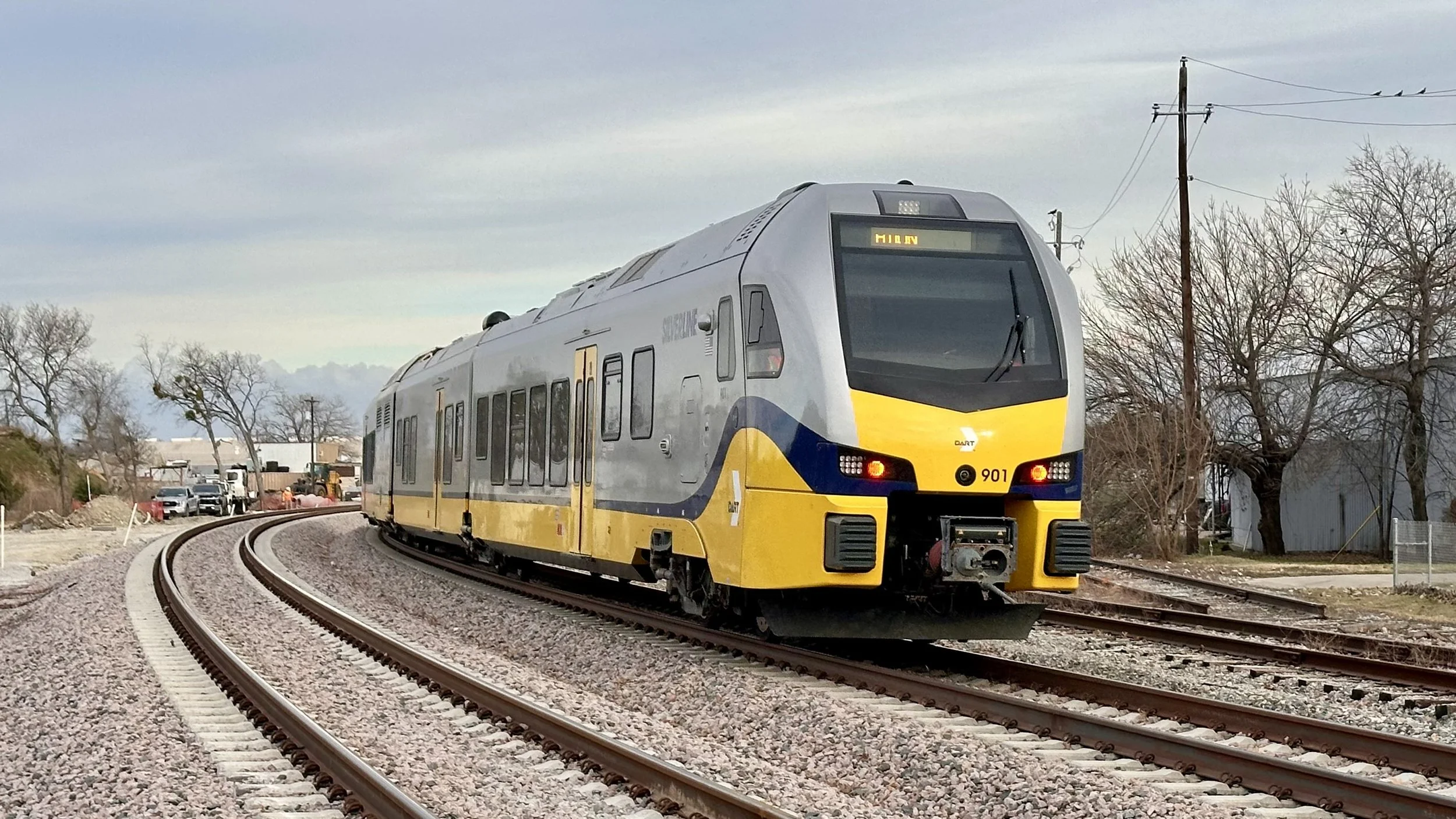
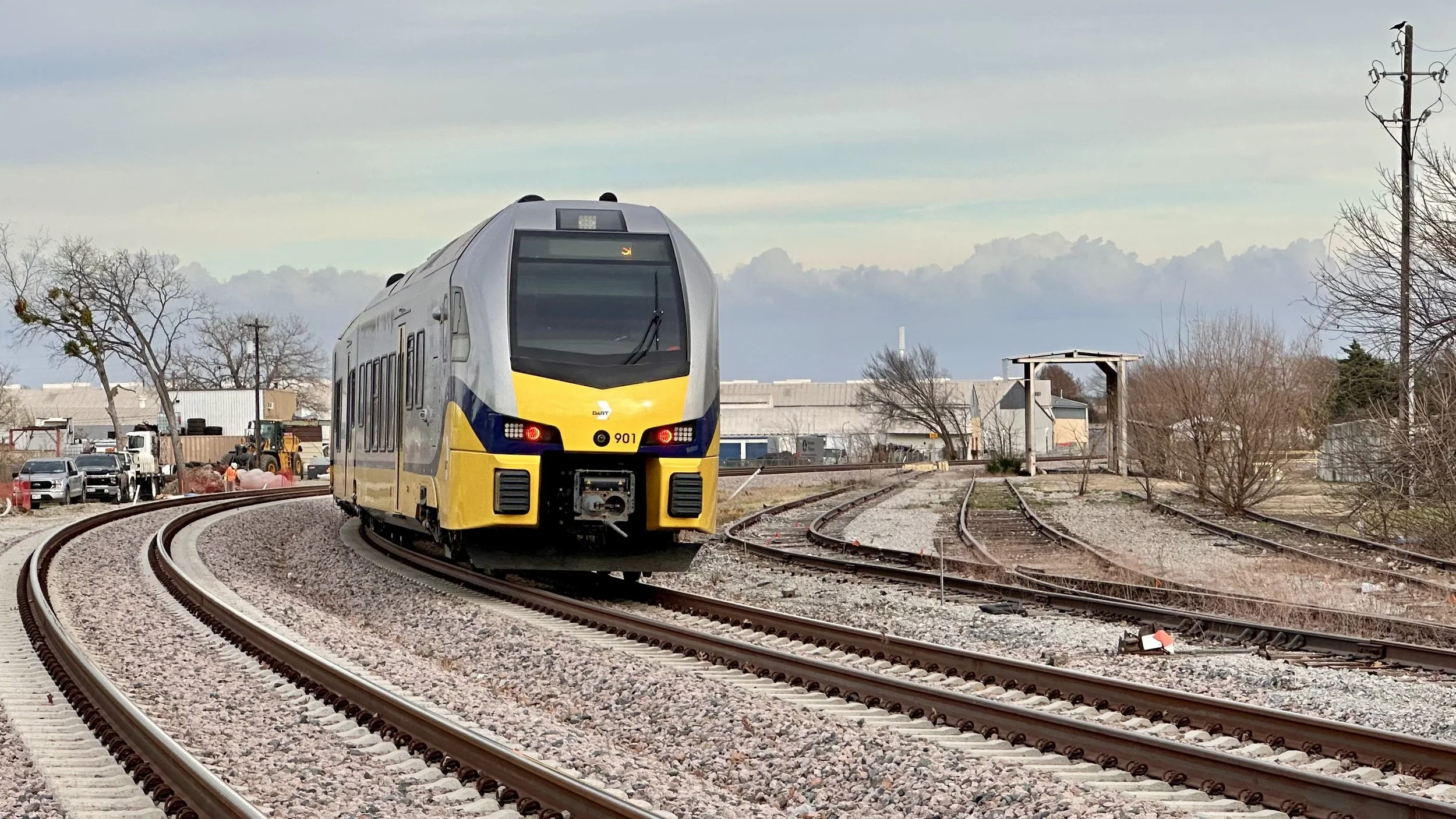
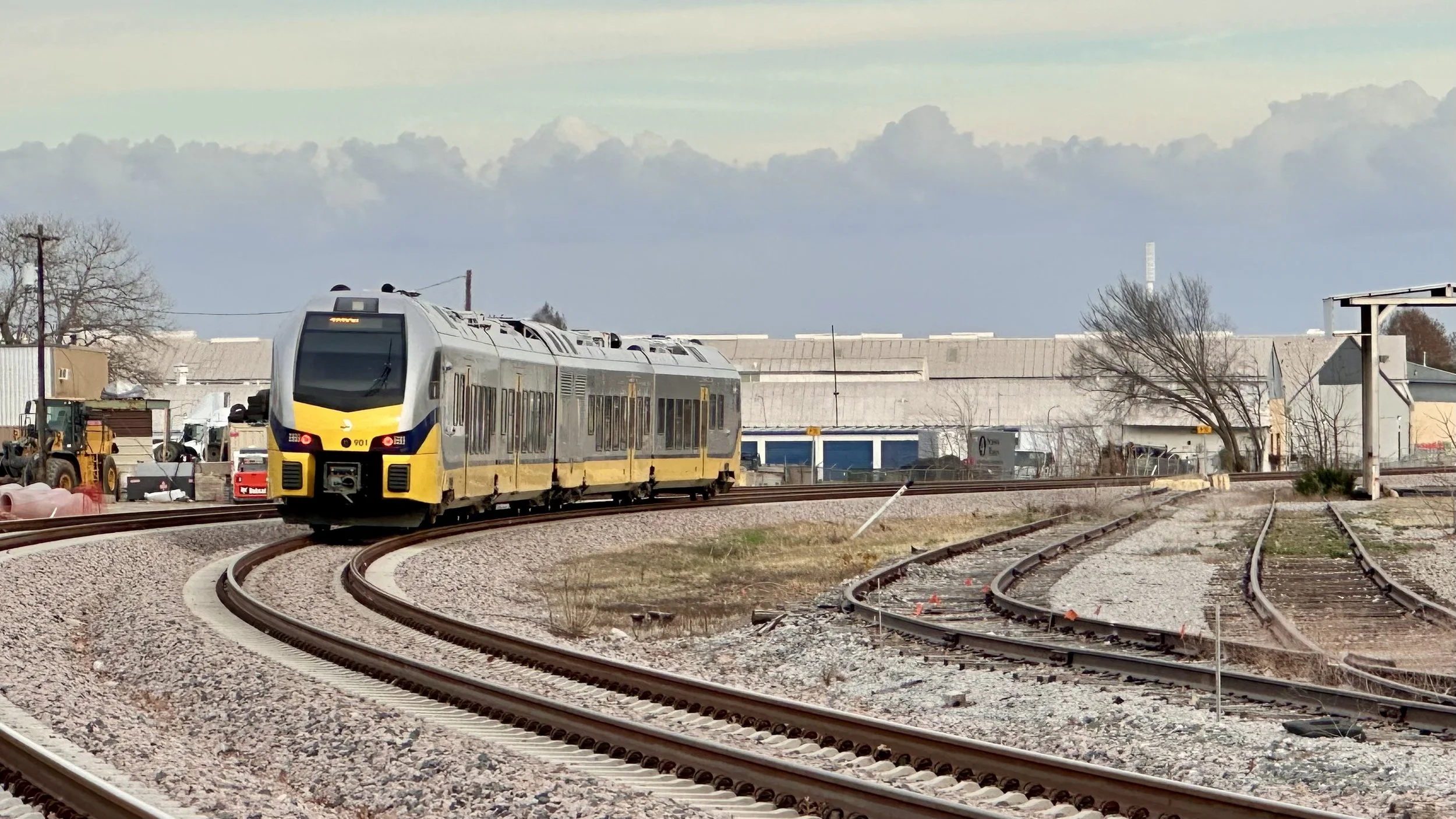
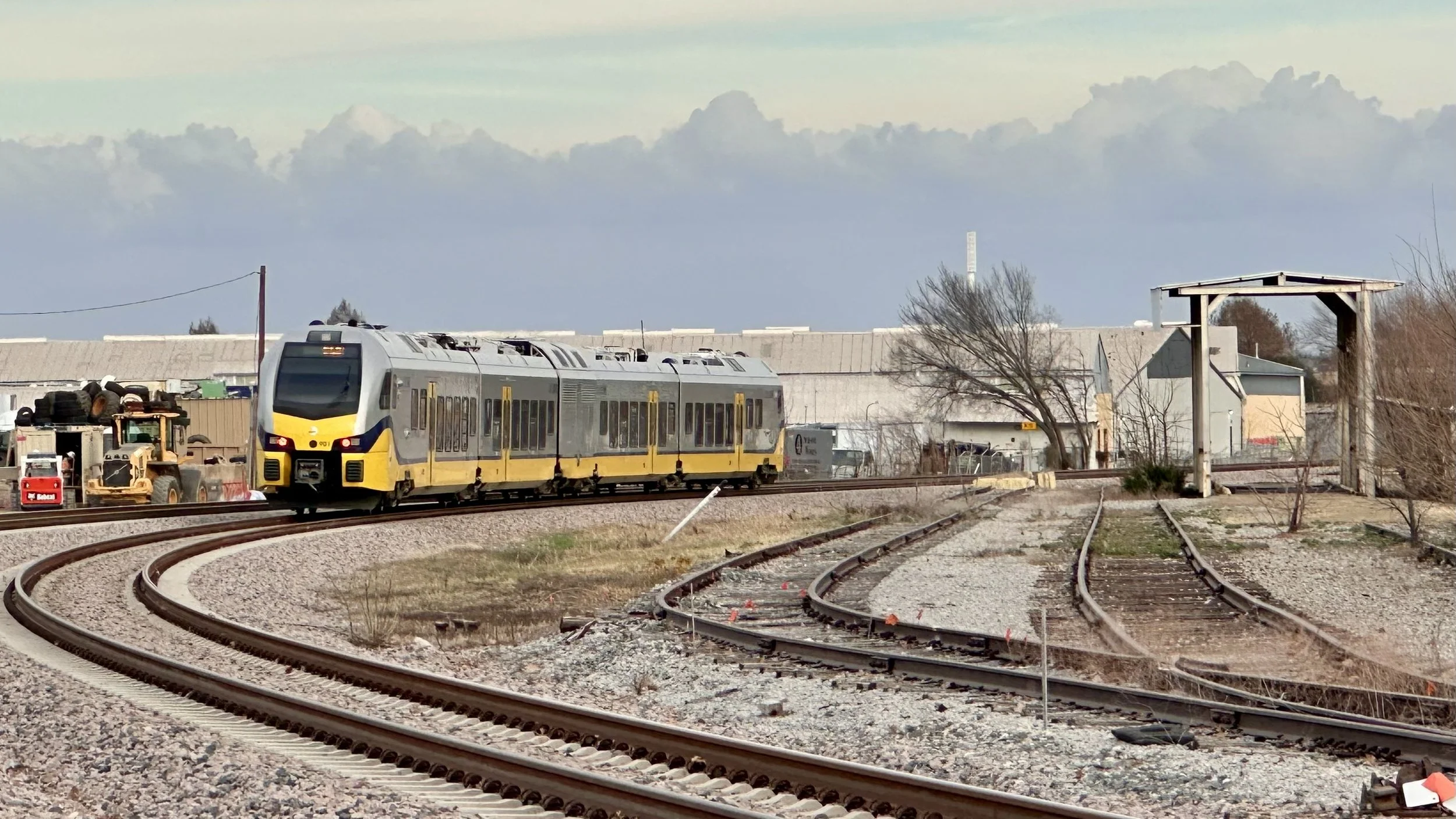
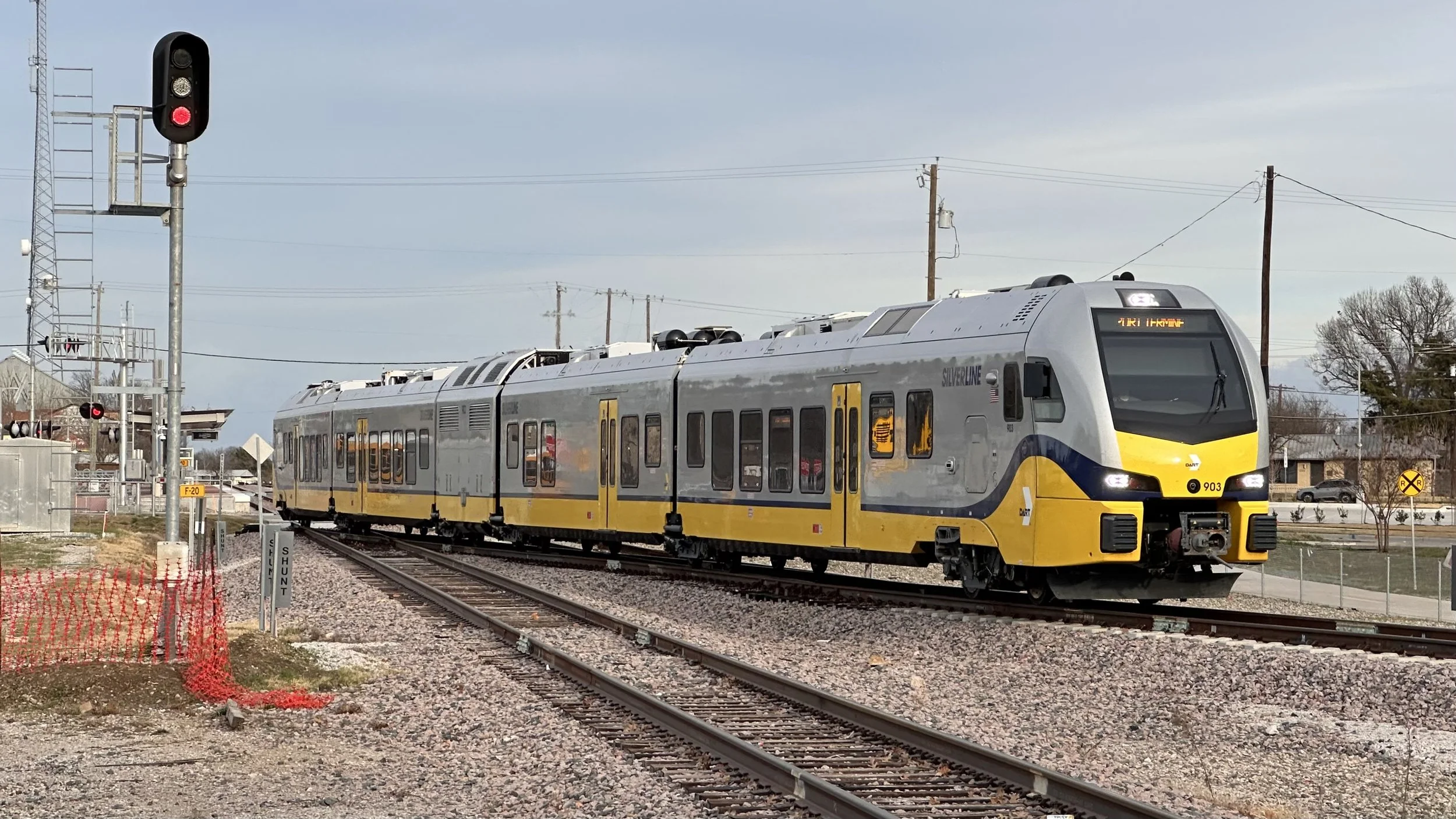
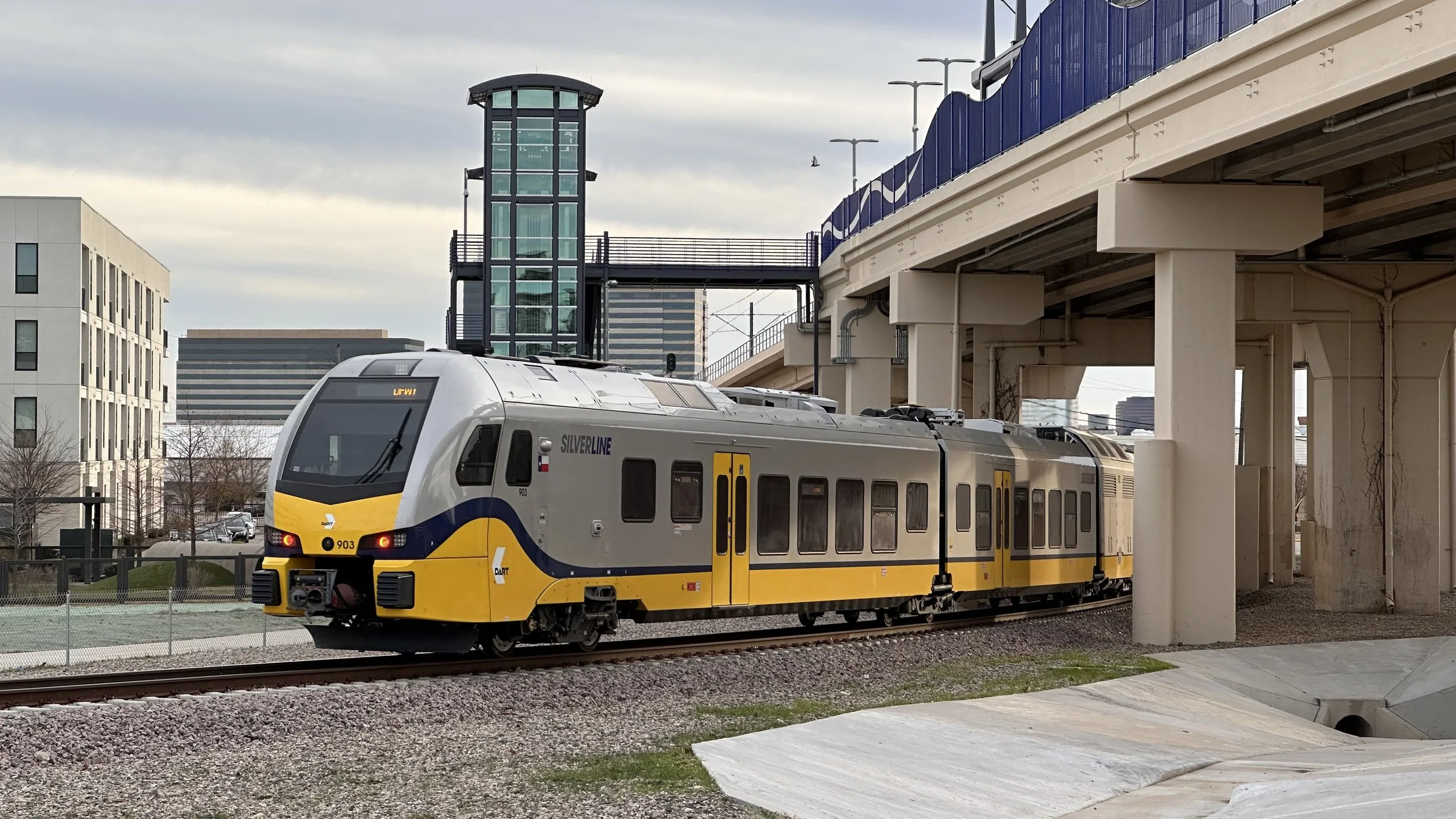
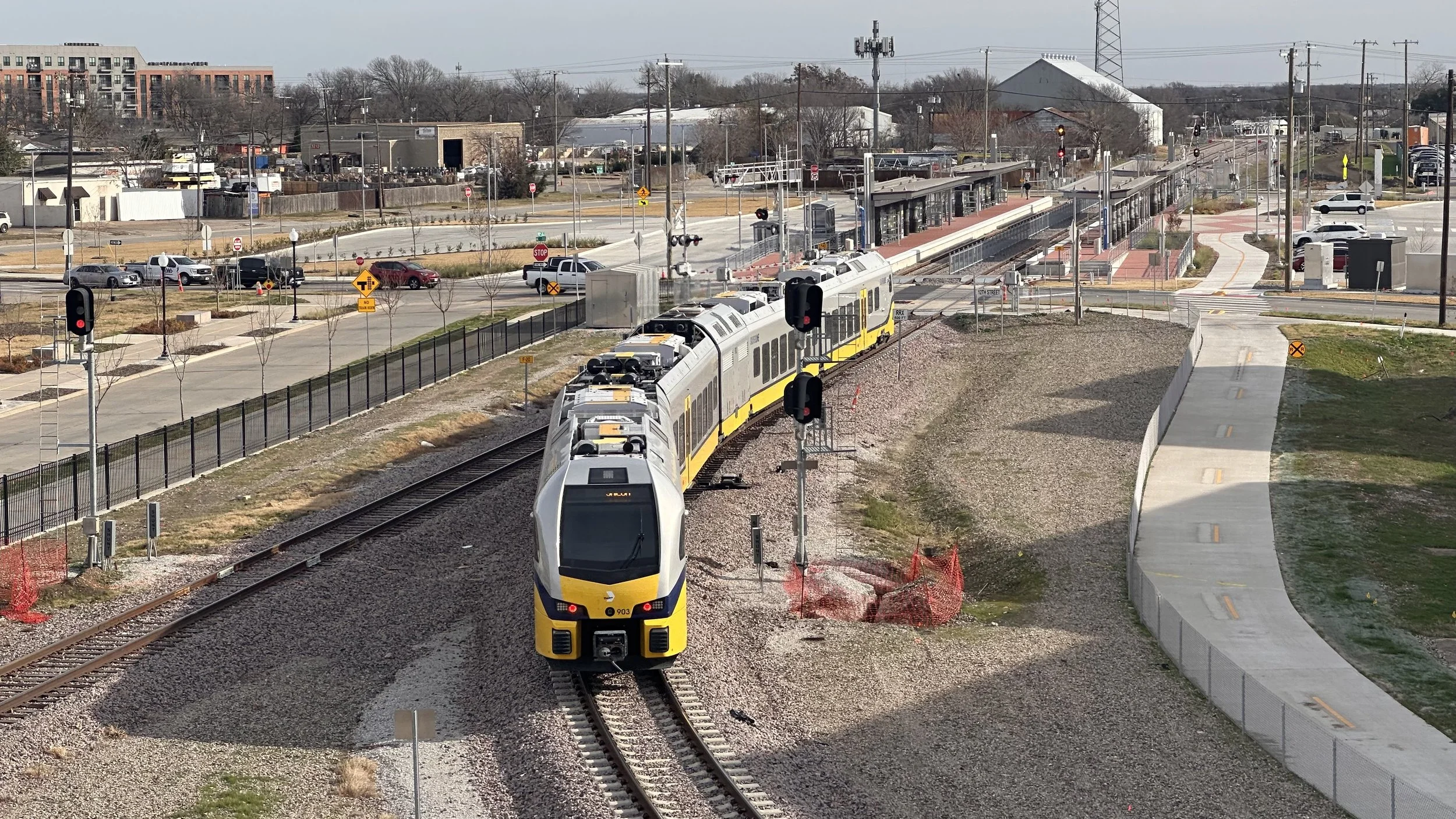
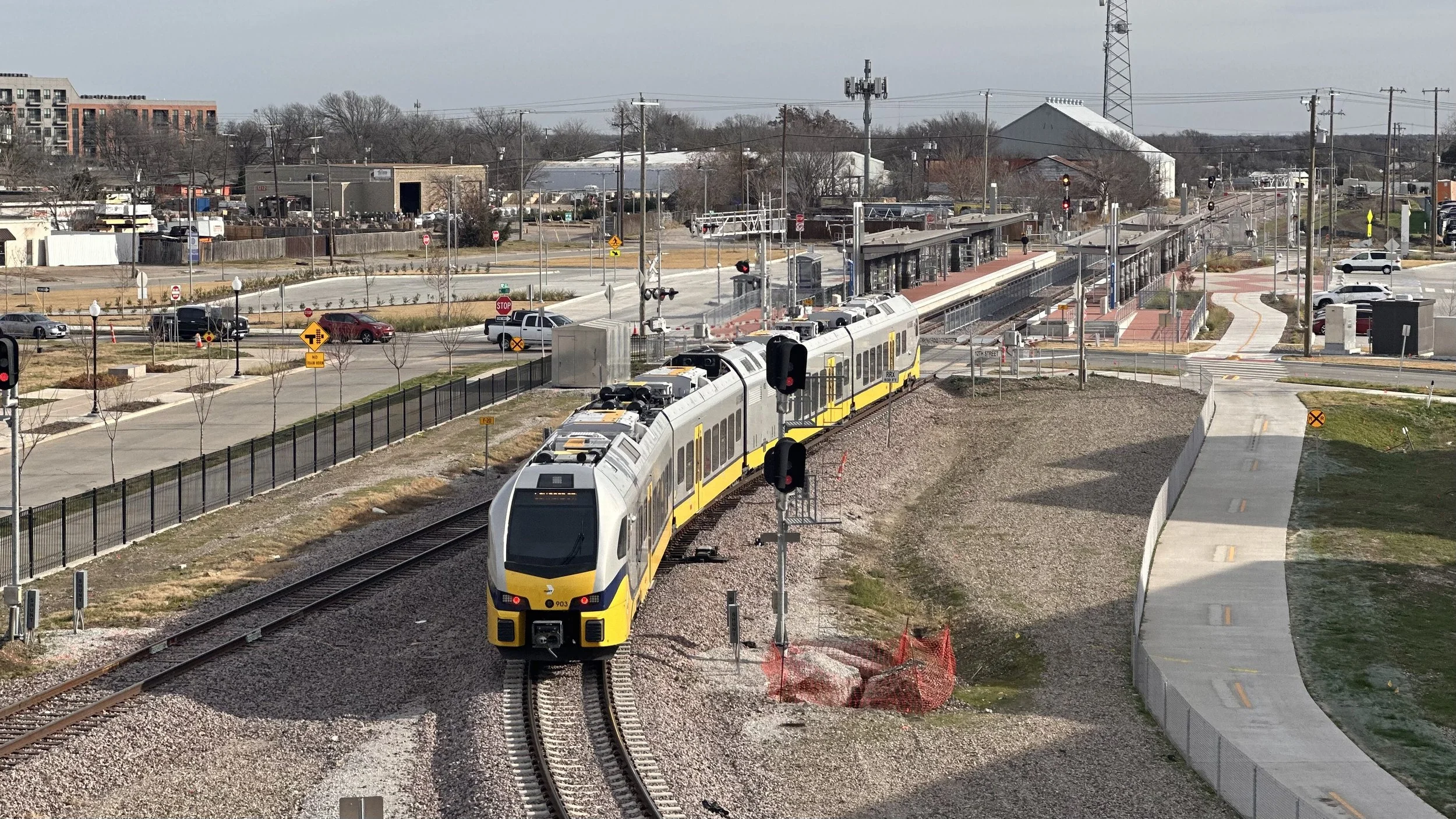
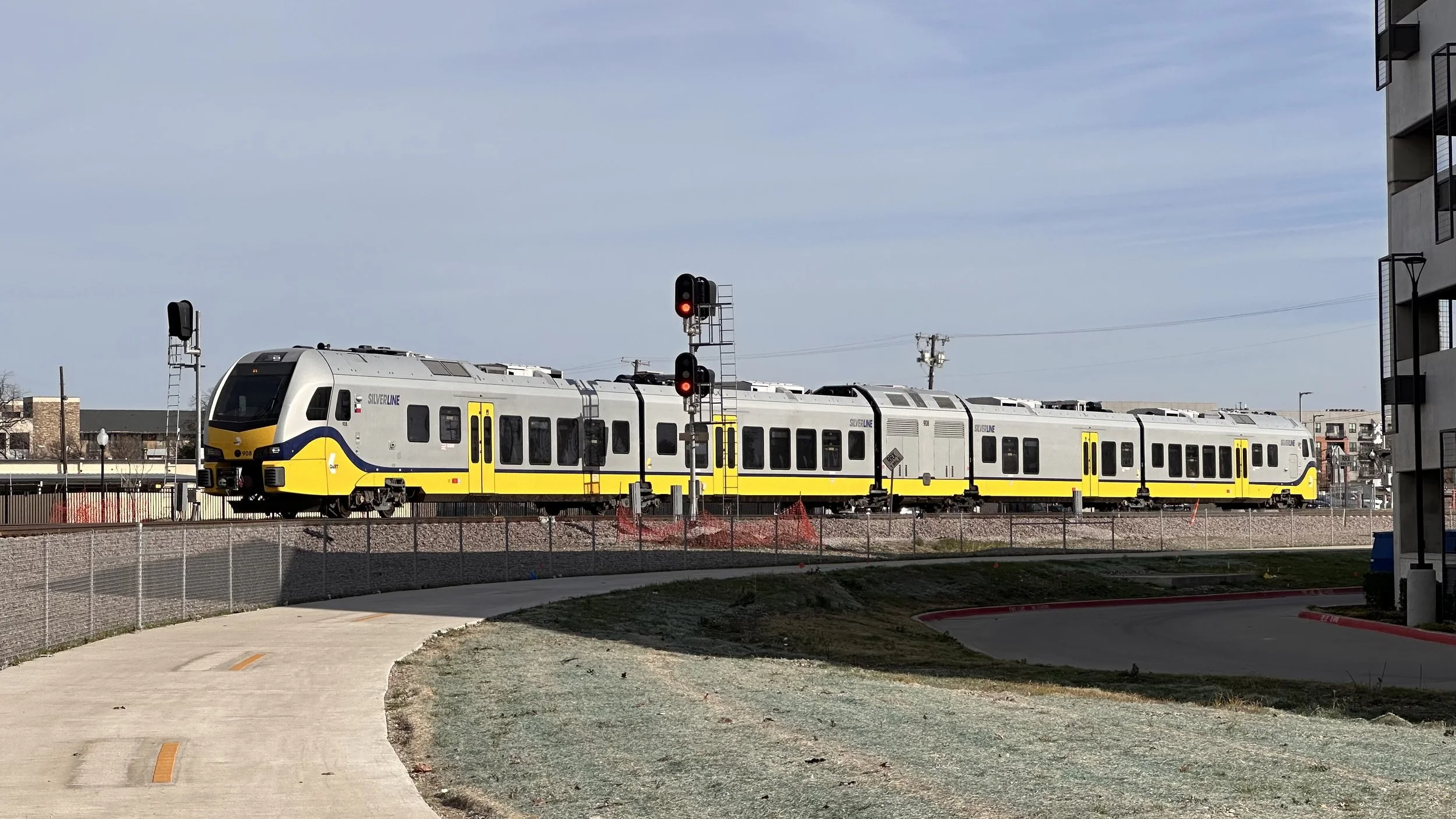
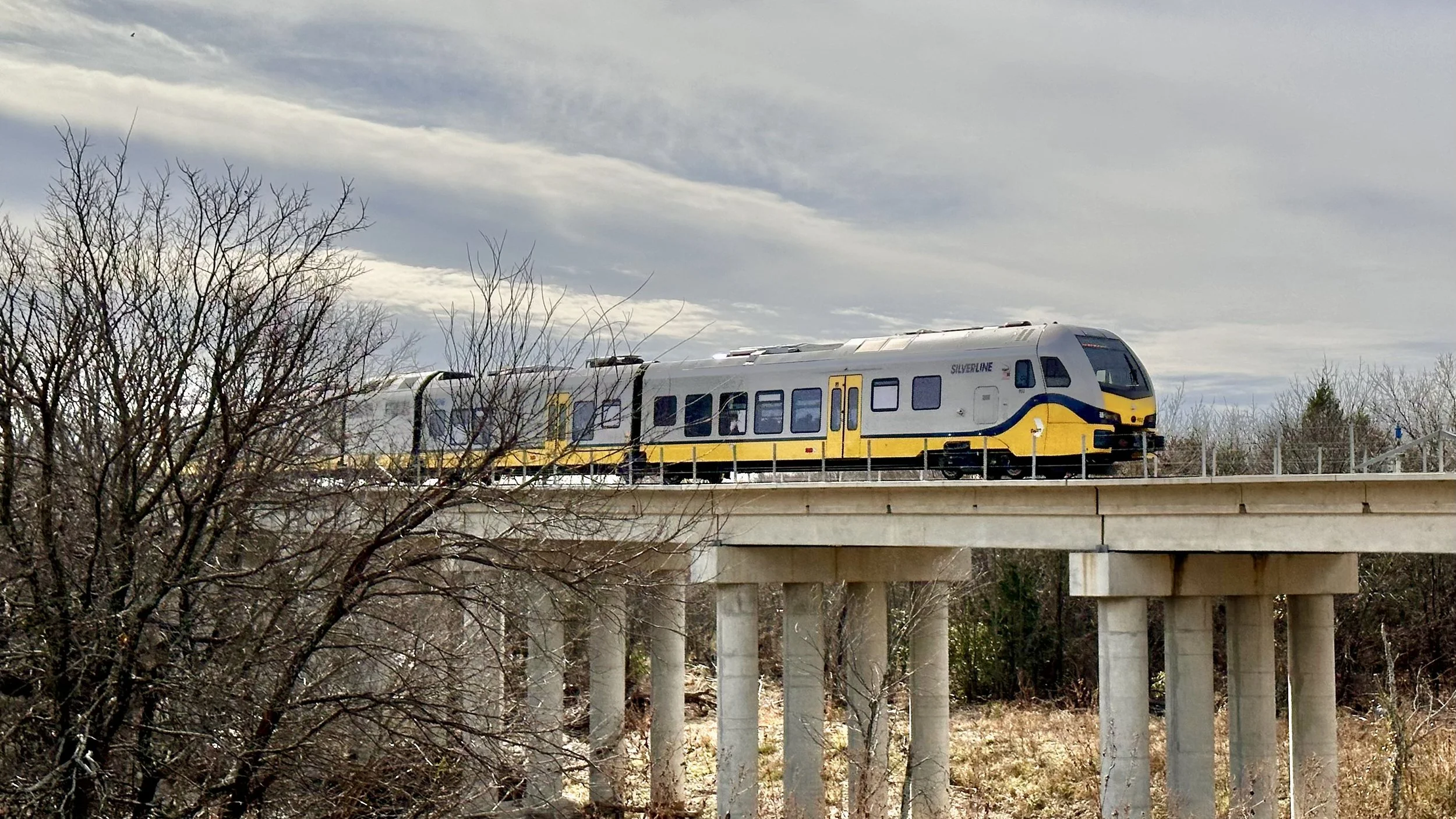
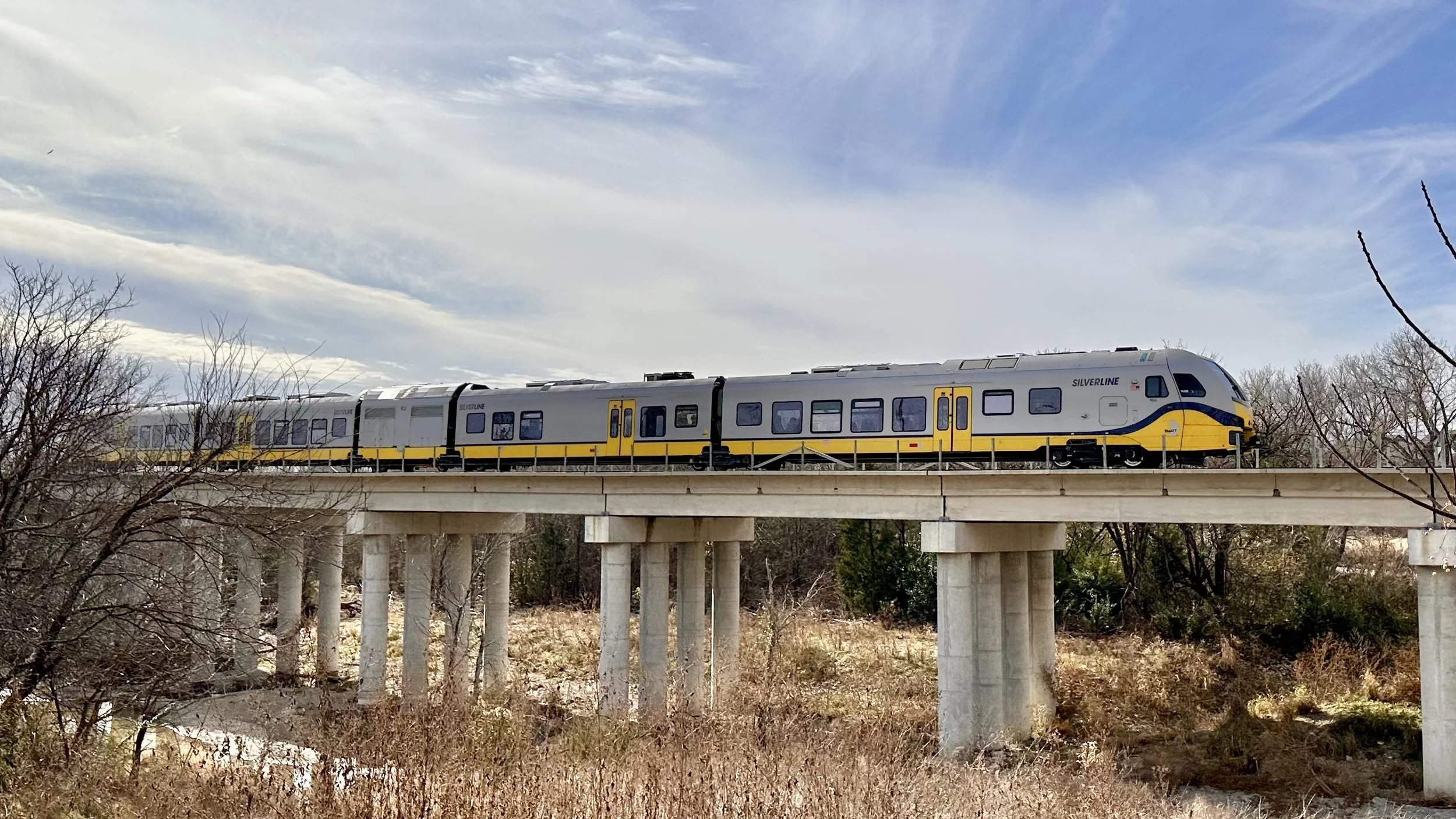
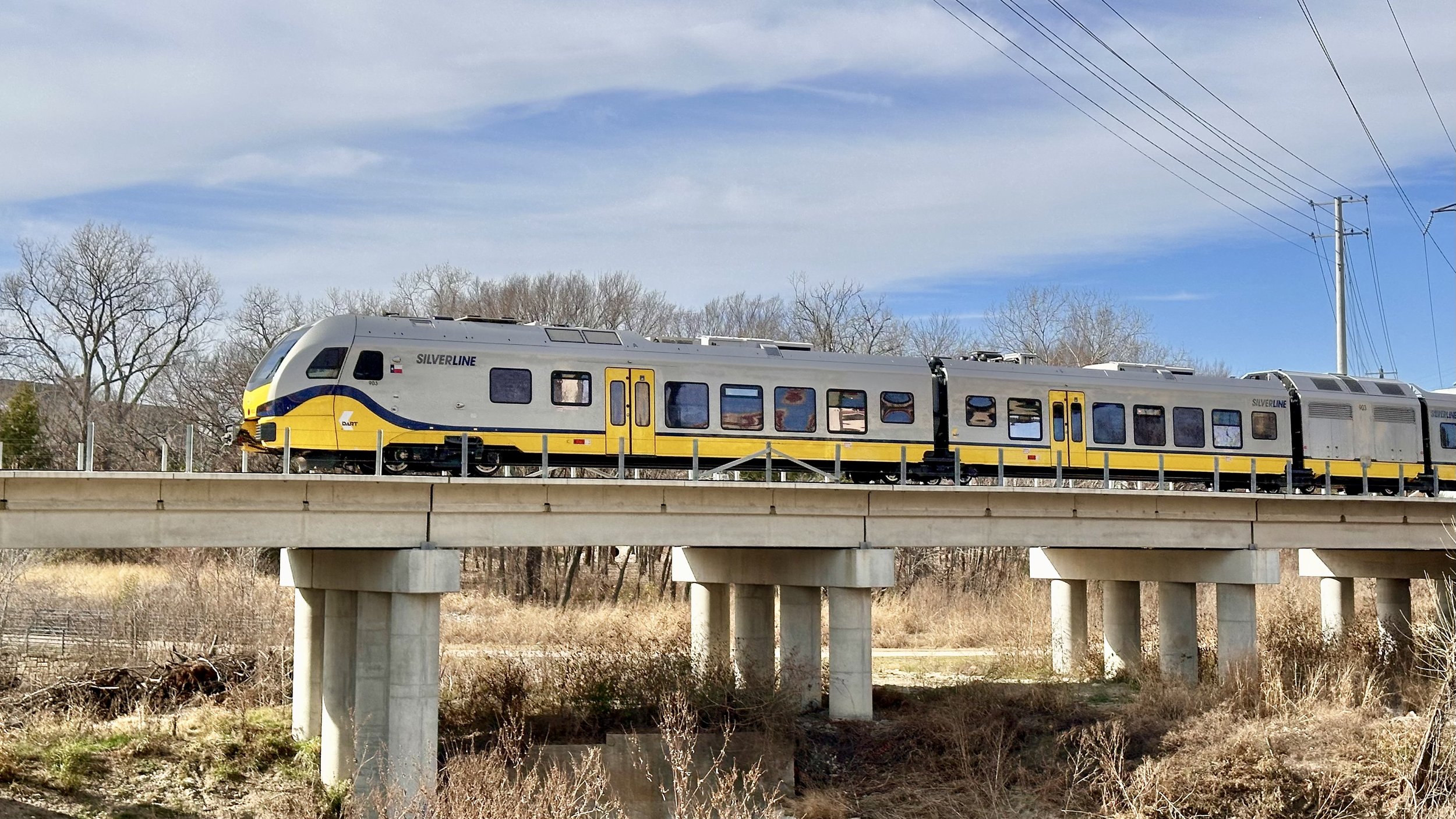
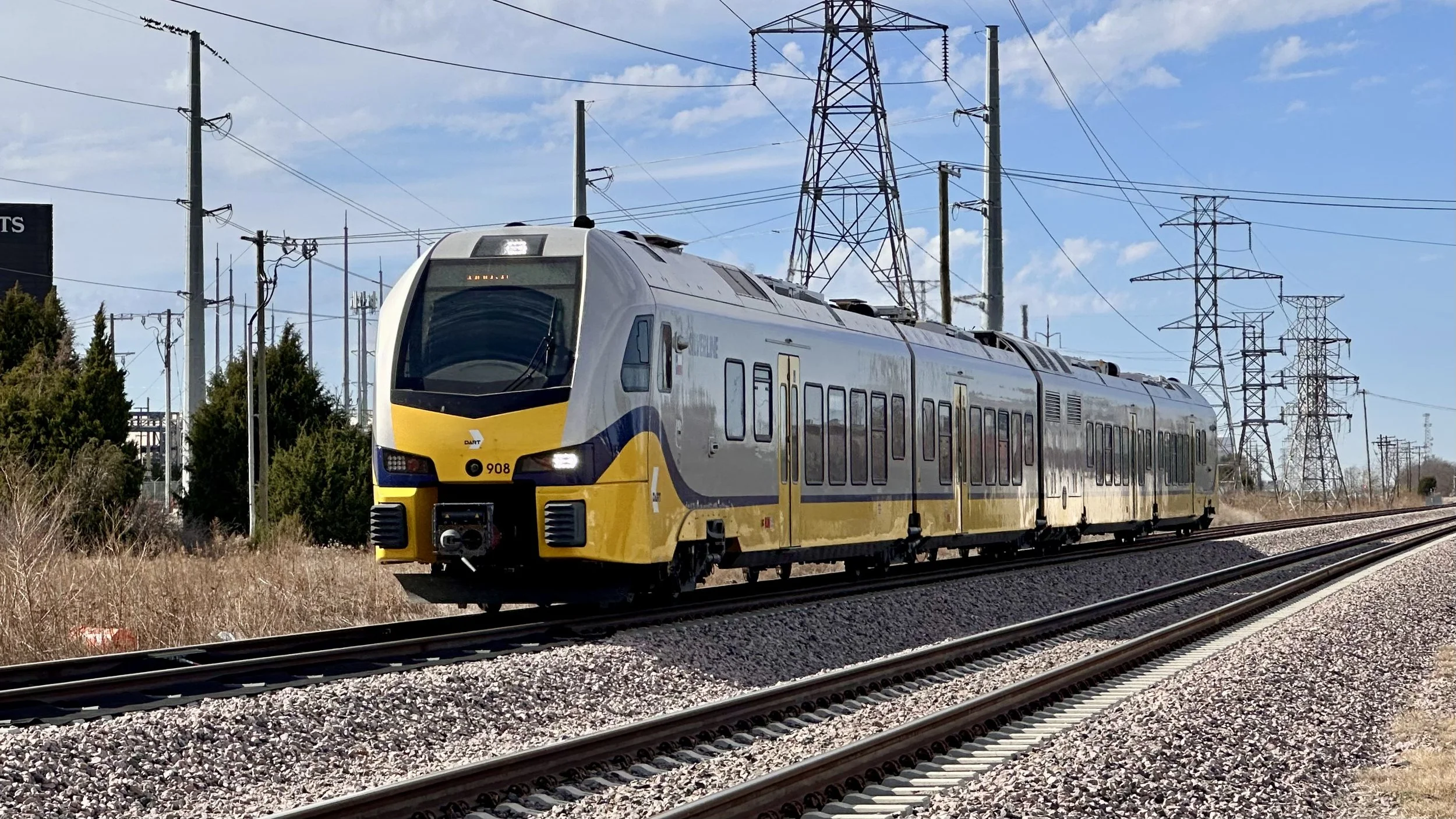
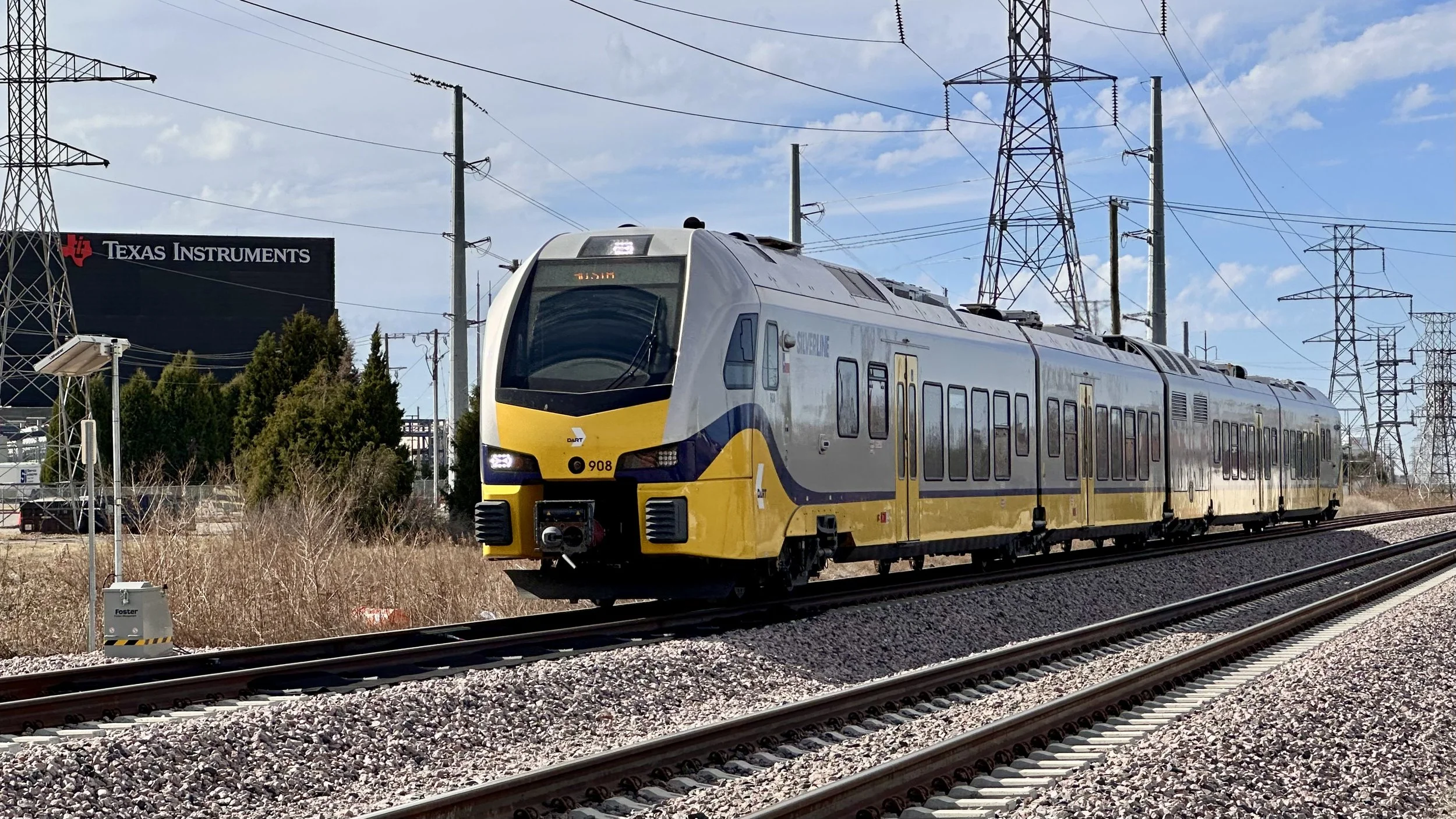
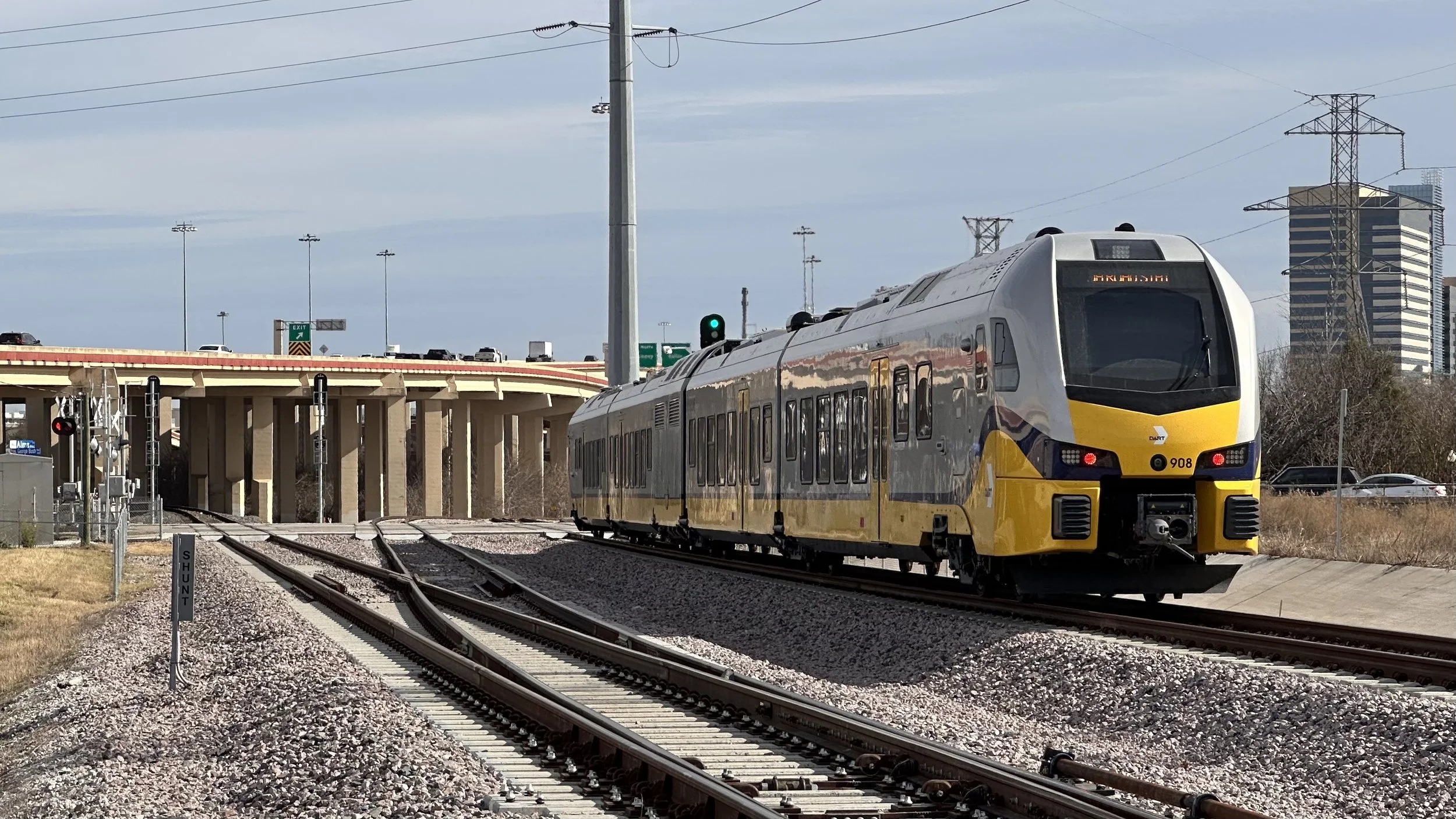
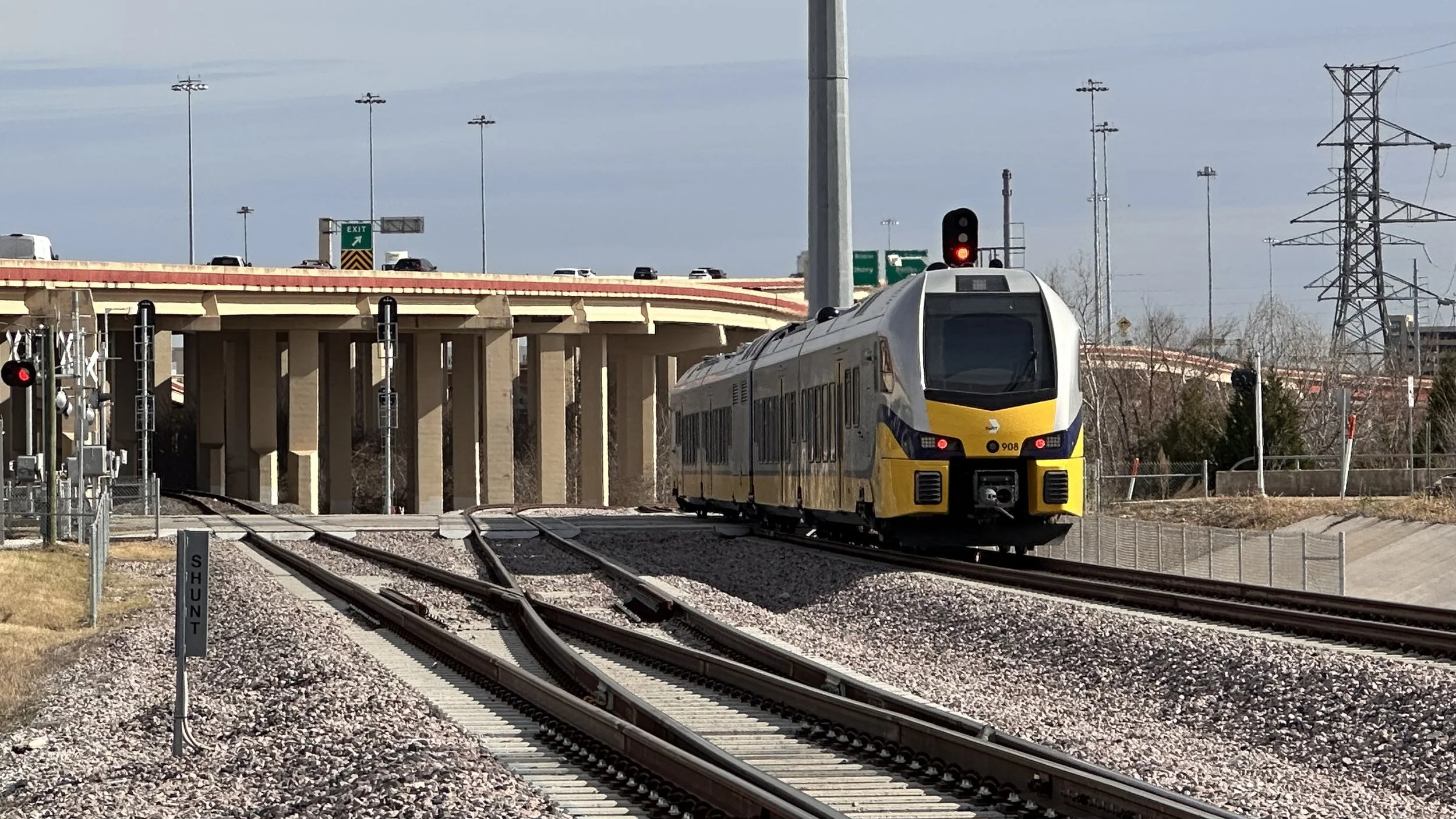
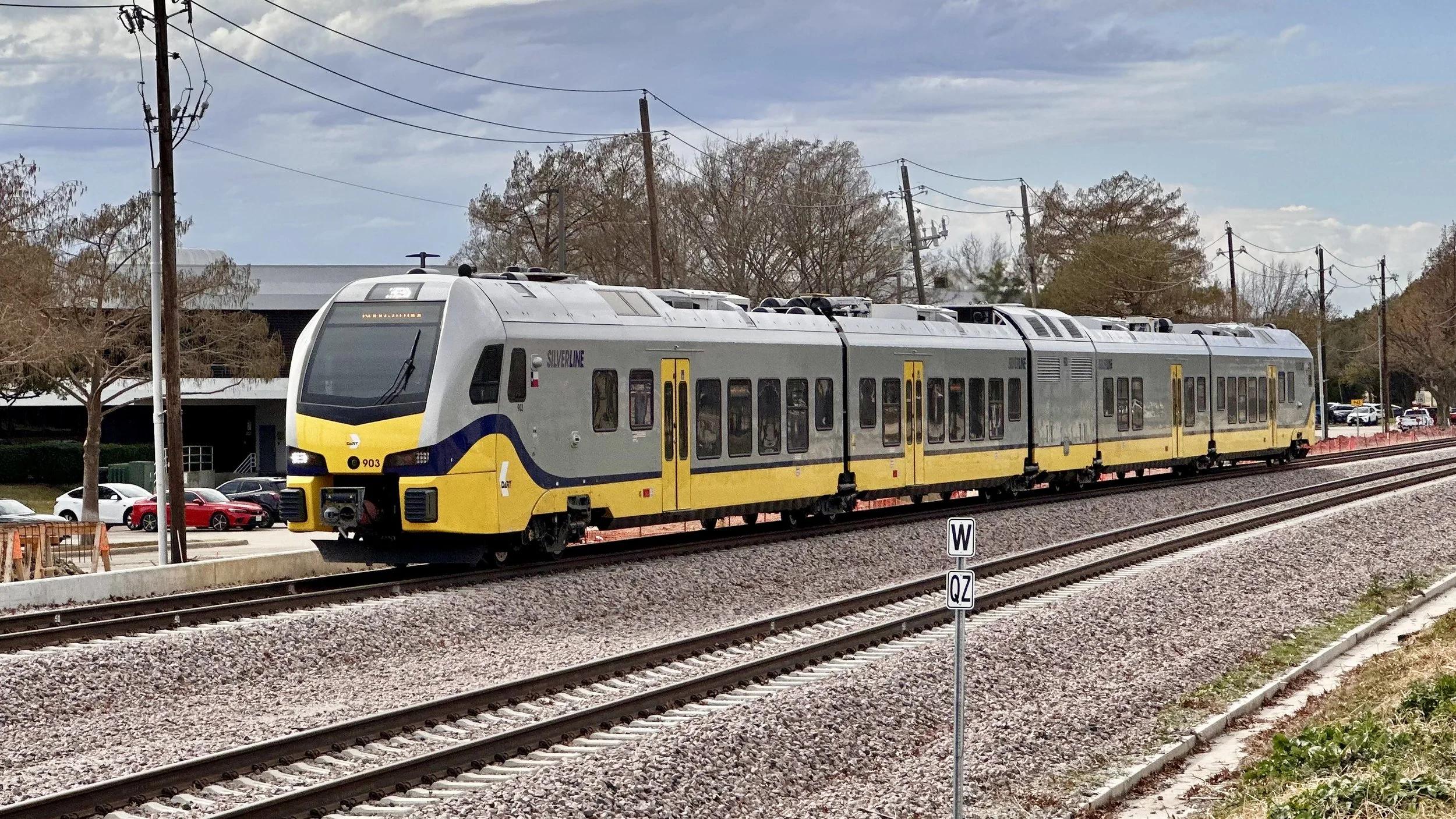
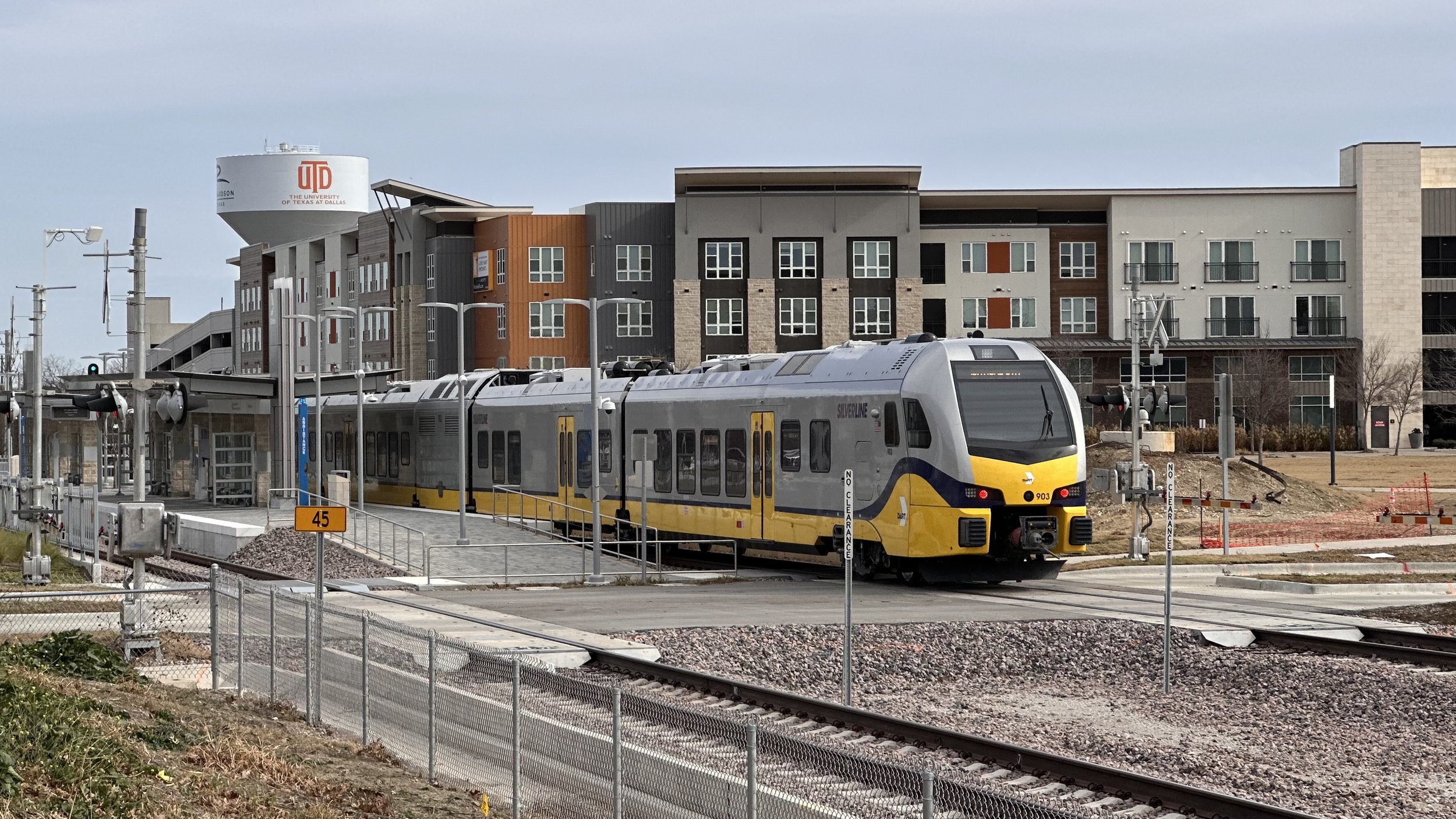
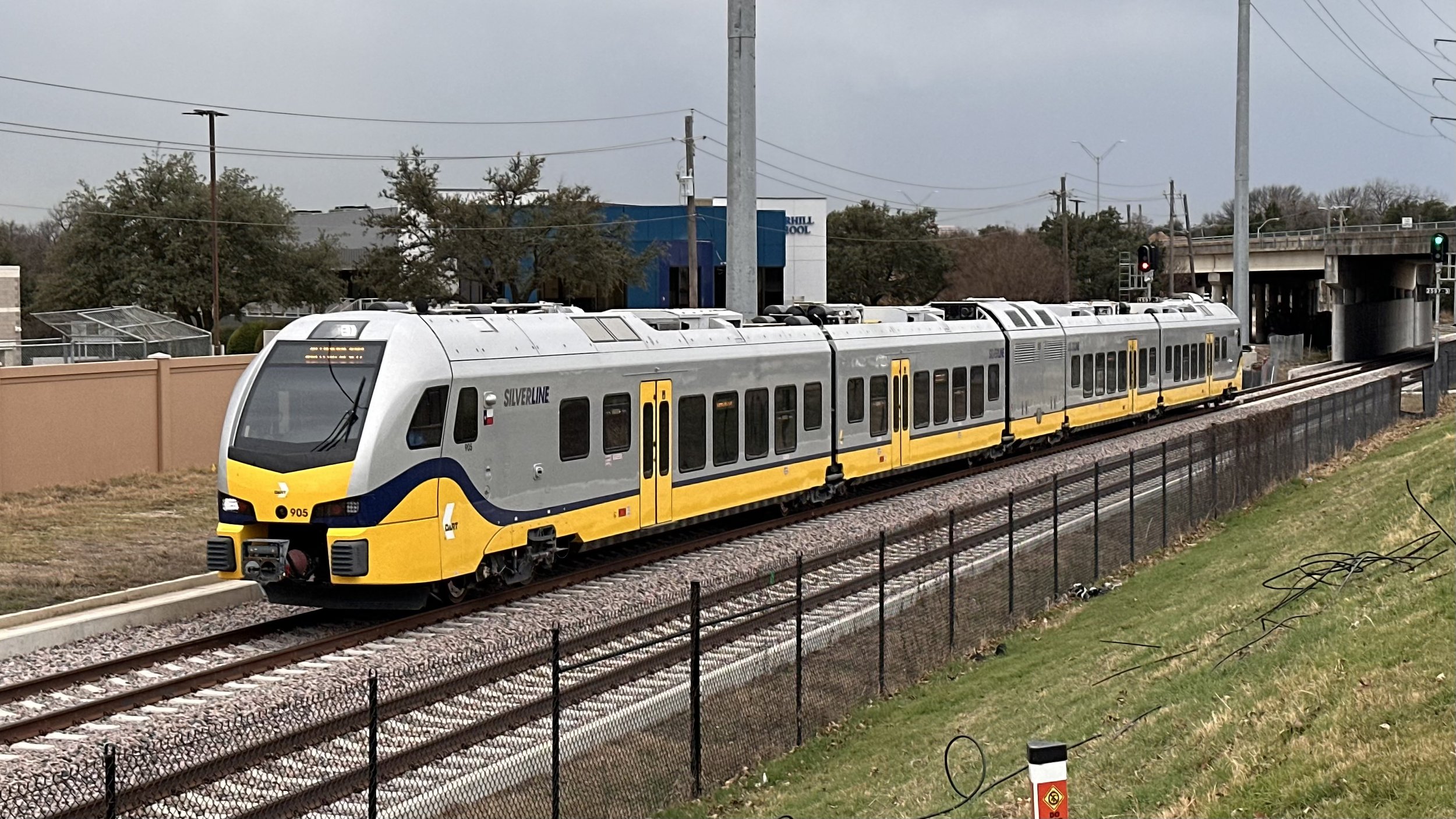
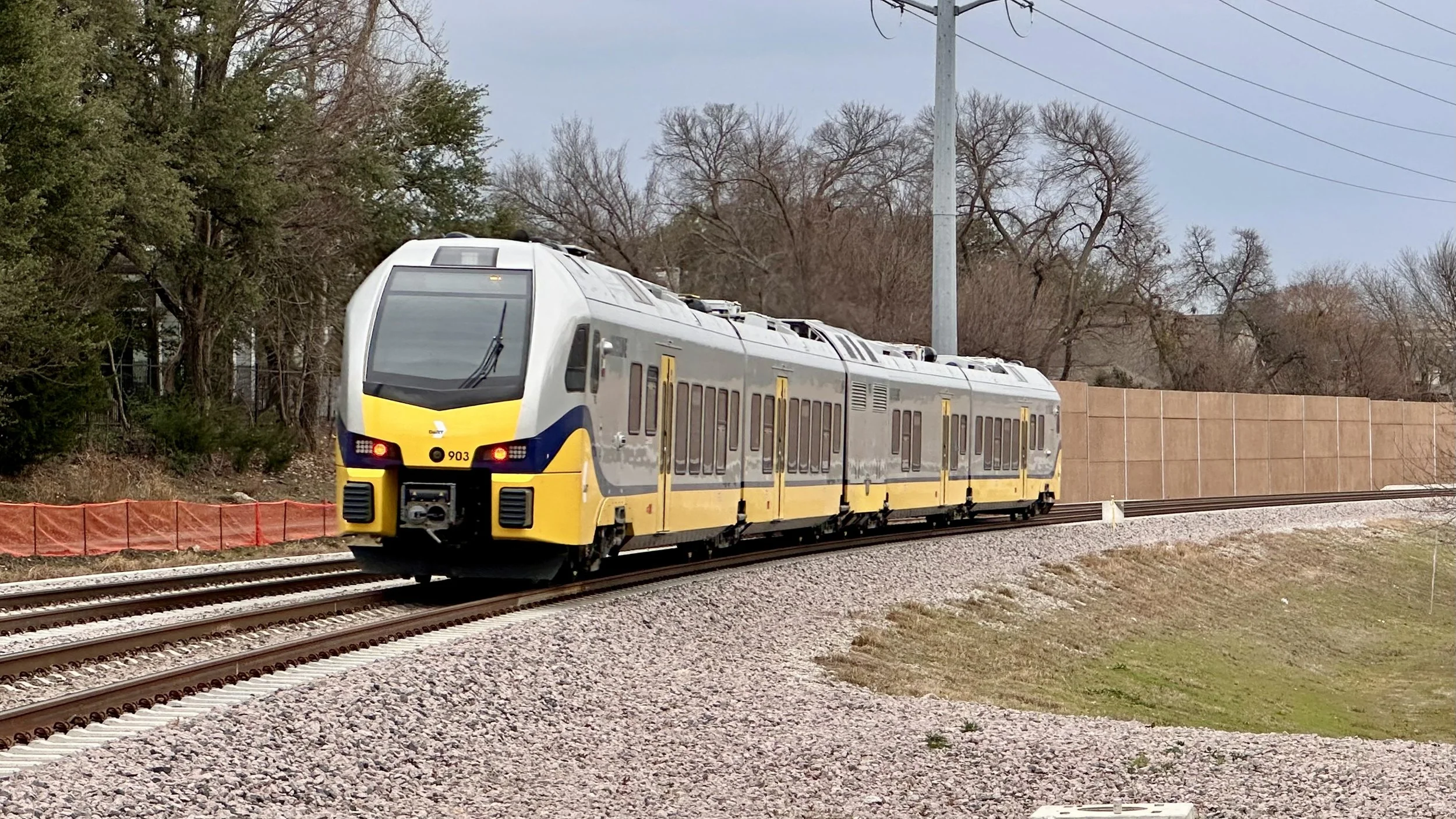
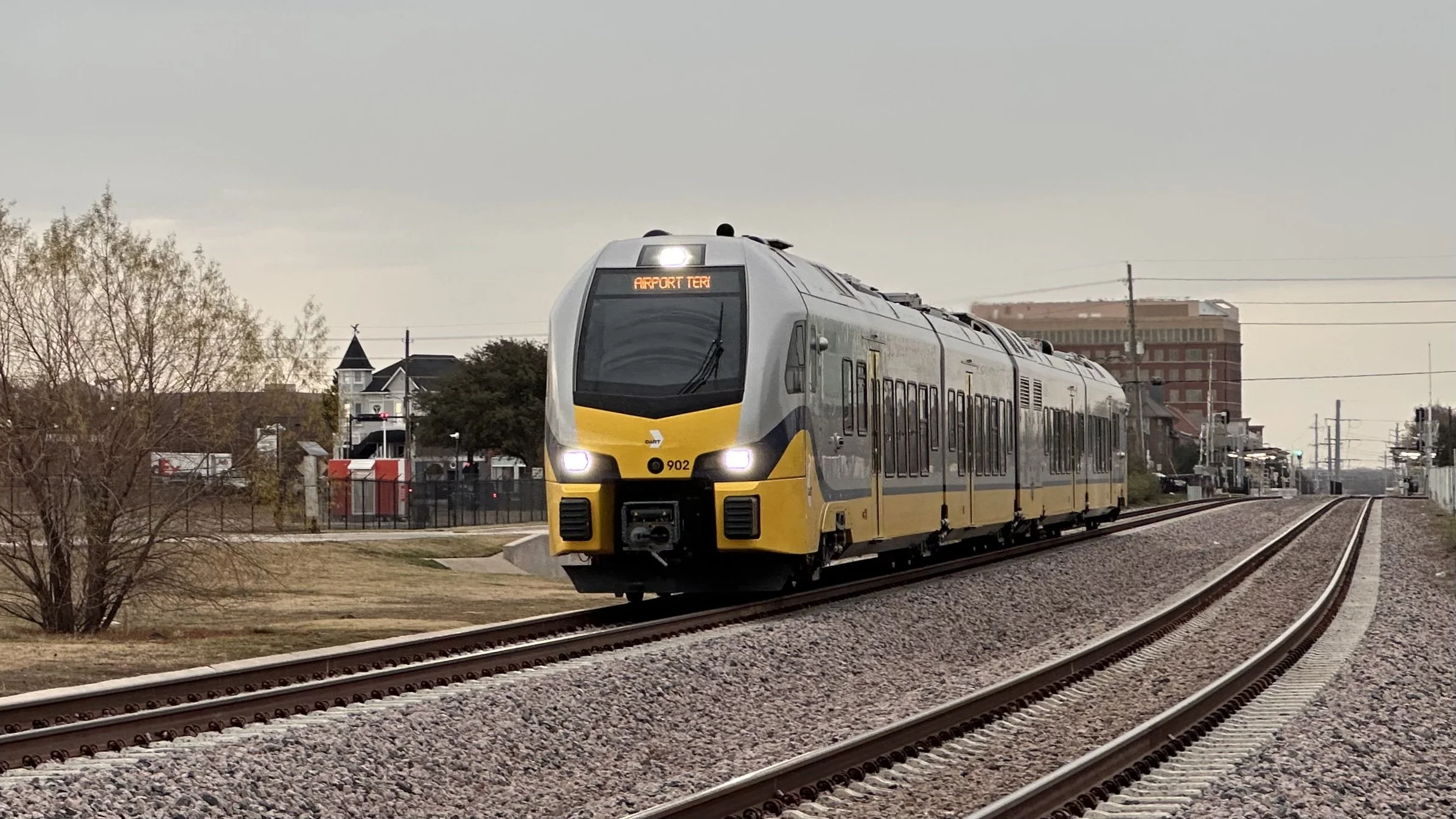
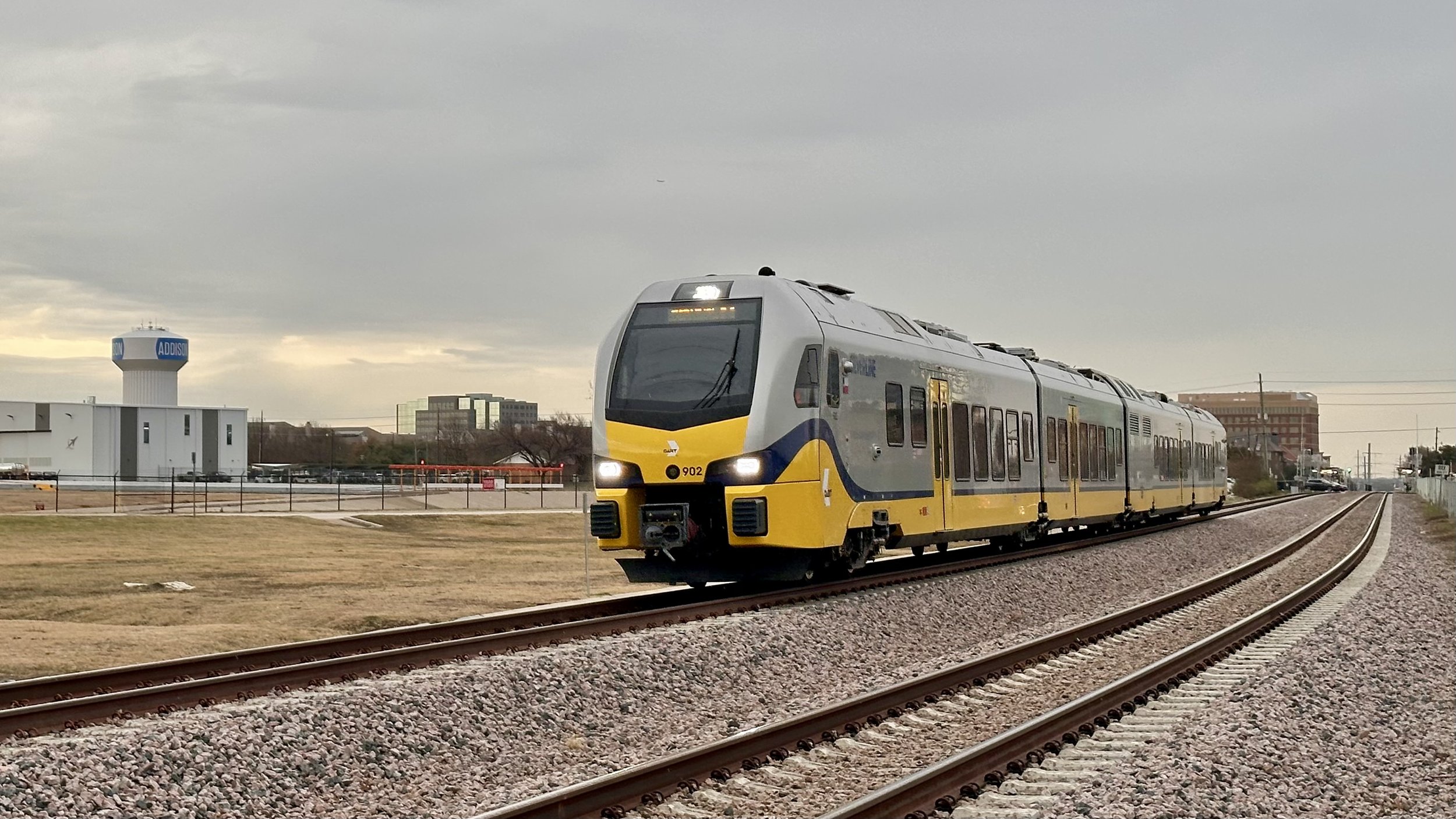
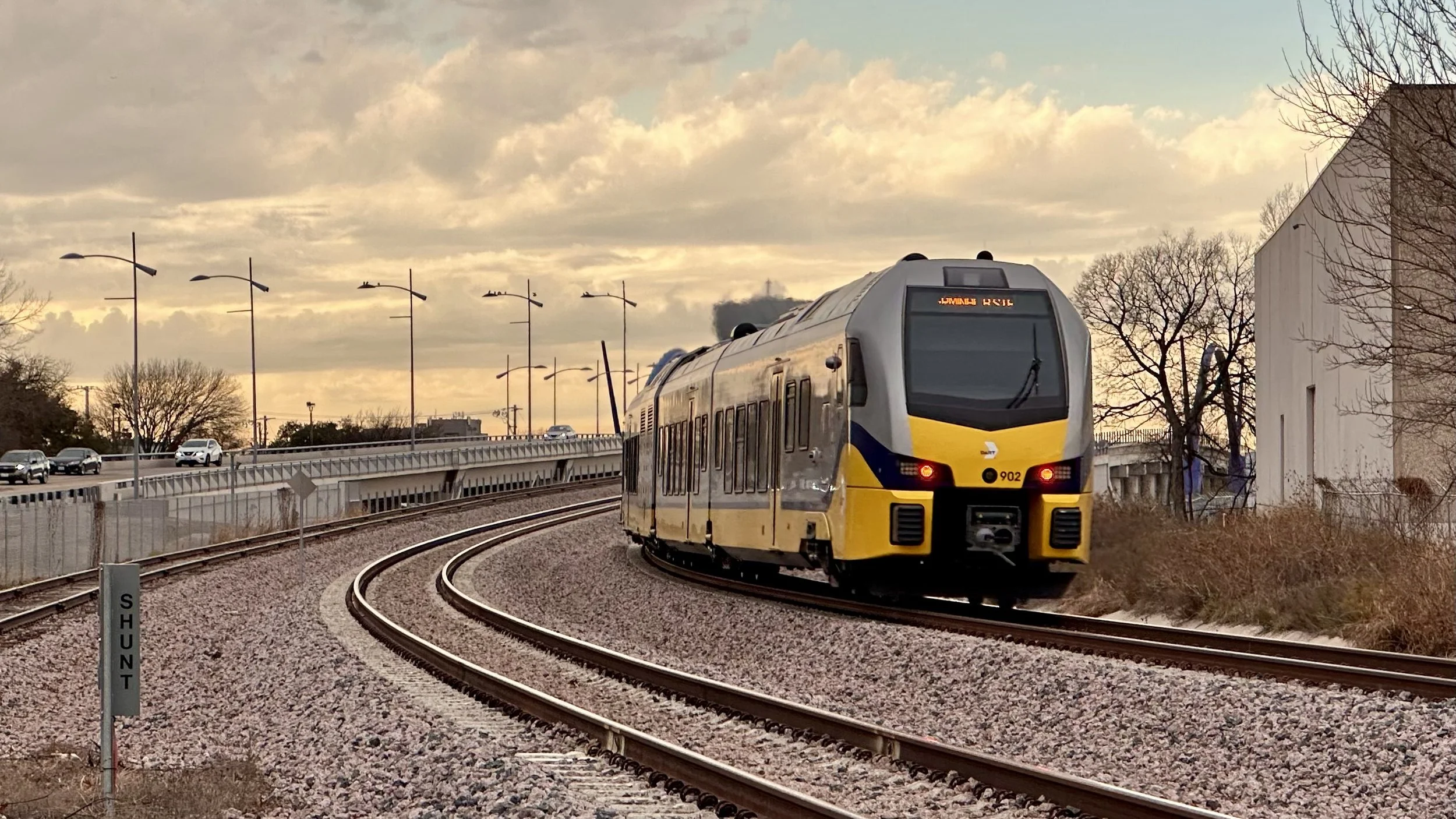
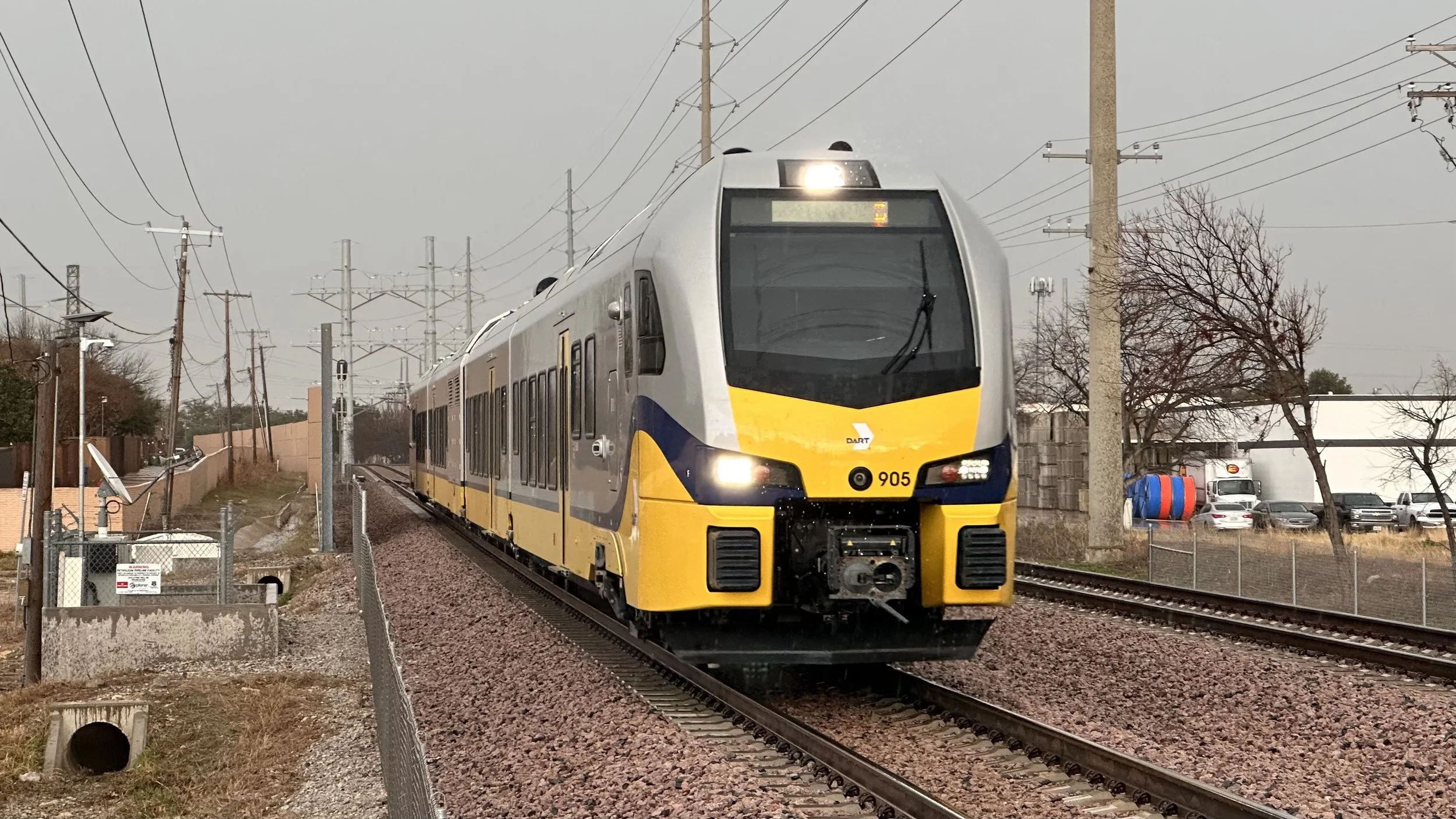
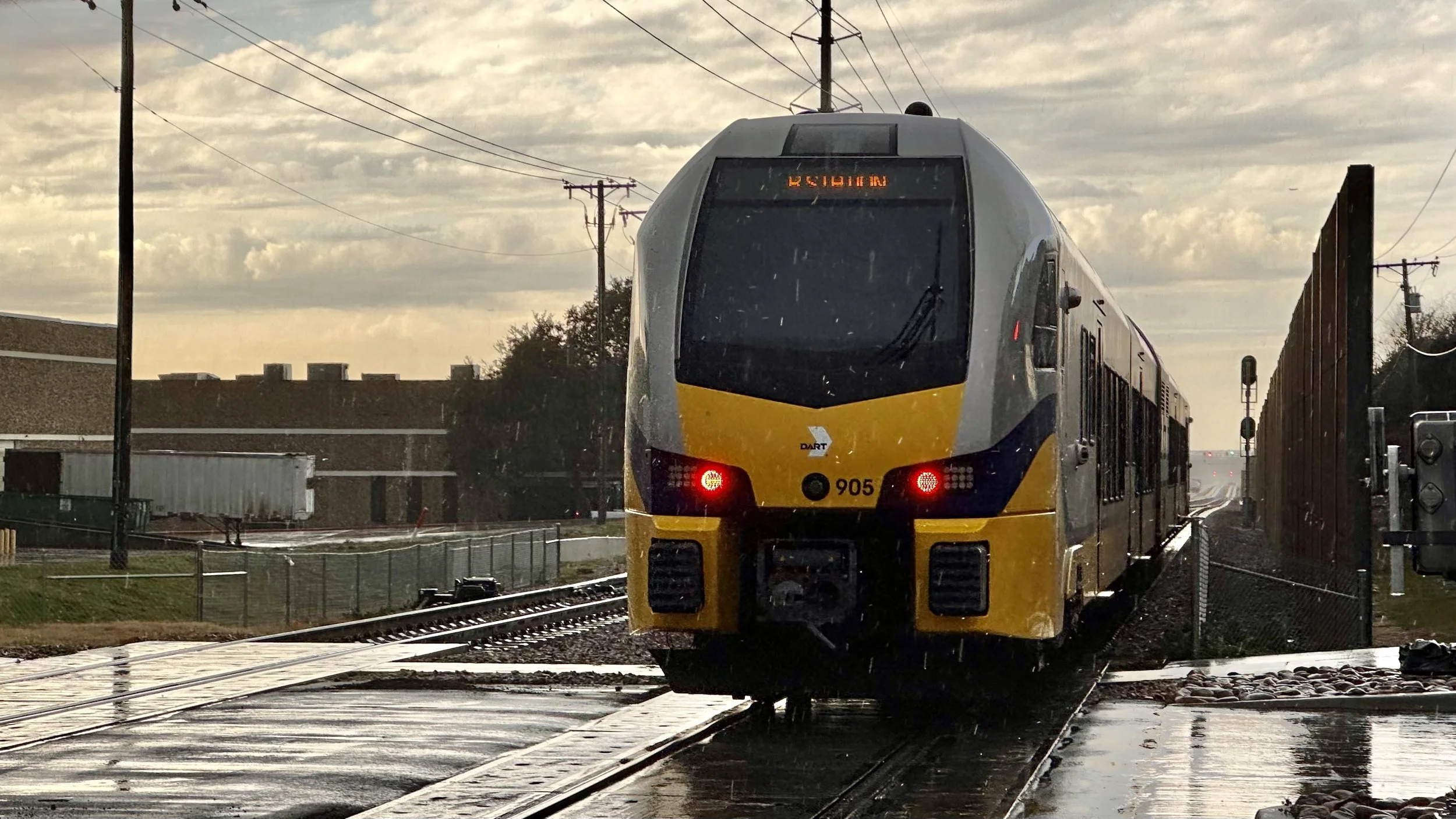
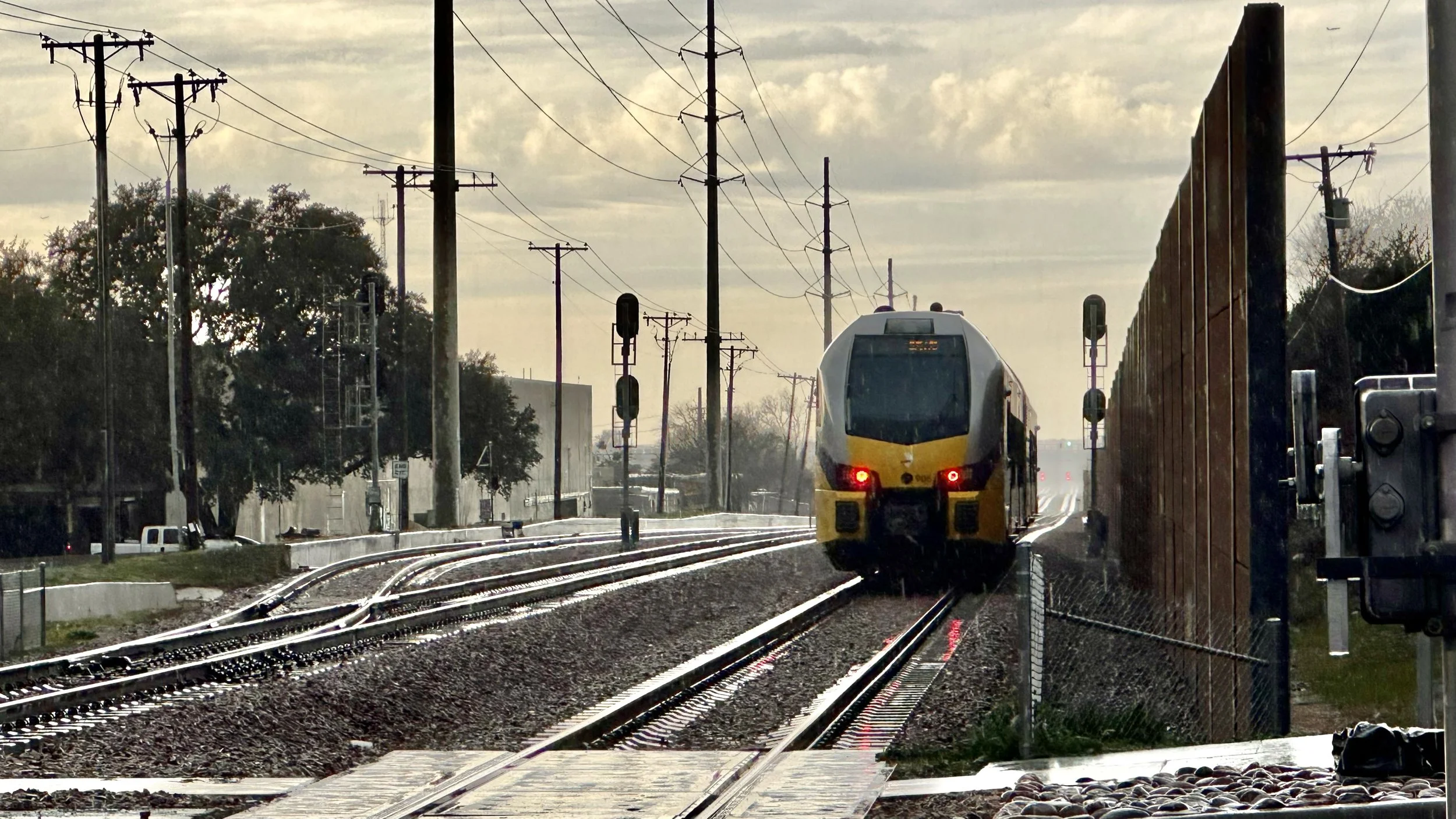
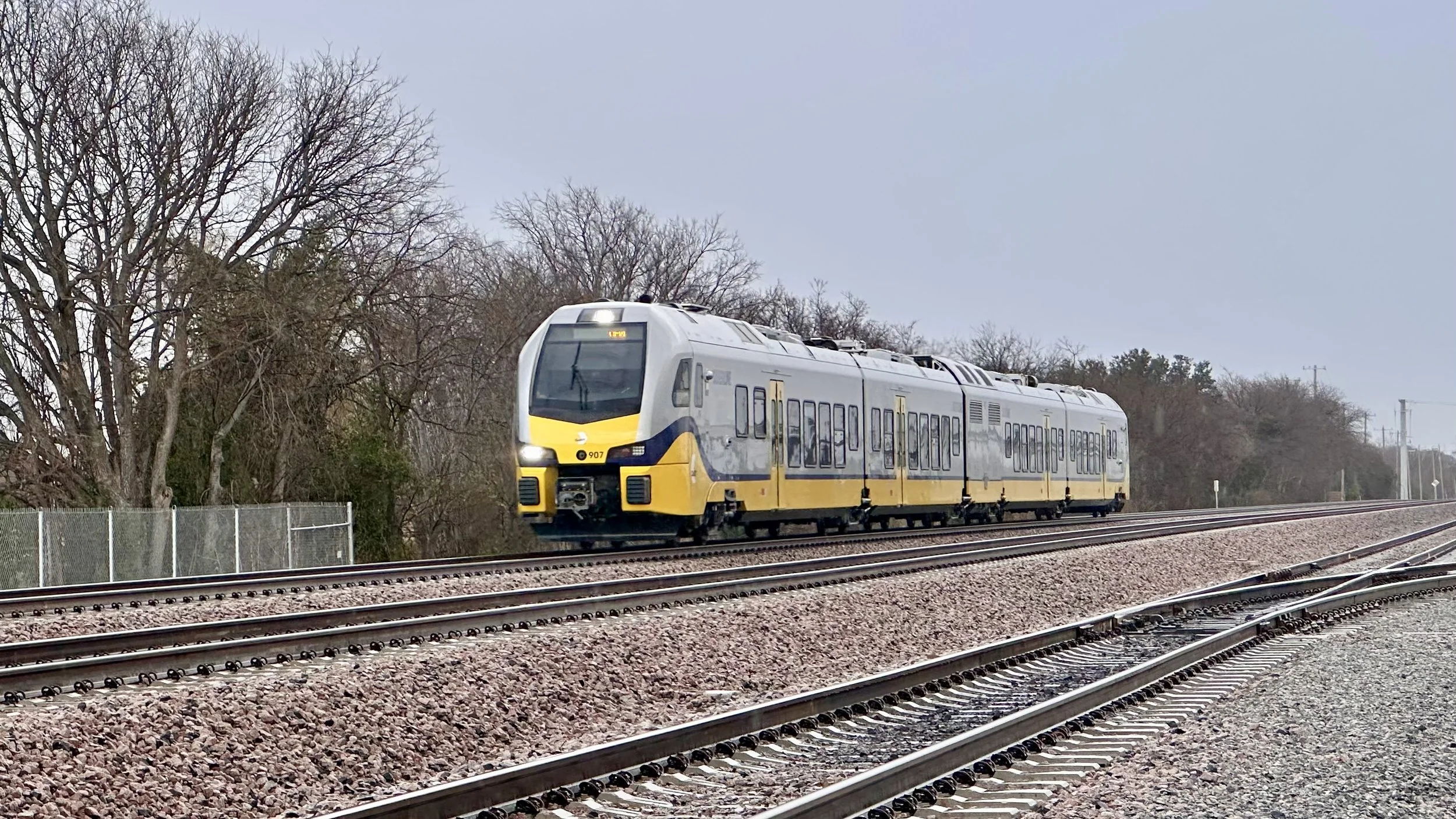
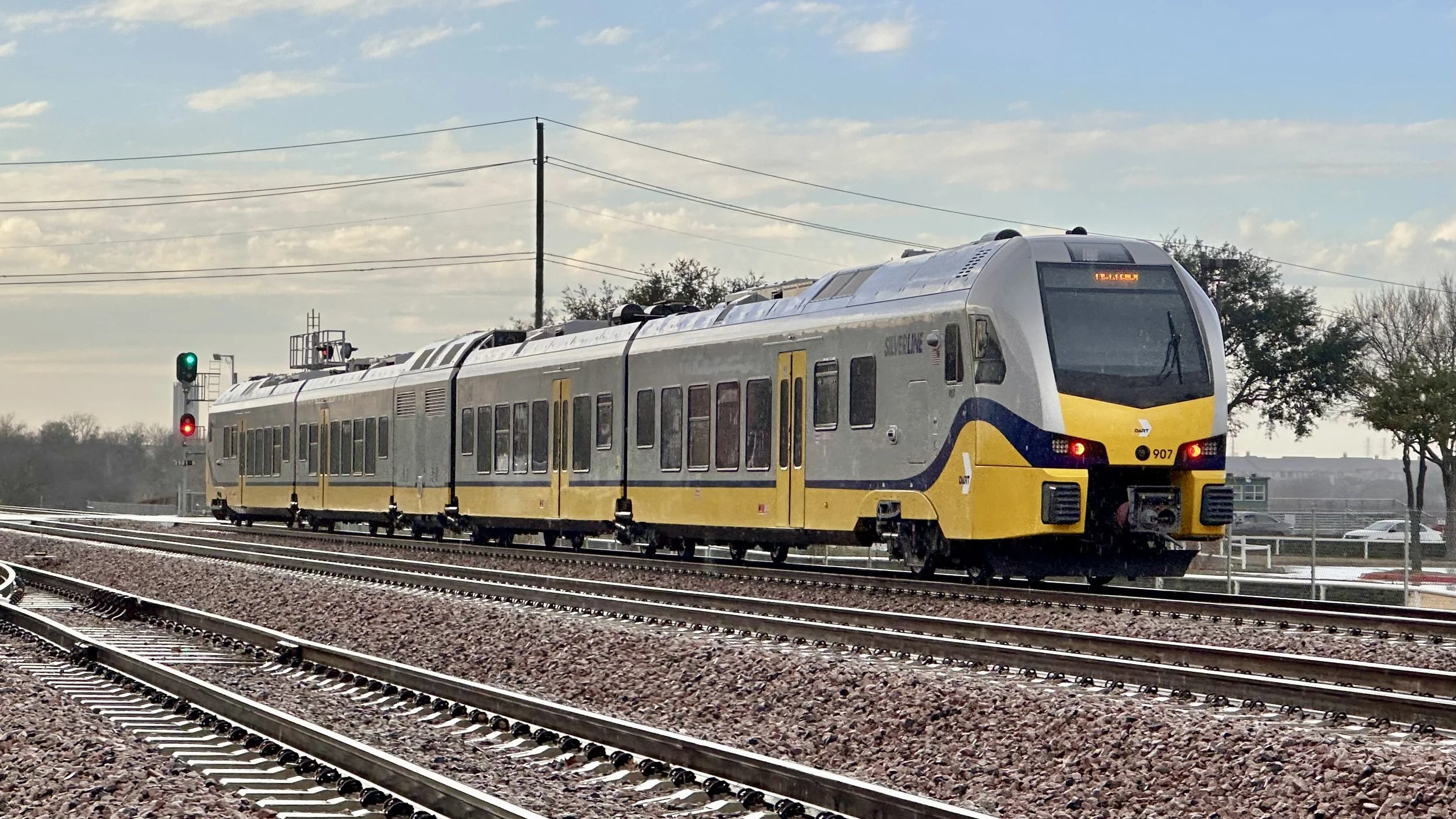
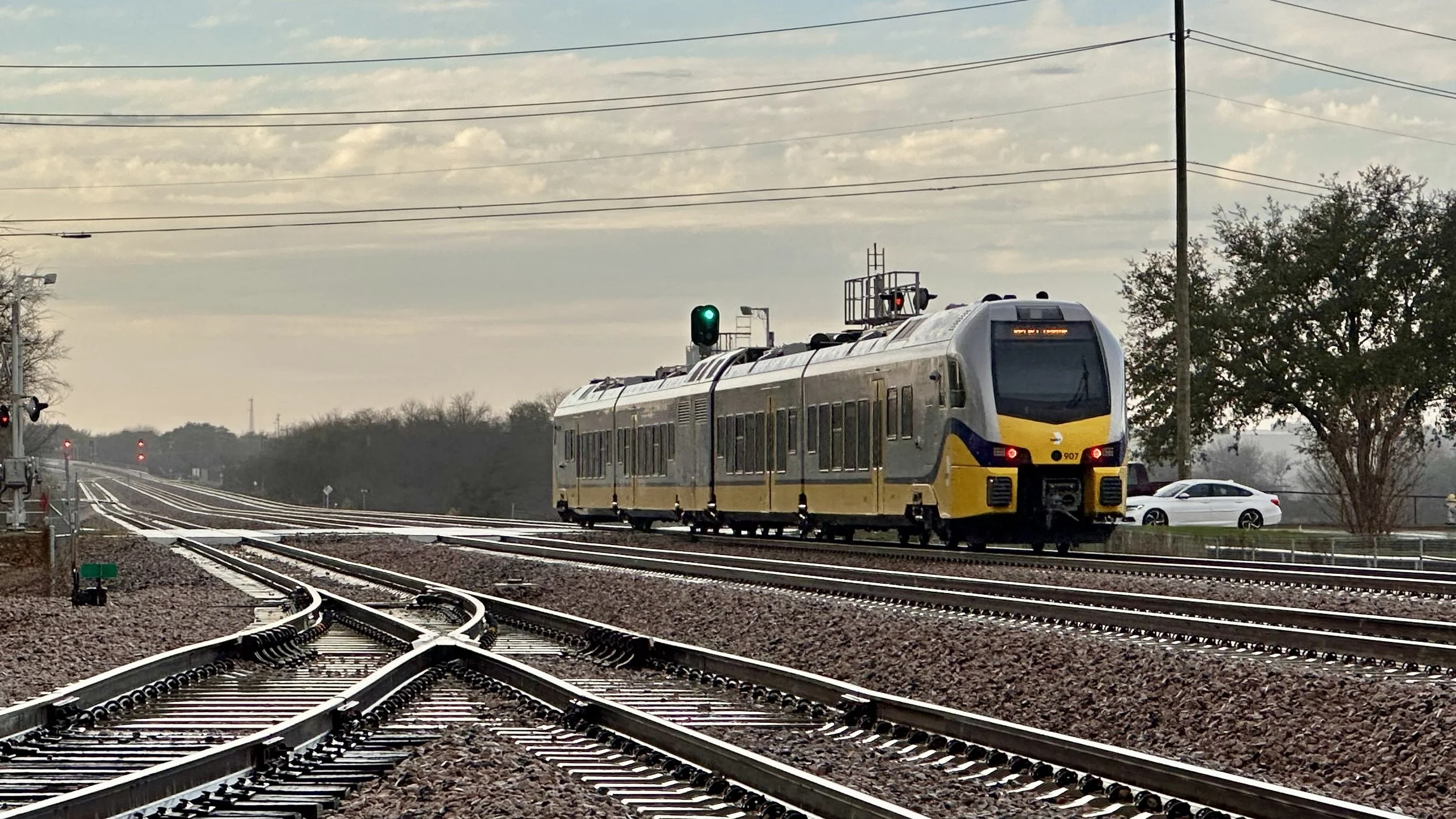
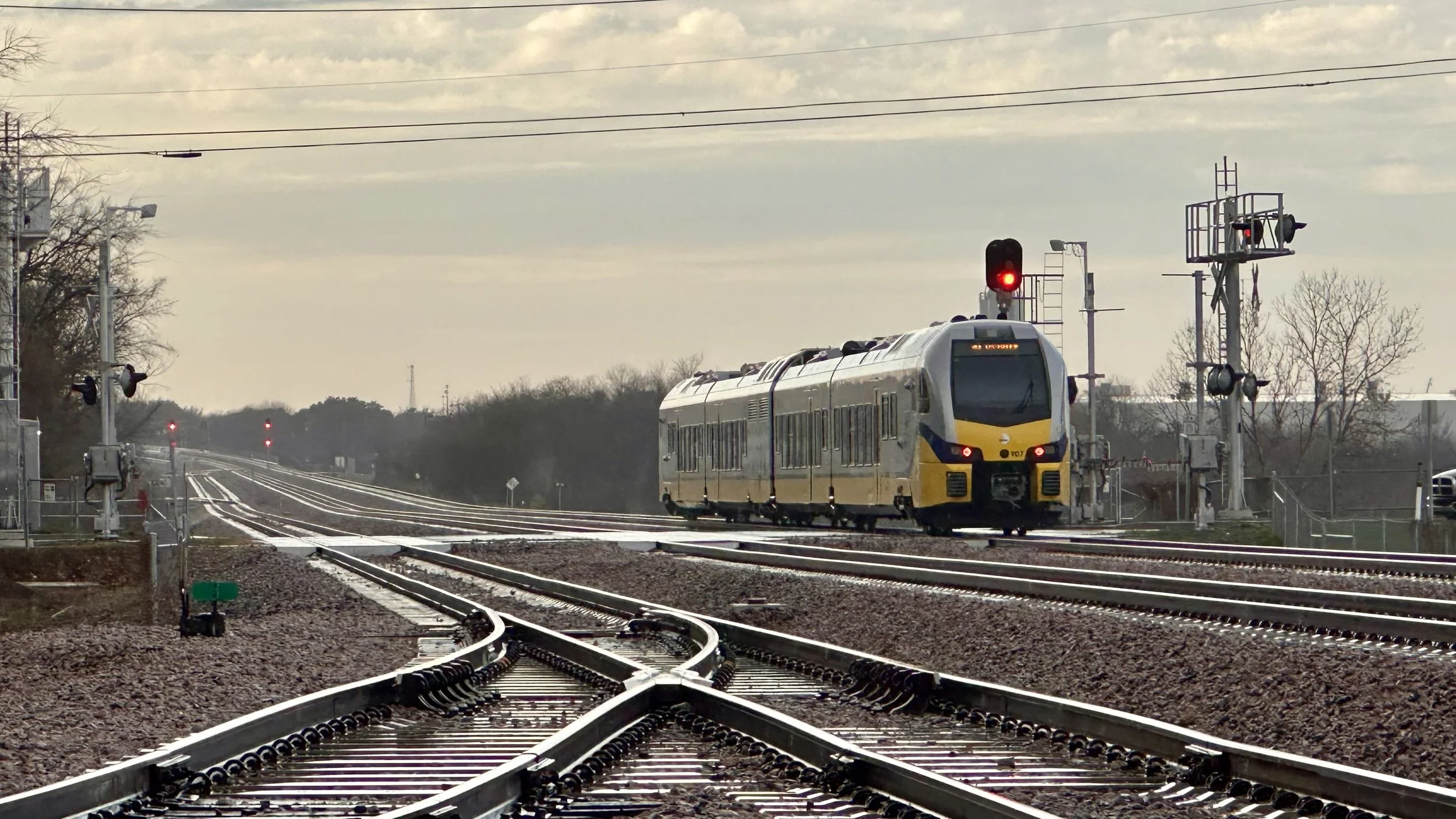
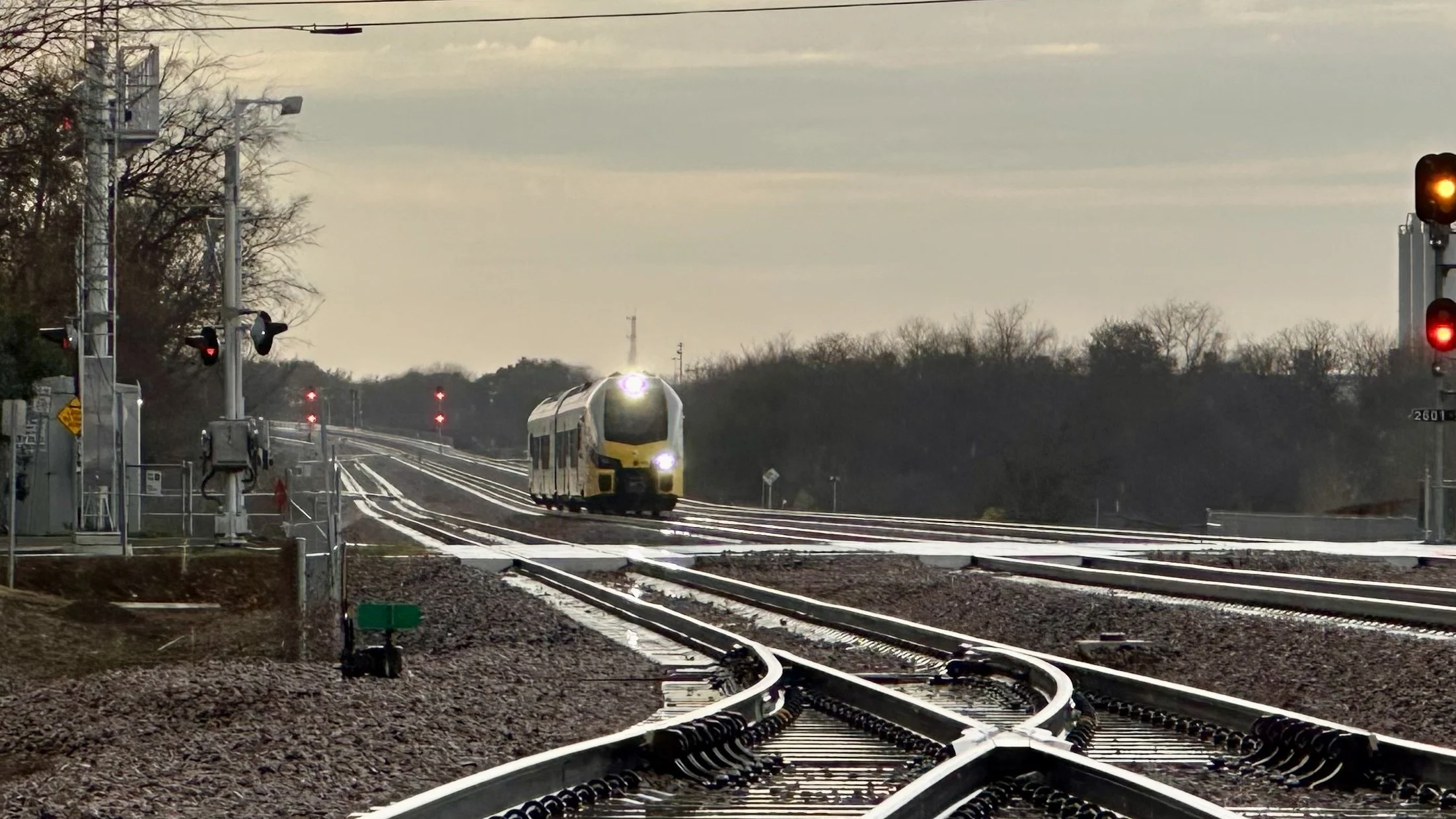
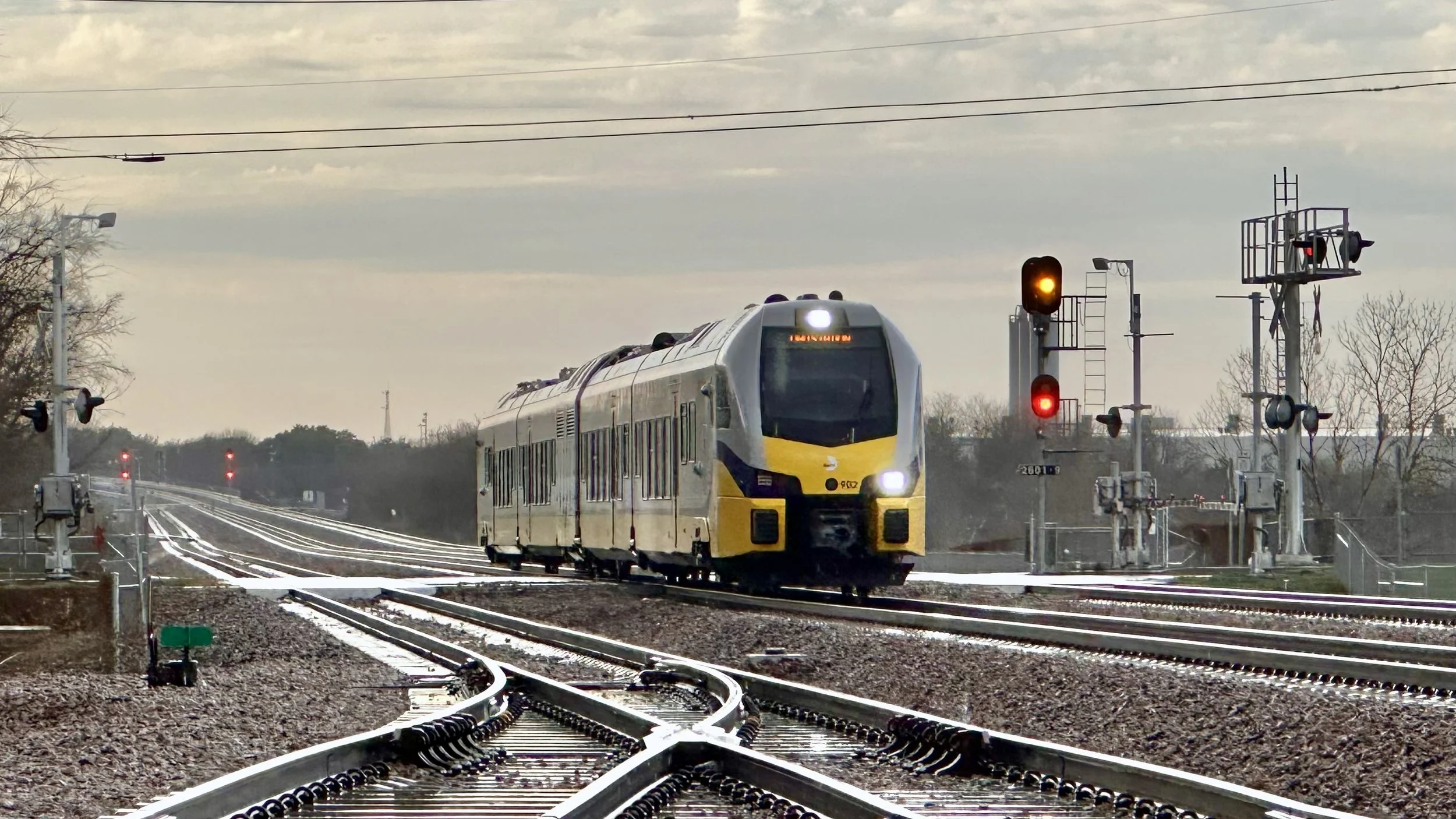
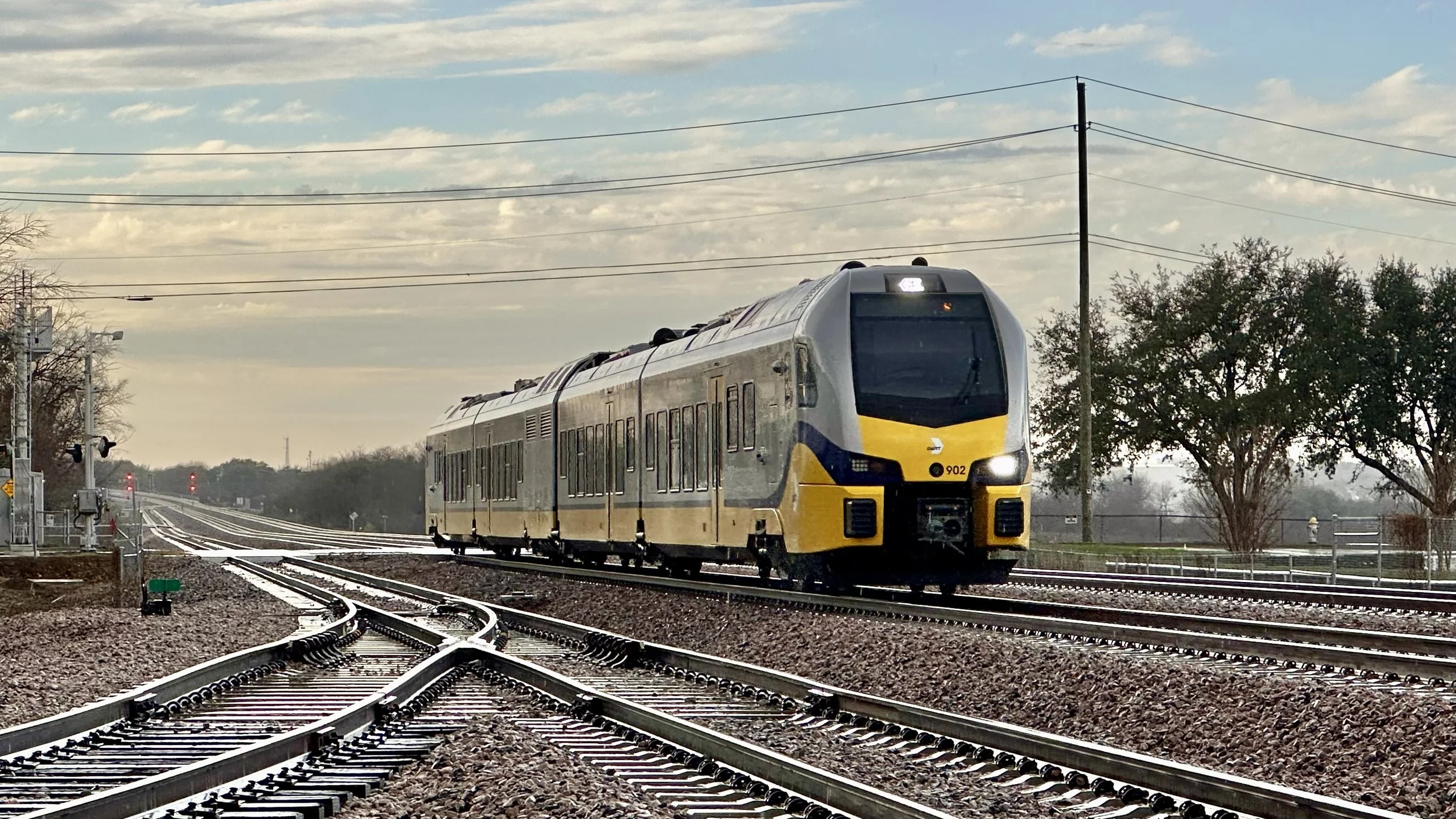
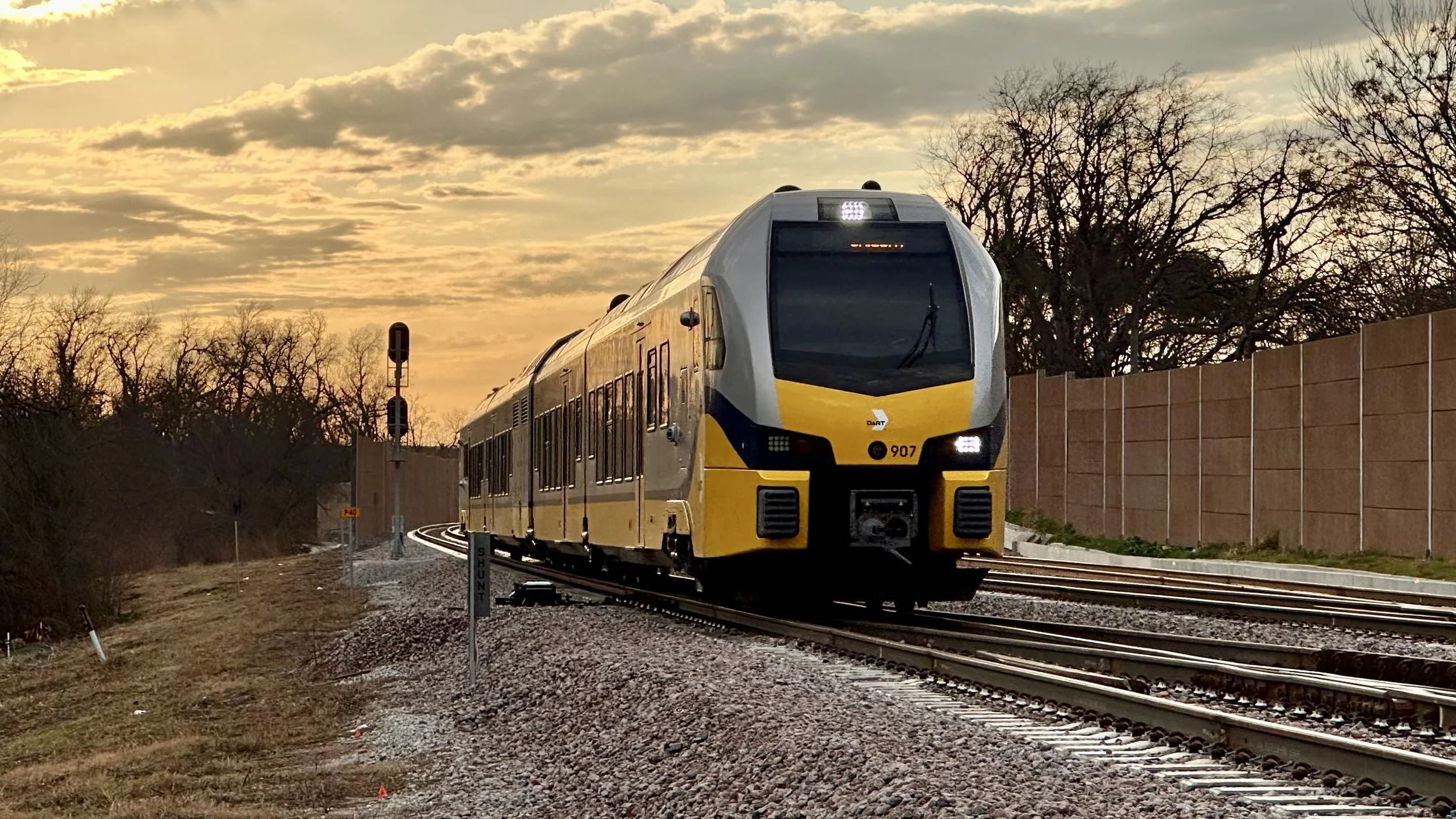
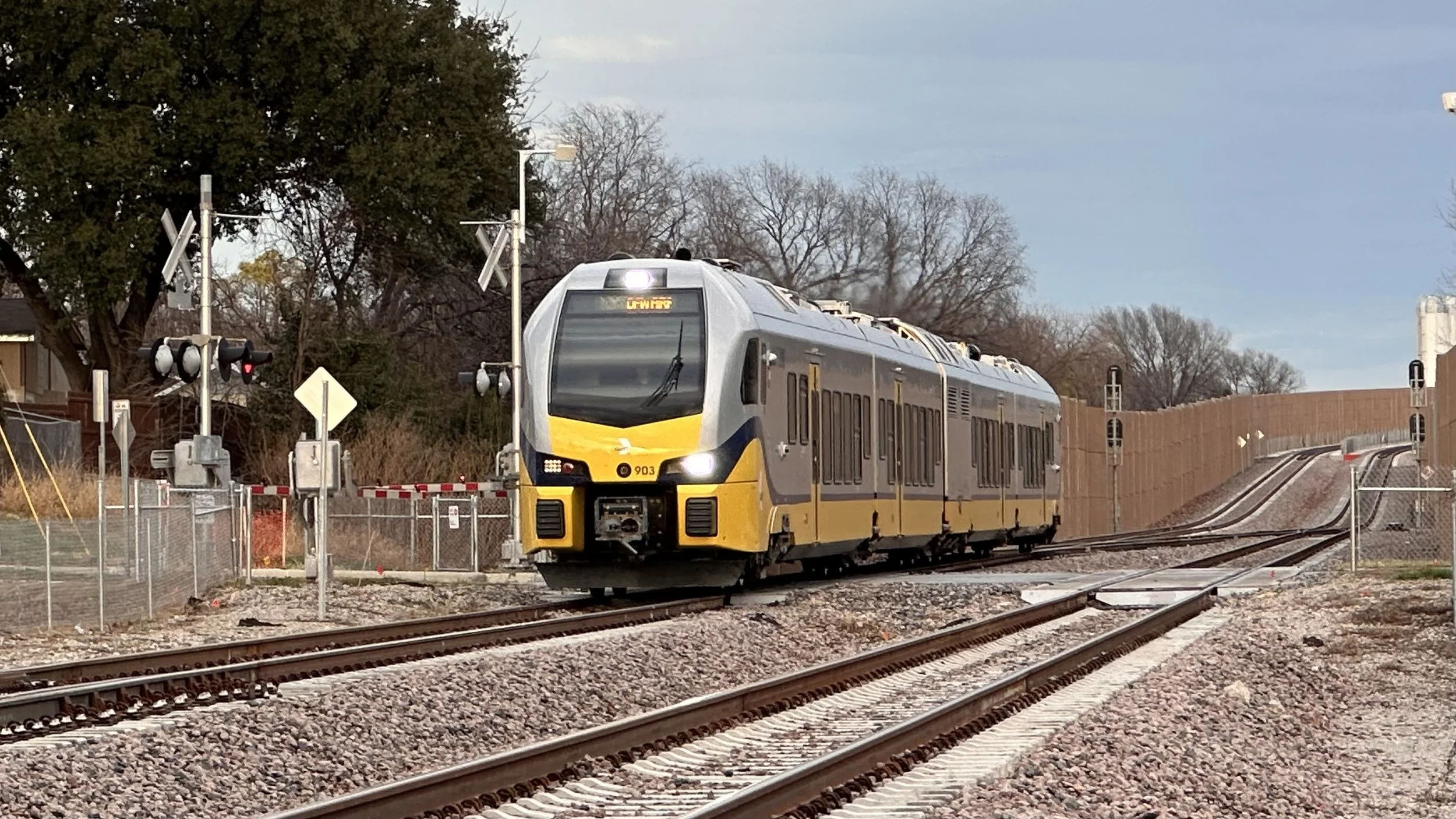
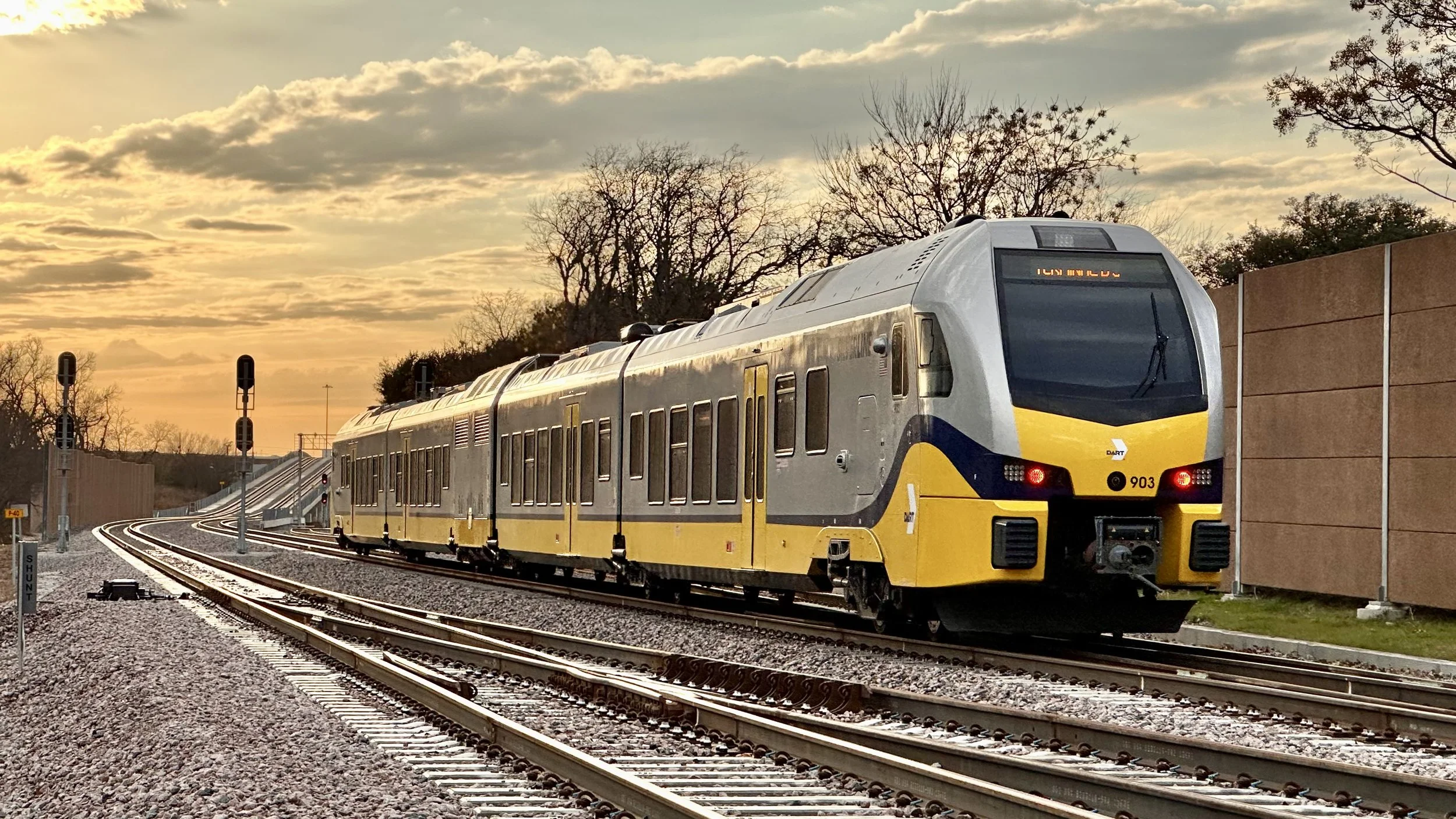
The final DMU is the DART Silver Line, opening in 2025 (inconveniently just weeks after my first DMU-fanning trip to the Metroplex, necessitating a return trip). The Silver Line is DART’s answer to Trinity Metro’s TEXRail, effectively being an eastward extension of the same Cotton Belt corridor, sharing track with TEXRail through both DFW and Airport North Stations before veering off to Plano. DART has a much more extensive light rail system radiating out of Dallas, but its hub-and-spoke arrangement impedes inter-suburban trips, so a tangential line was long needed. Presciently, DART bought the Cotton Belt route in the 90s and finally opened it to passenger traffic 30 years later, providing centripetal connections between the Orange Line and TEXRail at DFW, the Green Line at Carrolton, and the Red Line at Plano, while also creating new access to Addison, Cypress Waters, and, most importantly, UT Dallas.
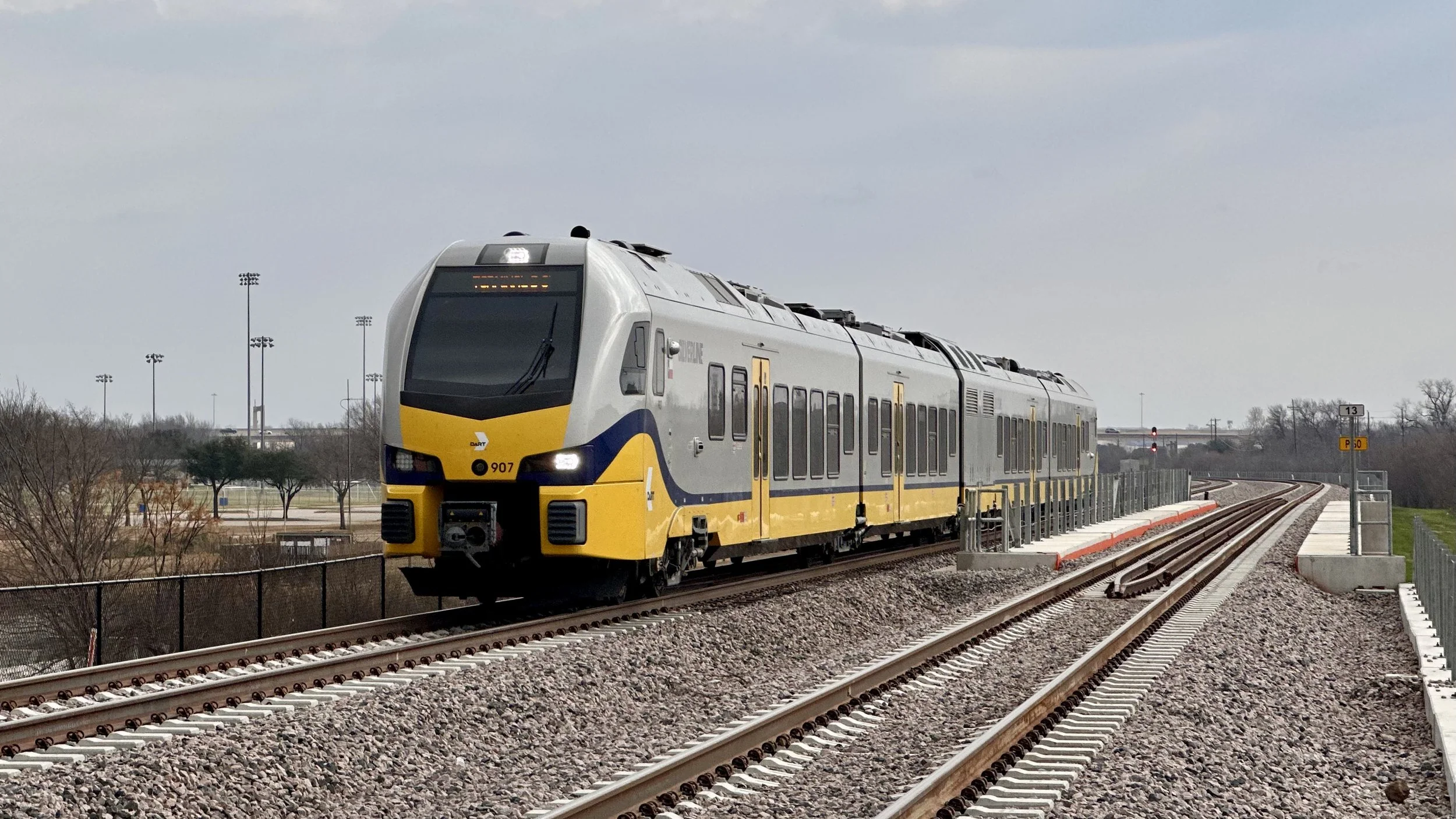
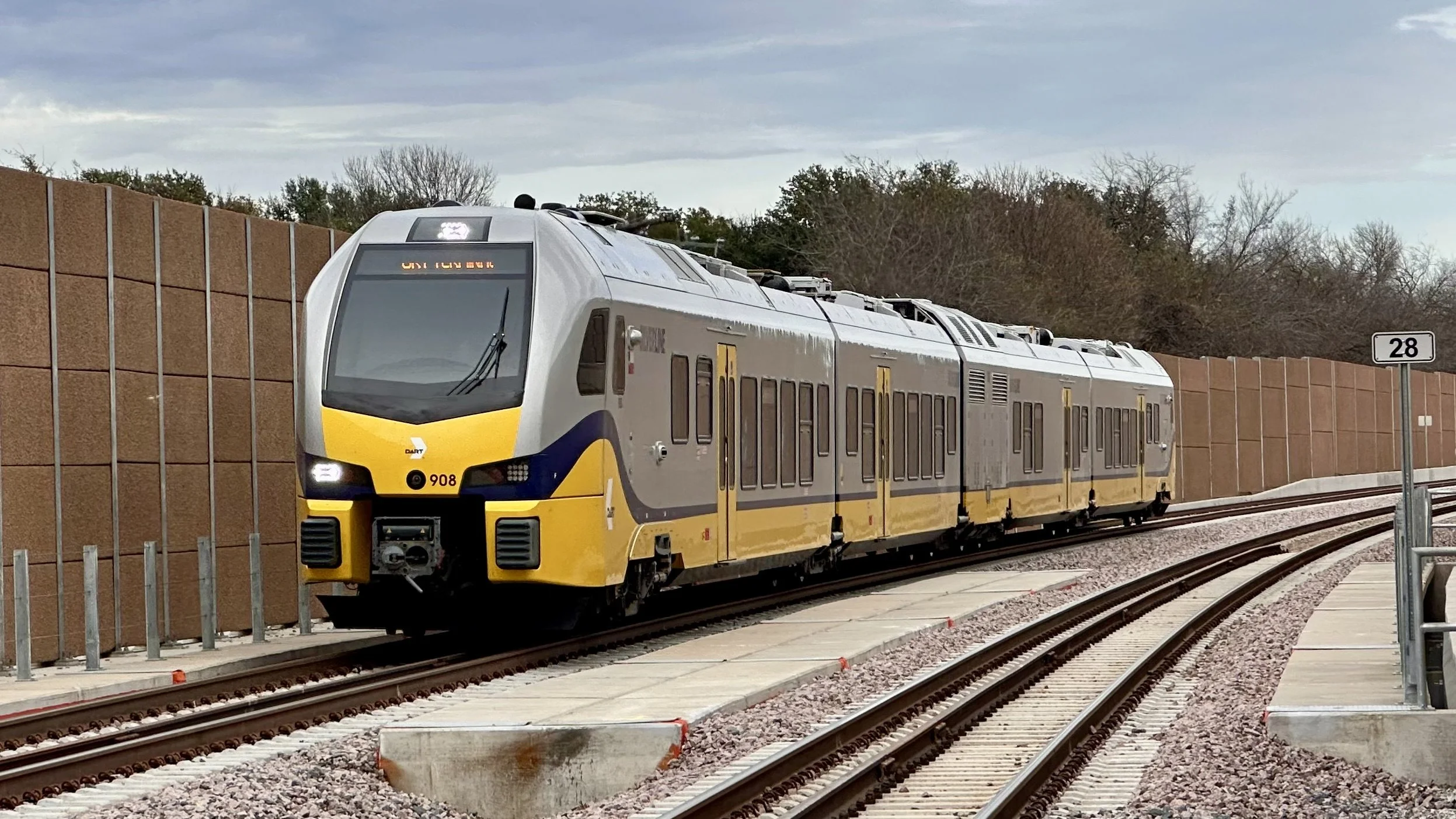
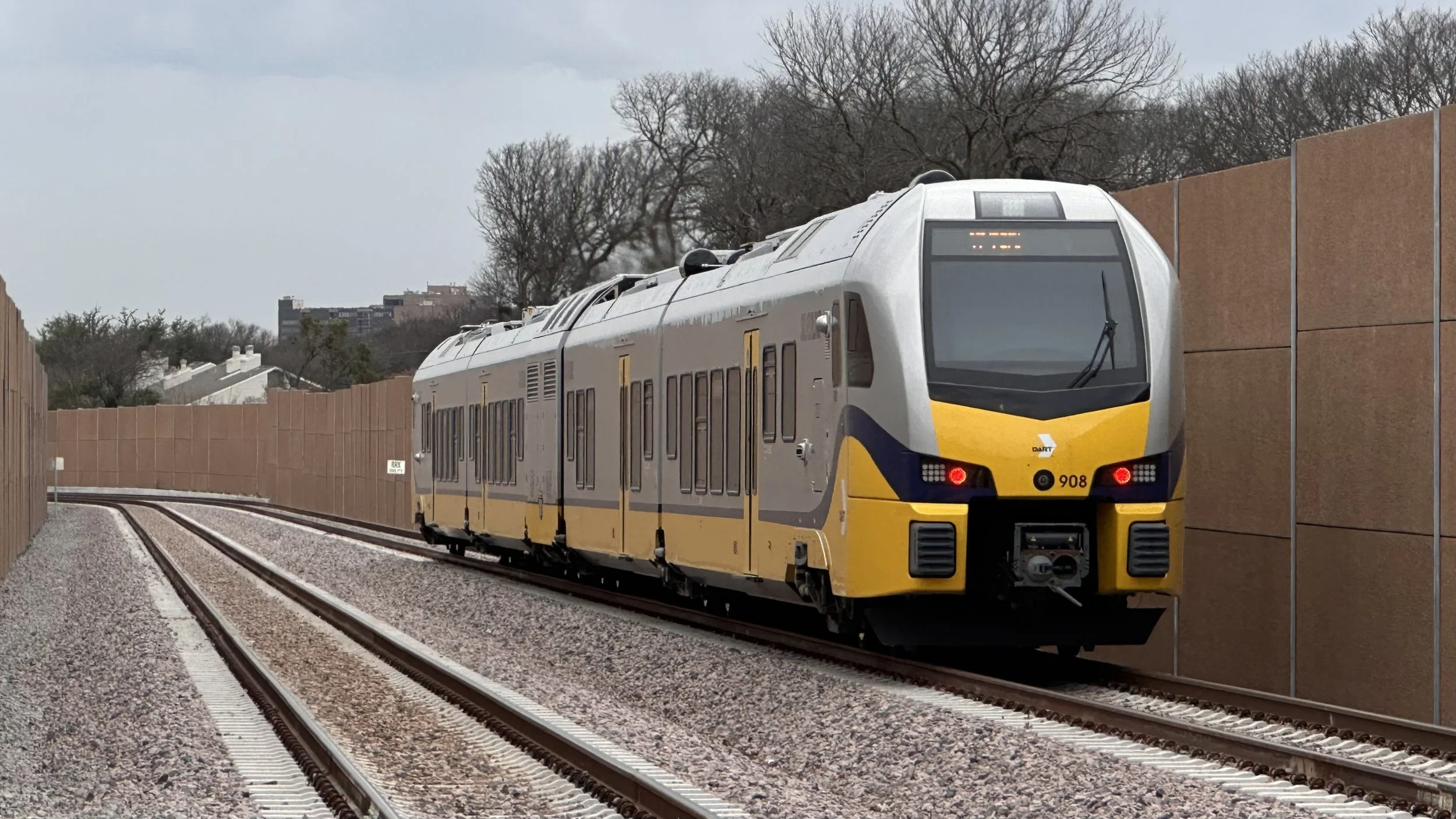
If there will ever become such a phenomenon as “second-generation DMU systems”, the Silver Line will likely be its origin. Whereas nearly every other DMU (with the exception of eBART, which is more a heavy-duty transit system that just happens to accidentally use DMUs) is about half singly-tracked, strategically arranging double-tracking to match a certain desired frequency, the Silver Line is almost entirely double-tracked, with merely one station, Plano City Line, being single-tracked. However, frequencies are less convenient than its westward counterpart, with half-hourly headways at peak dropping to hourly mid-day. But at least the infrastructure in the ground is future-proofed for much more aggressive service expansions in the future.
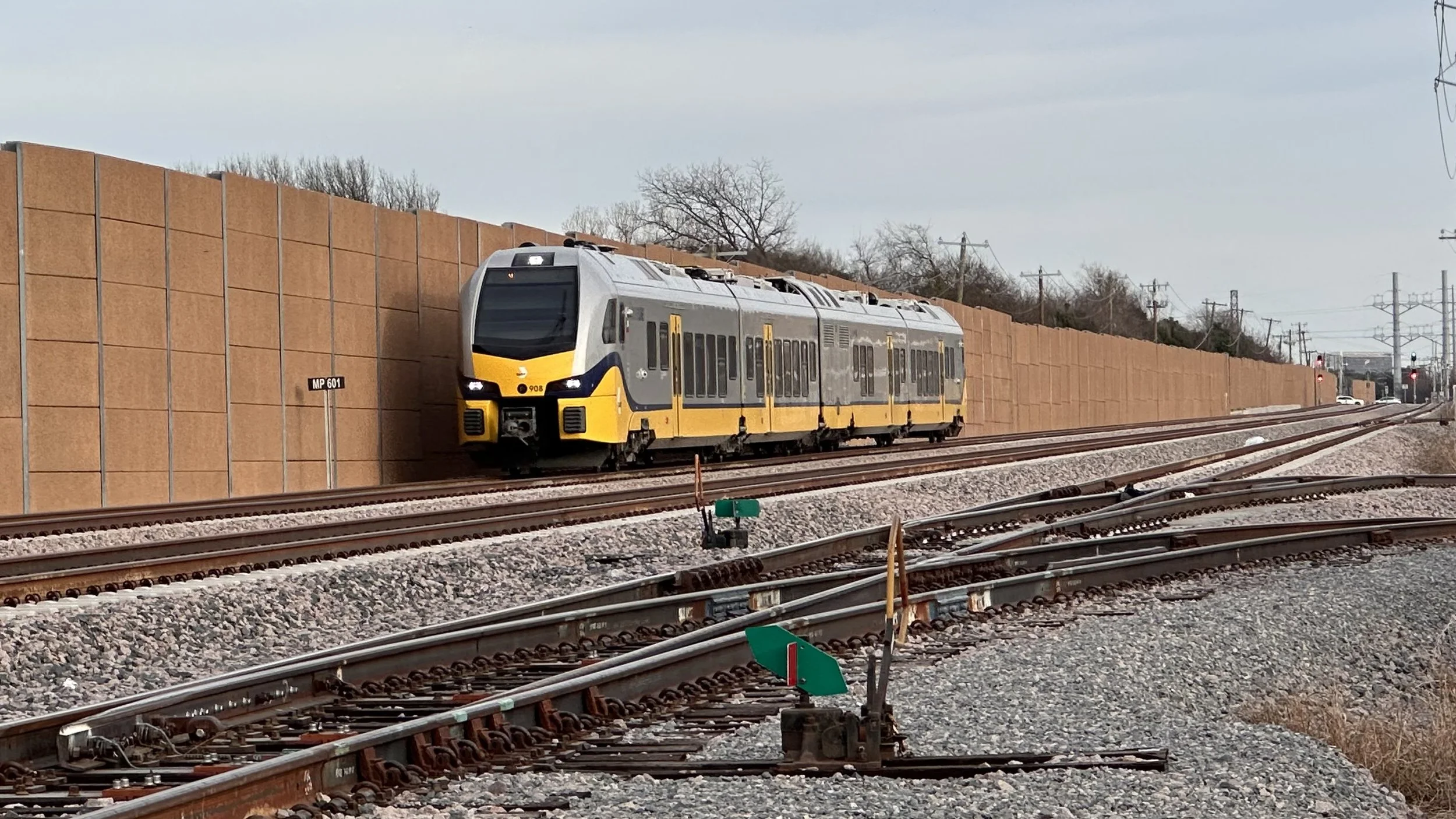
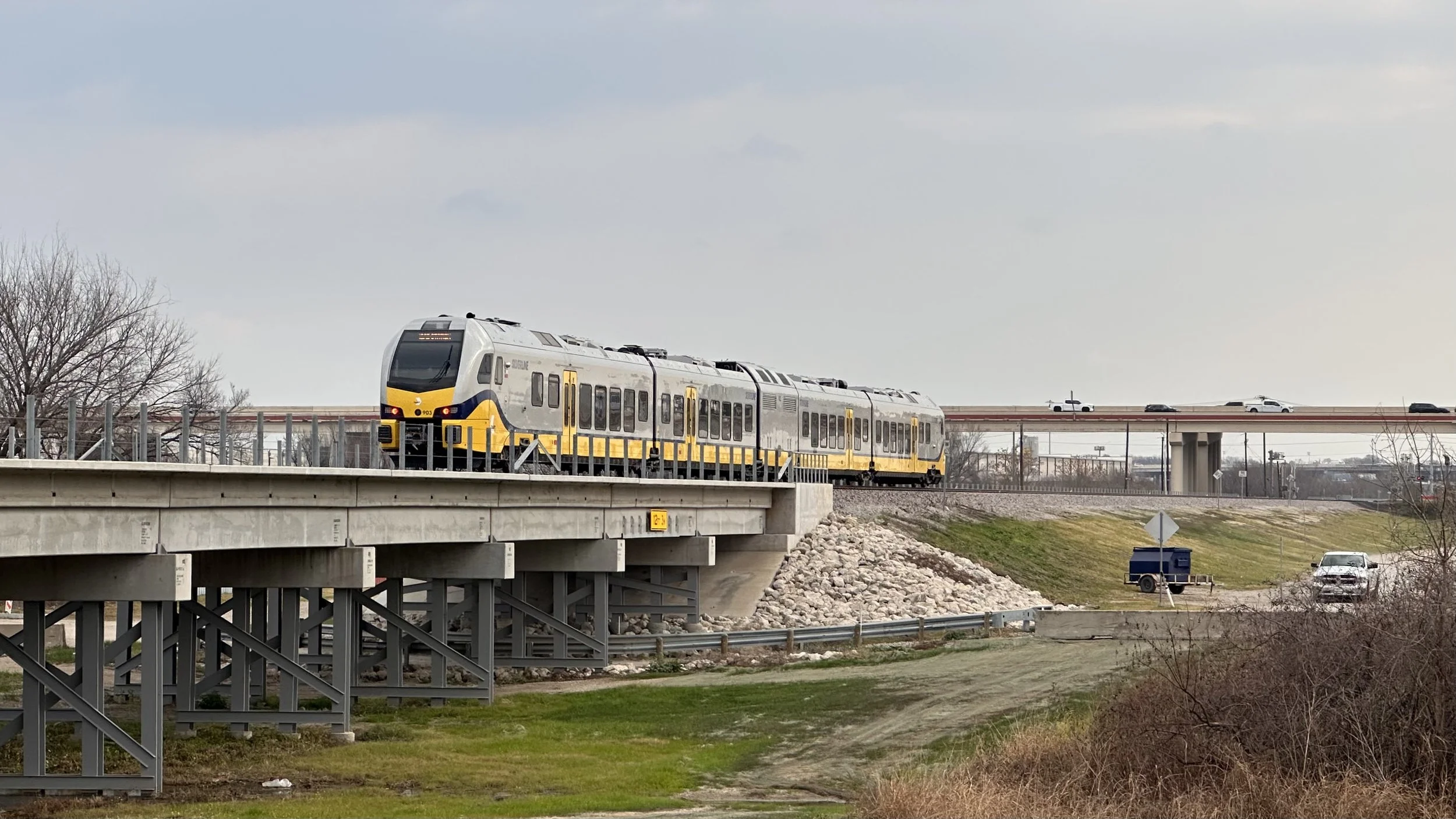
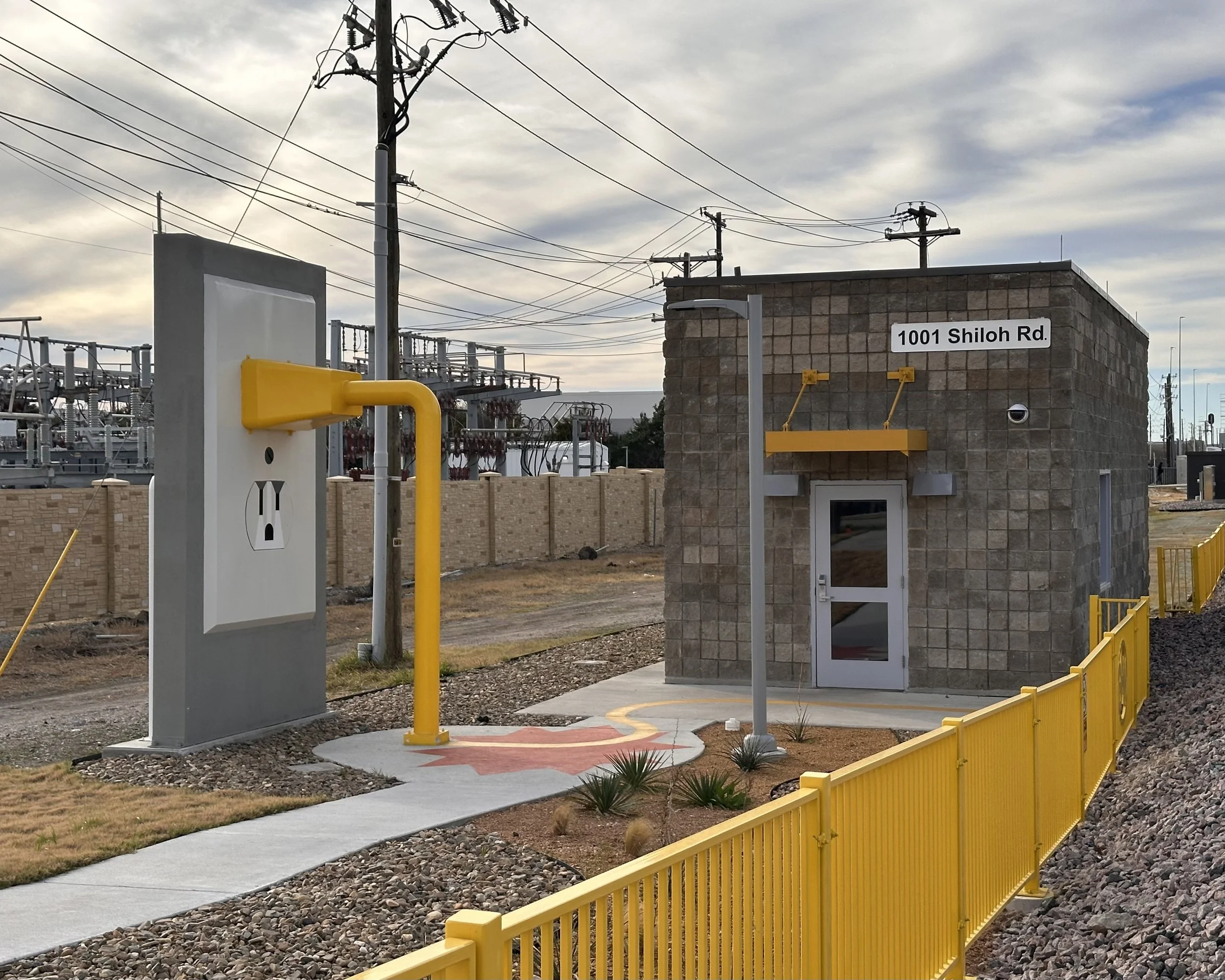
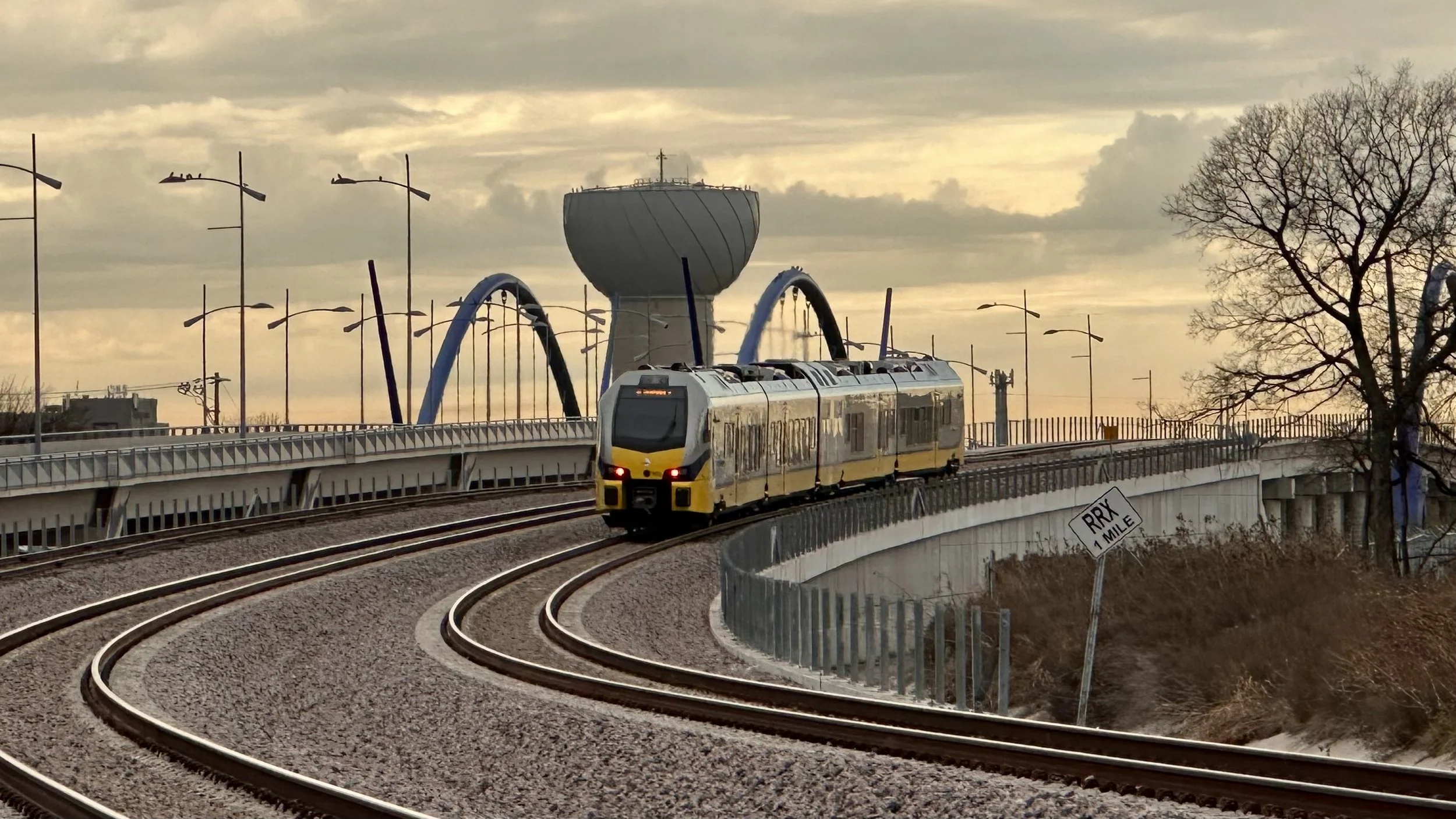
The extensiveness of the infrastructure is similarly higher all-round: viaducts and bridges are more numerous, stations and bridges have larger and more art, a bicycle trail paralleling the whole line still under construction also has elongated viaducts of its own, and sound walls are everywhere, protecting the train and its riders from the criminal element which owns single-family homes and evil suburban NIMBYs. Notably, when I visited in January, the OMF at the line’s eastern end was still under construction; while Dallas’ northeastern suburbs have a reputation for being horribly urbanism- and queer-phobic, and therefore anti-freedom, you at least have to respect the urge to get a deliverable out to the public ASAP as an important and necessary component of the transportation system, rather than waiting until everything’s perfect as if it were an optional amenity.
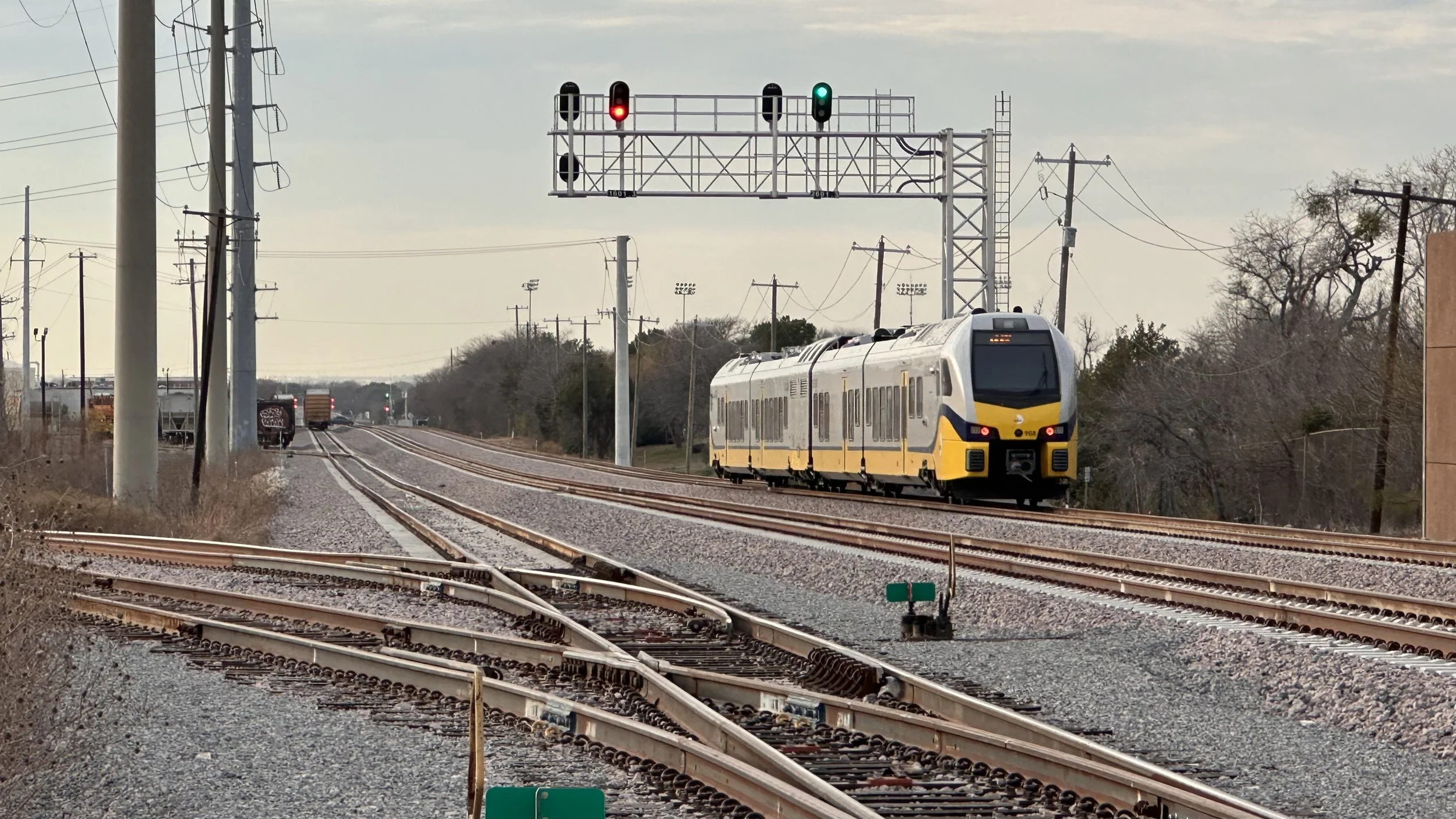
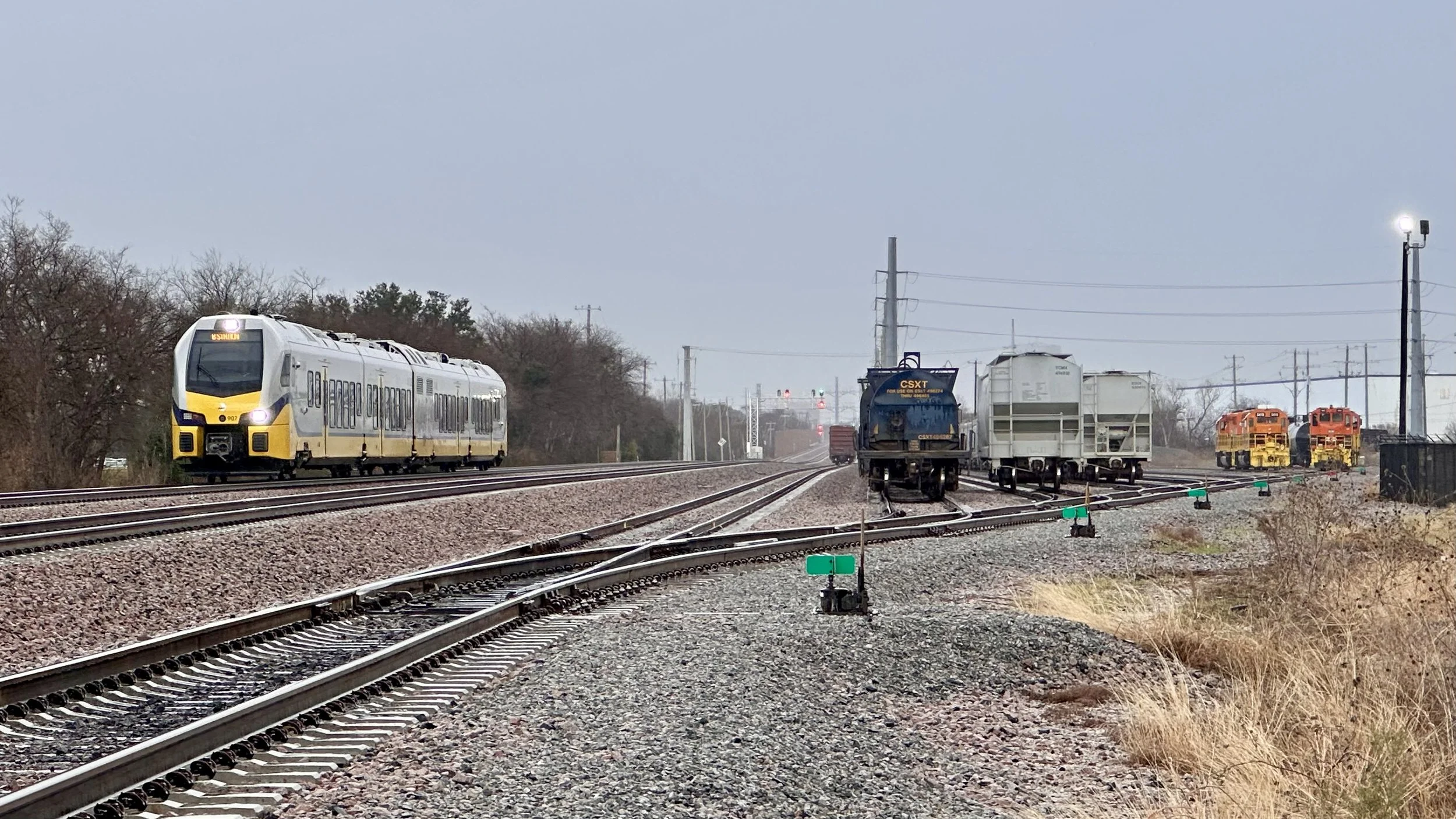
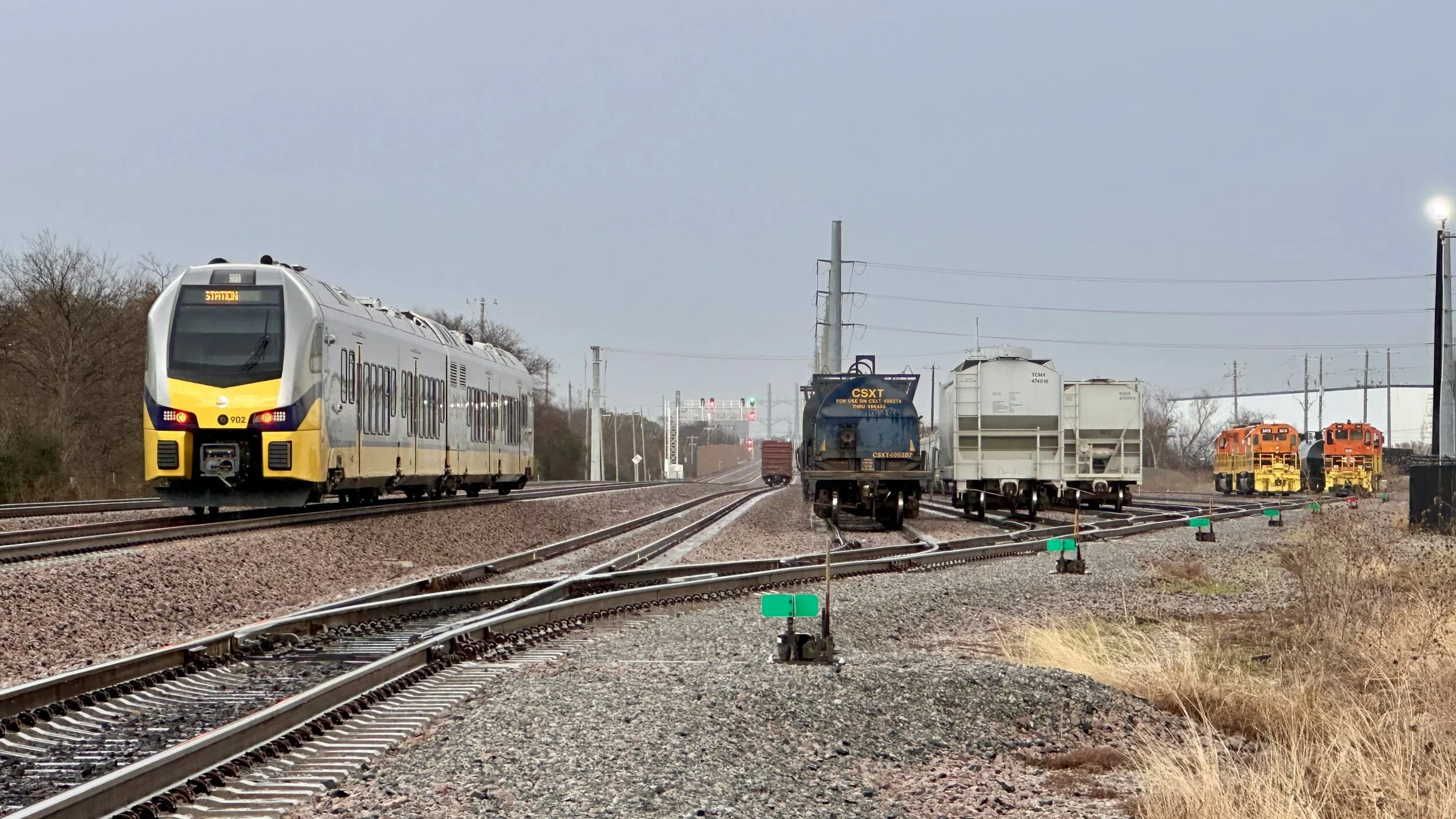
Freight-wise, the Silver Line isn’t quite as exciting as its western neighbor, but only just. The western leg from Shilo Road to UT Dallas shares track with the CPKC Alliance Subdivision (minus a jog on an elongated circular viaduct over to Plano City Line Station for a cross-ish-platform transfer to the Red Line) and has a small three-track yard just past 12th Street Station. Heading southwest, not much freight action takes place until Addison, where a large wye and short segment of triple-tracking connects the DMU’s route with a positively humongous switching area, serving at least 16 industries and a four-track yard.
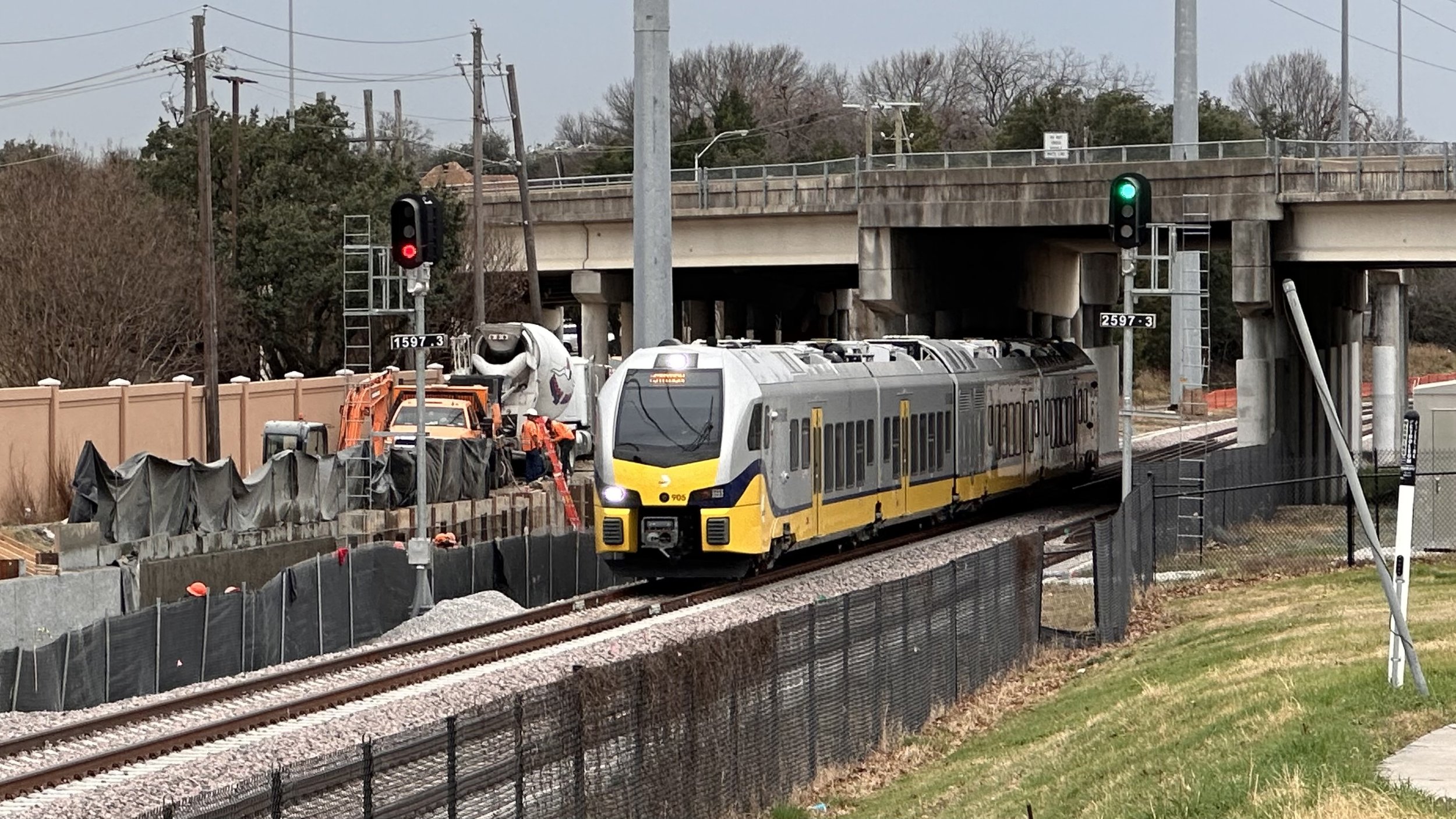
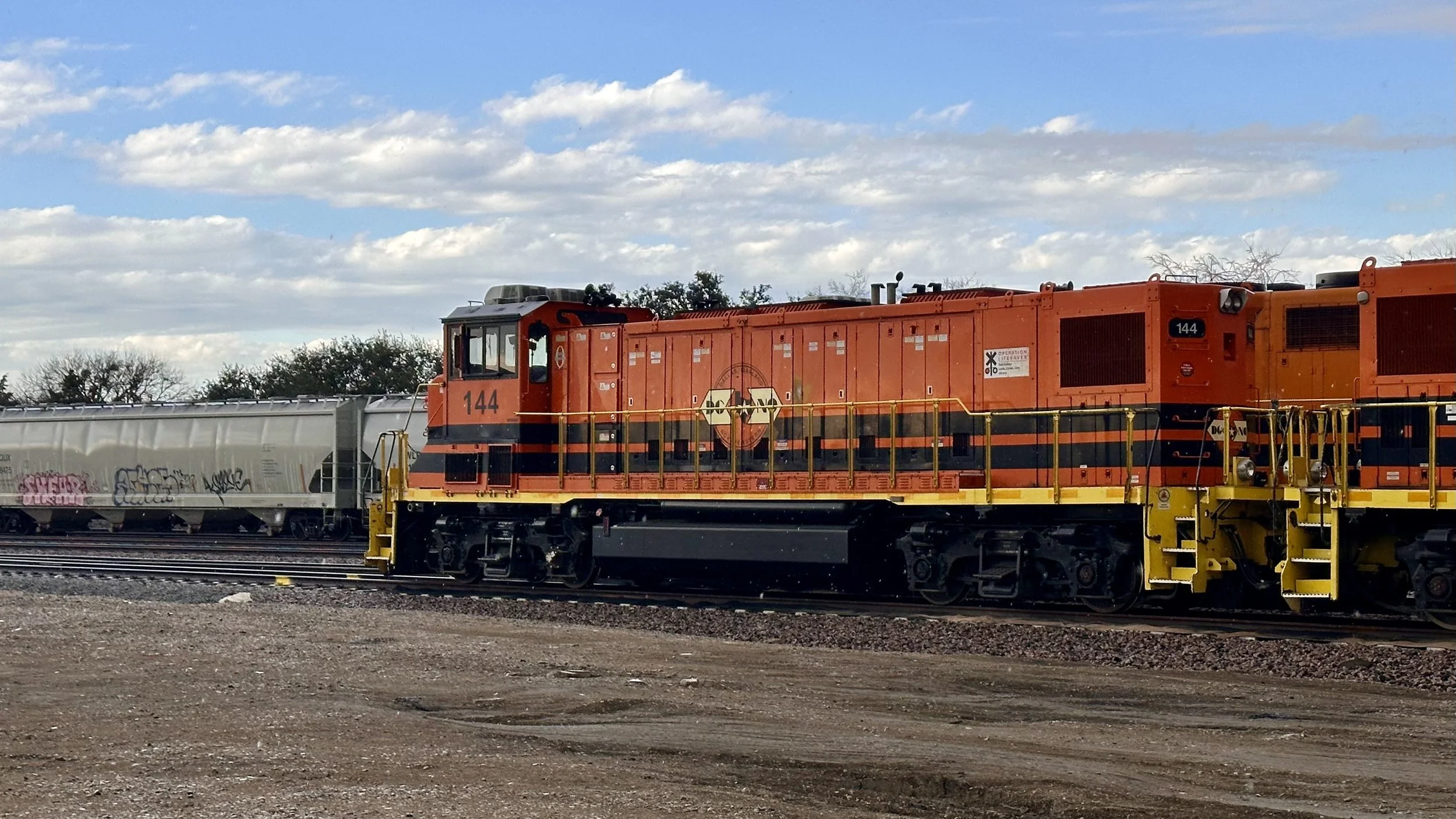
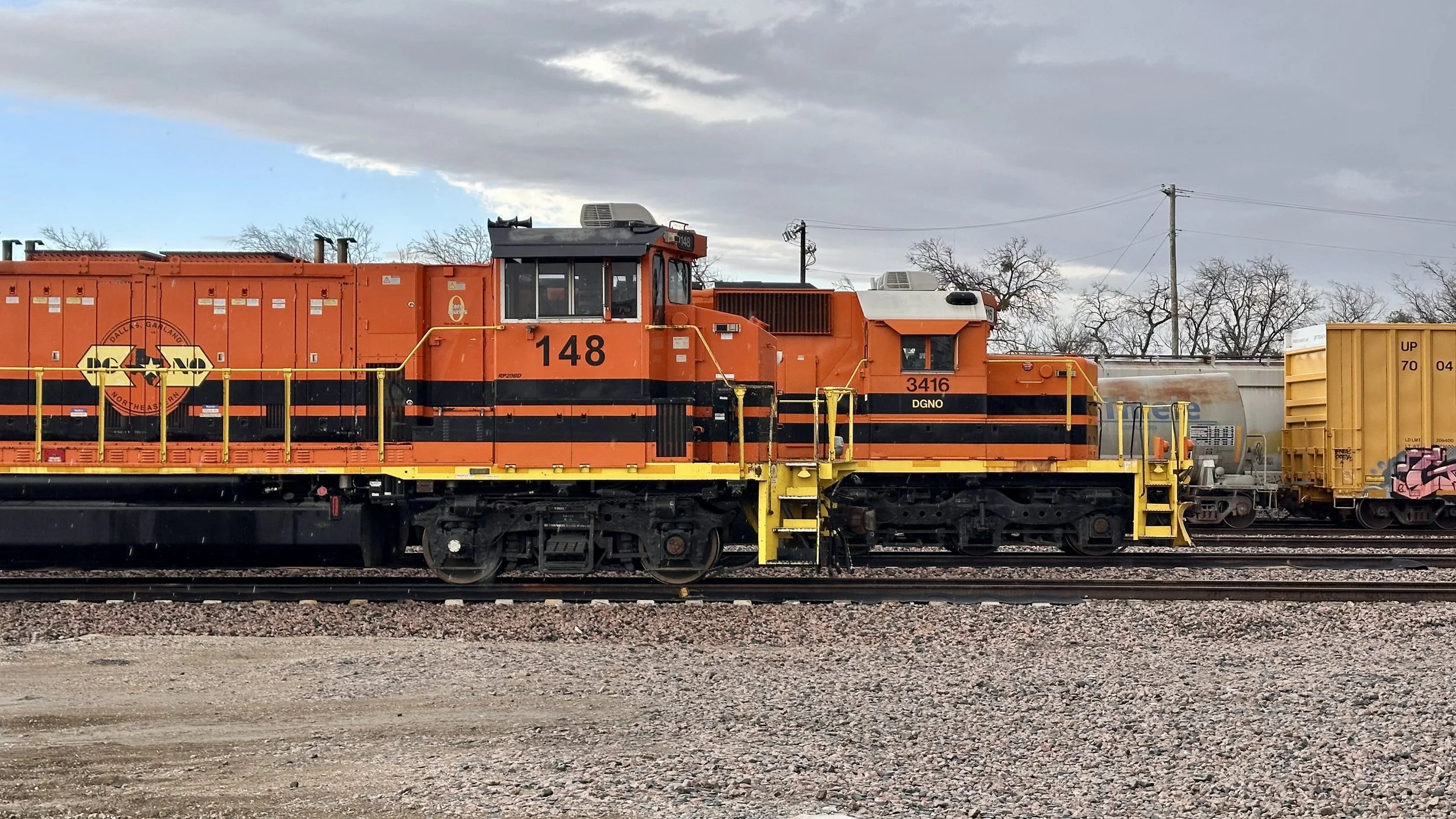
Between Addison and Carrolton, however, there is a ton of freight activity. The Dallas, Garland, and Northeastern, another G&W Shortline, operates the five-track and four spur Mercer Yard, and has an elongated section of triple track that allows it to switch most of the 20 industries in the area without fouling the DMU. Nearby in Carrolton is a large junction between the DG&N/Silver Line, BNSF’s Madill Subdivision, and the Lewisville Industrial Track, which parallels the DART Green Line at ground level and serves four more spurs before connecting to the DCTA A-Train and its associated industries. Just past Carrolton is one more switching area with a whopping 21 spurs, after which the DMU takes another short diversion off the freight line to serve Cypress Waters Station, rejoins the freight route and has three small spurs right off the mainline, connects to one last switching district with 10 spurs, and finally wyes into TEXRail for transfers at Airport North and DFW Stations.
Overall, the Silver Line is a net plus for DART’s and the Metroplex’s expanding rail network. Oddly enough, even though it uses the same vehicles, is almost exactly as long as TEXRail, and even has one extra station, in bicycling it, it felt like much less of a journey, as if it served fewer ‘areas’ that all felt more ‘samey’. Unlike TEXRail, which weaves in and out of existing railroad infrastructure, the Silver Line’s heavy infrastructure and (sound-)wall-to-(sound-)wall double-tracking dominates the railroading landscapes it travels through. TEXRail felt more ‘spunky’ and ‘neighborly’, whereas the Silver Line felt like a bigger cog in an even bigger series of freight, transit, municipal, and suburban machines.
Given the much greater freight integration, the Silver Line is an appealing modeling subject, but the sheer amount of switching will necessitate prototype modelers either compress aggressively or model only a portion of the route. Otherwise, the Silver Line demonstrates all the different ways DMUs can be integrated with freight rail: switching can be done either directly on the main, on a parallel freight-only main, or just off the main in switching districts or puzzles, and DMUs can be disentangled from freight trains either be restricting them to nighttime running on the same tracks, having parallel mains, or hopscotching over junctions or yards with viaducts.
What can be learned?
DMUs represent a unique form of transit, mashing European vehicles headlong with American freight railroading to bootstrap a good-enough transit system for stupid cheap, nary more than the cost of the vehicles, some welded rail, and a couple of thousand cubic yards of concrete for the platforms and occasional viaducts. DMUs are not a cheaper way to build high-quality transit, but instead a way to lower the barrier to entry, allowing you to justify high-enough-quality transit anywhere that already has tracks in the ground, without significantly impacting the existing freight shippers along those tracks – a way to have your cake and eat it too.
With respect to model railroading, passenger trains have an unfairly outdated (and car-brained) reputation as old-fashioned and irrelevant to the modern world. In fact, passenger modeling is almost universally restricted to layouts depicting the 1950s or before, and it’s practically unheard of to see a permanent home layout, prototype-based or not, with anything more than a once-a-day long distance Amtrak train. However, the movement to rid ourselves of polluting automobiles and impoverished suburbs has jumpstarted a return of passenger trains and dense, walkable urbanism. Not only is Amtrak on the rise – setting all-time ridership records year after year – in a way that replicates traditional passenger trains and corridors of the past, modern transit – in the form of streetcars, light rail, S-Bahns, and DMUs – similarly all directly interface with traditional modeling subjects, either by parallel use of the same rights of way, stations which facilitate intermodal transfer to and from mainline passenger trains, or – as with DMUs for over the past quarter-century – directly operating on the same rails as freight trains. Ignoring passenger trains and car-free urbanism is not just an unsustainable, inequitable, and economically-harmful political preference, it’s un-prototypical and bad modeling.
In the spirit of this incredible journey, I’ll close out with one lesson to be learned from each DMU system.
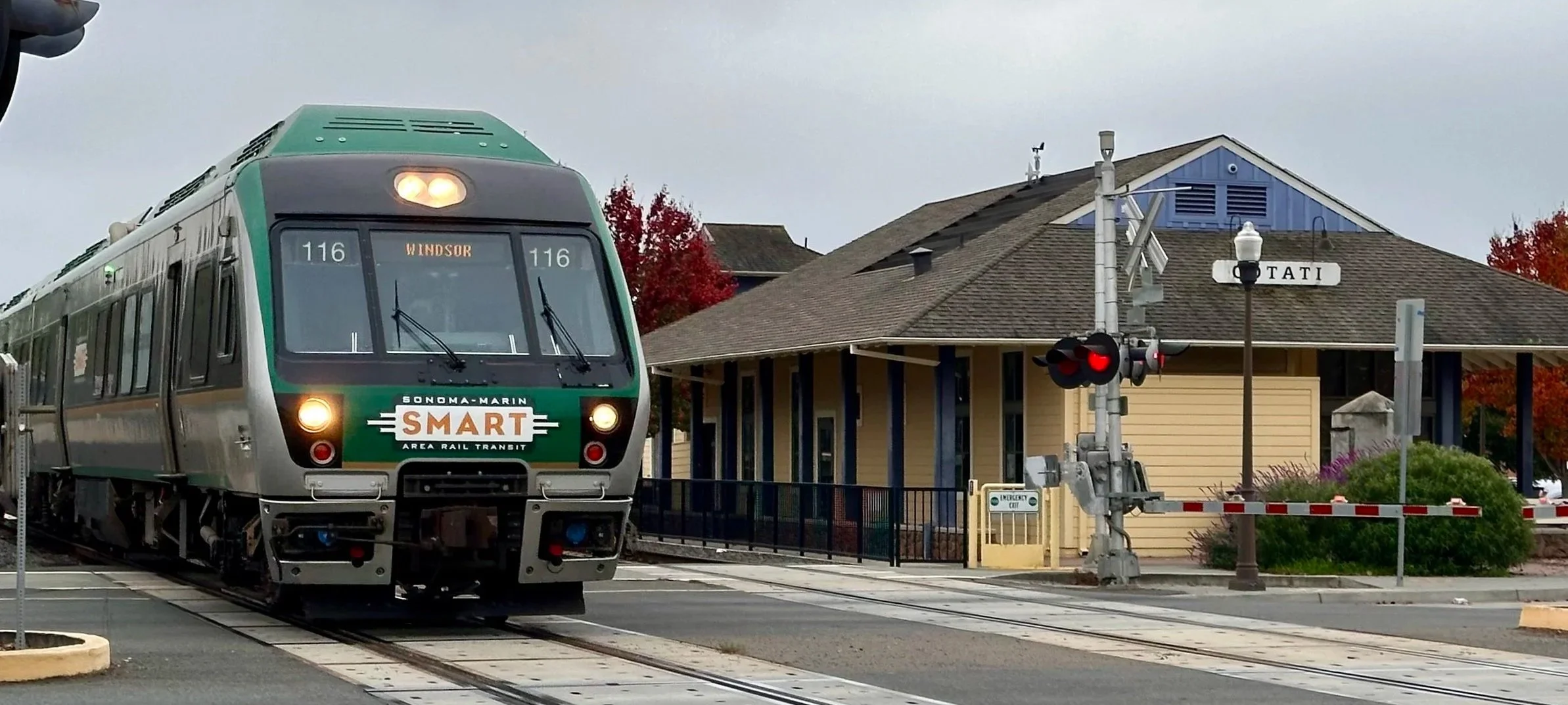
SMART is built straight from the bones of the storied Northwestern Pacific Railroad, a not unpopular modeling subject in its own right. Vestiges of the old NWP abound, from repurposed or modernized station buildings, to historic bridge piers sitting beneath a modern concrete viaduct, to even a double-track tunnel being single-tracked to accommodate a modern bicycle trail. SMART shows that DMUs are the spiritual successor of historic passenger trains and can be equally as important to modern communities as steam trains were to the same towns back in the day. Any layout of a medium-sized railroad line should consider the feasibility and usefulness of hosting a regional passenger service.
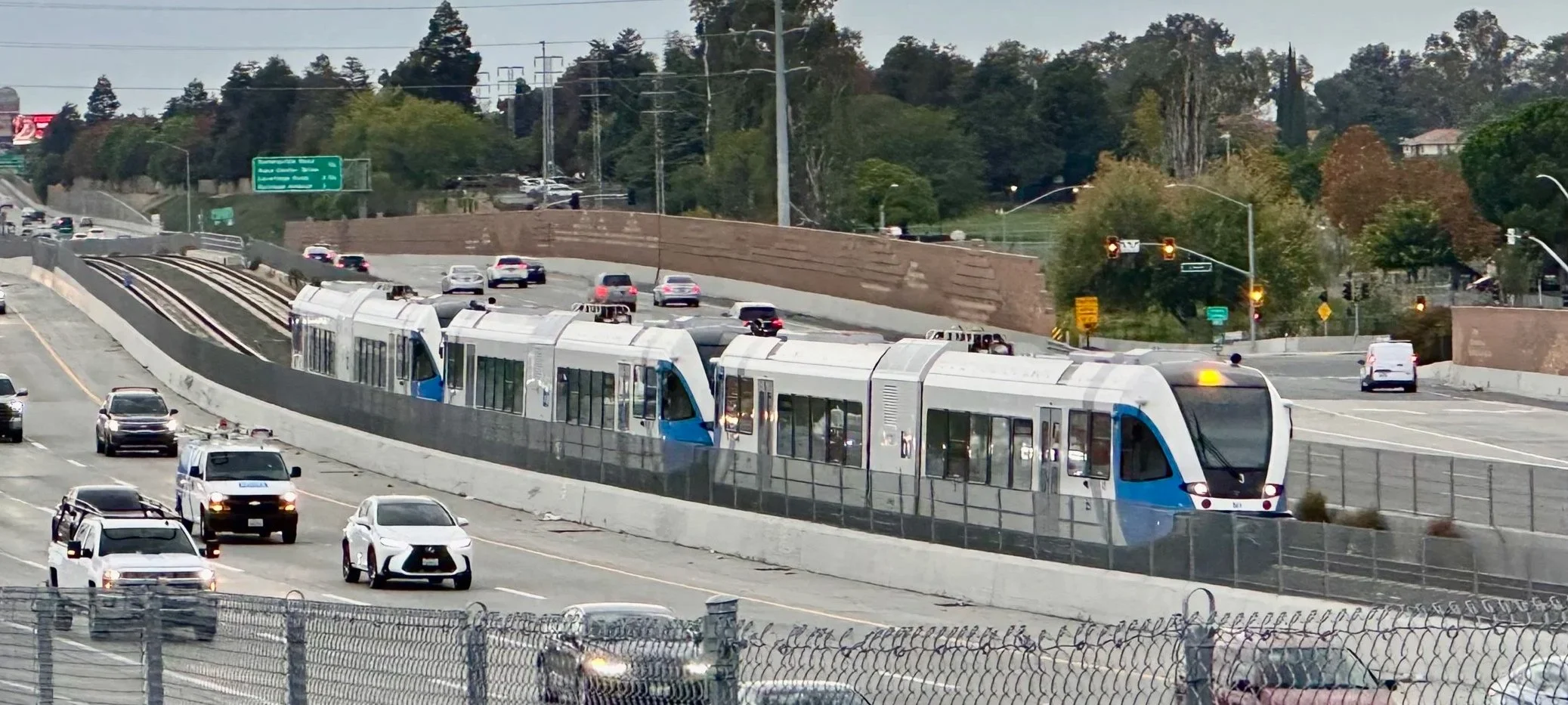
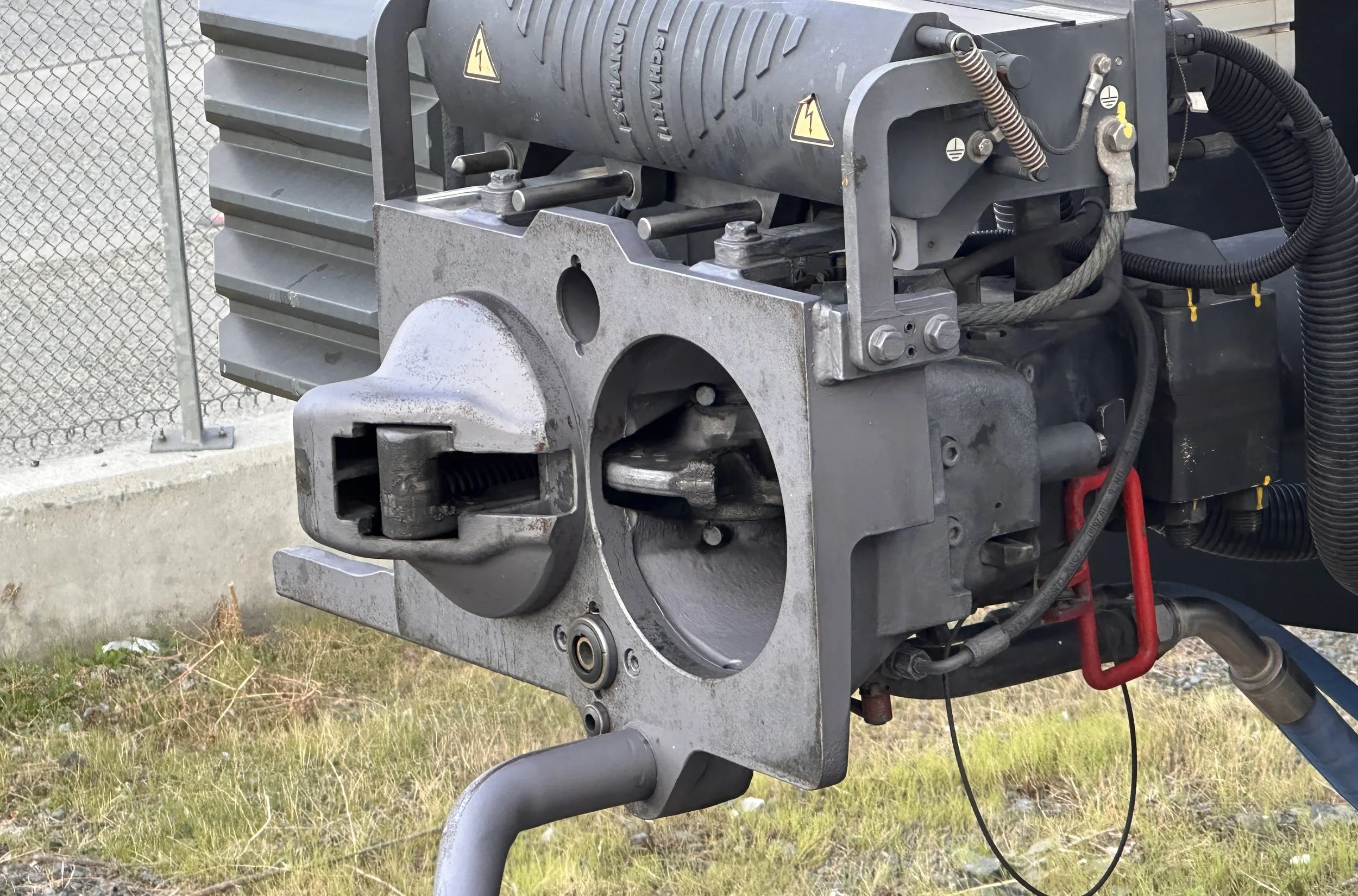
Alongside Arrow, eBART is one of the two DMUs that are more transit system than railroad. That it completely lacks any (current) connection with mainline railroading means it is of limited interest to most modelers. However, its practice of expanding and reducing trainset lashups over the course of the day to accommodate passenger load peaks could provide a strategy for making model DMU operations more dynamic than simply ‘back-and-forth model bus driver’. While changing model consists mid-op-session might be difficult (until someone invents a scale Scharfenberg coupler), an operator could simply at appointed times take a one-DMU lashup into the Operations and Maintenance Facility (OMF) yard and trade it for a pre-consisted two-DMU lashup.
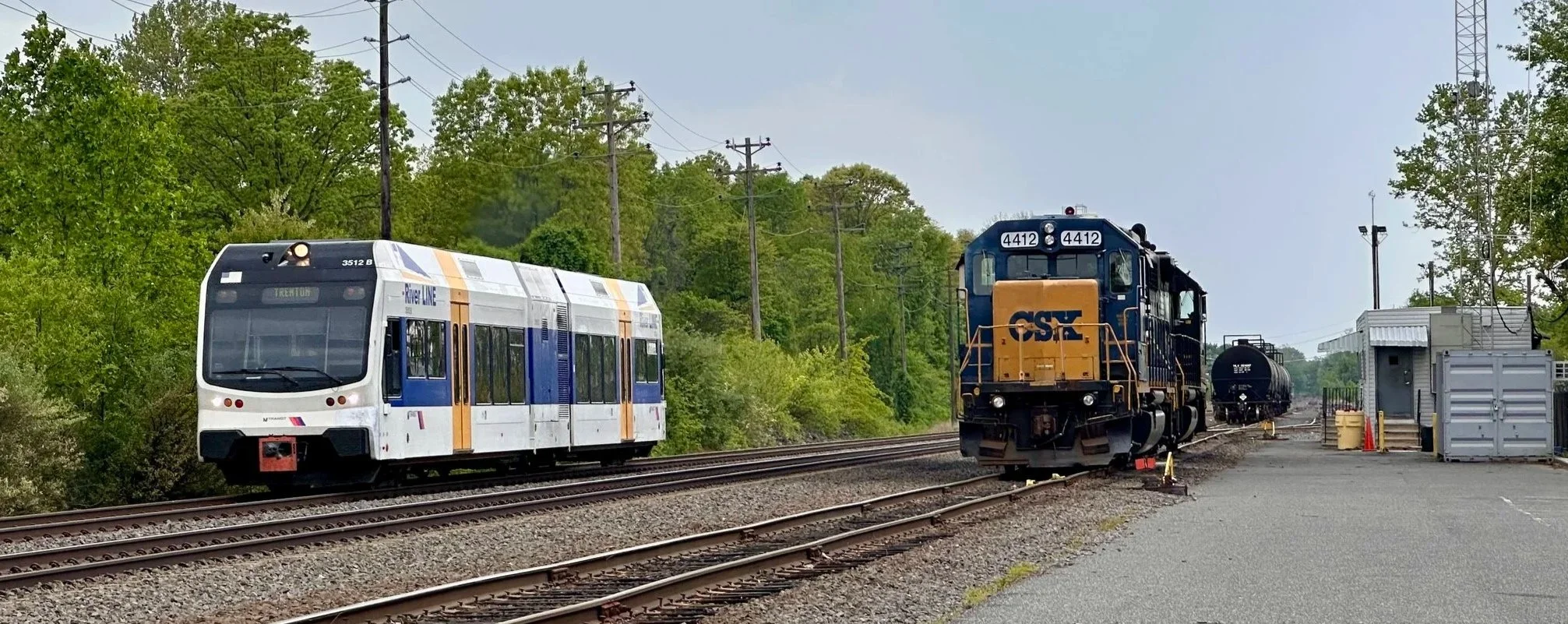
Prototypically, most DMUs are required by the FRA to be separated from mainline trains during passenger hours, resulting in most operations seeing freight service only at night. However, the River LINE provides an example of daytime freight activity on an otherwise single-track line at Burlington Yard in Florence NJ. A freight train travels along the mainline early in the morning before the DMUs begin operating and drops off cars at Burlington Yard, whereby the switcher locks itself in the yard and merrily shunts the day away, switching those industries within yard limits and blocking cars for those that aren’t, until another peddler freight comes at night to liberate cars from the yard and finish serving the rest of the line.
Podcast Patron Billy Brown lives near the River LINE, is familiar with its freight operations, and shared his knowledge: ‘Burlington Yard actually has a dedicated train for it, WPBU-20, which works the yard and the industries north of the yard up to Yardville. Typically the crew comes on mid-afternoon and works the yard and a paper plant in Florence before the River LINE shuts down for the night, then switch the chemical plant and brick yard in Fieldsboro, and occasionally has some covered hoppers for a cement plant all the way up the line in Yardville on the Robbinsville secondary, then ties down back in the yard. It used to have a couple more customers north of the junction with the River LINE – an AGWAY grain elevator and an Ocean Spray plant – but they’ve both closed. At night, WPCA-29 will come up from Pavonia to exchange cars in the yard while working up the River LINE.’
The River LINE also demonstrates the other major strategy of daytime freight operations on its other end, with DMU-exclusive mainlines traveling along the edge of Pavonia Yard, allowing the DMUs to reuse an existing right of way, but not be fouled by freight trains.
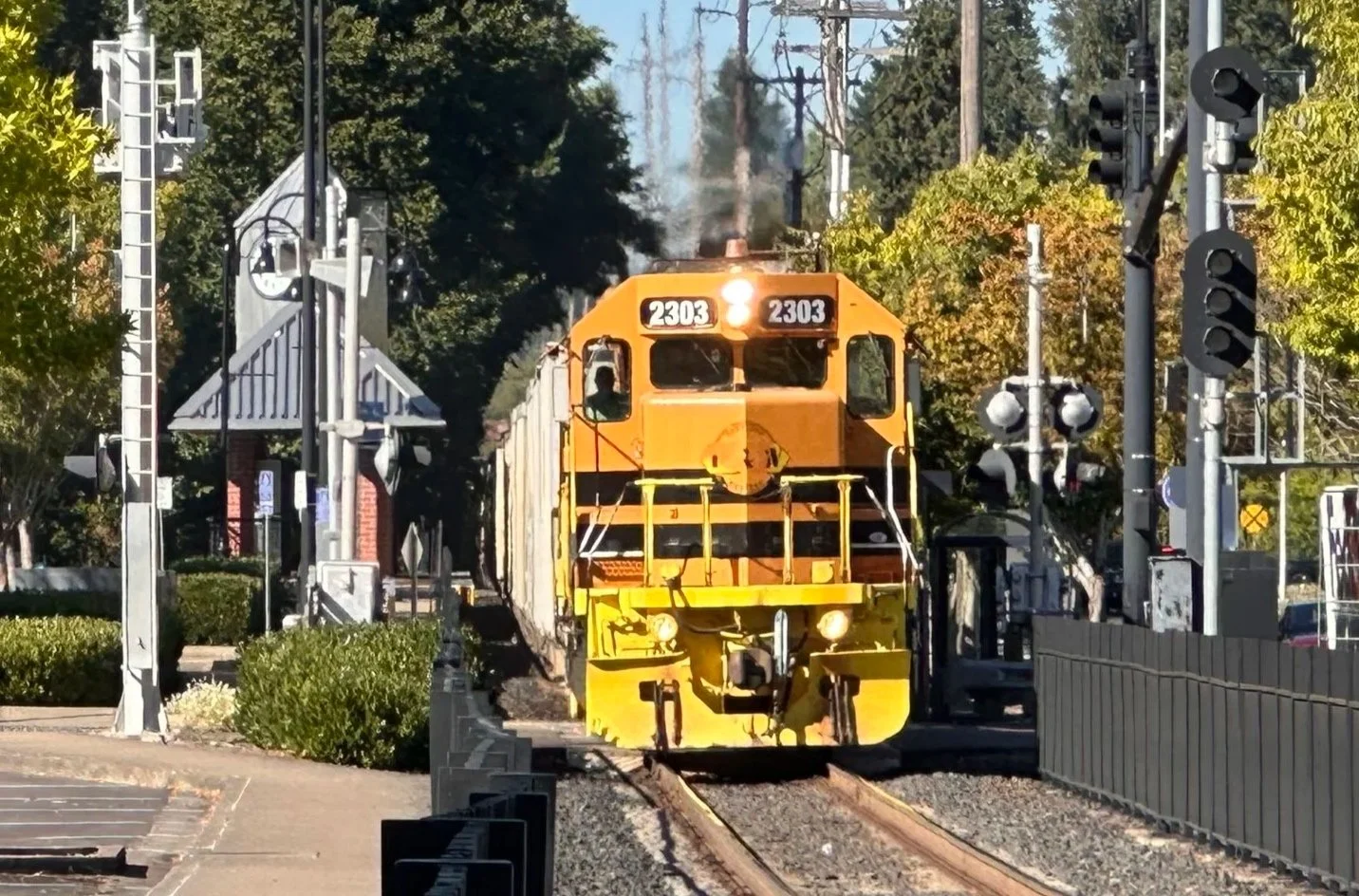
A few DMU systems have FRA-compliant vehicles, thereby allowing unrestricted daytime mixing of freight and passenger trains. TriMet’s WES takes this to the extreme, with almost no DMU-exclusive trackage and P&W freight trains galore. While prototypical examples of this are rare, it could be very easily brought to any layout depicting DMUs with the faintest of proto-freelancing: just simply ignore the FRA restrictions, and mix passenger and freight trains anyway. This opens the possibility of much, much more dynamic model op sessions, with freight trains on almost any layout suddenly needing to duck around passenger trains every 30-60 scale minutes. Much like the real thing, for almost the same track arrangements and at the cost of only a few vehicles and platforms, regular freight railroading suddenly becomes much more challenging, active, and entertaining, as well as colorful and distinctive.
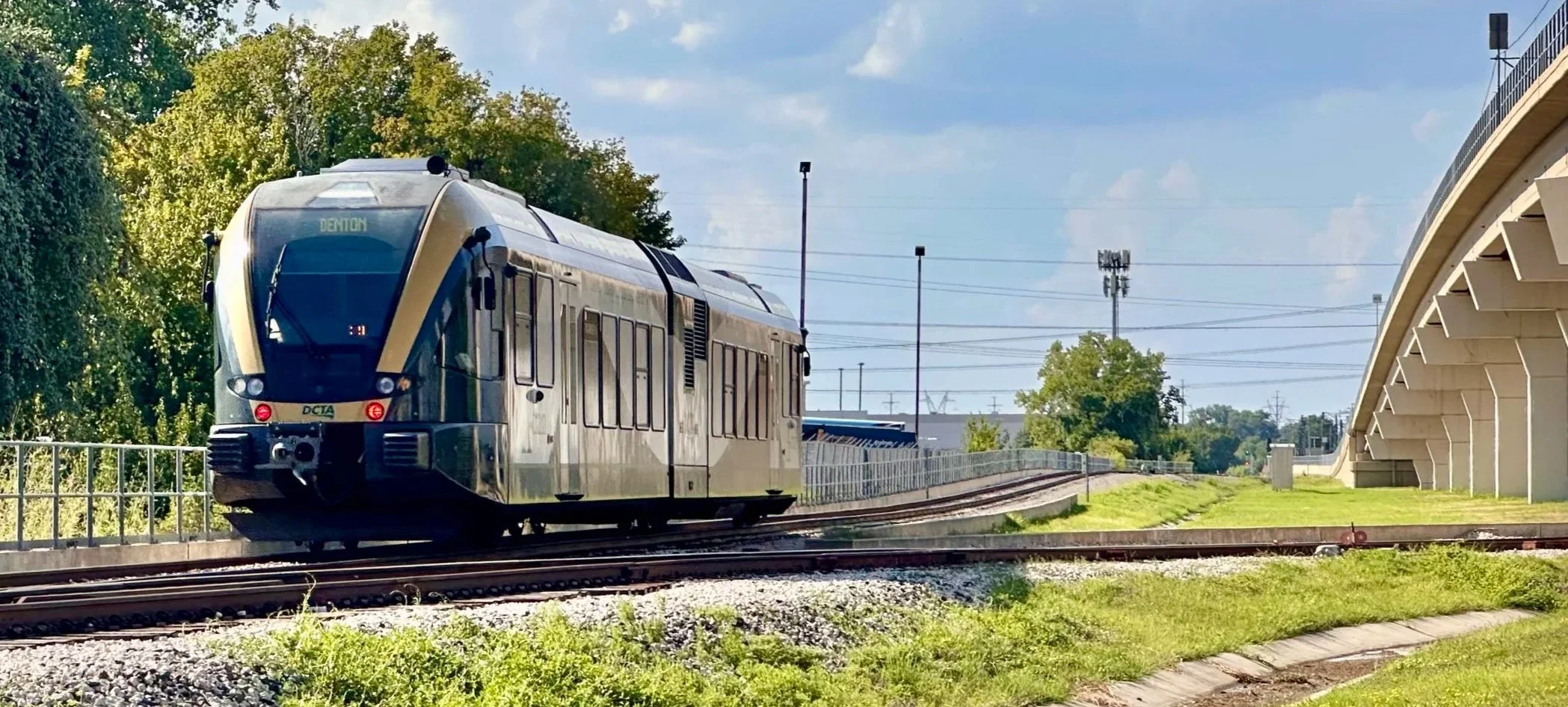
Besides transit-style DMUs (eBART and Arrow), there are two general types of DMU systems which could be modeled. Branchline-style DMUs include the northern 2/3rds of the River LINE, Sprinter, SMART, and, of course, the A-Train. In particular, the A-Train’s terminus at Trinity Mills is so pike-sized – a single platform on a single-track mainline – it demonstrates how even the smallest imaginable shelf layout could prototypically host passenger trains departing every half-hour. Simply take an otherwise-normal shelf switching layout, put one single station under 50cm long on the mainline, buy one single DMU-style vehicle, and add one single pocket track in the staging yard, then shuttle it back and forth between station and staging every 30-90 scale minutes. This can enliven operations on even the tiniest of layouts by periodically restricting access to portions of the layout, wreaking delicious havoc on the freight crews’ plans. Notably, both the A-Train and WES initially started operations with refurbished RDCs (the DMUs of their day) while waiting for modern vehicles, so this implies DMU-style operations are proto-freelancable to almost any possible period in the diesel era.
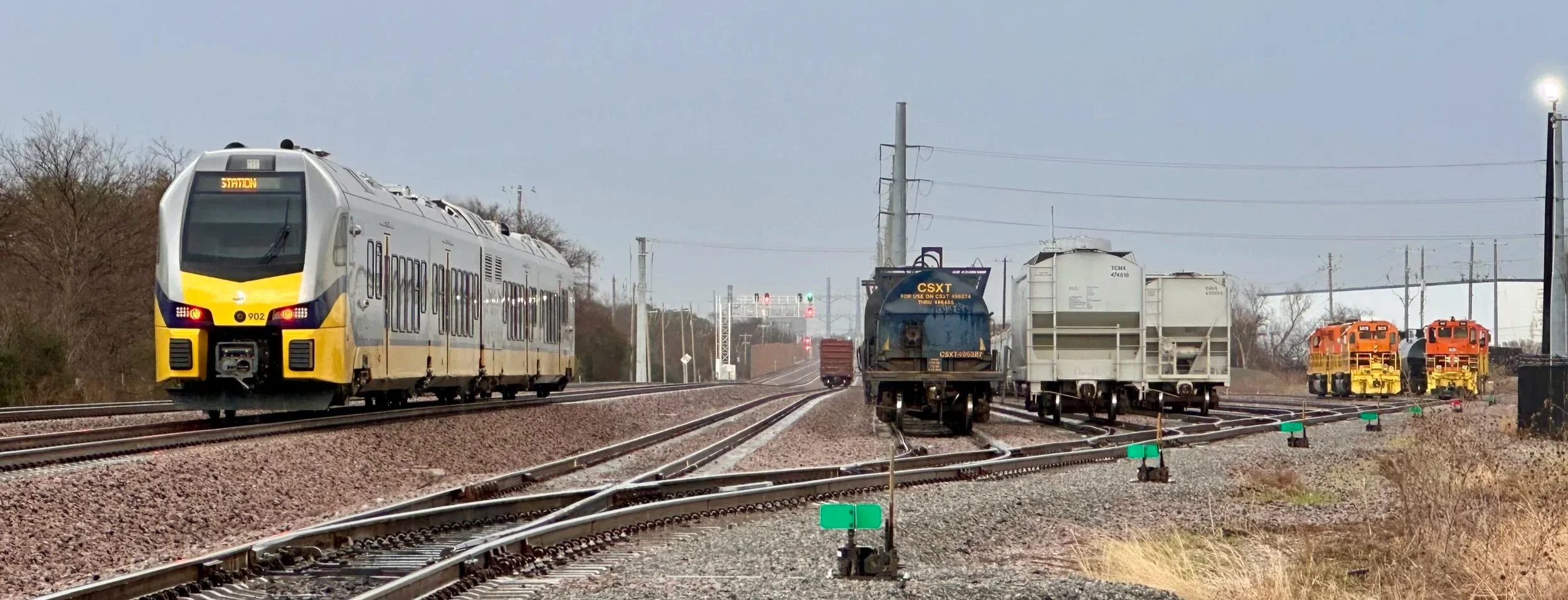
In contrast to branchline-style DMUs, where passenger transit is the railroad’s primary concern with only the occasional freight train, mainline-style DMUs have approximately equal axle-counts of passenger and freight. Examples include the southern third of the River LINE, WES, CapMetro Rail, TEXRail, and, of course, the Silver Line. The newest DMU, the Silver Line is almost entirely double-tracked, and even significantly triple-tracked with a parallel third main for freight access. This allows the DG&N to switch its yard and the a plurality of its industrial spurs without fouling the DMU’s adjacent double-track main. In fact, many DMUs (particularly CapMetro Rail) have similar arrangements for at least a portion of their length, effectively operating as two side-by-side single-track railroads, allowing DMUs and freight to operate without interference from each other for prolonged distances. The DG&N’s Mercer Yard is an excellent example of a small, almost pike-sized yard that follows this paradigm, and could easily be modeled with switching in the foreground with through-DMU tracks in the background.
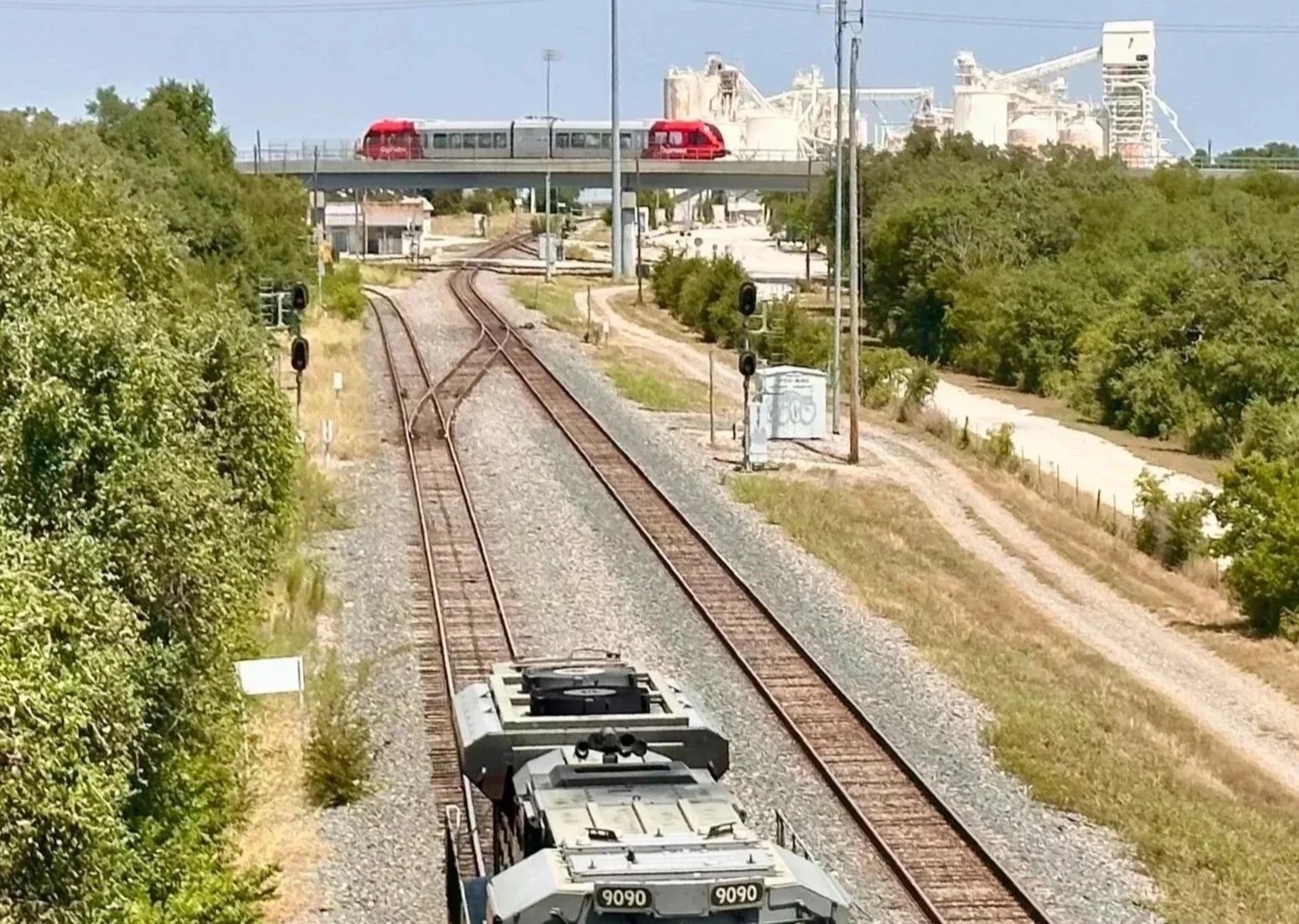
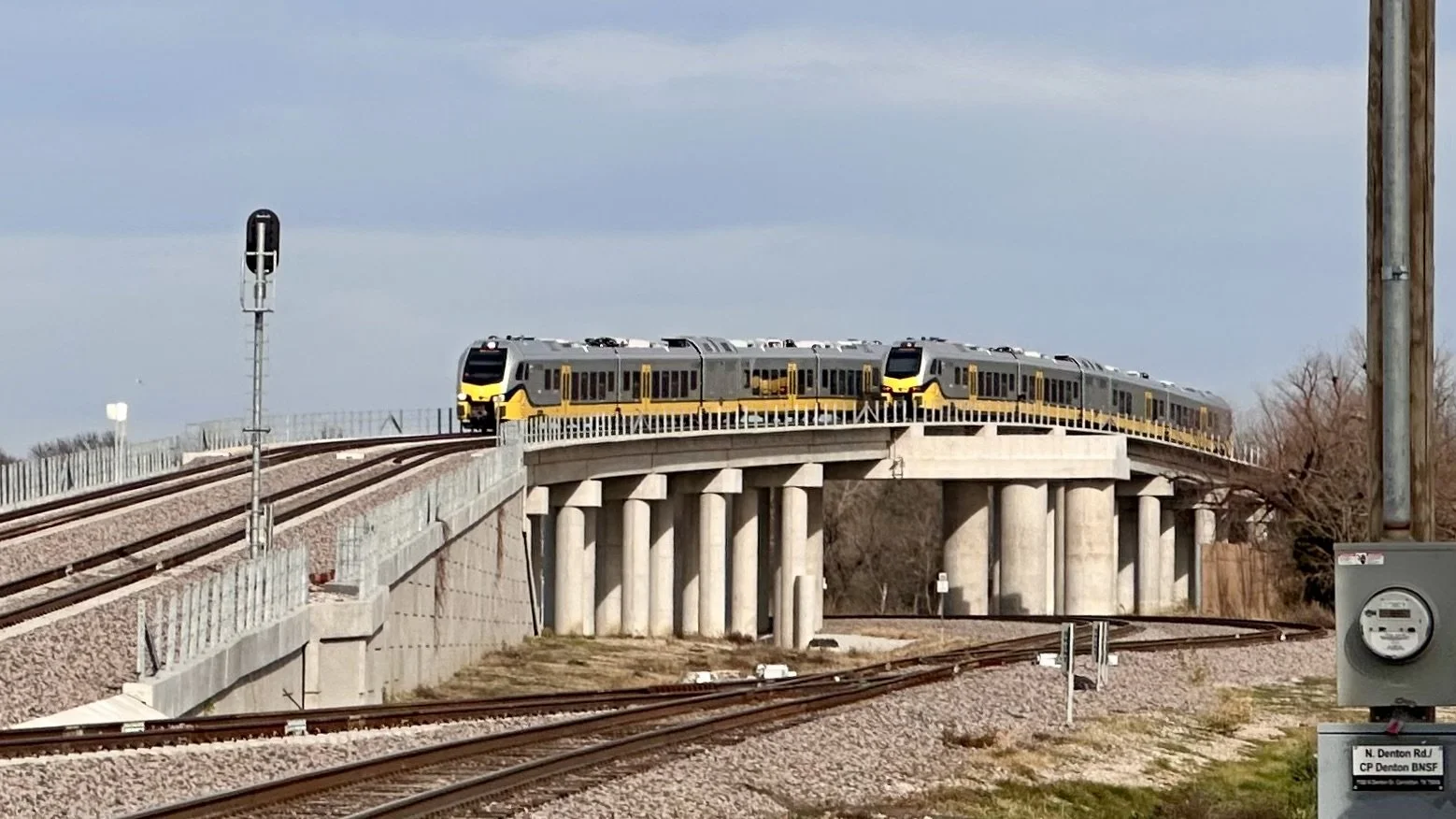
DMUs needn’t be the subject of entire model railroads, but can also be small vignettes on larger layouts. The simplest possible way to prototypically model a DMU system is a static, non-operating example of one of the many viaduct “hopscotches” over congested interlockings. Rather than composing transit entirely of exclusive rights of way like debilitatingly-expensive subways, DMUs keep costs down by using operational solutions before concrete ones, and applying expensive viaducts only where needed to deconflict from extremely busy mainline crossings. One example is the junction at McNeil Texas between the mains of UP and AW, where CapMetro Rail jumps up from ground level to briefly flit along the treetops from one side of the interlocking to the other before gently coasting back down to ground level. Even if one didn’t own a single DMU at all, several prototypes of DMU concrete viaducts arcing over interlockings and interchanges could easily inspire extremely distinctive scenes on many model layouts.
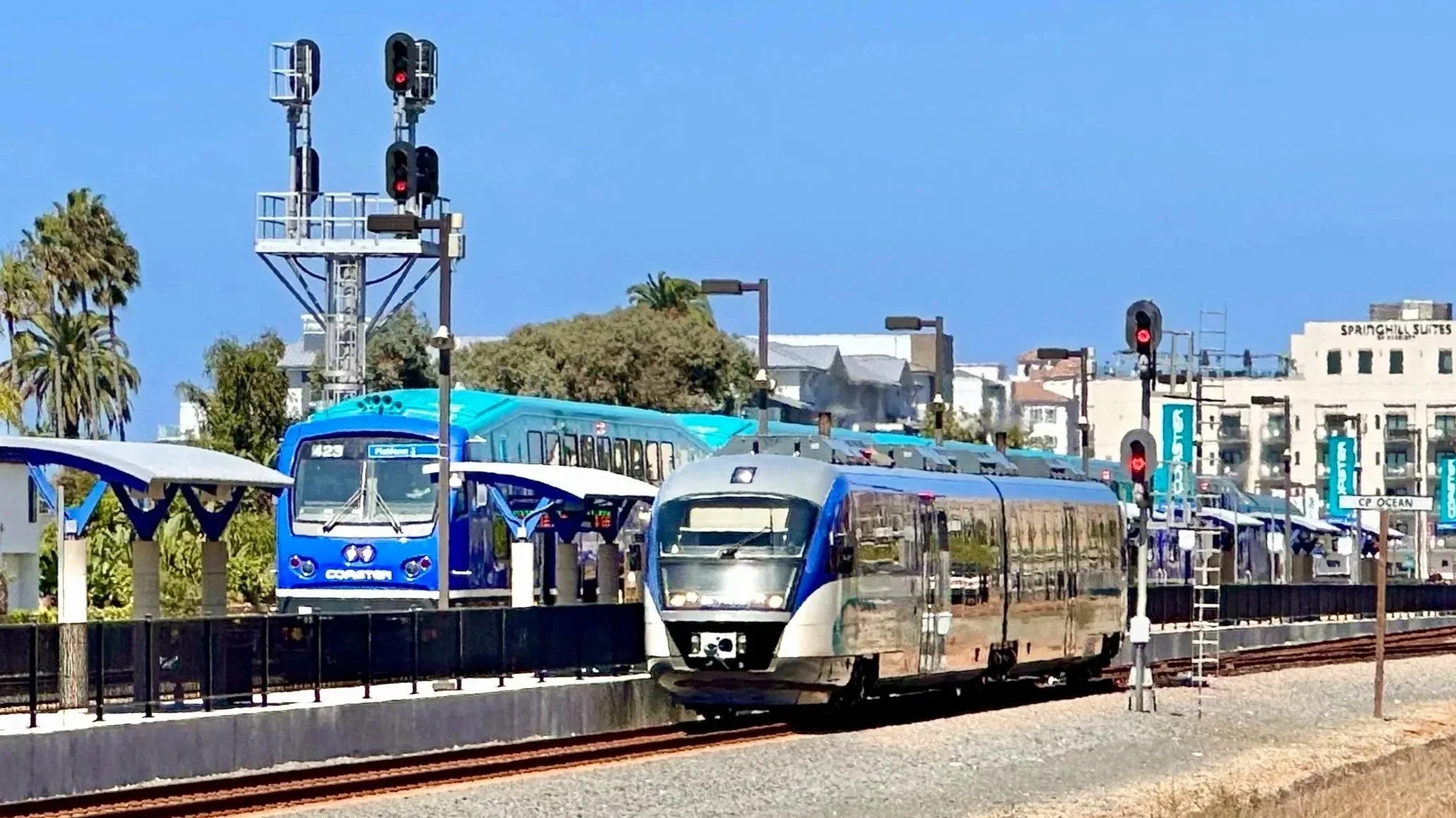
For layouts with mainline passenger operations, there are multiple examples of DMUs connecting with intercity passenger trains. No one passenger train could serve all possible trips, so intermodal connections between local, regional, and national transit are important for plugging gaps in the fight against car dependency. Another way to include DMUs on primarily non-DMU layouts would be to model a transfer station, such as at Oceanside CA. Here, the Sprinter branchline-style DMU connects with regional trains south to San Diego and north to LA and San Bernardino, as well as intercity Amtrak trains that go as far away as San Luis Obispo, in addition to freight trains that pass through. If one was modeling such a semi-major intermediate station, it would be trivial to add a platform and automate a DMU shuttling back and forth to staging on a separate track. In the same way that intermodal yards generate traffic for freight trains, intermodal connections generate traffic for passenger trains.
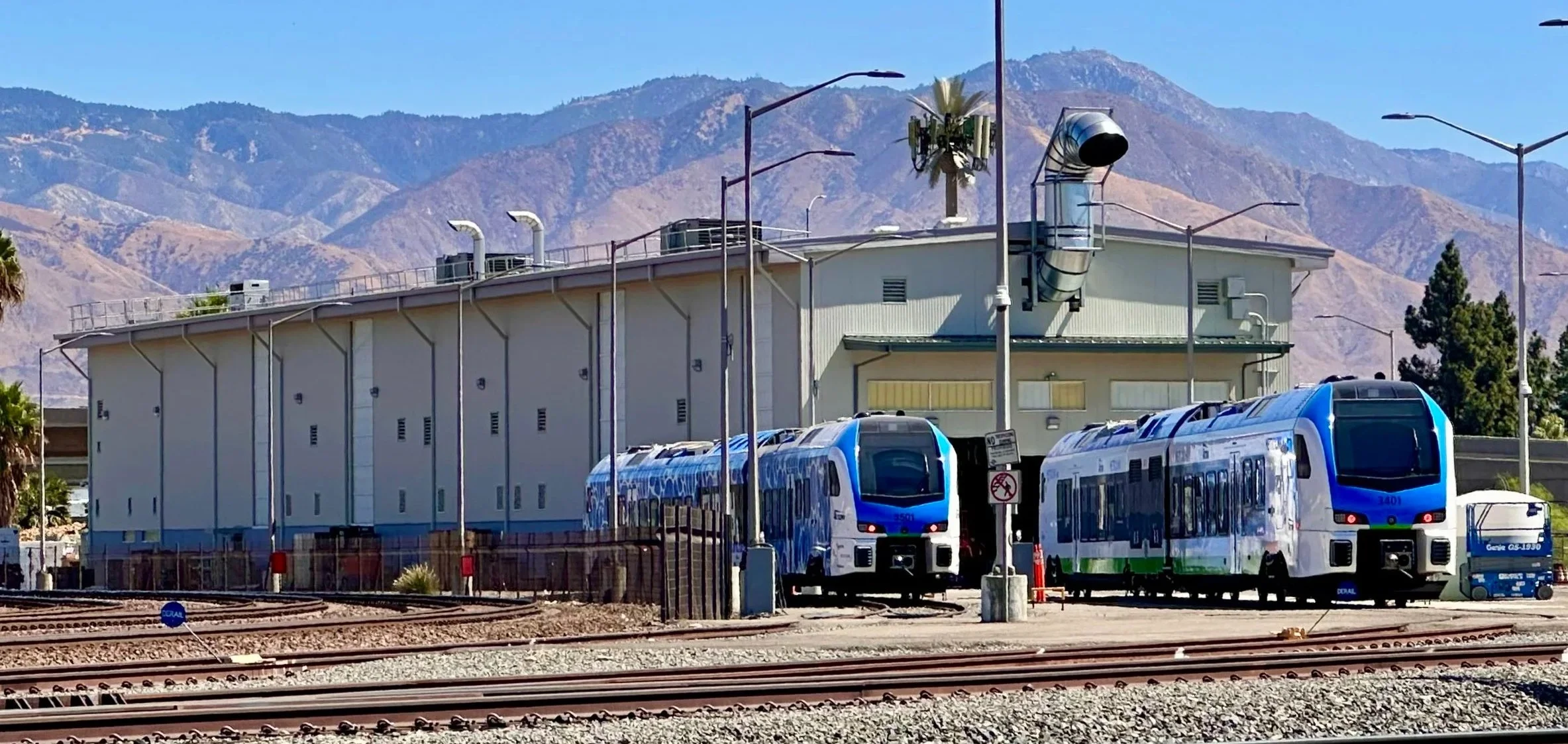
If, however, one was skeptical of DMUs for their lack of switching potential, one could model a DMU OMF. For example, the Arrow’s OMF is immediately adjacent to San Bernardino Depot, BNSF’s Cajon Subdivision mainline tracks, and a humongous classification yard. Anyone already modeling such a large yard could easily squeeze a modest OMF into a corner and operate it as its own switch job. At various points during an op session, a DMU hostler could take a DMU out of the OMF and send it into staging, or take one out of staging and store it back in the OMF – depicting increases or decreases in frequency of an off-layout DMU in accordance with daily commute patterns – as well as shuffle DMUs around the OMF for cleaning, refueling, or maintenance. If some layouts have hostlers for mainline freight trains, why not model one for local passenger trains, too?
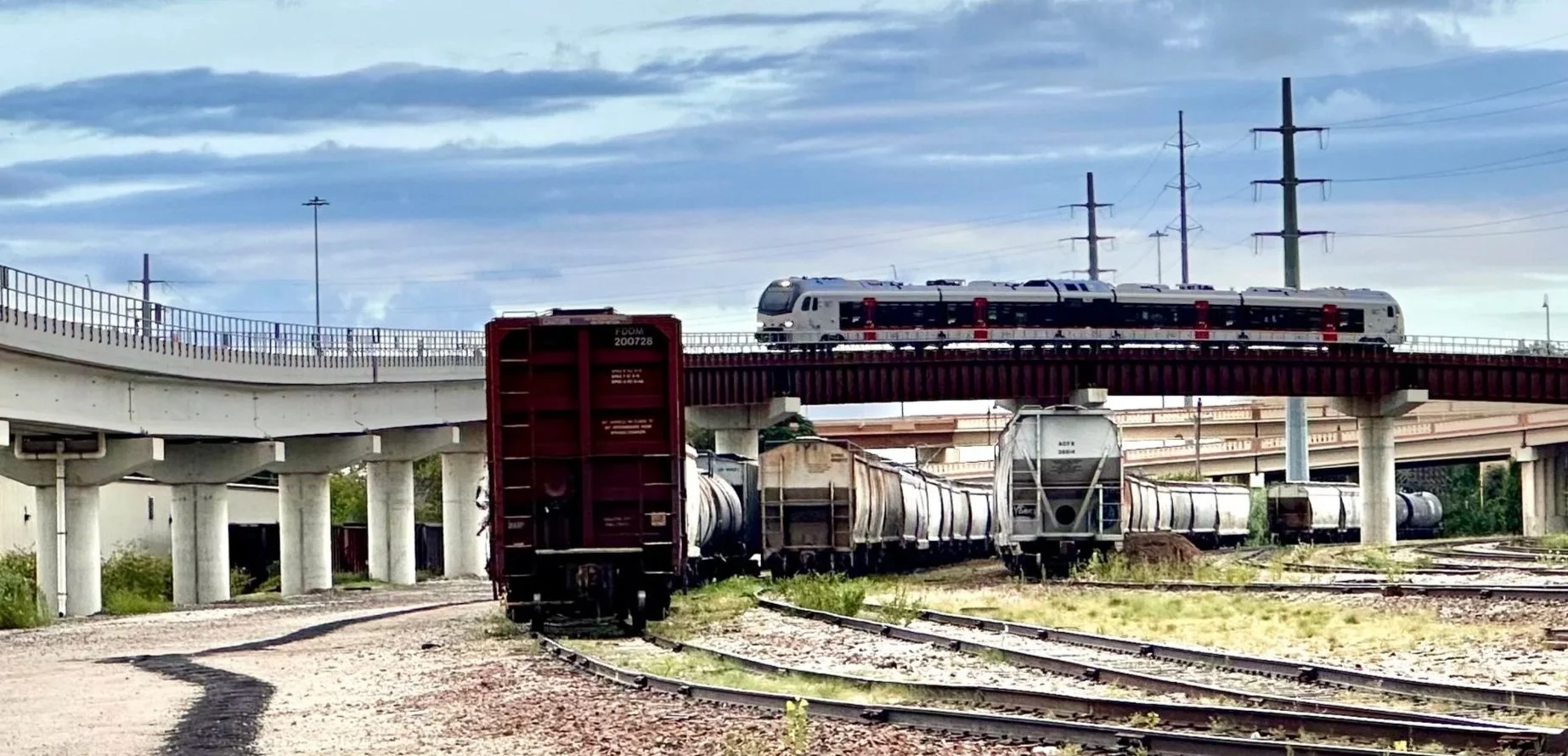
The final prototypical way to depict DMUs is possibly the most exciting. I don’t care how much of a rivet-counter you profess to be, everyone loves the idea of a train running around in a circle at least a little bit. As such, the spiritual successor to the downtown single-track trolly loop of layouts past could just as easily be a concrete viaduct weaving over and behind a typical freight yard. Yards are typically scenically boring areas with lots of flat space, minimal buildings, and identical tracks. Why model that when you could add a fully-prototypical pop of motion, color, and/or verticality in the background, as is the case on the River LINE, CapMetro Rail, Silver Line, and Arrow, and on TEXRail at least thrice? You don’t even need to model a station and program vehicles to make stops; just hide the return loops and cycle a single vehicle back and forth along a track that winds up, around, down, and under your otherwise-normal freight railroad. Much modern DMU infrastructure, and viaducts especially, are intended to limit the construction impacts on mainline freight railroads; by that same token, using viaduct alignments for a little DMU dogbone would hopefully preclude the need to relay much track if any, but come with the chance for both a more entertaining and a more prototypical model railroad.