SMART
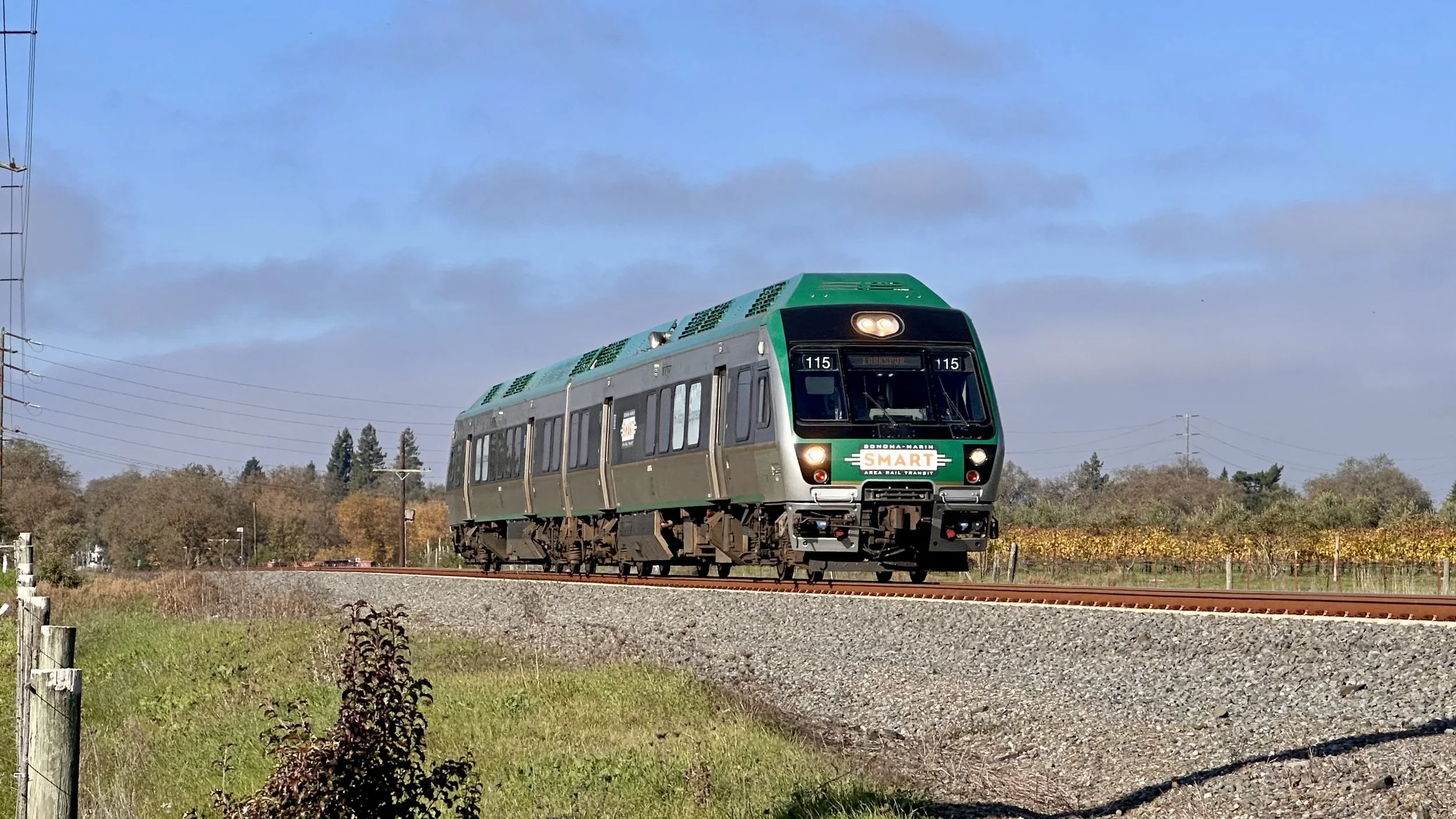
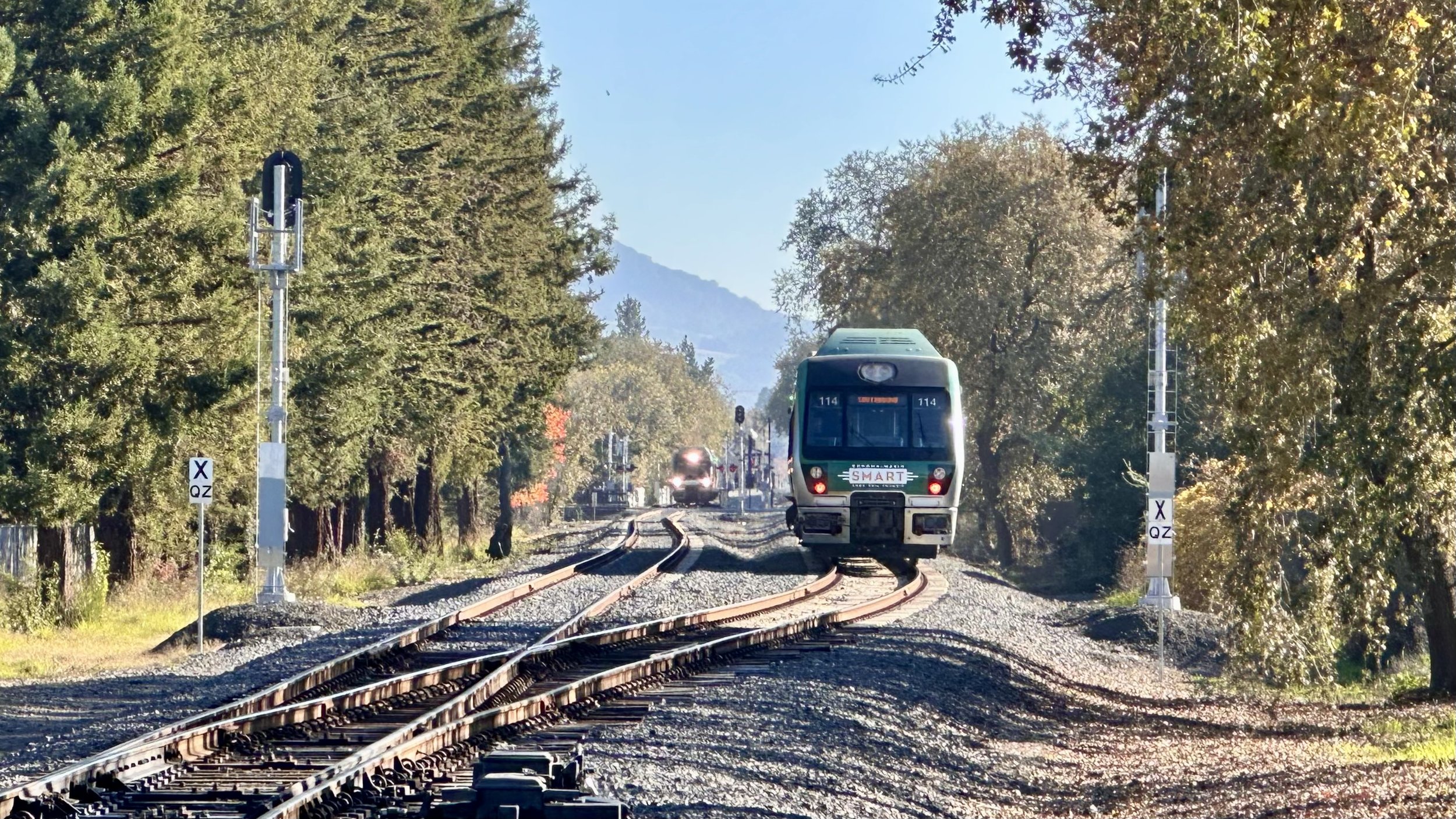
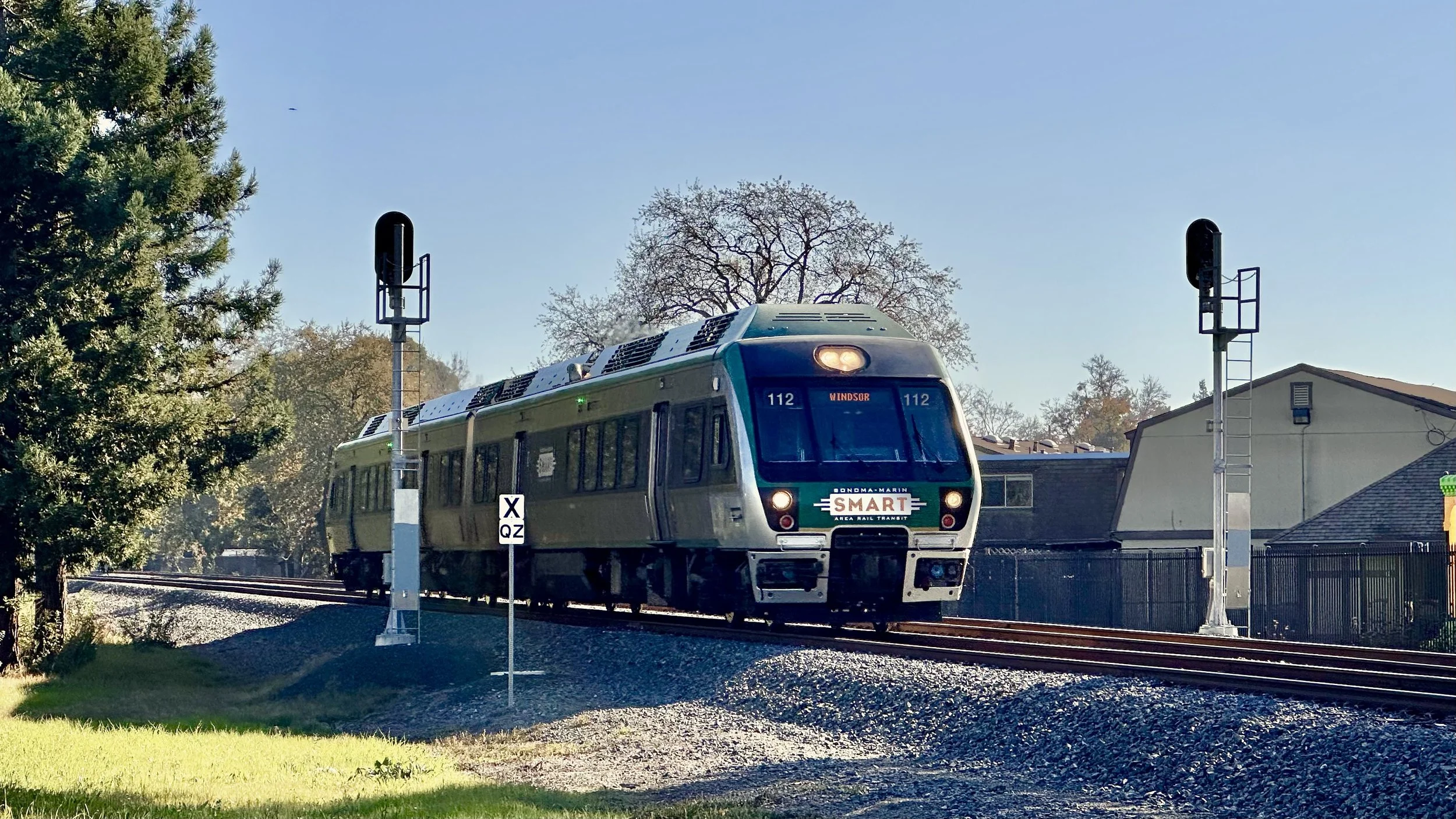
Opening in 2017, the Sonoma-Marin Area Rail Transit system, or SMART, reactivates the old Northwestern Pacific line in the North Bay Area, heading from a ferry connection at Larkspur north to San Rafael, Petaluma, Santa Rosa, and Windsor, and seeing regular extensions northward with the eventual goal of returning rail service to Arcata in Humboldt County. Paralleling the congested highway 101, SMART is a much-loved backbone of regional transit, with stations strategically in the heart of nearly every business district and often completely-packed trains.
The schedule provides all-day service from 0435 to 2210, but slightly favors peak-direction travel. While headways can be as good as every half-hour, there’s a gap of almost two hours in the middle of the day, and, given the system’s length, this gap can present very differently depending on which end of the line you’re on. Otherwise, schedules are typically more convenient than not, and many Larkspur arrivals and departures are (imperfectly) timed to ferries continuing onward to San Francisco’s Embarcadero terminal (unfortunately, both the ferry and train end prohibitively early in the evening for convenient sampling of San Francisco nightlife; nobody in their right mind likes an 0430 departure, but many people might need a midnight one).
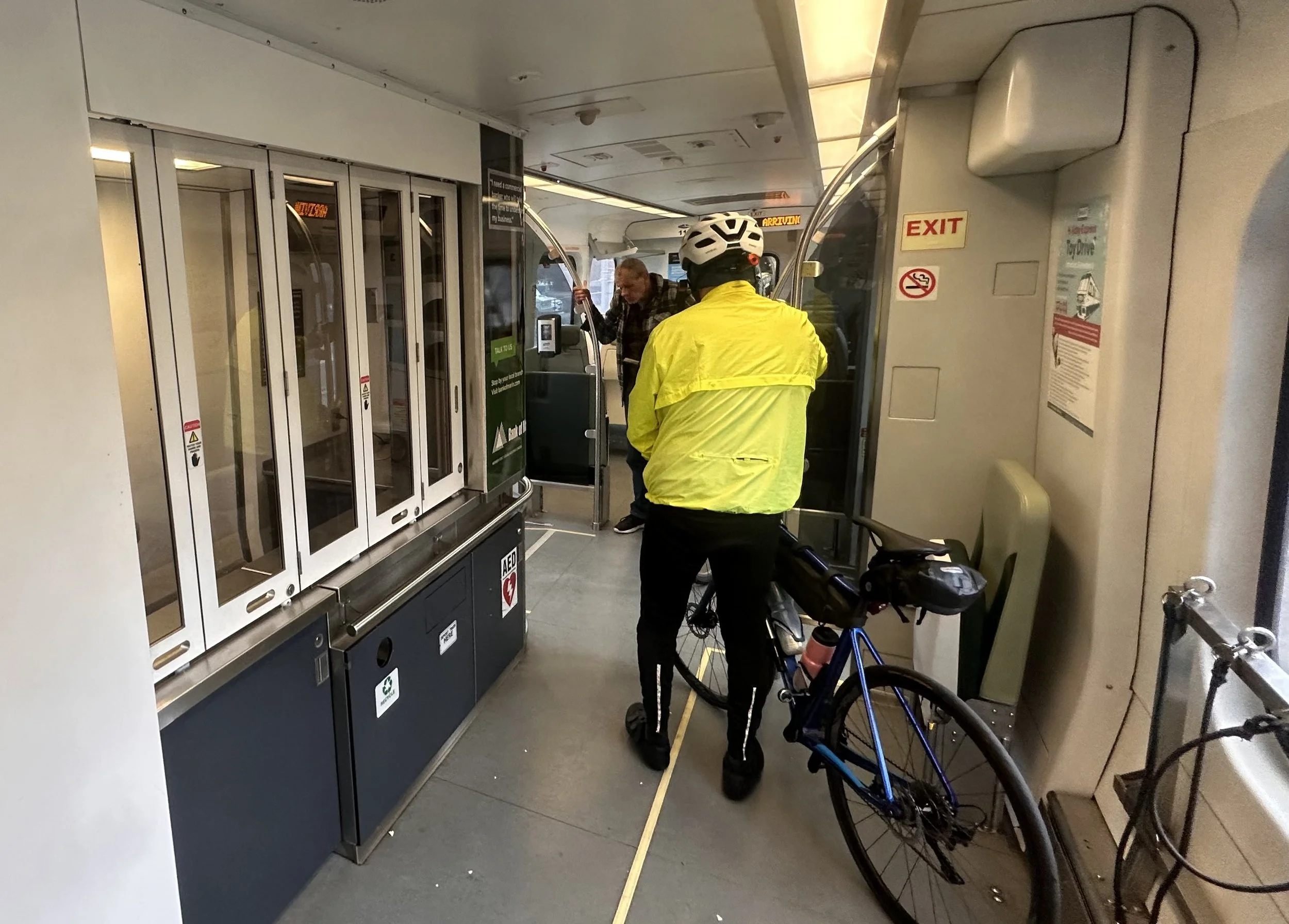
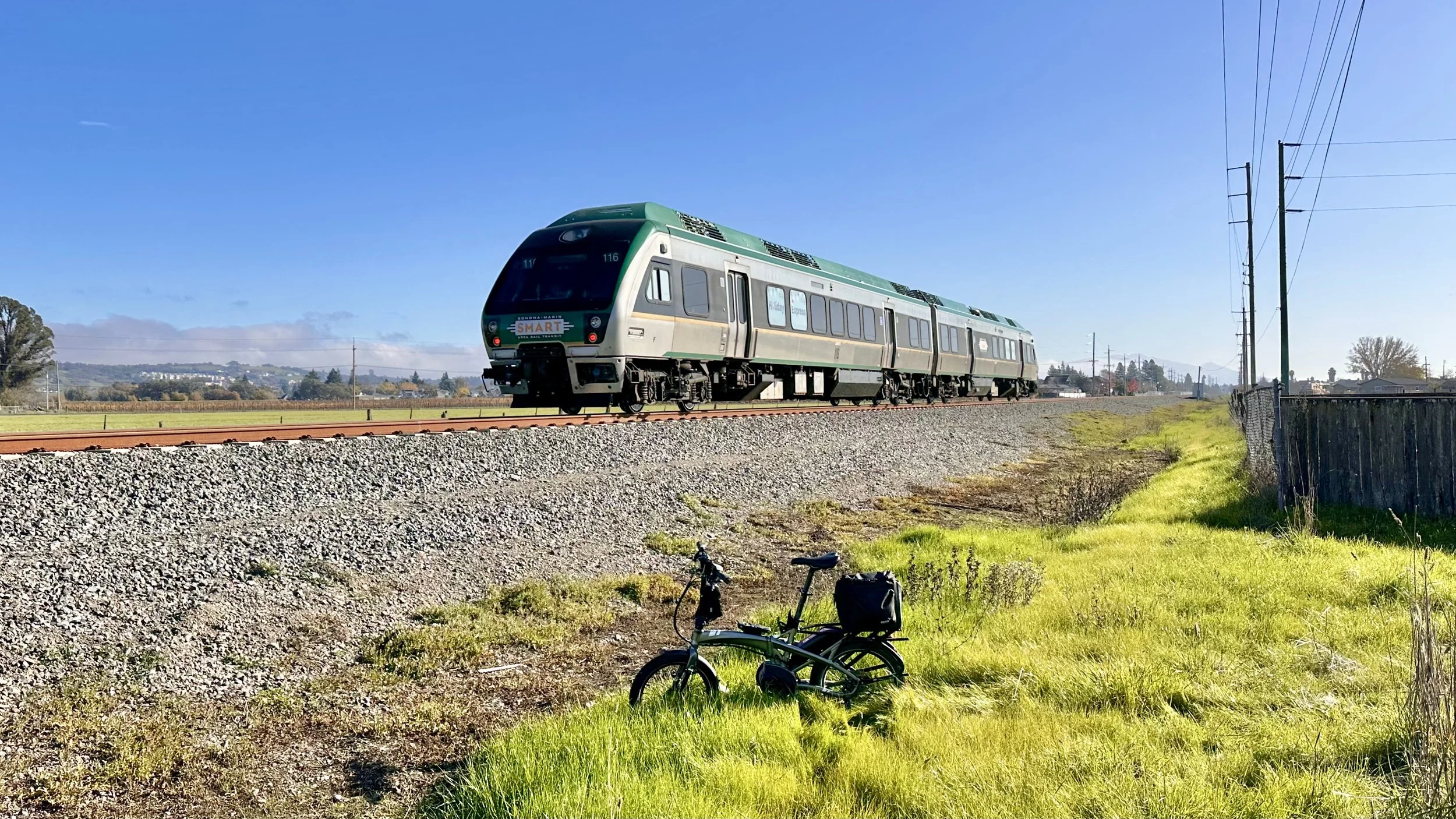
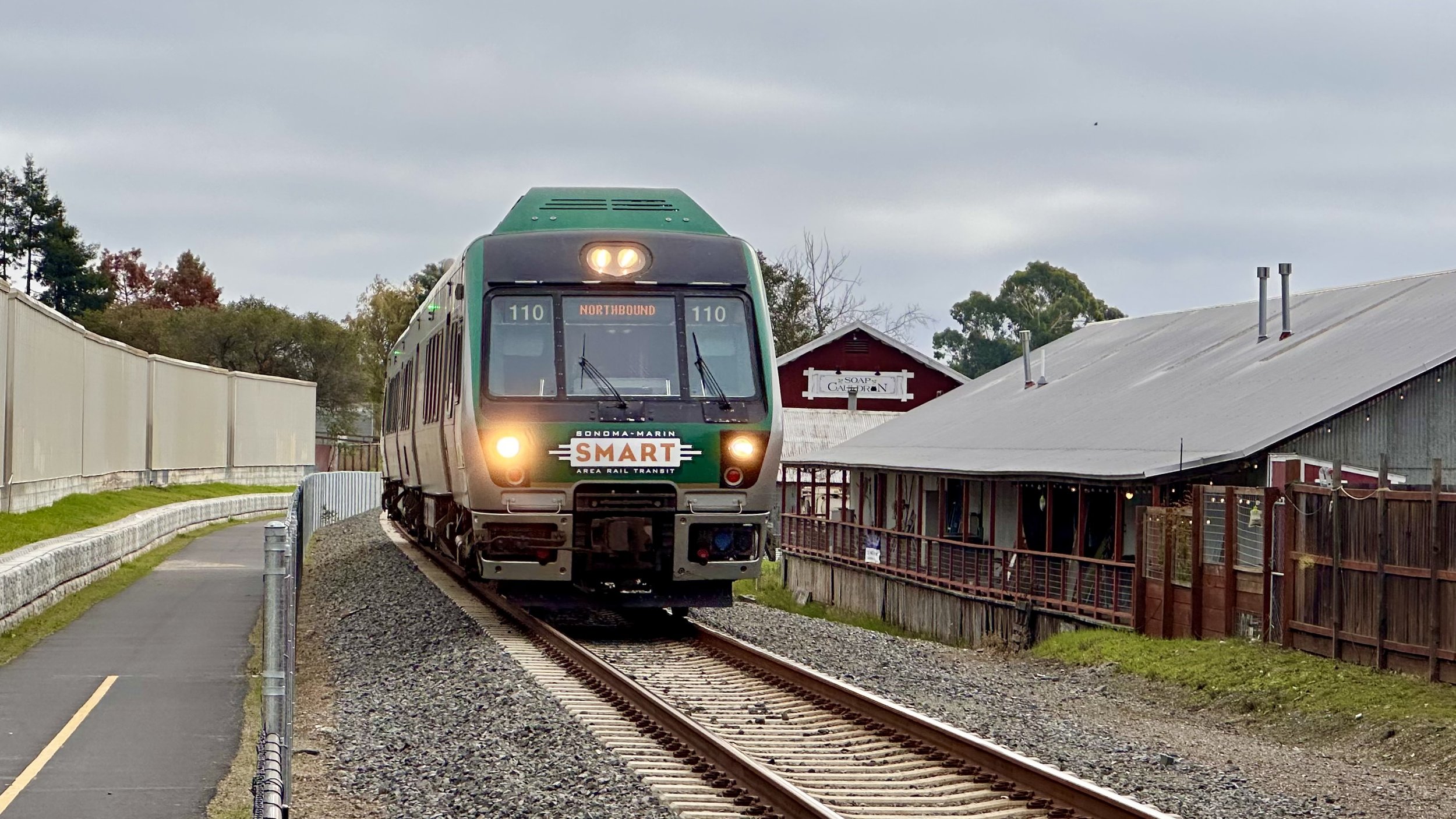
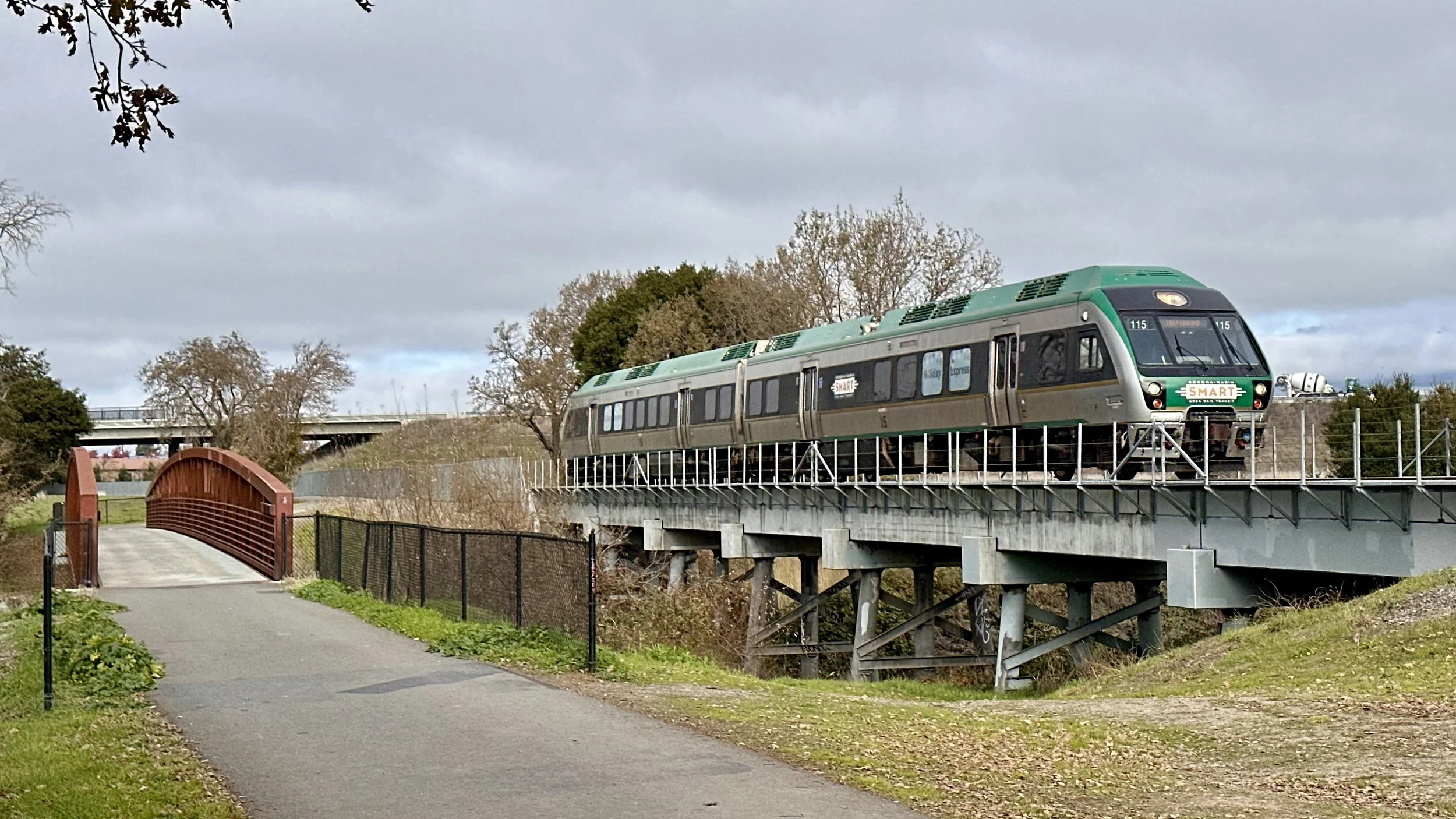
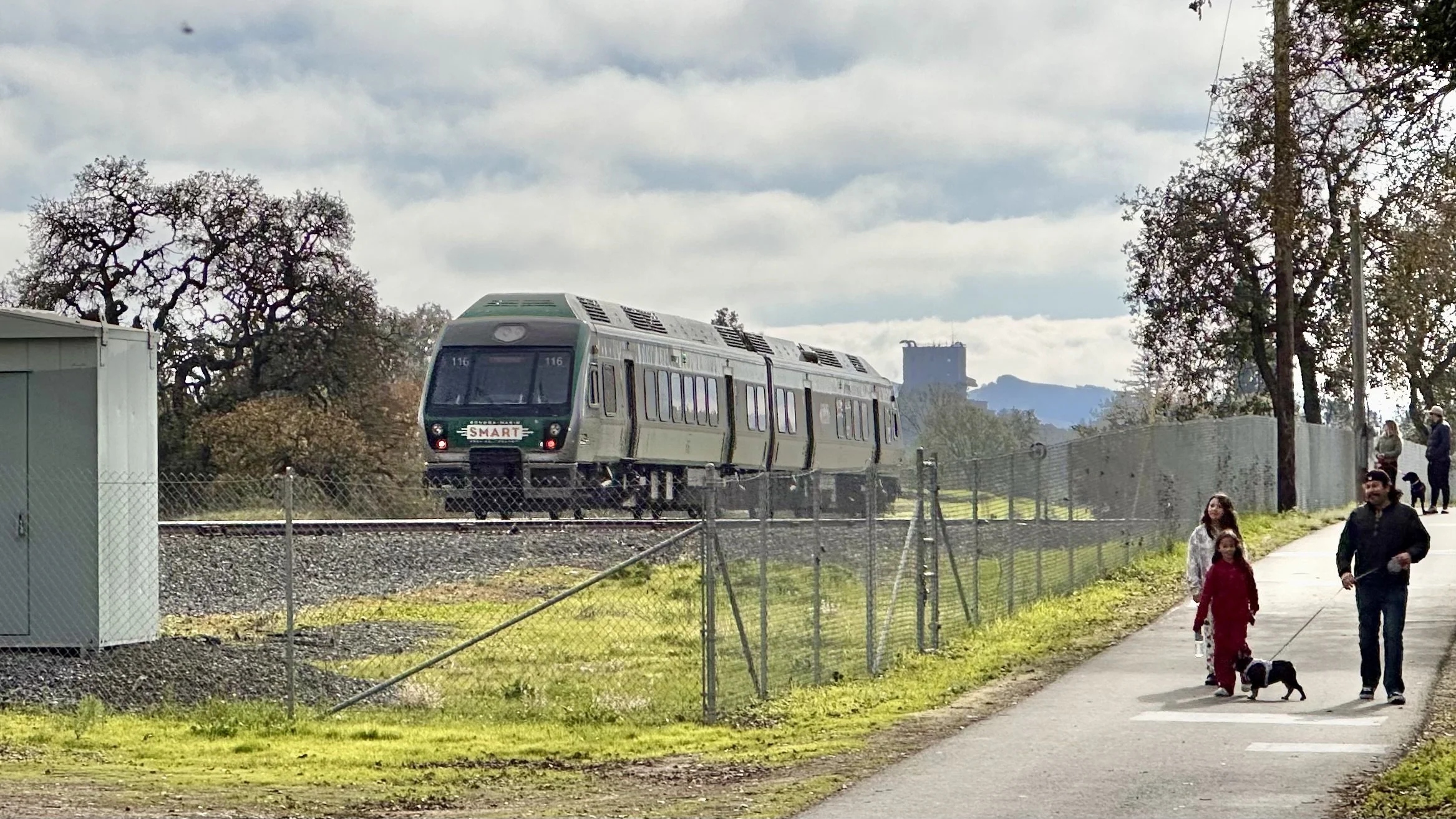
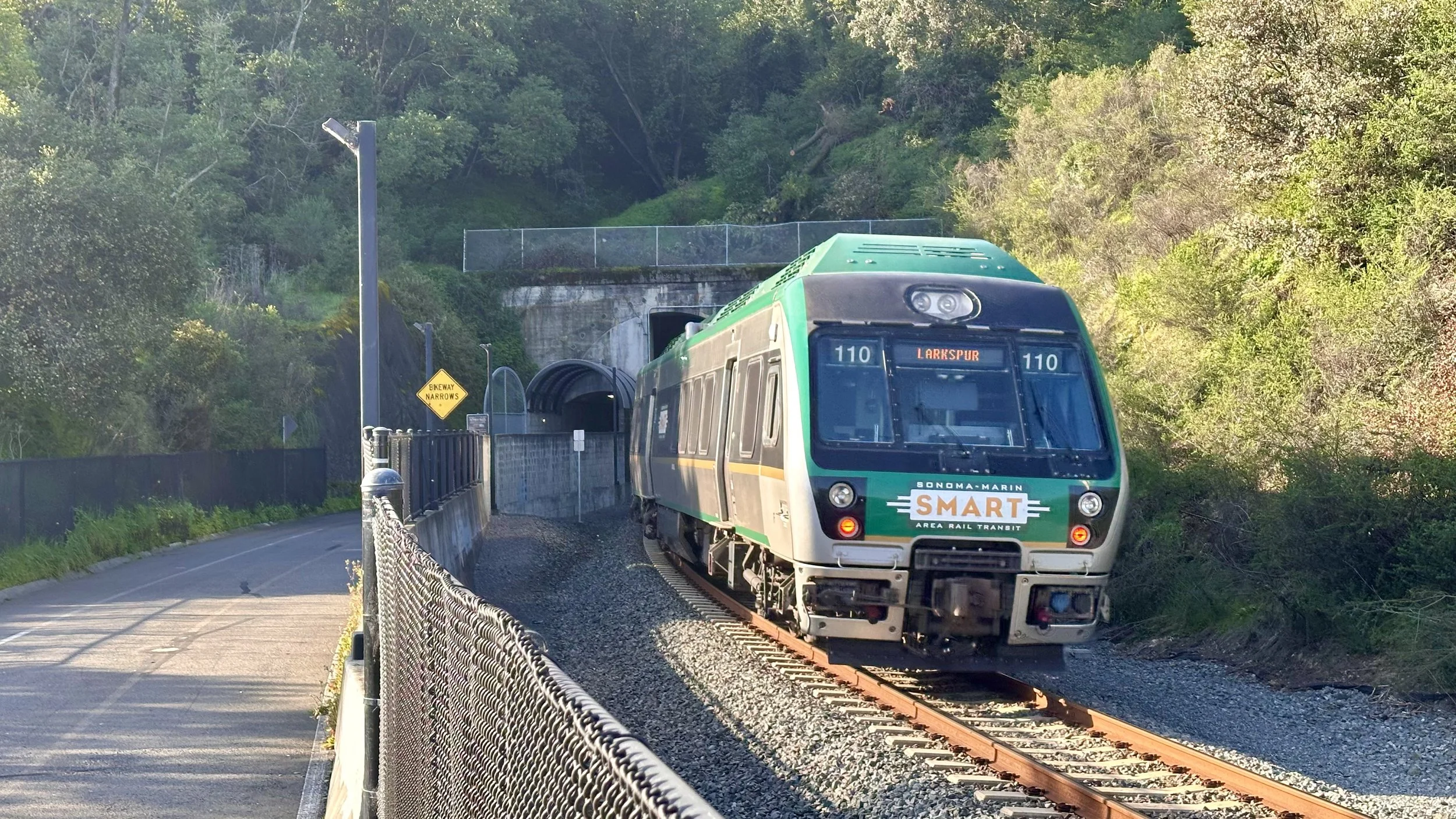
Notably, SMART also has an extremely extensive parallel bike trail which connects to almost every station (and even shares a tunnel with the train). SMART is very proud of its bikeability, has plentiful onboard bike space, and even recently took the “unprecedented” step of eminent-domaining the bike trail from itself so that bicyclists have unimpeded access to the region in perpetuity. Reflecting this good stewardship, the staff are incredibly kind; SMART allows children, teenagers, and the elderly completely free travel throughout the region; and the DMUs are regularly decorated for holidays and conduct toy drives or special excursions.
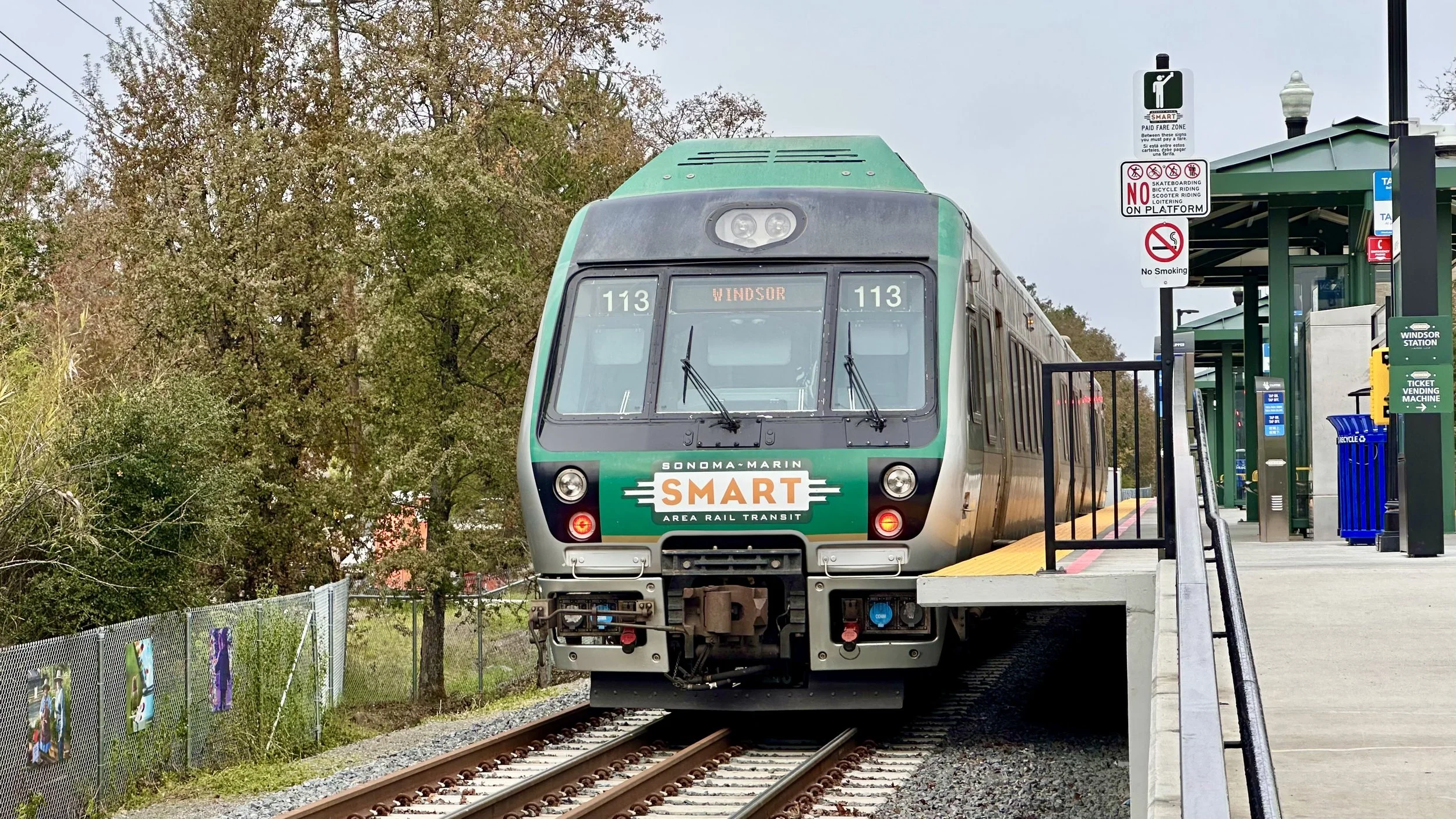
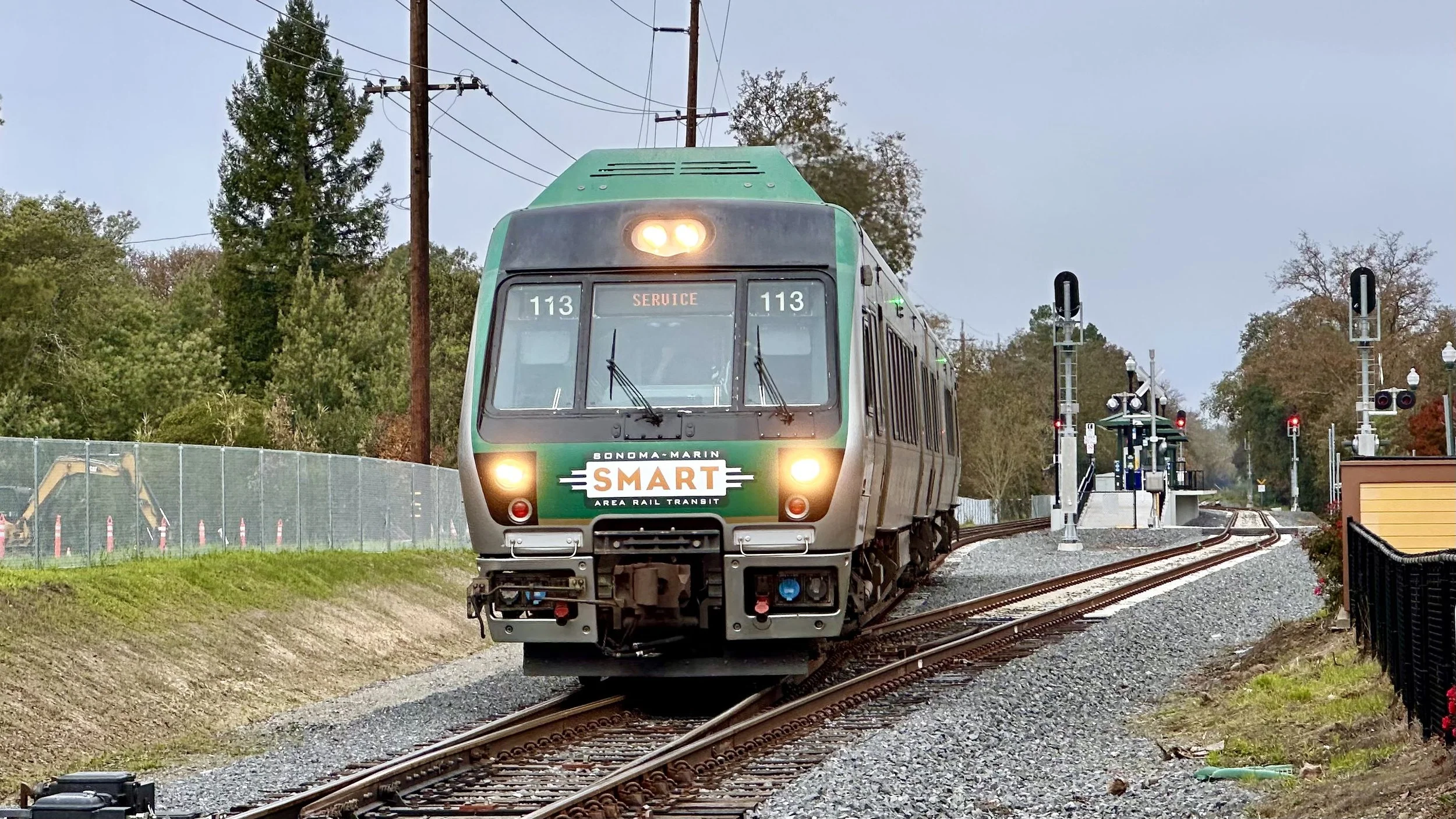
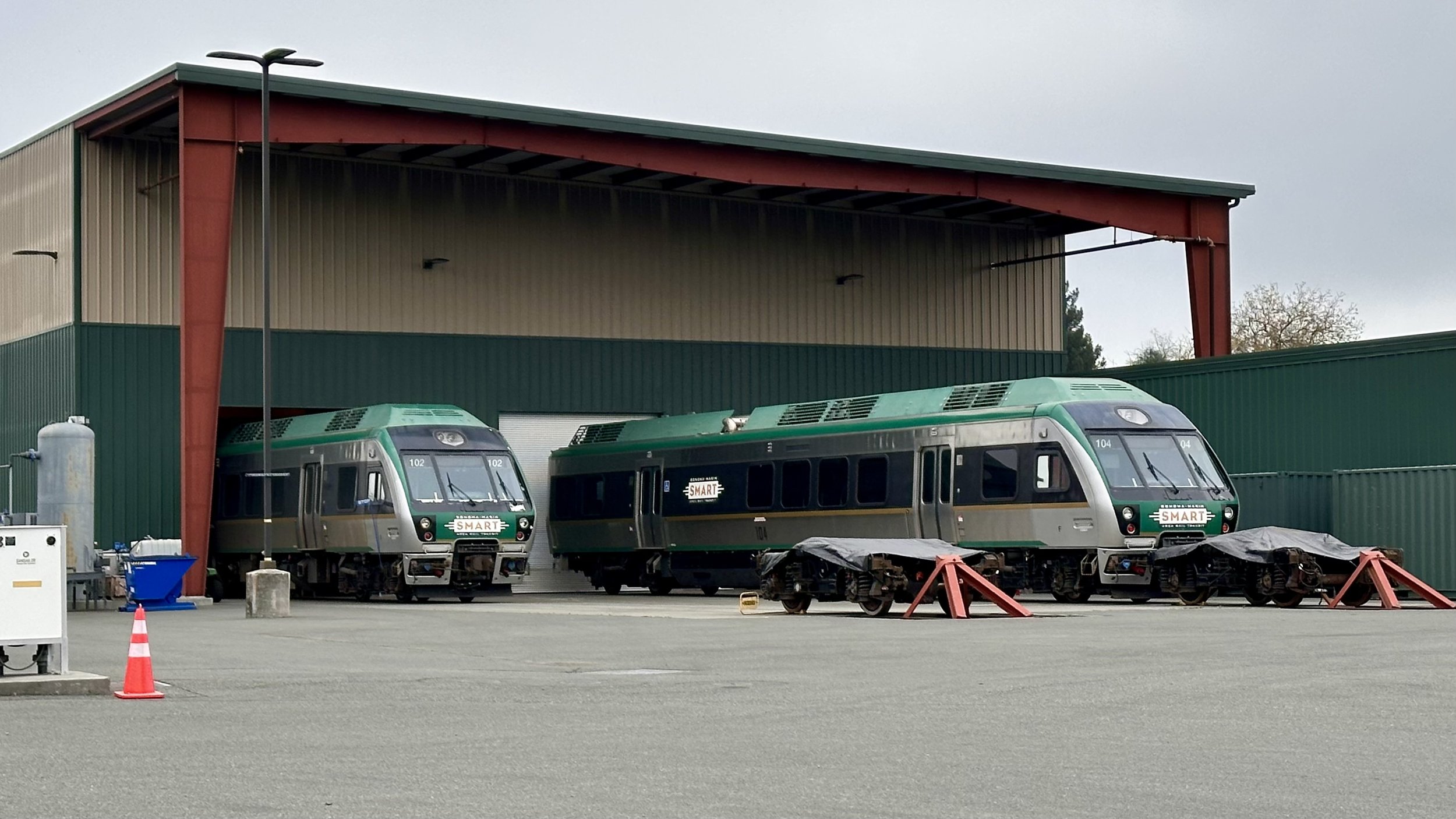
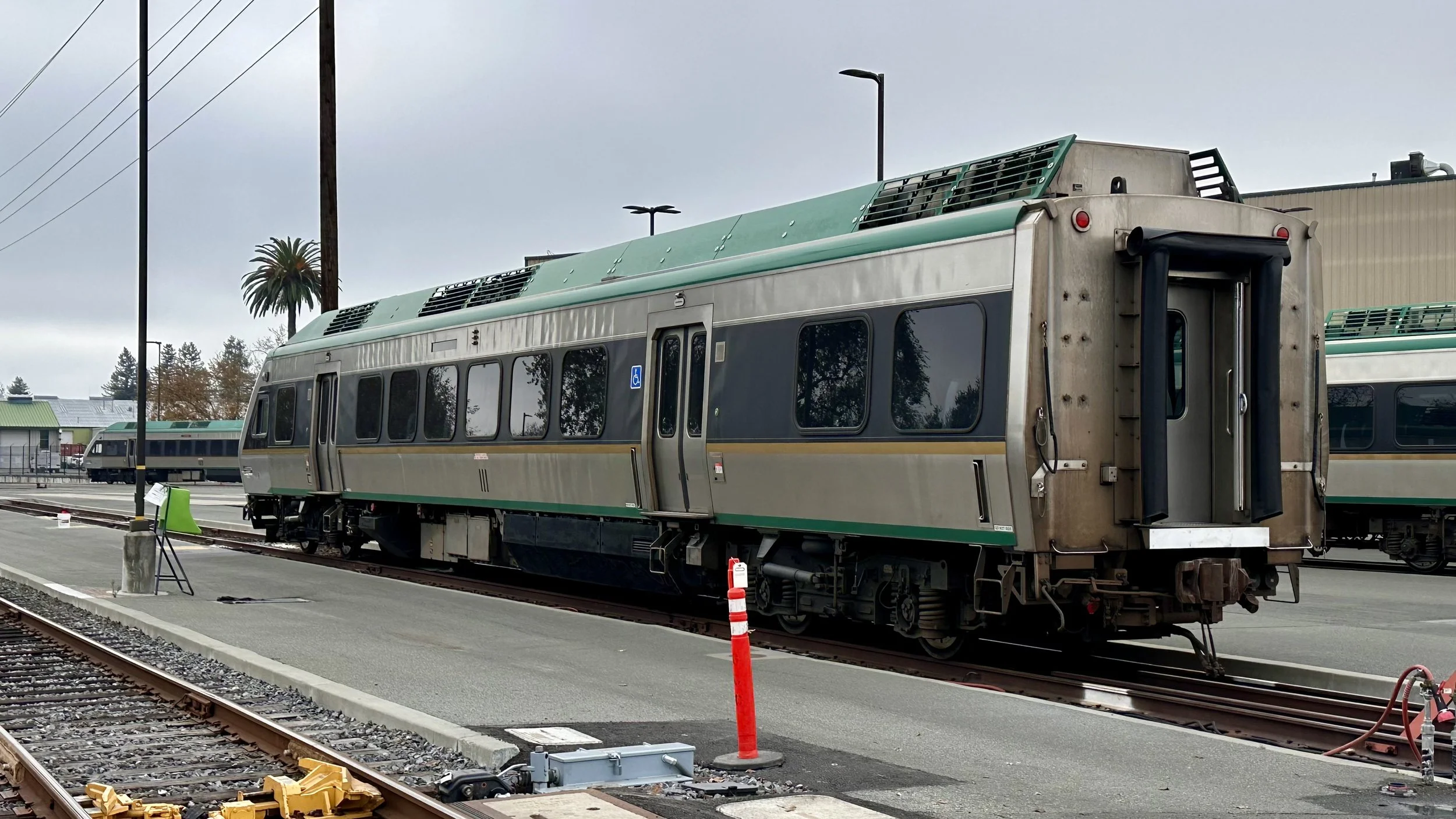
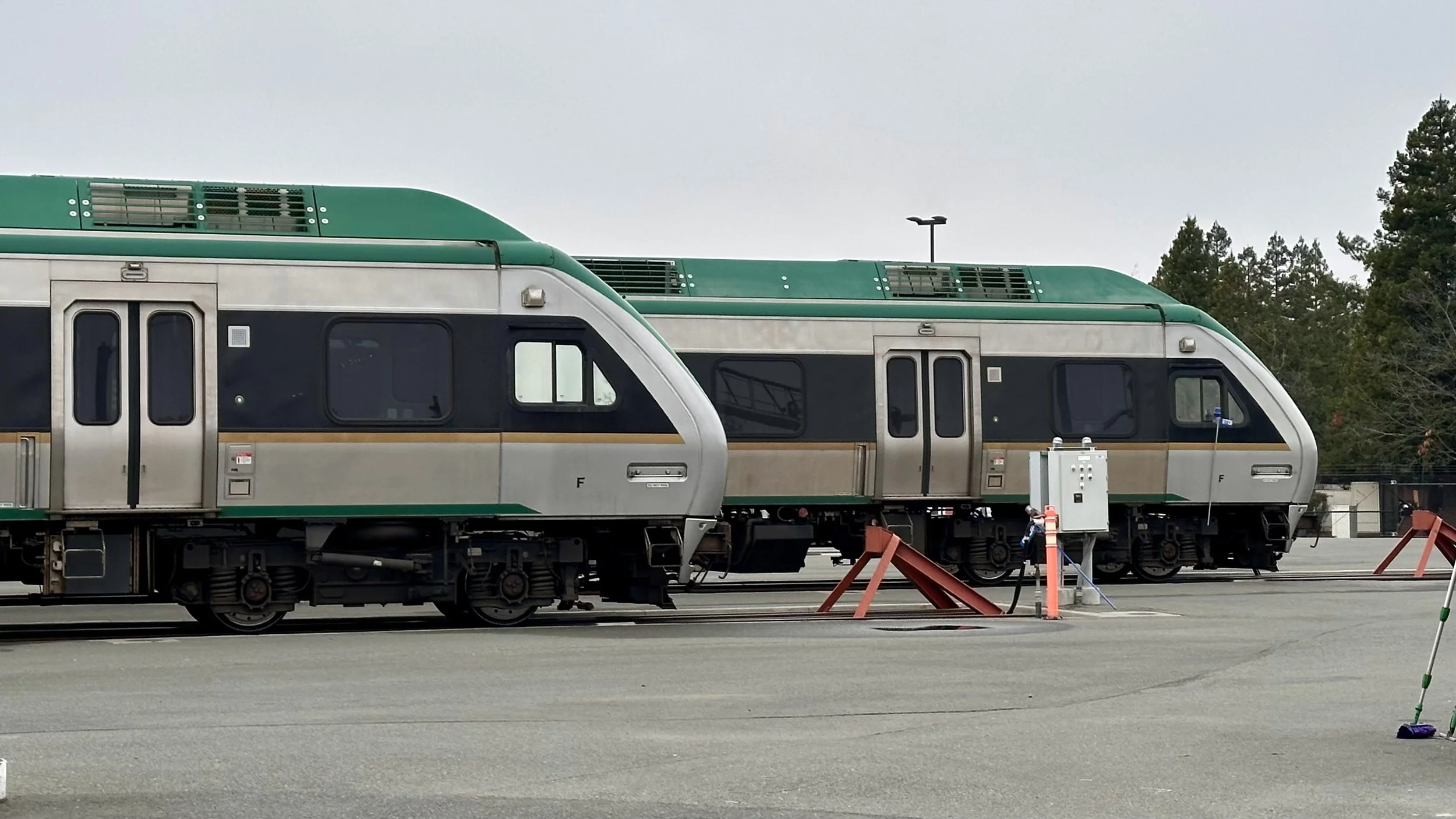
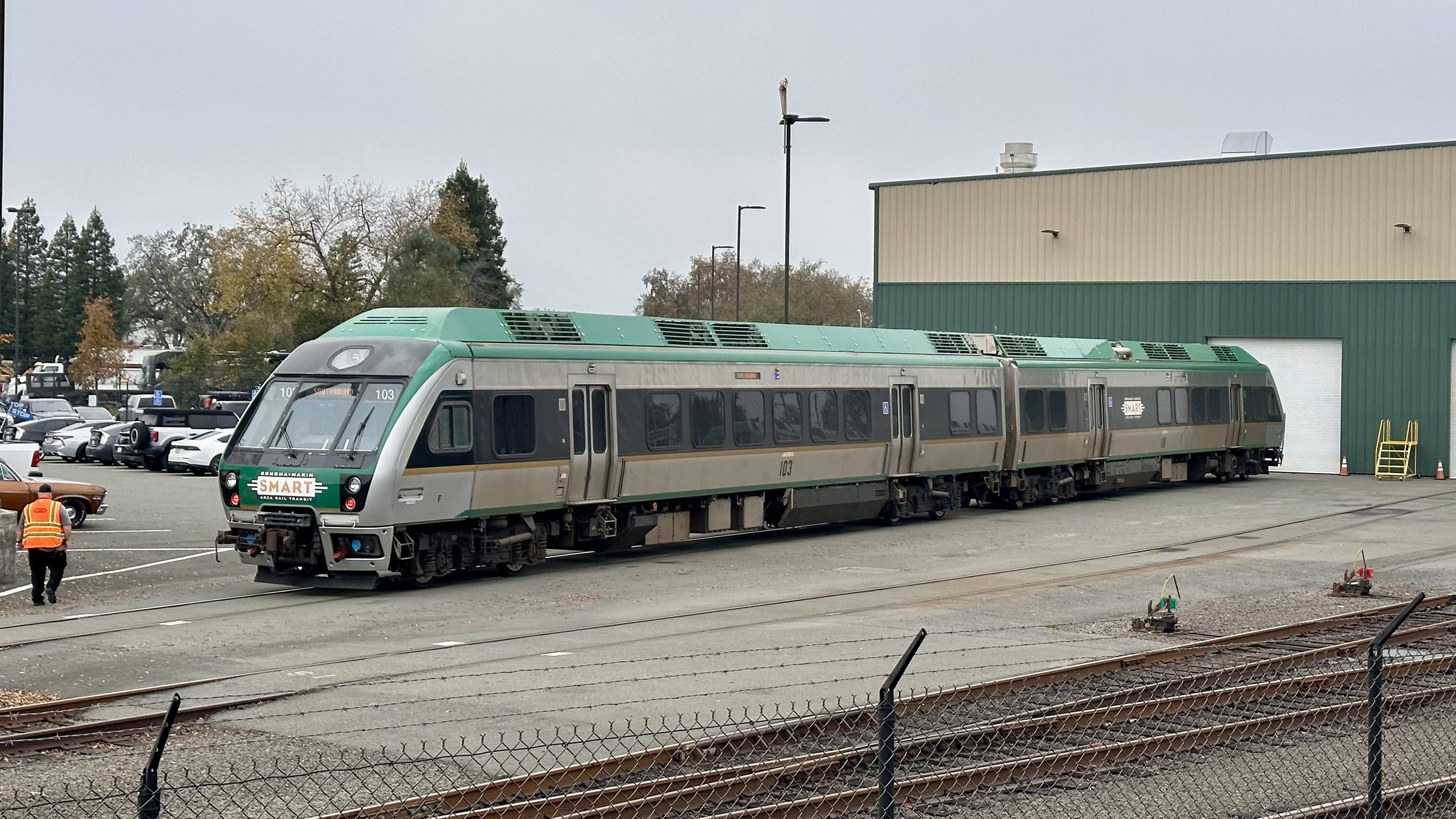
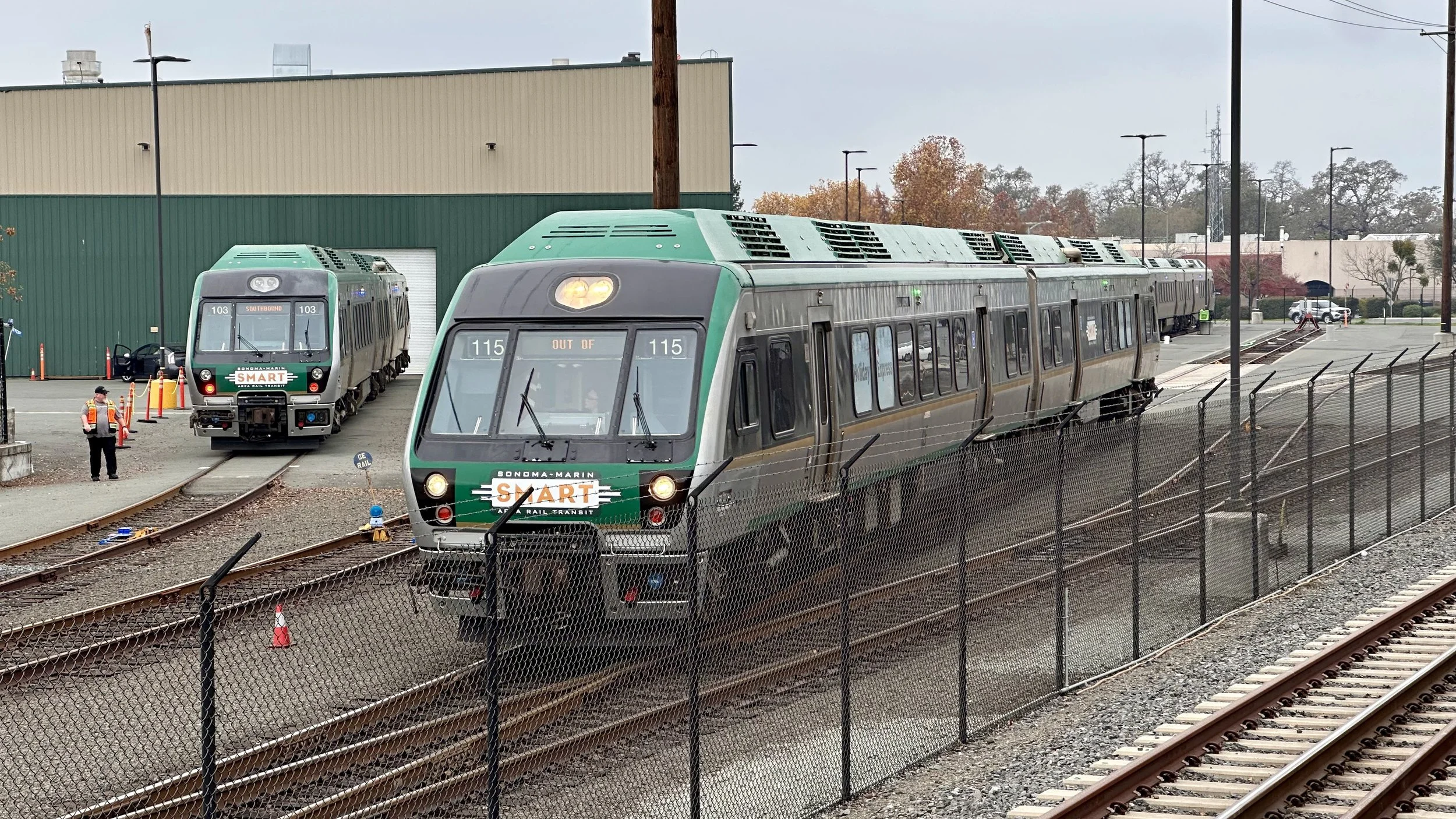
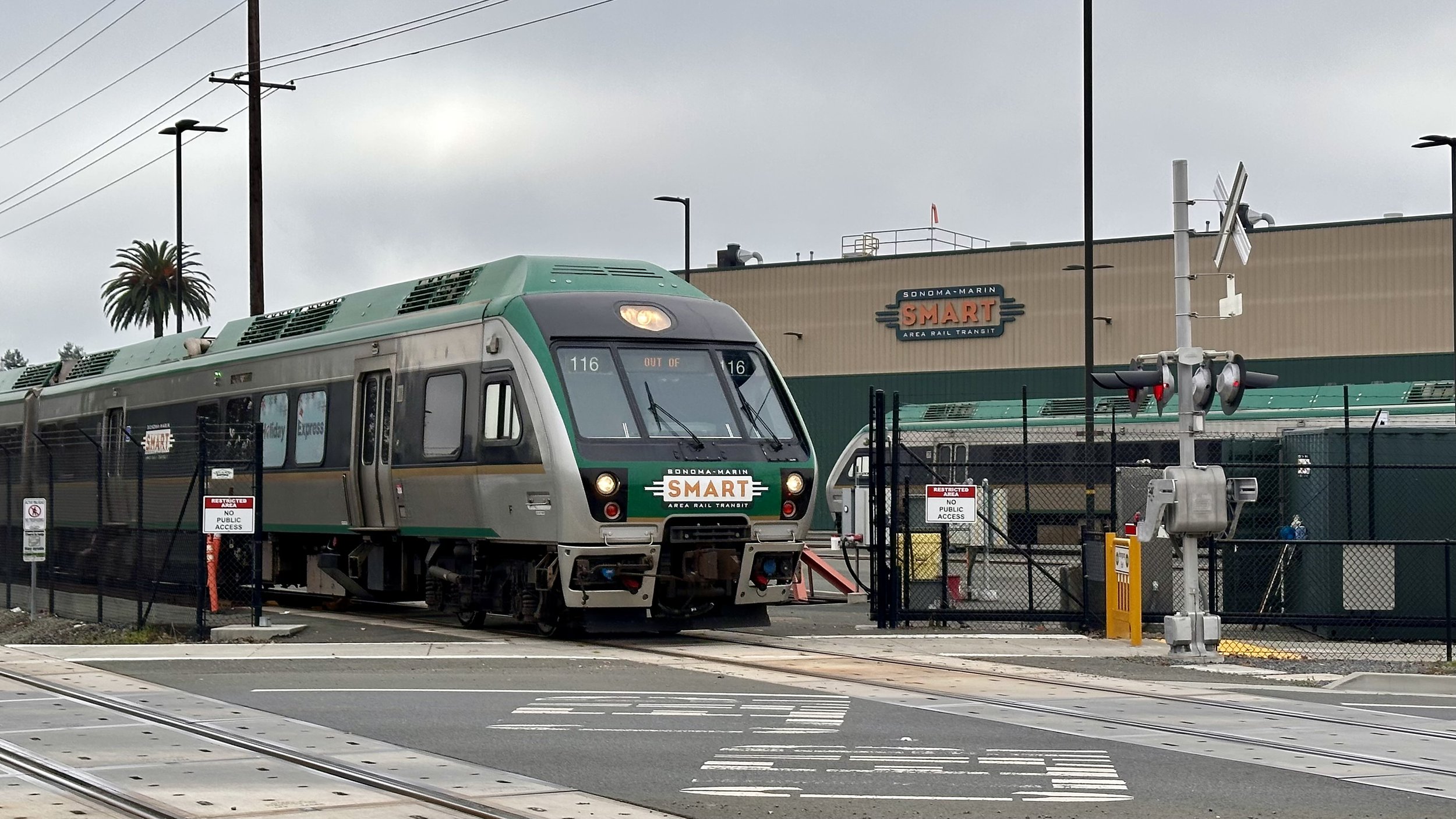
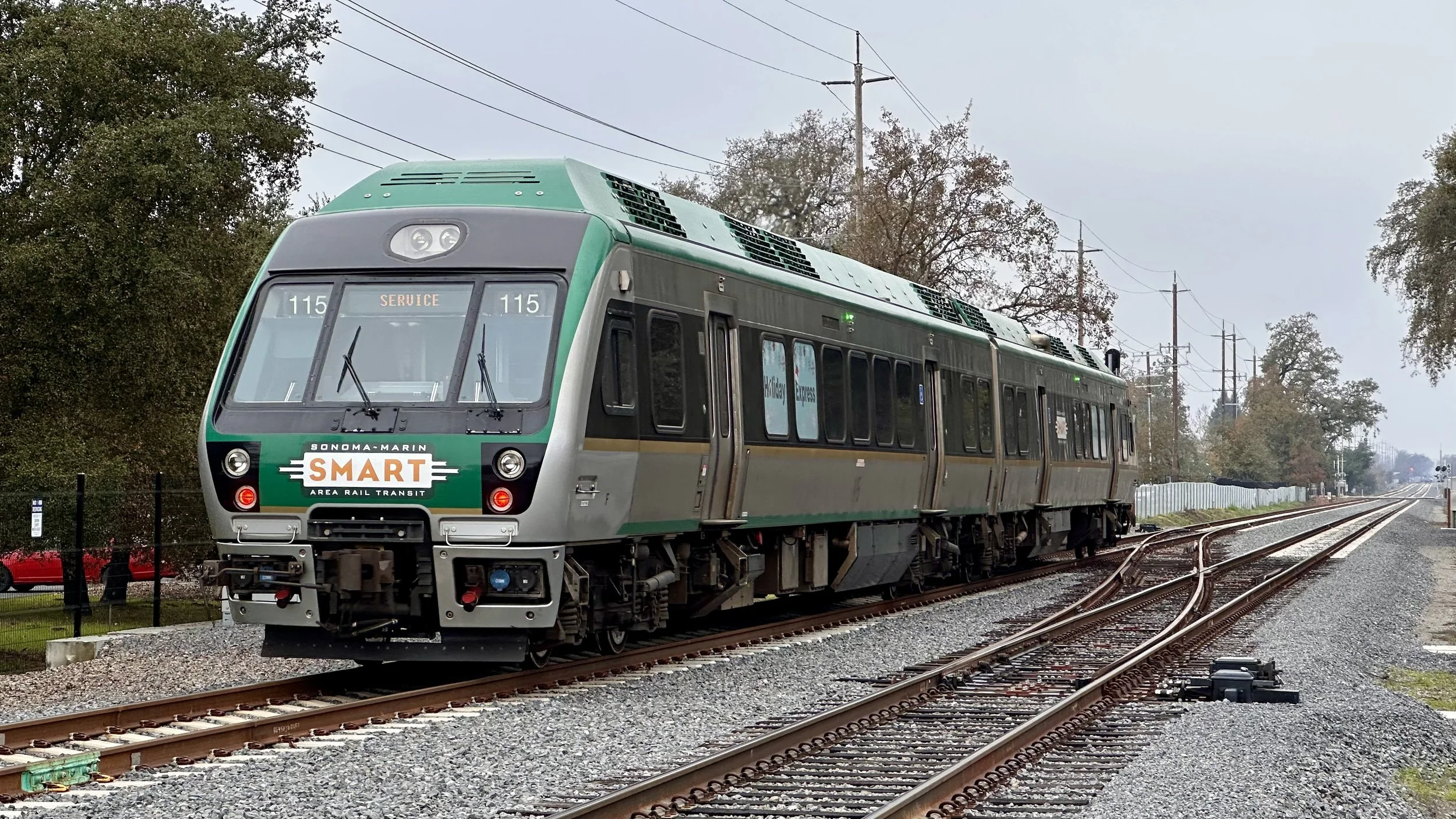
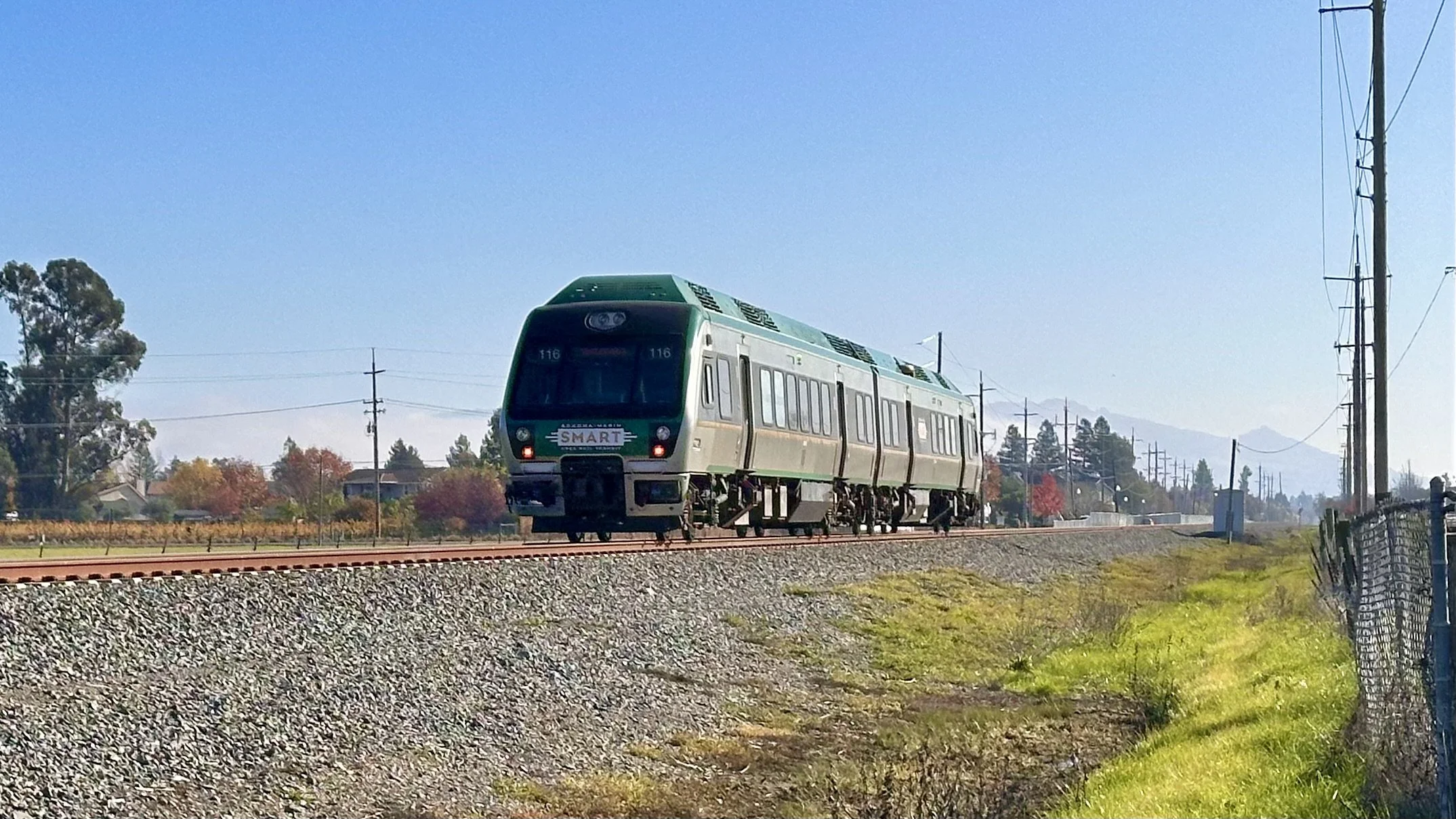
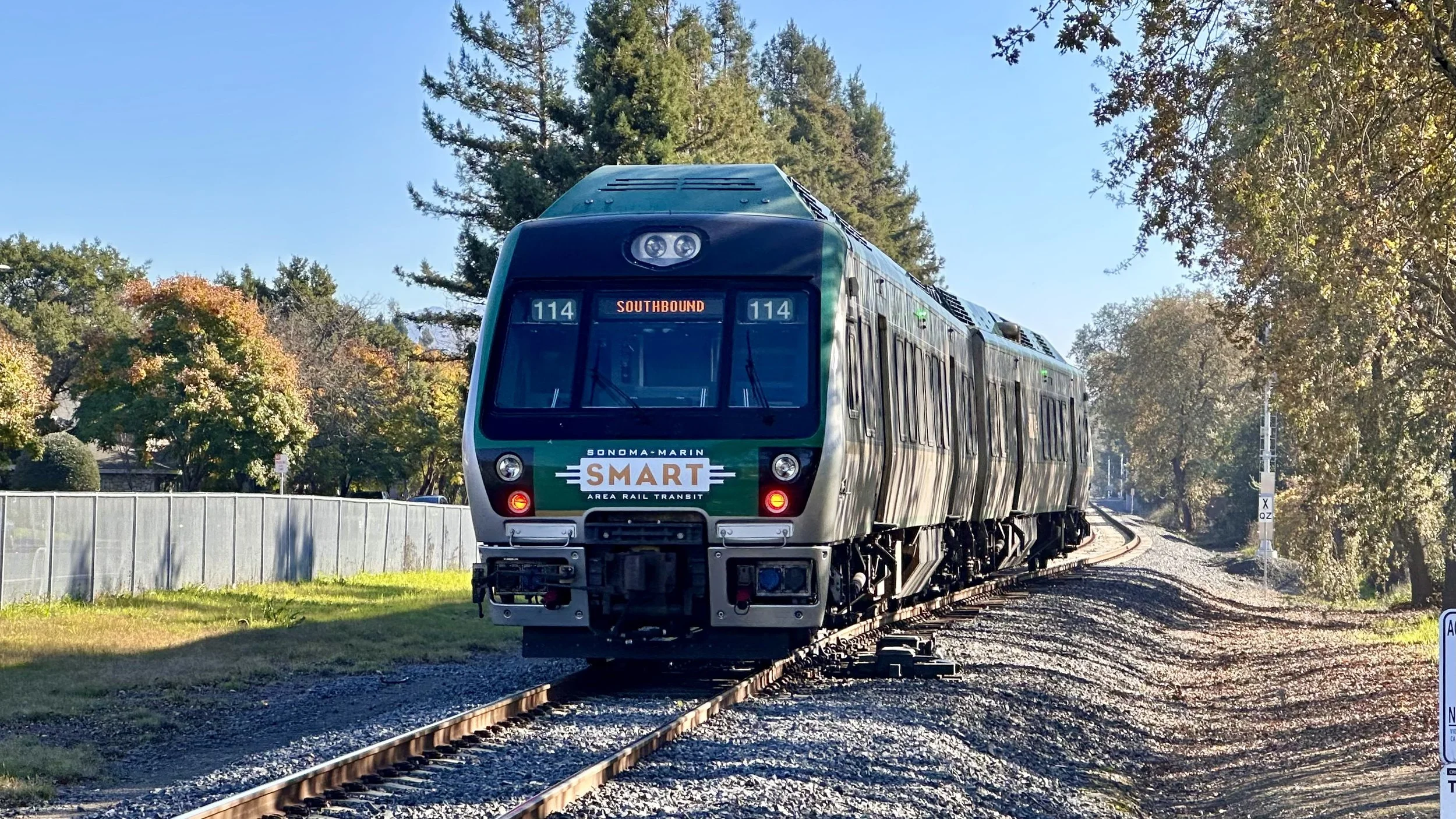
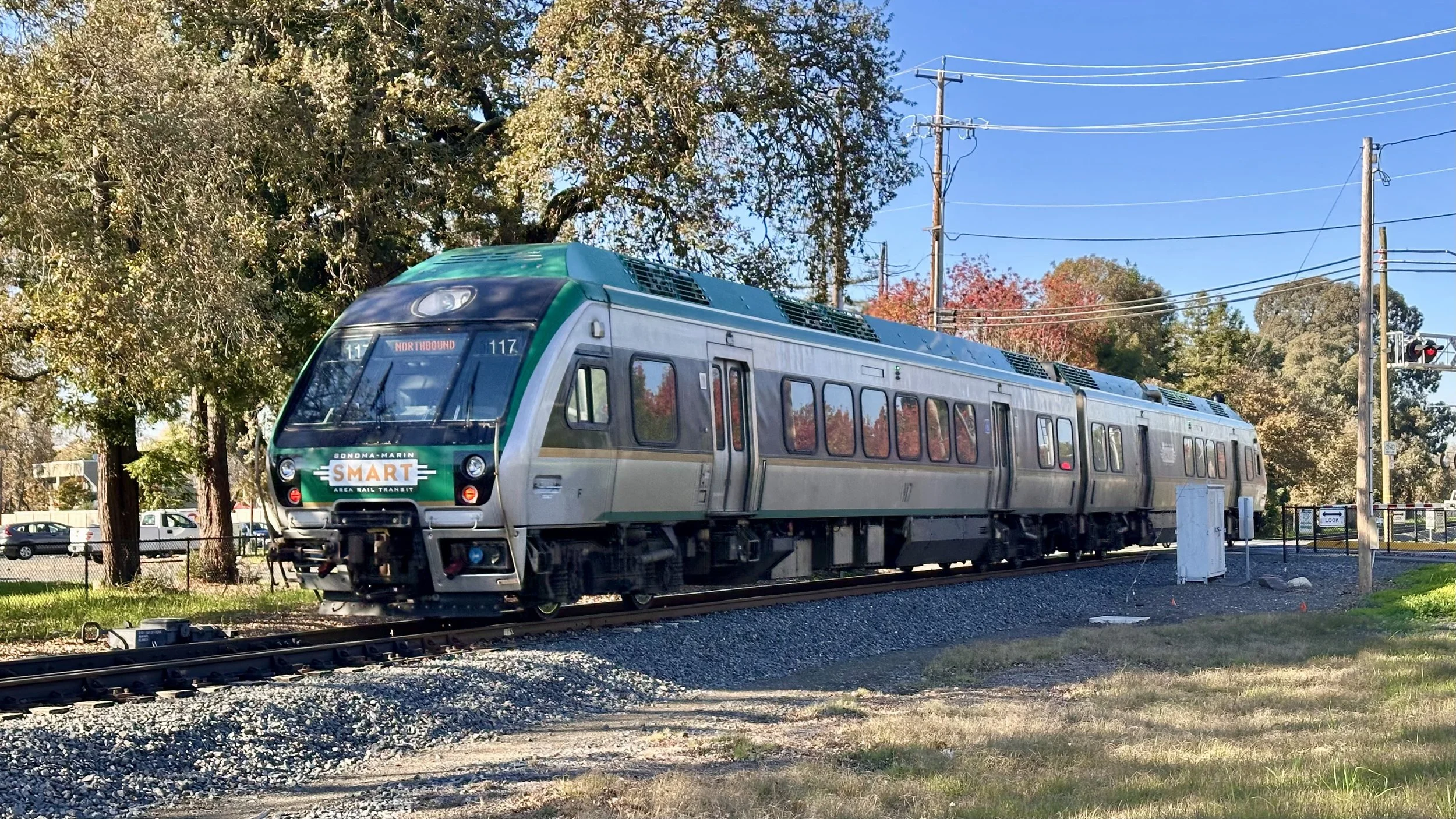
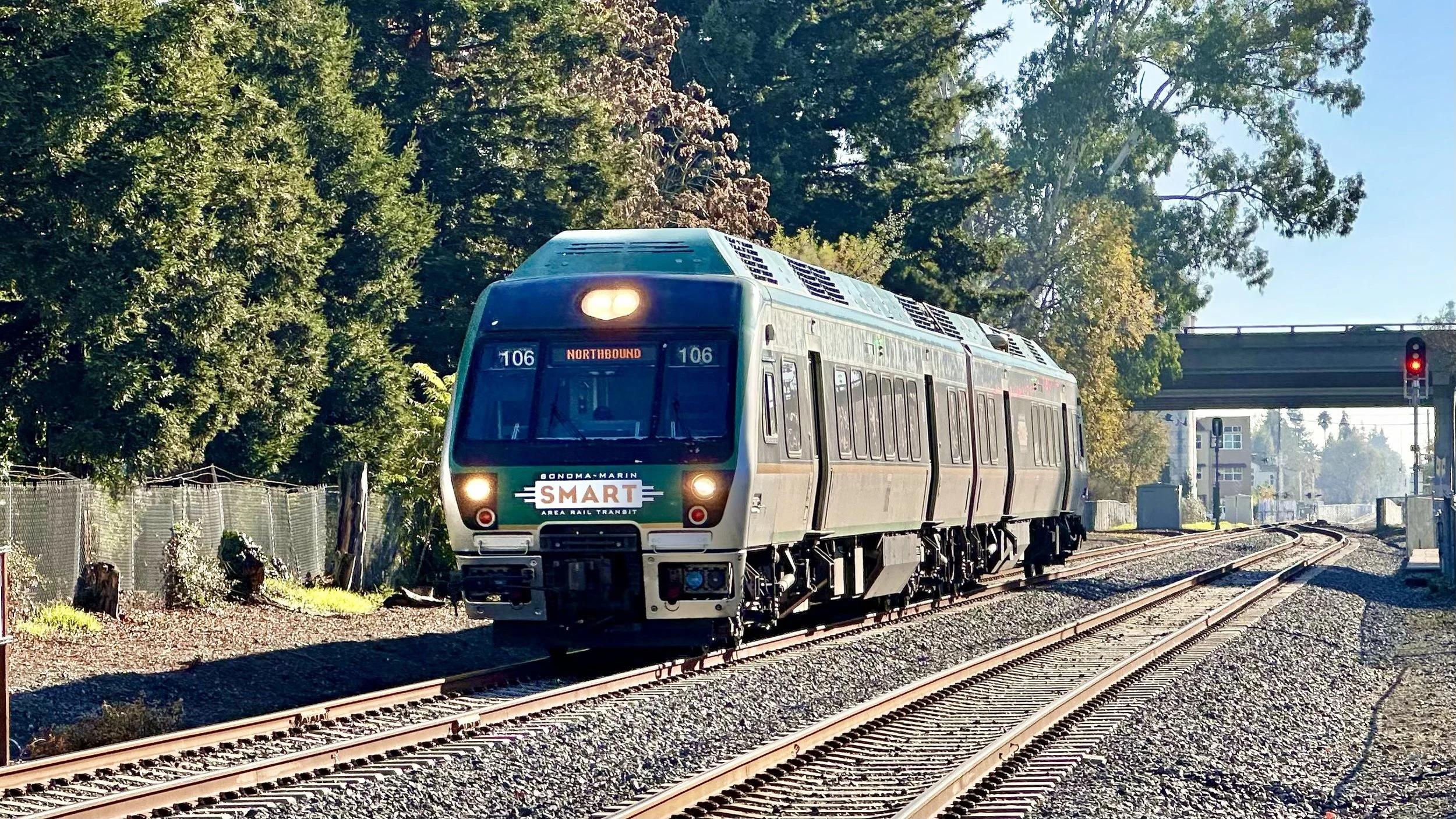
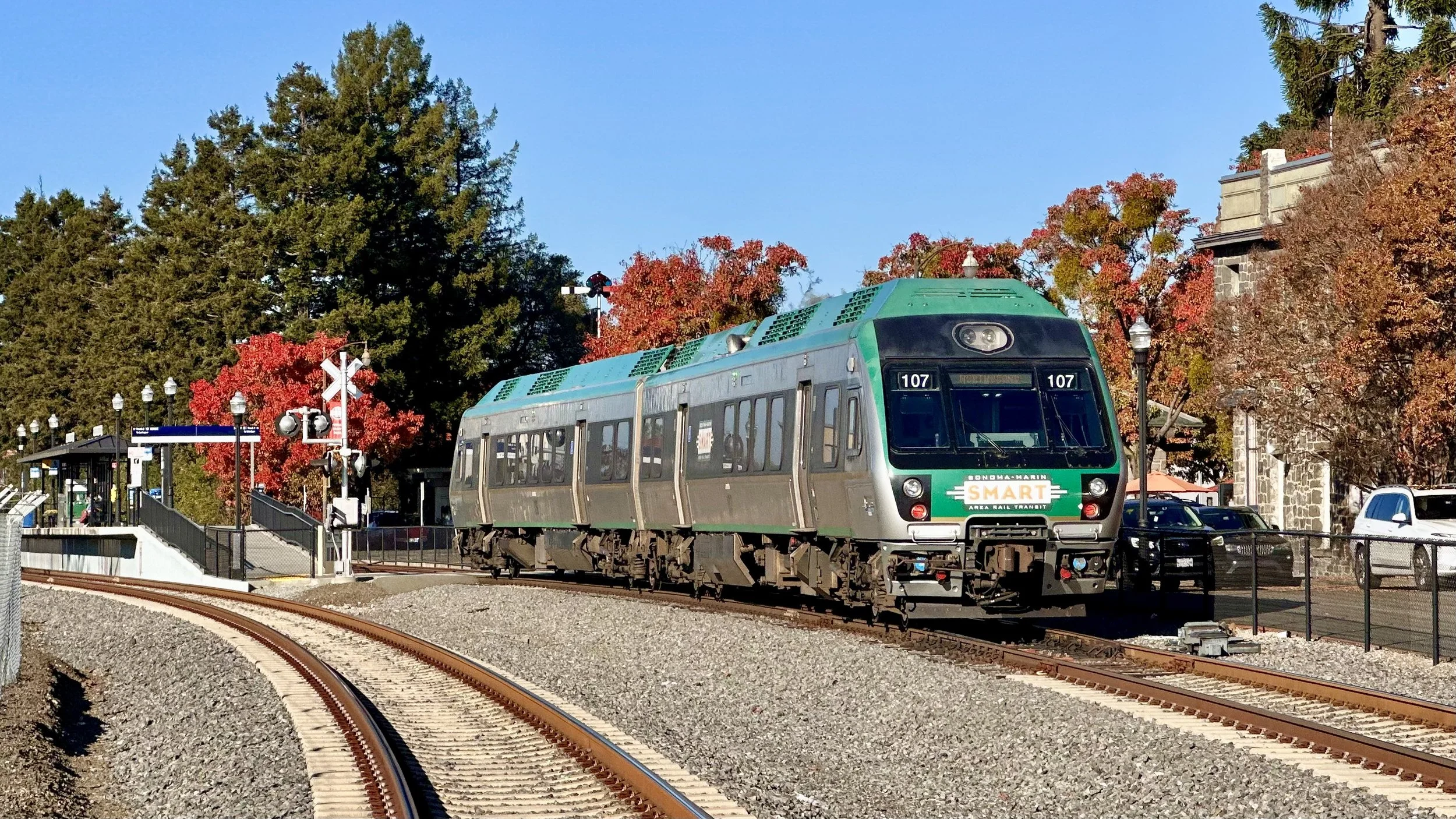
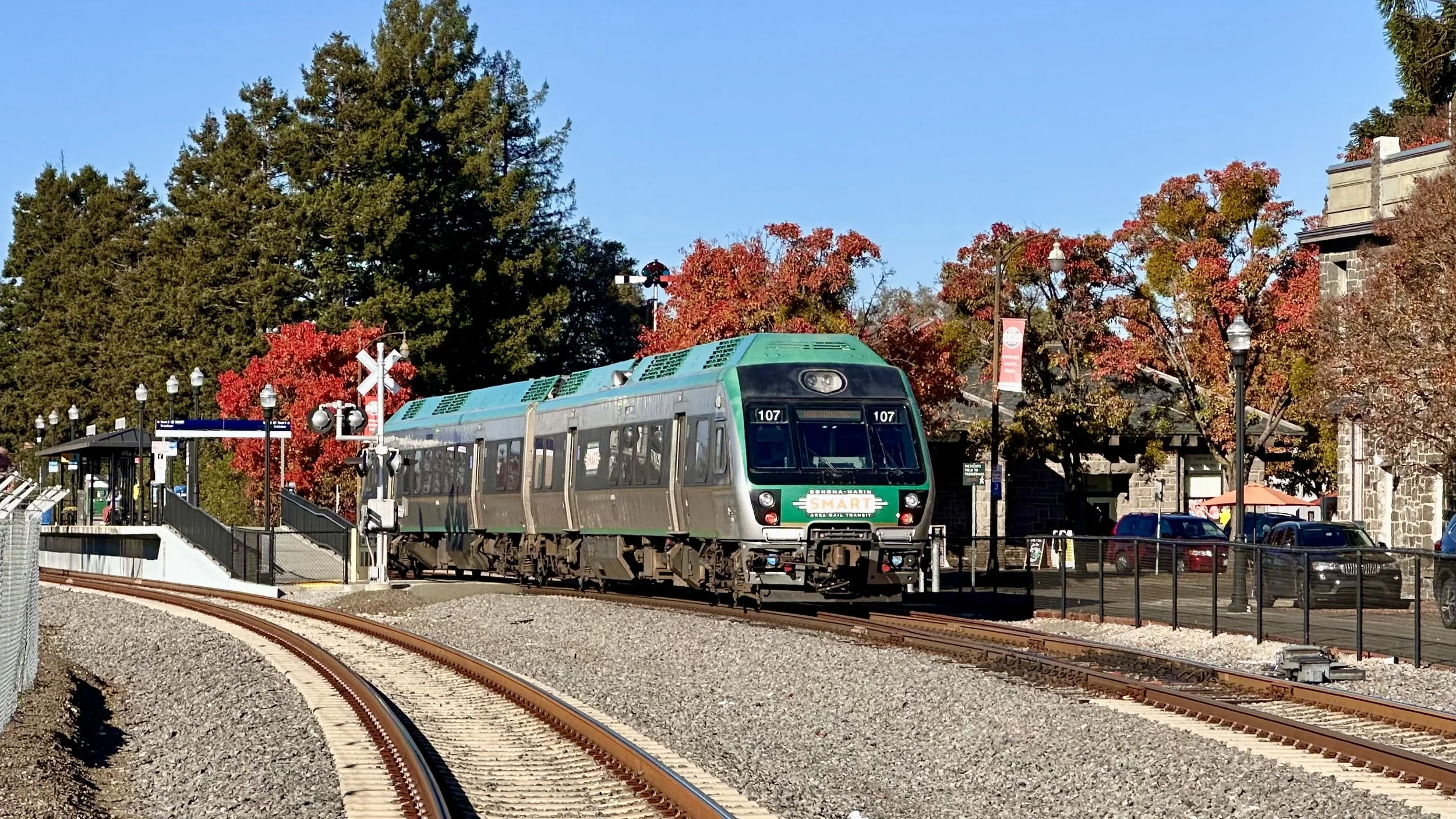
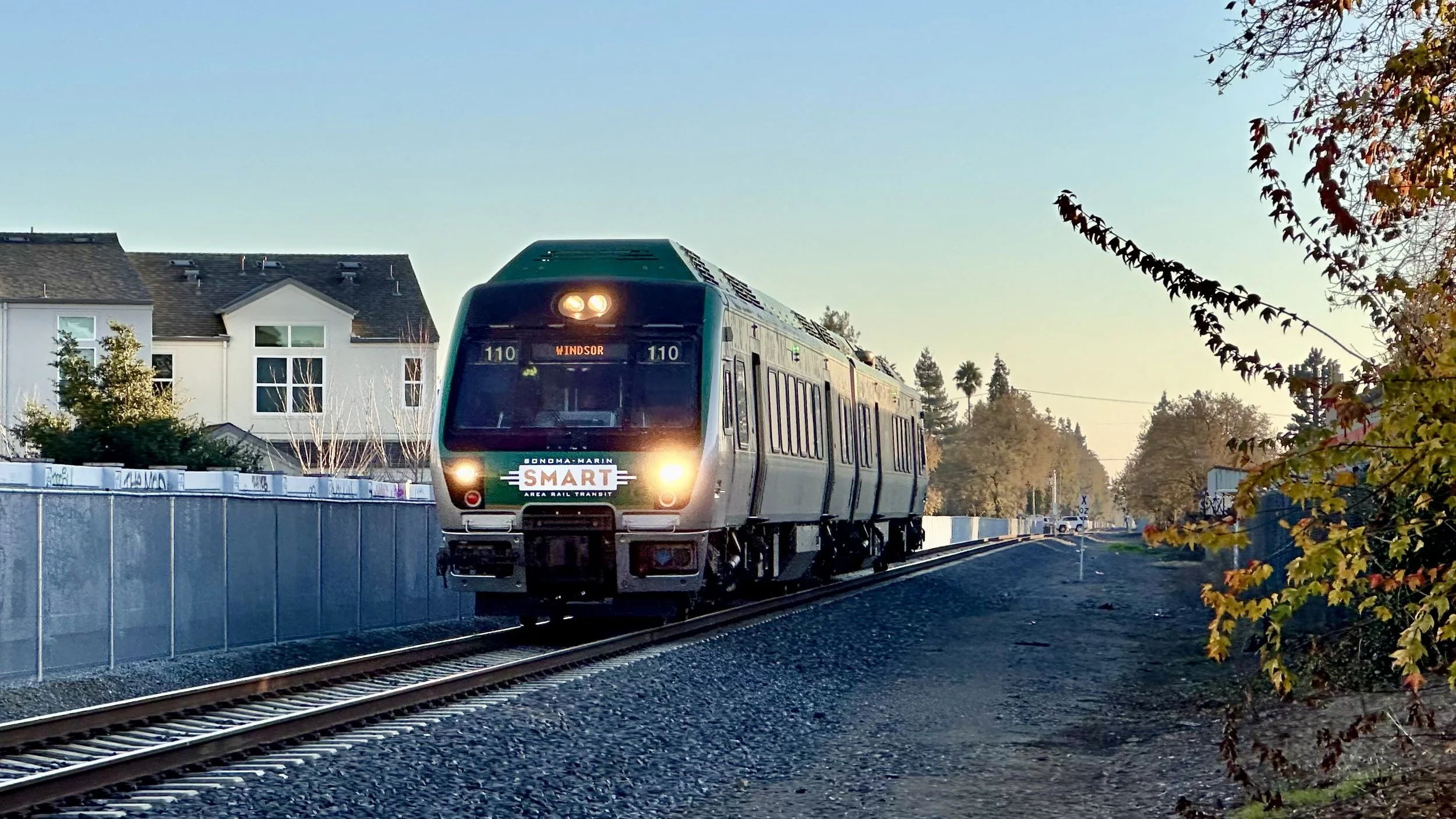
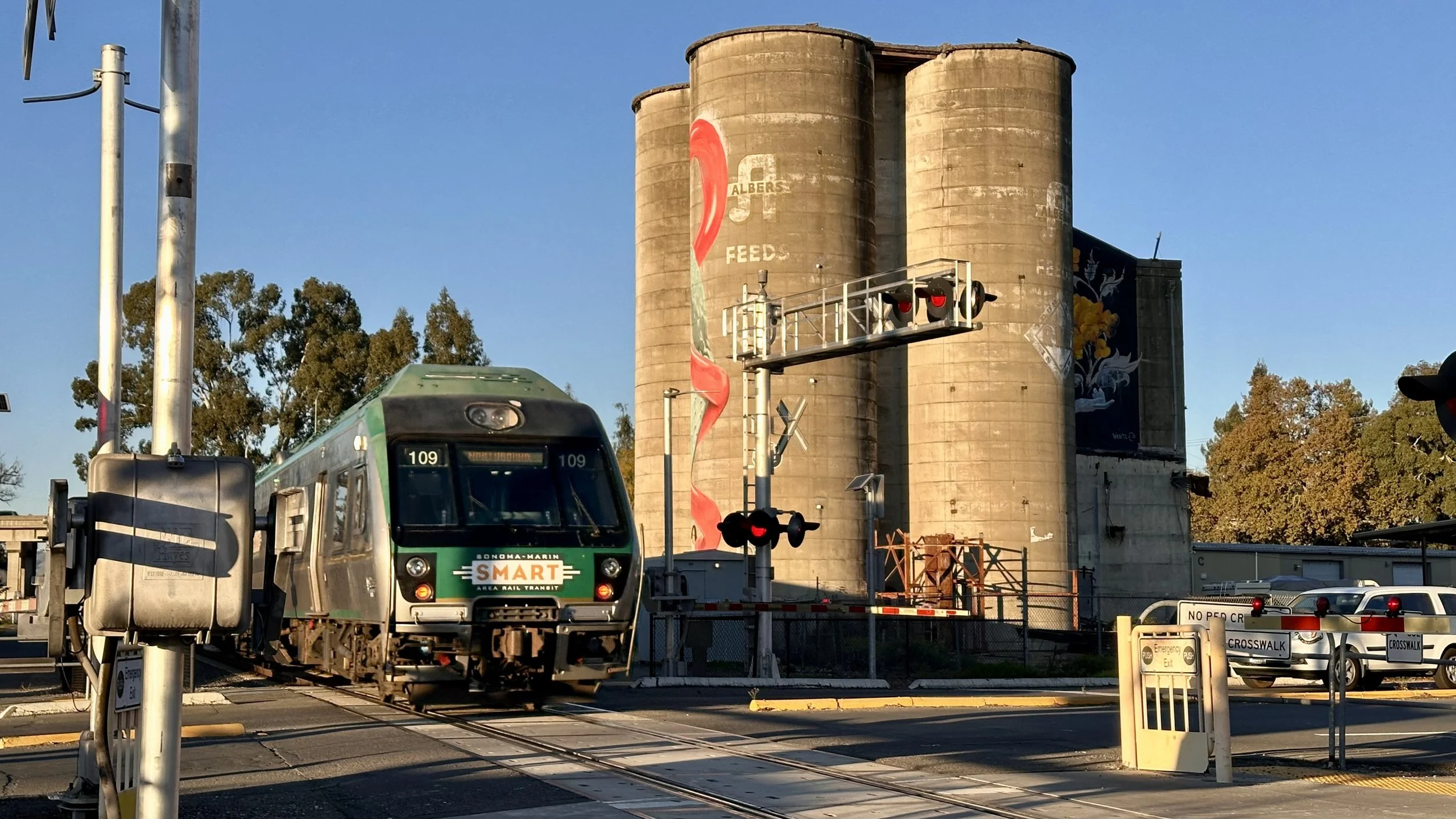
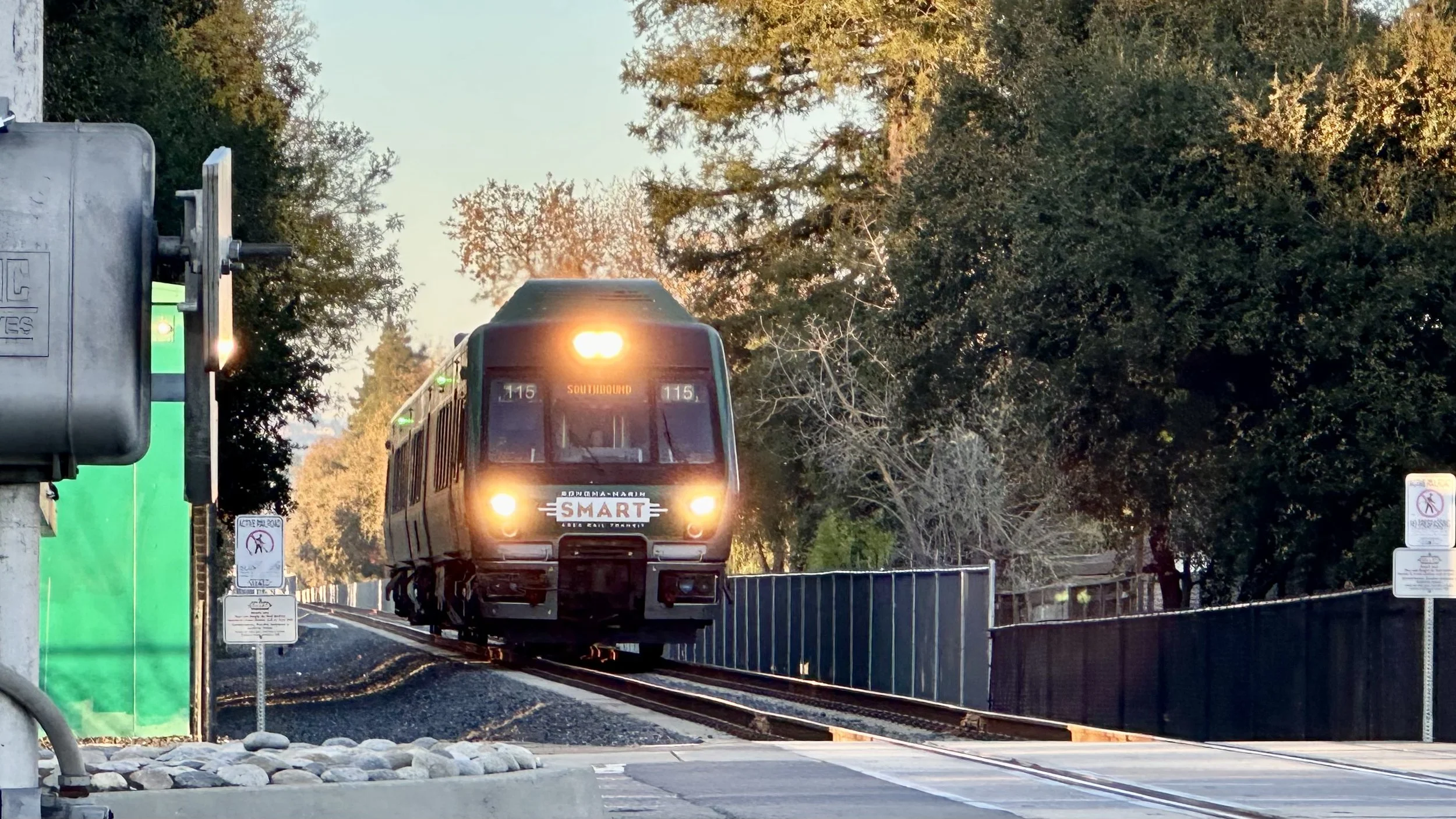
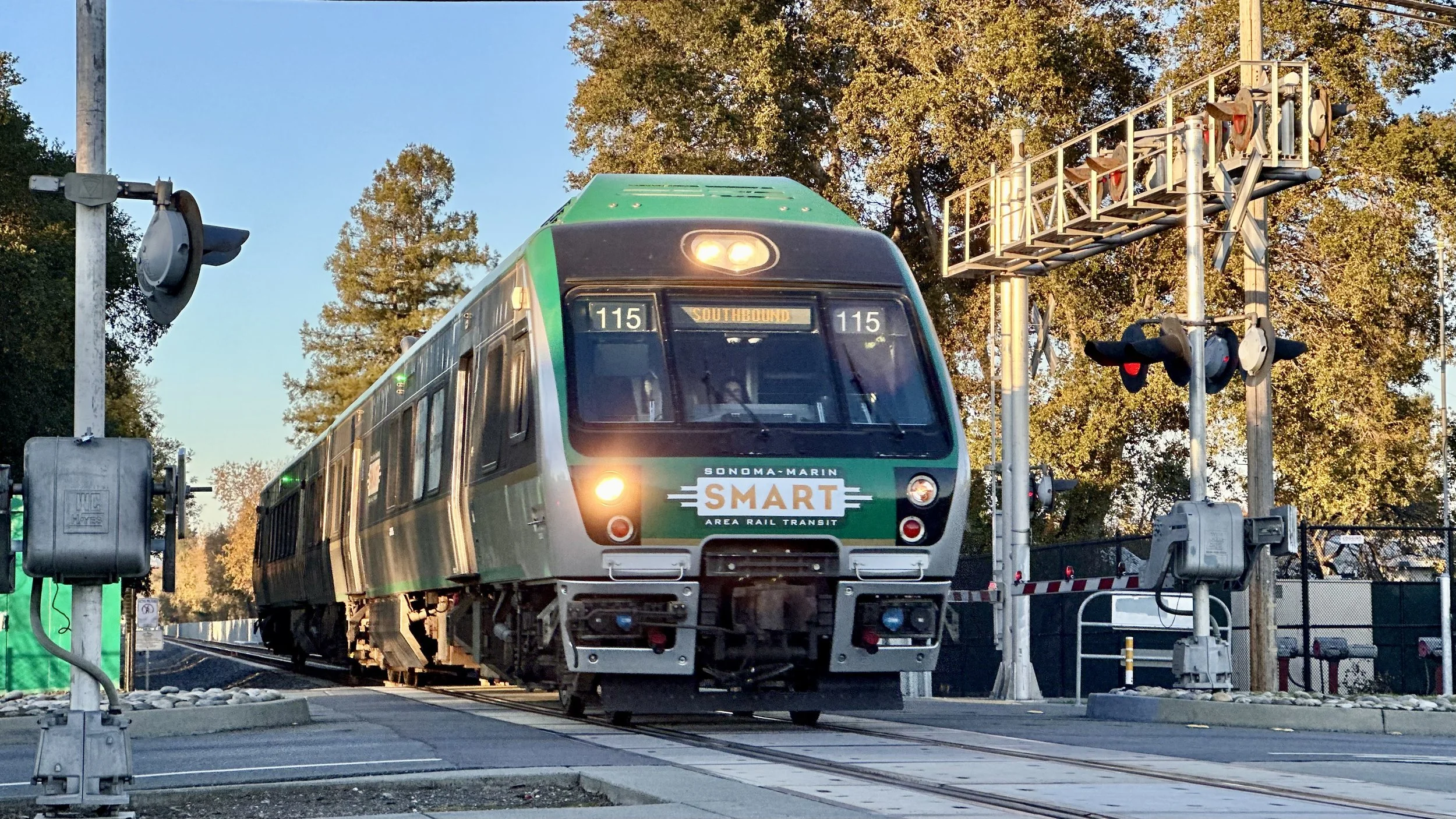
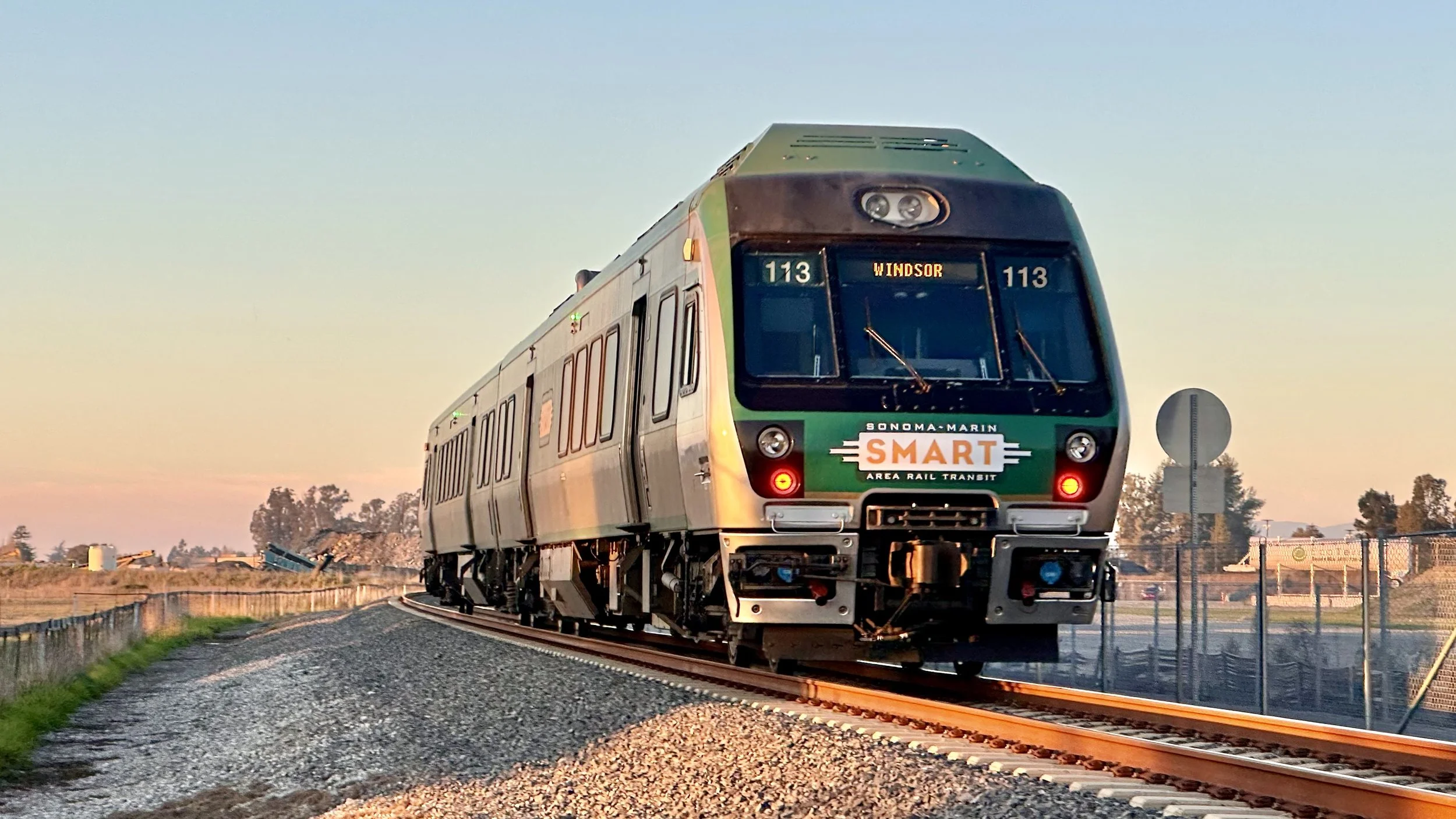
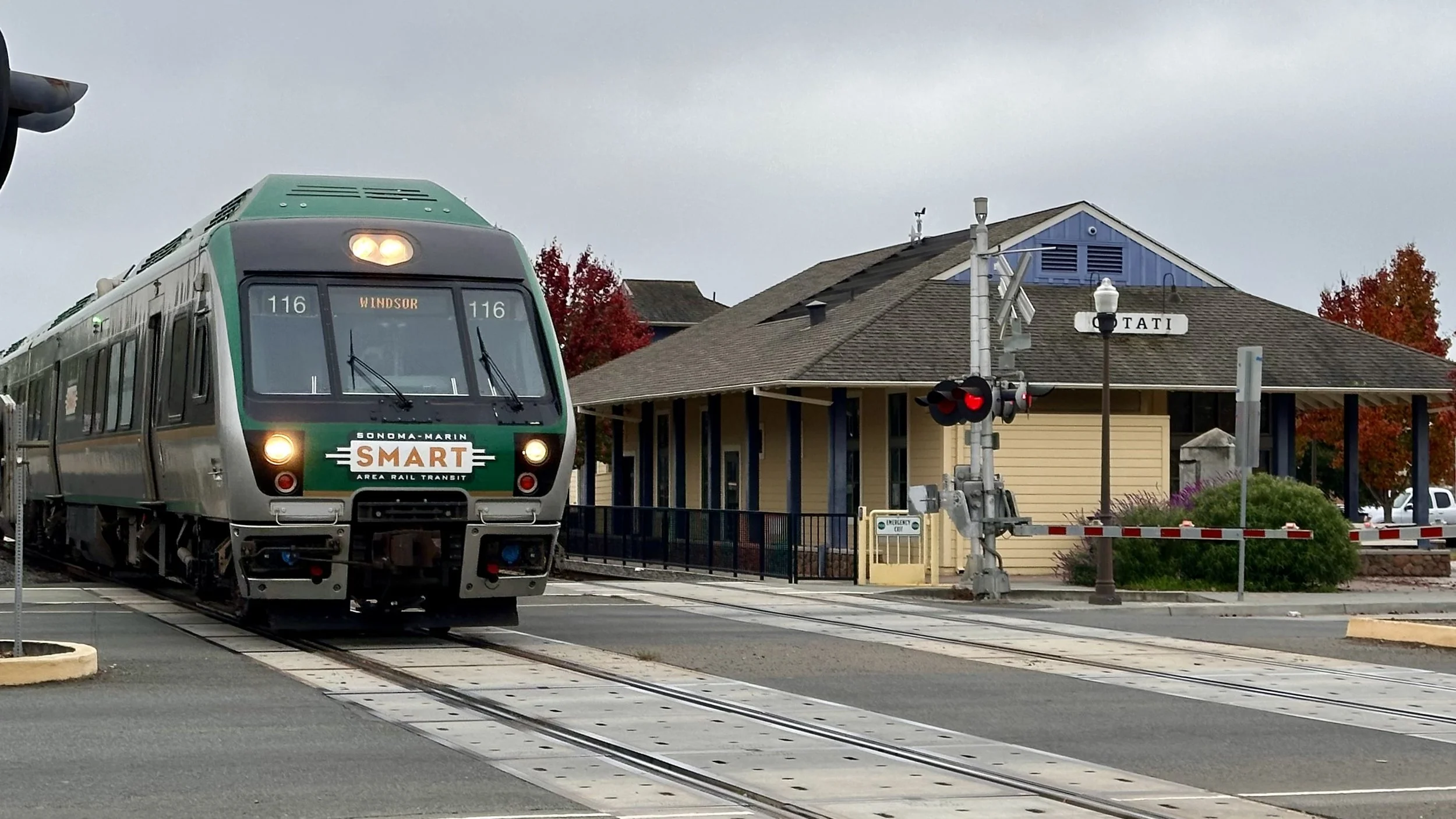
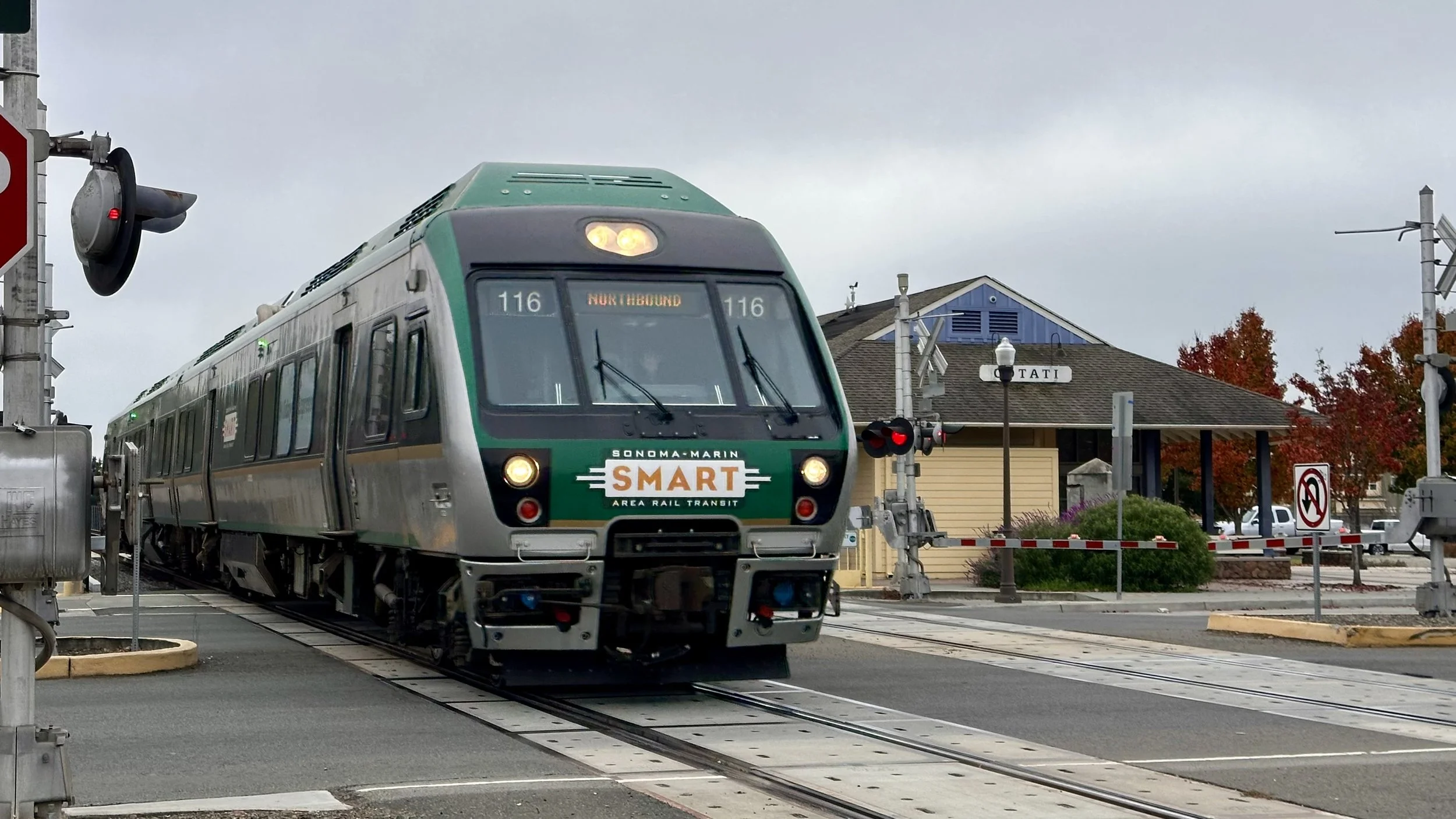
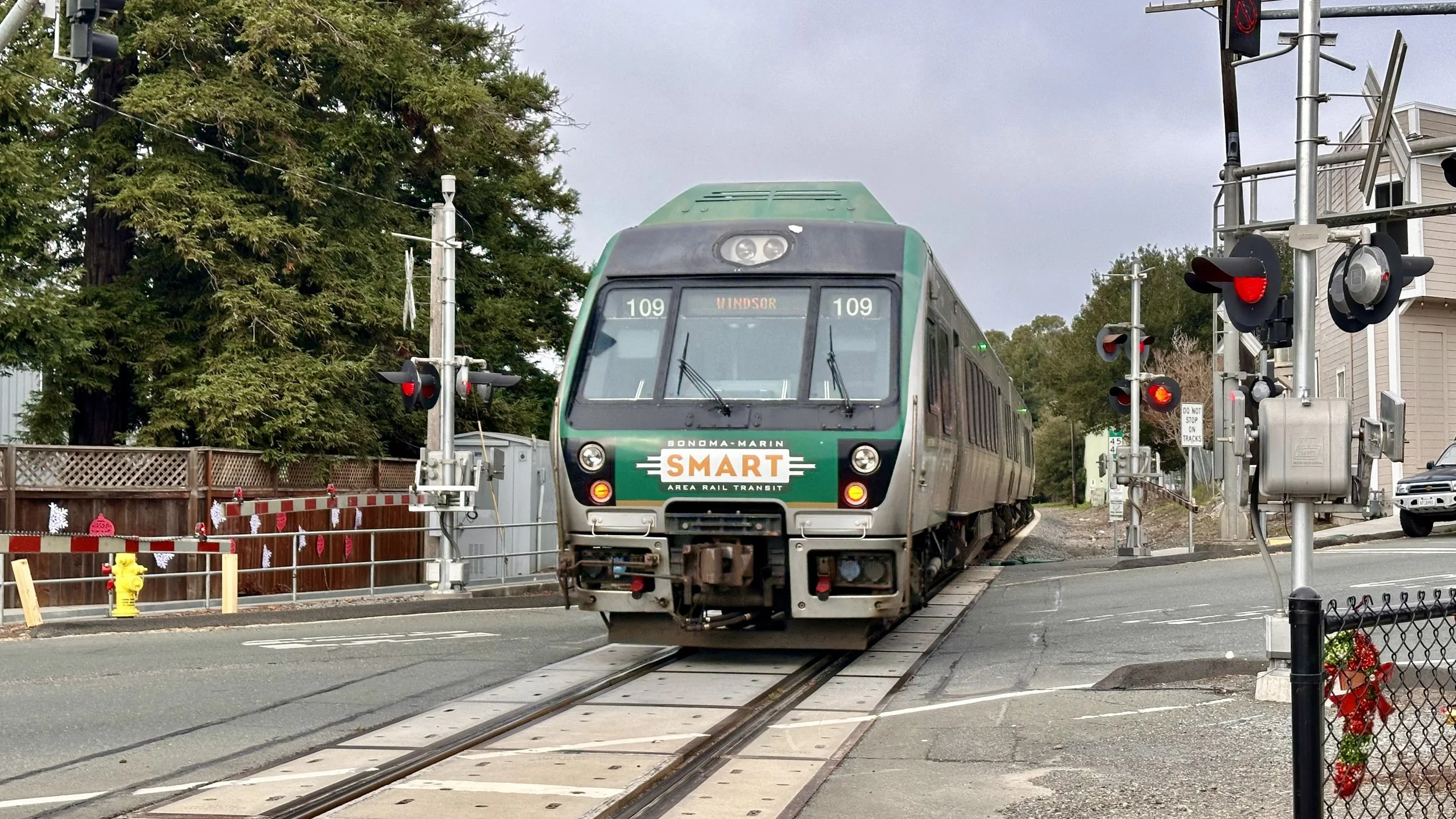
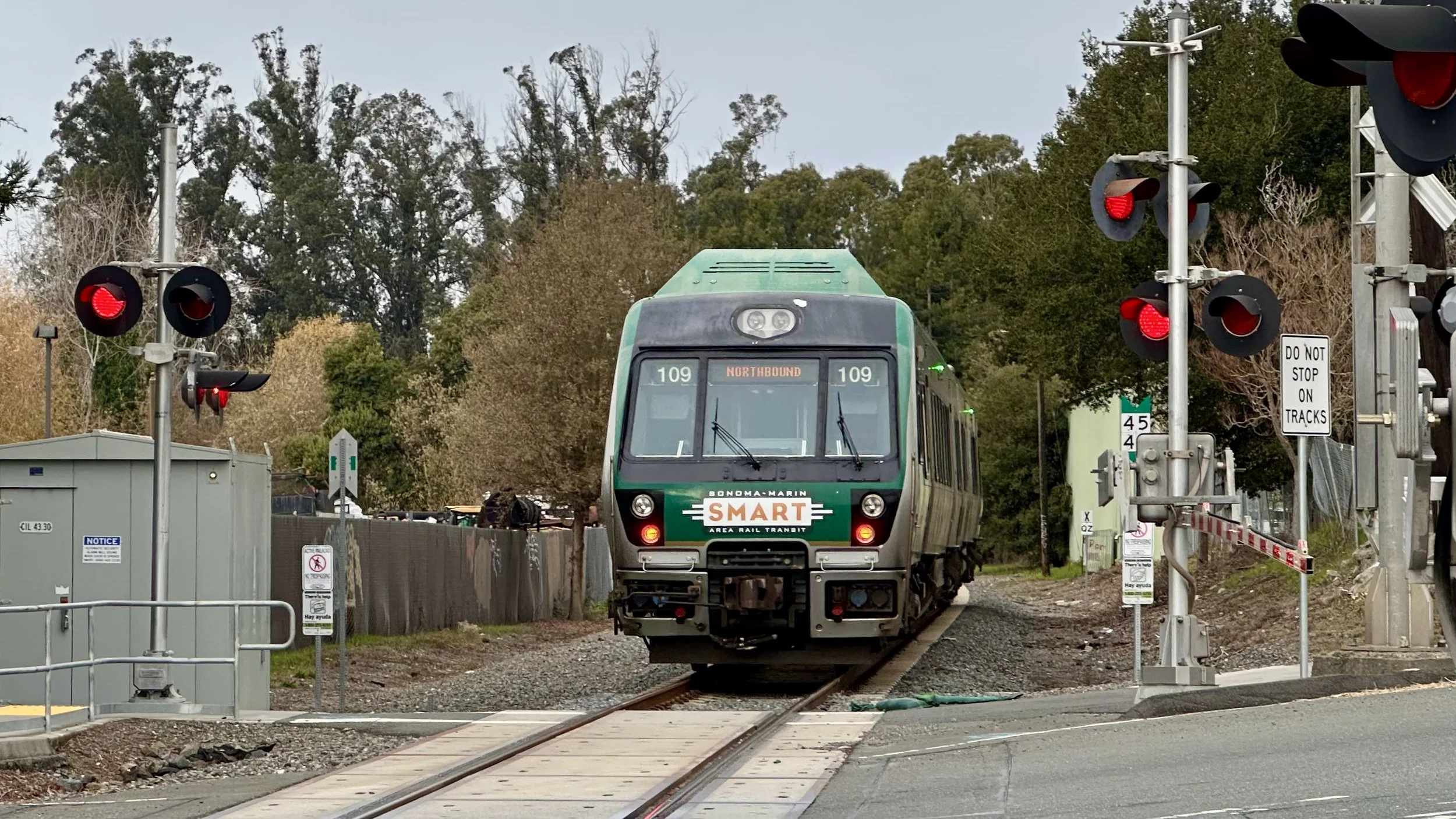
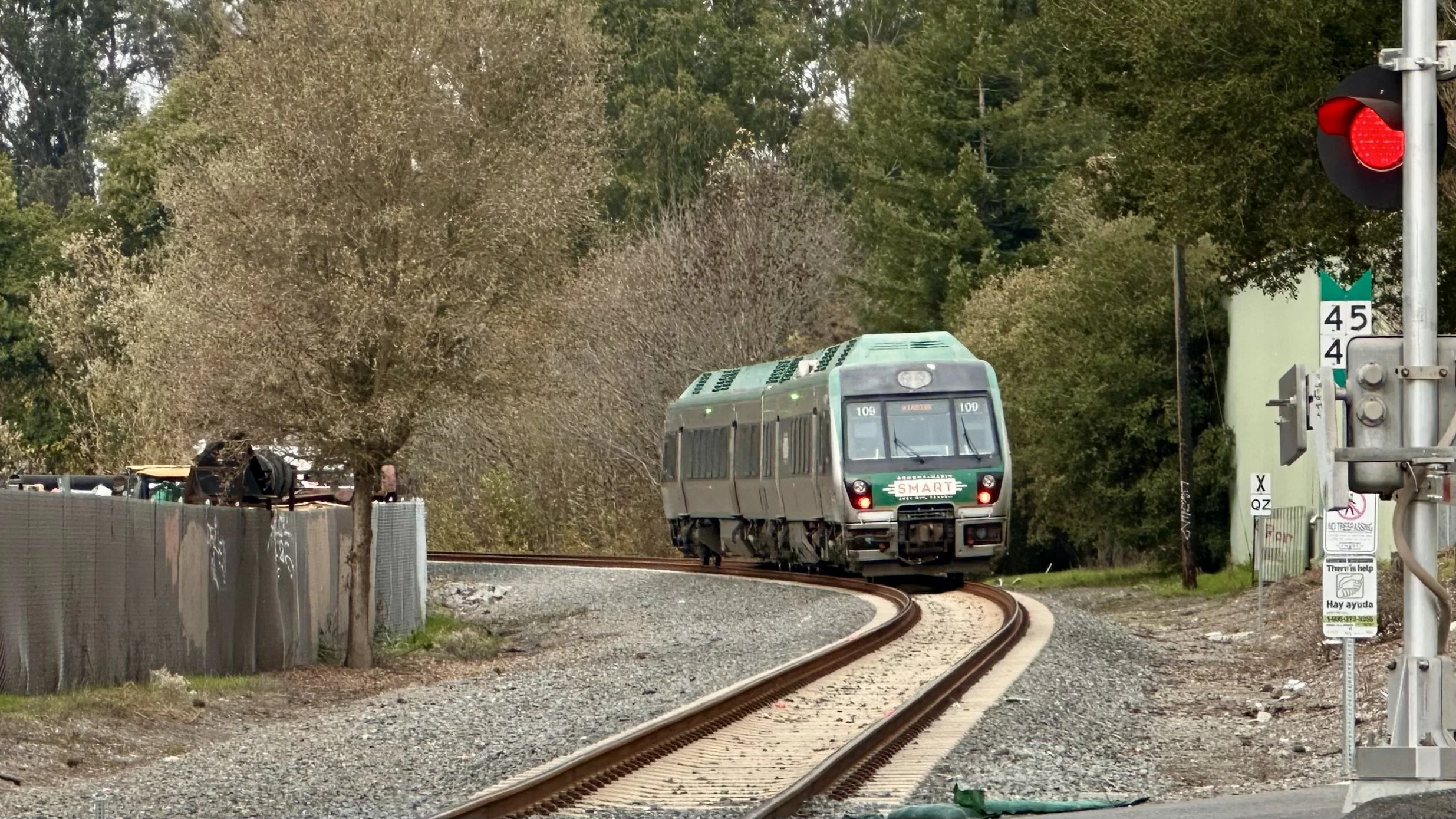
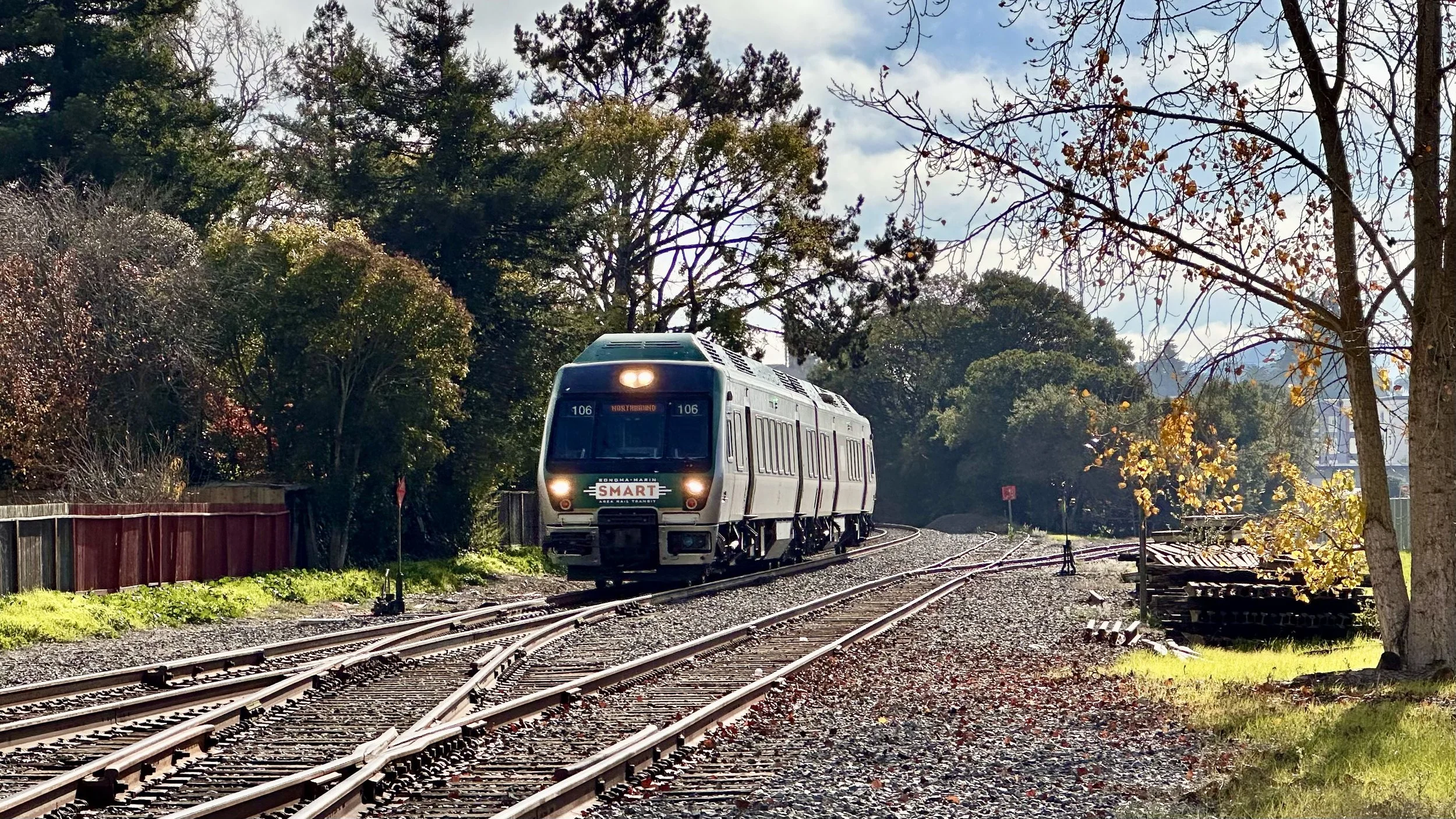
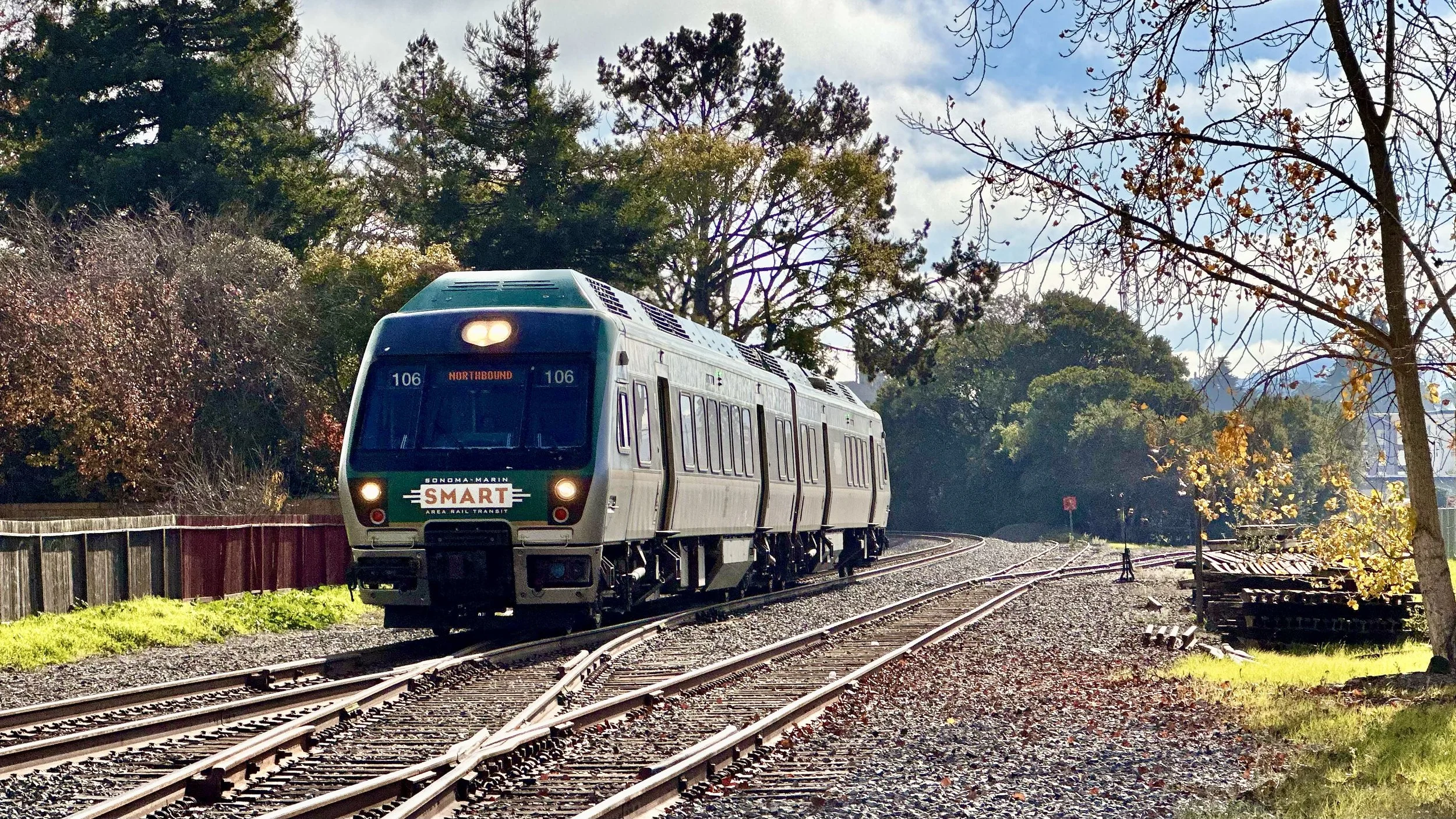
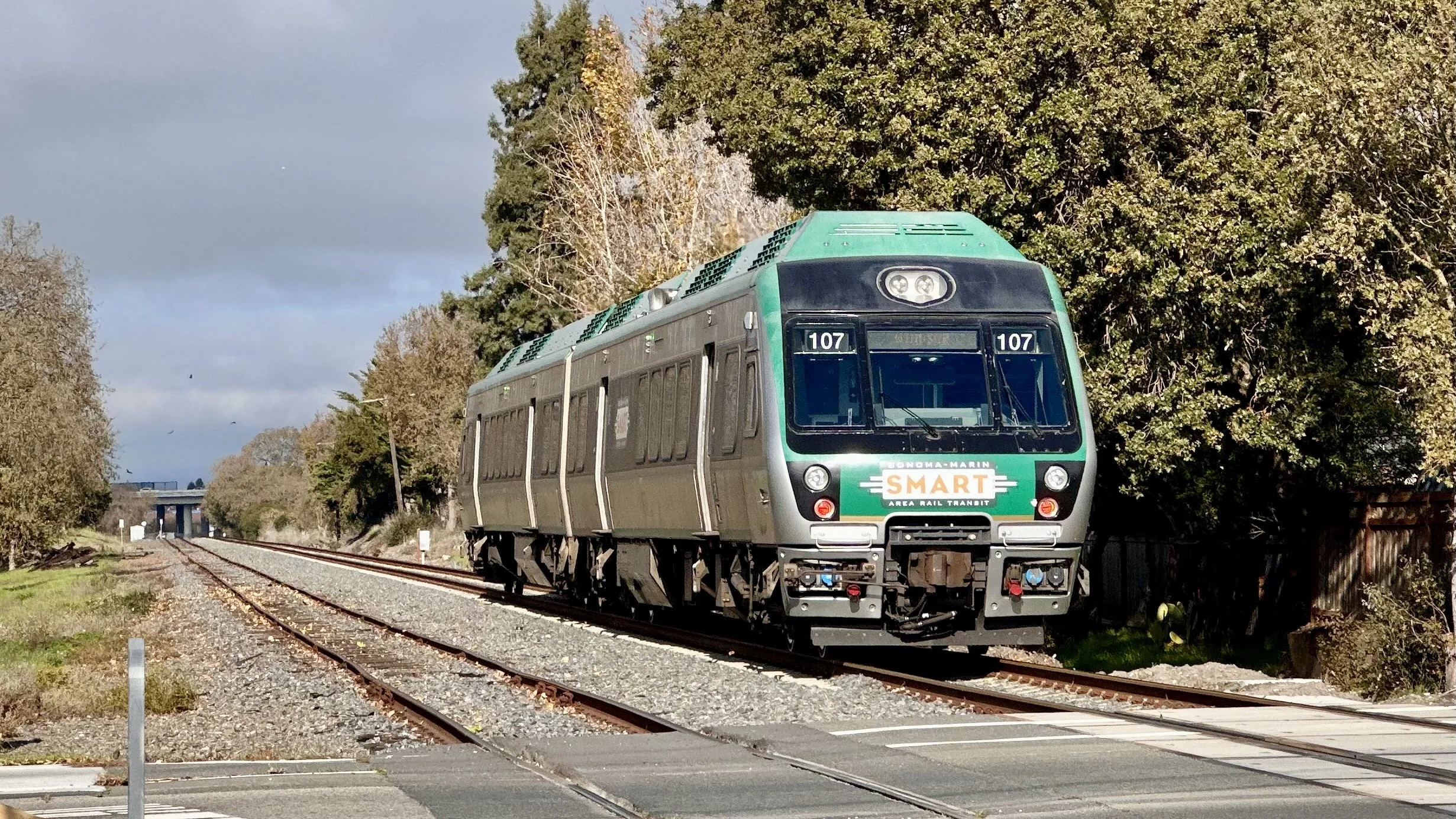
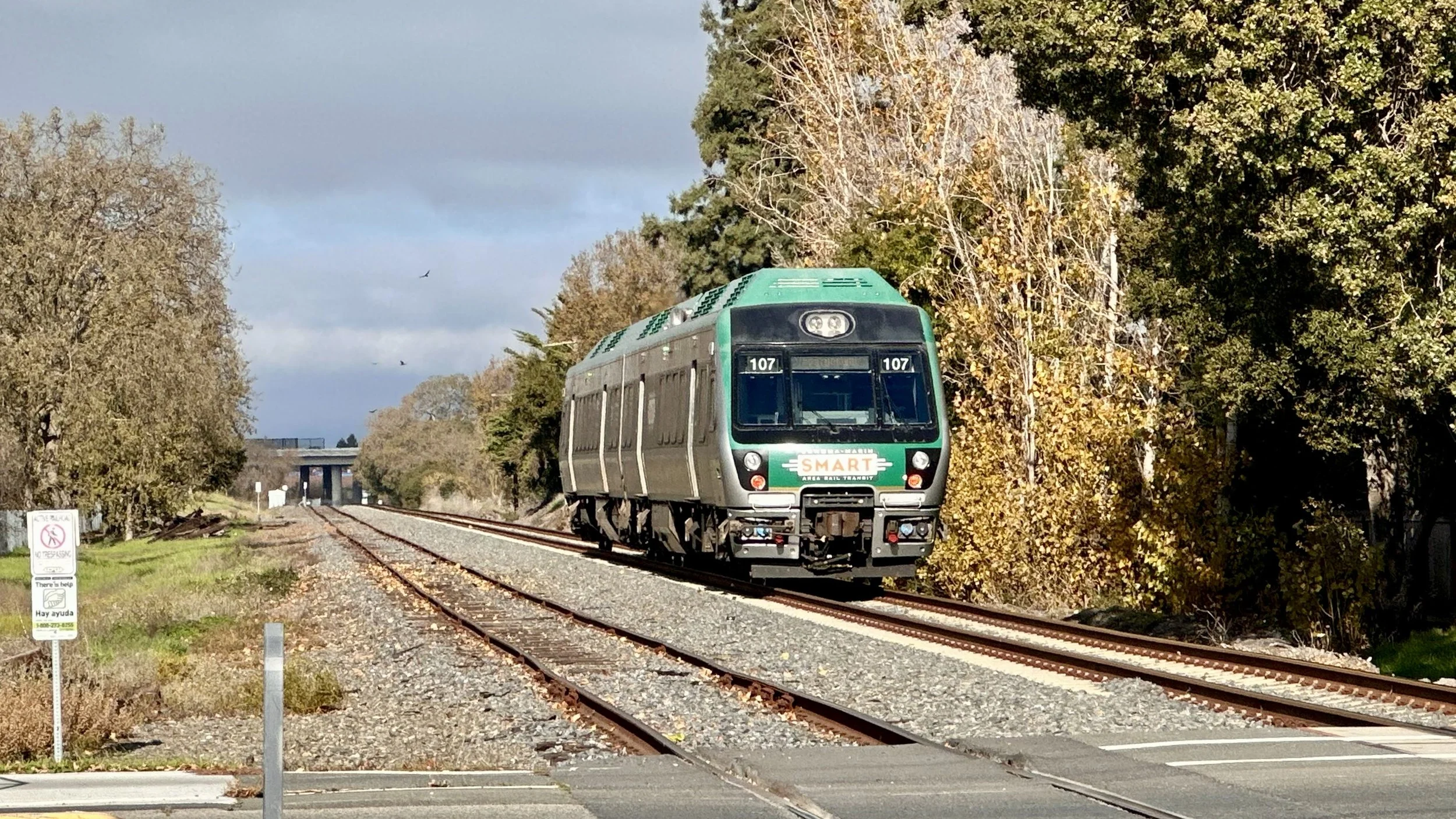
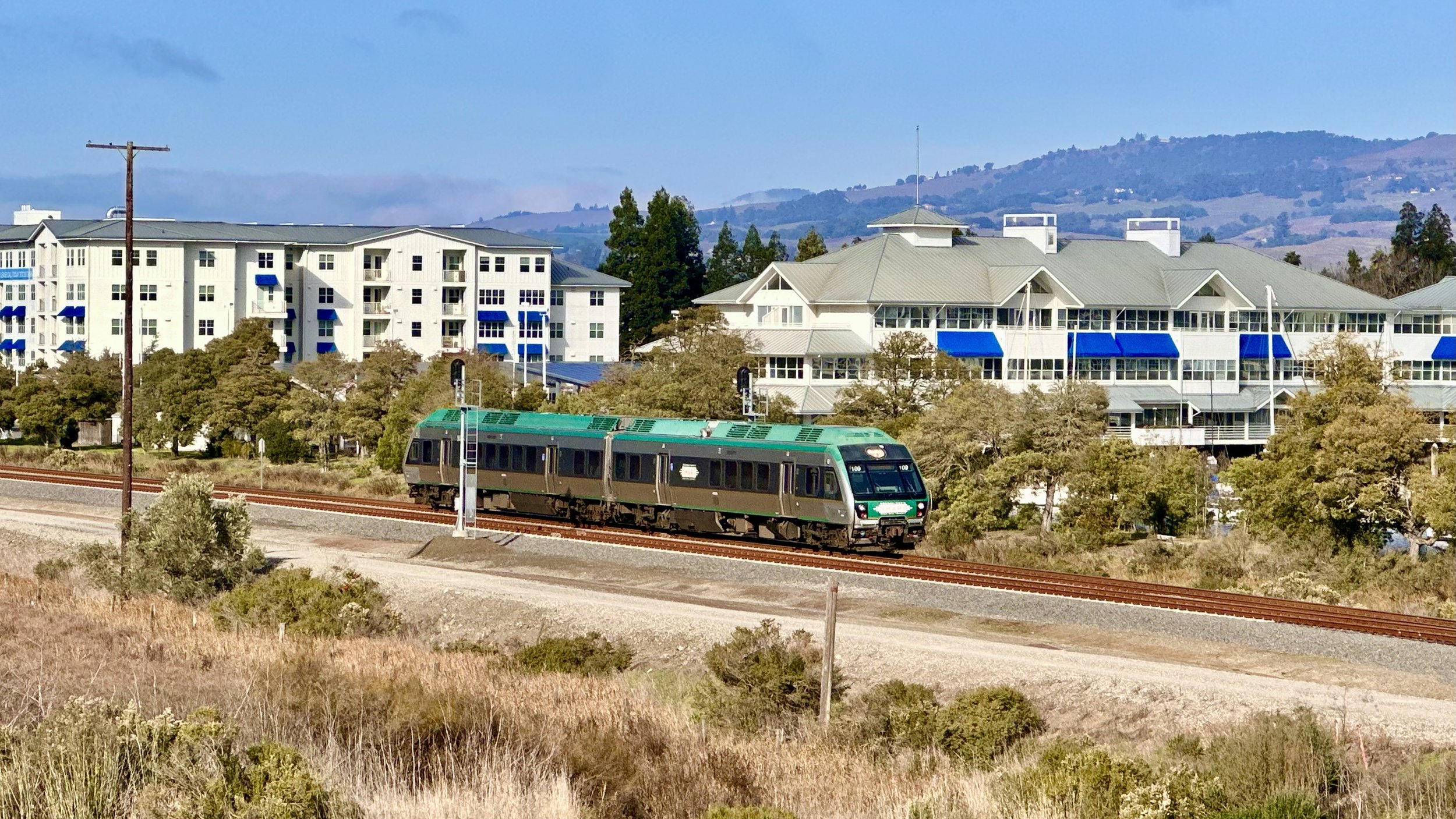
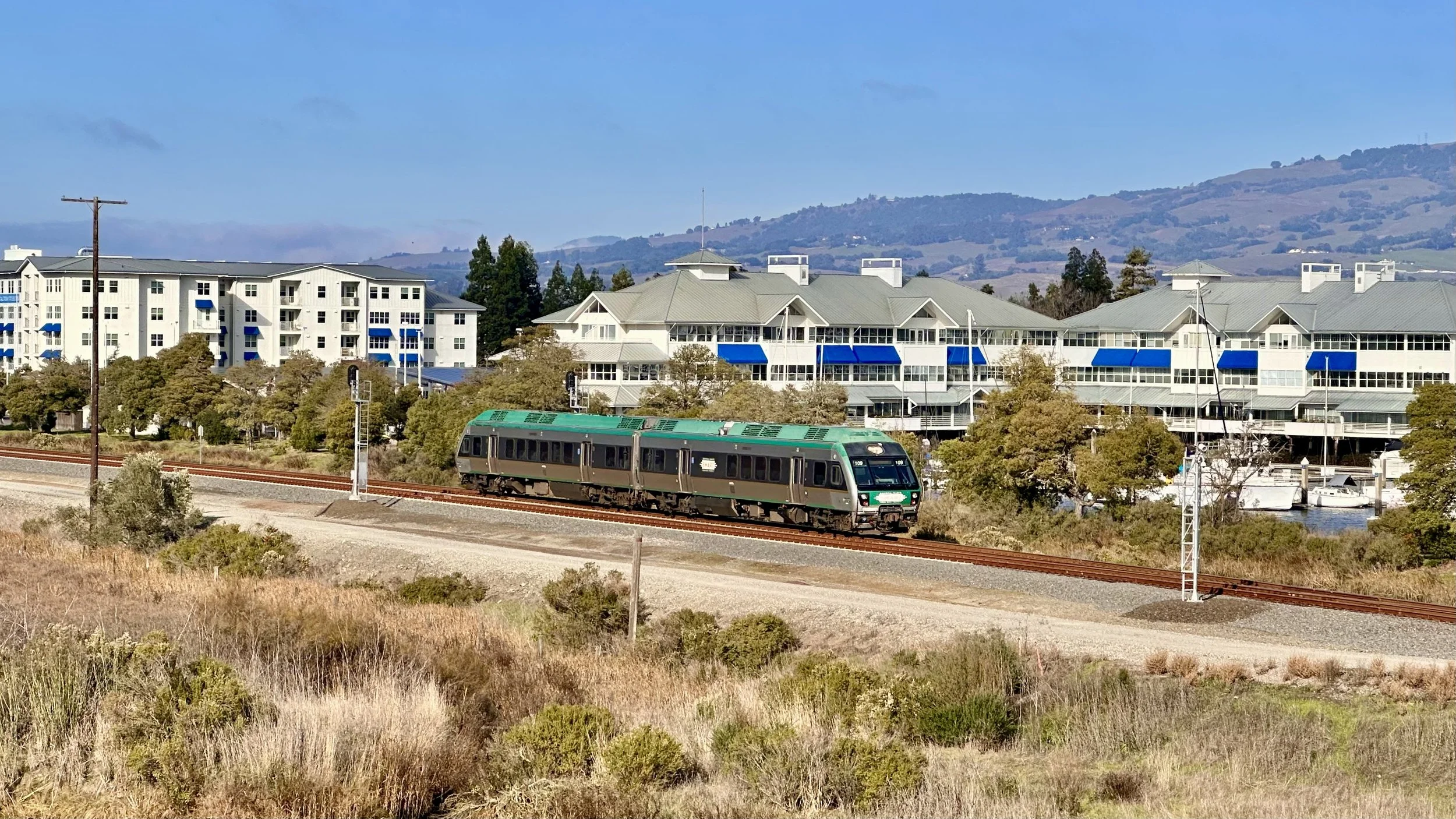
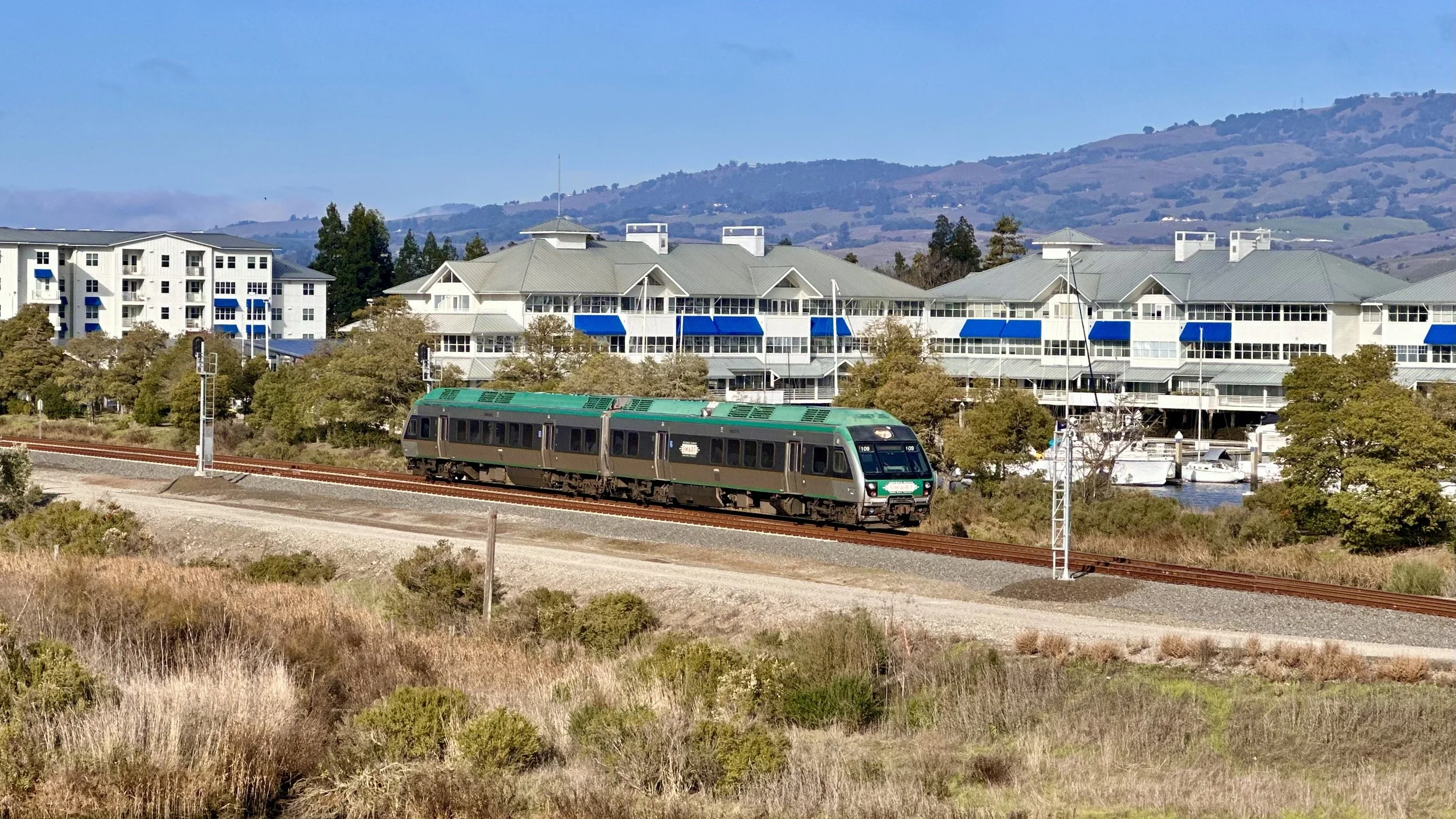
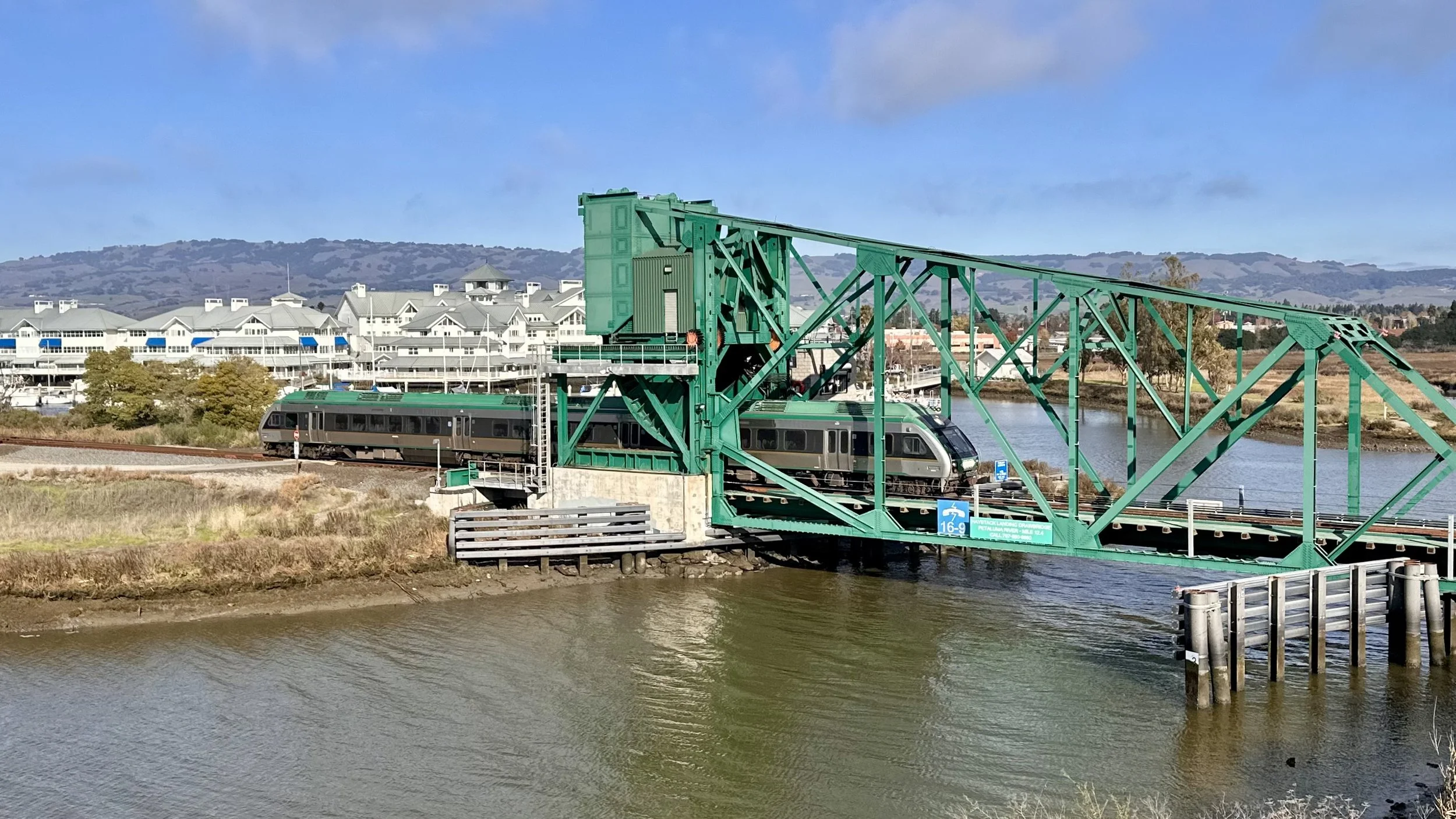
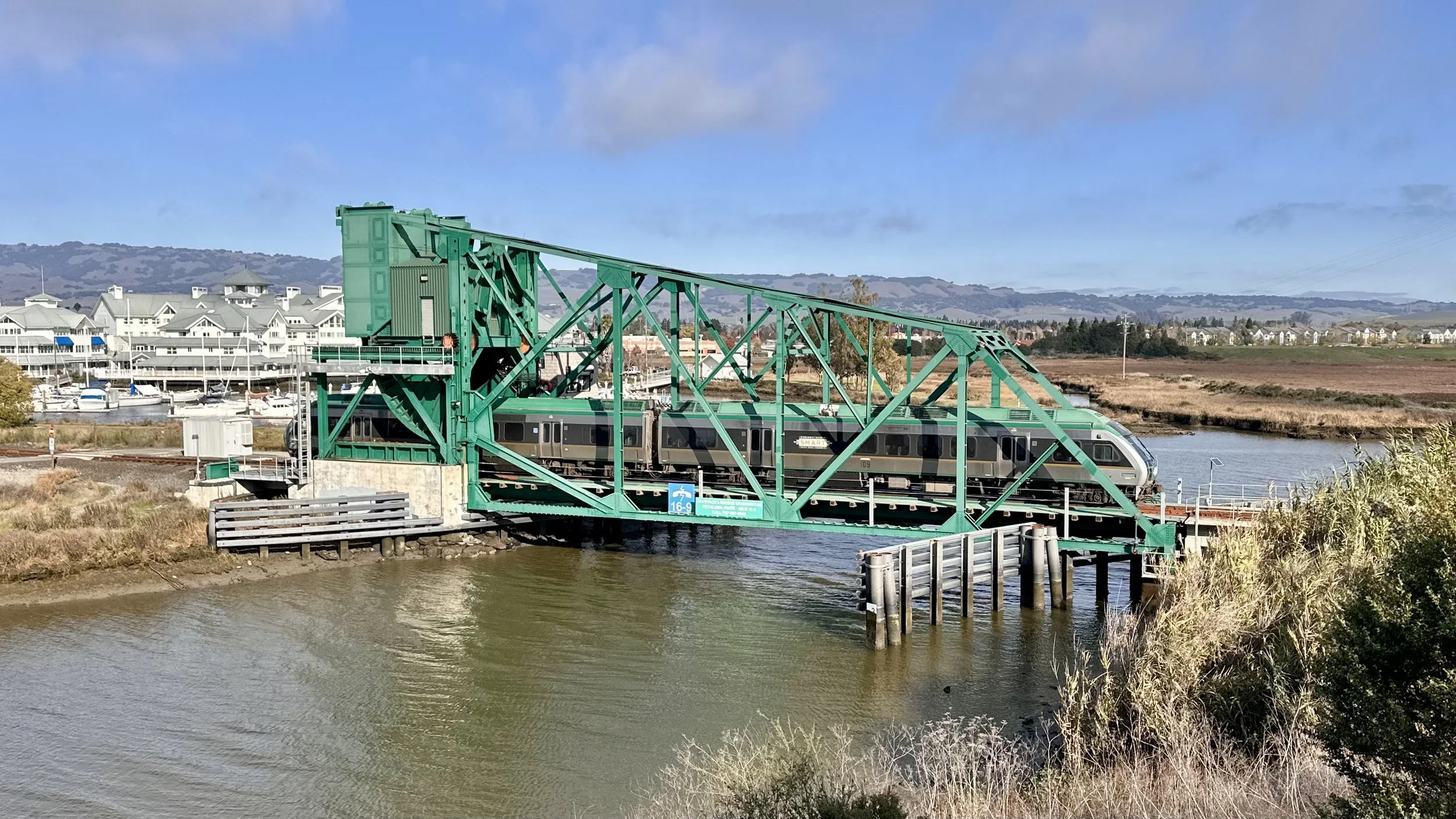
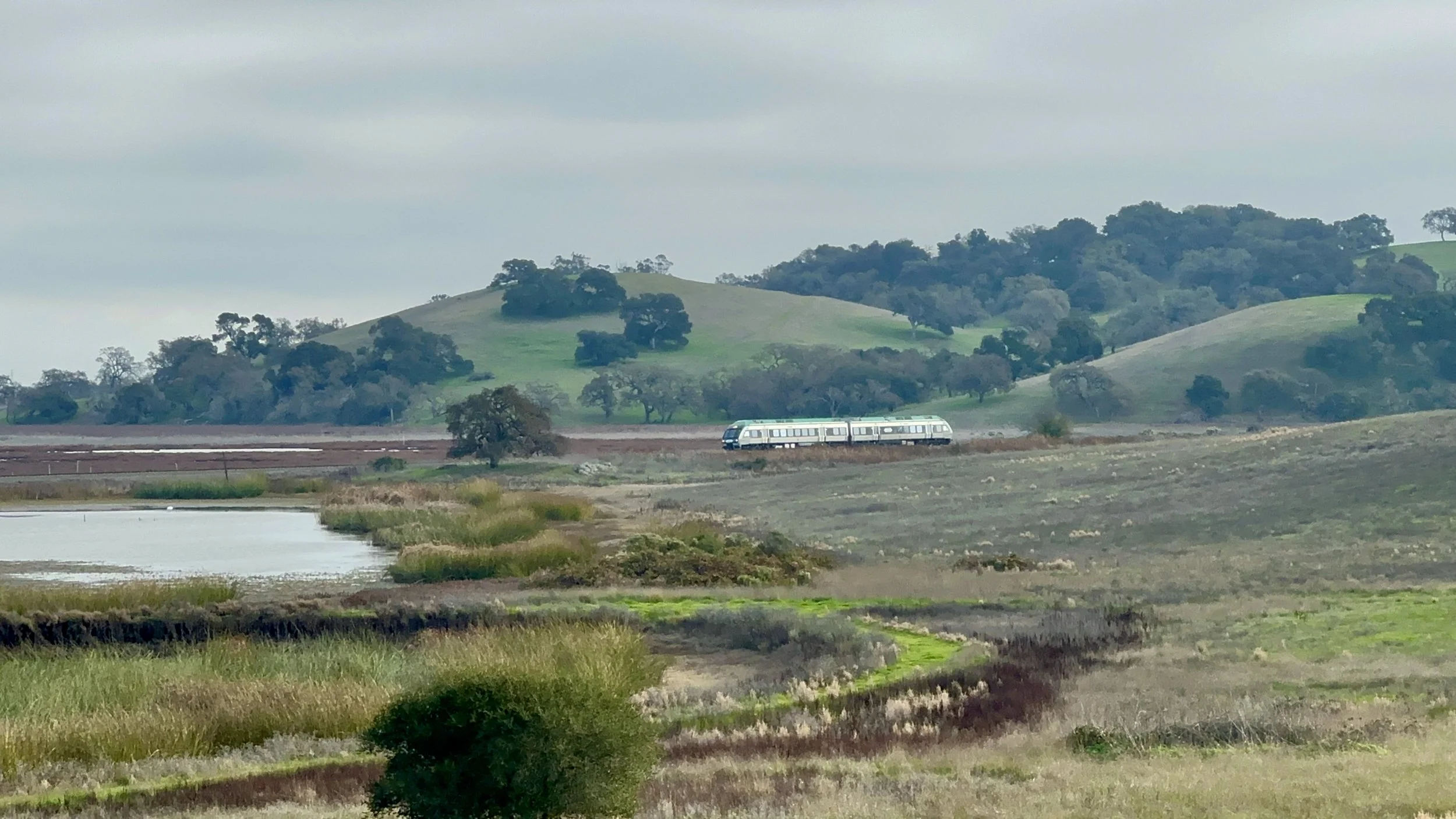
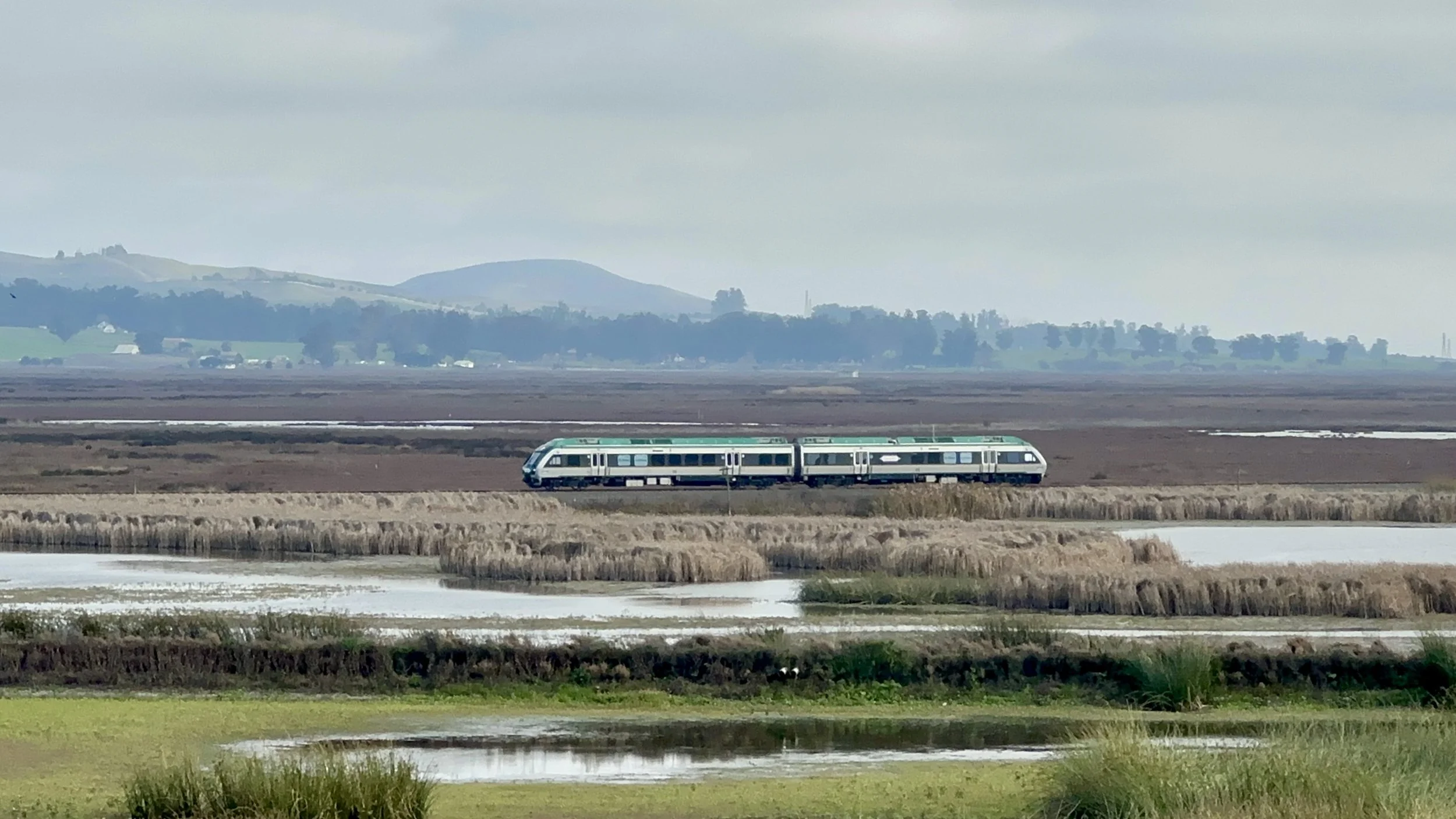
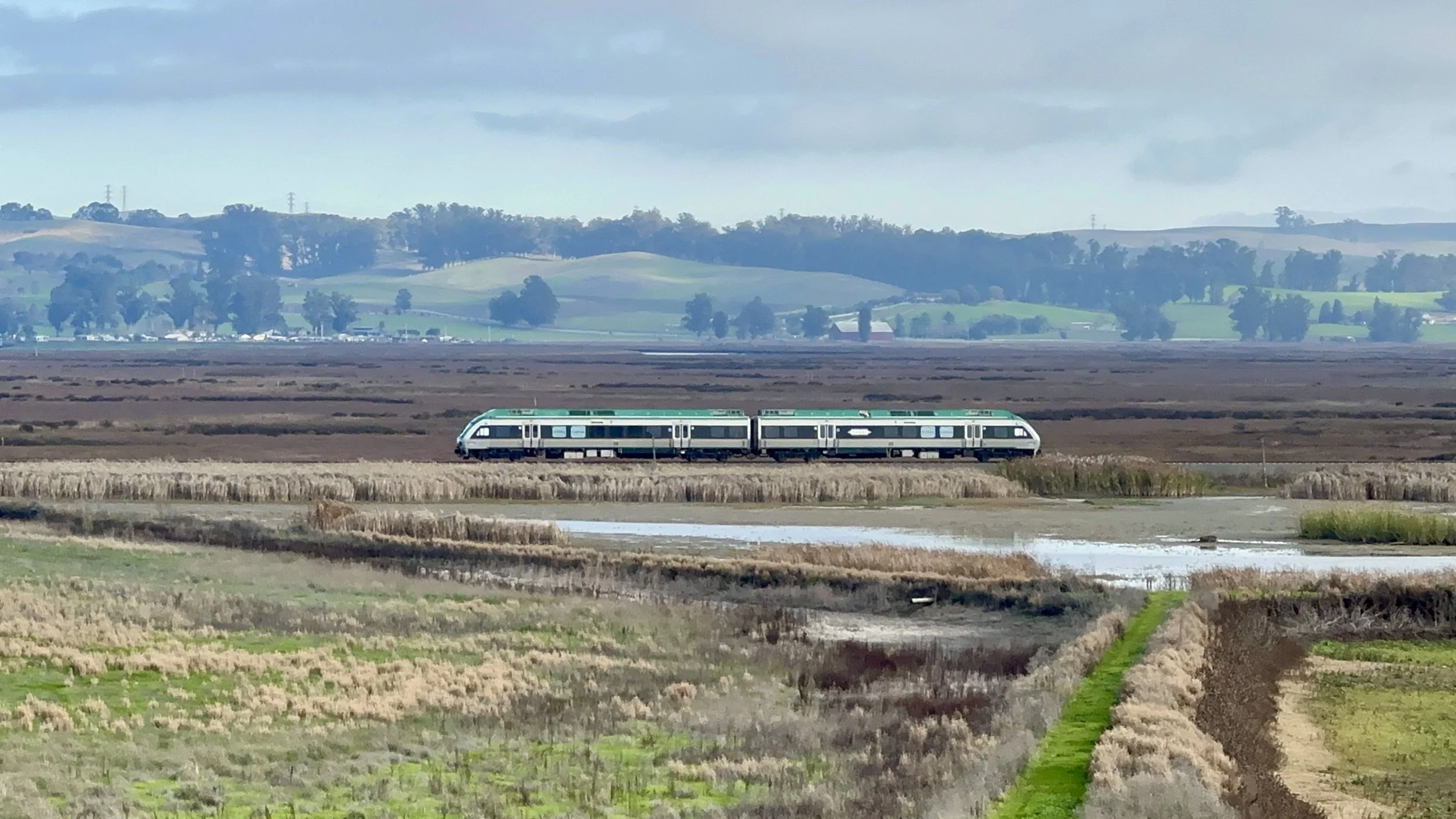
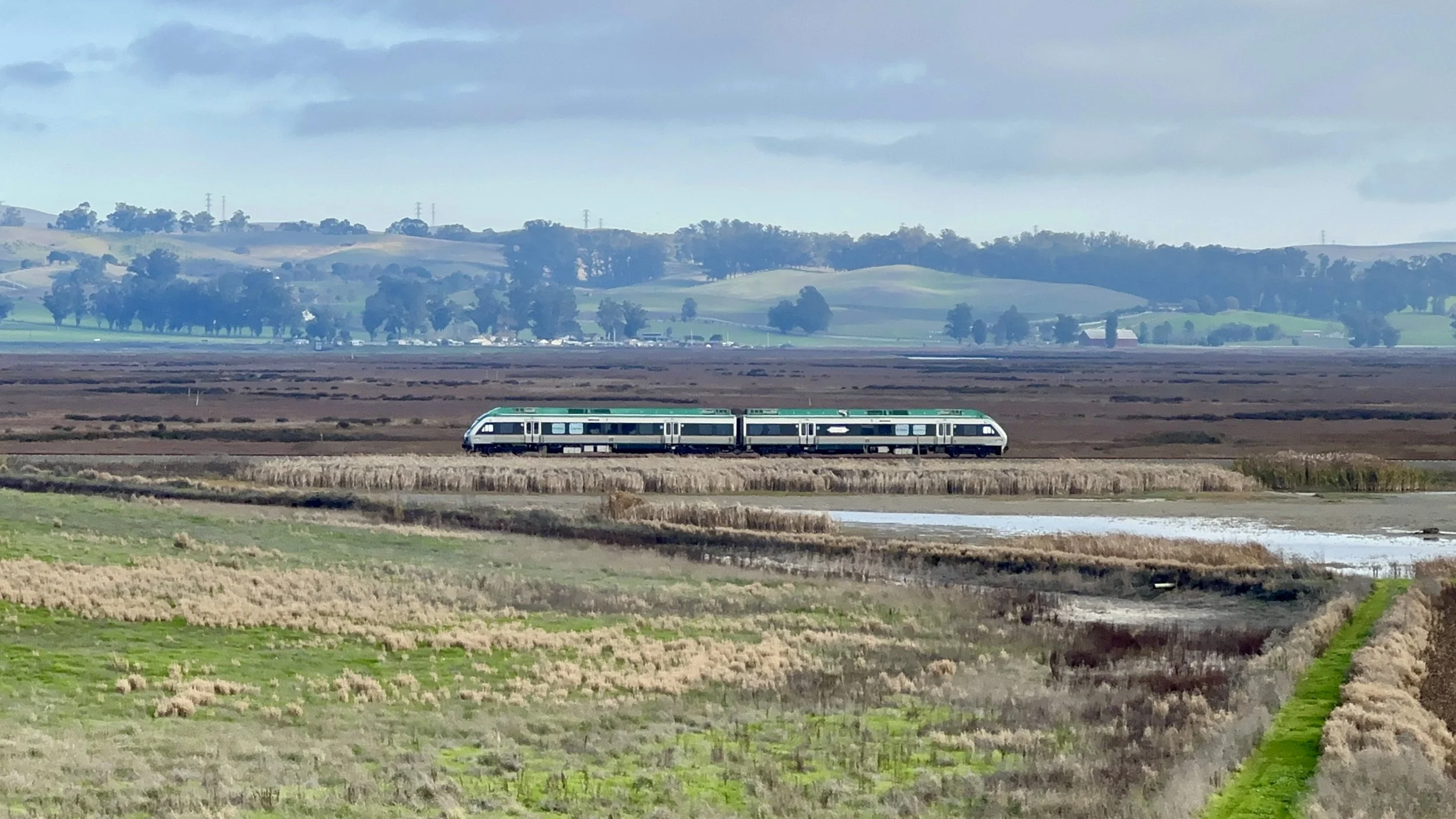
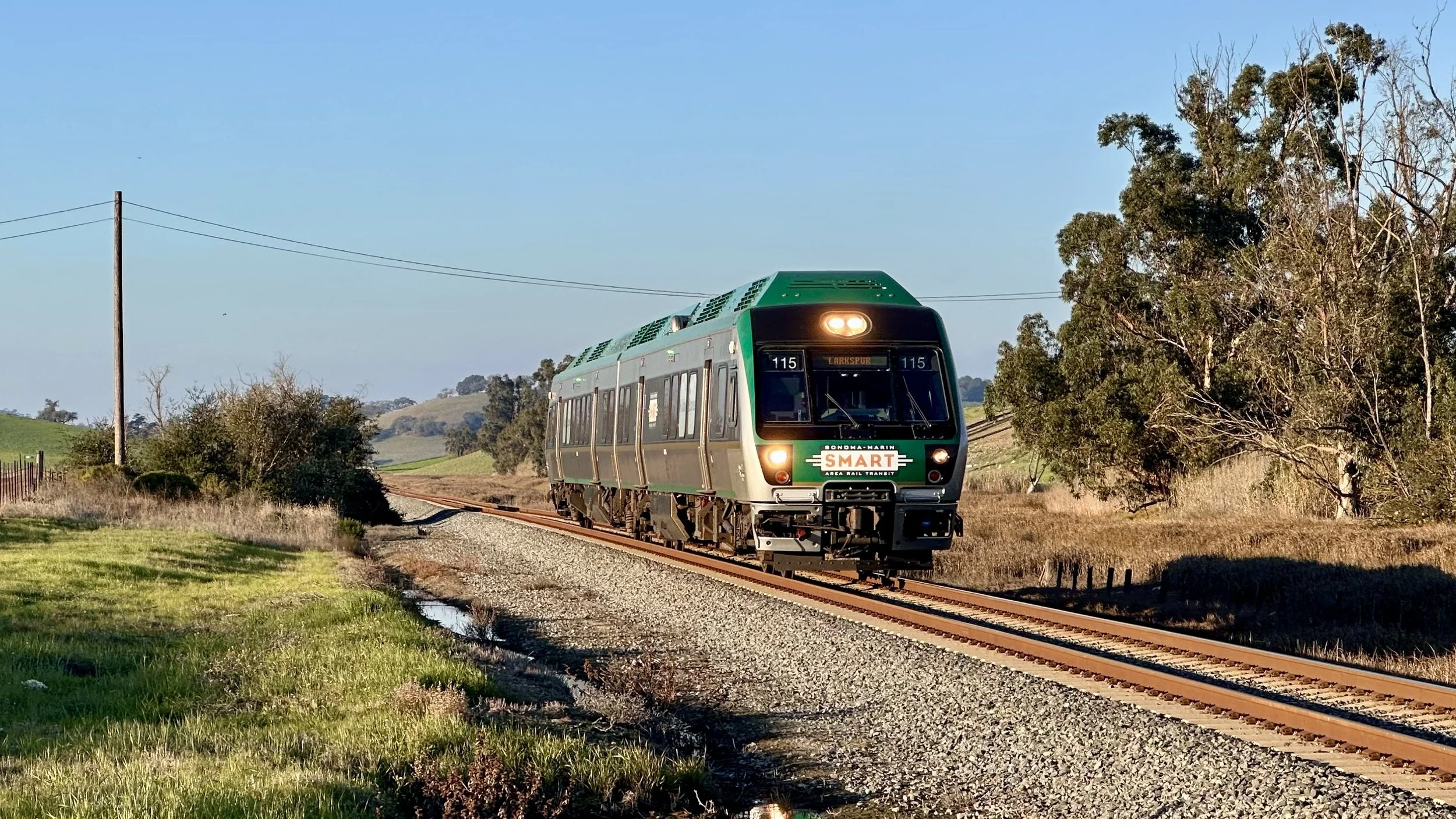
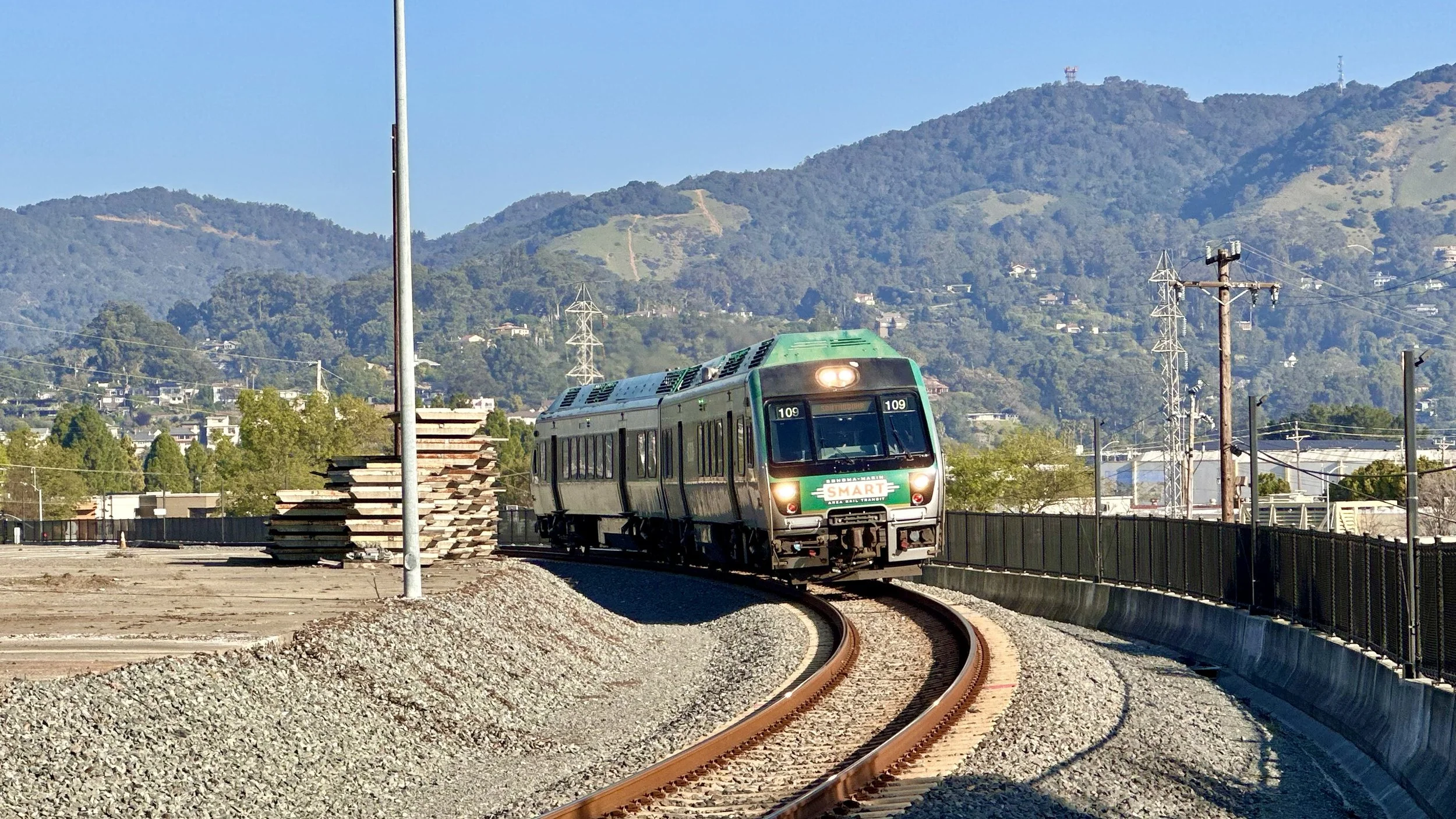
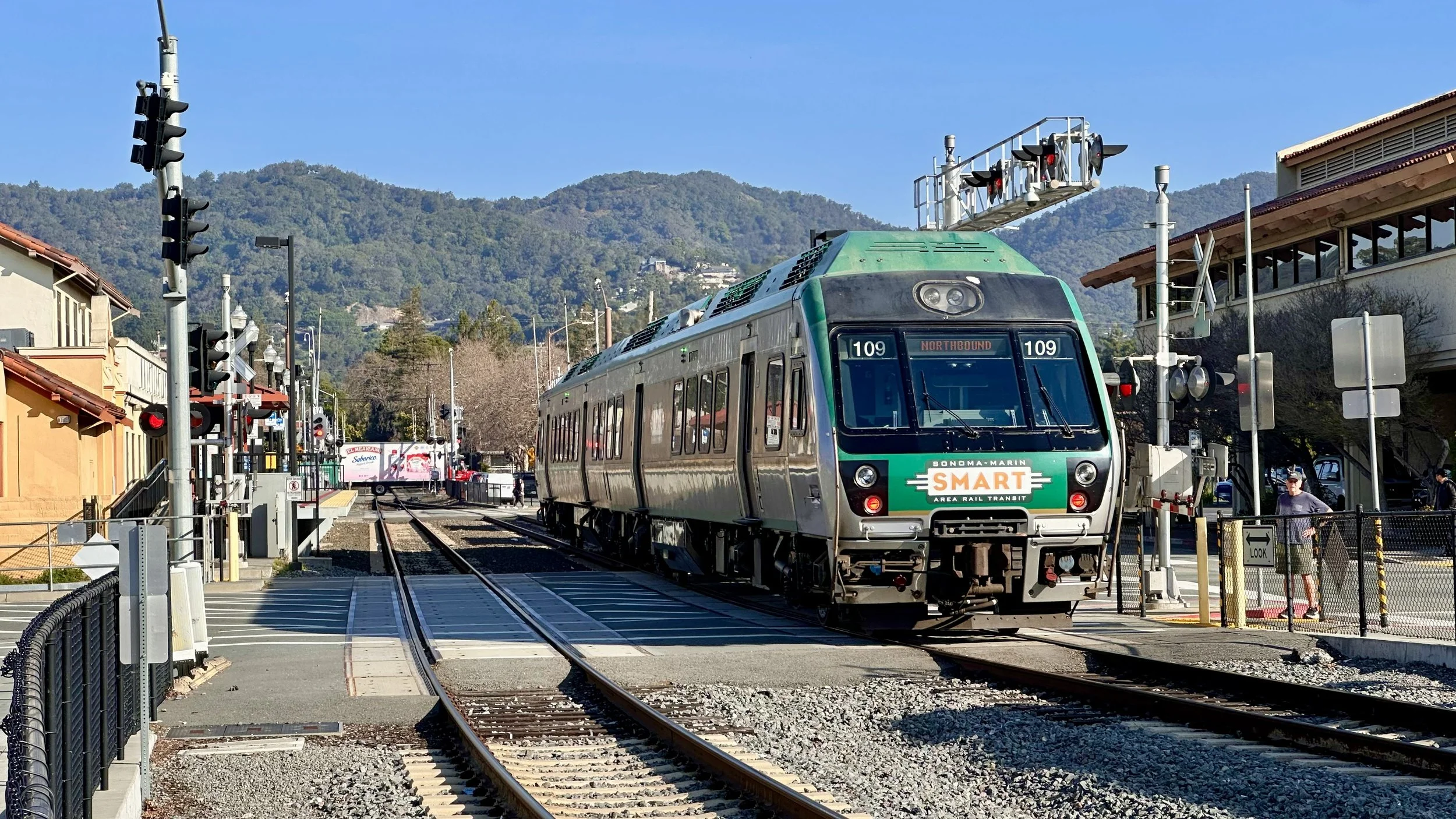
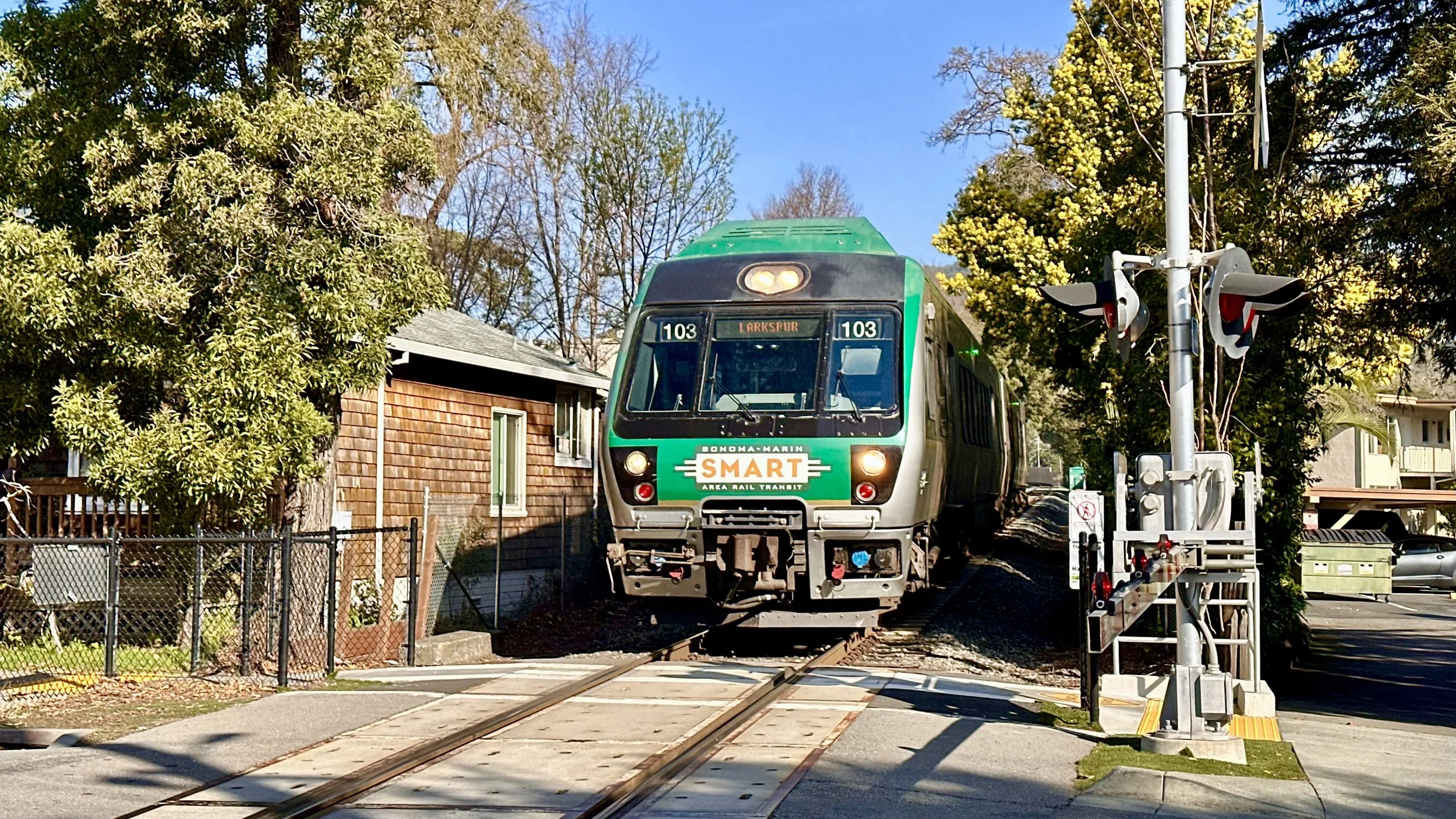
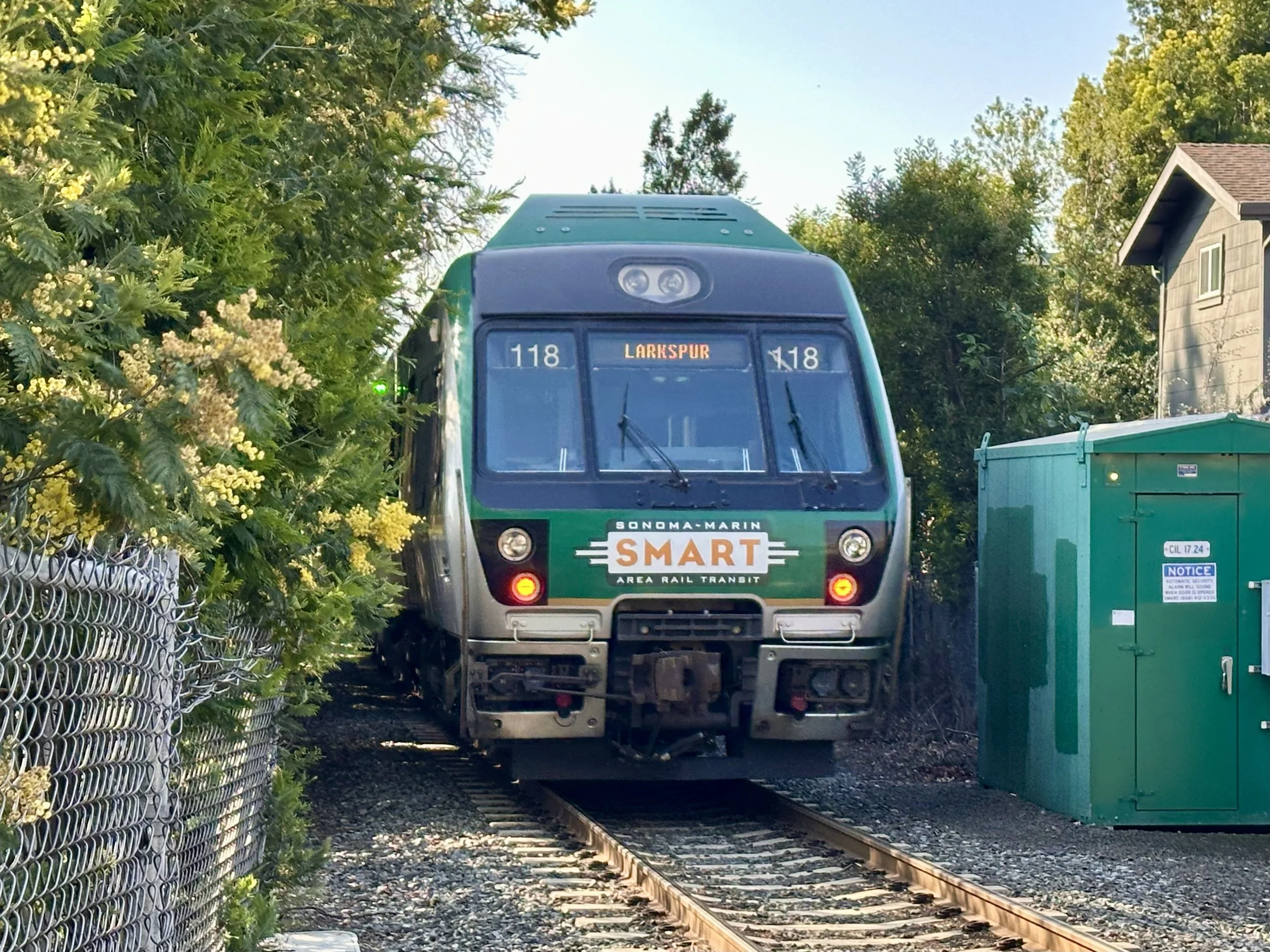
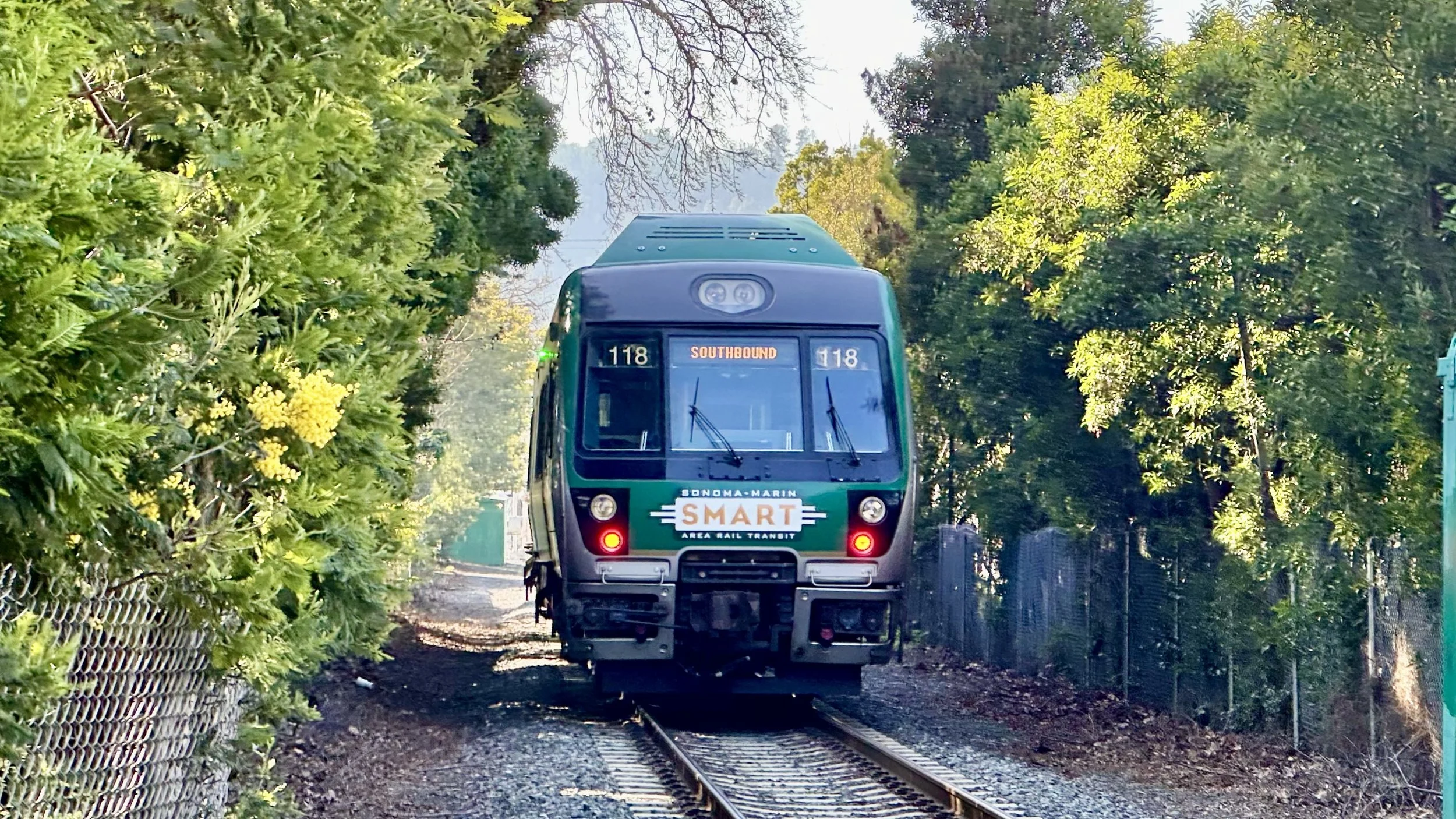
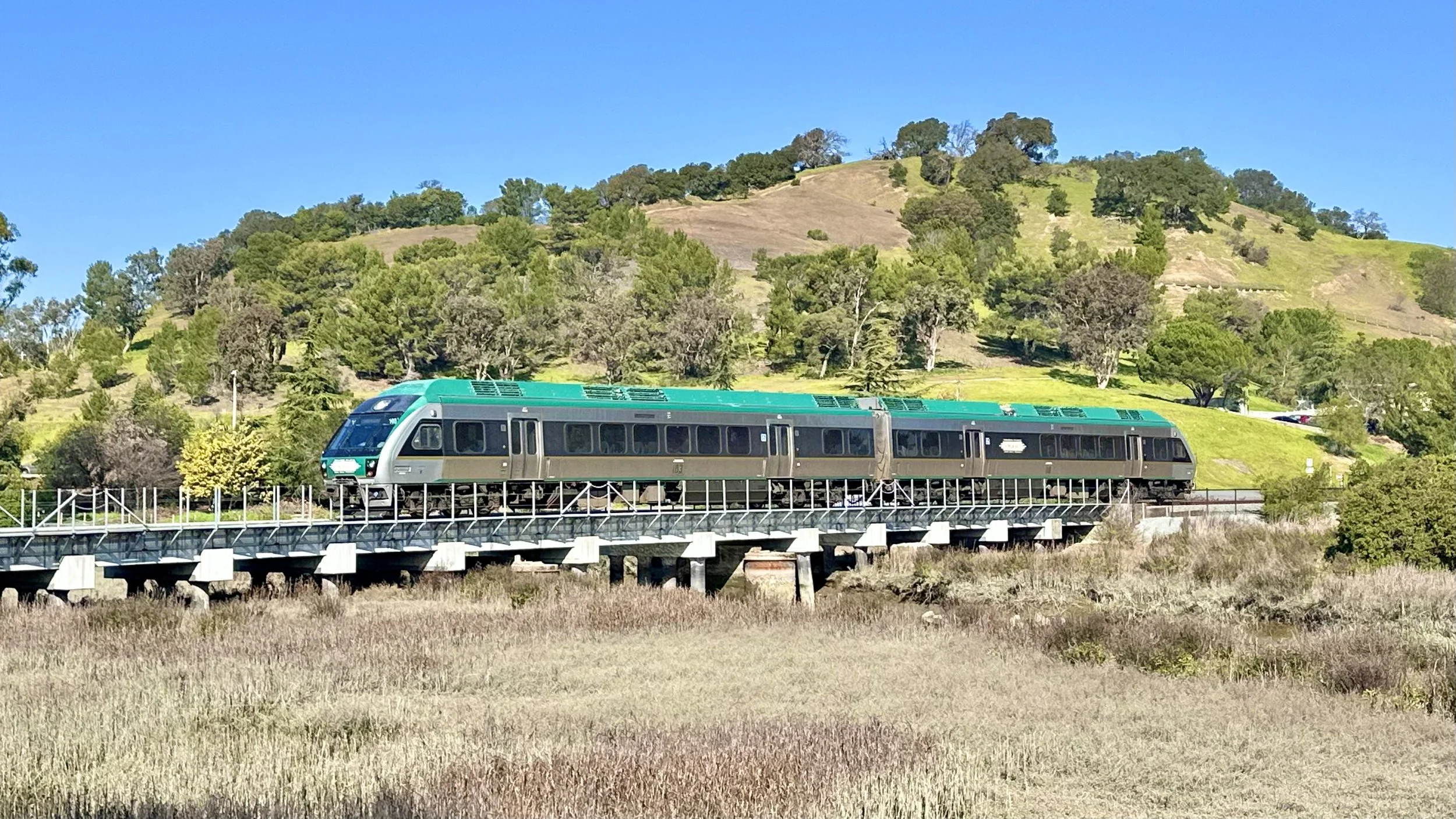
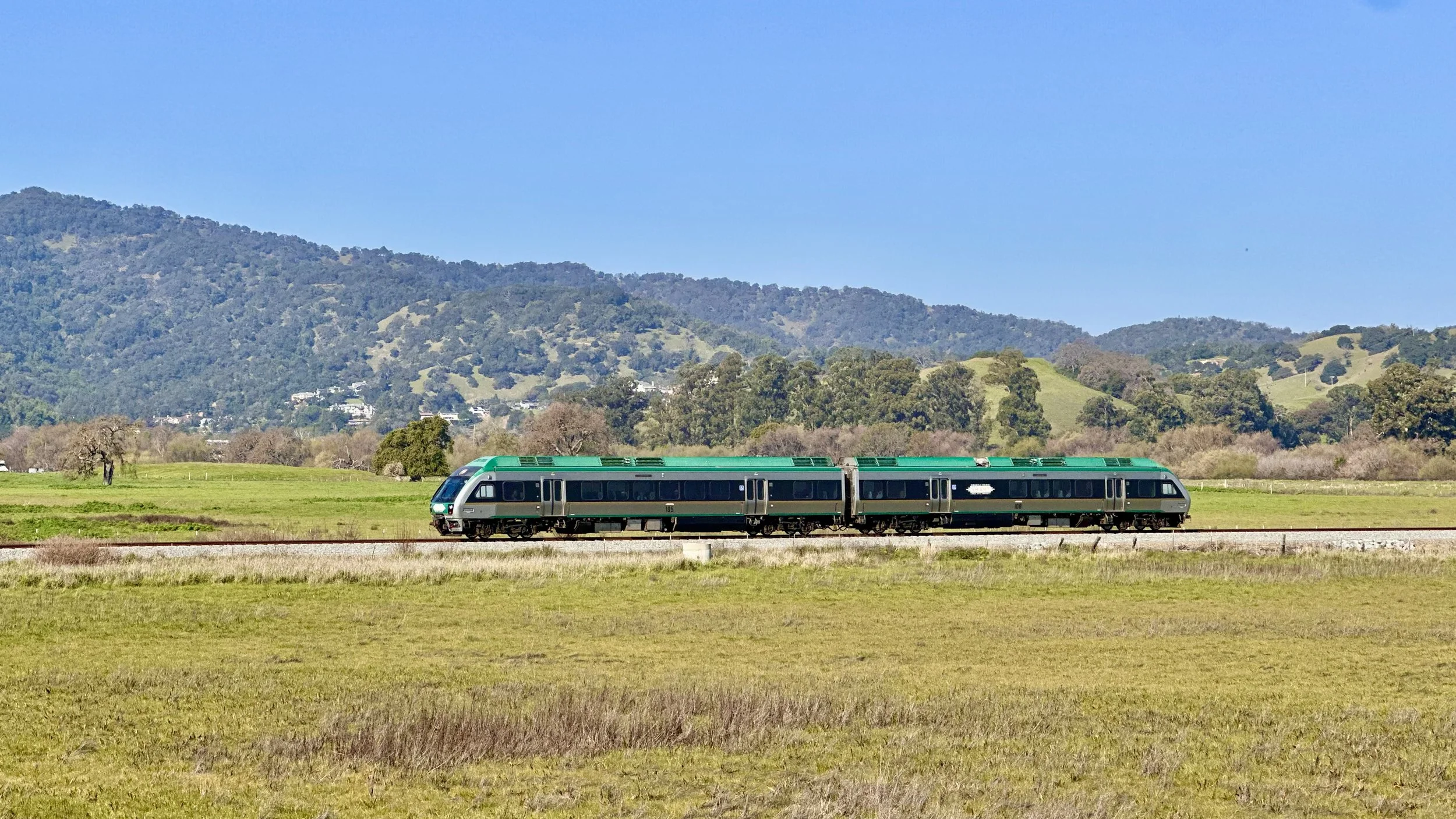
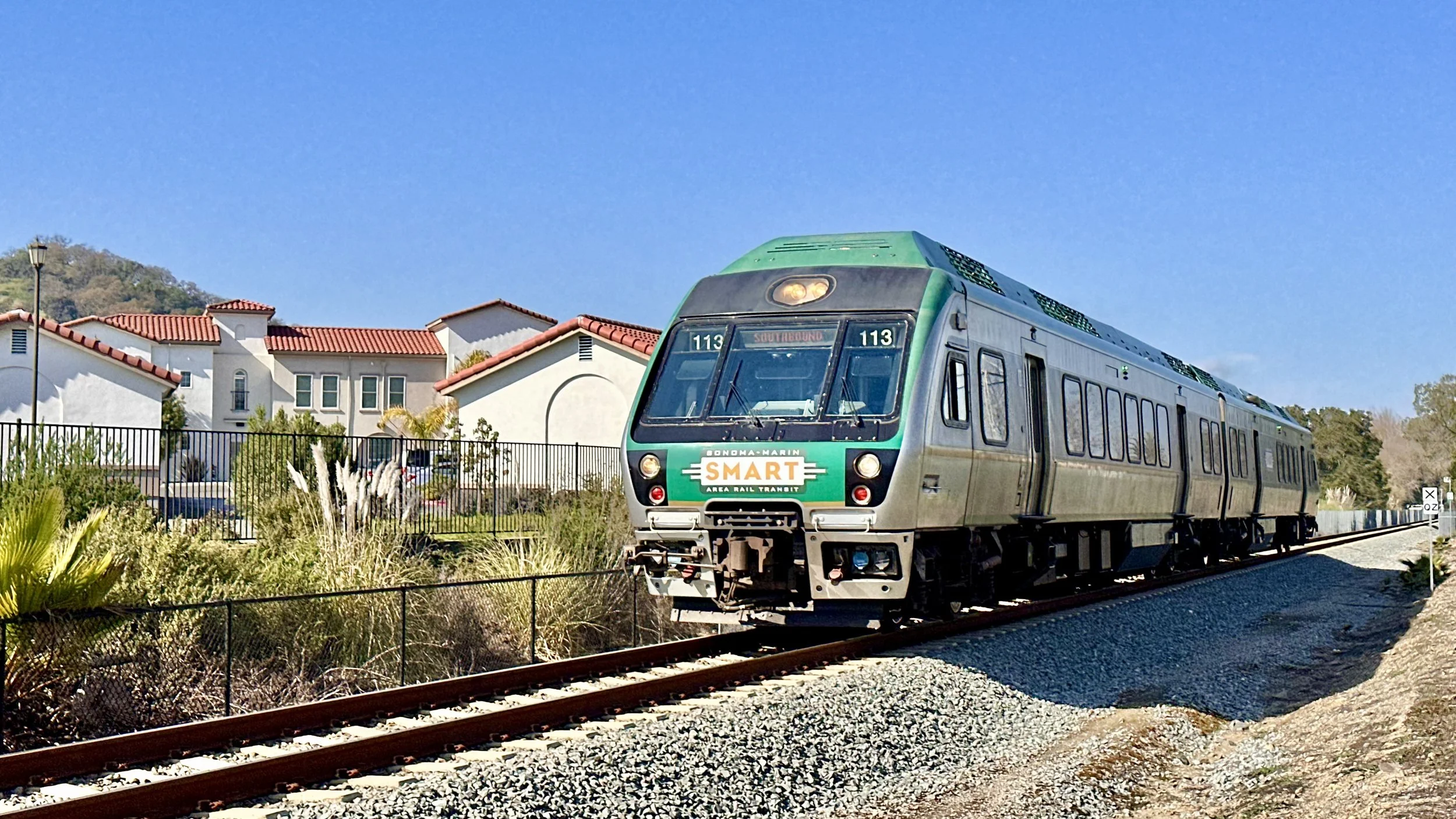
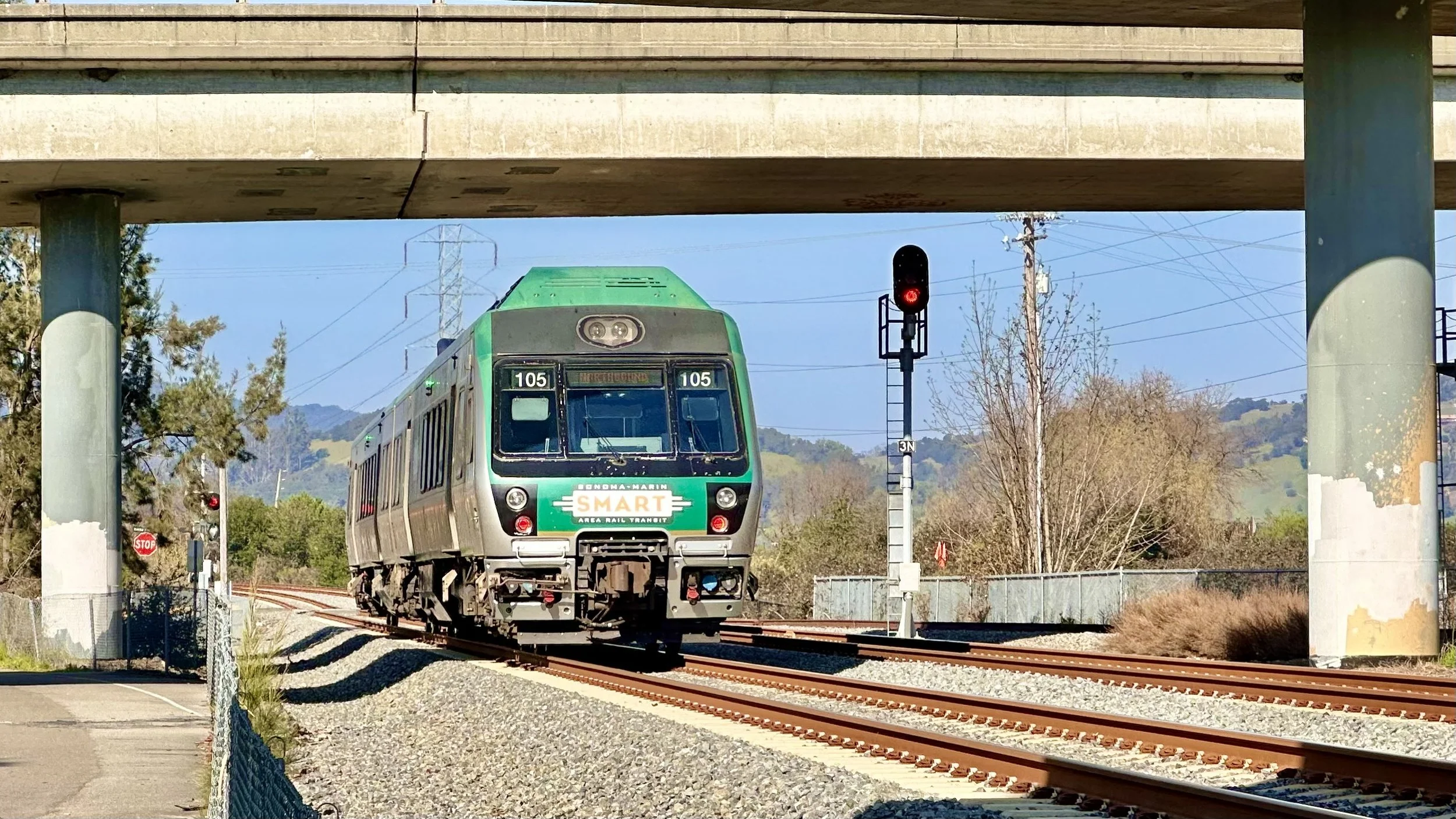
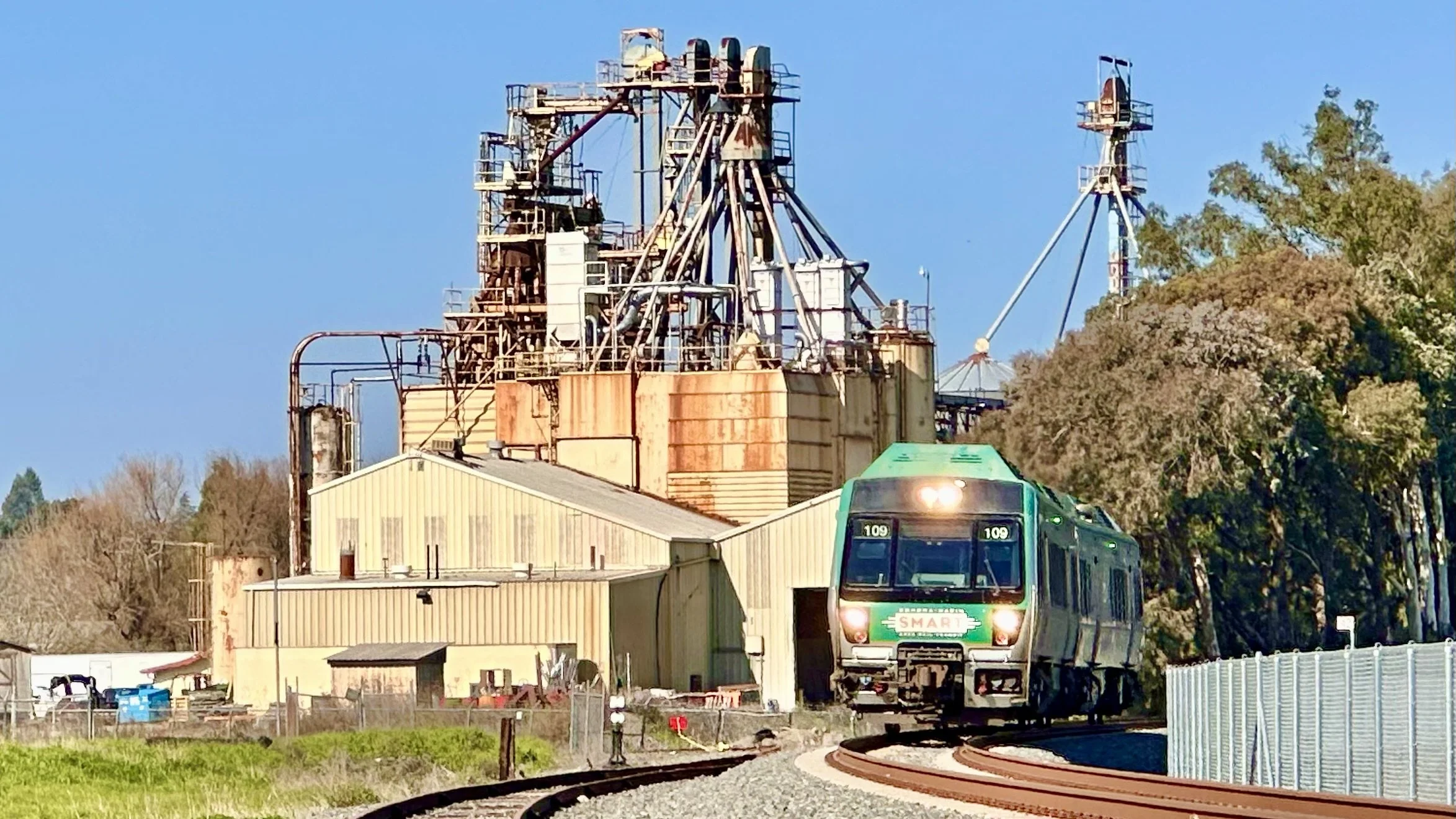
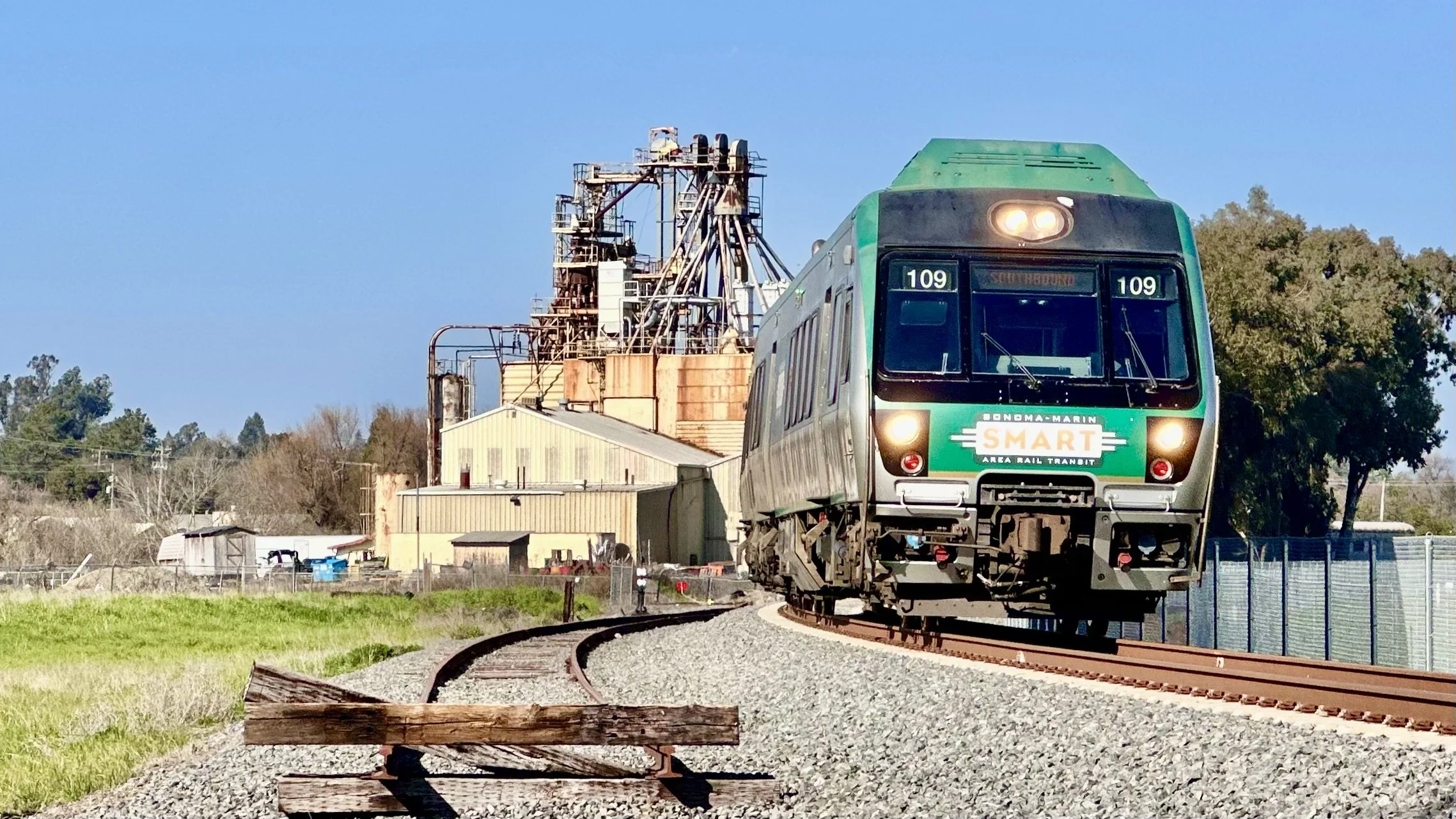
Speaking of the vehicle interiors, SMART is one of only two DMU systems to use Japanese-built Nippon-Sharyo DMUs (the other being the Union-Pearson Express between Toronto Union Station and the airport). Now no longer manufactured, they are extremely attractively appointed on the interior, with a spacious, airy feeling but comfortable and private seats, an extremely attractive light and dark green color scheme, and a restroom in the south-facing DMU and petite cafe in the north-facing DMU (sadly disused since COVID). While the UPE does have the NS middle trailer cars and while SMART built platforms to accommodate them, SMART did not order any middle trailer cars and runs only two-DMU lashups. Any additional increases in ridership or route extensions will strain fleet capacity, necessitating a mixed fleet with alternative vehicles, or, more likely, trading fleets entirely either to or from the UPE.
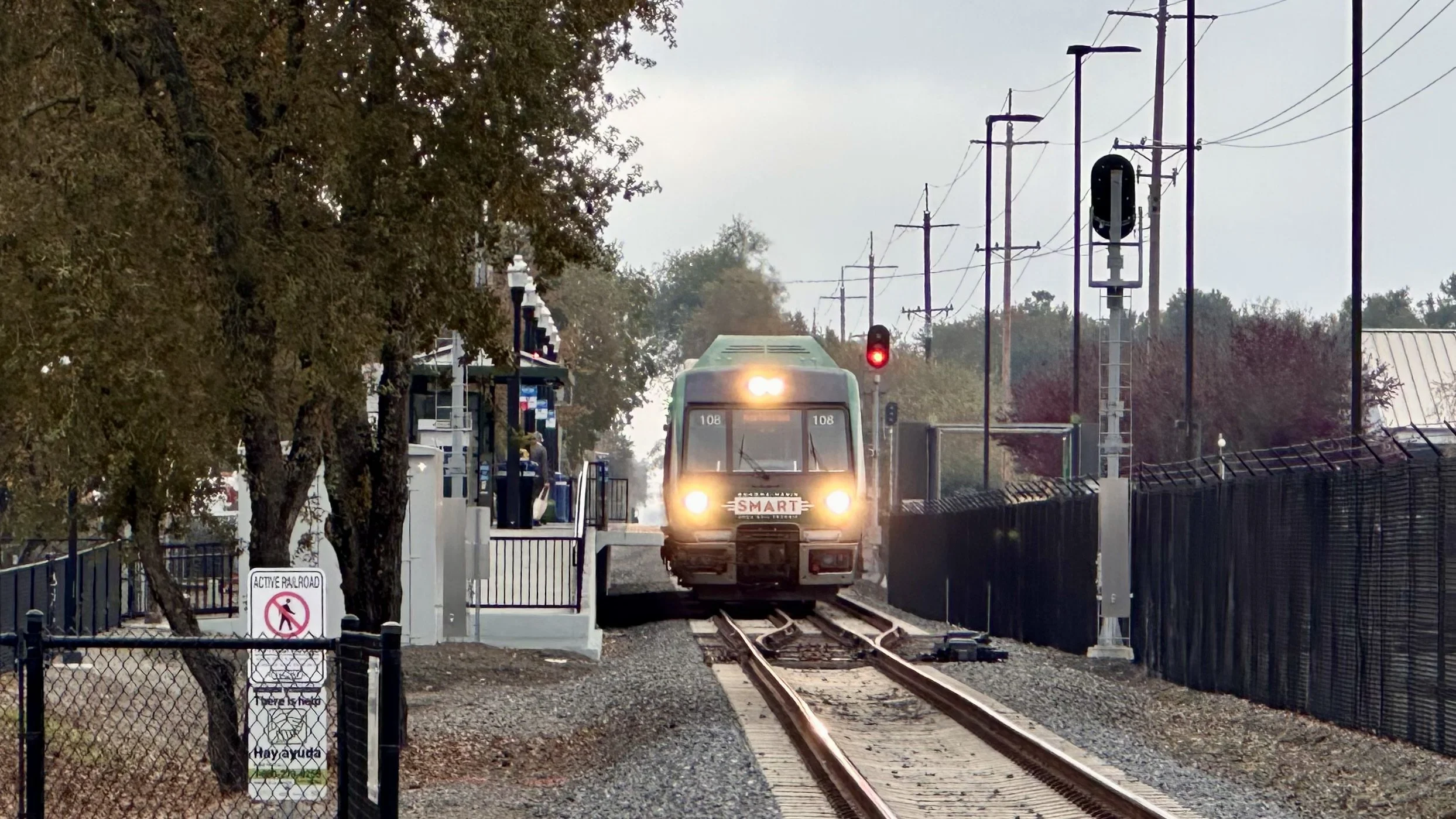
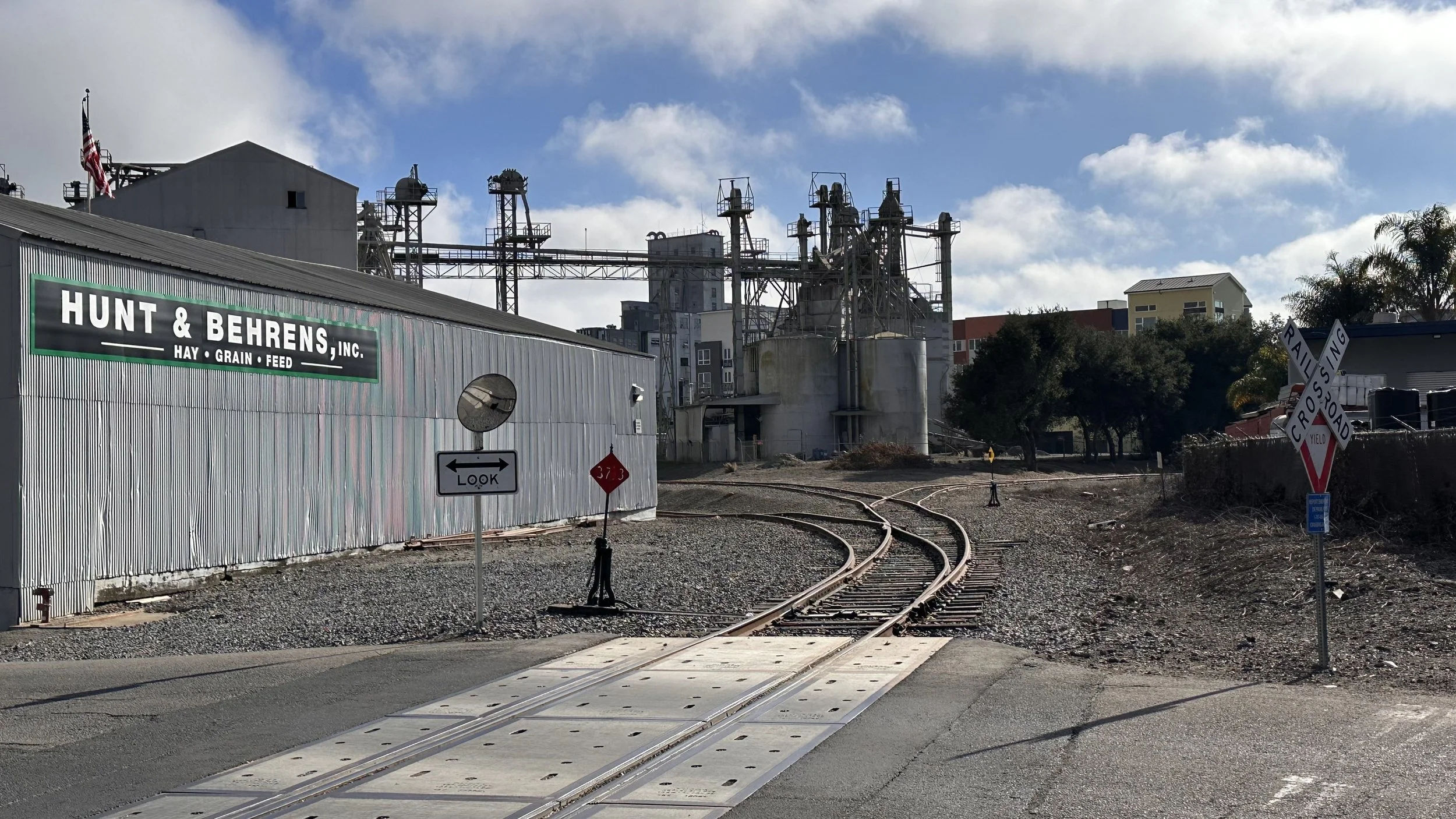
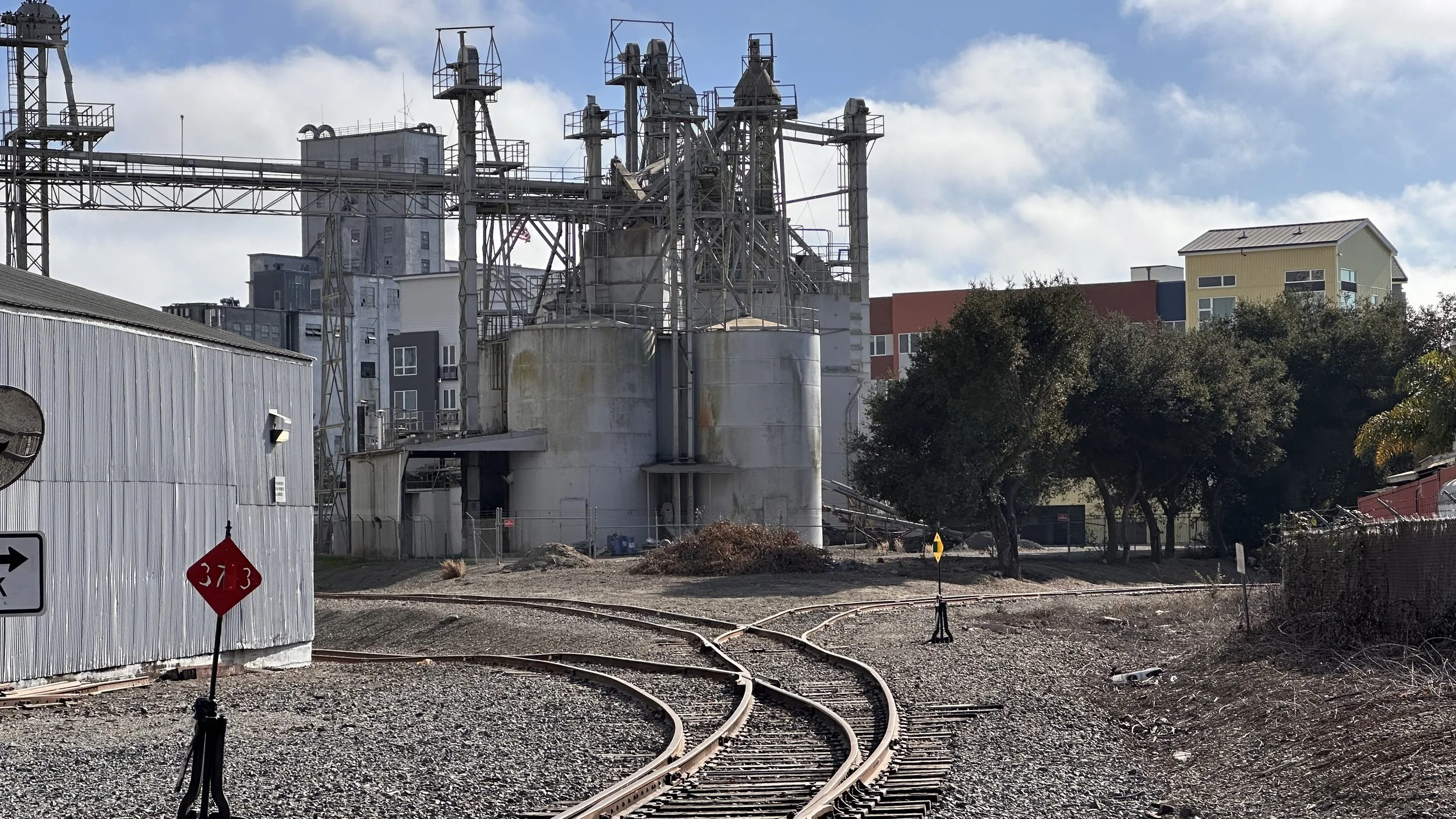
The Nippon-Sharyos are the only other FRA-certified DMUs, technically allowing daytime mixing of freight and passenger trains on the same rails, but, in practice, freight trains still come only at night. SMART also operates several freight-only routes which may someday see a DMU extension eastward for connections to Sacramento or San Jose. However, the current DMU route doesn’t see freight service until it’s joined by the freight line at a wye near Novato; all the stations northward have gauntlet tracks to allow for freight bypass, but most of the industries are in the vicinity of Petaluma.
While SMART doesn’t have as much freight or mainline action, it’s an extremely homey, neighborly, convenient, and versatile DMU system. Any prototype-based layouts would likely need to massively compress the route, focus on the freight-aligned segment between Novato and Petaluma, and have to build the DMUs from scratch. However, SMART does inspire adaptation of its medium-frequent regional rail along a medium-density freight line to many other model railroads of similar scope, and its highly variable schedule, as with CapMetro Rail, demonstrates how aperiodic passenger schedules can create daytime pockets for freight train coexistence and more dynamic model operations.