Trinity Metro TEXRail
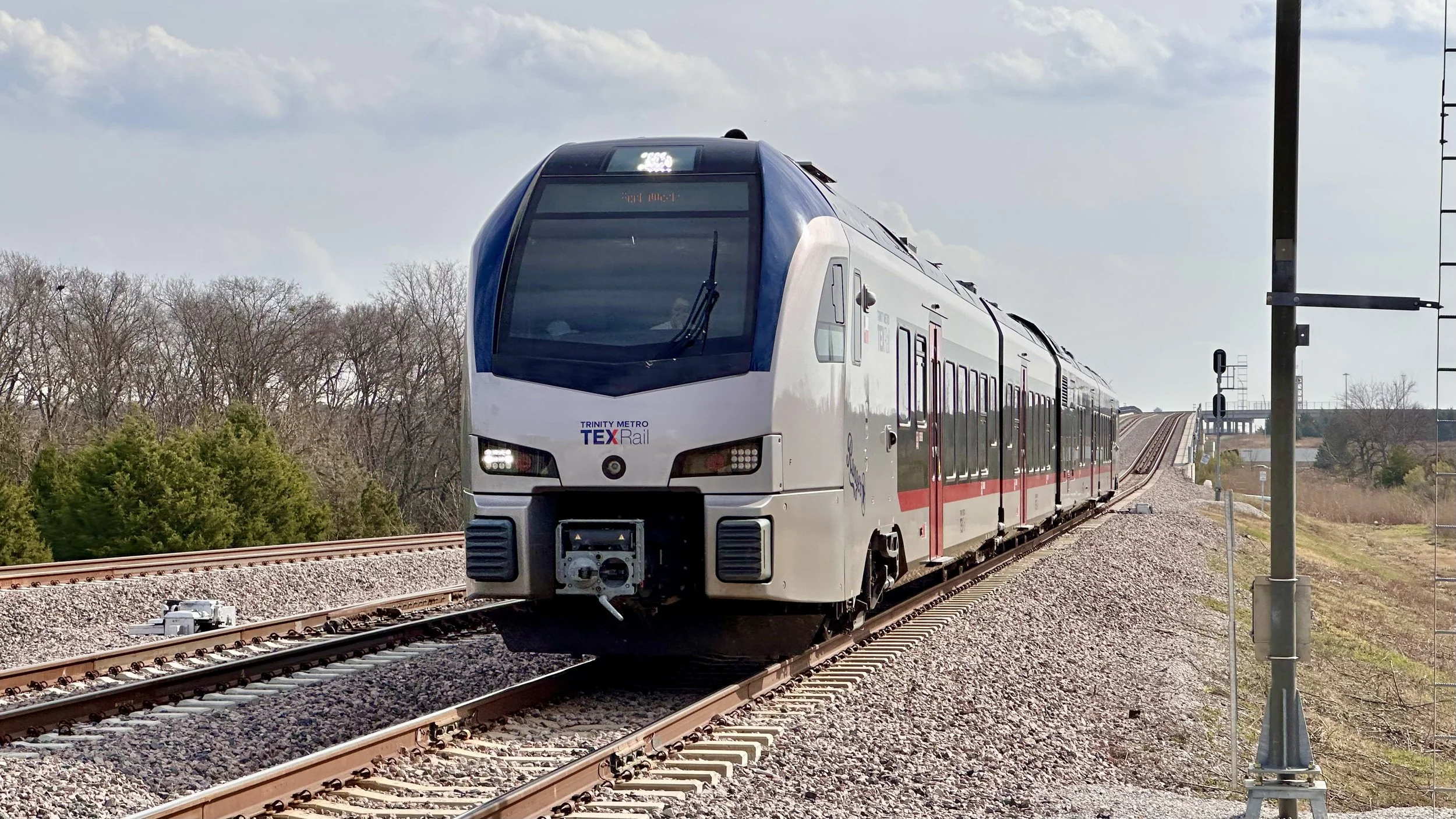
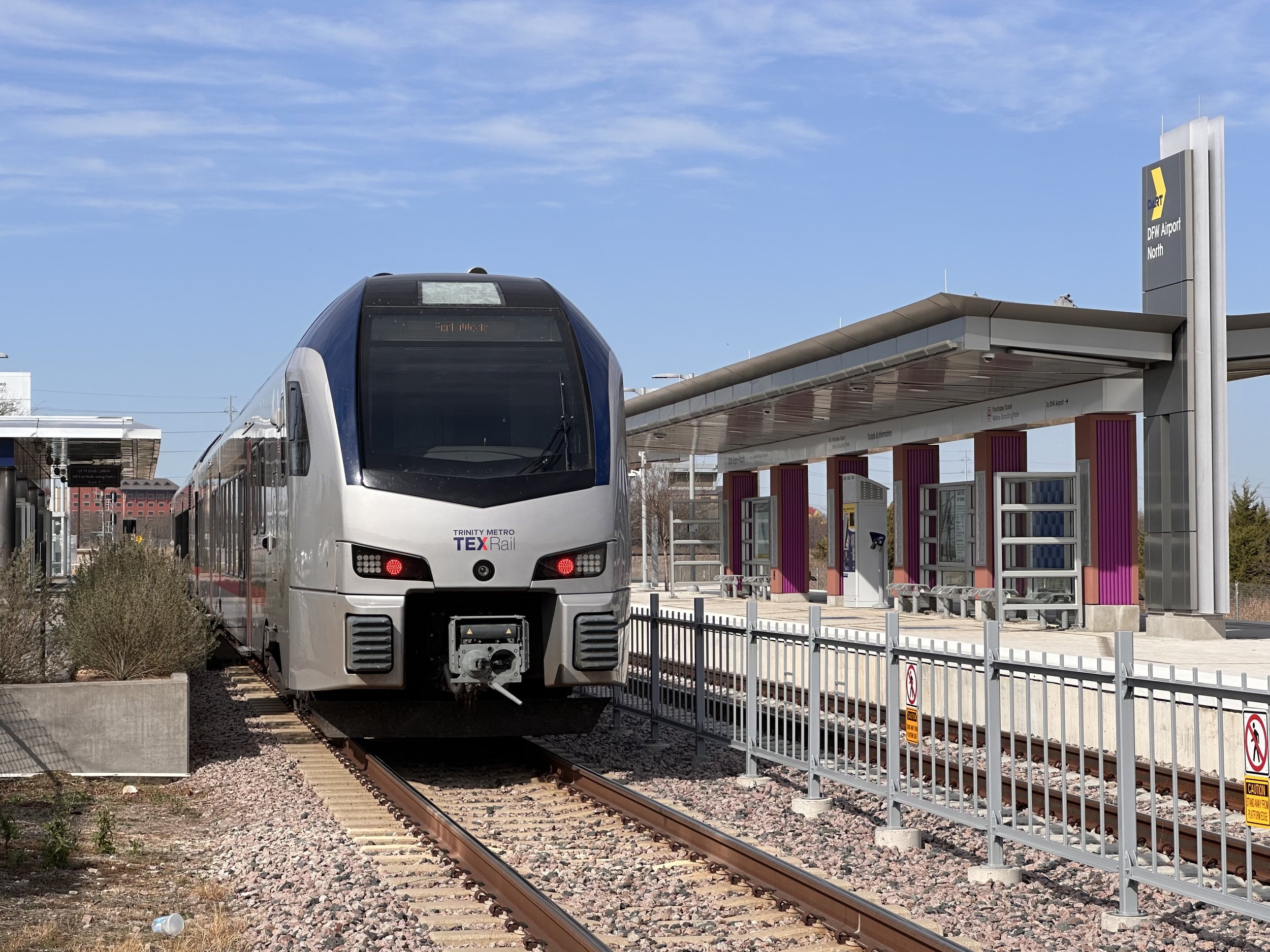
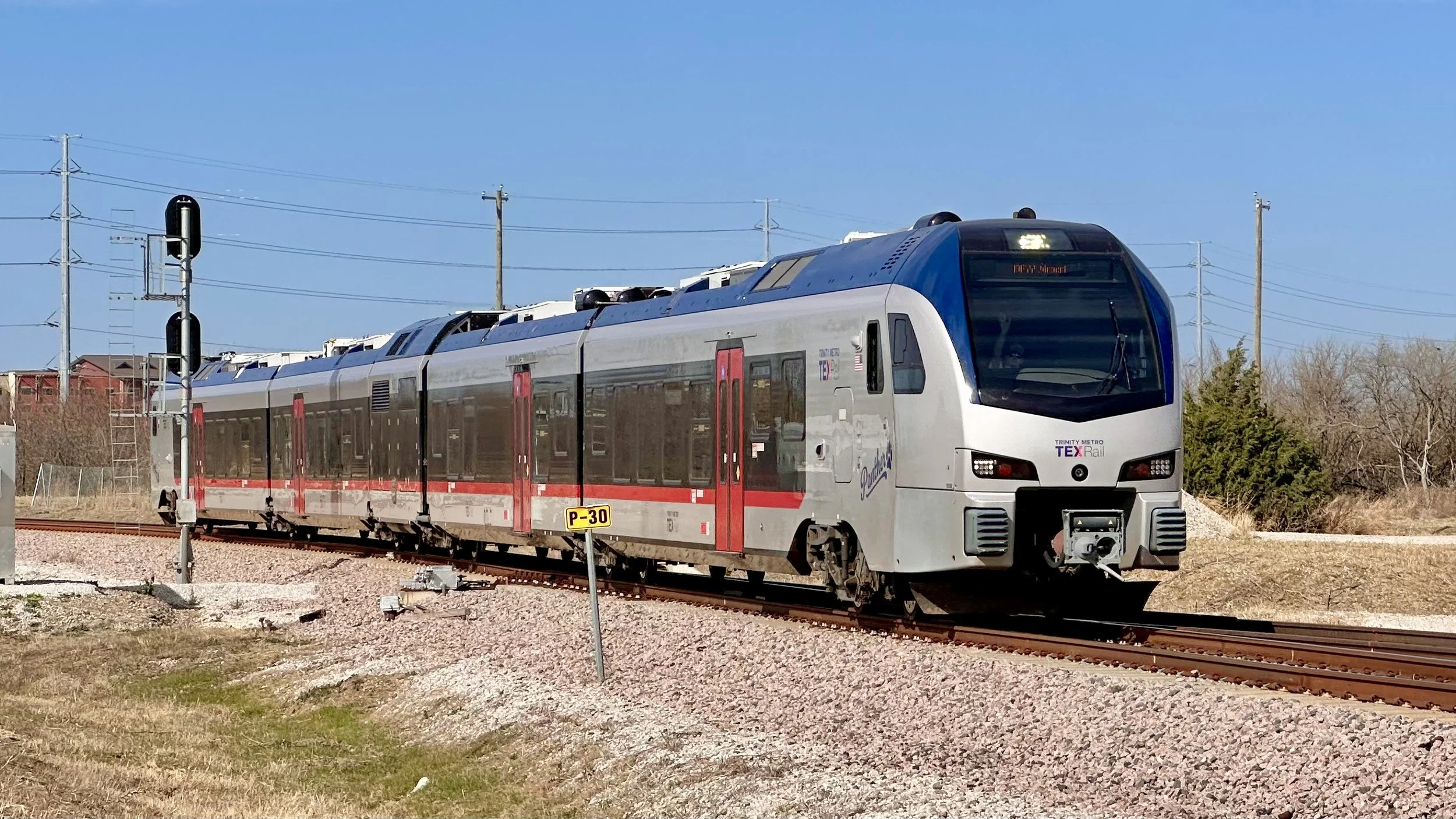
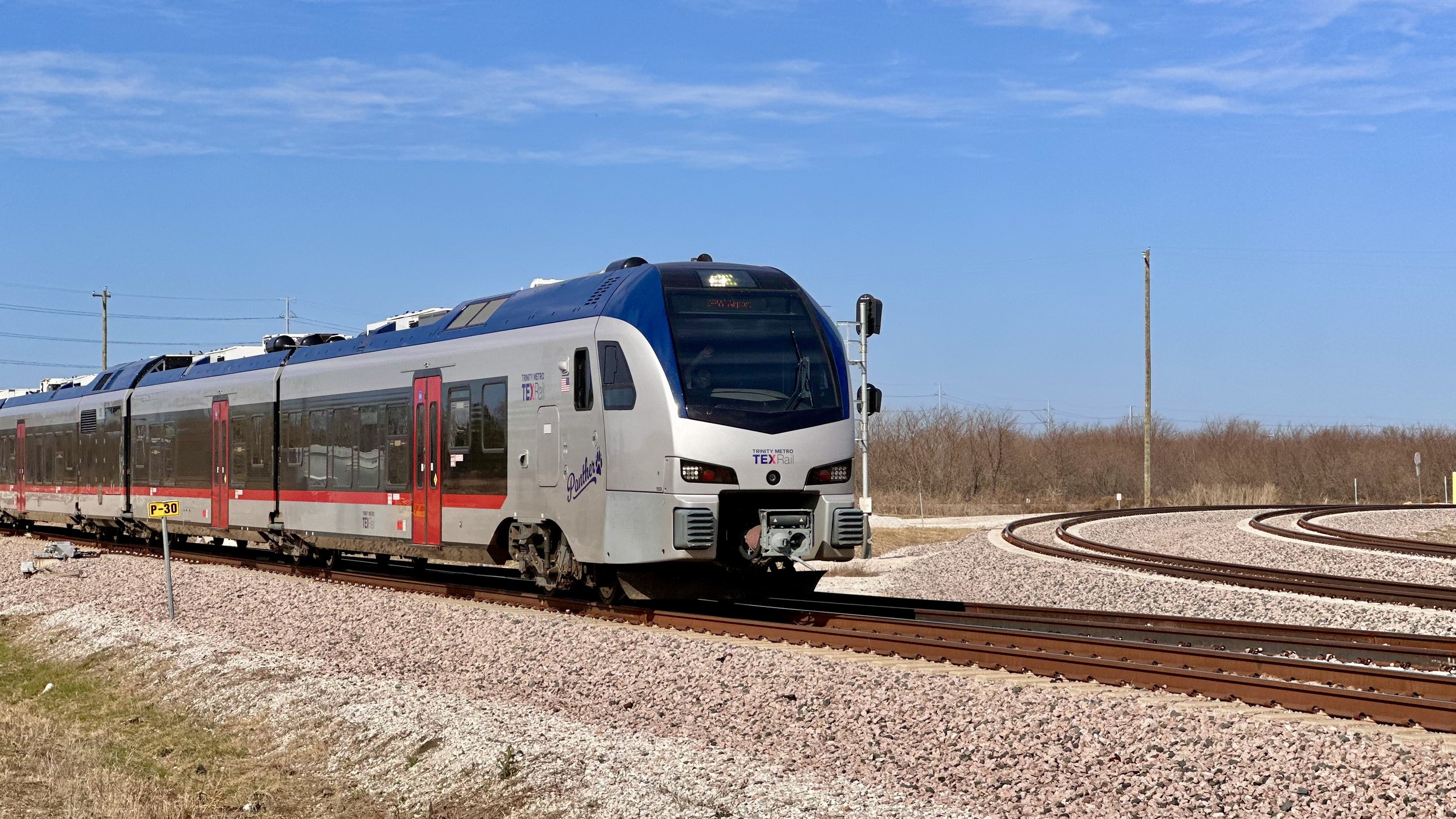
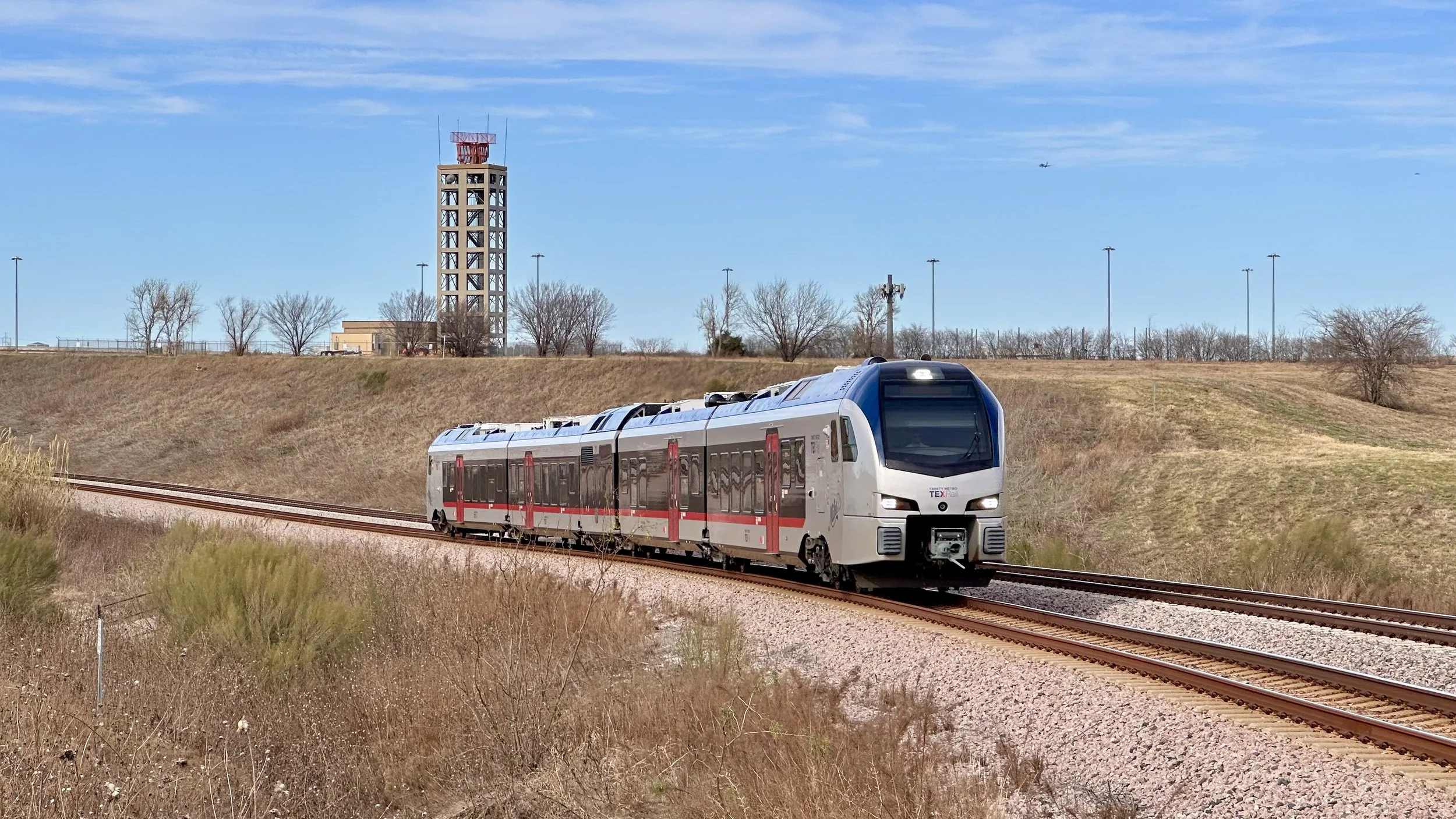
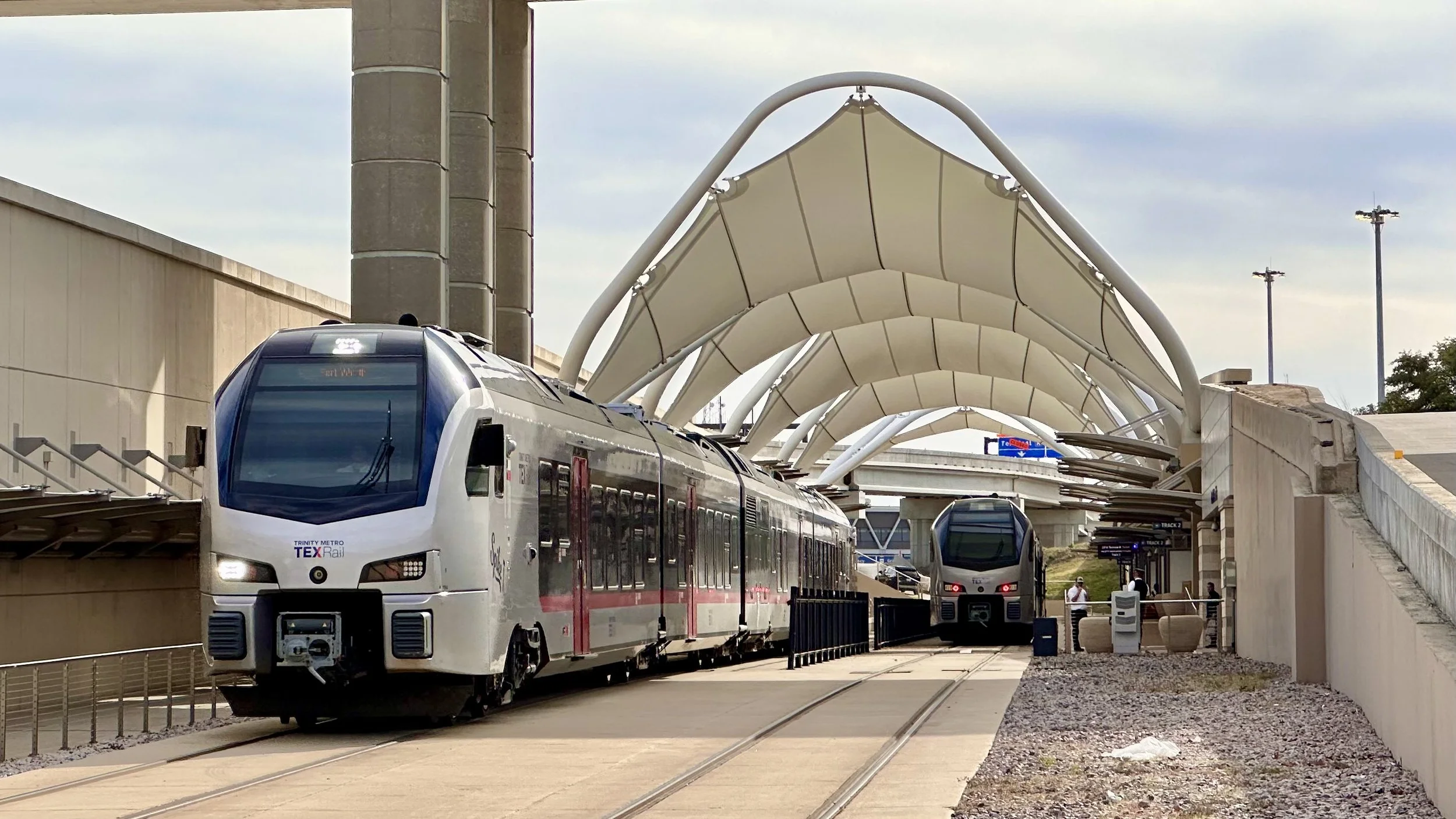
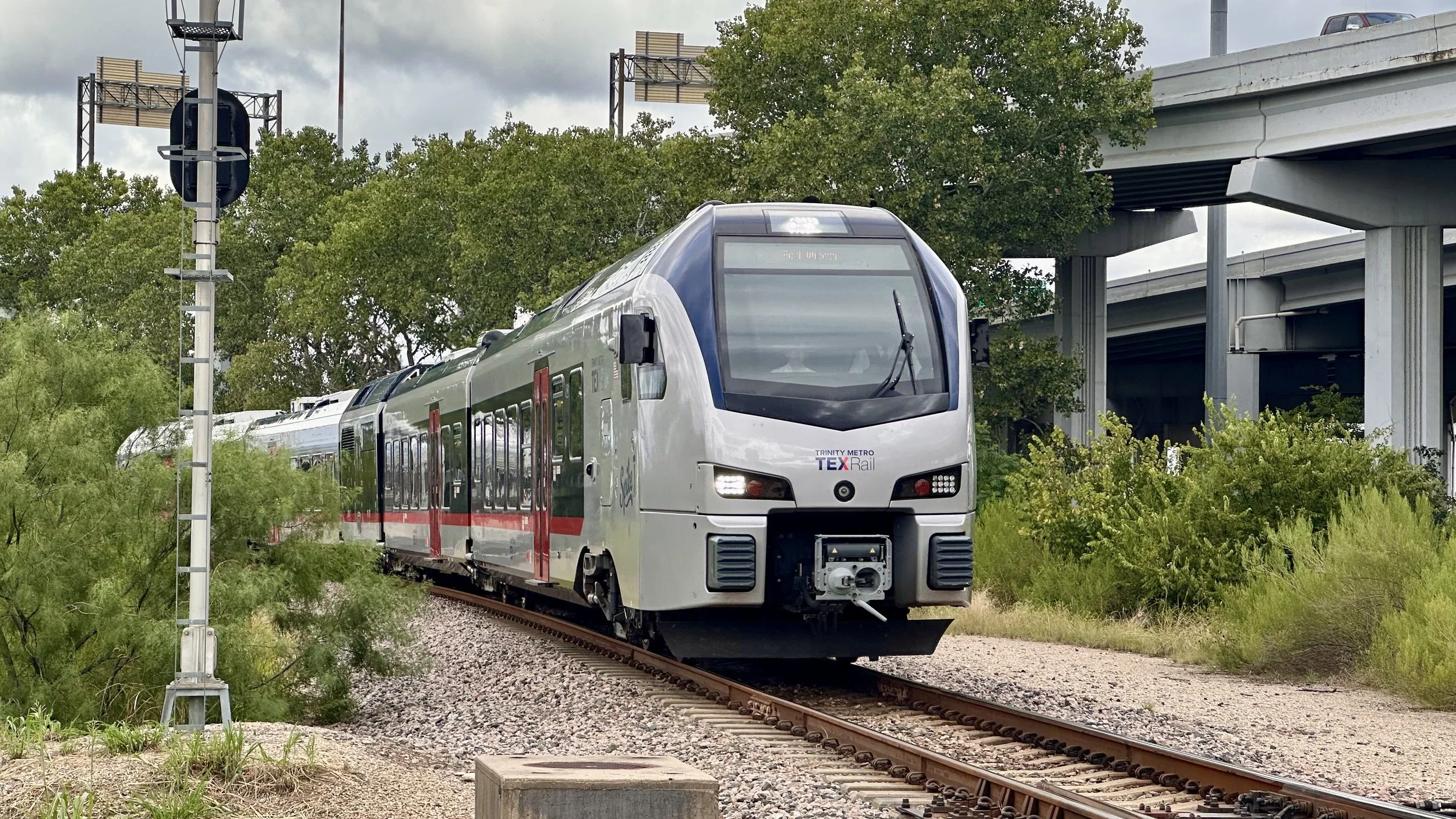
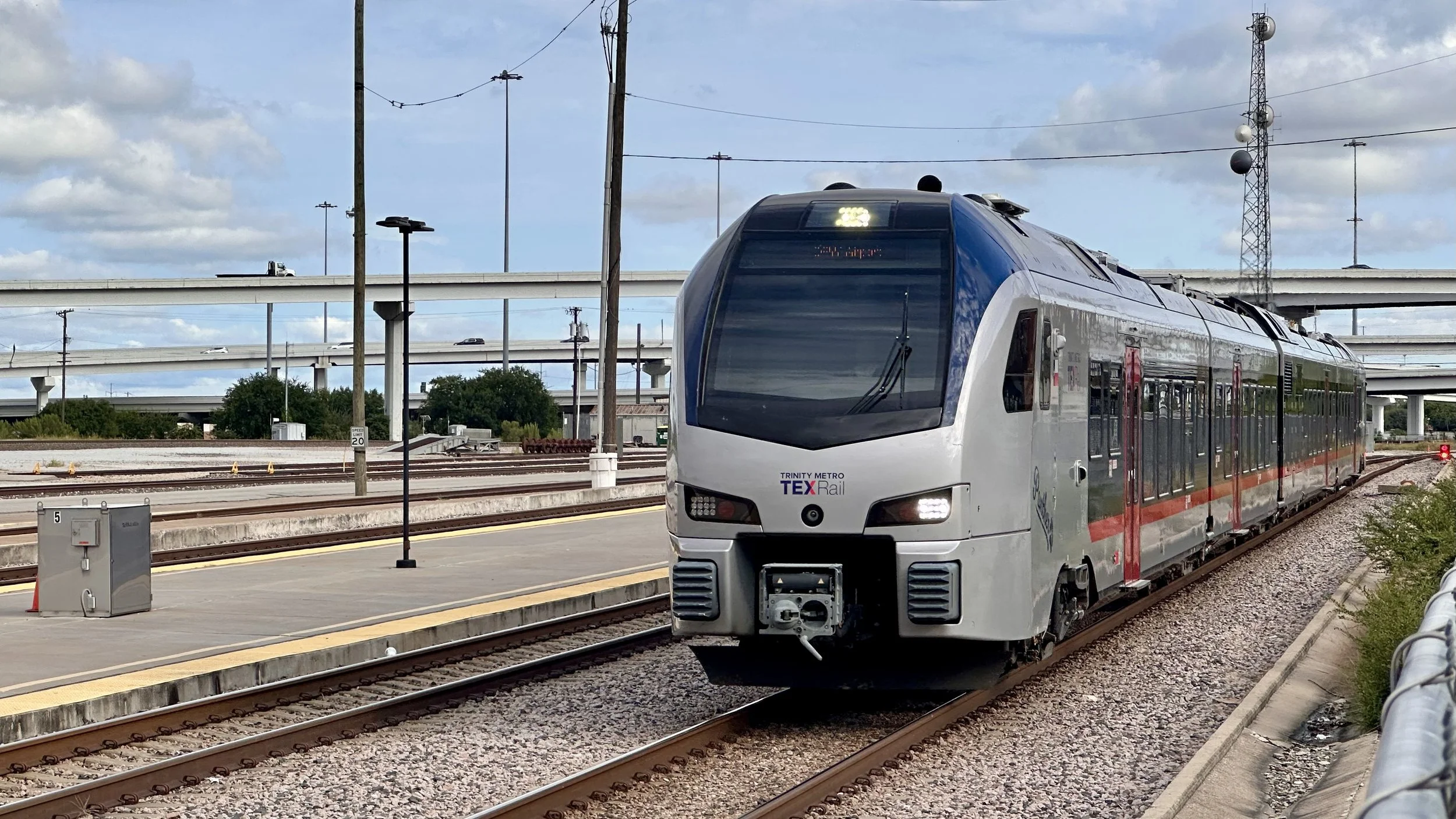
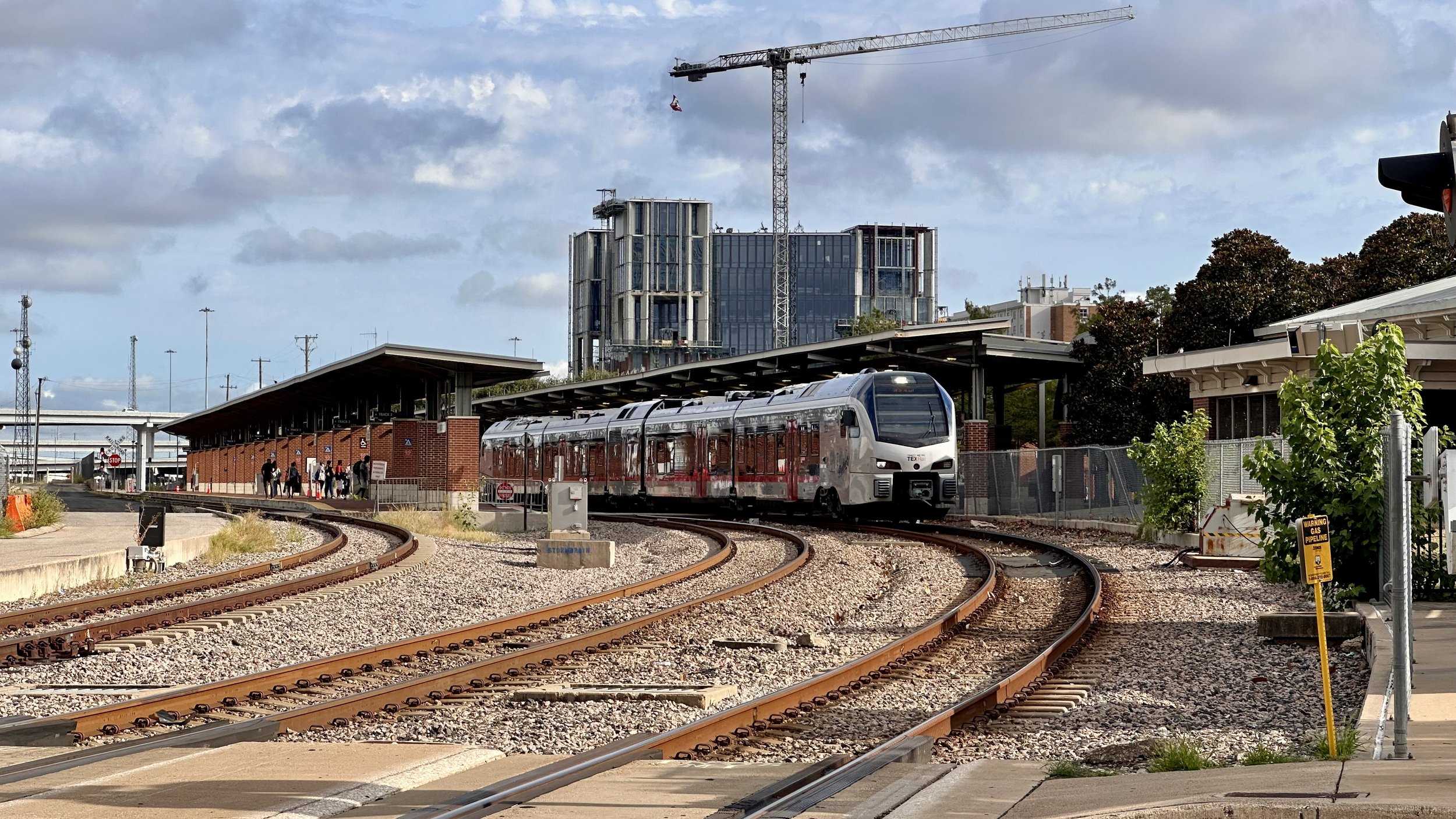
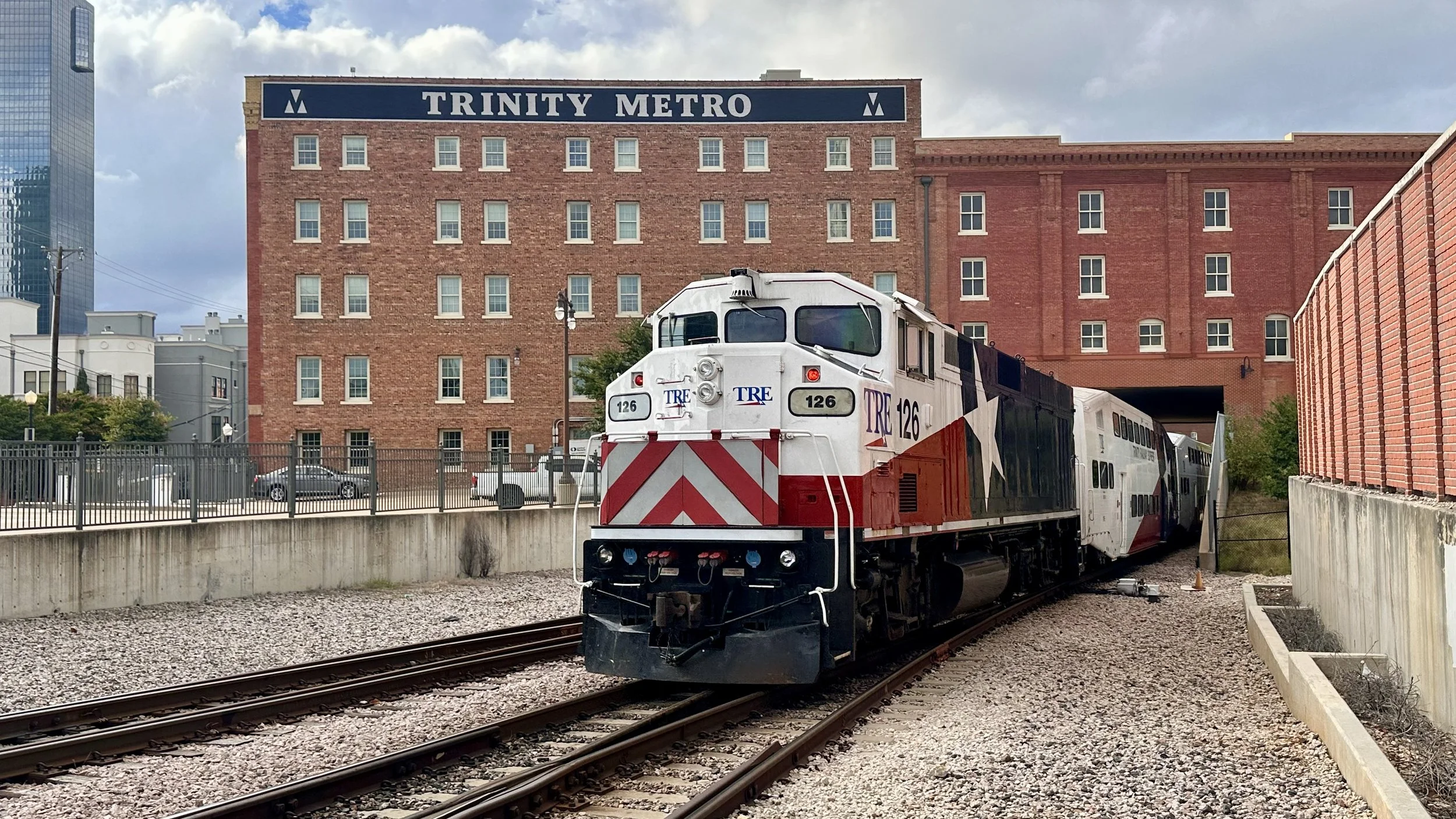
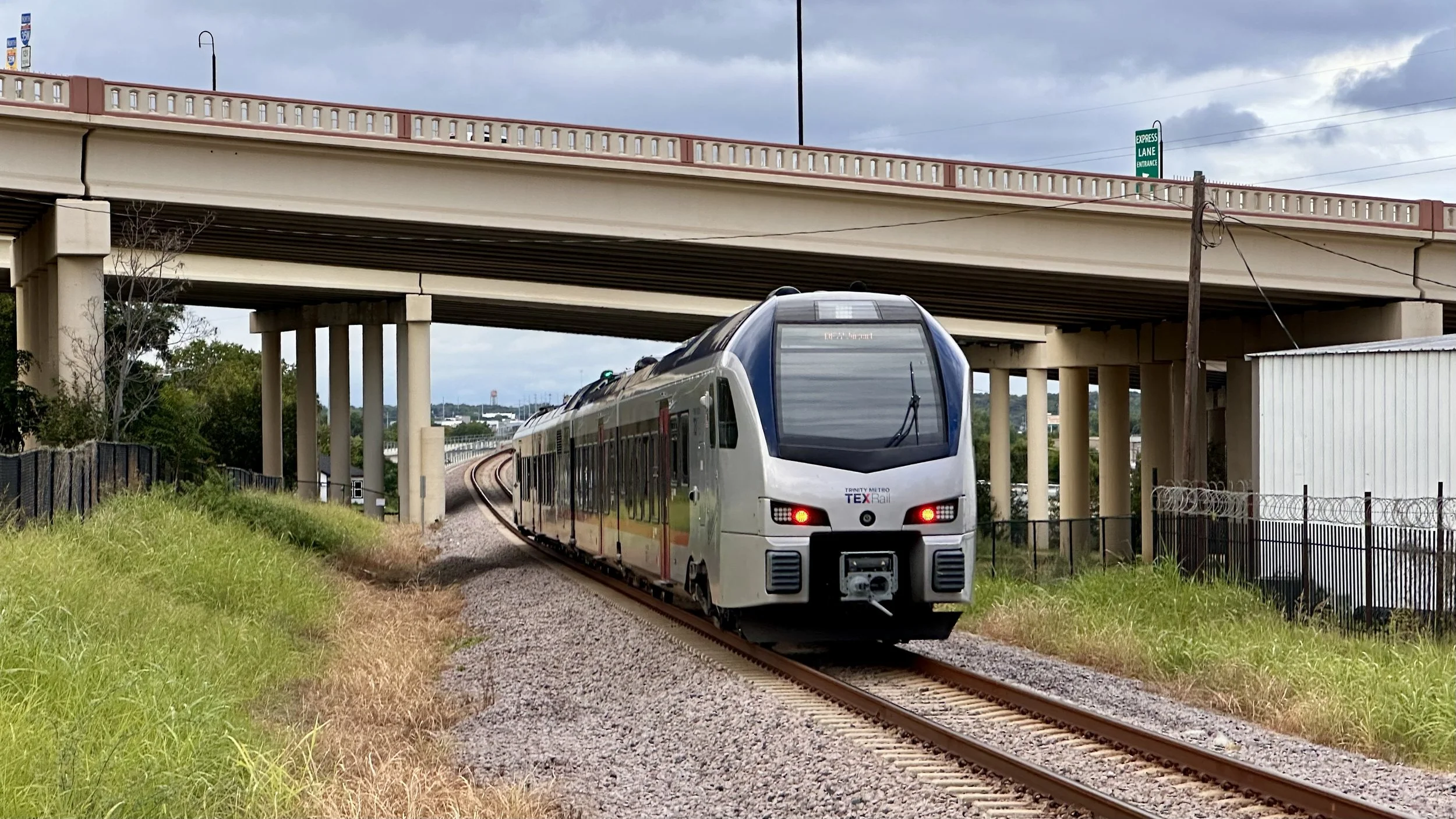
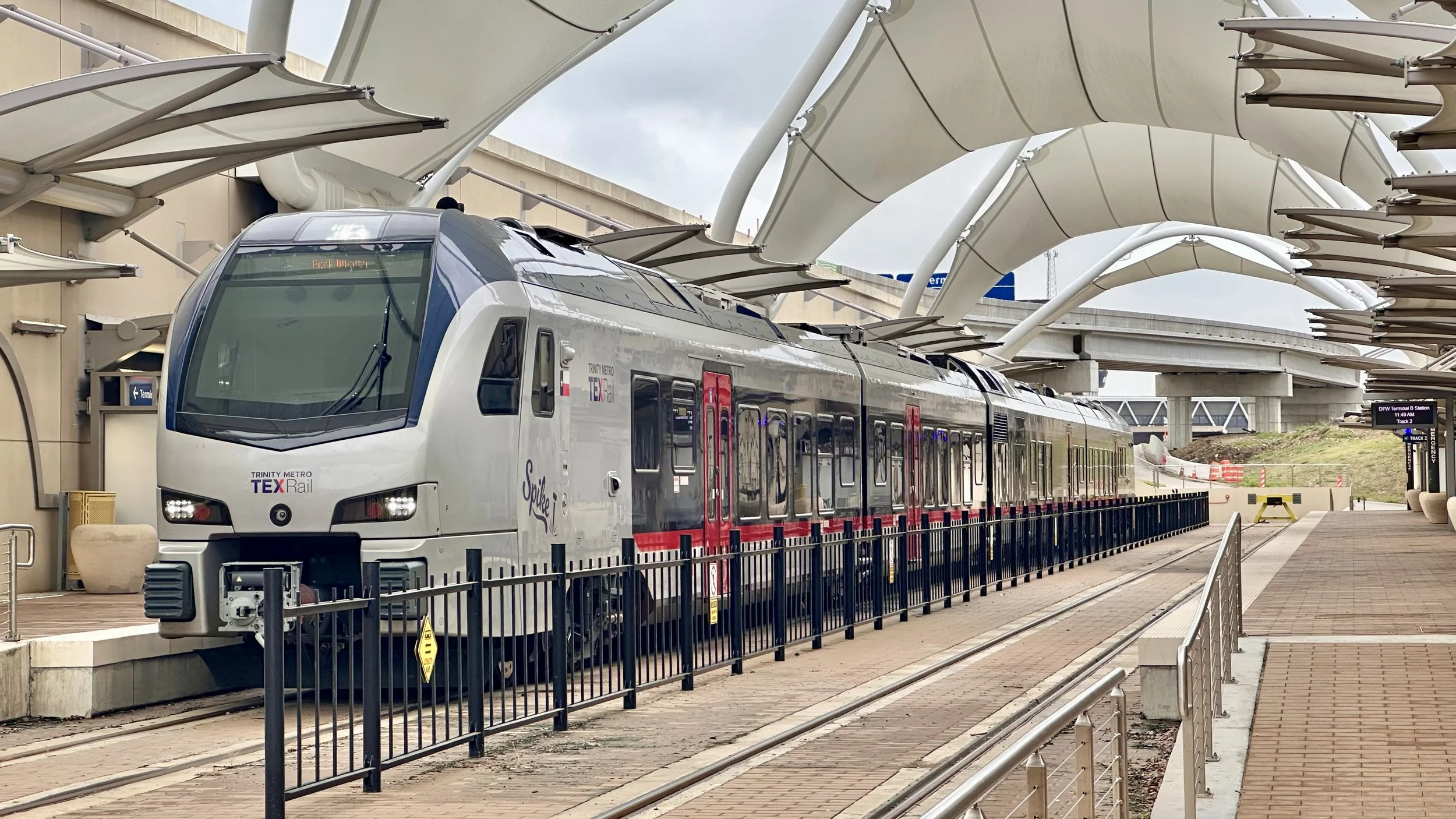
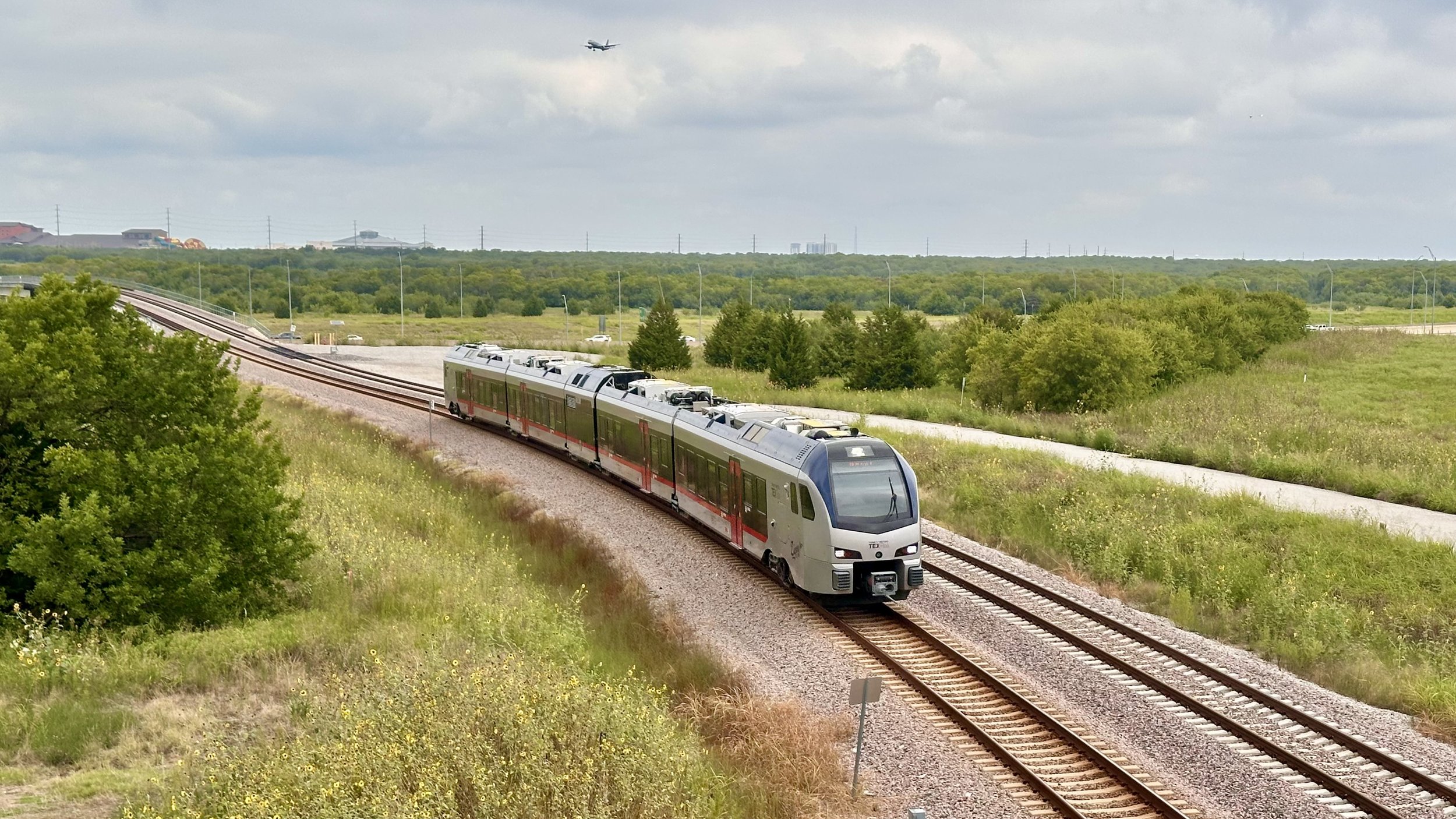
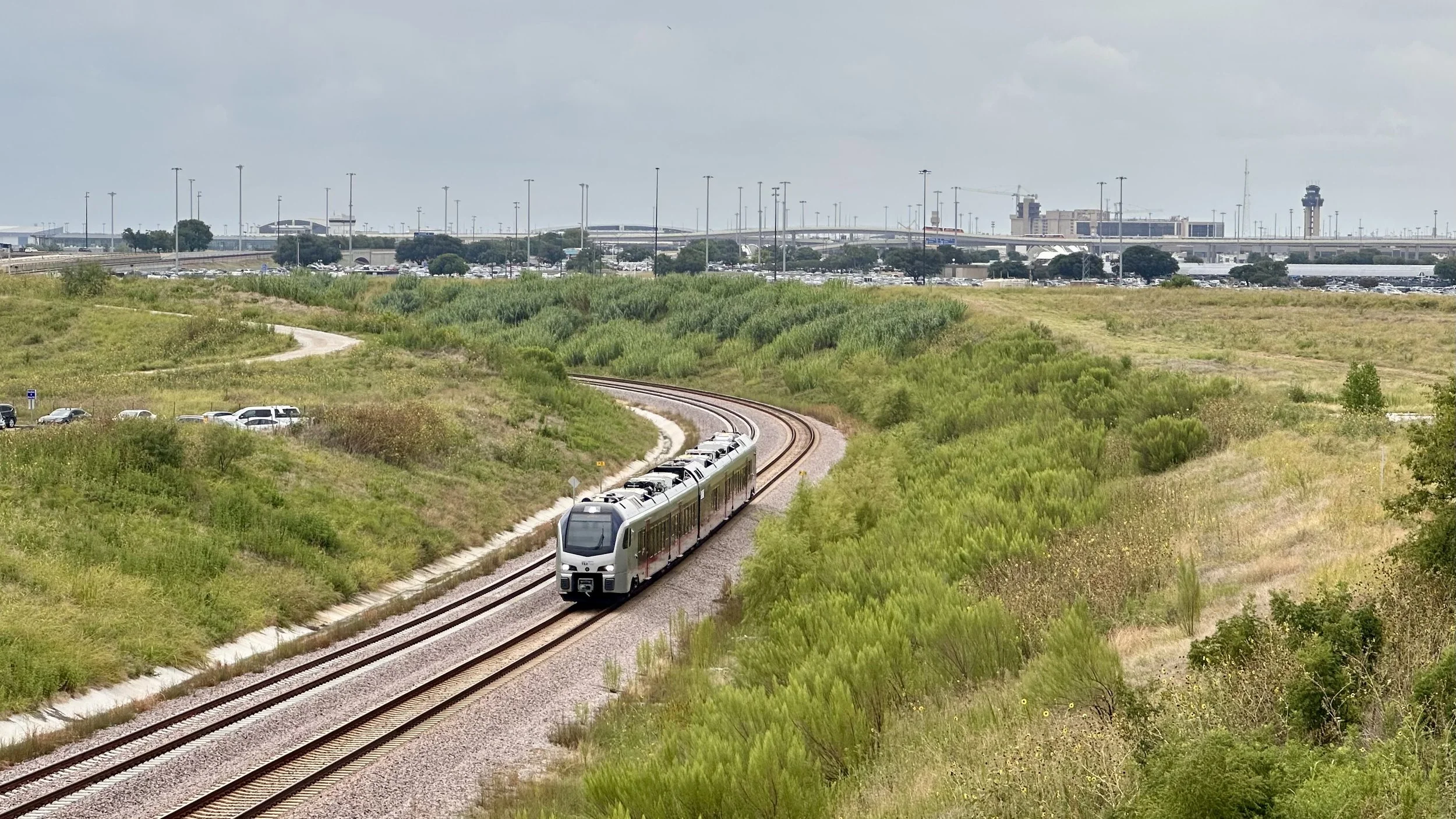
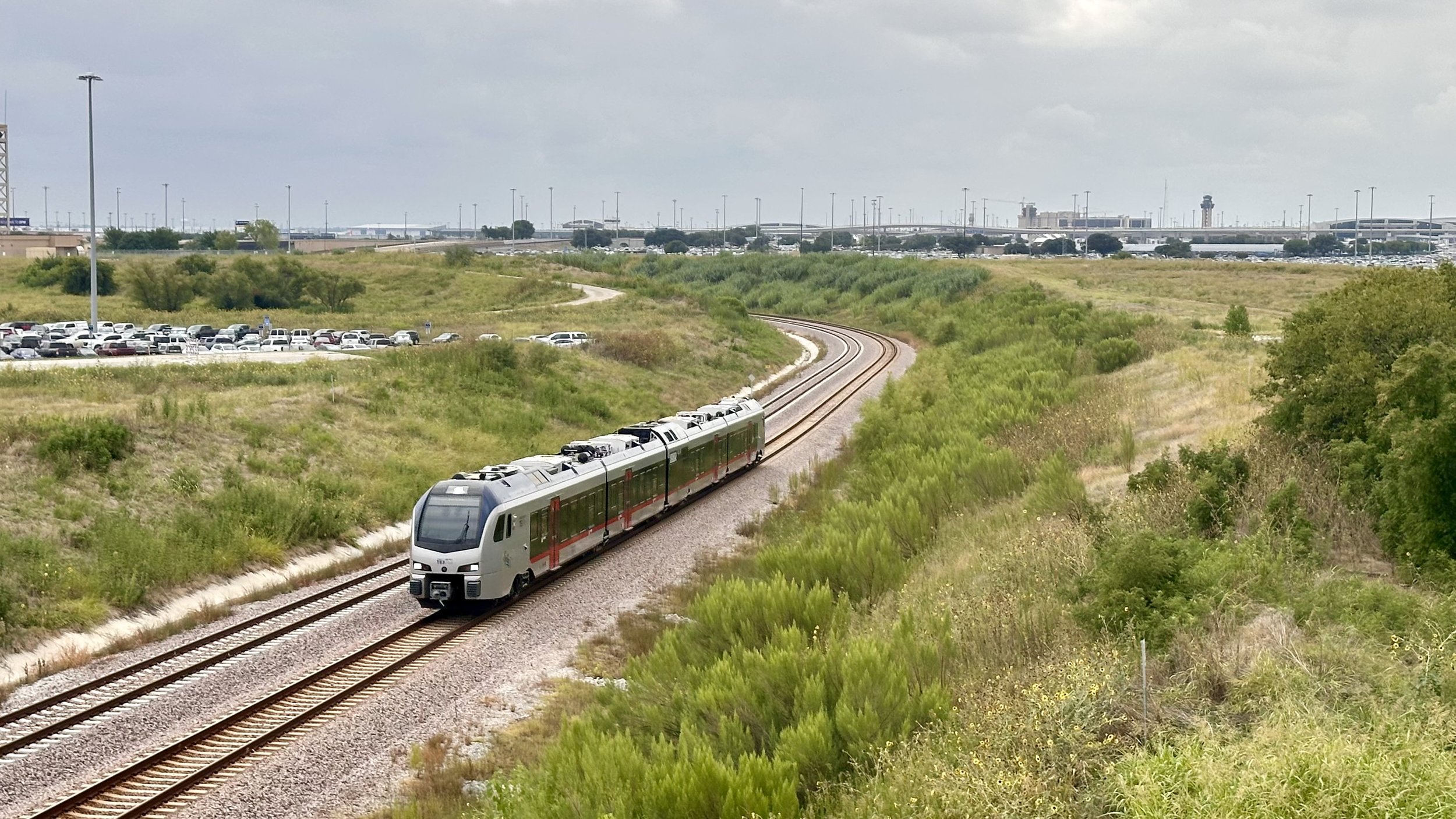
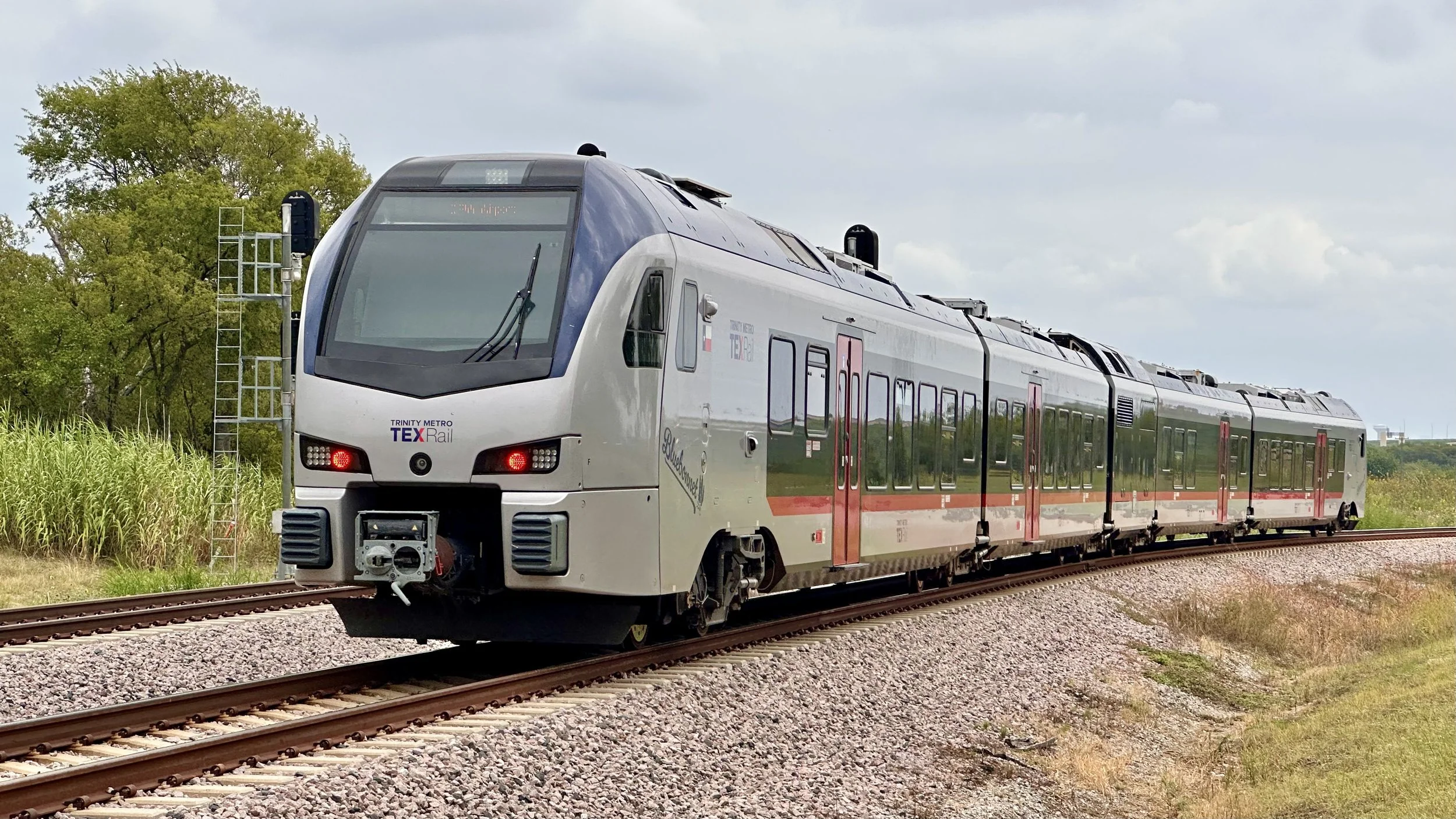
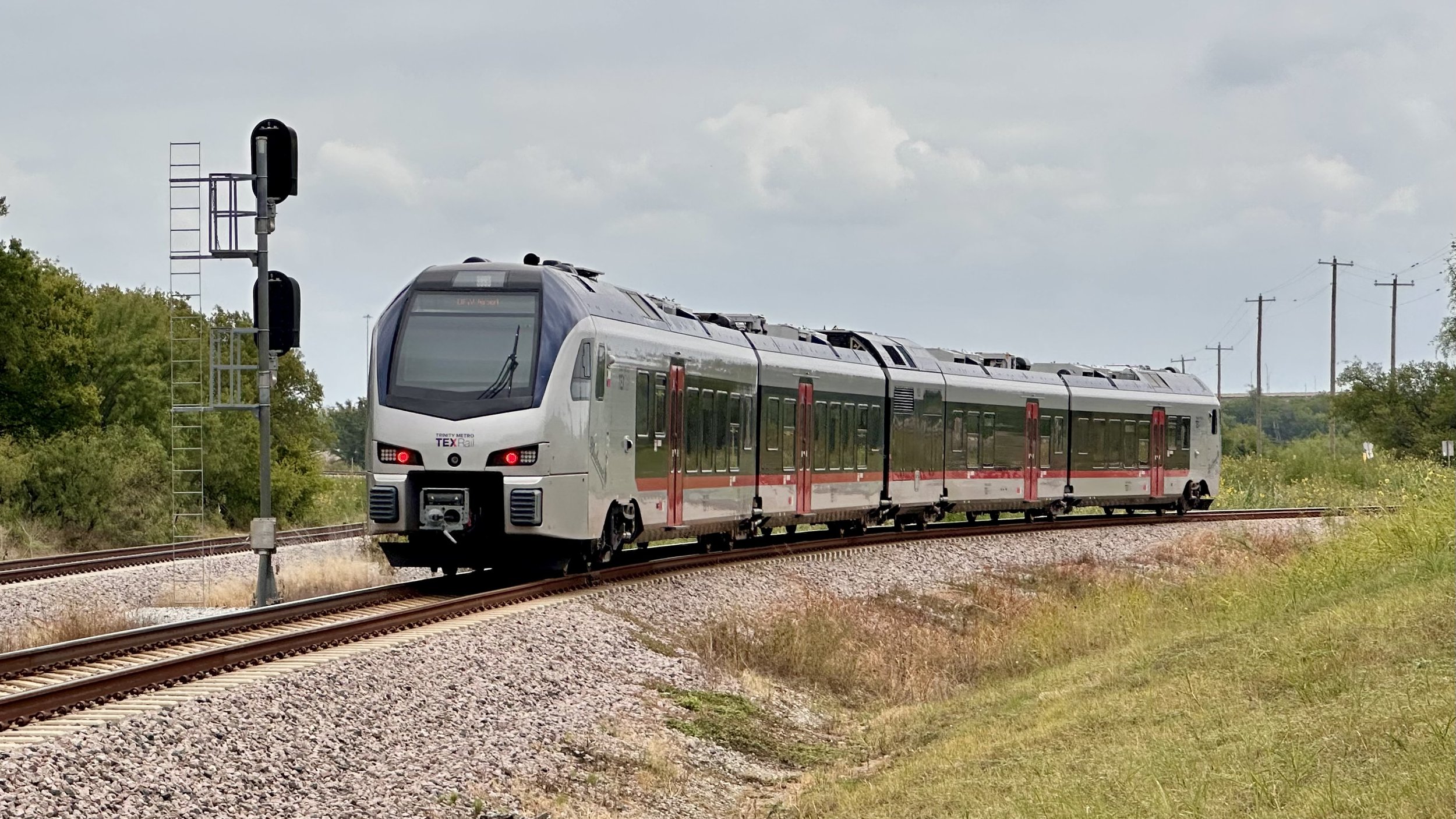
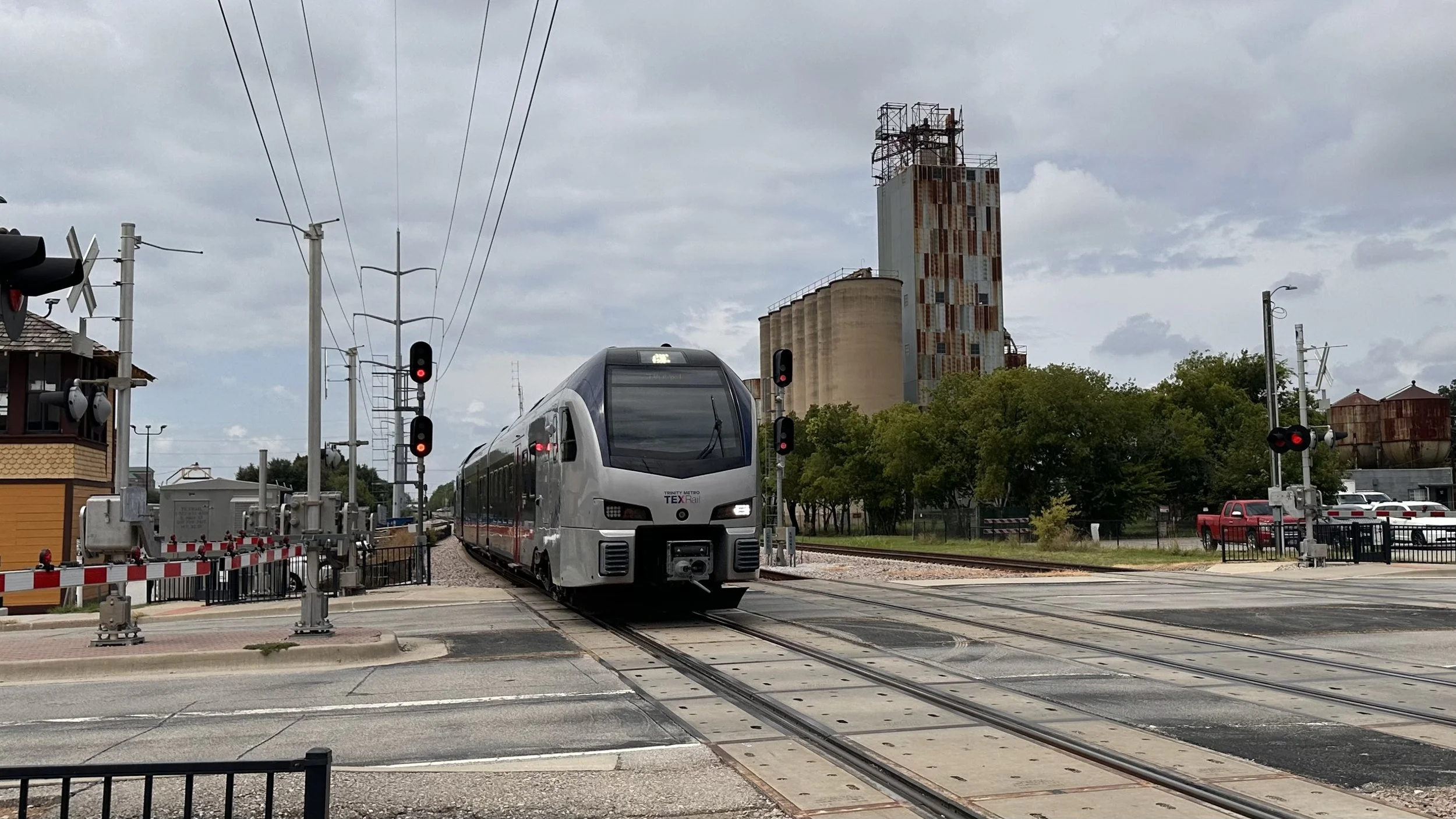
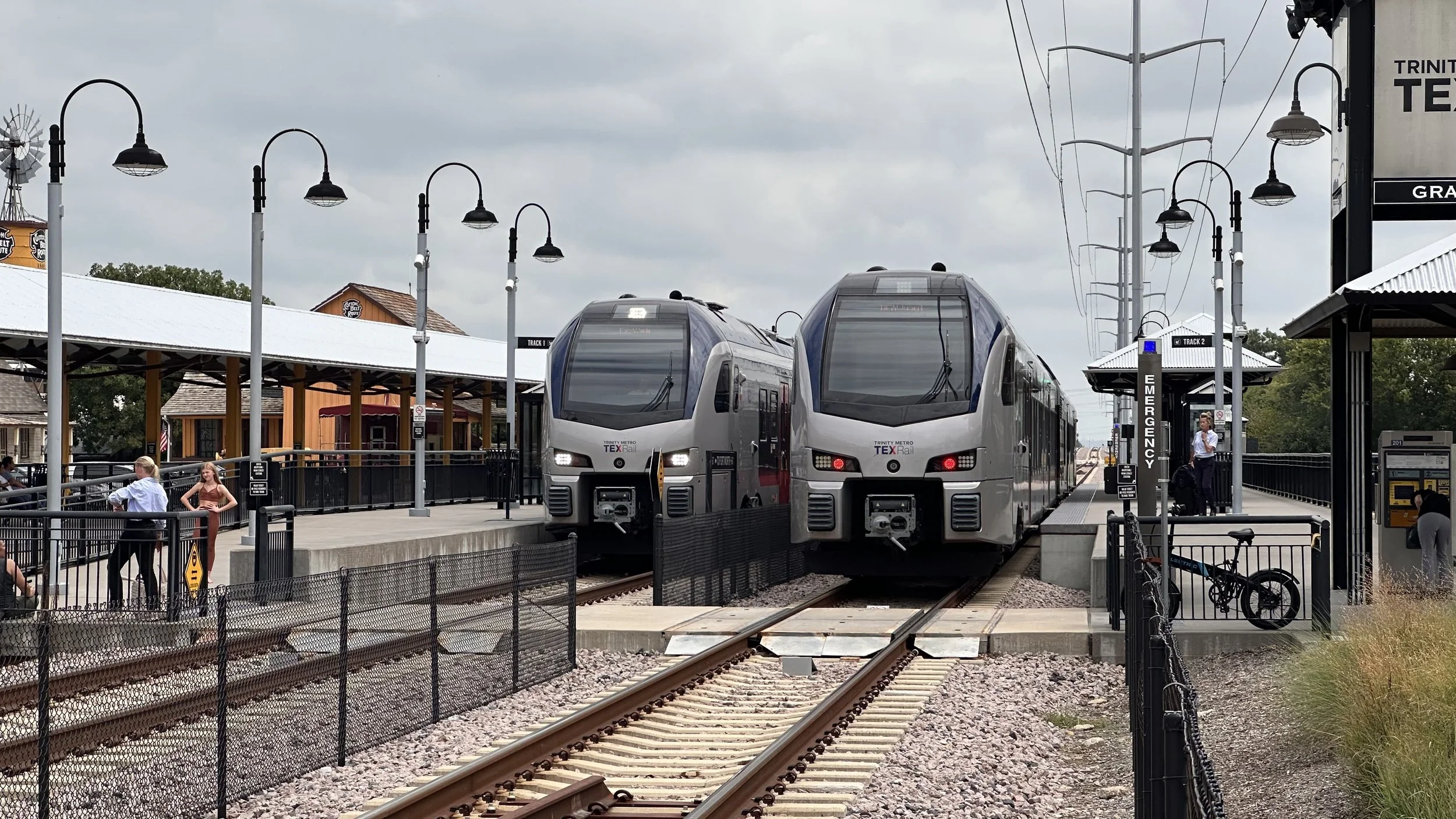
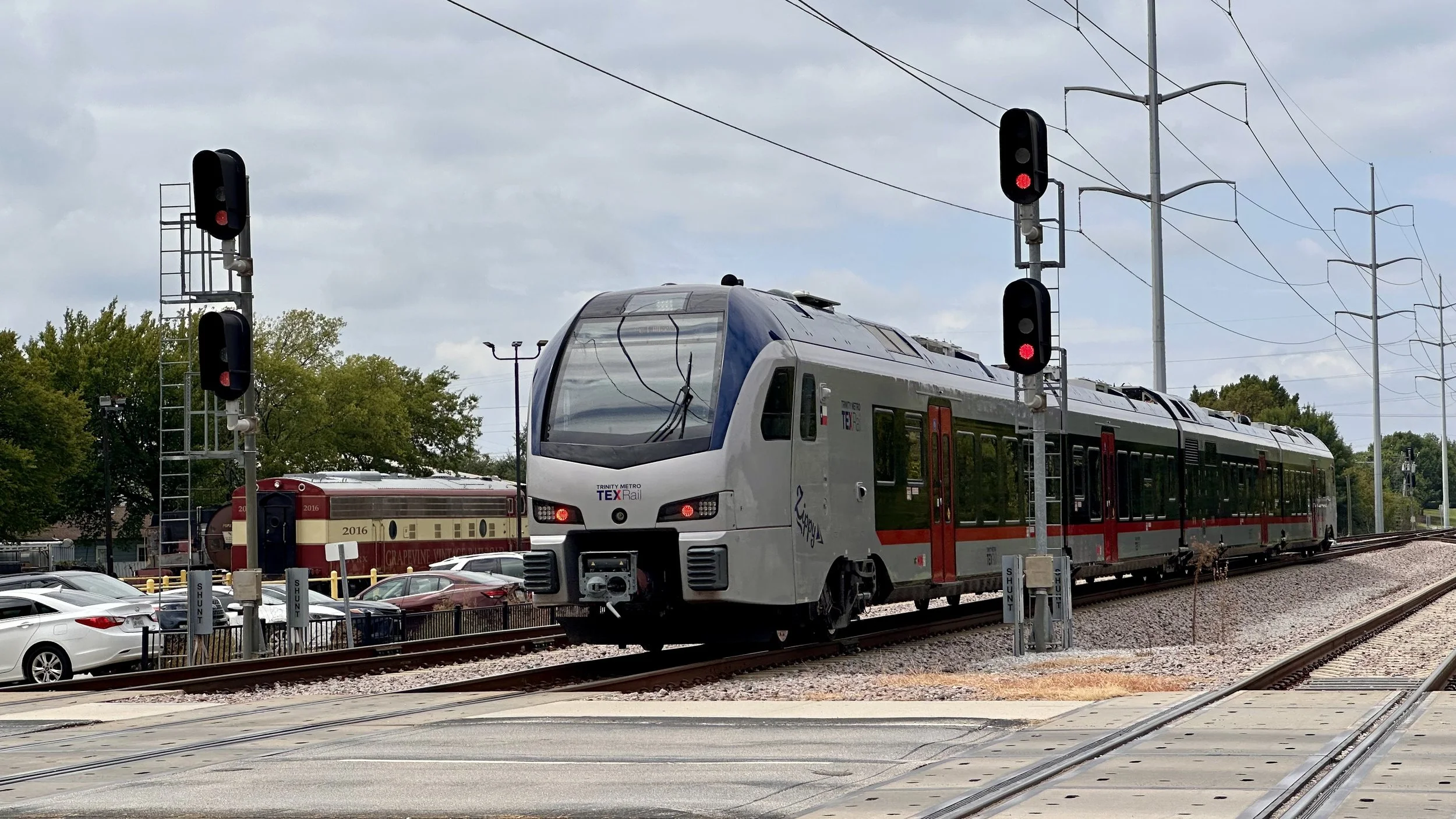
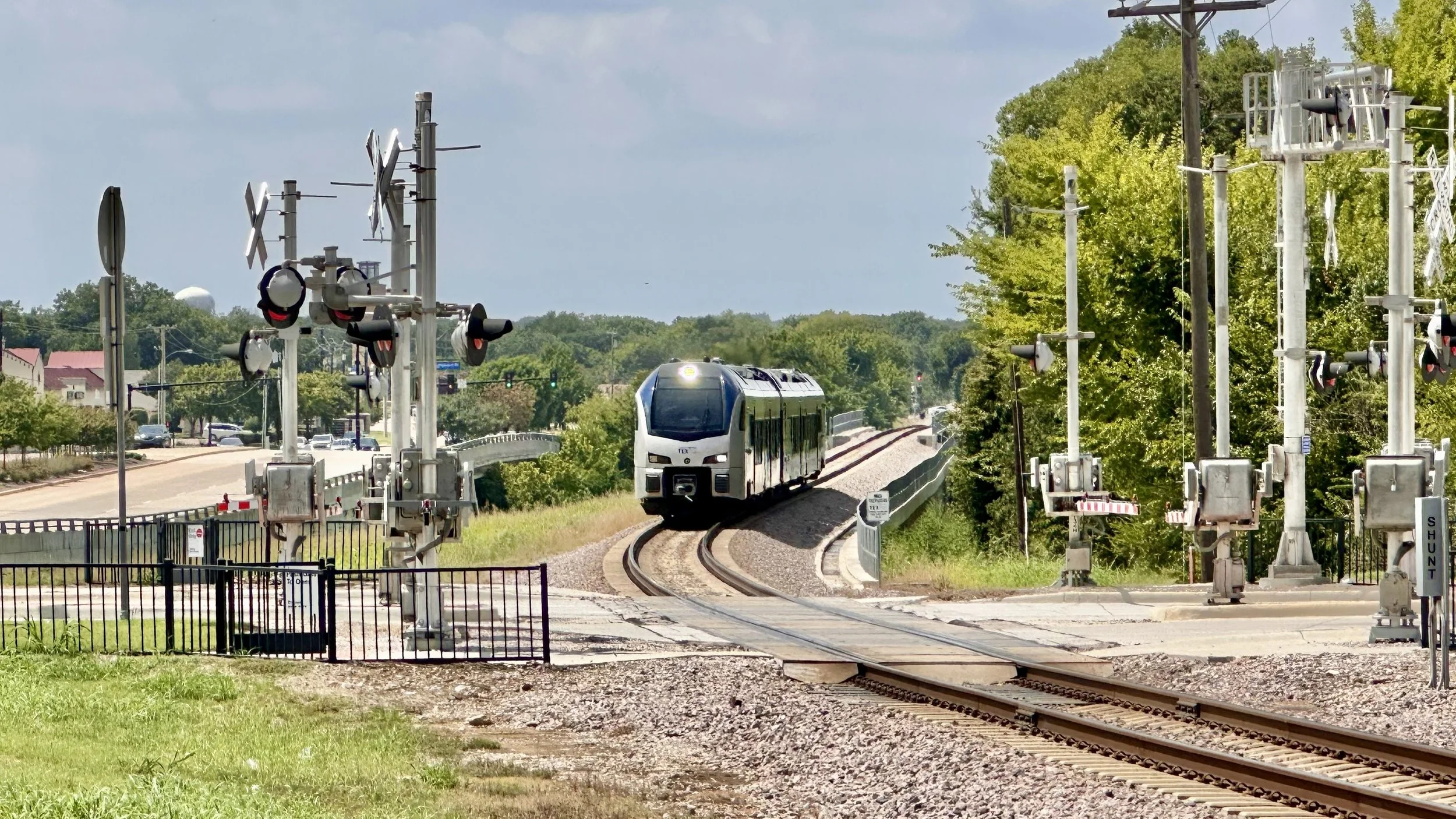
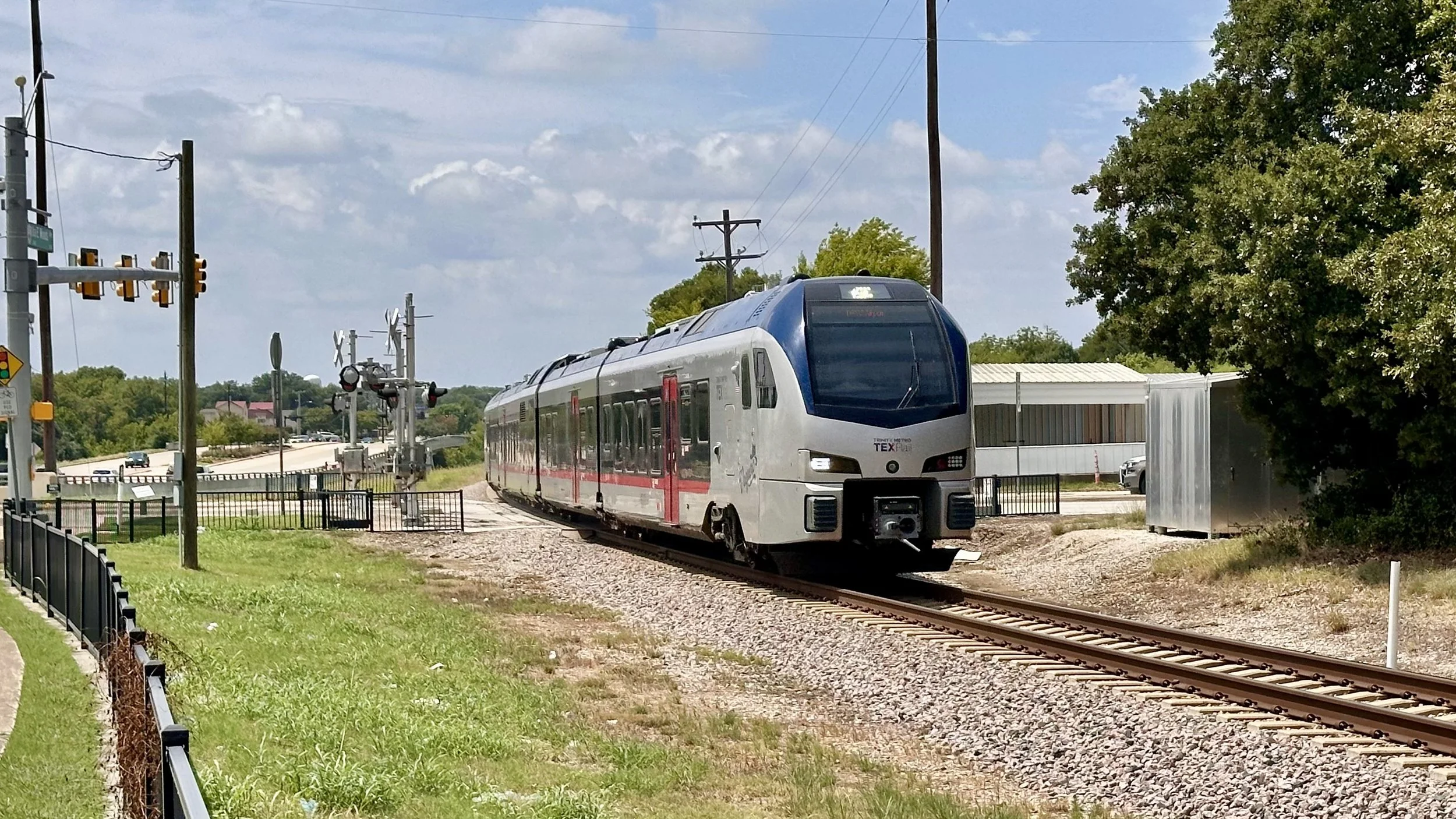
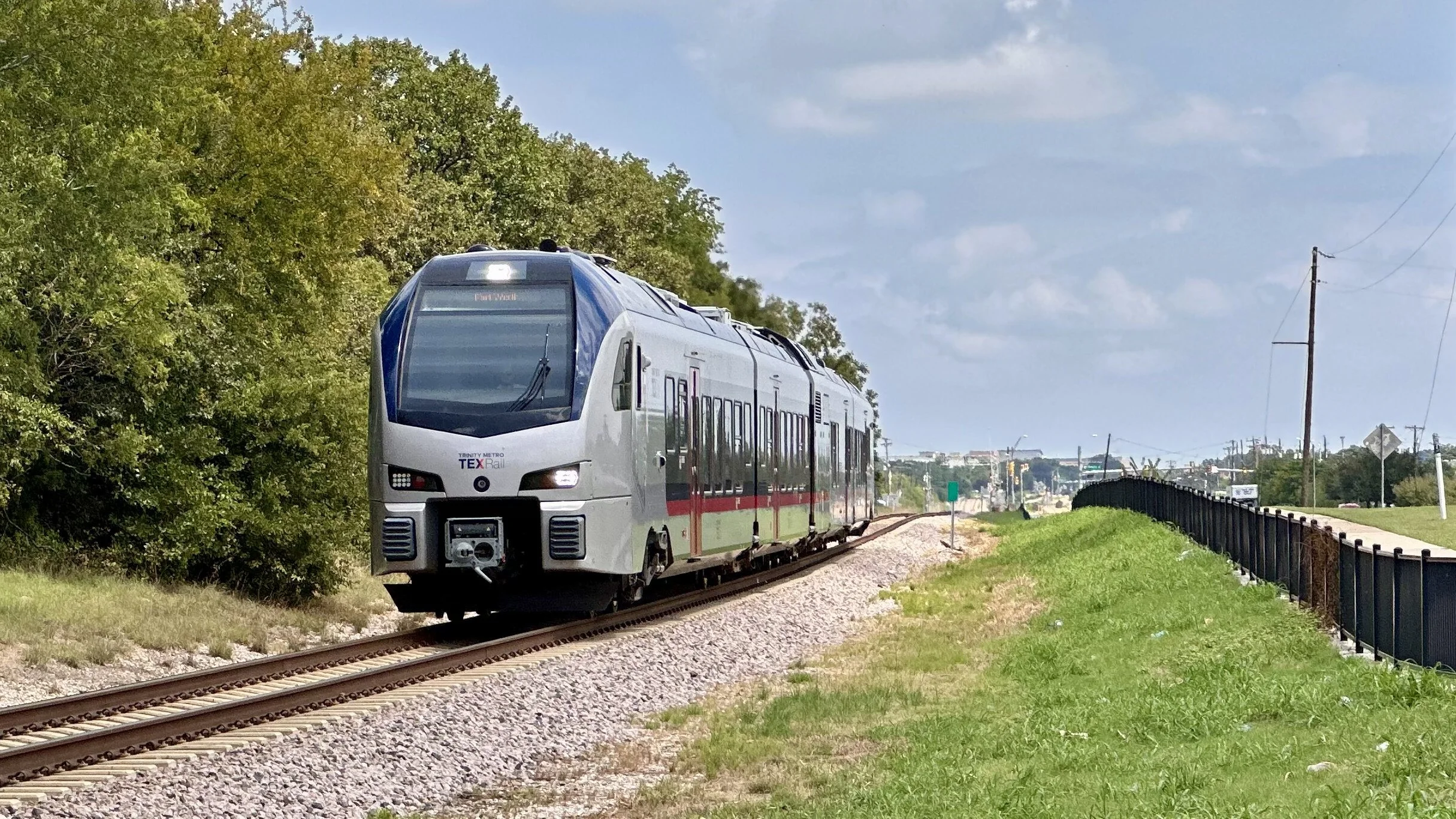
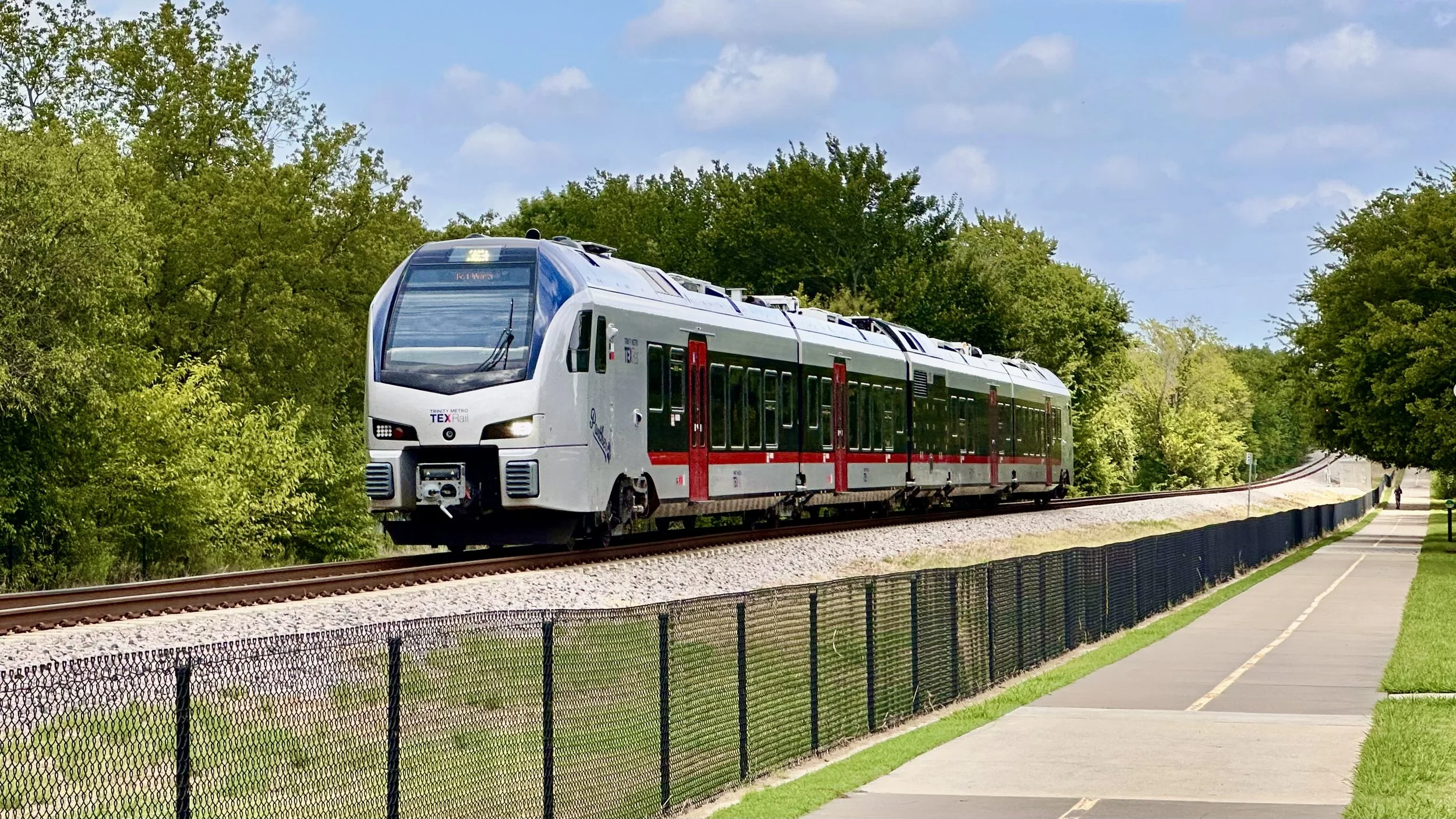
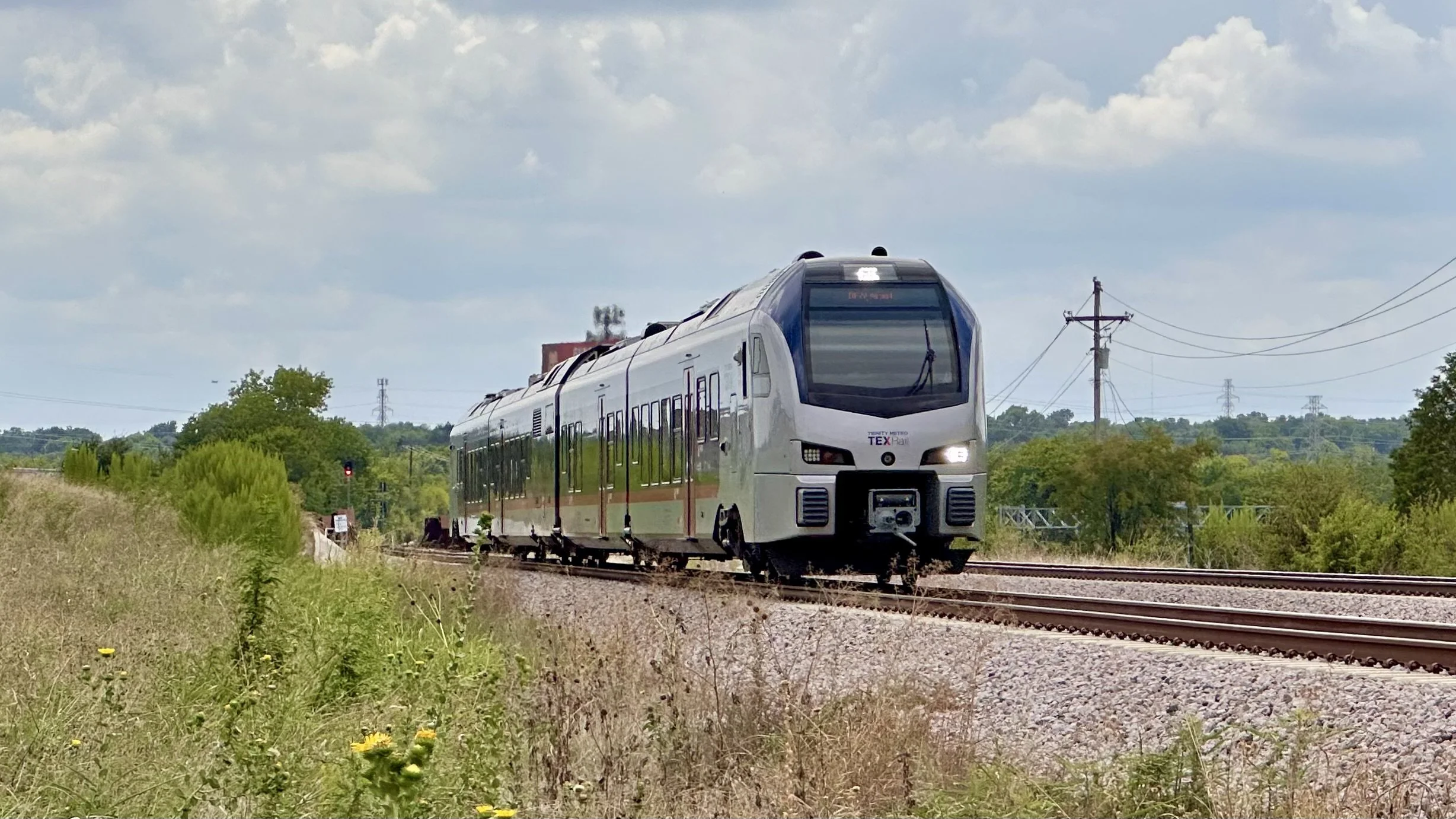
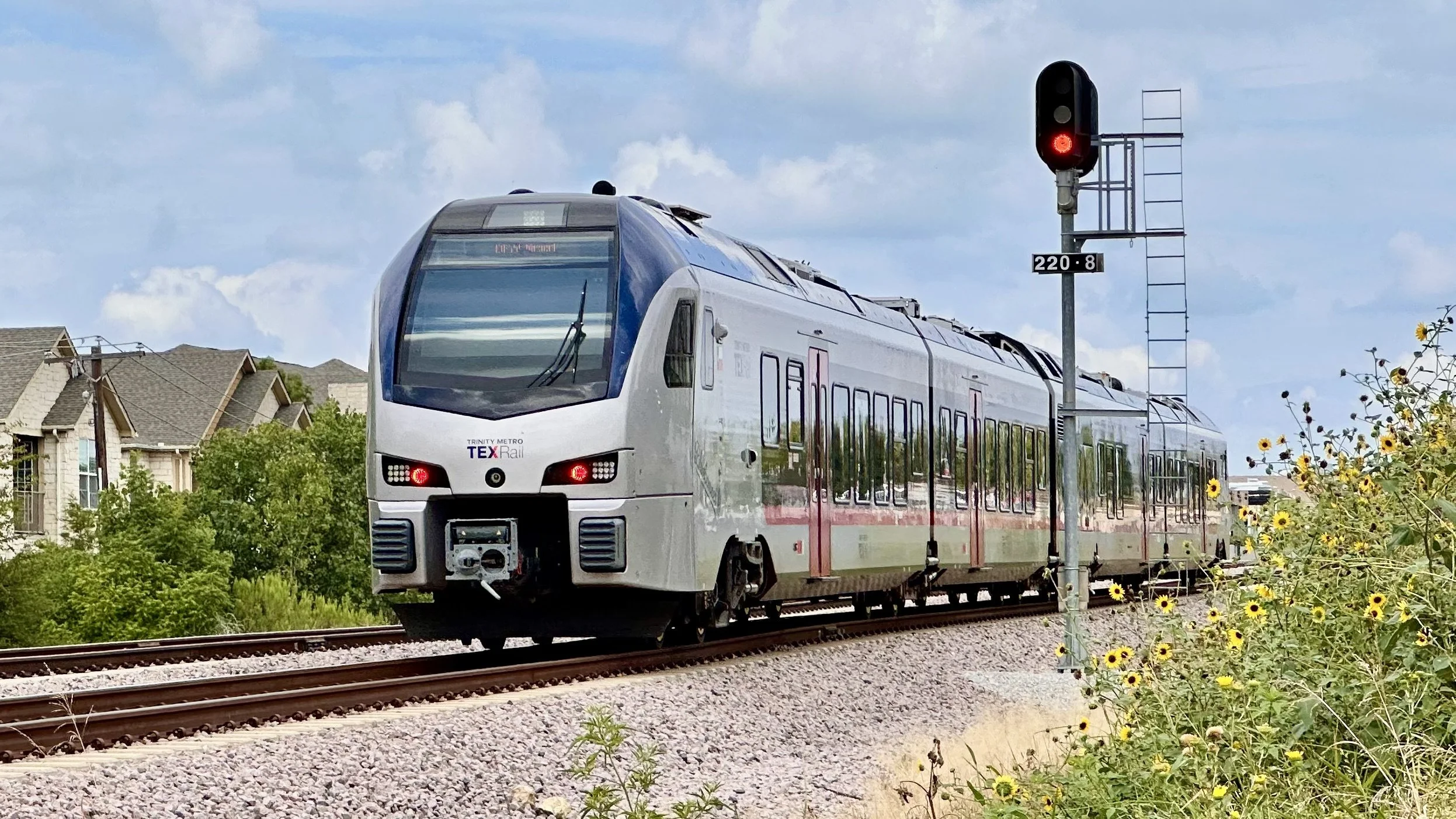
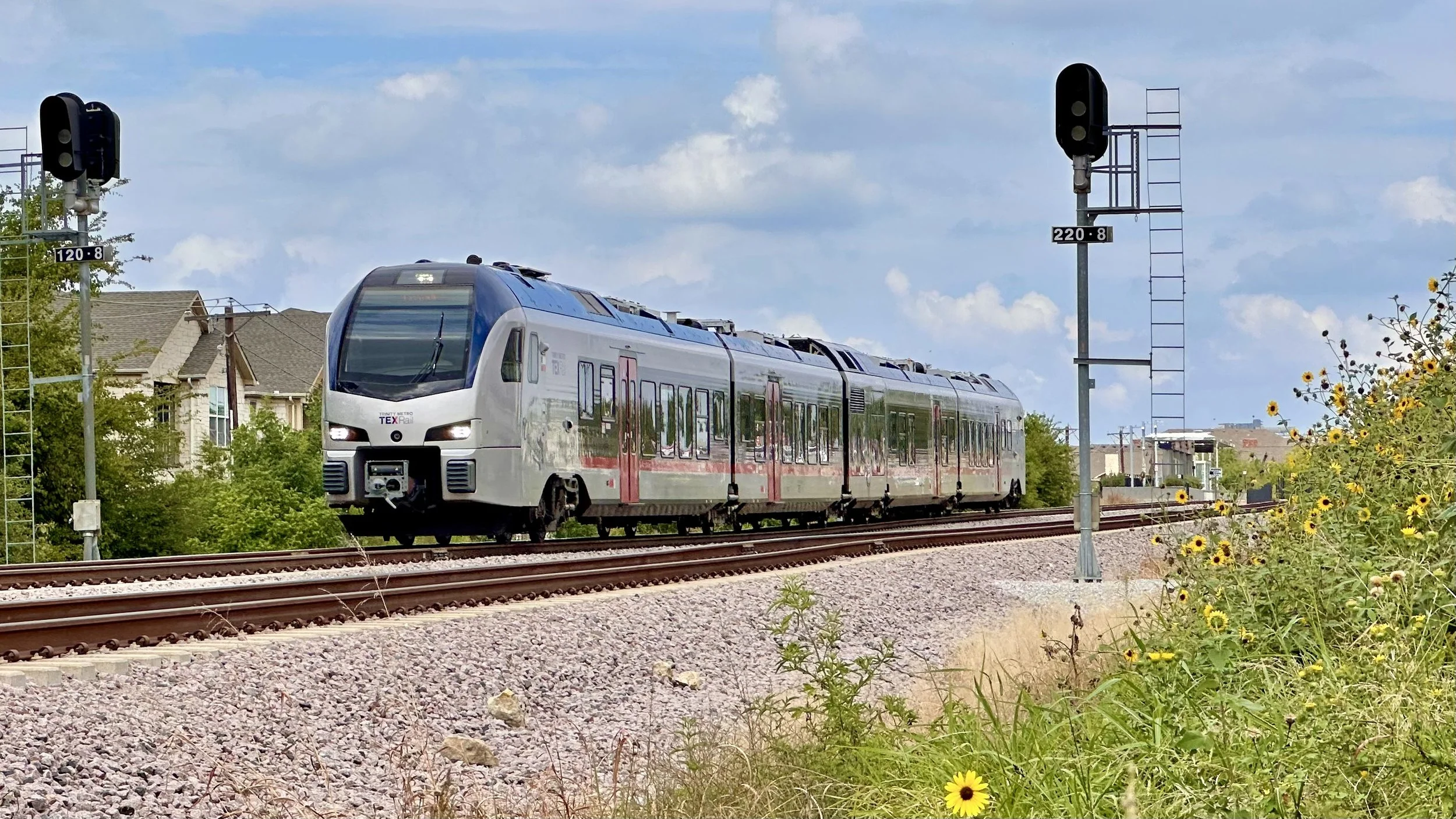
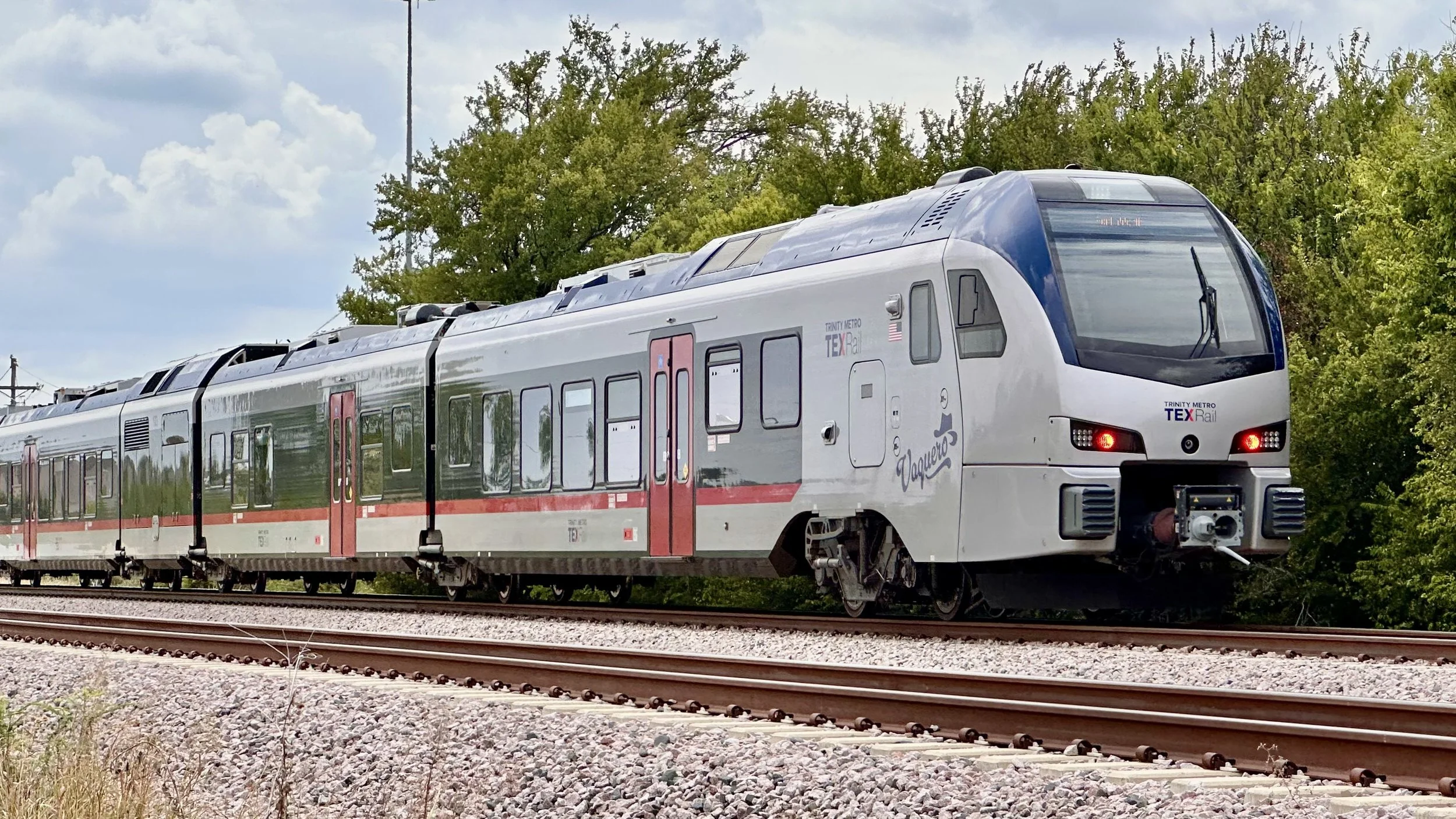
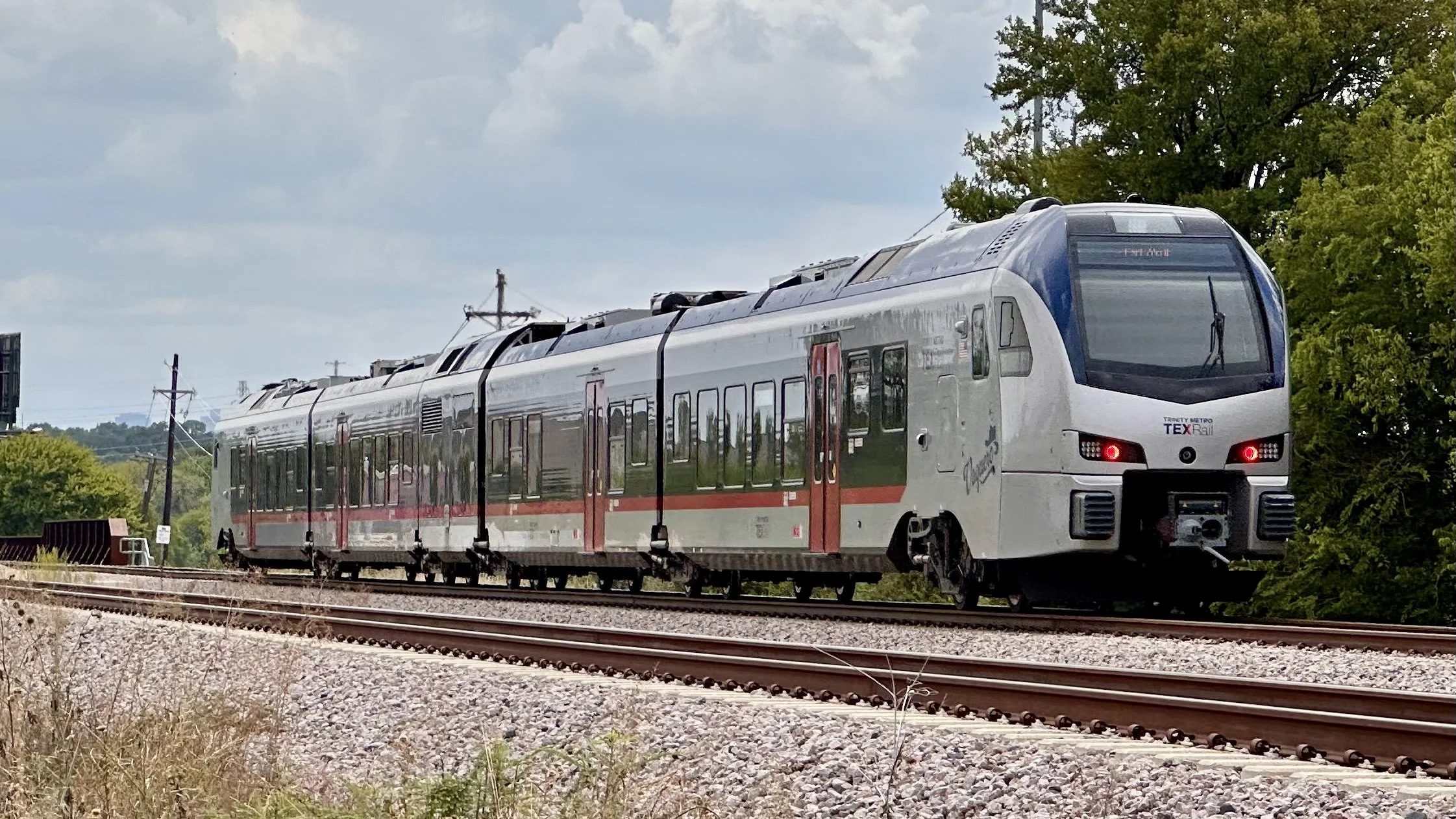
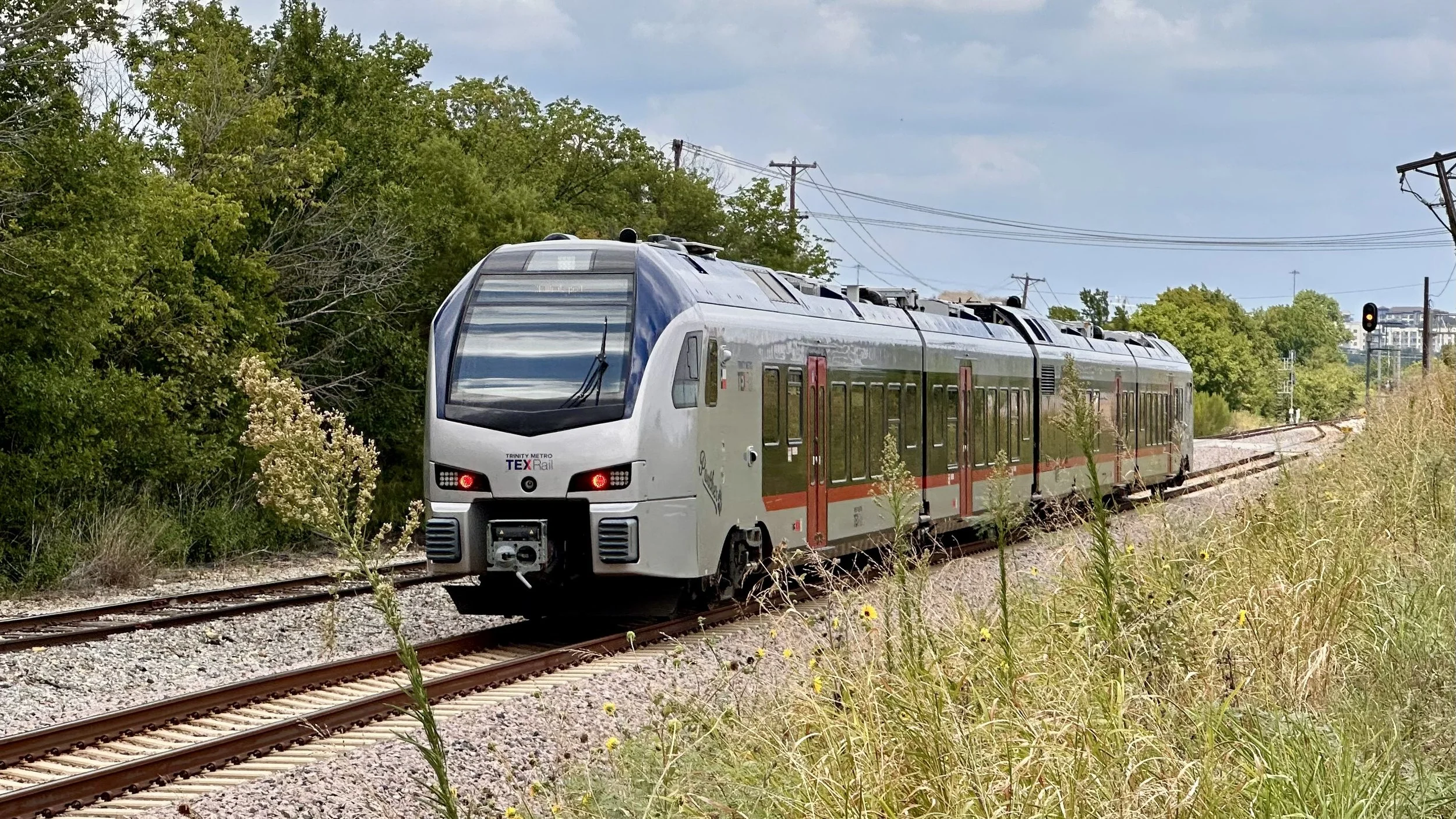
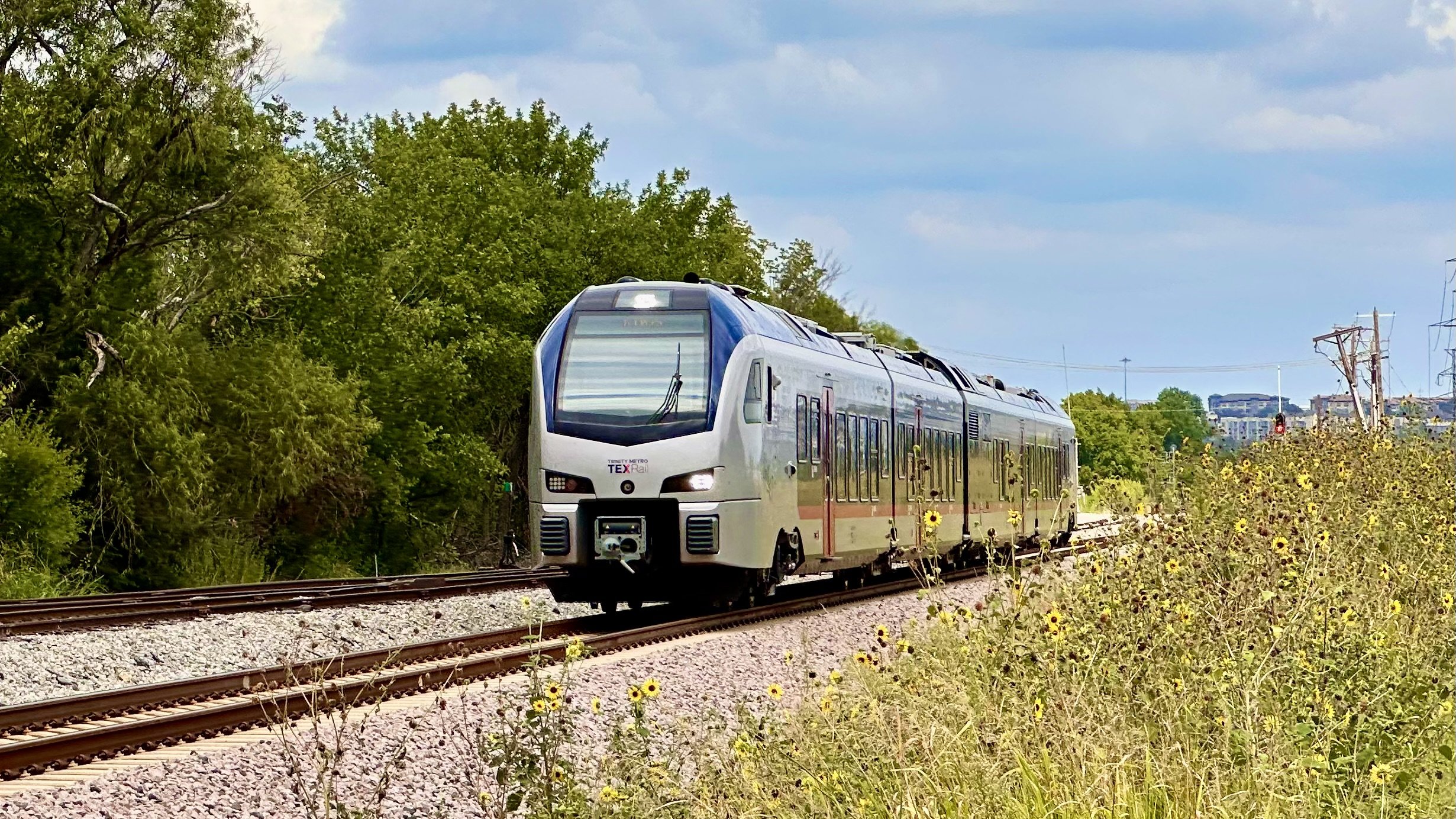
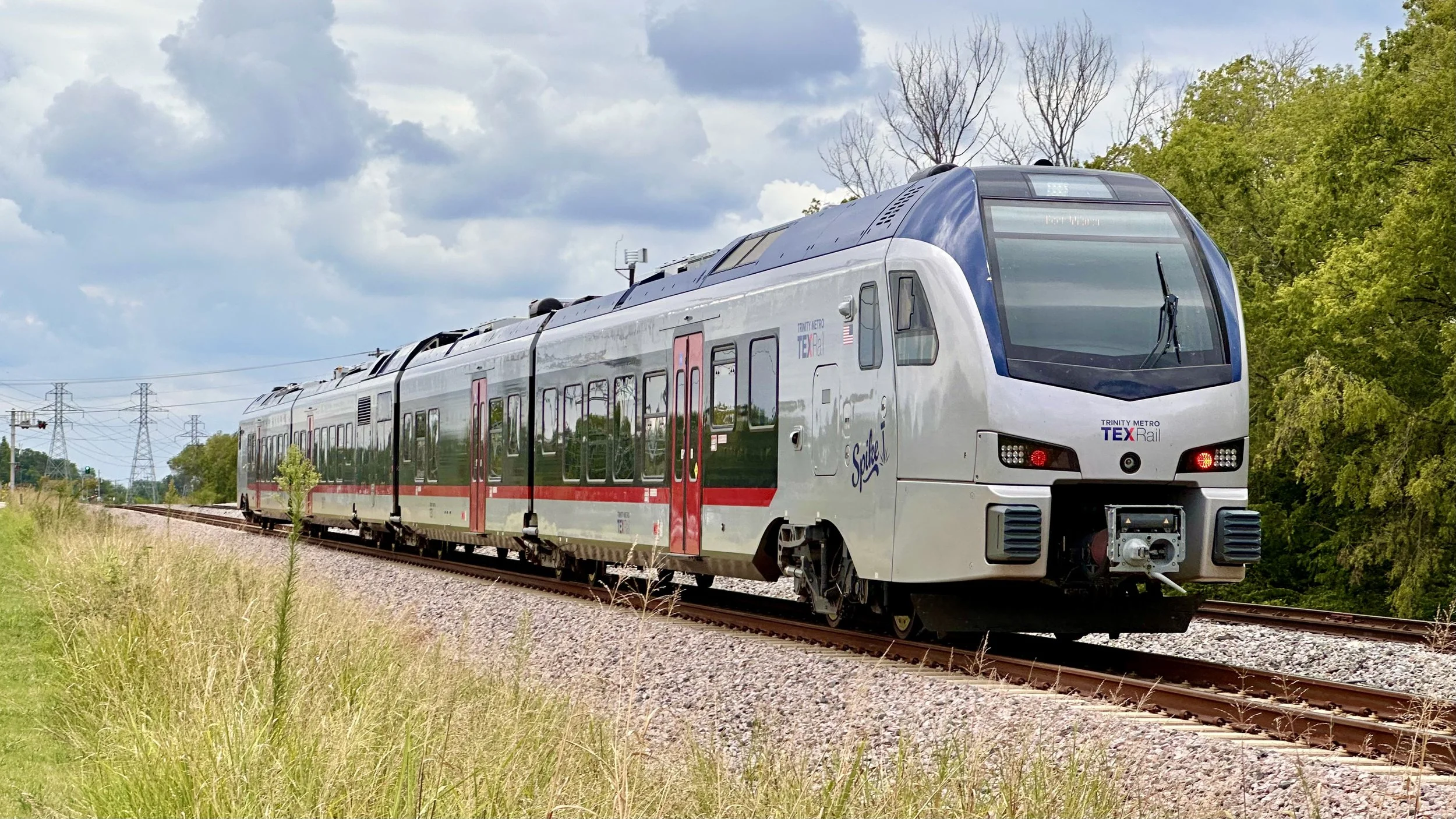
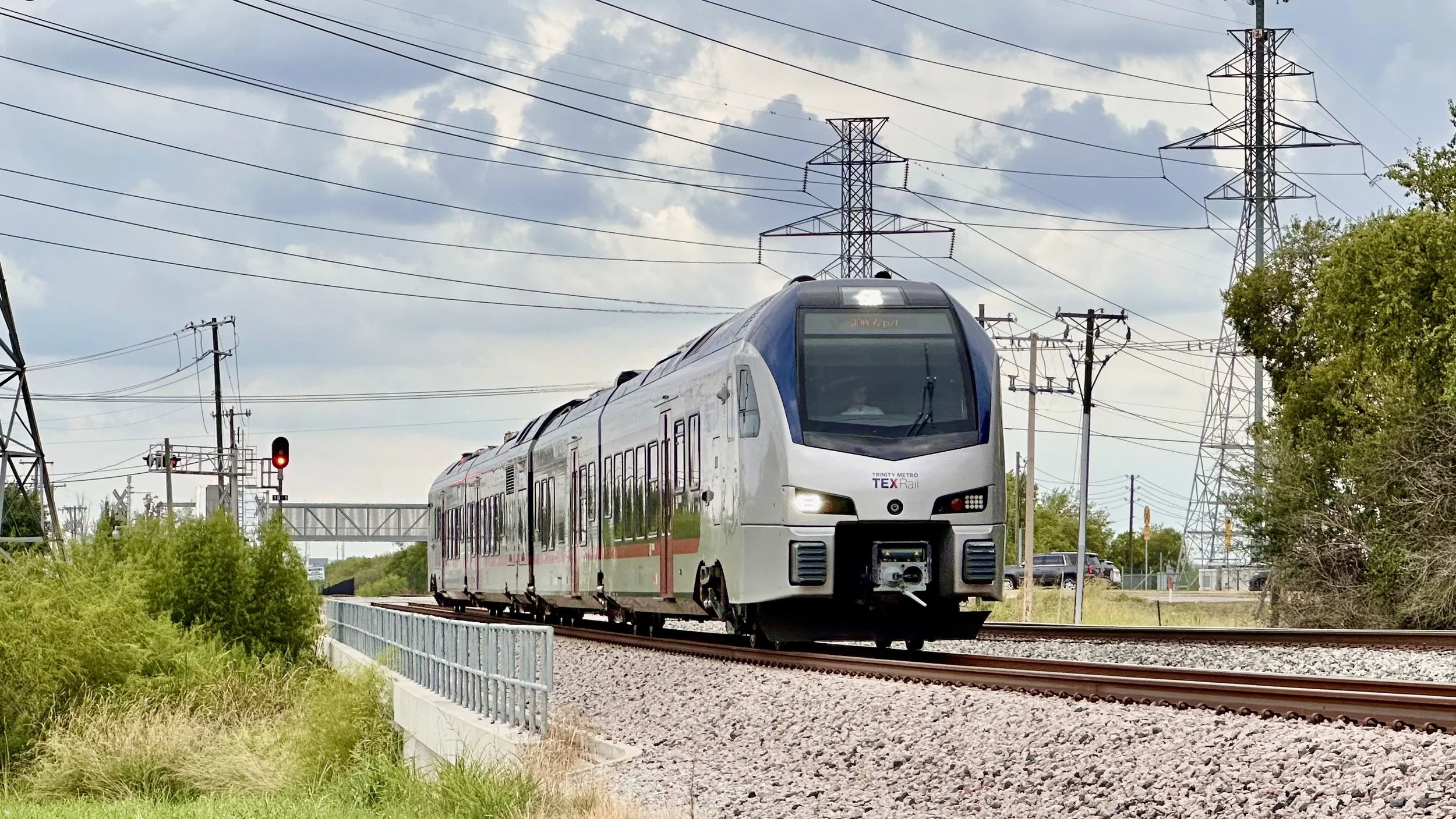
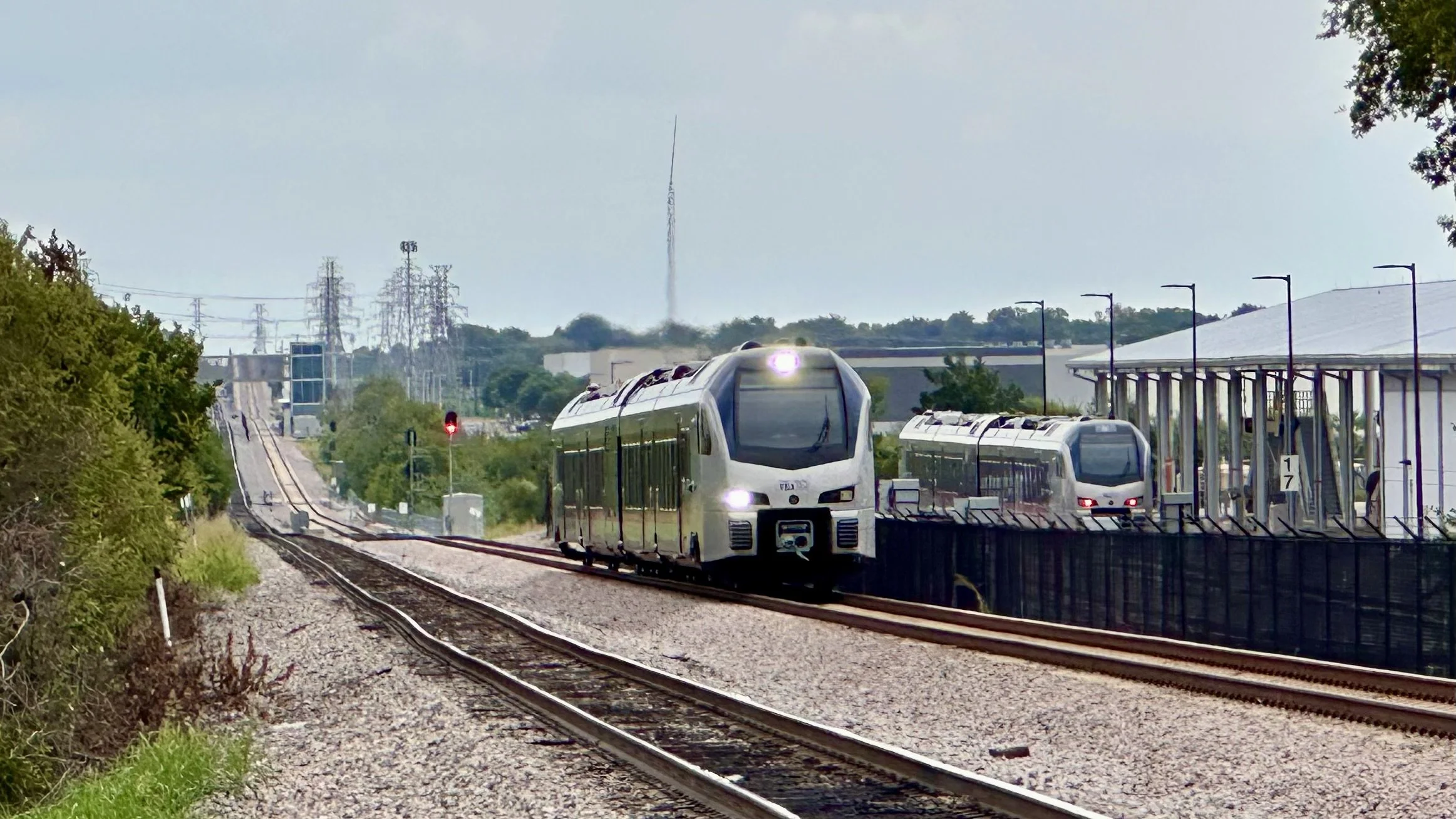
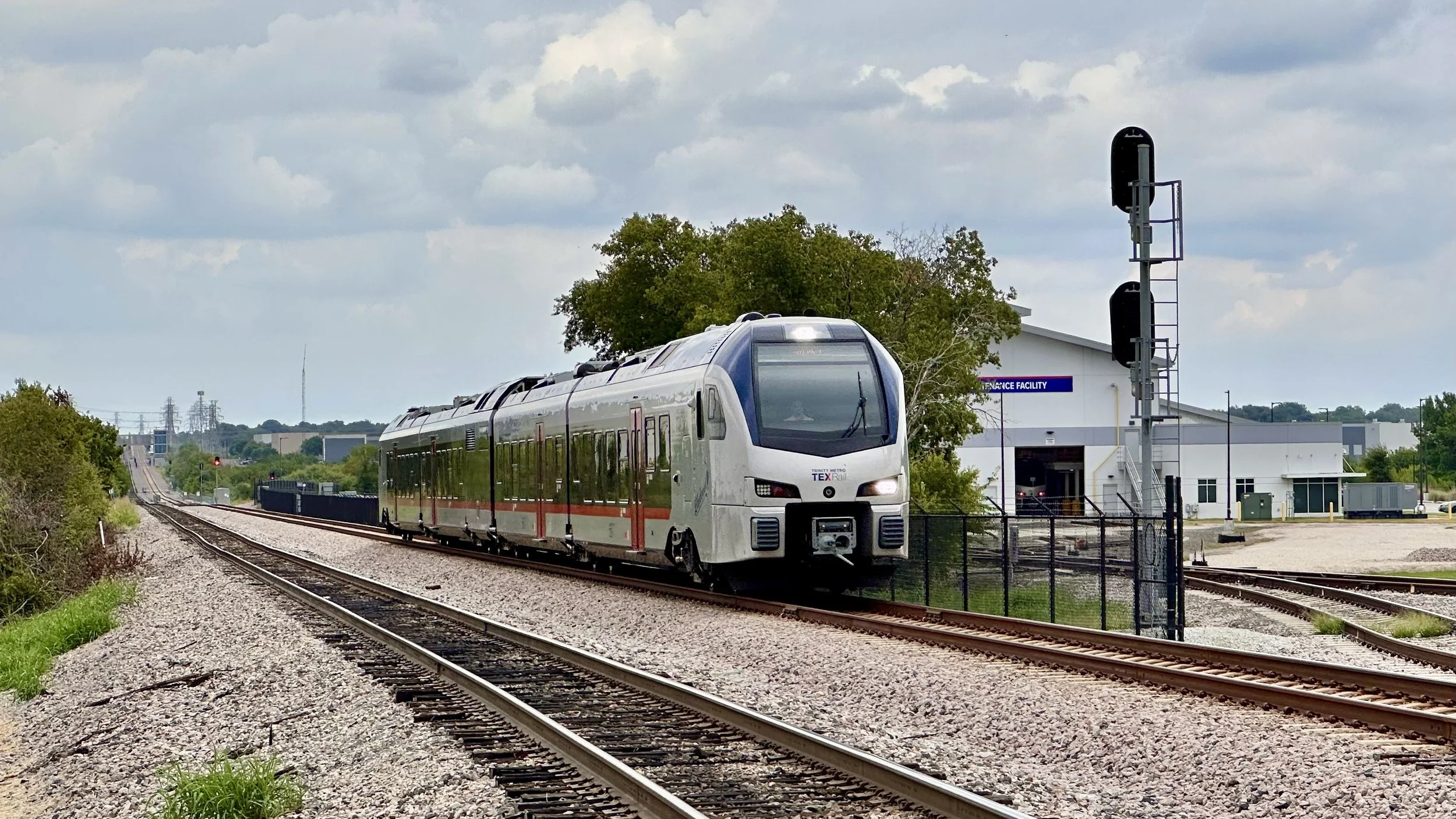
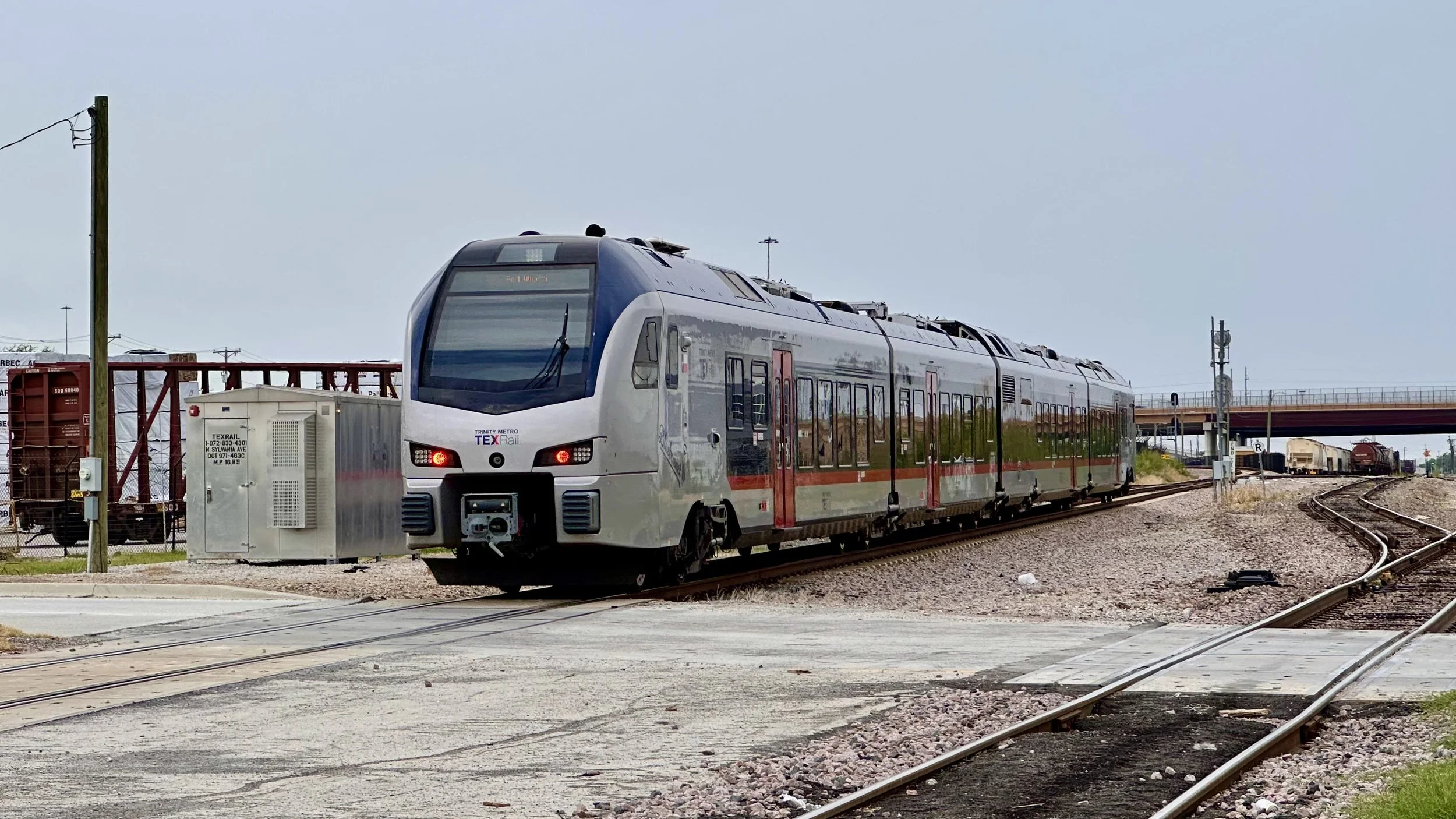
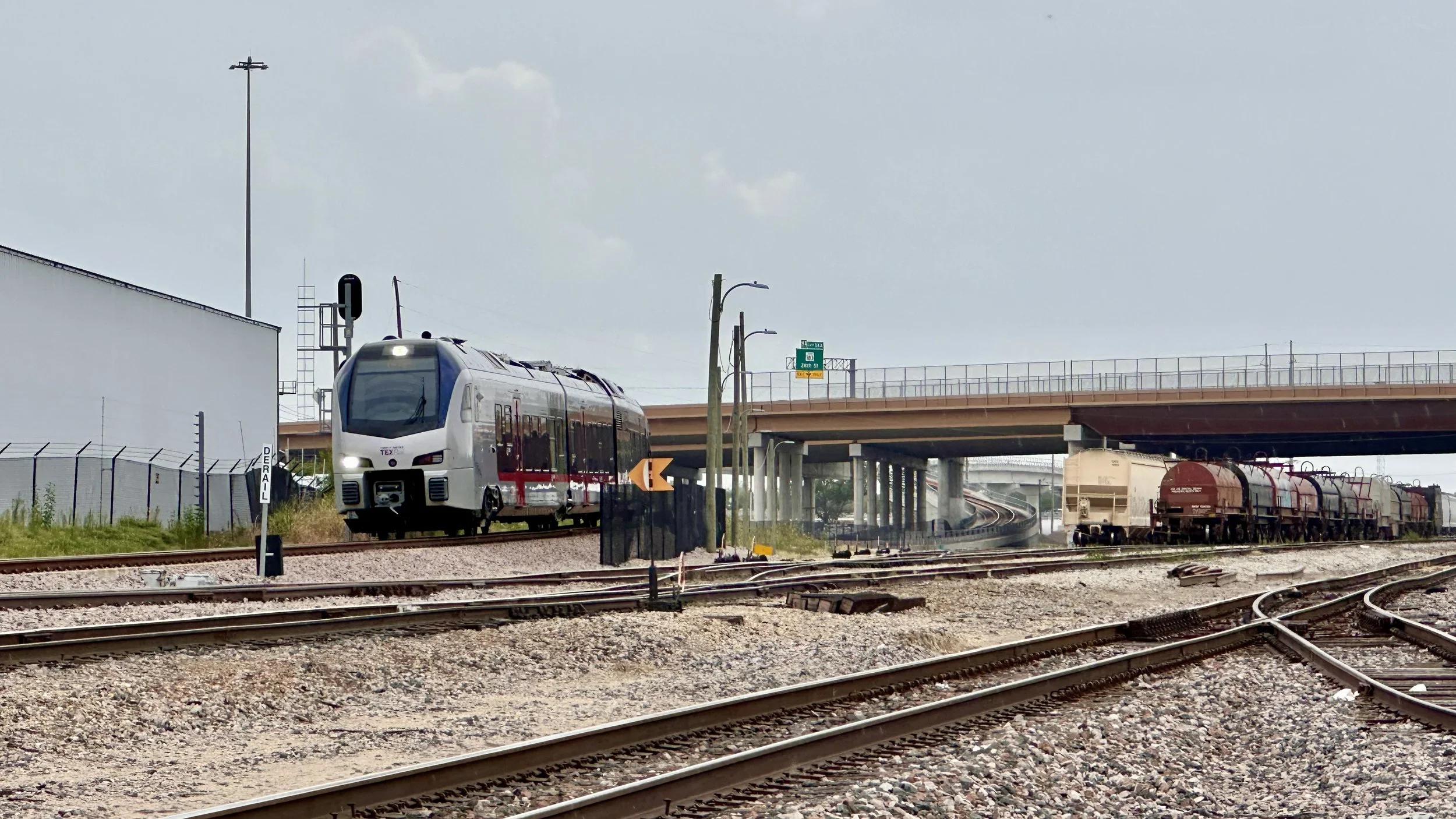
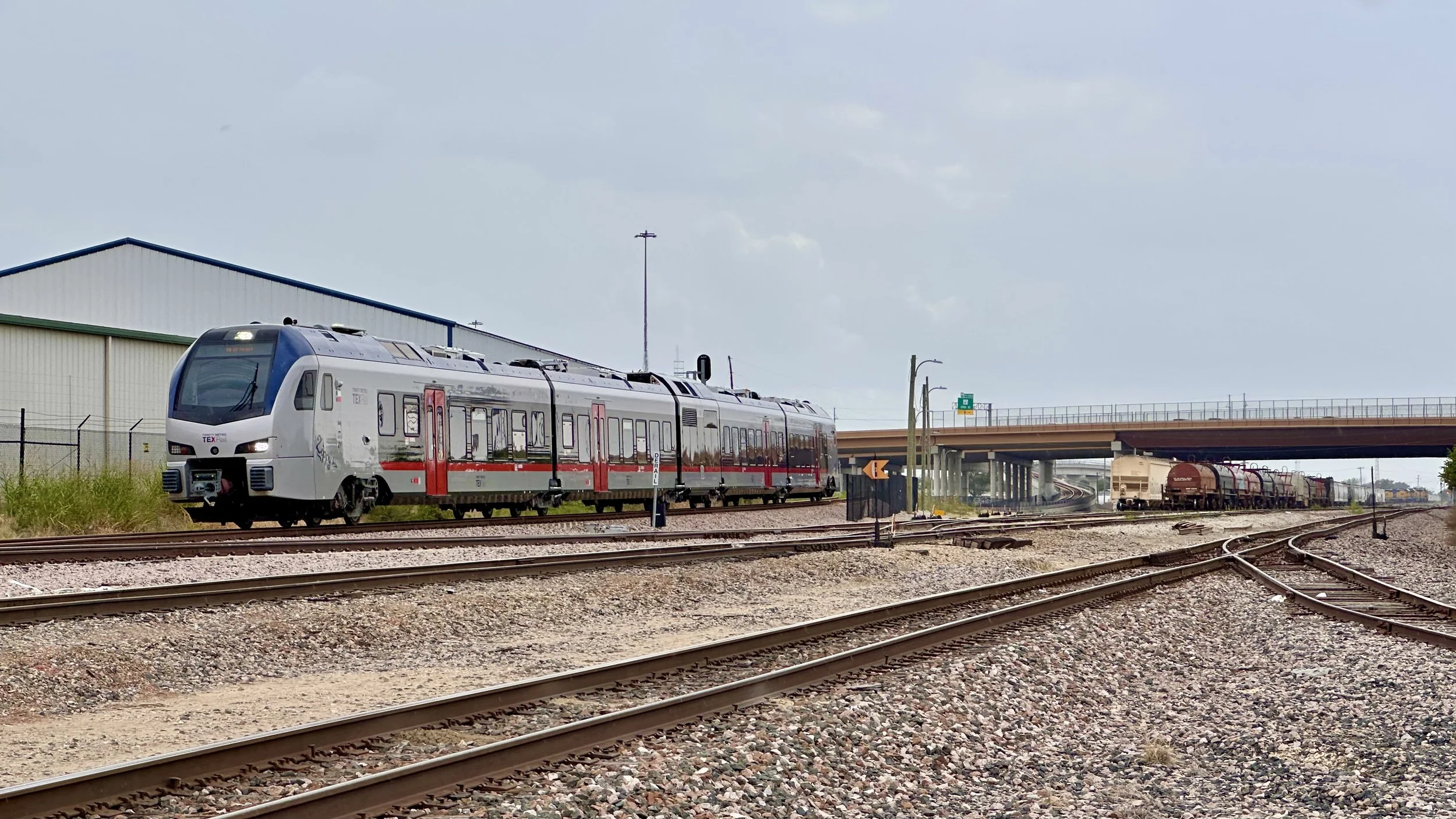
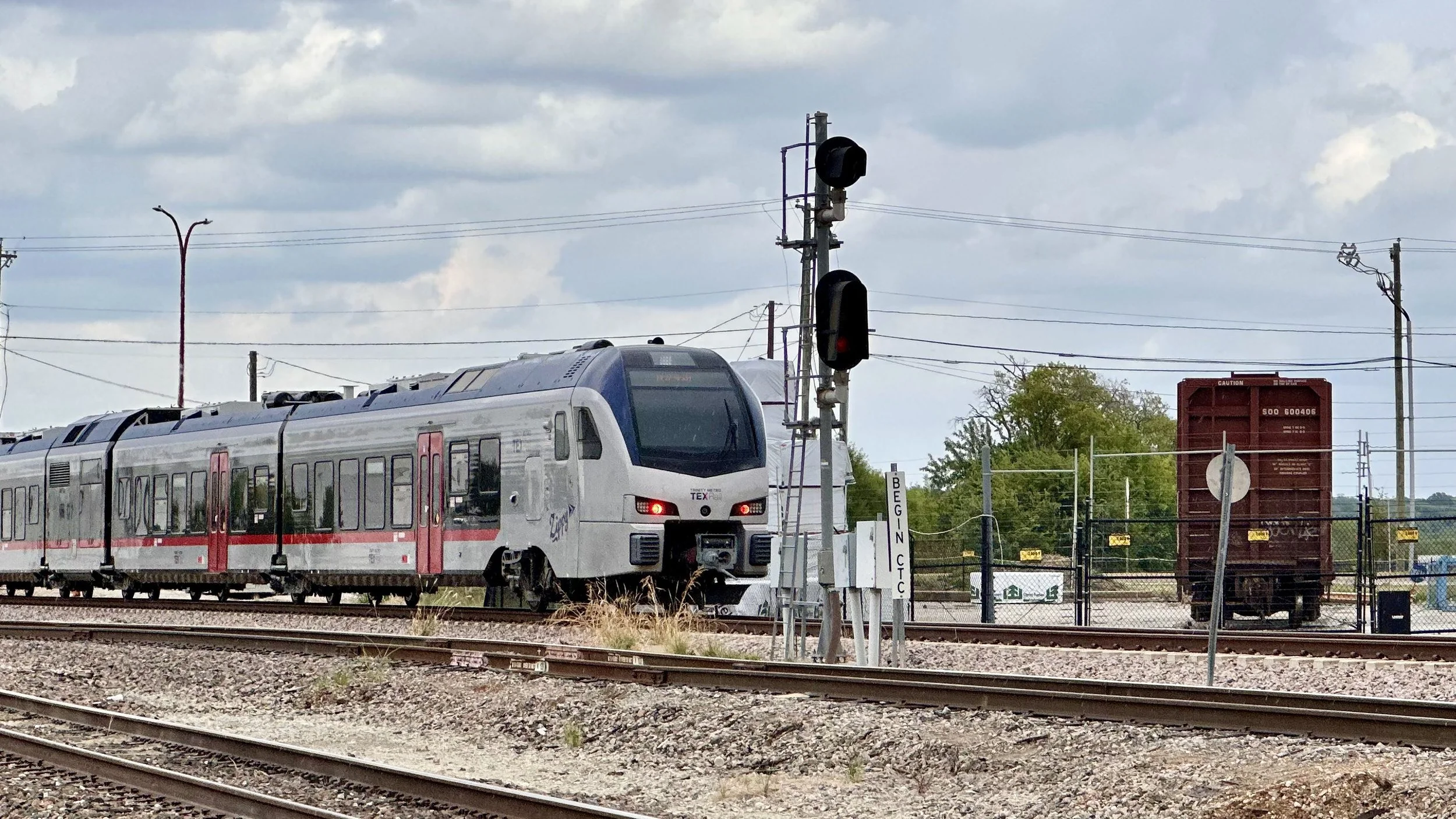
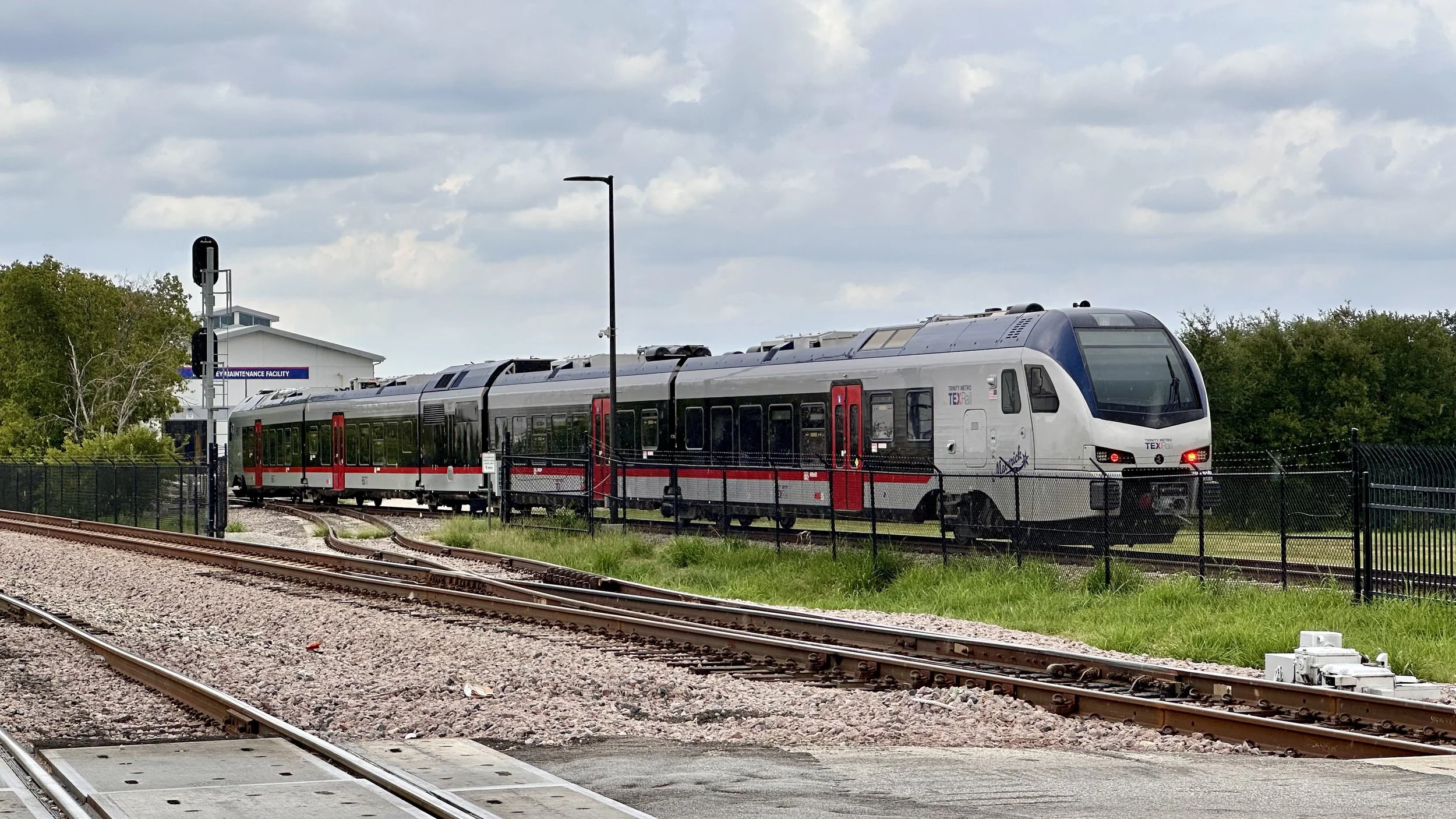
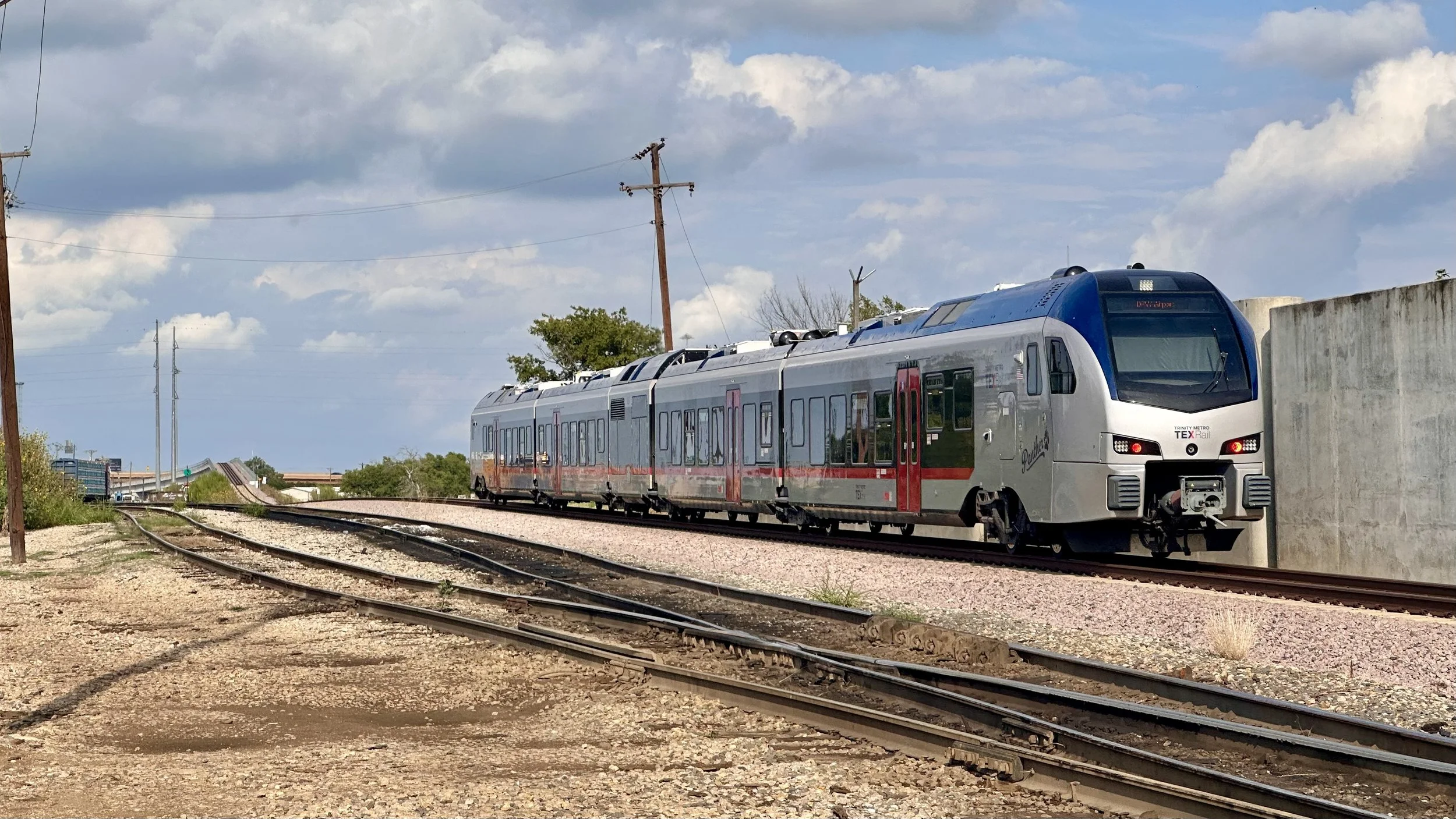
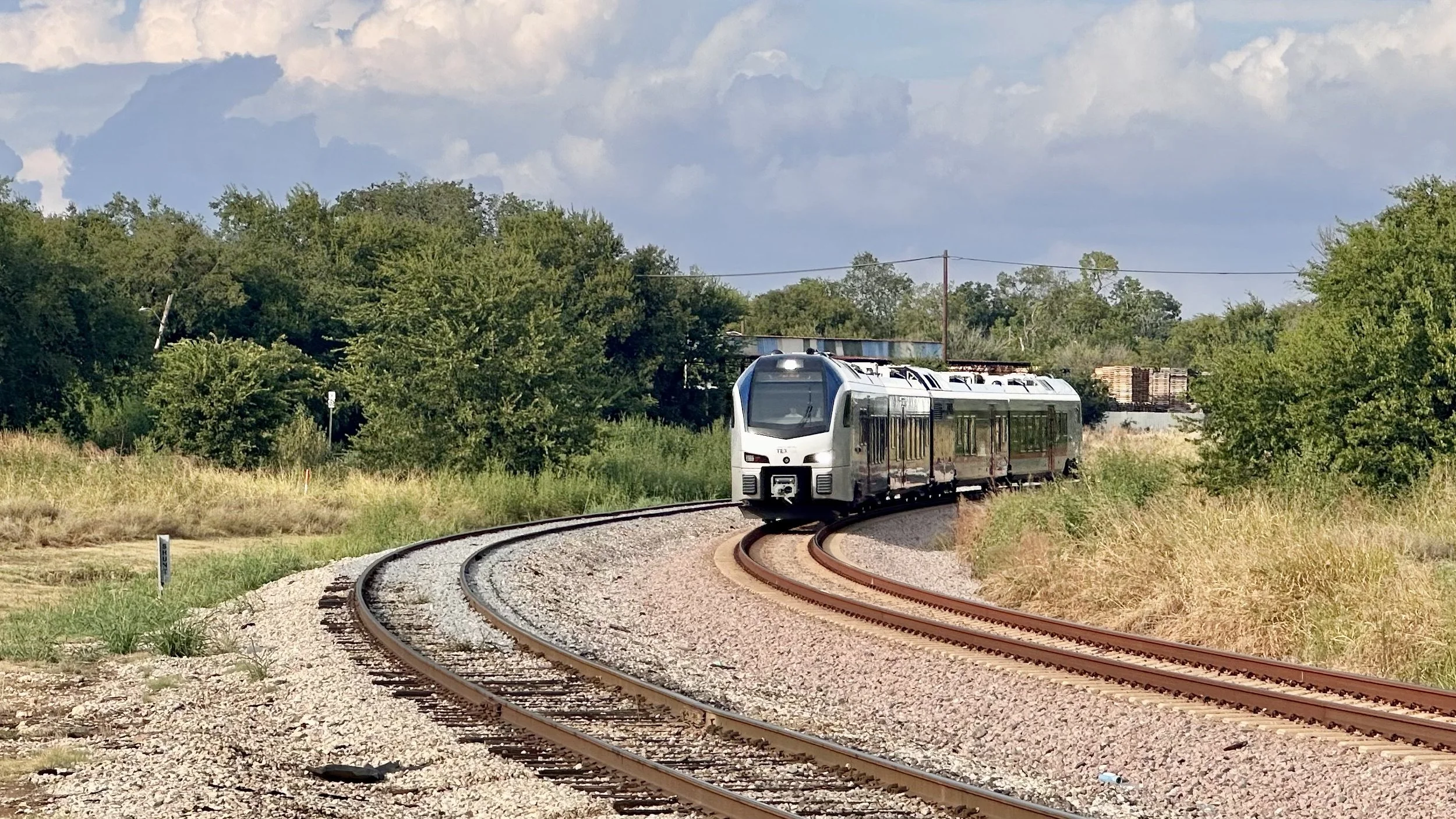
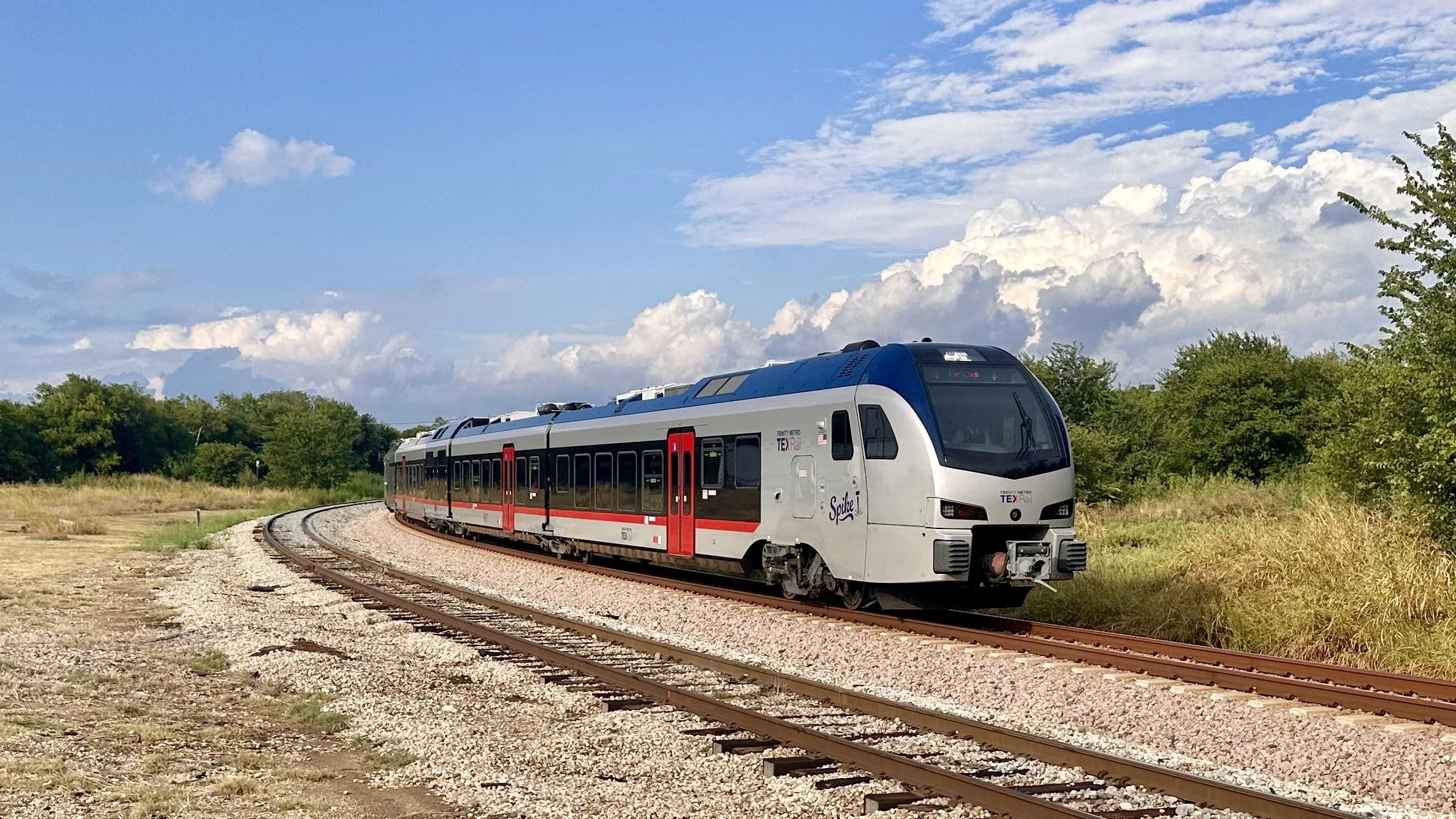
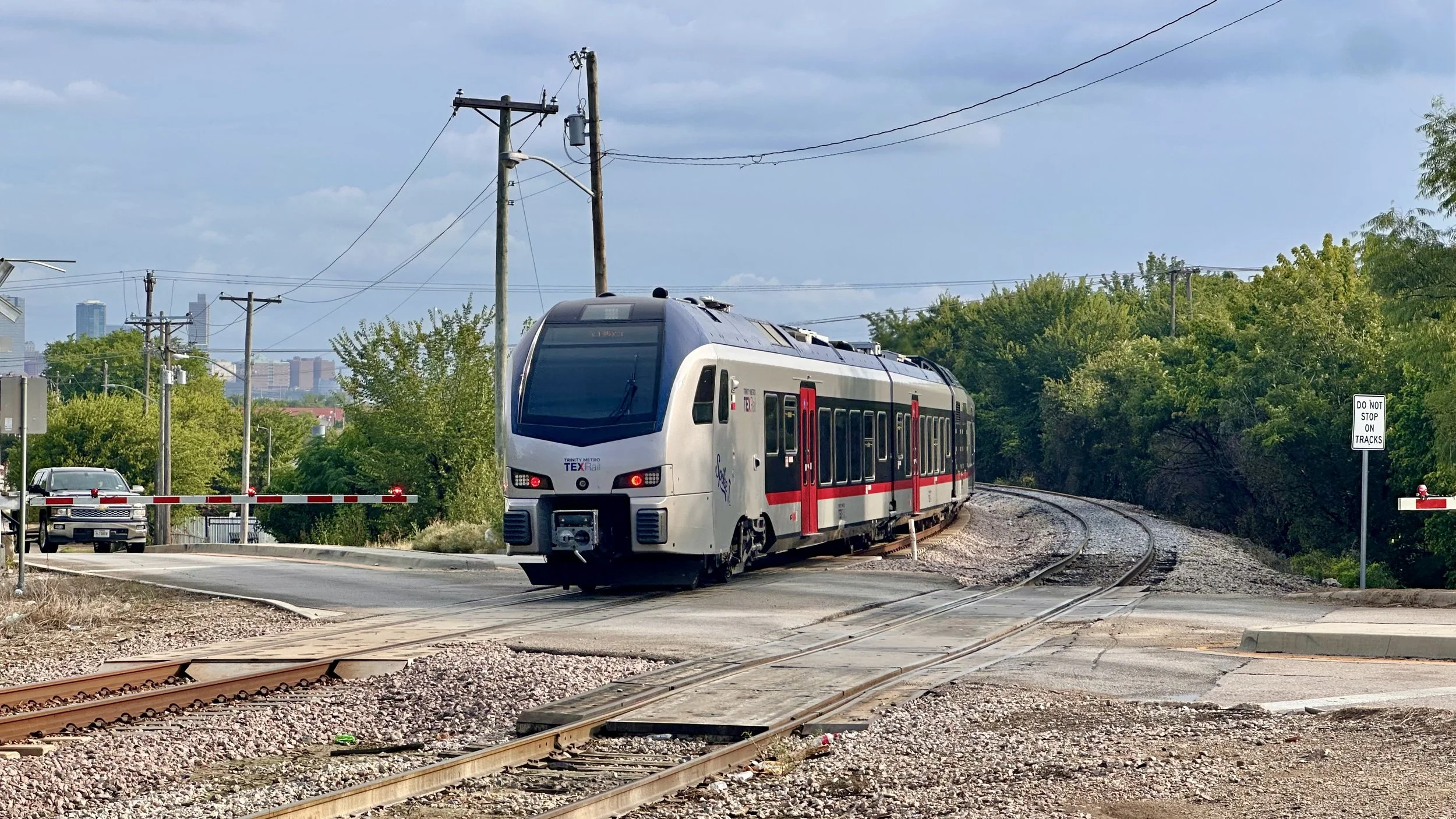
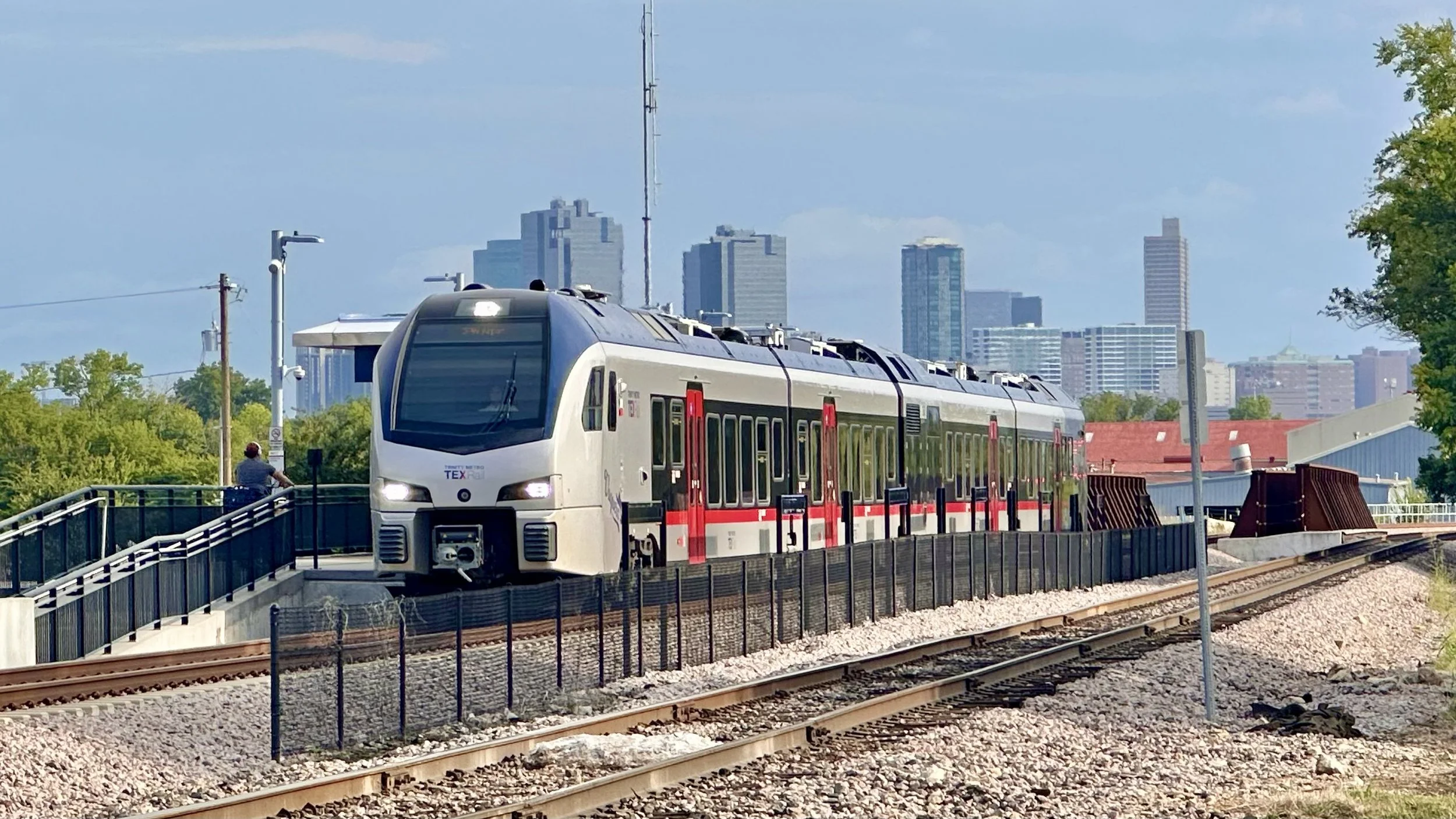
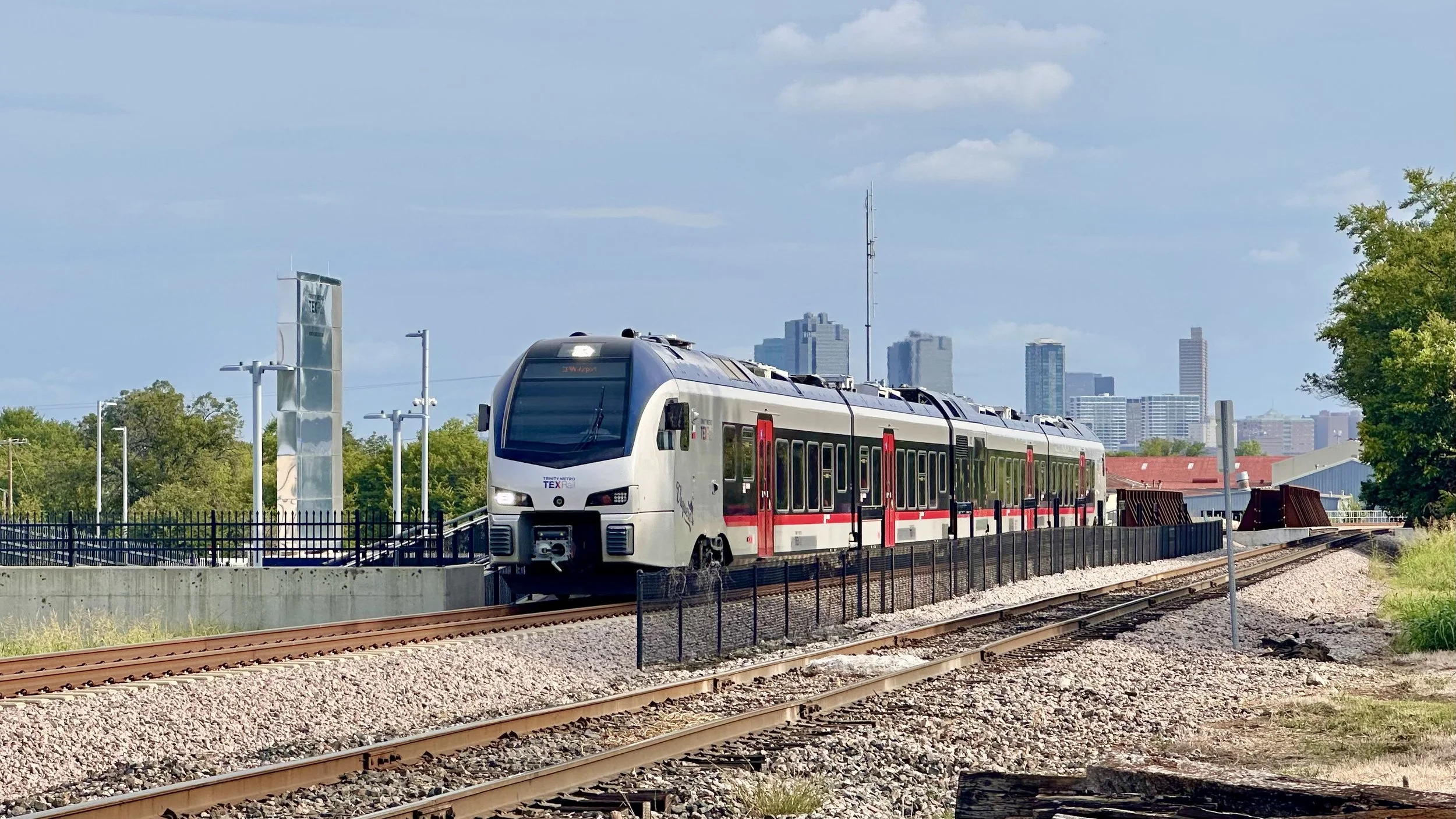
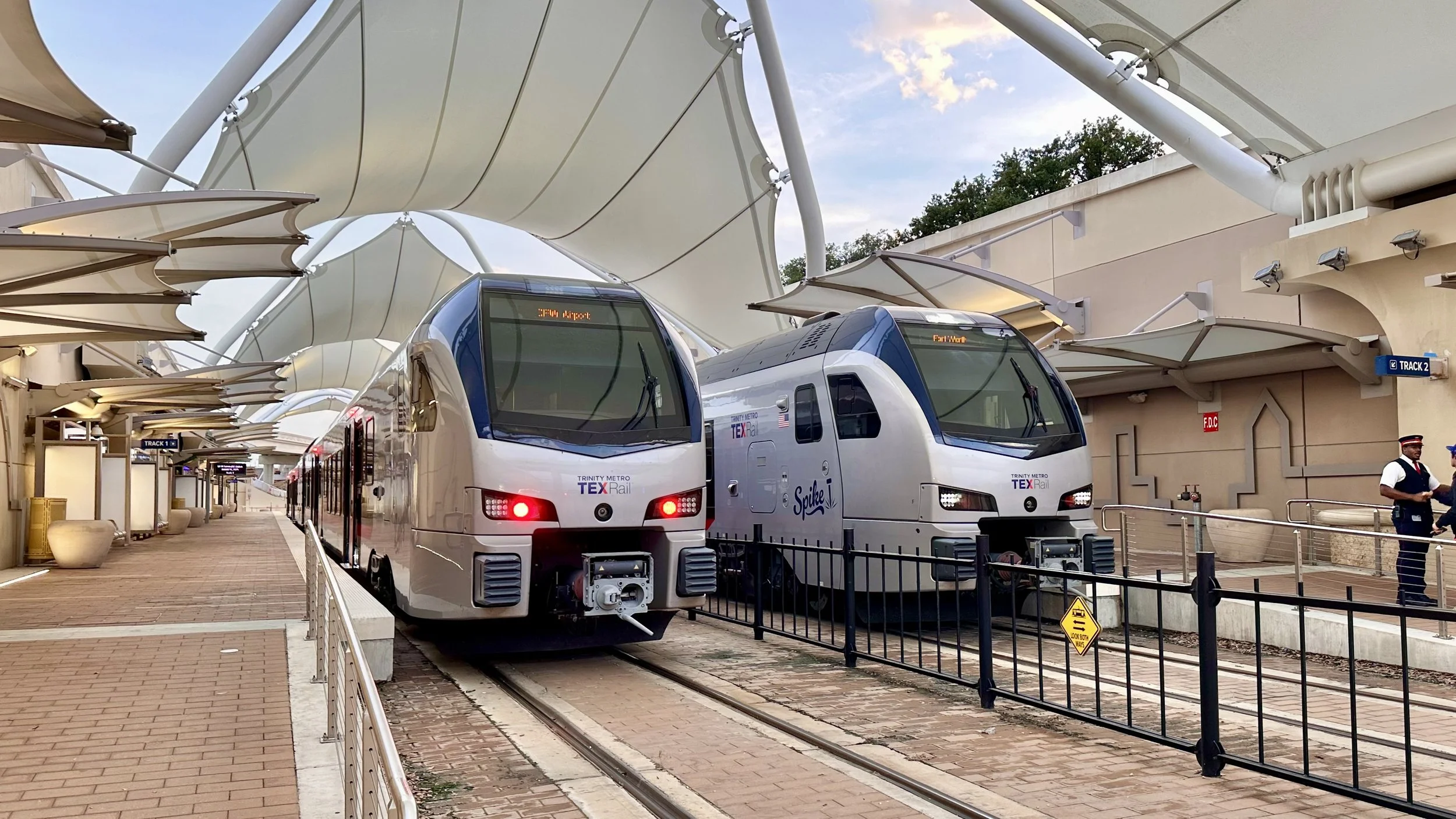
The first US DMU to use Stadler FLIRTs opened in 2019. Running between DFW Airport and offering a walking connection with the DART Orange Line to Dallas, TEXRail completes the (other) Texas (train) Triangle by connecting to the Trinity Rail Express (TRE) in Fort Worth, the commuter rail between Downtowns Fort Worth and Dallas (I’d call it regional rail, but for its utterly shameful lack of service on Sunday). Similarly to other DMUs, TEXRail is paralleled most of its length by bicycle trails, allowing for last-mile connections by bike. The line’s largely suburban character is punctuated by occasional islands of walkable density, particularly at Grapevine and Iron Horse Stations. TEXRail’s frequencies are unmatched, with half-hourly service all day every day from 0400 to 1900, then hourly until 0100. Weekends see the exact same service levels as weekdays, and holidays get extra trips, not a reduced schedule.
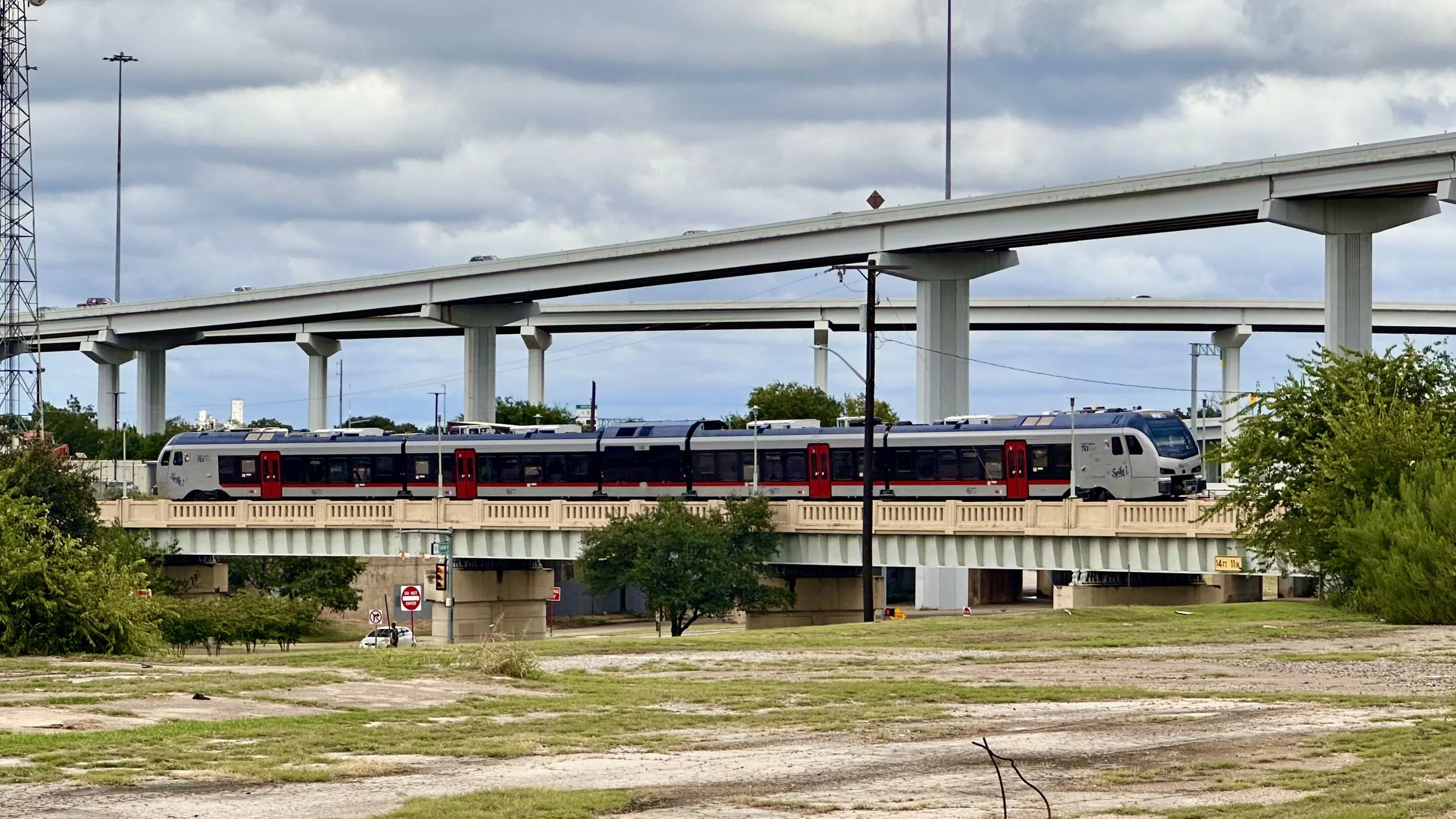
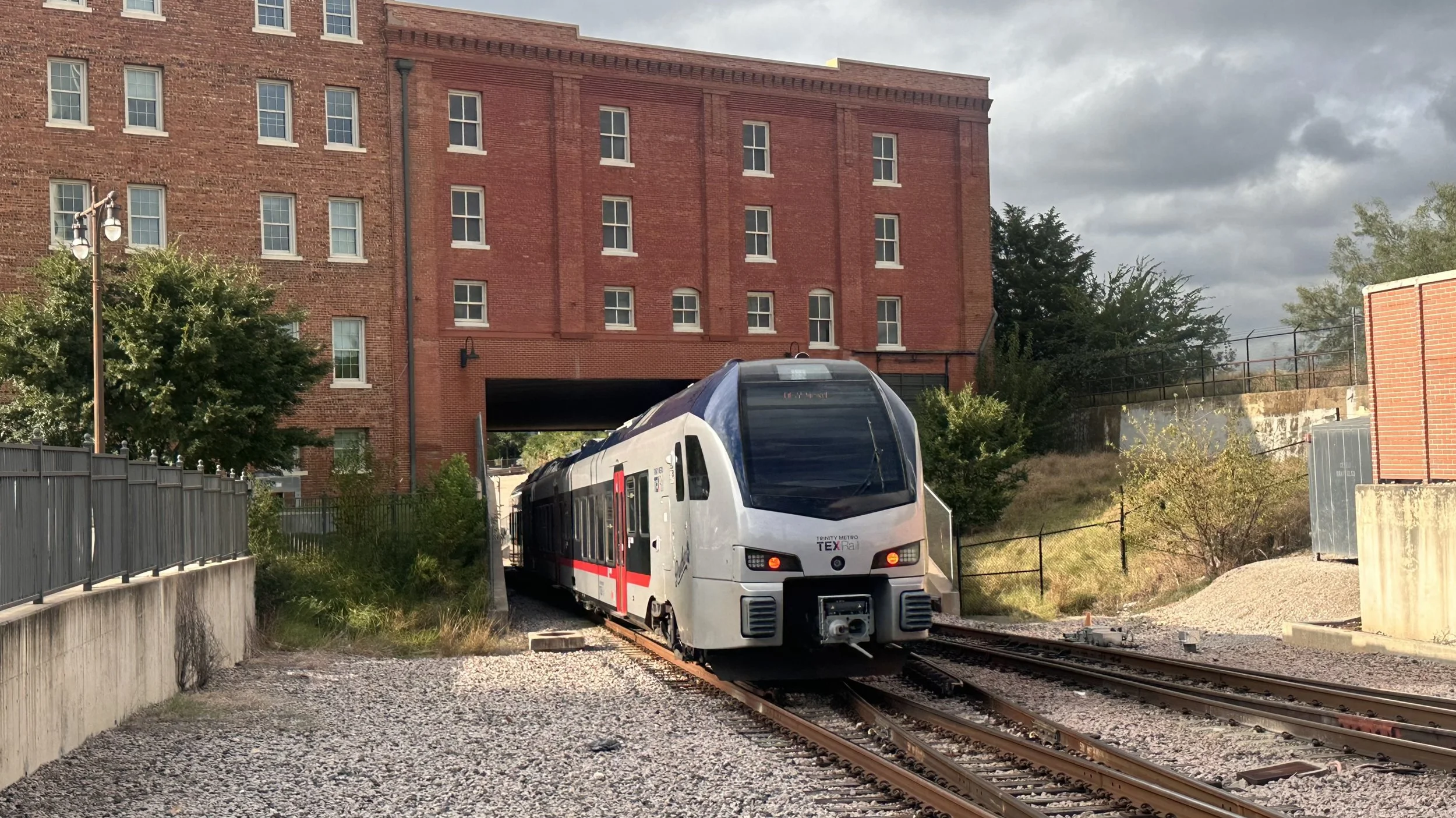
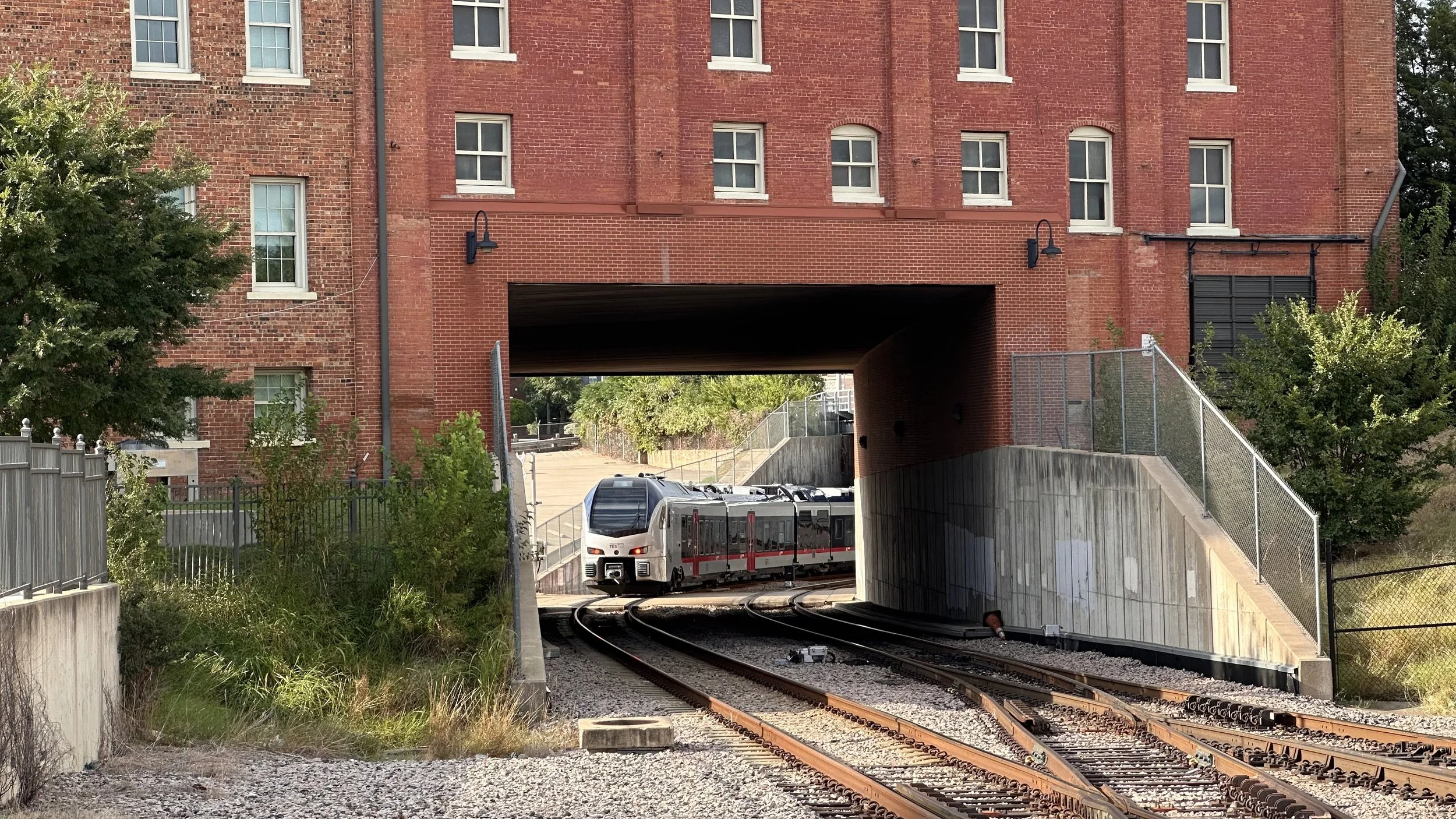
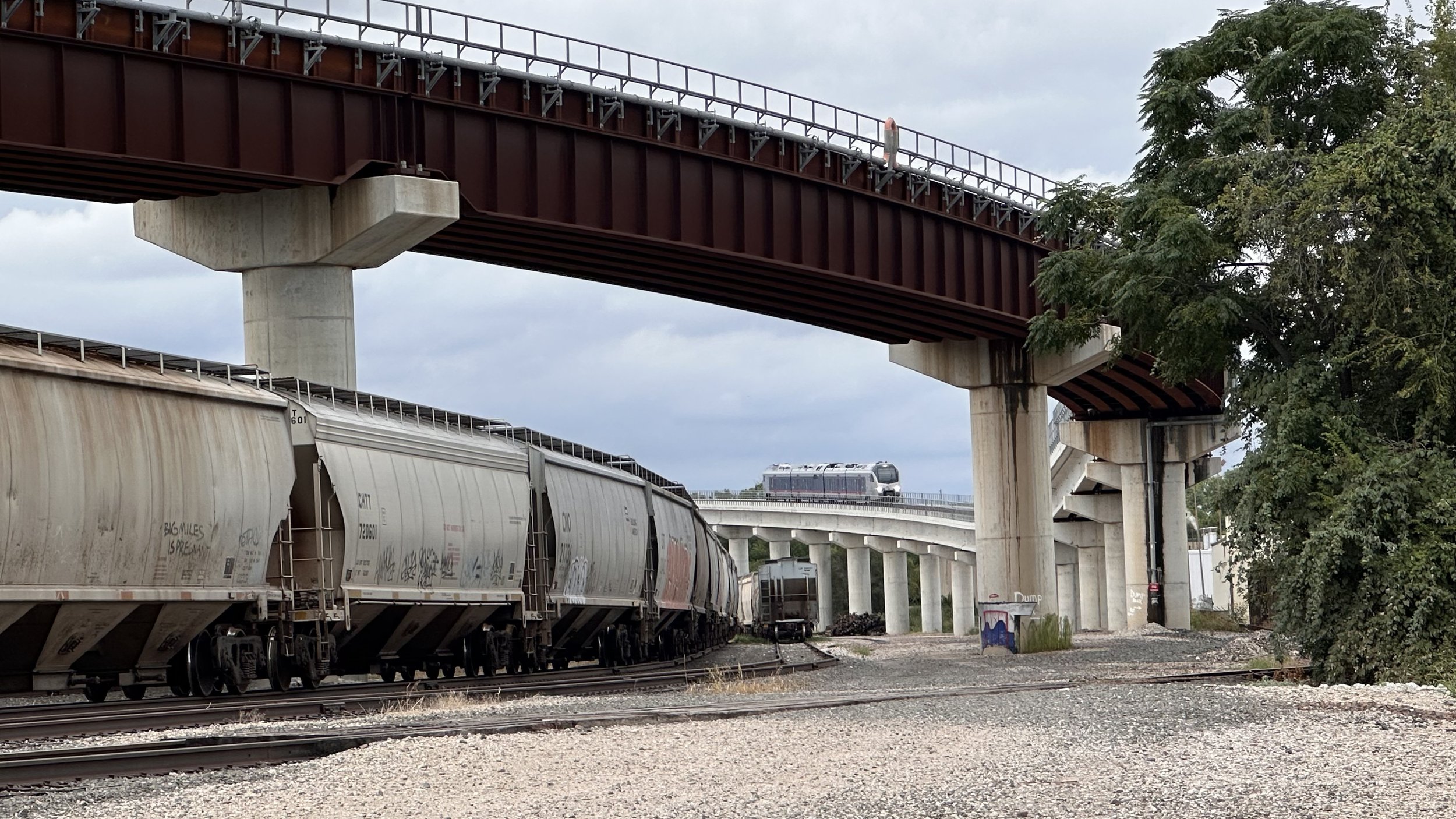
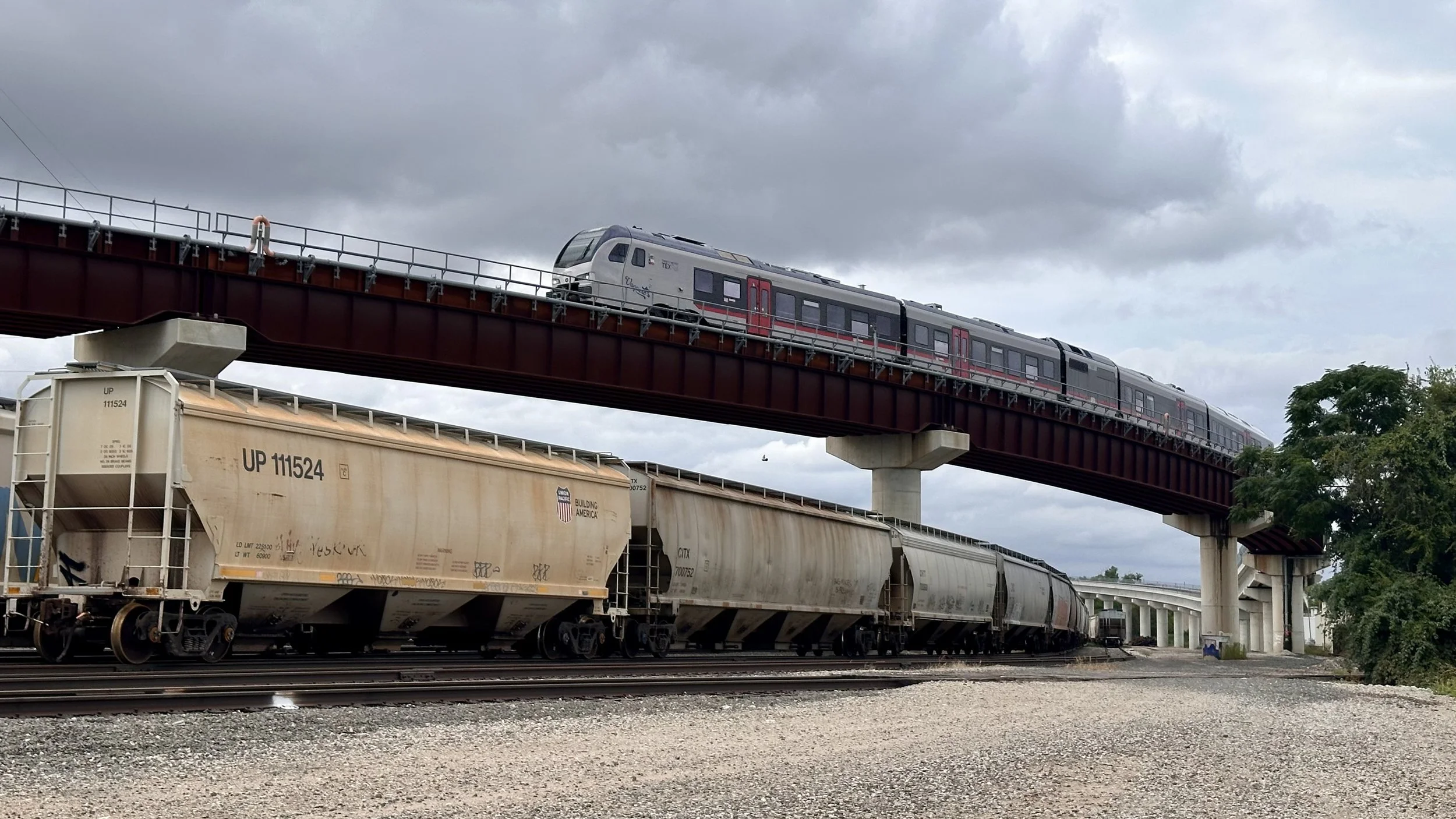
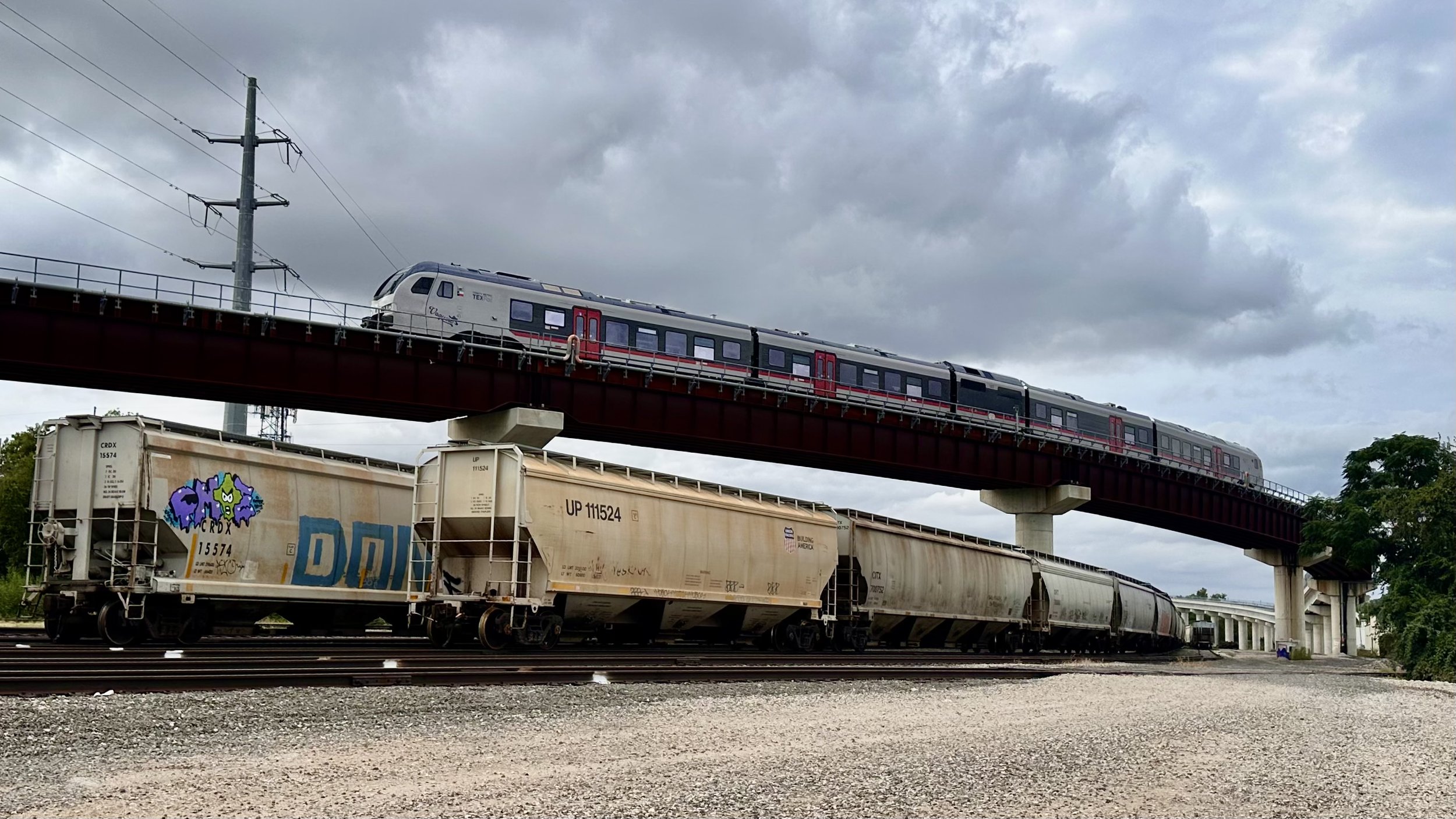
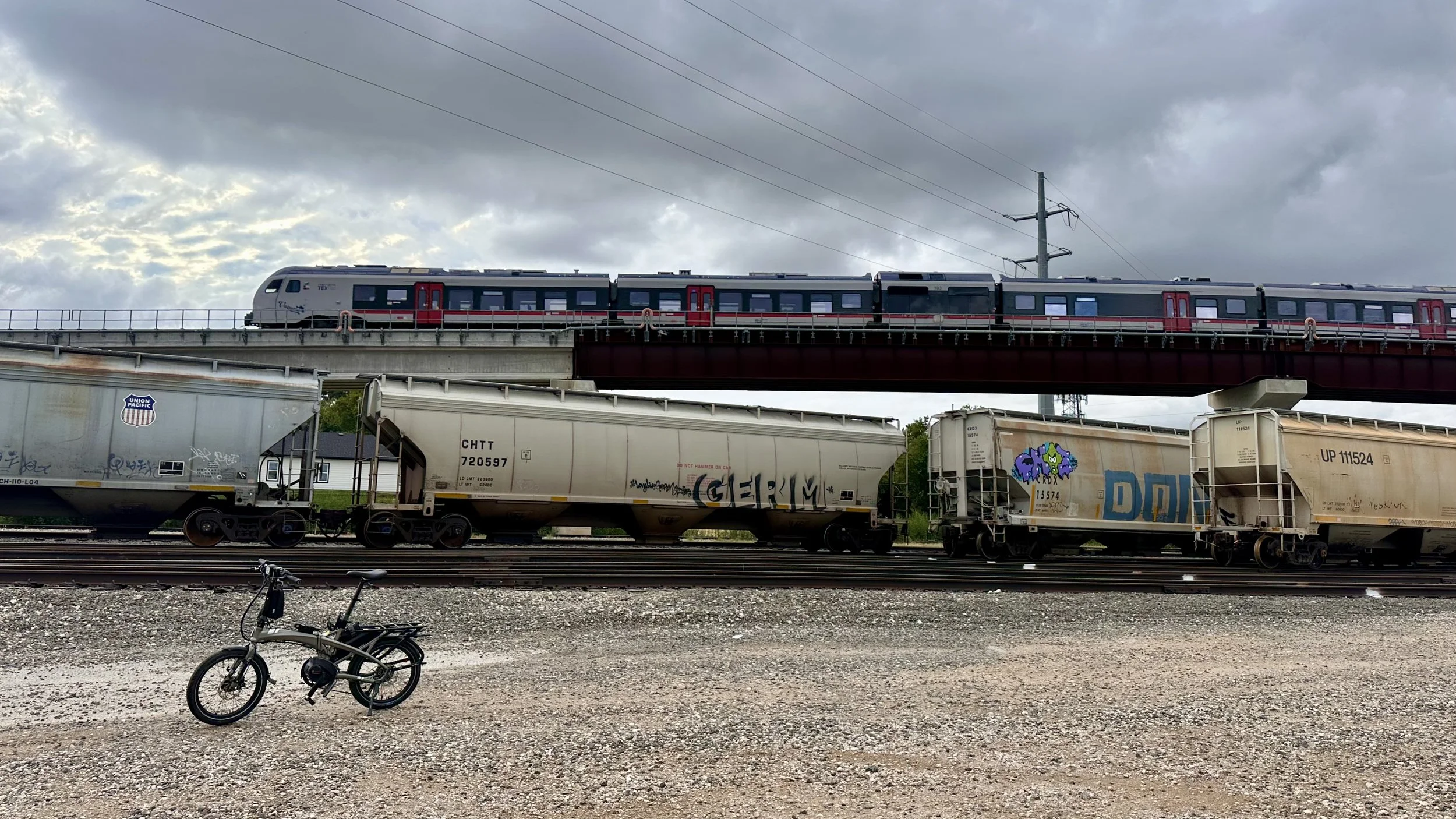
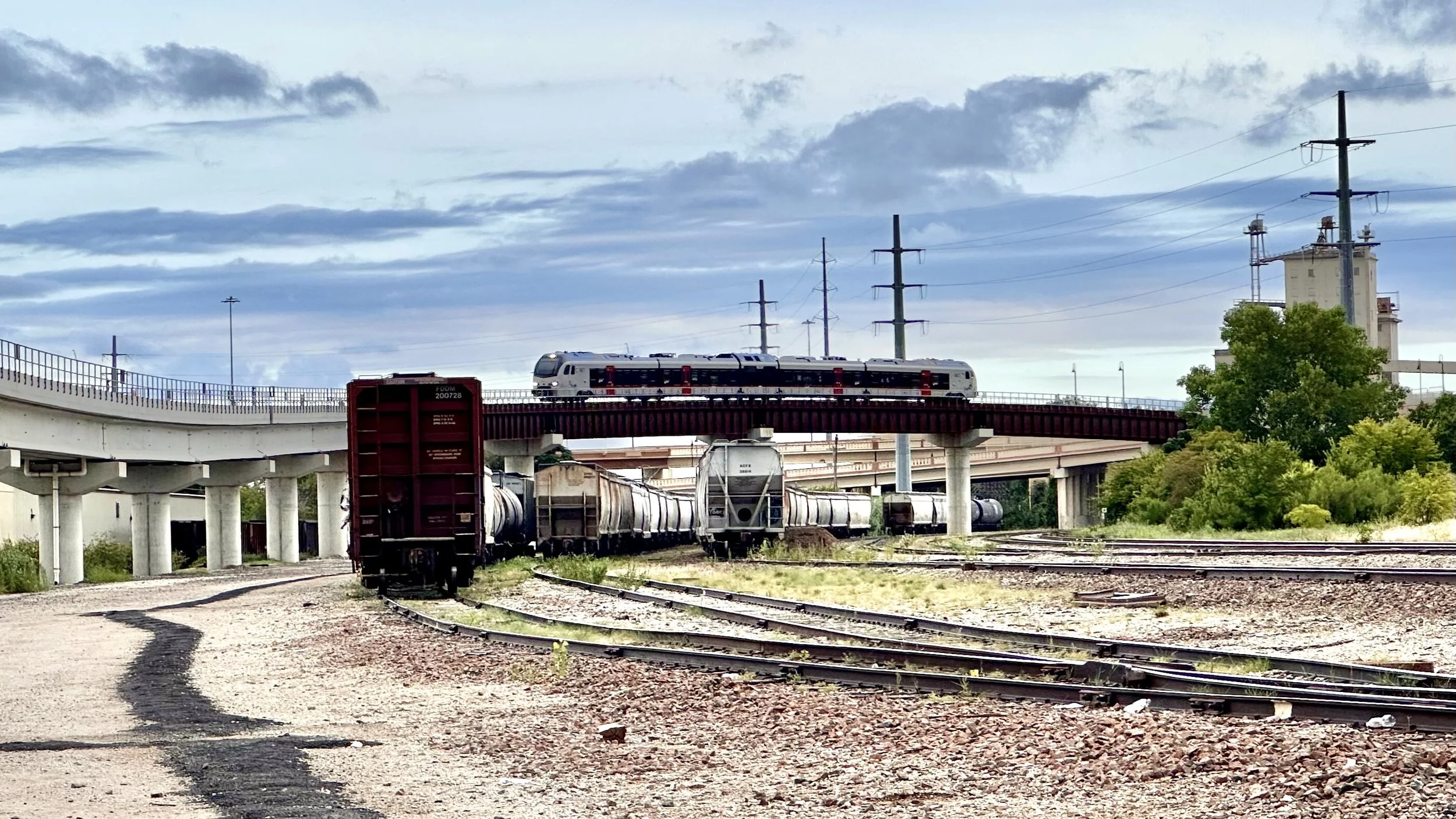
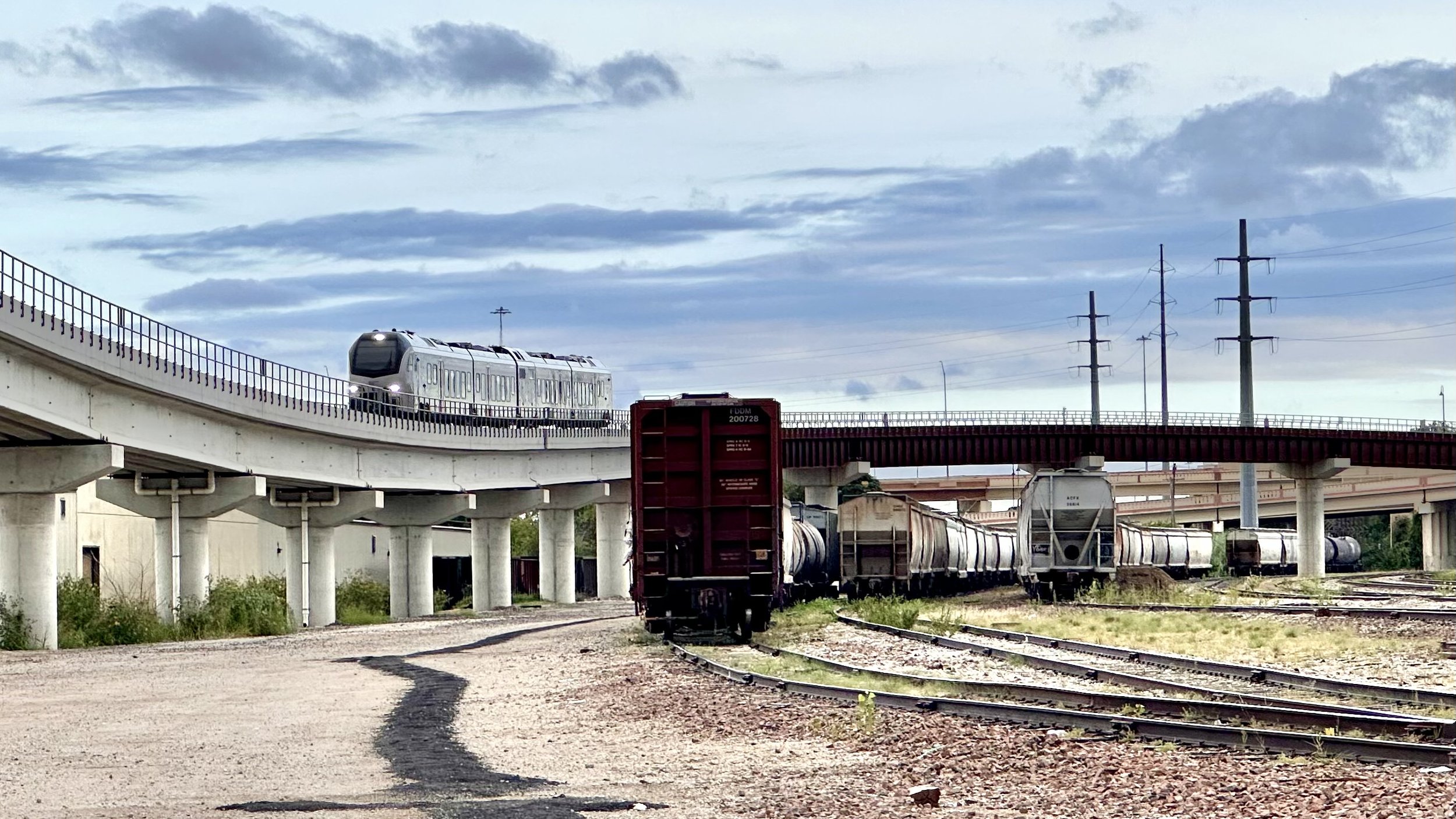
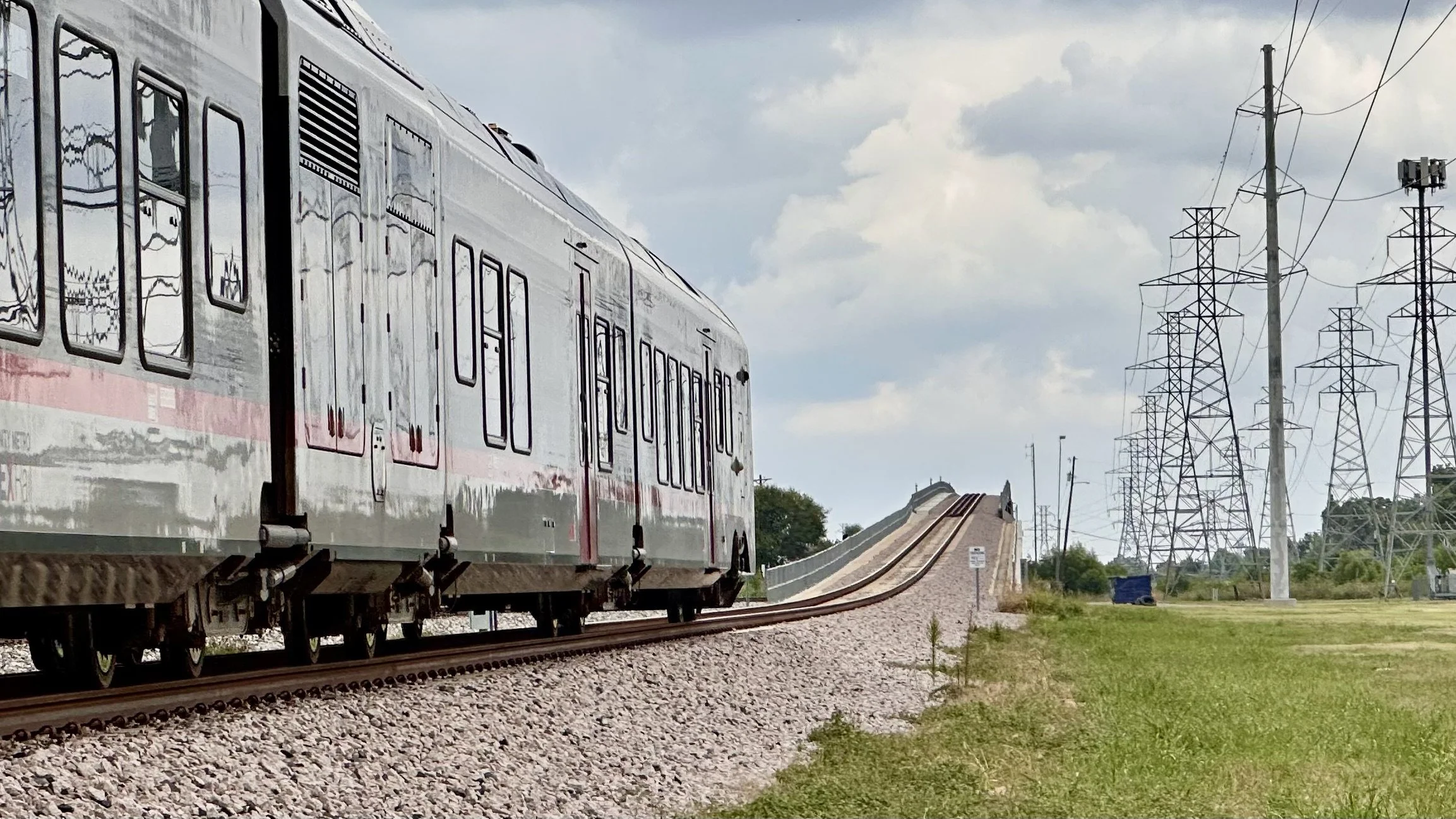
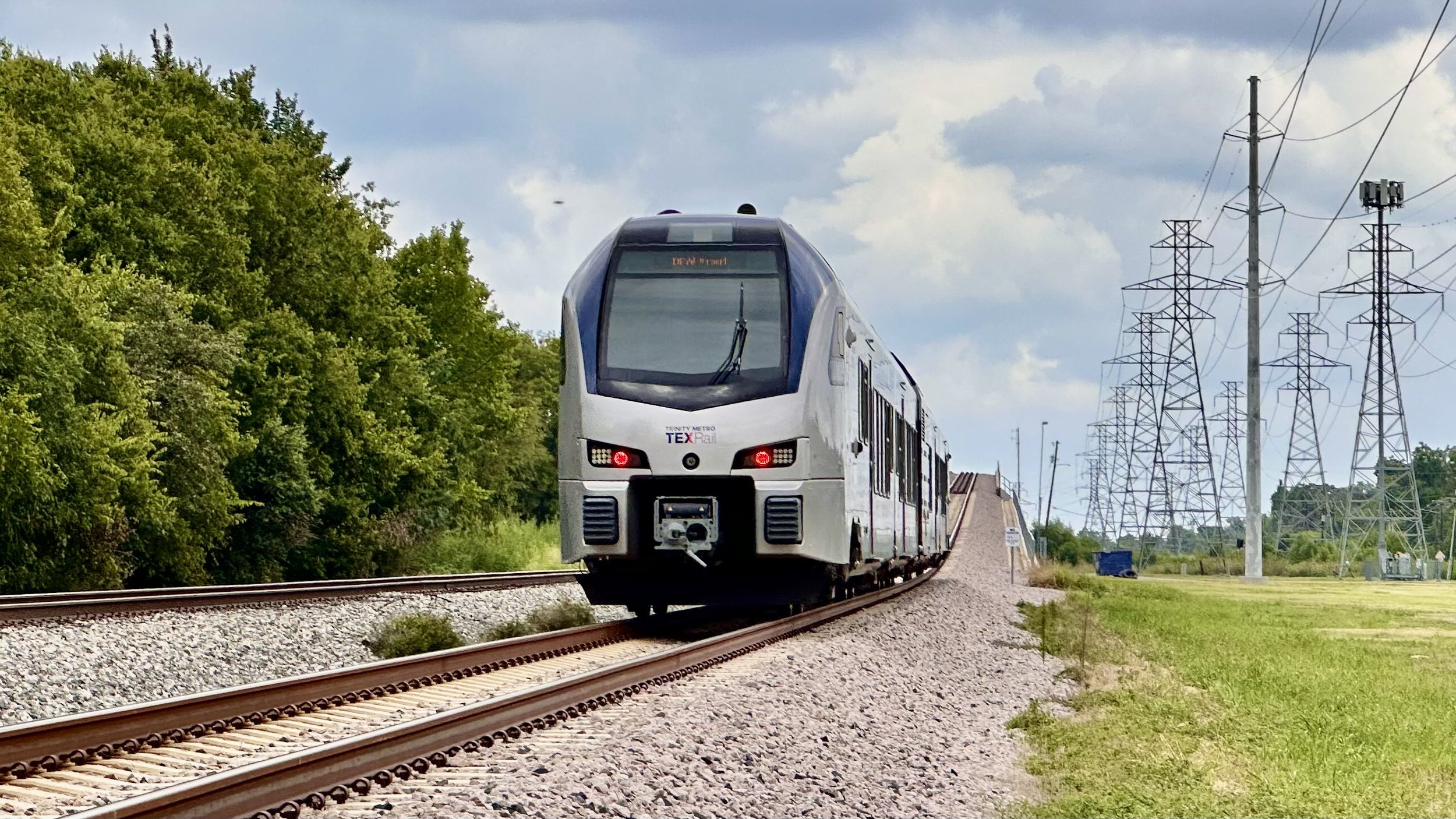
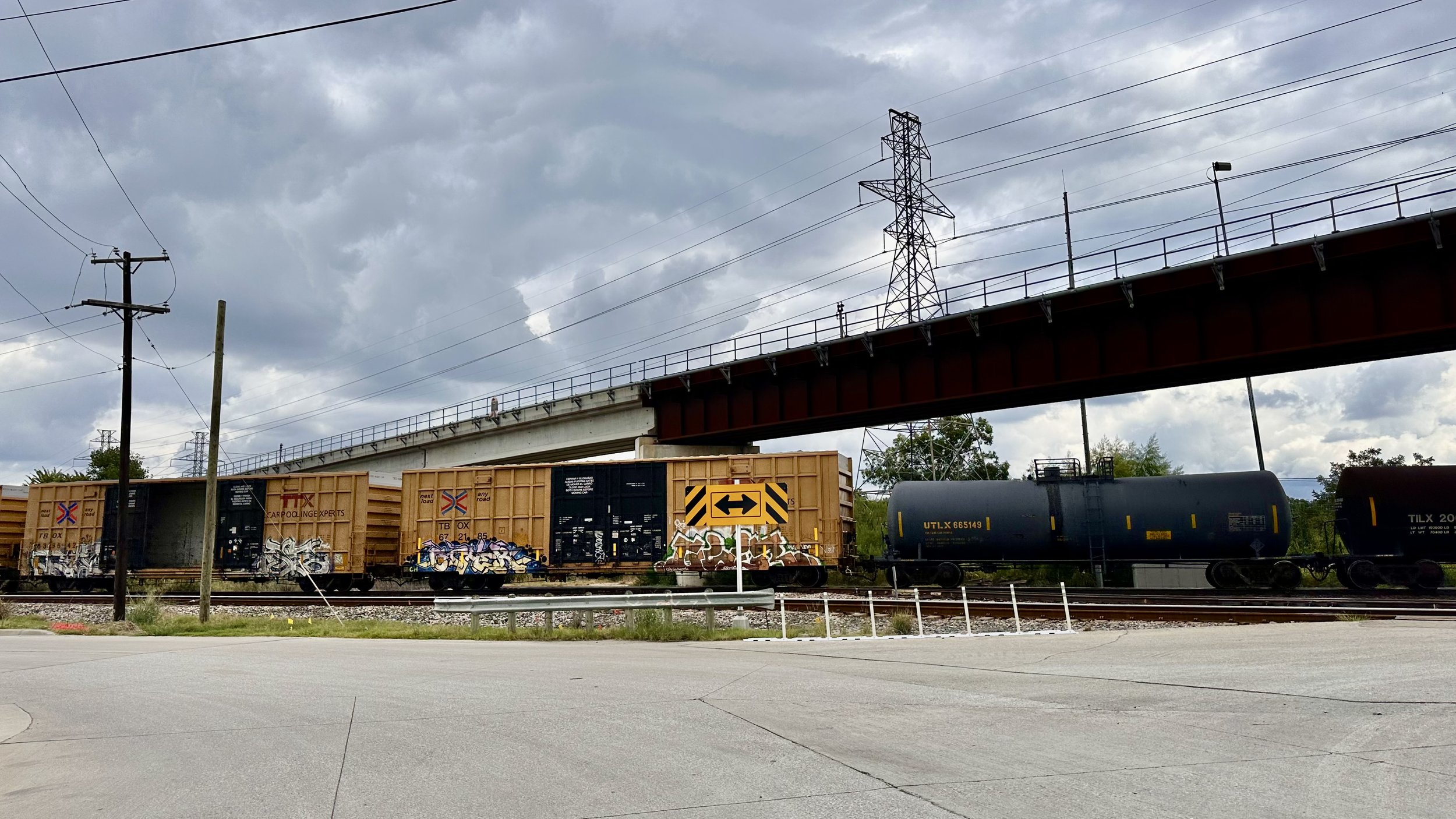
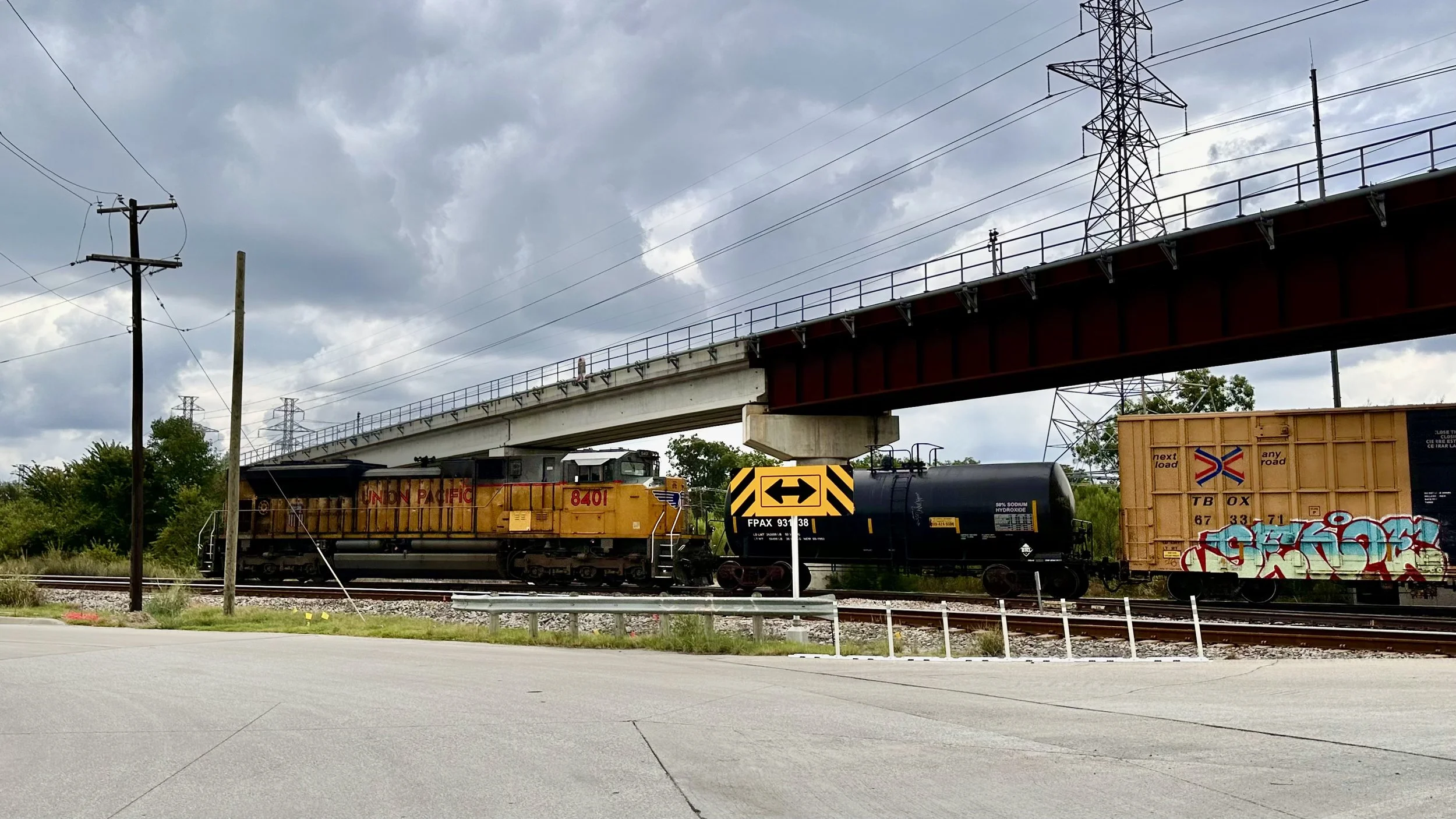
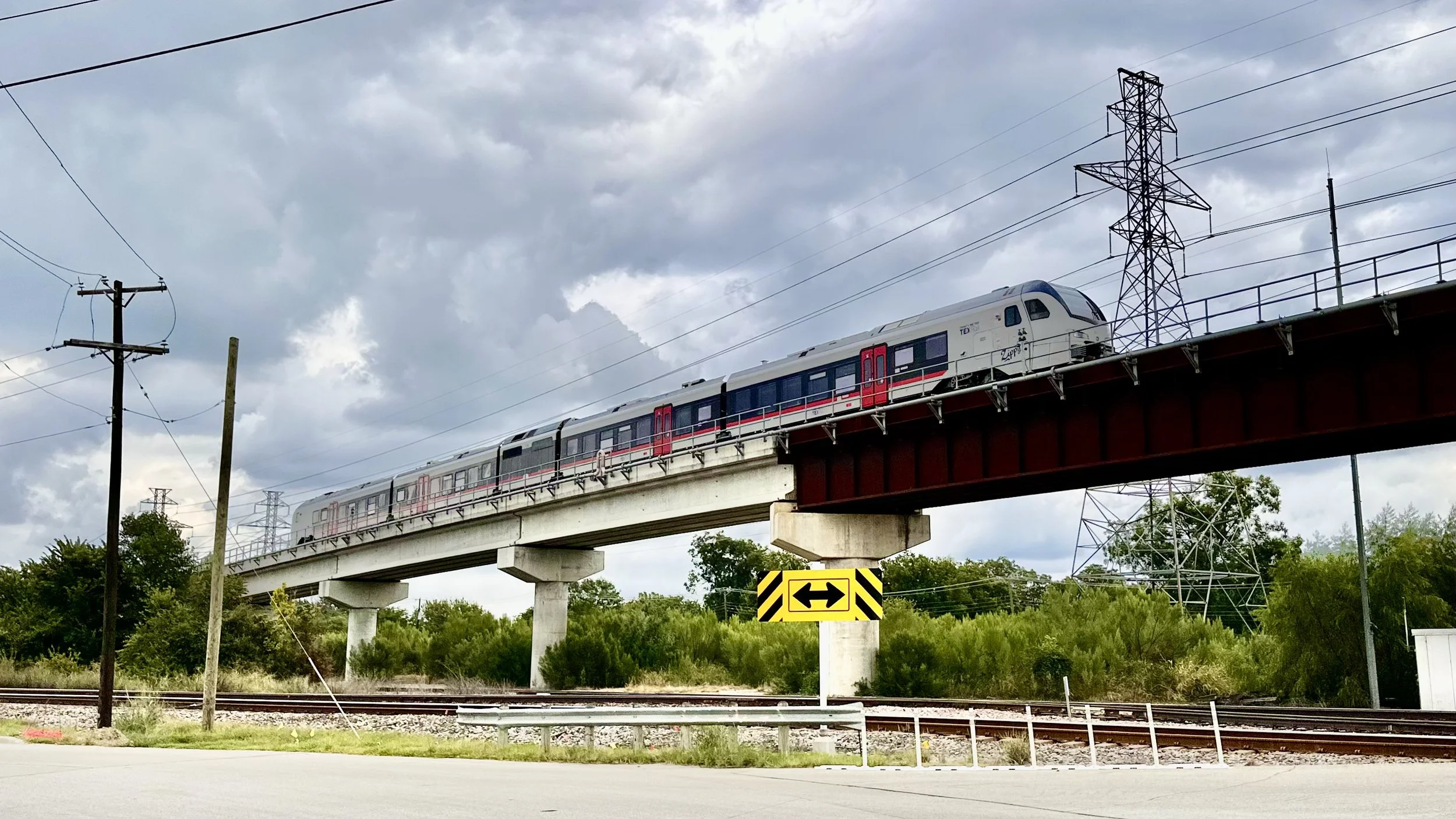
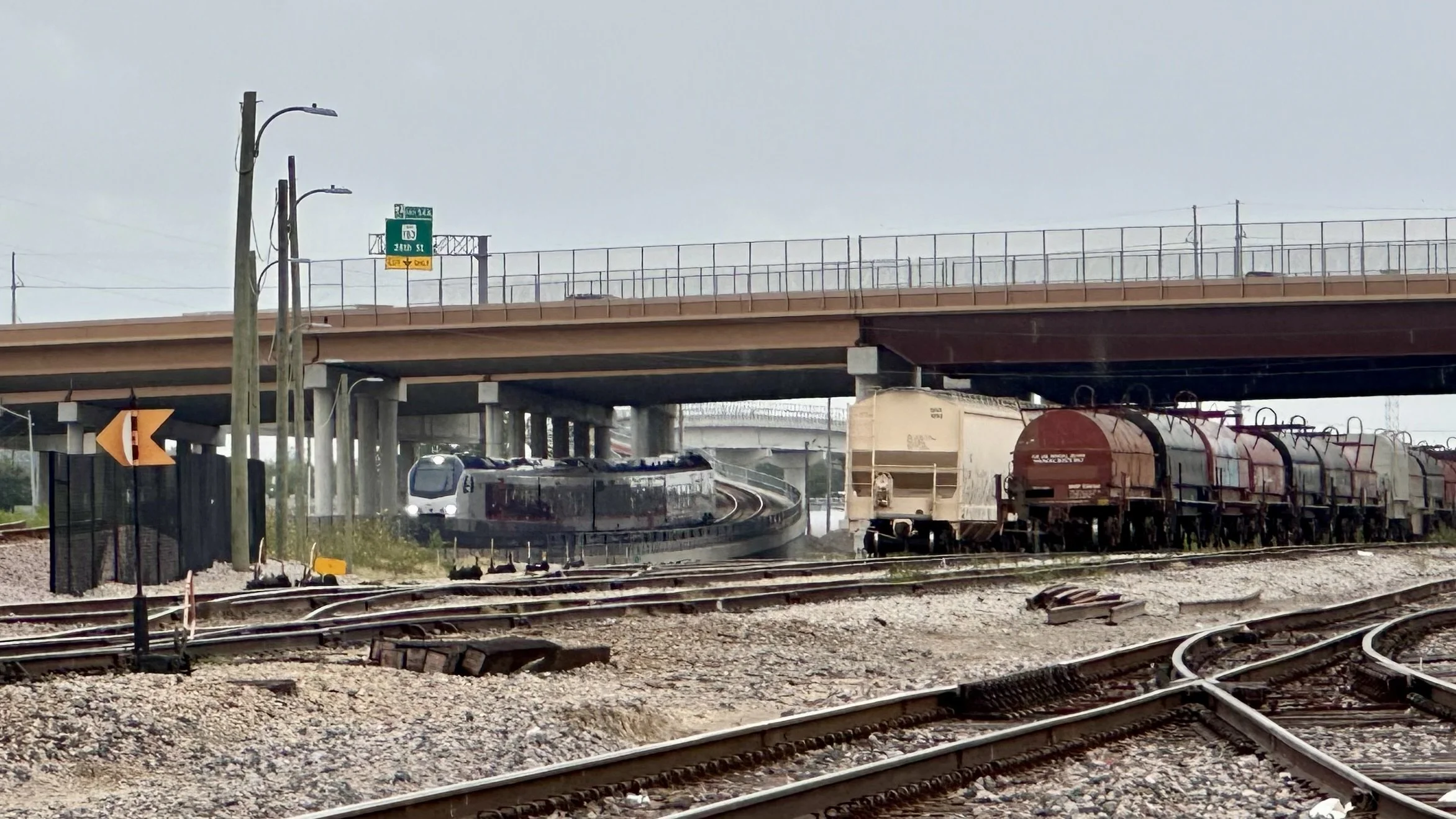
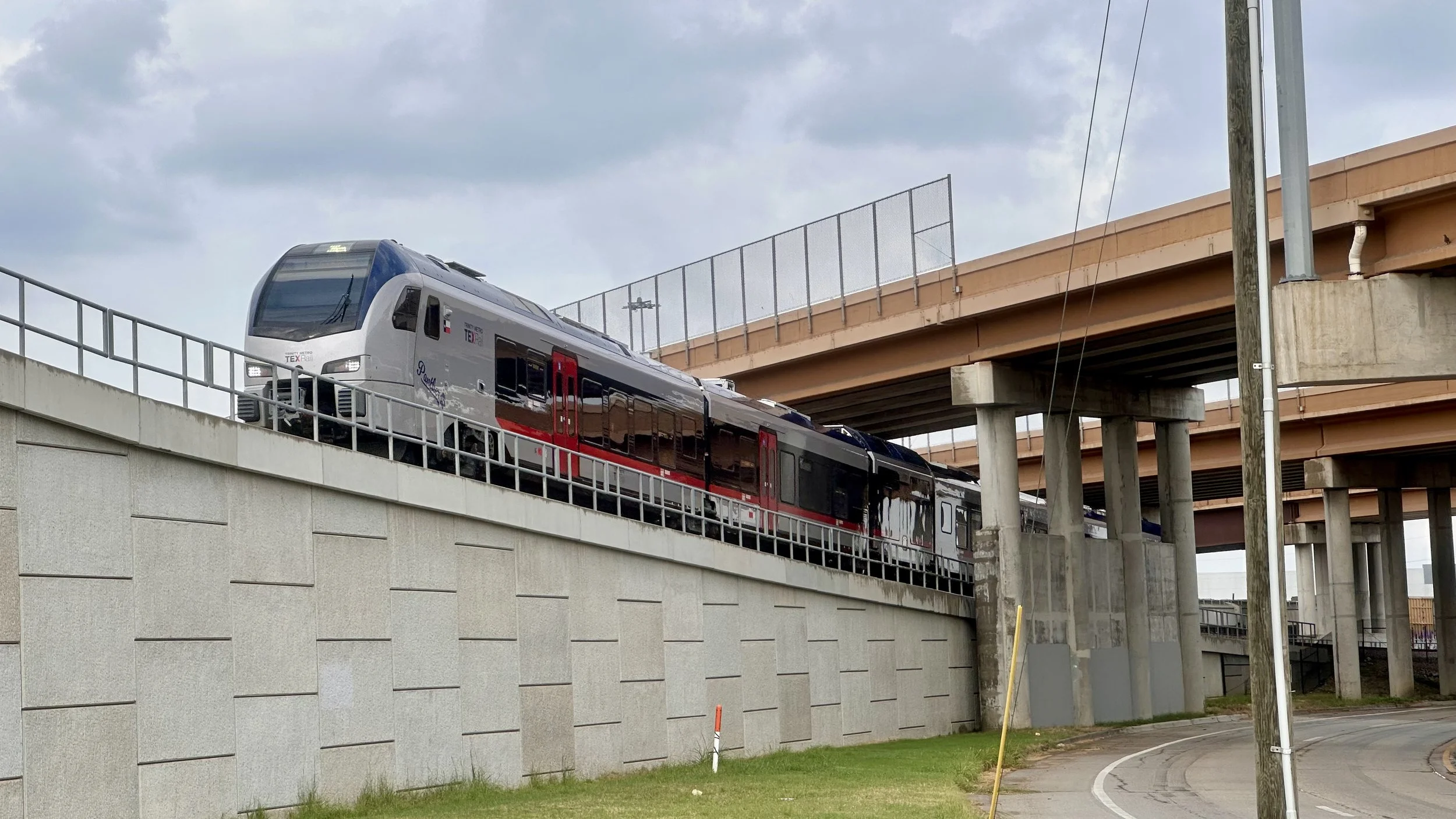
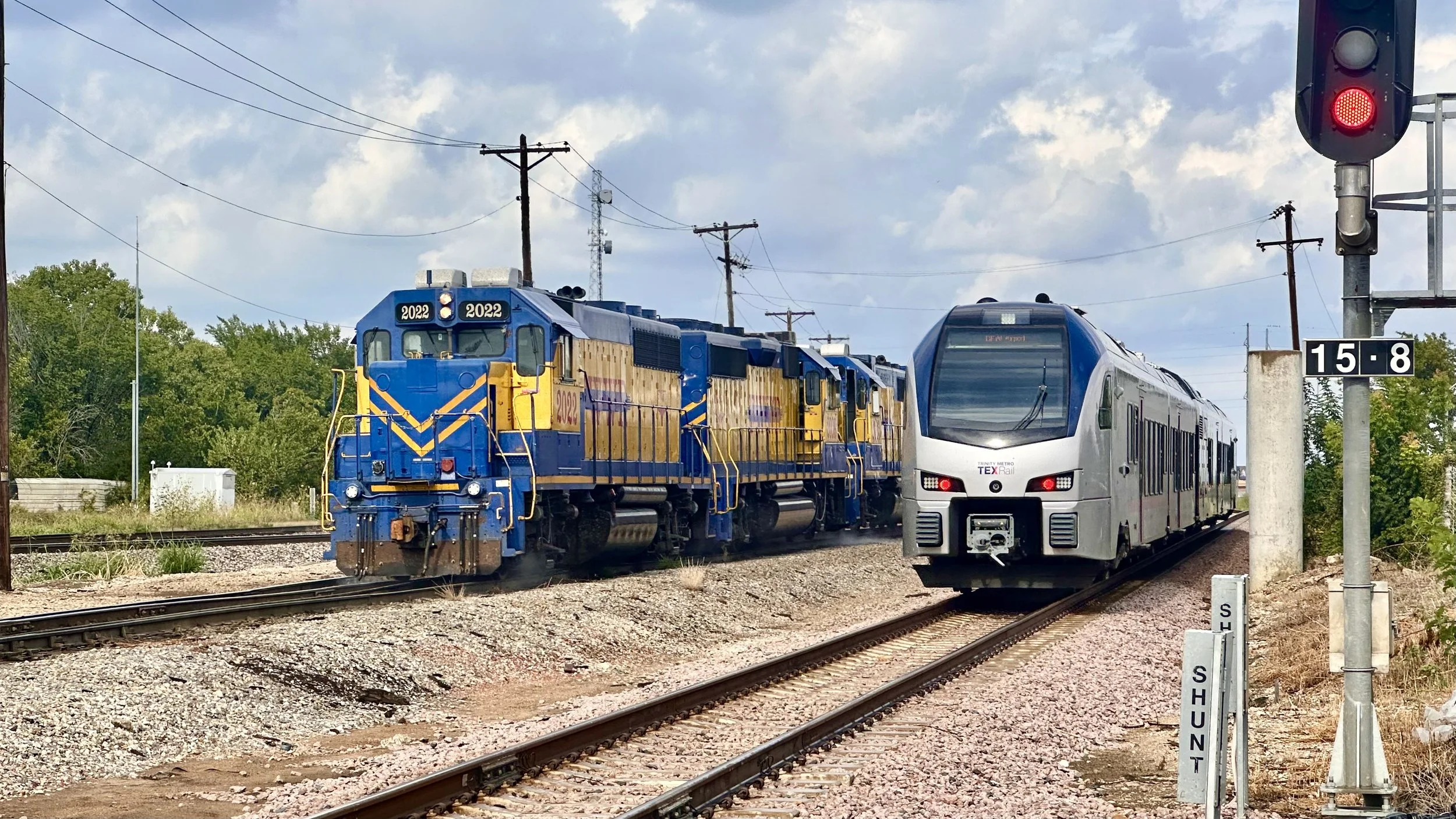
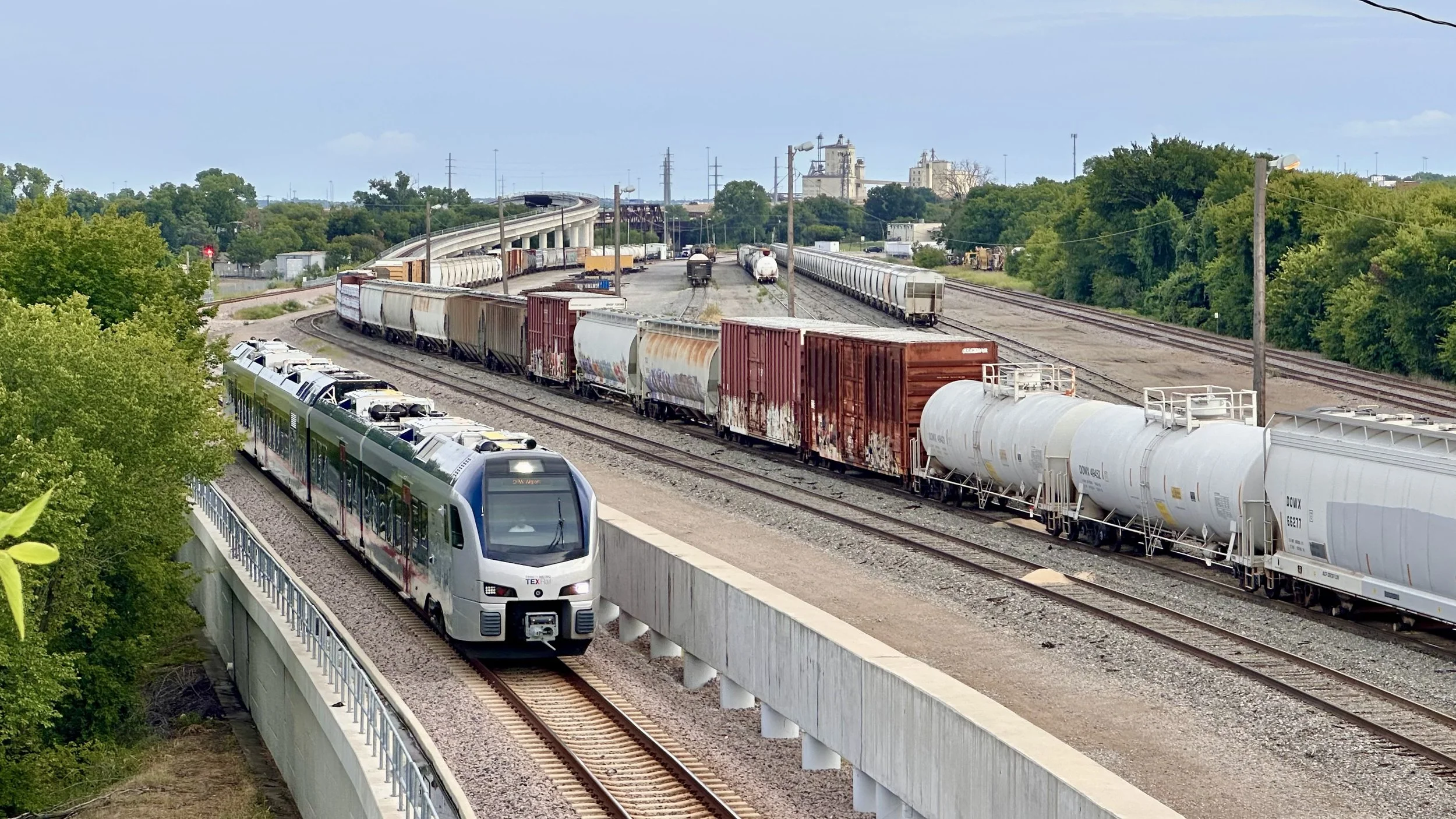
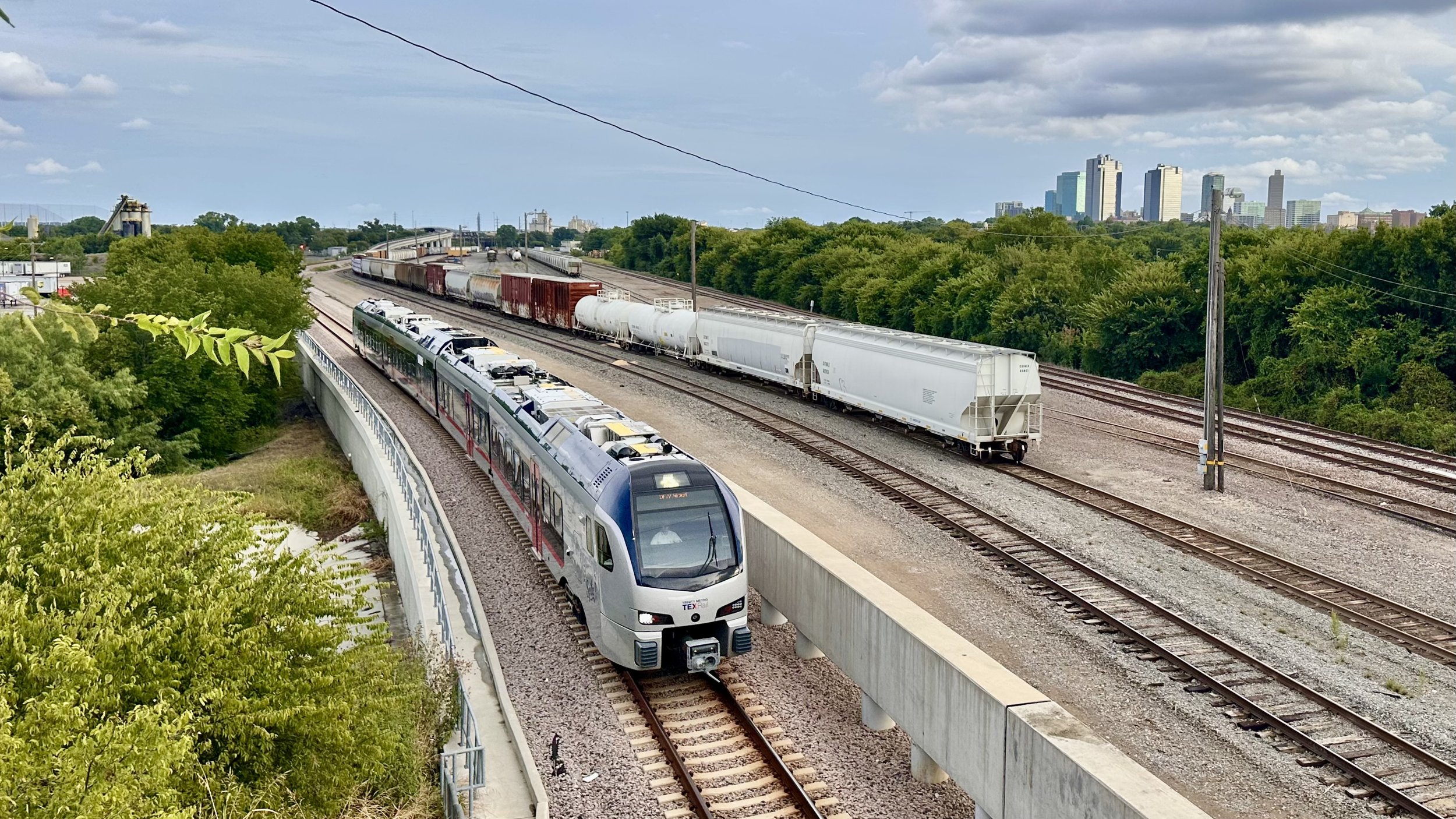
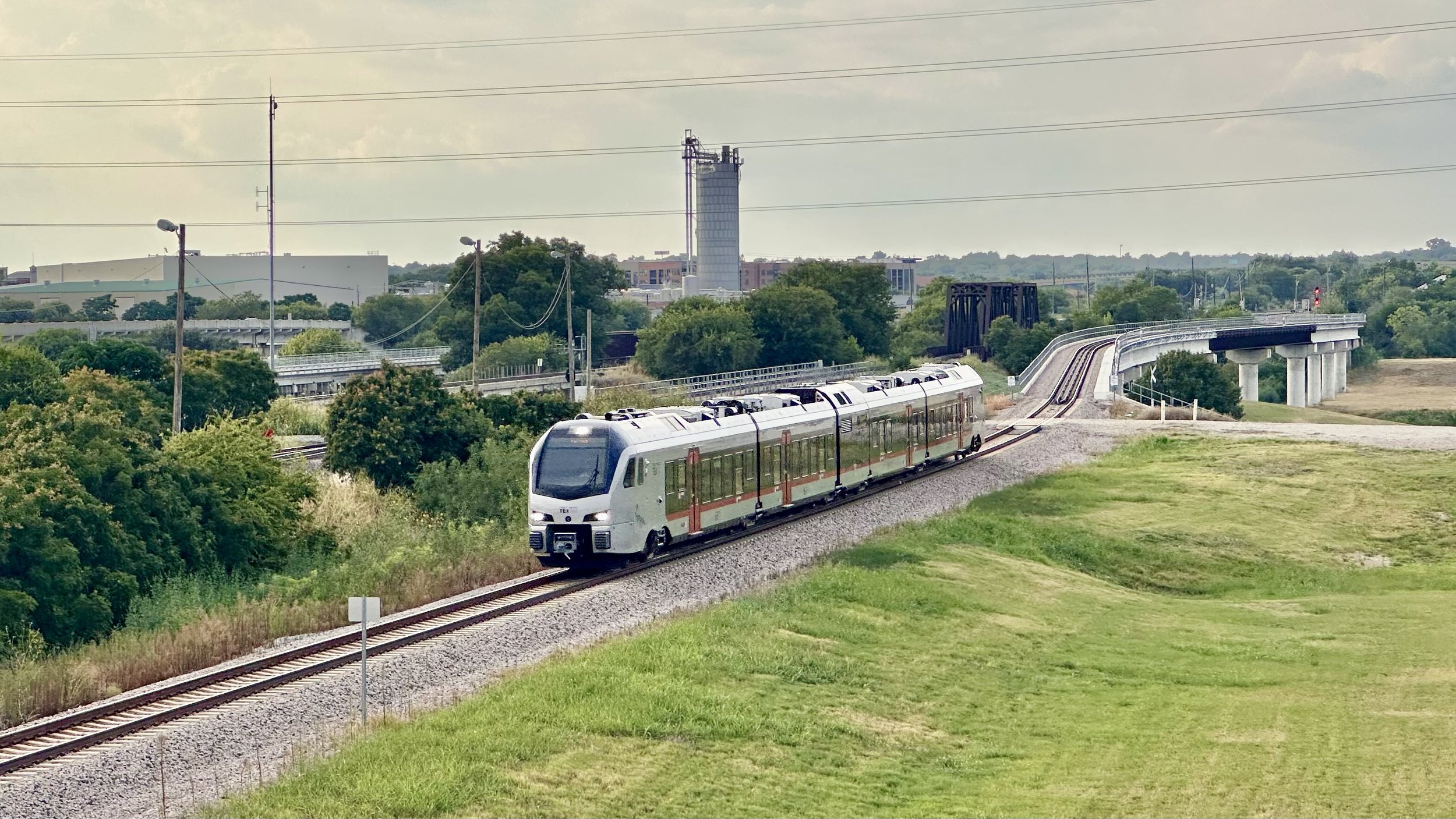
Notable is the sheer amount of freight rail integration, with DMUs passing through, next to, or over major yards for UP, BNSF, and the Fort Worth and Western (FW&W), in addition to occasional on-line industry spurs. The route is primarily built from the Cotton Belt corridor, the easternmost leg of the modern FW&W’s mainline and which continues further east as the DART Silver Line. TEXRail’s western end beyond Mercantile Center Station takes a complicated series of viaducts and underpasses to weave around five separate mainlines and the three yards near downtown Fort Worth, whereby one can make cross-platform transfers to the TRE and Amtrak’s Texas Eagle and Heartland Flyer. Whereas freight operates unrestrictedly west of Mercantile Center due to the DMU’s parallel and deconvoluted tracks or viaducts hopscotching over wyes, yards, or junctions, east of Mercantile Center is more than half single-tracked and freight must wait for night.
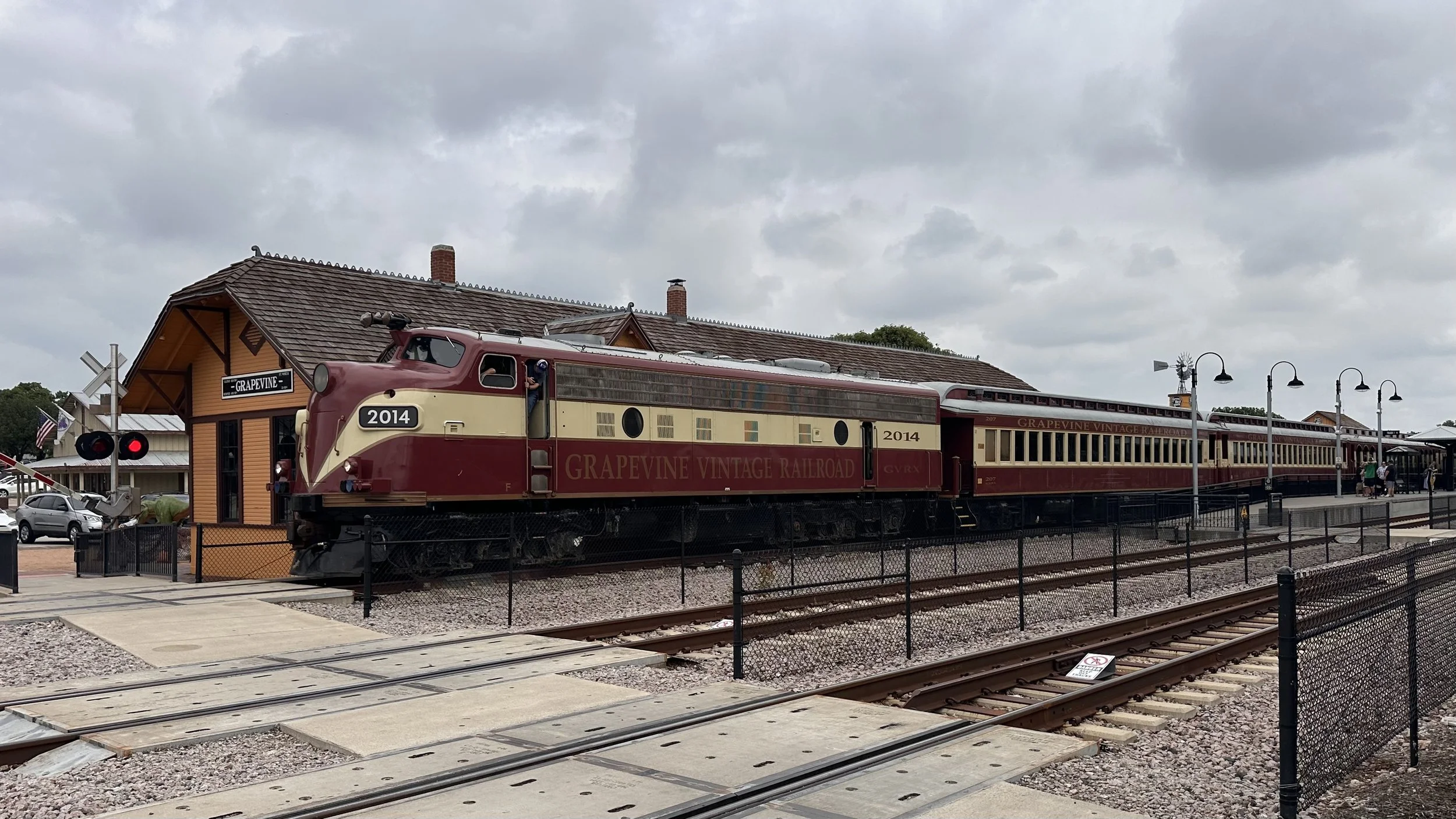
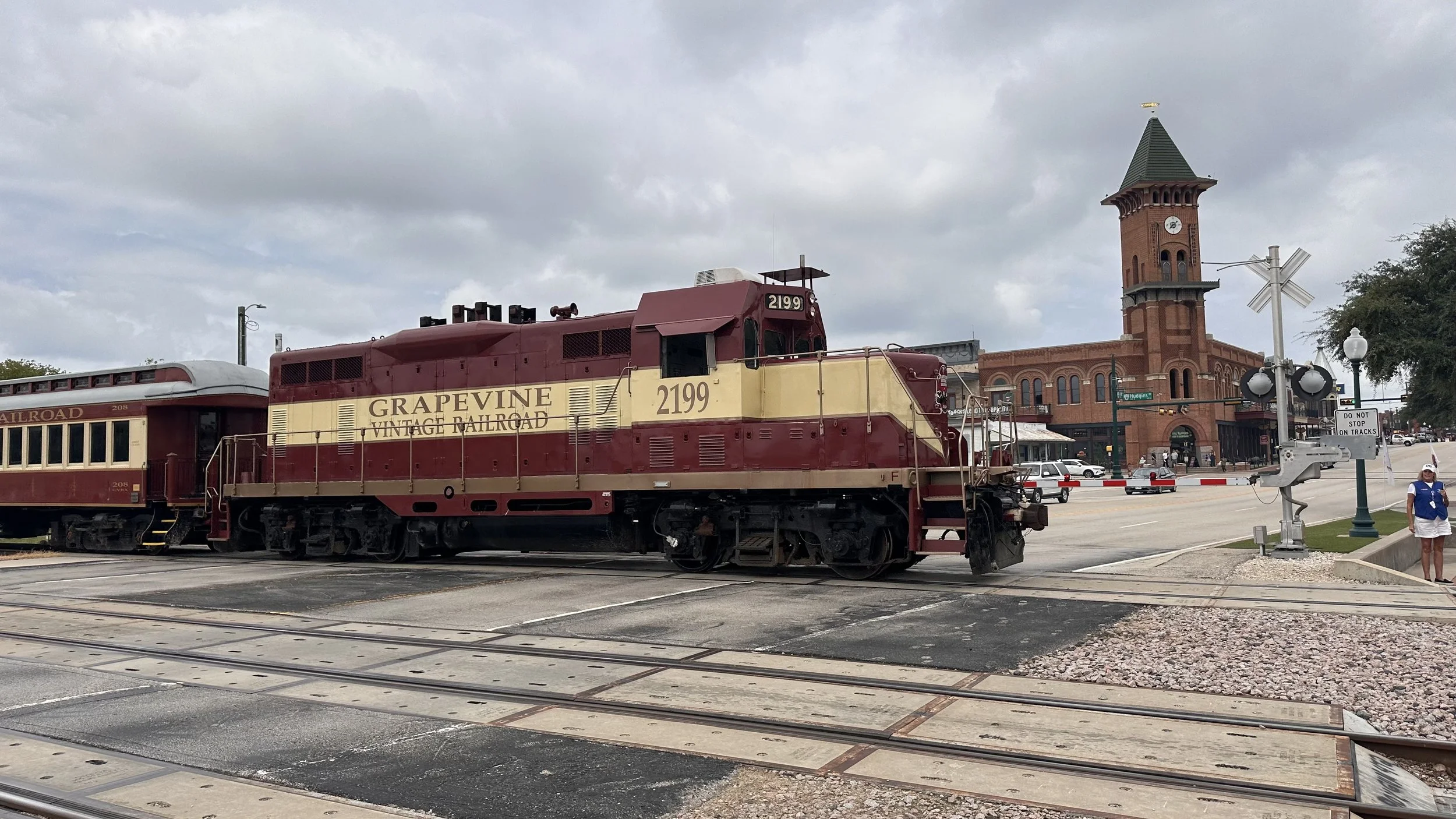
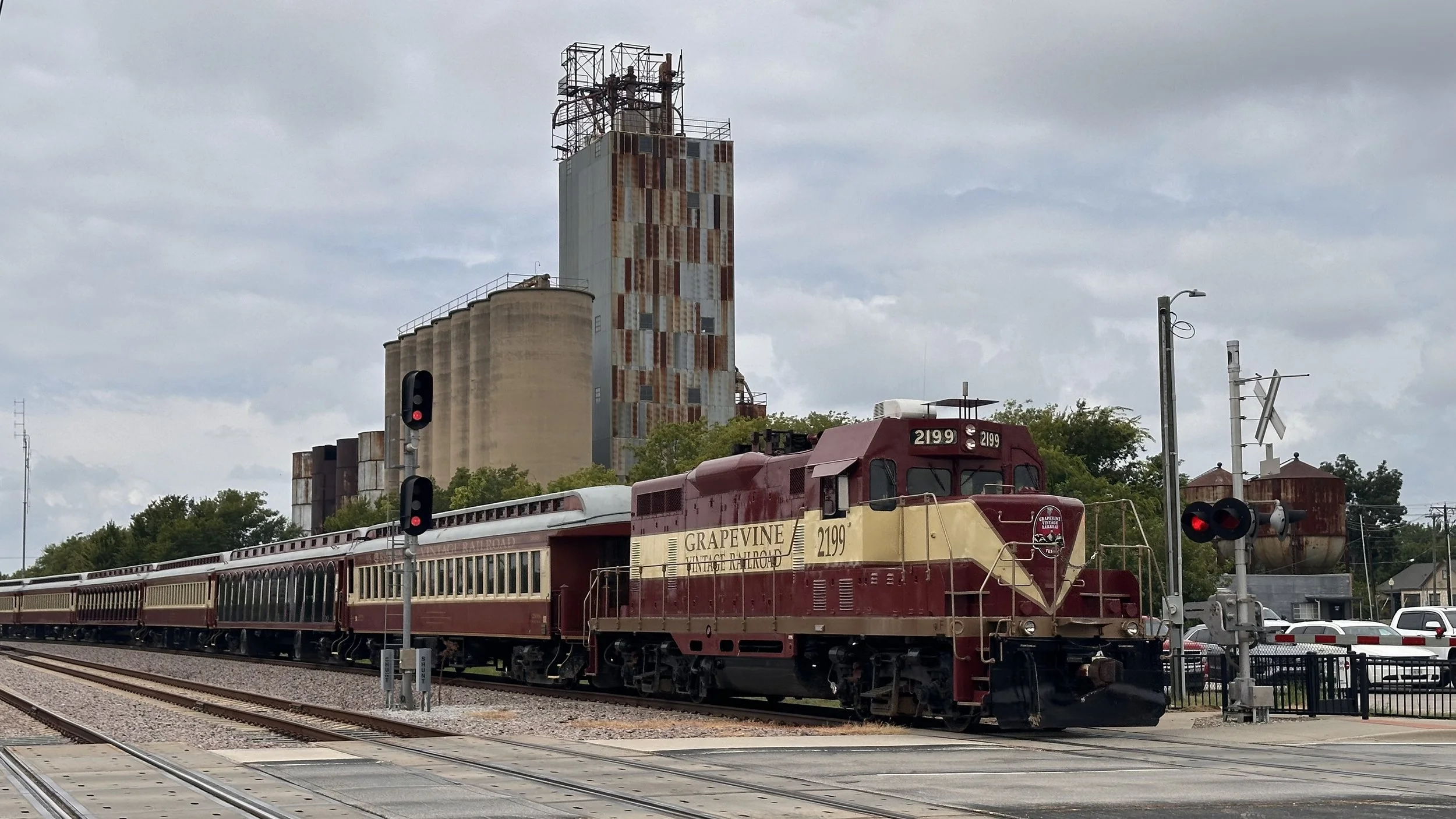
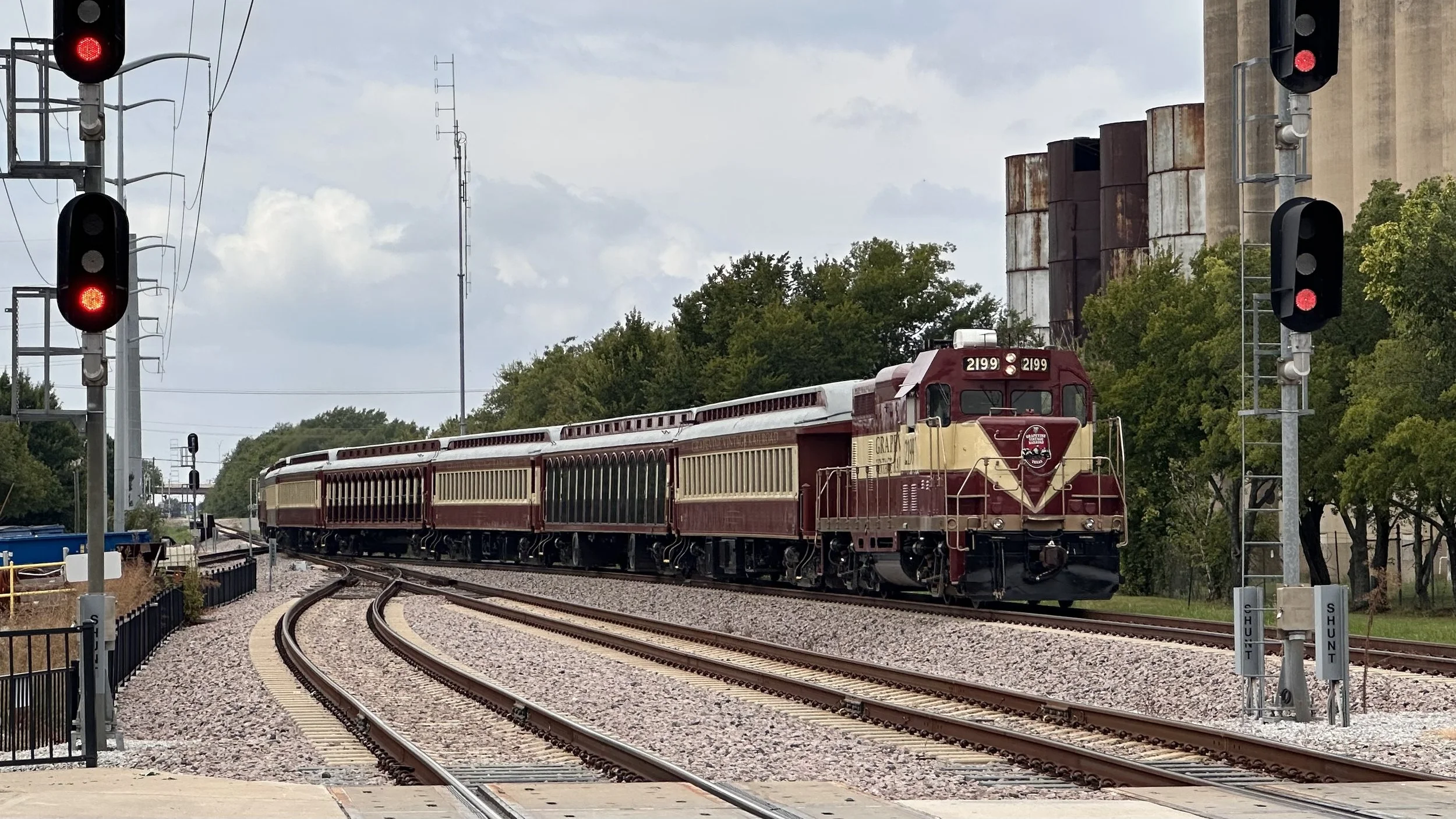
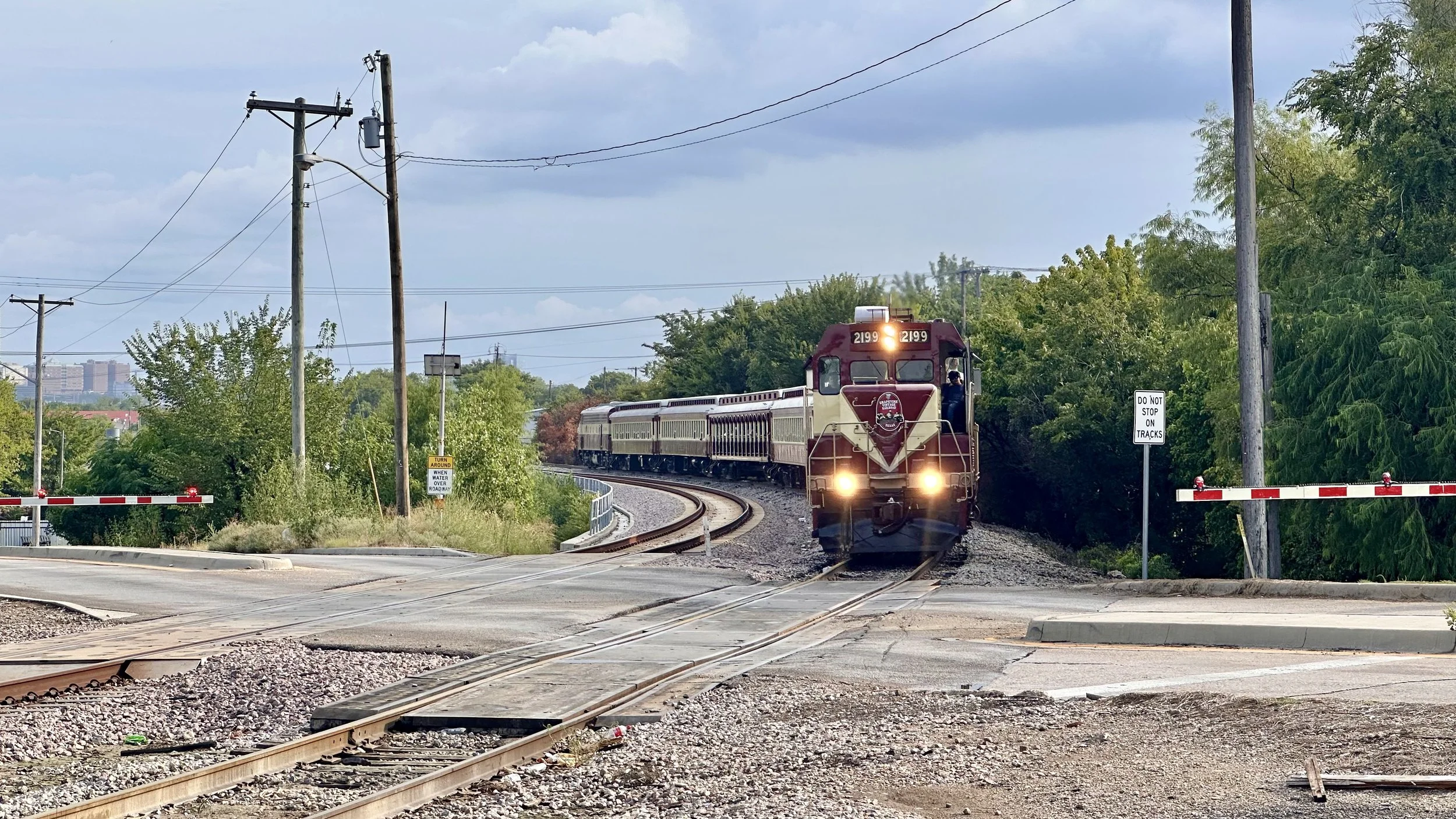
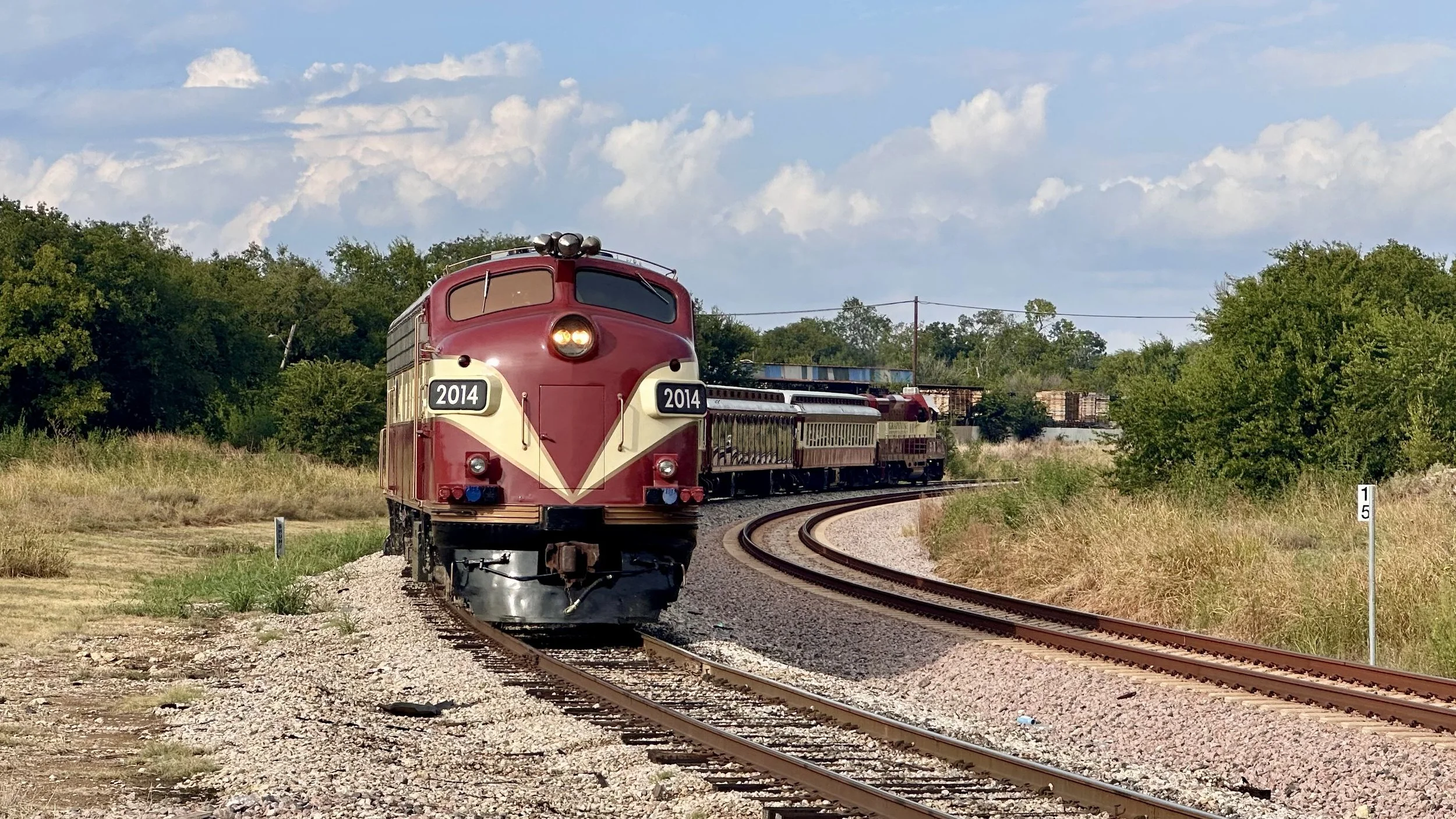
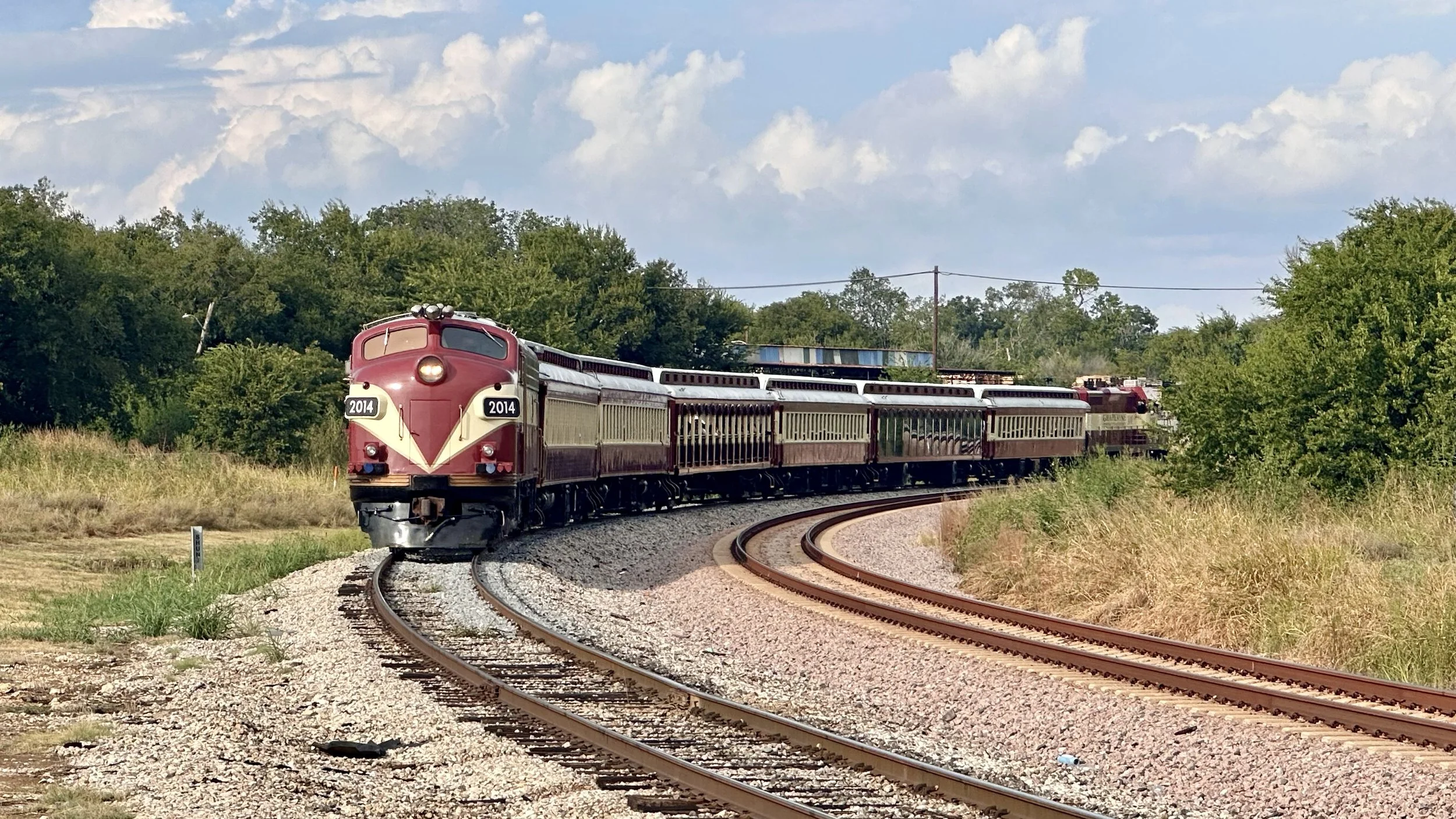
Uniquely to any other transit system, TEXRail shares tracks with the Grapevine Vintage Railroad, which departs daily from Grapevine to the Fort Worth Stockyards and back, and necessitates a brief locking of the mainline to DMUs (in accordance with FRA requirements) to allow the mainline tourist train through (though the GVRR quickly leaves TEXRail tracks and travels at ground level through the yards as it can’t make it up the steep DMU viaducts). F-units side-by-side with Euro DMUs, who would’ve thought!
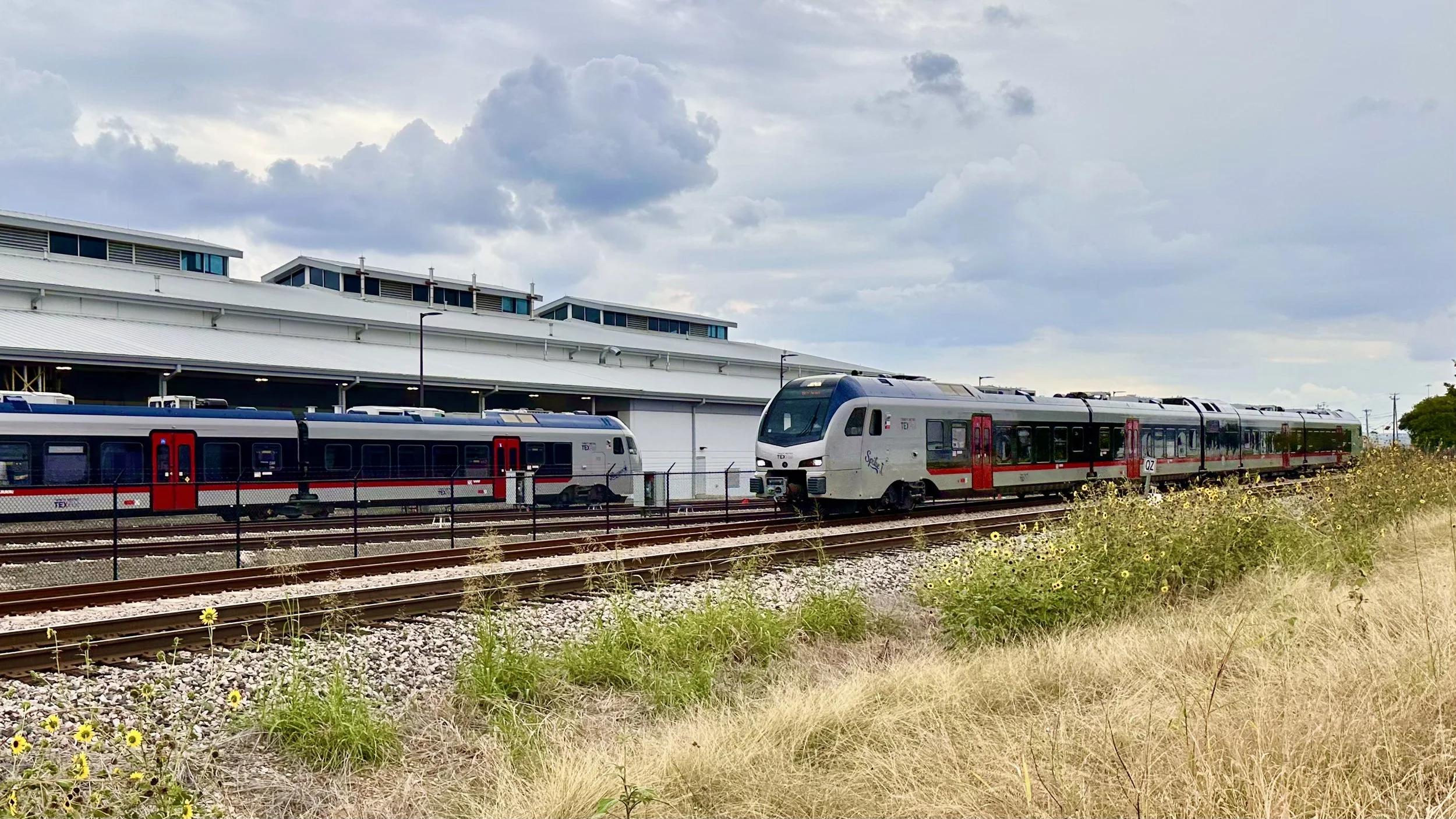
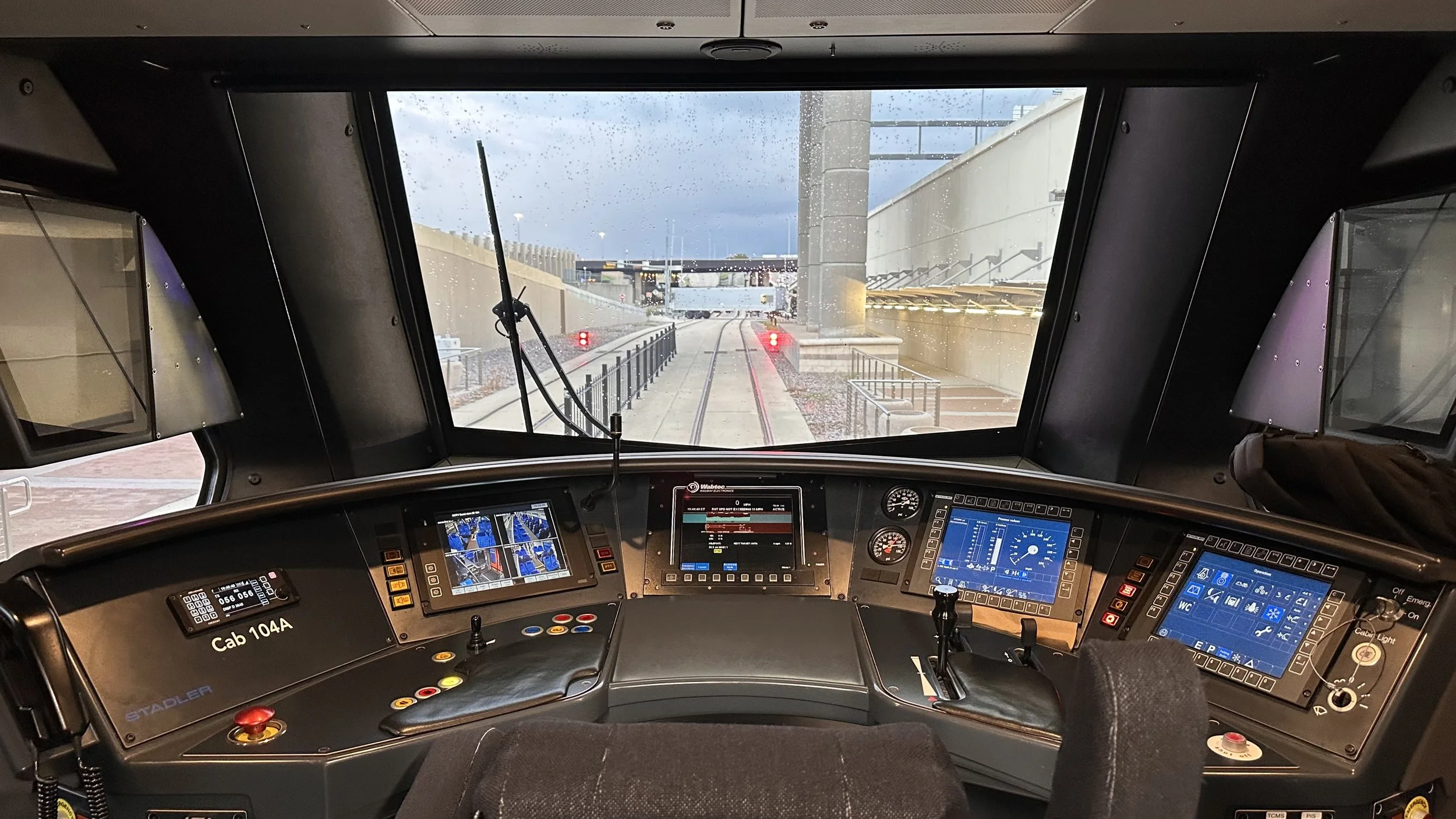
Uncommonly, whereas most DMUs conduct crew changes by recalling DMUs to the OMF and sending freshly re-crewed vehicles back onto the mainline (such as on CapMetro Rail), by swapping crews at a mini-platform in front of the OMF itself (such as on the River LINE), or by delivering crews to a station near the OMF (most of the rest), TEXRail’s high quality leads them to conduct crew changes on the fly between Mercantile Center and North Side stations.
Overall, TEXRail proves that modern, frequent passenger trains are integrally linked with traditional freight railroading, and this one system provides nearly infinite strategies of freight-passenger coexistence for use by both transit advocates and modelers alike. Similarly to the River LINE, TEXRail inspires long, separate mainlines running through yards, but complicates this with several prolonged segments of viaducting over yards to avoid tracks or switch sides of the Right of Way. While building a prototype model of TEXRail would require a very large space, any modeler wanting an adventurous or distinctive scene should consider an elevated concrete viaduct weaving over the back of a major yard. Much like the real thing, it saves on space and precludes the need to re-lay old track!