What can be learned?
DMUs represent a unique form of transit, mashing European vehicles headlong with American freight railroading to bootstrap a good-enough transit system for stupid cheap, nary more than the cost of the vehicles, some welded rail, and a couple of thousand cubic yards of concrete for the platforms and occasional viaducts. DMUs are not a cheaper way to build high-quality transit, but instead a way to lower the barrier to entry, allowing you to justify high-enough-quality transit anywhere that already has tracks in the ground, without significantly impacting the existing freight shippers along those tracks – a way to have your cake and eat it too.
With respect to model railroading, passenger trains have an unfairly outdated (and car-brained) reputation as old-fashioned and irrelevant to the modern world. In fact, passenger modeling is almost universally restricted to layouts depicting the 1950s or before, and it’s practically unheard of to see a permanent home layout, prototype-based or not, with anything more than a once-a-day long distance Amtrak train. However, the movement to rid ourselves of polluting automobiles and impoverished suburbs has jumpstarted a return of passenger trains and dense, walkable urbanism. Not only is Amtrak on the rise – setting all-time ridership records year after year – in a way that replicates traditional passenger trains and corridors of the past, modern transit – in the form of streetcars, light rail, S-Bahns, and DMUs – similarly all directly interface with traditional modeling subjects, either by parallel use of the same rights of way, stations which facilitate intermodal transfer to and from mainline passenger trains, or – as with DMUs for over the past quarter-century – directly operating on the same rails as freight trains. Ignoring passenger trains and car-free urbanism is not just an unsustainable, inequitable, and economically-harmful political preference, it’s un-prototypical and bad modeling.
In the spirit of this incredible journey, I’ll close out with one lesson to be learned from each DMU system.
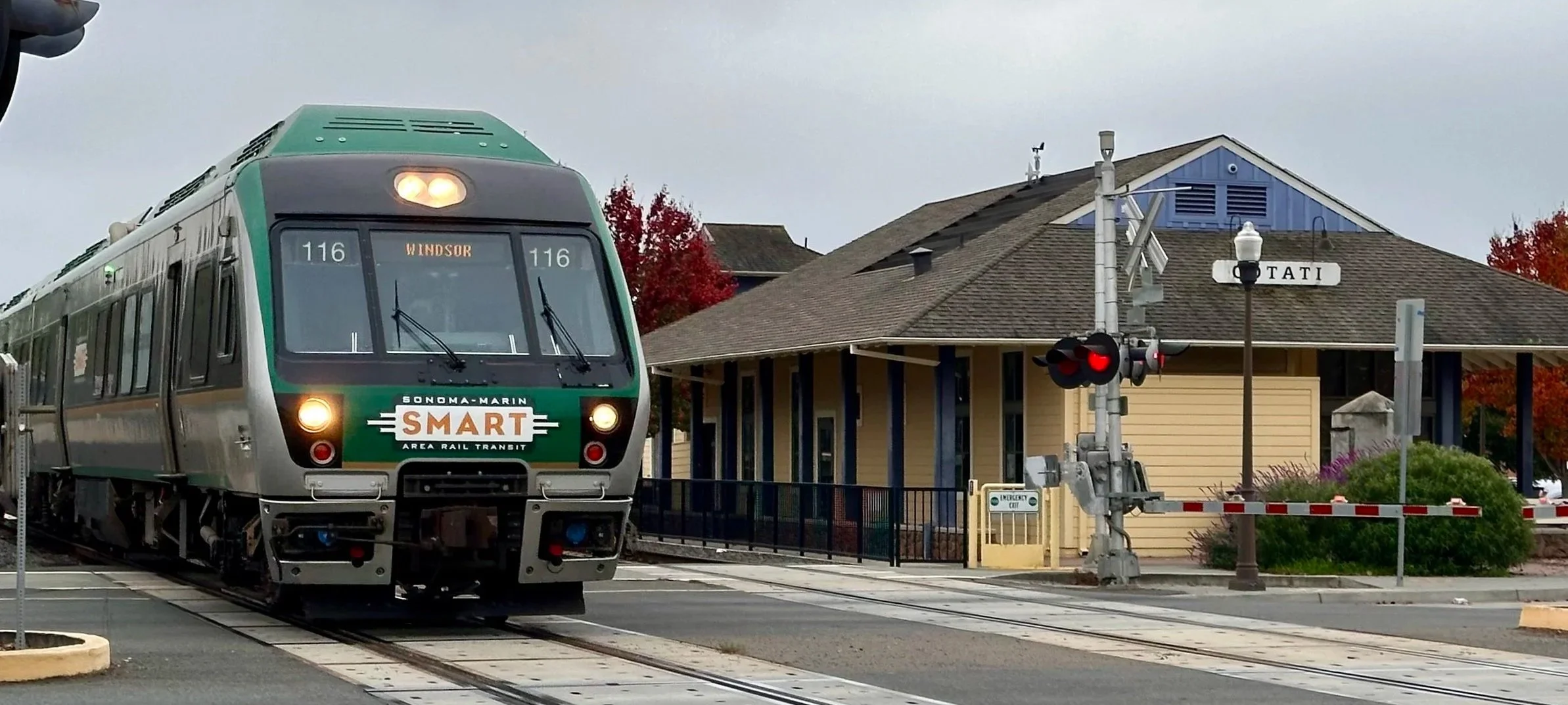
SMART is built straight from the bones of the storied Northwestern Pacific Railroad, a not unpopular modeling subject in its own right. Vestiges of the old NWP abound, from repurposed or modernized station buildings, to historic bridge piers sitting beneath a modern concrete viaduct, to even a double-track tunnel being single-tracked to accommodate a modern bicycle trail. SMART shows that DMUs are the spiritual successor of historic passenger trains and can be equally as important to modern communities as steam trains were to the same towns back in the day. Any layout of a medium-sized railroad line should consider the feasibility and usefulness of hosting a regional passenger service.
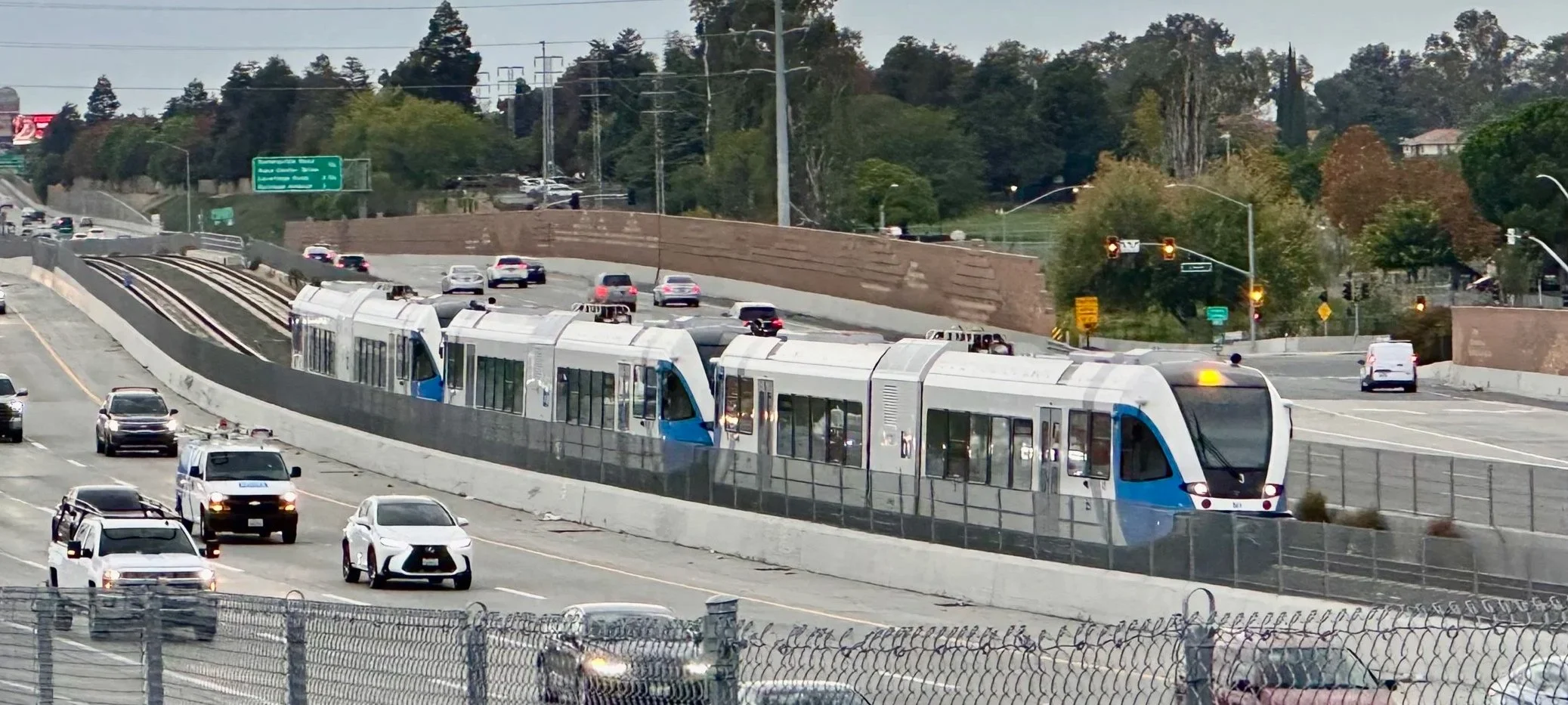
Alongside Arrow, eBART is one of the two DMUs that are more transit system than railroad. That it completely lacks any (current) connection with mainline railroading means it is of limited interest to most modelers. However, its practice of expanding and reducing trainset lashups over the course of the day to accommodate passenger load peaks could provide a strategy for making model DMU operations more dynamic than simply ‘back-and-forth model bus driver’. While changing model consists mid-op-session might be difficult (until someone invents a scale Scharfenberg coupler), an operator could simply at appointed times take a one-DMU lashup into the Operations and Maintenance Facility (OMF) yard and trade it for a pre-consisted two-DMU lashup.
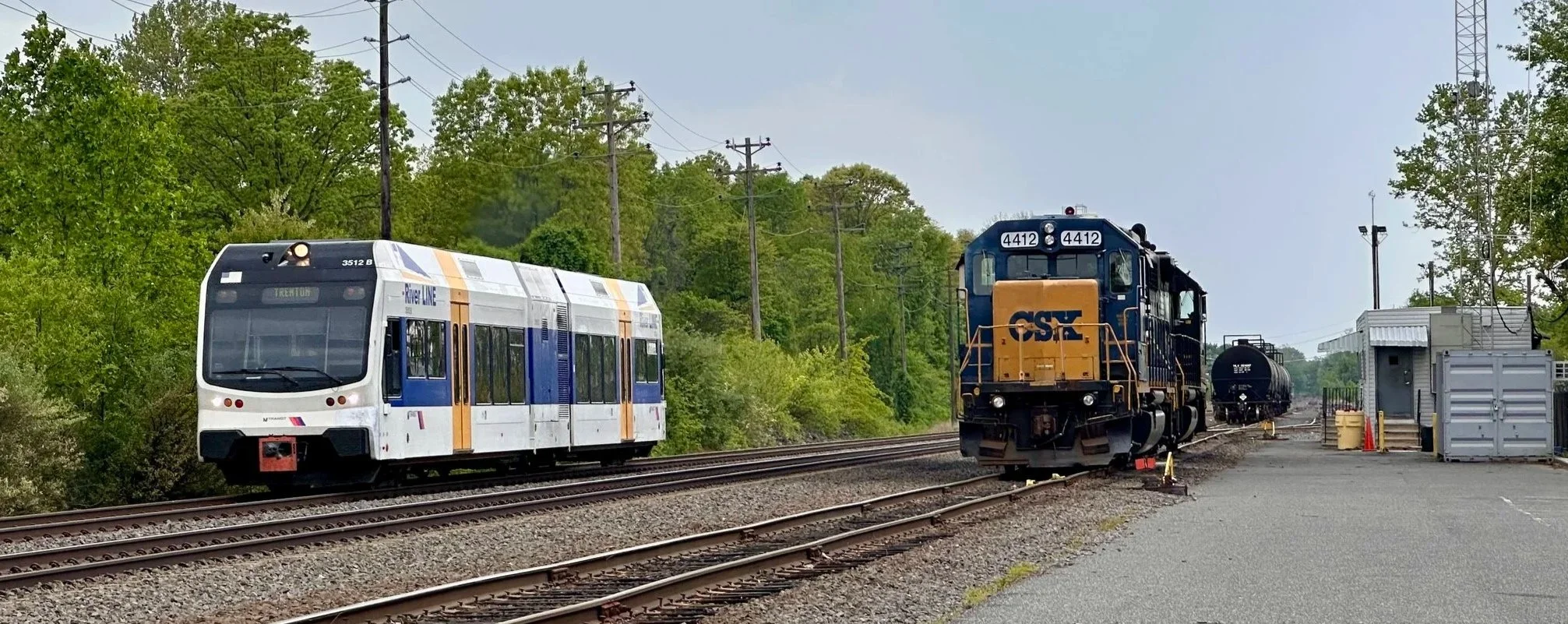
Prototypically, most DMUs are required by the FRA to be separated from mainline trains during passenger hours, resulting in most operations seeing freight service only at night. However, the River LINE provides an example of daytime freight activity on an otherwise single-track line at Burlington Yard in Florence NJ. A freight train travels along the mainline early in the morning before the DMUs begin operating and drops off cars at Burlington Yard, whereby the switcher locks itself in the yard and merrily shunts the day away, switching those industries within yard limits and blocking cars for those that aren’t, until another peddler freight comes at night to liberate cars from the yard and finish serving the rest of the line.
Podcast Patron Billy Brown lives near the River LINE, is familiar with its freight operations, and shared his knowledge: ‘Burlington Yard actually has a dedicated train for it, WPBU-20, which works the yard and the industries north of the yard up to Yardville. Typically the crew comes on mid-afternoon and works the yard and a paper plant in Florence before the River LINE shuts down for the night, then switch the chemical plant and brick yard in Fieldsboro, and occasionally has some covered hoppers for a cement plant all the way up the line in Yardville on the Robbinsville secondary, then ties down back in the yard. It used to have a couple more customers north of the junction with the River LINE – an AGWAY grain elevator and an Ocean Spray plant – but they’ve both closed. At night, WPCA-29 will come up from Pavonia to exchange cars in the yard while working up the River LINE.’
The River LINE also demonstrates the other major strategy of daytime freight operations on its other end, with DMU-exclusive mainlines traveling along the edge of Pavonia Yard, allowing the DMUs to reuse an existing right of way, but not be fouled by freight trains.
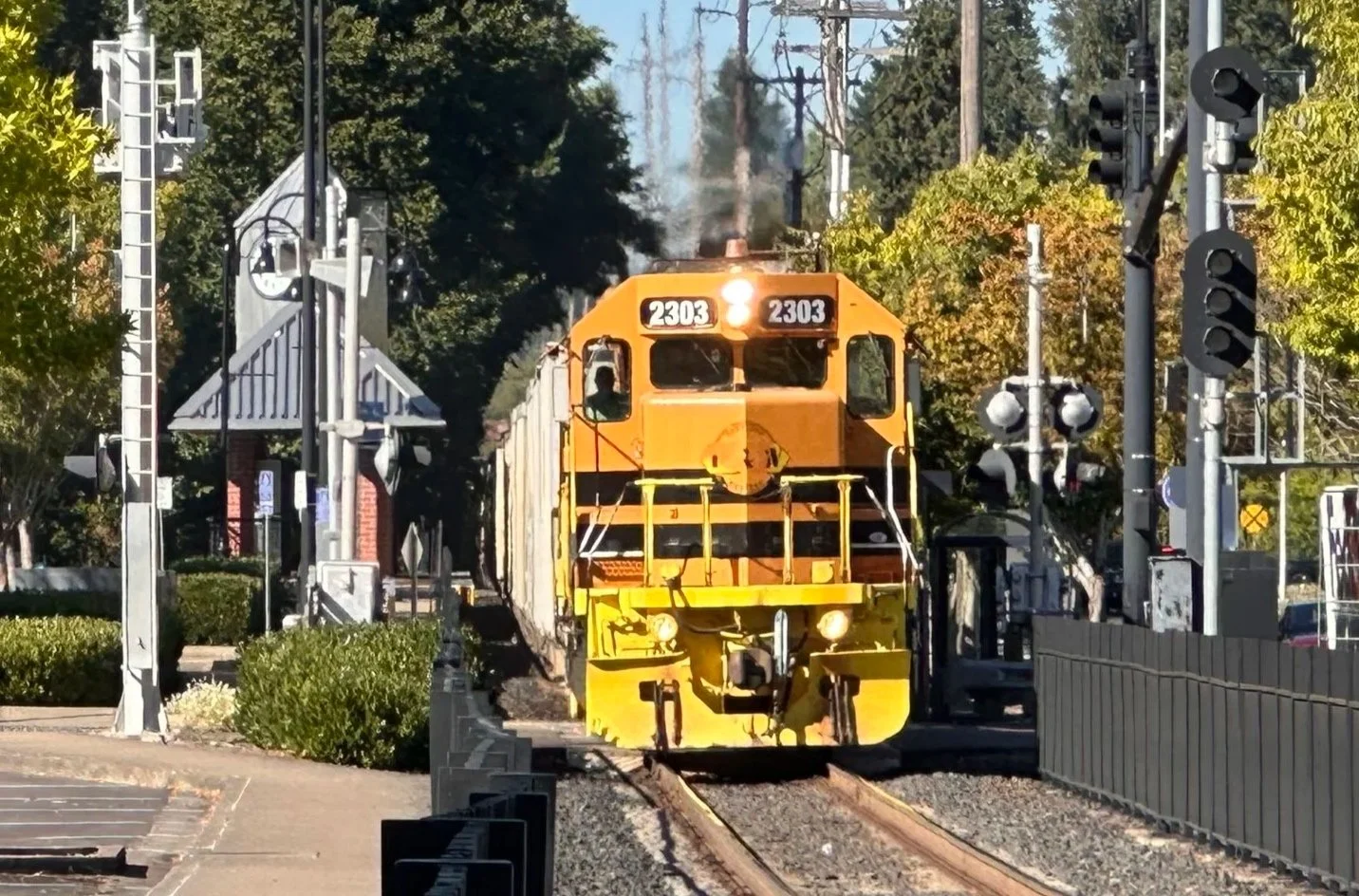
A few DMU systems have FRA-compliant vehicles, thereby allowing unrestricted daytime mixing of freight and passenger trains. TriMet’s WES takes this to the extreme, with almost no DMU-exclusive trackage and P&W freight trains galore. While prototypical examples of this are rare, it could be very easily brought to any layout depicting DMUs with the faintest of proto-freelancing: just simply ignore the FRA restrictions, and mix passenger and freight trains anyway. This opens the possibility of much, much more dynamic model op sessions, with freight trains on almost any layout suddenly needing to duck around passenger trains every 30-60 scale minutes. Much like the real thing, for almost the same track arrangements and at the cost of only a few vehicles and platforms, regular freight railroading suddenly becomes much more challenging, active, and entertaining, as well as colorful and distinctive.
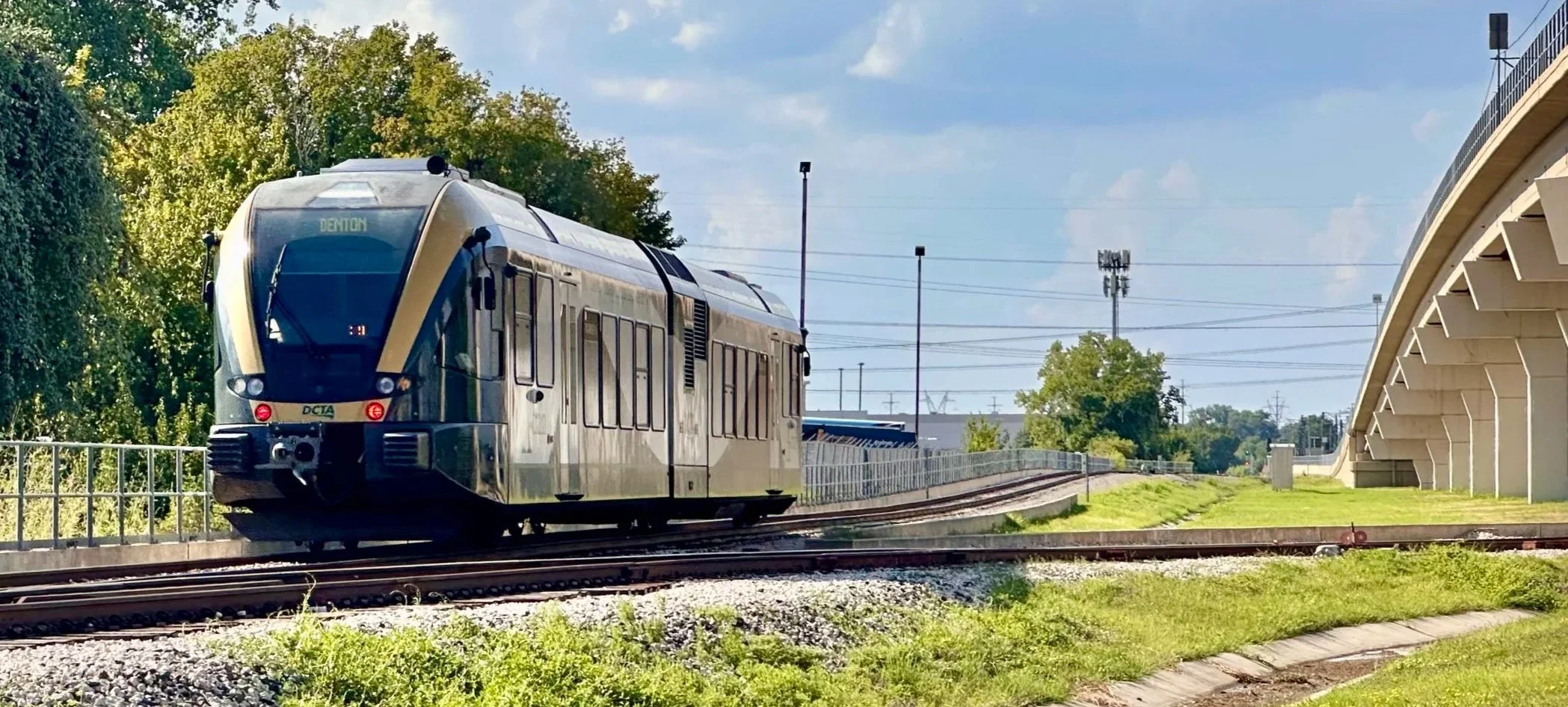
Besides transit-style DMUs (eBART and Arrow), there are two general types of DMU systems which could be modeled. Branchline-style DMUs include the northern 2/3rds of the River LINE, Sprinter, SMART, and, of course, the A-Train. In particular, the A-Train’s terminus at Trinity Mills is so pike-sized – a single platform on a single-track mainline – it demonstrates how even the smallest imaginable shelf layout could prototypically host passenger trains departing every half-hour. Simply take an otherwise-normal shelf switching layout, put one single station under 50cm long on the mainline, buy one single DMU-style vehicle, and add one single pocket track in the staging yard, then shuttle it back and forth between station and staging every 30-90 scale minutes. This can enliven operations on even the tiniest of layouts by periodically restricting access to portions of the layout, wreaking delicious havoc on the freight crews’ plans. Notably, both the A-Train and WES initially started operations with refurbished RDCs (the DMUs of their day) while waiting for modern vehicles, so this implies DMU-style operations are proto-freelancable to almost any possible period in the diesel era.
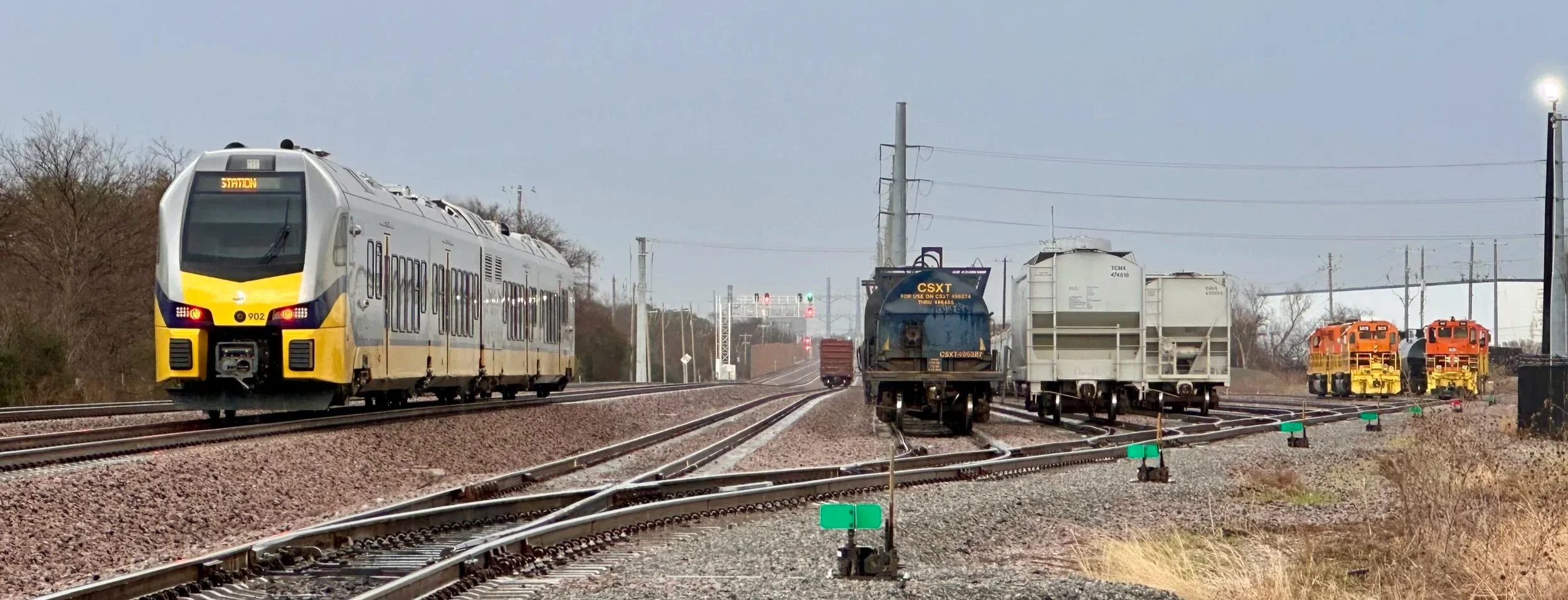
In contrast to branchline-style DMUs, where passenger transit is the railroad’s primary concern with only the occasional freight train, mainline-style DMUs have approximately equal axle-counts of passenger and freight. Examples include the southern third of the River LINE, WES, CapMetro Rail, TEXRail, and, of course, the Silver Line. The newest DMU, the Silver Line is almost entirely double-tracked, and even significantly triple-tracked with a parallel third main for freight access. This allows the DG&N to switch its yard and the a plurality of its industrial spurs without fouling the DMU’s adjacent double-track main. In fact, many DMUs (particularly CapMetro Rail) have similar arrangements for at least a portion of their length, effectively operating as two side-by-side single-track railroads, allowing DMUs and freight to operate without interference from each other for prolonged distances. The DG&N’s Mercer Yard is an excellent example of a small, almost pike-sized yard that follows this paradigm, and could easily be modeled with switching in the foreground with through-DMU tracks in the background.
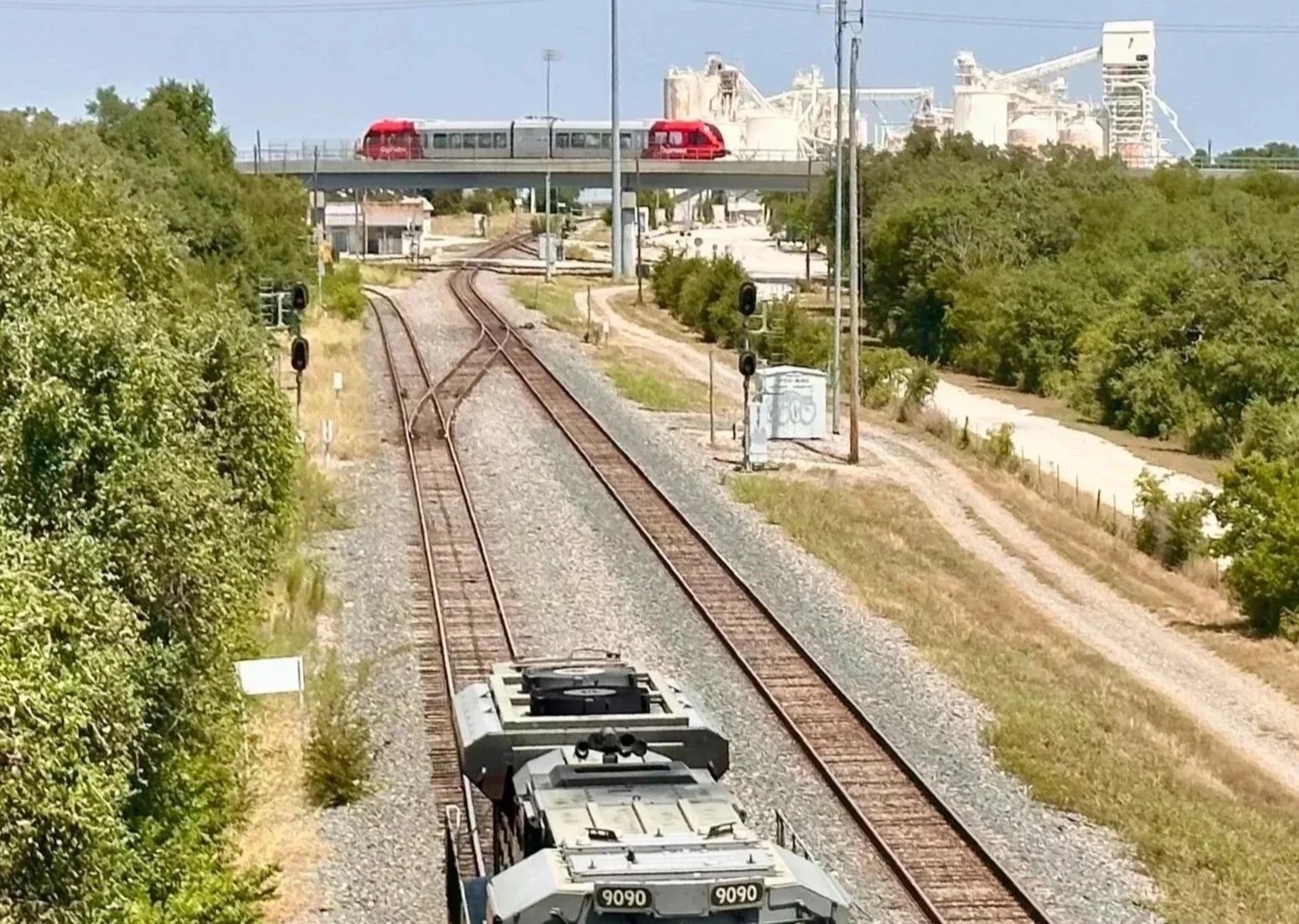
DMUs needn’t be the subject of entire model railroads, but can also be small vignettes on larger layouts. The simplest possible way to prototypically model a DMU system is a static, non-operating example of one of the many viaduct “hopscotches” over congested interlockings. Rather than composing transit entirely of exclusive rights of way like debilitatingly-expensive subways, DMUs keep costs down by using operational solutions before concrete ones, and applying expensive viaducts only where needed to deconflict from extremely busy mainline crossings. One example is the junction at McNeil Texas between the mains of UP and AW, where CapMetro Rail jumps up from ground level to briefly flit along the treetops from one side of the interlocking to the other before gently coasting back down to ground level. Even if one didn’t own a single DMU at all, several prototypes of DMU concrete viaducts arcing over interlockings and interchanges could easily inspire extremely distinctive scenes on many model layouts.
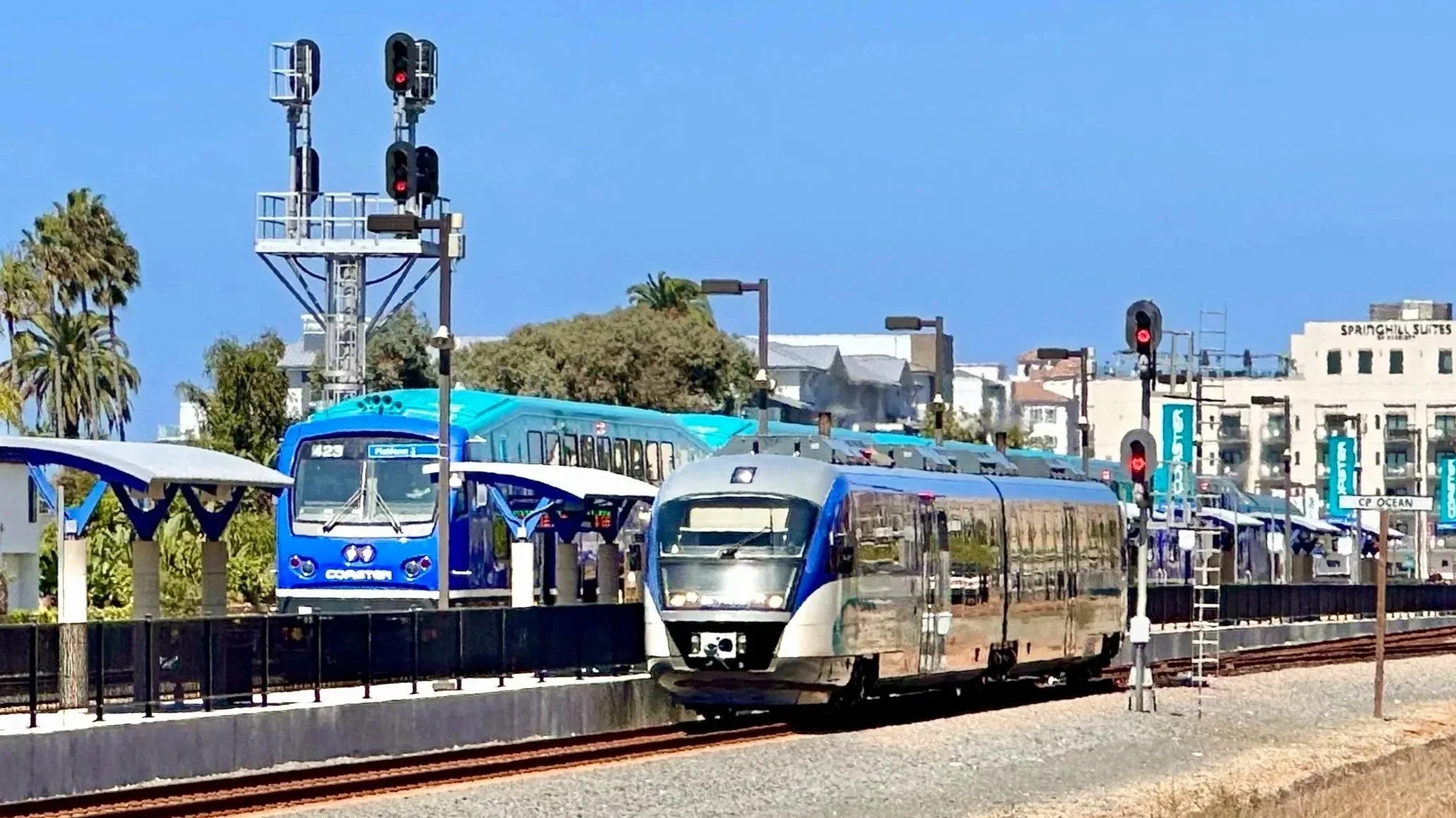
For layouts with mainline passenger operations, there are multiple examples of DMUs connecting with intercity passenger trains. No one passenger train could serve all possible trips, so intermodal connections between local, regional, and national transit are important for plugging gaps in the fight against car dependency. Another way to include DMUs on primarily non-DMU layouts would be to model a transfer station, such as at Oceanside CA. Here, the Sprinter branchline-style DMU connects with regional trains south to San Diego and north to LA and San Bernardino, as well as intercity Amtrak trains that go as far away as San Luis Obispo, in addition to freight trains that pass through. If one was modeling such a semi-major intermediate station, it would be trivial to add a platform and automate a DMU shuttling back and forth to staging on a separate track. In the same way that intermodal yards generate traffic for freight trains, intermodal connections generate traffic for passenger trains.
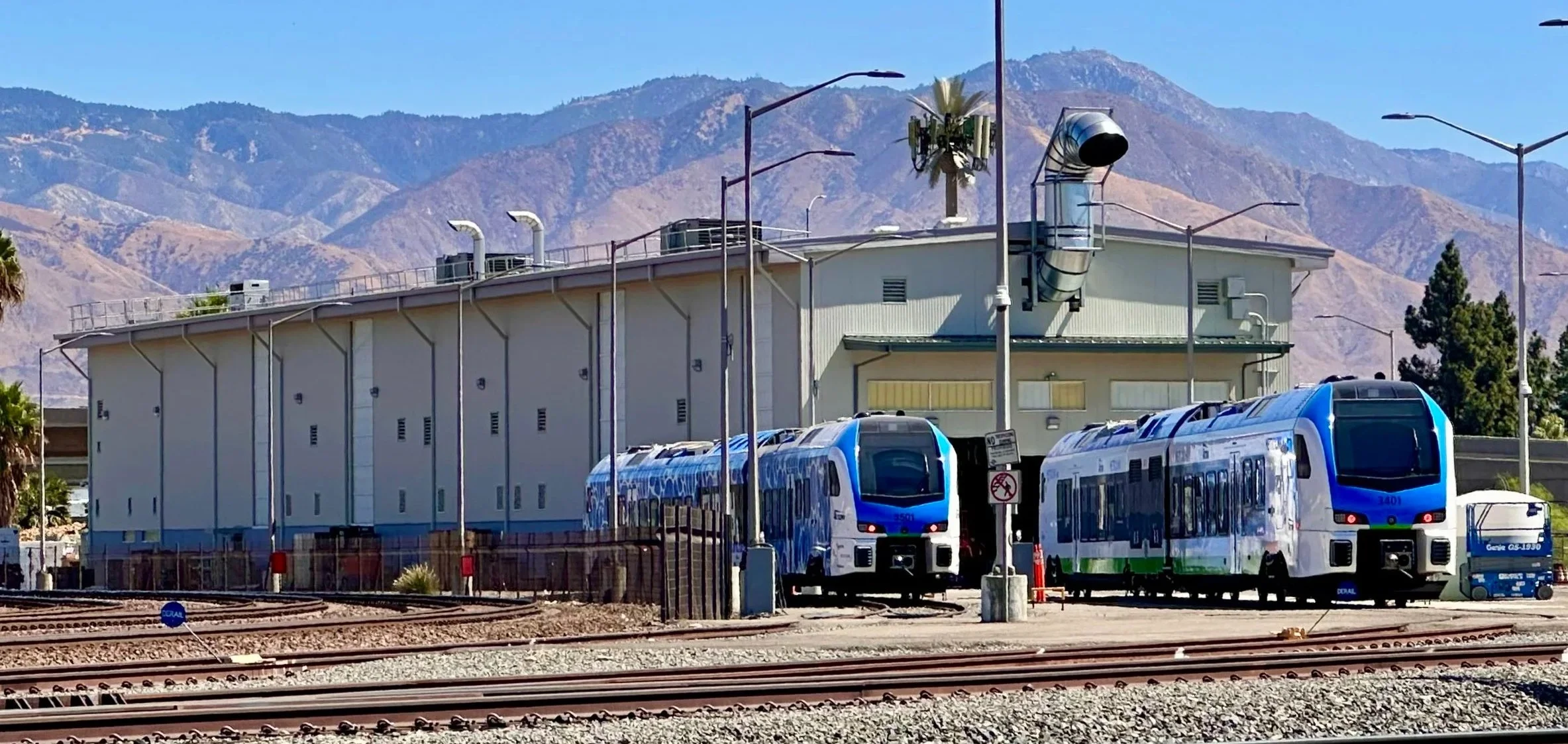
If, however, one was skeptical of DMUs for their lack of switching potential, one could model a DMU OMF. For example, the Arrow’s OMF is immediately adjacent to San Bernardino Depot, BNSF’s Cajon Subdivision mainline tracks, and a humongous classification yard. Anyone already modeling such a large yard could easily squeeze a modest OMF into a corner and operate it as its own switch job. At various points during an op session, a DMU hostler could take a DMU out of the OMF and send it into staging, or take one out of staging and store it back in the OMF – depicting increases or decreases in frequency of an off-layout DMU in accordance with daily commute patterns – as well as shuffle DMUs around the OMF for cleaning, refueling, or maintenance. If some layouts have hostlers for mainline freight trains, why not model one for local passenger trains, too?
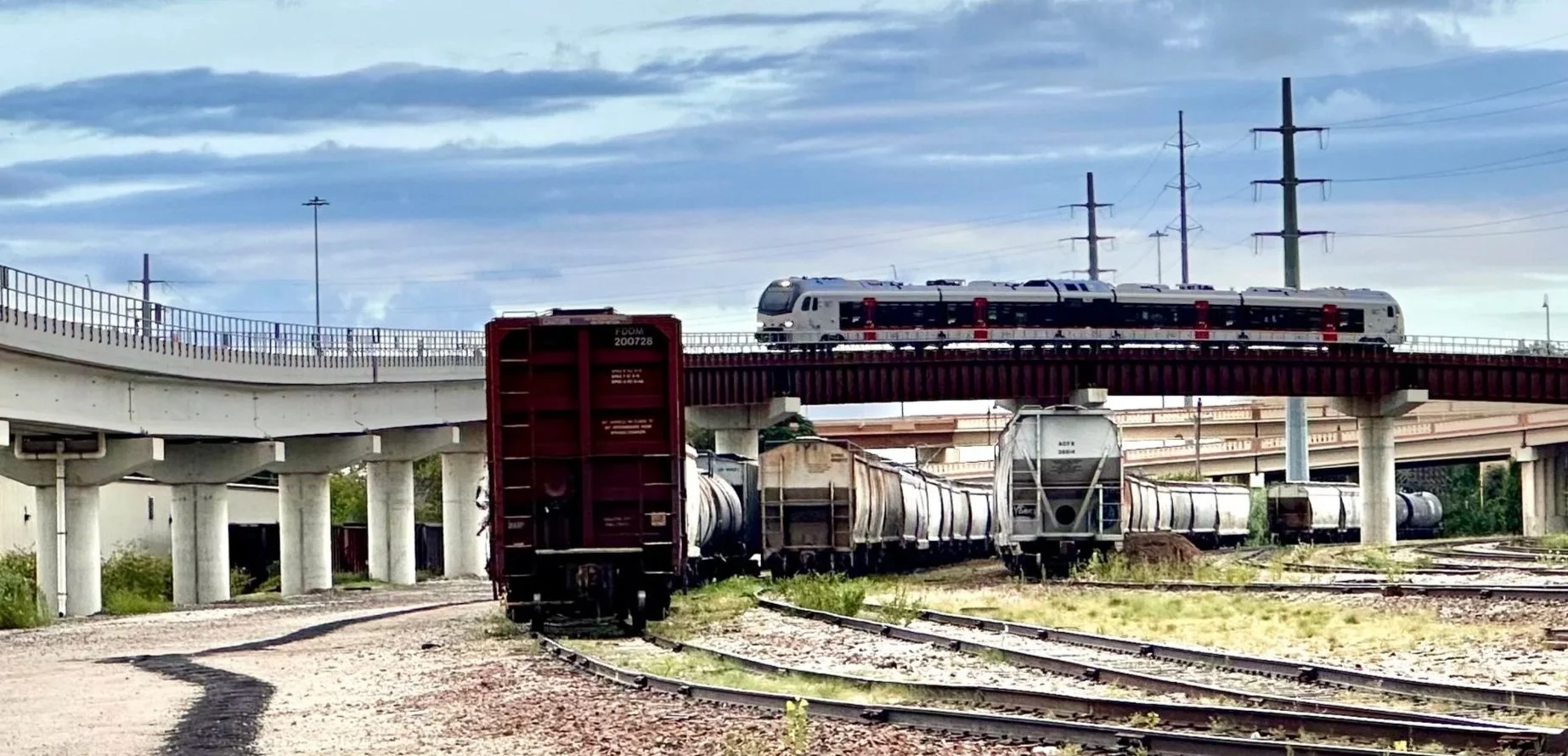
The final prototypical way to depict DMUs is possibly the most exciting. I don’t care how much of a rivet-counter you profess to be, everyone loves the idea of a train running around in a circle at least a little bit. As such, the spiritual successor to the downtown single-track trolly loop of layouts past could just as easily be a concrete viaduct weaving over and behind a typical freight yard. Yards are typically scenically boring areas with lots of flat space, minimal buildings, and identical tracks. Why model that when you could add a fully-prototypical pop of motion, color, and/or verticality in the background, as is the case on the River LINE, CapMetro Rail, Silver Line, and Arrow, and on TEXRail at least thrice? You don’t even need to model a station and program vehicles to make stops; just hide the return loops and cycle a single vehicle back and forth along a track that winds up, around, down, and under your otherwise-normal freight railroad. Much modern DMU infrastructure, and viaducts especially, are intended to limit the construction impacts on mainline freight railroads; by that same token, using viaduct alignments for a little DMU dogbone would hopefully preclude the need to relay much track if any, but come with the chance for both a more entertaining and a more prototypical model railroad.