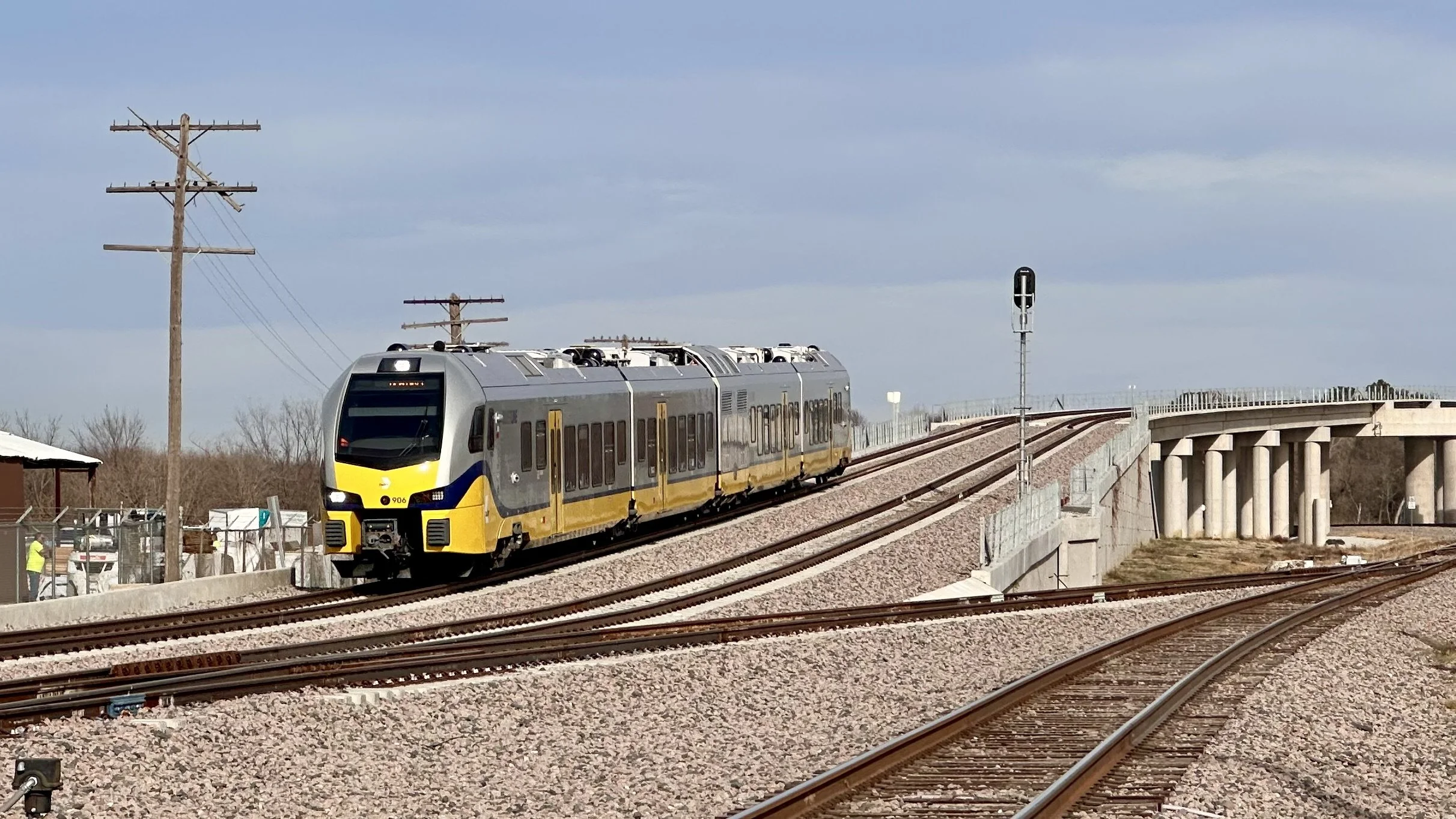
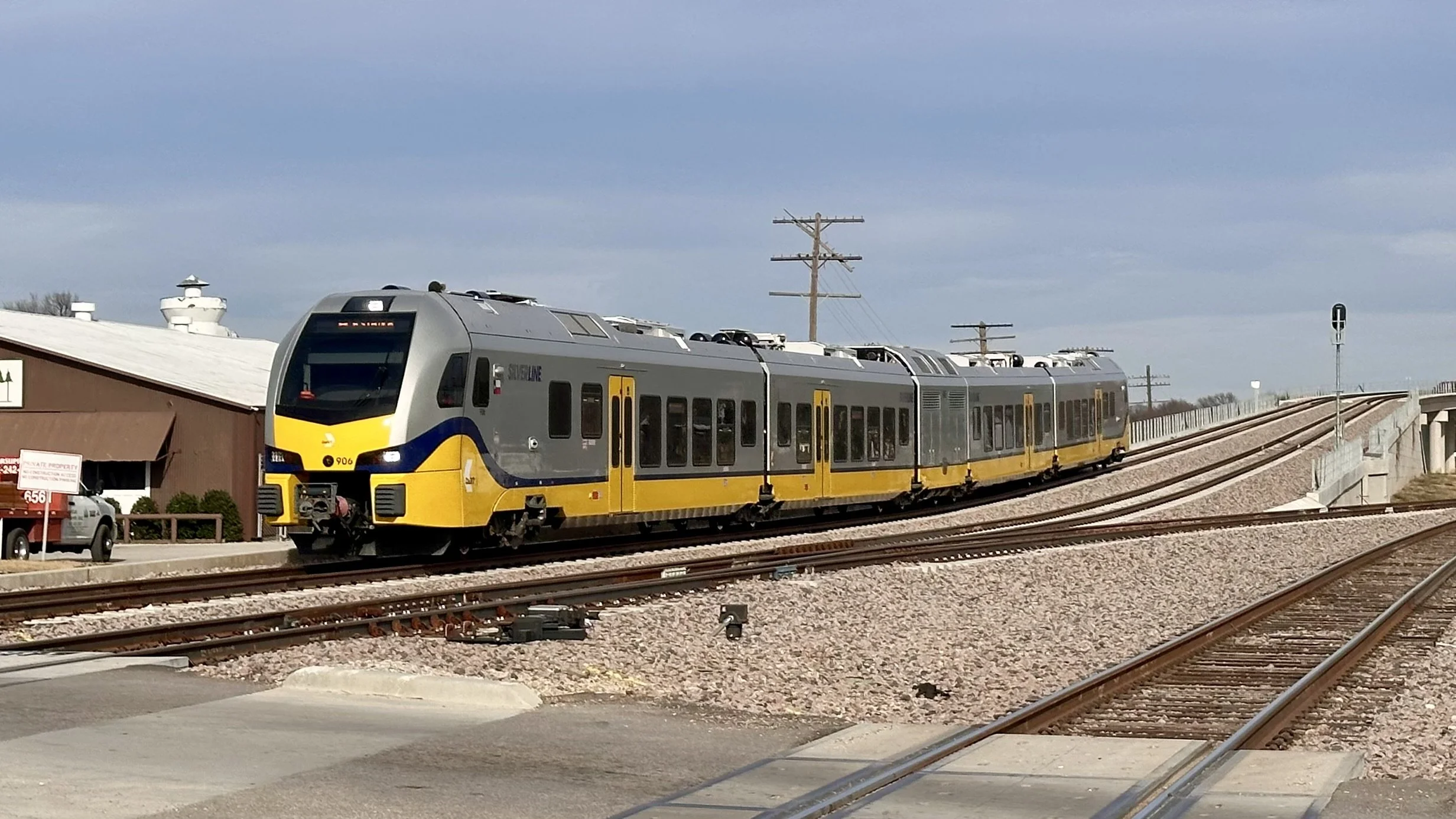
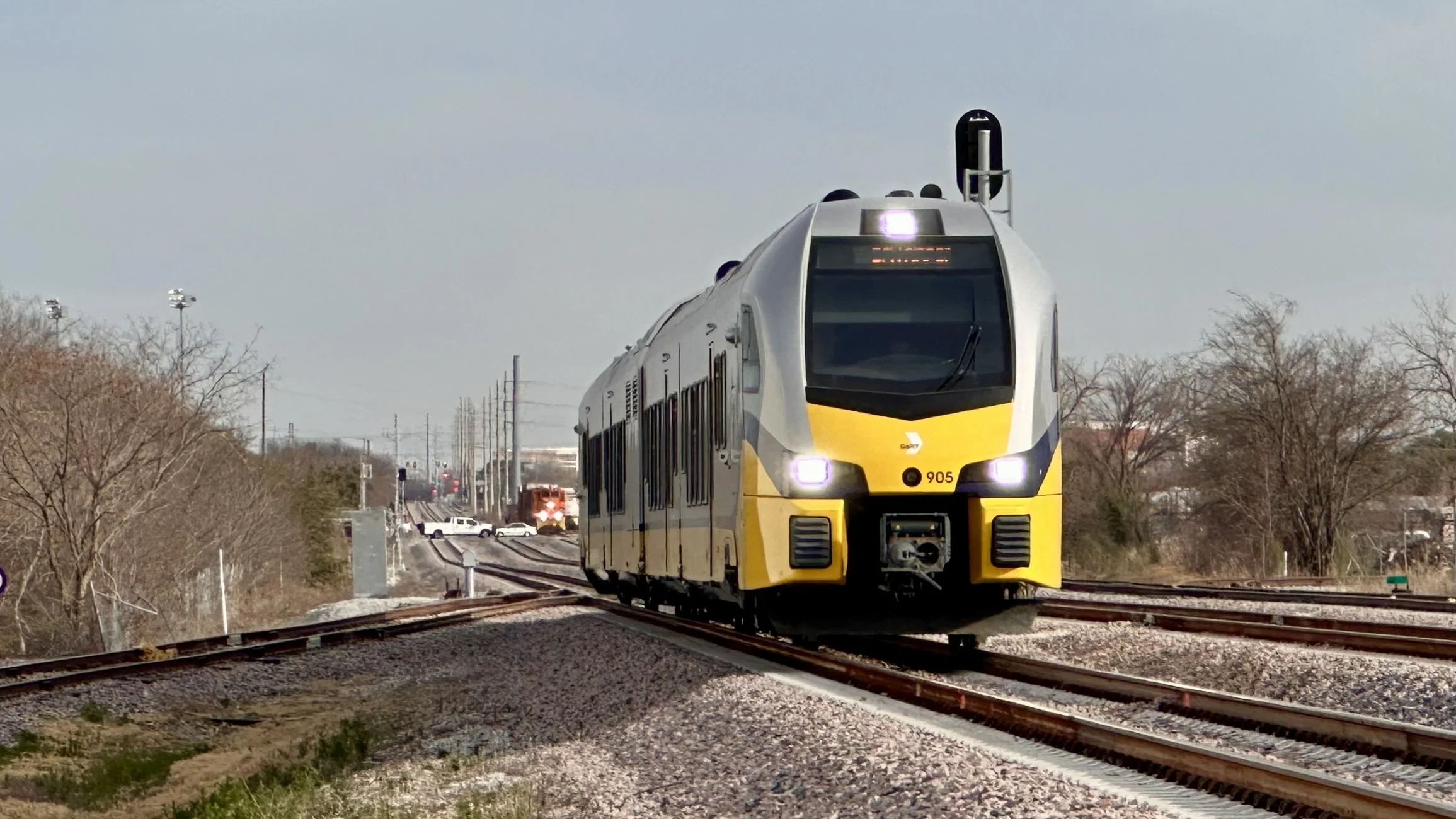
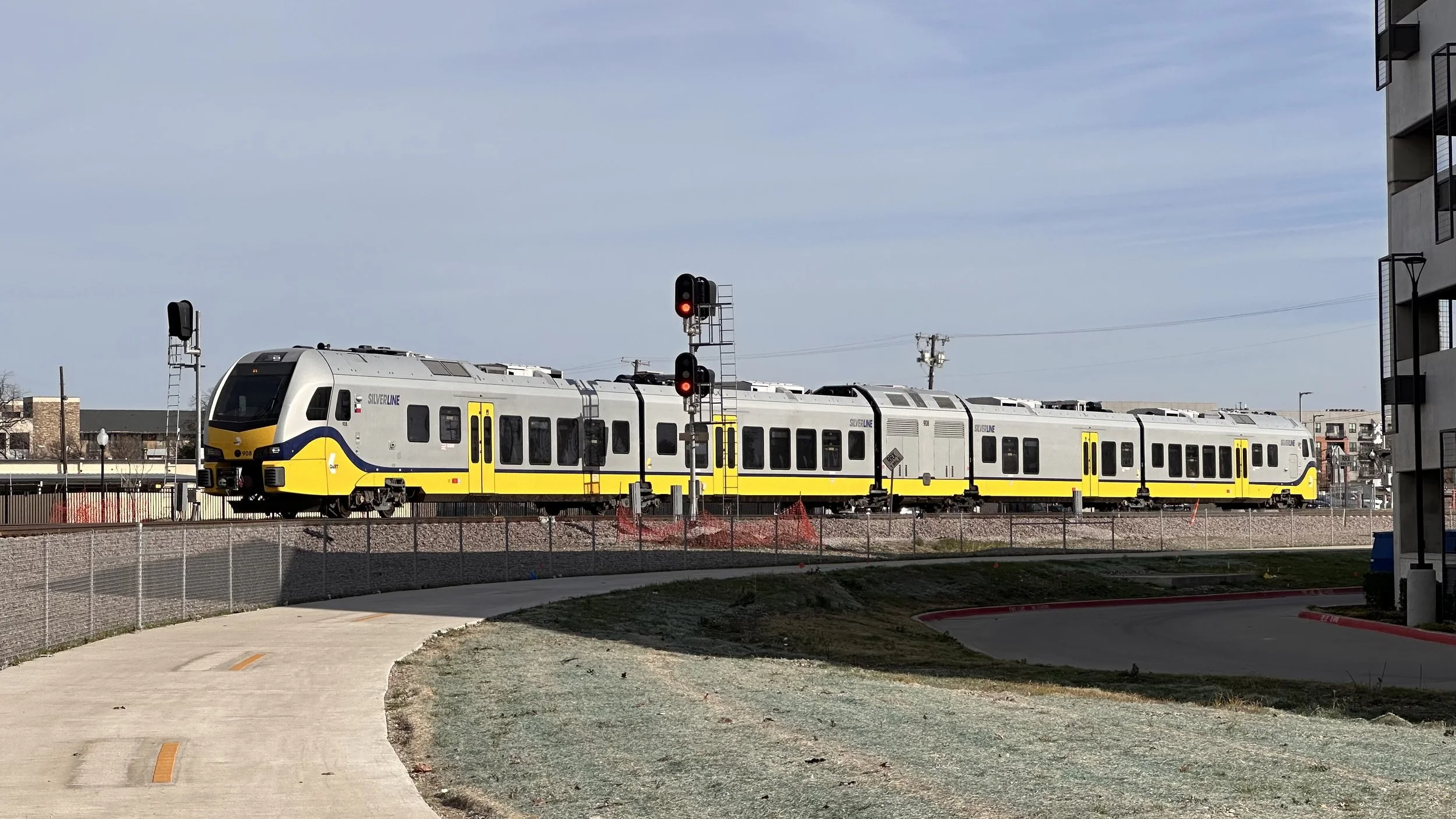
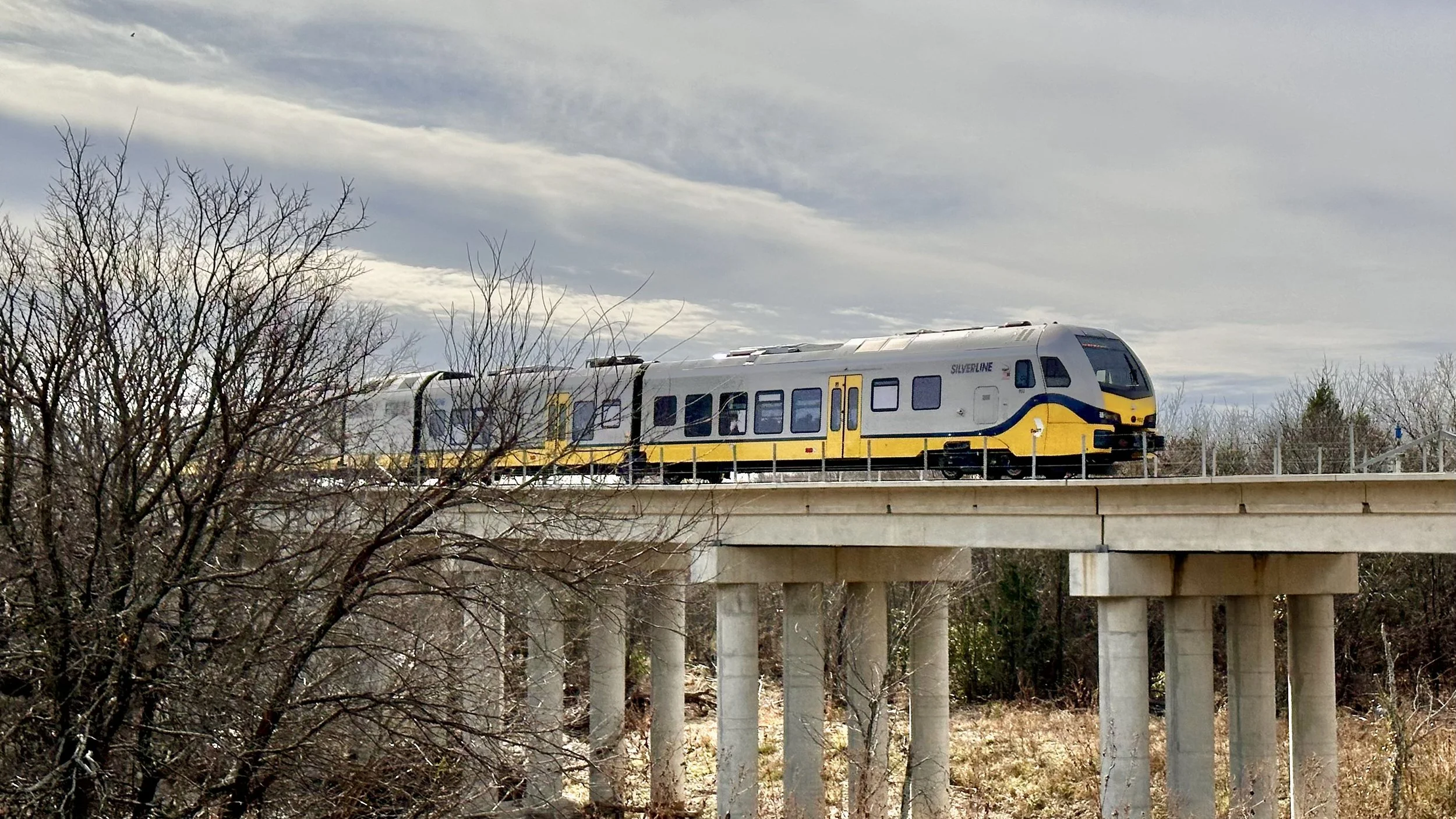
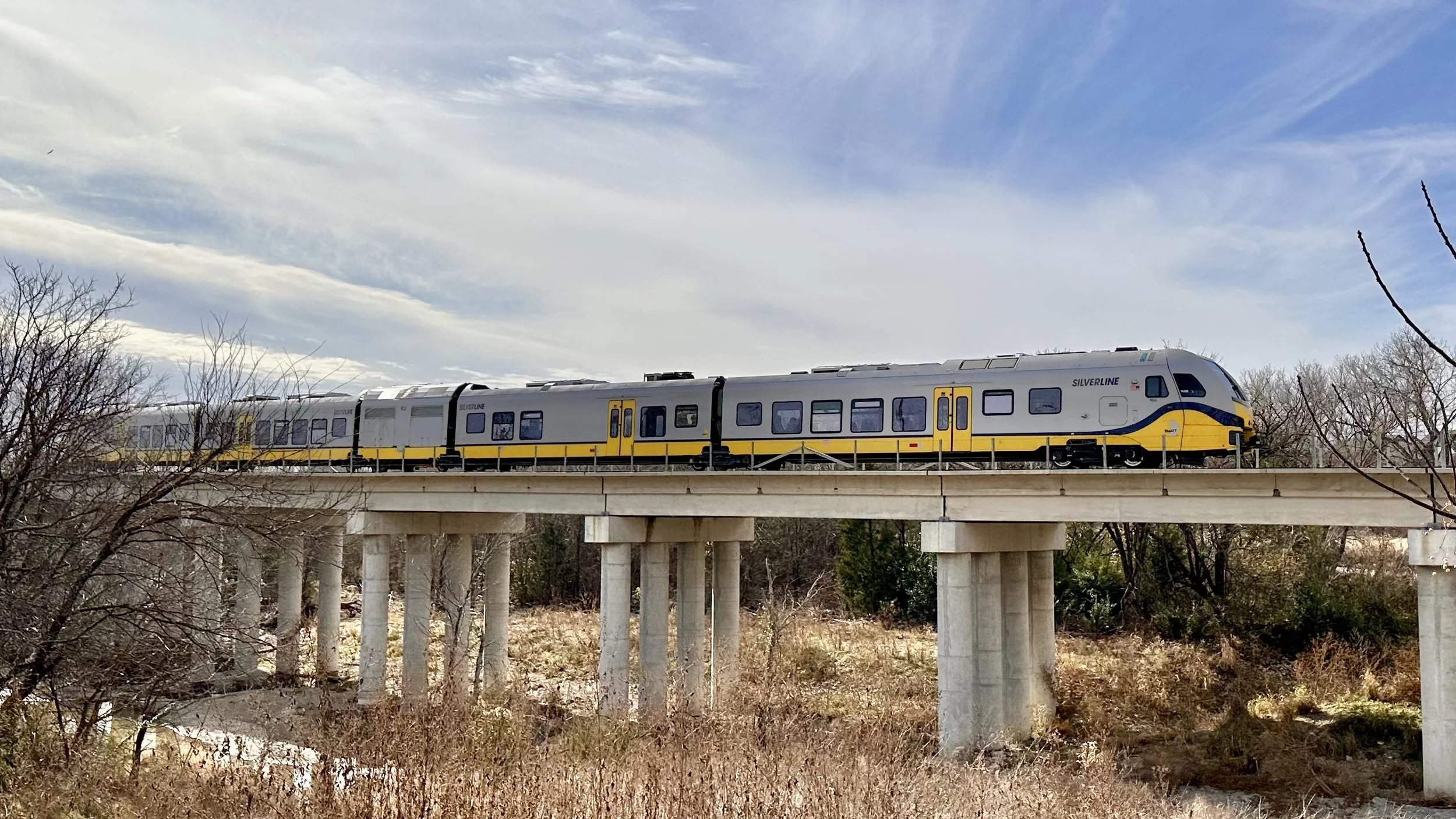
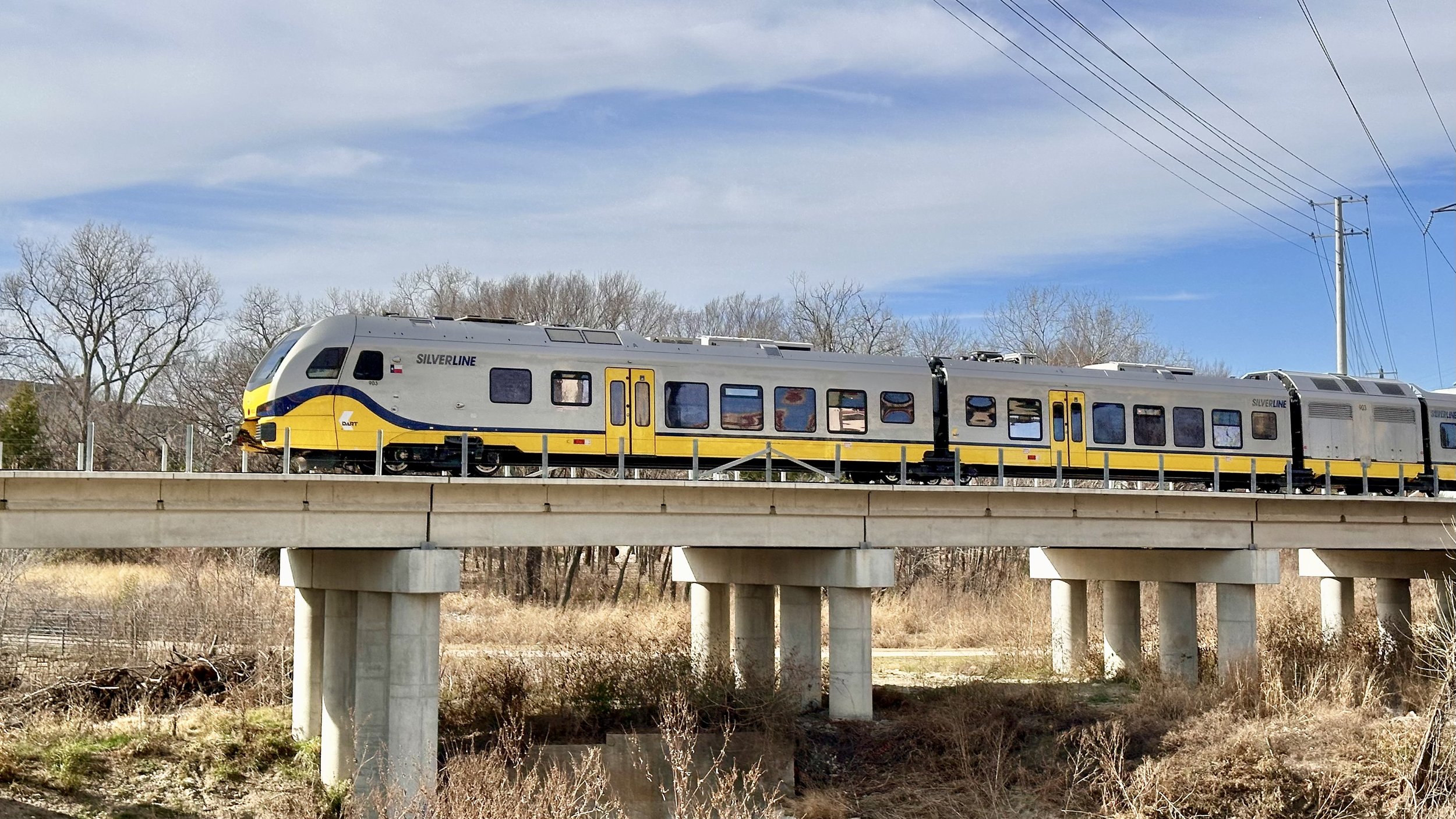
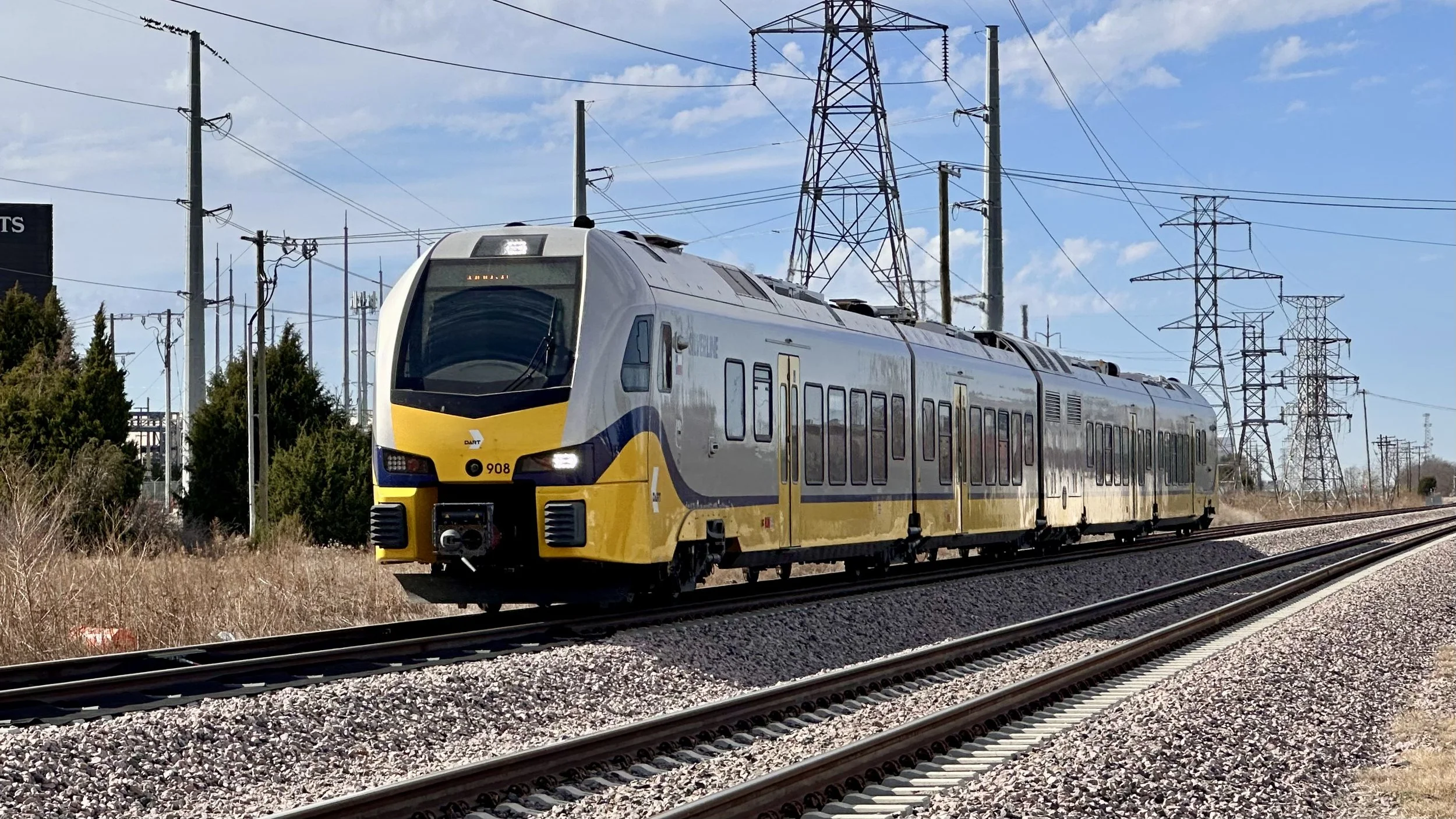
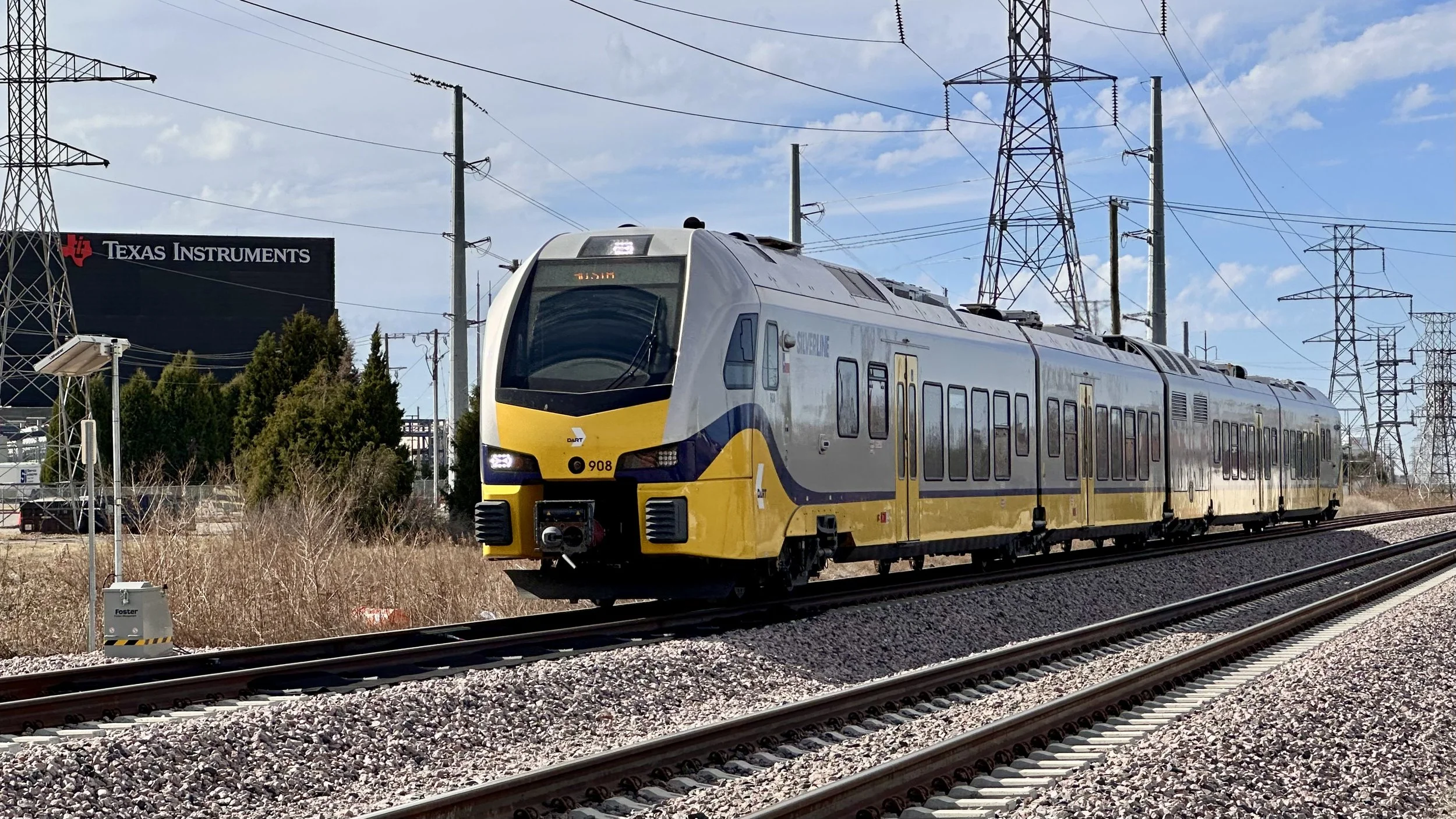
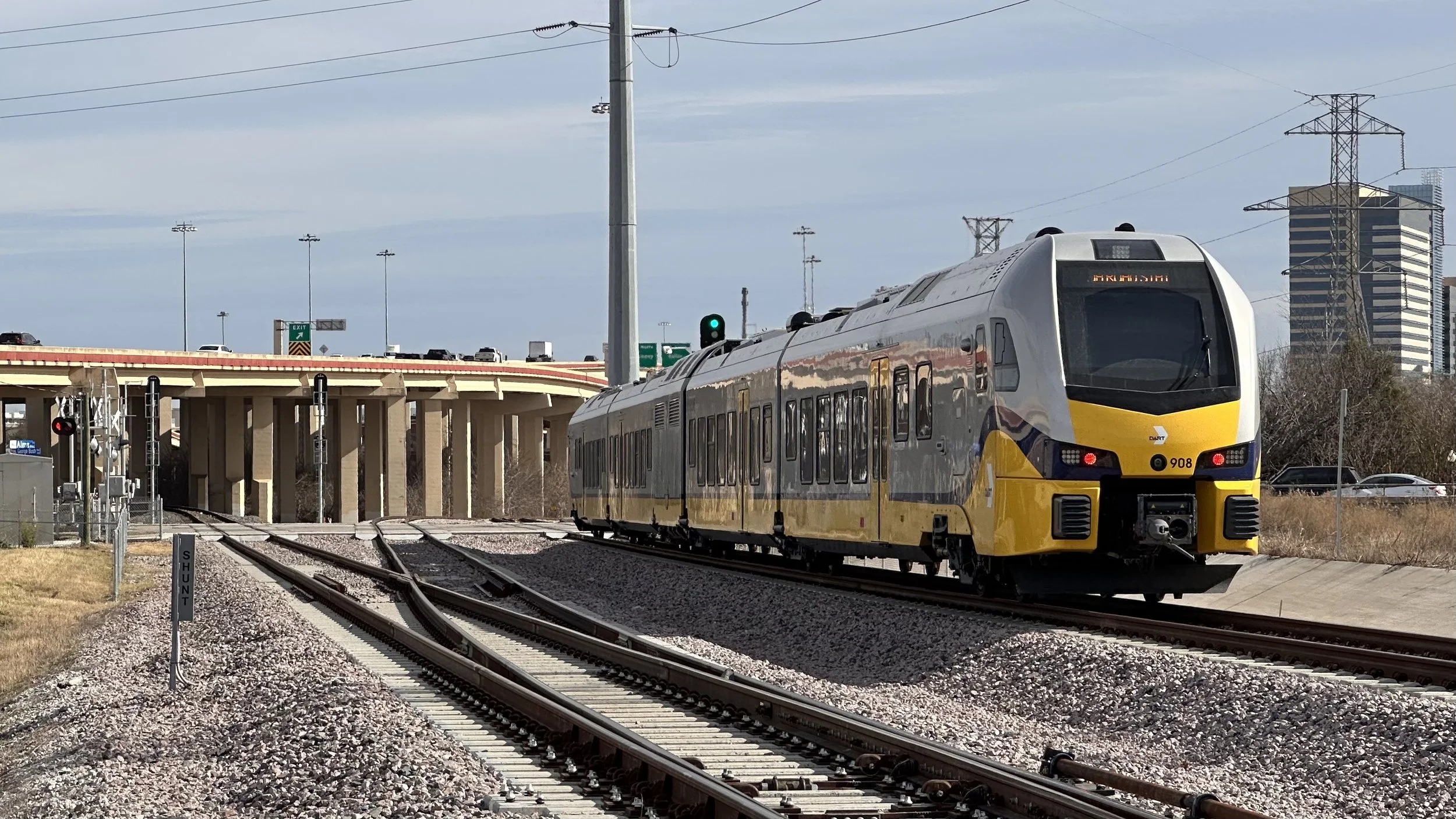
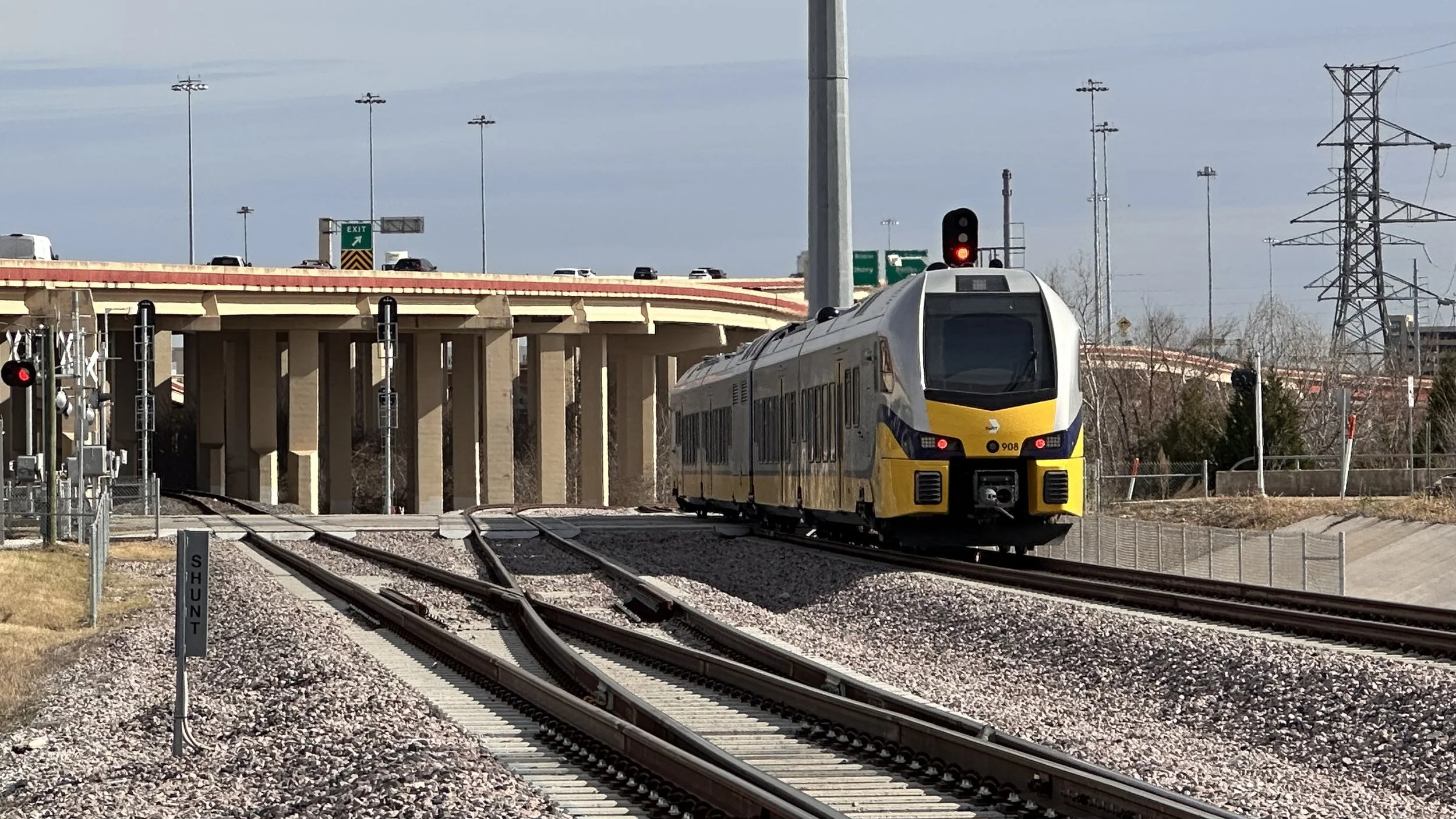
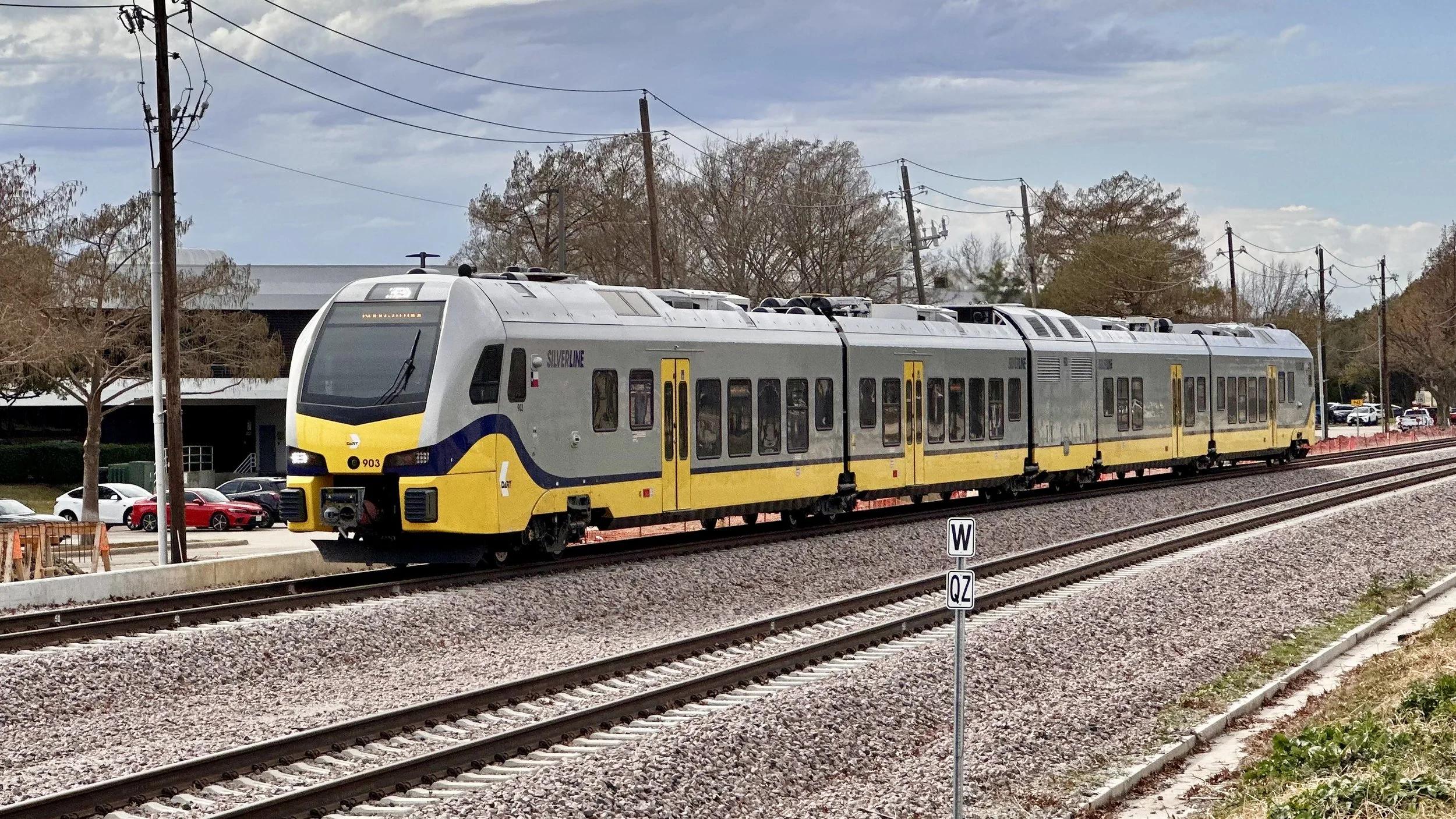
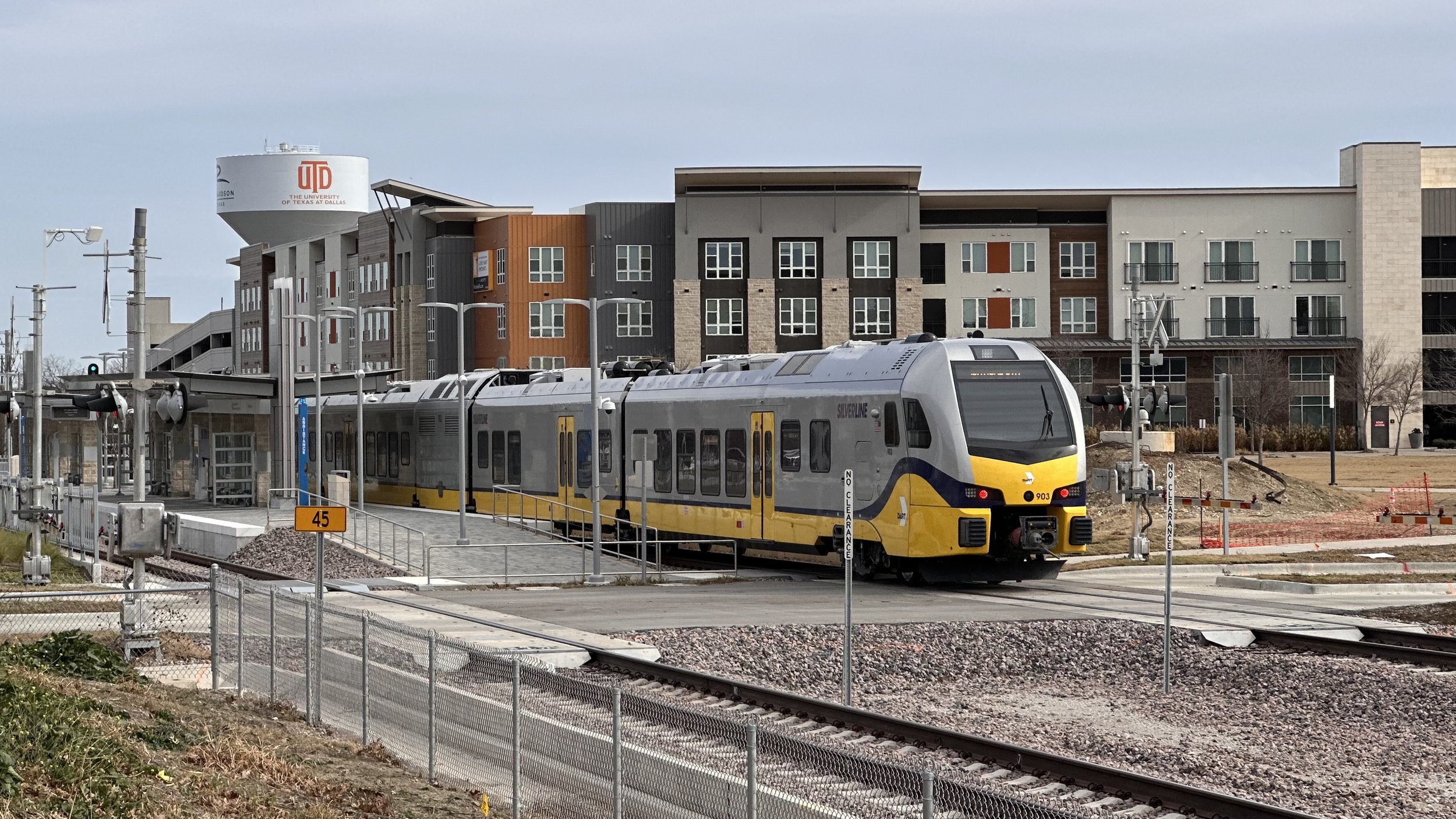
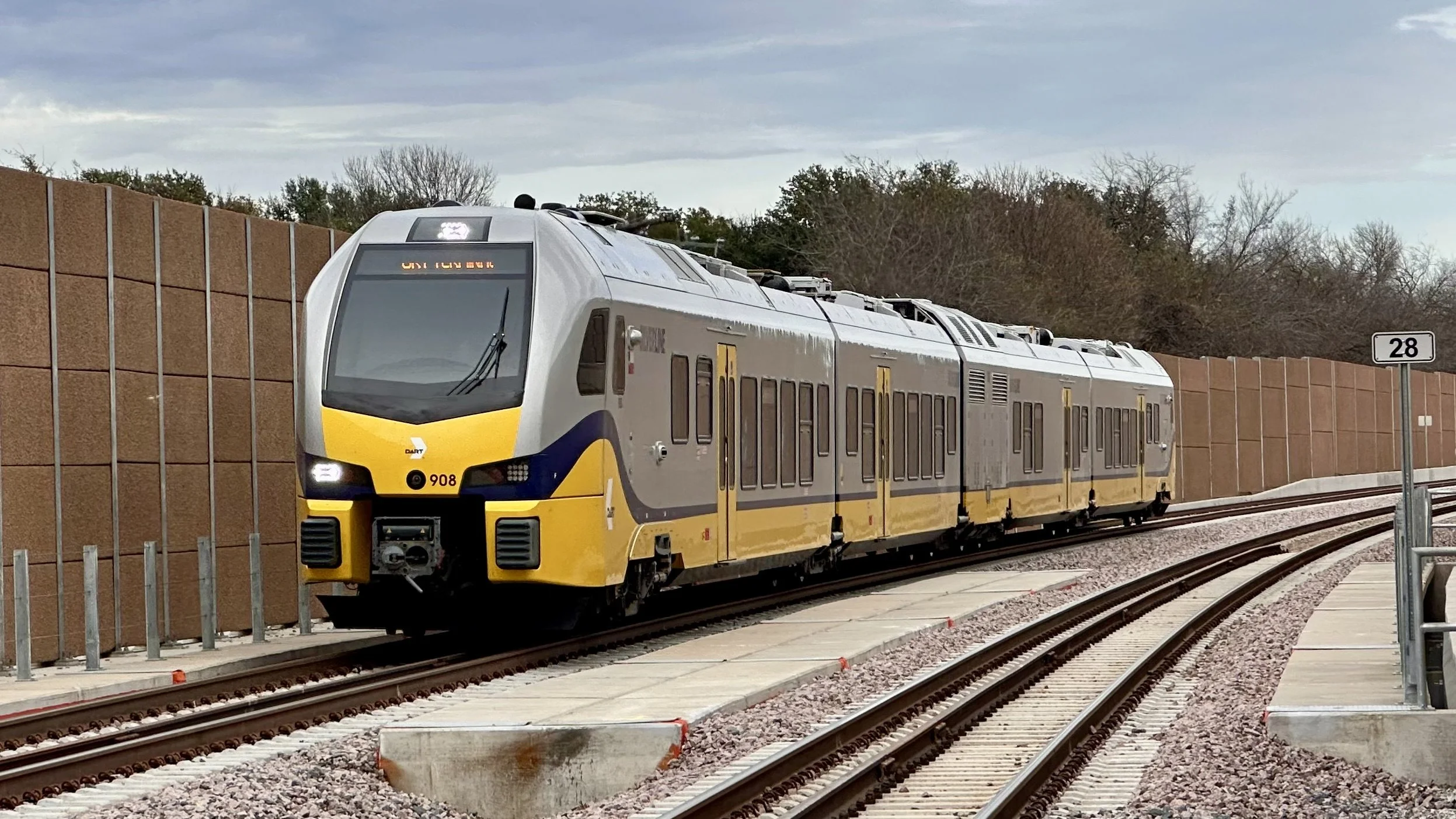
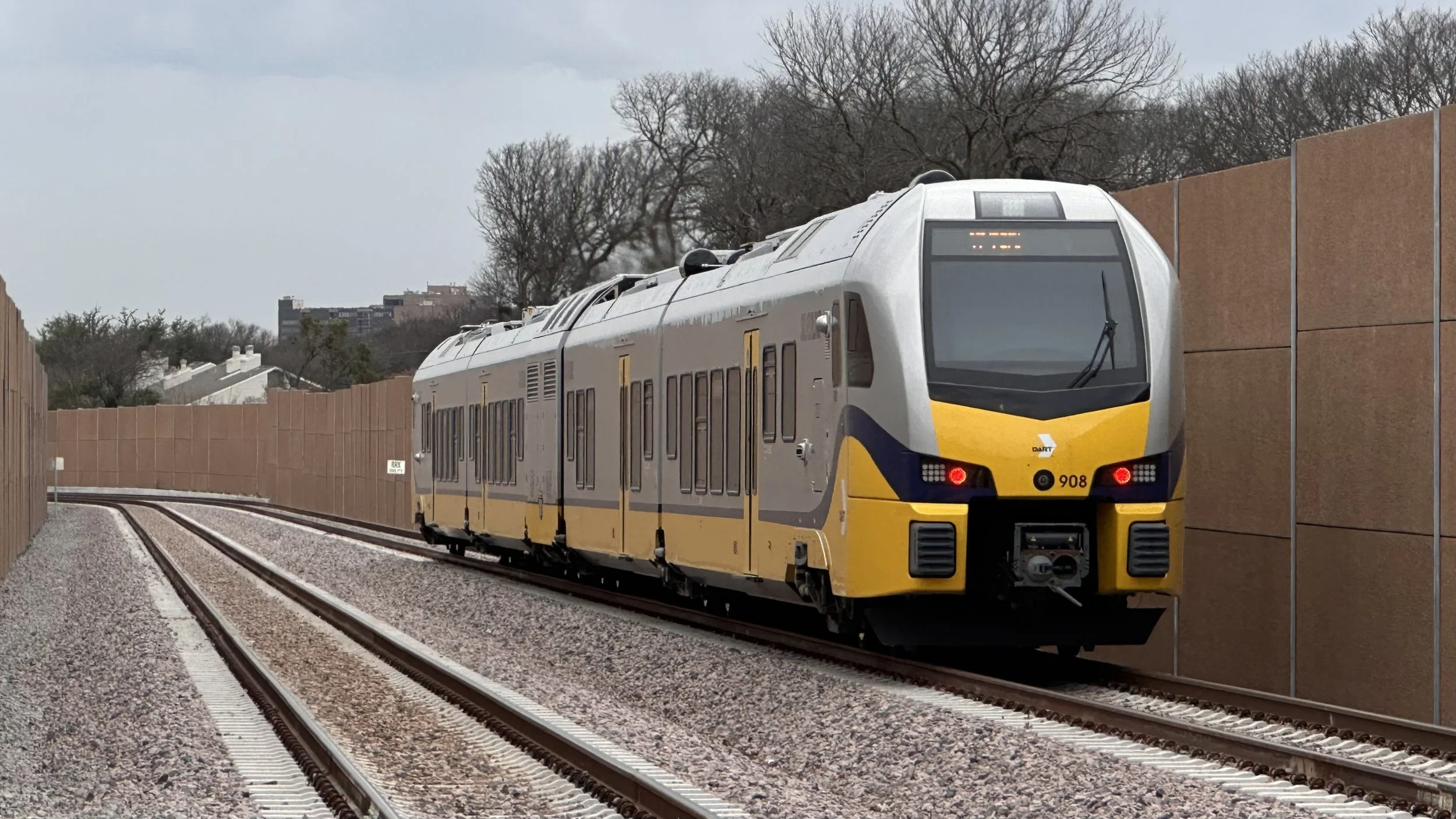
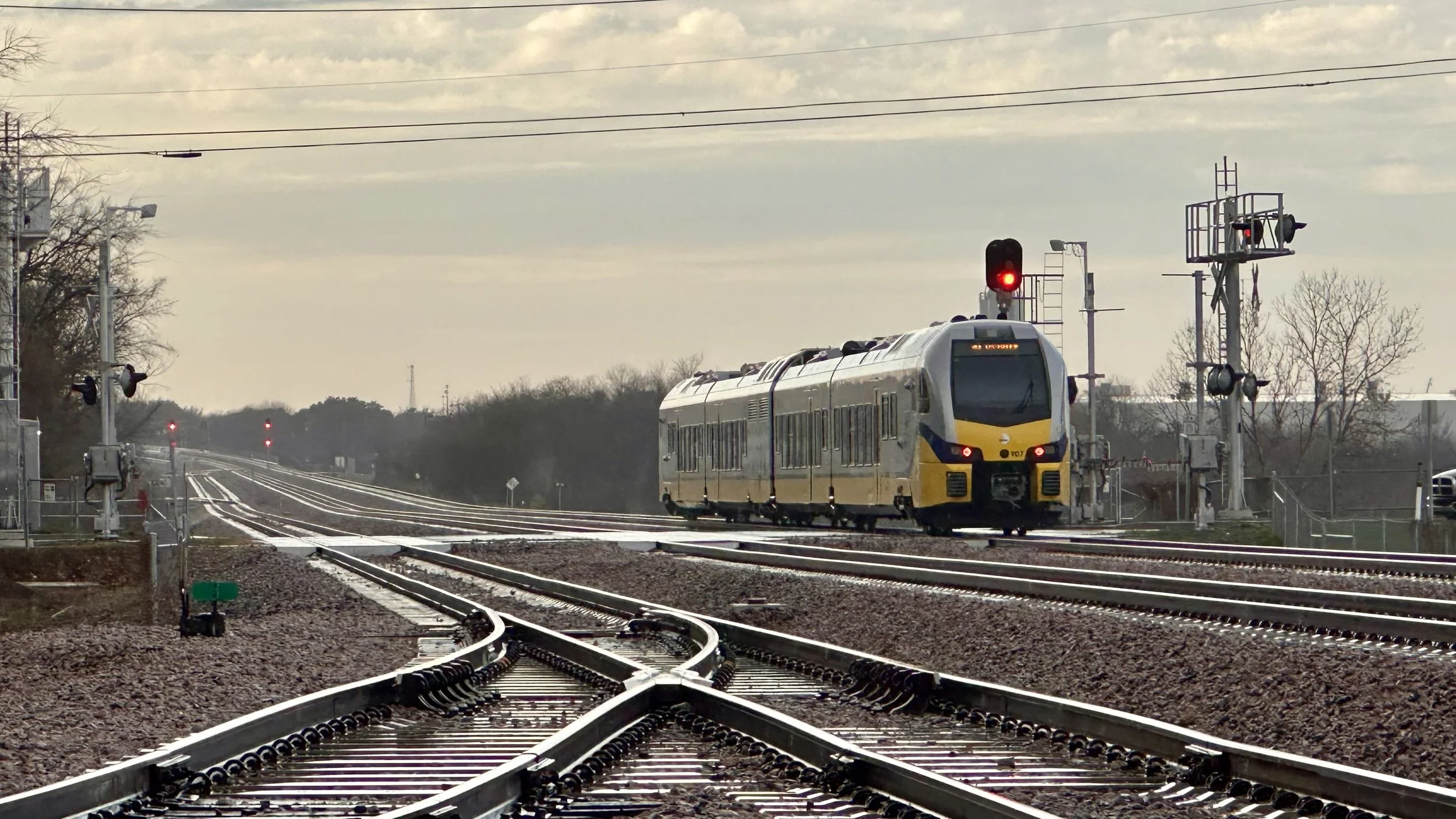
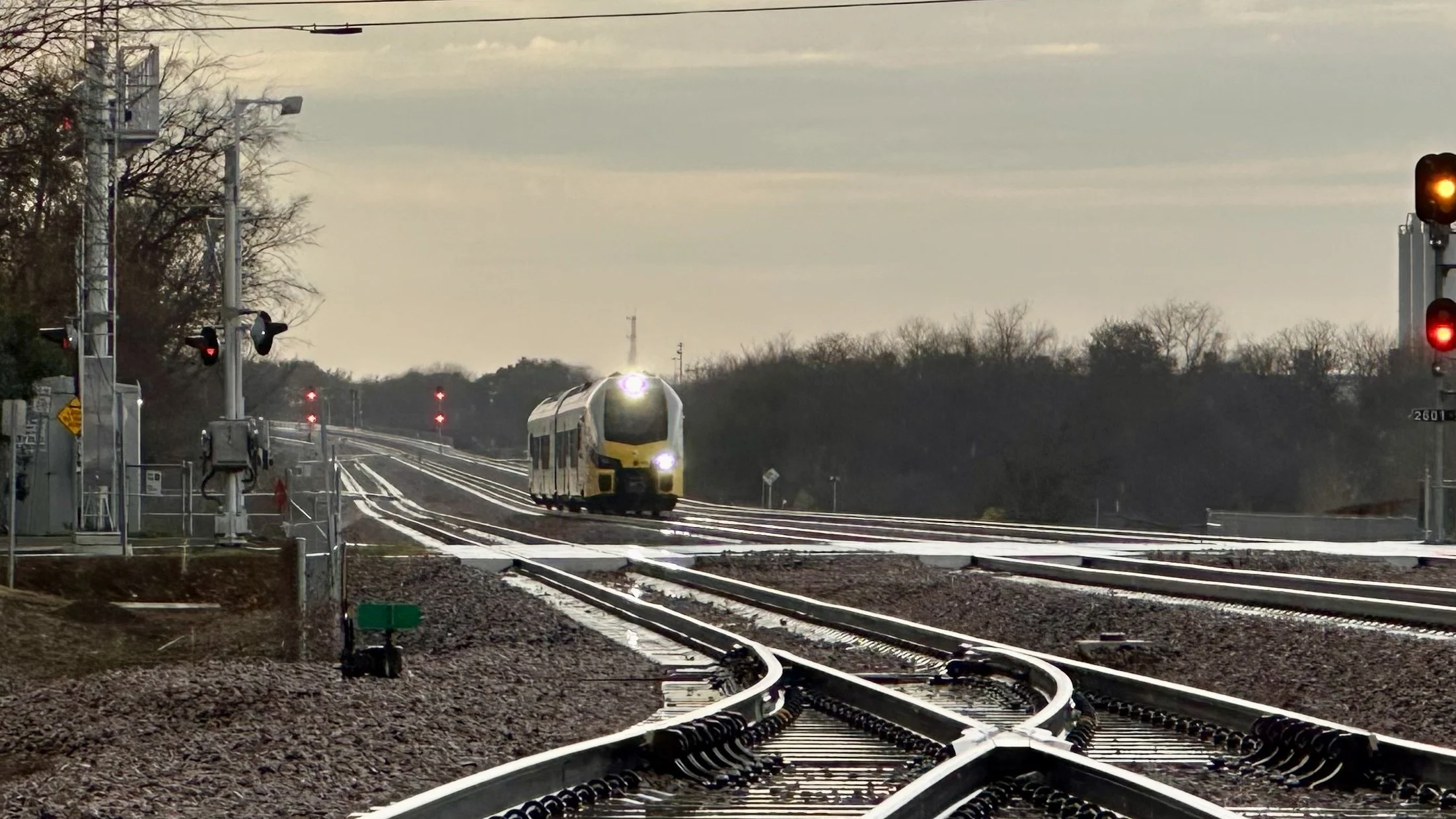
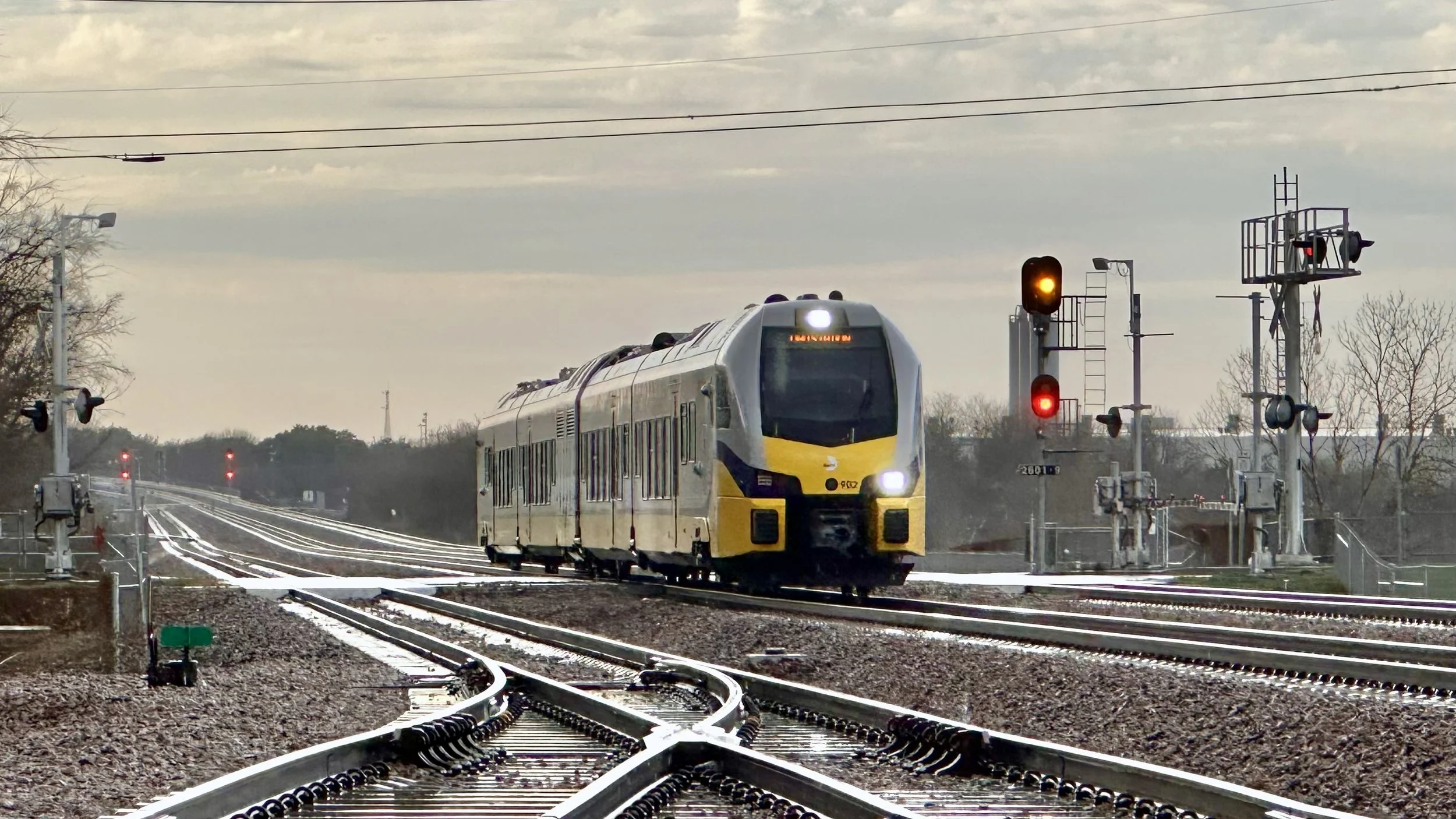
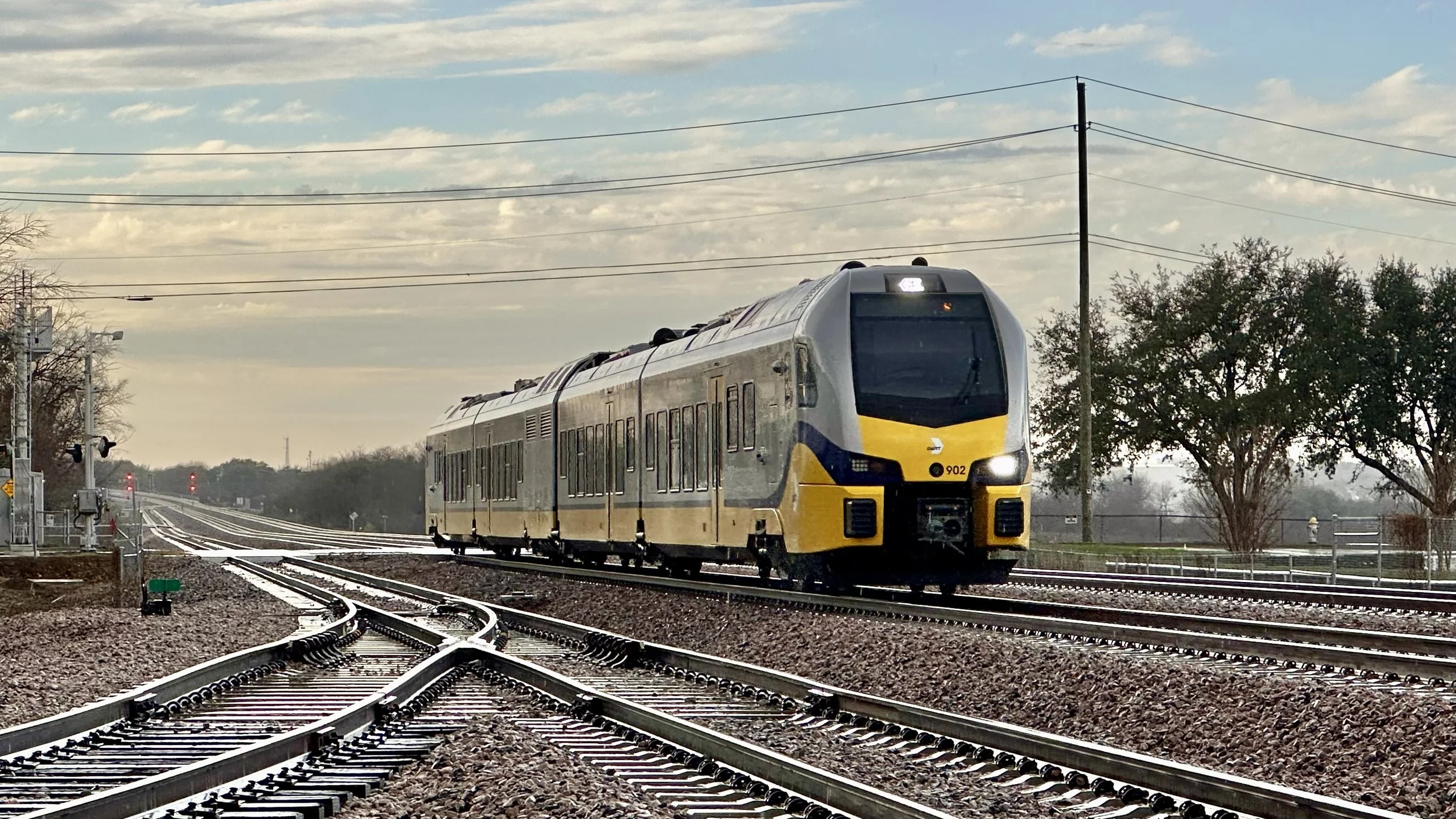
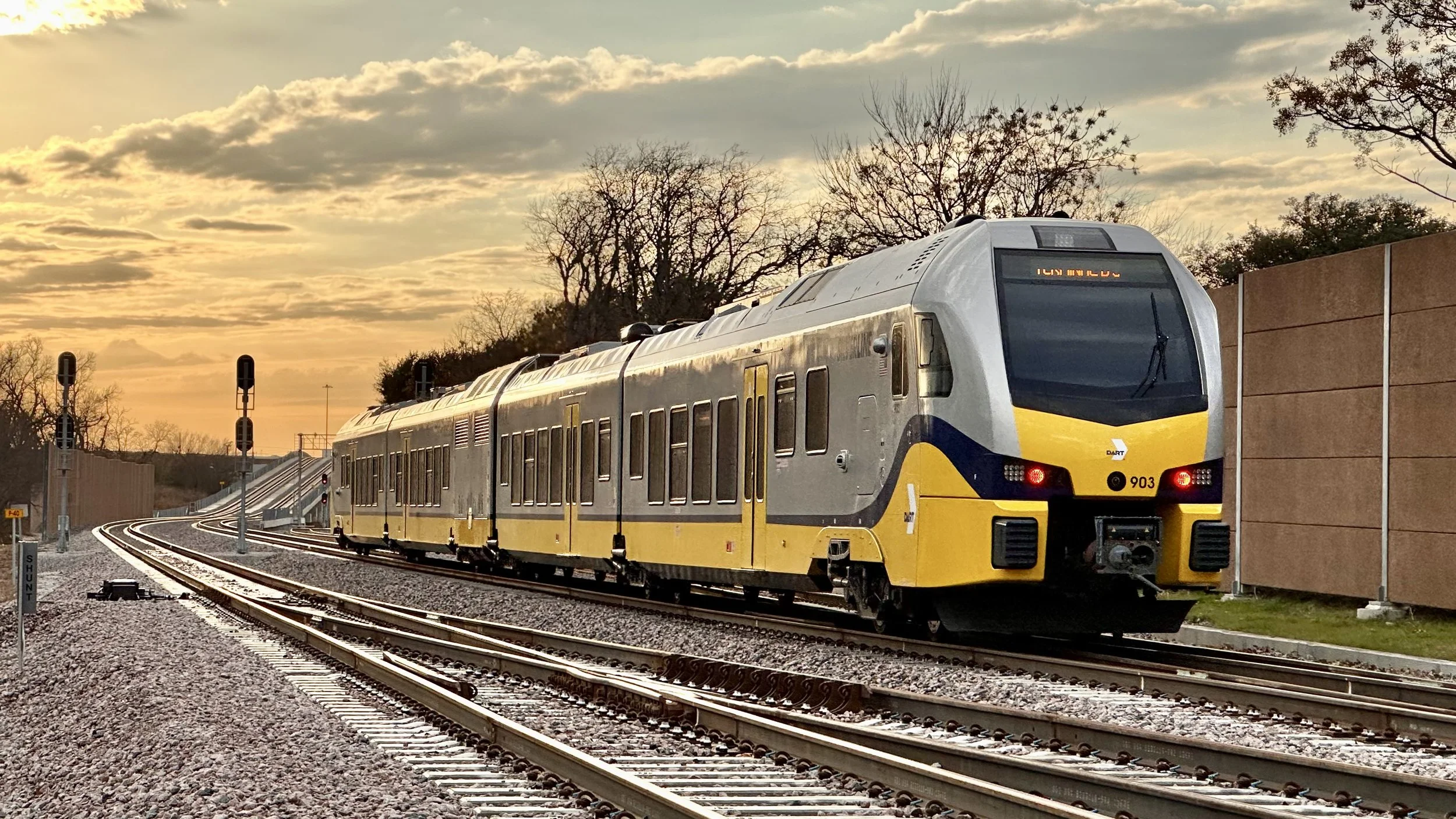
DART SIlver Line
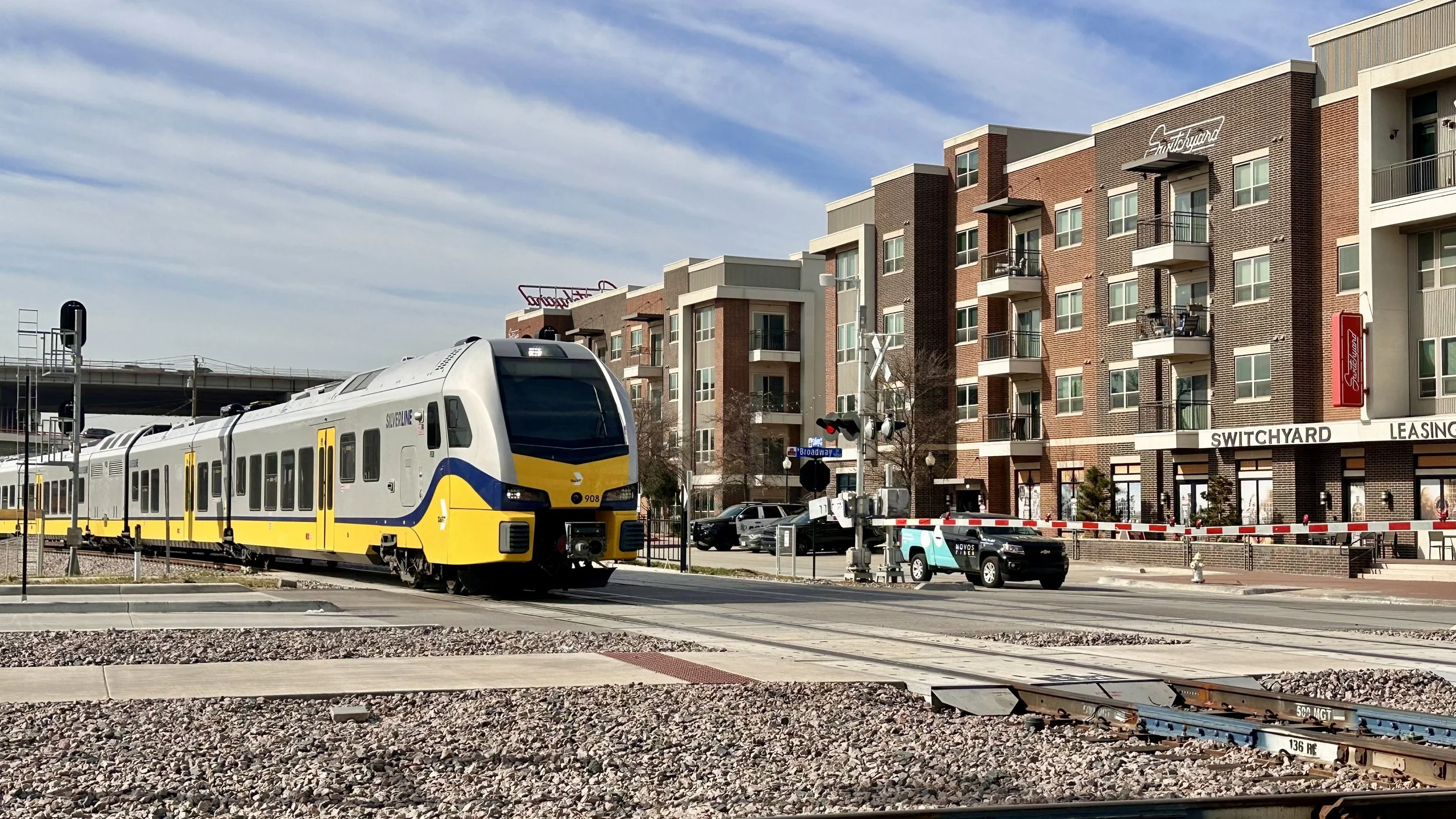
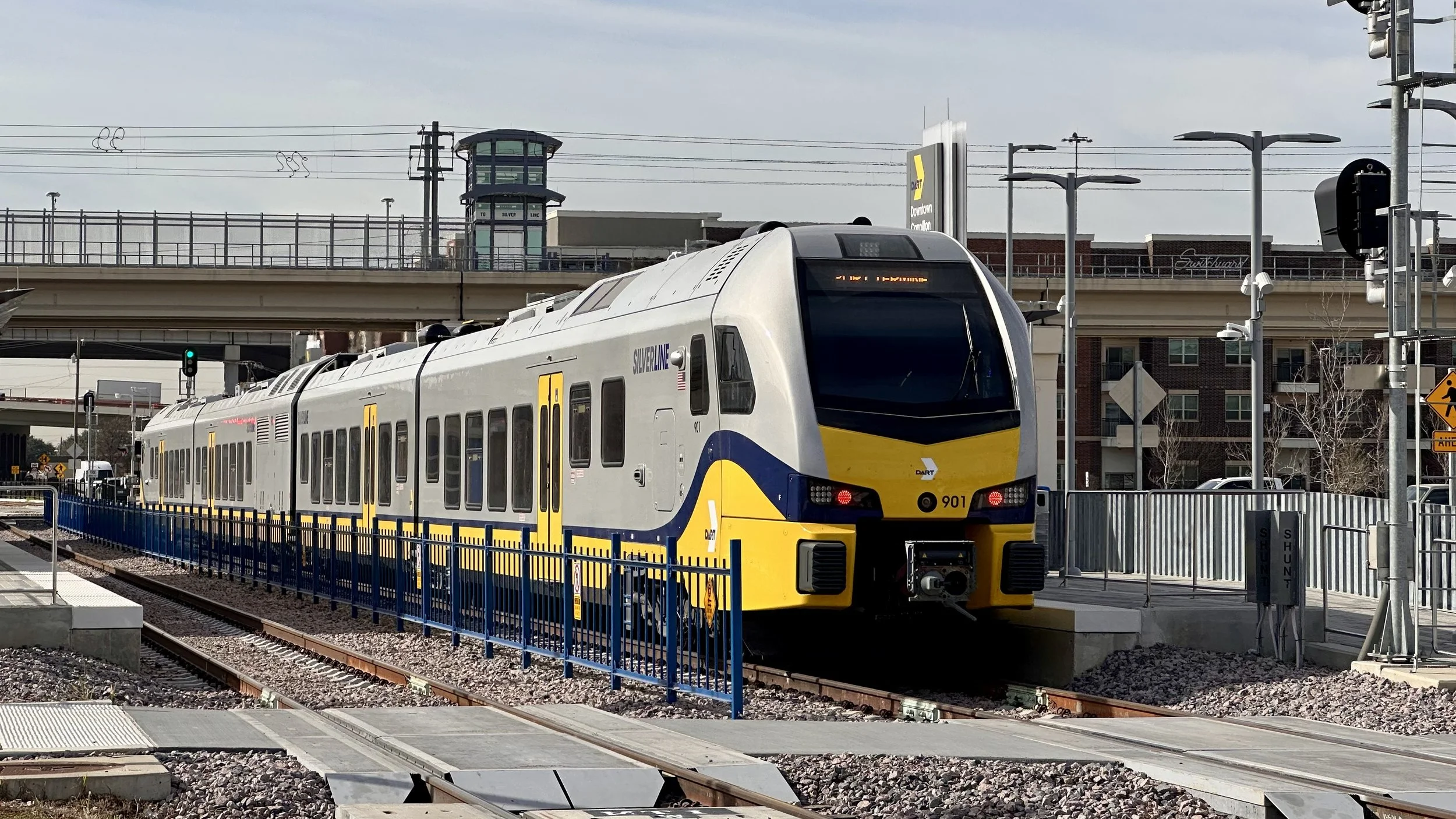
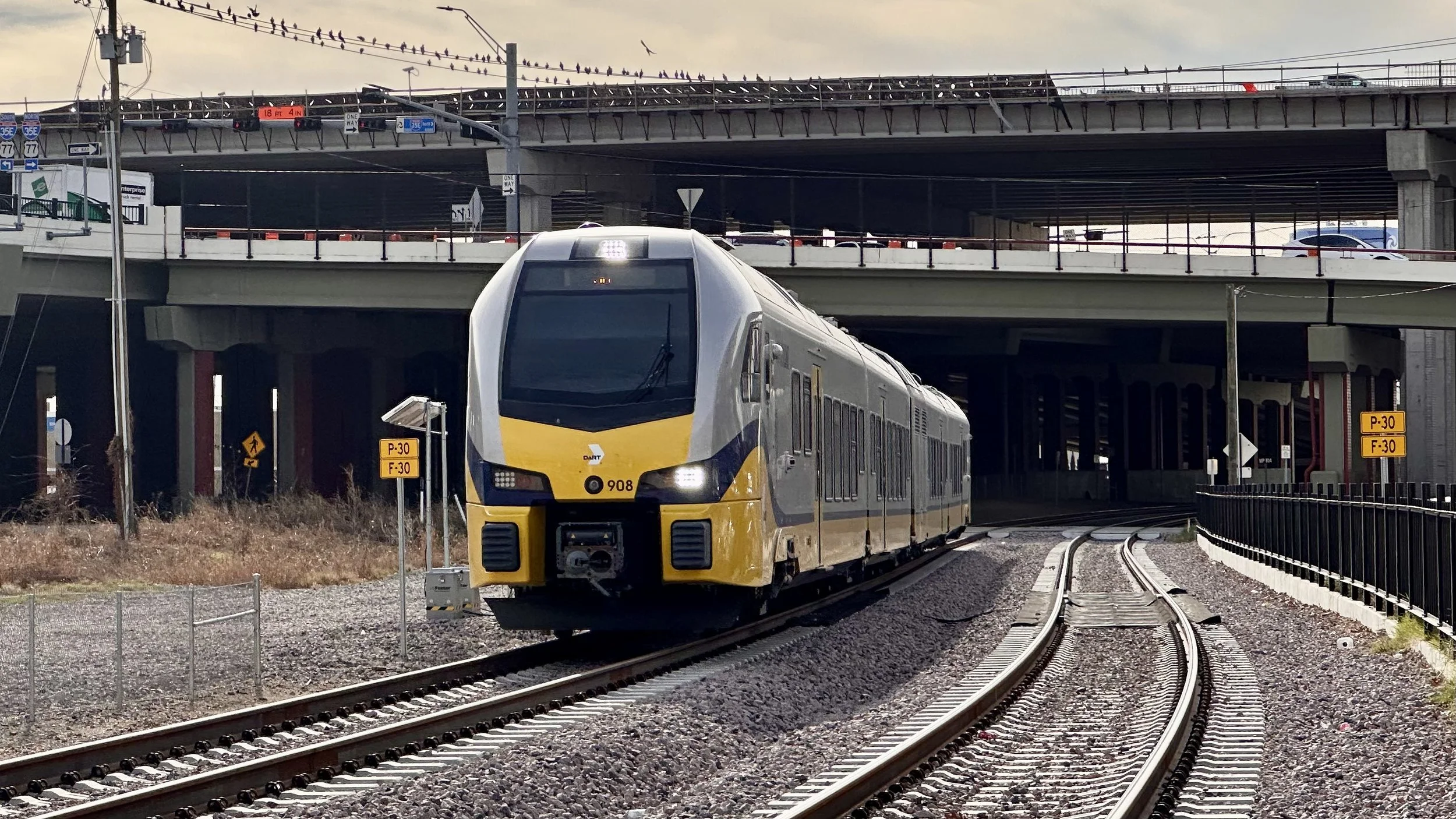
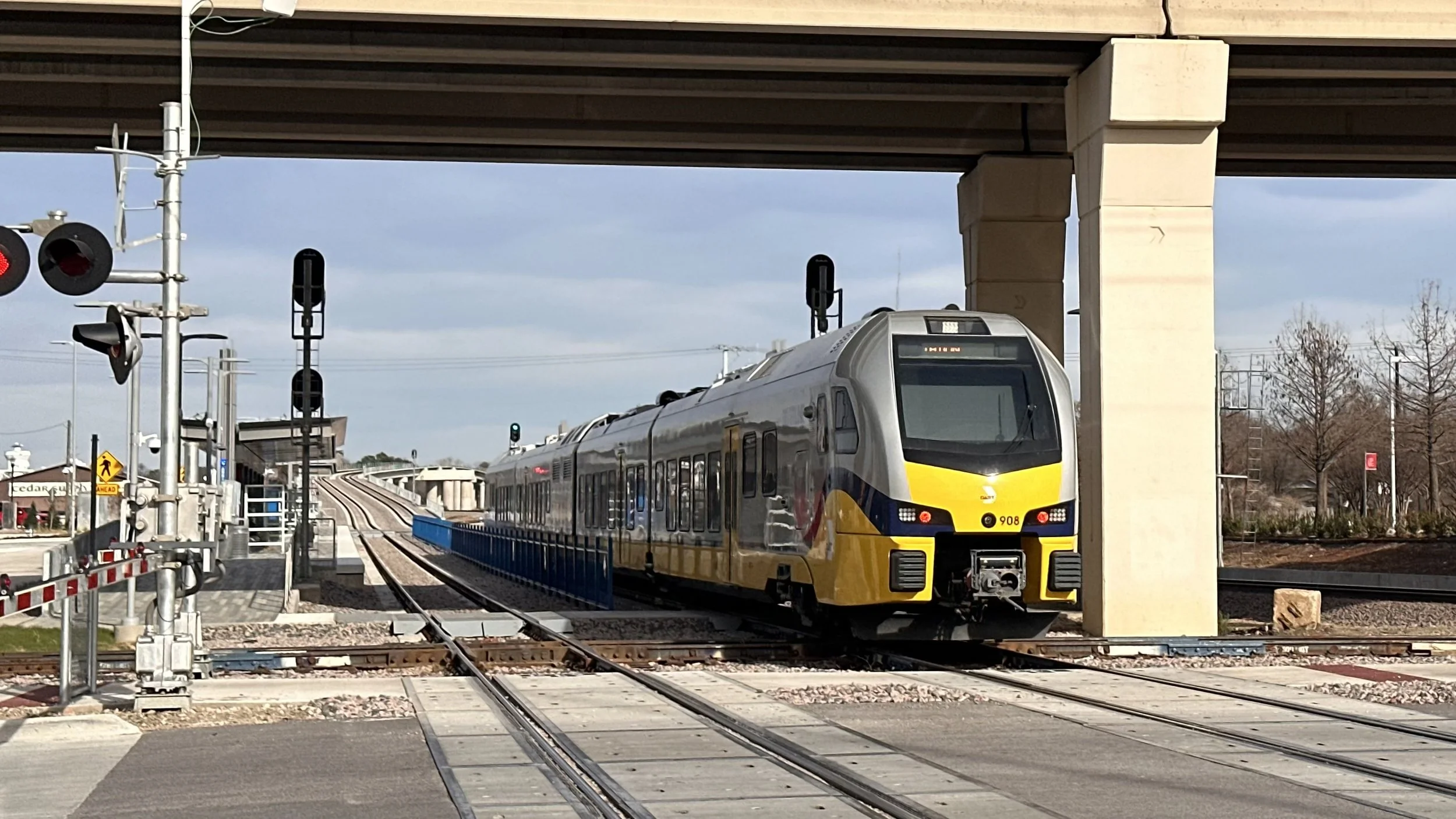
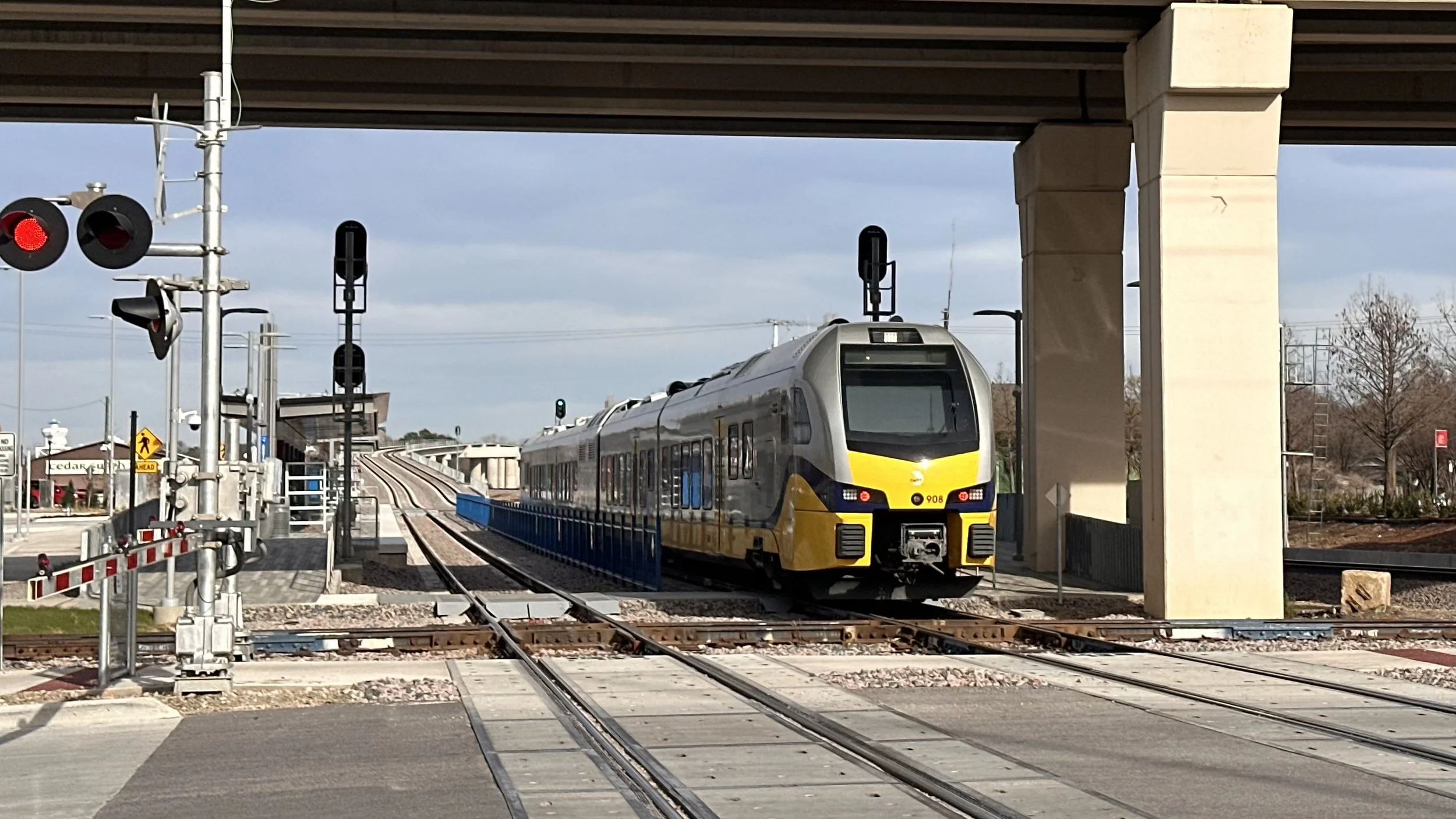
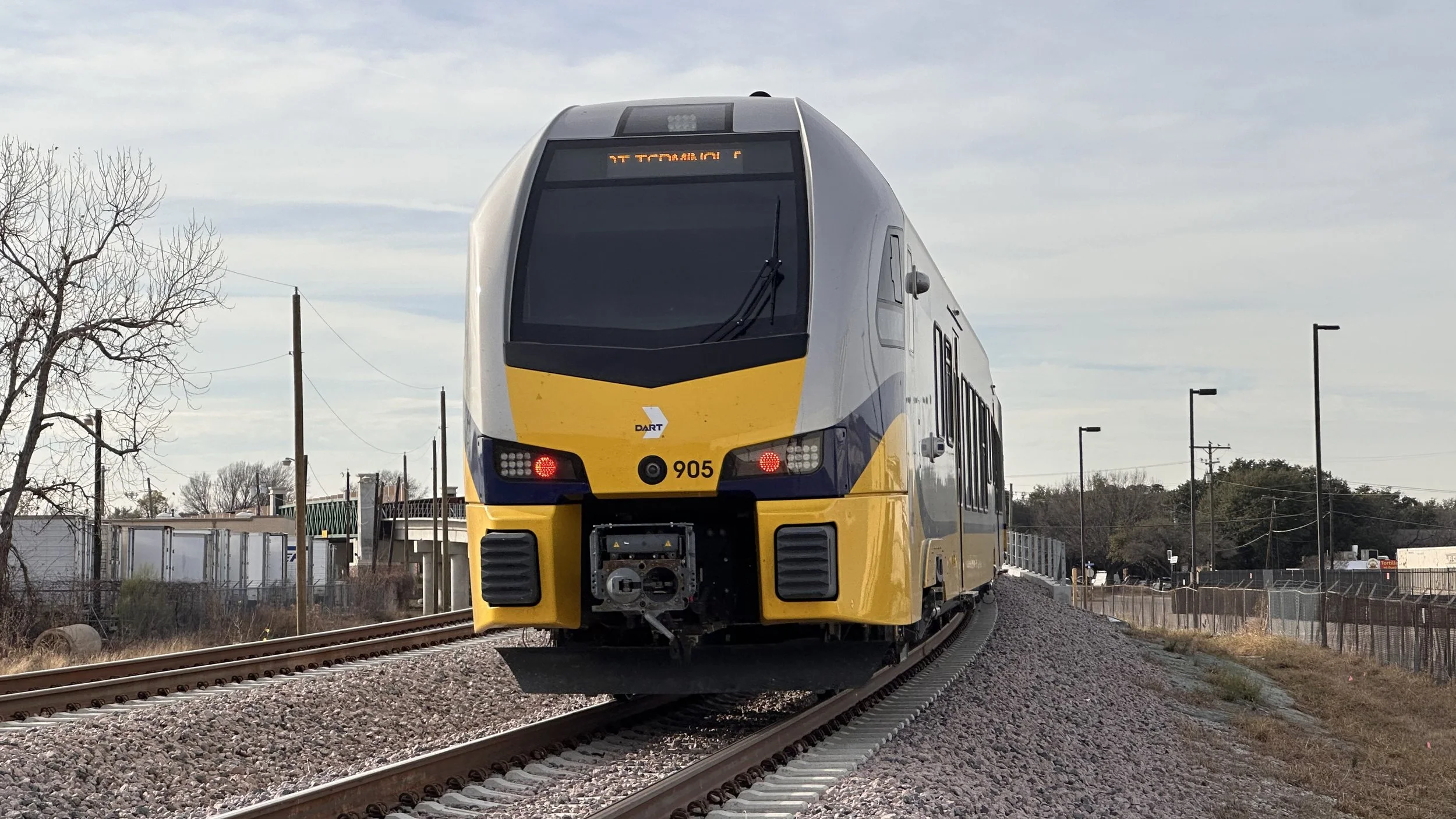
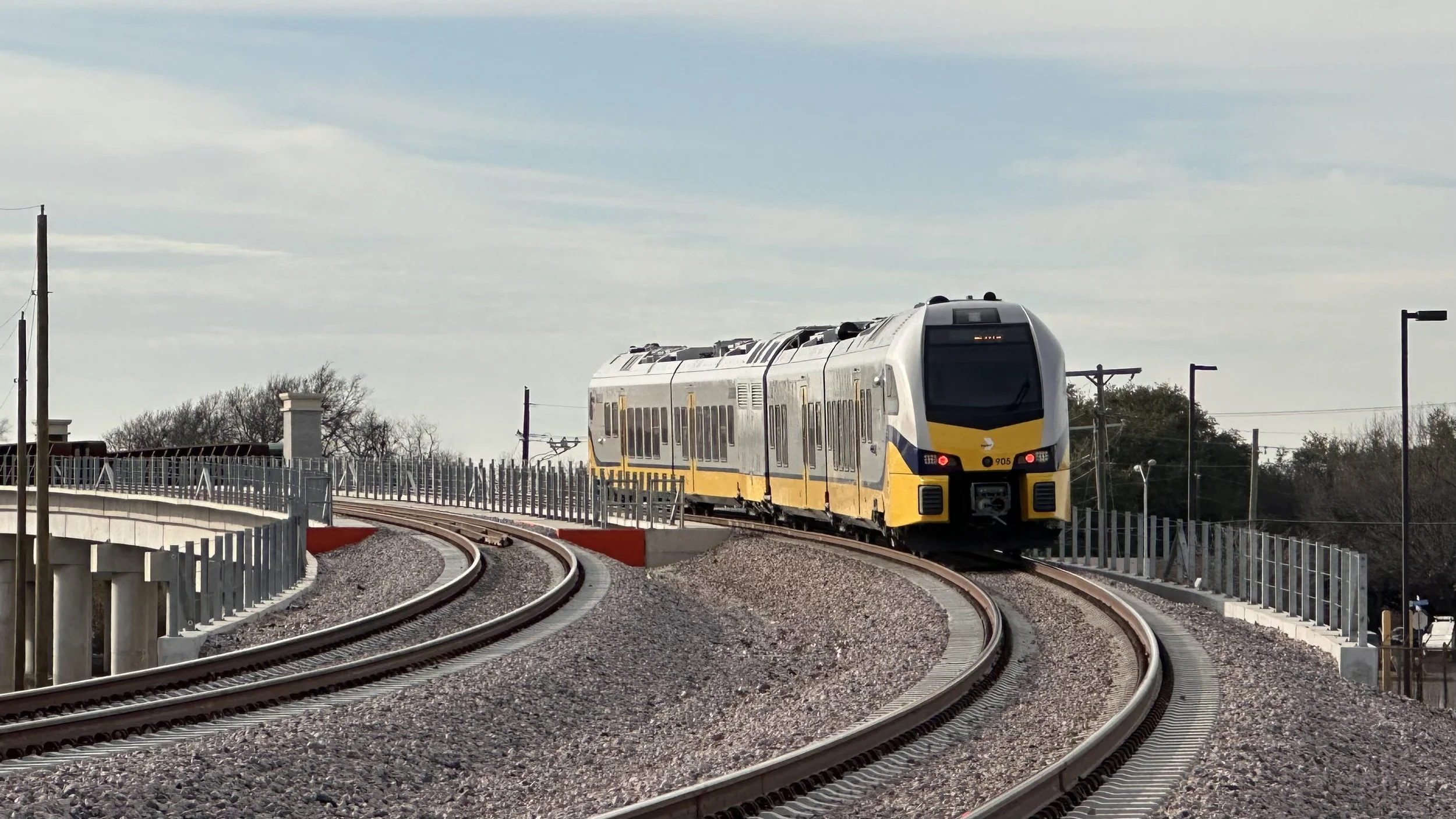
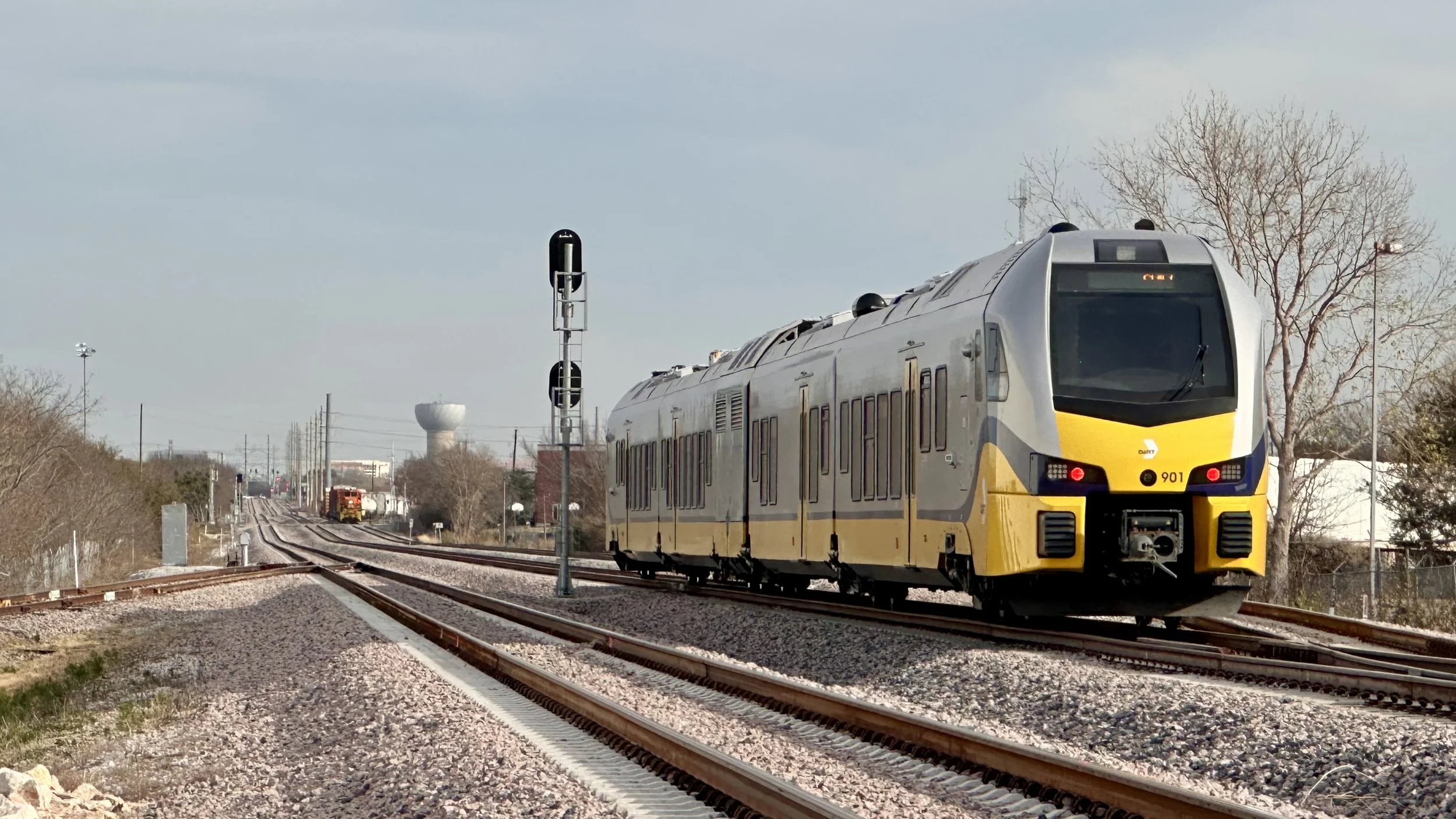
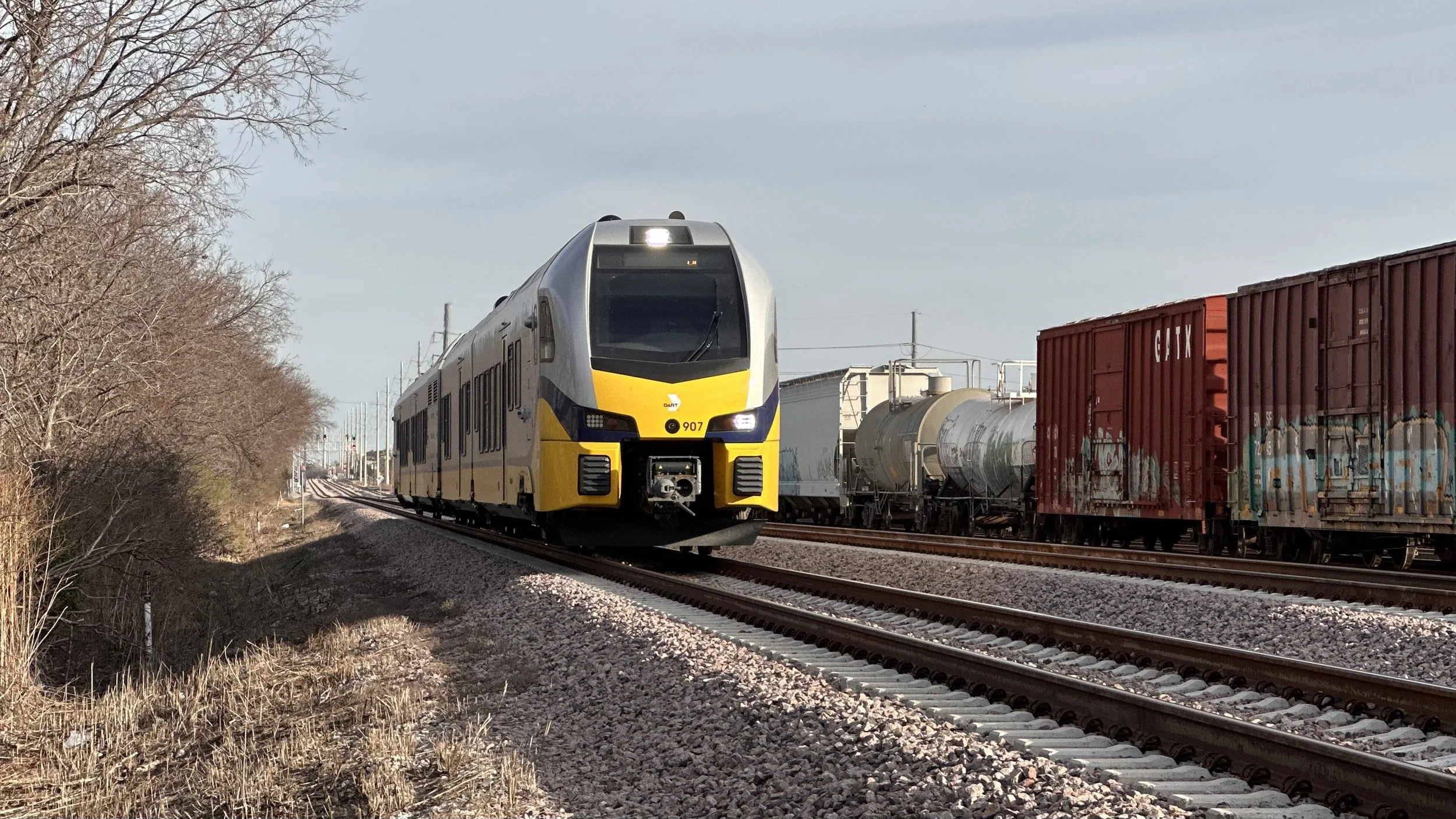
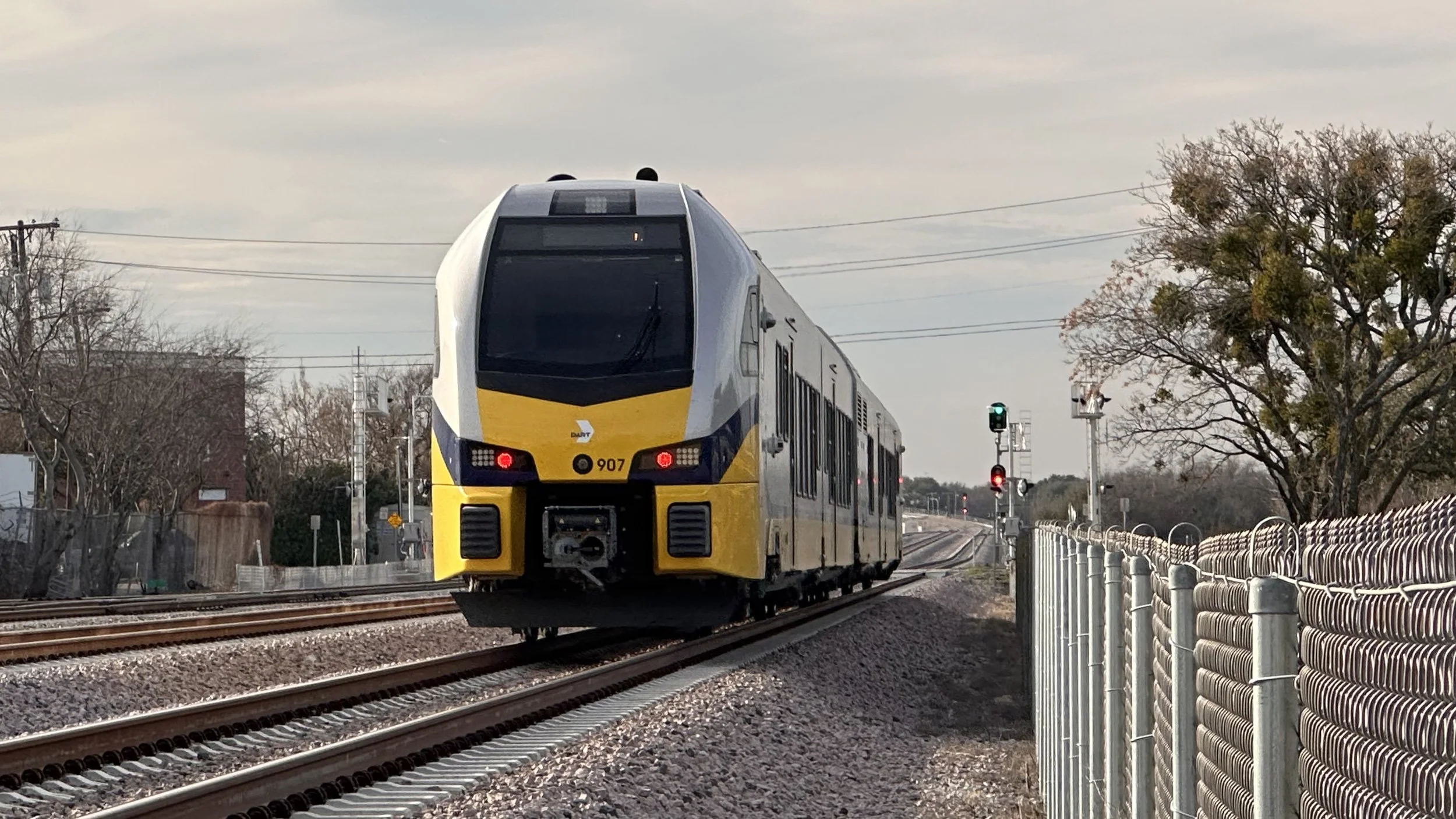
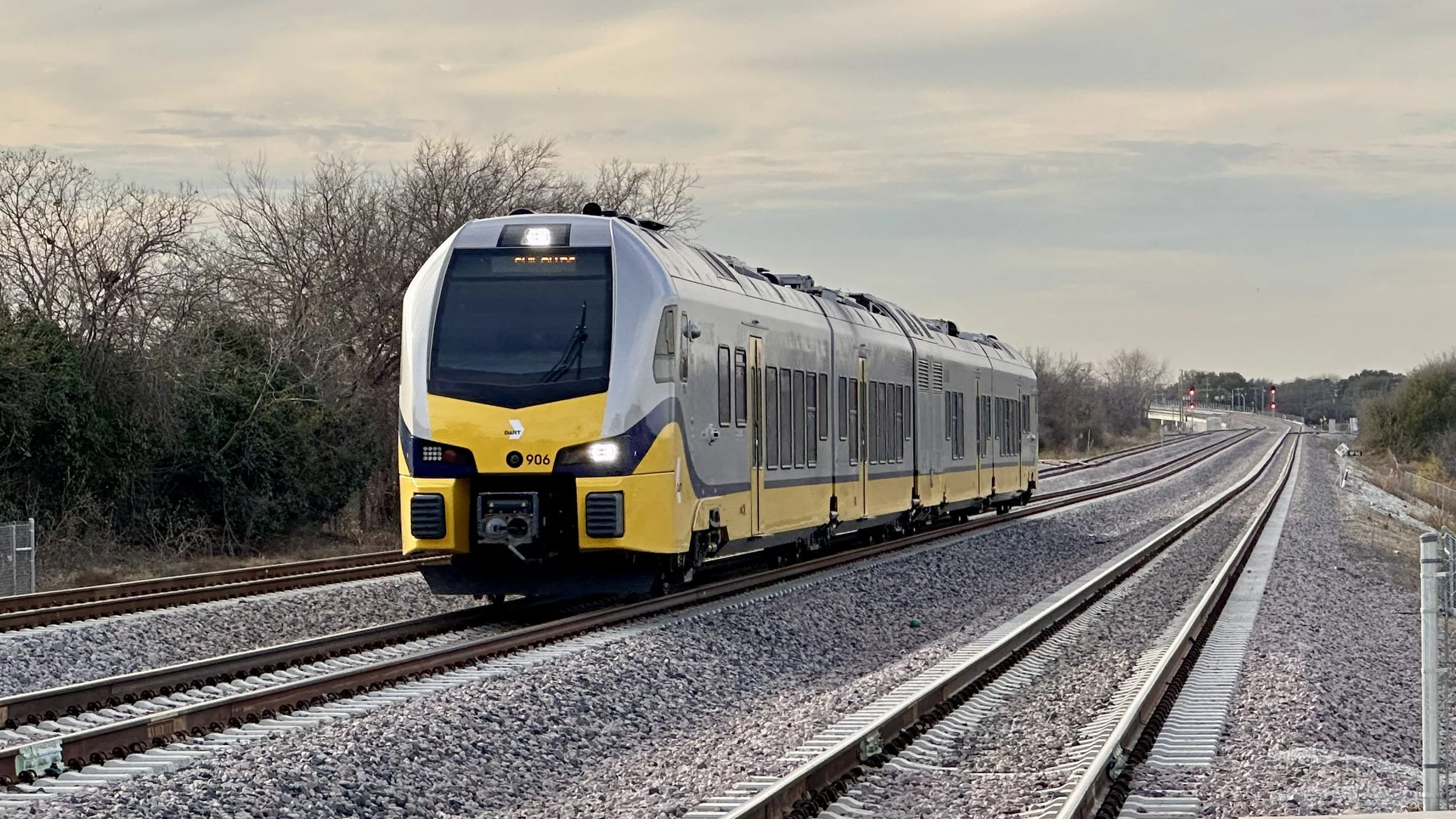
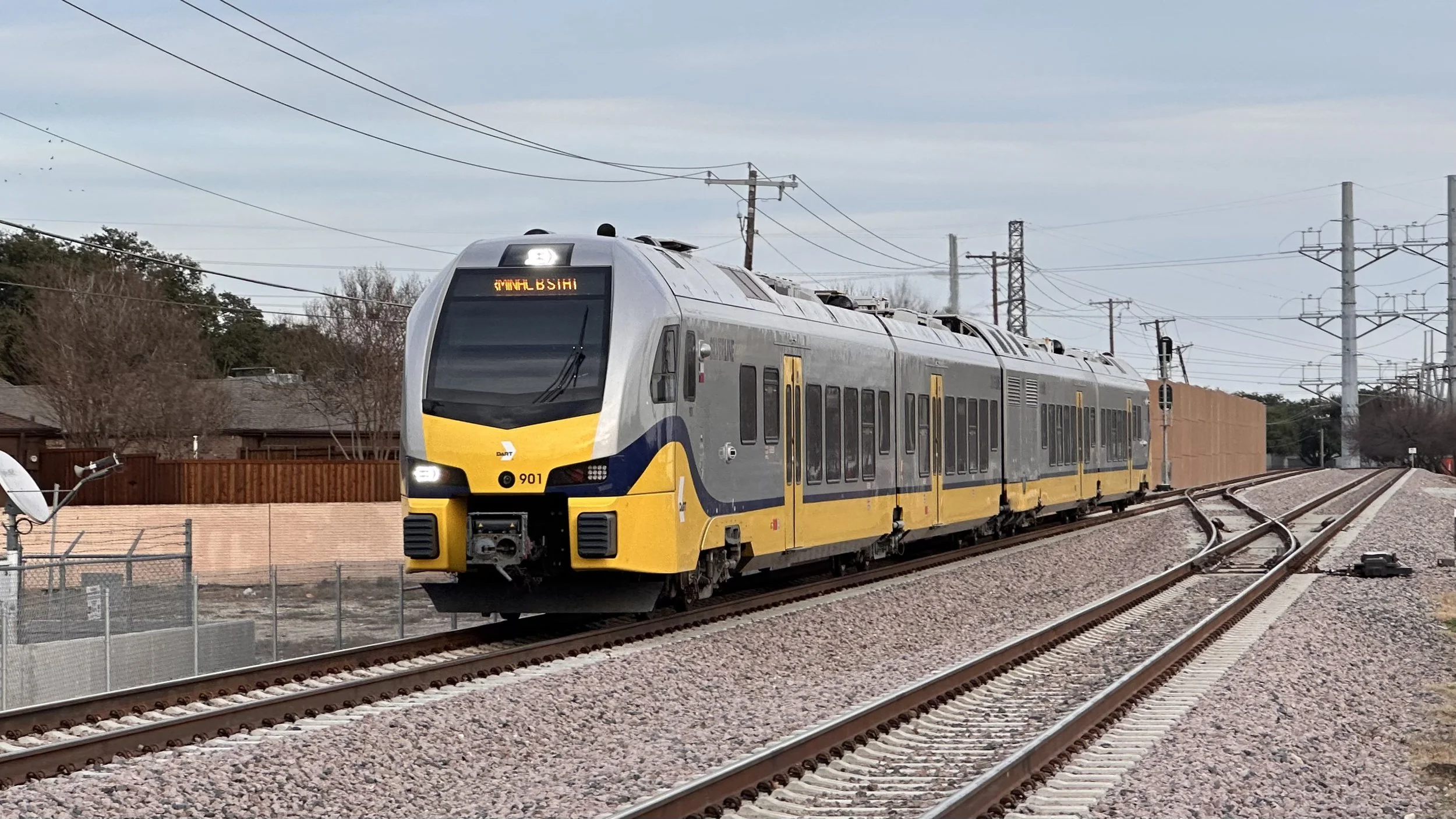
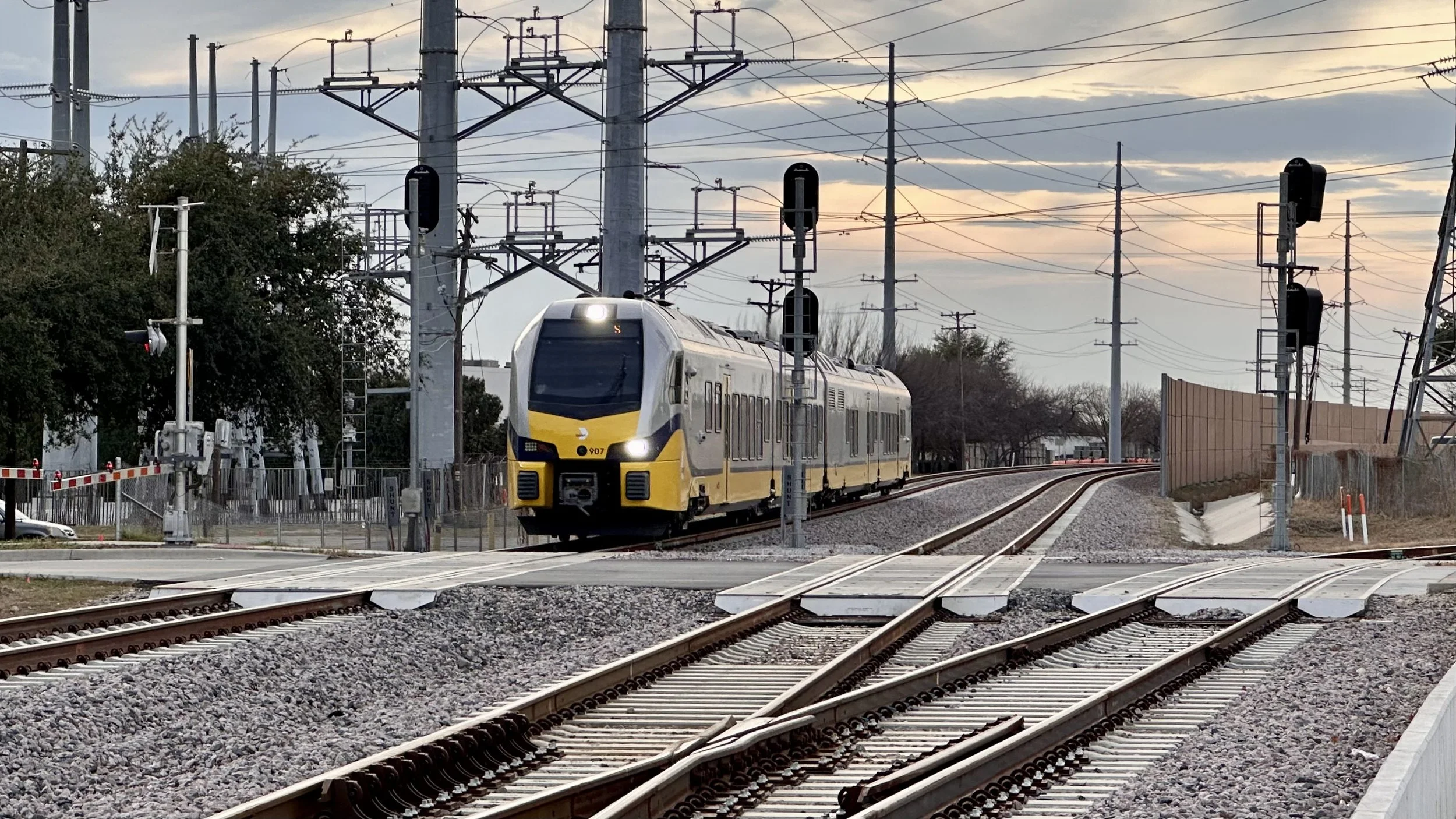
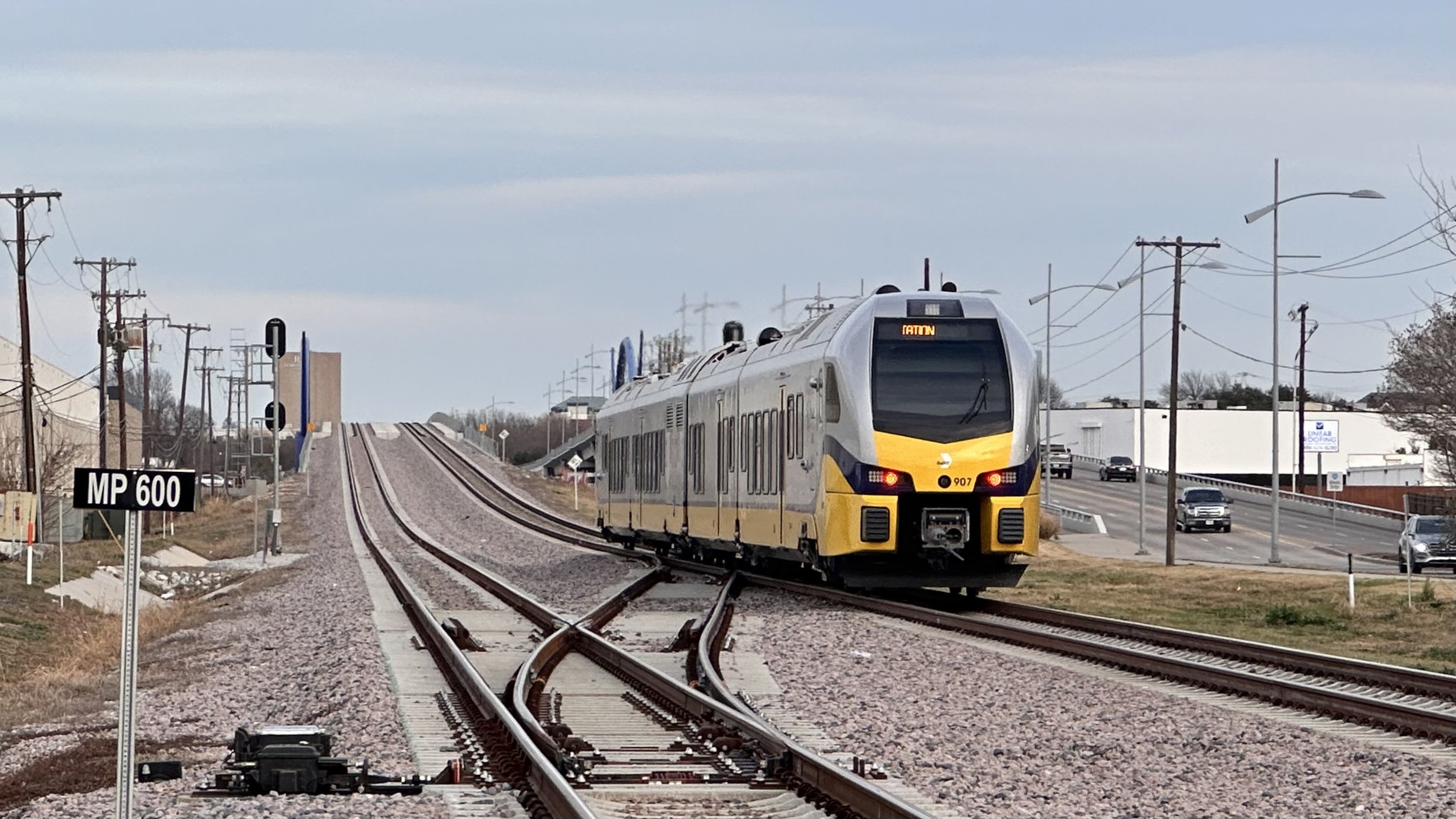
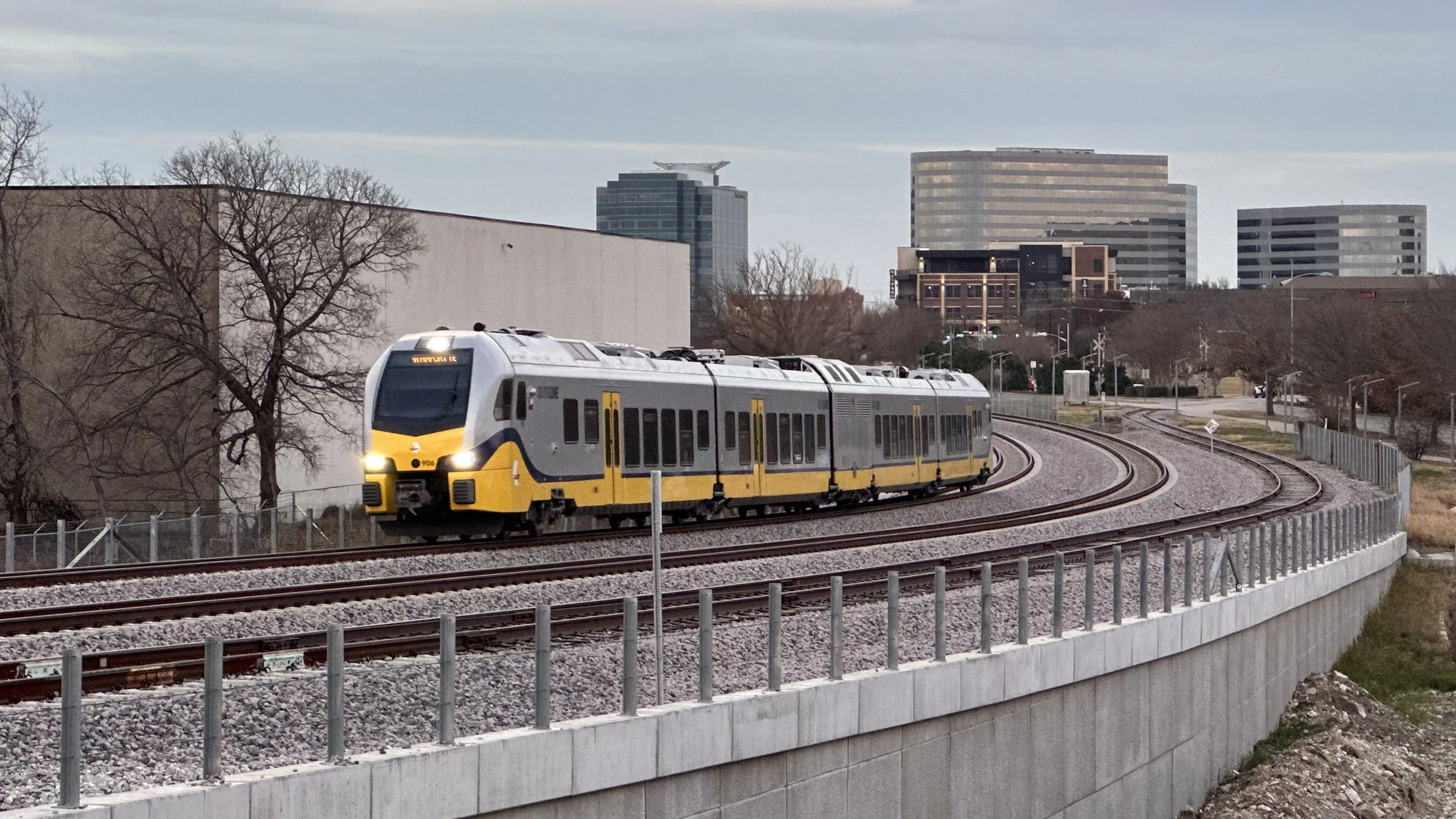
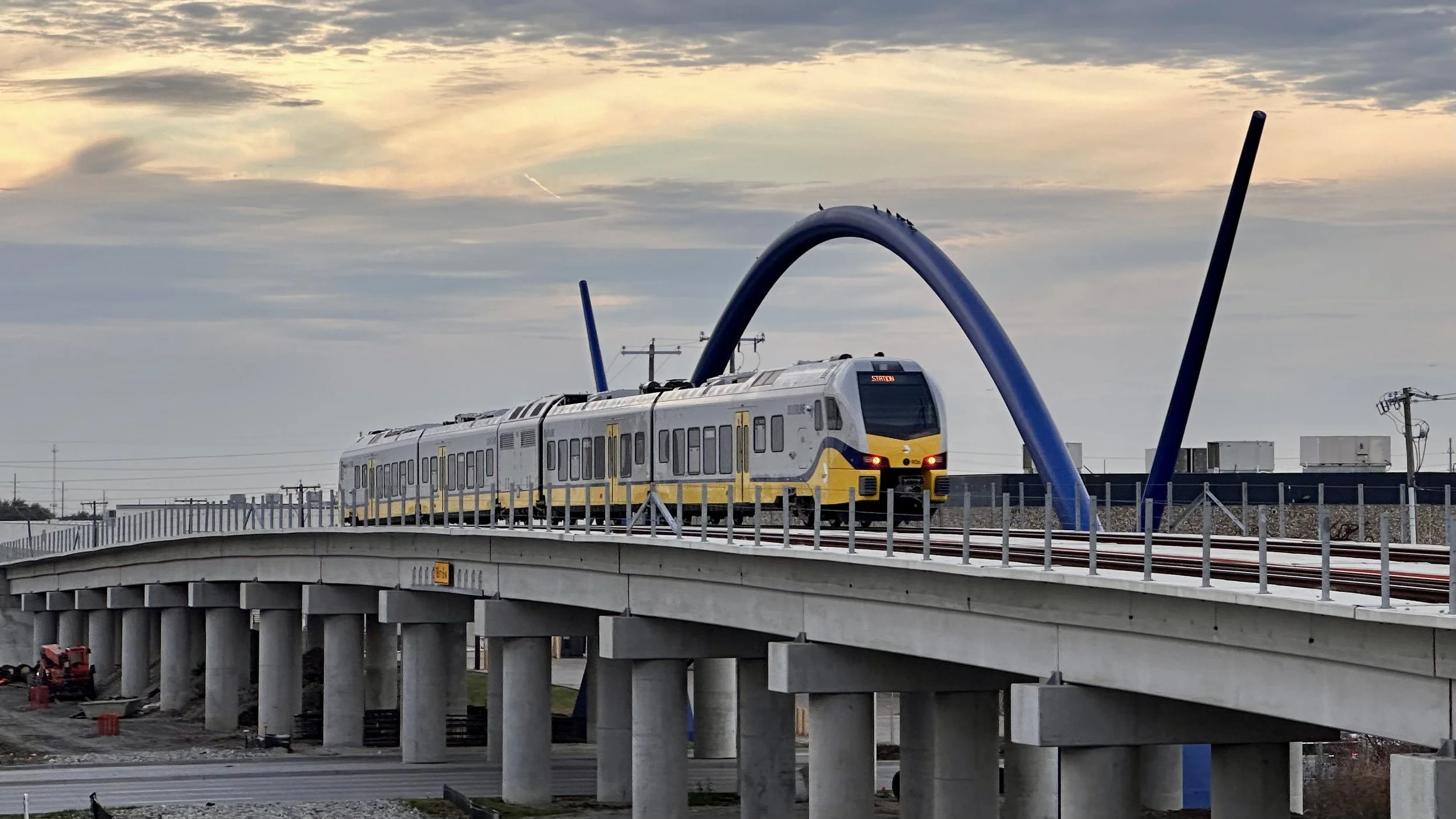
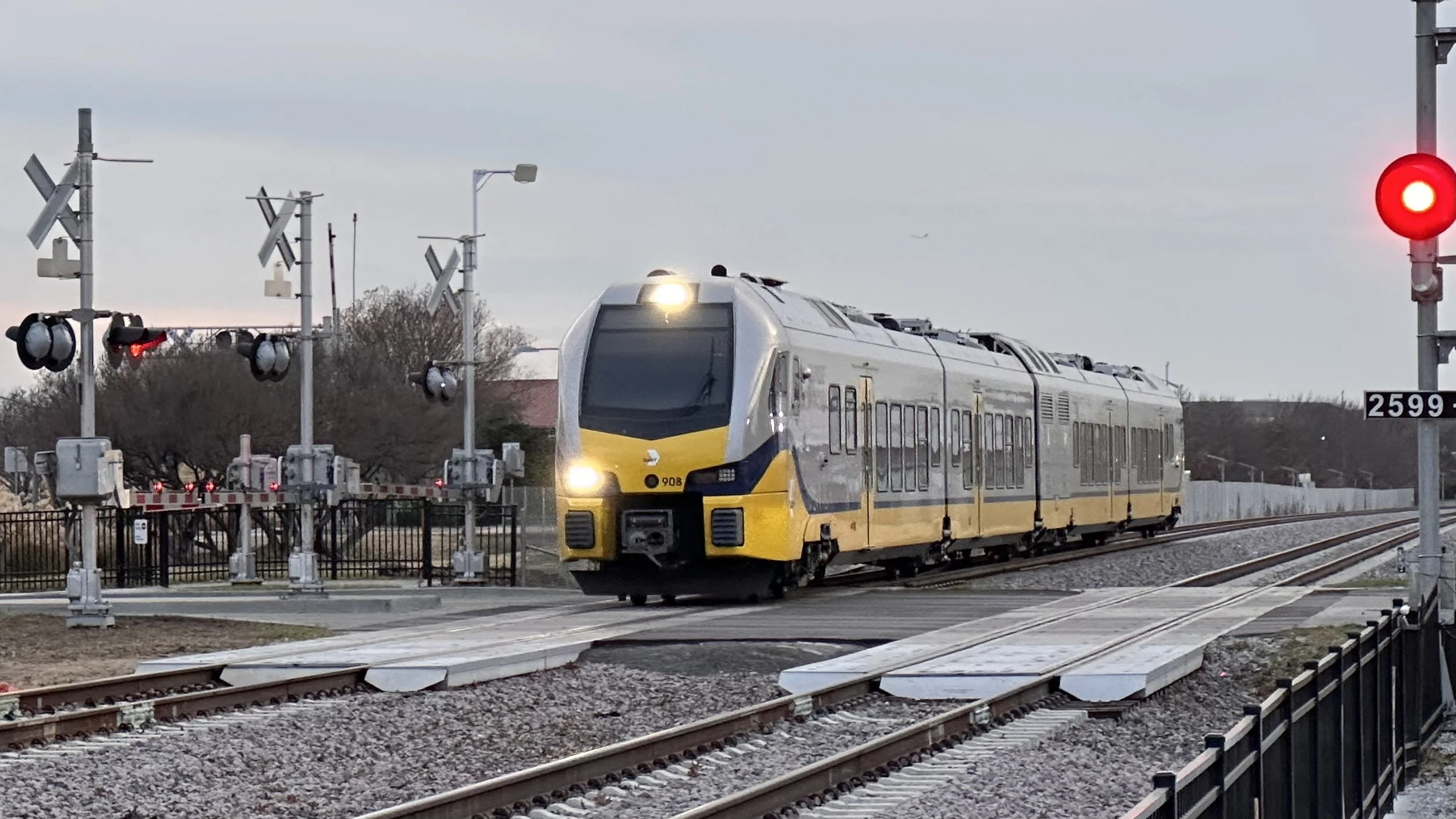
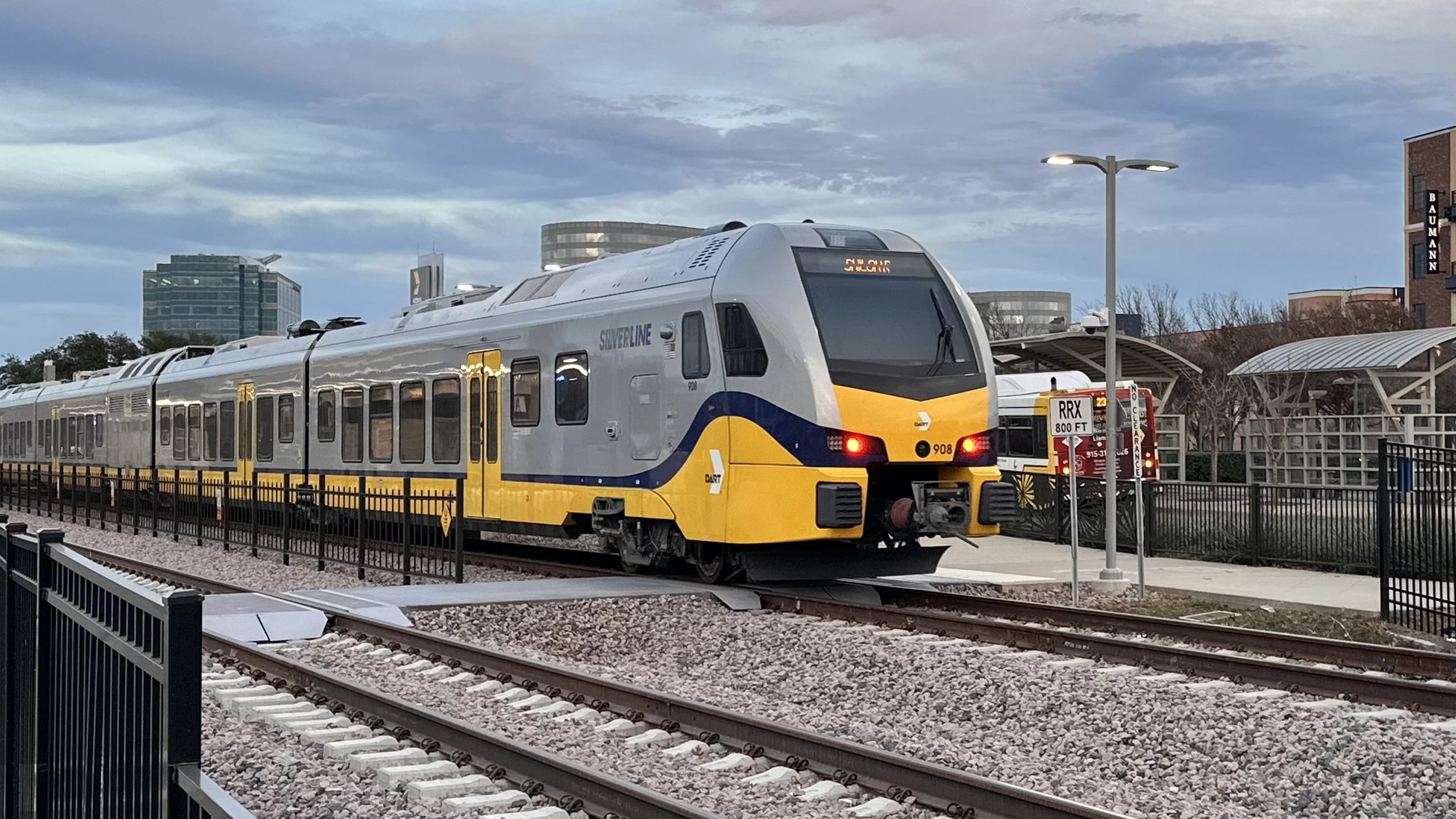
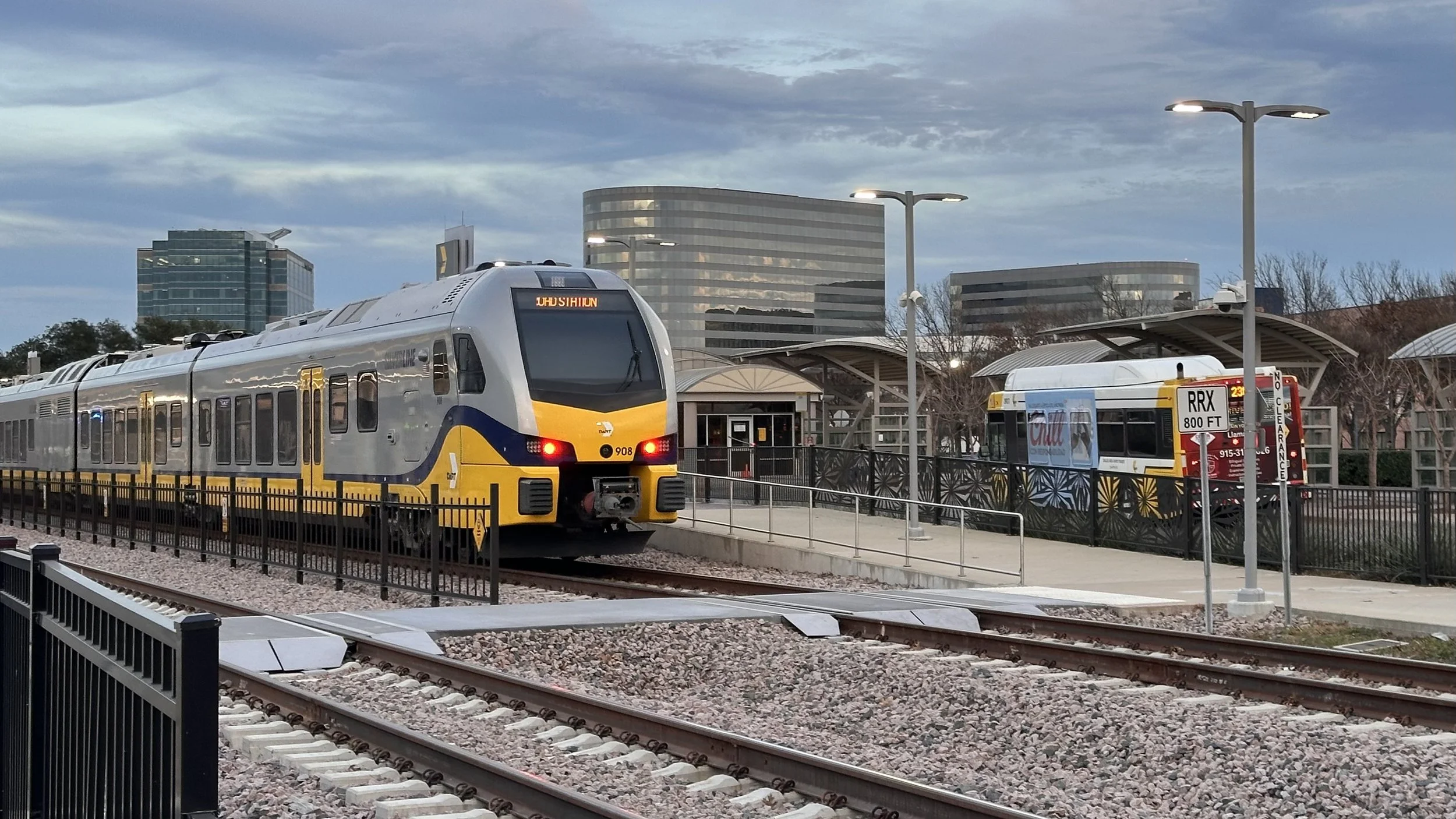
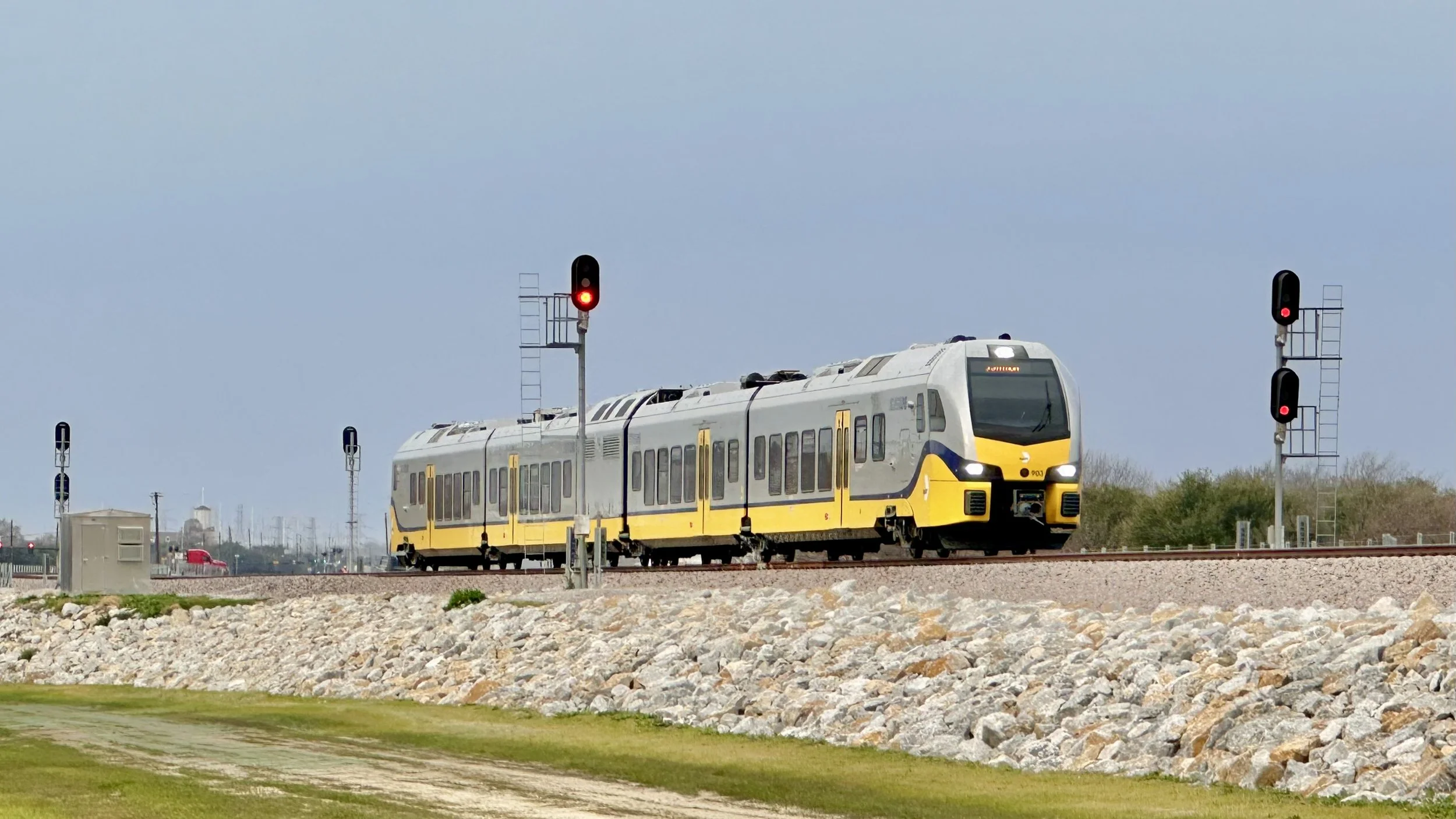
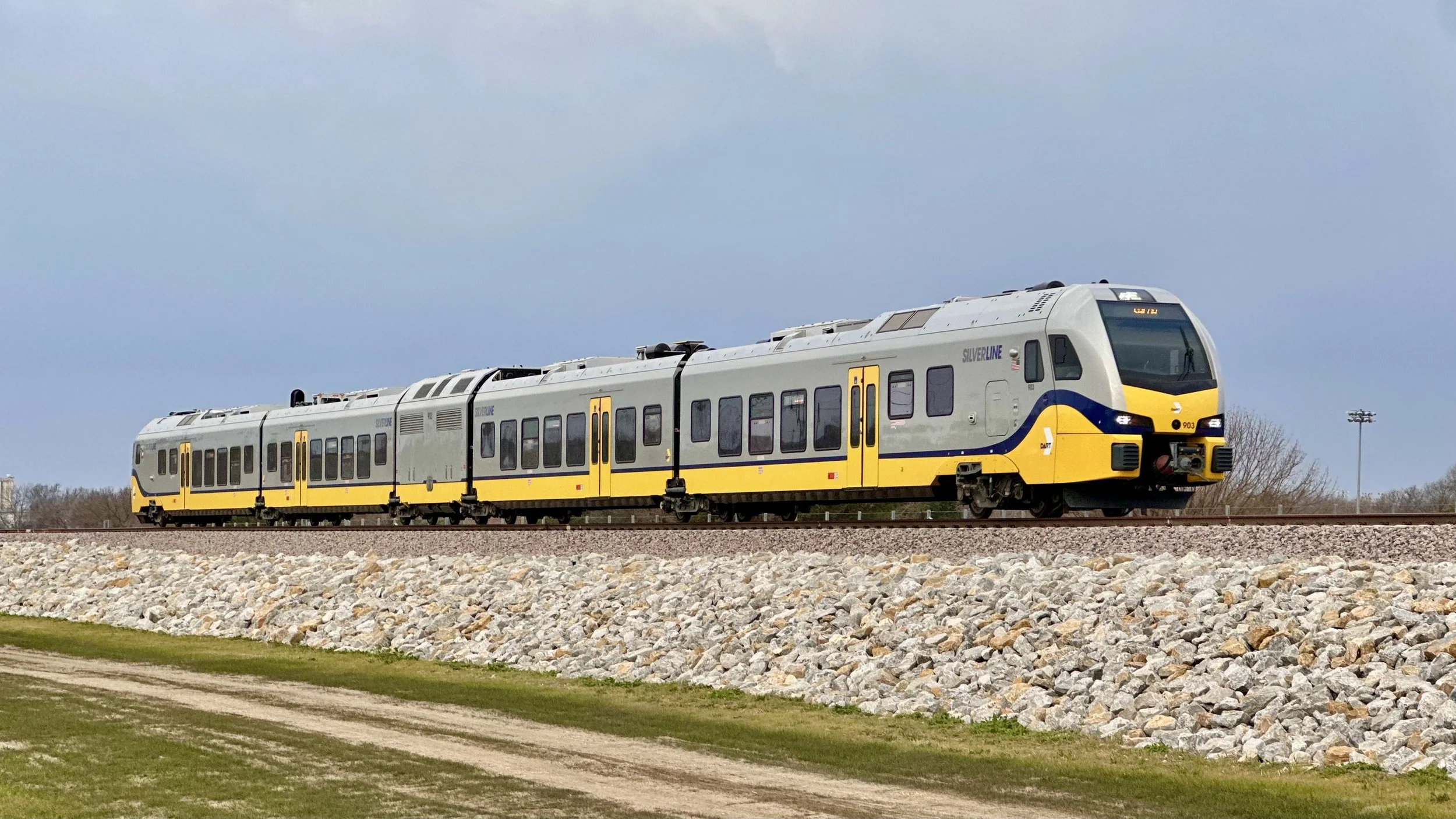
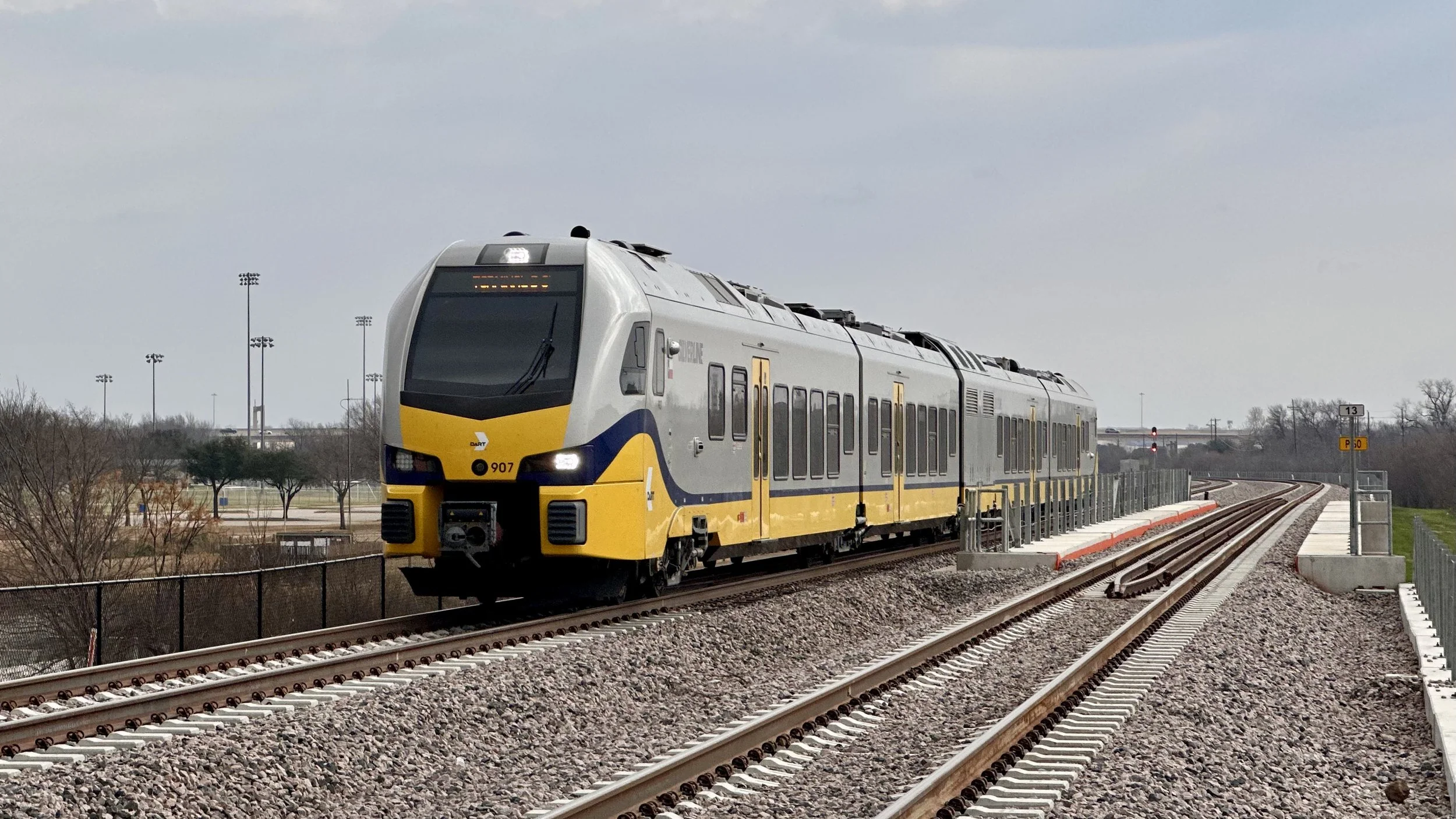
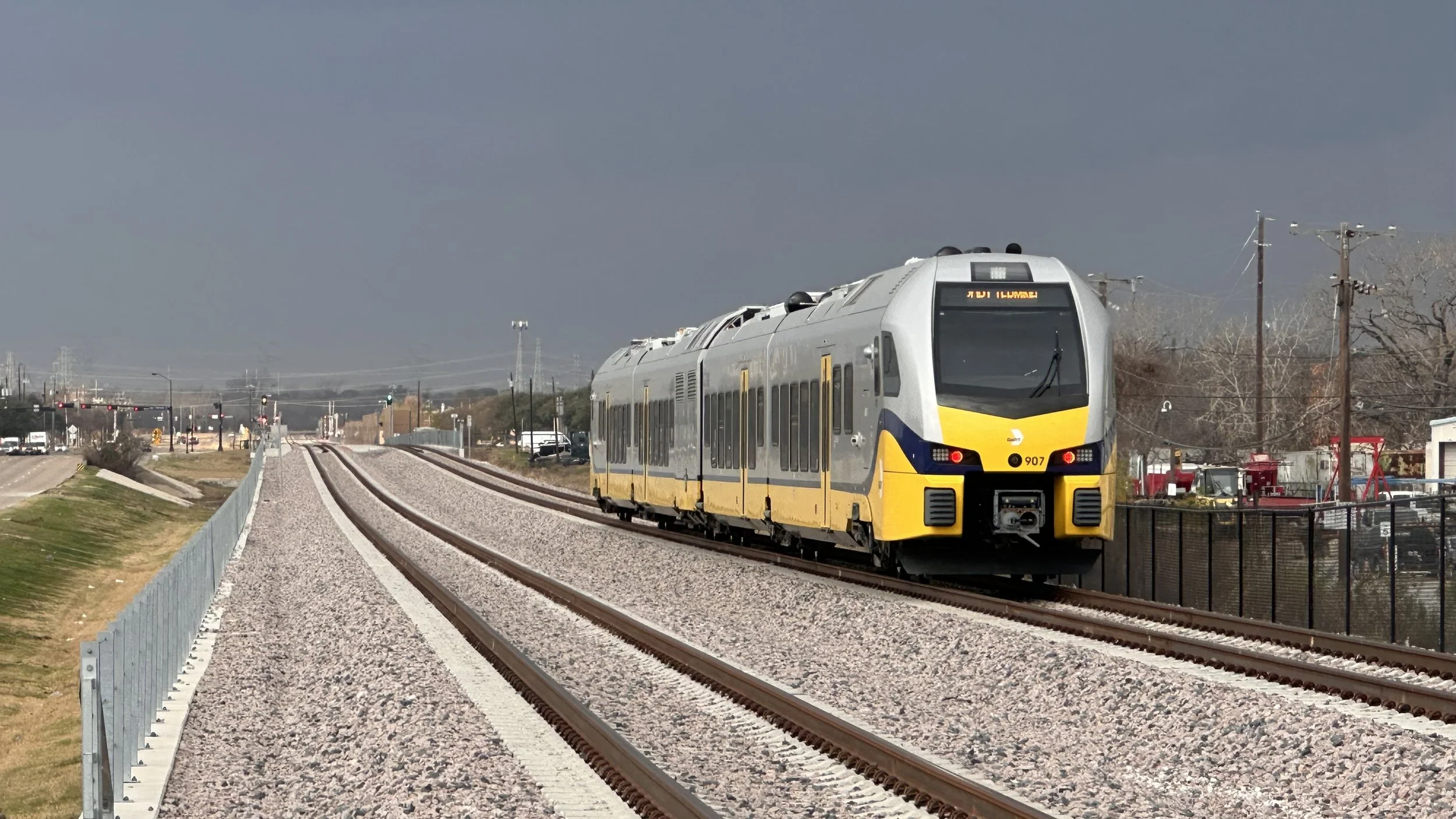
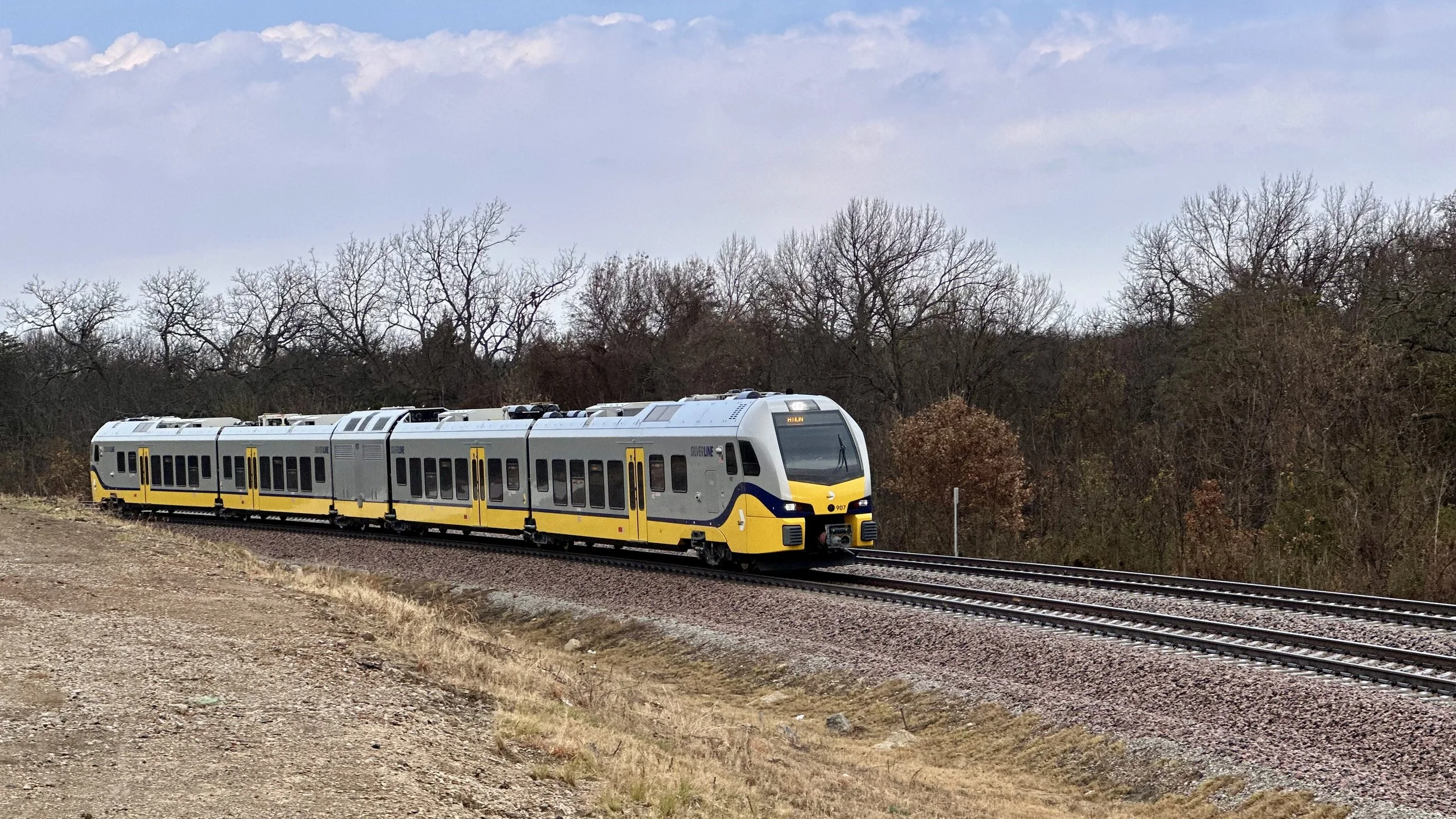
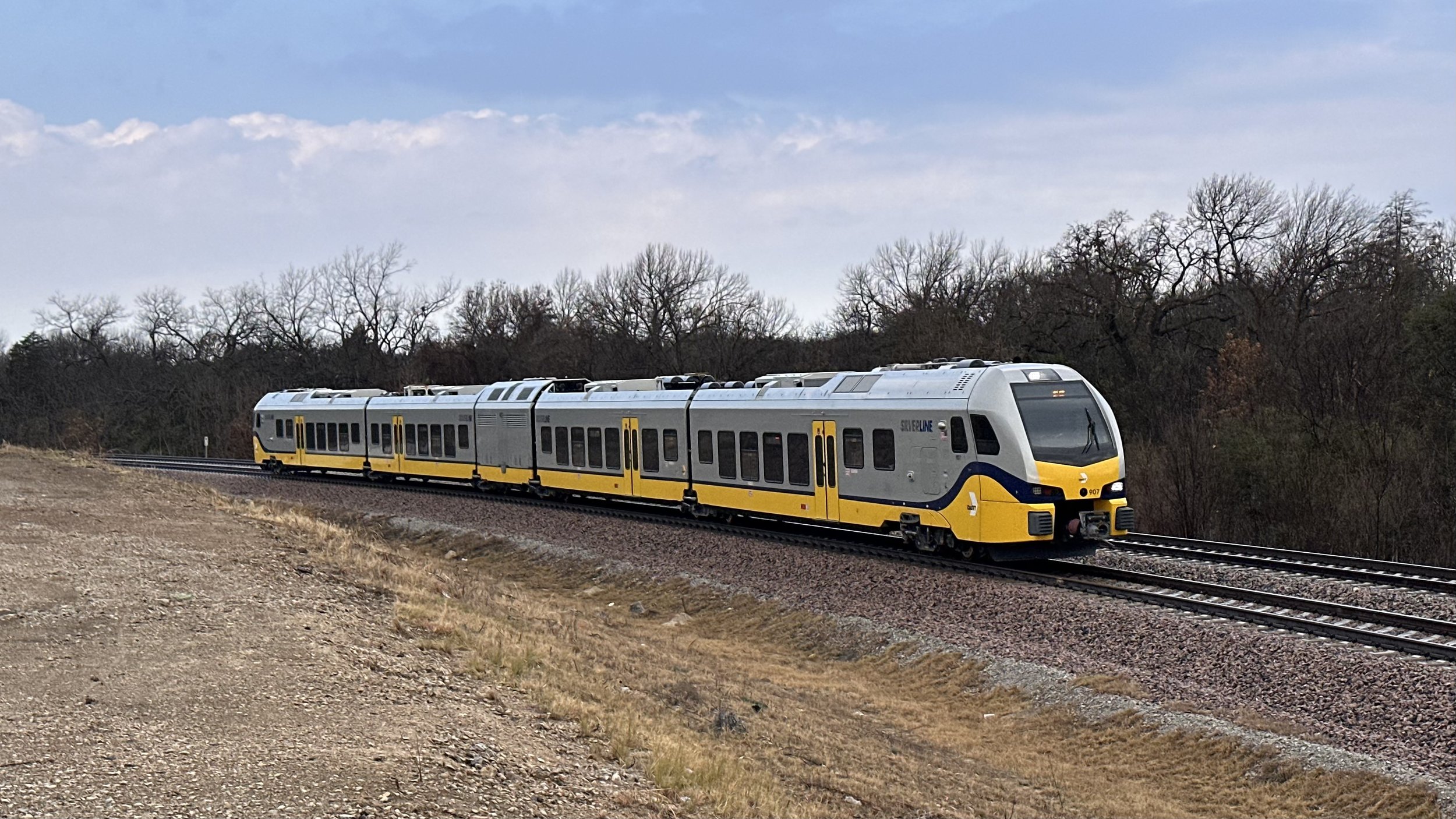
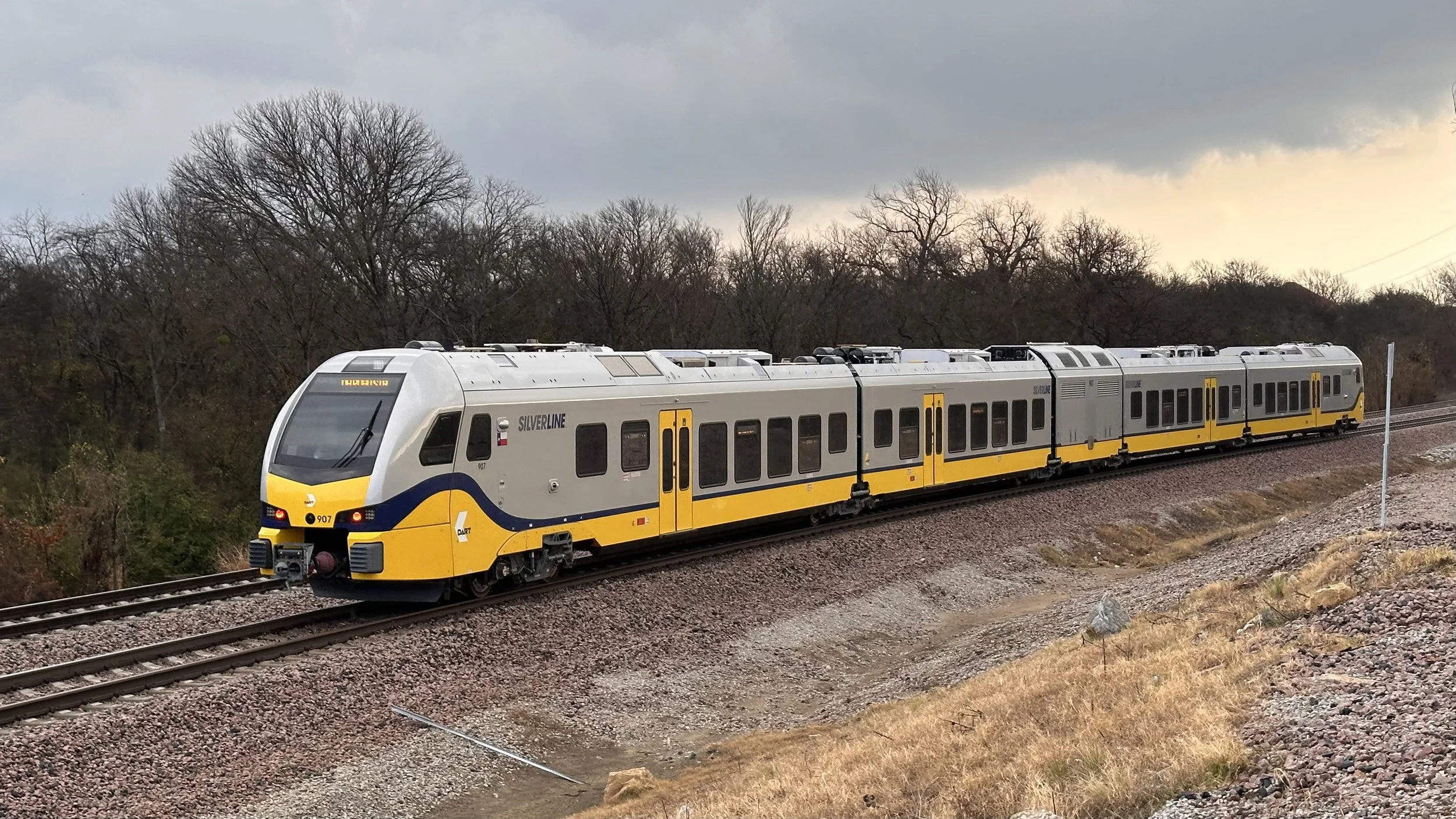
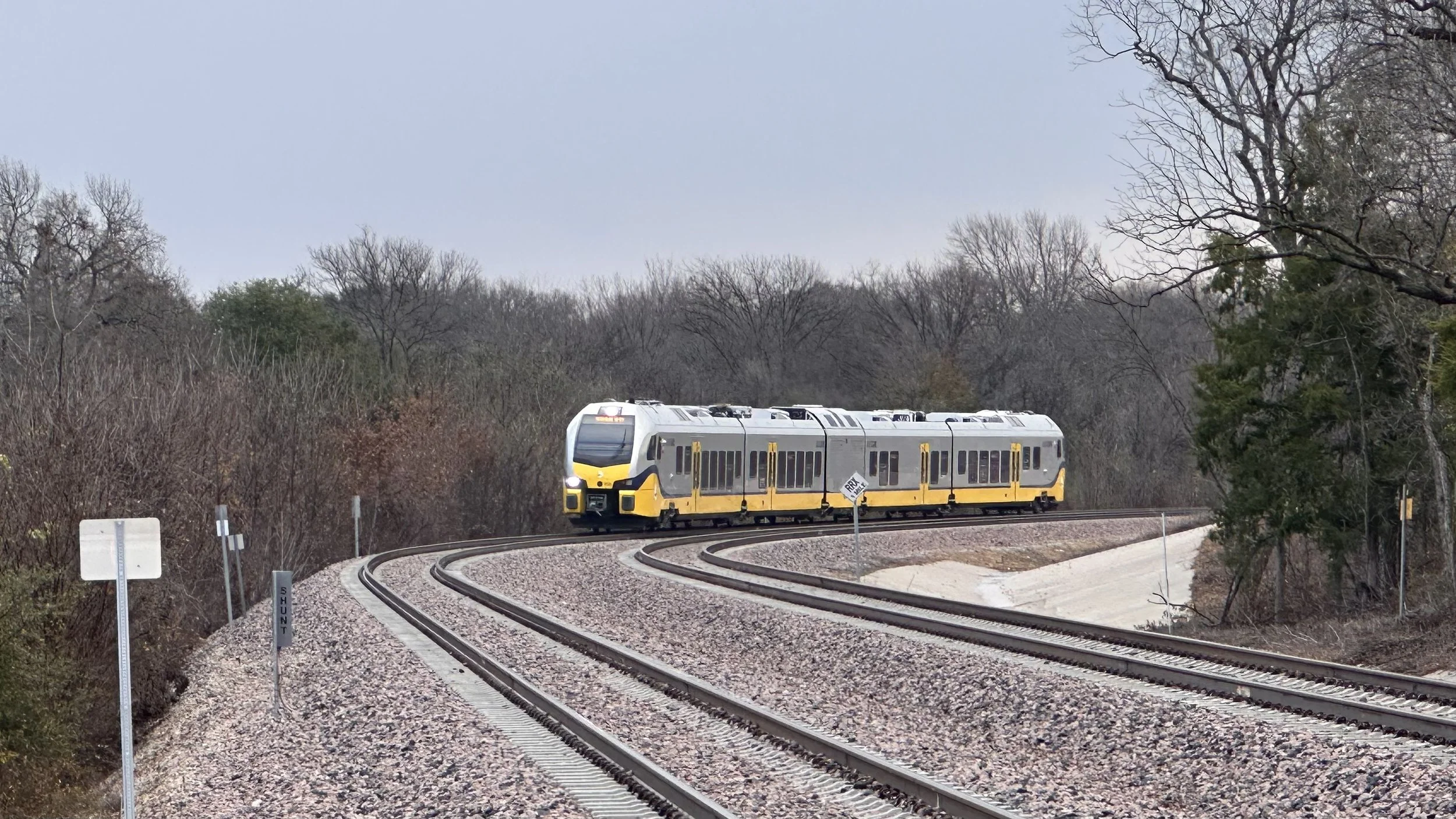
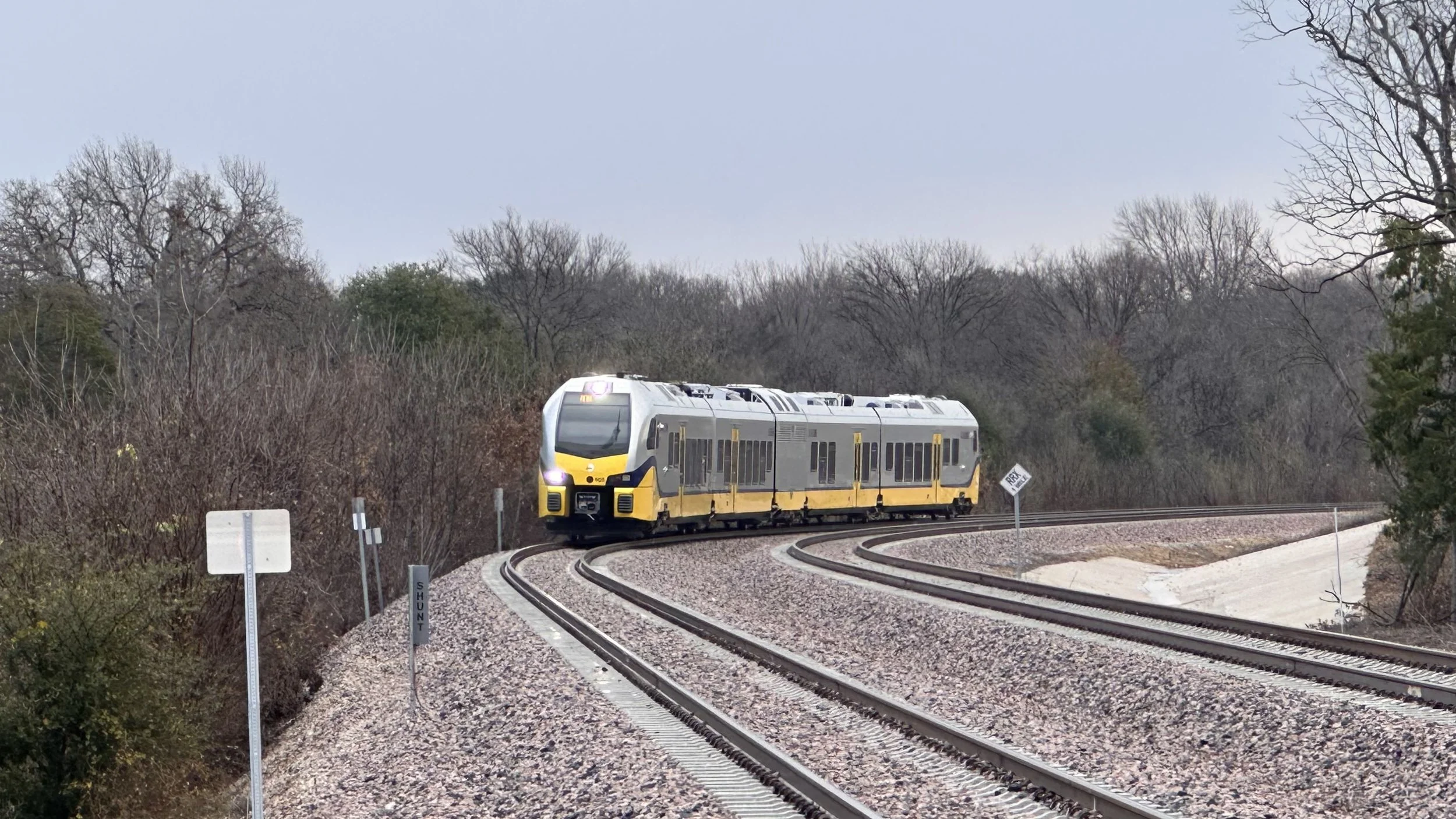
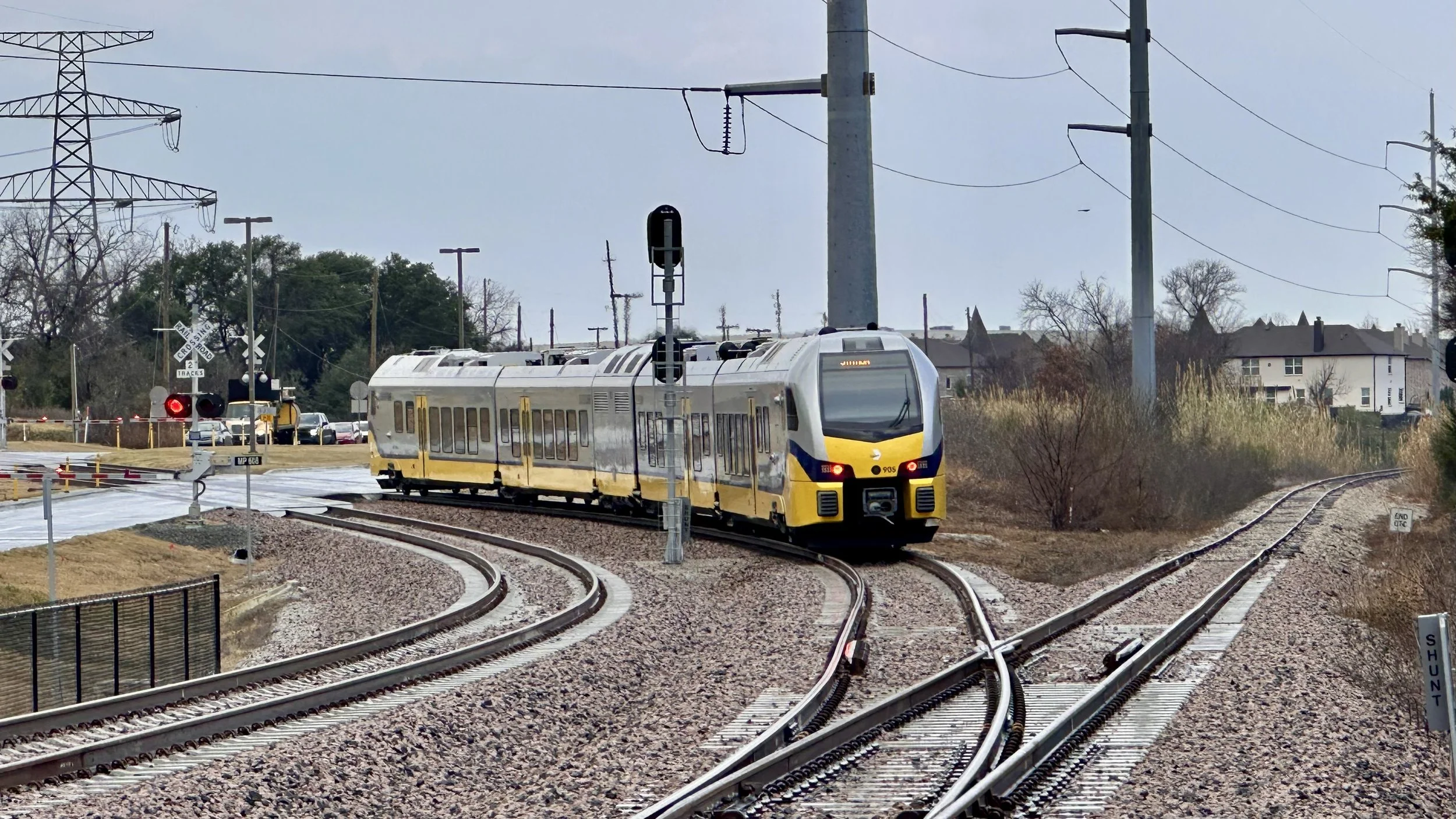
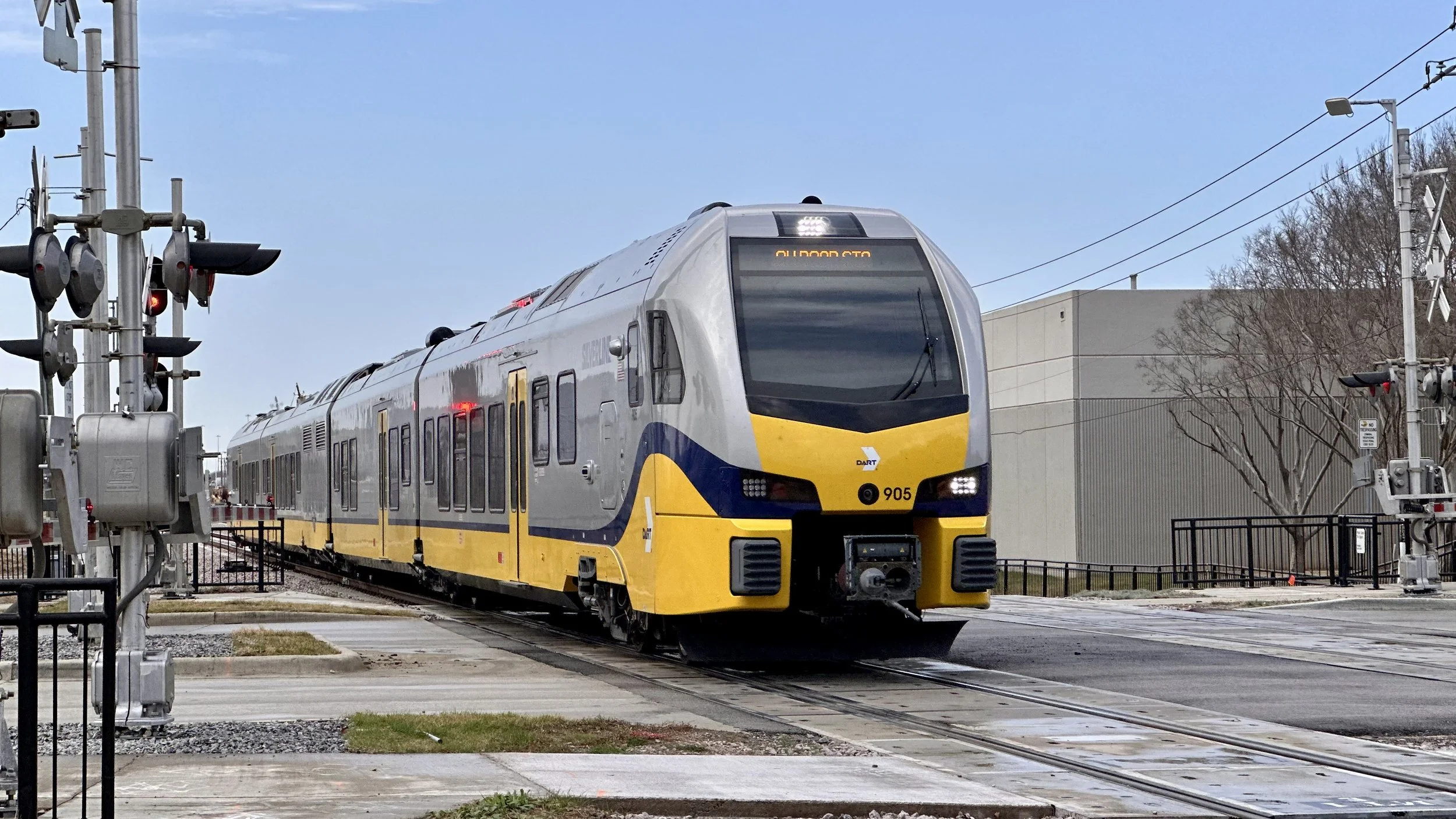
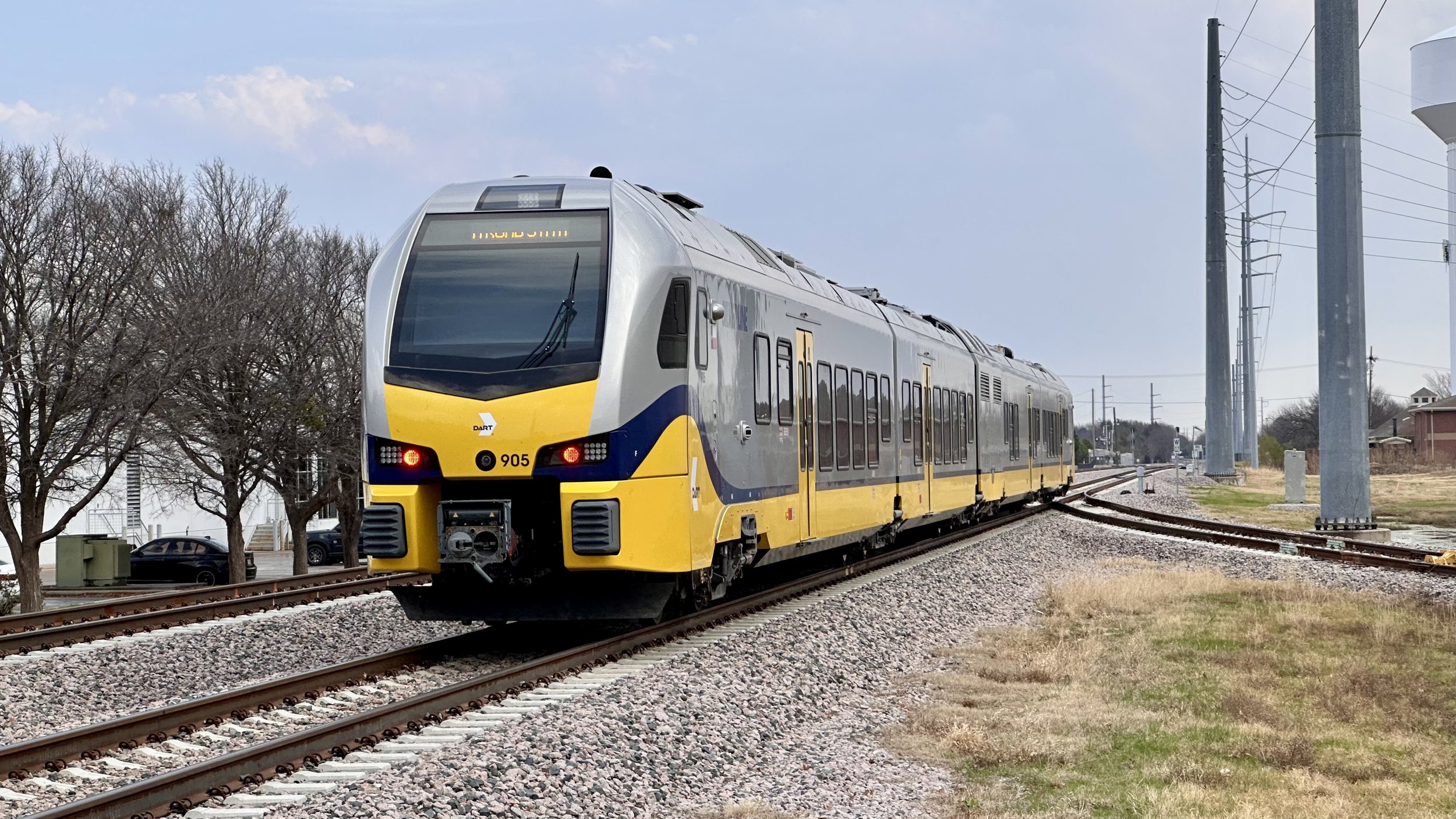
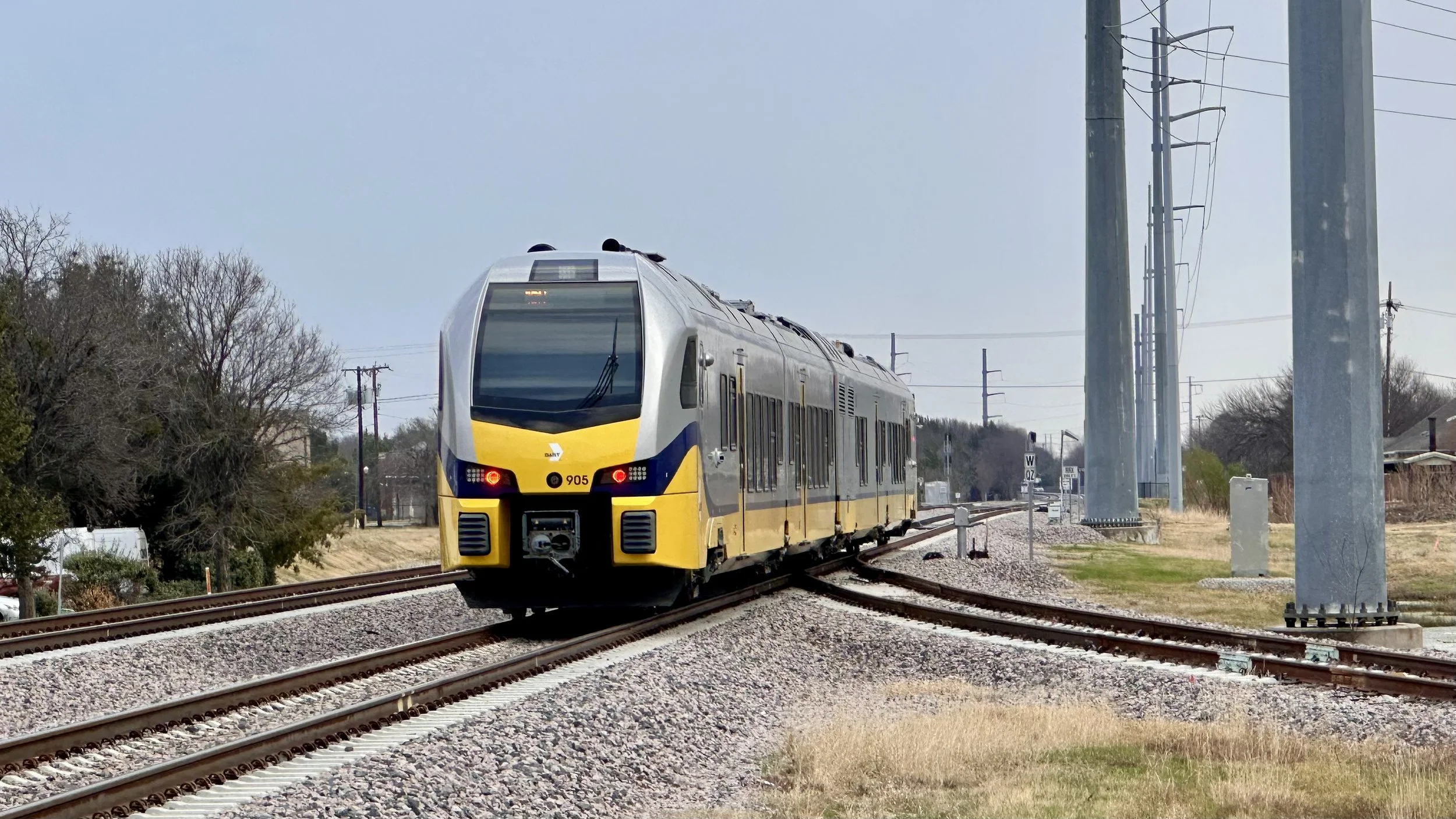
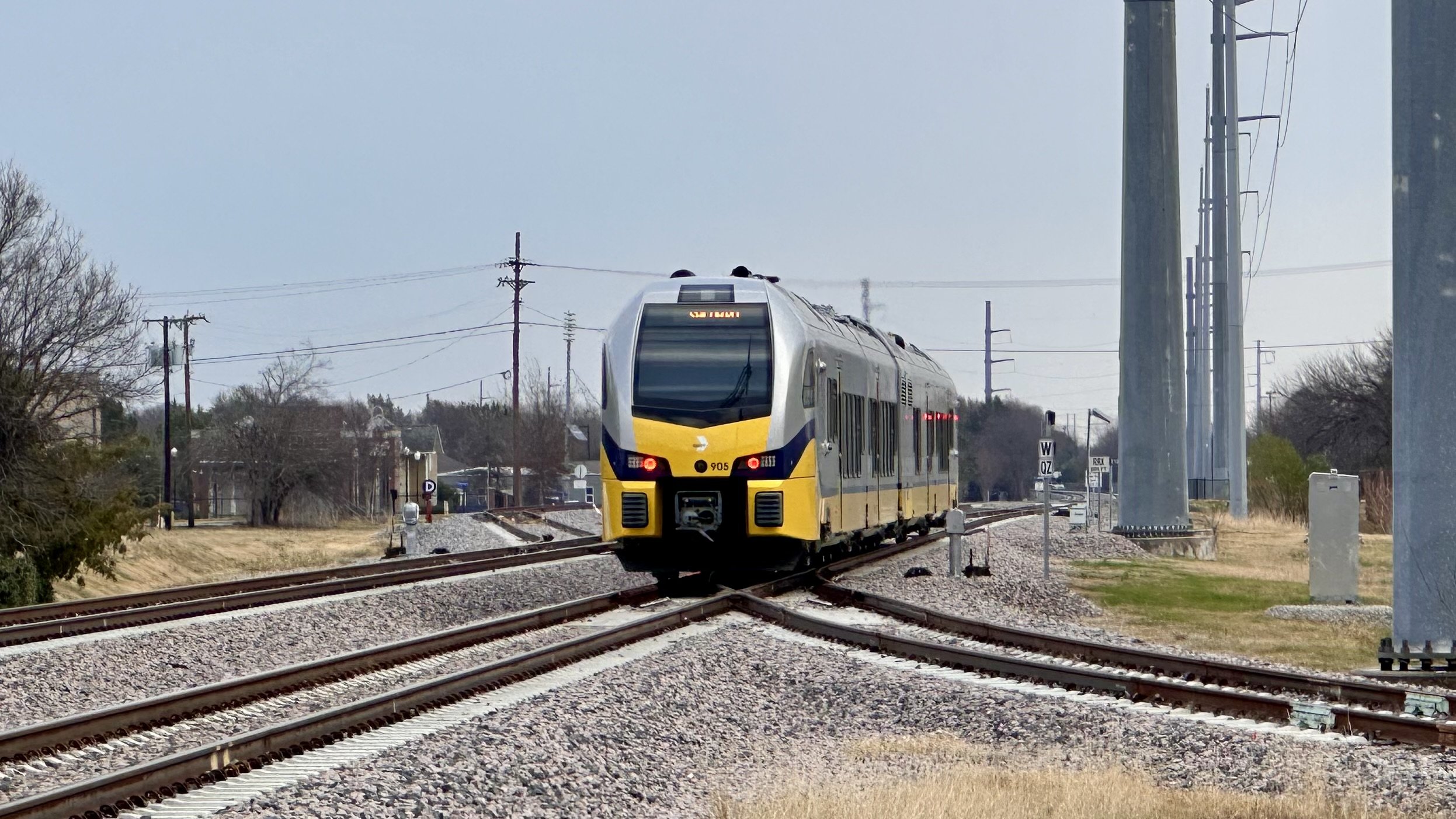
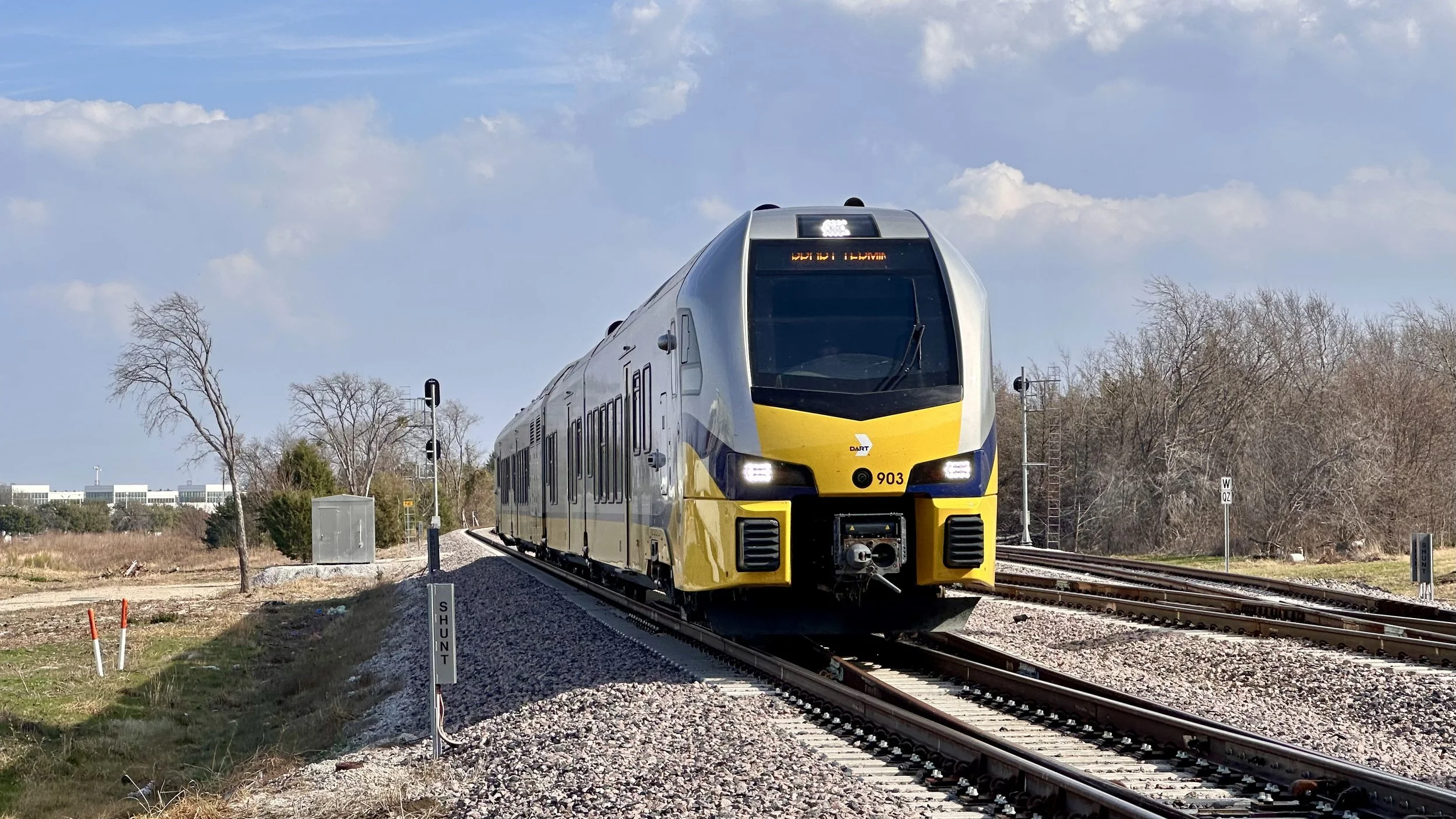
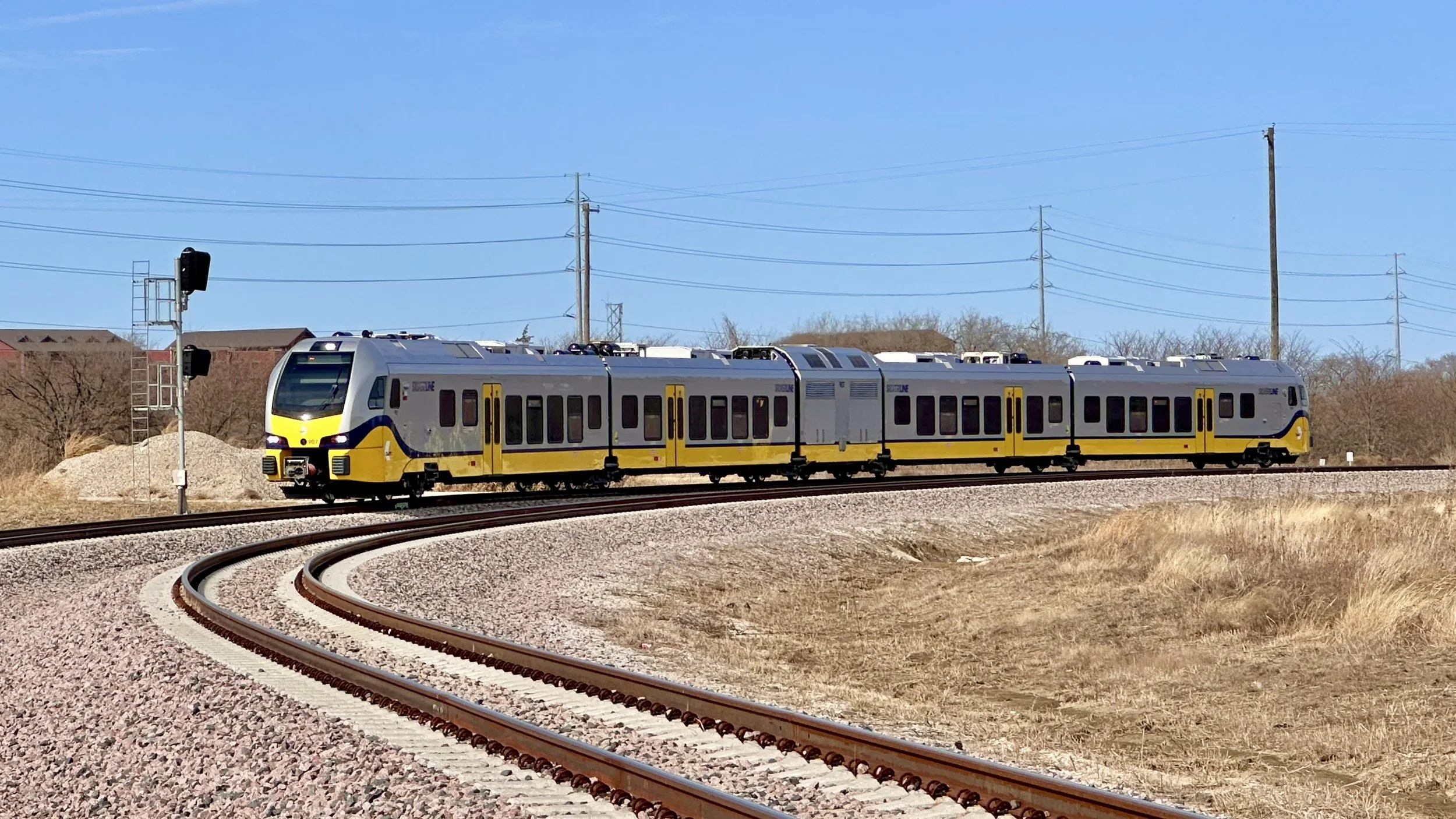
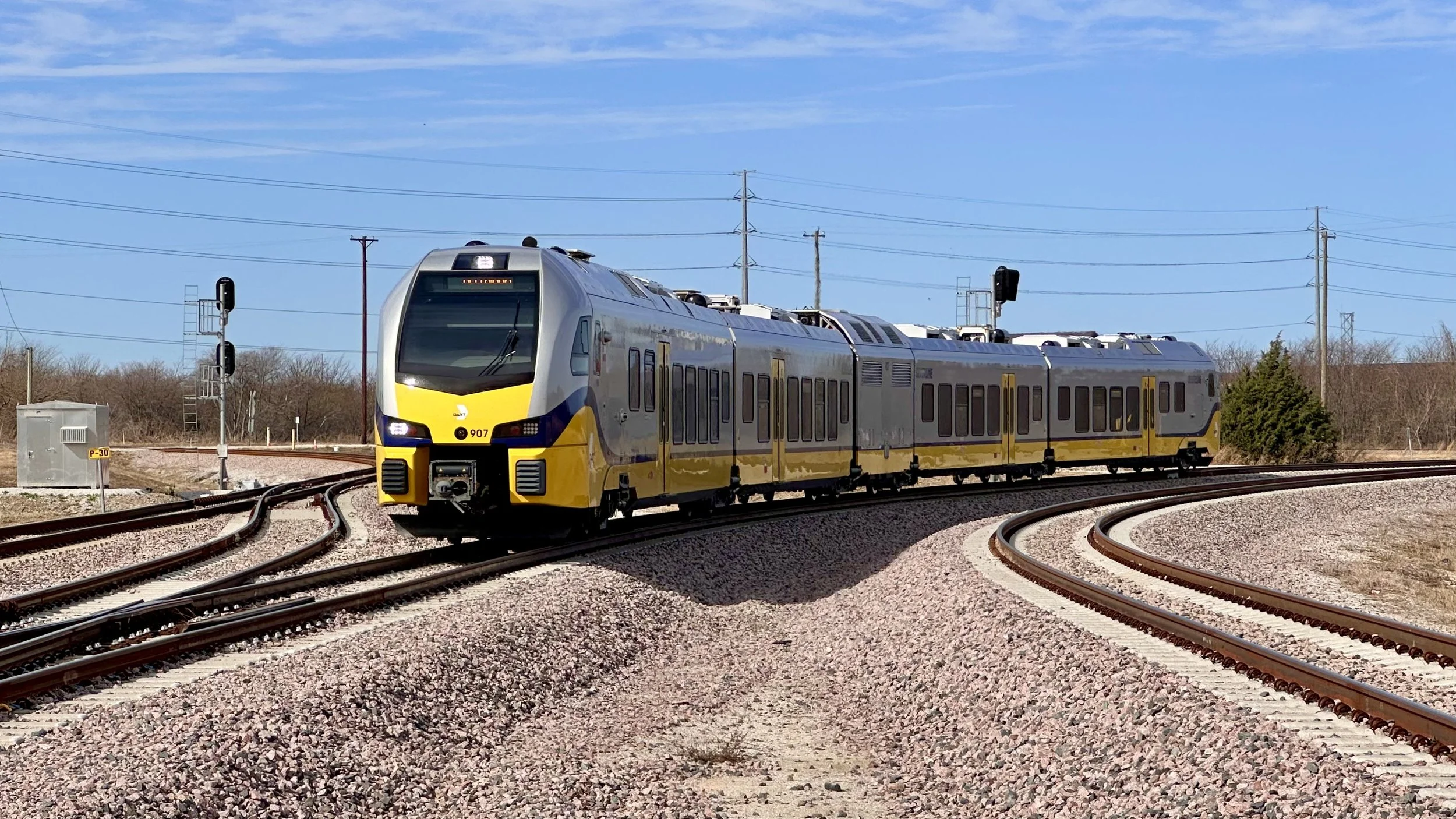
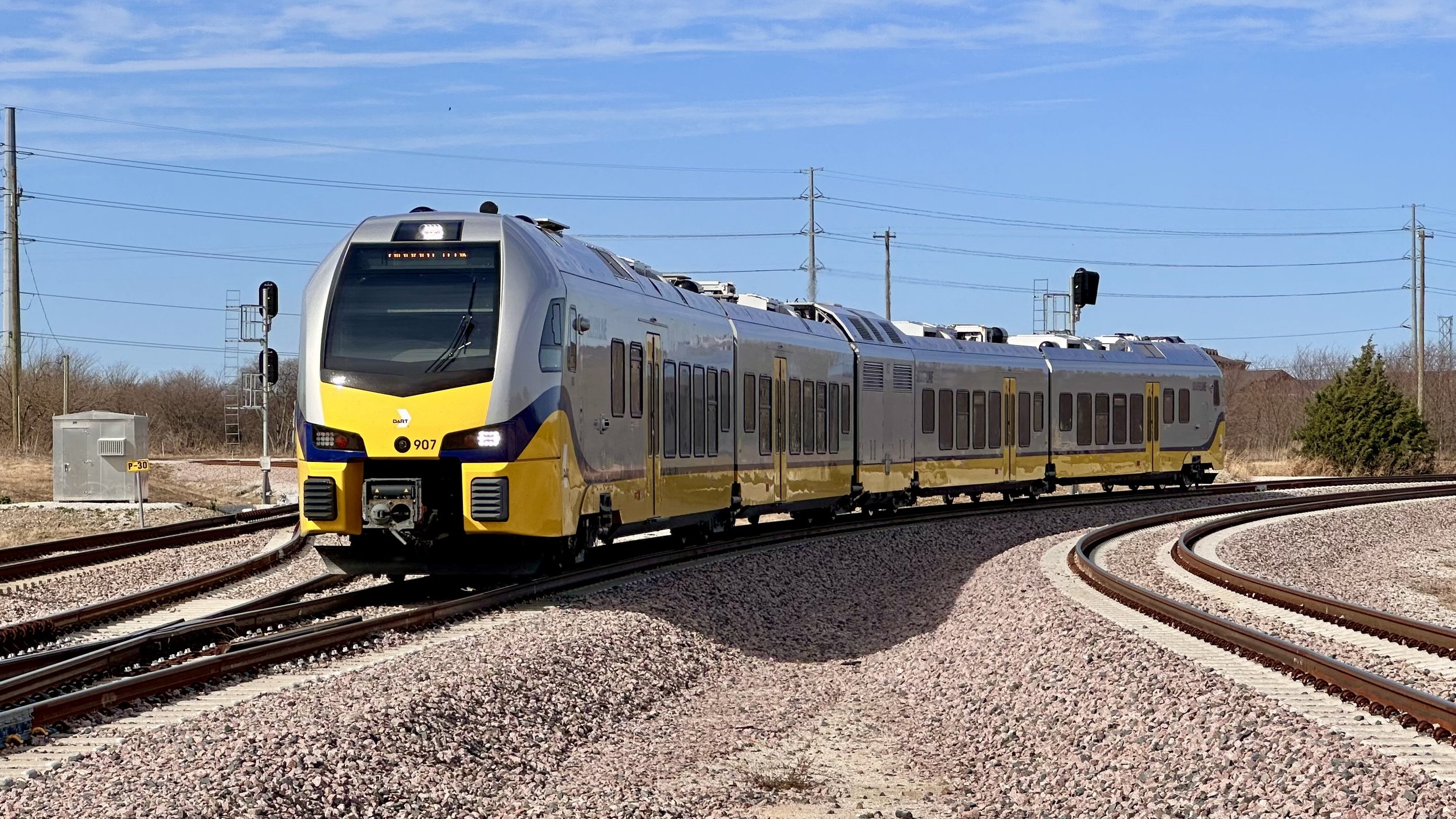
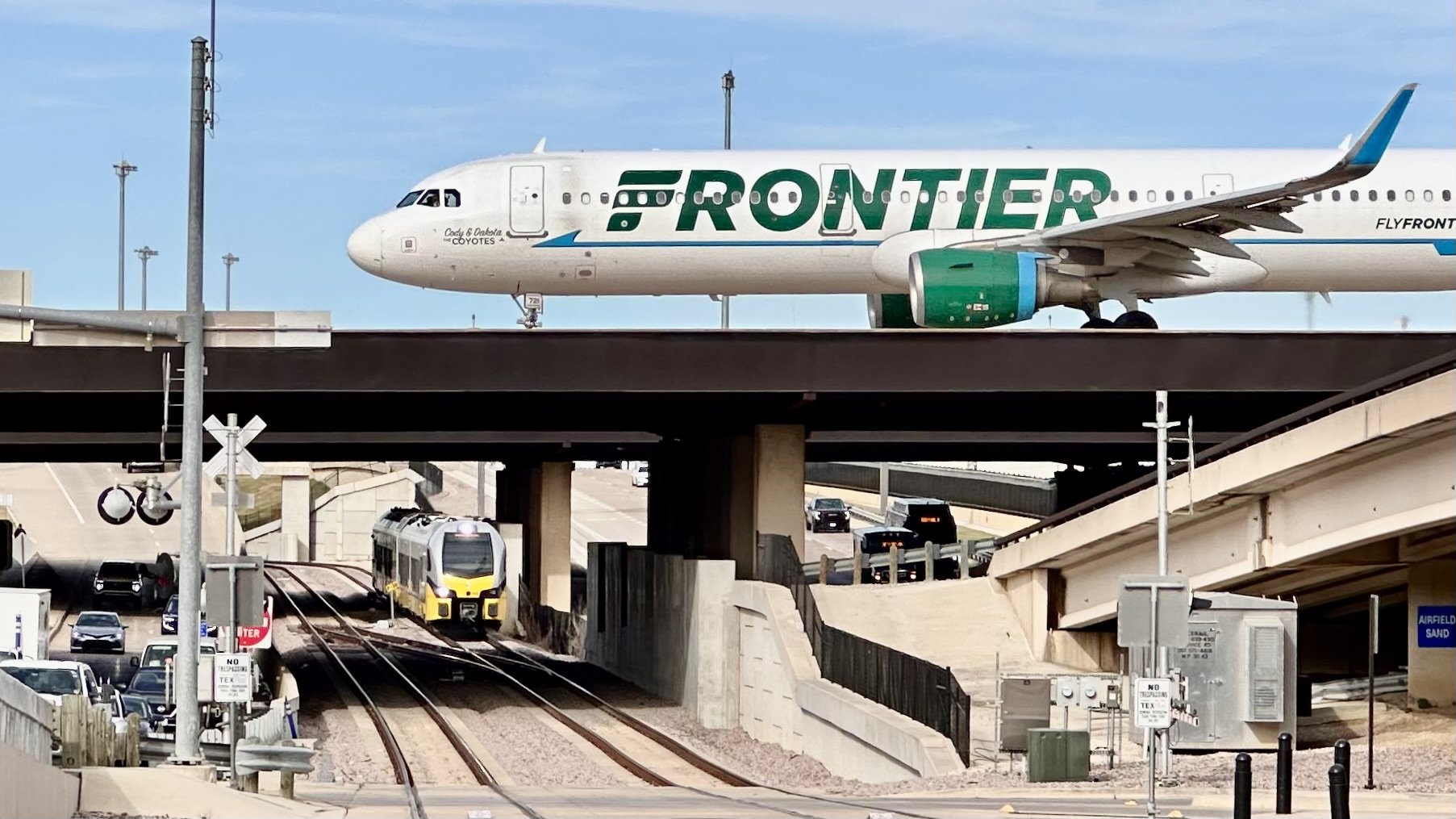
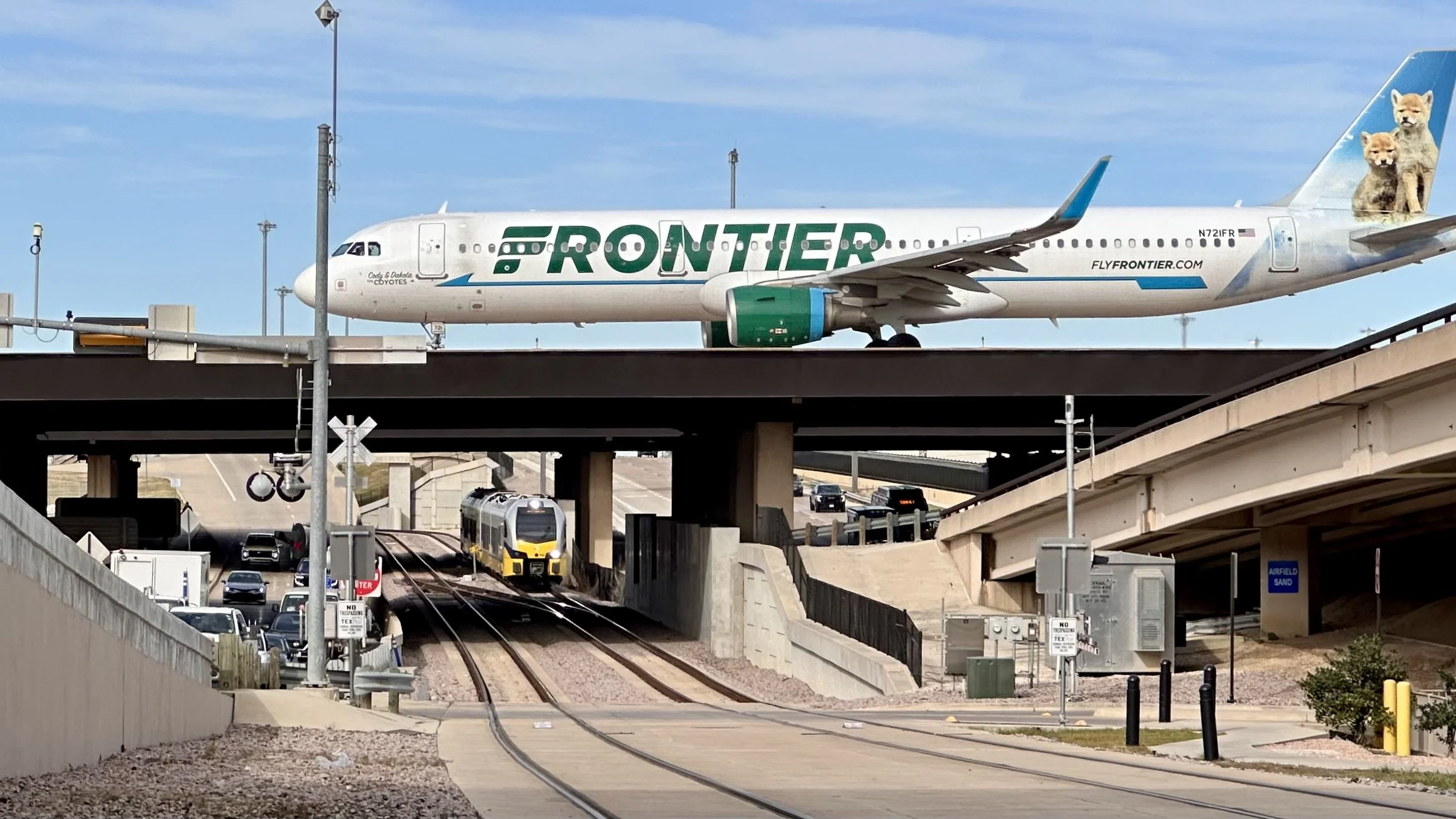
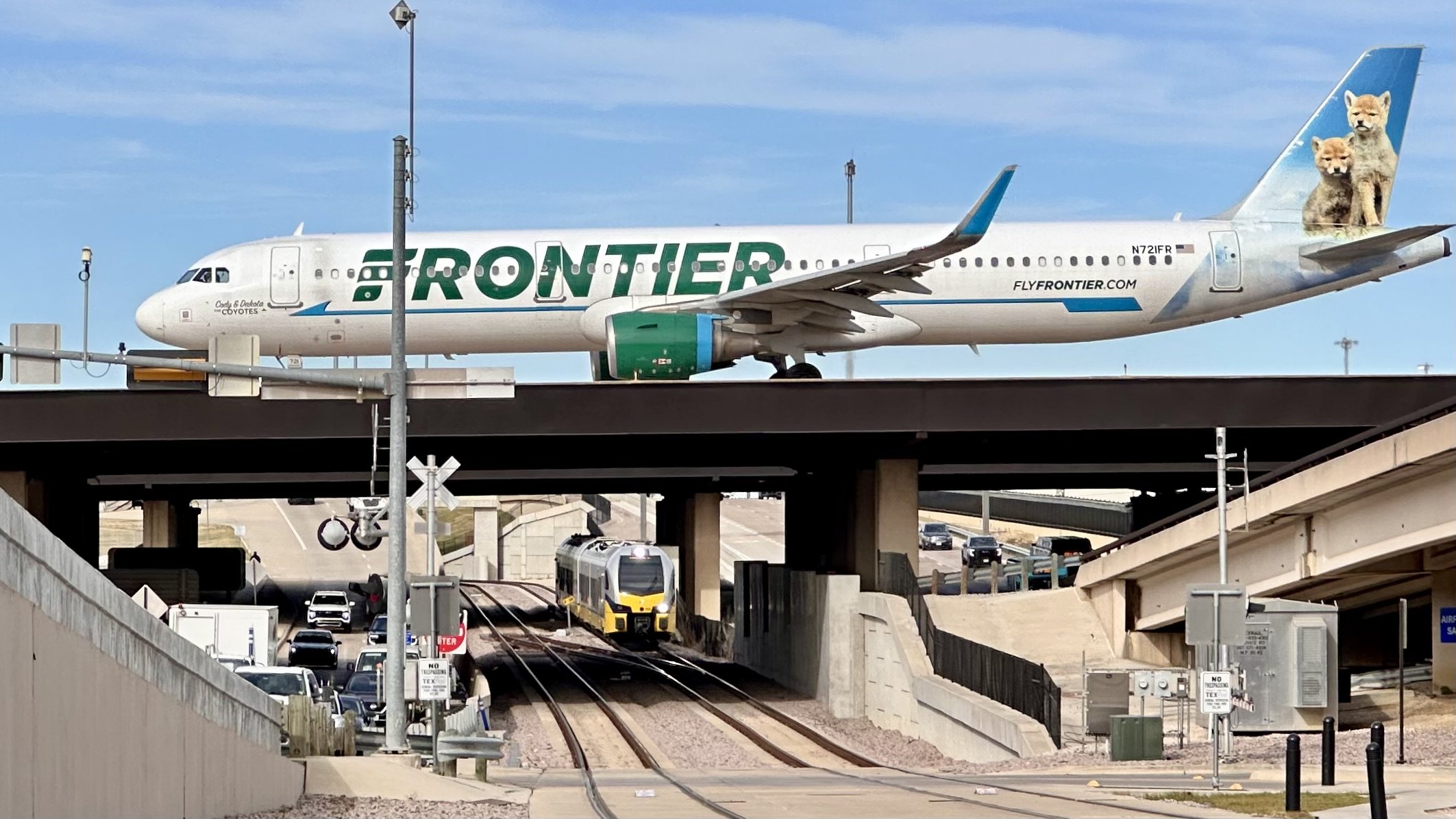
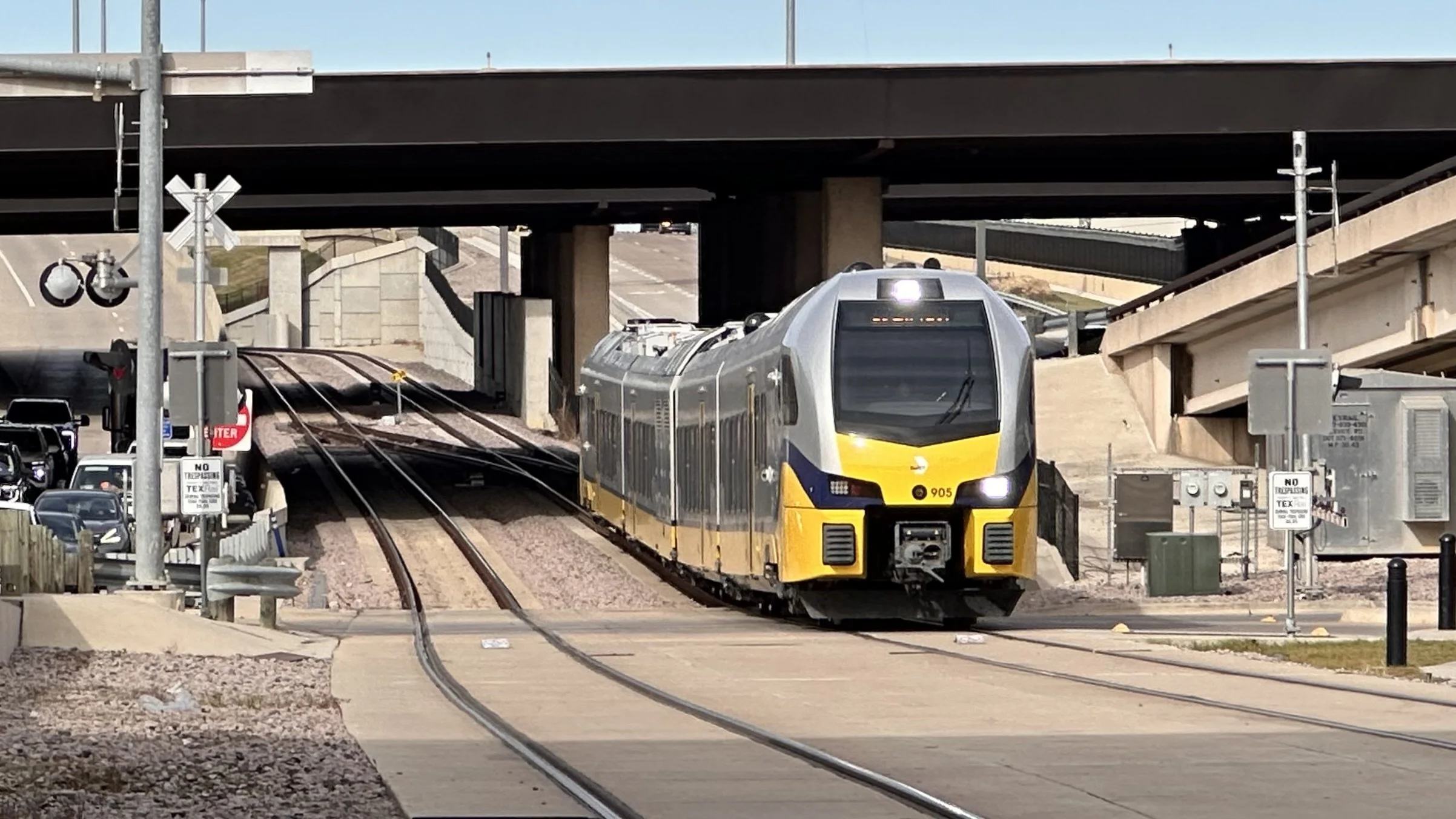
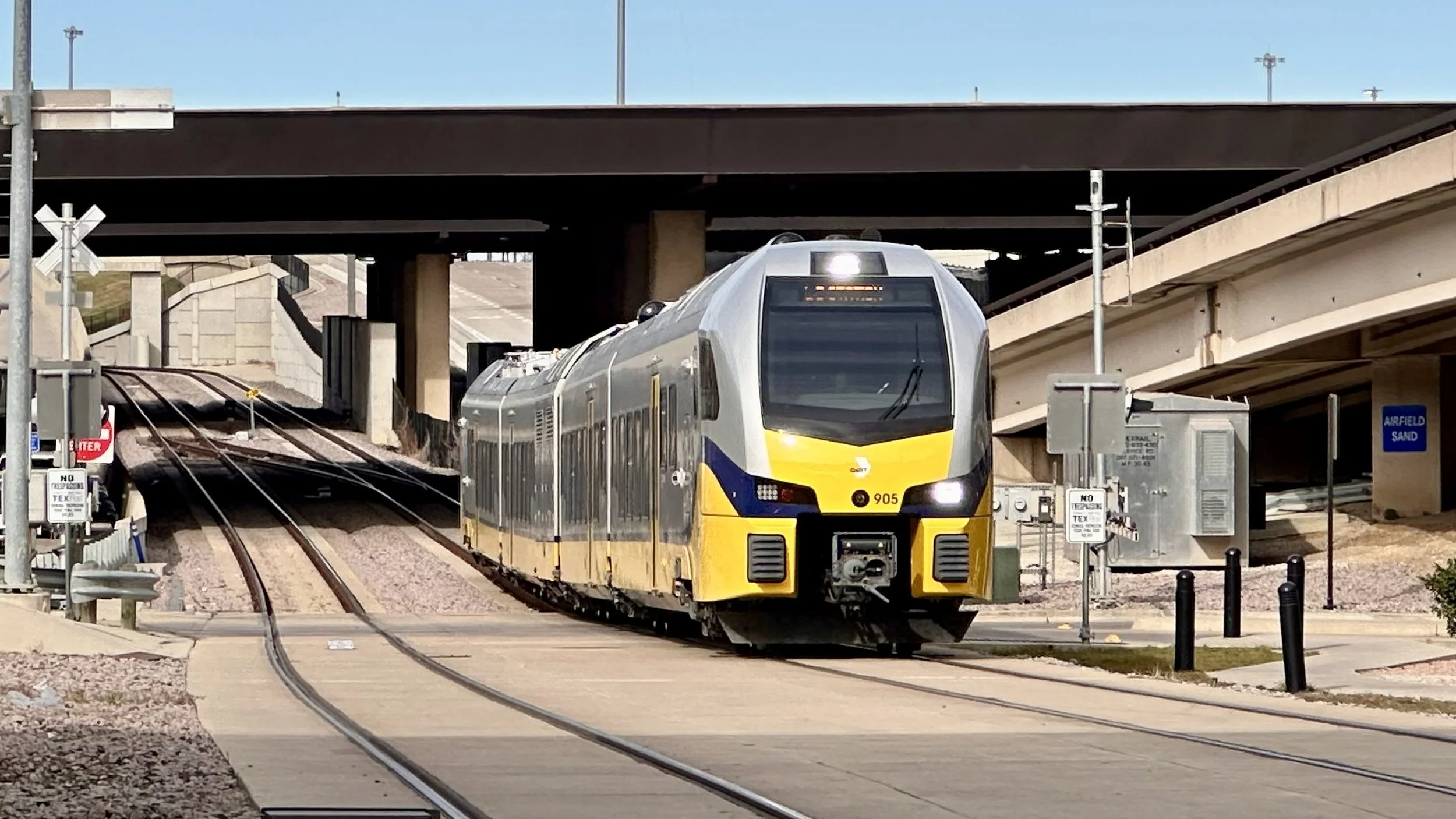
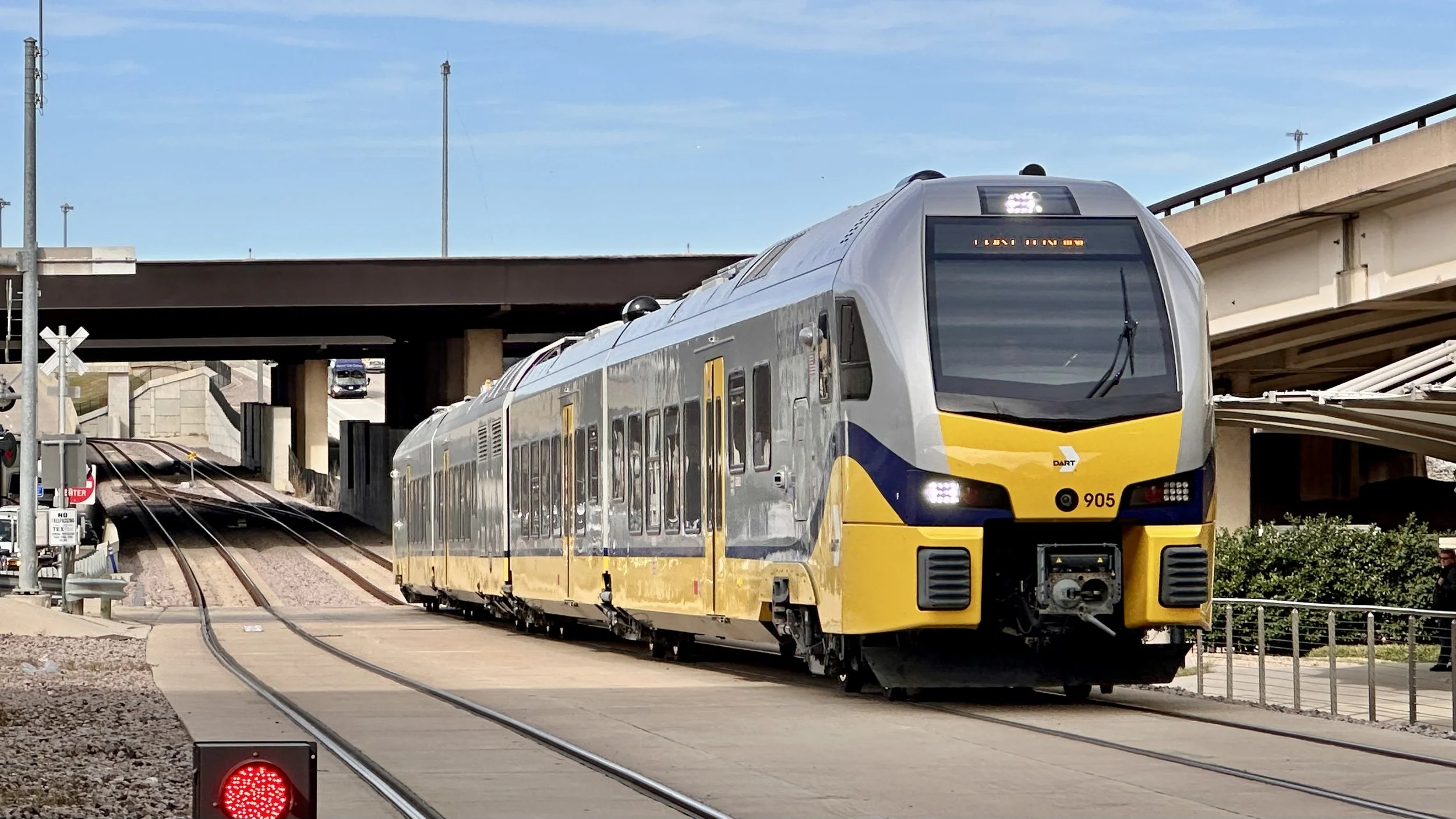
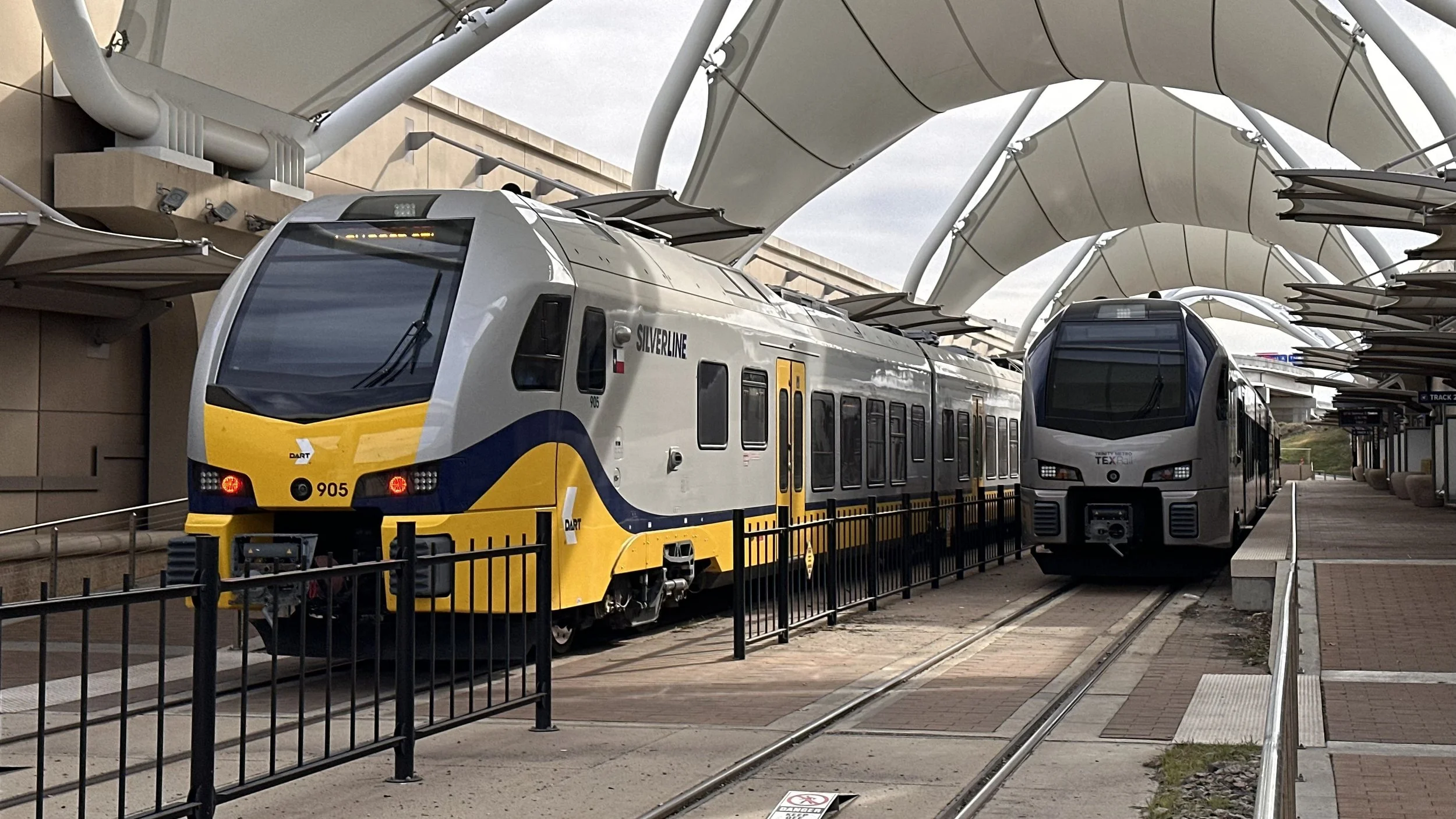
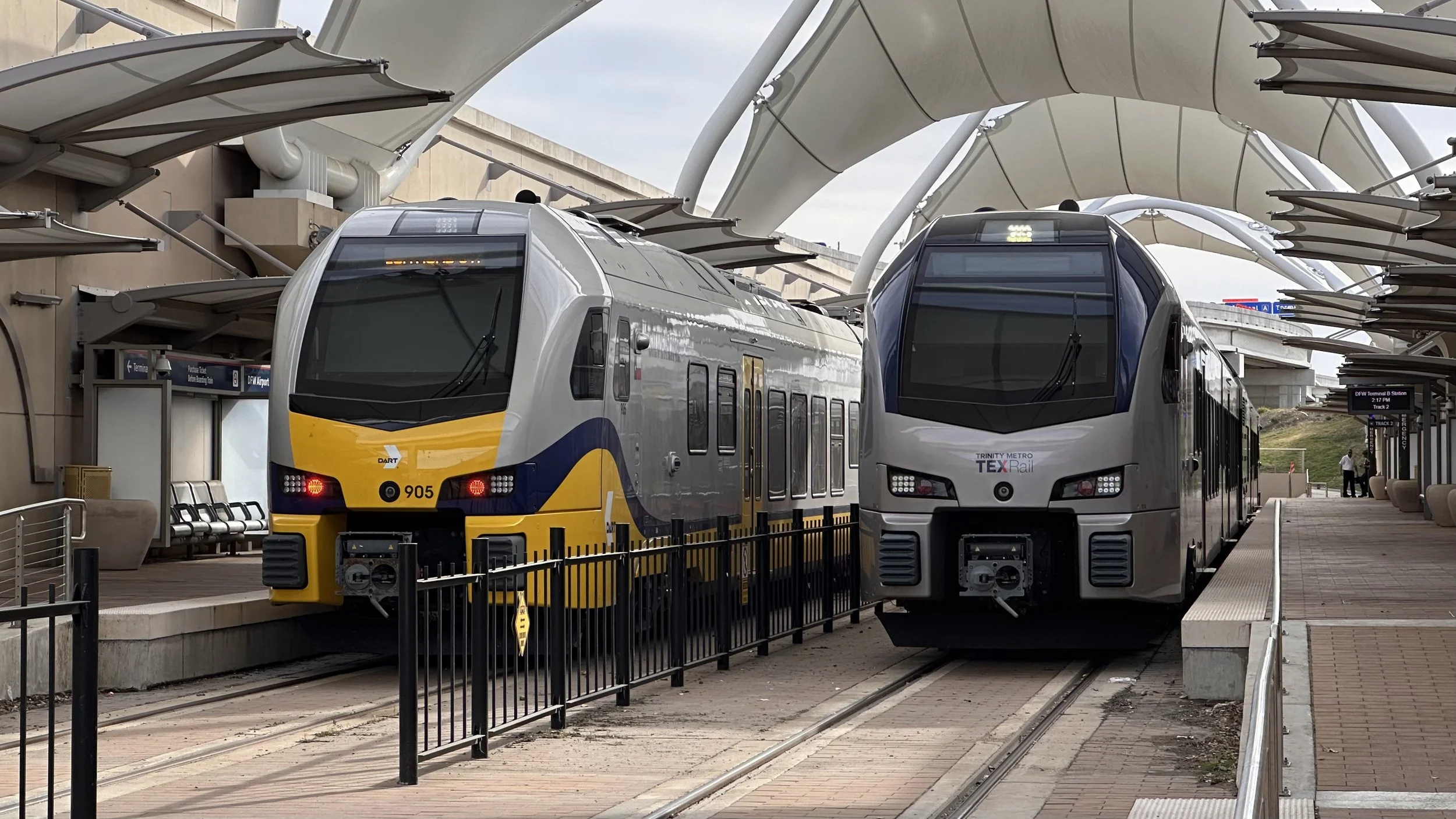
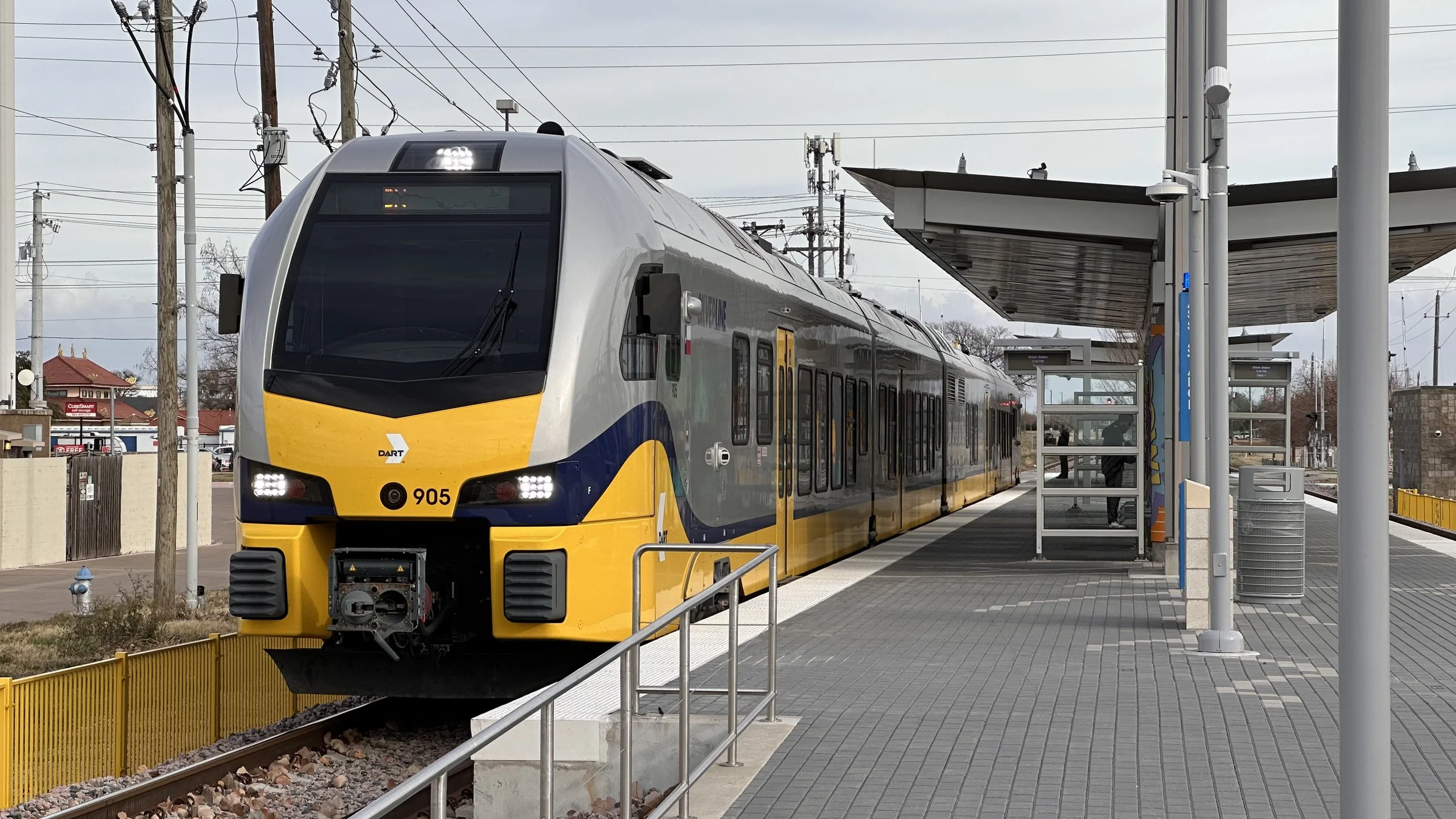
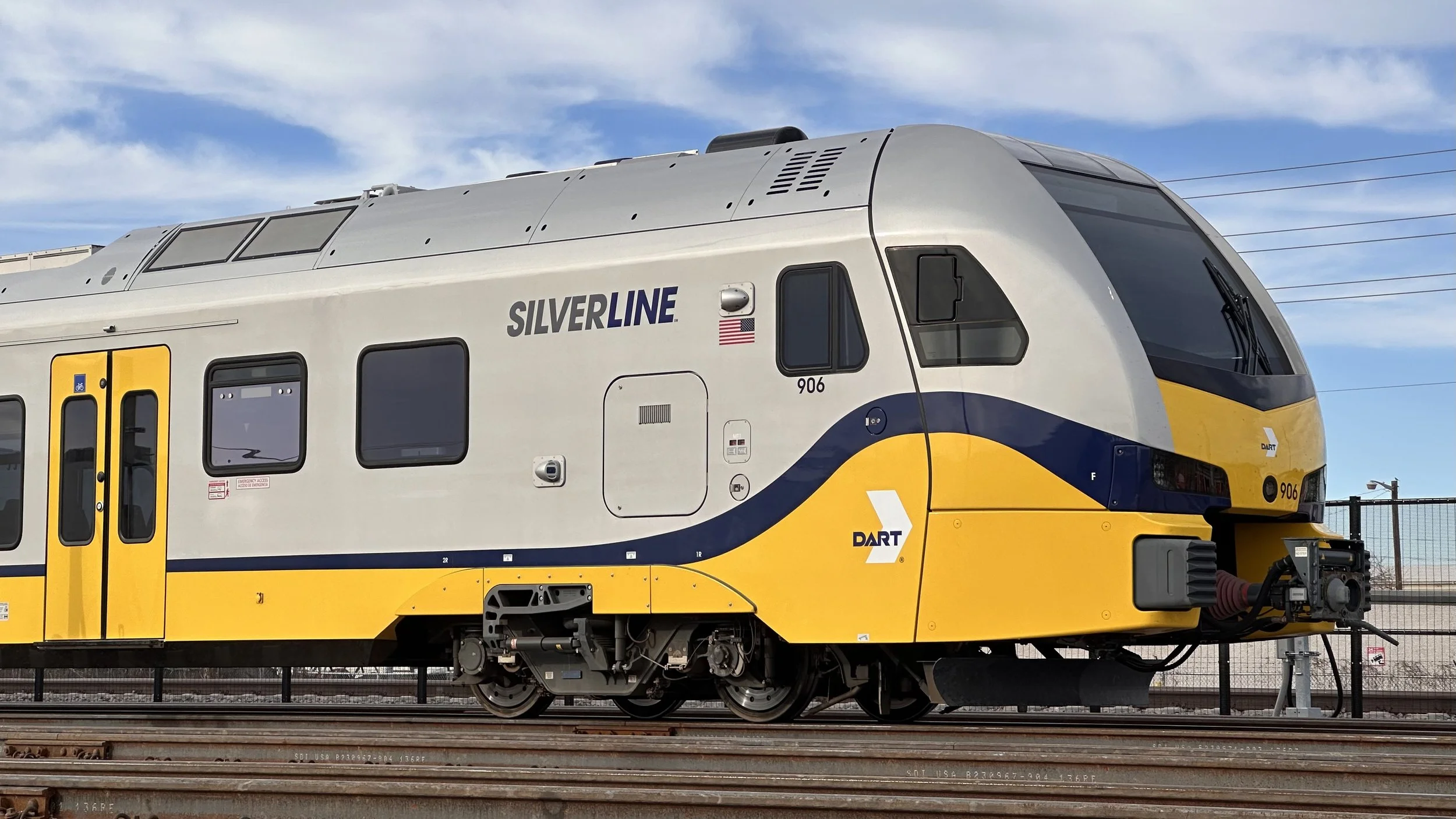
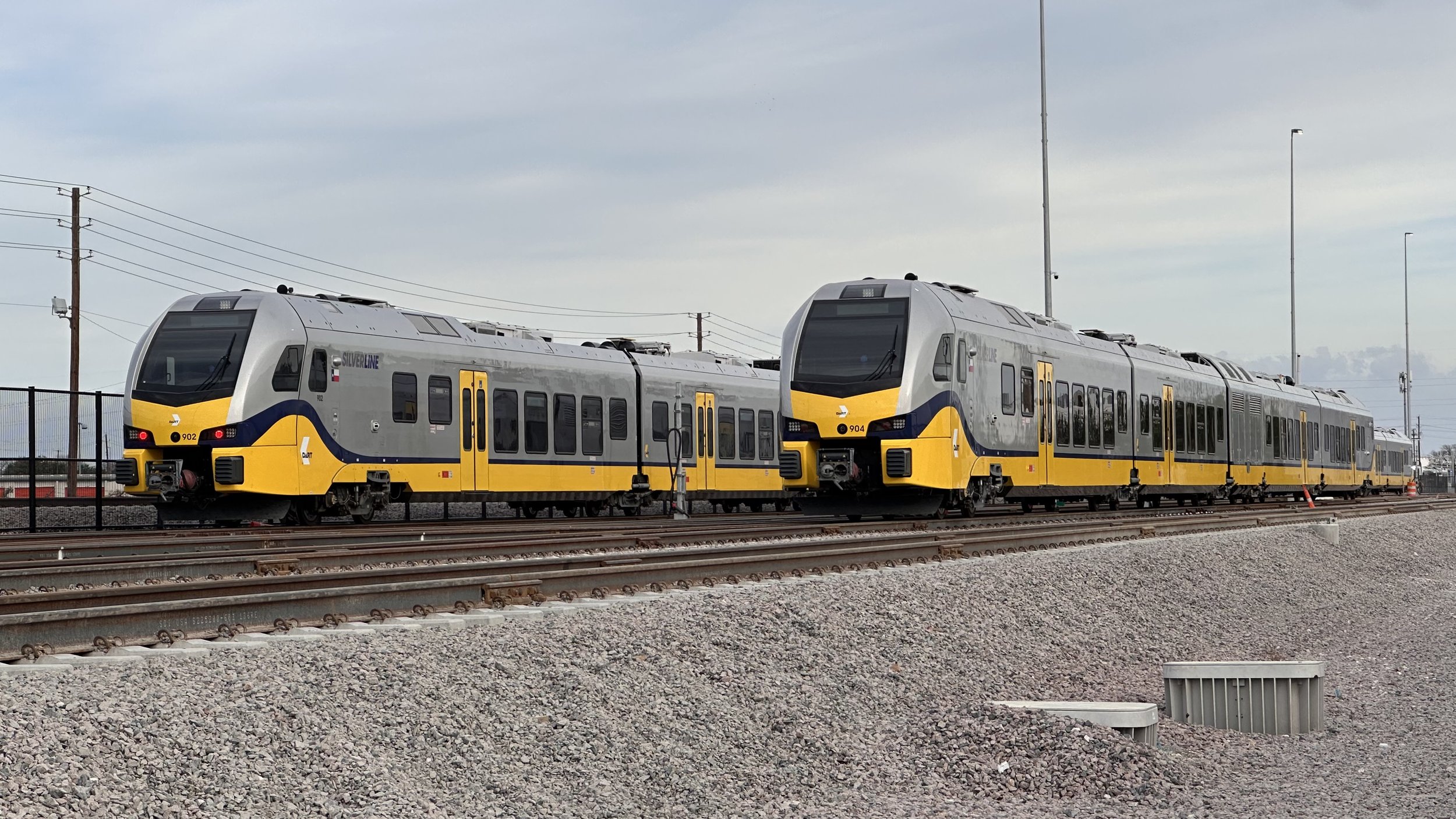
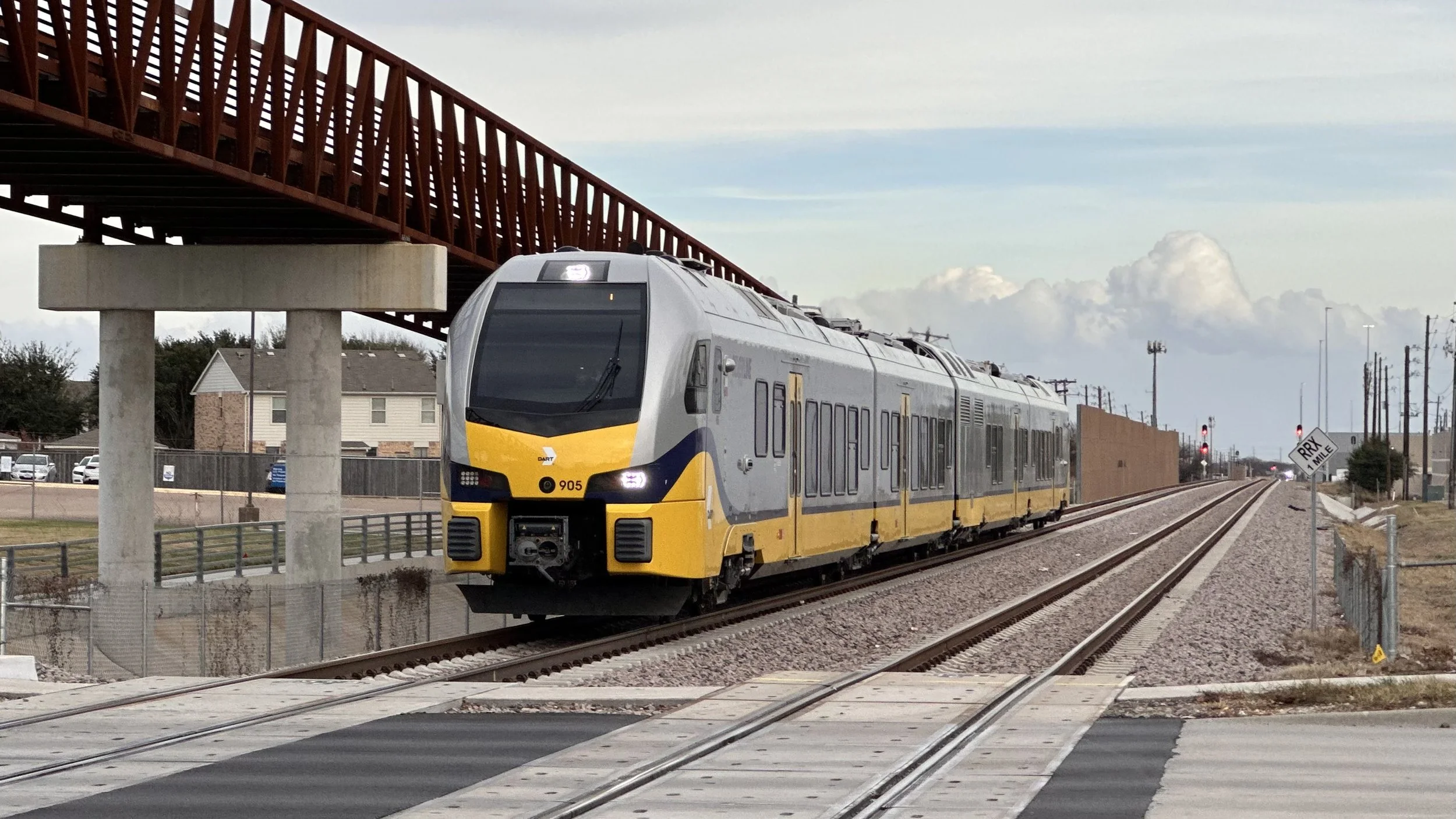
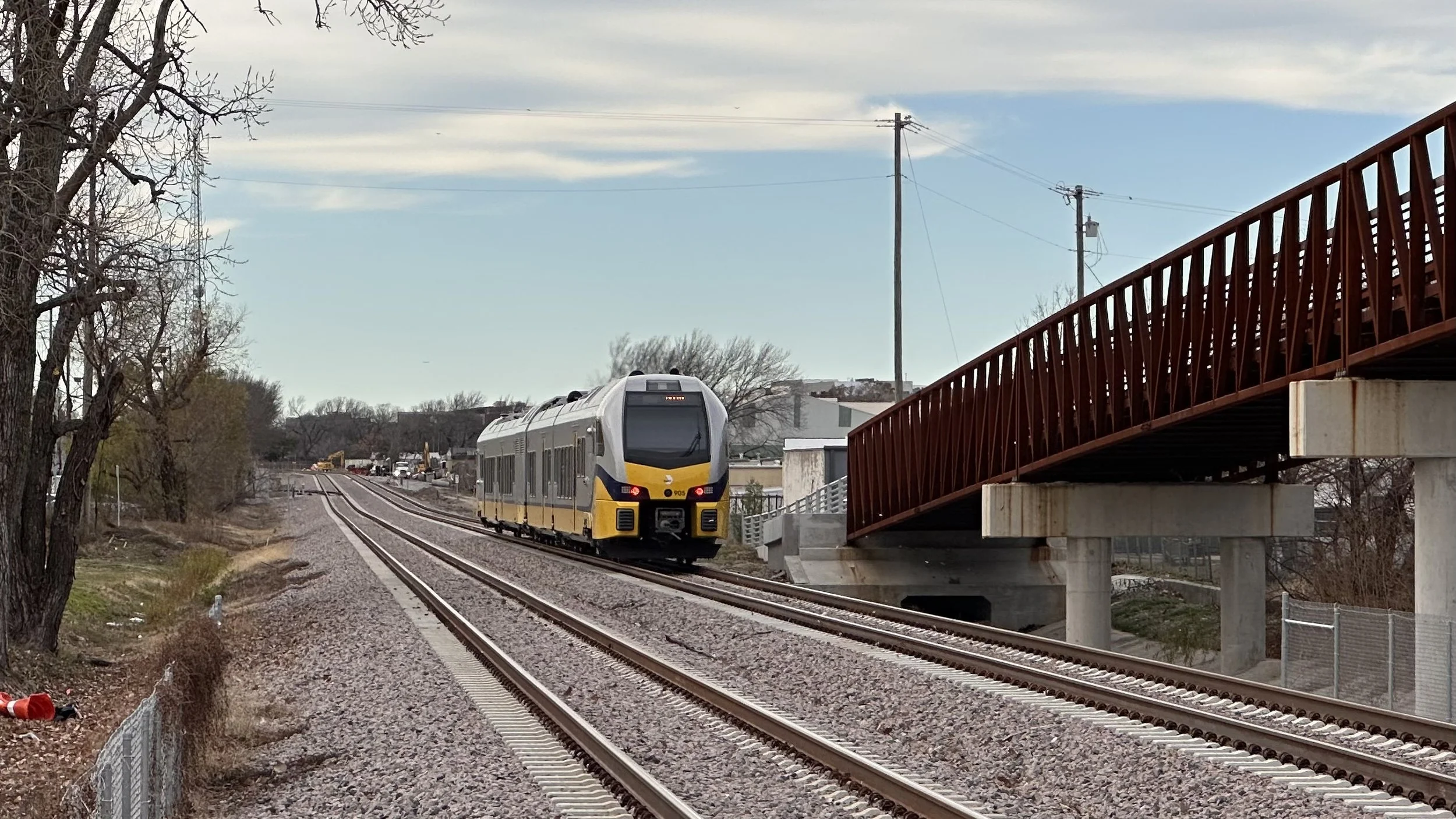
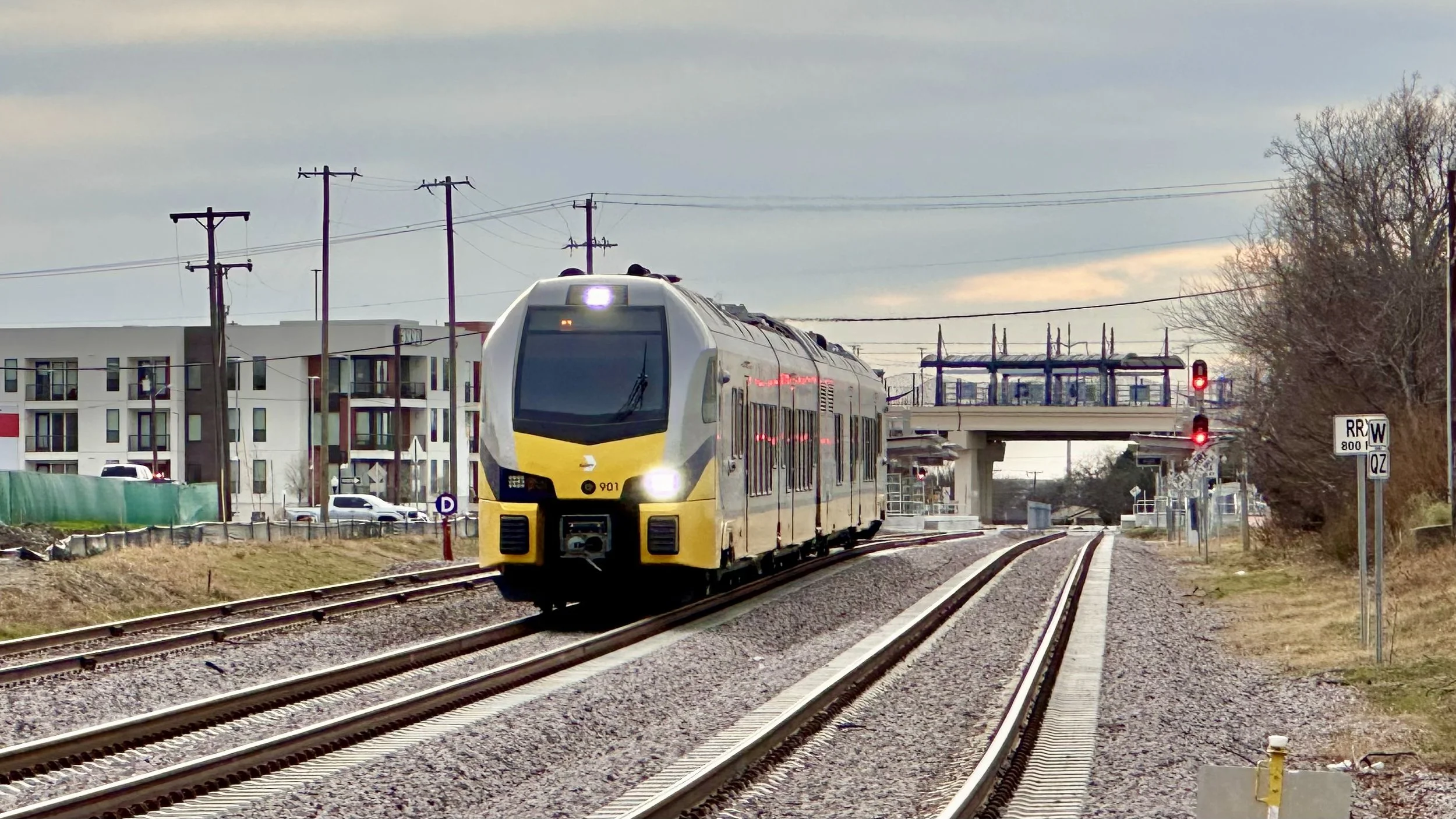
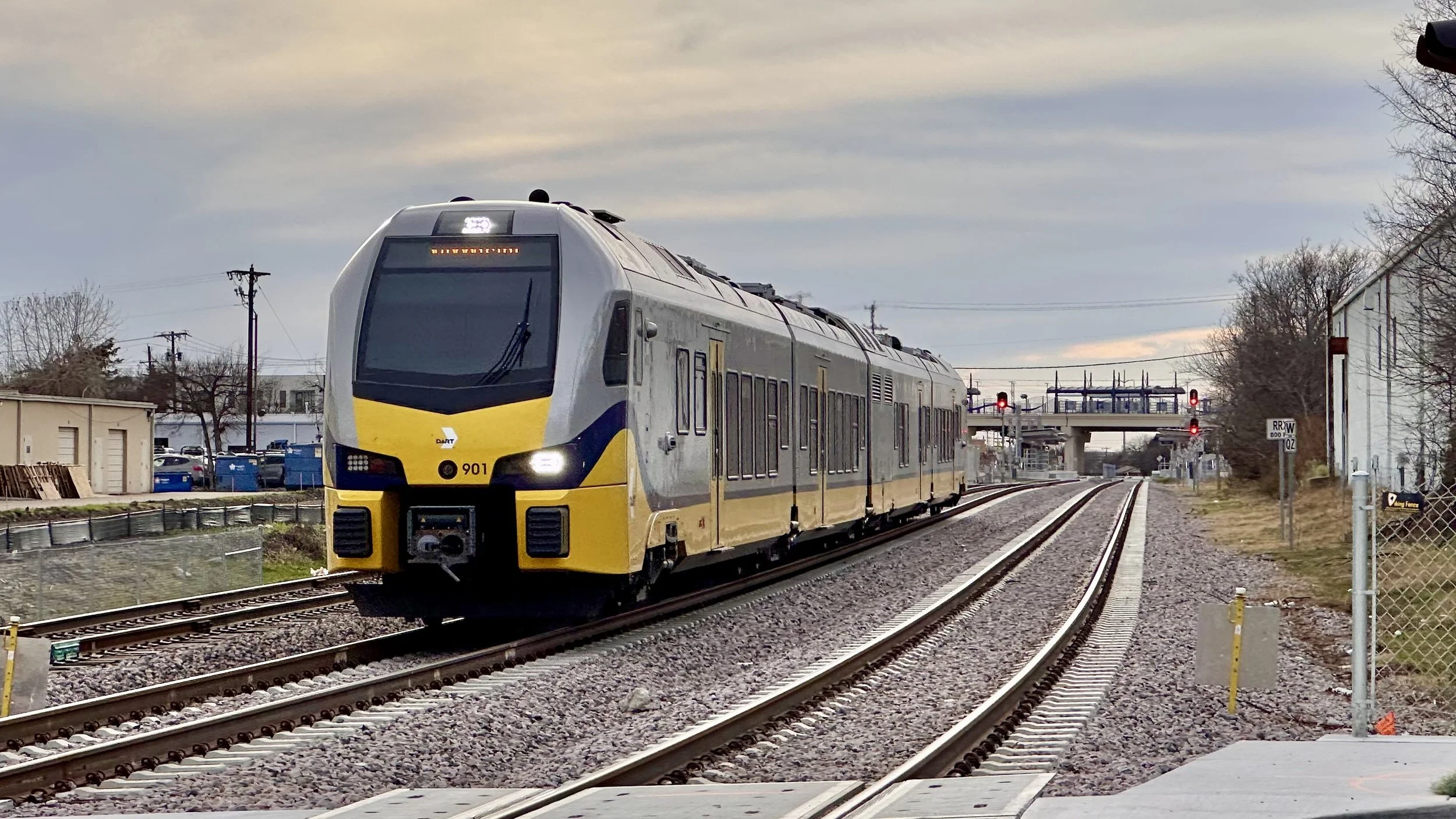
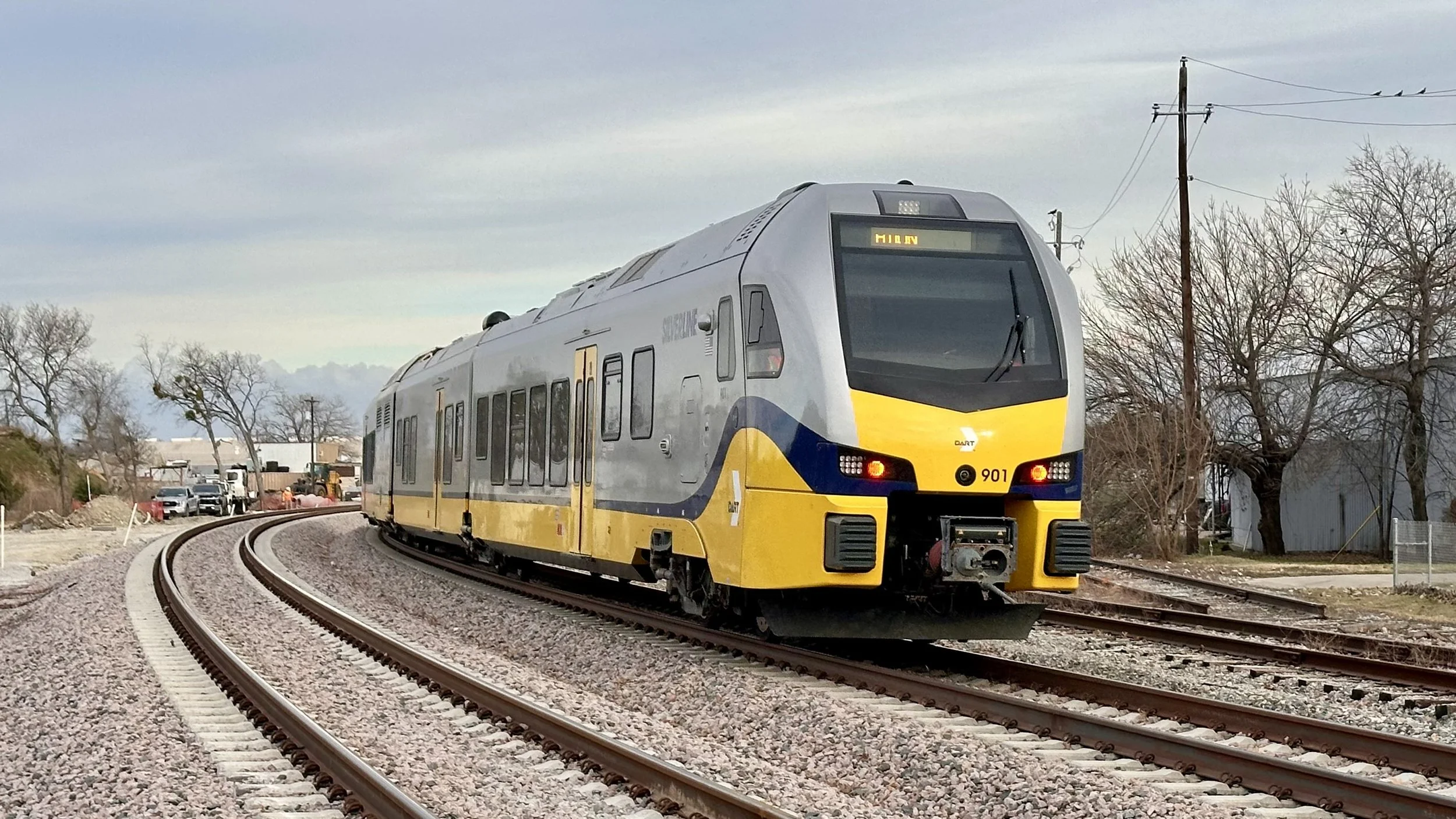
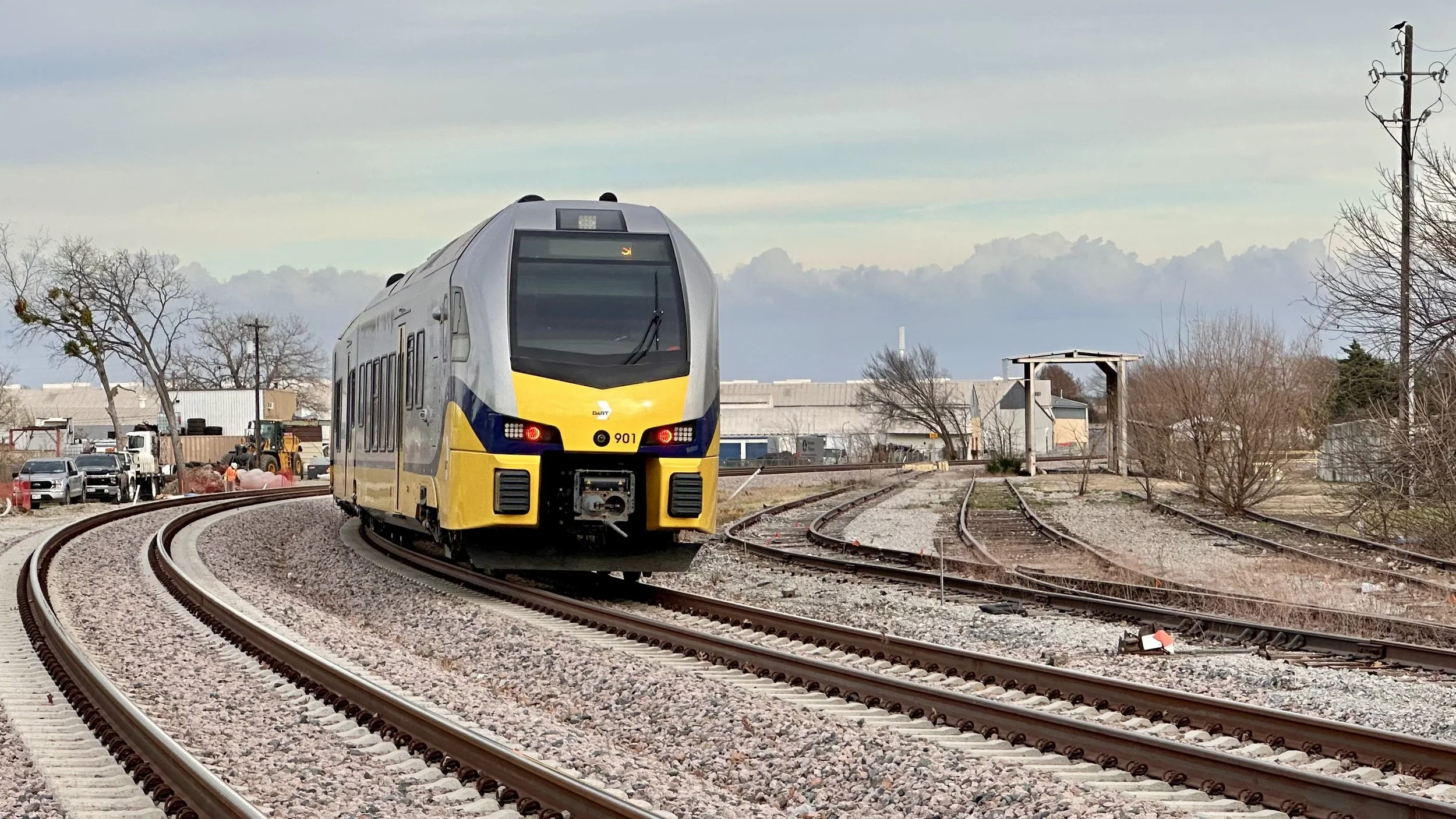
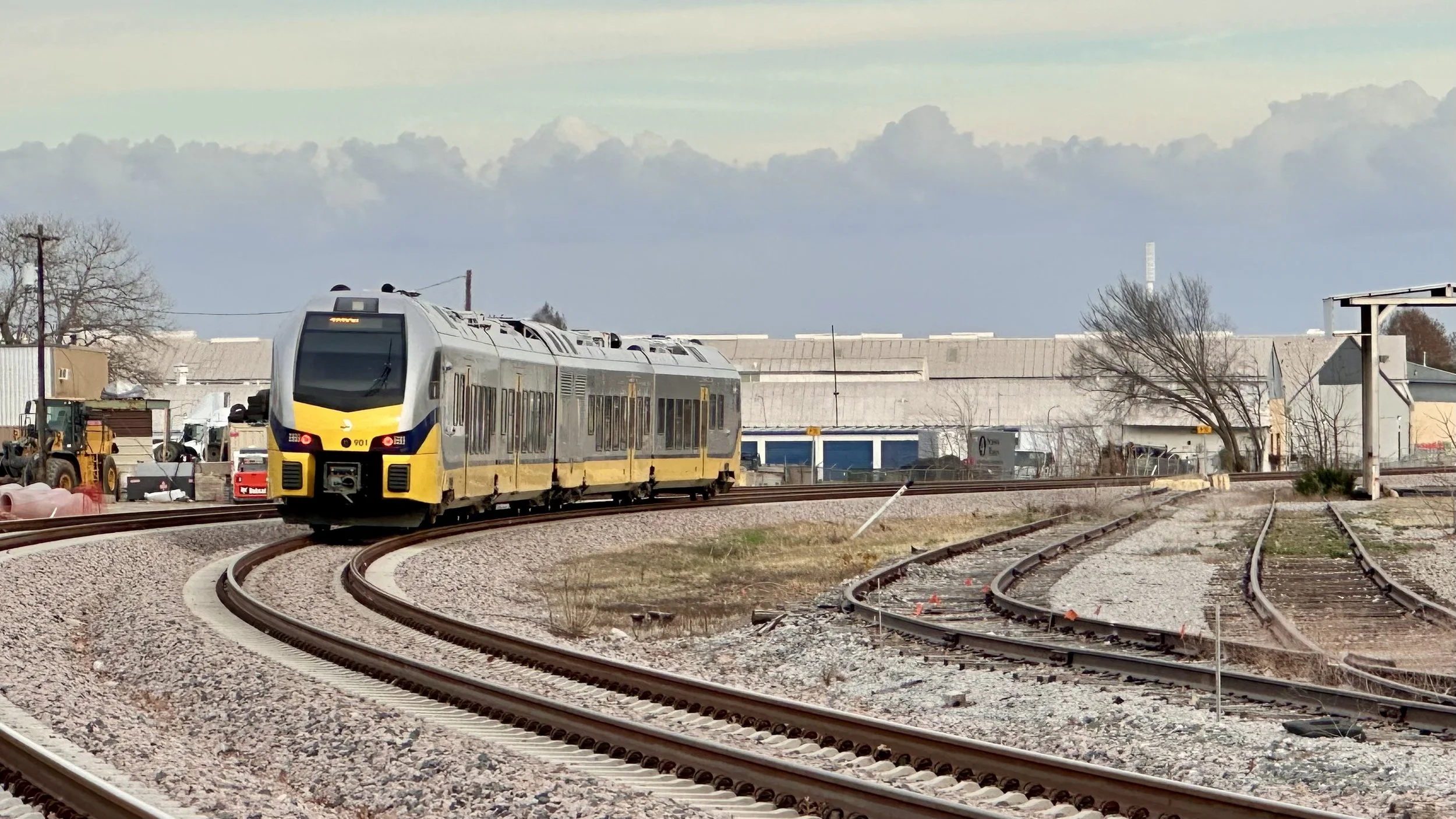
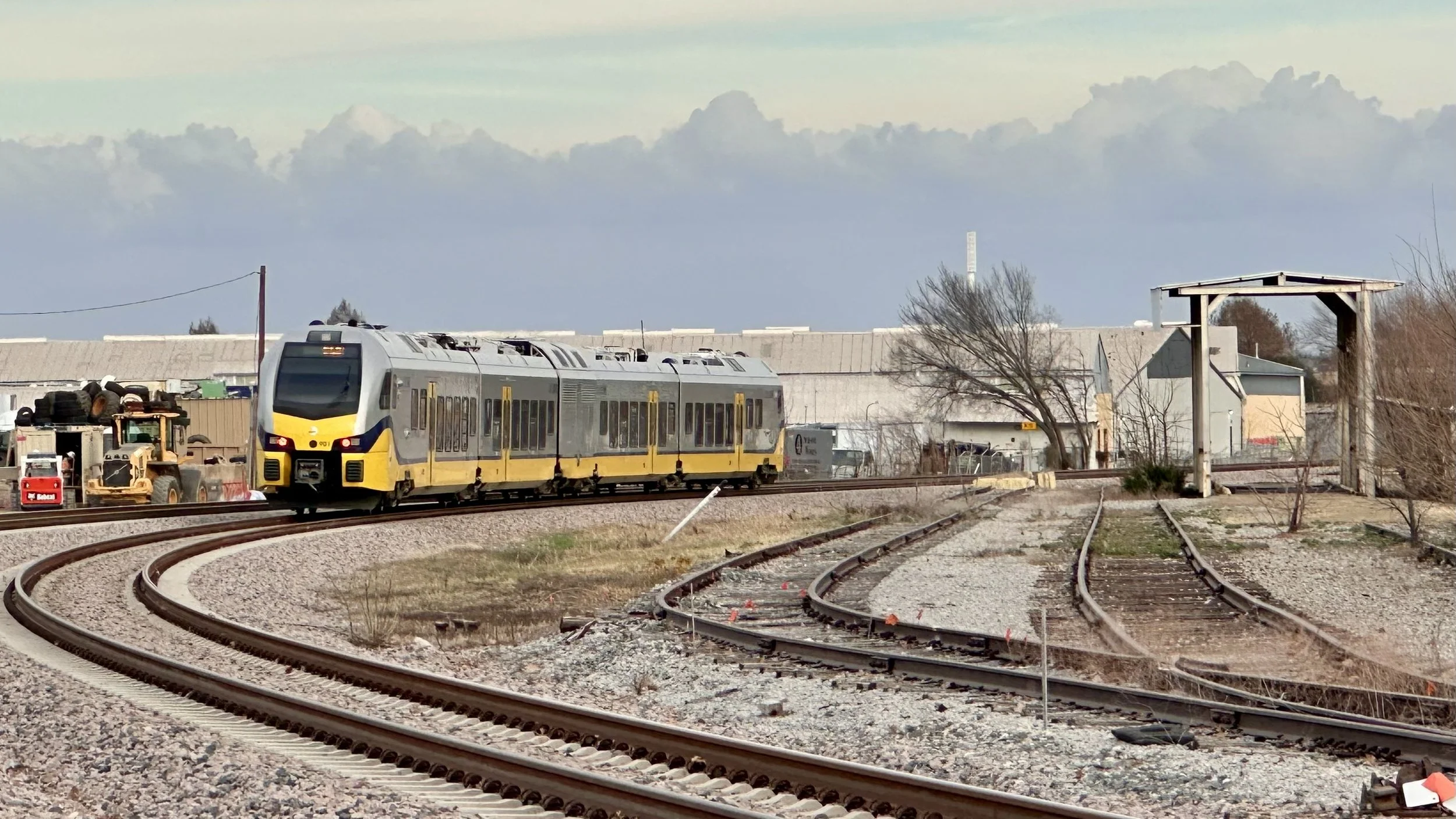
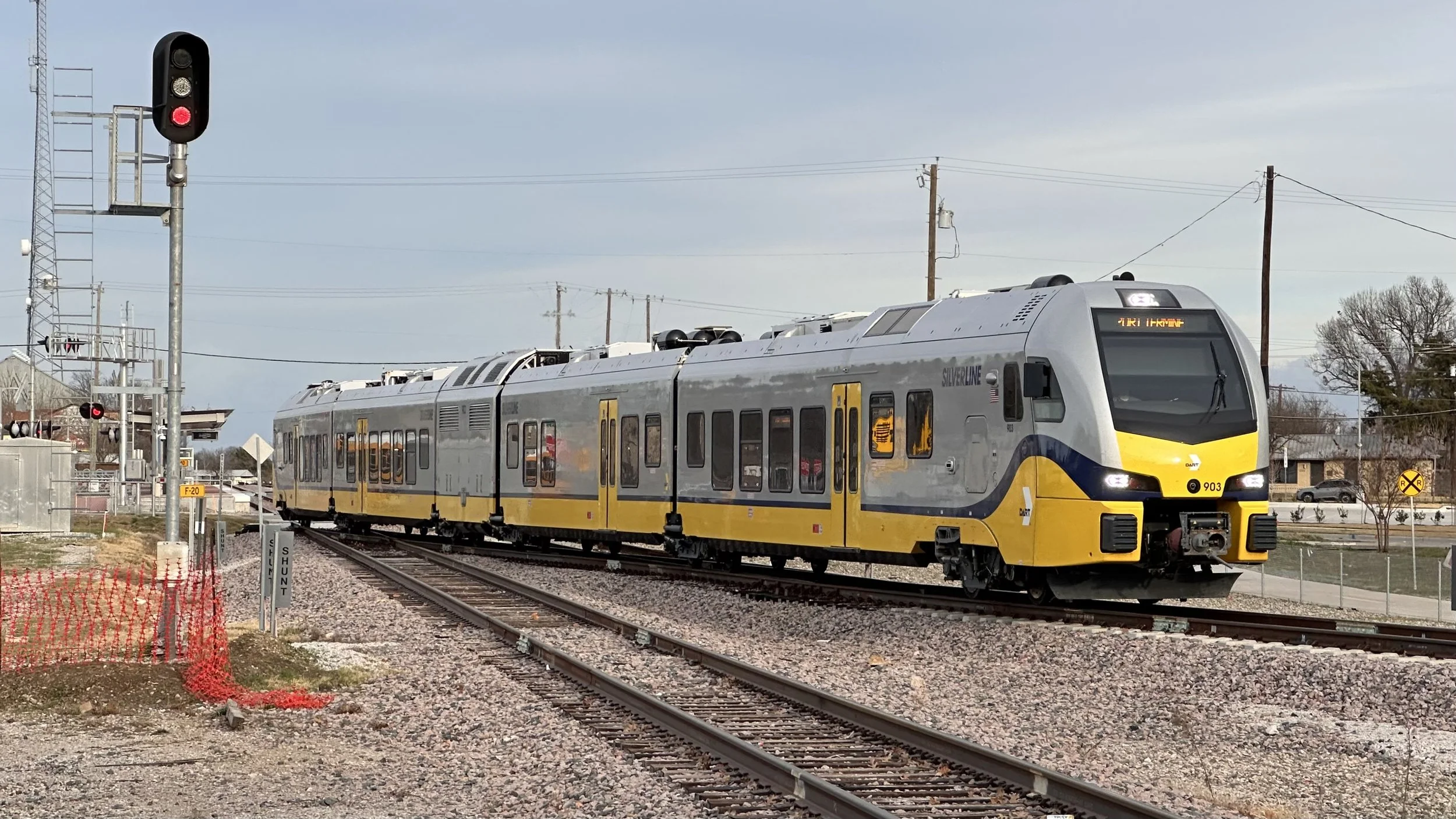
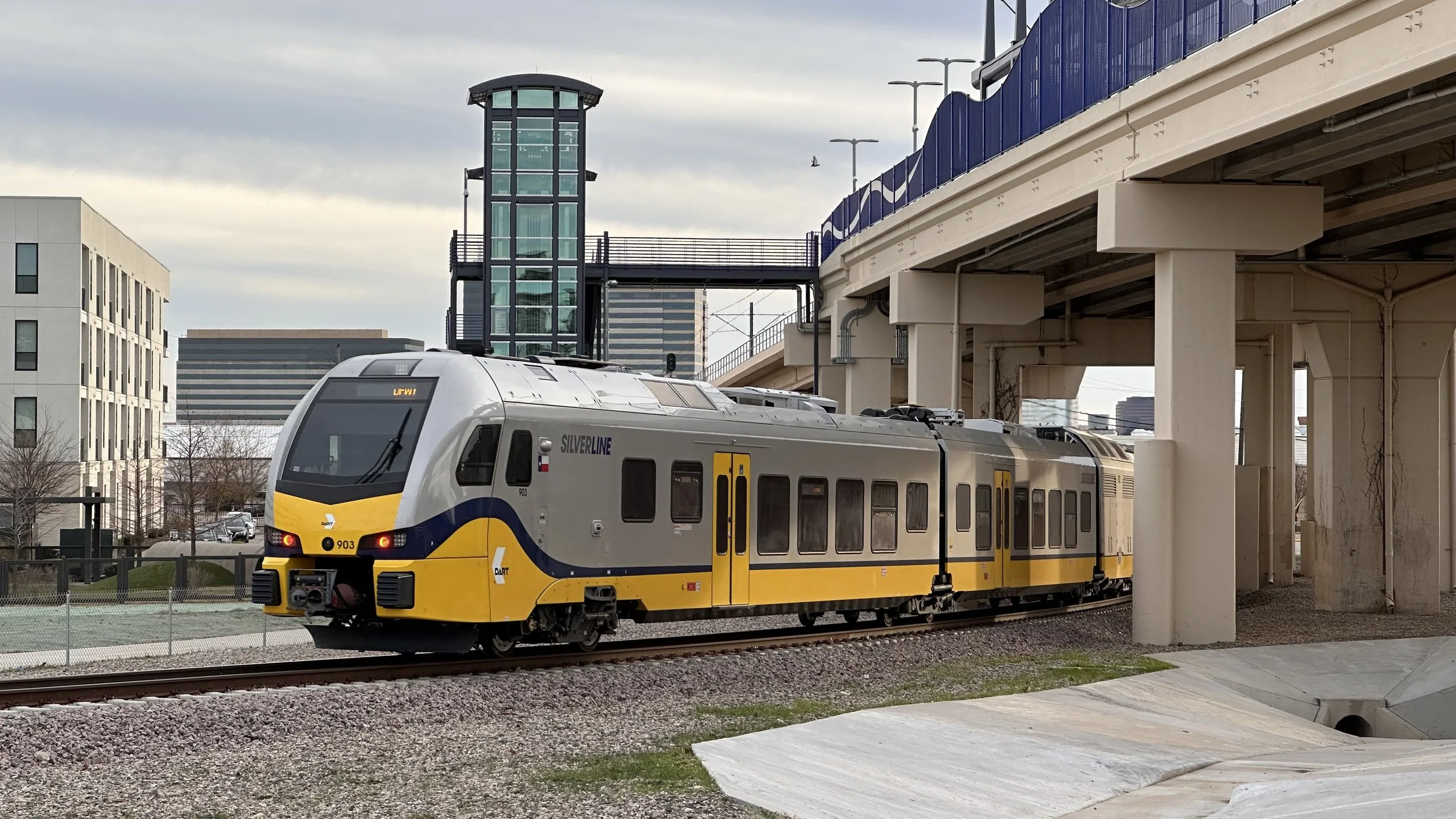
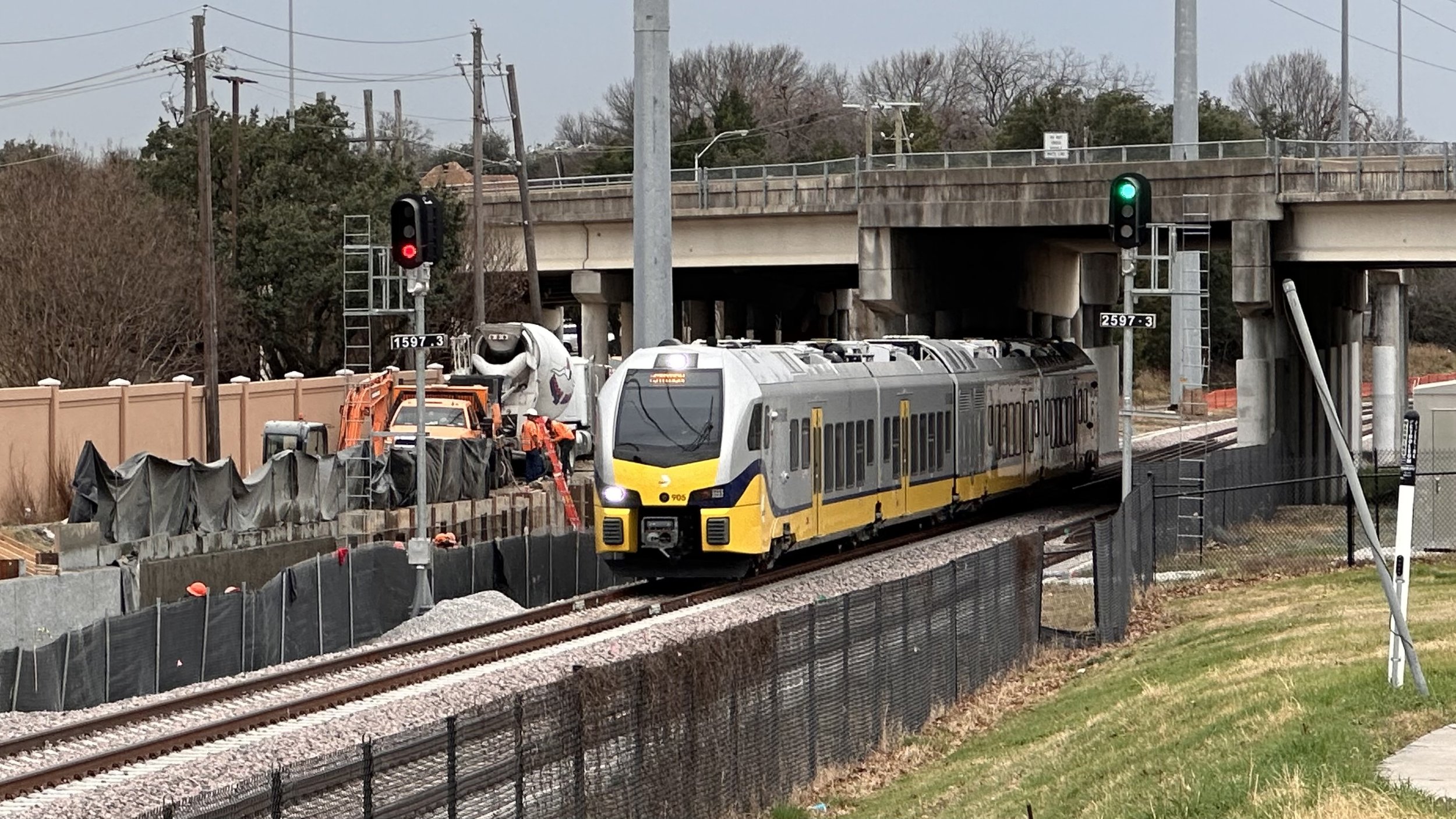
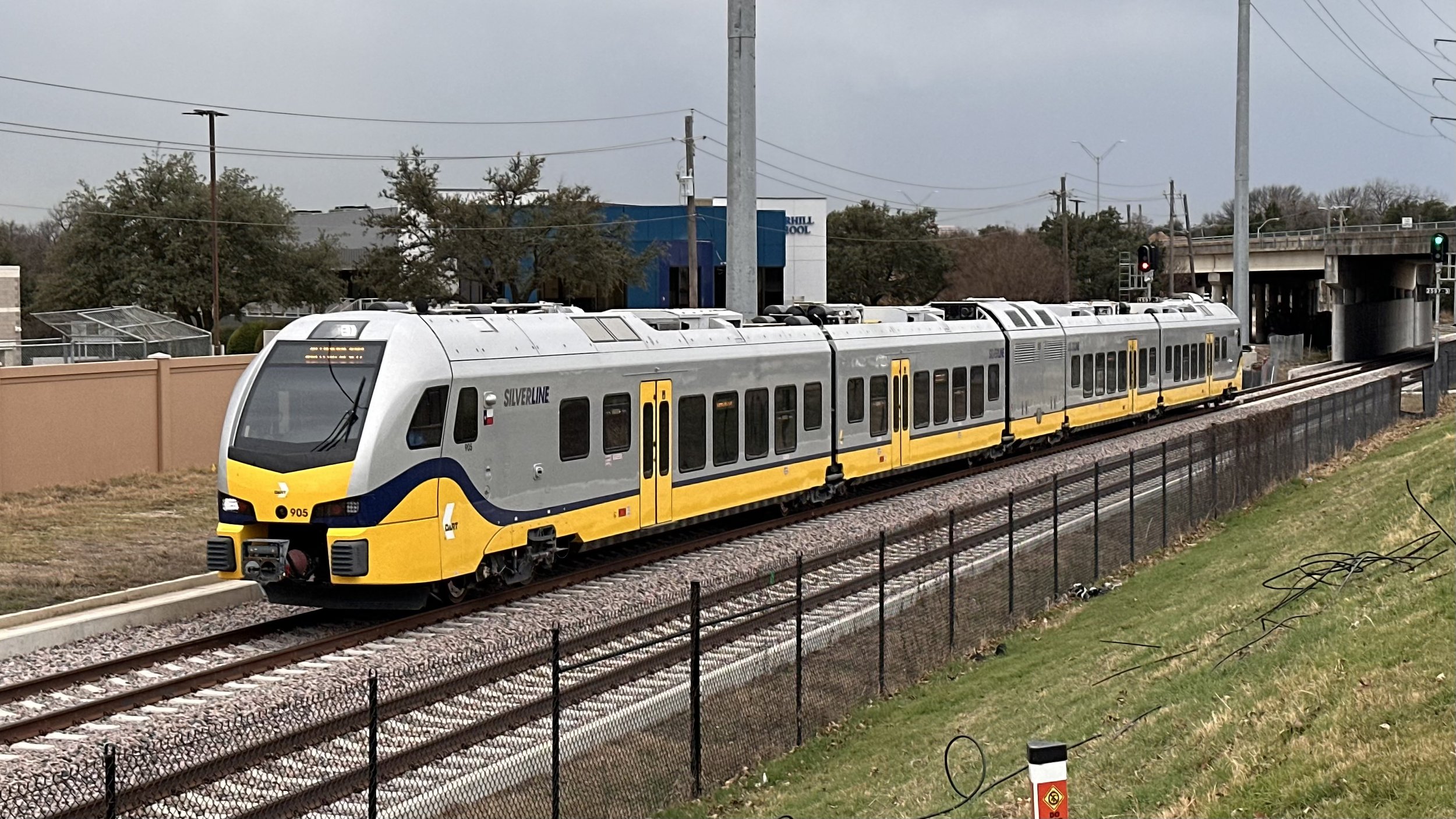
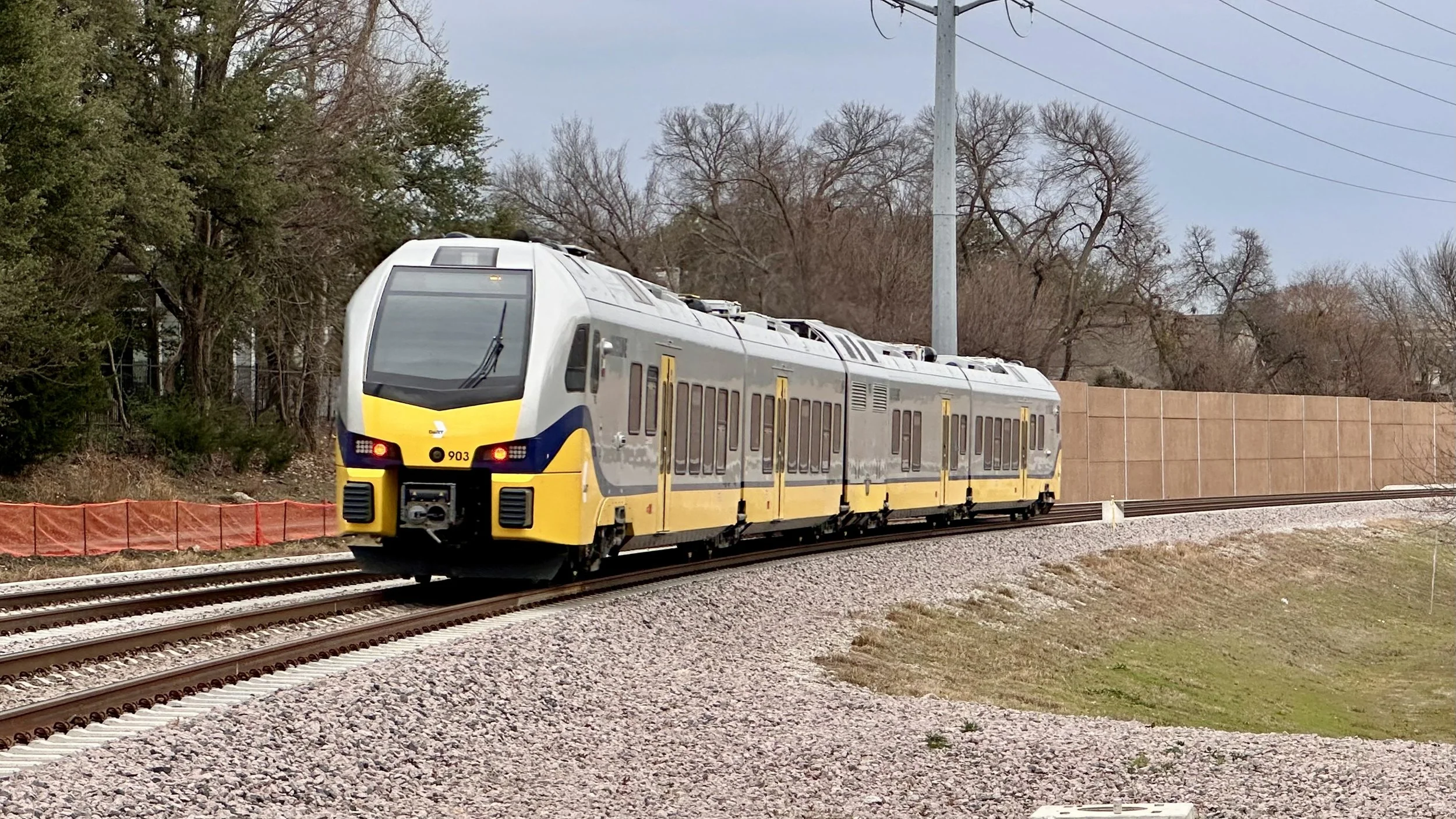
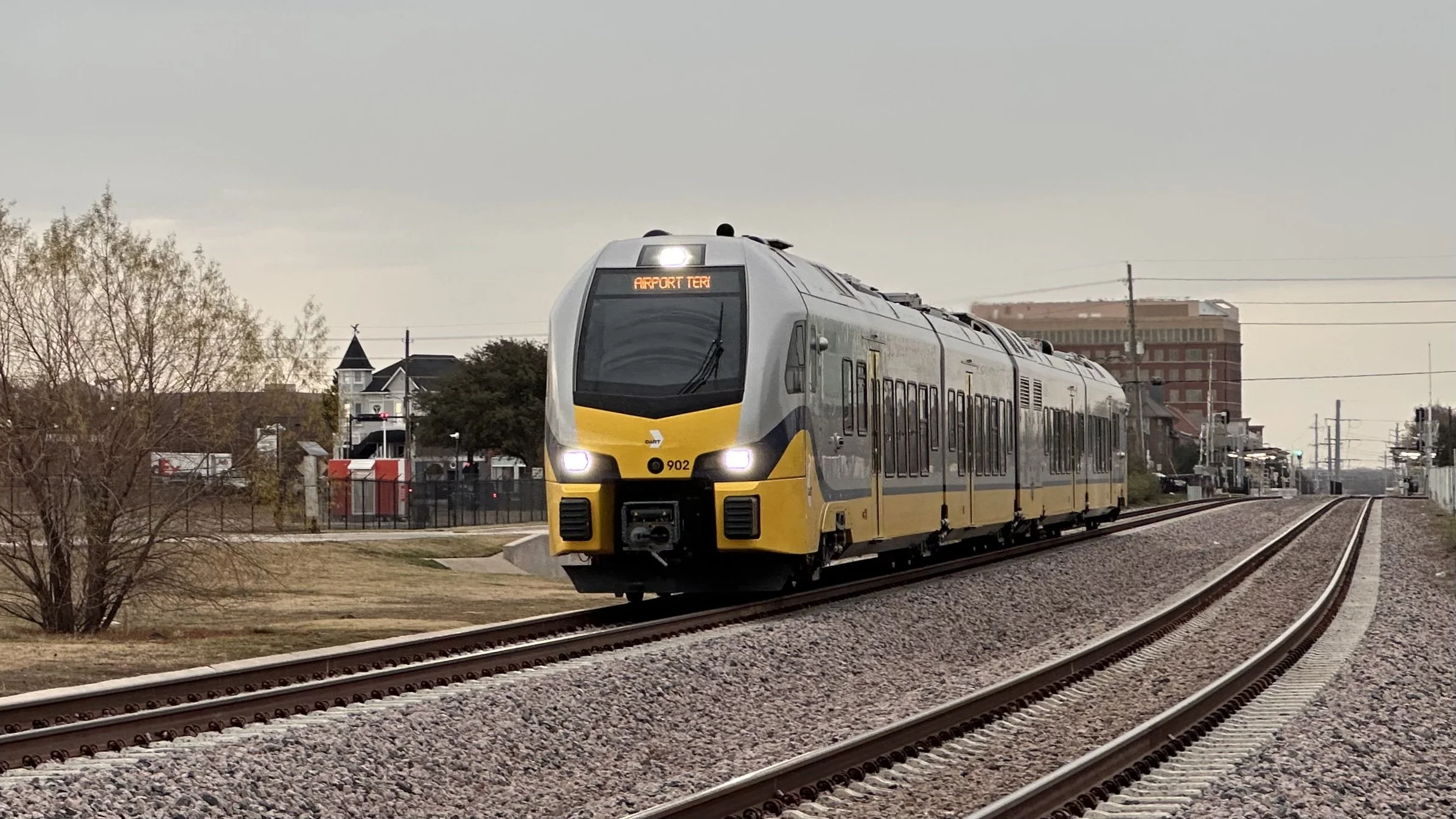
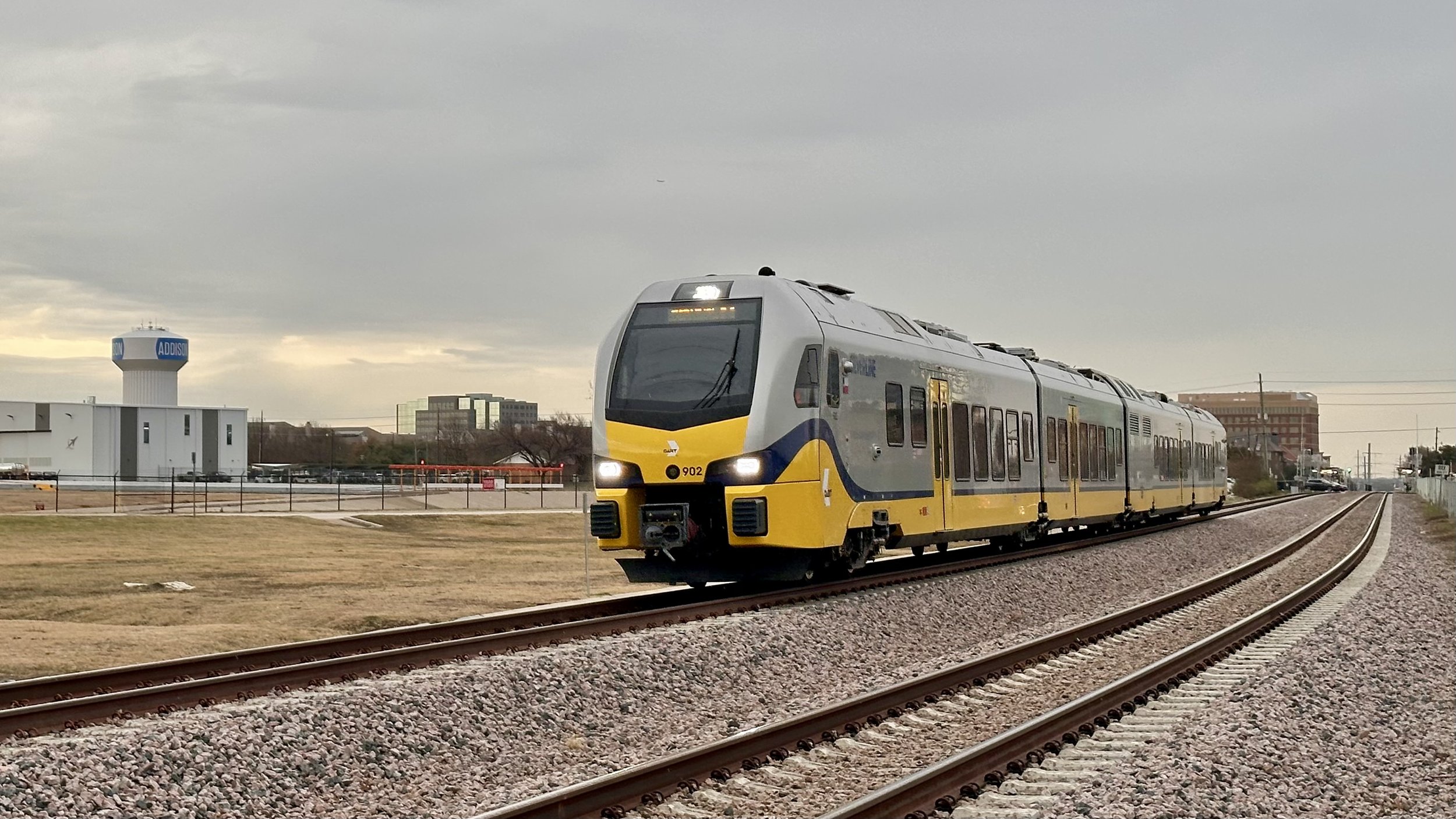
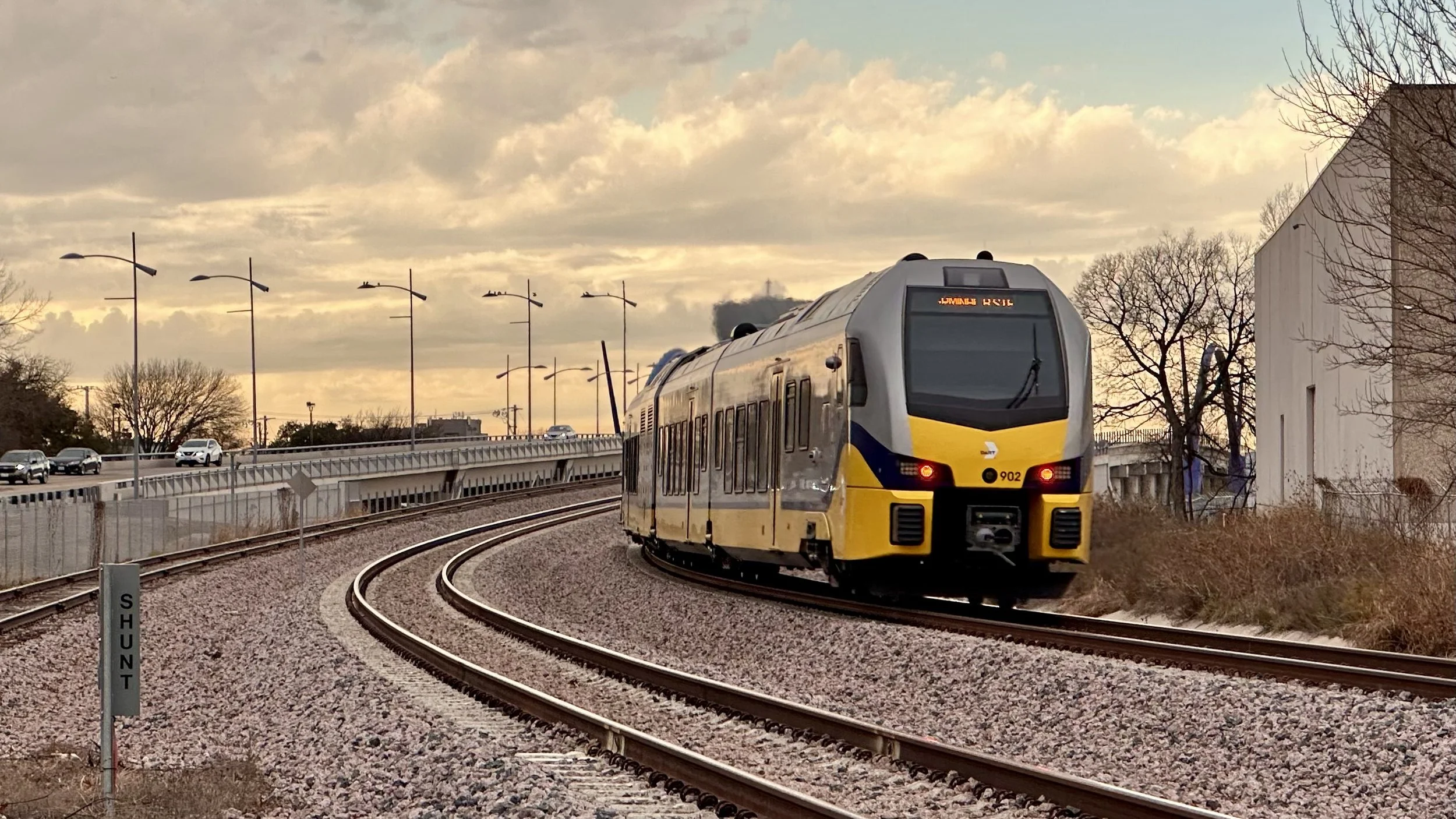
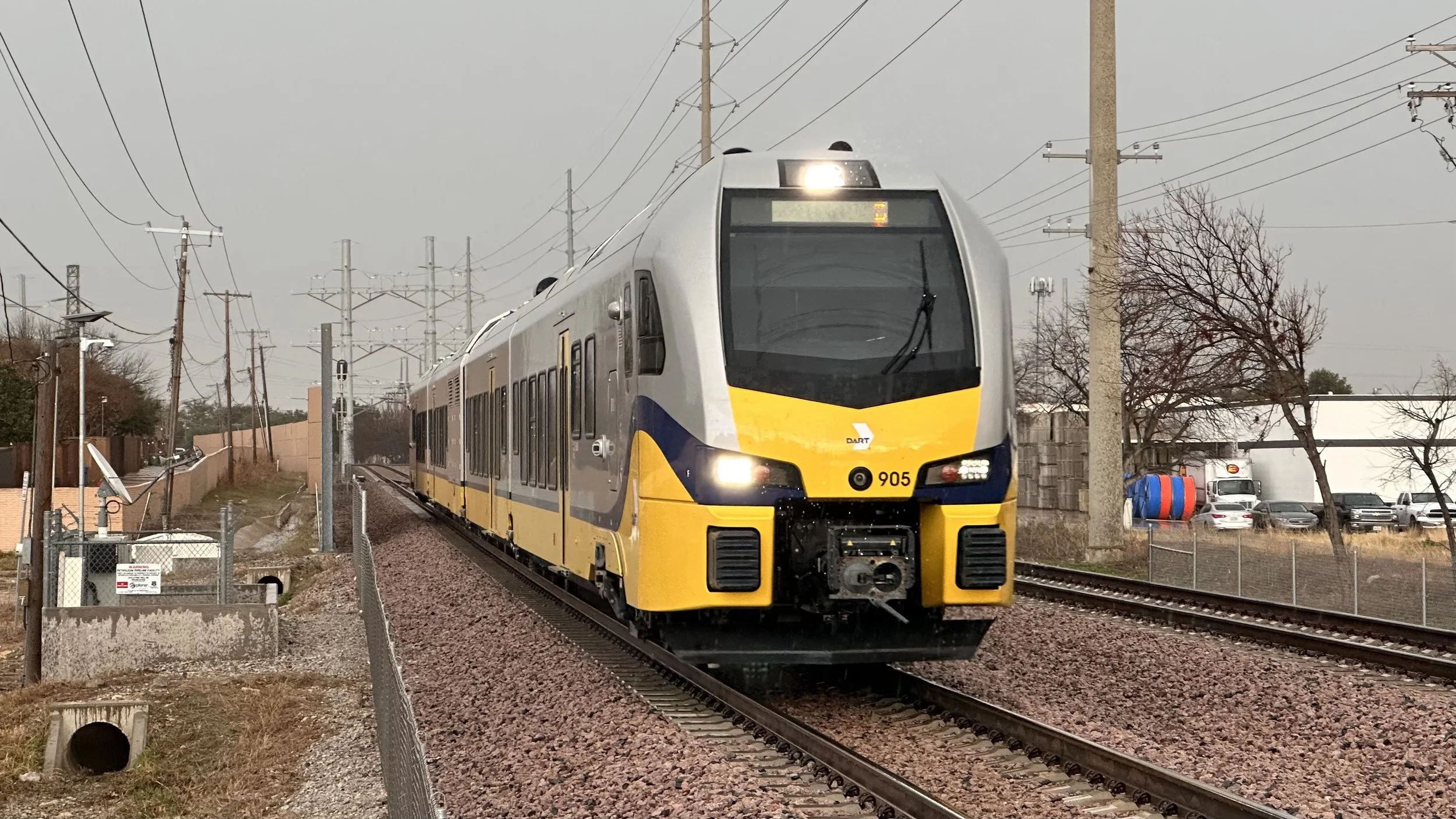
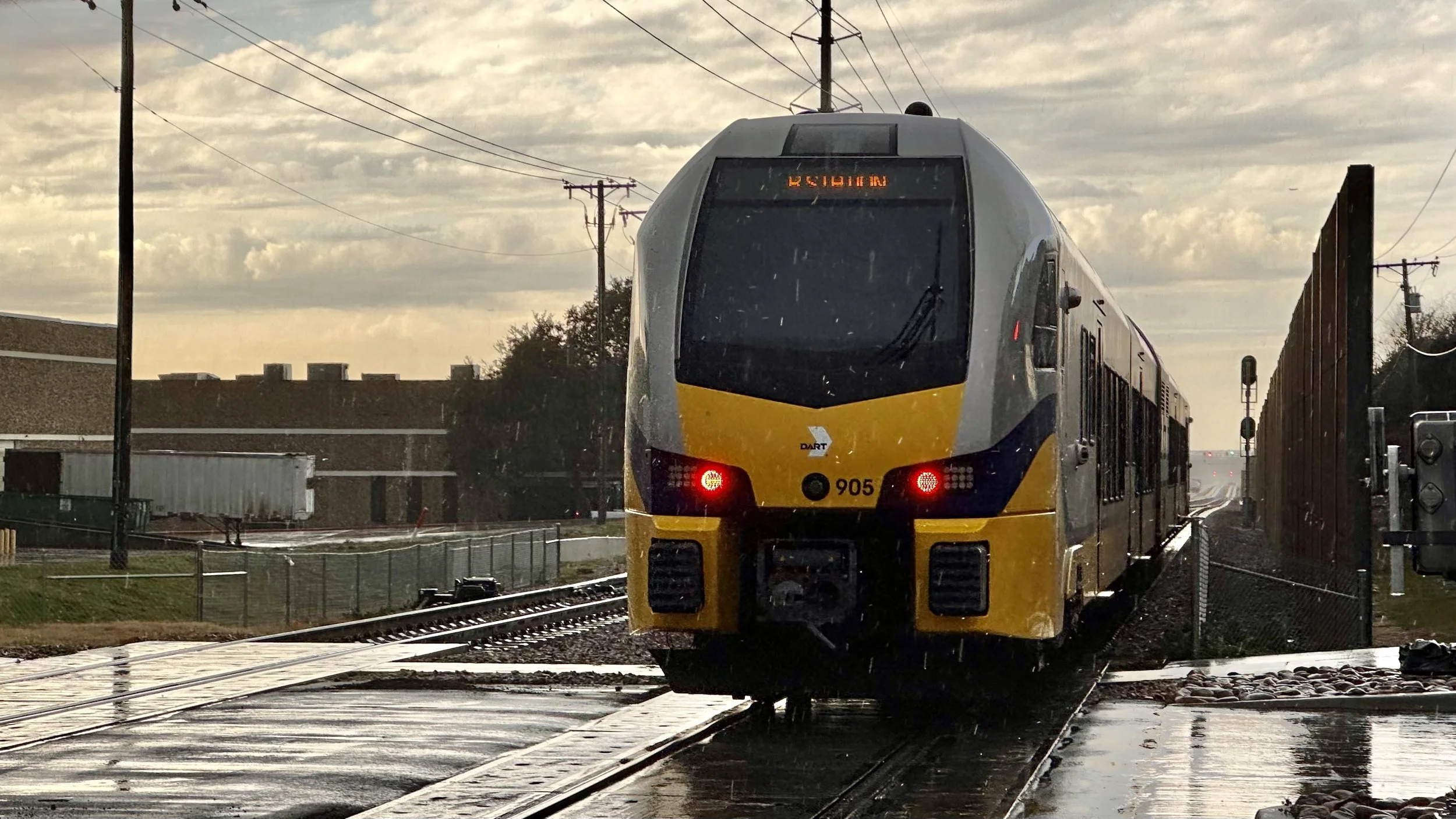
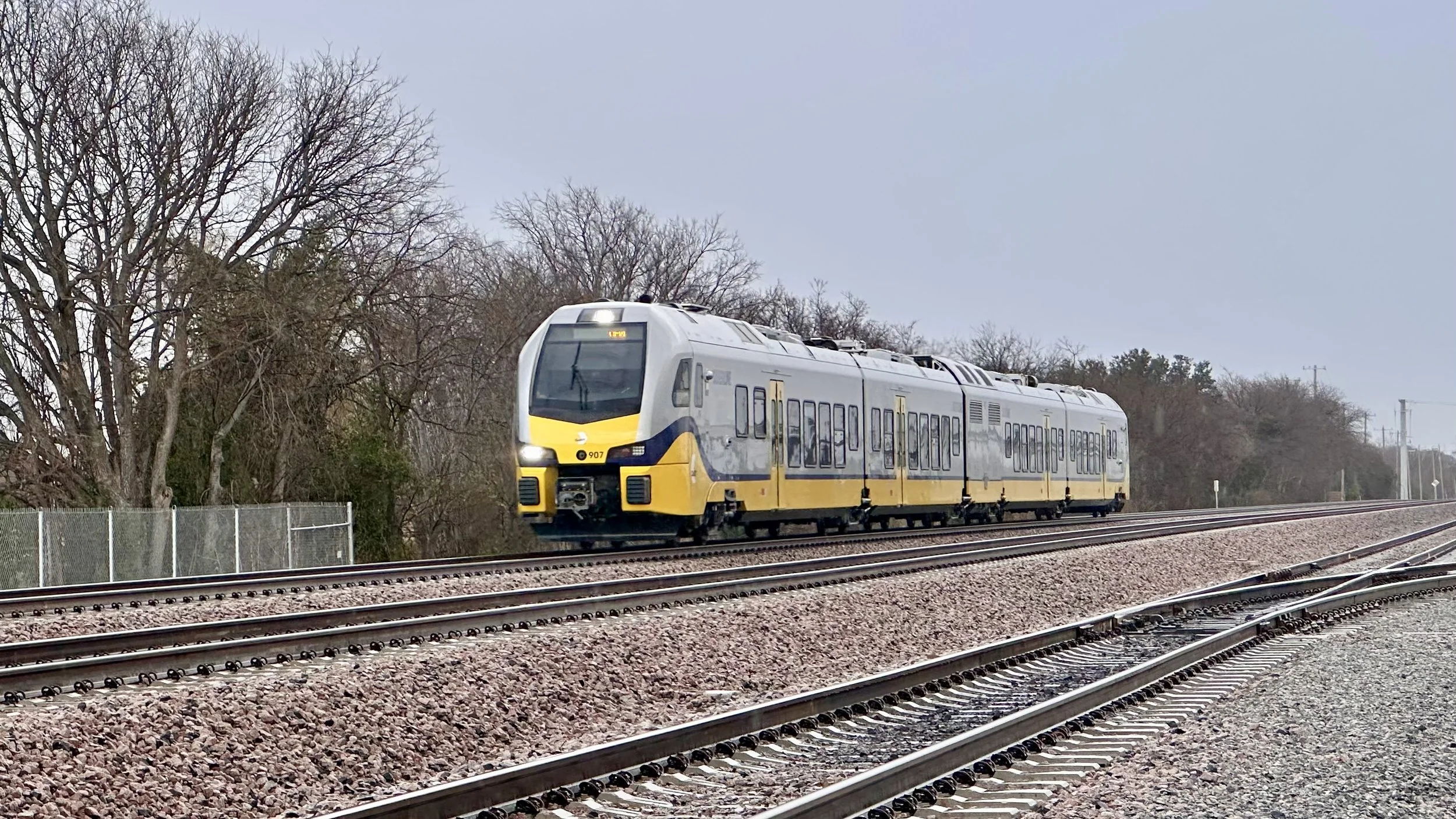
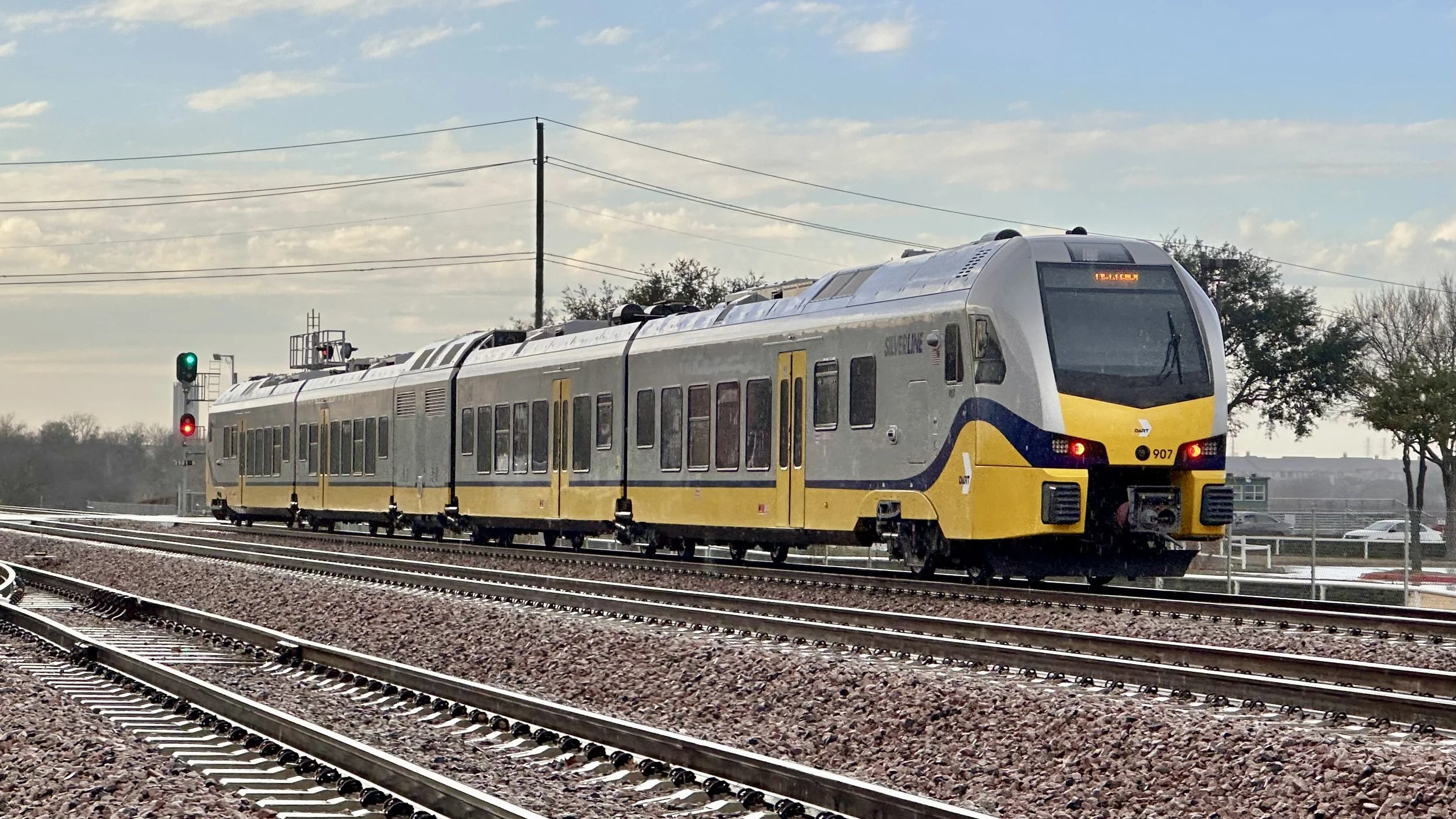
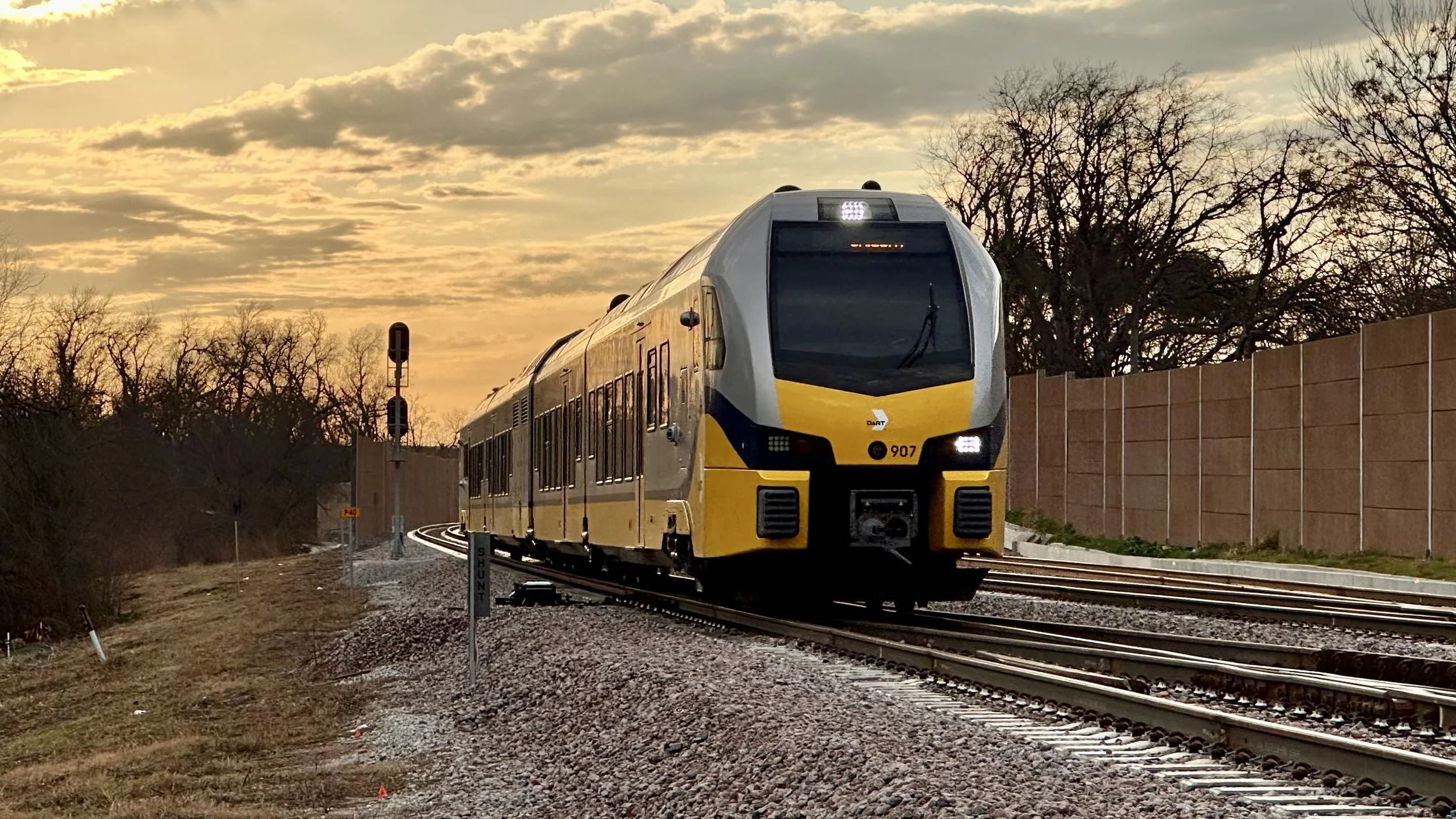
The final DMU is the DART Silver Line, opening in 2025 (inconveniently just weeks after my first DMU-fanning trip to the Metroplex, necessitating a return trip). The Silver Line is DART’s answer to Trinity Metro’s TEXRail, effectively being an eastward extension of the same Cotton Belt corridor, sharing track with TEXRail through both DFW and Airport North Stations before veering off to Plano. DART has a much more extensive light rail system radiating out of Dallas, but its hub-and-spoke arrangement impedes inter-suburban trips, so a tangential line was long needed. Presciently, DART bought the Cotton Belt route in the 90s and finally opened it to passenger traffic 30 years later, providing centripetal connections between the Orange Line and TEXRail at DFW, the Green Line at Carrolton, and the Red Line at Plano, while also creating new access to Addison, Cypress Waters, and, most importantly, UT Dallas.
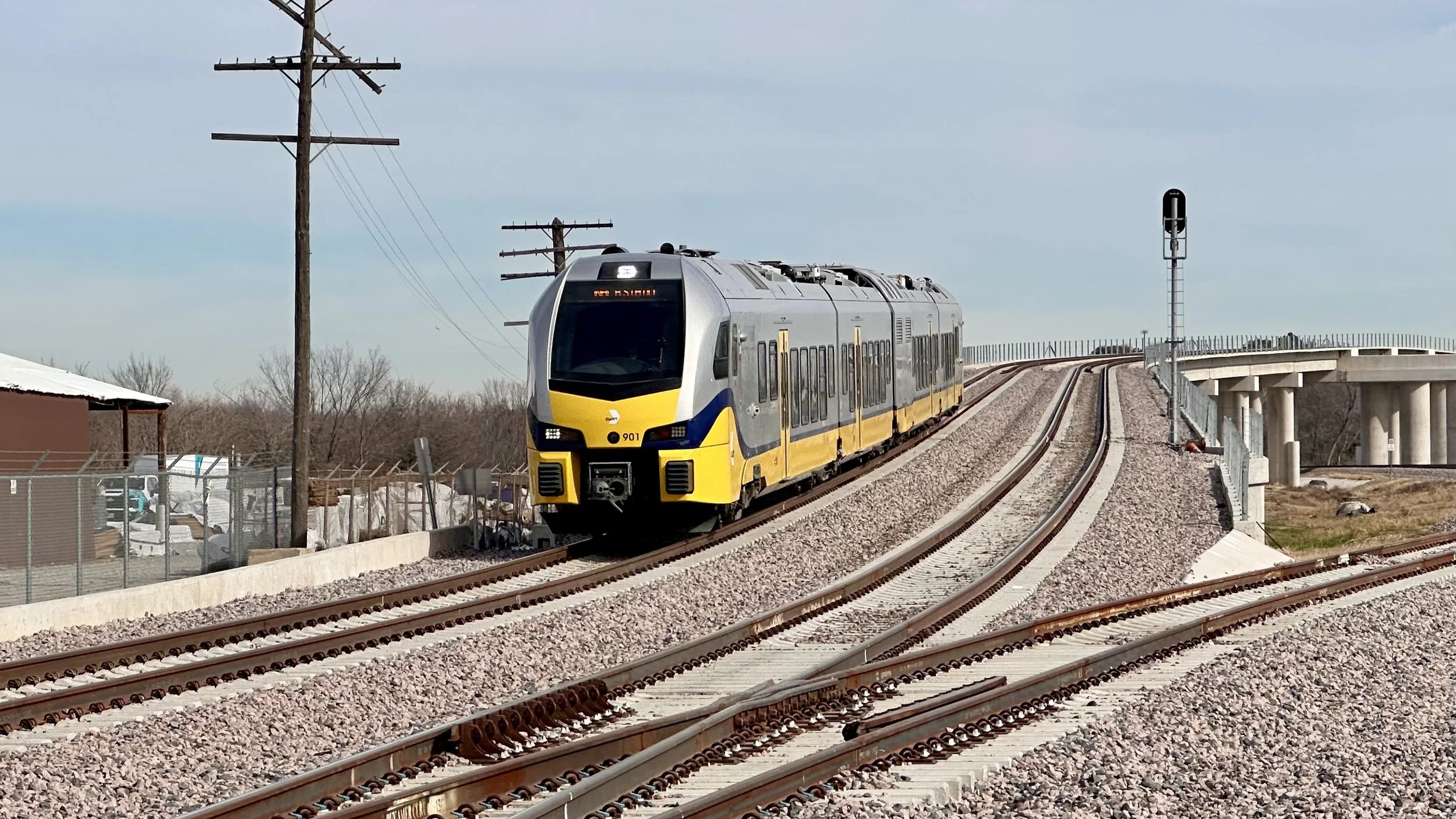
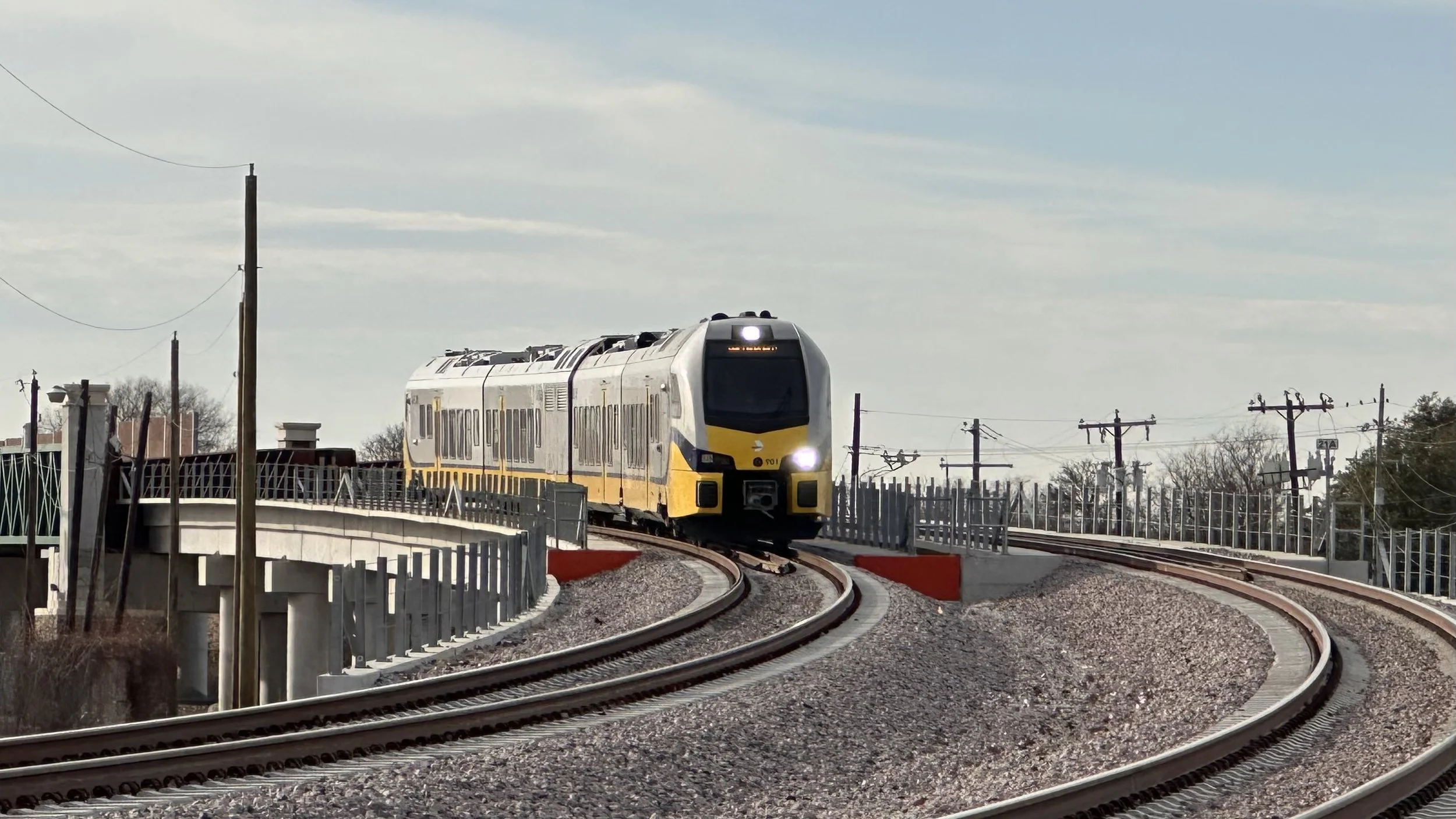
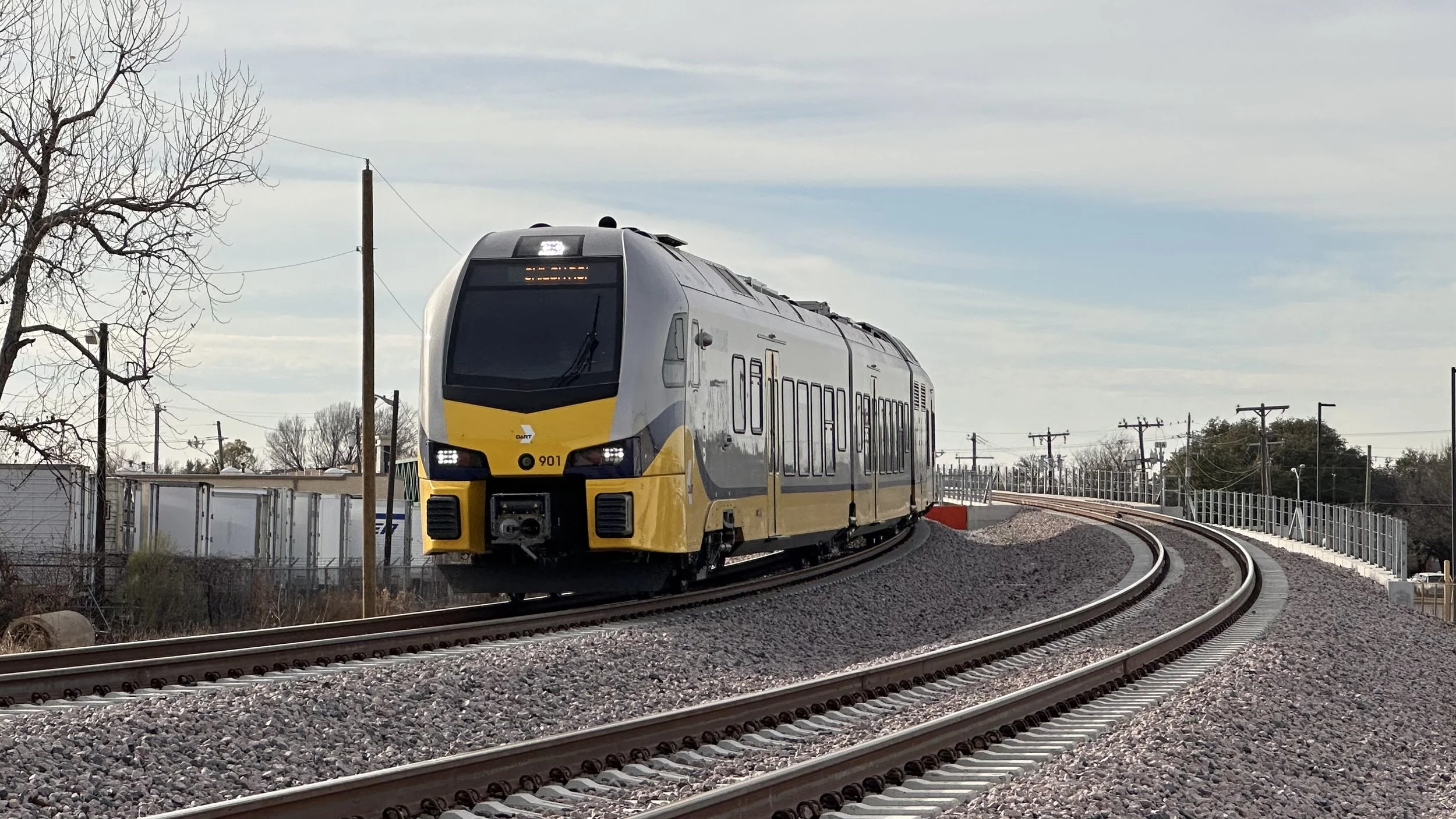
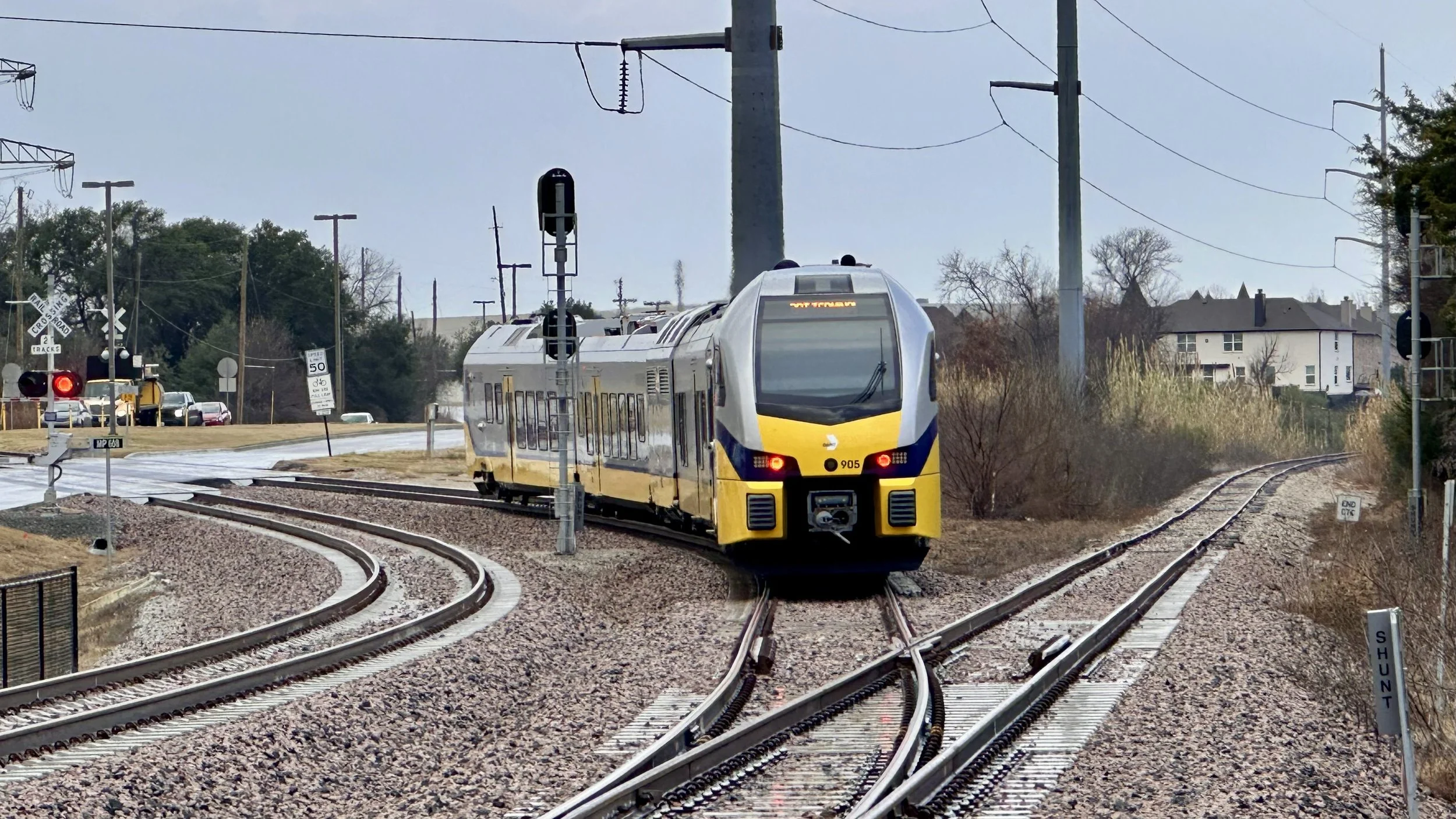
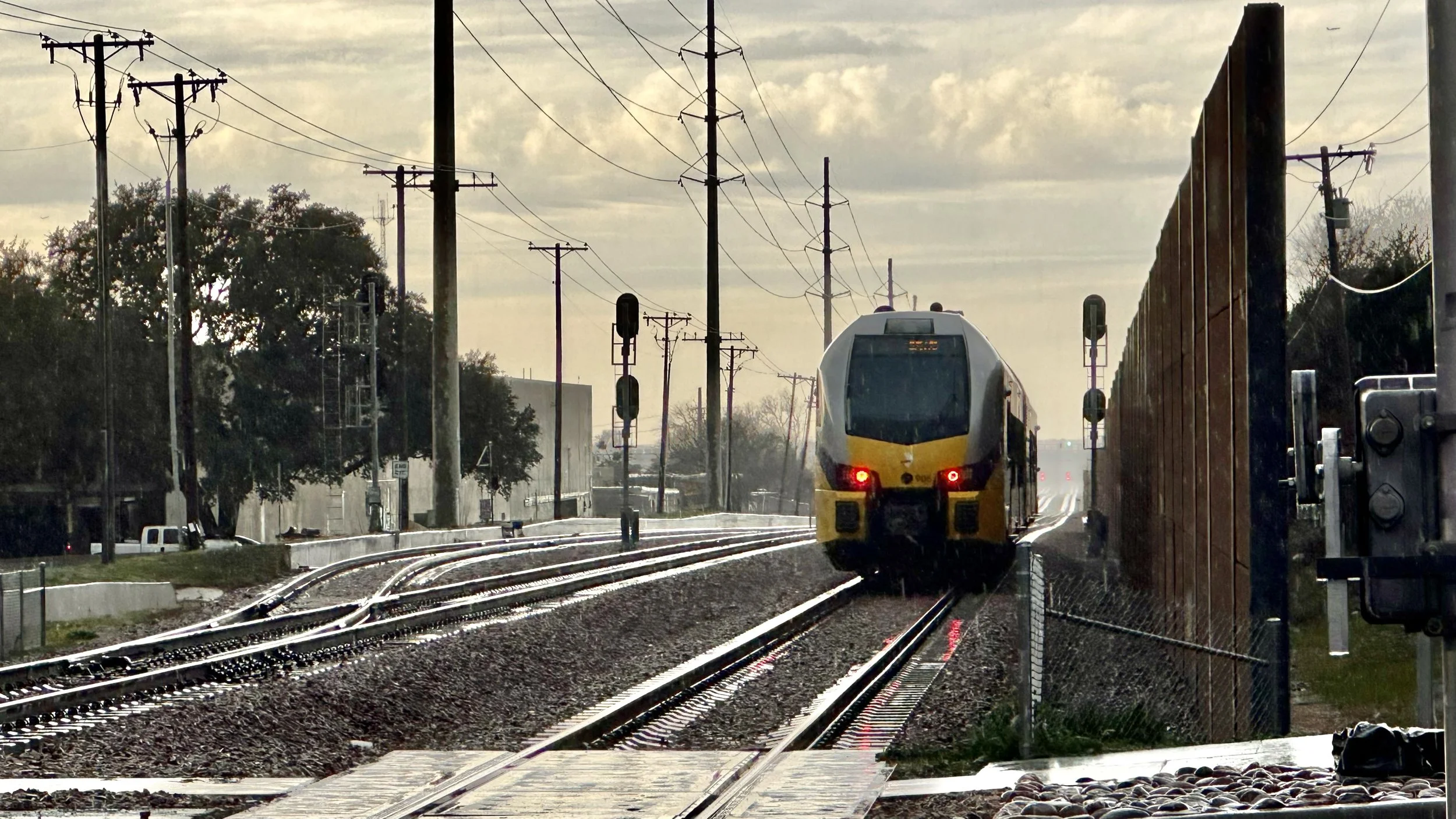
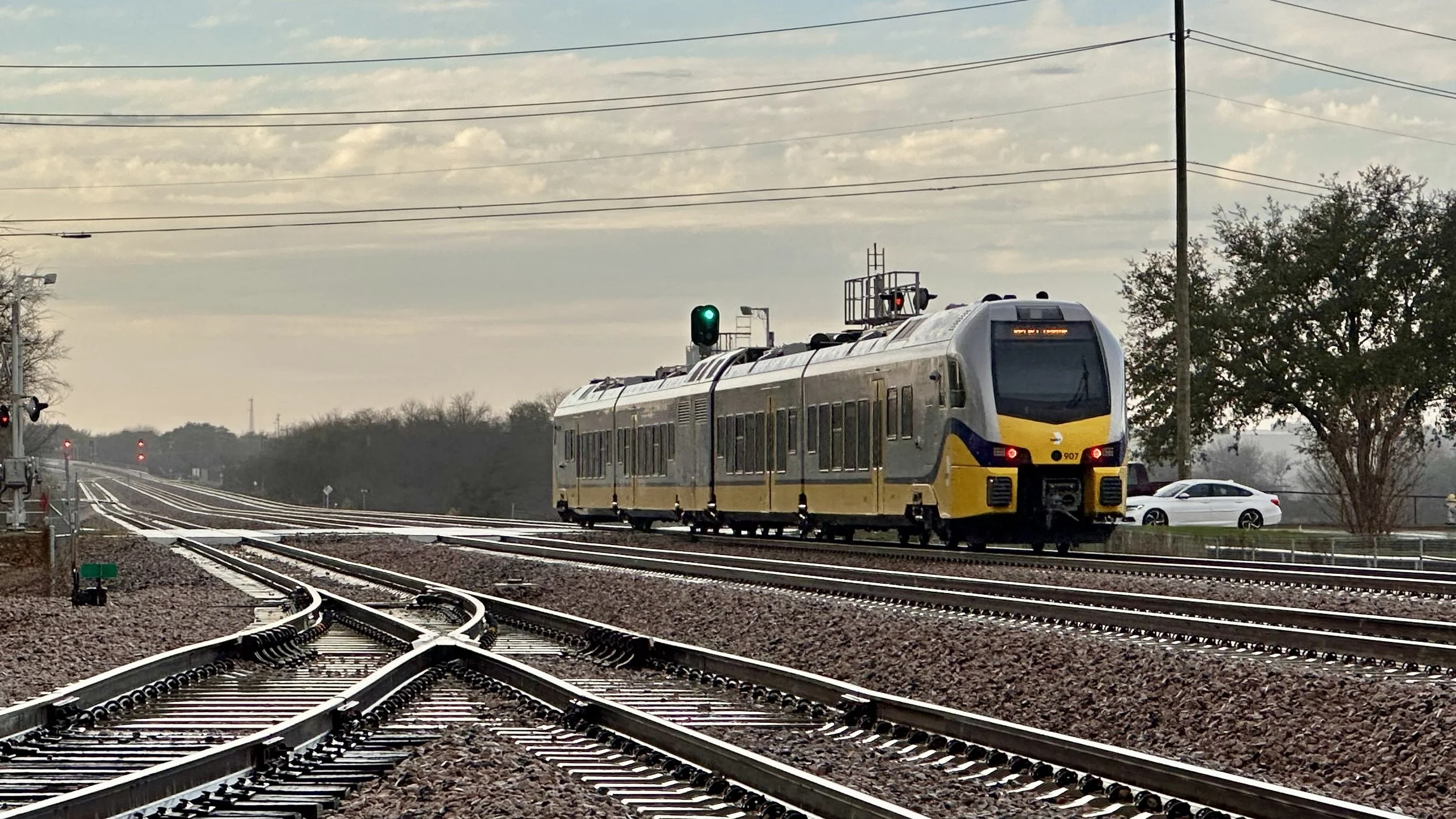
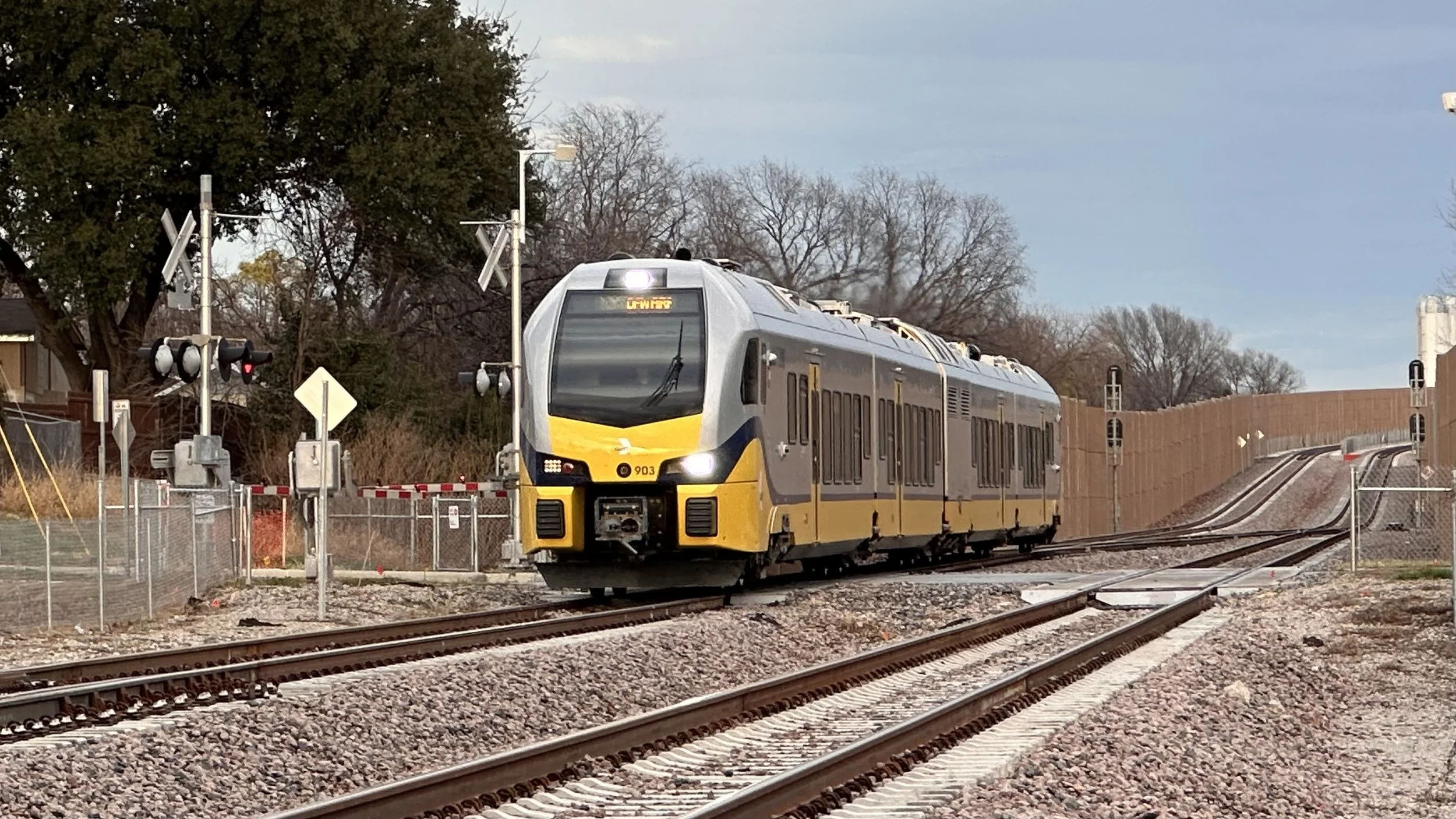
If there will ever become such a phenomenon as “second-generation DMU systems”, the Silver Line will likely be its origin. Whereas nearly every other DMU (with the exception of eBART, which is more a heavy-duty transit system that just happens to accidentally use DMUs) is about half singly-tracked, strategically arranging double-tracking to match a certain desired frequency, the Silver Line is almost entirely double-tracked, with merely one station, Plano City Line, being single-tracked. However, frequencies are less convenient than its westward counterpart, with half-hourly headways at peak dropping to hourly mid-day. But at least the infrastructure in the ground is future-proofed for much more aggressive service expansions in the future.
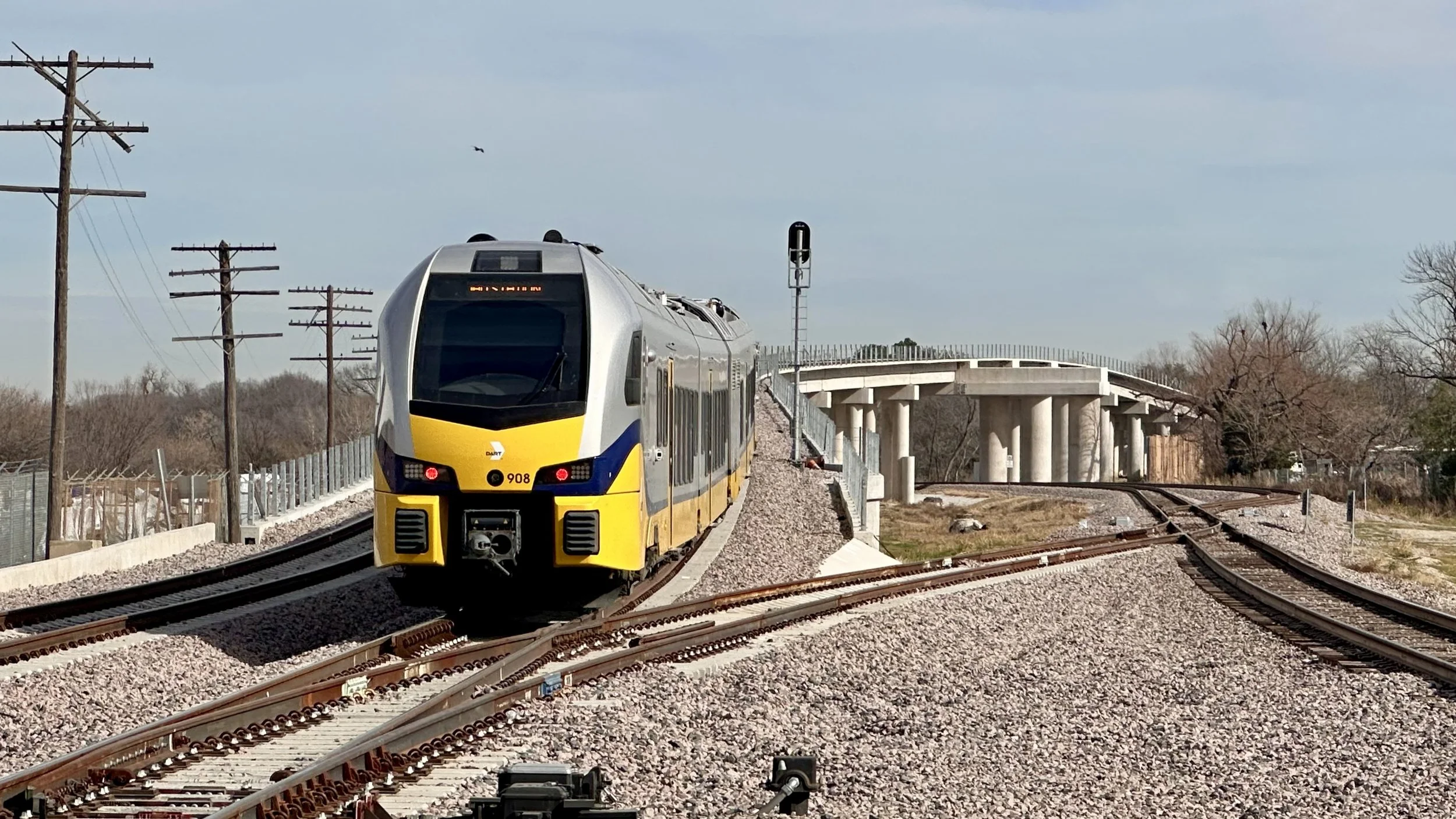
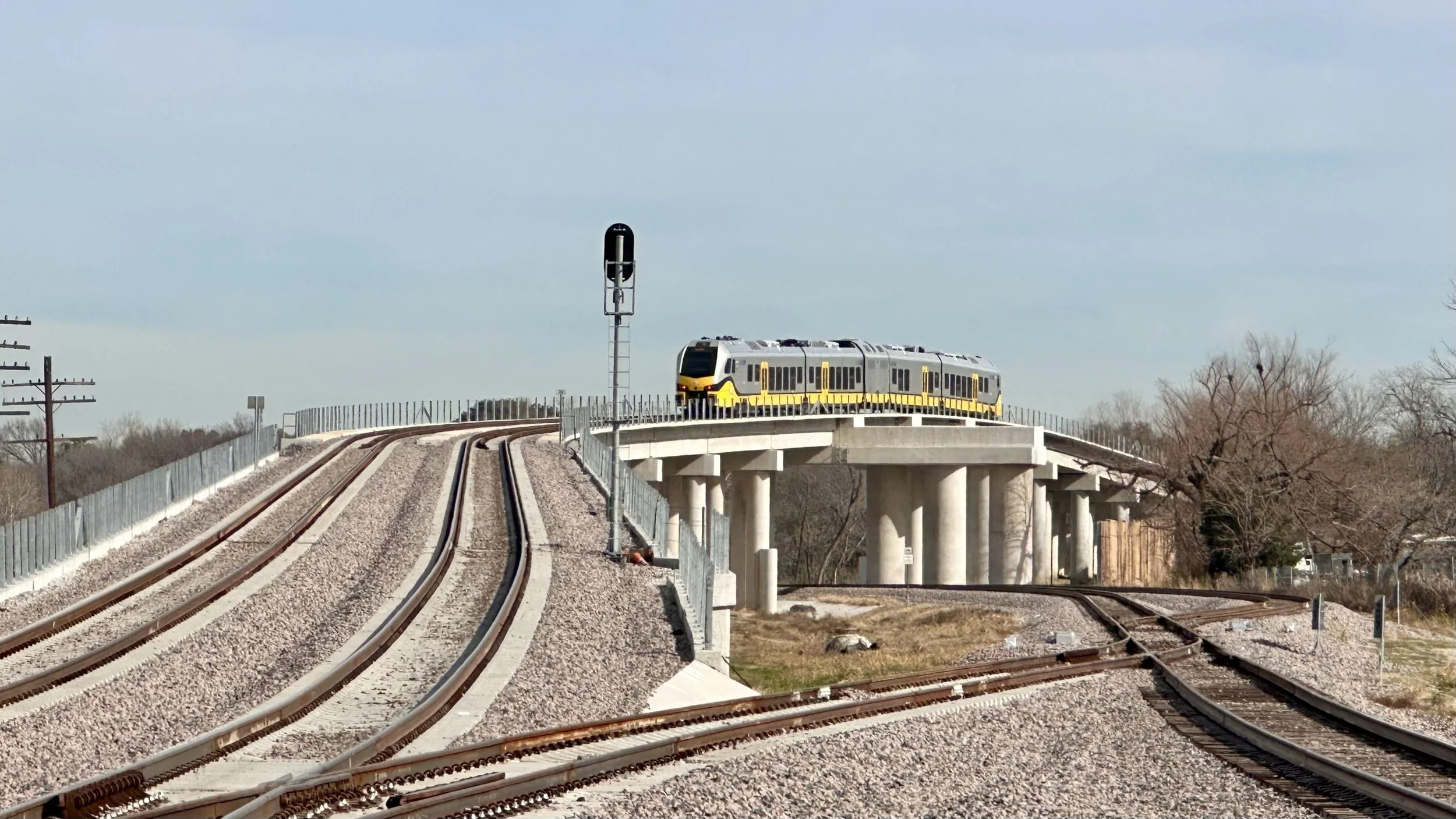
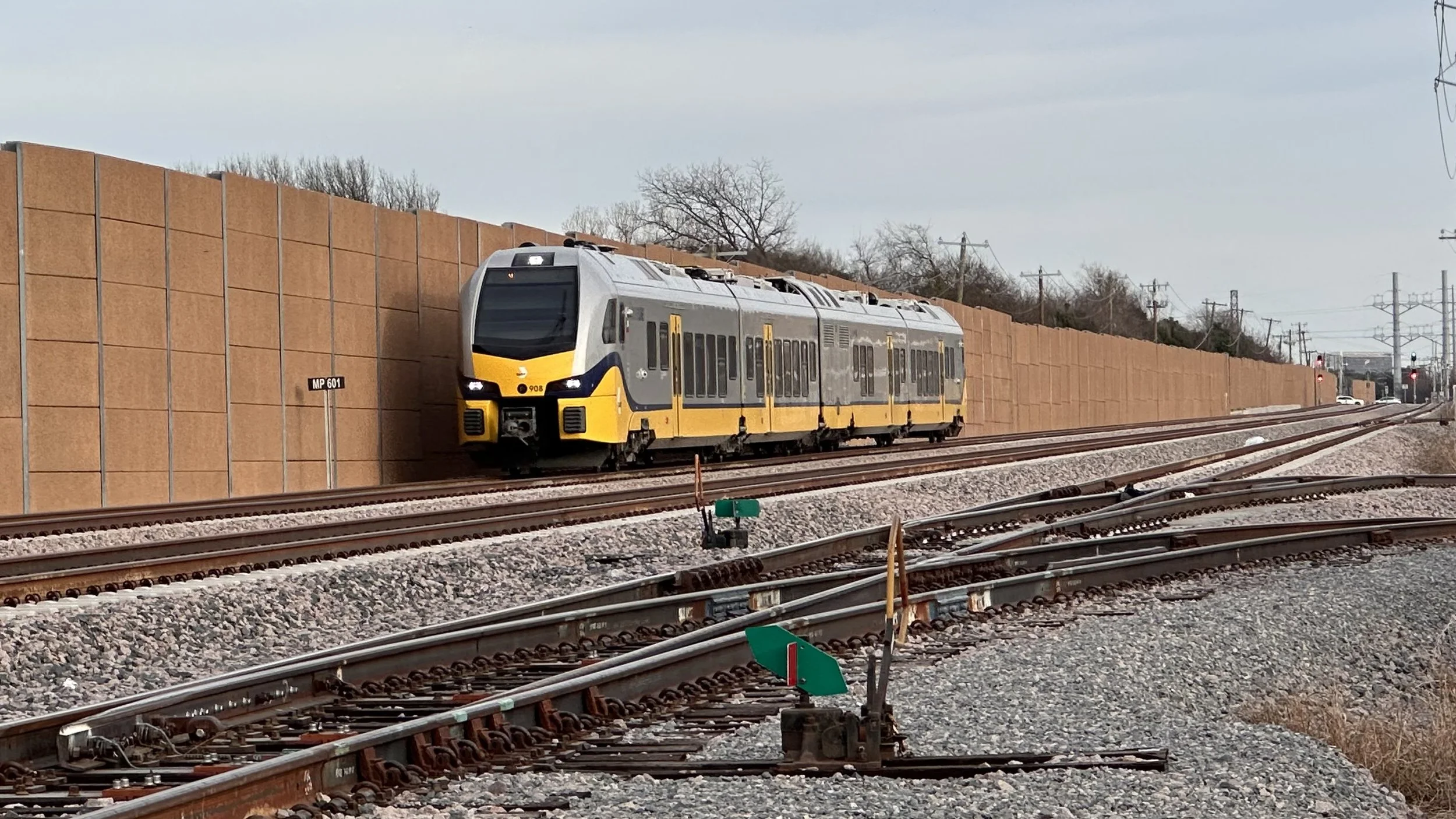
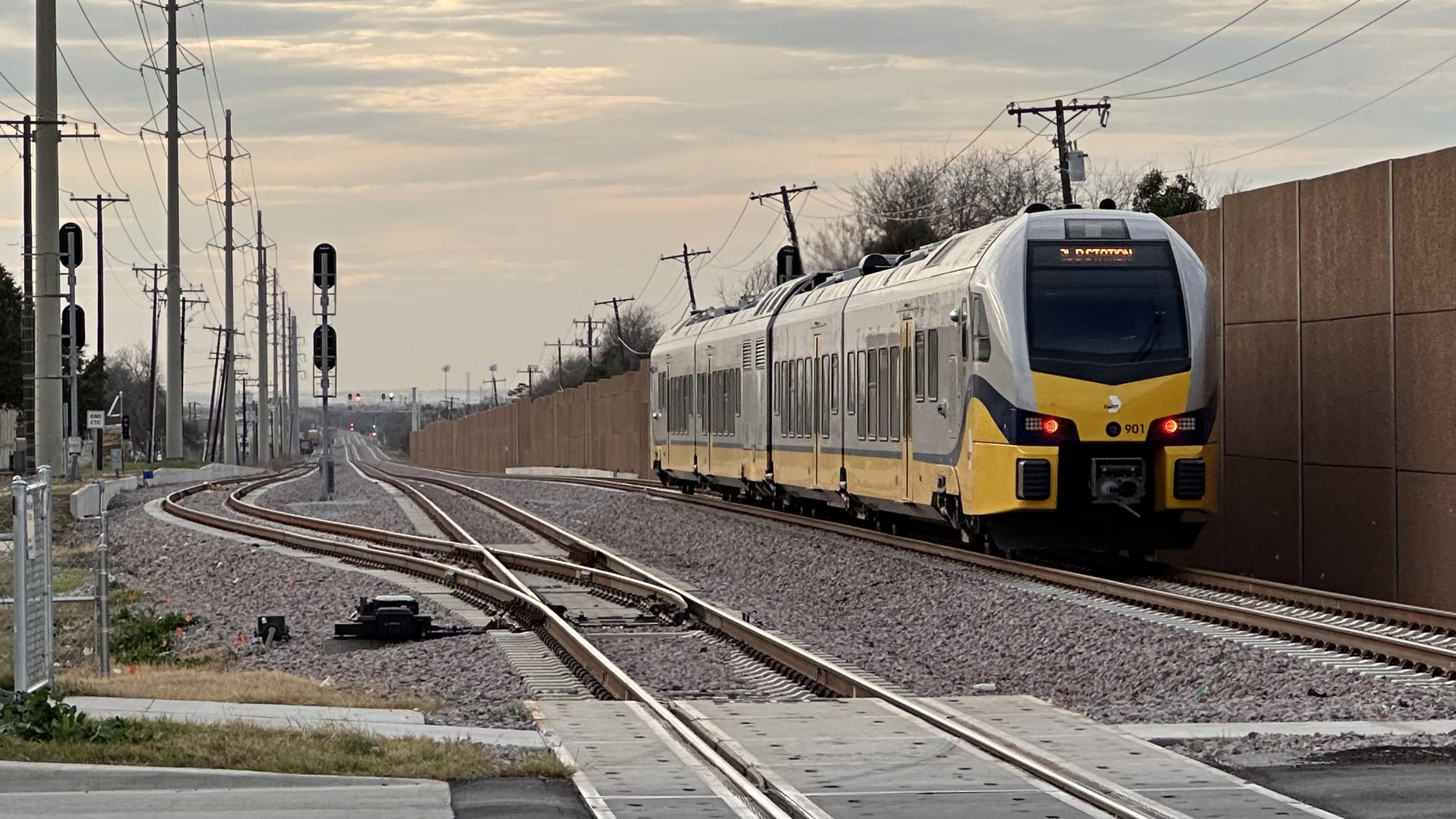
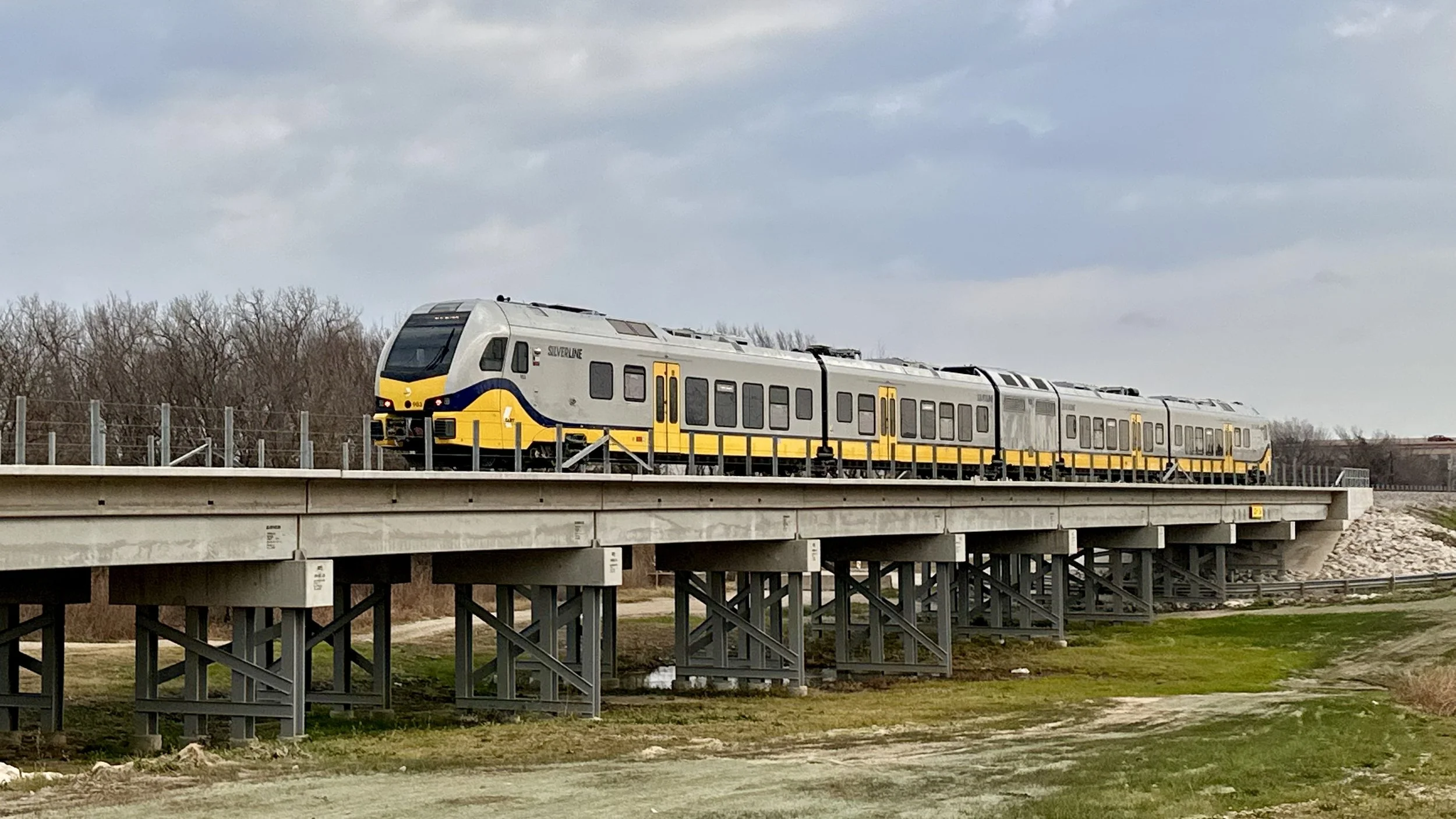
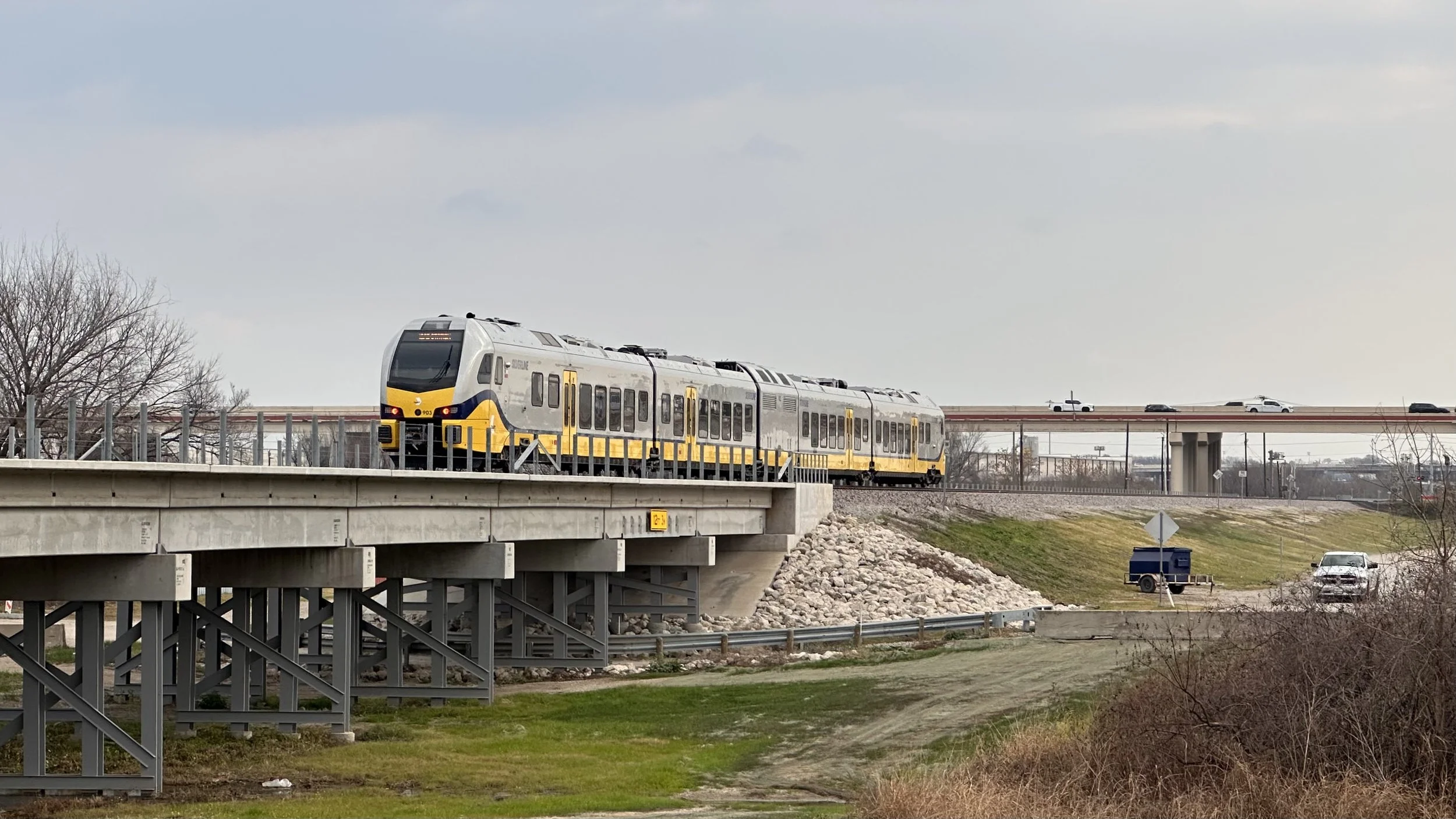
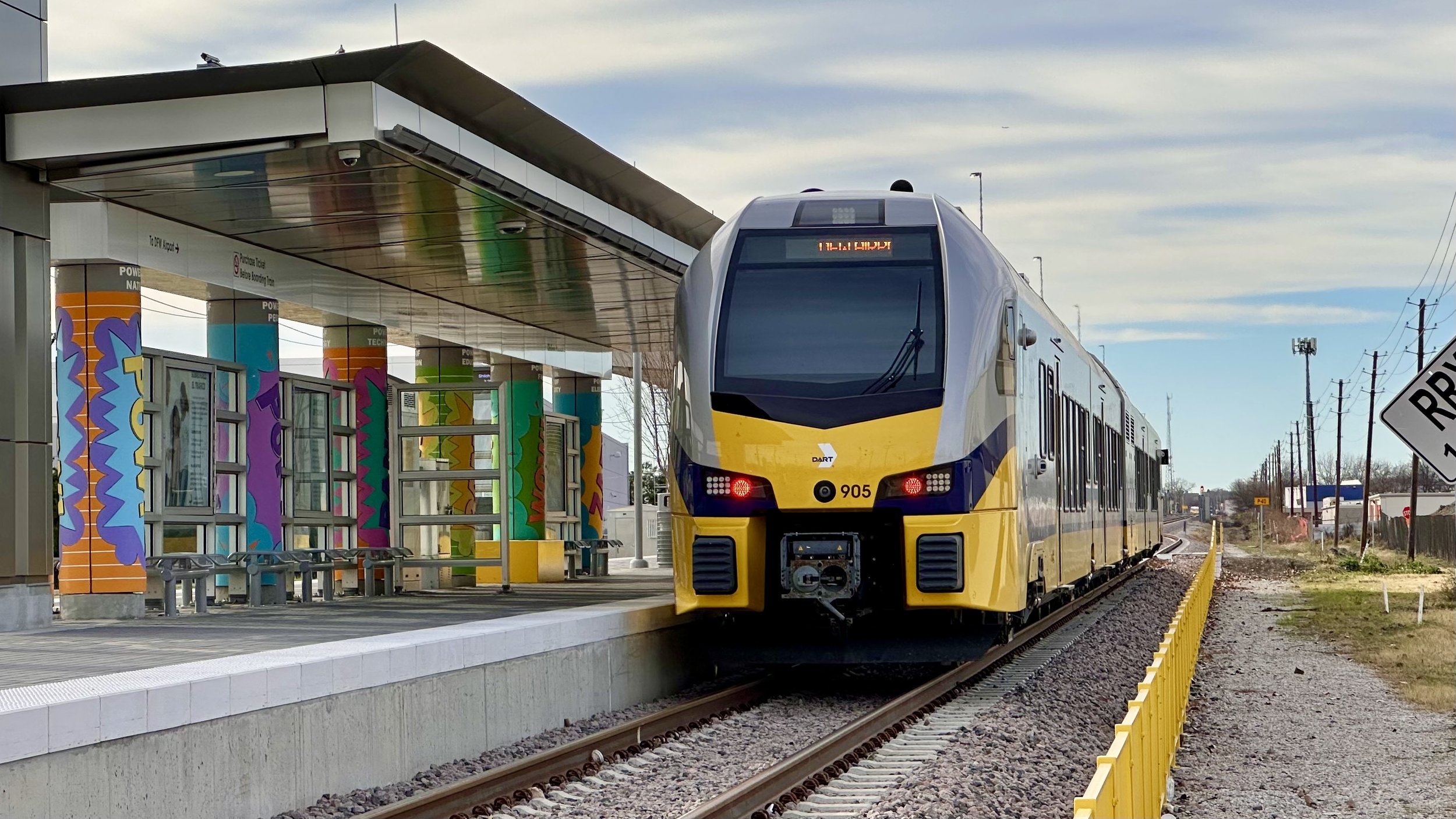
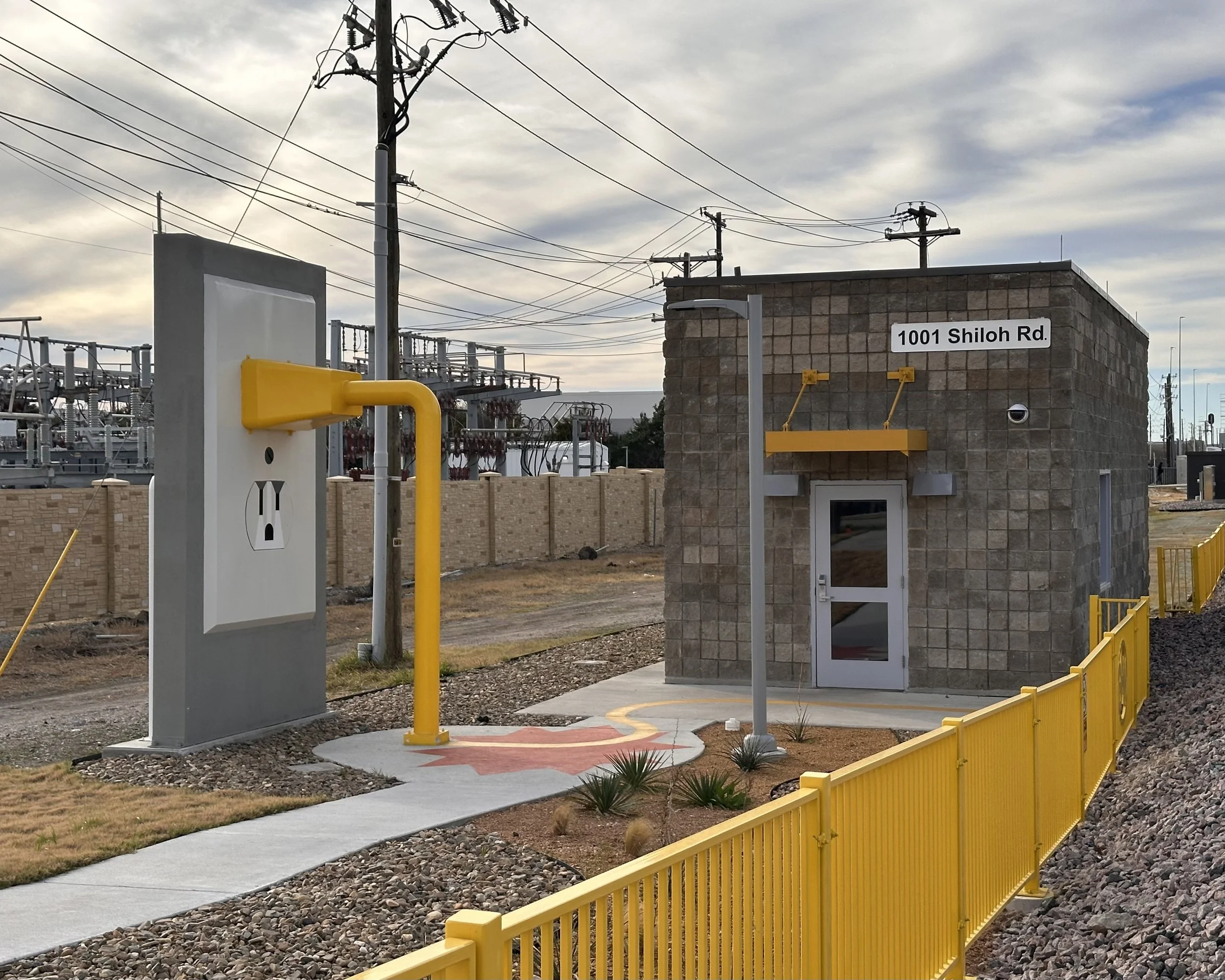
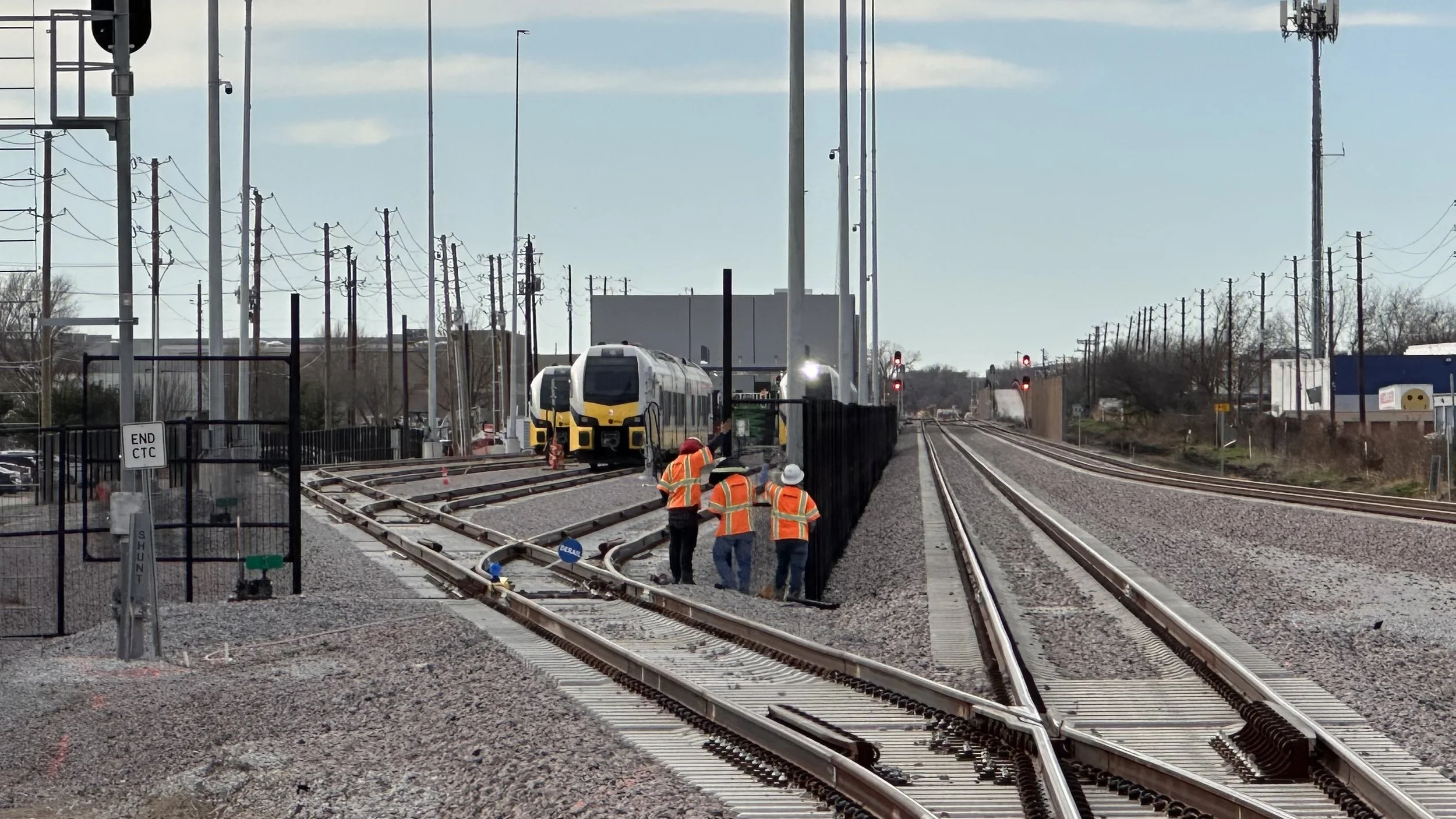
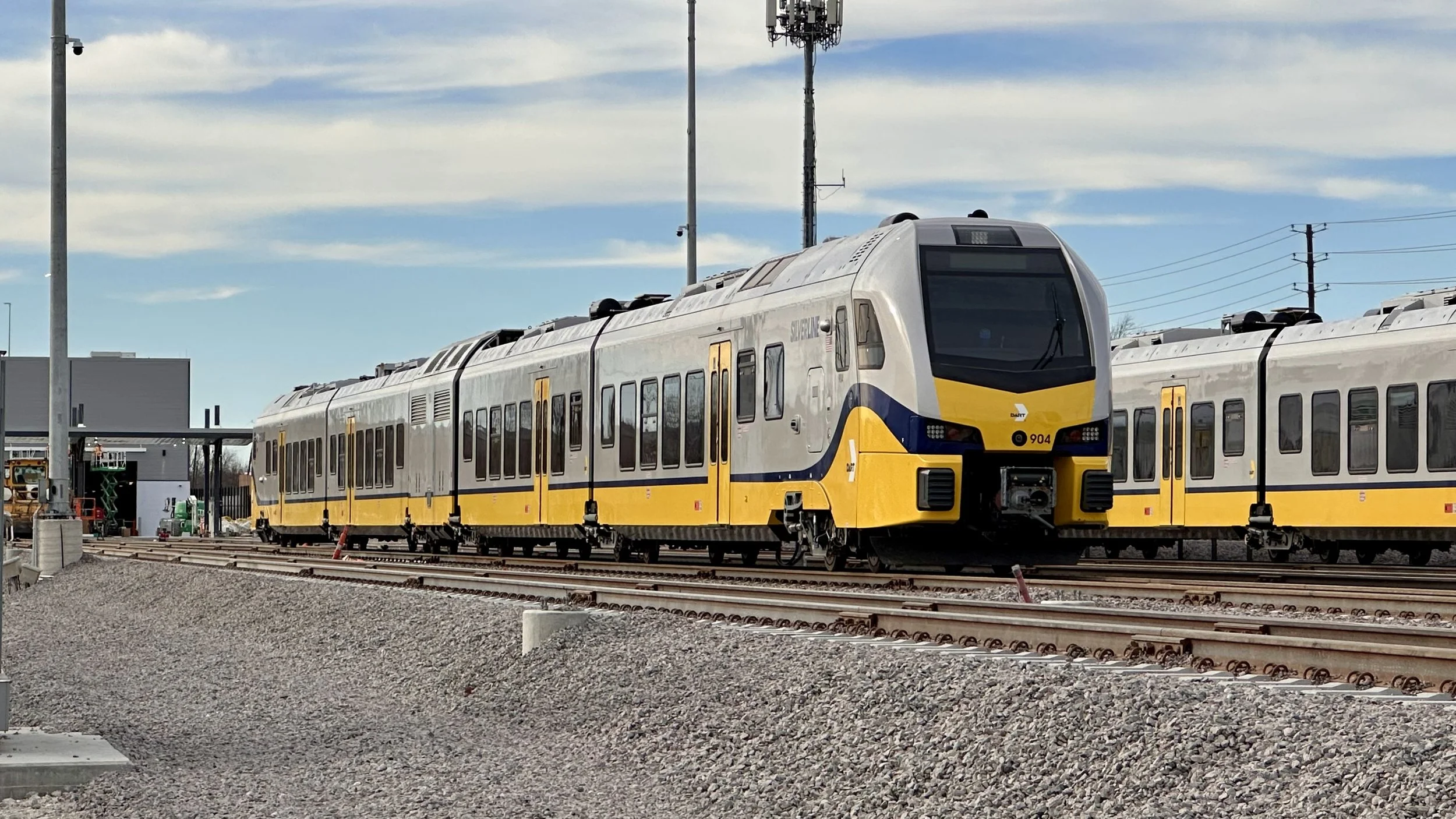
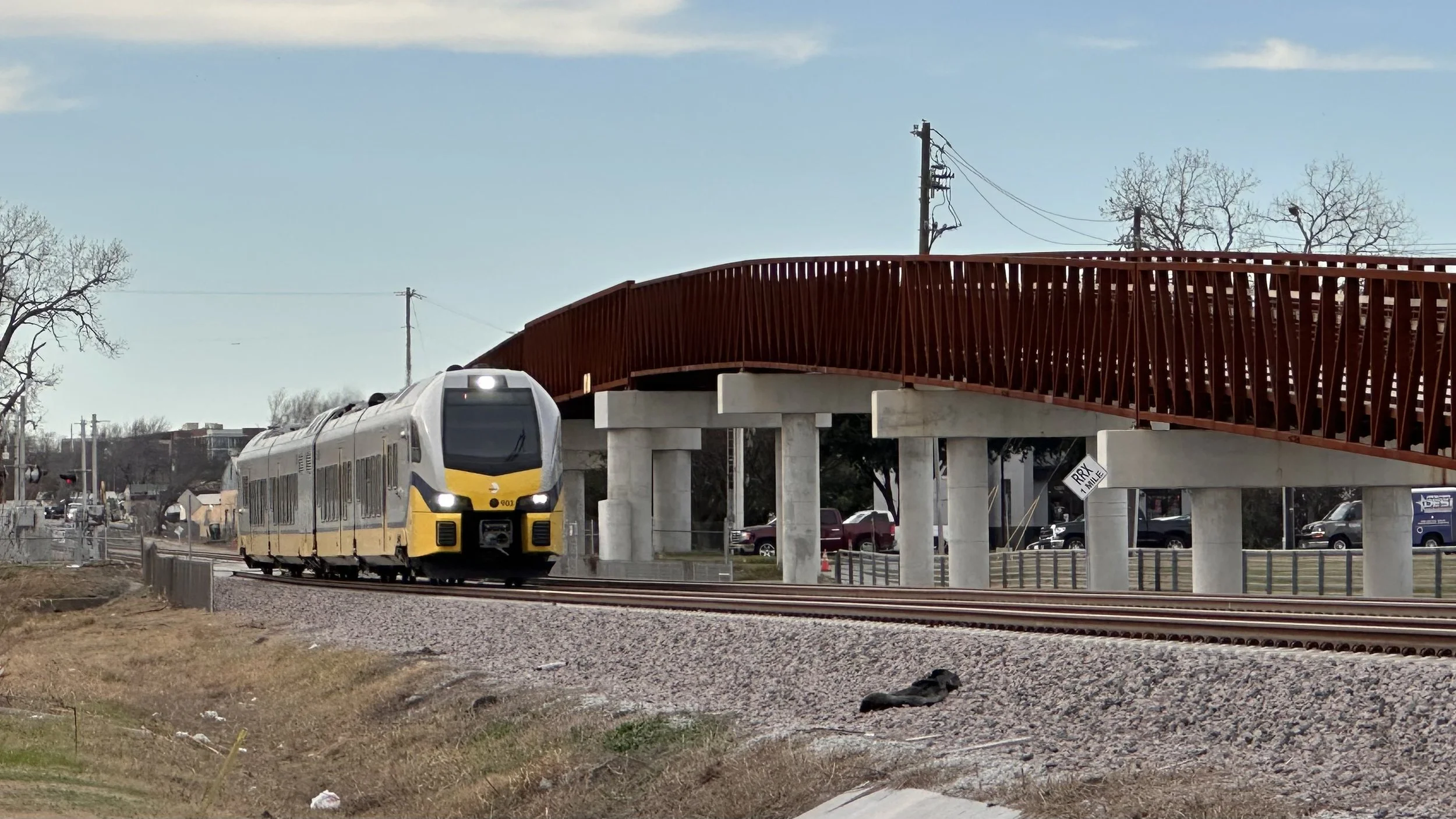
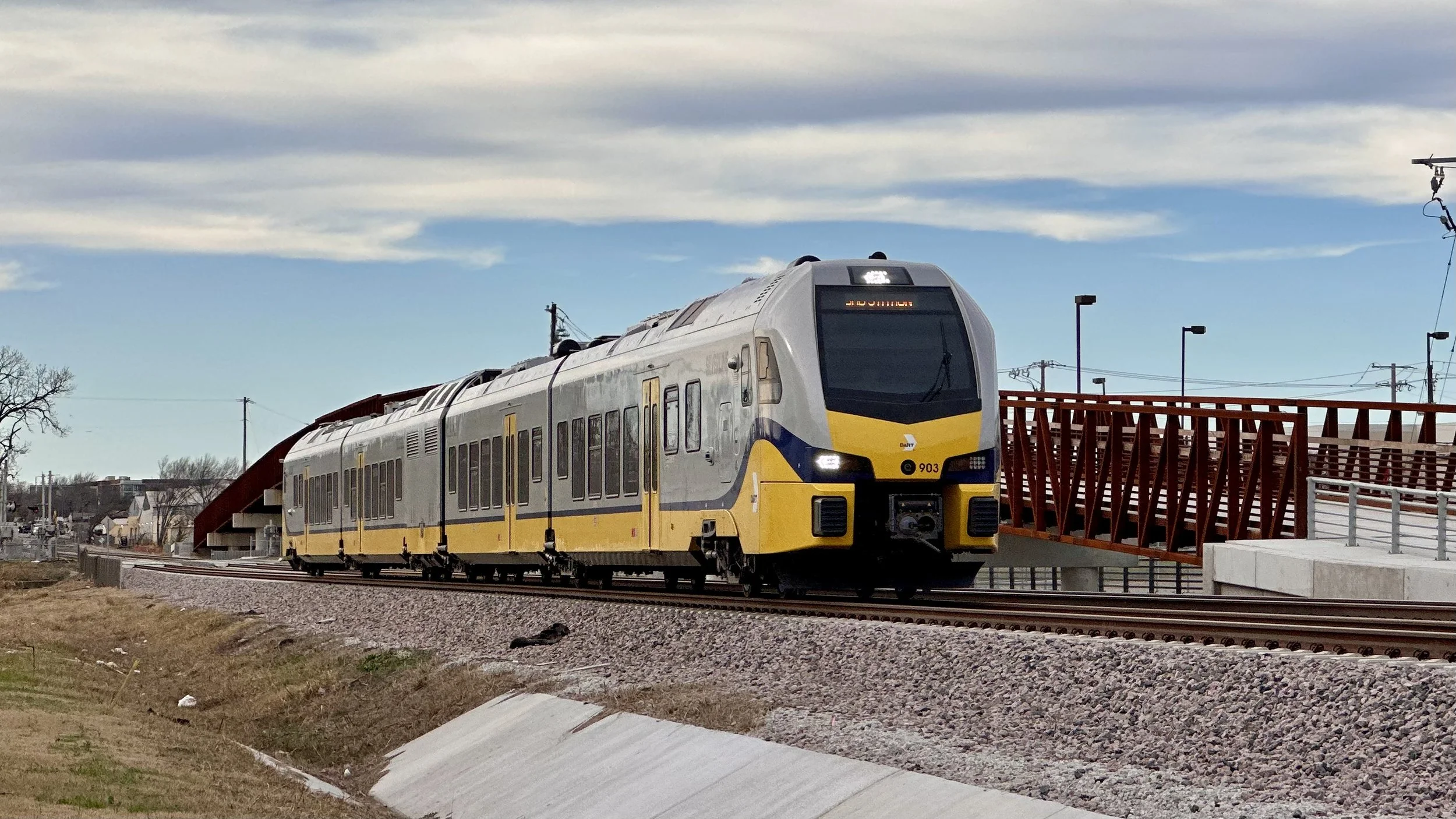
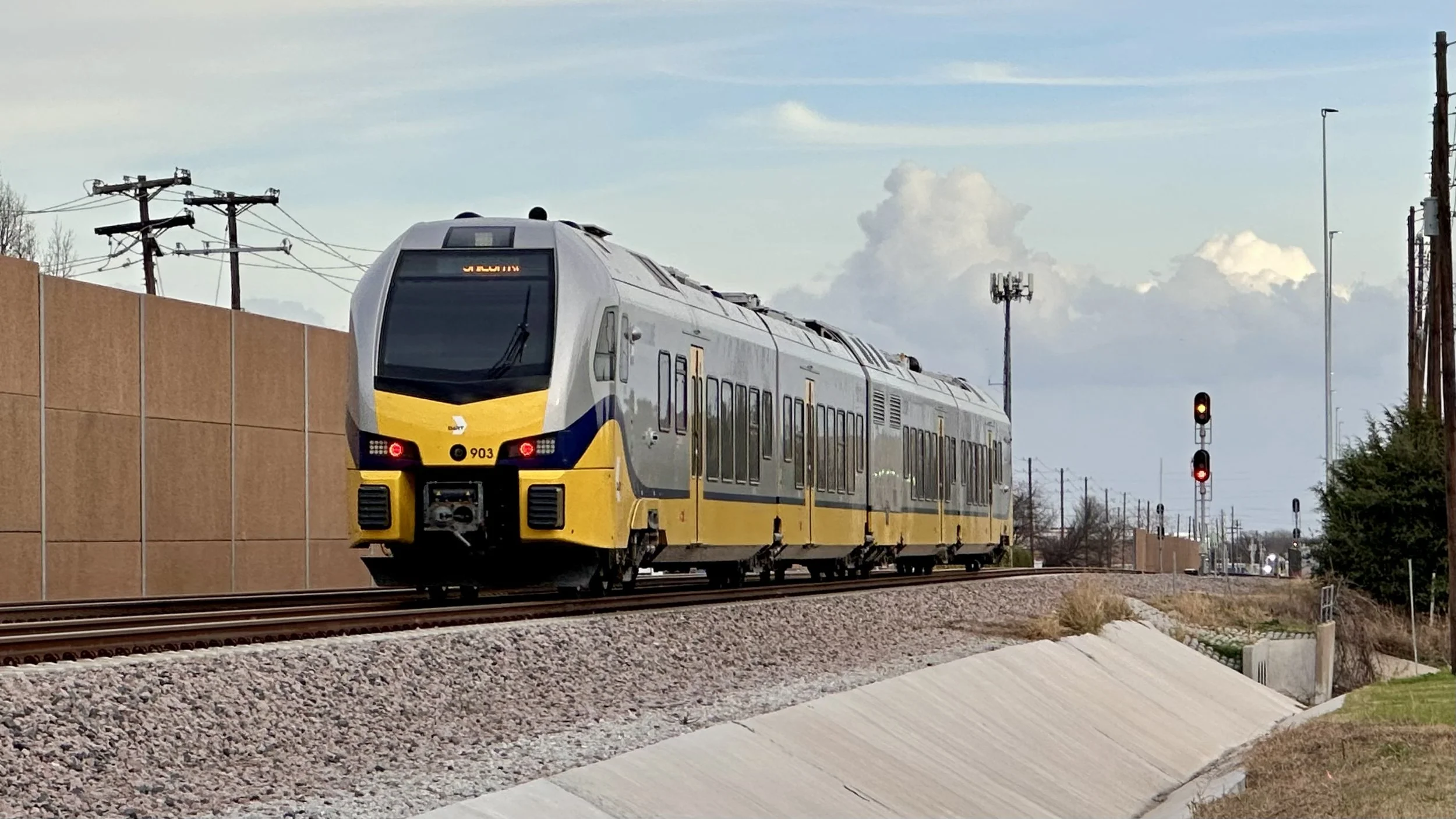
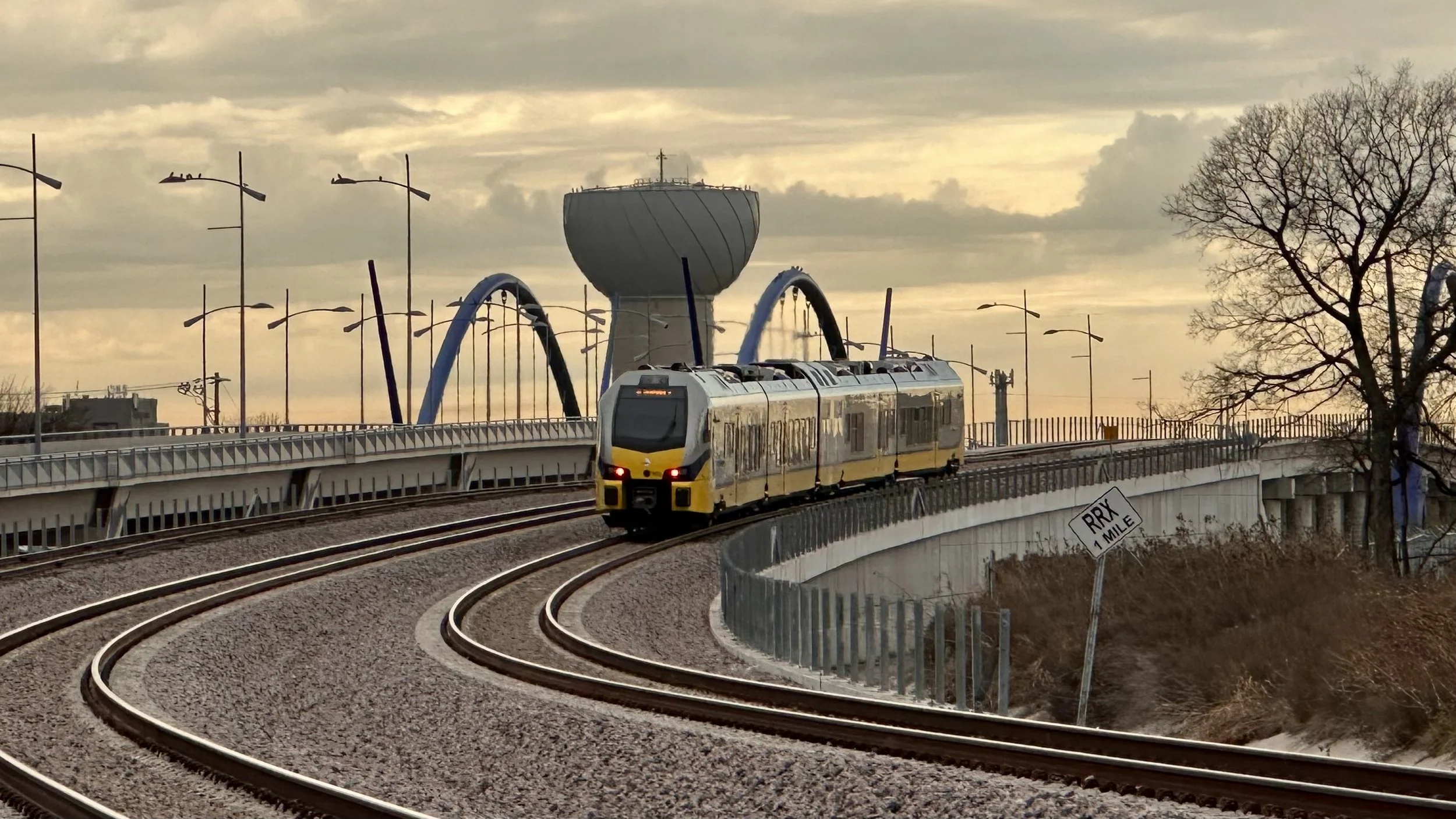
The extensiveness of the infrastructure is similarly higher all-round: viaducts and bridges are more numerous, stations and bridges have larger and more art, a bicycle trail paralleling the whole line still under construction also has elongated viaducts of its own, and sound walls are everywhere, protecting the train and its riders from the criminal element which owns single-family homes and evil suburban NIMBYs. Notably, when I visited in January, the OMF at the line’s eastern end was still under construction; while Dallas’ northeastern suburbs have a reputation for being horribly urbanism- and queer-phobic, and therefore anti-freedom, you at least have to respect the urge to get a deliverable out to the public ASAP as an important and necessary component of the transportation system, rather than waiting until everything’s perfect as if it were an optional amenity.
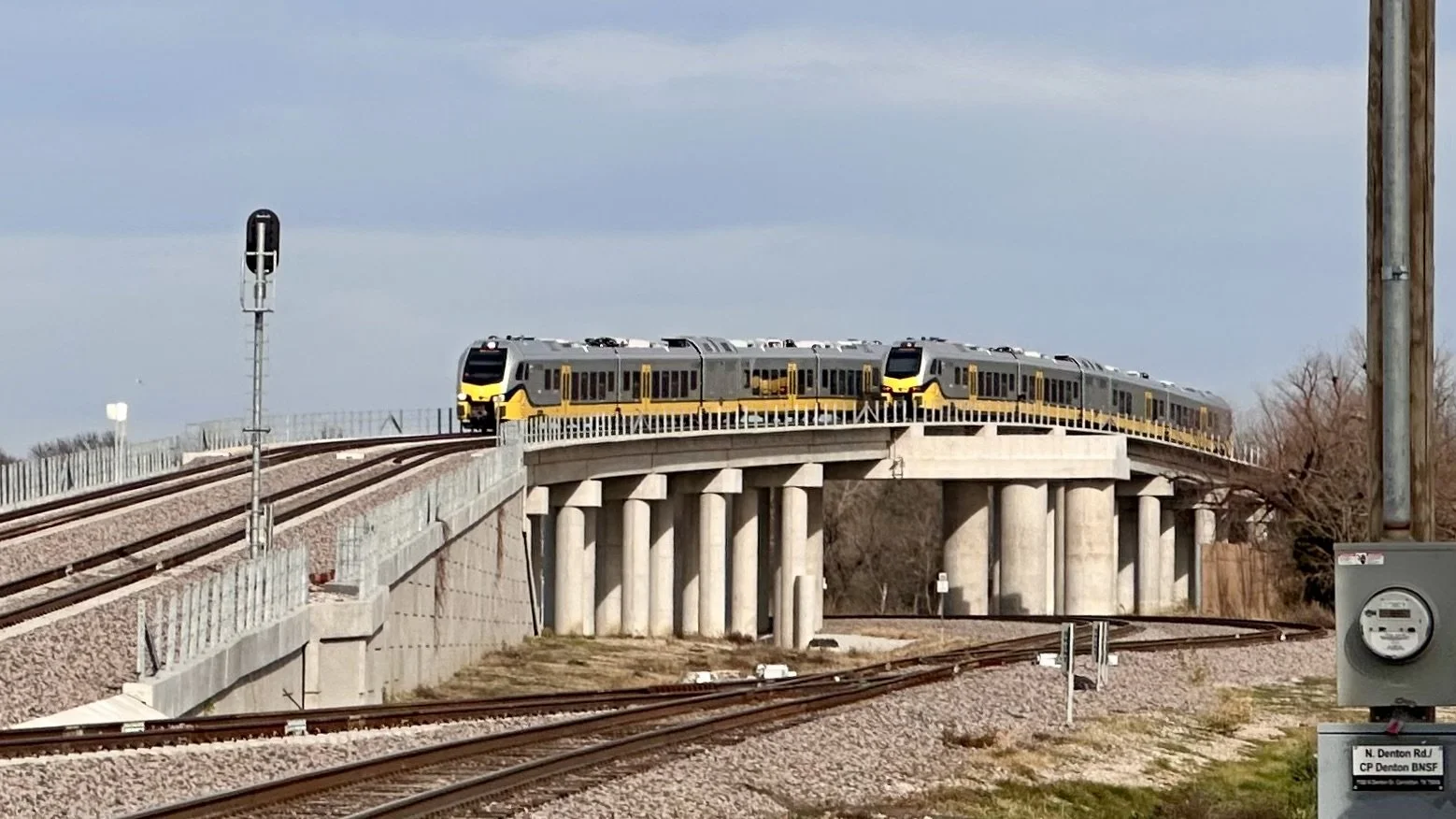
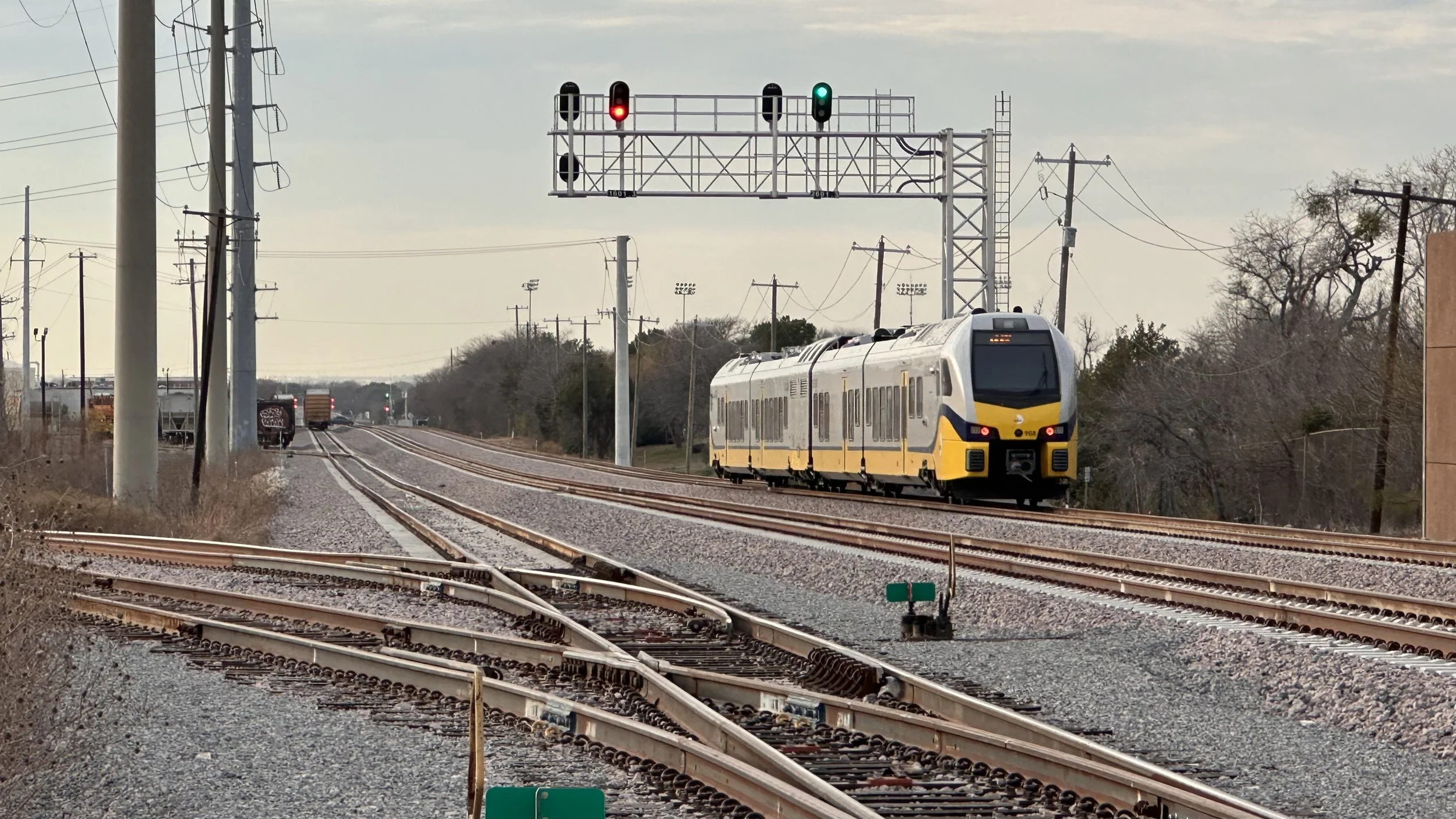
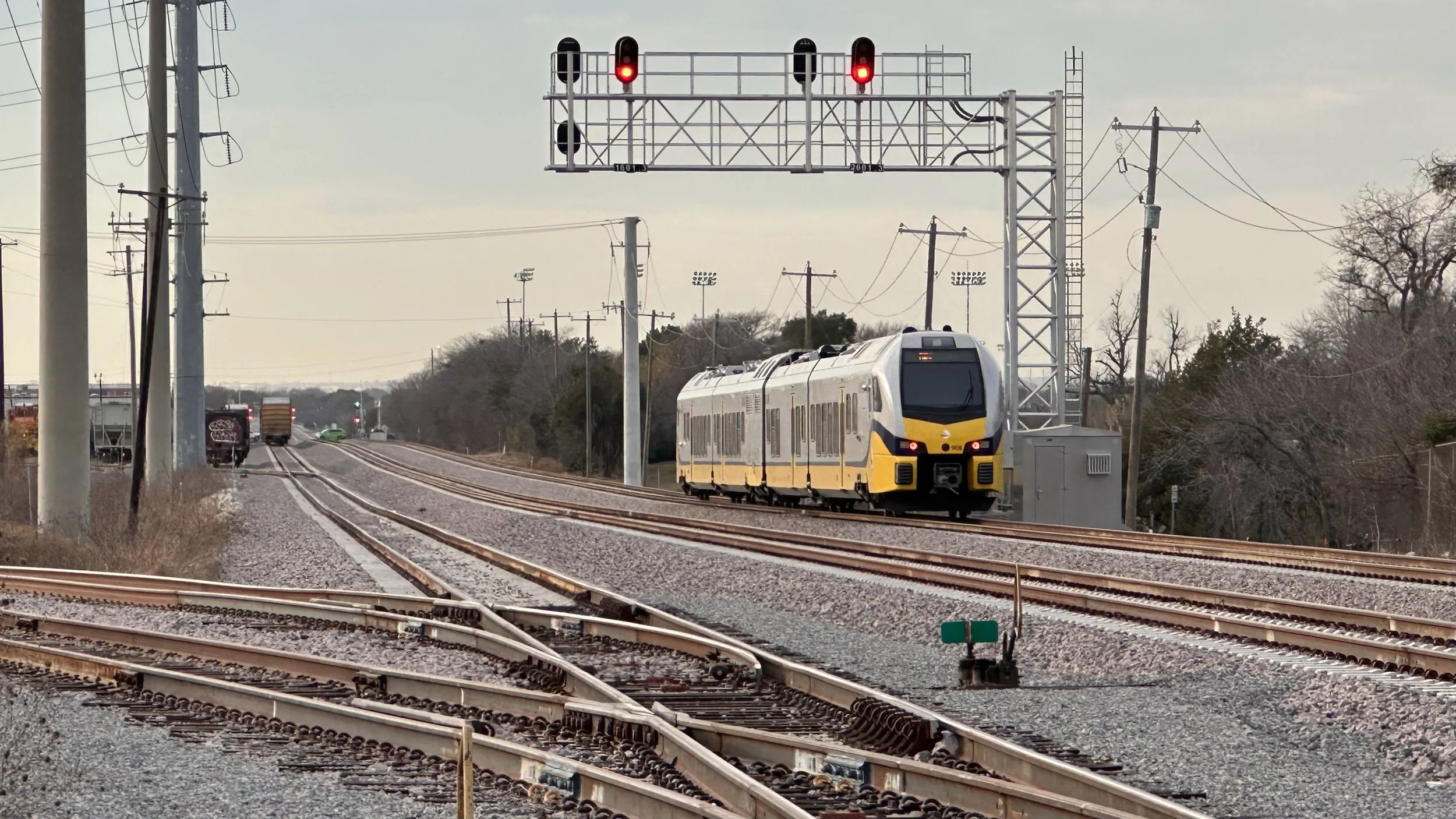
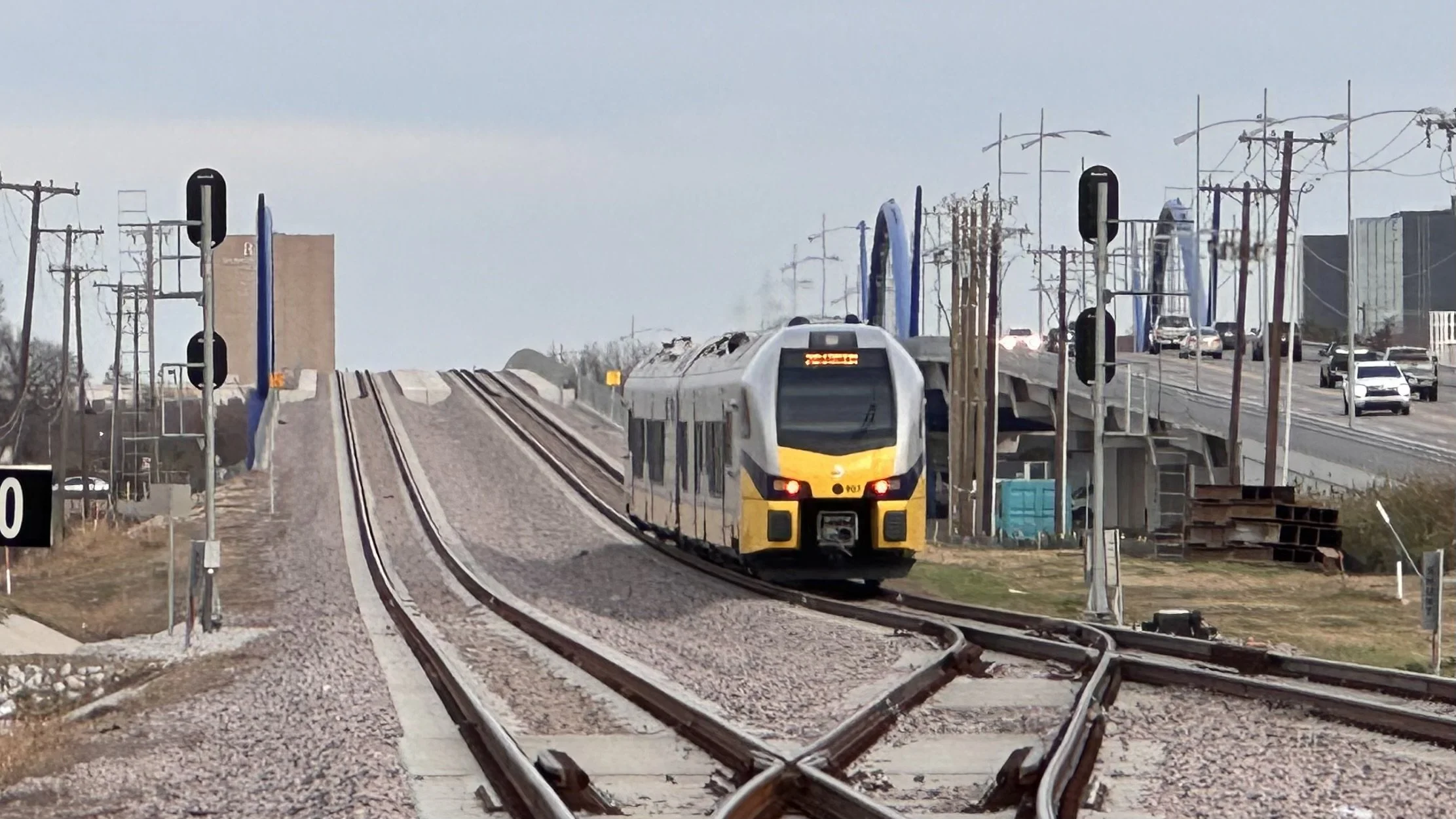
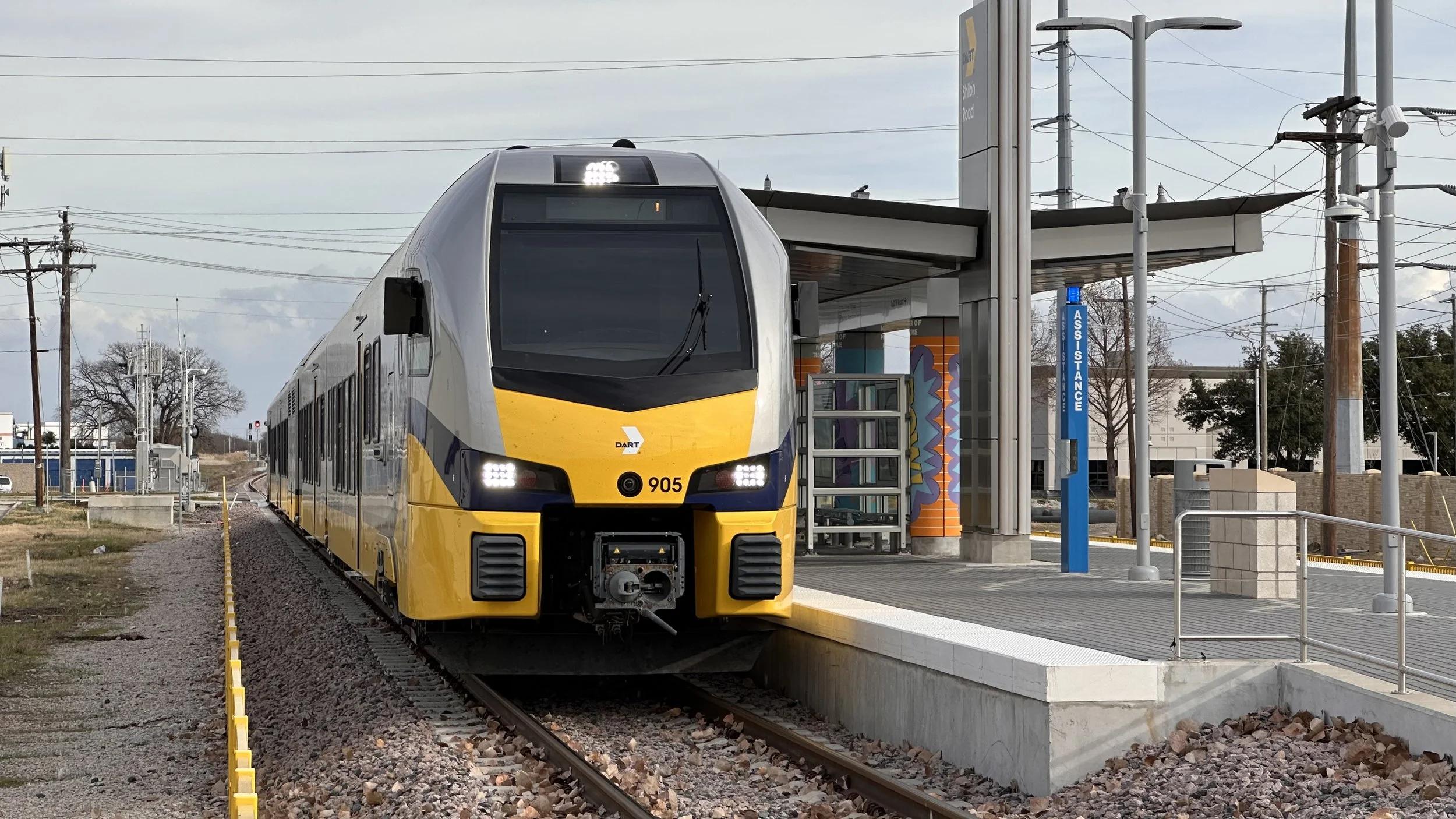
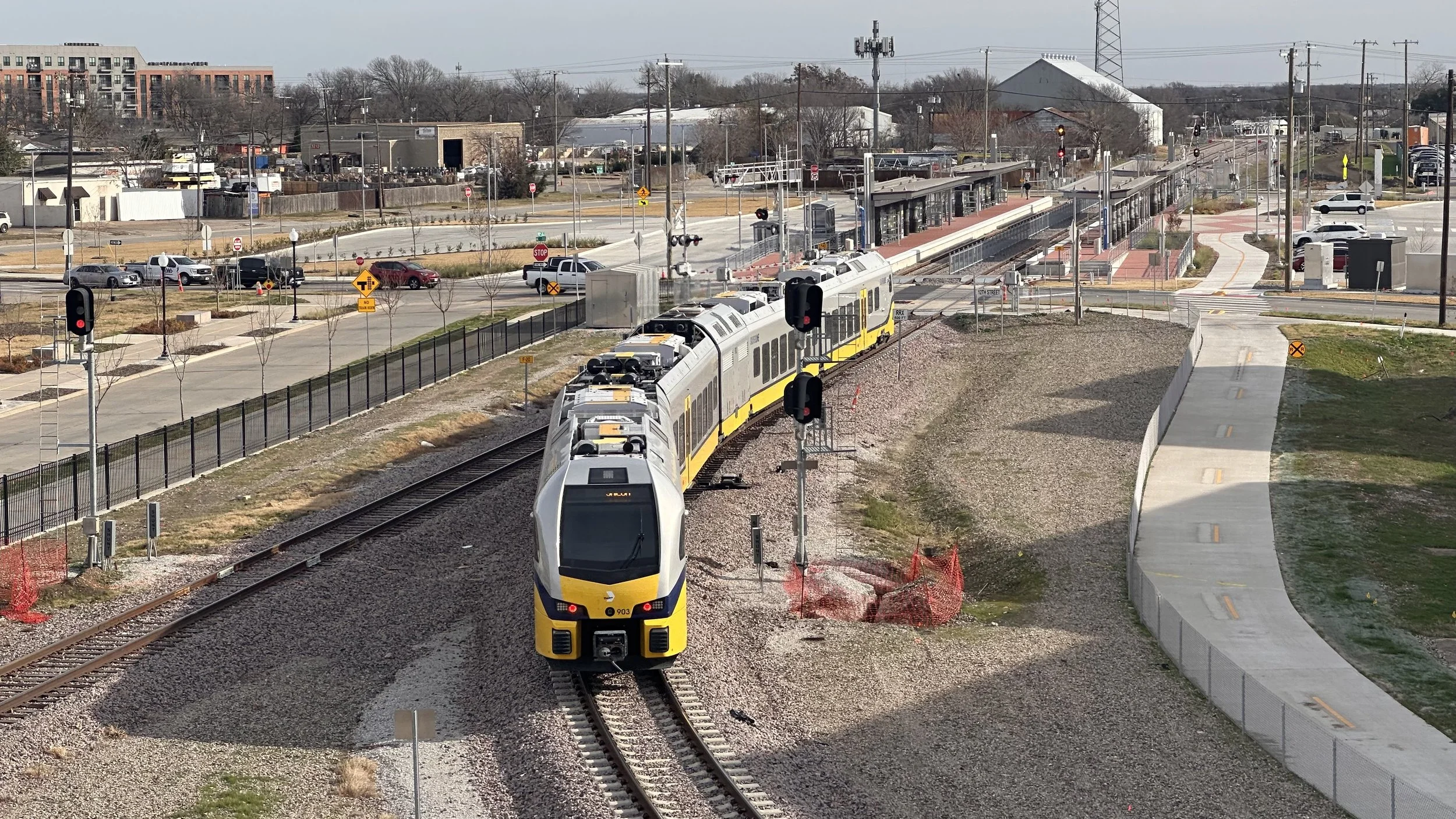
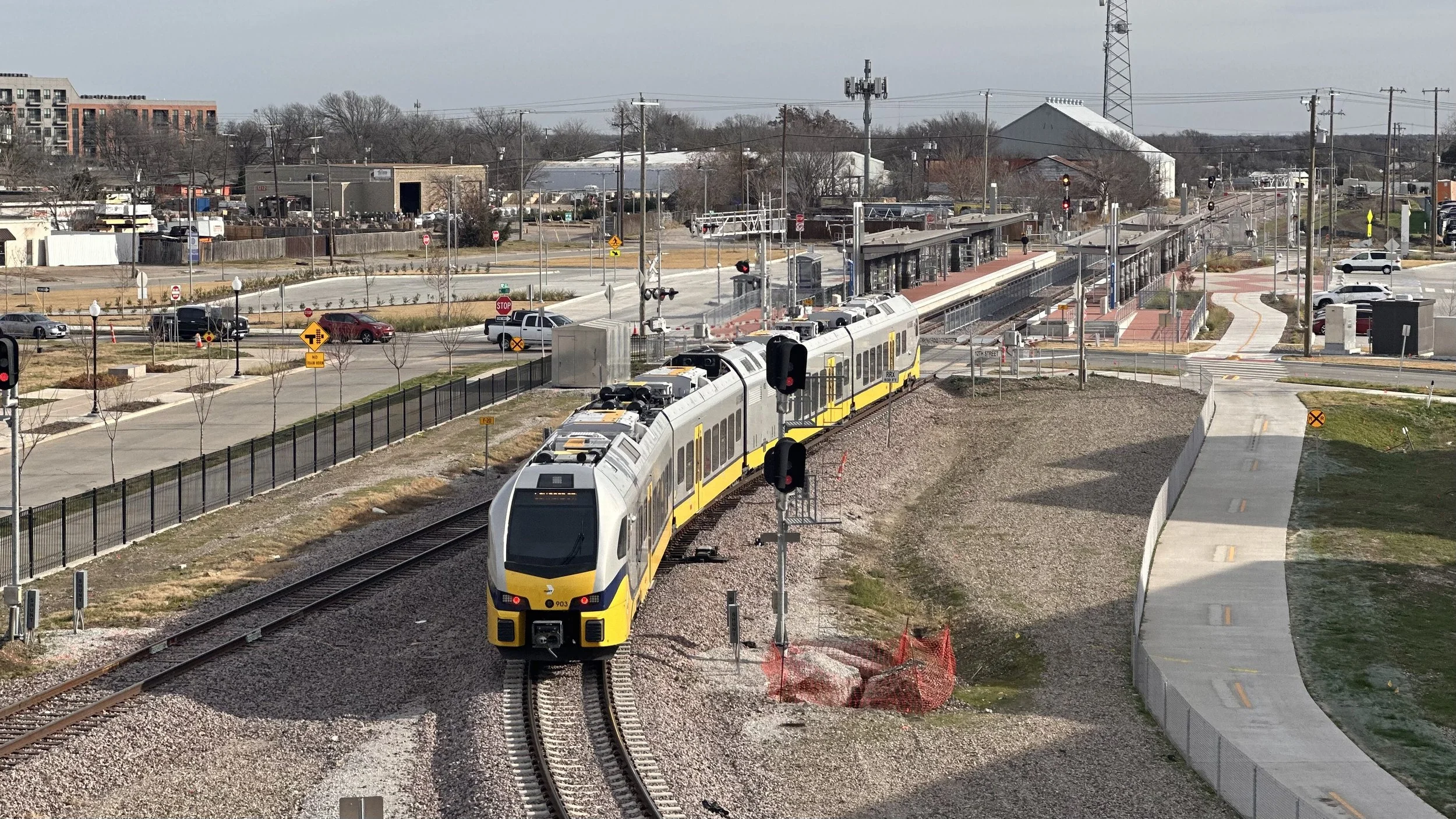
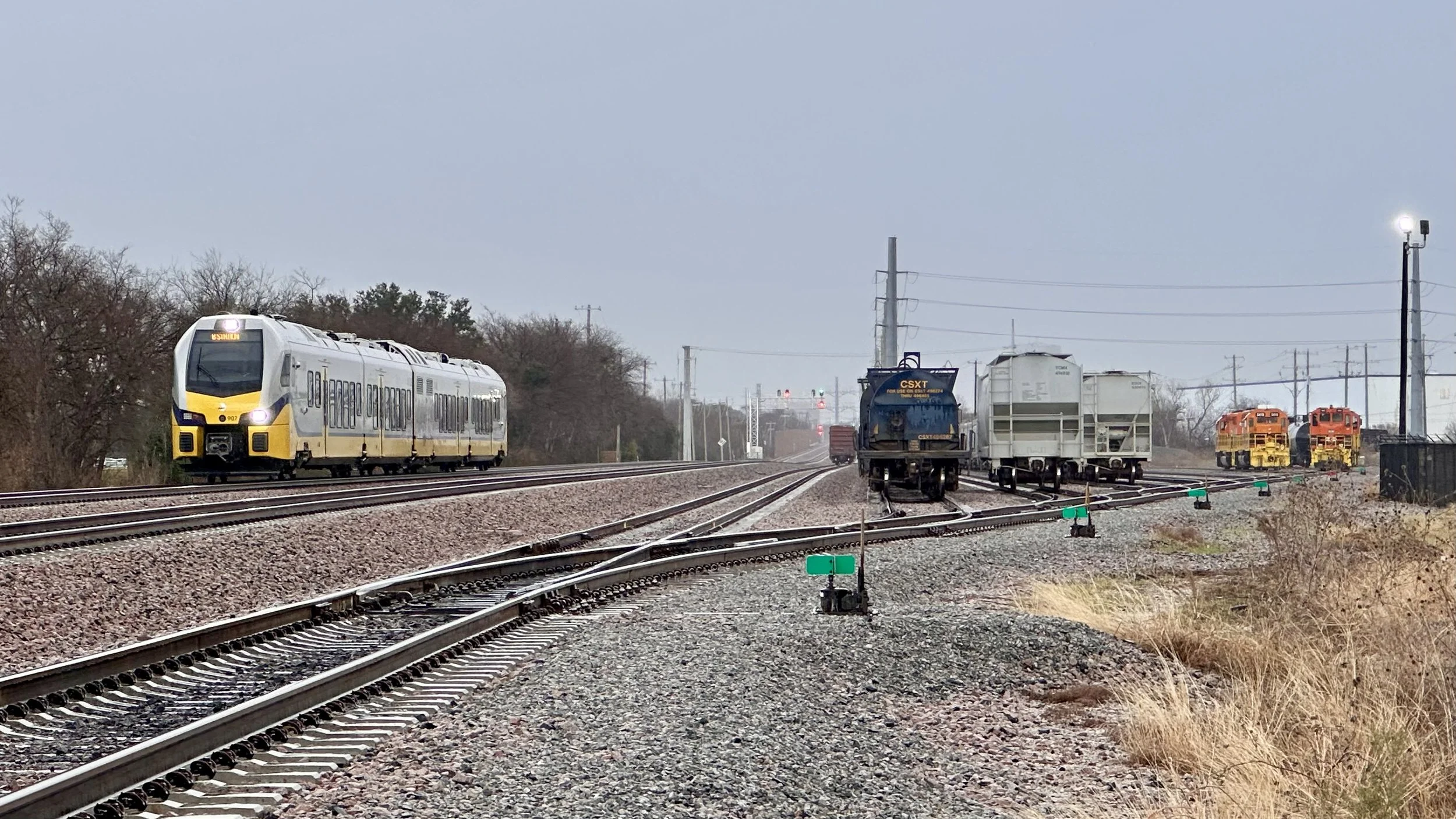
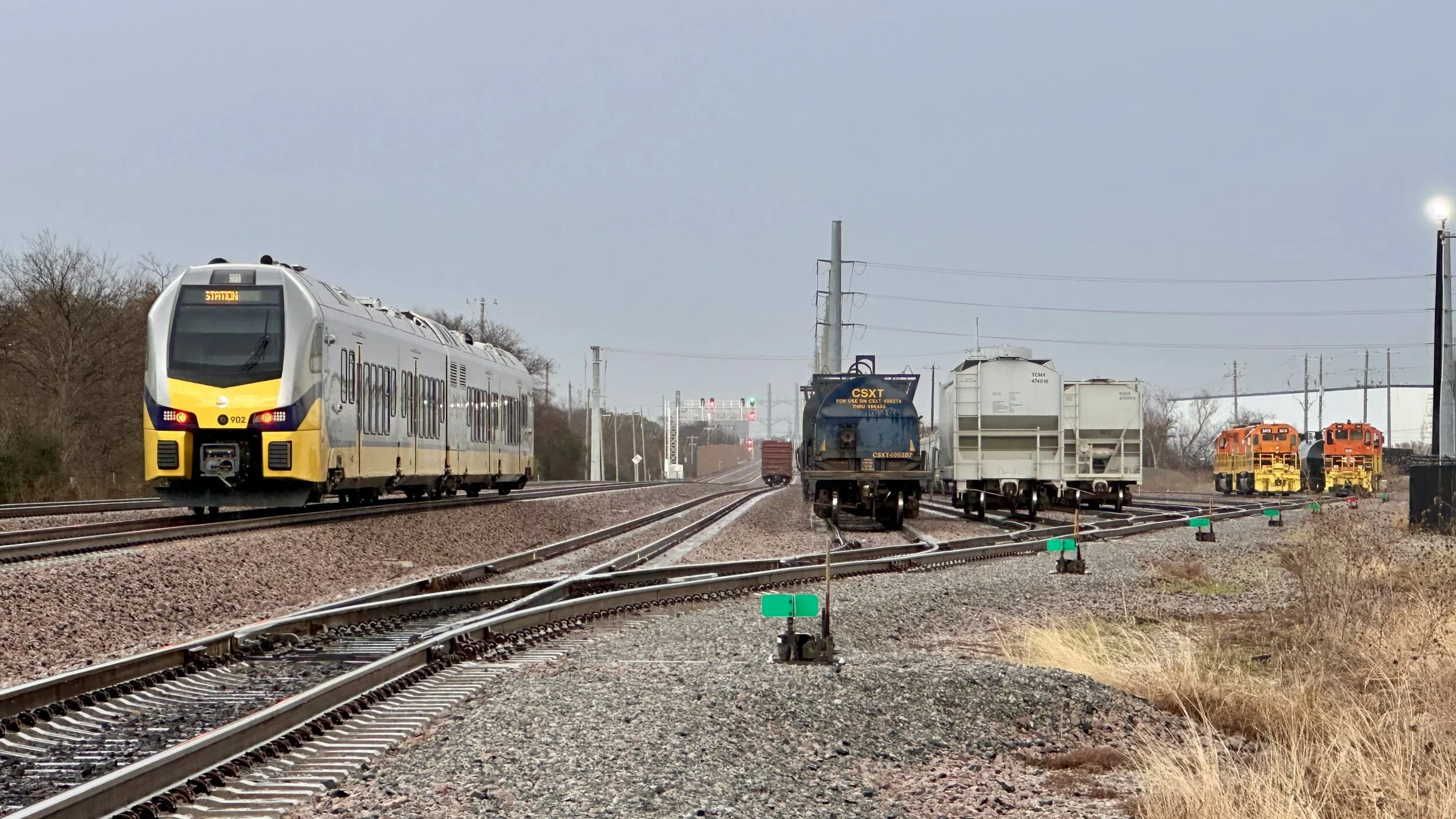
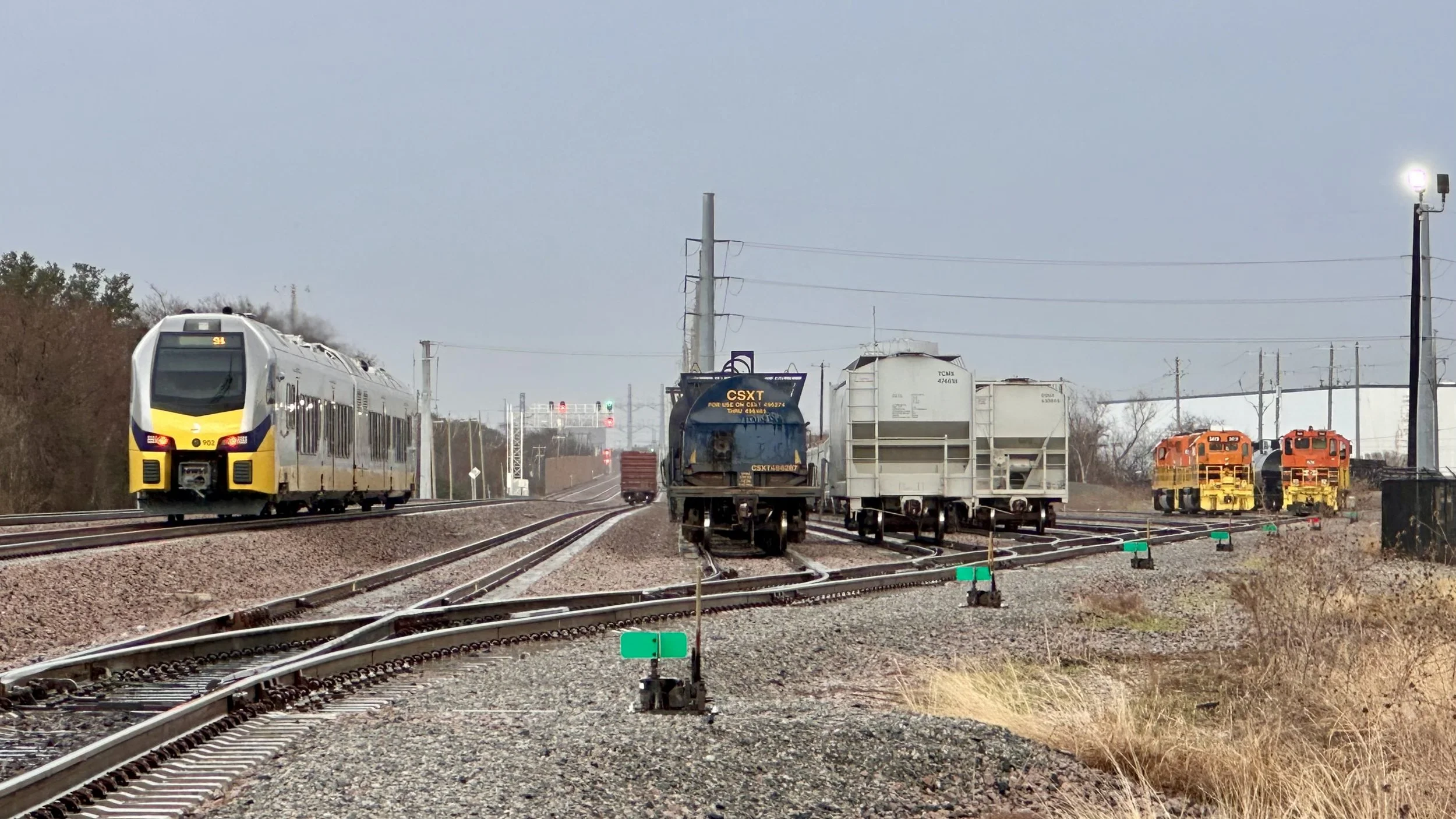
Freight-wise, the Silver Line isn’t quite as exciting as its western neighbor, but only just. The western leg from Shilo Road to UT Dallas shares track with the CPKC Alliance Subdivision (minus a jog on an elongated circular viaduct over to Plano City Line Station for a cross-ish-platform transfer to the Red Line) and has a small three-track yard just past 12th Street Station. Heading southwest, not much freight action takes place until Addison, where a large wye and short segment of triple-tracking connects the DMU’s route with a positively humongous switching area, serving at least 16 industries and a four-track yard.
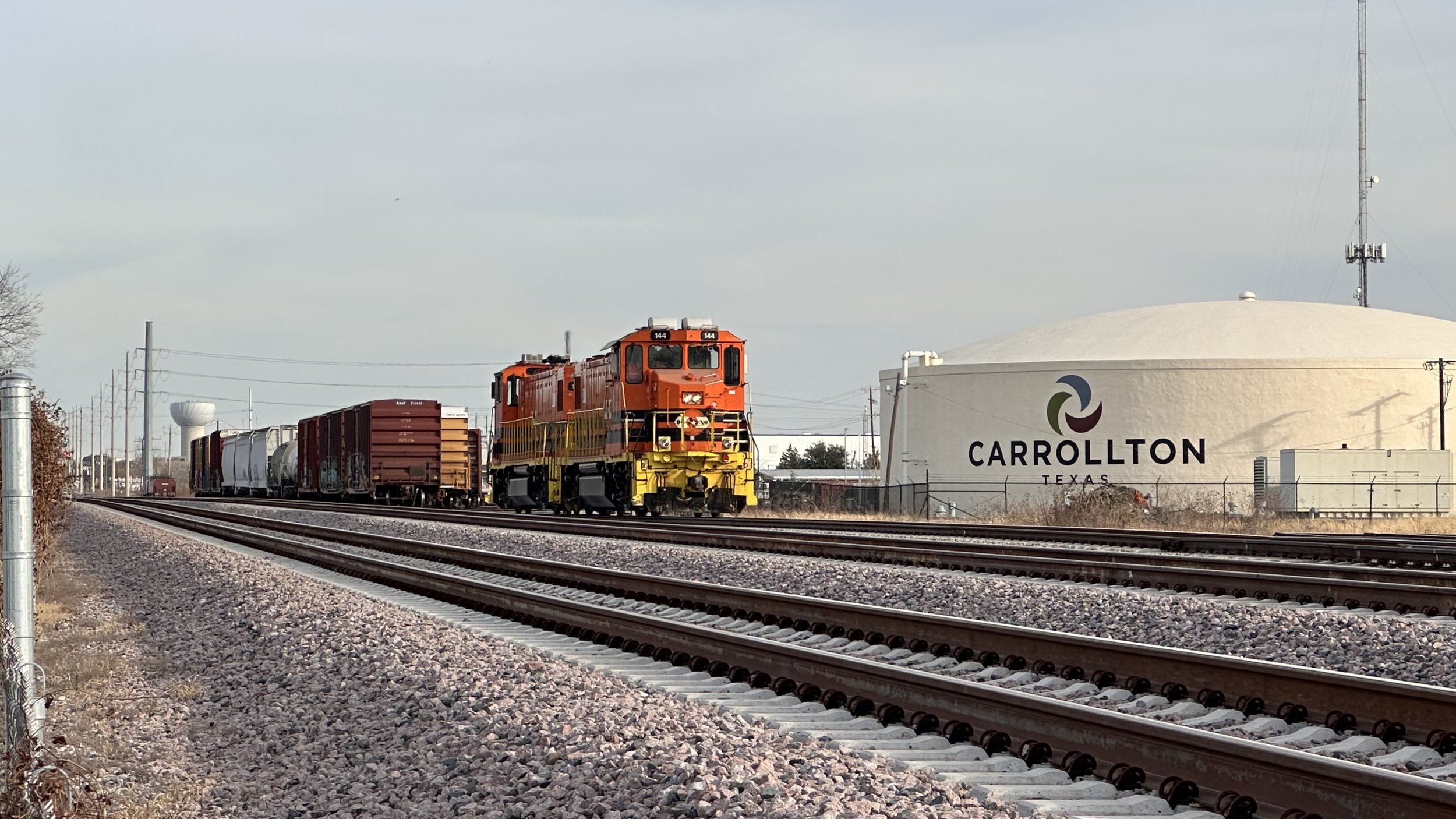
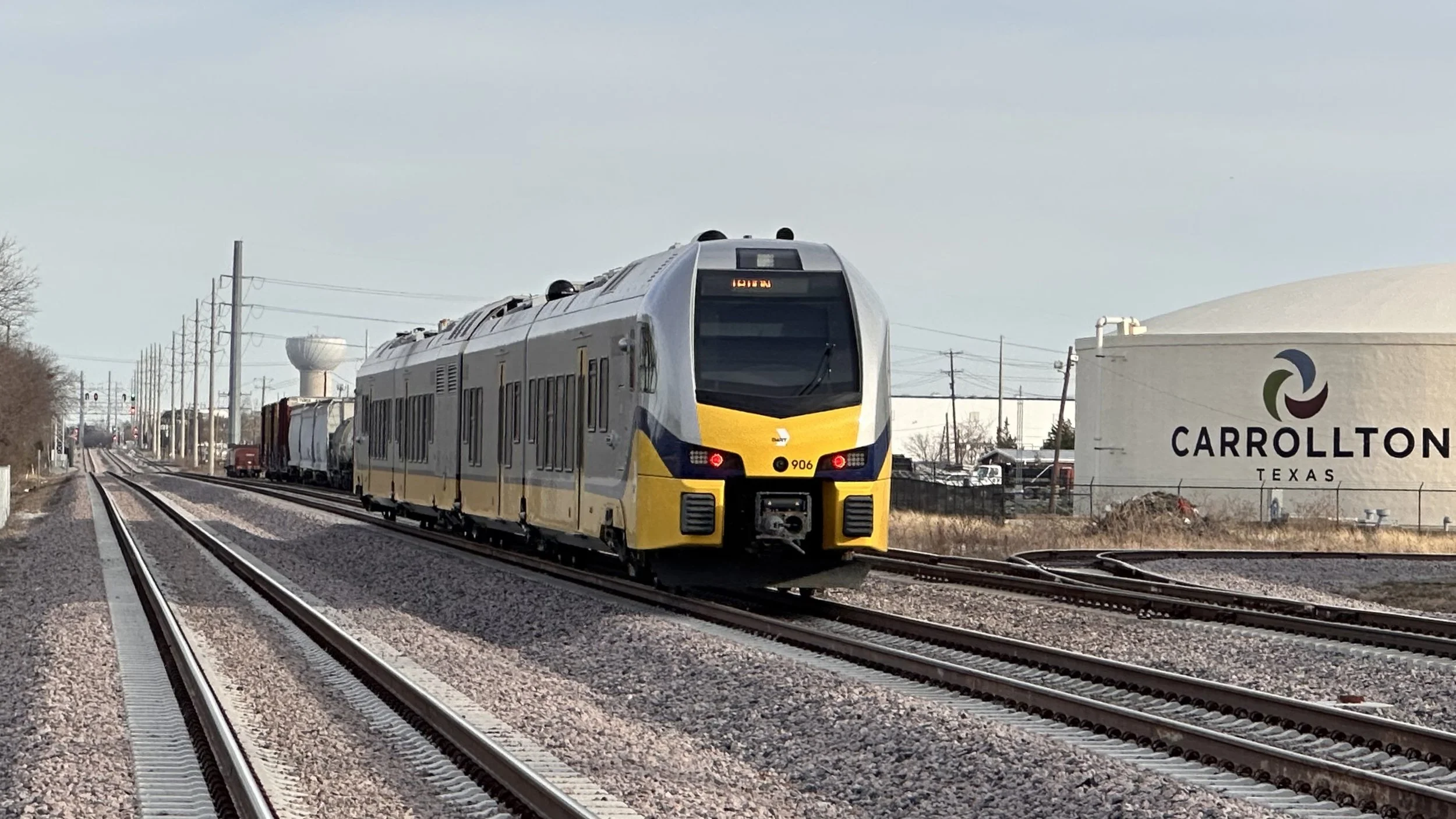
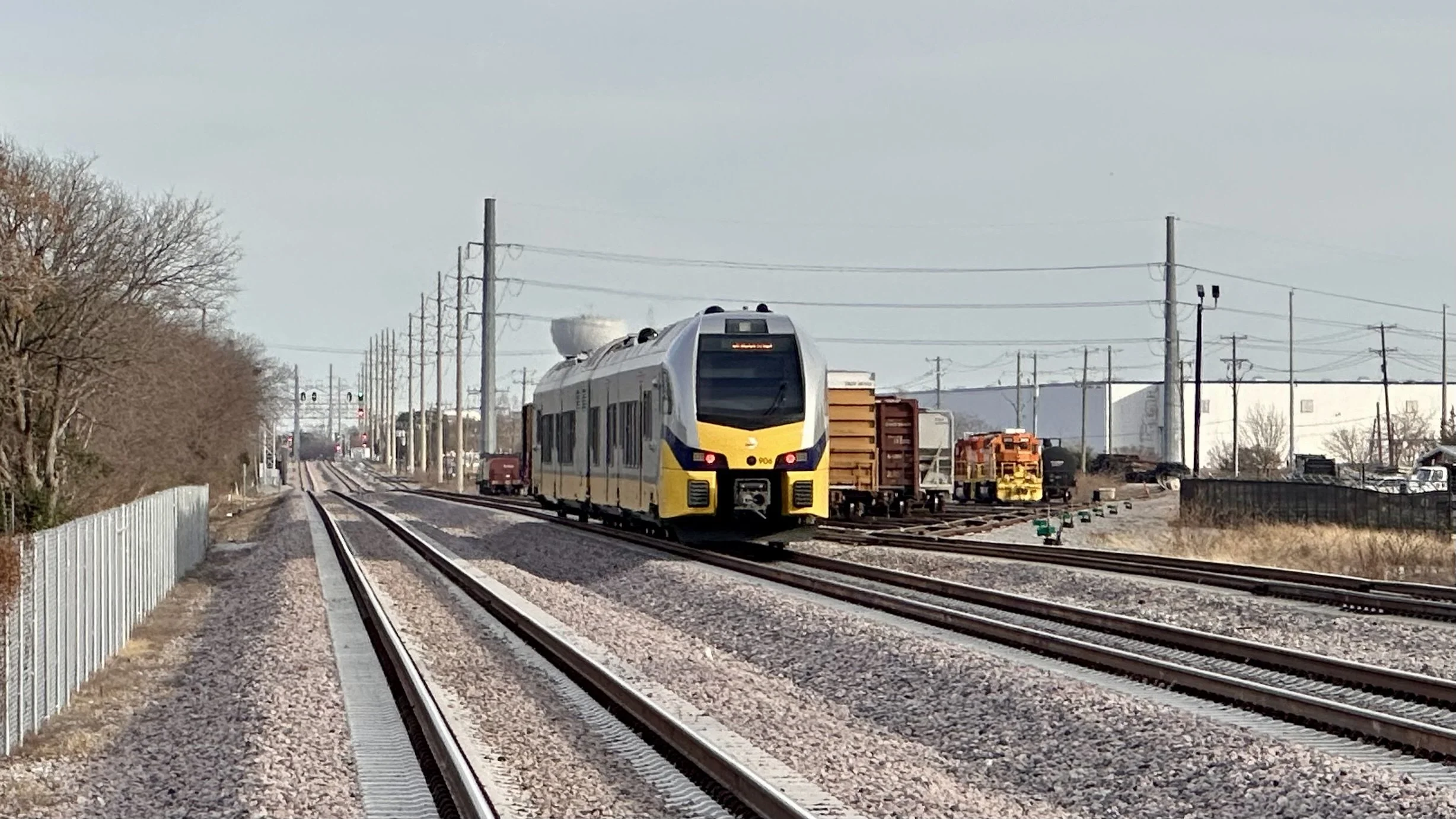
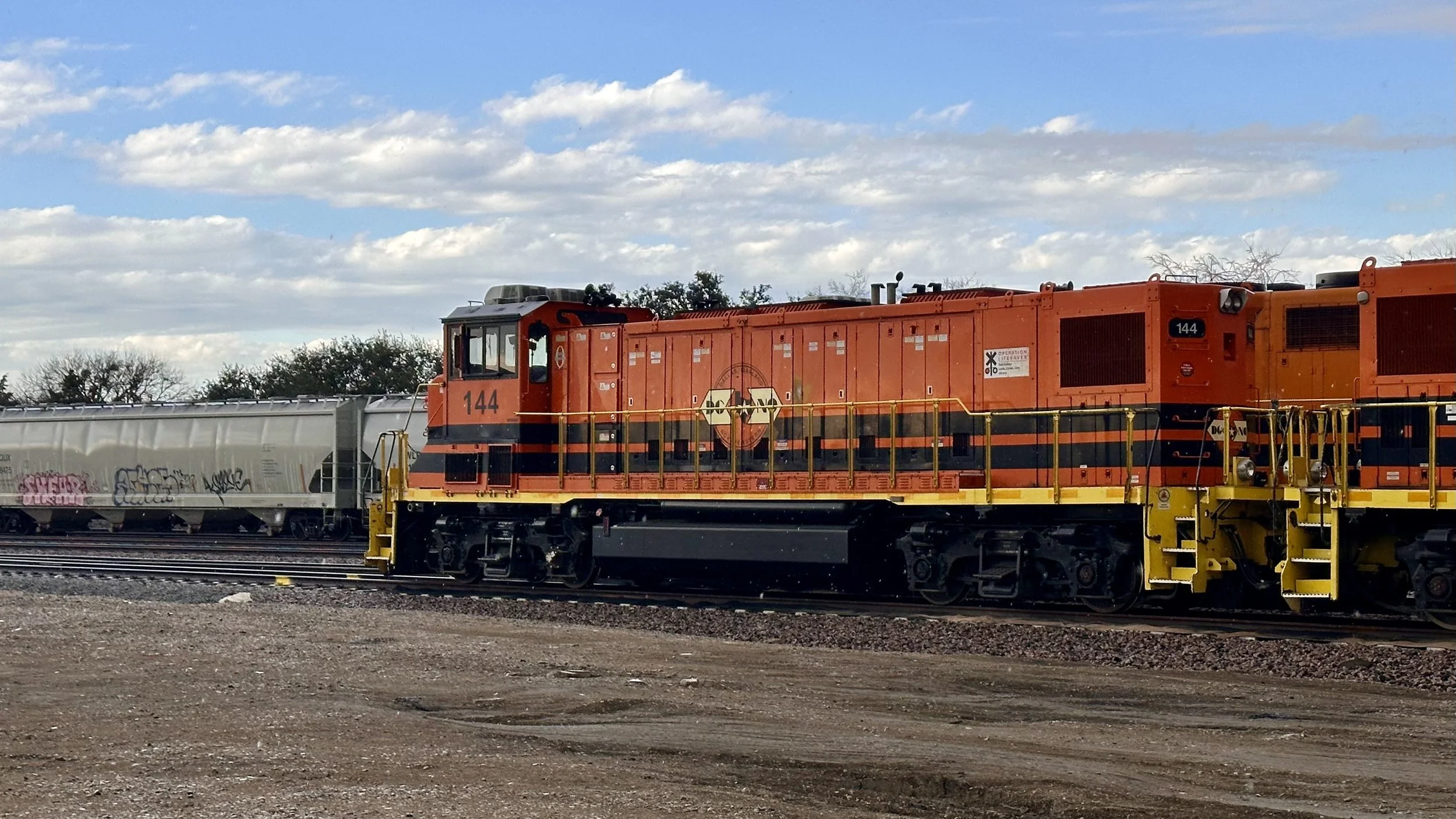
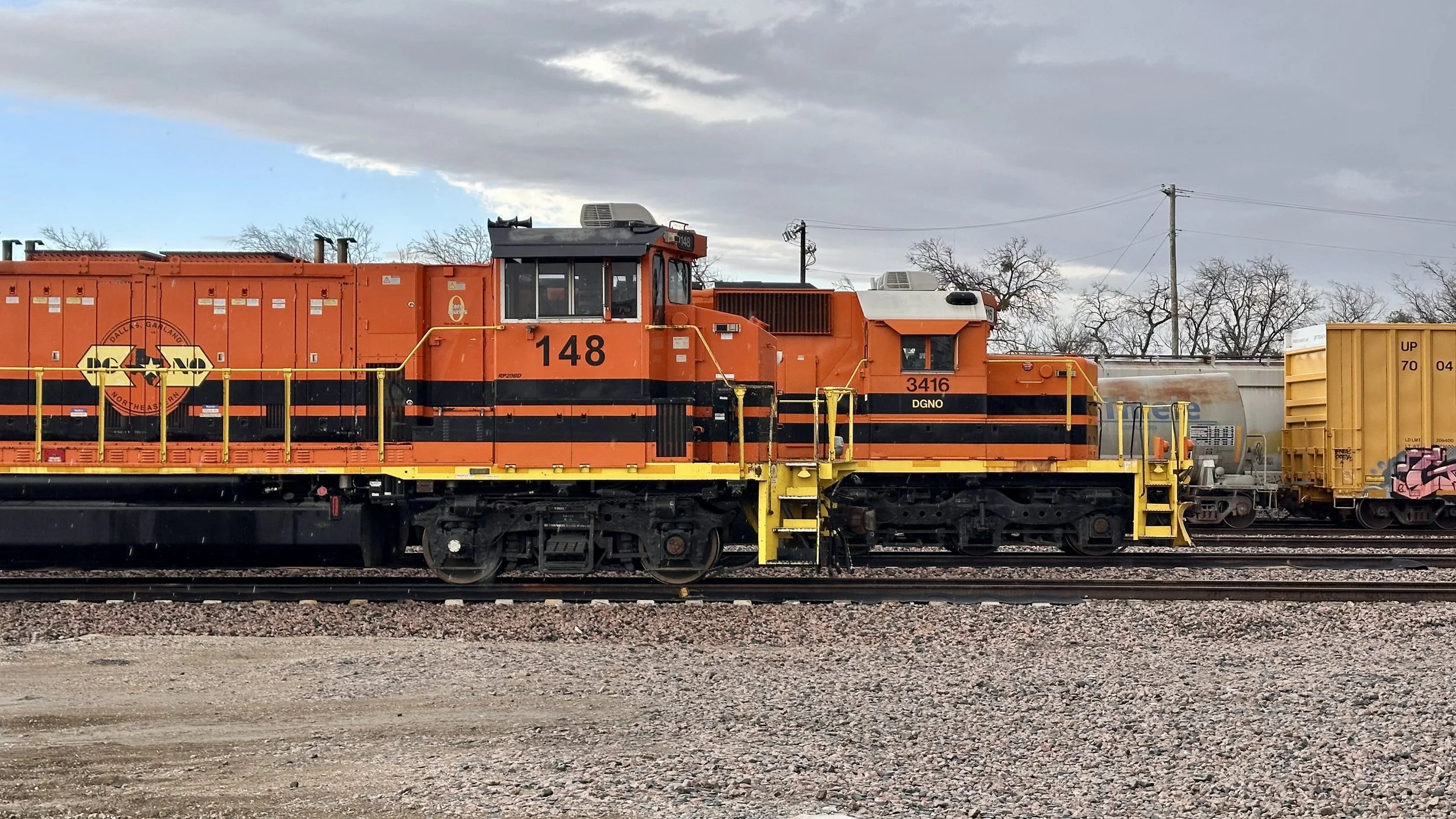
Between Addison and Carrolton, however, there is a ton of freight activity. The Dallas, Garland, and Northeastern, another G&W Shortline, operates the five-track and four spur Mercer Yard, and has an elongated section of triple track that allows it to switch most of the 20 industries in the area without fouling the DMU. Nearby in Carrolton is a large junction between the DG&N/Silver Line, BNSF’s Madill Subdivision, and the Lewisville Industrial Track, which parallels the DART Green Line at ground level and serves four more spurs before connecting to the DCTA A-Train and its associated industries. Just past Carrolton is one more switching area with a whopping 21 spurs, after which the DMU takes another short diversion off the freight line to serve Cypress Waters Station, rejoins the freight route and has three small spurs right off the mainline, connects to one last switching district with 10 spurs, and finally wyes into TEXRail for transfers at Airport North and DFW Stations.
Overall, the Silver Line is a net plus for DART’s and the Metroplex’s expanding rail network. Oddly enough, even though it uses the same vehicles, is almost exactly as long as TEXRail, and even has one extra station, in bicycling it, it felt like much less of a journey, as if it served fewer ‘areas’ that all felt more ‘samey’. Unlike TEXRail, which weaves in and out of existing railroad infrastructure, the Silver Line’s heavy infrastructure and (sound-)wall-to-(sound-)wall double-tracking dominates the railroading landscapes it travels through. TEXRail felt more ‘spunky’ and ‘neighborly’, whereas the Silver Line felt like a bigger cog in an even bigger series of freight, transit, municipal, and suburban machines.
Given the much greater freight integration, the Silver Line is an appealing modeling subject, but the sheer amount of switching will necessitate prototype modelers either compress aggressively or model only a portion of the route. Otherwise, the Silver Line demonstrates all the different ways DMUs can be integrated with freight rail: switching can be done either directly on the main, on a parallel freight-only main, or just off the main in switching districts or puzzles, and DMUs can be disentangled from freight trains either be restricting them to nighttime running on the same tracks, having parallel mains, or hopscotching over junctions or yards with viaducts.